SINGAPORE: Expect tighter security in the area around Suntec Singapore International Convention and Exhibition Centre where the 33rd ASEAN Summit will be held from Nov 13 to 15.
The event has been declared as an Enhanced Security Special Event under the Public Order Act, said the police in a news release on Monday (Nov 5).
As part of strict measures that will be put in place, it will be an offence to bring items such as a loud hailer, aerosol paint containers or any noxious substances into the Enhanced Security Special Event Area.
Unmanned aerial vehicles (UAVs) or drones are also not allowed.
Organisers of all public assemblies and processions within the Enhanced Security Special Event Area, whether indoors or outdoors, must apply for permits, said the police.
Within the Enhanced Security Special Event Area, there will be a special zone where stricter security checks will be conducted.
Checks may be done on people and vehicles in or entering the special zone, and the police will have the power to refuse entry to, or remove a person from, the special zone, if necessary.
“The police seek the cooperation of the public to comply with all orders issued by police officers,” said the news release.
“Anyone who engages in activities that can compromise security within the Enhanced Security Special Event Area and the special zone will be dealt with firmly, in accordance with the law.”
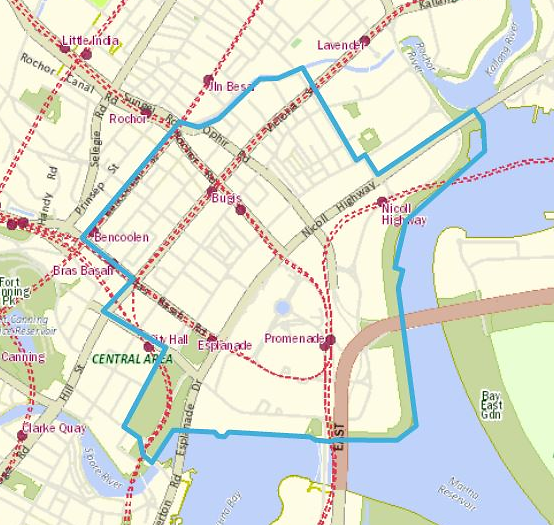
Map of the Enhanced Security Special Event Area. (Image: Police)
The Enhanced Security Special Event Area (outlined in blue above) is bounded by the following roads:
SINGAPORE: More experience-based activities will be rolled out to about 6,000 PAP Community Foundation (PCF) Sparkletots children during the upcoming school holidays.
The field trips are part of efforts to ramp up learning beyond the classroom – a key focus in PCF’s curriculum.
The programmes will include visits to KidZania, where children can try different jobs and gain financial literacy, and the SEA Aquarium, where they can learn about sea life and marine ecosystems.
PCF Sparkletots children practise their hand-eye coordination while playing at the construction theme park. (Photo: Tan Si Hui)
In subsequent years, the initiative will expand to all 360 PCF pre-schools, which about 43,000 pupils attend.
Minister of Manpower and PCF Executive Committee Chairperson Josephine Teo announced the initiative on Monday (Nov 5) at Bee Amazed Garden where 60 pre-school children learned about the behaviour of bees through games and role play.
“Most of the PCF Sparkletot centres are located within Housing & Development Board (HDB) estates, a vast majority of them have access to playgrounds, and community gardens are also very much a part of their learning curriculum.
“But we think that there is scope to extend beyond that. We particularly want to let the children have greater exposure to the outdoors,” said Mrs Teo.
The initiative is also part of efforts to ensure that more children will have access to equal learning opportunities.
PCF Sparkletots is currently the largest pre-school operator in Singapore. It recently announced that it has set aside S$20 million for the development of its teachers over the next three years.
PCF Sparkletots children at the Bee Amazed garden. (Photo: Tan Si Hui)
“It is always about uplifting every single child, and making sure that whatever starting lines they’re at, they have the opportunity to have the richest and (broadest) learning experience,” added Mrs Teo.
“The world is a big place. As early as we can, we want to expose our children to the wider world, develop their sense of curiosity, encourage them to ask questions, read, and have diverse interests.”
Mrs Teo said, however, that efforts cannot be one-off and have to be consistent.
STRUCTURED LEARNING PROGRAMMES
Beyond outdoor activities, there will also be more structured learning programmes offered to PCF Sparkletots children at subsidised prices, in areas such as speech and drama, sports, IT literacy and social etiquette.
PCF CEO Victor Bay said these 21st-century skills need to be developed at a young age, and the programme will be offered at a price of about S$3 to S$6 to defray costs such as transport.
A PCF Sparkletots student tries out a refracto meter. (Photo: Tan Si Hui)
“This programme is very important and we want to ensure that it will be available to as many children who need this as possible, therefore, we are keeping the costs low,” said Mr Bay.
Parents Channel NewsAsia spoke to said it was no longer necessary to send their children for enrichment programmes beyond those at PCF Sparkletots.
PCF Sparkletots children at the construction theme park. (Photo: Tan Si Hui)
Ms Janelle Kok, 31, who is a mother of two said: “Such a programme is good and sufficient, but it will be good if there are more programmes that teach children to be more environmentally friendly.”
Ms Norhafiza Jamil, 38, said she has seen positive changes in her five-year-old after attending the outdoor activities planned by the kindergarten and wants her other two younger children to follow in their sister’s footsteps.
“My child is now much more engaged. And because she wants to know more beyond the classroom, she asks me to go to the library with her to learn more.”
SINGAPORE: The army-wide safety timeout that was put in place after the death of full-time national serviceman (NSF) Liu Kai applies to training overseas as well, said Chief of Army Brigadier-General (BG) Goh Si Hou on Monday (Nov 5).
This includes Exercise Trident, a joint bilateral exercise between the Singapore Armed Forces (SAF) and Australian Defence Force.
“A safety time-out applies to all our training, whether local or overseas, including Exercise Trident.
“So the commanders on the ground are working with the soldiers in this safety timeout, and when all the reviews and rehearsals have been (put) in place, we will lift the safety timeout for the exercise to continue,” BG Goh said to reporters after a visit to the headquarters of armour formation at Sungei Gedong camp.
In this “protected time”, soldiers will be able to have rehearsals and drills, such as reversing drills, BG Goh added.
Corporal First Class (CFC) Liu Kai died on Saturday after he was involved in a vehicular incident at the Jalan Murai training area. He was operating a Land Rover during field training when a Bionix vehicle reversed into his vehicle.
BG Goh also said that the timeout is an opportunity to review all high-risk training and ensure that safety systems are in place.
“Ultimately, safety is a command responsibility in our army. Safety of our soldiers is our top-most priority as the chief of army. We want to ensure that all our soldiers can train effectively and safely and this is a commitment of all my commanders,” he said.
The wake of the late NSF Liu Kai, who died in a training incident on Nov 3. (Photo: Jeremy Long)
LIU KAI WAS A GOOD SOLDIER: CHIEF OF ARMY
BG Goh had earlier on Monday visited CFC Liu’s wake in Woodlands. He said that the army is “deeply saddened” by the death of the 22-year-old, and expressed his condolences to the family.
SAF officers pay respects at the wake of the late NSF Liu Kai on Nov 5. (Photo: Jeremy Long)
“I also shared with the family that Liu Kai will be remembered as a good soldier. He served with pride and his commanders remember him well for his dedication and his commitment in service. And I must add that he was well liked and well respected by his peers for his positive attitude and always willing to help out his fellow soldiers,” said BG Goh.
He added that the army will give CFC Liu a dignified send-off to honour his service to the nation.
While police investigations are ongoing, an independent Committee of Inquiry will be convened to investigate the circumstances leading to the incident.
“This is not only to provide full accountability to his family but also will allow us to strengthen the safety of our soldiers across the army,” said BG Goh.
SINGAPORE: The central banks of Singapore and Indonesia on Monday (Nov 5) signed agreements to set up a US$10 billion (S$13.8 billion) bilateral financial arrangement.
It will enable the two sides to access foreign currency liquidity from each other, if needed, to preserve monetary and financial stability, said the Monetary Authority of Singapore (MAS) and Bank Indonesia in a joint media release.
The bilateral financial arrangement, which will be in place for a year, was first announced last month by Indonesian President Joko Widodo and Singapore Prime Minister Lee Hsien Loong during their Leaders’ Retreat.
It comprises two agreements – a local currency bilateral swap agreement (LCBSA) that allows for the exchange of local currencies between the two central banks of up to US$7 billion; as well as an enhanced bilateral USD repurchase agreement of US$3 billion.
Bank Indonesia governer Perry Warjiyo (left) and MAS managing director Ravi Menon signing the financial agreement. (Photo: MAS)
An LCBSA is a common form of bilateral financial cooperation between central banks.
Such an agreement allows the two countries to ensure that trade between them can be settled in local currency, even in times of financial stress. This reduces the uncertainty and risk that can stem from exchange rate fluctuations in times of financial market volatility.
“The initiative reflects the strengthened bilateral monetary and financial cooperation between Singapore and Indonesia, and indicates the commitment of the authorities of Indonesia and Singapore to maintain financial stability amid the lingering uncertainty in the global financial market,” said Bank Indonesia governor Perry Warjiyo who signed the agreements on Monday.
MAS managing director Ravi Menon added: “Economic fundamentals in the regional economies remain sound. But markets can sometimes overreact in the face of heightened uncertainty. This bilateral financial arrangement will instil confidence amongst investors. It also reflects the close relationship between Indonesia and Singapore.”
The family of Corporal First Class Liu Kai, 22, who died from a vehicular accident during training on Saturday, said that they welcome all to send him off.
The wake of the late NSF Liu Kai, who died in a training incident on Nov 3. (Photo: Jeremy Long)
(Updated: )
Bookmark
SINGAPORE: Instead of celebrating her birthday last Saturday (Nov 3), one of the two sisters of Corporal First Class (CFC) Liu Kai received the news that her brother died in an accident during his National Service field training.
Her birthday became the day he died from injuries sustained during the accident, she told the media at Liu’s wake on Monday.
“As a family … we would like to invite all Singaporeans to Liu Kai’s memorial and final send-off tomorrow and let Liu Kai see, for the last time, the people of Singapore,” Liu Kai’s sister, who declined to give her name or age, said.
“As his sister, I’m very proud of him. He sacrificed for his country, it’s very honourable,” Ms Liu said.
The family was waiting for CFC Liu to return on Saturday afternoon from his training to celebrate his sister’s birthday, as they have done in the past, she said.
CFC Liu’s father, who came back from a China trip on Nov 1 with his wife, said that they had not spoken to their son for more than 10 days because of the trip.
The father and sister of the late NSF Liu Kai addressing the press near the venue of the wake in Woodlands on Monday (Nov 5). (Photo: Jeremy Long)
CFC Liu, a full-time national serviceman with a Private rank then, was operating a Land Rover as part of a field training exercise when a Bionix vehicle reversed into his vehicle at around 10.10am at the Jalan Murai training area.
He was a Transport Operator from the Singapore Armed Forces’ Transport Hub West.
He lost consciousness and was attended to immediately by a medic, said the Ministry of Defence (MINDEF) in a news release. CFC Liu succumbed to his injuries and was pronounced dead by medical officers at around 10.35am.
SAF officers at the wake of the late NSF Liu Kai on Nov 5. (Photo: Jeremy Long)
He was given the rank of CFC posthumously.
Police investigations are ongoing and an independent Committee of Inquiry will be convened to investigate the incident.
“I cannot comment on anything until the report (of the investigation) comes out … but we believe that they will give us justice,” said Ms Liu.
Jeffry Ali, a 32-year-old Singaporean, was accused of using criminal force on a woman of the same age at a first-floor unit in Wandervale condominium at about 5am on Sunday.
He allegedly kissed her face, cut and removed her shirt and pulled down her pants and underwear to her thighs.
Additionally, Jeffry is accused of voluntarily causing fear of instant hurt to the woman by holding a pair of red scissors and asking her to keep quiet.
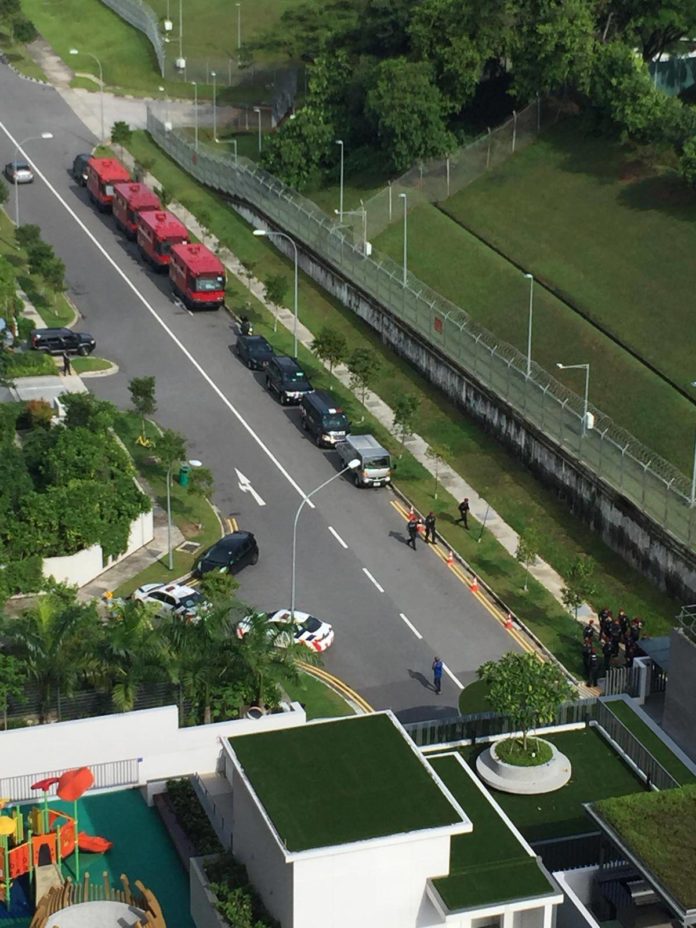
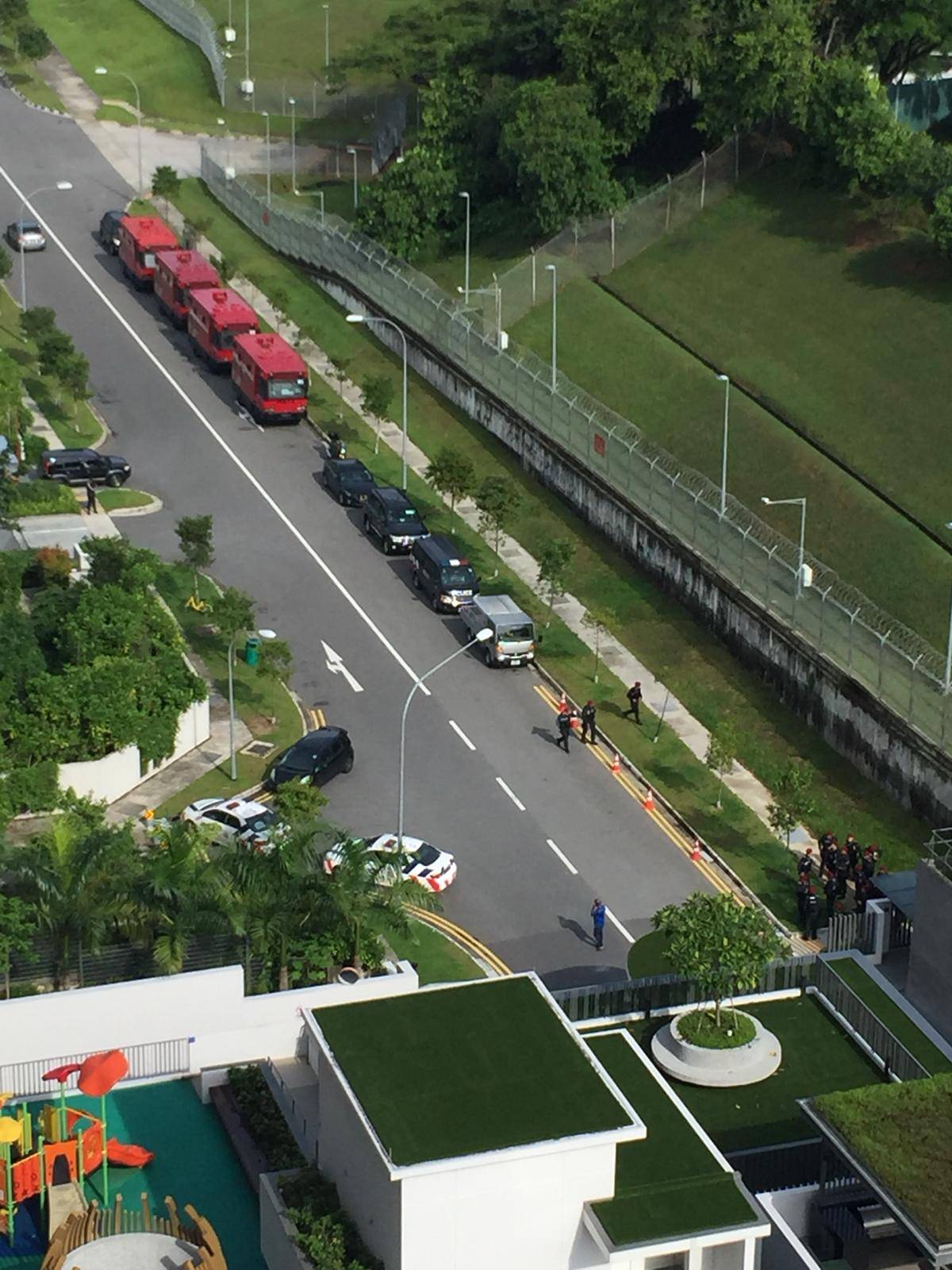
Photos circulating on social media show several police vehicles on the scene.
The police said they were alerted to the molestation case at about 5.40am on Sunday.
Officers from the Jurong Police Division and Special Operations Command conducted a search and subsequently arrested the man at the car park of the residential unit at about 11.40am.
A resident estimated that up to 50 police officers and about 17 police vehicles were on the scene.
If found guilty, Jeffry can be jailed for up to 10 years and caned.
He will be back in court next week.
When contacted, the management of Wandervale declined comment, citing ongoing police investigations.
SINGAPORE: In Singapore, women earn a staggering S$640,000 less than their male counterparts over a 40-year career.
The differential, which includes CPF contributions, was calculated as part of AWARE’s ongoing research on how the labour market treats women unfairly and what the government, employers, and trade unions can do to address gender inequality at the workplace.
The recent spate of conversations on Oxfam’s Commitment to Reducing Inequality Index omitted one of its most significant findings – how gender inequality contributes to economic inequality.
How does gender inequality manifest itself in a country where men and women have equal opportunities to education and jobs?
It takes three insidious forms: Unequal pay for equal work, unpaid care work, and the fact that the labour market sorts men into higher-paying jobs and women into low-wage work.
UNEQUAL PAY FOR EQUAL WORK
Using the Manpower Ministry’s Labour Force Survey data on median monthly incomes of male and female employees who worked full-time to calculate the gender wage gap over a 40-year period to cover an individual’s most productive work years, we found the gender wage gap has narrowed over the past decade but remains persistent across age groups, occupational categories, and hierarchical positions.
A woman walks through the Central Business District in Raffles Place. (File Photo)
In 2016, women earned less than men in all occupational categories except clerical support. The gap at the top of the career ladder, where women are underrepresented, is even worse. A measly 10 per cent of all corporate directors of SGX-listed firms are women, and they are paid a whopping 43 per cent less than their male counterparts.
What makes the wage gap possible?
Gendered social norms that inherently devalue women’s labour, and lack of policies that require employers to offer equal pay for equal work. In the workplace, women continue to face additional barriers – including gender bias, both conscious and unconscious, which result in unequal opportunities, choices and outcomes.
We regularly meet women who are discriminated against because of their motherhood or pregnancy status, women who are harassed at work, and women who are passed over for a promotion because of stereotypes that dictate what women “can” achieve.
It is easy to dismiss some of these claims as uncommon, after all Manpower Ministry statistics show only 57 pregnancy-related unfair dismissals in 2016.
However, these numbers would be much higher if the data took into account the full range of motherhood related workplace cases of well-performing pregnant employees whose contracts are changed from full-time to part-time, salaries reduced, positions demoted, and those who are forced to resign, shortly after their employers find out about their pregnancy.
Make no mistake, the gender wage gap not only affects women’s ability to make an income in their productive years, it also undermines their ability to save for their retirement needs.
A pregnant woman holds her tummy. (Photo: Pexels)
Singapore has definitely made some progress in narrowing the gender gap in CPF savings, but there is still a gap of around 11 per cent between the average CPF balances of women and men. With women living longer than men they need more, not less, retirement savings.
UNPAID CARE WORK IS STILL WOMEN’S WORK
Despite moves to encourage shared responsibility within households and between households, and the public provision of certain care facilities, domestic work, including providing care to children and elderly, and household chores, is still considered a female responsibility.
This work, which remains largely invisible and unpaid, has a direct effect on labour market outcomes, particularly with respect to female labour force participation, the gender wage gap, and even the duration, quality and type of paid work that women can undertake.
In 2016, 78 per cent of prime working-age women outside the labour force were not working because of family responsibilities, including caregiving. The comparable percentage of men outside the labour force was a puny 9.6 per cent. This gap in labour force participation between men and women further widens their earnings’ gap and therefore their retirement savings.
“Why can’t women just try harder?” is a question we are often asked at talks and events on gender inequality, suggesting hard work and the right attitude as an easy remedy to women’s workplace woes.
When women try to stay in jobs that do not provide paid childcare leave by taking unpaid leave to care for their sick child, they are dismissed for being “unreliable”. When they try to find new work, employers do not hire them because they do not want workers whose attention is divided between caregiving responsibilities and work.
File photo of a woman shopping for groceries at a supermarket in Malaysia. (Photo: AFP/ MOHD RASFAN)
These are some examples of the types of disadvantages mothers face at work, sociologists refer to it as the “motherhood penalty”, which numerous studies have quantified to be a wage gap of thousands of dollars between working mothers and childfree women over a lifetime.
In contrast, having kids does not affect men’s salaries, a recent study of careers of men and women in Denmark shows, and hardly affects their careers in terms of the type of jobs they gravitate towards.
A typical refrain of skeptics of the gender wage gap is that women just “choose” lower paying jobs, which conveniently ignores the structural conditions that lead to gender inequality in the first place.
Yes, it is true that women are over-represented in low-paying jobs in the social care industry and in cleaning, jobs considered to be natural extensions of their domestic roles in the private sphere.
It is not that women are deliberately choosing low-paying jobs but that the jobs they do are valued less than the jobs that men do. Empirical evidence shows that when a large number of women became designers in the US, wages occupation-wide fell by 34 per cent. When they became biologists, wages fell by 18 per cent.
Is this because women are seen as being of lesser worth? If so, the embedded misogyny needs to be tackled by not condoning any expression of it.
Women workers queuing at a job fair in Tampines. (File photo)
Another explanation for women’s over-representation in low-paying jobs has indeed to do with choice, but more importantly the social context in which they make the choice.
Women are not simply choosing low-paying jobs, they are choosing the types of jobs that provide temporal flexibility required to attend to their caregiving responsibilities. These jobs tend to be shift-based, part-time, low-paying, and precarious.
A possible alternative could be to create more flexible jobs to allow employees of all sexes to balance their career and caring responsibilities so that those looking for flexibility are not automatically pushed into the low-paying informal sector.
Fortunately, we can still take concrete steps to address the gender wage gap. First, public policy can encourage private sector companies with more than 250 employees to publish their median male and female wages.
In Britain, employees have used published wage data to talk to their managers about the concrete steps – such as training on unconscious bias for all their employees, evaluation of hiring and retention policies – that they plan to take to make workplaces more inclusive.
Second, the Singapore Government should disallow unequal remuneration for equal work in all sectors of the economy. It should go beyond promoting Tripartite Guidelines on Fair Employment Practices to providing employers with incentives to organise regular unconscious gender-bias training for managers and HR professionals, and to clearly communicate their grievance handling procedures to their employees.
Finally, we must recognise, reduce and redistribute caregiving responsibilities so that they become a shared social responsibility. The provision of free childcare, increased investments in eldercare infrastructure, more flexible working arrangements, and paid family care leave are some measures known to reduce adverse labour outcomes for women.
As we continue our fight against economic inequality, let’s bear in mind that addressing gender inequality is of critical importance for realising a Singapore that cares for all.
Shailey Hingorani is head of advocacy and research for the Association of Women for Action and Research (AWARE)
SINGAPORE: The Singapore Land Authority is looking to use drones to perform scheduled inspections on offshore islands under its care – remotely and without a pilot.
In March, SLA conducted trials on Pulau Seringat and Kusu Island – an area of some 42 hectares among the Southern Islands region – to explore the possible uses of drones for operational purposes.
Conducted with robotics experts HUS Unmanned Systems, the drone flew according to pre-planned waypoints and pre-defined flight schedules instead of being manually piloted.
SLA and HUS Unmanned Systems conducted drone trials on Kusu Island in March. (Photo: Singapore Land Authority)
Currently, drones in Singapore have to be flown with a pilot on the ground maintaining line of sight with the device for safety purposes.
But the low population density of the offshore islands means the use of unpiloted drones can be considered.
SLA has sought the Civil Aviation Authority of Singapore’s permission to operate the unpiloted drones.
If approved, it would be one of the first agencies to do so.
Mr Vincent Aw, Head of Systems and Support, Land Management at the Singapore Land Authority, told Channel NewsAsia that the high-resolution imaging capabilities of the drones mean they can pick up maintenance issues that are out-of-reach and also humanly difficult to see – such as hairline cracks or damages on rooftops.
SLA already conducts similar maintenance checks using drones – albeit piloted – at its other properties on the mainland.
“We would like the drones to fly on pre-determined schedules, cover the island in a pre-set manner. From there, maintenance issues will be picked up for our officers,” said Mr Aw.
“We will probably do it quite frequently so that we have a very comprehensive inspection regime without having officers cover the site.”
When asked about safety precautions, he said the intention is to fly the drone when there are not many people on the ground, such as before the first passenger ferry arrives on the island.
28,000 visitors go to Kusu Island during the pilgrimage season to pay their respects at the Tua Pek Kong Temple and the island’s keramats. (Photo: Gwyneth Teo)
Currently, only the caretaker of the Tua Pek Kong Temple lives on the island.
“Other than that, the drone will have built-in safety features to ensure it returns to home whenever there are issues detected on board,” he added.
OTHER TECHNOLOGICAL AIDS
If operationalised, the drone will join a host of other technologies deployed on the islands since SLA took over management of 10 offshore islands in March 2017.
They include Kusu Island, St John’s Island, Lazarus Island and Pulau Seringat, which are all located south of Singapore.
These technologies help the agency perform its key duties on the islands – which are primarily maintaining the grass, housekeeping, pest control and security.
For instance, the agency has implemented a remote utilities monitoring (RUM) dashboard to keep track of water and diesel levels on the islands.
There are no direct utility lines to the offshore islands, so water and diesel tanks would have to be manually replenished – meaning they are ordered and brought in by boat – so that supply is not disrupted.
Previously, officers would have to literally eyeball the water levels in Kusu Island’s two water tanks – marked with a simple ball gauge.
Considering the tanks are mounted several metres above ground, it was hard to see the gauge, especially against the glare of the sun or in heavy rain.
It was also time-consuming, considering officers would have to travel on a ferry from the mainland just to perform such routine checks.
Now, using the RUM, officers can keep an eye on the water levels even from their office on the mainland, and need only visit the island once a month, rather than weekly.
They can also focus their attention on other pressing issues.
BENEFITS TO VISITORS
The technologies ensure a level of comfort for visitors that goes unnoticed.
For instance, the water tanks supply water to the toilets and a hawker centre that opens only during the pilgrimage season, which takes place during the ninth lunar month.
28,000 visitors go to Kusu Island during the pilgrimage season to pay their respects at the Tua Pek Kong Temple and the island’s keramats. (Photo: Gwyneth Teo)
During this period, the water tanks – which have a total capacity of 150 litres – have to be topped up every day.
Otherwise, the water supply can last two weeks during the off-peak season.
In recent years, some 28,000 pilgrims visit the island during each season.
SINGAPORE: The ASEAN Economic Community (AEC) has come a long way since it was conceptualised in 2003.
A market of 542 million people, ASEAN was then growing at a rate of 5.5 per cent vis-a-vis the global growth of 4.2 per cent.
Fast forward fifteen years later. ASEAN is a market of 642 million people, growing at a rate of 5.9 per cent, much higher than the global economic growth rate of 3.8 per cent.
And its share of global economic prosperity has also shot up. ASEAN’s contribution to global income has risen from 1.9 per cent to 3.5 per cent over these years.
The upbeat story of ASEAN’s growth is one about the huge expansion of trade, investment and people’s movement.
In 2003, while total merchandise trade, investment and visitors’ arrival through tourism flows stood at US$825 billion, US$24 billion and US$38 million respectively, those numbers have more than tripled at US$2.6 trillion, US$137 billion and 126 million respectively in 2017.
This means trade, investment and people movements have risen at 9.2 per cent, 14.3 per cent and 9.7 per cent respectively each year over the same period.
Drawing Foreign Direct Investment (FDI) that simultaneously promotes international trade has always been a key imperative for the ASEAN countries to establish an AEC.
Ministers gather at the ASEAN meeting in Manila, where it was announced the group is to sign a free-trade agreement with Hong Kong in November. (AFP/TED ALJIBE)
In the late 1990s, as the ASEAN countries were suffering from the Asian Financial Crisis; China was fast emerging as a manufacturing powerhouse in the region, diverting FDI away from the region. India was also fast developing itself as a services hub, leaving the ASEAN countries behind.
In this scenario, the decision of the 10 small Southeast Asian countries to integrate themselves and provide economies of scale to entice foreign investors back to the region has proven to be a wise one.
ASEAN had always looked for two kinds of economic integration, both an intra-regional one within member countries themselves, and the other between ASEAN countries and the rest of the world.
To encourage intra-regional flows, ASEAN had decided not only to eliminate trade tariffs among its members but also got commitments from the ten economies to harmonise rules and regulations, modernise customs, build institutions and invest in infrastructure in their national economies.
In 2017, of total ASEAN’s trade, investment and tourism flows, intra-regional goods flow accounted for 23 per cent, services flow 17 per cent, investment around 20 per cent and people movement 37 per cent.
Although intra-regional flows remain modest, they have the potential to go up as ASEAN countries undertake domestic reforms and build infrastructure.
Moreover, given current global conditions, where the US and China are on a verge of a prolonged trade war, and an impending Brexit, ASEAN countries can be attractive alternative destinations for foreign investors.
The White House threat to impose tariffs on all US imports from China has increased the prospects of an all-out trade war between the world’s top two economies (Photo: AFP/STR)
TRADING MORE WITH THE WORLD
As ASEAN pursues greater integration among member countries, it has also doubled down on the lowering of other trade barriers with the rest of the world.
The region has signed free trade agreements or made other institutionalised arrangements with its major economic partners over the last two decades – including China, Japan, South Korea, India, Australia and New Zealand.
As ASEAN countries’ manufacturing supply-chains spread out beyond the region and often include these big economies, promises to reduce tariffs or increase connectivity with these countries are obvious enablers for higher trade and investment in the region.
One obvious example of such supply-chain network is the automobile industry in ASEAN, production of which can be sliced into 30,000 to 40,000 parts across multiple geographies.
For a Japanese auto manufacturer, such as Toyota, Honda or Nissan, while decision for investment policy is carried out in Japan, production of auto parts like the front wheel, the clutch, the gasoline engines, the transmission, the engine computers and many others are done in ASEAN countries, namely Malaysia, Indonesia, the Philippines, Thailand and Vietnam, depending on each of their competitive advantage.
A new era is dawning on the grouping, giving it fresh imperative to push harder on economic integration. ASEAN has recently shifted its focus towards the digital economy.
In 2018 alone, the ASEAN countries are working on several deliverables, namely the ASEAN Single Window (ASW), e-commerce and the ASEAN Smart Cities Network.
Singapore’s Prime Minister Lee Hsien Loong and ASEAN foreign ministers pose for a group photo during the opening ceremony of the 51st ASEAN Foreign Ministers’ Meeting in Singapore Aug 2, 2018. Photo: Reuters/Edgar Su)
This is not surprising as of total ASEAN’s population, around 75 per cent or 480 million are internet users and almost all are mobile phone users. More than 50 per cent of ASEAN’s population is under 30 years old and have greater affinity for technology and internet-based transactions.
ASEAN countries have been paying attention to building Information Communications and Technology (ICT) infrastructure for a while, where mobile broadband penetration is relatively high in most ASEAN nations.
ASEAN countries therefore have great reason to develop their e-commerce industry, which is relatively small and concentrated in the advanced ASEAN countries.
To develop the industry across the region, the ten countries are working on the e-commerce ecosystem (i.e. customs, logistics, payment solutions, online security and data flows), to make transactions between consumers and producers more seamless yet safe.
A future where e-platform giants, such as Amazon, Lazada, Shopee, Zalora and many new ones can carry out business operations in the region at a low cost and seamlessly is at hand.
Five ASEAN countries, namely Singapore, Malaysia, Thailand, Indonesia and Vietnam, have gotten together to operationalise the ASW earlier in 2018, meaning that traders now only need to submit one report with import and export information that national regulators in these five countries can freely access via an electronic system.
Gone will be the old method of submitting paper documents to multiple government agencies to obtain goods clearance, thus reducing the time and transaction costs that companies used to bear, on top of increasing transparency.
Finally, ASEAN has decided to raise regional connectivity through the Smart Cities Network. 26 pilot cities across 10 ASEAN countries have been identified as testbeds where technology and digital solutions will be applied to address traffic congestion, pollution, sustainable energy, and other development challenges modern cities face due to rapid urbanisation.
Prime Minister Lee Hsien Loong at the ASEAN Summit working dinner on Friday (Apr 27). (Photo: ASEAN2018 Organising Committee)
It’s a win-win for ASEAN’s ties with its major economic partners, where investments in projects are open to all for financing and the sharing of best practices with respect to technology, governance and sustainable development.
A LONG WAY IN COMING
Indeed, ASEAN has come a long way from its humble beginnings of the 1990s when it primarily looked at the traditional economy to raise trade and investment in the region.
From a cautious approach by staggering its liberalisation process from merchandise trade to services and investments later, ASEAN has since moved to undertake economic integration on a more comprehensive and ambitious scale to enhance trade, investment, people and infrastructure connectivities both among its member economies and with the rest of the world.
Its advancement in the digital space will not be without new dilemmas however. While these efforts help small- and medium-sized enterprises plug into regional supply-chains and expand business operation overseas, it also raises new challenges of cybersecurity, privacy and data flows in the region.
But developments on the whole suggests there is room for optimism in the shift underway. ASEAN’s efforts at strengthening cooperation both across the traditional and digital economies can help boost ASEAN’s competitiveness and growth in a way that is sustainable.
And this new vision of enhanced connectivity will support greater trade, investment and innovation needed to ensure the region remains a vibrant and resilient region going forward.
Dr Sanchita Basu Das is Lead Researcher for Economic Affairs at the ASEAN Studies Centre of ISEAS – Yusof Ishak Institute.