SINGAPORE: The flu season is upon us once more, the time of year when we traditionally remind the public to get their flu shot.
The Ministry of Health recommends people get the flu shot once a year, particularly those at high risk of infection, including young children aged six months to five years, pregnant women, the elderly, patients with chronic conditions or weakened immunity, people living in long-term care facilities, and healthcare workers.
Yet vaccination levels are low in these groups, according to research at the Saw Swee Hock School of Public Health. About one in 10 pregnant women and one in eight young children get vaccinated against the flu.
Low awareness of flu vaccines and a lack of prompts to get vaccinated partly explain this. Our studies show people are much more likely to get the flu shot if recommended to by a healthcare provider, but only a minority say they get such recommendations.
Among people who do not get the vaccine, some common misconceptions prevail.
One is that the flu shot causes the flu. This is not the case. The flu shot does not contain any live viruses so it cannot cause an infection.
The vast majority of people who get the flu jab will not experience adverse effects after getting vaccinated.
Some people may feel minor pain or swelling at the site of injection, and more rarely they may experience some fever. But these are signs that the vaccine is triggering the body’s immune system, exactly what it should be doing.
The vaccine is also safe for pregnant women, and can be administered at any time during pregnancy.
Woman getting her flu vaccine. (Photo: Unsplash/Hyttalo Souza)
Another misconception is that the vaccine is needed only when you travel to colder climates in winter.
Flu viruses circulate all year round in Singapore, with two peaks in transmission around June and December each year, corresponding to the start of the winter season in the Southern and Northern Hemispheres – so you are more likely to get the flu at home than abroad.
This is why people at high risk of infection are recommended to get the vaccine every year, regardless of how often they travel.
NOT EFFECTIVE?
Apart from dispelling these misconceptions, another barrier to increasing vaccine uptake is that confidence in flu vaccines is generally low.
Common childhood vaccines are typically very effective; measles vaccine, for example, can reduce a child’s risk of getting measles by more than 90 per cent. Flu vaccines, on the other hand, tend to be between 30 and 70 per cent effective, and work less well in the elderly, who are at greatest risk of serious flu and related complications.
Flu vaccines are less effective because flu viruses are continuously evolving and mutating, so new vaccines have to be developed each year to keep up with constantly changing viruses.
The flu vaccine available in one particular season protects against the prevailing three or four strains expected to be most common in that flu season.
But flu viruses are difficult to predict. In some years there is a poor match between circulating flu viruses and the vaccine, which means that the vaccine may provide less protection against some of the viruses common in that season.
People at high risk of infection are recommended to get the vaccine every year, regardless of how often they travel. (Photo: Unsplash/Kelly Sikkema)
Some types of flu viruses, including the most common type in recent years, the influenza A/H3N2 virus, are trickier to produce vaccines for and also cause more serious illness.
You will often hear people, including general practitioners and those of us working in public health, say that flu vaccines are not very effective, which gives the impression that they are not useful. This is poor health communication.
Saying that the flu vaccine is not very effective implies that there is something inherently wrong with the vaccine or that it is not worth the money, which might discourage people from taking it. But this is not sound reasoning.
If you ride a motorbike, wearing a helmet reduces your risk of a severe head injury by about 40 per cent. This means that if you are involved in a serious accident, 60 per cent of the time, you will still suffer severe head trauma.
Few people would find this a good reason not to wear a helmet. If you want to reduce your risk further, you should use a car. (Incidentally, public transportation is even safer.)
Yet in Singapore, there are 15 times as many deaths from flu and related complications every year as there are from motorbike accidents.
Even if we could prevent only 40 per cent of these through vaccination, the number of lives saved would still outnumber all road traffic fatalities by two to one.
Communicating the benefits of flu vaccines in this way gives a clearer message why we should get vaccinated.
Flu jabs are not perfect, but they are well worth a shot. Scientists are continually working to develop better flu vaccines, but the prospect of a universal, all-protecting flu shot is still some way off.
In time, you may well be able to ride out the flu season in a fancy new car. But for the moment all we have is a motorbike, and you would be well advised to put on a helmet.
Speak to your doctor about the flu vaccine. If you are in a high-risk group, the vaccine is claimable through Medisave.
Clarence Tam is an assistant professor and infectious disease epidemiologist at the Saw Swee Hock School of Public Health.
SINGAPORE: A new programme was launched by Minister for Communications and Information S Iswaran on Wednesday (Nov 7) to support the growth of promising start-ups in Singapore.
Called SG:D Spark, the programme – by the Infocommunications and Media Development Authority (IMDA) – aims to address the challenges faced by businesses in the infocomm media sector and support them through selected Government grants and access to industry community partners.
It is aimed at Business to Business and Business-to-Consumer customers.
Under the programme, start-ups will be able to access and leverage existing TechSkills Accelerator (TeSA) manpower programmes to support and scale their businesses. They will also get priority processing of grant applications by IMDA as well as access to community events and professional service firms and industry mentors, among other benefits.
The industry partners and Institutes of Higher Learning that will support these companies include Facebook and the National University of Singapore.
IMDA Chief Industry Development Officer Howie Lau said the programme aims to close certain gaps that start-ups face such as getting access to funds and talent, and leveraging multiple resources.
“(The programme is about) helping them to get access to potentially new customers – including the Government as a customer, get access to talent and helping them with a community of support services as well – whether it’s legal, whether it’s with accounting or others.”
“Companies that we’re looking at – AI, blockchain, Internet of Things. But at the same time any of the start-ups that are there that have a very strong tech-innovation angle can apply,” added Mr Lau.
The programme was launched at the inaugural Singapore Digital Techblazer awards, held at Resorts World Sentosa Convention Centre, to recognise Singapore’s most innovative companies.
Minister for Communications and Information S Iswaran and recipients of the Singapore Digital Techblazer awards. (Photo: SGTech)
Eight companies were given the awards in three categories, including having the most potential in Singapore and abroad as well as being the best adopter of digital technology. IMDA said it received 331 applications for the award.
They include M-DAQ Pte Ltd for their Aladdin solution – which allows online merchants to price items in their customers’ local currencies and allow payment to be received in the merchants’ desired currency through a fixed conversion rate.
Mr Iswaran said infocomm media is a key driver of Singapore’s economy, and needs to be developed further to serve new demand.
“Through the support from subject matter experts within the community together with Government tools, we aim to provide the resources, knowledge and network that are essential to the companies’ growth,” he said.
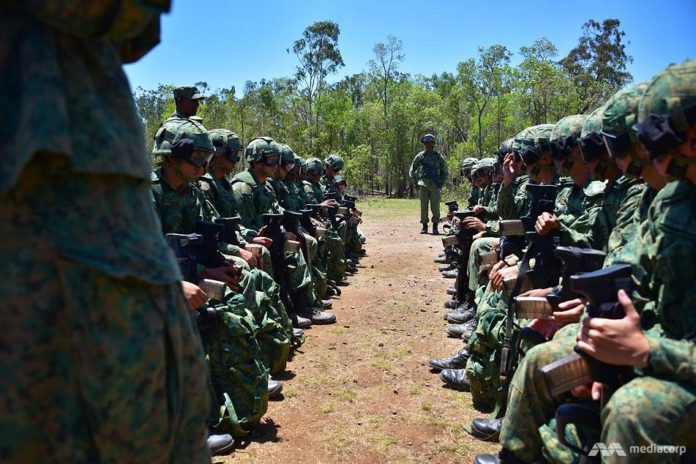
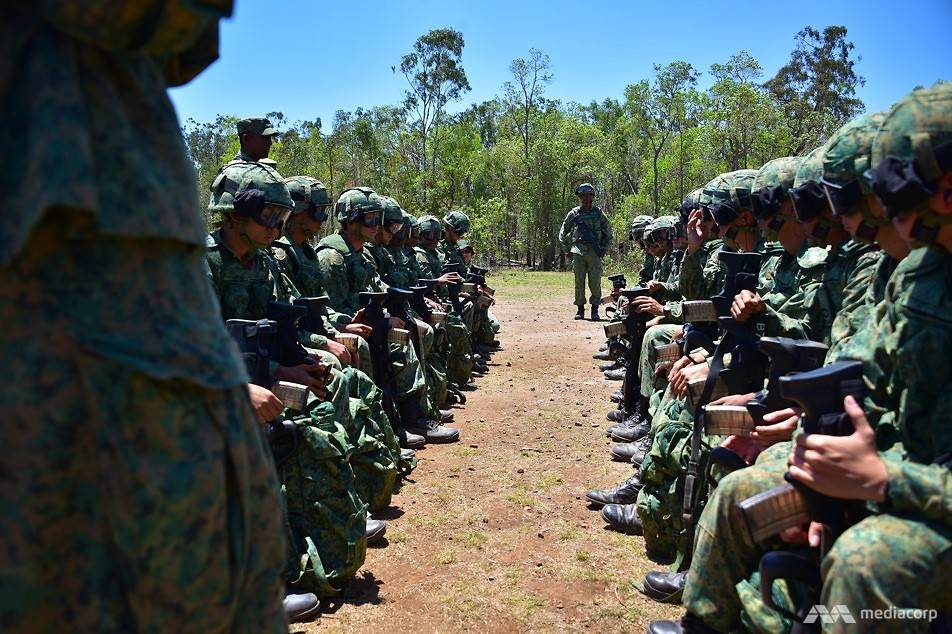
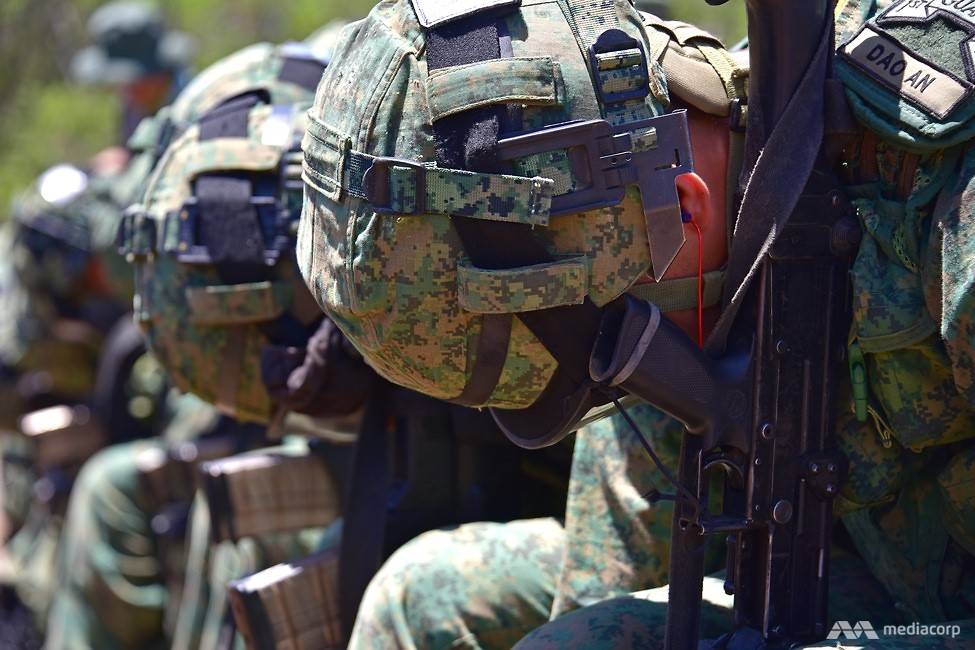
ROCKHAMPTON, Australia: “Brace, brace, brace!” The muffled chants rose from two lines of soldiers on benches in the middle of a dusty clearing. All of them had their heads bent over their knees, their rifles between their legs.
Seconds earlier, the troops’ commander had declared an emergency on board the “helicopter” they were in, forcing the soldiers to assume the safety position.
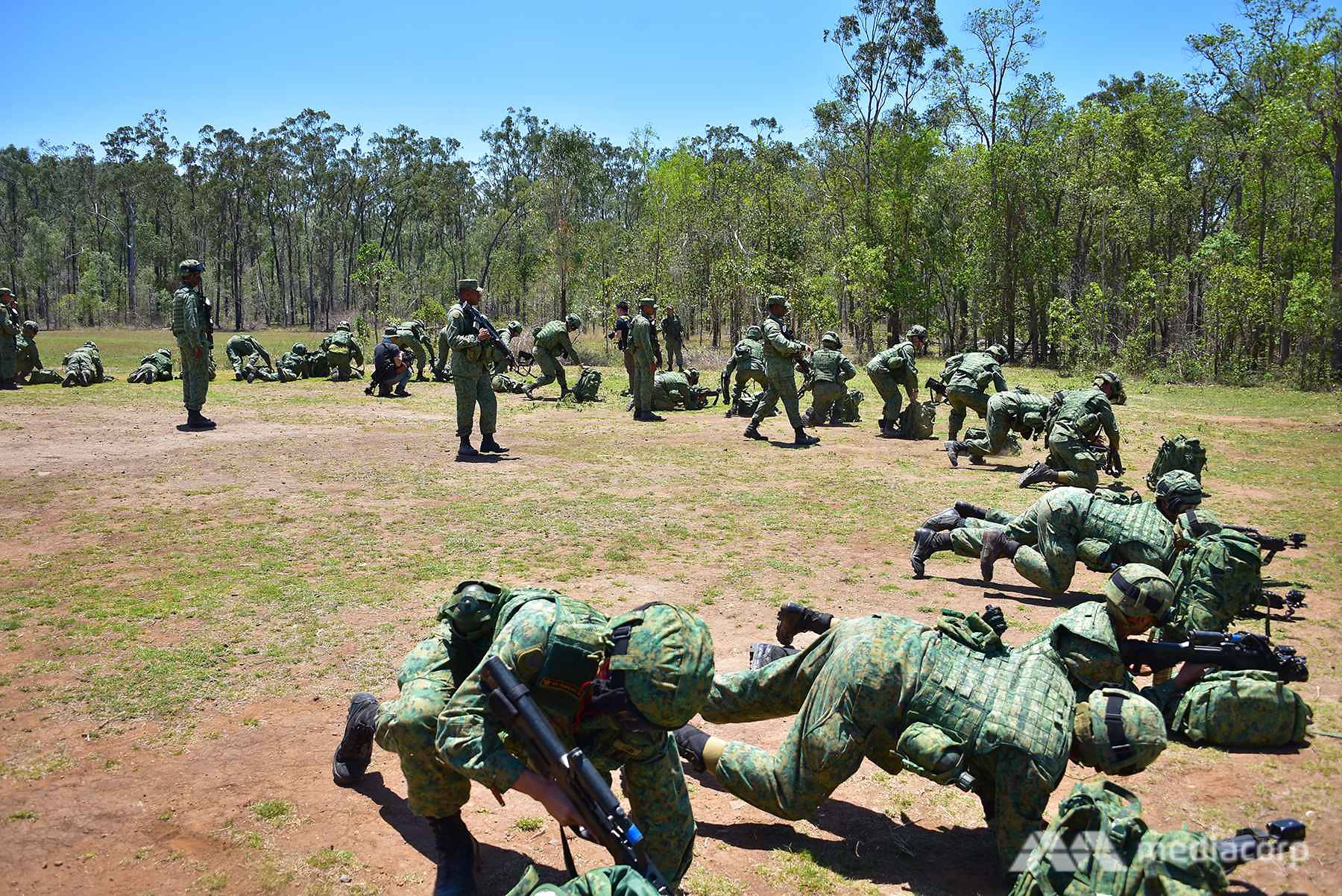
Soldiers in a simulated helicopter drill during the safety timeout at Exercise Trident. (Photo: Gaya Chandramohan)
Soldiers in the brace position. (Photo: Gaya Chandramohan)
The soldiers at Shoalwater Bay’s Camp Growl were rehearsing a simulated drill for boarding and disembarking from aircraft for live heli-troop lifts, but these safety drills had not been on the agenda for Tuesday morning (Nov 6).
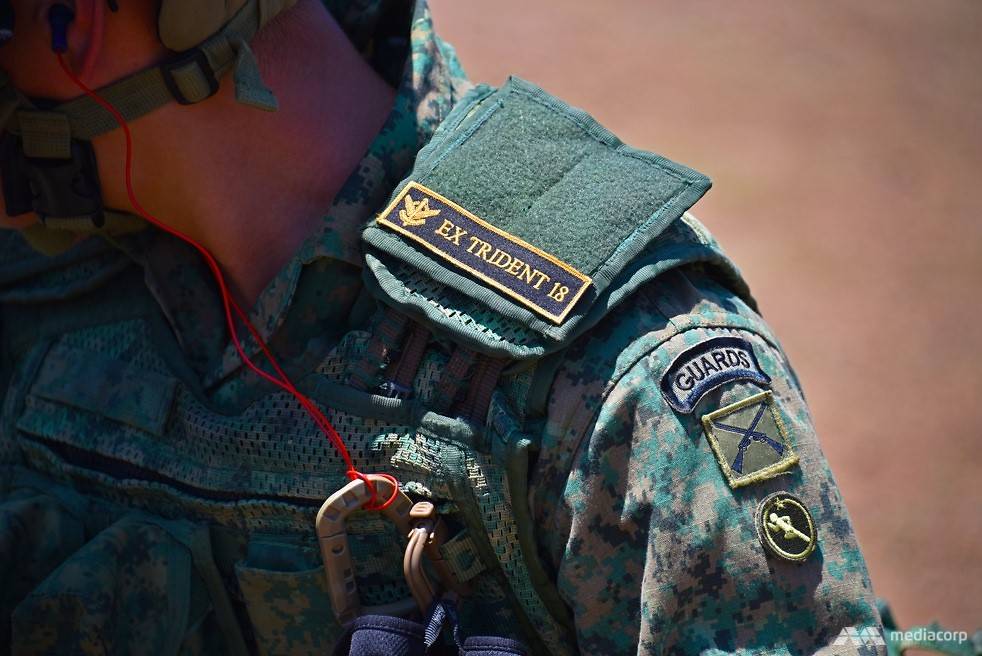
The Singapore Armed Forces (SAF) soldiers were supposed to have been involved in urban operations with the Australian Defence Force (ADF) as part of Exercise Trident, a joint bilateral exercise.
(Photo: Gaya Chandramohan)
However, due to the army-wide safety timeout that was put in place after the death of full-time national serviceman (NSF) Liu Kai in Singapore, all training has been halted, including bilateral exercises overseas.
Corporal First Class (CFC) Liu Kai died on Saturday after a Bionix armoured vehicle reversed into his Land Rover during a field exercise at the Jalan Murai training area.
Soldiers taking part in a drill at Exercise Trident during the safety timeout. (Photo: Gaya Chandramohan)
In Rockhampton, more than 5,000km away, the troops’ focus during this period has shifted to bolstering safety measures.
For example, the troops involved in Exercise Trident have been rehearsing how to get on and off helicopters safely, and the actions to take before and after embarking.
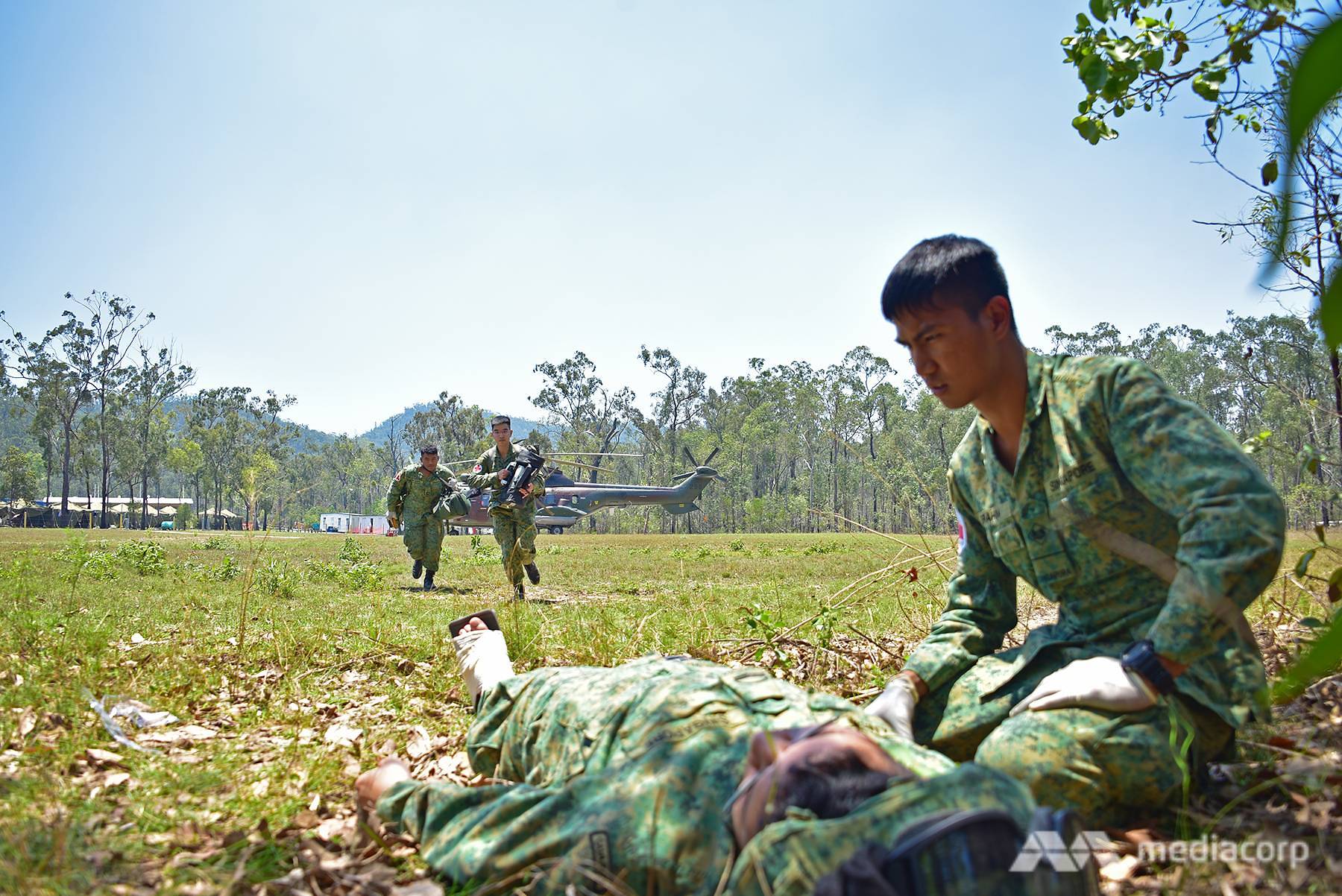
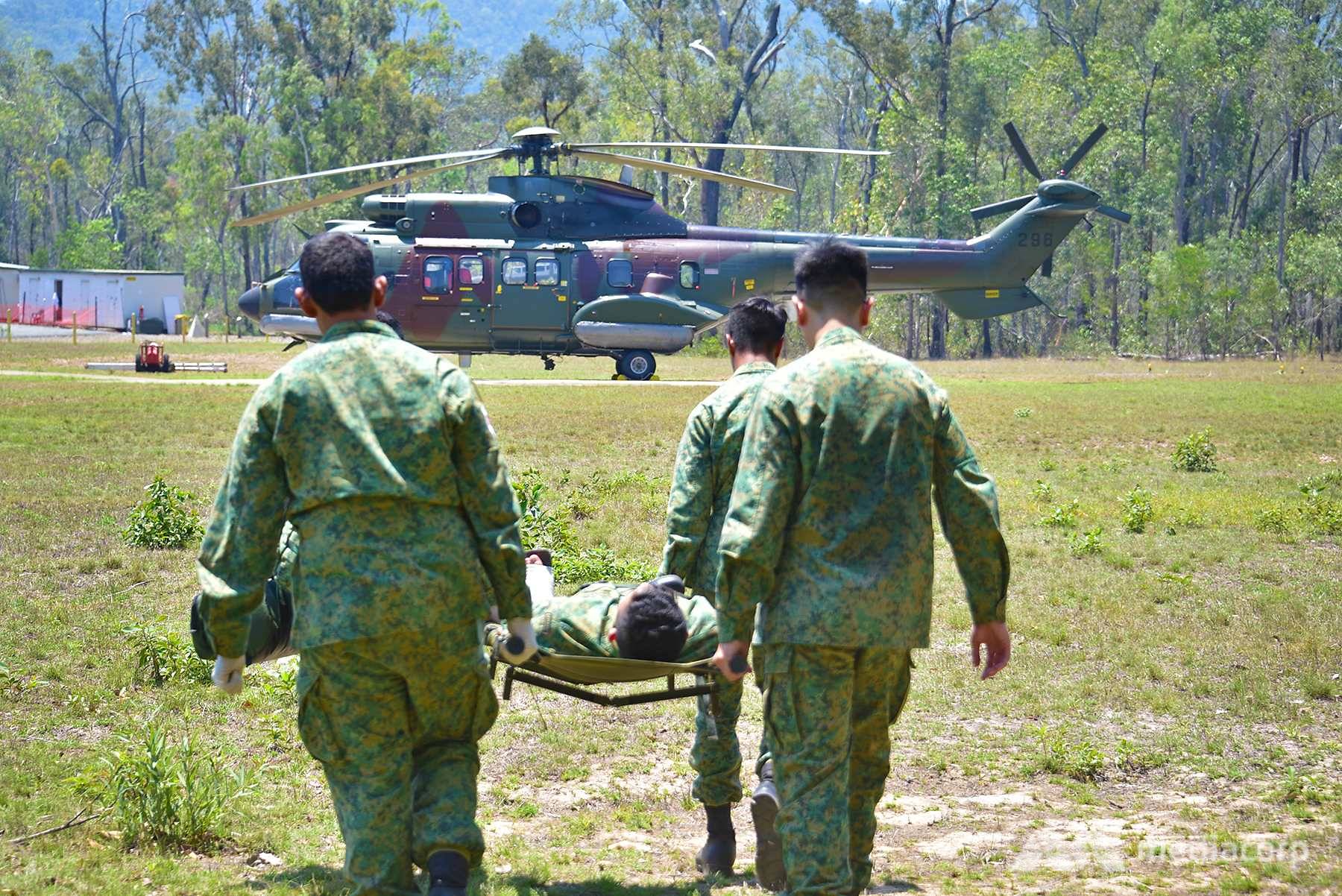
A simulated helicopter evacuation at Exercise Trident. (Photo: Gaya Chandramohan)
(Photo: Gaya Chandramohan)
Commanders and soldiers in Shoalwater Bay have also been re-examining and rehearsing the safety precautions of high-risk training activities such as ship-to-shore operations, driving long distances on dusty roads as well as heat injuries.
Col Xu You Feng, Commander of the 7th Singapore Infantry Brigade (SIB) said that once the timeout was called, they regrouped and brainstormed how to further enhance training safety.
“I think some of the ideas that have actually surfaced from the ground … we have simple innovation from the soldiers to mitigate training risks that they face,” he told reporters at Camp Growl on Tuesday (Nov 6).
Col Xu You Feng, commander of the 7th SIB, speaking to reporters. (Photo: Gaya Chandramohan)
“For example, we have certain combat driving drills for combat vehicles. For this exercise, there are no combat vehicles involved, but we thought that those drills are good and we even applied that to our administrative vehicles as well. So the administrative transport operators would also execute the same drills as what we do ordinarily for only combat drivers,” Col Xu said.
Agreeing that it was a good suggestion that would be implemented after the safety review, the commander also cited feedback on the ground about preventing dust clouds while driving.
“Dust clouds are a very unique challenge in operating in Shoalwater Bay, so some of the transport operators have suggested some improvised mud guards, for example, to be attached to the vehicles to reduce or minimise the dust clouds. This is something we are trying out, that was surfaced to us,” he added.
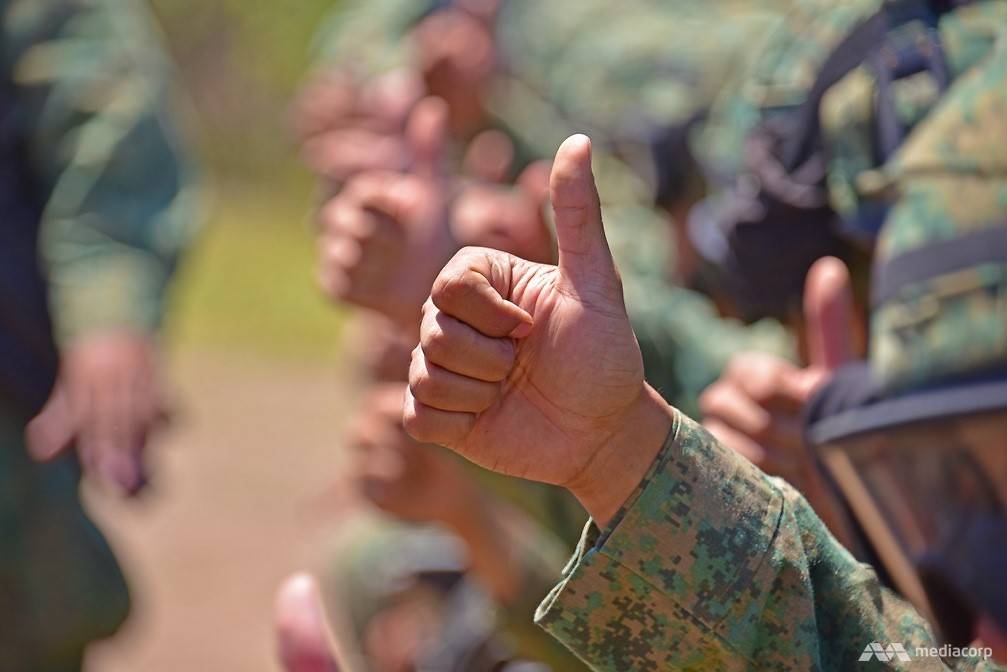
Soldiers indicating they are settled in during a simulated drill. (Photo: Gaya Chandramohan)
The commander emphasised that safety “has always been a key focus” for Exercise Trident, even before the timeout was imposed, due to its inherently complex exercises and setting in an unfamiliar terrain and climate.
“The safety timeout to us this year is a sobering reminder of the importance of our safety training framework,” he said.
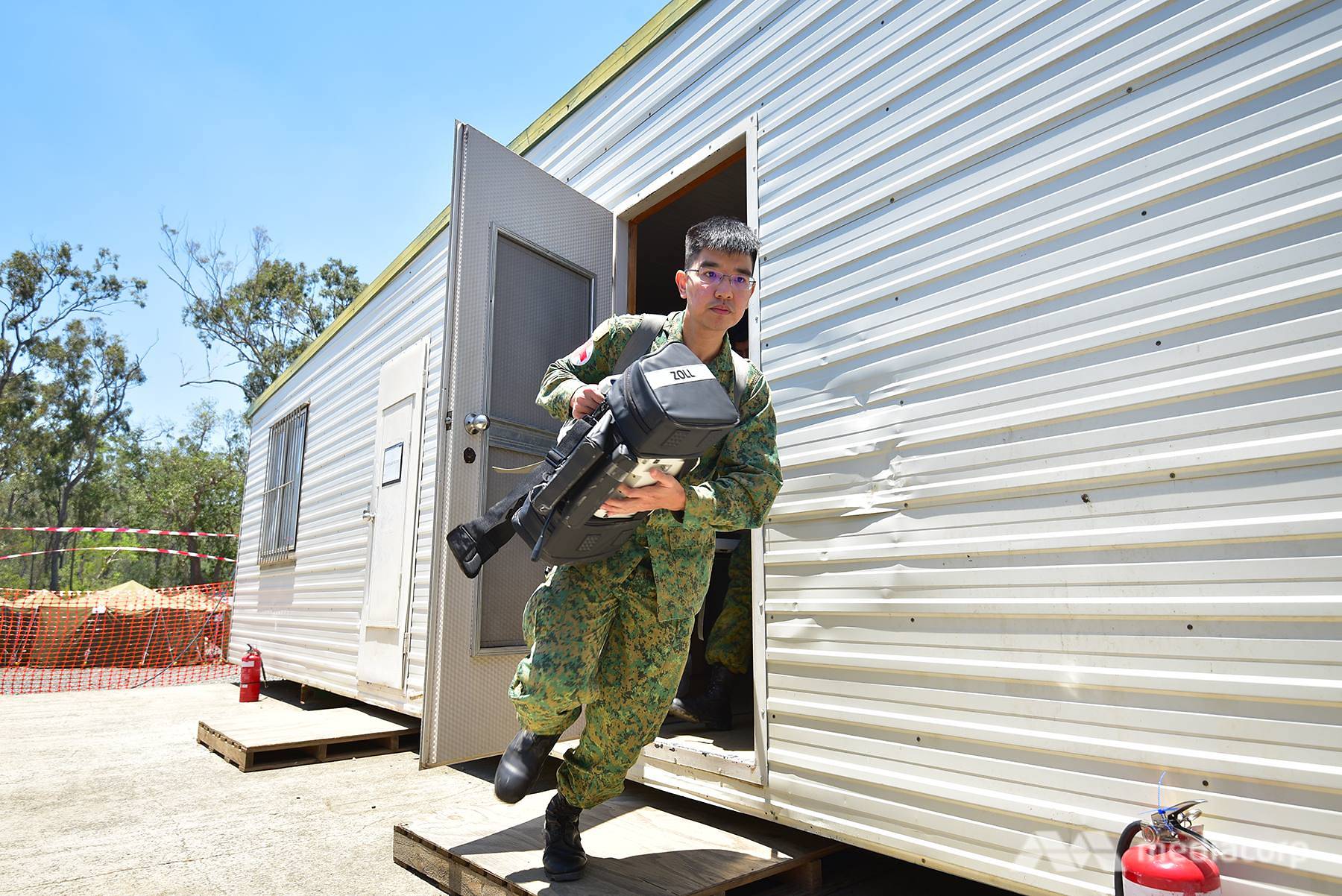
At the medical bay in Camp Growl. (Photo: Gaya Chandramohan)
He added that, ultimately, the safety timeout has given them the chance to be more deliberate in their rehearsals and that they have been engaged in an expanded suite of drills.
“Usually we would have just taught them the drills but since we have time, we took this time also to teach and explain to them the rationale behind some of the drills. This is something that we ordinarily would not have done.”
Soldiers getting in prone position during a drill at Exercise Trident during the safety timeout. (Photo: Gaya Chandramohan)
He added: “One of the important points I want to raise is that we remain confident of our training safety and we will not let incidents like this hold us back from conducting tough and realistic training albeit in a safe way.
“So when (Exercise) Trident resumes – we know that Exercise Trident is a very important training opportunity – you won’t find us walking on eggshells.
“We will be cautious, we will be careful, but we will still try to maximise the training opportunities – not just for the army, but for the Air Force and the Navy as well.”
The troops will resume training on Thursday after the safety timeout is lifted.
SINGAPORE: Two companies in Singapore received on Wednesday (Nov 7) the Great Place to Learn certification, which was awarded for the first time this year.
Logistics company Shalom International Movers and lighting accessories retailer Signify were recognised by consulting firm Great Place to Work Institute Singapore (GPTW) after at least seven in 10 employees said in a survey that the company they work for is a “great place” for learning and development.
GPTW, which has been in Singapore for four years, studies and assesses workplace culture and recognises outstanding workplaces in 45 countries worldwide.
Shalom International Movers was also one of 13 companies to receive the Great Place to Work certification.
It was ranked seventh out of 10 in the medium and large-sized enterprises category, which was topped by Salesforce for the fourth consecutive year.
Salesforce topped the list of Singapore’s Best Workplaces at the annual Great Place to Work Awards Ceremony on Nov 7, 2018. (Photo: Great Place to Work Institute Singapore)
Tech company Intuit was ranked first in the small enterprises category. Other companies awarded include DHL Express, Mastercard, Cisco and Royal Plaza on Scotts.
Shalom International Movers’ practices have led to more than 25 per cent of its staff staying on for more than 10 years – in an industry that typically sees a high turnover rate.
Among these are the efforts it has put into making sure its movers are accredited for their skills.
It tied up with the Institute of Technical Education (ITE) in 2014 to put its movers through certification courses, after it noticed that the skills they acquired on the job were not formally recognised.
Mr Gideon Lam, CEO of Shalom International Movers said: “Everything we do, our men must have pride.”
“These organisations create and sustain high-trust, high-performing workplace cultures. They show us that an inclusive, encouraging workplace is possible, regardless of company size and industry,” said Mr Zaqy Mohamed, Minister of State for Manpower, during the Singapore’s Best Workplaces Awards ceremony.
“Their efforts are especially laudable given the many challenges our modern workforce and businesses face today.”
TRUST AND RESPECT MAKE A GREAT PLACE TO WORK
Working with the Singapore Management University, GPTW conducted surveys at more than 800 organisations with over 400,000 employees across the region, which contributed to research showing a strong link between high levels of “psychological safety” and a strong teamwork culture.
Ninety-two per cent of employees who thought of their company as a great workplace also rated the organisation high in psychological safety.
This refers to an environment where employees can speak their minds freely and make honest mistakes without fear, according to the GPTW study.
In short, it’s an environment where employees feel comfortable being themselves, said Professor of strategic management Richard Smith.
“Studies have shown that a sense of psychological safety drives people to contribute more, take more risks and perform better as a team,” said Prof Smith.
“This study also observed that psychological safety has 10 times the impact on teamwork, relative to other organisational climate factors combined – which include remuneration, recognition and development opportunities.”
Some elements that are key to this are the behavioural integrity of a company’s leaders, organisational practices that are supportive of employees, and healthy relationship networks.
For Singapore, relationship networks in the form of collective approval and acceptance had the largest impact on perceptions of the degree of one’s psychological safety.
SINGAPORE: Disposable chopsticks in Singapore are “generally safe” to use, said the Consumers Association of Singapore (CASE) on Wednesday (Nov 7) after it tested samples of the utensils for sulphur dioxide residue.
Disposable chopsticks, specifically those made of bamboo or wood, are bleached using sulphur dioxide to prevent the growth of mould and pests, said CASE.
However, sulphur dioxide residue may be harmful in excessive amounts as it can affect the respiratory system, and may cause breathing difficulties and skin allergies to some.
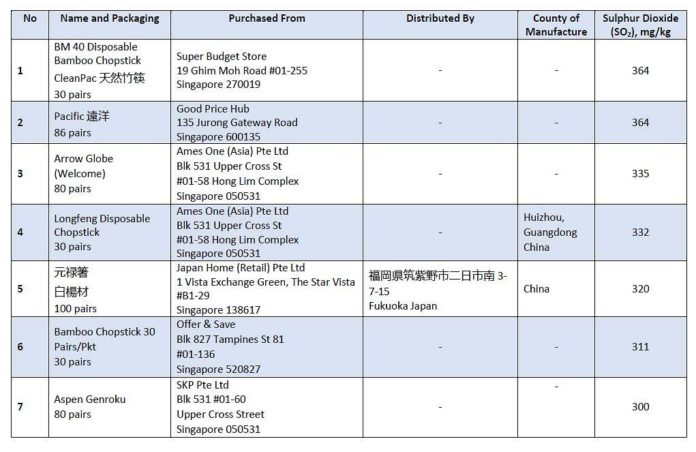
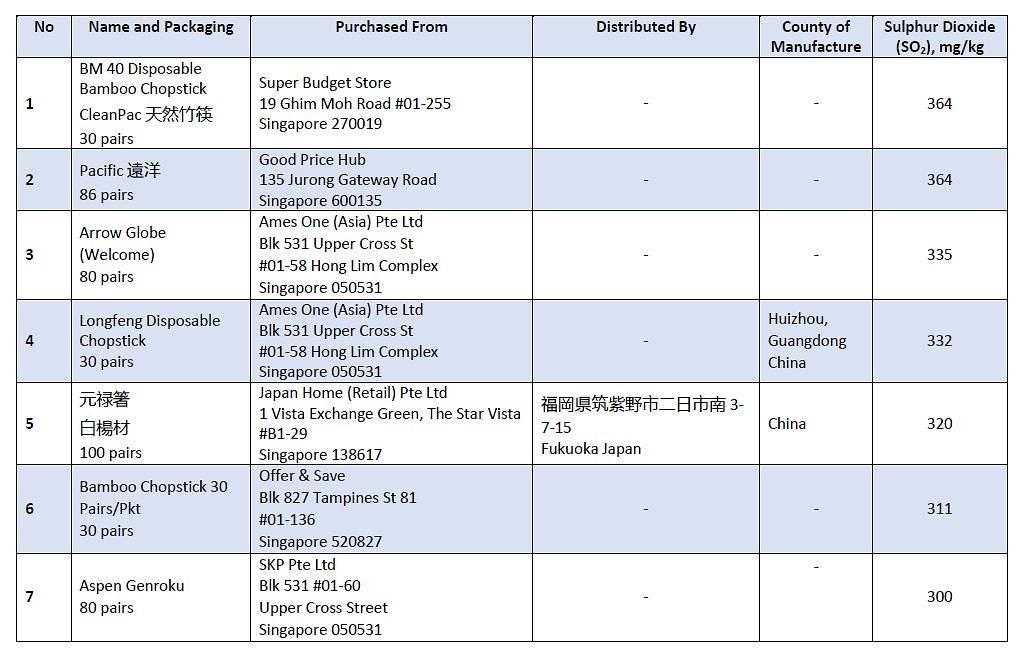
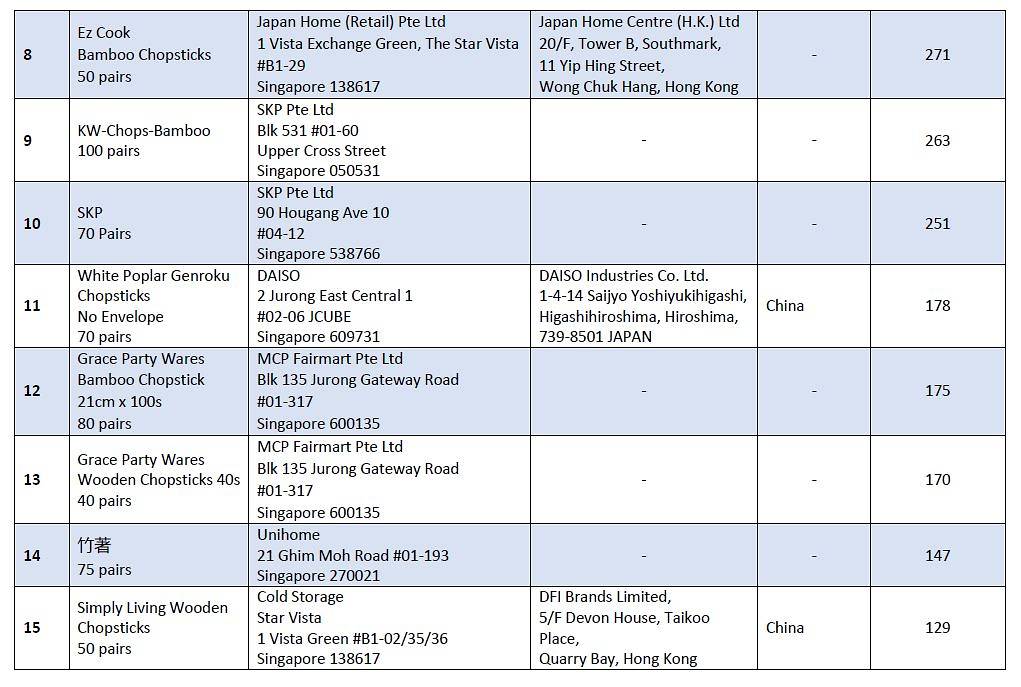
Tests by CASE showed that there was less than 400mg/kg of sulphur dioxide found in the 20 samples collected from departmental stores, supermarkets and stores in the heartland areas.
The sample size excluded disposable chopsticks provided at takeaway cooked food stalls “as a form of control and also because of traceability issues”.
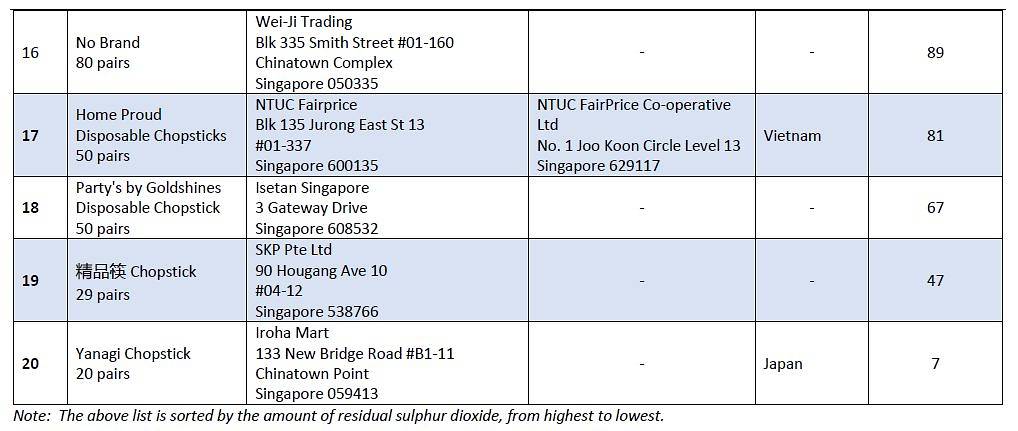
According to the test results, a range of residual sulphur dioxide between 7mg/kg and 364 mg/kg was detected in the 20 samples.
List of disposable chopsticks tested by CASE and the results. (Table: CASE)
List of disposable chopsticks tested by CASE and the results. (Table: CASE)
List of disposable chopsticks tested by CASE and the results. (Table: CASE)
While Singapore does not have a specific standard regulating the amount of sulphur dioxide residue in disposable chopsticks, CASE compared the findings to China and Taiwan’s standards – less than 600 mg/kg and less than 500 mg/kg of sulphur dioxide residue respectively.
As a cautionary measure, consumers are advised to avoid using chopsticks that look too white or give off a pungent smell.
“As sulphur dioxide is used as a bleaching agent, disposable chopsticks that appear too white are likely to have been bleached before, thus potentially containing sulphur dioxide,” said CASE.
“Disposable chopsticks that give off a pungent smell should also be avoided as this may indicate plausible chemical use.”
It also advised consumers not to reuse disposable chopsticks.
SINGAPORE: This August, our world had its early Halloween moment.
Amidst the Hawaiian paradise, rising rockstar scientist Sarah-Jeanne Royer discovered significant methane and ethylene gas emanating from oceanic plastic waste.
Given the sheer and escalating volume of plastic waste generated, this discovery of a previously-unaccounted-for driver of climate change means more severe climate change than even the recent United Nations (UN) Intergovernmental Panel on Climate Change (IPCC) update warned of.
The report by our global scientist collective is remarkable for both the unusual candour of our climate experts, and the revelation that the world is headed to an increase of 4 degrees Celsius – a drastic jump from the 1.5 to 2 degrees Celsius that nations and a few corporates with farsighted leadership have been discussing.
Climate repercussions, both direct and indirect, extend beyond the obvious economic sectors. Obviously, a 1.5 degrees Celsius planning parameter versus a 4 degrees Celsius one, drastically alters both top and bottom lines, even before carbon taxes correct for negative externalities.
From Venice and the tower of Pisa to the medieval city of Rhodes, dozens of UNESCO World Heritage sites in the Mediterranean basin are deeply threatened by rising sea levels. (Photo: Karsten Wurth / Unsplash)
Fundamentally, rising political pressures globally, fanned by natural disasters and climate upheaval, may see decisive climate action such as carbon pricing introduced globally, possibly even at World Trade Organisation level.
As the IPCC update and other sources indicate, carbon prices will be significantly higher than the softball introductory pricing Singapore is promulgating. This demands a paradigm shift in strategy and processes.
4 degrees Celsius also portent a brave new world where food and water security considerations will dominate. National and corporate strategies must pivot swiftly to a new climate economy.
PLASTICS GONE WILD
The Great Pacific Garbage Patch – the largest plastic accrual zone – is already triple the size of France.
With the sharp projected increase in plastic demand from 320 million tonnes annually, plastics will exceed the current 4 per cent of oil and gas demand, ramping up plastic pollution in the world’s oceans or overrunning our landfills, and escalating carbon emissions that drive climate heating.
Single-use plastic serves an essential purpose in medicine and science, but most other uses can be dramatically eliminated. For instance, who, other than our brethren with physical feeding impediments, needs to use single-use plastic straws?
Plastic straws are readily available everywhere in Singapore. (Photo: Aqil Haziq Mahmud)
Single-use plastic has a utility lasting just a few seconds or for some minutes in the case of a tabao meal, but such products linger on – 450 years for plastic bottles and disposable diapers.
Even though Singapore currently incinerates all our trash, we have failed to recognise the role model effect we have on millions of tourists from developing countries, who may wrongly equate plastic with modernity, entrenching frivolous plastic wastage. All their plastic dumped into the ocean, is on our karma too, Singapore.
And with the heaps of plastic trash at Sentosa and East Coast Park, are we certain none gets thrown or blown into the oceans?
OUR WORLD AT THE EDGE; OUR COUNTRY AN ISLAND AMIDST IT ALL
Plastic’s easy allure has hooked the world.
Hence, the European Parliament’s recent decisive vote to ban single-use plastic is important in continuing the global momentum – from states in Australia to businesses both small and large taking action like banning straws – to rein in our global folly and the environmental costs of a moment’s convenience.
The scale of our plastic problem demands a systemic solution to sufficiently rein in its impact. Why should society, taxpayers both direct and indirect, amid rising living costs, be forced to subsidise rich corporates who cannot take care of the trash they generate?
Economic and social injustice aside, these subsidies lead to inflated demand – more plastic trash than necessary.
That said, individual agency – each of our decisions to carry reusable bottles or to only patronise establishments that offer non-plastic options – sends important signals to corporates and governments that people are watching, we care and we will act.
A shopper walks down an aisle in a Walmart Neighbourhood Market in Chicago, September 21, 2011. (File Photo: REUTERS/Jim Young)
Singaporeans are fastidious about cleanliness, so it is intriguing that people assume that plastic containers for tabao food or drink, or straws, are clean. Is that likely if most are unwashed?
Most manufactured goods have stray shavings or other bits of material. Would plastics companies or F&B establishments guarantee their consumer food containers have no loose plastic that would be ingested with food?
Bisphenol A, found in polycarbonate plastics used in containers that store food and beverages and its as-harmful-replacements, are known to have hormonal effects. Combined with plastic leaching in high heat, such as when soup noodles are placed in plastic containers, this could lead to fertility challenges.
More seriously, scientists have found that ocean plastics, in particular those used in plastic bags and bottle caps – absorb toxins. So when ingested by sealife and ultimately us, we are ingesting both plastic and toxins.
Tackling these from a health standpoint alone seems worthwhile.
But we recycle, you say. Indeed, an estimated 10 per cent of global plastic waste was recycled, prior to China’s decision to stop accepting the world’s trash.
Plastic waste has been piling up in Japan since China’s new policy came into force. (Photo: AFP/Toshifumi KITAMURA)
We must not use recycling as a moral shield against more effectively and sustainably reducing our plastic footprint or confining consumption to reusable plastic. Because 90 per cent of plastic is not recycled but dumped, recycling is a red herring.
Recent news cast even that recycled 10 per cent in doubt. Greenpeace recently reported finding supposedly to-be-recycled UK plastic in an illegal dump in Malaysia. To justify the time, heart and travel carbon-conscious consumers put into recycling, recyclers should make known their destinations and output.
So, our plastic situation is really What You See Is What You Get. Wanton plastic usage bites back.
Green is the global growth sector now and going forward, the other being artificial intelligence. The latter is our new electricity transforming industries, just as climate change is indisputably our new reality, upon which all present and future development rests.
From a competitive standpoint, the EU’s leadership in sustainable development lends further impetus and credibility to their circular economy efforts, which could strengthen the leadership some nations, such as Finland, already have in circular design.
Such products are designed thoughtfully, ensuring both quality construction and an end-of-life that effectively sees regeneration into other products.
Singapore should boost our competitive standing in this new climate economy. Several exciting alternatives to plastics exist, from consumer use to packaging, but require refinement and scaling up, so that costs are comparable to or cheaper than plastic, just like cornware dishes and cutlery have been for some years, and distribution networks allow easy consumer access.
Newly opened Birds of Paradise gelato boutique uses cups made from sugar cane pulp, (Photo: Vivian Claire Liew)
The market opportunity is clearly huge for the brave and the good – with the rise of “woke” millennials and the rest of us. Singapore’s industries must leap to stay competitive in the imminent low-carbon paradigm shift.
To pre-empt being flatfooted, a spirit of curiosity and adventure must be nurtured, to provide the product and systems innovation the world needs to live well going forward. Hence, circular design and low-carbon process engineering and service delivery are crucial going forward.
Polymer product designers have typically not considered their products’ end of life impact, until the recent five years. Solutions can come in many forms, and our youth are humanity’s great research and development lab. New Zealand students, for instance, have found a solution to the plastic stickers on our apples and other fruits, from apple waste.
As one of the world’s best educated and hardest working people, if Singaporeans are more aware of the new climate economy and opportunities, more will begin innovating in this direction.
Eco·Le, that sells dried food in bulk, is one of 15 eco-brands housed at The Green Collective pop-up store. (Photo: Tang See Kit)
THE GAMEPLAN: RESPONSIBLE CONSUMPTION AND PRODUCTION
Circular economy design, alternative materials gentler on our environment that do not poison our food or drink, combined with conscious consumption, are critical going forward.
Almost 40 per cent of plastics are used for packaging, also the category generating the greatest waste, according to some estimates.
That is why responsible consumption is a key sustainable development goal determined by nations collectively. Let us exercise the fundamental ability of differentiating between needs and wants, minimising the latter, for the greater good.
Behavioural research also shows that the more one has, the more one wants, so mindful consumption actually makes us more human, and less like treadmill rats.
14.5 per cent – over 70 million tonnes of thermoplastics annually – are used in textiles, mostly clothing and carpeting. Greenpeace notes that the average person in 2016 bought 60 per cent more clothing items annually than 15 years ago, and keeps these clothes for shorter.
Responsible consumption is critical in this next 12 years determining our planet’s future. As French President Emmanuel Macron noted, we have no Planet B.
Conscious choice of products minimising packaging – and articulation of such to ensure firms hear consumer signals without noise – is key.
File photo of plastic bags. (Photo: AFP/Fred Dufour)
Producers must look at how their products are designed and packaged, or whether the default for, say, dine-in coffee customers, remains takeaway plastic cups, with plastic lids and all. Efforts by establishments in providing straws only for those who genuinely need them, should be applauded.
But organisations should provide solutions proportionate to their resources; large multinational chains with clearly more bargaining power from rentals to procurement to even influencing consumer expectations and behaviour, should do more.
Corporates would do well to avoid greenwashing; replacing plastic straws with lids that contain even more plastic seems counterproductive. Alleged bioplastic grocery bags in land-scarce Singapore, where few have space and time for anything to biodegrade, obfuscates their excessive plastic waste.
At the systemic level in Singapore, for instance, proper crockery and utensils should be de rigueur for those dining at F&B outlets and hawker centres.
They also enhance our dining experience, and will better befit our future UNESCO hawker heritage status. Office pantries could all have cutlery for staff use, and either a cleaner or dishwasher to take care of cleaning.
Ci Yuan Hawker Centre (Photo: Fann Sim)
Hawker centres and food courts – alleged social enterprises or otherwise – should leverage their economies of scale; a dishwasher if well secured would also wash dishes with high quality standards while reducing water usage.
For hawkers suffering the theft of their utensils, our formidable investment in surveillance cameras should start delivering returns, combined with penalties.
For the health of our planet, for our fiduciary duty to humanity, and for our own good health, let’s reduce our plastic footprint by at least half. Our many drops indeed form the ocean. Our destiny is in our hands.
Vivian Claire Liew is CEO of PhilanthropyWorks and World Economic Forum Young Global Leader 2015.