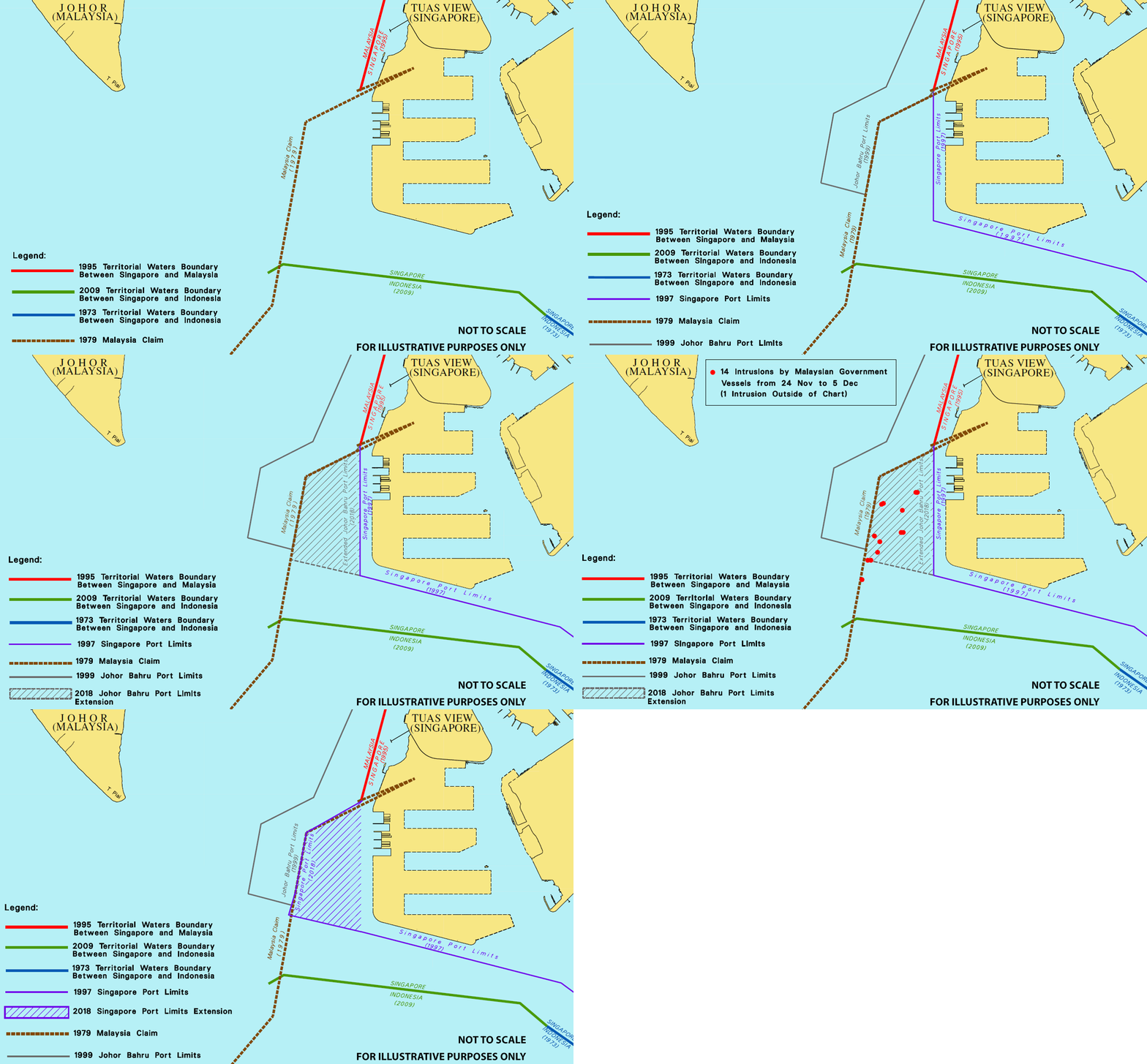
SINGAPORE: Malaysia has proposed to Singapore that both countries “cease and desist” from sending assets into what it called a “disputed area” from midnight on Dec 8, Malaysia’s Foreign Affairs Minister Saifuddin Abdullah said on Friday (Dec 7).
“The action to desist would be undertaken without prejudice to either Malaysia or Singapore’s position on maritime boundary claims over the area in question,” he added in a press statement.
Mr Saifuddin also said that Malaysia has proposed a meeting with Singapore to resolve the maritime boundary issues between the two countries.
“It is the hope of the Malaysian government that the meeting could be convened sometime in the middle of this month,” he said, adding that the proposals were communicated through the Singapore High Commissioner to Malaysia.
The Malaysian statement came shortly after Singapore Defence Minister Ng Eng Hen warned Malaysian government vessels in Singapore waters to leave the area.
There have been 14 intrusions by Malaysian government vessels in Singapore territorial waters in the last two weeks, Transport Minister Khaw Boon Wan said at a media briefing on Thursday.
Singapore has lodged a “strong protest” with Malaysia over the extension of its port limits, and asked that its neighbour amend a gazette notification through which the changes were announced in October.
Mr Khaw also stressed that Singapore will not hesitate to take firm action against intrusions and unauthorised activities in Singapore’s territorial waters.
The minister also announced on Thursday that in view of the “provocative developments”, Singapore has decided to extend its port limits off Tuas.
Illustration showing the adjustment of Singapore and Malaysia’s port limits.
In response, Mr Saifuddin said on Friday that Malaysia has communicated its protest to Singapore over its decision to extend its port limits, calling it “a clear violation of Malaysia’s sovereignty and international law”.
He added: “Of course, all governments are duty-bound to defend the nation’s sovereignty. Equally, it is the responsibility of the people to unite behind the government should this occur. Malaysia would do the same if the situation warrants it.
“However, not all disagreements should be seen in terms of challenges to a principle. Rather, all disagreements must be worked through in a spirit of dialogue and cooperation.”
Singapore’s Ministry of Transport had said earlier this week that Singapore stands ready to engage with Malaysia to resolve these matters amicably, in accordance with international law.
SINGAPORE: Malaysia’s “sudden unilateral move” to extend its Johor Bahru port limits does not fit with the “collaborative spirit” between the two countries, but Singapore will deal with the issue firmly and calmly, said Minister for the Environment and Water Resources Masagos Zulkifli on Friday (Dec 7).
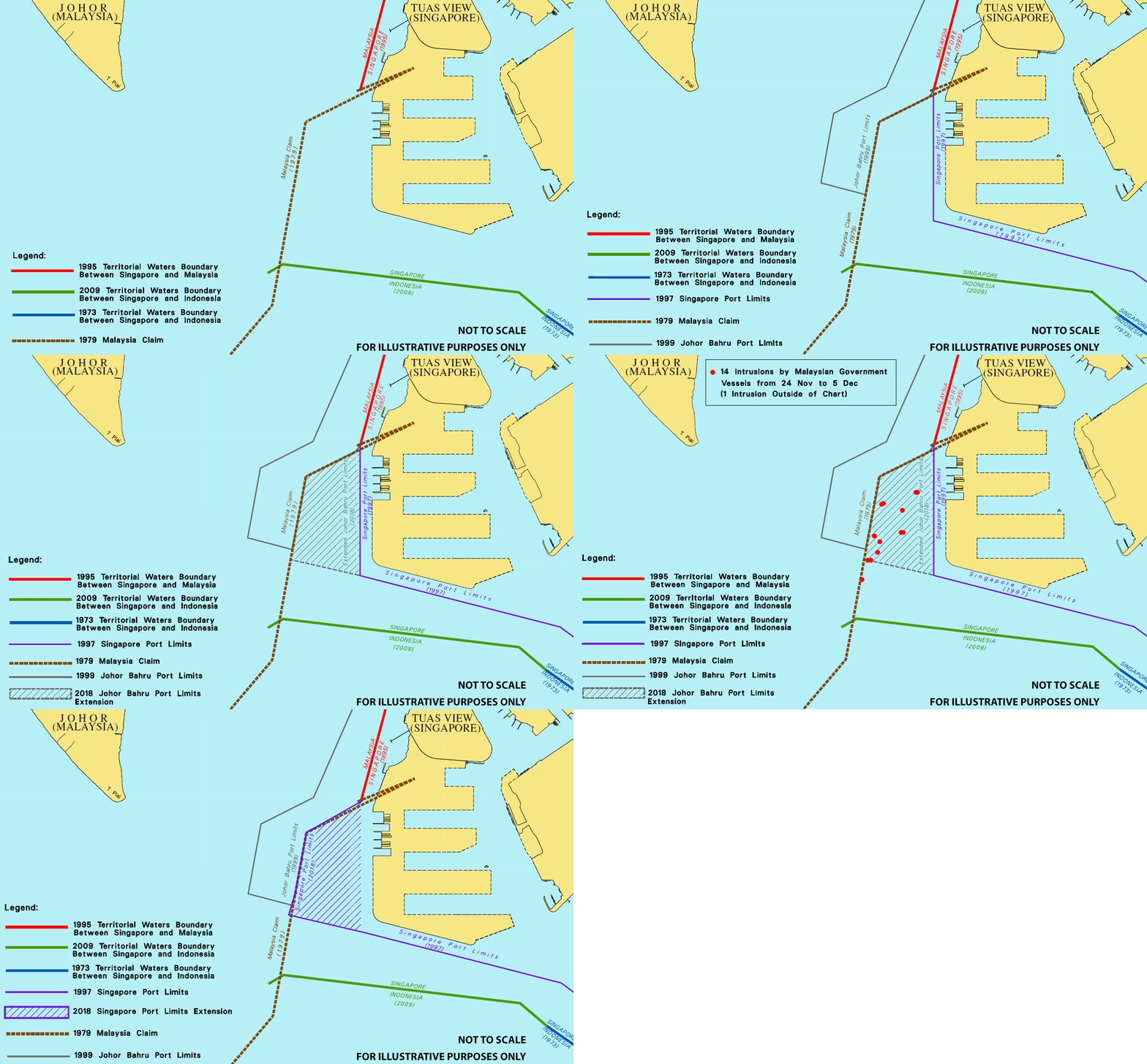
His comments come a day after Singapore announced it had extended its port limits off Tuas in view of the recent “provocative developments”, and said it will not hesitate to take firm action against intrusions by Malaysian government vessels in its waters.
There have been 14 intrusions into Singapore’s territorial waters off Tuas in the past two weeks, Transport Minister Khaw Boon Wan told reporters on Thursday.
The intrusions come after Malaysia extended its Johor Bahru Port Limits in October – a move that Singapore has called a “serious violation” of its sovereignty and international law.
“This sudden unilateral move threatens Singapore’s sovereignty and does not fit with our collaborative spirit,” Mr Masagos said. “It also sends a bleak signal. What’s clear is that we will deal with this issue firmly and calmly. The people are united in this.”
Mr Masagos, who spoke in Malay, added that leaders of Singapore and Malaysia both want positive relations.
“This is clear in the way we dealt with the recent HSR (high-speed rail) issue.
“I think the people also want us to look forward and forget our past fears. There will be much benefit should we work together sincerely and consistently,” said Mr Masagos, who is also Minister-in-charge of Muslim Affairs.
He stressed, however, that Singapore will not hesitate to defend its sovereignty if it were threatened.
“We’ve been clear. We respect international law and all bilateral agreements between Singapore and Malaysia,” said the minister. “If anyone violate these laws and our agreement, threatening our sovereignty, we will defend it firmly.”
Illustration showing the adjustment of Singapore and Malaysia’s port limits.
“These are serious violations of Singapore’s sovereignty,” said Dr Ng as he called for the vessels to leave Singapore waters.
“Our security forces have acted with restraint despite continuing intrusions and provocations,” he said. “Singaporeans are peace-loving, but I strongly caution violators to leave Singapore territorial waters.”
Singapore said on Tuesday that it has lodged a “strong protest” with the Malaysian government over its move to extend the Johor Bahru port limits “in a manner which encroaches into Singapore’s territorial waters off Tuas”.
Singapore also wants Malaysia to amend a gazette notification through which the changes to the port limits were announced in October.
SINGAPORE: Mass food poisoning at a Spize outlet last month left more than 80 people ill and caused dozens to be hospitalised.
One of those hospitalised, Mr Fadli Saleh, died on Nov 14.
Investigation results on the food poisoning incidents released on Friday (Dec 7) by the the Ministry of Health (MOH), the National Environment Agency (NEA) and the Agri-Food and Veterinary Authority (AVA) revealed several lapses in hygiene at the Spize River Valley premises.
Food that was marked for discarding was, in one case, sent to an outlet for use, and ready-to-eat food was left uncovered and unlabelled.
The food handlers were also found to have poor personal hygiene and food preparation practices.
Of the 82 hospitalised, 36 people were tested positive for salmonella, authorities said.
Six different types of pathogens were detected from food samples, food handlers and the restaurant, with three types found in belacan egg fried rice alone.
What is it? Salmonella infection, caused by salmonella bacteria, is caused by contaminated water or food, or the ingestion of raw or undercooked meat, poultry, or eggs. In this case, it was the main cause of illness among those who ingested food from Spize River Valley.
Where was it found? Salmonella typhimurium was found in belacan egg fried rice, raw chicken samples, kang kong, a door handle leading to a cold room and on a cold room rack. Salmonella albany was detected in sambal belacan.
Symptoms Nausea, vomiting, stomach cramps, diarrhoea, fever, headaches and blood in stool.
FAECAL COLIFORMS
What is it? Faecal coliforms are bacteria found in faeces.
Where was it found? Faecal coliforms were found in belacan egg fried rice, a chopping board and knife used for ready-to-eat food.
Symptoms Ingestion of such bacteria may not be immediately harmful, but their presence indicates a high risk of other harmful pathogens.
Bacillus cereus as seen through an electron microscope. (Photo: Wikimedia Commons/Mogana Das Murtey/Patchamuthu Ramasamy)
What is it? Consumption of Bacillus cereus and the toxins it produces results in an illness nicknamed “fried rice syndrome” due to the first recognised outbreaks being linked to fried rice.
The heat from cooking stimulates the bacteria to reproduce, and leaving the food at room temperatures allows the bacteria to incubate. Reheating the food briefly does not kill Bacillus cereus nor does it neutralise the toxins it produces.
Where was it found? Bacillus cereus was found in belacan egg fried rice and uncooked rice.
Symptoms Diarrhoea, stomach cramps, nausea and vomiting.
Norovirus particles in faeces. (Photo: Wikimedia Commons/Graham Beards)
What is it? Norovirus is known to be highly contagious and spreads through contaminated food and surfaces, especially in close quarters such as cruise ships.
Where was it found? One food handler tested positive for norovirus.
Symptoms Diarrhoea, stomach cramps, nausea and vomiting.
CAMPYLOBACTER JEJUNI
Campylobacter jejuni as seen through an electron microscope. (Photo: Wikimedia Commons/De Wood)
What is it? Campylobacter jejuni can be found in raw and under-cooked poultry, unpasteurised milk, and contaminated water. It is also commonly found in animal faeces.
Where was it found? One food handler tested positive for Campylobacter jejuni.
Symptoms Diarrhoea, stomach cramps, nausea, fever and vomiting.
SINGAPORE: A Singaporean woman died on Friday (Dec 7) after the bus she was in met with an accident en route to Malaysia’s Genting Highlands, Malaysian media reported.
Ms Serina Mat Idris, 27, died at the accident scene after she was thrown out from the upper deck of the bus, according to a report on Utusan Online.
A Bernama report said the bus had hit the back of a lorry at around 11.50am while travelling along a highway in Seremban in Negeri Sembilan.
The lorry that was hit by the bus in the accident in Seremban, Malaysia on Dec 7, 2018. (Photo: Bernama)
Five other people, including the bus driver and one person in the lorry, were injured in the accident. They were taken to Tuanku Jaafar Hospital in Seremban.
Ms Serina’s body was also taken to the hospital for a post-mortem.
Rescuers found the 44-year-old bus driver trapped in his seat and took about 10 minutes to free him, State Fire and Rescue Department director Norazam Khamis said.
Fifteen other bus passengers and the lorry driver escaped without injuries, he added.
A memorandum of intent is also signed with locker operators like Thailand’s Box24, Hong Kong’s Pakpobox and Indonesia’s Popbox Asia to explore developing a regional network, says IMDA.
Composite photo shows locker stations operated by Blu Logistics (L) and Singapore Post. (Photos: Kamini Devadass)
(Updated: )
Bookmark
SINGAPORE: Residents in Punggol and Bukit Panjang will be the first in Singapore to try out a new locker system that promises more convenience for them to collect their parcels and online purchases.
The pilot for the federated locker initiative was announced on Friday (Dec 7) by the Info-communications Media Development Authority (IMDA), which added that 78,000 households in the two towns will benefit from these collection points that will run at all hours.
The initiative was first revealed in May this year.
The pilot, named Locker Alliance, brings together various industry players such as locker operators, logistics service providers and e-marketplaces on to a single, interoperable platform, the release said.
Elaborating, it said the platform is developed by Parcel Perform and allows different locker operator networks to function collectively.
As part of this pilot, lockers were installed across more than 60 locations in the two towns and is expected to run for a year. These are located within 250m of all HDB blocks and are accessible at all hours so consumers can pick up their packages. They can also return their buys using these lockers, IMDA said.
“Everyone who buys or sells something online will be familiar with the issue of last-mile delivery,” said IMDA CEO Tan Kiat How.
“Through the Locker Alliance programme, we want to make it more convenient for consumers to collect their items, while improving the efficiency and cost effectiveness of parcels delivery.”
Mr Tan said when implemented across Singapore, logistics service providers can potentially see a 50 per cent reduction in distance travelled by their drivers, yet see a five-fold improvement in delivery efficiency.
The agency will evaluate the viability of adding more sites in Singapore following the launch of the pilot.
Already, HDB has tied up with e-commerce site Lazada to tap on this infrastructure, announcing separately on Friday that some retailers from Oasis Terraces in Punggol are selling online and consumers can collect their buys at a dedicated locker area at the neighbourhood centre.
REGIONAL LOCKER NETWORK EYED
Beyond these shores, IMDA also announced it signed a memorandum of intent (Intent) with locker operators like Thailand’s Box24, Hong Kong’s Pakpobox and Indonesia’s Popbox Asia to explore developing a regional network.
The agreement is for three years and will cover engaging local stakeholders to drive adoption, adopting the technical reference developed by IMDA for data exchange between different parties and to enhance said standards, it added.
Given that these operators have locker infrastructure in Singapore, Thailand, Hong Kong, Indonesia, Macau and Malaysia, IMDA said its Locker Alliance model could open up e-commerce opportunities for businesses and logistics players.
SINGAPORE: As technology continues to disrupt how people browse and buy things at brick-and-mortar shops, one of the segments affected – small Housing and Development Board (HDB) retailers – are turning to new ways of doing business.
Specifically, they are riding the e-commerce wave to help garner new customers and sales beyond the neighbourhood they have set up shop in.
One such business is Avyan Steel, a shop selling steel products at Oasis Terraces in Punggol.
Owner Deepika Jindal told Channel NewsAsia that she started her business in the first week of November, but one of the concerns she had was relying only on her physical store to get customers.
As such, she was one of 15 retailers at the new-generation HDB neigbourhood centre to sign on with e-commerce platform Lazada to hawk her wares online.
“Having a physical-only store limits who we can reach out to,” Ms Deepika said in her email. “By going on Lazada, we’ll be able to extend our reach to practically everyone in Singapore regardless of location.
“Additionally, customers want to touch and feel our products before purchasing. We are responding to the customer’s evolving shopping behaviour by offering essentially the ‘showroom’ and ‘webroom’ experiences,” the budding entrepreneur said.
The Lazada tie-up is a pilot programme with HDB announced on Friday, which would give these HDB shops a dedicated online marketplace.
As at Nov 15 this year, half of the 30 retailers, excluding those in food and beverages and service) at Oasis Terraces, have come onboard. Other participants include Hockhua Tonic, Cristofori Music, Venus Beauty and Kim Able Household Enterprise, the HDB factsheet stated.
Beyond bringing traditional retailers to the World Wide Web, HDB also said a new experiential collection lobby at the neighbourhood centre was designed to give shoppers a better experience. It features parcel lockers for people to pick up their purchases from, as well as charging points for electronic devices so people can test their buys on the spot, the factsheet added.
PHYSICAL STORES STILL AN ADVANTAGE
Since going online for the past two weeks, Ms Deepika shared that she is “seeing more than one order per day on average”, which she said is encouraging given that she is new to the platform. She expects to see more orders coming through as she establishes her shop’s online presence.
Ms Deepika Jindal opened her shop selling steel products this November, and is hoping e-commerce will help open up her business to the wider Singapore consumer base. (Photo: Avyan Steel)
But it is the combination of online and off that would bring the benefits, said the Avyan Steel owner.
Local online retailers that have a physical presence “offers more credibility” and helps them engage customers in more creative ways than online-only businesses, she said.
“This is especially true for HDB retailers since busy customers are shopping online more,” Ms Deepika explained. “Online will be the first touchpoint, and interested customers can visit us right in the heartlands at their convenience.”
HDB’s tie-up with Alibaba-backed Lazada is the latest in a series of initiatives aimed at rejuvenating HDB neighbourhood shops.
In July, for example, Kampong Glam was showcased as the first digitally enabled retail neighbourhood, featuring things such as the ability to search for shops on mobile apps and delivery services for purchases.
SINGAPORE: While the National Environment Agency (NEA) has ruled out any connection between the recent spate of food poisoning cases involving TungLok Catering and FoodTalks Caterer and Manufacturer, it is easy to think that food mismanagement is on the rise.
That may be partially true. According to the Ministry of Health (MOH), the number of food poisoning cases has increased by 40 per cent from last year. MOH has been notified of 1,768 food poisoning cases from January to October this year, up from the 1,265 reported over the same period in 2017.
Another high-profile food poisoning case erupted on Wednesday (Dec 5) at Mandarin Orchard, after 175 people fell ill and nine were hospitalised, lending fresh urgency to the issue.
HIGH NATIONAL FOOD SAFETY STANDARDS
Food safety standards in Singapore are generally quite high. However there are many factors that could go wrong in the entire farm-to-fork supply chain.
Singapore’s Agri-Food and Veterinary Authority has put in place an effective integrated food safety system to ensure that food is safe for consumption. NEA also mandates that all food handlers go for a basic food hygiene course.
However, no system is fool-proof without collaboration with the industry and consumers in Singapore. The assurance of food safety is a shared responsibility.
While the exact causes of these food poisoning incidents are still not known, the reality is that food safety is a vast and complex topic. Hygiene lapses, infectious agents and food source contamination have been speculated as causes behind recent incidents.
But these one-off food poisoning cases in Singapore shouldn’t obscure our focus on a much larger yet more insidious issue regarding food safety that is often hidden away from view yet can affect millions – the fragile global food supply chain that puts food products in supermarkets and on our restaurant tables.
Facebook user Sharon Foo posted several pictures on March 26 that show what appears to be a metal screw she found in the bottle of peanut butter. (Facebook/Sharon Foo)
RISING FOOD TRADE
Chinese restaurants in the Americas, sushi in Europe, Swiss cheese in Asia, maize from the corn belts of the world– the benefits of world trade in food have been made possible with advances in technology and with increasingly efficient shipping, processing, packaging and trading.
World trade in food and agricultural products reached close to US$1.4 trillion in 2012, making it the third-largest category of traded goods after non-pharmaceutical chemicals and fuels.
While this burgeoning trade provides more food options on our plates, it also creates new risks. With longer and more complex supply chains, tracking from farm to fork requires increased scrutiny and accountability throughout the process.
It is more difficult to ensure that ingredients and finished products are safe to eat the moment they arrive on our tables when the responsibility for food safety is spread over many different business partners including caterers.
Most do not know each other, yet they all have to work as one to ensure food remains free from contamination at every stage of the supply chain. Education, coordination and trust are important in mitigating risks.
Product recalls for manufactured food items can mitigate the spread of food poisoning but can be costly for companies and disruptive for consumers.
To date, there have been more than 10 recalls in Singapore this year compared to a typical number of three to four each year. Recent cases include various well-known brands and widely consumed food items such as iceberg lettuce, white coffee and peanut butter.
Additionally, tougher consumer regulations have been put in place in response to a number of high-profile recall events and rising consumer expectations around quality and safety, and authorities are keeping a closer eye on the food sector.
For example, a popular Taiwanese milk tea brand was once recalled in Singapore due to the inclusion of an additive not approved by Singapore regulators.
The Just Drink Milk Tea, under Taiwanese brand Chun Cui He, has been recalled over an unapproved food additive. (Photo: Just Drink Milk Tea Facebook)
While such products had no issues at its production place of origin, companies that export need to be aware that food safety standards in each country may vary. Complying with official standards where the product is produced doesn’t necessarily mean compliance with the countries to which they export.
MITIGATING RISKS AND MANAGING CHALLENGES
When it comes to avoiding costly recalls and investigations, there are actions that companies in the food and beverage sector can take to safeguard consumer interests and protect their reputation.
Bottom-line considerations of a recall alone should incentivise companies to ensure food safety. In the US, the average cost of a product recall is around US$10 million (S$14 million) but can exceed US$100 million, such as Danone’s milk recall after a contamination scare over an ingredient used by New Zealand’s Fonterra, which arbitration settled at US$125 million.
Research from the Grocery Manufacturers Association in the US notes that product disposal costs, business interruption and customer reimbursement rack up the highest costs when a company grapples with a product recall.
Product recalls can also have a significant impact on a company’s balance sheet, in some incidents resulting in companies filing for bankruptcy such as in the case of the 2008 Peanut Corporation of America (PCA) recall.
Sparked by a salmonella outbreak, PCA suffered huge loses despite only handling just 2 per cent of the US peanut supply because its peanuts found their way into into 4,000 products. This recall cost the food industry about US$1 billion and eventually led to PCA subsequently filing for bankruptcy.
File photo of salmonella bacteria. (Photo: Reuters)
So what can companies do? Comprehensive risk management of the entire supply chain is critical to address food safety.
A robust testing regime, complemented by external independent audit assessments, and the manufacturer’s internal audit assessments on suppliers and logistics can help companies mitigate risks, prevent potential losses and safeguard reputation.
At the very least, recalls, if managed properly, can create positive reputation for a company.
The financial impact of recall can be covered by risk transfer, but a damaged reputation will take a long time to rebuild.
When millions of consumers rely on a company to ensure their food is safe for consumption, it’s only right that this trust is carefully safeguarded.
Manzhi Zheng is senior casualty underwriter at Swiss Re Corporate Solutions.
SINGAPORE: Ageing and healthcare were the top issues discussed at the pre-Budget 2019 dialogue that was held on Thursday (Dec 6) at the Asian Civilisations Museum.
About 100 people turned up for the dialogue jointly organised by government feedback unit REACH and the Finance Ministry.
The dialogue is part of the public feedback process that begins a few months before Budget 2019, which is scheduled to be delivered in Parliament in February.
Five broad themes were addressed: Ageing and healthcare, security and external relations, support for families, innovation, and philanthropy and volunteerism.
On the theme of ageing and healthcare, participants proposed ways for more seniors to get affordable care in the community. They also suggested ramping up care programmes focusing on mental health for the elderly.
People take part in a pre-Budget 2019 dialogue session. (Photo: Tan Si Hui)
The dialogue was hosted by Ms Indranee Rajah, Minister in the Prime Minister’s Office and Second Minister for Finance and Education, as well as REACH chairman Sam Tan, who is also Minister of State for Social and Family Development, and for Foreign Affairs.
Speaking on the sidelines of the dialogue, Ms Indranee said the Government will do what it can to support older workers as workplaces change with shifts in technology.
“You can see that’s a continuing theme because technology continues to create changes and ripples in the workplace. The answer to that is not just to upskill and reskill but it’s also about innovation, helping Singapore companies to be able to access the opportunities in the region,” Ms Indranee said.
People take part in a pre-Budget 2019 dialogue session. (Photo: Tan Si Hui)
She also said next year’s Budget will build on this year’s and its theme will not be radically different from previous years’ Budgets.
“You have to address the key things on people’s minds, which are jobs. For families, it’s the pressures and strains that they face, including those with young children and elderly parents.”
Ms Indranee said it was interesting to note that participants in the dialogue did not just focus on how the Government can provide financial incentives, but gave suggestions on how Singaporeans can pitch in to help the community.
The dialogue was hosted by Ms Indranee Rajah, Minister in the Prime Minister’s Office and Second Minister for Finance and Education, as well as REACH chairman Sam Tan, Minister of State for Social and Family Development, and Foreign Affairs. (Photo: Tan Si Hui)
Participants that Channel NewsAsia spoke with were largely positive about the outcome of the dialogue.
Administration executive Hasnah Salleh, 62, said the dialogue was fruitful and she felt confident that her views will be taken into consideration for next year’s Budget.
Marketing manager Eddy Lim, 44, who was part of the security and external affairs group, said discussions went beyond focusing on terrorism and racial harmony and he appreciated that conversations delved into ways of improving social well-being.
“Most of us came here feeling that the dialogue could be fluff. But overall during the dialogue, we could bring the agenda forward instead of stay in a negative state.”
During a media briefing on Thursday (Dec 6), Transport Minister Khaw Boon Wan showed reporters a video displaying instances of Malaysian vessels intruding into Singapore waters.
The video shows a Malaysian buoy-laying vessel – the Jabatan Laut Polaris. Buoy-laying vessels are usually used to mark territory or safety hazards and Jabatan Laut refers to the Malaysia Marine Department.
“This particular Malaysian vessel has been there since Dec 3, I think – has been there for several days – and even as we speak, continues to be there,” Mr Khaw said. “There are three Malaysian vessels currently in our waters.”
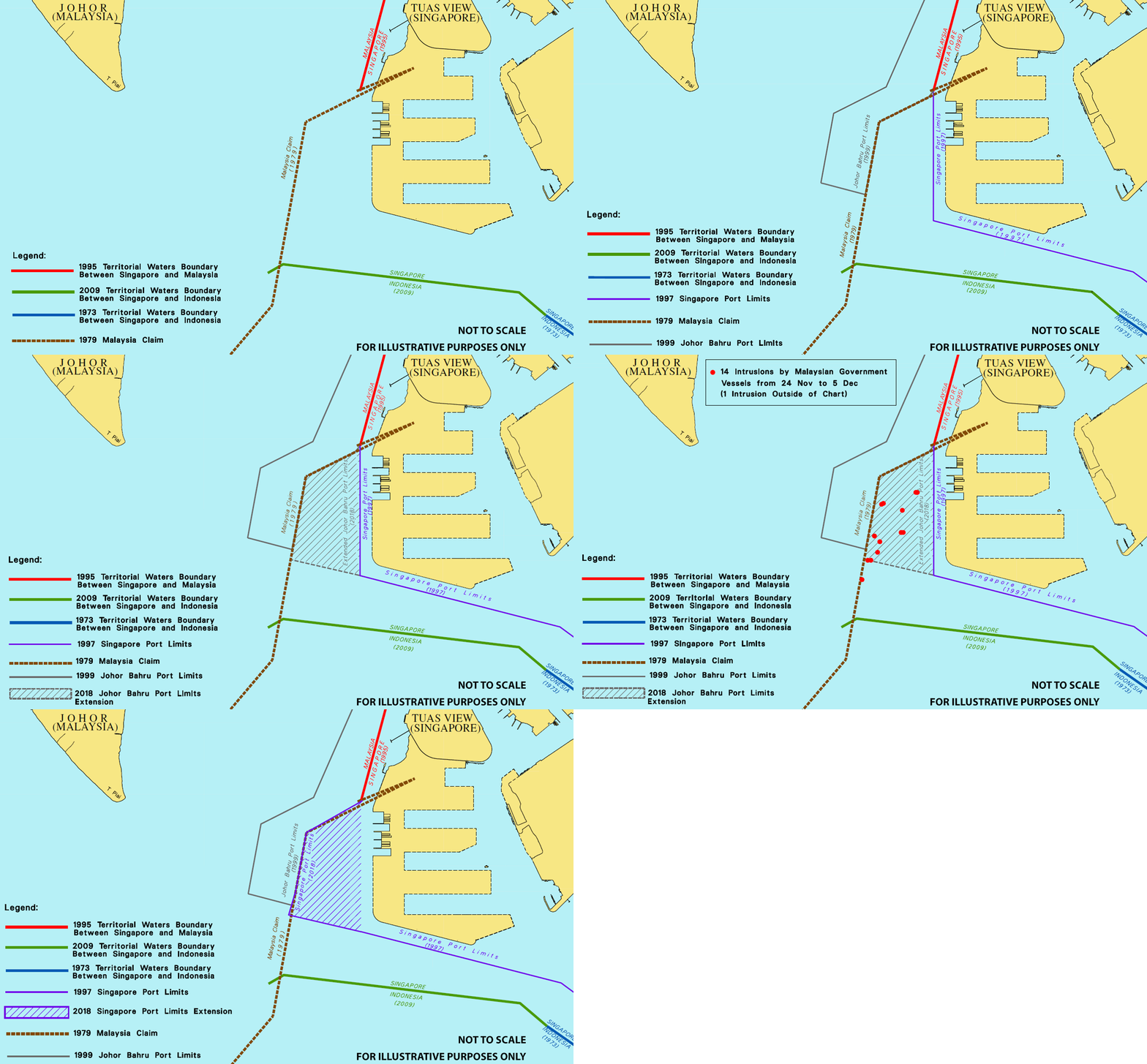
Mr Khaw said there have been 14 intrusions into Singapore territorial waters off Tuas in the past two weeks, after Malaysia extended its Johor Bahru Port Limits in October.
Illustration showing the adjustment of Singapore and Malaysia’s port limits.
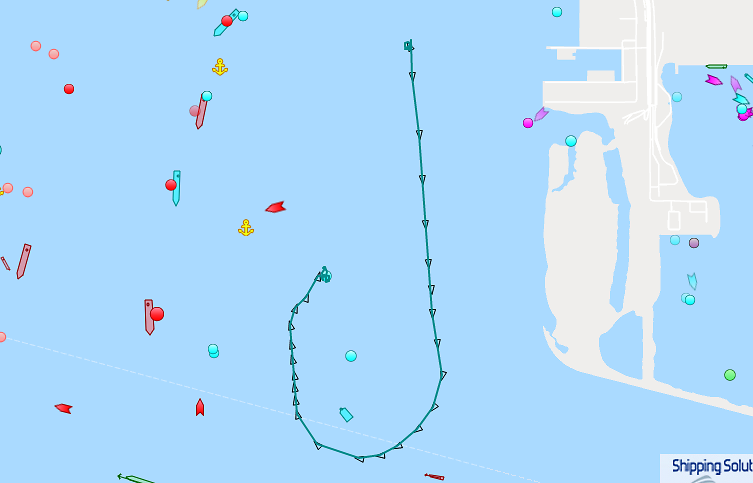
According to global ship tracking site MarineTraffic, the Malaysian-registered Polaris has stopped in the waters off Tuas.
At about 10am on Thursday, the Polaris started moving south and hit a speed of about 9km/h before making a U-turn and stopping slightly farther away from Singapore.
Movement of Malaysian vessel Polaris on Thursday (Dec 6). (Source: MarineTraffic)
The website confirmed that the Polaris is a buoy-laying vessel, adding that it was built in 2017 and measures 84m by 16m.
S$30 MILLION VESSEL
A 2017 Bernama news agency article posted on the Malaysia Marine Department website said the Polaris is a multi-purpose vessel that can tow ships and fight marine fires.
The RM92 million (S$30.3 million) vessel, which operates from the Strait of Malacca to the South China Sea, has a top speed of about 28km/h and and can stay at sea for 35 days without resupplies, the article quoted the department’s director Baharin Abdul Hamid as saying.
The Polaris is also used for training, and comes equipped with a classroom, meeting room, gym and bunks for 20 trainees.
Singapore has repeatedly maintained that Malaysia’s extension of its Johor Bahru Port Limits encroaches into its territory and violates its sovereignty.
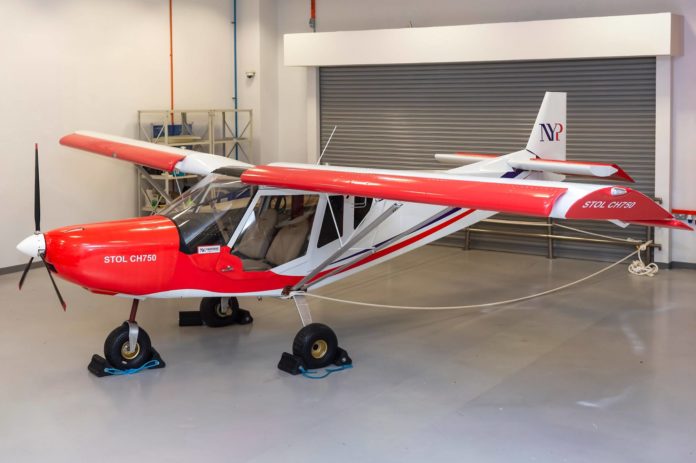
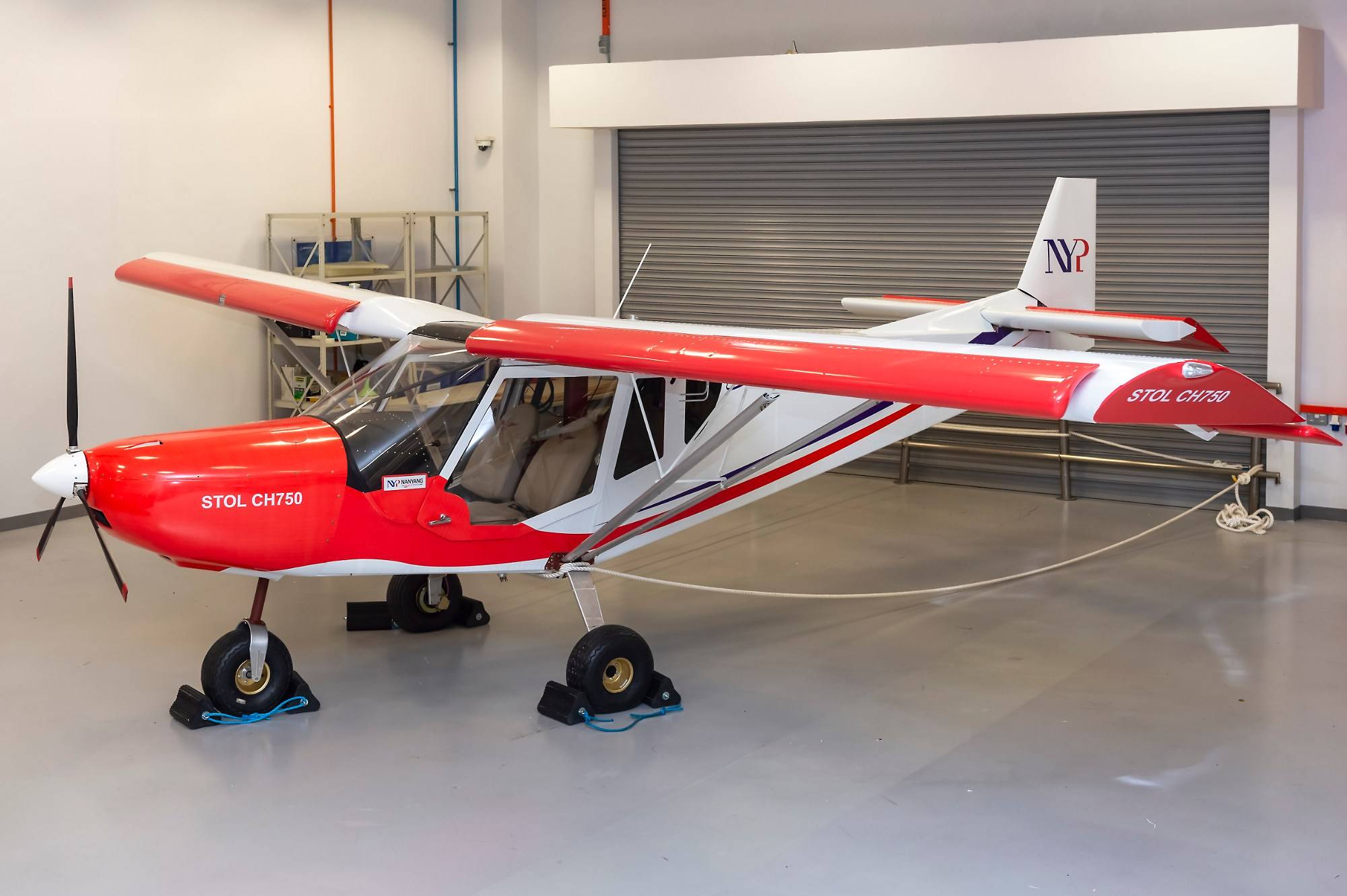
SINGAPORE: The first fully functional aircraft built by polytechnic students in Singapore can fly up to 710km, the equivalent of a round trip between Singapore and Kuala Lumpur.
The short take-off landing aircraft is the work of 34 engineering students from Nanyang Polytechnic (NYP) over four years, NYP said in a media release on Thursday (Dec 6).
The plane was built from scratch by the students, starting from its conceptualisation and documentation to the construction.
The 6.7m-long plane has a glass cockpit with two seats – for a pilot and a passenger – and it comes with luggage space.
A 6.7m-long aircraft built by Nanyang Polytechnic’s (NYP) engineering students, a first for polytechnic students in Singapore. (Photo: NYP)
It flies on a four-cylinder engine and is supported by “sophisticated electronics”, NYP added.
The plane’s flying design was approved by United States Federal Aviation Administration, though it cannot be flown under Singapore aviation law.
NYP said it will be used to train subsequent batches of engineering students.
“The project, which took off in 2014, enables students to learn about the various responsibilities of aerospace personnel from hands-on engineering to maintenance,” the school said in its statement.