The page on All Deals Hub was made to look like a Channel NewsAsia article and showed presenter Cheryl Fox endorsing a slimming product.
Image of fake Channel NewsAsia article showing presenter Cheryl Fox.
Bookmark
SINGAPORE: A webpage made to look like an article by Channel NewsAsia has been removed after a take-down notice was filed against its host, All Deals Hub.
The page showed news presenter Cheryl Fox apparently endorsing a slimming product in a fake interview.
The layout of the page mimicked that of an actual Channel NewsAsia online article, reproducing the broadcaster’s logo as well as many design elements of its website.
It prompted several readers to contact Channel NewsAsia asking if the article was genuine.
Fox has fronted a number of prime-time news programmes, including News 5 and Singapore Tonight, as well as current affairs series Get Real and On the Red Dot.
Her name and photograph was also used in a Facebook post by All Deals Hub that falsely claimed she had taken a “14-year hiatus” and provided a link to the fake interview.
The post was taken down after Channel NewsAsia flagged it to Facebook for impersonation.
The article was also removed after the broadcaster’s parent company, Mediacorp, filed a take-down notice against All Deals Hub.
“The website and article are fake and make false claims. Ms Fox has neither used the product or endorsed it. We do not take the abuse of the Channel NewsAsia brand and Ms Fox’s name lightly and are taking appropriate action,” Mediacorp said in a statement.
Tips to spot a fake article or website:
– Inspect the web address of the webpage and check if the domain name is spelled correctly and matches the organisation/brand represented on the website.
– Check if the website is secure by looking for a lock icon on the web address bar and an https prefix for the web address. Reputable websites are usually secure.
– Pay attention to the logos and brand names shown on the webpage and check if they look altered or have misspellings.
– If the information in the article or website looks suspicious, do a Google search on the claims or reach out to the company involved to verify if it is true.
Can you spot the differences? The genuine website has channelnewsasia.com as its domain name and a lock next to its web address to show that it is secure. The logo on the fake site is also different.
SINGAPORE: Passengers on a Scoot flight bound for Singapore were stranded for more than two days in Greece after a technical fault saw them board and disembark the aircraft multiple times.
Scoot flight TR713 was originally scheduled to depart Athens at 11.20am local time on Dec 18. There were 321 passengers, including multiple Singaporean families on board.
The flight was delayed three times, however, and is now scheduled to depart Athens on Dec 20, 1.05pm local time (Dec 20, 7.05pm Singapore time), Scoot told Channel NewsAsia.
Scoot said in a statement that the passengers were first asked to disembark the Boeing 787 after it took longer than expected to resolve “operational considerations arising from equipment limitations”.
Once the issue was resolved, passengers boarded the plane again only to be asked to disembark for the second time because the “operating crew’s flight time limits unfortunately ran out”.
“This then necessitated a grounding of the aircraft with a rescheduled departure timing of 11am local time on Dec 19. During this delay, hotel accommodation and meals were provided to customers,” Scoot said.
When the passengers returned on Wednesday and the retimed flight was preparing for pushback, “Scoot was informed that flight approval had been rescinded”.
“As such, customers unfortunately had to disembark the aircraft. Scoot then decided to mount a ferry flight from Singapore to Athens to fetch affected TR713 customers back to Singapore,” it said.
In the meantime, Scoot added, accommodation and meals have been arranged for the passengers in Athens while they await their new flight.
Scoot passengers stranded at Athens International Airport on Dec 19, 2018 due to a flight delay. (Photo: Channel NewsAsia reader)
“Scoot sincerely apologises for this extended flight disruption and the inconvenience it had caused to our customers’ travel plans,” Scoot said.
“Affected customers can opt for a refund via vouchers or to their mode of payment, if they prefer not to continue their travel with Scoot. Customers who choose to continue their journey with Scoot will be compensated based on our Guest Promise.”
MULTIPLE SINGAPOREAN FAMILIES ON BOARD
A Channel NewsAsia reader said that multiple Singaporean families were affected by the delay.
“We have many Singaporean families here stranded at Athens International Airport. We were supposed to take (the) Scoot flight TR713 that was scheduled to depart on Dec 18 at 1120hrs back to Singapore. But as of now, Dec 19, all of us are still stranded in the airport. It has been more than 24 hours,” the reader said.
Photo on the left shows passengers on the aircraft, photo on the right shows passengers disembarking. (Photos: Channel NewsAsia reader)
“The crew have cited many reasons for not being able to fly. Last was no permission from Athens airport authority,” the reader added.
“Yesterday we went on the plane, waited for four hours, came back down and wait for another couple of hours and (staff) said to board (the plane) again,” the reader said.
A flight delay notice handed to the reader said that the flight was delayed due to a “technical fault”.
Several passengers took to Twitter, complaining about a “shocking” lack of communication. The Scoot delay also caused some passengers to miss other flights.
SINGAPORE: Asia’s largest oil refiner China Petroleum & Chemical Corp, or Sinopec, has opened its first overseas petrol station in Singapore, the company said in a statement on Wednesday (Dec 19).
The petrol station is located at Yishun Avenue 1.
Chinese oil refiner Sinopec has opened its first overseas petrol station in Yishun. (Photo: Facebook/Sinopec)
The company is currently constructing its second station at Bukit Timah Road, it said, adding that the station will begin serving customers “very soon”.
Sinopec’s fuels, which include gasoline and diesel variants, are of China VI emission standards, the company said, similar to Europe VI specifications.
State oil company PetroChina is also involved in the Singapore retail fuel sector, after acquiring Singapore Petroleum Company (SPC) in 2009.
THAILAND and Singapore were among the biggest risers in a recent survey of most expensive locations in the world for expatriates.
Multinational human resource consultants ECA International, in its recently released Cost of Living survey, revealed that Thailand rose 32 places this year to enter the top 100 most expensive locations for the first time.
ECA International Regional Director Lee Quane said over the past five years, the Thai capital Bangkok has climbed more than 80 places to 90th place in the company’s cost of living rankings.
“The Thai baht has strengthened in recent years, as the economy has expanded and the political landscape has stabilised,” Quane said in the report.
“This means that Thai locations are now significantly more expensive for expat workers than they have been in the past.”
ECA, which has been conducting research into cost of living for more than four decades, carries out two main surveys on the expatriates per year.
The surveys were meant to help employers calculate cost of living allowances so that their employees’ spending power is not compromised while on international assignment, comparing “a basket of like-for-like” consumer goods and services commonly purchased by assignees in over 450 locations worldwide.
Thailand’s flag is posted on a suburban train station surrounded by high rise buildings in central Bangkok on Dec 1, 2018.
“Certain living costs, such as accommodation rental, utilities, car purchases and school fees are usually covered by separate allowances. Data for these costs are collected separately and are not included in ECA’s cost of living basket,” the report pointed out.
The report also highlighted Singapore as 18th most expensive location in the world for expatriates, after dropping out of top 20 in 2017, while Hong Kong is 2nd most expensive location in Asia, behind only Ashgabat, Turkmenistan and sixth most expensive globally.
Seoul was found to be the third most expensive Asian city, while Tokyo dropped to fourth place.
RCA noted in 2017, Singapore was the 21st most expensive city in the world for expatriates, up from 16th in 2016. For the past two years, the city-state has remained in 9th position within Asia.
“The Singapore dollar has performed strongly this year, resulting in a slight rise in Singapore’s rankings, up 3 places to become the 18th most expensive location in the world,” Quane said.
“Singapore has long been considered one of the most expensive cities for expats to live and work in and this looks set to continue. However, the cost of living is still below that of other Asian locations with large expatriate populations such as Hong Kong, Tokyo, and Shanghai.”
SINGAPORE: Cash may be king in the past but if Singapore aims to be a leading digital economy, there is no running away from going cashless, whether we like it or not.
A digital economy — a key element in Singapore’s metamorphosis into a Smart Nation — is impossible without the development of a first-class payment ecosystem that is efficient, secure and allows people to make seamless mobile transactions.
The Singapore Government has been encouraging the adoption of cashless modes of payment across various domains and industries, including the food and beverage (F&B) sector.
Many mobile payment platforms have also been introduced by different providers, such as NETsPay, GrabPay, LiquidPay, DBS PayLah!, PayNow, Google Pay, Apple Pay and Samsung Pay.
PERSISTENTLY LOW ADOPTION OF CASHLESS PAYMENTS
However, despite the introduction of many initiatives to push the economy towards cashless transactions, usage rates remain persistently low compared to cash payments, especially in small business establishments, small F&B outlets and hawker centres.
A NETS FlashPay terminal at Tanjong Pagar Hawker Centre. (Photo: NETS)
A 2016 KPMG study found that nine out of 10 consumers still prefer to pay in cash in wet markets and hawker centres in Singapore. About 90 per cent of transactions were transacted in cash in wet market and hawker centres.
In other F&B businesses, cash transactions were fewer, with fast-food outlets at about 55 per cent, and dine-in restaurants at less than 20 per cent.
These findings suggest that small business establishments and hawkers view mobile payments as a complementary payment method and not a substitute.
A survey conducted for a Singapore University of Social Sciences’ student project in September this year suggested that this preference for cash has remained unchanged, and more needs to be done to break down hurdles hawkers face.
Out of 236 hawkers polled across hawker centres in Singapore, only 39.8 per cent said they accepted mobile payments, while the remaining 142 had yet to accept mobile payments.
Among those who accepted mobile payments, only 19.6 per cent of them had been using mobile payment for more than one year; while 48.9 per cent had been using mobile payments between six months and one year. The rest said they had used it for less than six months.
FOUR BARRIERS FOR HAWKERS
Though the push towards cashless has been accelerated in recent months, including the appointment of NETS to unify the fragmented payments landscape and bring cashless to hawker centres, canteens and coffee shops, the SUSS student survey suggests that the state of mobile payments among hawkers is still in its infant stages.
Signs and stickers on display at the Tanjong Pagar Plaza Market and Food Centre. (Photo: Lianne Chia)
This is not surprising since hawkers, in general, are senior citizens, relatively less educated and less technology savvy. And press reports have also noted that hawkers prefer to have cash in hand because most of their suppliers also demand cash.
These factors aside, hawkers’ lack of enthusiasm in adopting mobile payment can also be attributed to four barriers: Cost barriers, tradition barriers, usage barriers and value barriers.
Cost barriers refer to additional costs incurred in adopting mobile payment services, including the cost of getting a smartphone and the incurrence of transaction fees.
Tradition barriers occur when innovation uncomfortably changes users’ existing routines, while usage barriers refers to resistance towards the use of mobile payments due to factors such as inconvenience and the processing speed of mobile payments.
Value barriers refers to monetary value where consumers are reluctant to change the way they perform their task, unless the innovation offers a cheaper price compared to its substitutes.
For hawkers, when the return on investment in mobile payments is still unclear, the initial investment also imposes a value barrier to their adoption.
The SUSS student survey found that 69 per cent of the hawkers agreed that cost barriers are a concern to them. Thus, incentive programmes that lower the monetary costs of adoption will entice more to adopt mobile payments.
In terms of tradition barriers, nearly 60 per cent of the respondents said they preferred to use cash for transactions, but they would be more likely to adopt mobile payments if all other hawkers did it as well.
A higher percentage — 65.8 per cent — of them would be more likely to use mobile payment if customers requested so.
A QR code payment system by Liquid Group. (Photo: Rachel Phua)
Hawkers had mixed responses when it came to user barriers. About one third found that mobile payments were easy to use, while 31.2 per cent were not familiar with making transactions using mobile devices, or were afraid of making mistakes when carrying out such transactions.
Many hawkers polled were aware of the benefits of mobile payments. More than half, or 55.7 per cent, said they were aware that they did not need to worry about giving change when using mobile payment, and 46.8 per cent of them said they were aware that they did not need to worry about going to the bank and deposit their earnings.
But only 4.6 per cent agreed that mobile payments allowed them to pay their suppliers online.
Despite hawkers’ continued preference for cash, the survey also throws up one positive aspect: More than half, or 56.1 per cent, intend to use mobile payments in the future, and 48.1 per cent say they intend to use mobile payments as often as possible in the future.
About 34.2 per cent and 11.4 per cent of respondents said they would encourage customers and suppliers to use mobile payments, respectively.
The survey suggests that among the persistent barriers to adoption, cost barriers and value barriers deter hawkers the most from adopting mobile payment.
Since cost is a concern to them, ramping up promotion efforts to lower the costs of adopting mobile payments, such as offering incentives and discounts to both hawkers to put these in place and their customer to use these, might help. Hawkers are more likely to adopt these modes of payments when they see customers demanding for it.
Second, marketing and educational efforts could be more hawker-centric, highlighting to them the tangible benefits of using mobile payments.
Such efforts must also go up the value chain to reach out to their suppliers to foster adoption so that hawkers do not have to fork out cash for raw materials, and to consumers whose behaviour will set the agenda for hawkers’ adoption of cashless payments.
News that the introduction of DBS Bank’s PayLah! has spurred the adoption of mobile payments with mall merchants the main beneficiaries are a testament to this.
(File Photo)
Finally, the process of using mobile payments should be simple, easy and should not confuse both consumers and business users, especially those like hawkers, who are not well versed on how these mobile payment platforms work. In this regard, NETS’ appointment as the “master acquirer” to supply hawkers with systems to accept e-payments should help speed up adoption.
With their myriad offerings and reasonable prices, Singapore’s ubiquitous hawkers and hawker centres have long been an integral part of the nation’s dining landscape.
Getting them to embrace mobile payment may expedite the island’s digital transformation.
Dr Huong Ha is head of the business Programme at the School of Business, Singapore University of Social Sciences. Carey Lin is pursuing a business degree at the same school.
SINGAPORE: While the price of fish and shrimp will go up as Chinese New Year comes around, the price hike will not be drastically different from previous years despite a fish export ban just announced by Malaysia, industry players said on Tuesday (Dec 18).
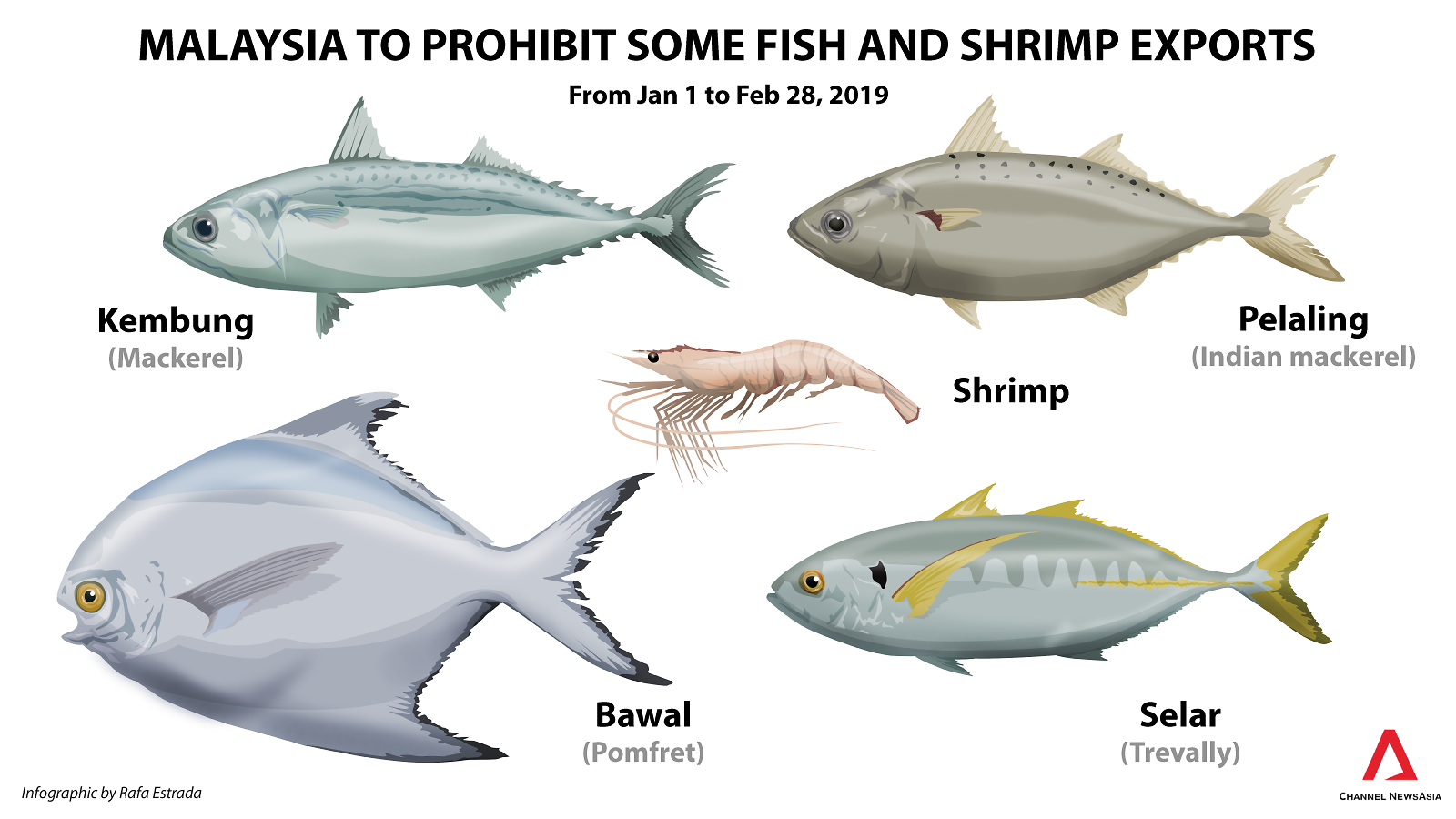
The Malaysian government said on Monday that it will prohibit the export of four species of wild-caught fish and shrimp to meet shortages in Malaysia during the monsoon and festive season.
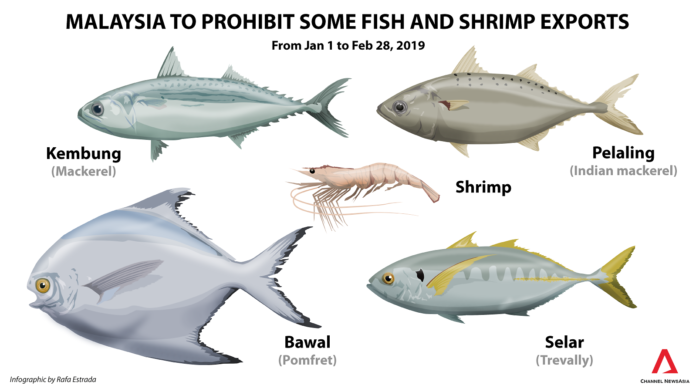
Kembung (mackerel), selar (trevally), bawal (pomfret), pelaling (Indian mackerel) and shrimp will not be exported from Jan 1 to Feb 28 next year, according to Malaysia’s Agriculture and Agro-based Industry Minister Salahuddin Ayub.
Punggol Fish Merchants Association chairman Daniel Pe said such bans have been imposed for the past few years and industry players have adopted workarounds to deal with the potential shortfall.
“During the normal season, some of the merchants actually keep and freeze (the fish), so it doesn’t really affect … the prices,” he said, adding that with proper freezing techniques, the quality of fish can be maintained.
Periodic bans of fish exports from Malaysia have been reported from as early as 2013.
The increase of fish prices during Chinese New Year, which falls on Feb 5-6 next year, is generally because of high demand rather than any bans imposed by the Malaysian government, he said.
“The normal price increase of 20-30 per cent is due to the festive season, not because of restrictions.”
Mrs Belinda Lee, vice chairperson of the Seafood Industries Association Singapore, said that fish merchants already have some of these fish on “standby” in anticipation for the increase in demand over the Chinese New Year period.
“There’s no need to panic … It is the usual matter or problem that we’ve faced for the past five years,” she said.
“Now the pomfret and red grouper, we sell for S$25-30 a kilogramme but during Chinese New Year it becomes higher due to demand and supply. If you’re willing to pay, then fishmongers will sell.”
ALTERNATIVE SOURCES FOR FISH
Mr Ang Jwee Herng, director of Hai Sia Seafood, pointed out that alternative sources are available for the affected seafood.
“The fish can come from Indonesia or Thailand,” he said. “Fish like the kembung and selar, generally come from Thailand instead of Malaysia … Malaysia already doesn’t ship in a lot.”
File photo of mackerel. (Photo: AFP/Charly Triballeau)
In response to queries from Channel NewsAsia, supermarket chain Sheng Siong said that they do not see a “significant impact” caused by the ban.
“As these seafood can be sourced from other countries like Indonesia and Thailand, we do not foresee a significant impact,” said a Sheng Siong spokesperson.
“Besides, we also carry other fresh fish varieties such as threadfin, batang, white snapper in our stores and there are also frozen fish available in the market.”
Cold Storage and Giant also bring in fish from other countries, said a Dairy Farm Singapore spokesperson.
“Both Cold Storage and Giant practise diversified sourcing so we do source for fish and shrimp from other countries,” said the spokesperson.
Pomfret and mackerel can be from Indonesia, China or India while the supermarket chain works with Singapore fish farmers for its supply of trevally. Fresh and frozen prawns and shrimp are also sourced from Thailand and Vietnam, it added.
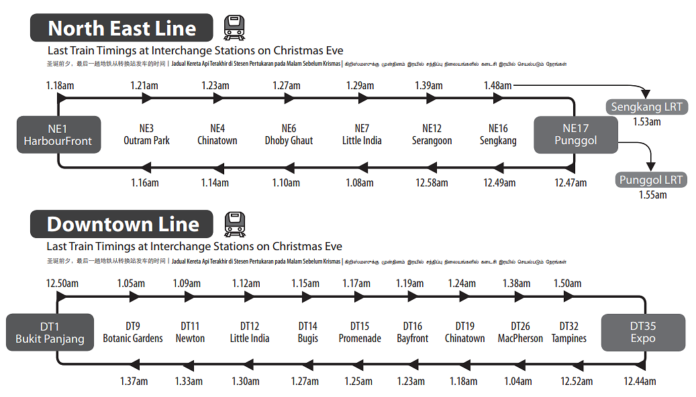
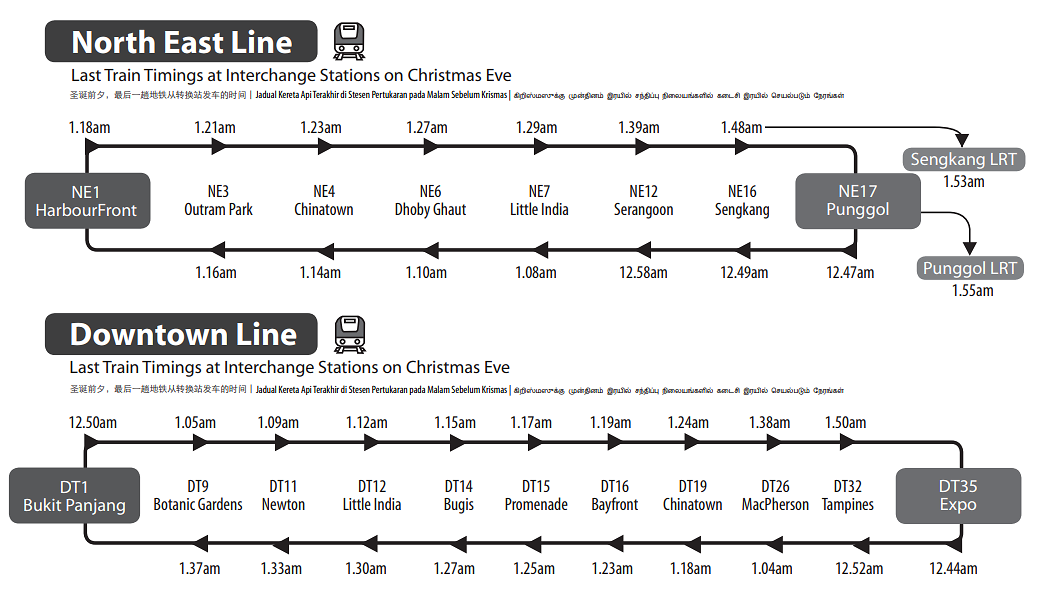
SINGAPORE: Select bus and train services will operate extended hours on Christmas Eve to accommodate passengers travelling late, said SBS Transit and SMRT in separate press releases.
On Monday, the North-East Line (NEL) and the Downtown Line, operated by SBS Transit, will be extended by about 1 hour and 15 minutes.
The last train on the NEL towards Punggol will depart HarbourFront at 1.18am, while the last train towards Harbourfront will leave Punggol at 12.47am.
In addition, the Sengkang/Punggol LRT systems will also be open until after the last NEL train arrives at the respective Town Centre Stations.
On the Downtown Line, the last train heading towards Expo will leave Bukit Panjang at 12.50am, while the last train towards Bukit Panjang will leave Expo station at 12.44am.
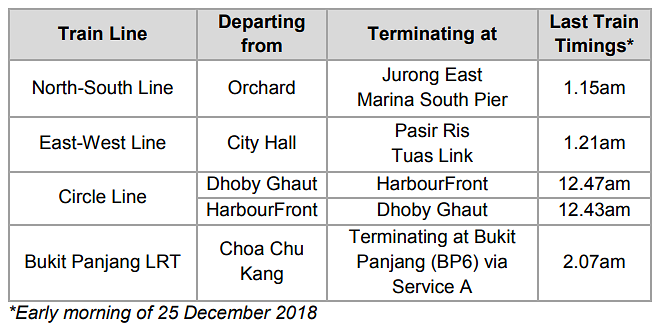
The SMRT-operated North-South Line (NSL), East-West Line (EWL), Circle Line and the Bukit Panjang LRT will also end services past midnight.
The last train on the NSL towards Jurong East and Marina South Pier will leave Orchard station at 1.15am. From City Hall, the last train on the EWL going to Pasir Ris and Tuas Link will depart at 1.21am.
On the Circle Line, the last train departing Dhoby Ghaut and ending at HarbourFront will leave at 12.47am, while the last train leaving Harbourfront for Dhoby Ghaut will depart at 12.43am.
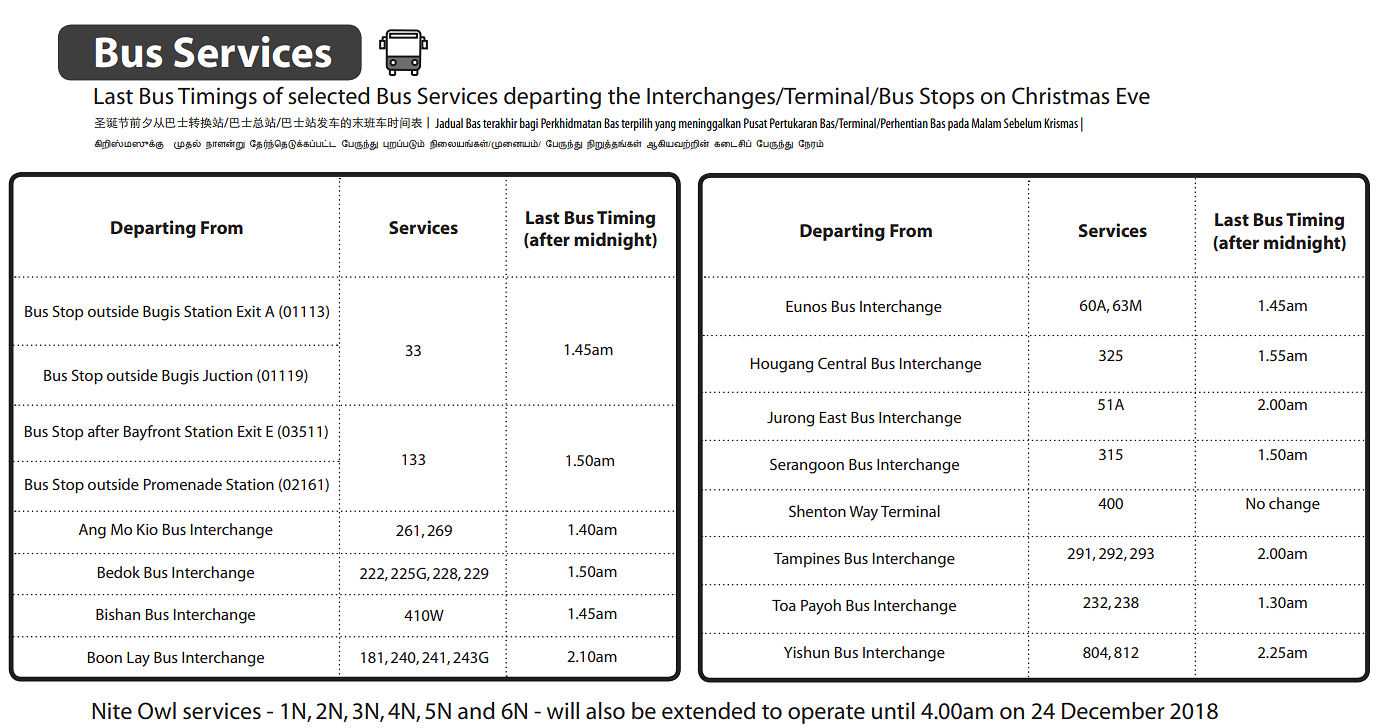
To supplement the extended rail hours, some buses will also run later.
SBS will extend hours on services 33, 51A, 60A, 63M, 133, 181, 222, 225G, 228, 229, 232, 238, 240, 241, 243G, 261, 269, 291, 292, 293, 315, 325, 410W, 804 and 812. Six Nite Owl services are also slated to operate until 4am on Christmas Day.
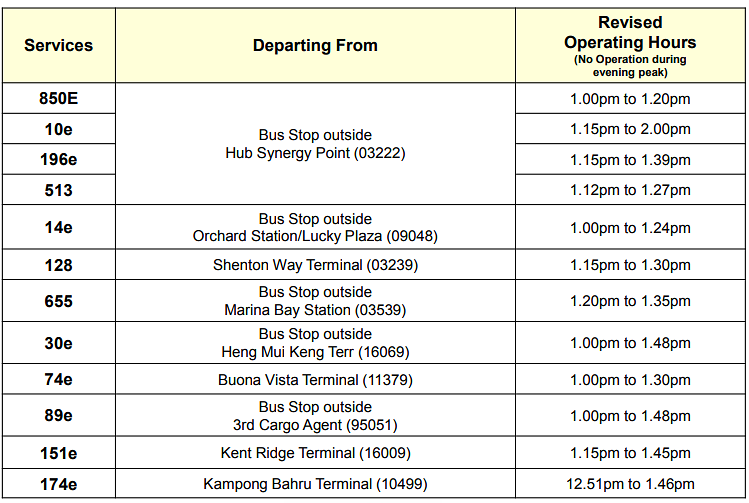
Twelve buses – 10e, 14e, 30e, 74e, 89e, 128, 151e, 174e, 196e, 513, 655 and 850E – which run between the heartlands and the city, will have their hours revised to accommodate the shorter working day on Christmas Eve.
For passengers on the last trains connecting at Choa Chu Kang and Woodlands Interchanges, the last bus for services 300, 301, 302, 307, 983A, 901, 911, 912 and 913 will leave at 2.15am.
The last bus for services 859A and 883A will leave Sembawang Interchange at 2.20am. The last bus for services 920 and 922, from Bukit Panjang Interchage, will leave at 2.10am.
SINGAPORE: Ride-hailing company Grab on Tuesday (Dec 18) said commuters using its service could see cheaper fares in the long term, as drivers leverage more cost-efficient maintenance services using data to bring their expenses down.
The comments by Mr Russell Cohen, Grab’s head of regional operations, came as the company and Toyota Motor announced that the carmaker would offer its specially designed mobility services for ride-hailing companies to 1,500 GrabRentals-owned Prius’ from next year.
Mr Cohen said at the launch event that Grab “hopes to offer cheaper fares with the cost savings” accrued through this service as well as other measures aimed at improving business operations.
However, he told Channel NewsAsia at the sidelines of the event that the cost savings will not “flow through quickly or meaningfully” to commuters in the short term.
Total-care Service – which uses data collected from sensors embedded into the vehicle to provide drivers with more cost-efficient and timely maintenance services – is the world’s first service specially developed for ride-hailing companies, said Toyota.
Among the services provided include fleet management, automotive insurance and vehicle maintenance packages.
It works by collecting driving data via an in-vehicle device called TransLog. Toyota has been testing this since 2016, and had previously fitted 100 of Grab’s vehicles for this purpose.
The Total-care Service is the first fruits of Toyota’s US$1 billion investment in the Singapore-headquartered company.
Mr Cohen said that he expects the drivers of the 1,500 Toyota vehicles to begin reaping the benefits from next year.
For instance, these drivers will receive real-time notifications when their brake pads or tyre threads are wearing thin and need to be replaced, Mr Cohen said.
The telematics dashboard shows information such as a vehicle’s model, distance travelled and operation status.
This is important for ride-hailing drivers as their vehicles typically travel five times more than private cars, he said. On average, a private car travels 18,000km a year compared with about 90,000km for ride-hailing cars, Grab said.
Toyota’s Singapore authorised dealer Borneo Motors has also partnered the carmaker to build an Intensive Care Stall (ICS) facility, which uses digital technologies such as voice recognition systems and automated vehicles to cut down the time needed to maintain a vehicle, the company said in a separate press release on Tuesday.
In a video showed at the launch, it said the ICS resulted in average maintenance time being reduced from 70 minutes to half an hour.
GROWING GRAB’S TOYOTA FLEET
Grab on Tuesday also said it plans to grow its fleet of Toyota vehicles in the region by 25 per cent by 2020. It declined, however, to reveal the size of its GrabRentals fleet or how many Toyota vehicles it owns.
It intends to introduce the Total-care Service to all Toyota vehicles in its fleet eventually.
Additionally, Grab and Toyota are also working with Aioi Nissay Dowa Insurance, a Toyota-affiliated insurance company, to develop telematics-based car insurance for Grab’s fleet.
A Grab spokesperson told Channel NewsAsia that the details are still being worked out and that he would not be able to share how much cost savings are expected.
He did note that given that the data collected for the insurance will be from the car, and not from mobile apps as existing products on the market are using, the information will be more accurate.
When asked at the launch event if Toyota plans to make this service available to other ride-hailing service providers, Toyota Motor Asia Pacific president Susumu Matsuda said there are no plans to do so.
Toyota is, however, “taking into consideration” bringing the Total-care Service offering to consumer vehicles in the future, added the executive.
Toyota Motor Asia Pacific president Susumu Matsuda sharing the Japanese carmaker’s mobility vision at Tuesday’s launch event.
THE sales of private homes in Singapore showed a healthy demand for the property market as nearly 90 percent of the units launched in November were sold.
This came after the government introduced cooling measures which led to the slow down in the increase of residential property prices.
According to the Straits Times, the city-state saw 1,198 units sold out of the 1,341 units launched, the highest since cooling measures were announced.
The Urban Redevelopment Authority (URA) released the figures on Monday which showed a 52 percent jump from the 788 units sold a year earlier.
The sales were also up 146 percent from the 487 units sold in October.
However, the figures did not include executive condominium (EC) units, which were a hybrid of public private housing.
The property market saw the launch of seven new projects made up of 830 units, which accounted for 69 percent of the new private home sales in November.
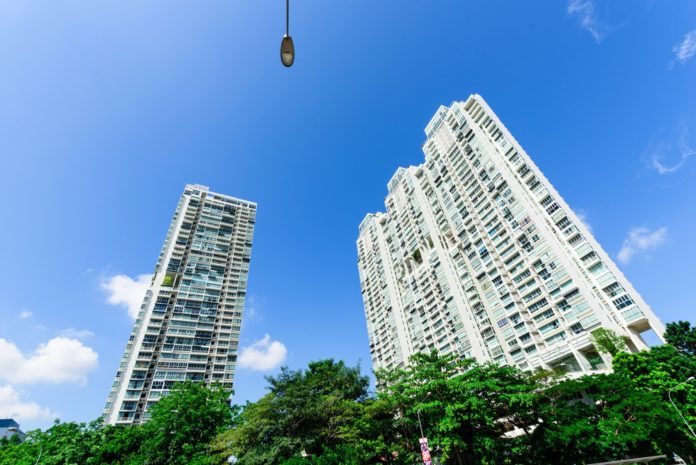
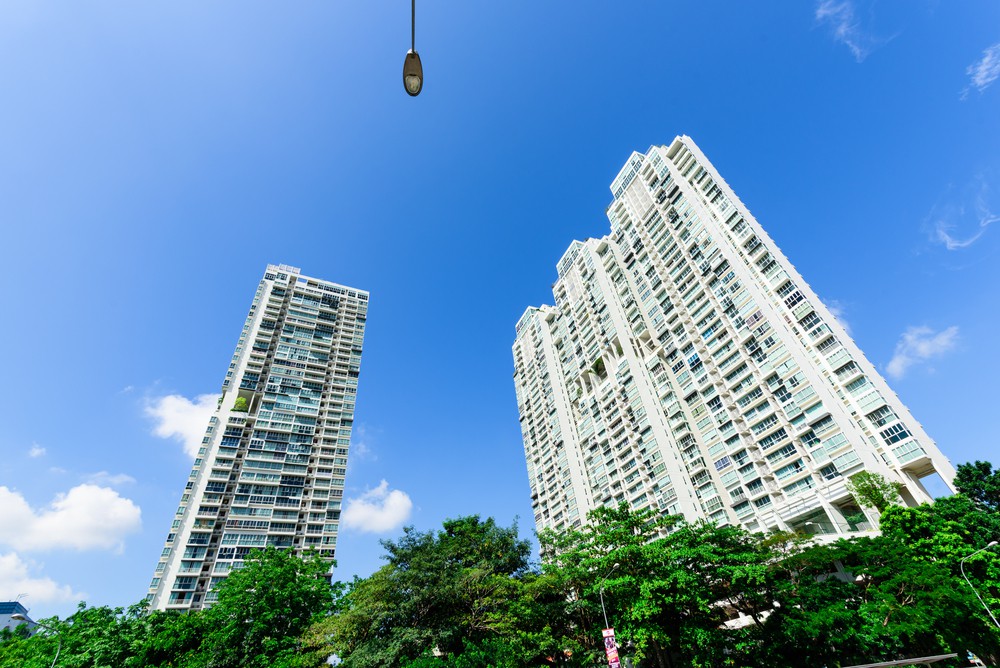
Low angle view of a modern point block private apartment and condos building with cloudy blue sky in background surrounded with green garden. This is a typical Singapore high-rise residential tower. Source: Shutterstock
City-fringe projects such as Parc Esta and Whistler Grand were among the top sellers.
The number of units sold stood at 8,644 this, which amounts to 82 percent of last year’s total volume of 10,566 for the year to date, according to the Straits Times.
Last week, brokers predicted the prices of residential properties in city-state would remain stagnant or even dip next year.
While the prices of homes were predicted to increase as much as 10 percent this year, estimates compiled by Bloomberg show a decline of up to three percent next year and home sales below 2017 levels this year may not appreciate any further next year.
Singapore’s regulators saw the need to introduce the measures in wake of a seven percent hike in prices during the first half of the year owing to aggressive land bids from developers and collector or redevelopment transactions, according to Bloomberg.
Other constrictions include the government limiting the number of “shoe-box sized” apartments that developers can build, along with additional anti-money laundering safeguards.
SINCE Trump’s ‘Indo-Pacific’ speech in November 2017, Japan’s strategic vision towards the Indo-Pacific region, the ‘Free and Open Indo-Pacific Strategy’ (FOIPS), has drawn international attention.
The FOIPS is a strategic vision that primarily aims to maintain the existing international order – premised on a set of principles such as the rule of law, a free market economy, and fundamental rights – in the Indo-Pacific region.
How can Japan achieve this vision? The FOIPS is an evolutionary concept, its form constantly changing over time. Regardless, its backbone rests on the alignment strategy, which envisions “US In, China Down, Asean/India/Australia Up .”
In maintaining peace and stability, it is imperative for Japan to ensure America’s strategic commitment to the region.
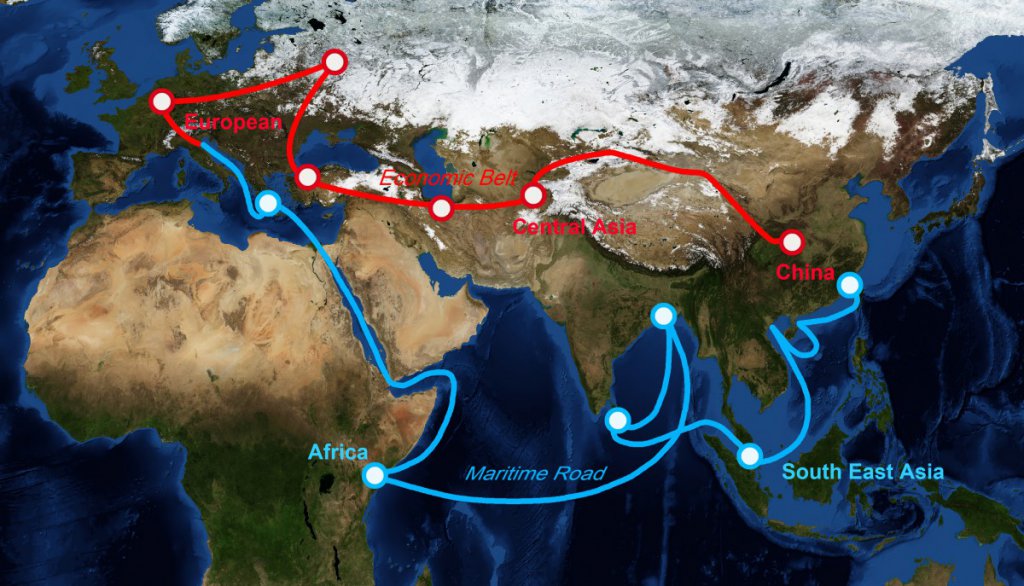
In particular, responding to China’s potential challenges to the existing international order is vital in the context of its strategic outreach to Eurasia, Africa, and Eastern Europe. If such challenges are perceived as threats, they are to be constrained, if not contained.
Japan’s ‘Pivot to Asia’
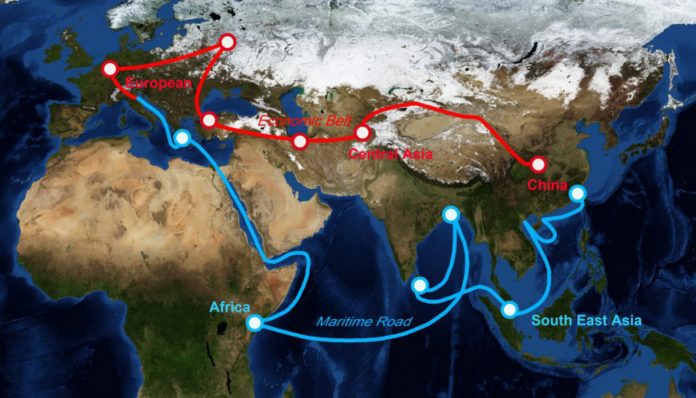
A map of China’s Belt and Road initiative. Source: Shutterstock
This, however, is not enough.
Securing the vast geographical areas of the Indo-Pacific region requires cooperation with Japan’s regional partners, Asean, India, and Australia.
Asean is important in shaping the regional multilateral norms and legitimacy in Southeast Asia and beyond. India and Australia as democratic states are important players in safeguarding the existing international order, covering the Indian Ocean and Southern Pacific respectively.
Asean, India, and Australia are each limited in their regional capacity, but by coordinating their policies, they can achieve their goals.
Of course, Japan’s FOIPS framework was not created overnight.
The origin of the vision dates back to Prime Minister Shinzo Abe’s opening speech at the Sixth Tokyo International Conference on African Development in August 2016.
The speech emphasised the importance of economic development, including the need for quality infrastructure between Asia and Africa as well as sea lines of communication between “the seas of Asia and the Indian Ocean.”
Abe’s personal commitment to the Indo-Pacific region can be seen through a number of his addresses over the last 10 years, highlighting that the strategy was born mainly out of Japan’s reaction to the emergence of potential obstacles put forward by China to existing international rules and norms.
One such concern was the increasing visibility of China’s Belt and Road Initiative, which has pushed infrastructure development throughout the region since Xi Jinping’s two speeches in Kazakhstan and Indonesia in 2013.
The core elements of the FOIPS were therefore, first, the freedom of navigation and overflight through the enhancement of the rule of law, and second, the infrastructure and economic development adhering to international standards in the Indo-Pacific region.
Xi & Abe – back to ‘normal’?
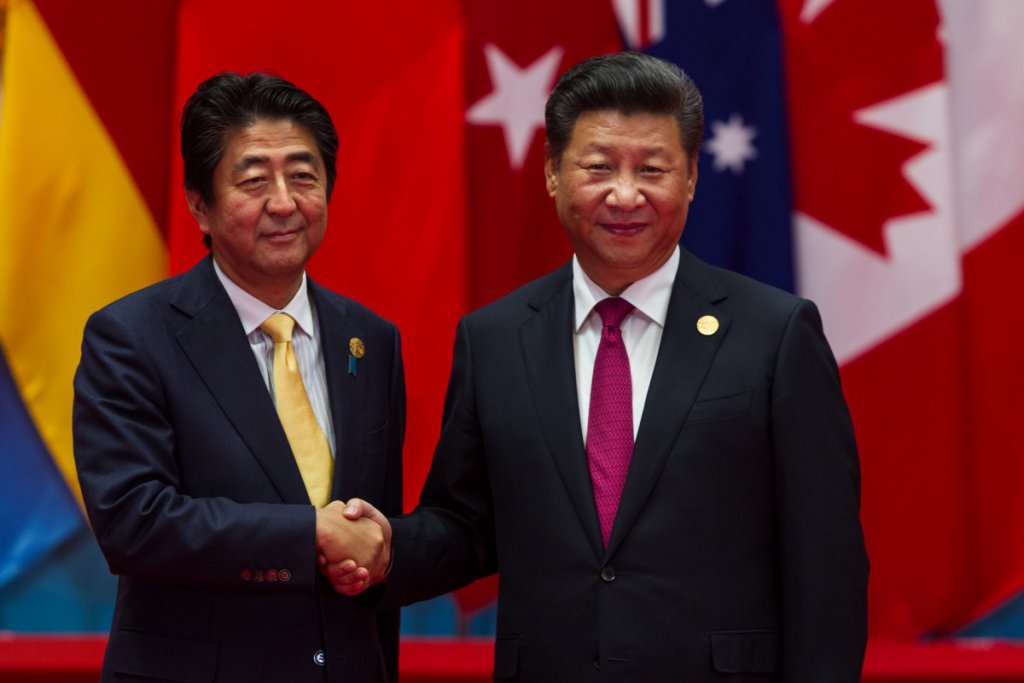
Chinese President Xi Jinping (R) welcomes Abe during the G20 summit in Hangzhou in September 2016. Source: Shutterstock
Admittedly, policymakers in Tokyo are yet to clearly indicate whether the FOIPS is intended to be a hard-nosed competitive strategy against China, or whether it hopes to leave Japan the political leeway to cooperate and shape China’s behaviour.
But this is because the strategy is vague by design. Such vagueness allows Japan the flexibility in policy response to the rapidly changing strategic environment.
This was well illustrated by the Japan-US Summit in November 2017 for three reasons.
Firstly, Tokyo was able to get the US on board with the concept of a ‘Free and Open Indo-Pacific’ to keep China in check.
Secondly, the two countries emphasised the importance of freedom of navigation and economic development, which have been Japan’s strategic concerns.
Finally, they agreed to the non-exclusive nature of the strategy, which leaves Japan’s options open for cooperation with China in future.
To date, the implementation process of Japan’s Indo-Pacific strategy has been relatively smooth.
The Quad, a cooperative framework between Japan, the US, Australia and India, remains premature, but it functions as a forum to share their assessments on the regional strategic environment in the Indo-Pacific region.
On top of this, this year, Asean has begun to formally acknowledge and discuss strategies during Asean-related meetings such as the Asean Summit and the East Asia Summit.
Looking ahead, however, there exist three main challenges.
First, it is imperative for Japan to ensure very close policy coordination with its allies and partners. The nature of the FOIPS is intentionally unclear, leaving room even for allies and partners to be easily misguided.
Asean is located in the centre of the Indo-Pacific region, and its unity and centrality are respected by all the regional powers, including the Quad. It is still unclear exactly what role Asean’s unity and centrality will play.
Without clarification, other countries in the region are likely to either neglect Asean or be entangled in its slow decision-making procedure.
Third, Japan needs to identify the strategic scope of the FOIPS, including details such as the degree of Japan’s involvement in infrastructure projects in South Asia and in maritime security in the South China Sea.
Ambiguity might prove helpful when responding to the uncertain nature of regional affairs, but without clarifying its scope and the means to achieve its objectives, Japan risks strategic overstretch.
These are difficult tasks, but the policy’s vagueness would potentially increase strategic uncertainty in the region.
In December, Japan will issue its new National Defense Program Guidelines, which aims to strengthen its defence capabilities, including its naval power projection.
As a first step, Prime Minister Abe should explain to his domestic and international audiences the status and future of the FOIPS in his policy speech to the Diet next year. Addressing these challenges is the key to future success in implementing Japan’s Indo-Pacific vision.
This piece was first published at Policy Forum, Asia and the Pacific’s platform for public policy analysis and opinion.