SINGAPORE: The 14th meeting of the Joint Ministerial Committee for Iskandar Malaysia (JMCIM) scheduled for Jan 14 has been postponed, Singapore’s Ministry of Foreign Affairs (MFA) said on Saturday (Jan 12).
“The intrusion by Johor Menteri Besar Dato’ Osman Sapian into Singapore Territorial Waters off Tuas on Jan 9, 2019 made the 14th JMCIM meeting untenable. Singapore therefore proposed to postpone the JMCIM meeting, and Malaysia agreed,” MFA said in a statement.
On Wednesday, Johor Chief Minister Osman Sapian made a visit to the Pedoman, which was in Singapore territorial waters. Mr Osman also posted photos on Facebook showing his visit on board the vessel.
Malaysian government vessels have made repeated incursions into Singapore territorial waters in recent months, after Malaysia extended the Johor Bahru port limits in October, encroaching into Singapore territorial waters off Tuas.
Singapore has protested the port limit extension and the movements of the vessels. Singapore’s Transport Ministry also extended Singapore’s port limits off Tuas on Dec 6 in response.
Transport Minister Khaw Boon Wan also said then that there had been as many as 14 intrusions by Malaysian vessels in the two weeks before Dec 6.
Singapore Foreign Affairs Minister Vivian Balakrishnan and his Malaysian counterpart Saifuddin Abdullah said in a joint statement on Tuesday that the countries had agreed to establish a working group to study and discuss legal and operational matters relating to the maritime dispute, in order to provide a basis for further discussions and negotiations.
Illustration showing the adjustment of Singapore and Malaysia’s port limits.
SINGAPORE: When he first arrived in Singapore as a fresh-faced teenager a little over seven years ago, the sum of Song Ui-young’s English vocabulary totalled just two words.
“I couldn’t speak English – I only knew ‘yes’ or ‘no’,” said the South Korean footballer.
But the 18-year-old Yeouido High School student was nonetheless determined to at least do his talking on the pitch.
“My coach in Korea knew the then Home United coach, Lee Lim Saeng, and recommended me to him. Then coach Lee came down to watch my game and he just liked me,” said Song.
“After that we talked and he asked me to play in the (reserve) Prime League first. I thought if I could adjust in Singapore, then maybe I could step up and have the chance to play in the S.League (now Singapore Premier League).”
Fast forward to 2019, and the hard-running, straight-talking midfielder not only has cemented a starting role in his side, but has become one of the brightest stars on the local football scene.
Banging in 20 goals last season for Home United, the South Korean has transformed from an inexperienced newbie to a seasoned stalwart.
“In my first and second year, I just tried my best to survive,” he said.
“During my third and fourth year, I changed my thinking to be better and better. In 2018, I also changed my playing style to score more and attack more.”
Song’s eyes are also set on a new prize – the Lions jersey.
“This is my special country,” said the 25-year-old. “Singapore is the first country I’ve played professional football in and sometimes I really feel more comfortable here than in Korea.”
Having submitted his application for Permanent Residency (PR) last November, the South Korean now faces an anxious wait as he takes his first step to becoming a Singaporean.
“I’ve already learnt the national anthem,” Song added. “I heard that I need to prepare, that’s why I learnt already and remember it.
“I watched it on YouTube first and I tried to sing it. When my teammates sing it, I just follow them and they will say this is right and this is not.”
LIKE A “SMALL BOY”
His quest for a new nationality marks a major milestone for Song, who struggled with communication with teammates on the field and loneliness off it when he first arrived.
“I was like a small boy – I couldn’t shout to ask teammates to give me the ball,” Song said. “Even if somebody was shouting at me, I wouldn’t know what he was shouting for.
“I tried my best to produce good performances on the field, but I felt that my teammates weren’t that close to me.”
Song in action for Home United. (Photo: Matthew Mohan)
While the youngster stayed in an apartment with assistant coach and compatriot Baek Jong-seok, Song was finding the going tough.
“During my first year, the feeling of loneliness – I felt that way for the first time in my life,” he said. “I wanted to go out and enjoy fresh air off the field. But I didn’t have many friends here to begin with.
“I didn’t talk much to my family about my hardship because they would worry for sure. I didn’t want them to worry. So I would just share with my best friend in Korea.
“If I went back to Korea, maybe I wouldn’t need to feel this kind of thing. That’s why I wanted to give up. Sometimes I cried.”
But Song made the effort to press on – and the first step in assimilating was to pick up the language.
“I needed to speak English with people,” he said. “I learnt it online and I had tuition as well. My first year and second year I had online lessons every day. For the tuition, it was two times a week.
“It was very difficult to learn English in the first year, but then in the second and third year I felt that I was getting better at it and I got more confident.”
The South Korean was becoming fast friends with his teammates as well, with veteran defender Juma’at Jantan one of the players to take Song under his wing.
“JJ helped me a lot. He came to me and asked me how I was and whether everything was good,” said Song.
“He was always checking up on me. And if I had some problems then he would try to help.”
SWAPPING SOUTH KOREA FOR SINGAPORE
As the South Korean continued to impress, he caught the eye of then Lions coach Bernd Stange in 2016.
“He wanted me to play for Singapore and in his team, so after I heard that I was very interested,” said Song.
“It would be an honour to represent Singapore, an honour for my life. Some people really want that but can’t get that (opportunity).”
Having spent close to five years in Singapore, Song was eligible to be naturalised at the end of 2016, having met FIFA’s requirement of having lived continuously here for at least five years after reaching the age of 18.
Song was named in the 2018 FansXI team of the year. (Photo: Matthew Mohan)
A total of nine players have been naturalised for Singapore under the Foreign Talent Scheme, with Chinese striker Qiu Li the last to gain citizenship in 2010.
Song eventually applied for permanent residency in March 2018, but the application – his first – was rejected several months later.
“I was very disappointed,” he recalled. “I was confident of getting PR, then it suddenly fell through.”
A exit route out of Singapore was available for Song was well – top tier Indonesia side Persija Jakarta were interested in his services and willing to more than double his salary.
A monthly salary of “between US$15,000 to $20,000” was offered to Song, along with a sign-on fee and bonuses.
“I met the chairman and the teammates and they already prepared the contract for me,” he said. “I could’ve just signed it then and there. It was very difficult to arrive at a decision – but I chose not to.
“The biggest reason why I stayed on in Singapore was I met with the Football Association of Singapore (FAS) – they shared their plans for me and supported my PR application.
“I told my family and close friends I really like living here and if I could play for Singapore, then that would be a great opportunity – one that rarely comes around.”
Song, who has yet to serve compulsory national service in South Korea, says he is also “prepared” to serve in the military should he have to return to his homeland.
In a reply to media queries last October, the FAS confirmed that it was in discussions to put forth its support for Song’s application under the Foreign Talent Scheme.
A FAS spokesman said then: “As announced at the recent FAS Congress, the FAS is looking into utilising the Foreign Talent Scheme to further strengthen our national team for the future.”
He added: “Song Ui-young is a motivated individual with a strong desire to perform at the highest level, and has shown great commitment to local football since he came to Singapore in 2012 at the age of 18.
“Apart from his stellar performances at local and regional competitions in the past seasons, Song has also been actively involved in Home United FC’s grassroots outreach efforts.
“Despite overseas offers, Song has decided to remain with the Protectors, signalling his desire and intention to make Singapore his home.”
“I NEED TO SEE A DOCTOR”
Even when he returns to South Korea for holidays, Song’s heart remains in Singapore.
“I don’t know if you believe it or not but when I am in Korea during the off-season, I do want to come back to Singapore,” he said. “I want to start my work and stay here and have kopi and meet my friends.
Song tussles for a loose ball with an Albirex Niigata defender. (Photo: Matthew Mohan)
“It’s very difficult sometimes; I think I need to see a doctor on why I feel this way,” he added with a laugh.
Song is clearly at home in Singapore – he considers Newton hawker centre and Clarke Quay among his favourite haunts.
And his beverage of choice whenever possible? Kopi.
“I really like the kopi. I have that more than Starbucks or Coffee Bean … When I take a flight, I request: ‘Do you have kopi? If you have, just let me have it?’ They don’t understand, they don’t know about kopi.”
For now, Song will have to be content with his daily cuppa, as he waits on what could be a life-changing turn of events.
And he has another another item to tick off the checklist in the meantime.
“I’m trying to learn Chinese as well,” he added with a laugh. “I’m making plans now.”
Not too shabby for the footballer whose main goal when he arrived in Singapore all those years ago, was to merely survive.
LAS VEGAS: Decked out in trade show attire – suit, tie and a Singapore pin to finish the look – Siddarth Mazumdar blends right in with the hubbub swirling around him on the CES show floor.
You would not necessarily give him a second look unless his company, Newton’s Meter, and the personal safety device it is showcasing catches your fancy.
This suits Siddarth just fine, given that the 16-year-old teenager did not actually meet the age limit set by the trade show organisers; you have to be 18 and above to be an exhibitor at the annual Las Vegas consumer electronics event.
As the Singapore teen puts it, an administrative oversight allowed him to bypass the requirements and be by his father Deb Mazumdar’s side to promote Newton’s Meter at the Singapore pavilion, which is under Enterprise Singapore’s auspices.
“CES only contacted the point person in charge of the group we were in, and since they didn’t require individual verification, I just came,” Siddarth explained.
The Chua Chu Kang Secondary School student just finished his O-Levels last year and is currently waiting for his results – which he said allowed him to travel to the United States.
But the idea for Newton’s Meter came earlier.
Siddarth recounted how an incident in 2016, while he was back in India to visit relatives, proved to be the genesis for the his product.
“One night, I was studying as it was streaming year (he was in Secondary 2 then), when I heard a crash in the vicinity,” he said.
“It was only in the morning did I find out that someone died from that crash, and not from the impact but from massive bleeding.
“I felt that the death could have been avoided if the person received help earlier, and I started thinking how I could solve this problem.”
The thought continued to percolate as he returned to Singapore. And in November that year, after he attended some seminars on Internet of Things (IoT) technology, it dawned on him: People in need of help did not need to be near a hospital or doctor, as long as they have something to trigger a call for help that would give the exact coordinates of where the person is.
He subsequently shared the idea with his father and they went online to see if there were such products being developed or already in market. There weren’t any, they discovered.
“Do you want to just park the idea to one side, or go all the way with it” – that was the question his business consultant father asked him then. And Siddarth chose the latter.
Fast forward a year, during which father and son went on a recruitment drive to get the necessary engineering expertise to turn the idea into an actual prototype, and Newton’s Meter came into being.
It also delivered the proof-of-concept device needed when they filed for a provisional patent application with the US Patent and Trademark Office.
Today, Newton’s Meter has eight other employees working to turn Siddarth’s idea into a viable business.
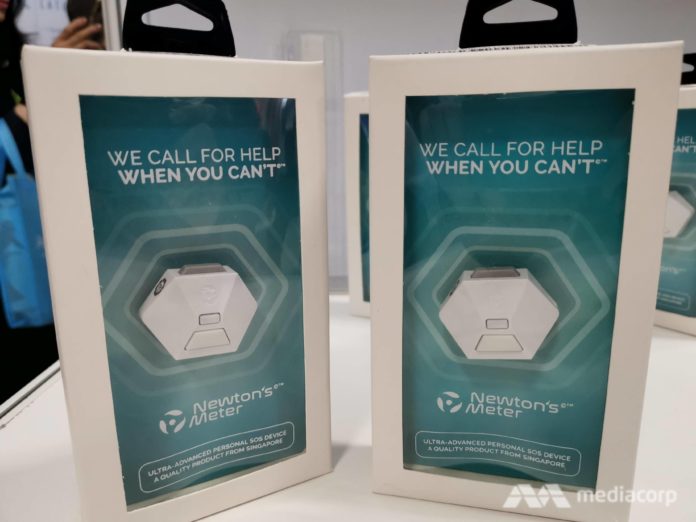
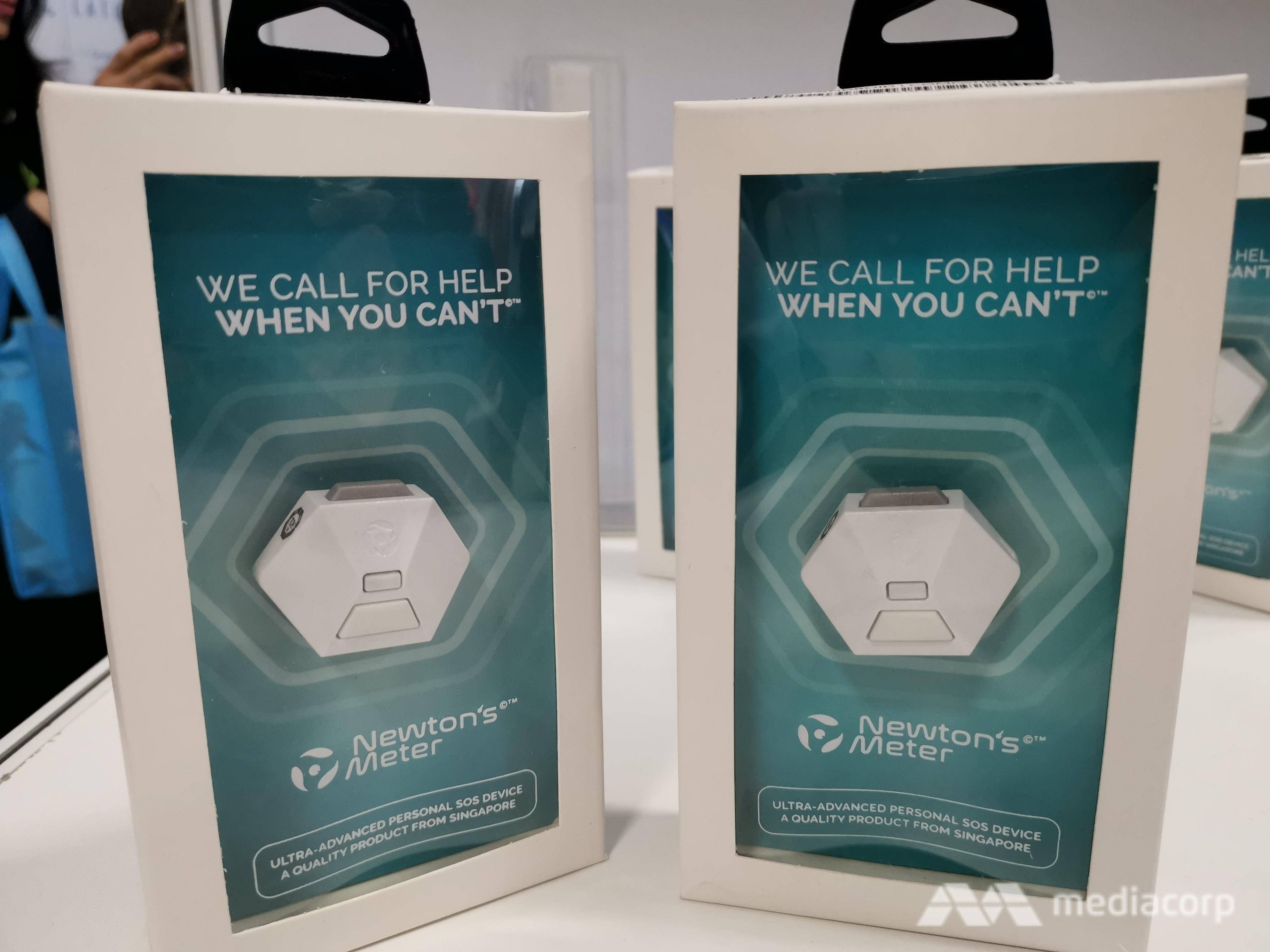
The actual device has an accelerometer to detect if someone has had a fall or crash, GPS for real-time coordinates and Bluetooth and Narrowband IoT to make the emergency call for help via SMS.
The personal safety device triggers an SMS call-for-help when a fall or crash is detected, or when the button is pressed.
Siddarth shared that the device is market-ready and has been presented locally to the police, Ministry of Manpower and the Defence Science and Technology Agency (DSTA). He also found a local manufacturer that can produce 10,000 pieces of the device each month, and is pricing it at US$150.
“Now, we just need to acquire customers,” the confident youngster said.
Does he intend to quit school to pursue his entrepreneurial dream?
The triple-science student was quick to say that studies remain his main priority, and he intends to go down the junior college-then-university route.
Regardless, his parents – first-generation immigrants from India who now call Singapore home – are “very supportive” of their only son’s ambition, he shared.
It remains to be seen if Newton’s Meter will become a success story in the future. But for its teenage co-founder, his enterprising zeal is a refreshing reference point for aspiring entrepreneurs back home.
SINGAPORE: My eldest daughter is turning ten in a couple of weeks.
This also means I’ve clocked ten years as a parent.
Even as I marvel at how fast (and beautifully) she’s growing up, I sometimes look back at those hazy baby days when I had my first-born, and think:
How did we survive that tumultuous year?
Tumultuous is defined as tempestuous, stormy, and turbulent. These words capture a first-time parent’s experience just right.
AM I MUM ENOUGH?
I can still remember the many sleepless, teary and anxious nights.
In the immediate post-birth days, I wasn’t in the best state of health or mind. Water retention, which is a common problem in pregnancy, led to my facial nerves being compressed and one side of my face paralysed. I could not speak properly, nor close my right eye fully.
Thankfully, the issue resolved gradually over a week or two.
Then I experienced difficulty nursing my child, who was a sleepy baby. The minute I latched her on, she would fall sound asleep, refusing to suckle further. It was a vicious cycle of latching and putting her down, on repeat.
(Photo: Carlo Navarro/Unsplash)
Her sleepiness made it a lot harder to establish a good milk supply, and I had to resort to pumping to stimulate milk production.
Even as I grew more experienced with each passing day, it was never easy to tell whether I had sufficient milk, and naturally the doubts came.
It was as if the milk was a symbol of being “mum enough”. I found myself floundering in the dark.
But there was more bad news – my daughter was born with a congenital heart defect.
For a mother who’s already struggling to process the newfound joys and pains of having a child to call her own, discovering that the child has a medical condition felt very much like the last straw.
PARALLEL REALITIES
Most parents don’t talk in detail about their baby-related woes, particularly at work.
They might be trying hard to keep up a still-sane appearance. They might be simply just conserving their energy – for the night feeds.
Or they may not know how to articulate and open up about the issues they’re facing in parenthood.
When everyone else is talking about the latest series on Netflix or Korean drama, all they can do is wish forlornly for just a few minutes of rest.
As a new parent, it can seem like the world travels on at top speed, while you’re left behind, with a cute newborn no doubt, but also with a mountain of laundry and chores.
A laundry basket in the washroom. (Photo: Unsplash/Andy Fitzsimon)
Time takes on a very different personality.
If you’re working, all you wish for in every fibre of your being is to finish up at work and fly home to your baby. You can feel your blood pressure rising with every minute that a work meeting drags on.
As a stay-home parent, you’re constantly watching the clock too. But it is to see when baby will likely wake from her nap, when you can sneak in a 5-minute speed-shower, or when your partner will return.
With a baby in the house, things that you used to take for granted – like a hot shower in solitude, or tucking into a good book, or even a cup of coffee sipped, not poured down your throat – can feel like a lucky draw prize.
MANAGING THE TRANSITION AS A COUPLE
Every couple has disagreements but for first-time parents, the challenge is how to overcome their personality and parenting differences so they can withstand the stresses of baby’s first year.
According to a Gottman study, new parents tend to experience a drop in marital satisfaction during the first year of their child’s life.
With a non-existent sex life, through-the-night feeding and diaper changing action, plus in-laws who may show up unannounced, who would find that surprising?
With a new star in the house, marital dynamics undergo a seismic shift. There tends to be an overwhelming attunement of our senses to the child, to the neglect of one’s spouse.
Couples who are planning for parenthood need to gear up mentally for this major life transition.
A couple and their child at the seaside. (Photo: Pixabay)
One gripe many new fathers have is that their spouse doesn’t seem to see that they’re trying their best to help and make sense of their upheaved world too. They may not nail the diaper change every time, but they also have a desire to be involved and appreciated.
Mothers on the other hand are constantly wishing for more practical help so that they can take catch up on rest.
Prioritising each other’s needs, on top of your child’s, will help the marriage survive the first year of parenthood.
ROOM TO GROW, AS A PARENT
The struggles that I’ve described may turn one off from having kids altogether. But of course, not all the days of parenthood are dreary.
Some come with brilliant surprises, such as the first time baby flashes her toothless milk-drunk grin at you, or when she does her first flip-over.
Or when baby decides to sleep five hours straight in the night, giving you that extra boost of energy needed for the next day.
If you’re still keen on hopping onto the baby bandwagon, it is best to set your expectations low, and enter with your eyes wide open.
Understand that your ideals may not be achieved from the get-go (some may even need to be thrown out eventually), and be open to receive help from family and friends.
In baby’s first year of life, the tears will be plentiful, and a fair share of it will be yours.
(Photo: Unsplash/Kevin Liang)
It will be normal to feel lost and helpless at multiple points, so give yourself permission to feel those things.
Having a baby is a joy-multiplier in most instances; but the initial experience can be inexplicably sorrowful. However, the post-birth pains will not be without purpose.
As the saying goes, the only way out is through. And as you watch your child grow, recognise and marvel at your own growth too.
The first year will be a time where you carve a new identity, one that makes room for your new role as a parent. It will also be a time of letting go of old and unhealthy habits, and learning new skills for the sake of your newborn.
Soon, often before you know it, the storm will blow over, and you will find yourself face-to-face with a blossoming child, and a different and stronger you.
June Yong is a mother of three, an educational therapist and owner of Mama Wear Papa Shirt, a blog that discusses parenting and education in Singapore.
SINGAPORE: Affecting more than 420 million people globally, diabetes has been described as one of the world’s fastest growing chronic diseases and for Alan Phua, it is one that he lost both his grandmothers to.
So when Verleen Goh, his business partner and a trained food scientist, suggested developing a product that’s not only diabetes-friendly but can also help with prevention, he agreed.
The product they envisioned will make starchy white rice “healthier” by lowering its glycemic index (GI), which is a measure of how a carbohydrate-containing food raises blood glucose level. White rice, a staple of meals here in Singapore and the rest of Asia, has a high GI value that is deemed unhealthy for diabetics or those trying to keep their blood sugar at a healthy level.
After three years of research and development, the founders of Alchemy Foodtech have turned that idea into reality.
Their plant-based ingredient blend, shaped like rice grains, can be added into a regular sack of white rice to lower the GI content to that of brown rice. In its powder form, it can also be added to other refined carbohydrate staples, like bread and noodles, without comprising the taste, colour and texture.
For this product, Mr Phua and Ms Goh won the top prize at a start-up competition organised by the Enterprise Singapore last year.
“People can continue consuming their favourite carbohydrate staples but not have dangerous spikes in blood glucose levels after that.”
Citing statistics from the World Health Organisation on how more than 90 per cent of patients suffer from Type 2 diabetes – the type that is not genetic and largely preventable by changing lifestyle habits – Mr Phua added that the application of technology to food can play a key role in combating diabetes.
“We want to fight the disease with innovation,” he said.
Alchemy Foodtech won the SLINGSHOT @ SWITCH pitching competition and took home a S$200,000 grant from Enterprise Singapore. (Photo: Alchemy Foodtech)
It is a similar motivation for the makers of Callery’s – a local ice cream brand that prides itself for tasting “as good as the real deal” despite cutting calories and sugar levels by about two-thirds.
“I’ve seen how hard it is to find good-tasting food that is safe for diabetics,” said Mr Ow Yau Png, co-founder of Hoow Foods, while referring to the frustration some of his family members have had.
“It is even harder if you are a sweet tooth and it’s sad to see your loved ones being deprived of things they have always enjoyed. But it doesn’t have to be this way and that is the market gap we want to fill.”
For one and a half years, the team experimented with the replacement of sugar and fats with novel ingredients approved by the Agri-Food and Veterinary Authority (AVA). This includes erythritol, a zero-calorie natural sweetener found in fruits and vegetables.
The research and development process took longer than expected as it was difficult to source for these ingredients and not compromise on taste.
But its efforts paid off as almost 4,000 tubs of the guilt-free ice cream range have been sold since its launch four months ago, said Mr Ow.
“For a brand that’s new to the market, we think this is a good number and it shows how consumers crave for a low-sugar, low-calorie product that has a taste they are used to.”
Moving forward, the home-grown start-up is looking to come up with more ice cream flavours and reformulate other indulgent food. Using the proprietary tech platform that it has already built up, it believes it can do so in a faster and cheaper manner.
Callery’s, a reduced-calorie ice cream brand, developed by home-grown start-up Hoow Food. (Photo: Tang See Kit)
BREWING APPETITE
Alchemy Foodtech and Hoow Foods make up a new breed of start-ups in Singapore’s food tech industry, which unlike the delivery start-ups that have long dominated the local scene, focus on bringing innovation to food on the table.
This mirrors a trend that has been brewing in other markets, such as the United States and Israel, with the rise of start-ups like US plant-based meat maker Impossible Foods, noted Sirius Venture Capital’s founder and managing director Eugene Wong.
“The easiest pain point to solve was delivery and that took off. Those in the industry are now looking at other areas that hold similar disruption potential, and that’s food itself given the growing awareness about the issues of obesity and illnesses, environment degradation and sustainability.
“Now that there’s smarter tech like big data and artificial intelligence, can there be a better way to eat?”
In Singapore, apart from making healthier or cleaner food, some entrepreneurs here have also set their sights on tackling the problem of food wastage.
SinFooTech, for instance, has come up with a way to turn soy whey – excess water generated from the production of tofu which is often discarded – into an alcoholic beverage.
Touted as a first in the world, the unexpected creation came about when co-founder Chua Jian Yong noticed large amounts of soy whey being discarded by tofu makers around the world. In Singapore alone, SinFooTech estimates that nearly 3 tonnes of the by-product is thrown away on a daily basis.
Given that soy whey contains high levels of calcium and soya nutrients, the PhD student from the National University of Singapore’s (NUS) food science and technology department thought it was a waste and began mulling how the liquid can be “upcycled”.
The end result is Sachi – a light yellow-coloured beverage with an alcohol content of seven per cent and a tinge of fruity flavour. SinFooTech, which decided to spin off from NUS last year, is applying for relevant licenses so that it can conduct experiments at bigger volumes, and hopefully launch the product by the end of the year.
It is also looking to develop other soy whey-based beverages now that its proprietary fermentation technology has “upcycled the by-product into a base ingredient” and yields zero waste, said co-founder Jonathan Ng. “If we use 10 litres of soy whey, we can create 10 litres of Sachi.”
With that, it believes that its technology can help to tackle the issue of wastage during food production.
“We want to focus on extracting value from these food processing by-products that are usually discarded,” said Mr Ng. “In doing so, we can produce more from the same resources, reduce environmental footprint and in the longer run, improve food security.”
Sachi, made out of soy whey, tastes sweet with fruity flavours and has an alcohol content of around 7 per cent. (Photo: Tang See Kit)
VCS SAY BON APPETIT, BUT WILL CONSUMERS BITE?
With more start-ups jumping on the food tech bandwagon, the industry is seeing “encouraging” growth signs.
“I think this growth spurt is only starting. We are only seeing local start-ups for now but what can happen in the next few years is the entry of foreign entrepreneurs. If we can see that, the growth in the ecosystem and exchange of ideas can help to produce real game-changing innovation.” said Mr Wong from Sirius Venture Capital.
Mr Wong added that private investors are also starting to take notice of Singapore.
“One of the challenges thus far has been the lack of capital but I think this will change,” he told Channel NewsAsia, noting that a couple of overseas investors are looking to set up offices here.
Combined together with funds from the public sector, Mr Wong reckons that the amount of investments into the local food tech scene could grow by “10 times over the next two to three years”.
Start-ups are also receiving training and support from home-grown businesses. SinFooTech, for one, is among the six start-ups that have joined Innovate360 – Singapore’s first food incubator set up by sugar manufacturing and trading firm Cheng Yew Heng Candy Factory.
For Alchemy Foodtech, it received a “major confidence boost” last September when it secured a seven-digit investment in a pre-series A round led by Heritas Capital Management and Seeds Capital, the investment arm of Enterprise Singapore.
“The problem we had all along was to convince people that food tech was a thing, and that our product is considered deep tech,” recalled Ms Goh. “But with the rise of food tech, we do see more funds taking an interest in start-ups like us.”
The investment will allow Alchemy Foodtech to finally have its own lab and equipment. Prior to this, it was working out of Ms Goh’s alma mater, NUS, and partnered a firm in Europe when it comes to research equipment and manufacturing work.
Channel NewsAsia understands that another home-grown start-up Life3 Biotech, which develops plant-based protein, is also close to concluding its first funding round.
Nevertheless, start-ups and observers stress that the local food tech scene remains in the infancy stage, with remaining challenges such as the lack of talent.
Said Mr Ow: “We definitely need more food scientists here who are driven to change food and nutrition.”
Players in the industry will also need to strategise how to get their innovation out of the labs and onto dining tables, observers said.
The founders of Alchemy Foodtech said they are already in talks with several established food manufacturers to do so, and are hopeful that consumers will bite.
“Food manufacturers have their own research teams but they may be more focused on developing new flavours or textures. With our specialisation in lowering GI, we are in a good position to help manufacturers come up with healthier alternatives faster,” said Ms Goh.
“Feedback that we got from our studies show that people don’t find a taste difference when our product is added. Taste is crucial in getting acceptance and we think consumers who want the health benefits will accept our product.”
JOHOR BAHRU: Seven motorcyclists were taken to hospital on Friday (Jan 11) after a car crashed into them as they were taking shelter from the rain at an underpass along Second Link Expressway.
The incident took place at about 5pm, Berita Harian cited Iskandar Puteri district police chief Dzulkhairi Mukhtar as saying, adding that the accident occurred at the 5.2 Kilometre point in the northbound direction.
Dzulkhairi said that the driver of the car was a 52-year-old Singaporean man, who had driven into a puddle before the vehicle spun out of control. The car, described by Harian Metro to be a Nissan Grand Livina, had been heading towards Johor Bahru from Singapore.
Online photos also showed people wearing motorcycle helmets and rain jackets gathered under an underpass along Second Link Expressway.
“The vehicle crashed into seven motorcycles that were parked under the bridge due to heavy rain,” he said.
Photos of the accident, which were being circulated on social media on Friday evening, showed debris strewn across the road.
The riders were taken to Sultanah Aminah Hospital with minor injuries.
SINGAPORE: Police have arrested a man who threw a brick on the driveway of Parliament House on Friday afternoon (Jan 11).
Police said that they were alerted to the case at around 4pm.
The man drove a car onto the driveway ofParliament House and threw a brick on the driveway before driving off, police said. Parliament was not in session at the time.
“The incident happened at the driveway outside the secured main gate of the Parliament House,” police added.
(Photo: Gaya Chandramohan)
The 45-year-old man has been arrested for criminal trespass.
Photos circulating on social media show an alert transmitted to the Mobile Data Terminals of taxis that told drivers to be on the lookout for a black Lexus SUV that “drove into” Parliament House.
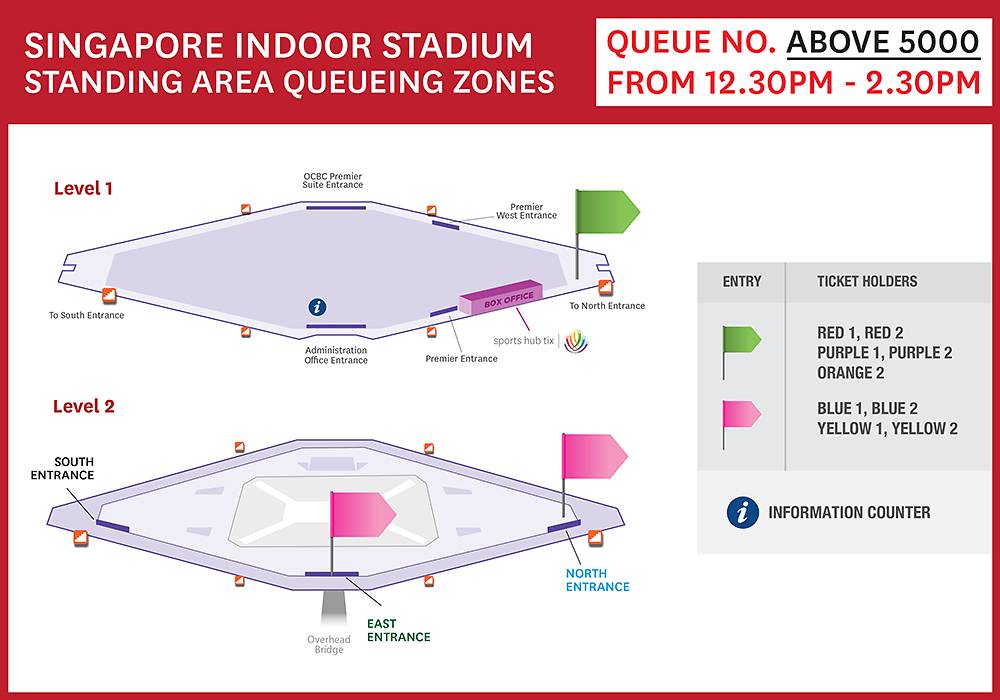
SINGAPORE: There will be enhanced crowd management measures around the National Stadium for K-pop sensation BTS’ concert on Jan 19, said Singapore Sports Hub on Friday (Jan 11).
It added that given the capacity crowd expected, concert-goers are “strongly advised” to take public transport and arrive early.
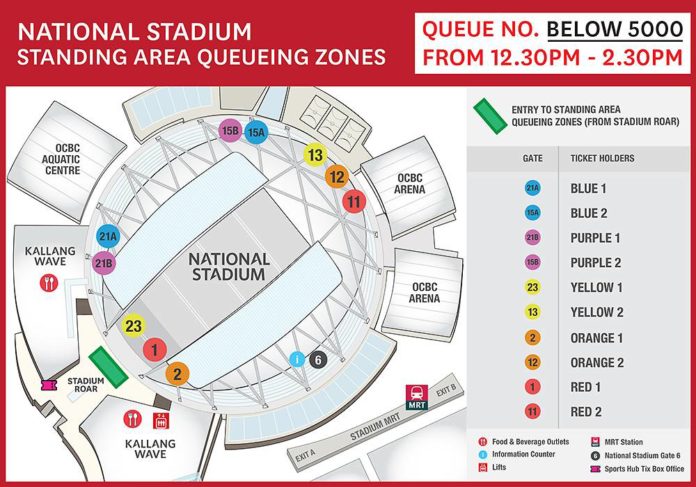
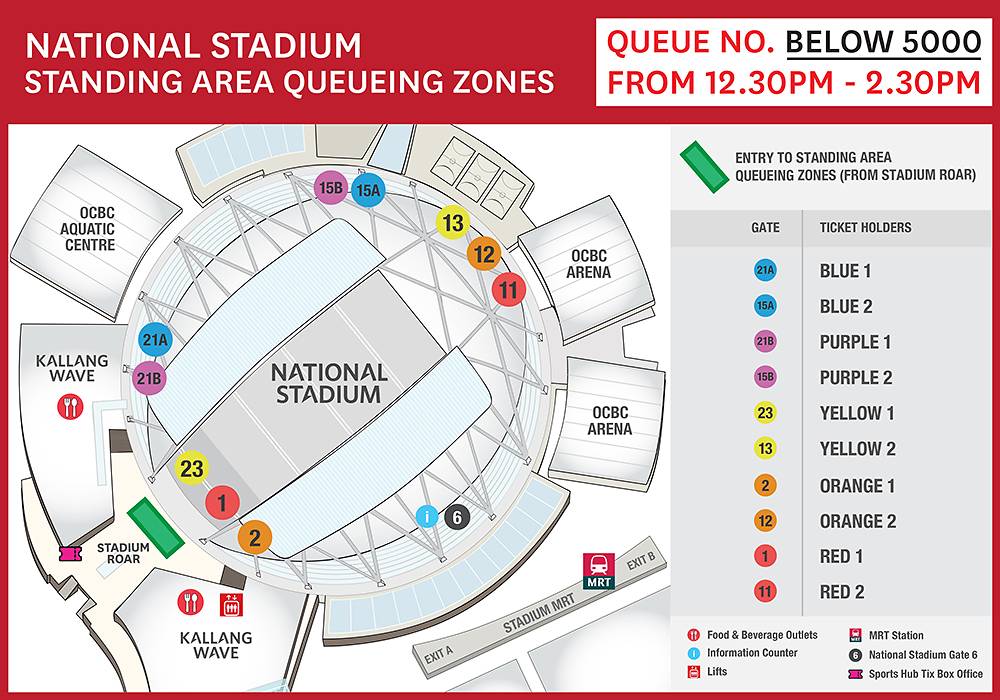
Standing pen patrons with a queue number on the ticket should arrive at 12.30pm for security checks, said Singapore Sports Hub in its advisory, adding that the queue number will be invalid after 2.30pm.
Seated patrons are advised to arrive at least one hour before the event starts. Doors open at 5.30pm.
“For ease of entry into our venue, we recommend that patrons check the gate numbers on their tickets before coming to the Singapore Sports Hub and proceed to the nearest security checkpoint,” said Singapore Sports Hub.
To facilitate security checks, concert-goers should bring only what is needed and avoid bringing bulky items.
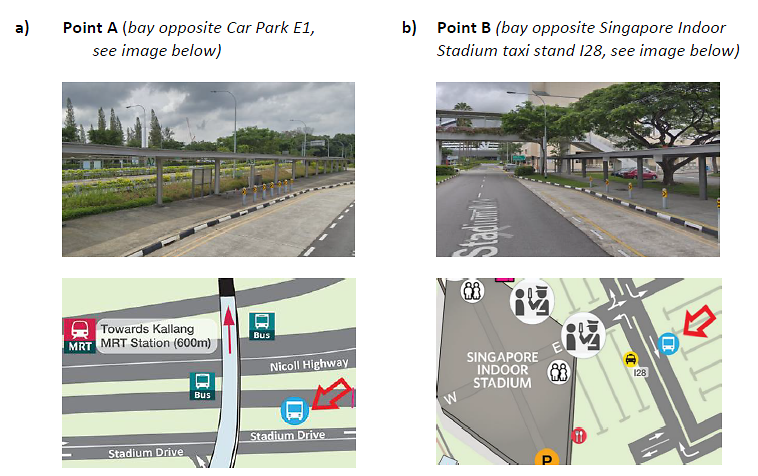
Those with private car arrangements are reminded to use the designated drop-off and pick-up points.
SINGAPORE: Republic Polytechnic (RP) has teamed up with the Land Transport Authority (LTA) as well as cybersecurity firms – RSA and Ensign InfoSecurity – to launch two experiential training facilities that will give 250 students each year a glimpse into working in transport operations and cybersecurity fields of the future.
Speaking at the official opening of the facilities on Friday (Jan 11), principal and CEO of Republic Polytechnic Yeo Li Pheow described the facilities as “industry-benchmarked” ones that will expose students to “realistic environments”.
The RP-LTA Rail Operations Management Lab, for example, is modelled after actual Operations Control Centres for rail lines in Singapore, which are usually located within the train depot.
Students studying for a Diploma in Engineering Systems and Management can build up their crisis management skills through simulations, enabling them to better deal with emergency situations in the real world.
Dr Janil Puthucheary, Senior Minister of State for Transport and for Communications and Information, interacting with Republic Polytechnic students at the RP-LTA Rail Operations Management Lab on Jan 11, 2019.
The second facility, the RP-RSA-Ensign Cyber Threat Intelligence Centre, will benefit students pursuing the Diploma in Infocomm Security Management.
The centre is equipped with high-end security monitoring hardware. Technical experts from the industry will also be on hand to work alongside students as they investigate and analyse cyber intrusion attempts.
“As emerging technologies and market forces create new disruptions across many industries, Singapore needs a highly-skilled and adaptable workforce that is ahead of the curve,” said Mr Yeo.
Dr Janil Puthucheary, Senior Minister of State for Transport and Communications and Information, interacting with Republic Polytechnic students at the RP-RSA-Ensign Cyber Threat Intelligence Centre on Jan 11, 2019.
Senior Minister of State for Transport and for Communications and Information Janil Puthucheary also highlighted the need for a skilled workforce.
Speaking at the launch, Dr Puthucheary noted that Singapore’s rail network is undergoing rapid expansion, with jobs in the industry expected to grow from 9,000 to more than 15,000 by 2030.
“Rail is transforming to meet the evolving needs of our commuters who expect smoother, faster, more seamless and reliable rides. This will require rail professionals with new and varied skill sets,” he said.
Similarly, digitalisation has also led to the need for cybersecurity solutions.
“Singaporeans must seize the attractive job opportunities that the growth of the cybersecurity industry offers,” Dr Puthucheary said.
Two memoranda of understanding were also inked on Friday.
The first was a three-year agreement between RP, LTA, SMRT Corporation and SBS Transit, and the second, a five-year deal between RP and Ensign InfoSecurity.
The agreements will allow staff and students to undertake knowledge-exchange projects and internships.
SINGAPORE: The Singapore Prison Service (SPS) is exploring the use of video counselling and a mobile application to help ex-offenders better reintegrate into society.
This is part of the agency’s three-pronged approach towards expanding its community-based programmes: Enhancing community corrections and practices, strengthening throughcare, and leveraging family and community support.
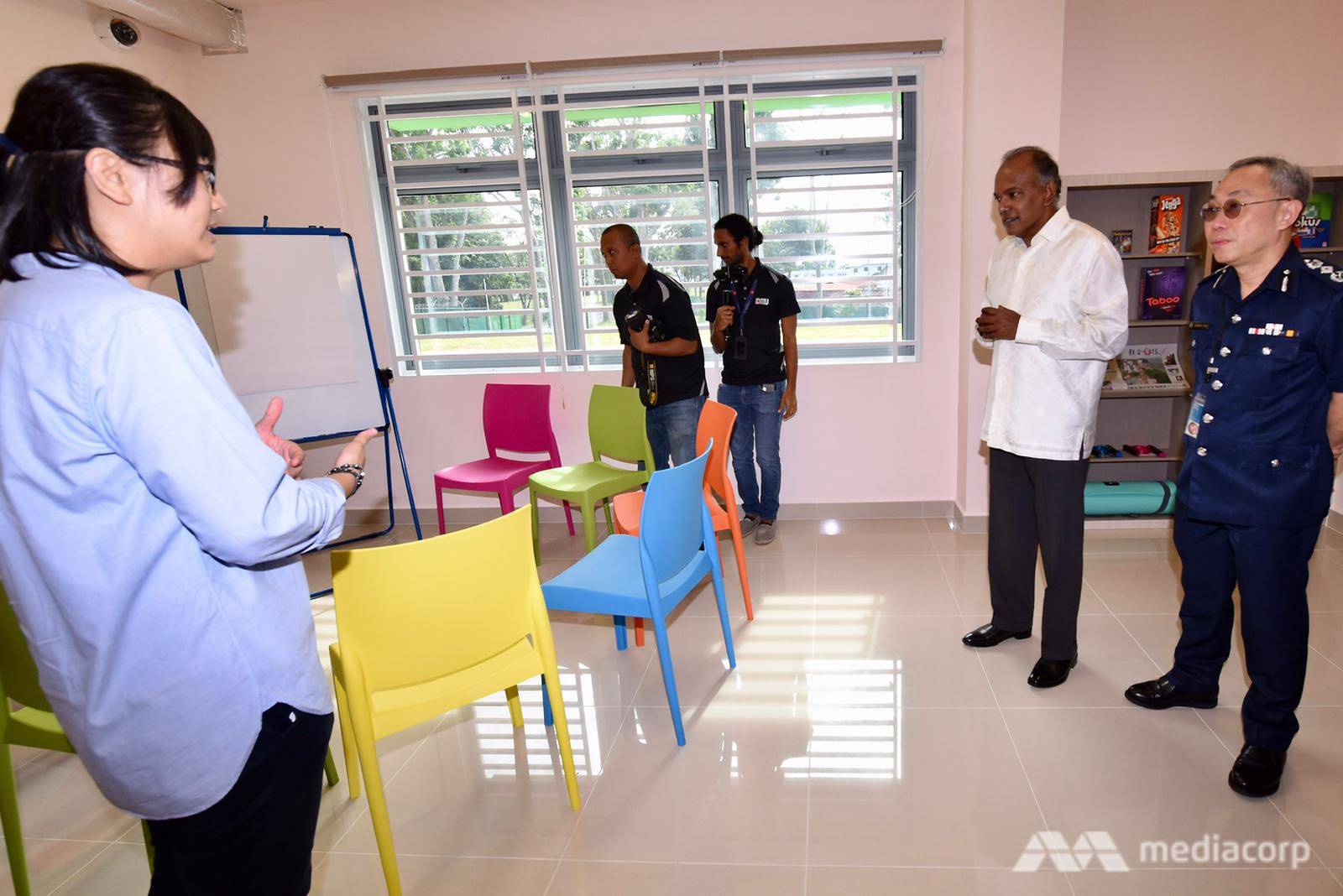
“To better reintegrate of ex-offenders into society, we will be expanding the community-based programmes,” Law and Home Affairs Minister K Shanmugam said during a tour of the Selarang Halfway House on Friday (Jan 11).
Law and Home Affairs Minister K Shanmugam during a tour of the Selarang Halfway House on Friday (Jan 11). (Photo: Hanidah Amin)
The first strategy of enhancing community corrections and practices includes the use of data to assess the types of intervention each offender requires and the use of digital platforms like having counselling sessions conducted through video-conferencing.
SPS said it is exploring these video counselling sessions to complement existing modes of communication and reduce travelling time and expenses for ex-offenders.
“Digital platforms means we can deliver some video conferencing, so (it’s) a lot more targeted,” Mr Shanmugam said.
TAKING CHARGE OF THE REHABILITATION JOURNEY
The second strategy of strengthening throughcare aims to provide better end-to-end oversight of each inmate’s rehabilitation journey.
To that end, SPS is working towards assigning the same officer from inside to outside prison whenever possible.
Law and Home Affairs Minister K Shanmugam spoke about how to better reintegrate ex-offenders into society at the Selarang Halfway House on Friday (Jan 11). (Photo: Hanidah Amin)
SPS will also encourage ex-offenders to take charge of their own rehabilitation journey through the development of a mobile app that will provide access to resources like course notes for self-revision, and a job database to search and apply for jobs.
“They can identify what jobs they can do and that is in addition to the very important help that they receive from SCORE (Singapore Corporation of Rehabilitative Enterprises),” Mr Shanmugam said.
FOCUSING ON LOVED ONES
The third strategy of leveraging family and community support aims to address the negative impact on relationships from crime and being in jail.
This includes getting trained facilitators to guide all newly admitted offenders and equip them with skills for effective communication with their loved ones.
Law and Home Affairs Minister K Shanmugam during a tour of the Selarang Halfway House on Friday (Jan 11). (Photo: Hanidah Amin)
SPS will also work with the Social Service Institute (SSI) to offer befrienders more training courses focused on interviewing, family therapy and counselling skills.
“Once you are in prison there is a negative impact on relationships and family; how you interact with family,” Mr Shanmugam said. “We will try to focus on that.”
SPS said the new SSI training courses will provide more extensive networking and knowledge sharing with professions across various sectors.
“With training, volunteers and community professionals can develop more effective and strategic intervention plans to better help offenders and their families,” it added.