Home Blog Page 864

Six men arrested, more than 3,800 cartons of contraband cigarettes seized in raid

0

SINGAPORE: Six men were arrested and more than 3,800 cartons of duty-unpaid cigarettes seized in an operation in an industrial building in Admiralty Street on Friday (Jan 11), Singapore Customs said on Tuesday.

The total duty and Goods and Services Tax evaded amounted to about S$353,2550 and S$26,040, respectively.

Four men – one Indonesian and three Singaporeans – were arrested during a raid in a unit in the building. There, the officers found 3,828 cartons and 3,085 packets of contraband cigarettes hidden in bed frames and packed in boxes.

The four men had been hired to retrieve the duty-unpaid cigarettes from the bed frames and pack them into boxes for delivery to other parts of Singapore, Singapore Customs said in the release.

Another two Singaporean men suspected to be involved in the case were arrested later that afternoon.

All six men are currently assisting in investigations.

Singapore Customs seizes 3,800 cartons of duty-unpaid cigarettes (1)

Singapore Customs raided an industrial building in Admiralty Street. (Photo: Singapore Customs)

“Buying, selling, conveying, delivering, storing, keeping, having in possession or dealing with duty-unpaid goods are serious offences under the Customs Act and the GST Act,” Singapore Customs said.

Those found guilty face a fine of up to 40 times the amount of duty and GST evaded, up to six years’ jail, or both. Vehicles used in the commission of such offences may also be forfeited.

Source link

Better pay, job prospects for polytechnic graduates in 2018: Survey

0

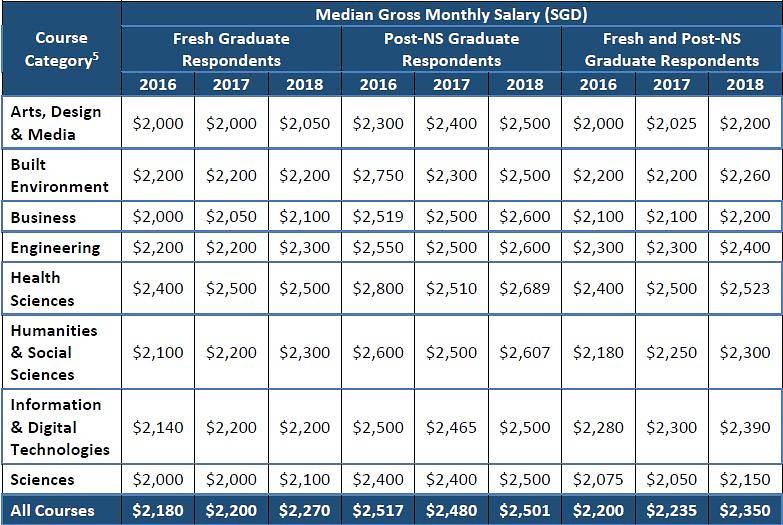
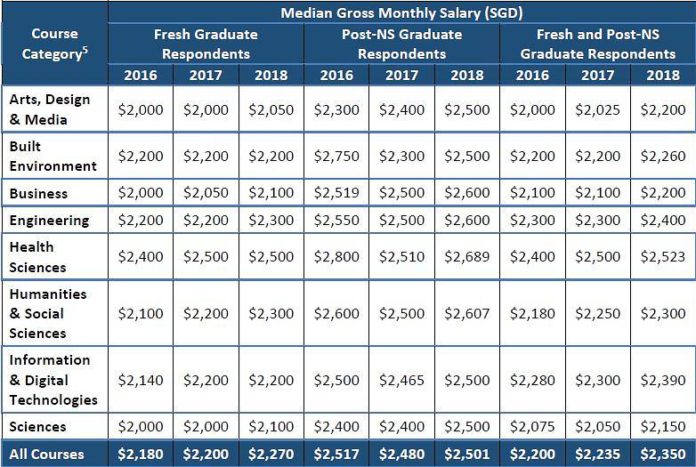
SINGAPORE: Polytechnic graduates last year saw better employment prospects and higher salaries compared to students in the 2017 cohort, according to the Graduate Employment Survey released on Tuesday (Jan 15). 

About 89.5 per cent of the graduates found full-time, part-time temporary and freelance jobs within six months of graduation. This is 2.2 percentage points higher than in 2017.

The survey – jointly conducted by Nanyang Polytechnic, Ngee Ann Polytechnic, Republic Polytechnic, Singapore Polytechnic and Temasek Polytechnic – also found that for those in full-time permanent employment, the overall median gross monthly salary went up from S$2,235 in 2017 to S$2,350 in 2018.

As with the previous year, students who graduated from health sciences earned the most compared to their peers from other courses. 

Table for median salary for polytechnic graduates in 2018

The numbers show that polytechnic graduates continue to be sought after by employers, said the polytechnics in a media release. 

It added that students are becoming more open to voluntary part-time/temporary and freelance employment. 

“This is a reflection of rising desire to further their studies, and also evolving employment preferences among our polytechnic graduates,” said a spokesman of the 2018 survey committee.

“Based on past trends, the majority of those initially in part-time/temporary employment transited to full-time permanent jobs after some time. Data also shows that our graduates enjoy good wage growth even as overall employment rates remain high.”

Source link

MOE Kindergarten registration to go online from this year

0

SINGAPORE: Registration for Ministry of Education (MOE) Kindergartens or MK is set to become an online exercise, the ministry announced in a press release on Tuesday (Jan 15).

This will be implemented for the upcoming 2019 MK Registration Exercise and will replace the on-site physical registration process.

Parents will be able to register their child through the MK website, instead of having to go down to the kindergarten of their choice and complete registration forms and submit supporting documents, the ministry added.

“This provides greater convenience and accessibility for parents as they no longer need to be physically present in the MK of choice,” MOE said.

The online registration will open from Feb 8 at 9am to Feb 11 at 4pm. The outcome will be released by Apr 10, MOE said.

There are 29 MKs participating in this year’s registration exercise for K1 admission in 2020. Registration is open to Singapore citizen and Permanent Resident (PR) children born between Jan 2, 2015 and Jan 1, 2016.

READ: 7 new MOE kindergartens to open in 2021

CHANGES TO ADMISSIONS FRAMEWORK

MOE also said the sibling priority criteria has been expanded to include siblings studying in the primary school where the kindergarten is located.

“With the expansion of MKs into more primary schools, and in recognition of the convenience for parents if their children were to study at the same school premises, we will extend the current eligibility criteria for sibling priority for MK admission to children who have an older sibling in the entire age range from K1 to P6 of the MK/primary school,” MOE said.

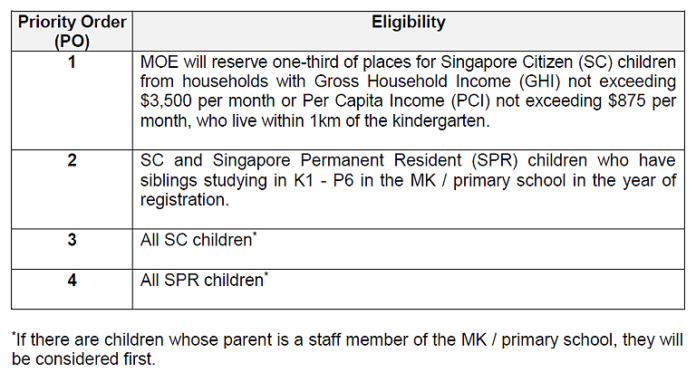
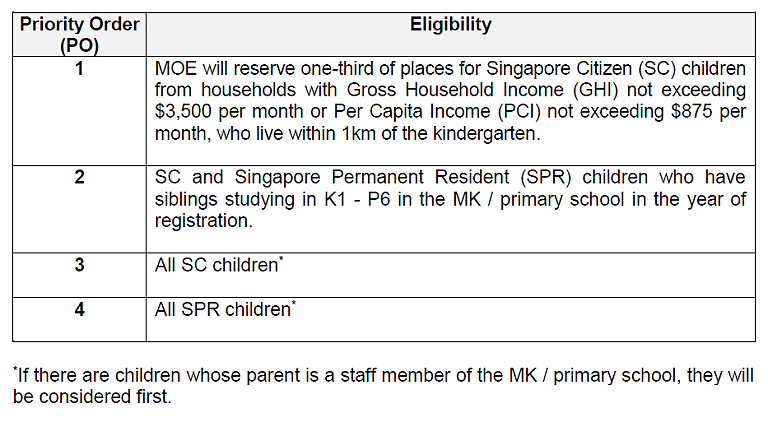
In order to ensure that MKs continue to remain accessible to children from lower-income households, MOE said it will swap the Priority Orders (PO) for registration.

With the change, the POs will be as follows:

MOE Kindergarten admissions

MOE Kindergartens will be holding open houses on Jan 26 and Feb 9. 

Source link

SingPost delivers apology for recent ‘service failures’

0

SINGAPORE: SingPost on Monday (Jan 14) apologised to customers for its “service deterioration” in recent weeks, citing a “tremendously busy” November-December period as the reason for poor service quality.

“It would be fair to state that we have failed to live up to expectations in recent times,” said the postal delivery service on its website and in a Facebook post. 

In explaining the background to the service deterioration, SingPost said it delivered an average of 3 million mail items a day, but an increase in package volumes for last year’s November-December period put additional pressure on its services.

“The November-December peak season was a tremendously busy period for our staff members,” said SingPost. 

“Due to the increased package volumes – which were beyond forecasts and expectations – our postmen have had to make an average of an additional 20 doorstep deliveries daily.

“All postmen and delivery staff are also working beyond their usual hours to help process and support these volumes.”

It added that it hired extra resources, recalled personnel and “activated teams” from the corporate office on Saturdays to meet demand, but service quality “still suffered as a result”.

The postal service provider’s apology comes after complaints of subpar delivery service on social media.

Netizen Andy Lau said in a Facebook post last month that he had to chase after a delivery man when the man left after knocking at his door for a “few seconds”.

“Delivery guy knocked for a few seconds, ran off and left the note before I can answer the door,” said Lau. “I sprinted down and camped at his bike until he appeared. Confronted him about it and he couldn’t put his words together properly on how he waited for more than 20 minutes.”

Meanwhile, a SingPost postman was fired last February after he was found to have thrown away returned letters and direct mail at a condominium.

In a video of the incident taken by a member of the public who confronted the man, the postman can be heard admitting to throwing the mail away. He also complained that he was tired and treated unfairly.

READ: SingPost fires postman who threw away mail

In its post on Monday, SingPost said that there would “inevitably” be employees who “may not act in the best interests of the company”.

“We have experienced service failures due to the individual actions of a few employees,” it said. “We are aware that this not only reflects badly on our organisation but undermines the hard work, commitment and dedication that the majority of our postal staff are displaying every single day.”

“Such behaviour will not be tolerated.”

The company added that while its post aimed to provide some background on the challenges it faces, it said that these “are not excuses for the issues that have been raised.”

“We value the integrity and trust we have built as an organisation over 160 years and are now focused on rebuilding that trust.”

“AM I THE POSTMAN OF MY BLOCK?”

Following SingPost’s apology post on Monday, its Facebook page has been inundated with complaints of poor service from other disgruntled netizens.

“Recently I found a stack of letters on top of the letter box,” wrote Facebook user Terrence Wang in a comment. “It includes letters addressed to me and a lot of my neighbours. Your useless postman just (left) that whole stack of letters on top of the letter box.

“I got to go door-to-door to deliver the letters to my neighbours. Am I the postman of my block?”

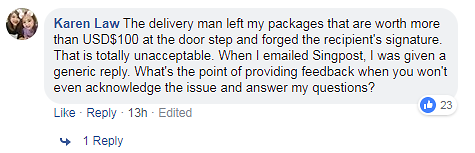
In another comment, Karen Law said: “The delivery man left my packages that are worth more than USD$100 at the door step and forged the recipient’s signature. That is totally unacceptable. When I emailed Singpost, I was given a generic reply. What’s the point of providing feedback when you won’t even acknowledge the issue and answer my questions?”

SingPost complaints on Facebook 1

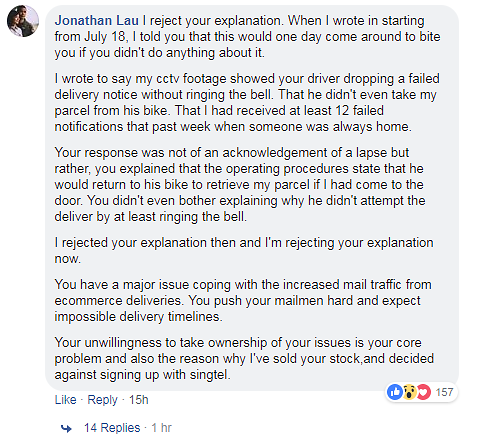
Another Facebook user Jonathan Lau complained about an incident that happened in July last year, during which he claimed that CCTV footage showed a SingPost delivery man dropping off a failed delivery notice at his door without ringing the doorbell.

SingPost Facebook complaint 2

Said Lau: “I wrote to say my CCTV footage showed your driver dropping a failed delivery notice without ringing the bell. That he didn’t even take my parcel from his bike. That I had received at least 12 failed notifications that past week when someone was always home.

“Your response was not of an acknowledgement of a lapse but rather, you explained that the operating procedures state that he would return to his bike to retrieve my parcel if I had come to the door,” he added.

“You didn’t even bother explaining why he didn’t attempt the deliver by at least ringing the bell.”

SingPost’s Facebook post in full:

Source link

What the next Trump-Kim Summit could end up costing Vietnam

0

IT’S looking increasingly likely that Vietnam will be chosen to host the second summit between US President Donald Trump and North Korean leader Kim Jong Un in the coming months.

US and North Korean officials have reportedly met several times in Hanoi, in northern Vietnam, to arrange details, and even Trump himself has expressed a preference for the Southeast Asian country.

Vietnam has shown its eagerness to host the political circus, reportedly telling high ranking South Korea officials in December that it was interested, and also informing North Korean Foreign Minister Ri Yongho of their desire to host during his official visit in late November.

But the recognition of such a global event doesn’t come for free and any summit is guaranteed to cost a pretty penny; something Singapore, the last host, found out the hard way.
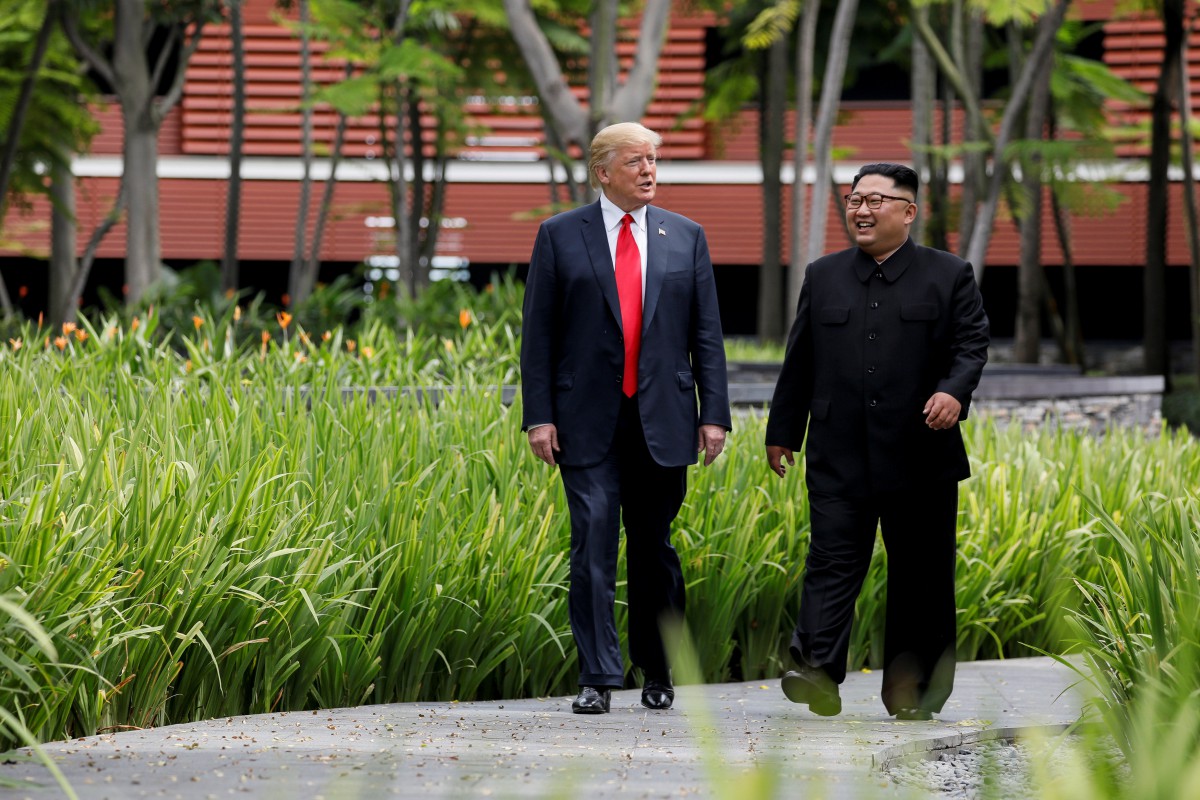
2018-08-02T183056Z_895842465_RC1DD2EC7C50_RTRMADP_3_NORTHKOREA-USA-TRUMP

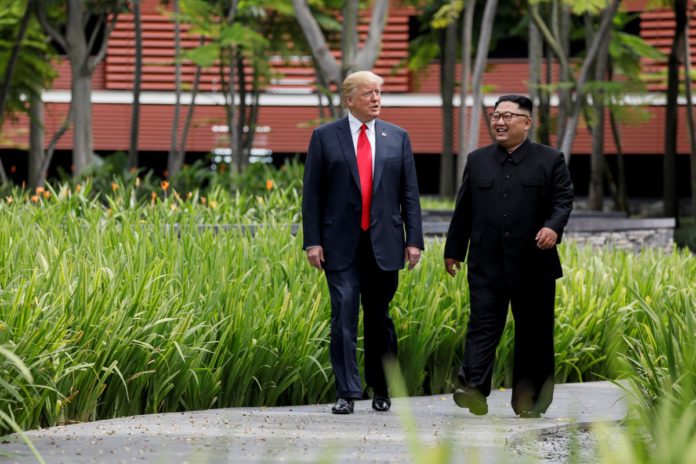
US President Donald Trump and North Korea’s leader Kim Jong Un walk together during the US-North Korea summit on June 12, 2018. Source: Reuters/Jonathan Ernst/File Photo

The costs of diplomacy

The biggest expenditure Vietnam can expect to bear is on security.

Unlike other political events, the high-profile nature of the occasion and the two people in question raises the bill far above other diplomatic meetings.

According to Observer, Singapore spent approximately US$6 million on security alone. The visible bodyguards and police presence were only the tip of the iceberg.

Speaking after the event, Singapore’s prime minister Lee Hsien Loong told reporters the security effort involved “all-round protection and in-depth protection – air, sea and land – against attack and against mishap.”

The media circus

Where Trump and Kim go, the media will follow. The scene in Singapore was an absolute media circus. While there is likely to be slightly fewer media attendees,  given the less historic nature of their second meeting, there will still be hordes – and these all need to be accommodated.

Singapore reportedly spent US$3.5 million setting up the media centre at the Formula One track to provide news outlets from across the globe the resources to do their jobs.

Over 2,500 journalists, camera operators, TV hosts descended on they small city-state for the summit. And they all need feeding.

Caterers were working around the clock to keep everyone fed, with a warehouse handed over to just food.

Accommodation for the staff accompanying Kim was also paid for by Singapore as the US refused to foot the bill for North Korean officials.

Just prior to the June 12 meeting, Singapore’s Minister for Foreign Affairs Vivian Balakrishnan announced the Singapore government would be paying for the North Korean contingent’s hotel bill as it was “hospitality that we would have offered them.”

Wider effects

All of that is just the direct costs of hosting such an event, the knock-on effect on business is no minor cost.

Whole areas of Hanoi near the meeting venue will have to be cordoned off, resulting in a loss of business for those in that area.

Several businesses will be forced to close for the duration as they are in no-go zones.

Roads will be closed if either Trump or Kim decide to travel, causing great inconvenience for residents and backed up traffic.

It all adds up.

2018-06-13T212103Z_1611107418_RC15B29BF960_RTRMADP_3_NORTHKOREA-USA

North Korean leader Kim Jong Un is seen returning to North Korea after the summit with U.S. President Donald Trump, in this picture released on June 13, 2018 by North Korea’s Korean Central News Agency. Source: KCNA via Reuters

The tally

Singapore’s bill for direct costs ended up coming in at US$12 million, slightly less than the anticipated US$14 million.

This was easily absorbed by the third richest country in the world. At the time, Prime Minister Lee said it was a cost the country was “willing to pay,” but the Singaporean people were slightly less gracious.

Singapore is also in the running to host this time around – although less likely than Hanoi at this point – and people are already voicing their displeasure at the prospect.

Singaporean Zai Tandel said online they would rather spend the money on poor Singaporeans than deploying security for Trump and Kim.

One person commented: “If they themselves pay for it including our security bills during those few days. Otherwise, go elsewhere please.”

Another simply said, “Please don’t come back….. don’t waste our taxpayers money.”

If this is how people feel in one of the richest countries in the world, how are people in Vietnam – with a GDP per capita almost 1/25th that of Singapore – going to feel about the extra costs?

Source link

John Mayer Singapore

0

John Mayer Singapore
Monday, April 1, 2019 at 8:00 PM

Singapore Indoor Stadium

2 Stadium Walk, Singapore, Singapore

Source link

NYP team turns coffee waste into fire retardant

0

SINGAPORE: A Nanyang Polytechnic (NYP) team has found a way to turn used coffee grounds into a flame retardant that could potentially be used to improve fire safety in homes and offices.

By treating coffee waste and mixing it with epoxy resin – a material commonly found in floorings and walls of homes – Dr Henry Leung and his team of three final-year students were able to leverage the slow-burning properties of coffee to create a material that could withstand a fire by as much as two times that of regular epoxy resin.

coffee epoxy resin NYP team

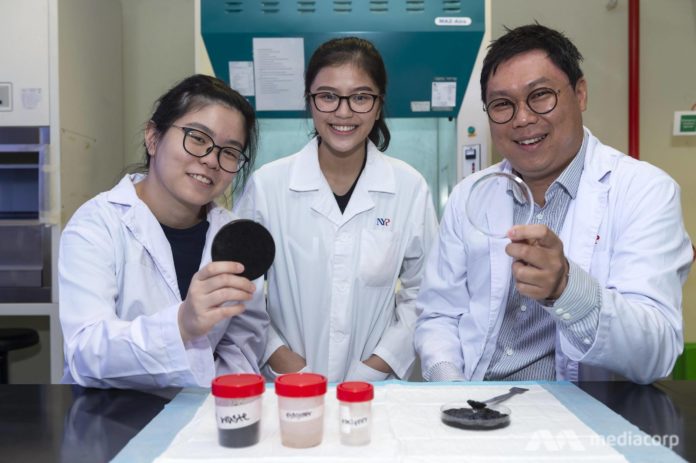
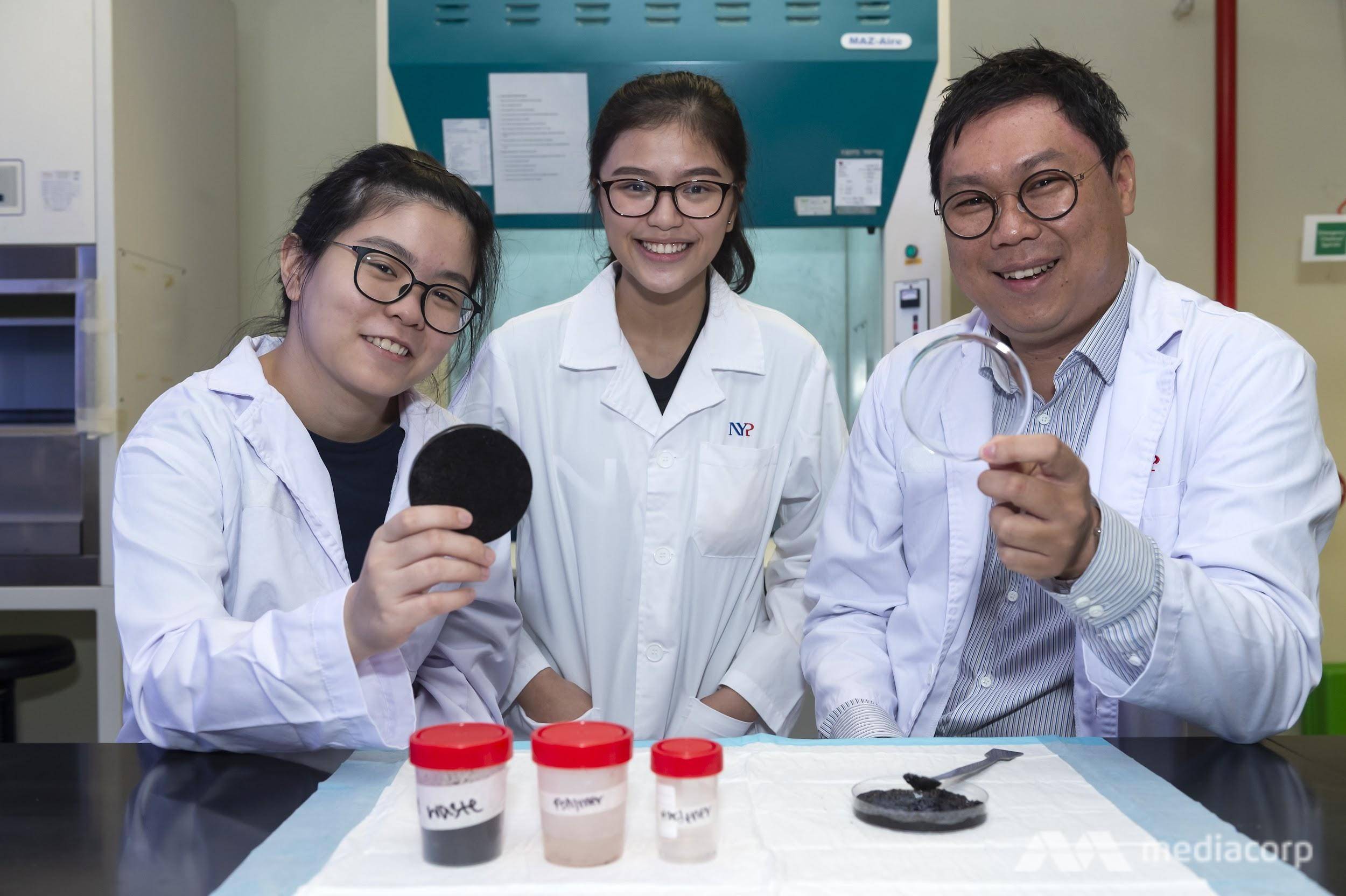
The Nanyang Polytechnic team that made a flame retardant from coffee waste: Dr Henry Leung (right), senior lecturer and senior specialist at NYP’s School of Chemical and Life Sciences, with two of the Diploma in Medicinal Chemistry students in his team, Shermaine Yeo and Yu Radyne Chale Castro. (Photo: Nanyang Polytechnic)

Regular epoxy is chemical resistant and highly durable – but despite its many advantages, it has poor resistance to fire and melts quickly, Dr Leung pointed out.

With coffee-epoxy resin, it would take a much longer time for the flames to spread, potentially improving fire safety in households and workplaces significantly, he said.

He and his team demonstrated the properties of their new coffee-epoxy material to journalists on Monday (Jan 14).

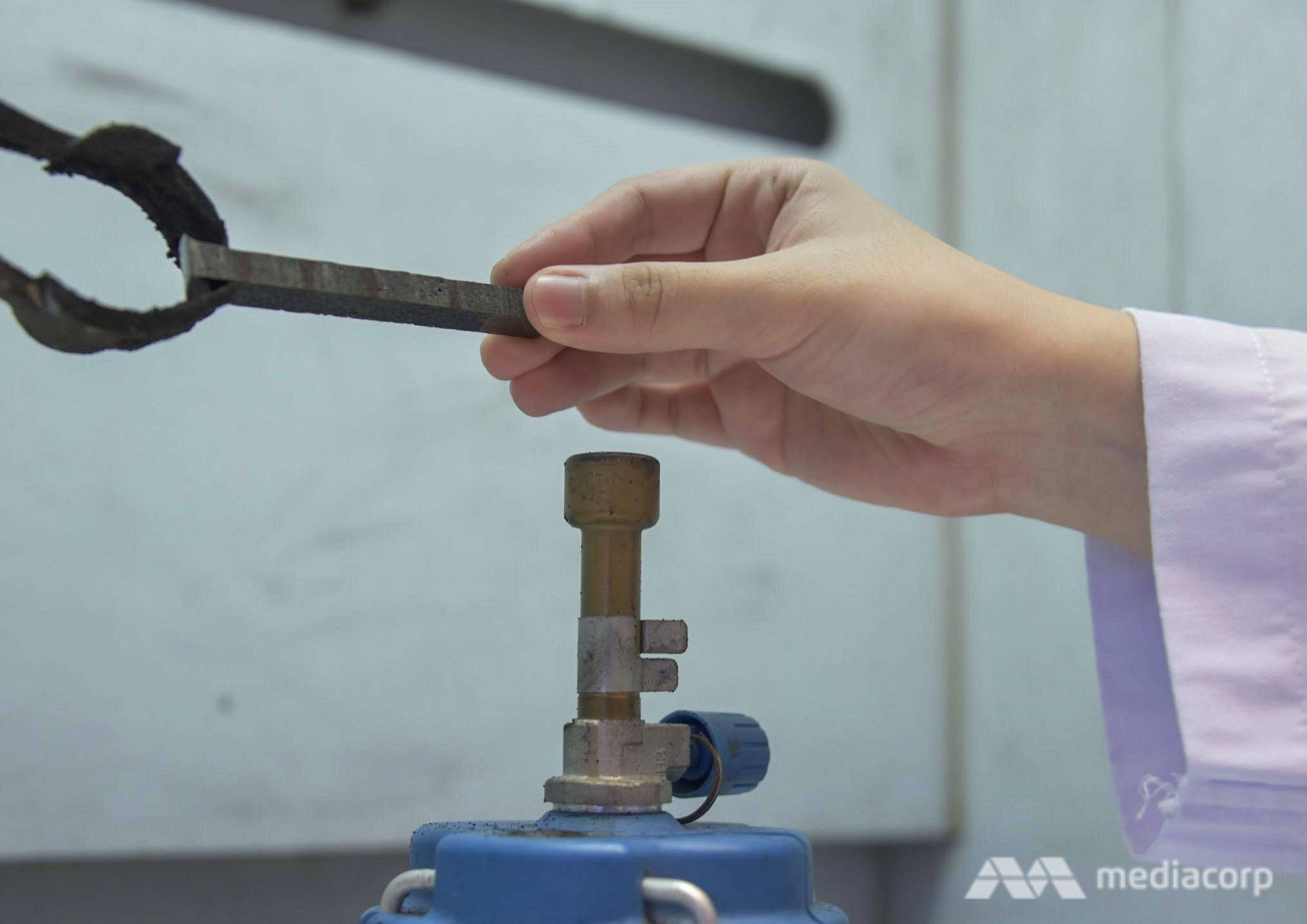
lighting coffee epoxy resin

Student Shermaine Yeo clips on the coffee-epoxy resin sample carefully before igniting the burner for a test. The mixture of coffee waste and epoxy gives the sample its dark brown colour. (Photo: Alif Amsyar)

“After we did the first burning test with the coffee-epoxy resin and the results came out, I took a video and watched it many times, but I still couldn’t believe that the fire was put out,” Dr Leung quipped.

coffee epoxy resin burning

The 9mm-wide strip of coffee-epoxy resin burns at 18mm/min, well under the slow burning rate of 40mm/min. (Photo: Alif Amsyar)

The new material has also attained an “HB” grading, which indicates slow burning on a horizontal specimen, based on initial findings by a third-party testing laboratory.

Moving forward, the team is looking to further improve the material’s level of fire retardation, attain ISO certification and apply for international patenting, Dr Leung said.

“There are still a lot of ways that we can improve the current product – for example, by using nanotechnology on the coffee powder, which can create a more uniform density and advance the performance of the fire retardant.”

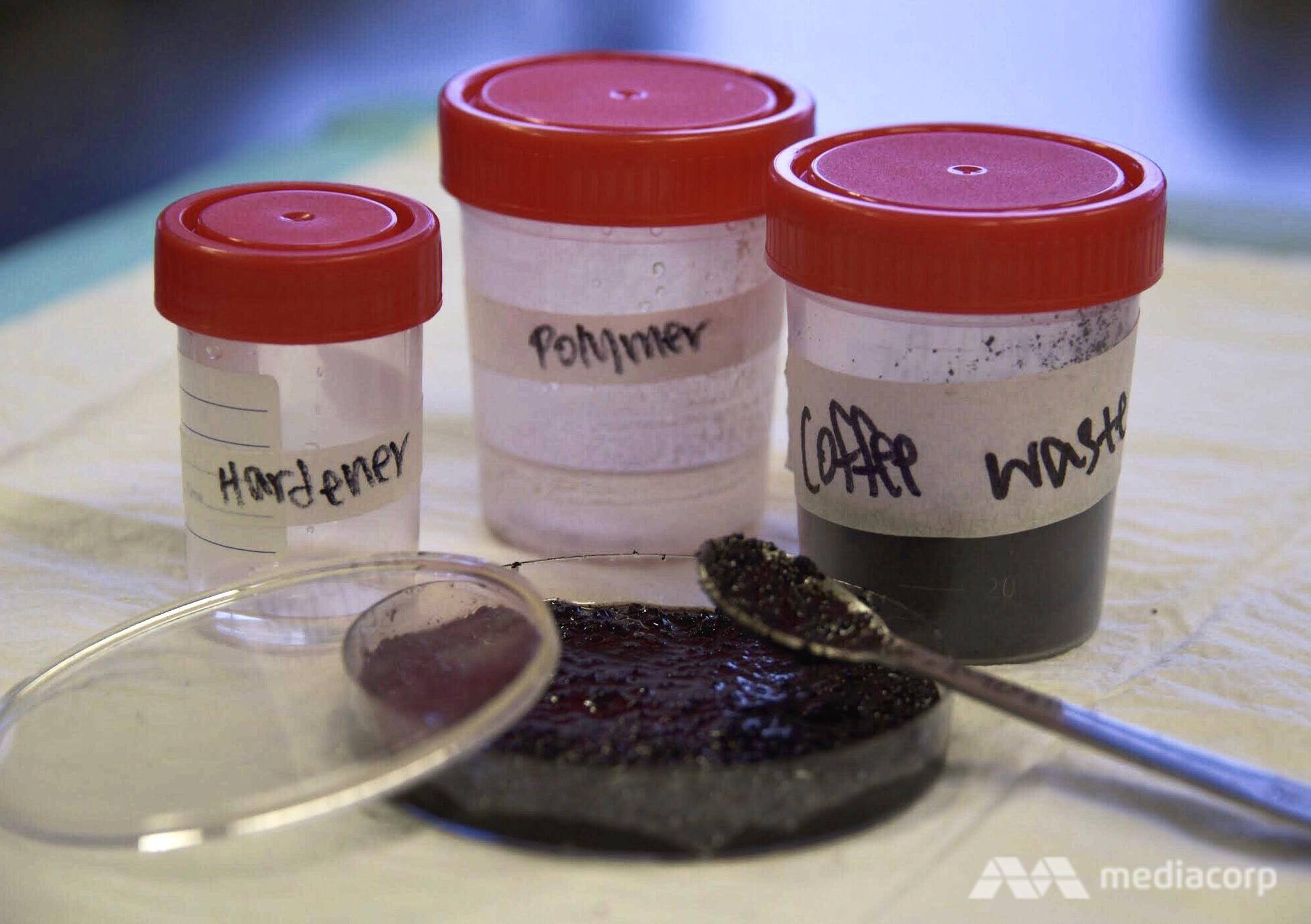
coffee epoxy resin materials

Dr Leung and his team spent roughly nine months to achieve the desired mixture with the best results – a specific ratio of epoxy (polymer), a chemical hardener and coffee waste. (Photo: Alif Amsyar)

Dr Leung added that apart from its fire-resistant qualities, the coffee-epoxy resin has the potential to become a total solution for reducing coffee waste.

Currently, grounding coffee waste into compost requires large storage space. The incineration of compost is also a space- and energy-consuming process.

Himself a coffee drinker, Dr Leung and his students are no strangers to turning coffee waste into sustainable products.

In 2017, the team also successfully created a biodegradable plastic from coffee waste.

Source link

PAP representative apologises for erroneous Tamil translation on brochures

0

SINGAPORE: An apology was issued by a non-elected People’s Action Party (PAP) representative on Sunday (Jan 13) after the message on door hanger brochures that were distributed to Kaki Bukit residents contained Tamil translation errors.

The PAP Kaki Bukit branch chairman Shamsul Kamar apologised in a Facebook post for any “unintentional offence caused” after a picture of the door hanger circulated online featuring the inaccurate characters.

“To all Tamil residents who received the brochure, I deeply apologise for this oversight and for any unintentional offence caused,” he said.

“My team and I take this issue seriously, and we will ensure that this error is corrected immediately, stop issuing this batch of brochures and will ensure that such a mistake will not be repeated in the future,” added Mr Shamsul in his post. 

READ: Tamil translation errors on NDP pamphlets were made by printers: Ng Eng Hen

The brochure is believed to have been to inform residents of Kaki Bukit – part of the Aljunied group representation constituency – that PAP representatives had visited their homes when they were not in.

The issue was brought to light by Facebook user Saravanan Naturopath who published a post highlighting the gaffe.

Incorrect Tamil translations had previously found their way into brochures that were disseminated to the public in 2017.

tamil translations of ndp pamphlets

The erroneous Tamil translation (left), and the corrected version. 

Erroneous Tamil translations of 2017’s National Day Parade (NDP) theme were found on some NDP publicity pamphlets. The Tamil version of the slogan, #OneNationTogether, saw a number of characters switched around, and others missing.

Defence Minister Ng Eng Hen previously said that the errors were made by the printers of the pamphlets.

Back in January 2017, a Government-appointed review panel made several recommendations to improve public sector Tamil translation standards. These included tightening vetting procedures, engaging print companies with Tamil text-compatible software and focusing on capability development.

Source link

Singapore-Malaysia bilateral issues: Both sides must act in good faith, says Vivian Balakrishnan

0

SINGAPORE: Minister of Foreign Affairs Vivian Balakrishnan said that both Singapore and Malaysia must act in “good faith” to overcome the bilateral issues between the two countries.  

In his ministerial statement in Parliament on Monday (Jan 14), Dr Balakrishnan said that despite these current difficulties, “Singapore still hopes to work with Malaysia for better relations, and closer cooperation that benefits both sides”.  

“However, both sides must act in good faith, in compliance with international law and norms, and honour existing agreements,” he added. 

Dr Balakrishnan also emphasised that he does not expect “a quick or smooth resolution to all these issues” but stressed that Singapore will do its best to discuss these issues with Malaysia in a “calm, reasonable, and focused manner”.

In his statement, Dr Balakrishnan went through Singapore’s stance in airspace, maritime and water disputes with Malaysia. 

The maritime dispute was sparked by Malaysia’s unilateral decision to extend the Johor Bahru port limits in October, and the subsequent intrusion of Malaysian government vessels in Singapore waters.

Singapore lodged a “strong protest” with the Malaysian government over the port limits which it said encroaches into Singapore’s territorial waters off Tuas. It added in a media statement that Malaysia’s actions are “a serious violation of Singapore’s sovereignty and international law”.

READ: Singapore, Malaysia maritime dispute: A timeline

READ: Singapore extends port limits off Tuas, won’t hesitate to take action against Malaysia intrusions: Khaw

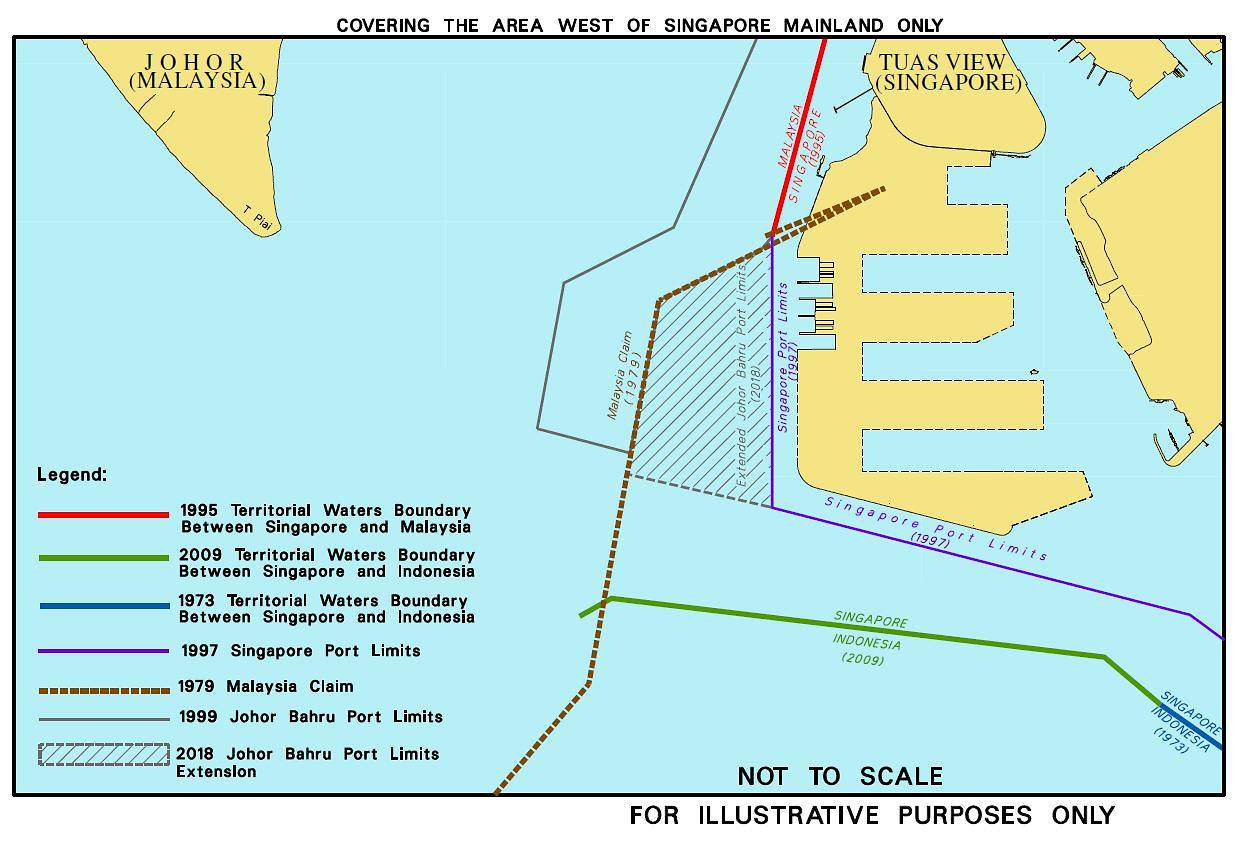
In Parliament, Dr Balakrishnan referred to a map shown on the screen, which reflects Malaysia’s “unilateral extension”. 

Johor port extension

(Image: MFA) 

“The waters in that area are tight, at less than 24 nautical miles wide. This extension goes beyond even Malaysia’s own territorial sea claims according to its 1979 map, which Singapore has consistently rejected. The inescapable conclusion is that the new Johor Bahru Port Limits transgress into what are indisputably Singapore Territorial Waters,” he said. 

He added that Singapore has long exercised sovereignty and patrolled these waters without any protest from Malaysia. But since late November 2018, he noted that Malaysian government vessels started intruding into these Singapore Territorial Waters. 

“We have protested the purported extension and these intrusions,” he added. 

Last week, Johor Chief Minister Osman Sapian made an “unauthorised visit” to Malaysian vessel Pedoman in Singapore waters. Singapore’s Ministry of Foreign Affairs called it “a provocative act” that went against the spirit of an agreement by both countries to resolve bilateral issues in a calm and constructive manner. 

Dr Balakrishnan said Mr Osman’s “publicised visit” undermined the goodwill and trust necessary for further cooperation between the two countries, and “made it untenable” for Singapore and Malaysia to proceed with the Joint Ministerial Committee (JMC) for Iskandar Malaysia, which was scheduled for Monday (Jan 14). 

READ: Johor Chief Minister’s ‘unauthorised visit’ to Pedoman vessel was ‘provocative act’: Singapore MFA

Dr Balakrishnan reiterated that Singapore “formally protested the intrusion” via a diplomatic note to Malaysia and proposed to postpone the meeting to a later date. 

However, he stressed that his discussions with both Malaysian Minister of Foreign Affairs Saifuddin Abdullah and economic affairs minister Azmin Ali, both before and after Mr Osman’s actions, have been amicable and constructive. 

“Minister Azmin met me yesterday. He also met Ministers Khaw Boon Wan and Lawrence Wong today, to discuss several bilateral projects which he is in charge of,” said Dr Balakrishnan. 

On the dispute on the airspace over southern Johor, Dr Balakrishnan noted that the Instrument Landing System (ILS) procedures for Seletar airport imposes no additional require­ments or limitations preventing Malaysia from developing tall buildings in Pasir Gudang, or operating tall ships in Pasir Gudang Port. 

READ: Singapore, Malaysia airspace dispute: What we know and timeline

READ: Flight procedures for north, south approaches to Seletar Airport are necessary: MOT

In December, Malaysian Transport Minister Anthony Loke had posted a video on his Facebook page showing that the flight path to Seletar Airport requires a height buffer of between 54m and 145m.

In his statement, Dr Balakrishnan said: “There were allegations that Pasir Gudang will not be able to have buildings taller than five stories because of ILS, but if members cross the Causeway and drive around Pasir Gudang, you will see that there are in fact already structures as tall as 105m there.” 

Dr Balakrishnan also presented a satellite photograph, “obtained from open sources”, depicting that there are indeed several existing high rise developments in the Pasir Gudang area.  

Pasir Gudang satellite photo

(Image: MFA) 

“The ILS has not and will not prevent the building of tall structures as alleged by Malaysia. And we have consistently stated that if Malaysia has any new plans for developments, we are prepared to discuss and adjust the ILS procedures if necessary,” he added. 

TWO AGs MET TO DISCUSS PRICE OF RAW WATER 

Another matter raised by Malaysia recently was the price of raw water it sold Singapore under the 1962 Water Agreement, Dr Balakrishnan said.

Prime Minister Mahathir raised this with PM Lee when they met last November. Dr Balakrishnan said that the two leaders agreed that the Attorneys-General (AG) from each country would meet “for discussions to better understand each other’s positions”.

Dr Balakrishnan revealed that the two AGs subsequently met in December but their discussion was overshadowed by the new issues that had arisen over the Johor Bahru Port Limits and Seletar ILS procedures. He maintained that the pair “will meet again to continue their discussions”. 

In concluding his speech, Dr Balakrishnan said the strength of Singapore’s diplomacy depends on “domestic unity and resilience, and the fact that we cannot be intimidated or bought”.

“This is the foundation for our diplomacy as we seek good relations with all our friends and neighbours within a rules-based international order,” he said. 

Source link

New, ‘good-as-new’ notes available from Jan 15

0

Customers will be able to withdraw these notes at 42 POSB new notes pop-up ATMS, an increase from the 36 last year, according to a media statement. These ATMs will be located in 20 community clubs

posb pop-up CNY machines

From Jan 15, customers will be able to withdraw new and good-as-new notes at 42 POSB pop-up ATMs islandwide. (Photo: DBS)

SINGAPORE: Crisp new notes and “good-as-new” notes, traditionally used during Chinese New Year, will be available from Jan 15 at POSB pop-up ATMs islandwide, DBS announced on Monday (Jan 14).

Customers will be able to withdraw these notes at 42 POSB new notes pop-up ATMS, an increase from the 36 last year, according to a media statement.

These ATMs will be located in 20 community clubs, and will be operational round the clock apart from the ones located at Chong Pang and Teck Ghee, which will be available from 9am to 9.30pm daily.

DBS added that this year, customers may also reserve their new and good-as-new notes online and select collection dates from full-service branches.

From Jan 15, customers can visit www.go.dbs.com/sg-cnynotes or www.posb.com.sg/cnynotes to reserve their new notes.

Priority queues will be set up at full-service branches to cater to the elderly and those with special needs. 

“Chinese New Year is a joyous time of the year, where friends and family come together to celebrate. Our aim is to ensure this season is as stress- and hassle-free as possible for our customers,” said Mr Jeremy Soo, managing director and head of consumer banking group (Singapore).

“We hope that having more POSB new notes pop-up ATMs this year and the online reservation system will enable more customers to get their new and good-as-new notes quickly and easily, with more time to enjoy the festivities with their loved ones.”

Introduced in 2015, POSB new notes pop-up ATMs have now become a popular Chinese New Year fixture. Last year, more than 160,000 customers used the pop-up ATMs, with the majority getting their notes outside of banking hours or over weekends.

Customers will be able to use their DBS/POSB cards to withdraw new notes in sums of S$100 (S$2 x 50), S$300 (S$10 x 30) and S$500 (S$50 x 10) and S$600 (S$10 x 20 and S$50 x 8).

Source link