Home Blog Page 839

To keep HDB lifts working, they risk their safety time and again

0

SINGAPORE: Few people are aware of just how great the risks are for a lift technician. One could fall down the lift shaft, get electrocuted by high-voltage wires or even be pinned under the lift while working on it.

Last month, a worker was killed during lift upgrading works in a public housing block. In 2017, a technician died after a lift pinned him to the top of the shaft.

READ: Foreign worker found dead during lift replacement works in Chai Chee

In 2016, there were at least 10 lift incidents, including instances of injuries to passengers and the death of one.

That is why lift technicians like Mr Mohammad Hazri Ghazali place great emphasis on their safety on the job, and also ensure that they do a good job of maintaining the lifts for residents.

Lift technicians like Mr Mohammad Hazri Ghazali place great emphasis on their safety on the job.

Mr Mohammad Hazri Ghazali.

“There are a lot of wires down here,” cautioned the 38-year-old as he pointed to a spot inside a lift shaft.

“If I step on an oily (patch), I may slip and fall. From 30 storeys … I think your body would be smashed, right?”

The risks are amplified when he is activated to attend to faulty lifts at night. He said: “At night, when you’re alone, if you faint or get electrocuted … (or) trip and fall – if anything happens to you – nobody would know.”

The risky work of lift technicians like him is highlighted in a four-part series on the programme On The Red Dot. (Watch the episode here.)

The risky work of lift technicians is highlighted on the programme On The Red Dot.

WORKING AT HEIGHT

There are about 67,000 lifts (as at July) and some 2,100 lift technicians in Singapore. This works out at around one technician for every 32 lifts.

Up to 1,000 more technicians, however, will potentially be needed in the coming years, National Trades Union Congress assistant secretary-general Melvin Yong said in September. But many people are put off by the dangerous and dirty nature of the work.

And until the industry’s progressive wage model kicks in, some others prefer a better-paying job than the basic starting wage of S$1,300 to S$1,850 for assistant lift specialists.

In Mr Hazri’s case, he started off doing electrical and mechanical work after his National Service, before joining the lift industry as a serviceman 15 years ago.

His duties included maintenance work, changing spare parts, making oiling adjustments and doing minor repairs.

However, he had one big phobia he needed to confront: His fear of heights. To service the equipment, he sometimes had to go up the lift car, located as high as 40 storeys.

He recalled his first time perched atop a lift: His legs were shaking as he peered down. “I was totally scared of heights,” he admitted.

Even now, looking down the lift shaft unnerves him a little “because if I fall … that would be the end of me”.

“That’s why I’m living on the second floor. My wife also has this fear of heights – she agreed that we should stay on a lower floor,” said the father of two.

But he has become braver over time, especially after undergoing safety courses. “It’s not true (that if you’re) afraid of heights, you can’t work as a lift technician,” he added.

“How I overcame my fear was by not thinking about it … Just concentrate on what you’re going to do to troubleshoot. Just try not to look down and think that ‘if I fall down, what’ll happen to me?’”

400-VOLT ELECTRIC SHOCK

Apart from the hazards of working at height, lift technicians risk getting injured by sharp parts and getting electrocuted, especially in the motor room, usually located above the lift shaft on the rooftops of Housing and Development Board blocks.

“The wires are quite high-voltage (and) can kill you,” said Mr Hazri, who has an ex-colleague who suffered concussion from a 400-volt electric shock.

“I advise all the technicians … not to touch (the high-voltage wires). Just use your test pen … to see whether there’s a live (wire) or not. To be safe, switch off the mains.”

When he uses the cat ladder to access the motor room, he makes sure that he maintains three points of contact, which means two hands and one foot, or two feet and one hand, on the ladder at all times.

And he wears personal protective equipment, such as a helmet, protective clothing and a safety harness, whenever he is working.

Another technician, Mr Vellavan Krishnan, said the heat takes a toll on them sometimes. “There’s no fan nor even lights in the hoistway,” he said.

“(If) it’s a very hot day and very humid inside … you may get heatstroke, faint or something. The chances of an accident are very high.”

For Mr Hazri’s part, he is especially cautious when working late at night, as there is often no one to keep a lookout for him. “Late at night, doing calls isn’t as simple as in the day,” he said.

“In the day, everyone is around. You shout, people can hear.”

TAKING A TOLL ON FAMILY

Now as a call-back technician attending to lift breakdowns and faults – instead of servicing equipment – he is frequently on standby duty. This means he could be activated at odd hours.

“I sleep, on average, for about five to six hours. But if I’m on standby, I’d get two hours of sleep, attend to the call and after that (get) another two hours of sleep, then go to work,” he said.

The irregular hours are affecting his family. His wife, Ms Noor Azlen Husin, is often alone at home as she takes care of their newborn son and six-year-old boy, who misses his father when he is not around.

And it can get frustrating for the couple. “My wife keeps calling me and asking where I am and (whether) I’ve eaten or not. When you’re focusing on doing something, you don’t want anybody to call,” said Mr Hazri.

When he returns home late, he sometimes finds them awake, waiting for him and worried about his safety.

It has not been easy time for Ms Azlen, who also gets “a bit frustrated” when he does not answer her calls or text messages.

“After I gave birth, he said that he’s got a lot of standby (duties) and has to stay late because of a lot of lift upgrading. So I struggled a bit with my babies,” she said.

“I can’t say no. I understand his job scope, so I have to be more understanding.”

But she has wondered what he does at work, as his uniform is often stained. “He said he just repairs the lift, but I didn’t know that he has to climb (to the rooftop),” she added.

“I feel a bit sad because he has to work so hard.”

Mr Hazri hopes his wife will now understand what his job entails. “Maybe she can see that I’m working from a great height, so maybe she won’t call me every time,” he said.

STILL ENJOYING THE JOB

Quite apart from his wife, he has to manage residents who are frustrated when their lifts break down. He feels that some of them do not appreciate the efforts of lift technicians.

“They said new lifts have also broken down. But we can’t assume that new things won’t break down. We just tell them that we’ll try our best to solve the problem,” he said.

Since a spate of lift accidents in 2015 and 2016, the authorities have stepped up lift maintenance and safety measures.

In 2015, an elderly woman’s hand was severed in a freak accident in Taman Jurong after it got trapped between lift doors when she tried to get to her pet dog that was stuck outside.

The next year, an elderly man using a motorised wheelchair died from a fall when a lift in Pasir Ris stopped above ground level, causing his wheelchair to topple.

Despite the various challenges, Mr Hazri enjoys the troubleshooting aspects of his job, where he gets to learn more about lift maintenance.

“I feel satisfied after I troubleshoot the lift…I will share among my group (of colleagues). So the next time they attend to this kind of case, they have a rough idea (what to do),” he said.

Mr Hazri even has a circuit board at home which he relies on during his off days to help his colleagues who are facing difficulties onsite.

He hopes to pass his skills and knowledge to the new generation but reckons that lift technicians like him are a dying breed, where their jobs may be replaced by robots in the future.

In fact, Surbana Jurong has been looking towards artificial intelligence to mitigate the lack of technicians in the industry.

“Maybe in the future, we don’t need technicians. Maybe robots can detect the fault, then the technicians come and (rectify) the fault,” said Mr Hazri. So I hope that the electronics can bring the lift industry to a higher standard.”

Watch this episode here. On The Red Dot airs on Mediacorp Channel 5 every Friday at 9.30pm.

Source link

Commentary: Merdeka Generation Package can afford to go further to help our poor elderly

0

SINGAPORE: At first look, the newly announced Merdeka Generation Package (MGP) sounds generous.

With S$6.1 billion set aside for now, and valued at a total of S$8 billion in today’s terms after accumulation of interest, it will help seniors with their healthcare bills as they age.  

But some worry whether it will be enough. Considering that the current life expectancy in Singapore is now 84.8 years, it can mean that this programme will have to last nearly 25 years and perhaps longer, yet is valued at less than the Pioneer Generation Package’s full projected cost of S$9 billion.

Subsidies are on the overall also lower, as was expected, as the Merdeka Generation benefited from advances in healthcare, manpower and a growing Singapore economy more so than the Pioneer Generation.

There are some details missing, for instance how much exactly the subsidies for GPs and dental clinics are, but those for outpatient care stand at 25 per cent off subsidised bills at government polyclinics and public Specialist Outpatient Clinics, lower than that provided to the Pioneer Generation.

READ: Government transfers and social assistance – Who deserves them? Who doesn’t? A commentary

In the likely situation that, over time, one’s medical needs escalate with age, the shortfall in financial coverage becomes altogether more glaring.

PROGRESSIVE IN ITS EFFECTS

Still, although every Singaporean eligible for the MGP stands to gain from it, the benefits are progressive in its effects, to those in the lower income brackets.

Professionals, managers, executives and technicians among us would already have a sizable Medisave account, and two-thirds of Singaporeans have an integrated shield plan.

The MGP also builds on the Community Health Assistance Scheme (CHAS), enhancements to provide stronger coverage for seniors and low-income households and include chronic conditions were recently announced, and will provide subsidies for primary care at a more generous rate than CHAS. Families have access to about 1,000 general practitioner clinics and 700 dental clinics under CHAS.

CHAS cards

Community Health Assist Scheme (CHAS) cards. (File photo: Ministry of Communications and Information) 

READ: Help with disability costs welcomed but allowing withdrawal of Medisave may not benefit all, a commentary

If taken in the context of other strides made to bolster the acute and primary care sectors in Singapore, the MGP puts in place another building block to help seniors of that vintage and their families get better access to quality but affordable healthcare.

The Ministry of Health will also open more polyclinics and hospitals by 2030, benefiting the larger population. The additional savings of travelling to a clinic or hospital near your home will be a boon for lower wage earners, retirees, the disabled and those who need to make frequent visits to seek treatment for their medical conditions.

But further changes in medicine and the delivery of healthcare can help provide greater assurance, if patients are open to new ways of consultation including telemedicine and as home-visits by healthcare volunteer practitioners become more prevalent. There have been attempts to push the envelop and pilot initiatives, but wider adoption will take time.

LET PEOPLE DONATE THEIR MEDISAVE

Minister for Finance Heng Swee Keat outlined three strategies towards its long-term plan to build a caring and inclusive society. Apart from uplifting Singaporeans to maximise their potential, Mr Heng said the Government aims to provide greater healthcare assurance to Singaporeans and foster a community of care.

READ: Leading longer lives but are we still ageist? A commentary

One challenge in healthcare financing is that older, low-wage workers have insufficient funds in their Medisave accounts, which they could have used to purchase health insurance for themselves, whereas PMETs are more likely to have a good amount in their Medisave account and have good insurance coverage.

Since the Merdeka Generation Medisave top-ups will be given to all, why not let those who can afford it to donate their S$200 Medisave top-up, to be redeployed by the Government to others in a lower wage bracket?


elderly worker

File photo of an elderly worker in Singapore. (Photo: TODAY)

If we want to build a community of care, the Government could also consider supporting this endeavour and let it count as a deductible charitable contribution. The recipient enjoys a small bump in their Medisave, the donor gets a tax deduction as he would for donations to an Institute of Public Character, while also bumping up his Corporate Social Responsibility points. All parties win.

READ: More retiring later, but is it for the right reason? A commentary

It might not be a big, sweeping healthcare programme but can go some way to support low-wage seniors’ healthcare needs.

The Government can show that every Singaporean can help each other and play a part in the healthcare financing ecosystem, even as it puts in place huge programmes like the Merdeka Generation Package to provide broad-based aid across the board.

Gan Kwee Lian is Partner for Tax, Infrastructure, Government and Healthcare at KPMG Singapore.

Source link

Commentary: The ubiquity of cameras and social media fuels unhealthy mob behaviours

0

SINGAPORE: I recall growing up as a kid chatting on bulletin boards via a 24k modem dial-up, the connection breaking whenever someone tried to call the home phone.

Youth of today must think of all this as belonging to the technological stone age.

But as kids, those were care-free days, too. We weren’t preoccupied with bugging our parents for tablets or mobile phones. We would cycle for hours on end, without luminous vests, lights or helmets, or our parents being worried about traffic.

old sony handycam, video camera

A sony handycam (Photo: Pixabay)

CHANGING SOCIAL NORMS

My parents used to reminisce about the good old days when if they got into an accident, other motorists were more likely then than now to stop to render assistance and offer to be a witness.

That social norm to bear witness seems today to have been replaced by the ubiquitous camera. How that wretched little device has changed lives.

I can count the instances I have captured the moments in my children’s lives instead of living it with them. Look, I have the evidence. And when I swipe through the pictures and the videos taken, there is a sense of part reliving and part vicariousness.

That something is preserved, and, thereby, something is lost. So too, when these images are shown to family at gatherings or friends on social media, rather more as spectator than witness. There is a lesson about the boon and the bane of technology in all of this.

WHAT IS LOST

Perhaps Mr Kamaruzzaman Abdul Latiff or his passenger might chime in on what they gained and lost from that Go-Jek kidnapping video that went viral. The blockbuster strikes me as a tragic-comedic cross between Taken and Taxi, both, incidentally, produced by Luc Besson.

The script and screenplay aside, what’s so problematic about capturing a conversation between chauffeur and passenger, or, for that matter, uploading it for the world at large to see? Nothing, some of you might think. And you might be forgiven for thinking so.

After all, everywhere you go – on the street, in a shopping mall, on the roads – you find cameras capturing your every move. Closer to home, virtually all my neighbours have embraced the device, plastering it in every conceivable nook and cranny on the walls surrounding their homes.

security camera

(Photo: Unsplash/Victor Gracia)

Some footage trickles its way into the neighbourhood WhatsApp group, to share the goings-on in our community when we are at work.

Some might rise up in defence of this eye in the sky. For my neighbours, they clearly think technology might do a better job than Guan Gong in keeping intruders at bay (or my curious children, for that matter).

Surveillance and security thus go hand in hand, which partly explains why the Singapore police rolled out body cams in 2015; and, where I work, campus security started wearing them since last year.

Am I comfortable being surveilled? Not entirely. But it’s the price we as a society have decided is worth paying to partake in a society that values safety as paramount, especially in public spaces.

READ: Our convenience is coming at a (security) cost, a commentary

In this day and age of terroristic or psychopathic lone wolves, that kind of argument will find many sympathetic supporters.

A DYSTOPIA OF A DIFFERENT KIND

Some might say this is a slippery slope, and that the true price is a dark Orwellian future. That might well be, and that might well be a whole other essay. Yet when he conjured up Big Brother, George imagined an authoritarian dictatorship synonymous with state surveillance and state interference with private life.

What the Go-Jek incident hints at is symptomatic of a kind of democratic dystopia, of private surveillance and private interference with private life.

Who knows why Mr Kamaruzzaman recorded the incident. Subject to LTA regulations of May 2018 on inward-facing cameras, he was well within his prerogative to do so.

taxi driver (1)

File photo of a taxi driver.

The regulations, among others stipulate that audio must not be captured, that a notice must be affixed in the car notifying the passenger may be subject to video recording, and that when she booked his car on the Go-Jek app, the app must send a system notification that the car she booked has an inward-facing camera.

These rules are put in place in order to comply with the Personal Data Protection Act, which provisions protect privacy and allow collection and dissemination of information only on the basis of consent, and, exceptionally, public interest. Indeed, such footage can only be accessed by law enforcement or accredited agencies for investigative purposes such as fare evasion or misdeeds by the driver.

READ: What those ‘updates to our privacy policy’ mean for Singapore, a commentary

But it would appear that Mr Kamaruzzaman did not follow those regulations, when the clip has been shown in all its glory for all the world to see.

BEST DISINFECTANT IS SUNLIGHT?

Can we defend Mr Kamaruzzaman’s actions? Let’s draw from the wisdom of the sages in so doing.

The late US Supreme Court Justice Louis Brandeis once said that publicity is justly recommended as a remedy for social diseases, and that sunlight is the best disinfectant.

In this context, the uploading of this video clip snuffs out passengers who might otherwise conduct themselves as Mr Kamaruzzaman’s passenger did. Camera footage, therefore, contribute to publicity and transparency and therefore deter unwanted behaviour.

Was Mr Kamaruzaman unknowingly though righteously following Brandeis’ exhortation? We know from Mr Kamaruzaman why he chose to upload the video: 

After (sic) few days of thinking, I guess (sic) I better to let it out. 

Better for whom, or for what, though?

My thinking is that the incident left a bitterness in his mouth. He had to deal with an unreasonable passenger who made all sorts of accusations about his professionalism and character.

Cars, traffic in Singapore

File shot of traffic in Singapore.

That aftertaste might be due to a sense that the dispute remained unresolved. Allowed to stew over a couple of days, the memory simply became more distasteful. And the act of uploading is either a manifestation of catharsis or vendetta or both.

He must have wanted sympathy from the wider community or endorsement for his actions, and, at the same time, re-probation for that of his passenger’s. In other words, he was inviting judgment.

And judgment he got, for himself and for her. In a mob court where every keyboard warrior is, safe behind the veil of a computer screen, judge, jury and executioner. The first opinions focused on her behaviour, but very soon, the chatter takes an ugly turn, uglier, perhaps than the passenger’s own behaviour.

But just as the passenger must be held – socially or otherwise – responsible for her conduct in the car, Mr Kamaruzzaman must take responsibility for subjecting her to social vilification unrelated and disproportionate to what she’s done.

What right has any one of us to judge another and in that manner? Mr Kamaruzzaman’s passenger did displayed crass weakness of character, no doubt about that, but does that justify that friend or foe distinction

We cannot champion values like fairness and due process, while at the same time endorsing the results of any mob verdict.

Is publicity absolutely justified? Is sunlight the best disinfectant? In this case, shining a light on the problem quite possibly guaranteed that the passenger and like-minded folk would think twice before acting the way she did.

But sunlight also became the conduit by which other socially undesirable behaviour was imported and allowed to flourish.

GIVING RISE TO OTHER BAD BEHAVIOURS

Let me be clear, I don’t condone how Mr Kamaruzzaman’s passenger behaved or what she said. Indeed, I hope the children I raise never behave as such.

But I also hope they don’t behave that way because of the values they are raised with, not because they fear some surveillance system connected to the amorphous morality that is the internet mob.

dashboard camera

(Photo: Channel NewsAsia)

READ: Behind the public shaming of one wealthy elite, a disturbing but growing divide, a commentary

Do we behave only because we think we’re being watched? As a concomitant of our private space being surrendered, we negotiate a new balance between our private and public personas. I am less free, more constrained, more acting than being.

I too have been in a situation where I had the urge to whip out my phone and start recording, having witnessed something distasteful, or because I’m in a sticky situation.

But I just hope I will give pause to think why I’m hitting that big red button at the bottom of the screen, or whether I should click “upload” thereafter. Do I really need 800,000 views or likes in order to ascertain what I did was right or wrong? What the public is interested in and what the public interest is are two very different things.

Publicising the passenger’s ugly behaviour seems to beget even more ugly behaviour.

Equally important, when private intrinsic motivation to behave becomes subordinate to public and extrinsic supervision, what remains of one’s moral compass?

To Justice Brandeis, I say there is such a thing as too much of a good thing. Light can be glaring. Beware always of sunburn

Dr Gary Low is presently on faculty at the Singapore Management University School of Law. He writes and researches on commercial law, consumer law, and data protection law.

Source link

Commentary: 2019 – a year for political consolidation or a year for elections?

0

SINGAPORE: Political watchers had eyes on Finance Minister Heng Swee Keat’s Budget speech on Monday (Feb 18) for one key indicator: Whether with strategic handouts, it would signal elections this year.

Two blockbuster announcements were eventually made: The much-awaited Merdeka Generation Package worth S$8 billion, and the Bicentennial Bonus worth S$1.1 billion. The jury is still out as to whether taken together, both provided any definitive signal of intent.

There is also the question of the healthy surplus of S$15 billion that this term of government has been projected to generate by the end of FY2019.

Could this then signal elections later – in 2020 – as some have suggested? The implication here being that the surpluses could be spent on handouts next year.

To this, Mr Heng said: “It is not about ‘we are near the election so let’s spend this, let’s spend that’ … (and) it doesn’t mean that next year (2020), we are going to spend that S$15 billion.”

He could not have been expected to say very much different.

Ultimately, in divining whether a general election might be called this year or next, ahead of the mandated deadline of April 2021, a blinkered focus on the Budget could prove myopic.

More appropriate hints could instead be found from examining the political imperatives of the People’s Action Party (PAP).

In this regard, it is likely that the PAP will use 2019 as a year for consolidation, rather than as a year it seeks a fresh mandate.

CONSOLIDATING BEHIND THE LEADERSHIP OF HENG SWEE KEAT

Mr Heng only took on the post of first assistant secretary-general of the PAP in November 2018, and with it, the mantle of presumptive prime minister.

In the months since, small steps have been taken to hint that he is growing into a larger role with larger responsibilities.

On Dec 31, 2018, Mr Heng travelled together with DPM Teo Chee Hean to Putrajaya as emissaries on behalf of Prime Minister Lee Hsien Loong, to convey a message to Malaysian Prime Minister Mahathir Mohamad. It was a significant signal, especially given that their meeting provided the impetus for foreign ministers from both sides to ultimately meet the following week for talks on brewing bilateral issues.

Domestically, in response to an editorial in Chinese daily Lianhe Zaobao, it was Mr Heng who responded for the Government, to what he saw as questions on whether the Government had gone soft and slack.

heng swee keat at press conf

Finance Minister Heng Swee Keat at a press conference after being appointed the People’s Action Party’s first assistant secretary-general on Nov 23, 2018. (Photo: Hanidah Amin)

Mr Heng has clearly started on an accelerated transition. The question is whether this is just the beginning, and whether more time may still be needed.

With recent episodes such as the massive cybersecurity breach at SingHealth, the ongoing fallout with the leak of data from Singapore’s HIV Registry and the spate of training-related deaths in the Singapore Armed Forces, there is still much for Mr Heng and his team of fourth-generation (4G) leaders to address and set right before polls are called.

Indeed, as much as the public looks to Mr Heng to progressively exercise his leadership and influence in dealing with recent lapses, the next prime minister will also benefit from having as much time as needed to work with, shape and make his mark on the team that he will take over once PM Lee steps down.

As it stands, all eyes are on the Cabinet reshuffle expected in April. Only then will the Government take its longer-term shape, with Mr Heng likely to be elevated to Deputy Prime Minister, and current DPMs Teo Chee Hean and Tharman Shanmugaratnam making way for younger leaders to step up across the Cabinet.

Especially since this will be a Cabinet for the future, the imperative will be for Mr Heng to work with Prime Minister Lee on the reshuffle, and thereafter provide sufficient runway for each minister in a new portfolio to build on his or her policy chops. 

The intention must be for Mr Heng to take over a team of ministers that is stable and has had sufficient experience. In particular, if younger ministers are identified to eventually take over key portfolios such as finance and transport, the rest of 2019 will be an important period for consolidation.

PAP 4G leaders

PAP members at a press conference at the party headquarters on Nov 23, 2018. (Photo: Hanidah Amin)

ELECTORAL CONSIDERATIONS

Some of the most important considerations for when polls may be called, however, could boil down to the mechanics of political transition.

First, anchor ministers in three group representation constituencies (GRCs) retired from Cabinet in the last reshuffle – Mr Lim Swee Say (East Coast GRC), Mr Lim Hng Kiang (West Coast GRC) and Dr Yaacob Ibrahim (Jalan Besar GRC). Their positions as leaders in the GRCs will need to be filled.

Second, there are other gaps, for example in Marsiling-Yew Tee, where the PAP lost the senior figure of Mdm Halimah Yaacob, when she resigned to run for President. Arguably, Marine Parade GRC could itself do with a sitting anchor minister, following the election of Mr Tan Chuan-Jin as Speaker of Parliament.

Third, and potentially most importantly, the next GE will see more GRCs and more single-member constituencies (SMCs) contested. Not only will the PAP have to identify more senior leaders to helm smaller three-member GRCs, it is likely that competitive SMCs will also have to see more senior party leaders take charge.

The question now is whether with these considerations, and potentially more retirements in the works, the PAP could in fact do with more time to blood junior ministers, test out newer leaders in each constituency, as well as complete its current cycle of recruitment and renewal.

retired ministers Mr Lim Hng Kiang, Mr Lim Swee Say and Dr Yaacob Ibrahim.

Retired ministers Mr Lim Hng Kiang, Mr Lim Swee Say and Dr Yaacob Ibrahim.

Ultimately, only the PAP will know how ready it is for hustings.

For now, for the pundits who may read the tea leaves on when the GE may eventually be called, the consolidation of the PAP’s leadership transition and electoral calculations should weigh as much, if not more than how it uses the tools in the government purse.

Prime Minister Lee has said that he would like to step down by the time he turns 70.

The year in question is 2022.

There is more than enough time for this 4G team to use 2019 to focus on consolidation.

Source link

Deliveroo service disruption causes delay in food orders

0

SINGAPORE: Food delivery service Deliveroo experienced “technical issues” with its app and website on Friday evening (Feb 22), causing delays to orders during dinner time. 

Disgruntled customers took their complaints to social media as early as 5.15pm, with some saying that they had waited for at least an hour for their orders to be delivered. 

“We are sorry that some users were unable to access Deliveroo this evening,” said a Deliveroo spokesperson at about 8.30pm in response to Channel NewsAsia’s queries. “We have resolved the issue and our services are returning to normal.”

Deliveroo Singapore earlier acknowledged the issue in a Facebook post at about 6.30pm, saying it is “working hard to get things sorted as soon as possible”. The post has since been taken down.

deliveroo notice

A notice from Deliveroo posted on Facebook on Feb 22, 2019. (Image: Facebook/DeliverooSG)

Responding to customers on Twitter, Deliveroo Singapore apologised for the “pause in service”, saying it is experiencing a “technical issue”.

“I ordered, app crashed, phone number engaged … is my Katsu Curry coming or not? I’m so hungry I might cry,” said Twitter user @ChubbsCharlie at about 5.45pm.

Another user, Cheyenne (@sakurapiglet), said at about 5.50pm that her order was supposed to have arrived one hour and 20 minutes ago. She wrote: “Definitely not a momentary issue … Deliveroo customer service has no idea how to handle this so I just paid for nothing. Paid for premium today too, waste of money and time!”

A customer who goes by Jason Yeo (@jasonyzs88) on Twitter complained that he could no longer check on what happened to his order due to issues with the app. 

“We are constantly working to improve the customer experience and no-one has higher expectations for Deliveroo than the Deliveroo team,” the company spokesperson said in response to Channel NewsAsia. 

According to Down Detector, issues also affected Deliveroo customers in the United Kingdom. 

Source link

AVA recalls batch of Singlong peanut puff after metal piece found in product

0

SINGAPORE: A batch of Singlong brand peanut puff is being recalled after a small metal fragment was found inside a piece of the snack, said the Agri-Food and Veterinary Authority (AVA) on Friday (Feb 22).

The piece of metal came from a machine used to make the snack at a factory, AVA added.

This is the second recall in two months involving peanut puffs, a traditional Chinese New Year snack also known as kok chye. 

Last month, a batch of Da Ji Da Li brand of peanut puffs was recalled after a metal fragment was found in a piece of the pastry. 

Both brands of peanut puffs were made by the same manufacturer in Malaysia. 

“As a precautionary measure, AVA has suspended all import of products from them,” said the agency, adding that it has also asked the importer, Sing Long Foodstuff Trading, to recall the implicated products. 

“The recall is ongoing,” said AVA.

Singlong peanut puff

The expiry date on a container of Singlong peanut puff affected by the recall. (Photo: AVA)

The affected batch of Singlong peanut puffs, which weighs 350g, has an expiry date of Dec 30, 2019. 

Consumers who have bought the affected product are advised not to consume it, said AVA. 

They may contact Sing Long Foodstuff Trading at 6284 5254 for exchanges or enquiries.

Source link

Three Carpet Cleaning Secrets to Keep Your Carpet Looking It’s Best

0

Keeping your carpets clean can be a rather arduous process –
especially if you have kids running around. They sometimes create more mess
than the family dog! So, we at thought we’d offer our top tips on how to keep
your carpets clean.

Stain on the Carpet? Dab not Rub…

It can be very tempting to try and rub stains to try and get
them out when you are carpet
cleaning
, but this should be avoided at all costs. We would recommend that
you dab stains with a suitable cleaning solution. Also, you need to make sure
that the cloth you use is clean. Blotting is able to put just a little amount
of pressure on the stain to soak it up. If you do the opposite and rub, it moves
the stain particles around into the fibres of the carpet, making the stain
worse. For the best effect, make sure that you dab from the outer perimeter of
the stain before moving inwards. If you do it the opposite way, you can spread
the stain that little bit further.

blotting a stain is much better than rubbing a stain

Is Shaving Cream Good For Cleaning a Stain? Or is This an Urban Myth?

Some people swear by the fact that the best carpet cleaner
for general stains is shaving cream or foam. All you have to do is to apply the
shaving cream directly onto the stain and leave it for around half an hour.
After 30 minutes, you will notice that the cream has set. All you need to do
then is to blot the cream away, and with it should come the stain. It is
recommended that you spray the affected area with a solution of 50% water and
50% vinegar afterwards. You will be surprised by the results! Have you tried
this before? If so, did it work for you?

shaving foam acts as a good stain remover for carpets.

Deep Cleaning Your Carpet

To keep your carpet looking fresh, we would recommend that
you carry out a deep clean of the carpet every 6 months or so. Steam cleaning is
a cleaning procedure that makes use of a cleaning solution under intense pressure
to get right into the fibre of the carpet with the help of water-jet nozzles. The
steam cleaning machine is then able to extract the cleaning solution with all
the dirt that is in the carpet, giving the carpet a new lease of life.

If you would like a deep clean of your carpet, why not
contact Clean Carpets.

Last modified: February 22, 2019

Source link

Man caught trying to smuggle puppies and duck eggs through Woodlands Checkpoint

0

SINGAPORE: A 58-year-old man was caught trying to smuggle three puppies through Woodlands Checkpoint on Sunday (Feb 17).

Officers found the puppies hidden under layers of carpet in a basket, the Immigration and Checkpoints Authority (ICA) said in a Facebook post on Friday.

The case was referred to the Agri-Food and Veterinary Authority of Singapore (AVA) as the man did not possess an import permit and valid health certificates, said ICA.

One of the puppies died, it added, while the other two have been placed in quarantine under the care of AVA.

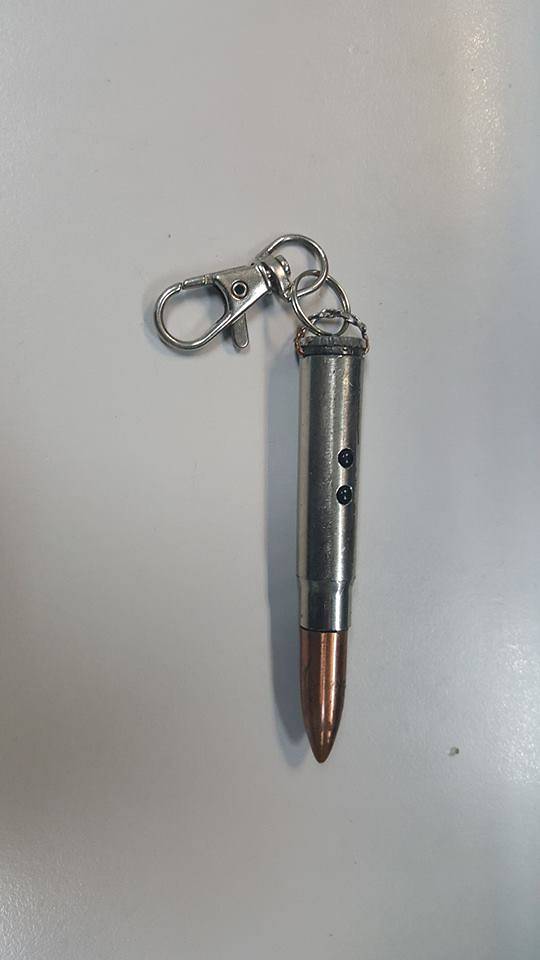
Another 20 duck eggs and a bullet-shaped keychain were also found in the car. The duck eggs were destroyed, said ICA.

“The case of the bullet-shape keychain was also referred to the Singapore Police Force for investigation,” it added.

A bullet-shaped keychain found in a car at Woodlands Checkpoint

A bullet-shaped keychain was also found in the car. (Photo: Immigration and Checkpoints Authority)

“Smuggled animals are of unknown health status and may introduce exotic diseases, such as rabies, to Singapore,” said the authority. “Similarly, illegally imported food products are from unknown sources.”

“Apart from food safety concerns, we have to remain vigilant to prevent diseases such as bird flu from being introduced into Singapore through such food products.”

Last December, the authorities caught another man trying to enter Singapore with puppies hidden in the spare tyre compartment of his car.

The 25-year-old was found with 12 sedated puppies crammed into the small space.

Source link

Google launches new developer space; Initiative set to boost Singapore’s digital capabilities

0

SINGAPORE: Technology giant Google launched a developer space on Friday (Feb 22) at its Singapore headquarters that will allow developers, entrepreneurs and community groups to network, train and grow their expertise.

The Developer Space @ Google will amplify its efforts to boost digital capabilities, the Government said.

Google’s decision to set up such a space in Singapore is ideal to growing the nation’s digital ecosystem, said Communications and Information Minister S Iswaran who was at the launch.

“A key aspect of the government programmes and what we are doing is really to unlock the private sector potential and catalyse these kind of partnerships and collaborations that will help to develop enterprises, their capabilities, and our Singaporeans and their talent base,” he said.

google developers space iswaran

Communications and Information Minister S Iswaran was present at the launch, which he says contributes to the development of Singapore’s infocomm media industry and its wider eco-system. (Photo: Ahmad Khan)

The decision to set up the tech giant’s first-ever developer space in Singapore was easy, according to Sami Kizilbash, Google’s Southeast Asia programme manager.

“Every single year there are computer science graduates that are interested to get into technology, get some skills, work at interesting companies. The community helps them do that,” he said. 

“We have more resources here than many other cities, including engineers, designers, customer support teams and so now the space is where we can bring these two together and hopefully create really incredible new things.”

READ: Commentary: How do we know when we’ve become a Smart Nation?

WHAT’S IN IT FOR COMPANIES?

The space supports various initiatives such as housing community events and workshops, providing an accelerator for independent gaming startups and a four-day Machine-Learning Boot Camp.

Members of restaurant booking platform app Chope attended the bootcamp last year to learn how to maximise Google Cloud platform services, and to keep up with the latest AI models within its system.

google developers space

This Shadow Art on display at The Developer Space @ Google uses Artificial Intelligence to recognise hand gestures and transforms the shadowy figure into digital animations representing the 12 animals of the Chinese Zodiac. (Photo: Ahmad Khan)

Chope’s chief technology officer Jack Wang said: “We try to bring the new project of machine learning to our user experience to see the best searches and recommendations … Through machine learning, we can now talk to the diner and, say okay this is the busy period, why not give our diners some vouchers or discounts? It can also be beneficial to the restaurants to get more traffic from the platform.”

Google has targeted 800 local developers to attend the camp by the end of the year. It also said it has reached 7,000 developers in Singapore in 2018.

One of them is gaming startup The Gentlebros. The Singapore-based company is behind mobile app games such as Slashy Hero and Cat Quest, and it has gained invaluable advice through a mentorship with established game developers, established by Google.

“It’s super important for us because Google has a connections with developers from all over the world,” Desmond Wong, co-founder and CEO of The Gentlebros said. “Being a developer from Singapore enables us to be connected with the other great developers and improve our knowledge on game development and broaden our horizons with the rest of the world.”

Source link

Tan Chee Wee appointed SAF’s first Inspector-General

0

SINGAPORE: Brigadier-General Tan Chee Wee has been appointed the first Inspector-General of the Singapore Armed Forces (SAF), The Defence Ministry announced on Friday (Feb 22).

BG Tan, who is currently Director of Joint Operations, will assume office on Feb 27. He will also concurrently assume the role of Chief of Staff – Joint Staff on the same day.

Last month, the Ministry of Defence (MINDEF) announced that an Inspector-General’s Office will be set up to ensure that “command emphasis on safety” is applied and enforced across all units.

READ: SAF to set up Inspector-General’s Office to ‘scrutinise and enforce’ safety processes

“As the first Singapore Armed Forces Inspector-General, my immediate focus is to introduce concrete actions in three areas: promote the open reporting culture, ensure the quality of safety inspections and strengthen our safety culture,” said BG Tan.

“I will work closely with the SAF senior leadership to make sure our people continue to have a culture whereby people train safe and they are protected while defending Singapore. I want to make sure that our soldiers and our commanders work towards zero training fatalities while they conduct realistic training.”

On Tuesday, BG Tan accompanied Chief of Defence Force Lieutenant-General Melvyn Ong to visit the 295th Battalion, Singapore Artillery (295 SA), where they were briefed on the safety training operationally ready National Servicemen were undergoing as part of their in-camp training.

Chief of Defence Force LG Melvyn Ong with the first Inspector-General BG Tan Chee Wee

Chief of Defence Force LG Melvyn Ong (centre) with the first Inspector-General BG Tan Chee Wee (fourth from right) receiving a brief during their visit to the 295th Battalion, Singapore Artillery. (Photo: Mindef)

During the visit, BG Tan said that his immediate focus as Inspector-General is to introduce concrete actions to promote open reporting, ensure the quality of safety inspections and strengthen the safety culture across SAF.

In his statement, BG Tan added: “My immediate priority is to visit ground units across the SAF, and this will allow me to firstly assess the health of open reporting and safety culture in our units, and secondly, also evaluate the Service’s safety inspection system.”

“With these findings, I will then recommend to CDF proposals that will further enhance the SAF’s safety management as well as strengthen its safety culture.

“My team and I are committed to improve training safety in the SAF,” he added.

LG Ong accompanied by BG Tan

LG Ong (centre), accompanied by BG Tan (first from right), interacting with Operationally Ready National Servicemen from 295SA. (Photo: Mindef)

BG Tan joined the SAF in 1993 as an Air Traffic Controller in the air force. He previously held a number of senior appointments in MINDEF and SAF, including Commander of Air Defence and Operations Command, Director of Policy Office, Defence Attaché (Washington) and Head of Air Plans.

Source link