Bove x SuperMom Pre-Good Friday Sale
from Monday, April 8, 2019 at 11:00 AM to Monday, April 8, 2019 at 9:00 PM
from Monday, April 8, 2019 at 11:00 AM to Monday, April 8, 2019 at 9:00 PM
Suntec City
Singapore, 039593 Singapore
SINGAPORE: Motorists complained of long queues on the Causeway and Tuas Second Link after Singapore started its ban on foreign vehicles with outstanding fines on Monday (Apr 1), The Star Online reported.
In February, Singapore authorities announced that foreign vehicles with outstanding fines for traffic, parking or vehicular emissions offences could be denied entry into the country from April.
According to the Star Online’s report on Tuesday, Malaysians travelling into Singapore for work were stuck in long queues on both the Causeway and Second Link near Gelang Patah.

Heavy traffic on the Johor side of the Causeway, in the early hours of Apr 2, 2019. (Photo: Telegram/SG Custom & Msia Road)
A commuter told the Malaysian news outlet that the congestion at the Tuas Checkpoint was “much worse” because some drivers stopped to pay their fines while others were forced to turn back.
Traffic at Tuas Second Link heading to Johor Bahru on Apr 1, 2019. (Photo: Telegram/SG Custom & Msia Road)
“The checkpoint booths at the Malaysian side are not enough, which is the first cause of congestion,” Kathleen Ann Kili, 28, told the news outlet. “Now with the ban, the situation gets from bad to worse.”
Singapore’s decision to deny entry to all foreign vehicles with outstanding fines also resulted in people opting for public transport instead of driving, the report added.
Factory worker Nurhanah Jasni Hashim, 30, told The Star Online that there were long queues of people waiting to board buses at JB Sentral.
Traffic at the Tuas Checkpoint on the evening of Mar 31, 2019. (Photo: Telegram/SG Custom & Msia Road)
CNA has reached out to Singapore’s Immigration and Checkpoints Authority for comment.
SINGAPORE: There is “no direct correlation” between burning or chemical smells and the ambient air quality readings, Senior Minister of State for Environment and Water Resources Dr Amy Khor said in Parliament on Monday (Apr 1).
This was in response to a question by Member of Parliament (MP) for Nee Soon GRC Lee Bee Wah, on whether there was any cause of concern for Yishun residents with regards to burning and pungent smells in the area.
There have been several fires in Johor over the past two months, including fires at two landfills in Bandar Tenggara and Tanjong Langsat and a fire in an oil palm plantation in Punggai.
“Between early-February and mid-March when the hotspots were detected in Johor, the 24-hour PSI readings remained within the good to moderate range, and the 1-hour PM2.5 levels remained in the normal range,” Dr Khor said.
She also highlighted the specific measures taken by the National Environment Agency (NEA) to monitor and keep Singaporeans informed of pollution levels in Singapore’s air quality and water supply.
AIR POLLUTION MONITORING
NEA uses both satellite remote sensing and a network of real-time ambient air monitoring sensors across Singapore to monitor air pollution levels, according to Dr Khor.
In February, satellite remote sensing allowed NEA to detect fire hotspots with plumes of smoke in Southern Johor. This was later confirmed by the Department of Environment (DOE) Johor to be fires at three hotspots.
Prevailing north-easterly winds blew the smoke plumes towards Singapore, causing “intermittent burning smells over the past few weeks”, Dr Khor said.
Real-time ambient air monitoring sensors measure key air pollutants, which include sulphur dioxide, nitrogen dioxide, carbon monoxide, ozone and particulate matter classed under PM2.5 and PM10. With this data, NEA calculates the Pollutant Standards Index (PSI) over a rolling 24-hour period.
Readings of air pollutants are available publicly on the NEA website and the myEnv app, which has hourly updates from NEA.
“If there are significant variations above normal levels, unhealthy levels, we would notify the public with this information,” said Dr Khor.
WATER POLLUTION MONITORING
Dr Khor also addressed the issue of water quality monitoring by NEA, in response to the illegal dumping of around 20 to 40 tonnes of chemical waste in Pasir Gudang.
Fumes from toxic chemicals dumped in Sungai Kim Kim caused students and teachers from nearby schools to experience shortness of breath and vomiting. (Photo: Bernama)
According to Dr Khor, chemical waste was not been detected in NEA’s water samples, and the agency has not detected any anomalies in the water quality at Singapore’s recreational coastal beaches.
“PUB’s online sensors have shown that the water quality of Johor River, our waterways and reservoirs in the north and north-eastern part of Singapore, as well as the water supply is within normal variations,” the minister added.
“On-site inspections and water quality checks have also shown no abnormalities.
“This incident has no impact on our water supply as the chemical dumping location is outside of our Johor River catchment area, where part of our water supply comes from.”
The chemical dumping in Sungai Kim Kai at Pasir Gudang caused thousands of people in the area to be taken ill. A Singaporean and two Malaysians have been charged in connection with the incident.
CROSS-BORDER COLLABORATION
Dr Khor emphasised the need for greater cross-border collaboration between Malaysia and Singapore to tackle environment pollution.
“These include the provision of early warnings, and environmental monitoring data and guidelines. NEA and SCDF have been in contact with their respective Malaysian counterparts … to obtain regular updates on the situation there,” she said.
“We will continue to monitor the situation and provide updates if there are significant developments.”
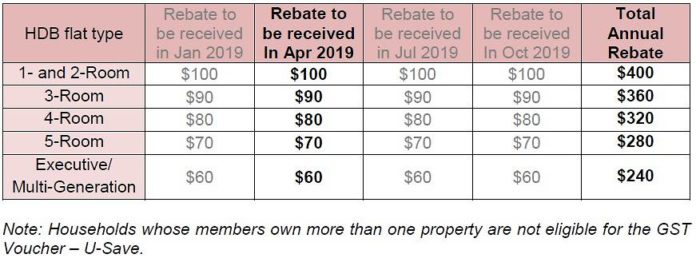
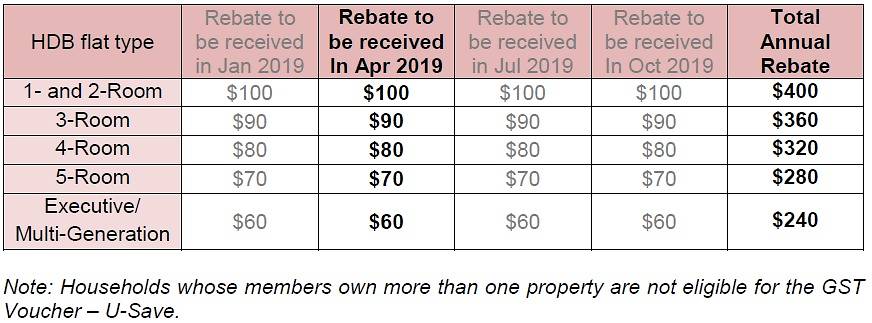
SINGAPORE: About 930,000 Singaporean households living in Housing and Development Board (HDB) flats will receive the next instalment of the GST Voucher – Utilities-Save (U-Save) rebate in April, the Ministry of Finance announced on Tuesday (Apr 2).
The rebate, which is part of the permanent GST Voucher scheme, is distributed every three months. It helps HDB households offset part of their utilities bills and lowers their household expenses, the ministry said.
U-Save rebates amounting to S$300 million are expected to be given out this year.
Eligible households will each receive a rebate of up to S$100 in April, depending on their HDB flat type.
The annual rebates are equivalent to three to four months of utilities bills for those living in one- and two-room HDB flats, the ministry said.
“Those living in three- and four-room HDB flats receive support equivalent to about one to two months of their utilities bills,” it said.
SINGAPORE: It was just a S$2.50 meal. Even then, Wendy (not her real name) had to get permission from her then-boyfriend to buy it.
And no, it wasn’t because Wendy was financially dependent on him — she graduated from Nanyang Technological University and was a former top banker before starting a business with her ex.
It was punishment for not being capable enough to generate more sales for the company. Or so, she was told.
What Wendy didn’t realise then was that she was being psychologically abused by her boyfriend, until her friend pointed it out to her.
He told me, ‘I trusted you with all these business leads and you didn’t deliver.’ It’s the slow chipping of your mind, it starts getting very messed up. You think, ‘maybe I’m really that bad’.
In another case three years ago, Afiqah’s then-boyfriend saw some old Facebook messages she sent to her previous lover.
The boyfriend flew into a jealous rage and threatened her with a knife. Afiqah, who did not want to reveal her full name, was three months’ pregnant at that time.
“He said to me, ‘I will make sure I end your life’,” said the 23-year-old.
Both Wendy and Afiqah are among the growing number of unmarried women who have been abused by their close partners.
They were frustrated with the lack of avenues they had to protect themselves even when they approached law enforcement agencies.
Wendy said she was told by the police that she couldn’t file a restraining order because she wasn’t married.
While Afiqah was able to file for a Personal Protection Order (PPO) for her daughter after she left her abusive ex, she is unable to get one herself because she wasn’t able to produce a marriage certificate.
Filing for a PPO is one way abuse victims can seek protection. Their abusers cannot use any form of violence — whether physical or emotional — against them once a PPO has been granted by the court. However, it only applies to family members.
This is partly why, after leaving the relationship two years ago, Afiqah said she still has nightmares and sometimes fear that he might hurt her again.
A woman bows her head in pain. (Photo: Unsplash/Volkan Olmez)
More help for victims like Afiqah and Wendy could be on the way with legal changes to be tabled in Parliament “in the next few months”, said Law and Home Affairs Minister K Shanmugam about a month ago.
The proposed changes to the Protection from Harassment Act (POHA) will make it easier for both married and unmarried victims to seek legal protection.
The changes include setting up a new Protection from Harassment Court, quicker applications for a Protection Order, expanding the coverage of such orders to include the victim’s parents and children, as well as allowing arrests to be made without a warrant when perpetrators breach the Protection Order.
While still small, the number of casework involving dating violence has gone up from 6 to 17 between the financial years of 2015 and 2017, according to family violence specialist centre Pave.
Last week, the Association of Women for Action and Research (Aware) revealed that it received over 4,000 calls to its Women’s Helpline last year, a 32 per cent increase from the year before.
The not-for-profit organisation, which advocates for gender equality and provides critical support services for women in Singapore, tends to field an average of 3,000 calls yearly.
STATS ‘DON’T SHOW THE FULL PICTURE’
The number of PPOs filed averaged around 2,768 cases each year over the last five years, according to statistics from the Family Justice Courts.
There were over 2,500 PPOs filed in 2008, increasing to over 3,100 in 2013 before gradually declining to almost 2,500 last year.
While the overall figures do move up and down over the years, the percentage of applicants that are women has consistently been at around 70 per cent.
Though unmarried victims are not able to apply for PPO, they will be able to file for a Protection Order under POHA.
Abusers served with the Protection Order cannot threaten, stalk or harass their victims. If found to have breached conditions, they can be fined or jailed.
However, there is no available data from the State Courts on the number of Protection Orders filed as a result of intimate partner violence, since POHA also covers other forms of harassment, such as those occurring in the workplace.
According to family violence specialist centre Trans Safe, the number of cases it handles involving relationship abuse has also fluctuated over the past decade.
When both physical and psychological abuses were included, the centre saw 54 such cases in 2008, 172 in 2013 and 102 last year.
(File photo: AP)
As for Pave, the numbers have stayed quite consistent, with about 175 in 2008, and 184 in 2013 and 2018.
However, social workers have said that it is difficult to draw a “substantive conclusion” just from the numbers alone, as it is mostly a function of reporting.
Similarly, an increase in reporting may not necessarily mean that there is an increase in the incidence of violence but could be a reflection of better access to social and legal support.
Ms Anisha Joseph, head of care services at Aware, said that the declining number of PPOs could also be a result of women not wishing to apply for them out of fear of being seen as the one who “broke up the family”, or out of fear of their abusive partners.
“We need to triangulate more data like (police) statistics, statistics from family violence specialist centres, family service centres, hospitals, educational institutions and even public surveys to understand the true landscape of incidences of violence and trends of reporting or seeking legal remedies,” she added.
Pave’s vice-president Alan John also said that the general view it takes is that those who come forward and report their abuse represent “a fraction of those who are actually experiencing it” and that there are probably many other victims who are still suffering in silence.
‘HE DIDN’T HIT ME’
Beyond the numbers, social workers and lawyers also said that they see a growing number of cases involving psychological and emotional abuse, compared with the past where physical violence was predominant.
In fact, for family lawyer Gloria James-Civetta, she is seeing fewer cases involving physical violence.
“Ten years ago, I did not have a client who came to me and said, ‘my husband is a narcissist’. It was straightforward domestic violence. Now women are reading about it (psychological abuse) and becoming more aware,” said the head lawyer for Gloria James-Civetta and Co.
Psychological abuse can take the form of hurling of vulgarities, constant criticisms or the use of demeaning words towards one’s partner. Issuing threats, constantly surveilling one’s partner and isolation from other friends and family also constitute psychological abuse.
Ultimately, abusers want to exert dominance and have power and control in a relationship, be it through physical or psychological means, social workers say.
Whenever Nina (not her real name) told her husband about a job she was interested in applying for, he would always tell her that the working hours were too long and she wouldn’t have time for their daughter. He would also constantly mock her and criticise her whenever they have disagreements.
“Everytime he brought up our daughter, I would give in. I would feel so guilty, that I’m not a good mother,” said the Singaporean permanent resident who is from China.
Nina quit her job when she moved over to Singapore to be with her husband, also from China, and who is working as a doctor in Singapore.
When her husband decided to divorce her and not provide any allowance for her and her daughter’s daily expenses, she filed for a maintenance order.
That however sent her husband into a blind rage and he attacked her in their matrimonial home, resulting in her falling onto the floor. He then hit her head against the floor repeatedly, causing it to bleed.
(Photo illustration: Ngau Kai Yan)
She has filed for a police report and a PPO.
Beyond the physical pain, Nina said her self-esteem has also taken a blow as friends have told her that she has changed and is no longer as self-confident as before.
Psychological abuse also increases the hold an abuser has over his victim. Afiqah said her ex-boyfriend did not allow her to return to her home and even took her phone away.
He also did not allow her to go to work, leading her to quit her job, nor have any friends.
Every single day, every hour, every second, I need to be with him. At first I thought it is because he cares for me and loves me. Now I realise, it is not, he was trying to control me.
Social workers stressed that it is wrong to perceive psychological abuse as a less extreme form of violence than physical abuse.
“Words have just as much of an impact as physical abuse,” said Ms Kanniga Gnanasekaran, senior social worker at SINDA Family Service Centre, which takes in cases from all ethnic communities in Singapore.
You’ll always feel you’re not good enough, you feel you’re the one in the wrong, and that’s what happens to victims all the time.
For Jane (not her real name), the shouting and put-downs she endured from her ex-husband were “far more damaging” than the instances where he grabbed and pushed her.
“It’s the way he looked at me, like ‘Oh my god, you are the scum of the earth and you look so stupid’. He would physically point a finger right up to my face, inches from my nose and go ‘Oh, look at you’,” said the 43-year-old, who has a law degree and has many years of experience working in the financial sector.
He made me think that there was something wrong with me. In any case, the only way I could defuse the situation was to agree and say ‘Yes it is me, you’re right. This is my fault’. It eroded my self-confidence and my self-worth.
Social workers said the increasing number of such cases being reported could be a result of greater awareness of what sort of behaviour constitute psychological abuse, not because such forms of abuse did not exist before.
(Photo: Unsplash/Maranatha Pizarras)
”Now there is better understanding of psychological abuse by social sector professionals, legal professionals and survivors themselves. So we are starting to see a shift of psychological abuse from being (an) ‘invisible form of violence’ to a ‘visible form’,” said Ms Joseph said.
At the same time, experts note that the form of psychological abuse has become more sophisticated and complex.
Ms Kristine Lam, a senior social worker at Care Corner’s Project Start — another family violence specialist centre — said that she is seeing more “subtle” forms of psychological abuse, such as driving at high speeds in a reckless manner to cause fear in victims.
The increasing complexity comes amid technological advancements and the pervasive use of smart devices in everyday life.
Family lawyer Tan Siew Kim said she has handled cases where the perpetrators installed CCTV cameras all over the house on the pretext of monitoring the domestic helpers but were actually surveilling the movements of their spouses. Some abusers had also installed GPS tracker in cars.
“The moment the wife does something, she will get a text or a call, asking her ‘Why did you feed the baby this? Why did you invite your girlfriends over?’. ‘Where did you go with the car? I know you were at this location.’,” said Ms Tan, who is a consultant at law firm Kalco Law.
The prevalence of communication devices also means that verbal abuse can occur on a more frequent basis.
“In the past, the perpetrators come home and shout and scream. Now, you have phone, email, there are more ways to reach a person, they can do it from office or even overseas,” said Ms Tan.
A woman at a cross junction. (File Photo: AFP/Fred Dufour)
Social media can also be an aid in perpetuating the abuse. Ms Lam said that perpetrators have also put up demeaning posts or posts that reveal something private about the victim on social media “as an attempt to shame the victim”.
While a PPO can be filed on the basis of psychological abuse, Ms Tan said the burden is on the victim to prove that psychological abuse — mostly unseen and invisible — has taken place.
“There is a very high threshold you have to satisfy, you need to show you are very psychologically affected by this. If the guy is smart enough, he can deny it. … Sometimes, there is no message, the guys raise their voices and shout at (their partners). You can’t go to court and prove that,” she added.
For Wendy, she found it difficult to articulate to others how the psychological abuse led to the “very slow degradation” of her self-esteem:
If I go to the police and I got a bruise, I can say he hit me. But verbal abuse, there is nothing. (but it) mess ups your mind a lot.
What complicated the situation even more was that Wendy’s ex seemed to be a “perfect gentleman” to his friends and acquaintances.
“It was such a show. Behind closed doors, he turned into a monster. If I tell people he is a crazy guy, they will think I’m the one who is mad,” she added.
THERE IS NO ‘TYPE’
Women like Wendy and Jane – both well-educated and successful in their careers – are clear examples that abuse is not just limited to those from a lower socio-economic status or educational levels. This is a misconception social workers have been trying to correct.
When Afiqah started attending a group counselling session at Pave after leaving her abusive ex, she was surprised to find that there were lawyers and doctors among the group.
Not only that, some of the men who abused these women were also lawyers and doctors.
Perpetrators are “not monsters 24/7”, said Mr John, adding:
The men who come to Pave, they have a pleasant and charming side. They are generally all right, they would be guys women will go out with. … It starts off like any other relationship.
The problem starts when disagreements arise and perpetrators feel the need to control their partners, thus setting the stage for controlling behaviours to become part of the relationship.
Social workers also pointed out that there is a pattern to the abuse. After a violent incident happens, the perpetrator would usually apologise and make amends.
“He will buy flowers and do the nicest thing and that is the guy (the victim) fell in love with. Everytime she sees that part of him, she sees hope that he will change,” said Mr John.
Jane, who was with her ex-husband for 13 years, said her efforts to leave him were hampered by her low self-esteem, worn down by years of psychological abuse:
It’s like slow torture. And you do believe them (when they blame you). You love this person, you want their opinion of you to be better.
“Everytime I tried to walk away, he would become this puppy, he would cry, he would sob, he would say ‘sorry it won’t happen again, things will be different’. I always hoped things will be different and so I gave him the benefit of the doubt.”
(Photo: Unsplash/Priscilla Du Preez)
Wendy said she used to think women were “stupid” whenever she read about their abuse in the newspapers.
“But when I was in situation, I was exactly like that. You don’t know until you are in the situation. Imagine your mind manipulated. You are not thinking like a normal person. You cannot see because your worldview is already warped,” she added:
They stay because of the meaning and the value of the relationship.
While income or education have no bearing on whether a woman would be in an abusive relationship, social workers pointed out that some circumstances do add stresses — such as financial worries — to the relationship, which could increase the chances of the perpetrator acting out in an abusive manner.
One particularly vulnerable group are foreign women who move here with their husbands or who marry Singaporeans.
They may bring with them certain cultural beliefs rooted in patriarchy where domestic violence is “more tolerated and normalised”, noted Ms Gnanasekaran.
Foreign women who are abused also lack the social support that Singaporean women would most likely have, given that they have left their friends and families behind in their home country and are very dependent on their husbands.
“For a Singaporean woman, there is a chance somebody may notice (signs of abuse). So in your social circle, there is someone to tell you that this is not supposed to happen to you, compared with someone who is cut off and believes that abuse is normal,” she added.
Senior social worker Shannon Chew at Trans Safe Centre also said that many foreign women are here on long-term visit passes, which are sponsored by their husbands. And some men will threaten to cancel their passes as a means of controlling them.
There is also less legal support for these women as legal aid is only restricted to Singapore citizens and permanent residents.
SMALL, INCREMENTAL STEPS
While it is hard to assess whether the incidence of relationship violence has worsened or improved based on the statistics, social workers and lawyers agree that they are seeing a lot more awareness on this issue, and that more victims are coming forward voluntarily to report the abuse or to seek help through counselling.
Some victims have also come forward because an observant friend or family member suspects that they are in an abusive relationship.
And it is not just the women. While most men who go for counselling at the various family violence specialist centres or family service centres were ordered to do so by the courts, social workers have observed a handful of abusers who are voluntarily seeking help.
Several factors may have contributed to this heightened awareness: technology, more publicity campaigns on relationship violence by government agencies as well as social service agencies, changes in the way the police handle domestic violence cases and a cultural and mindset shift on the issue.
Singapore Police Force officers (File photo: AFP/Roslan Rahman)
Ironically, while technology has facilitated the increased sophistication of psychological abuse, it has also made a difference in help-seeking behaviour, noted Ms Gnanasekaran, who added:
The availability and accessibility of technology makes a huge difference. Before, people don’t know where to seek help. Now everybody has a mobile phone, they know how to google.
Police have also changed the way they respond to domestic violence. While it was deemed to be a “family problem” years ago, the ground officers are now more alert to look out for signs of domestic violence, said Mr John.
That is partly a result of greater engagement between the police and social workers.
As part of their protocol now, police officers responding to cases of domestic violence also recommend counselling even if they are unable to arrest the offender, said Ms Chew.
Social service agencies reaching out to schools, and designing their own campaigns have also led to increased public education.
For example, Pave has been working with restaurants to place its coasters — which contain a checklist of what constitutes dating violence — in their premises.
“People do pick them up and say ‘Hey, I saw this’, or they pass them on. So the awareness is up,” said Mr John.
The Government also has been more willing to acknowledge the reality that violence exists through campaigns run by government agencies, noted social workers.
For example, Ms Joseph pointed to the “Break the Silence” campaign by the Ministry of Social and Family Development, which “can be really impactful to encourage survivors of family violence to come forward to seek help”.
These small and incremental steps over the years have gradually led to an overall cultural and mindset shift towards the issue of relationship violence, said social workers.
“It is not such a taboo subject anymore and that is helpful in letting victims know that they are not alone,” said Ms Gnanasekaran.
“For the longest longest time, everybody just said, ‘This is not my problem. These things happen, this is behind closed doors’,” said Mr John.
The heightened awareness and willingness to report abuse is a result of the “slow and long and hard work over many years”, he added.
CHALLENGES REMAIN
While there is an understanding among social work practitioners that Singapore is heading in the right direction, there are still gaps that need to be plugged.
Despite greater recognition from the Government on the broader issue of violence against women, Ms Joseph said that there is “still a long way to go at a societal and policy level”.
For example, she noted that there have been few applications for protection orders under Poha due to the complexity of the process and cost.
Mr John believes that the only way to stop violence is to stop it early by targeting the belief systems and values of both boys and girls. Hence, Pave is working on a programme focused on talking to boys about what they have learned about violence while growing up.
Why do they think it’s all right to beat their girlfriends and wives? Where did they learn this? Who said it’s okay? And as long as there are people who think this is okay, where there are girls and women who think ‘it’s okay if he beats me sometimes’, it’s not going to stop.
“For the men who come to us, it’s something they learn from watching their fathers, or growing up being told to be in charge, and you must be strong and that people must obey you, and if they don’t, then you have to show who is in charge here and one way of showing who is in charge is to beat. … Nobody came along and say ‘no, you shouldn’t’.”
Woman sitting silently. (Photo: Pixabay/Ryan McGuire)
Beyond wider societal and policy changes, the victims’ desire to remain in abusive relationships despite the risk to their own safety is a constant challenge that social workers often have to work with.
And that challenge may never go away, no matter how much more educated and aware people are on this issue, said Ms Gnanasekaran.
“You have the PPO and POHA and people have the knowledge of such things. But it is also whether there is the willingness among victims to make use of these tools,” she said.
“No matter how much you educate, because violence is a cycle and there is a psychological and emotional link when (the abusers) are significant others, I think there is a limit to the work we can do.”
Notwithstanding the importance of having infrastructural support in place for abused victims to get help, the decision to continue or leave the abusive relationship ultimately rests on the victims.
For the various women interviewed, the hope to see their abusive partners change was a common factor that motivated them to stay despite the torment they went through.
Threats that harm will befall them or their loved ones also held them back whenever they considered leaving.
But they all found their own strength to break free from the cycle.
For Wendy, she drew on her previous experiences as a high-achiever and realised that she was not what her ex made her out to be, while Nina discovered that she has been constantly lowering her threshold for her husband’s behaviour.
As for Afiqah and Jane, the turning point came from the birth of their daughters.
“I didn’t want my daughter to experience what I experienced. I needed to break the cycle and that gave me the strength to say no. I couldn’t let it happen to her,” said Jane.
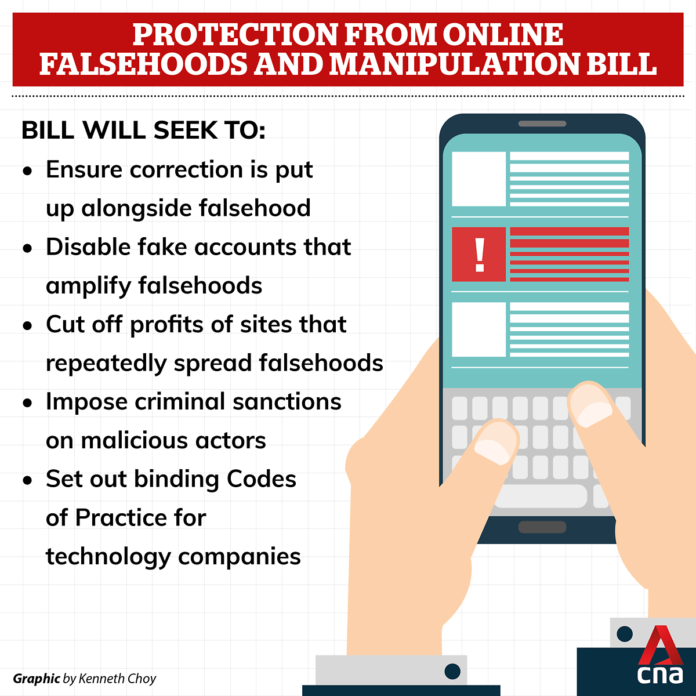
SINGAPORE: Facebook as well as a regional body representing the interests of Internet and technology companies have expressed their concerns over various aspects of the Protection from Online Falsehoods and Manipulation Bill, which was tabled in Parliament on Monday (Apr 1).
Others like Twitter and Google reserved comment as they have yet to look at the Bill in detail.
The Asia Internet Coalition was strong in its comments of the proposed Bill, with managing director Jeff Paine saying it is “deeply disappointed” by the lack of meaningful opportunities for public consultation during the drafting process of the legislation.
This is especially so, given the “significant implications” it could have for diverse stakeholders, including industry, media and civil society in Singapore, the region and internationally.
It was also concerned that the proposed legislation would give the Singapore Government full discretion over what is considered true or false.
“As the most far-reaching legislation of its kind to date, this level of overreach poses significant risks to freedom of expression and speech, and could have severe ramifications both in Singapore and around the world,” Mr Paine said in a statement on Monday.
FACEBOOK AND SINGAPORE GOVERNMENT CLASH AGAIN
The Asia Internet Coalition is not the only one concerned about the Bill.
Facebook’s vice president of Public Policy Simon Milner said in an email that it is “concerned” with aspects of the law that “grant broad powers to the Singapore executive branch to compel us to remove content they deem to be false and proactively push a government notification to others”.
Corrections will be the primary response to a harmful online falsehood that is actively spreading, the Law Ministry said on Monday. This means that for a targeted correction, an order can be issued to the person who made the online falsehood to include a correction with it, so whoever sees the falsehood can also see the facts.
“Giving people a place to express themselves freely and safely is important to us and we have a responsibility to handle any government request to remove alleged misinformation carefully and thoughtfully,” Mr Milner said.
The social media giant had previously clashed with the Government over such take-down requests.
The Ministry of Law said last November that the platform cannot be relied upon to filter falsehoods or protect Singapore from a false information campaign after the former refused to take down a post by the States Times Review linking Prime Minister Lee Hsien Loong with the 1MDB investigations.
Mr Milner did say it appreciated the Government’s close consultation on the important issue and shared the same commitment to reduce the spread of deliberate online falsehoods.
It said the draft legislation already reflects a number of investments Facebook has made to combat false news and disrupt attempts to manipulate civic discourse, including identifying and disrupting coordinated inauthentic behaviour and introducing more political ads transparency.
TWITTER, GOOGLE STILL CONSIDERING BILL
Founder Mark Zuckerberg had over the weekend also said the company supports meaningful regulation, and is in favour of working with governments on rules in four areas: Harmful content, election integrity, privacy and data portability.
Meanwhile, a Twitter spokesperson told CNA it is the first time it is seeing the law in its entirety and its teams “are still reviewing to assess its implications”.
Google, similarly, said it will be studying the Bill to determine its next steps. “(We) urge the government to allow for a full and transparent consultation on the proposed legislation,” a company spokesperson said.
AIC, too, said it will be studying the Bill in the coming days.
“We remain committed to working closely with the Government and other stakeholders to tackle misinformation, and hope that the enforcement of this legislation will not be at the expense of the benefits that public debate and exchange of ideas can bring,” Mr Paine said.
SINGAPORE: Members of Parliament (MPs) have voiced their support for Singapore’s approach in restricting hate and offensive speech and suggested various ways how hate speech can be curtailed while allowing “robust and meaningful exchange of ideas” to continue.
This came after Home Affairs Minister K Shanmugam delivered a ministerial statement in Parliament on Monday (Apr 1) stressing on the importance of restrictions on offensive speech in public discourse, even when it is not hate speech.
Describing the motion as a “timely” one, MP Christopher De Souza said that inflammatory speech inciting senseless violence “shrouds daily life with a veneer of danger”, creating heightened tension.
But while deterring inflammatory speech is important, Mr De Souza also called on the Government to ensure that there remains “robust and meaningful exchange of ideas”.
“Therefore, when someone presents a differing view in a respectful, logical and cogently reasoned manner, with evidence to back up their position, with an eye for the good of Singapore, that cannot be taken as hate speech,” he explained. “Therefore, in my view, the law as it currently stands ensures and codifies the correct standard.”
Nominated MP Walter Theseira suggested that the state could reinforce a secular public policy space to prevent any religion or race from becoming “overwhelmingly dominant”.
“The public space is a common resource, a deep wellspring that sustains and refreshes the common spirit,” he said.
“But as a multi-racial and religious society, each of our communities has different ideas about that public space.
“Our society must keep that common wellspring clear. If we each seek to dye the water according to our own particular persuasion we will soon find that there is nothing but darkness there.”
He added that Singapore “must directly address, manage, and even reject, when necessary, attempts by religious and ethnic groups to advance public policy based on their own versions of the truth”. This is especially so when several religions have a common belief.
MP Murali Pillai called on the Government to explore ways to prevent or deprive commercial entities or persons from financially benefiting, either by being platforms or providing support for hate and offensive speeches.
He added that the state should consider adapting laws that deal with terrorism financing onto hate speech. Mr Pillai also suggested bringing back the judicial review of Government action to ascertain the legality, rationality and procedural propriety of decisions made.
“Our unity and future as a nation will continue to depend in large part on how we manage our race and religious issues,” said Mr Pillai.
“It is therefore of paramount importance that we continue to be vigilant and guard against the propagation of hate and offensive speeches that affect the maintenance of racial and religious harmony in Singapore.”
EDUCATION AS THE WAY FORWARD
Other MPs said that educating the public on what constitutes acceptable behaviour could be a way to curtail hate speech.
MP Denise Phua described offensive speech as being “a grey zone” with varying degrees of offensiveness, pointing out that there should be a “more effective way” of educating the public on what is and is not acceptable.
“Speech comes on a spectrum and do not fall into neat categories,” said Ms Phua. “While it is easier to identify hate speech; offensive speech is not so.”
She added that taking an “absolutist approach” of either totally banning or totally allowing all forms of hate and offensive speech, “is not wise”.
Member of Parliament Denise Phua. (Photo: Xabryna Kek)
She said there should be a publicised process on how to report such violations, as are decisions taken by the Government after consultation with relevant stakeholder groups. Ms Phua also asked about what the difference is between public discourse and platforms such as private WhatsApp group chats.
In response to Ms Phua’s questions, Mr Shanmugam noted in his round-up speech on the debate that the Government does not intervene on disagreements and arguments on public issues.
“WhatsApp and other platforms, I think these are legitimate questions. I cannot tell you that I have all the answers on those issues, but we’ll have to deal with them,” he said.
MP Rahayu Mahzam pointed out that while casual racism and inappropriate stereotype jokes continue to exist, it is “not practical or meaningful” to legislate regulations for such conduct.
She cited the need for more education and discussions among the different groups, thereby creating opportunities for greater understanding and for strengthening inter-racial relations.
“As a minority in Singapore, there are occasions when some things said or done by others from other races or religion may offend me or my community. Often, such conduct comes from a space of ignorance and not malice,” she said.
“There is therefore a great need to continue to foster relations between people from different communities and allow for better understanding.”
MP Saktiandi Supaat also suggested that young people be exposed to programmes that will promote opportunities for them to mingle with people from all races and religion, pointing out that the risk of perpetuating stereotypes can be “fuel” for hate speech and ideology.
He added that while the Government has been “impartial, fair and just” in applying decisions, the state can take further actions to maintain its neutrality.
He suggested that a council be established to advise the deciding minister on matters relating to hate and offensive speech.
“It could help alleviate issues of conflict of interest if, in the future, the deciding minister is of a particular religion or race impacted by the offensive/hate speech or ideology, in particular for future governments,” said Mr Saktiandi.
“NO GENERAL BAN ON BLACK METAL GROUPS”: SHANMUGAM
Separately, Workers’ Party chief Pritam Singh questioned how the Infocomm Media Development Authority (IMDA) would assess applications for other black metal groups in the future.
Local black metal bands have been part of Singapore’s entertainment ecosystem for many years, he said, and foreign black metal bands have been allowed into Singapore previously.
In response to Mr Singh, Mr Shanmugam said that the population and its reactions “are dynamic”.
“Population, reactions, specific bands, time… these are all relevant considerations, but you got to make an honest assessment based on all of those with the reactions that you have, whether it’s mainstream reactions and how it will impact on specific security situations as well as the broader security considerations,” he said.
“I would add that this doesn’t mean there is a general ban on black metal groups.”
Mr Singh also called on the Government to remain neutral in its relations with not just the different religious groups, but other civic groups and citizens.
He added that instead of “a hard policy” such as bans, a “graduated approach” in establishing a range of conditions towards what constitutes hate and offensive speech “may better reflect the compromises required to create and sustain as accommodating and robust a common public space as possible”.
Mr Shanmugam noted that there was “broad support” from MPs, based on the speeches for the approaches he outlined, and added that it was “very heartening” that everyone – from Government MPs, the opposition as well as Nominated MPs – broadly agree to these principles.
“The collective position of this House is clear,” he said. “Hate speech impacts racial, religious harmony and members agree generally dealing with hate speech, we have to intervene early and decisively.”
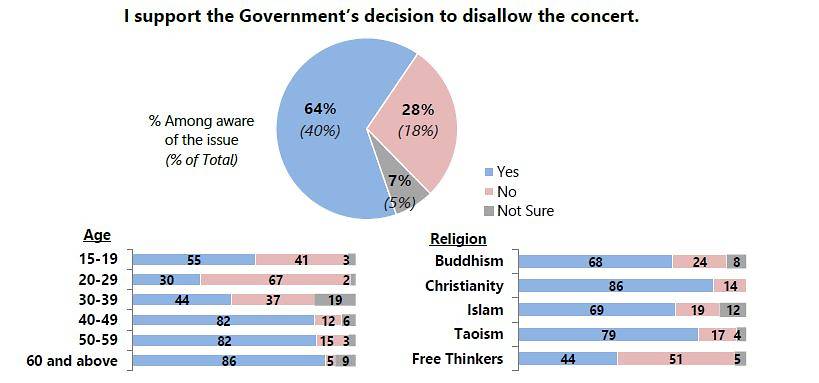
SINGAPORE: About two out of three Singaporeans who were aware of the ban on Swedish metal band Watain last month agreed with the Government’s decision, according to a recent poll conducted by feedback unit REACH.
The poll was conducted to better gauge and understand public sentiment on the Government’s decision, REACH said in a media release on Monday (Apr 1).
The computer-assisted telephone interviews were carried out from Mar 11 to Mar 15 involving a sample of randomly selected Singapore citizens weighted by gender and age.
Out of the 680 participants, who were aged 15 and above, about 60 per cent were aware of the Government’s decision to disallow the concert.
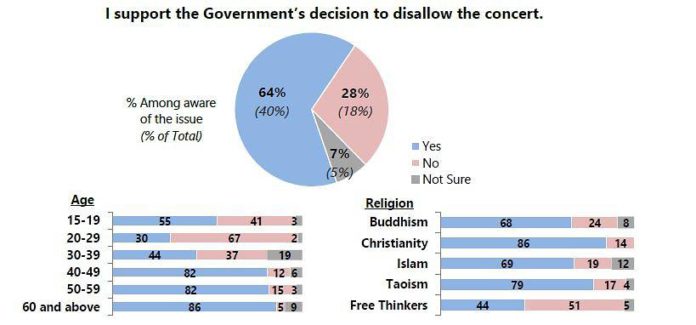
Of these, 64 per cent or about two in three supported the decision.
“Younger respondents (in their 20s) and those who indicated that they were freethinkers, were most likely to disagree with the decision to disallow the concert,” said REACH.
64 per cent of those who were aware of the concert ban said they supported the decision. (Image: REACH)
One in four respondents felt performances that may impact religious sensitivities in Singapore should be banned, while two in three felt that they may be allowed, with specific rules to prevent offensive content, the poll also found.
Similarly, younger respondents were more likely to feel that performances that may impact religious sensitivities should be allowed with specific rules attached.
In reviewing the poll’s findings, REACH chairman Sam Tan said: “It is heartening that the majority of Singaporeans appreciate the importance of respecting religious sensitivities in our multi-racial and multi-religious environment.”
“In light of recent events in New Zealand and other parts of the world, I hope younger Singaporeans understand the delicate balance needed to maintain this place we call home and cherish the peace and harmony that has been built up over the decades,” he added.
SINGAPORE: About two out of three Singaporeans who were aware of the ban on Swedish metal band Watain last month agreed with the Government’s decision, according to a recent poll conducted by feedback unit REACH.
The poll was conducted to better gauge and understand public sentiment on the Government’s decision, REACH said in a media release on Monday (Apr 1).
The computer-assisted telephone interviews were carried out from Mar 11 to Mar 15 involving a sample of randomly selected Singapore citizens weighted by gender and age.
Out of the 680 participants, who were aged 15 and above, about 60 per cent were aware of the Government’s decision to disallow the concert.
Of these, 64 per cent or about two in three supported the decision.
“Younger respondents (in their 20s) and those who indicated that they were freethinkers, were most likely to disagree with the decision to disallow the concert,” said REACH.
64 per cent of those who were aware of the concert ban said they supported the decision. (Image: REACH)
One in four respondents felt performances that may impact religious sensitivities in Singapore should be banned, while two in three felt that they may be allowed, with specific rules to prevent offensive content, the poll also found.
Similarly, younger respondents were more likely to feel that performances that may impact religious sensitivities should be allowed with specific rules attached.
In reviewing the poll’s findings, REACH chairman Sam Tan said: “It is heartening that the majority of Singaporeans appreciate the importance of respecting religious sensitivities in our multi-racial and multi-religious environment.”
“In light of recent events in New Zealand and other parts of the world, I hope younger Singaporeans understand the delicate balance needed to maintain this place we call home and cherish the peace and harmony that has been built up over the decades,” he added.
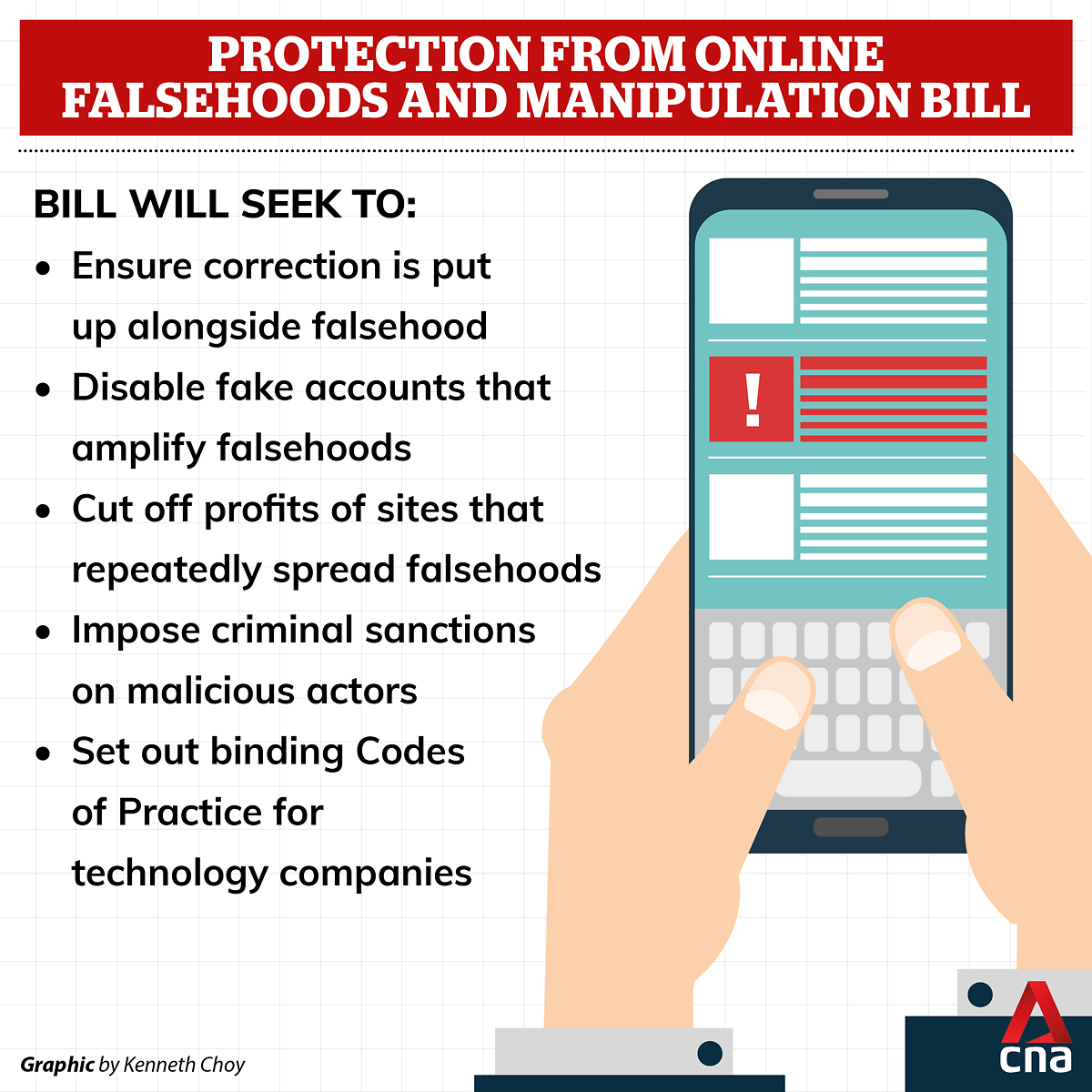
SINGAPORE: Singapore is taking another large stride towards being better equipped to deal with the proliferation of fake news and the ilk with the tabling of the Protection from Online Falsehoods and Manipulation Bill in Parliament on Monday (Apr 1).
The Law Ministry, in tabling the Bill, said it is intended to protect society from the damage caused by deliberate online falsehoods and fake accounts used to spread such falsehoods. It also intends to protect against malicious actors who knowingly spread harmful falsehoods, or offer disinformation tools and services, using criminal sanctions.
One example of what the law is going after is the false States Times Review article from last November alleging Malaysia had signed several unfair agreements with Singapore in exchange for the assistance of banks here to launder the funds of Malaysian state fund 1MDB.
The false article on its own garnered 1,716 shares, 754 reactions and 157 comments on States Times Review’s Facebook page. However, the message was amplified by seven other Facebook users who shared the article 45 times collectively over three days to 39 unique Facebook groups. This resulted in the article reaching an approximate 800,000 potential viewers.
Deliberate online falsehoods is defined under the new proposed law to be a statement of fact that is false or misleading.
Some examples of statements of fact that are covered, if they are false include:
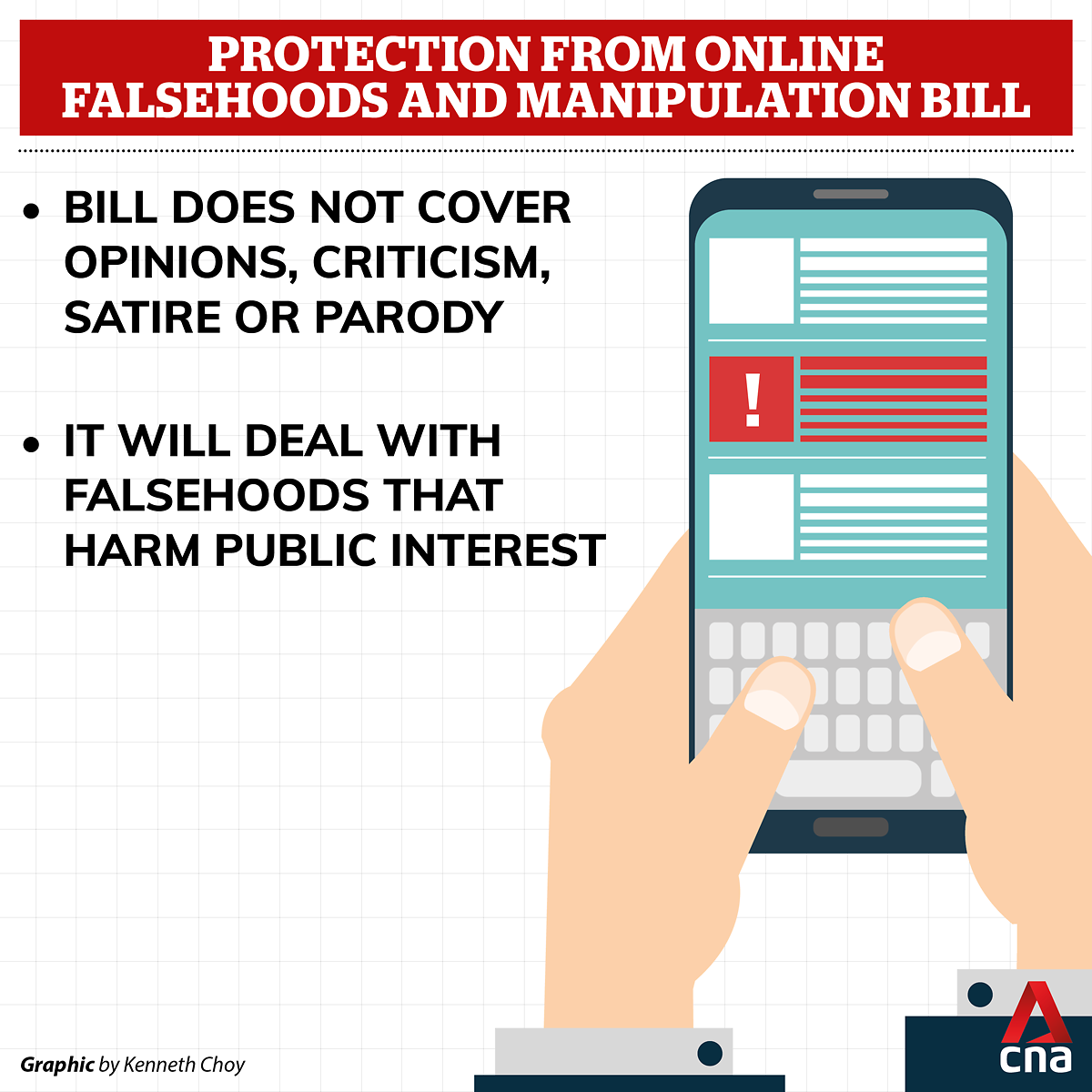
The Bill does not target opinion, criticism, satire or parody, the ministry said.
Some examples of opinion, criticism, satire or parody not considered a falsehood include:
The proposed law follows in the footsteps of other countries like France and Germany, which have enacted similar legislation.
The former has the 2018 Law to Combat the Manipulation of Information, which targets the rapid dissemination of fake news through digital tools, while the latter’s 2017 Network Enforcement Act requires social networks to promptly remove illegal content, including falsehoods that are criminal in nature.
WHEN WILL THE LAW BE CALLED ON?
The Law Ministry was clear that in order for any legal action to be taken against an instance of deliberate online falsehood, two criteria must be met: There must be a false statement of fact, and it must be in the public interest.
It defines “public interest” in detail saying that harmful falsehoods manifest in a spectrum of different circumstances and its assessment is very context-specific.
The ministry said a falsehood is of “public interest” if it has consequences on public health or finances or public safety or tranquility. Other consequences which would be deemed in the public interest are when the falsehood is seen to have an influence on the outcome or an election or referendum, incite enmity, hatred or ill-will between different groups or undermine the confidence in public institutions.
Once a minister determines that the two criteria are met, he or she can then instructs a “competent authority” – which Communications and Information S Iswaran said separately on Monday is likely to be within the Info-communications Media Development Authority (IMDA) – to take a range of actions from issuing corrections alongside the falsehood to take-down orders to Internet service providers and social media platforms.
“With these tools, the damage can be countered in ways not possible under existing laws,” the ministry said.
This was flagged by Prime Minister Lee Hsien Loong during his speech at CNA’s 20th anniversary gala dinner on Mar 29. He said the new Bill will give the Government power to hold online news sources and platforms accountable if they proliferate deliberate online falsehoods.
WHAT ABOUT REPEAT OFFENDERS?
The new law also aims to hit repeat purveyors of deliberate online falsehoods in an area that hurts: Their pockets. Specifically those keeping their digital ad revenue.
So, if for example Site X, puts out three false statements that each warranted either a correction or take-down order in a period of six months, a declaration regime can be issued against it. The site will not be shut down, or punished with criminal sanctions, but its ability to profit from the published falsehoods will be cut off.
This means if Site X has Google Ads running on its site when the declaration regime is issued, the digital ad operator must shut off ads in Singapore so the site will not receive digital ad revenue from Singapore.
Additionally, the owner or operator of Site X must stop receiving any financial benefit from operating the site and post a notice on the site informing viewers of the declaration. People will also be prohibited from offering financial assistance to the site.
Now-defunct sociopolitical site The Real Singapore is an example of an online entity that published online falsehoods for financial gains. During the lawsuit against the site’s owner Yang Kaiheng and his wife Ai Takagi, it was discovered that the couple had netted more than half a million in ad revenue in less than three years, allowing them to pay off their A$190,000 (S$191,768) 30-year home loan in just 11 months.
JAIL TIME BECKONS FOR CYBER HIRED GUNS
There are also criminal sanctions included in proposed legislation, as the Government looks to wield a bigger stick against malicious actors who make use of digital tools for misinformation campaigns that have national security implications.
Specifically, there are criminal sanctions on three types of actors
For the first offence, if a person is found guilty, the punishment is a fine of up to S$50,000 or jail of up to 5 years, or both. For any other case, the fine is up to S$500,000, according to the Bill.
The punishments go up to S$100,000 fine, jail time of up to 10 years, or both, for the person and up to S$1 million in fines for the entity if a bot or inauthentic online account is used to spread the falsehood.
The punishment for the second and third type of actors are the same; if a person is convicted, he or she faces up to S$30,000 in fine, up to 3 years in jail, or both. For any other case, a fine of up to S$500,000. These penalties could be doubled if the falsehood will or is likely to impact public interest as defined in the law.
The Protection from Online Falsehoods and Manipulation Act takes into account some of the 22 recommendations made by the Select Committee looking into deliberate online falsehoods last September.
“Our citizens and civic society are key to upholding the quality of information in our public life, discussions and debate,” the Law Ministry said.
“The Government is supporting this whole-of-society effort, including by strengthening public education and awareness.”