SINGAPORE: A man involved in an attempt to smuggle 23 puppies into Singapore, 11 of which later died, pleaded guilty on Thursday (Apr 25) to various charges under the Animal and Birds Act as well as drug charges.
Singaporean Cheow Yon Siong, 53, admitted to helping his accomplice, 23-year-old Malaysian Yeun Jian Iun, in the smuggling attempt.
The two men had tried to take the puppies – nine poodles, five shih tzus, four pomeranians, three French bulldogs and two golden retrievers – on Cheow’s yacht into Singapore on Oct 28, 2016.
The Police Coast Guard stopped the Singapore-registered yacht for routine inspection and heard the sound of dogs barking, which came from cargo that was covered with large pieces of cloth.
The puppies were kept in cramped conditions in six cages – with no food or water – and were very young, estimated to be between four to seven weeks old, the court heard.
An Agri-Food and Veterinary Authority of Singapore officer said they were likely only recently weaned due to their young age and were unlikely to have been vaccinated.
After they were found, some of the puppies began vomiting and having diarrhoea, and could not eat on their own. They were infected with parvovirus, said Deputy Public Prosecutor Theong Li Han and 10 of the youngest died by late November, with another euthanised.
The puppies were confined in pet carriers on the deck. (Photo: AVA)
The court heard that Yuen had been promised S$1,000 by a middleman to smuggle the puppies from Malaysia’s Sebana Cove into Singapore.
On top of these offences, Cheow also pleaded guilty to two charges of possessing and consuming methamphetamine.
AVA’s prosecuting officer Yap Teck Chuan said one of the important purposes of the Animals and Birds Act is to prevent the spread of diseases – especially rabies – into Singapore.
He added that Malaysia had an outbreak of rabies in September 2015 and has not been declared free from it to date. Additionally, 10 of the puppies died from parvovirus, a contagious animal disease, and all of the dogs were subjected to emotional and physical suffering.
Cheow will return to court for sentencing next month.
For illegally importing the animals and causing them suffering, he can be jailed for up to a year, fined up to S$10,000 or both.
Yeun had been sentenced to eight months’ jail in December 2016.
Most Americans while selling their homes will want to adopt the traditional method which involves listing their homes with a real estate broker or Realtor that help them to put property up in the market for sale. But this classic method of selling your home can take a lot of time and money. There are several other options to think of. You can choose a home investor to sell your home. There are several investors in the market that are ready to buy your home the way it is and at the right price. This method is fast, less costly and no fees and commission involved in it. You can research investors to buy your house from multiple resources. This article would assist you to find out about sources of investors to buy your home.
1. Online
There are many investors that you can find on the internet. In today’s world, having a business website and social media presence is not a plus rather a necessity of business. So many investors mainly run their business through social media and websites. Sourcing out investor is really an easy method. You would be able to contact a good number of investors at the same time without occurring actual cost.
2. Local advertisements
The second best way to find investors to buy your home is to look for an advertisement section in your local newspaper. By reading those classified ads you may be able to find a local investor. Another way would be to put the ad that you are looking for some investor in local newspaper surrounding your neighborhood would ensure some interest from local investors. You can also print some brochure or leaflet and distribute them in your neighborhood.
3. Travel agencies
Travel agencies are the organizations that help travelers, tourists or local members get good accommodation. Contacting them would enable you to put your house on short or long term accommodation service for their clients. Even if a travel agency might not be interested in your house, you could meet some expat or traveler that would like to buy your home or invest in your city. Travel agencies always work with resl estate agencies in order to run their service as smooth as possible. Contacting them would be the best option while finding an investor to buy your home.
4. Real estate companies
Real estate companies are the ultimate investors that would buy your home. They are willing to buy, sell, resell or rent at a profitable rate. Even expert investors contact the real estate companies as they have information regarding the availability of houses. They help investors in finding a house to buy or sell. My personal advice would be to go for real estate companies for your home. They will assist you as in this sale there is a chance for their profit. You can also give them some commission for telling you about the best investor and making a profitable transaction for you.
5. Local Authorities
As a last resort, you can contact the local authorities and government to buy your house. They are always on the lookout for assets. Moreover, they can use the building for their projects as well.
SINGAPORE: Losing weight could soon be as easy as swallowing a pill.
Researchers from the Nanyang Technological University (NTU) and National University Health System (NUHS) have invented a pill designed to make one feel full, thus helping with weight management.
On Wednesday (Apr 24), they demonstrated a prototype of the EndoPil, a 3cm by 1cm capsule containing a balloon that can be self-inflated with a handheld magnet once it is in the stomach.
The capsule can be taken with water, just like regular medication.
NTU Dean of Engineering, Professor Louis Phee, explained that a simple chemical reaction is all it takes to fill the capsule with gas.
“We have a valve connected to a small magnet in a pill. One chamber will hold an acid, one of them is citric acid. If you mix these two chemicals together, you produce carbon dioxide,” he said.
He added that the chemicals would be natural ingredients used in everyday household activities such as lemon juice and baking soda.
The deflated EndoPil capsule and the inflated capsule being compared to a S$1 coin. (Photo: Cindy Co)
An external magnet would be used to activate the chemical reaction that produces the gas.
“The balloon actually mimics food,” said clinician-innovator at NUHS, Professor Lawrence Ho. “The top part of your stomach controls appetite. Once the balloon occupies the top part of your stomach, you will feel full.”
The balloon can inflate to a volume of 120ml or roughly the size of a small potato.
When used in regular treatment, researchers expect the balloon to remain in the body for about two weeks to a month. Thereafter, the balloon will deflate on its own and pass out of the body naturally.
The capsule is largely meant for obese patients, in cases where non-surgical weight loss methods such as behavioural procedures and drug therapy have failed.
It is “less invasive” and cheaper than surgery, but produces “close to surgical effects”, said Prof Ho.
RISKS
The risks involved in using EndoPilare mostly related to the inflation process, said Prof Ho.
“If it blows up too early, (it will tear the oesophagus). If you blow it up too late, it will stay in the small intestine and cause blockage.
“In the stomach, you have to make sure that it won’t over-inflate or fail to inflate, and that it will deflate at the right time,” he said.
But this is not a problem unique to the EndoPil, said Prof Ho, adding that endoscopy, which is a non-surgical procedure to examine the digestive tract, “has the same problem”.
The inflated EndoPil capsule as seen in a demonstration. (Photo: Cindy Co)
The EndoPil is still in its early stages of development. It is designed to be ingested orally, but trials using this route for administration have not yet begun.
The team has only tested the product on pigs and a human volunteer, and using an endoscope.
The pig with the inflated capsule in its stomach lost 1.5kg a week later, while a control group of five pigs gained weight.
The capsule was also inserted into the stomach of a healthy patient volunteer through an endoscope. The balloon was successfully inflated within her stomach with no discomfort or injury from the inflation.
Trials are expected to continue over the next two years as laid out in the National University of Singapore’s Institutional Review Board guidelines.
Ultimately, the team hopes to focus their efforts on making the product safe for use.
“Our next step is to try and show that people can swallow the capsule without an endoscope,” said Prof Ho.
“Over the next two years, it’s all about engineering – to make sure that even if it fails, it will fail safely,” said Prof Phee.
SINGAPORE: Singapore Management University (SMU) and Nanyang Technological University (NTU) are taking steps to better protect students from sexual misconduct and harassment on campus.
Both universities have ongoing reviews of their disciplinary framework, with SMU president Lily Kong saying on Wednesday (Apr 24) that the review will consider international best practices.
“The review process, which has already begun, will consider international best practices, as well as seek input from our stakeholders,” said Professor Kong.
NTU said that its review, which started late last year, looks at the effectiveness of its procedures and whether support resources like care for victims, as well as rehabilitation and sanctions for offenders are enough.
“The review also takes into account evolving social norms and expectations,” an NTU spokesperson told CNA.
A view of the SMU campus.
The issue of sexual harassment on campus came into the spotlight after National University of Singapore (NUS) undergraduate Monica Baey took to social media last week to call for tougher action against a student who had filmed her having a shower at her hostel.
Following the incident in November last year, the perpetrator was given a 12-month conditional warning by the police, suspended from the university for one semester and banned from entering all on-campus housing premises. He was also ordered to go for mandatory counselling sessions, perform 30 hours of community service and write a letter of apology.
There have been at least two online petitions demanding “stiffer punishment” for the perpetrator.
NUS president Tan Eng Chye acknowledged on Tuesday that the university had fallen short in providing Ms Baey support from the start.
“We are sorry that she had to surface her concerns on social media for the university to take notice,” Professor Tan said in a letter to the school’s alumni.
Apart from reviewing its disciplinary framework, NTU said it is starting a new online module on anti-harassment in July for all freshmen and student organisers of transition and orientation programmes.
The module, which was designed in consultation with student leaders, includes a video and information on what constitutes harassment, how to respond in such cases and where to seek help.
File photo of Nanyang Technological University (NTU Singapore). (Photo: Alif Amsyar)
NTU said it had already strengthened its policy and procedures governing harassment in January.
“The anti-harassment policy provides students with a mechanism and support framework through which reports of harassment can be investigated and dealt with,” said the spokesperson, adding that a similar policy for employees was also implemented.
COMPLAINTS TAKEN SERIOUSLY, INVESTIGATED FAIRLY: SMU
Complaints of sexual misconduct will be investigated in a fair and objective manner, while ensuring that the privacy and interests of the parties involved are treated with sensitivity, Prof Kong said.
She pointed out that SMU has in place counselling support for affected students, either by counsellors within the university, or by external psychologists or psychiatrists.
“In addition, administrative support will also be rendered, for example, in re-scheduling of classes or making other arrangements to ensure that they are able to continue with their studies in a conducive environment,” she added.
The NTU spokesperson also gave the assurance that all disciplinary cases are taken seriously, and that disciplinary action will be taken against offenders after considering the circumstances of the case and mitigating factors if any.
“Disciplinary actions in the past have included expulsion from the hostel or university, suspension, mandatory counselling and further rehabilitation,” he said, adding that an offender may also be barred from leadership positions in student committees and credit-bearing internships.
The case may also be referred to the police, and victims will also have support from counsellors, he added.
Both universities stressed that safety is a priority for them.
“We will do everything we can to nurture a culture of safety, support and respect in SMU,” Prof Kong said.
British national Stuart Boyd Mills, 47, was slapped with one count of voluntarily causing hurt and another of intentionally harassing security supervisor Andrew Lim.
Mills, who is also a Singapore permanent resident, is accused of punching the right side of Mr Lim’s face and telling him to “f*** off”.
The incident occurred at 50 East Coast Road past midnight on Apr 4. A video capturing parts of it went viral on social media and showed the two men arguing.
Screengrabs from a video of the incident circulating online.
Mr Lim, who works for Regal Security and Fire Management Services, could be heard explaining to Mills about the location of the exit doors.
After Millsuses a vulgarity on Mr Lim and tells him to shut up, the security supervisor replies “can we talk nicely” and offers to show him the exit doors.
The pair have a short exchange of words then walk off together. As they turn a corner, Mills appears to stick out his leg, tripping Mr Lim.
The security supervisor is heard saying: “That’s it, enough.”
Stuart Boyd Mills and lawyer Ramesh Tiwary. (Photo: Marcus Ramos)
Mills is then seen punching Mr Lim on the face, knocking his glasses off and causing him to fall to the floor.
The person filming the video, Mr Lim’s colleague, called the police and Mr Lim was placed on medical leave.
Mills, who is represented by lawyer Ramesh Tiwary, faces up to two years’ jail and a maximum fine of S$5,000 for hurting Mr Lim.
If convicted of harassing, he could be jailed for up to six months, fined a maximum of S$5,000 or both. He returns to court on May 15.
Stuart Boyd Mills, 47, was slapped with one count of voluntarily causing hurt and another of intentionally harassing security supervisor Andrew Lim. (Photo: Marcus Ramos)
SINGAPORE: Trieu Hoai An’s tiny chest rose and descended gently with each breath, as loving hands cradled and rocked her ever so slightly.
“Little caterpillar,” cooed translator Hailey Vo.
The tiny baby, 30 days old on Wednesday (Apr 24), has endured more in her short time on earth than most will in a lifetime. After being abandoned in a plastic bag on a tree, Hoai An – whose name means forever peace in Vietnamese – is fighting to stay alive.
LESS THAN A YEAR TO LIVE
In the early hours of Mar 29, a farmer at work in a coffee plantation heard soft cries nearby. Following the sounds, the farmer found a small plastic bag dangling from a tree branch, a tiny baby stuffed within.
The bag was almost too small to contain the baby, who had an open head wound, with maggots wriggling from her head, belly button, eyes and nose.
She was rushed to a local hospital in Da Lat, in the Lam Dong province of Vietnam, where doctors cleaned her wounds and removed the maggots.
Hoai An and Venerable Minh Tai at Mount Elizabeth Hospital on Apr 23, 2019. (Photo: Ian Cheng)
The left side of her body was red and numb with abrasions, her skin hardened and almost scaly. On her right side, which was exposed to the elements, she was badly sunburnt.
The doctors in Da Lat estimated her to be only four days old, and said that she had likely been abandoned immediately after birth. Her head wound may have been caused by insect bites, which got worse as it was eaten away as she lay immobile.
She was diagnosed with Hydranencephaly, an extremely rare condition which affects fewer than one in 10,000 births. A disorder of the central nervous system, symptoms include an enlarged head, infantile spasm or seizures, paralysis, blindness and fluid in the brain.
Doctors gave her a poor prognosis – she had less than a year to live.
The hospital quickly contacted Venerable Minh Tai, who rushed down. As the abbot of the Hue Quang monastery, she was known locally for her charitable efforts and had taken 10 orphans under her wing, from infants to teenagers.
“When I first saw her, my heart ached when I imagined the pain and suffering she endured, and tears started flowing from my eyes. I could not believe that a parent would do this to their own child,” said Venerable Minh Tai.
“All I could think of was finding a way to save her life, no matter the cost.”
There, the abbot named the baby Trieu Hoai An.
“I WILL DO WHATEVER I CAN”
Hospitals in Vietnam could not treat Hoai An. Reaching out to her network of charity organisations, Venerable Minh Tai was recommended and referred to Singapore’s Mount Elizabeth Hospital, which had the equipment and doctors with the necessary knowledge to save the baby.
People from all over Vietnam heard of Hoai An’s plight through social media, and hundreds donated to fund her treatment, moved by her story of resilience.
Hoai An recovering after surgery at Mount Elizabeth Hospital on Apr 16, 2019. (Photo; Mount Elizabeth Hospital)
Among those was Phung Lu, who had been on a sightseeing trip in Vietnam. Phung, who is based in Florida, USA, was born in Vietnam but moved to America when he was four years old.
The 28-year-old, who was traveling up from Saigon, came across Venerable Minh Tai’s vegetarian restaurant and she invited him to visit her monastery.
When he made his way there a few days later, he was informed the abbot was at the hospital. It was there he was introduced to Hoai An and her fight for survival.
“I was very hurt inside when I first saw her, because I’ve never heard of a situation like hers before,” said Phung.
“As the situation was right there in front of me, I felt obligated to do my best to help her. I may not be as much help as the nuns, but I’ll do whatever I can to help Hoai An survive. It’s worth it.”
The support for Hoai An grew, and people came together to help. The immigration department expedited the application process for Hoai An’s passport – what would normally take two weeks to a month was done in just two days.
“At first, I felt very lonely and lost, because I did not think anyone would find out about her story. However, as word began to spread on social media, people started calling, and donations began pouring in,” said Venerable Minh Tai.
With the aid of charity organisations, Venerable Minh Tai made the journey to Singapore with Hoai An, her disciple Thien Ngo, and Phung.
Venerable Minh Tai comforts Hoai An while nurse Adeline Jane attends to her at Mount Elizabeth Hospital on Apr 23, 2019. (Photo: Ian Cheng)
Mount Elizabeth Hospital made special provisions for both the nuns to stay with Hoai An in a room in the children’s ward when they arrived in Singapore on Apr 10, while Phung sought out his own accommodation.
Neurosurgeon Dr Tang Kok Kee attended to Hoai An, cleaning her wound and draining her head of excess fluid, alleviating the pressure to make her more comfortable.
Hoai An’s hydranencephaly is the first such case in Mount Elizabeth Hospital, says a senior staff nurse.
ROAD TO RECOVERY
“The most difficult part of taking care of her was the first few days, when I could not sleep or rest because she cries a lot during the night,” said Venerable Minh Tai while cradling Hoai An.
The baby’s constant need for physical contact and crying through the night was due to the trauma of being abandoned at birth, the abbot said, adding that the presence of people calms the little girl.
Hoai An’s head wound requires daily medication, and seems to be healing faster than expected. Initial expectations set the recovery period at two months, but it has since shortened to one.
Her condition has visibly improved and Venerable Minh Tai updates her Facebook page daily with pictures of Hoai An to keep donors and supporters in the loop.
“I imagined myself in the baby’s place – all the pain and suffering she’s enduring.”
(From left) Trieu Hoai An, Venerable Thich Nu Minh Tai, Thien Ngo and Phung Lu at Mount Elizabeth Hospital on Apr 23, 2019. (Photo: Ian Cheng)
Hoai An has come a long way, says the abbot.
“If the doctor says the baby or the person will die tomorrow or one week later, we still do our best to help them live,” Phung explained.
“In many cases where science says there’s no hope or cure, we still take care of them. In a few cases, they survive and become healthy again.”
A 30-DAY MIRACLE
Hospital staff in Mount Elizabeth held a full-month party for Hoai An on Wednesday, marking a remarkable take of determination and survival.
The celebration holds both cultural and spiritual significance, said Phung. When babies are a month old, prayers are recited over them for health and blessings by their parents.
Venerable Minh Tai smiled and explained she is both mother and spiritual guardian to Hoai An, and will stand in during the ceremony.
Nurse Adeline Jane added: “She’s grown chubbier and her voice has grown louder, she’s a beautiful girl and very lucky. When she came in she was dehydrated.”
“The special circumstances surrounding this little patient moved our nurses and staff so much that they came up with the idea to hold a small baby shower party to celebrate her full month,” said Dr Noel Yeo, CEO of Mount Elizabeth Hospital.
Hoai An with a succulent next to her in Mount Elizabeth Hospital on Apr 15, 2019. (Photo: Venerable Minh Tai)
About 20 people crowded into a room specially decorated for the occasion, with food cooked by hospital chefs.
Venerable Minh Tai looked at Hoai An when asked about her prognosis. Despite the seemingly poor outlook, the abbot said she has resolved to take care of the baby for as long as she can.
“We nicknamed her Hoa Sen Da (Succulent plant),” said Venerable Minh Tai, placing Hoai An gently in her cot.
“Even if nearly the entire plant is gone, if one leaf is left, it can still regrow and become full again.
“Even if Hoai An has been through a great deal of pain and suffering, as long as she has a sliver of will to live left in her, there is hope.”
SINGAPORE: Sometimes, it just takes one brave woman to speak up to make the world fairer and safer for all.
Monica Baey did that when she spoke up last week about her experience after a fellow National University of Singapore (NUS) student was caught filming her in the shower.
ADEQUACY OF PUNISHMENT
Understandably, most of the focus has been on the adequacy of the punishment. The police issued a statement on Tuesday (Apr 23) to explain the factors they considered when deciding on his punishment of a 12-month conditional warning – such as age, potential for rehabilitation and re-offence, remorsefulness, and the absence of any other obscene materials on his devices.
Student safety has been a recurrent theme in the discussion surrounding this case.
But Ms Baey’s case surfaces another equally important issue: The responsibility of educational institutions to enforce a zero-tolerance attitude to sexual harassment and assault on campus.
TOLERANCE TO SEXUAL MISCONDUCT IN NUS
When such incidents happen, students rightfully expect their institutions to do the right thing, which includes providing the necessary support, taking prompt steps to investigate and, where the accused is found guilty, meting out appropriate sanctions.
If this is not done, the complainant may feel unsafe or worse, re-victimised by the system.
For NUS, it is not clear exactly how it went about investigations in this case, and what it did to try to support Ms Baey.
An NUS undergraduate is seeking “real” justice from the authorities after she was filmed in a hostel shower. (Photo: Instagram/Monica Baey)
It appears that the university felt that it could have done better, in which case it responded well: Announcing that it would commence a review of its processes, and calling a townhall meeting to discuss the matter with its student body, among other measures.
As for the sanctions imposed, suspension and expulsion are not the only options NUS has recourse to.
Education institutions in the US have an array of other options, such as probation, transcript notations, no-contact conditions, compulsory training, mental health assessments, mandatory rehabilitative counselling (similar to what is offered under our family violence regime) and other means of restorative justice.
Managing sexual harassment incidents is never easy, especially when the institution is as large and de-centralised as NUS. What is a fair outcome? I would argue much of it concerns the process of how such incidents are managed.
THREE LESSONS
AWARE has supported many Institutes of Higher Learning (IHLs) in their efforts to institute and improve internal systems of reporting, investigation and discipline to prevent and manage harassment. We have also trained their staff to implement each of these processes professionally.
We have gained three key lessons from our 10 years of work in this area.
1. Prevention is the best cure
One case is one too many. Every case is a crisis to be managed. Many things can go wrong, especially if personnel managing the case are inexperienced.
At the end of the day, whatever the outcome, people will be hurt in the process, and there will usually be some dissatisfied parties. In an age of social media, the stakes are even higher, and things can spiral out of control.
So IHLs should do whatever they can to prevent and deter such incidents. This includes:
Instilling confidence in the system: Policies must provide for no-retaliation and all complaints must be professionally investigated. Wrongdoers must be held accountable and there should be no attempts to “hush up” any wrongdoing;
Having clear, written policies accessible to all;
Running anti-harassment public education campaigns;
Providing anti-harassment training for all students starting from orientation.
File photo of the National University of Singapore Students’ Union. (Photo: Darius Boey)
The good news is that many students care about this issue, as can be seen from the public response to the incident. They can and should be engaged to build a culture of respect in the IHL. This will go a long way to reduce incidents.
2. Good policies and protocols are your friends
When a case occurs, everyone is in crisis mode. The IHL will be under a lot of pressure from different parties.
This pressure can be greatly relieved by having clear policies and protocols in place. That way, parties involved know what to expect, and the staff managing the grievance are more likely to do the right thing.
The starting point always has to be a presumption of innocence until proven guilty. And the process must be one that takes into account all parties’ perspectives.
Protocols must have timelines and the people managing the process must ensure that they act quickly and within the timelines.
In most cases, the eventual outcome will not satisfy everyone. But if there is a clear and transparent process that appears fair, people will find results easier to accept.
Temasek Hall at NUS. (File photo: Darius Boey)
I once worked with a survivor who was unhappy with the outcome of her case, as the investigation had not turned up sufficient evidence.
However, this survivor felt that her case had been fairly and appropriately handled: It was investigated by a third-party (lawyers who had counselling training and specialised in cases like hers), who asked questions in a professional and empathetic manner, and explained the next steps to all involved with clarity and expediency.
So, while she wished there had been a different result, the survivor was able to come to terms with it.
3. Managing harassment is complex. Training is critical.
Having policies and protocols in place is just the beginning.
Most harassment cases are complicated. Evidence and consent are often an issue. Investigations may involve multiple parties and may be a lot more protracted.
The situation may become emotionally charged with parties involved anxious about their safety and repercussions. It is not uncommon for parties to experience trauma, depression or social ostracisation.
Ensuring parties’ well-being is critical. Counsellors should be at hand to provide support.
Those interacting with the complainant and offender must be mature, sensitive and empathetic. They should also be properly trained to understand the nuances of human power dynamics and sexual harassment, and must come across as fair, credible, knowledgeable and professional.
Managing harassment incidents is not easy. So, it is best to centralise the management of such cases to a team that has received the necessary training and is experienced in dealing with such cases.
The trauma wrought on survivors by sexual harassment still frequently goes unacknowledged. We often talk of criminal records – or even just accusations – “ruining the lives” of perpetrators, without speaking in the same breath of the lasting psychological and emotional wounds borne by their victims – especially in the absence of some measure of justice.
I met a woman once who had been harassed by a lecturer when she was a university student. The lecturer received no material punishment and was allowed to continue working at the school.
A decade after that event, the woman remained haunted – not only by her own harassment, but by the potential harassment she worried other students after her might have suffered under his charge. She was even taking steps on her own to try to find other possible victims.
My point is: By not taking harassment seriously, and not doling out commensurate action when it occurs, we are robbing survivors of the closure they so desperately need to heal.
Combating sexual harassment and fostering a culture of safety, respect and accountability in campuses require leadership, commitment and time.
I urge all IHLs to intensify their efforts to ensure campuses are safe, respectful and equipped to adequately support survivors and hold offenders accountable.
Corinna Lim is Executive Director of AWARE and provides consultancy to organisations to create inclusive and safe workplaces.
SINGAPORE: Singapore-China ties have “transformed beyond recognition” since diplomatic relations were established in 1990 and there is “tremendous potential” still, said Prime Minister Lee Hsien Loong.
Mr Lee was speaking to China’s official Xinhua news agency on Monday (Apr 22) ahead of his visit to Beijing to attend the second Belt and Road Forum on Friday. He was asked by Xinhua to take stock of ties between Singapore and China, with next year marking 30 years of diplomatic relations between both countries.
Laying out the transformation, Mr Lee cited how economic ties between both countries have grown tremendously.
“Our relations with China have transformed beyond recognition since we established diplomatic relations in 1990,” the Prime Minister said.
“The trade has grown tremendously; China has become our biggest trading partner. According to Chinese statistics, we are your biggest foreign investor.”
Singapore is also a major destination for Chinese investments in the Belt and Road region, accounting for one quarter of such investments, he noted.
INVESTMENTS IN CHINA
Singapore’s investments in China span from coastal regions, big cities and increasingly, to inland provinces, Mr Lee added. Government-to-government cooperation has also focused on strategic projects that have broader significance.
This can be seen from the Suzhou Industrial Park in 1990s which focused on industrialisation, the Tianjin Eco-City in the 2000s that emphasised sustainable development to the latest Chongqing Connectivity Initiative, which aims to drive growth in China’s less-developed western region.
“So as China’s economy has developed and your needs have changed, the projects have also evolved, and we focus on different areas,” said Mr Lee.
Prime Minister Lee Hsien Loong’s interview with Mr Xia Lixin, Singapore Bureau Chief of Xinhua News Agency. (Photo: MCI)
Looking forward, there is “tremendous potential” to grow ties.
“Certainly on the Belt and Road, we hope to be able to play a constructive part on financial services, on third country investments, on human resources development,” Mr Lee said.
“It is a project which will take many years to bring to fruition, probably will be one which will never have an ending point. But one which I think Singapore is well-placed to make modest contribution.”
When it comes to regional cooperation, Singapore did its best to advance relations between ASEAN and China during its time as coordinator, while both countries are also part of the proposed trade pact dubbed the Regional Comprehensive Economic Partnership.
“We hope that all these will enable China to integrate constructively and peacefully into the regional economy and into the global trading and strategic system,” said Mr Lee.
“So, the opportunities are there,” he added.
“The key is China’s overall strategy as it moves forward to develop relations with the other major powers in a constructive, stable, and mutually beneficial way, which adjusts to the changing circumstances and the changing needs of the different countries, and enables this fundamental shift in the global balance to take place in a peaceful and stable manner, which will not lead to tensions or worst, conflict.
“If that can be done, then I think Singapore-China relations will prosper.”
Mr Lee was also asked for his take on the importance of the Chongqing Connectivity Initiative for Singapore and the region, and whether it will have an effect on partnerships between China and other Belt and Road countries.
Explaining why the third Sino-Singapore joint government project is “very important”, he noted that China’s western provinces carry a lot of potential but connectivity is an issue.
“The costs are high, the physical connections are not so convenient … and the overheads hinder economic growth,” said Mr Lee.
“But if we have this initiative and we are able to cut down on the overheads, save time, make the connections more convenient in both directions, then I think that will make a big difference to Chongqing, to Sichuan, to the other provinces in western China.”
It will also have a “very considerable difference” for Singapore, which has so far struck good connections with China’s coastal cities and provinces but remains in the developing stages when it comes to inland provinces.
Mr Lee added that the international land-sea transport connectivity – a network of railway links from western China to the port of Qinzhou in southern Guangxi, which further connects to Southeast Asia by sea – is one important element of the Chongqing Connectivity Initiative.
“That connects Singapore to Chongqing but more than that, it connects the Silk Road Economic Belt and the new Maritime Silk Road. That way, I think it will very much fit in with China’s plans (and) therefore, we see this as a very ambitious and important initiative,” he said
“We believe (that) if it works, it will be a service to all the countries in the region and will benefit China as well.”
SINGAPORE: The Cabinet reshuffle announced on Tuesday (Apr 23) was “a major step … in leadership succession”, said Mr Tharman Shanmugaratnam, who will relinquish his role as deputy prime minister together with Mr Teo Chee Hean come May 1.
Finance Minister Heng Swee Keat will be promoted to DPM, while the two current DPMs will be appointed Senior Ministers and remain in Cabinet.
In a statement posted on Facebook shortly after the announcement on Tuesday, Mr Tharman said: “Swee Keat is the best person to move up to become DPM and take over as PM during the next term of government. He has exceptional ability, mettle and the confidence of the 4G team.
“We have avoided sudden change. It may be unexciting and predictable, but it works for Singapore.”
Mr Tharman also underlined the need for Mr Heng and the 4G team to “carve their own way as leaders, individually and as a team, and progressively leave their own imprint”.
“Singaporeans’ views and aspirations are changing,” he said. “They will, I believe, be quite different 10 years from now.”
“Our 4G leadership will have to keep their ears close to the ground, stay open to new ideas and initiatives, and keep evolving our strategies to keep our society inclusive and vibrant. So that they retain the trust of Singaporeans and lead the country with confidence.
“I am sure they will, and will help them in every way I can in Government,” he added.
Heng Swee Keat and Tharman Shanmugaratnam.
Mr Tharman was first elected Member of Parliament in 2001 and served as finance minister for eight years, from 2007 to 2015. He was also education minister for five years between 2003 and 2008. In 2011, Mr Tharman was appointed deputy prime minister.
Moving forward, Mr Tharman will continue to advise Prime Minister Lee Hsien Loong on economic policies, according to the PMO statement.
The current director of GIC will also be appointed deputy chairman of the sovereign wealth fund from May 1, assisting Mr Lee – who is chairman – in leading the board as it oversees GIC’s long-term asset allocation and portfolio performance.
SINGAPORE: Two construction company directors have been fined for housing foreign workers in a “severely overcrowded” illegal dormitory, the Ministry of Manpower (MOM) and Urban Redevelopment Authority (URA) said in a joint media release on Tuesday (Apr 23).
The actions of 48-year-old Shi Baoyi and 55-year-old Chen Ming, directors of construction companies Genocean Enterprises and Genocean Construction, saw 66 foreign workers crammed into an adjoining shophouse in Geylang.
Investigations by both authorities found that Genocean Enterprises had rented two adjoining shophouses at Lorong 14 Geylang in January 2015 on a 12-month tenancy agreement.
This property, which had an occupancy cap of eight unrelated persons, was turned into an illegal dormitory and used to house 66 foreign workers.
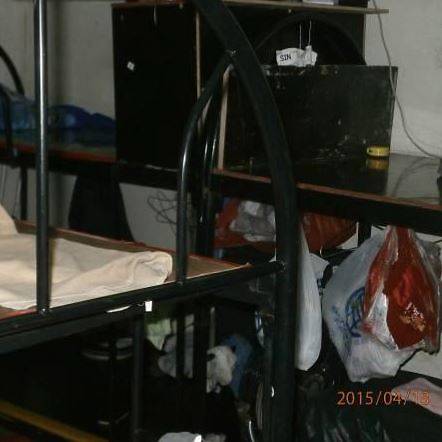
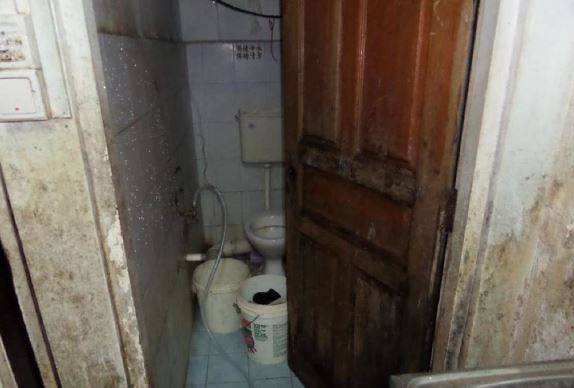
Bed spaces were added to accommodate the workers, who lived in “severely overcrowded with crammed and unsanitary living conditions”, the authorities said in the release.
The poor living conditions affected the well-being of the foreign workers, the authorities said.
Workers lived in crammed and cluttered conditions in the properties. (Photo: MOM, URA)
Separately, Shi had also allowed his company to illegally house another 15 foreign workers in another overcrowded property at Geylang Road between July and August 2016, the release said.
The properties in Geylang were all converted into workers’ dormitories without planning permission from URA, the release said.
Investigations also revealed that Shi, Chen and Genocean Enterprises had converted a third property at Lorong Kismis, a walk-up apartment, into an unauthorised workers’ dormitory between June and July 2015.
Shi, Chen and Genocean Enterprises were fined a combined S$257,000 for their various offences.
For converting private residential properties into a workers’ dormitory without planning permission, all three were fined S$15,000, S$12,000, and S$60,000 respectively.
For housing foreign workers in poor conditions, Shi and Chen were fined S$70,000 and S$48,000, respectively.
Shi was fined an additional S$52,000 for providing inaccurate and false information to the Controller of Work Passes between August and September 2016 for 12 foreign workers. He had also failed to update the addresses of another 40 foreign workers between March and April 2015.
Genocean Enterprises and Genocean Construction have been barred from hiring foreign workers.
The toilet facilities were unsanitary and inadequate to serve the needs of the foreign workers. (Photo: MOM, URA)
“Converting private residential properties into illegal dormitory accommodation not only affects the well-being of the occupants, but has an adverse impact on neighbours and the surrounding community,” said Mr Timothy Lee, director of URA’s Development Control Department.
Earlier this year, two other companies – Broadley Dormitory Management and Broadley Electrical were convicted on Feb 25 for housing foreign workers in dormitories with overcrowded, poor and unsafe living conditions.
For this, they were fined S$300,000 and S$60,000 respectively.
EMPLOYERS MUST LOOK AFTER WELFARE OF WORKERS: MOM
Stern action will be taken against irresponsible employers who disregard workers’ safety and well-being by housing them in overcrowded and unacceptable living conditions, said Ms Jeanette Har, director of Well-Being Department at MOM’s Foreign Manpower Management Division.
“Together with other agencies, MOM will intensify our inspections on (private residential properties) and send a strong signal that employers must look after the welfare of their workers,” she said.
Employers must provide foreign workers with safe and proper accommodation that meets the statutory requirements, the authorities added.
Those who fail to do so face a fine up to S$10,000 or a jail term of up to 12 months or both, for each charge.
Under the current Planning Act, private residential properties are subject to an occupancy cap of six unrelated persons. Offenders can be fined up to S$200,000, or jailed up to one year, or both.