Home Blog Page 798

‘Not a bot from China’: Meet the man behind commentary blog Critical Spectator

0

SINGAPORE: The man was seated quietly in a corner table at a café in Holland Village, somewhat blending in with the surroundings – a contrast to his attention-drawing online persona.

Dressed in slacks and a blue jacket with sleeves folded to the elbows over a tee, 33-year-old Michael Petraeus was hunkered over the menu as I stepped up to introduce myself. 

The Polish national is the man behind Critical Spectator, a commentary blog which caught the attention of the Singapore public at the tail-end of 2018 and beginning of 2019.

While early posts took on issues such as Brexit, and more recently China’s work culture and US politics, it was his critical takes on Malaysia’s Prime Minister Mahathir Mohamad and the positive portrayals of the Singapore way that undoubtedly cast his hitherto unknown blog into the universe of Singapore’s alternative news media.

Some of the headlines of these pieces included: “Mahathir must step down”, “Malaysia can’t win with Singapore – but it can lose a lot” and, more recently, “New Zealand tragedy could have been avoided if the world had studied Singapore”.

Some who read the overwhelmingly positive Singapore slant taken by Petraeus in his commentaries wondered about his motivation. When he posted a link to “Malaysia can’t win with Singapore – but it can lose a lot” on Facebook on Dec 13 last year, one of the comments include: “Such a pity, he wants Singapore citizenship so badly.”

A similar comment was made by former Straits Times journalist Bertha Henson in response to his post on New Zealand, who wrote on her Facebook page: “Give this guy… a Sg passport!”

Speaking to CNA, Petraeus was candid about his blog, the motivations behind his commentaries and his pro-Government slant. 


“When I started the blog in 2015 … I just wanted a place to vent about my thoughts, the business and life in general,” the self-professed “global nomad” said. 

The marketing and design consultant moved to Malaysia for work in 2010 and made it his home base until 2014. He subsequently travelled to wherever his work projects took him, before landing in Singapore in 2016. This is now his base. But he has no fixed abode, usually renting or staying with friends, he said.

“JUST ENJOYING THE POPULARITY”

 So what made him write about Dr Mahathir and Singapore-Malaysia relations?

“Back in December, I was so worked up about the issues between Malaysia and Singapore as both countries are quite close and I was like: ‘What the hell is going on? It wasn’t supposed to be this way and I was looking forward to the high-speed railway!’” Petraeus shared.

He admitted that it came as a surprise that the post got “really popular”.

“I thought: ‘Wow, I didn’t expect this response; I only wrote the post and threw in a few bucks on Facebook to promote it.'”

The Dec 3 post calling on Dr Mahathir to step down became the blog’s top-read entry. The post received about 150,000 page views, said Petraeus, as he showed his blog’s audience figures, a significant spike from the average of “about a few thousand” clicks per post.

Today, his Facebook page has more than 4,900 followers while his Twitter account has 47 followers (at the time of writing). There are no figures for his blog itself as he said he doesn’t have a subscription model.
Critical spectator 03

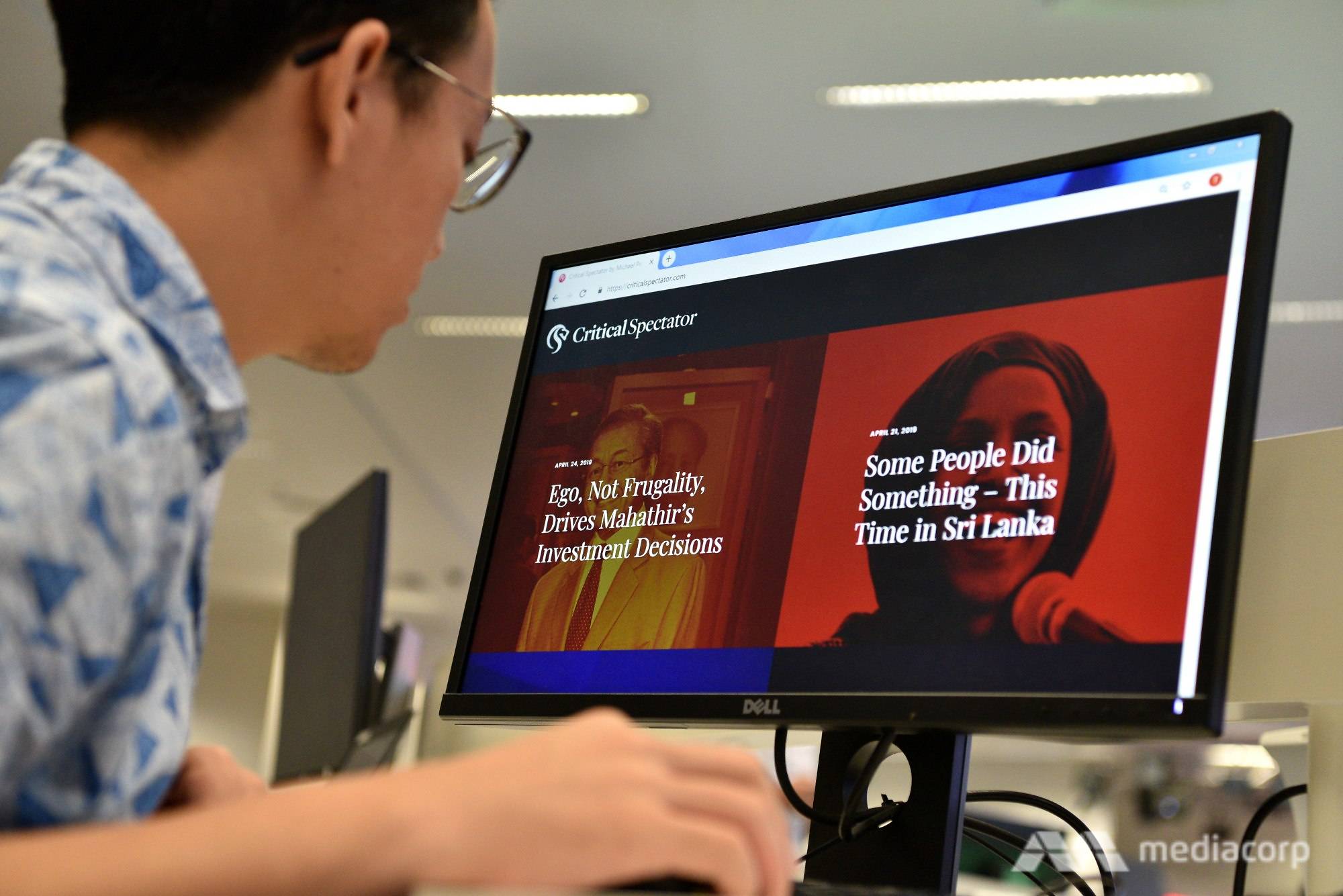
Photo illustration of a man visiting the Critical Spectator’s website. (Photo: Jeremy Long)

The high readership for some blog posts has motivated him to write more, but he has never thought of doing so as a business. 

“Right now I’m just enjoying the popularity,” Petraeus said. “It’s like: ‘OK, well if people are coming and reading, I’m happy to deliver.’” 

He added that in terms of material, “Malaysia kept delivering” whether it was the water agreement issue or plans for a flying car. “Just when you think: ‘OK, they’ve chilled out a minute, wham, something else.”

SHILL FOR THE SINGAPORE GOVERNMENT?

He was, however, keen to point out that he is not part of any alleged “Internet Brigade” (IB) or a shill for the Singapore Government.

“Singaporeans are good (to me), but there are some complainers who’d say: ‘Oh, the Internet Brigade is here.’ I don’t really care about this very much.”

He added: “(I mean,) I can barely pay for my (Web) hosting with the few dimes I get from the articles.” 

As to whether he has an axe to grind with Malaysia, he begged to differ.

“I like Malaysia and I have Malaysian friends,” Petraeus said. “Both (Singapore and Malaysia) are in the position to cooperate and are both small compared to their neighbours. So what’s the muscle flexing for?”

The question was posed to him whether he has considered his position as a foreigner commenting on domestic and foreign policy issues concerning Singapore. 

But Petraeus said no one in authority has contacted him.

“Some friends I have … I know that some people are curious (about my motivations). ‘Who’s this guy who keeps writing about Singapore and Malaysia?’ But I don’t think anybody made any further enquiries – at least to my knowledge,” he said.

They wondered if he had any plans for his blog, if he was someone’s propaganda tool or he was a fake persona, Petraeus elaborated.

“I am going to withhold my journeys across the border for a while (though),” he said, somewhat in jest. “Better be safe than sorry.”

SHIFTING THE FOCUS

As for his blog receiving foreign funding, the Pole said: “The only foreign funding comes from my own pocket!”

He recounted how someone had commented “who’s so rich to sponsor your post” after noticing that one of his Facebook posts was sponsored.

“It’s like I just threw in S$10 to sponsor the post on Facebook to get some traction initially,” he explained. 

Ultimately, the Polish national who has made Singapore his home base feels that there is nothing wrong with a foreigner commenting on local issues and politics, although he feels some of the comments he gets are unwarranted.

“I’m here to say, from a third-person perspective, that you don’t know how good you have it,” said Michael.

“It’s like HDB apartments. You don’t get HDB apartments, social housing, anywhere else; it’s just for a tiny layer of the society at the very bottom. I think most people here own it, means you can live in a fairly affordable apartment. It’s not a condo with fountains or whatnot, but it’s an apartment that you have. 

“Appreciate what you have; (most) people don’t have it. If you go to Hong Kong, you’d have to pay a million bucks for a 500 sq ft-apartment.”

He said he welcomes valid arguments against the points made in his commentaries, but instead he sometimes gets things like: “Oh, foreigner, f*** off”.

“I’m talking about the real estate market and complaining about other places, what are they getting so worked up about?”

He said he recognises the need to move away from writing just about Singapore and Singapore-Malaysia ties, as he is unsure of a lasting appetite for such content. 

“I don’t want to write about Singapore so much, so I want to reshape the website a little bit and make it more global but from a Southeast Asia/Singaporean focus,” said Petraeus.

“At least now, people will know that I’m not a bot (for hire) from China,” he said.

This profile on Critical Spectator is part of a wider series looking at Singapore’s alternative online news scene. You can read more about the industry here, or the other profiles on Observer+ and Rice Media

Source link

Yishun cleaner sacrifices for a better tomorrow, gets support for a better today

0

SINGAPORE: He has visited their homes. He has joined in their festive celebrations, from Hari Raya to Deepavali to Chinese New Year. The cleaner from Bangladesh has even hosted barbecues for the Yishun residents whose estate he cleans.

They, too, have treated him to meals. They talk to him daily. A resident even helped to arrange for his wife’s visa for a visit to Singapore. They have provided a home from home for their cleaner of 13 years.

It is here where Mohammed Hanif found a job that has given him more than he thought possible. It is where his baby was conceived. It is where he is not just any foreign worker but a friend of residents.

All the little efforts from the residents and from the Nee Soon Town Council have given the 35-year-old a better today, so that he can continue making sacrifices to give his family in Dhaka a better tomorrow.

A Yishun resident helping Mr Hanif with a trolley.

A resident helping Mr Hanif with a trolley.

“Sometimes I’d think of my family. But (when) I see residents, I can forget about everything in Bangladesh,” he said.

CNA Insider’s video of Mr Hanif’s Yishun family and his family back home has been viewed 330,000 times on Facebook and YouTube. And viewers have responded with words of encouragement for him and other estate cleaners.

“They deserve our respect. Truly, these cleaners are very hardworking,” Ms June Ho posted on Facebook. “So … a smile, a wave, a hello, how are you (or) thank you to them goes a long way.”

Ms Sue Samm commented on YouTube: “Let’s appreciate the hard work and kindness of these cleaners by being courteous (and) humble.”

Watch: This Yishun cleaner and his two families (8:06)

Not too long ago, however, Mr Hanif’s stay in Singapore could have been cut short if not for a small intervention, one of several that have made his life what it is today.

FROM DHAKA TO NEE SOON

He was 22 when he found himself at the crossroads that brought him to Singapore.

The eldest of six children was midway through his degree in social work when he saw that it was getting “very difficult” for his father to support the family.

The father has had a tea shop since Hanif was born, but its income of S$200 to S$300-plus a month was no longer enough as the children climbed the educational ladder.

Nee Soon town council cleaner Mohammed Hanif's father runs a tiny shop in Dhaka, Bangladesh.

His father’s tiny shop.

“Actually, I (wanted to) study more,” admitted Mr Hanif. “(But) by coming to Singapore, I could get a good salary, then all my brothers and sisters could study.”

After working here for about two years, his manager asked him to become a supervisor, to his consternation.

“I said (being a) supervisor, actually, is something (of a) headache. You can choose another person. I’m sorry, I don’t want it,” he recalled.

His manager returned the next day to say he had to step up because of his educational level. Mr Hanif was “not happy”, worried that it would be “too much” to handle. The extra income was far from his mind.

As a supervisor, Nee Soon town council cleaner Mohammed Hanif was also given a different uniform.

As a supervisor, Mr Hanif was also given a different uniform.

“If I can take care of my job (and) everything, then I can be happy. Now as a supervisor, I have money … but if I can’t control everything, it won’t be good,” he reasoned.

But he grew to love his job. As a supervisor, he mainly goes around to check on his colleagues, with fellow cleaner Yousuf, 31, attesting that Mr Hanif “never gets angry” with them.

When work gets heavy going, he pitches in as much as he can, whether at the apartment blocks, the car parks or the bin centre. And he works 10 to 12 hours a day, every day.

“We can choose to have a day off every week, but my salary would be (less), hence I choose to work,” he explained.

Nee Soon town council cleaner Mohammed Hanif works 10 to 12 hours a day, seven days a week.

The best part of his job has been the residents, who can be seen greeting him, and vice versa, as he goes about the estate.

“It makes me very happy to talk to them. That’s why I’m so happy working here,” he professed — though when he first arrived here, trying to understand them was a “headache” because “my country’s English and Singaporean English (are) different.”

Language is just one of the barriers that have since broken down, with Mr Hanif having picked up Malay too.

He has even given up cycling block to block to inspect the cleaning, as he kept having to stop for conversations with residents.

Hanif gave up cycling block to block for inspections, as he kept having to stop to talk to residents

“I’d also (put my) hand up (to wave hello). Sometimes I might brake, and controlling (the bicycle) was very difficult,” he said wryly.

Residents whose blocks were once under his watch miss him, for his work and his company. “Too bad he relocated to other blocks. The newer (cleaners) aren’t as good as him,” said Facebook user Koh Gek Fong.

Resident R G Shameer commented: “I was so lucky to have him. He’d always laugh and talk to my family. Also, one Hari Raya, we invited him to eat with us on the first day.”

FROM GROOM TO FATHER

Two years ago, when Mr Hanif entered into an arranged marriage, Yishun residents were excited for him. “Many aunties and residents asked me, ‘Hanif, I want to see your wife,’” he recounted.

Nee Soon town council cleaner Mohammed Hanif in Bangladesh with his wife Lutfunnahar Tania.

Mr Hanif with his wife Lutfunnahar Tania.

With the help of a resident for the visa application, that became a reality when she came for two months last year, putting up in the spare room of a Singaporean household who were originally from Bangladesh.

Her husband put on a barbecue for over 100 residents to introduce her. “All the people (came) together to eat … I was very happy,” he said. “My wife was also very happy. She (still) says, ‘Oh, that day.’”

Before she returned home, they learnt that she was pregnant. On March 8, baby Al-Amin arrived, two weeks before he was due. Mr Hanif’s joy was dampened only by the fact that he could not make it back in time.

But the good news was that he was given a week of unpaid leave, on top of his seven days of annual leave, to spend more time with his newborn.

And to celebrate his entry into fatherhood, a couple in their 50s invited him, together with other residents, to a home-cooked lunch. “We’re happy for him,” said Mr Sandara Segaran, 58. “He’s also one of us.”

All smiles as he showed them photos of his baby, Mr Hanif was overcome by a different emotion a few days later in Dhaka, with CNA Insider accompanying him. “I think I’ll cry,” he said just before the ride home.

There have been ups in his 13-year journey, but at the same time, it has not been easy for him or his family.

The first time he went home was after 10 years, and two years had passed since the last family reunion. And it showed when his mother fell into his embrace.

“My son, where have you been all this while? I have cried and cried for you,” said an emotional Monwra Bagom. “I wanted to see you with my own eyes.”

His wife, Lutfunnahar Tania, has also struggled without him, relying on her mother and mother-in-law during her pregnancy and after childbirth.

“I miss his presence,” said the 23-year-old. “Obviously, I feel sad for my son, that he’ll be deprived of his dad’s love and affection.”

For the duration of his return, however, there was only happiness, not least when he set eyes on Al-Amin, lay down beside his baby and planted a kiss on his forehead. “He’s so tiny,” he whispered. “He looks bigger on my phone screen.”

His son’s name means “honest”, so Mr Hanif hopes that, “like his name, he’ll become an honest man”.

Asked how he felt, knowing that his son may not see him for a long time, he replied: “We’re poor people, and to survive, we have to make these kinds of sacrifices.

“For the sake of our brighter future, we’ve accepted our life to be as such.”

A TREASURED WORKER

There was another question that CNA Insider had asked him, several times in Singapore: About the challenges he faces in his job. Each time, he smiled and said all was okay.

But one of his brothers disclosed that he has mentioned over the phone that he often “doesn’t even have time to eat”. Mr Halim, the second eldest, added: “He can’t even rest well due to work pressure.”

One of the most stressful times, however, came when Mr Hanif thought he might have to go home, out of a job, because there was a change in the cleaning company for the town council.

He is thankful that Member of Parliament (Nee Soon GRC) Louis Ng helped him to stay on and switch to the new company. To the MP, it was a move that only made sense.

“We wanted to retain cleaners who’d worked hard in Nee Soon East for quite some time already and who’d become a part of our family. They were familiar with the ins and outs of Nee Soon East and could help mentor the new cleaners,” explained Mr Ng.

“The longer we can retain our cleaners, the better it would be for our residents. And if they feel more appreciated, they’d work better. It would benefit not only our cleaners but also residents.”

That is one of the reasons he asked in Parliament last month whether the Foreign Construction Worker Directory system, which facilitates job matching between employers and foreign workers, could be expanded from the construction industry to the cleaning sector.

“A lot of the contracts are two years. So a lot of these cleaners who come to Singapore to work and gain their experience, sometimes, go back within the two years. I think it’ll benefit both the cleaners and the companies to hire the skilled workers,” he had said.

In reply, Minister of State (Manpower) Zaqy Mohamad said that if the industry association in the cleaning sector was prepared to set up such a database, his ministry could “take a look”.

“We’ve facilitated some of these (changes between employers) to ensure that cleaning service isn’t disrupted. That’s something we’re prepared to do, but not as a broad-based policy, nationwide.”

As for Mr Hanif’s current employer, the company is in no doubt as to his worth, hence the decision to allow his leave extension recently.

“He’s responsible, he has done a good job and we treasure his efforts. (Extending his leave) is an incentive for him,” said Lian Cheng Contracting managing director Cher Peng Ho, 69.

“We consider the welfare of our foreign workers. They come to Singapore and do a great job. … Without the help of these Bangladeshis, our estates would be affected.”

Mr Ng agrees and believes that “we can and we should do a lot more for our cleaners”.

“That’s why, here in Yishun, we take them out every quarter for outings — to see a sight of Singapore they seldom get to see and … to give them a chance to rest, relax and to bond with Singaporeans as well.”

HEARTACHE, BUT PUSHING ON

The most grateful of all to Mr Hanif, however, are his family members. Thanks to him, his brother Harun has completed a diploma in electrical engineering, while his youngest brother Hasan is studying for an honours degree.

“(He’s) a very good human being and … I thank God a thousand times for letting me have a brother like him,” said Mr Harun. “All he wanted was to get us educated, so that we can hold our heads high.”

Their eldest brother was the apple of their mother’s eye, she admitted, so it was “painful” to send him away at first. “I said, ‘You shouldn’t go, as I’ll miss you, and I don’t need that much money,’” she recalled.

But without his salary of S$1,600 a month, their growing family would have to rely only on his father, who is now 70 years old.

The younger brothers have been unable to find jobs in Bangladesh, and Mr Hanif, who took care of one sister’s wedding expenses, may now have his other sister’s wedding in his hands.

It all means that he must stay in Singapore for another three to five years, if he is to move his family from their rented place to their own home.

For now, his wife can only imagine “how amazing” it would be “if he could come back”. “However, reality is very tough, so he has to work hard abroad for us. I’ve compromised and accepted this,” added Ms Tania.

When asked what he has given up to work in Singapore, Mr Hanif said: “(It’s) one person’s problem, but never mind. (For) my family … life (will be) good for sure (and) I’ll be very happy.”

He could not disguise his feelings, however, after his leave ended and he was back in Yishun. “My heart is very pained. (But) after I work for a few days, I can adjust,” he said on the second day.

Residents were there for him as a barbecue hosted by the cleaners and co-ordinated by the town council brought them together again.

He was back to sharing photos of his son, the conversations and laughter that keep him going in Singapore, and on this special occasion, there were ang pows for him too.

The words of Mr Sandara echoed once again: “He’s also one of us.”

Source link

Commentary: Swimming deaths – how to build children’s independence without compromising safety?

0

SINGAPORE: The recent news about the girl who died from a near-drowning incident was saddening to read, and my heart goes out to the child’s family.

Who would have thought that a staycation could turn into a tragedy?

The incident made me ponder the what-ifs. What if her granduncle had known she could not swim and needed constant adult supervision in the pool? What if her grandmother had been kept informed that the children had gone into the adult pool and had stayed vigilant over her when she was left alone?

deep water swimming pool

(Photo: Unsplash/Jay Wennington)

It also made me wish that there could be a tag imprinted on our children somehow such that when they are passed to an alternate carer, all the risk factors would be laid out plainly. Especially ones that are life-threatening, such as serious allergies or congenital heart diseases.

When children are passed to alternate caregivers, it comes with the trust that they would do everything in our ability to ensure no harm comes to them. But this incident highlights the danger of the lack of crucial information about the child, specifically her ability to swim.

WHEN KIDS GO SWIMMING

Thinking about it sends shivers down my spine as my children occasionally play with their neighbours at the pool downstairs. 

All of them are able swimmers and I give strict instructions for them not to enter the adult pool without me present. They are, however, allowed to play in the baby or whirlpool. I often remind my eldest child that she is to ensure no one goes into the deep pool without my permission, and to keep an eye out for her younger siblings.

Just a year ago, the situation would have been different. At the time, my youngest was not yet an independent swimmer. For peace of mind, we didn’t leave the children unattended while swimming and he had to wear a float around his chest and arms.  

We started swimming lessons relatively early as the sport is something we enjoy as a family. Plus we thought it was beneficial to have water safety skills.

With the ubiquity of swimming schools and private coaches, it seemed like a reasonable price to pay for peace of mind.

child swimming float

(Photo: Unsplash/Leo Rivas)

Still, the thought that something unexpected could happen reminds me to stay vigilant. Whenever we have swim dates, a trusted adult is always close by.

As parents, we are faced with the daily tension between letting go so that the child grows in independence, and knowing when a situation poses grave enough dangers to require line-of-sight supervision.

How do we assess novel situations accurately?

ASSESSING EVERYDAY RISKS

Like many of us who grew up in the 1980s, I enjoyed quite a large degree of freedom.

I took public transport to and from school at Primary 3. I was allowed to cross the carpark on my own to a friend’s house at a neighbouring block. 

I was never left home alone however as there was always a kind neighbour who could keep an eye on me.

READ: Protecting your kids from failure isn’t helpful parenting, a commentary

I did a quick poll among friends and found that while there isn’t any right age to leave a child at home unattended, most would consider the maturity and readiness of the child, as well as establish some dos and don’ts.

For example, some would leave their child to head downstairs to grab a takeaway, but not without ensuring the child knows how to call them for help, or what to do in the event of a fire or a fall. If there are no window or balcony grills, they would also ensure that these are locked.

Their children were between six to 10 years when they first experienced being home alone. 

There are some guidelines available online: One website recommends that only children above 10 should be left home alone, but acknowledges that every child is different.

Children play physical education PE class

(Photo: Unsplash/MI PHAM)

READ: Should you let your 5-year-old run errands outside of home? A commentary

I’ve personally left my children home alone, but only when my eldest daughter (aged 10) is home, and not for prolonged periods. If I’m away for more than an hour, I check in on the home camera or call back. I also try to leave them with an activity or a game so that they are engaged.

What seems risky to one may be considered low-risk to another. It is important to realise that every parent and child has their own experiences, weaknesses and strengths.

For some parents, a swim party where there is an overwhelming ratio of children to adults raises red flags. They’d try to be present throughout or simply decline the invitation.  

For others, an overseas trip with the school can be anxiety-inducing, and they’d opt out of it in a heartbeat.

Then there is also the question of whom we entrust our kids to, and the communication of essential information about them.

It is handy to have a clear agreement between you and your spouse on how to handle certain situations, preferably before they arise.

At the same time, we should avoid being overly anxious about everything.

We all know that over-protecting our children can inhibit the growth of their independence and survival skills. But how do we let go of the reins in such a way that doesn’t expose our children to unnecessary risks?

PROTECT AND PREPARE

Growing up and letting go is a gradual process. It requires careful consideration of the child, the carers who would be present, the risks involved, and preparation for unexpected circumstances.

Does your child take instructions well? Do they abide by the rules? Do the carers know how to provide proper care for your child?

Pedestrians with umbrellas in the rain, Singapore - file photo

A woman carrying a child crosses the road during heavy rain in Singapore. (File photo: Jeremy Long)

These are questions that parents have to assess before leaving children in the hands of others.

While picking my child up from school, I’ve seen young children running across the road (albeit at the traffic light) with their carer in hot pursuit.

People often say that the environment that our children are growing up in today is very different from 30 years ago. But perhaps one of the biggest dangers that we don’t address often enough is digital distraction.   

How many of us have snuck a look at our mobile devices while at the pool with our kids or driving on the road?

In recent years, there has been a growing number of near-drowning cases involving children. During the five-year period between January 2011 to December 2015, KKH saw a total of 104 cases of paediatric near-drowning incidents, out of which 10 resulted in deaths. Victims’ ages ranged from infants less than a year old to children as old as 15. 

What is more alarming is that more than half of the 104 cases occurred in condominium pools, with pool party fatalities accounting for half of the total number of deaths.

As primary caregivers, we cannot leave things to chance – especially when our children are young and unable to fend for themselves.  

By all means, fan the flames of their autonomy, but do so age-appropriately. In the meantime, let’s remain on the alert, and remind our spouses and alternate caregivers to do the same.

June Yong is a mother of three, an educational therapist and owner of Mama Wear Papa Shirt, a blog that discusses parenting and education in Singapore.

Source link

Water play and wetland trails: 5 highlights at the new Lakeside Garden in Jurong

0

SINGAPORE: After seven years of development, Lakeside Garden opened to the public on Saturday (Apr 27), promising something for everyone.

Located along Yuan Ching Road and next to Lakeside MRT station in Jurong, the 53-hectare site is home to the largest children’s nature play garden in the heartlands, boardwalk and wetland trails, water sport facilities, as well as community gardening spaces.

Whether you are a parent, a nature enthusiast or a gym buff, here’s a snapshot of what you can look forward to.

ADVENTURE STATIONS FOR CHILDREN

A 2.3-hectare area called Forest Ramble is the largest nature play garden in the heartlands, said the National Parks Board (NParks).

Designed for children aged between five and 12, it comprises 13 different adventure stations set in “a natural environment”.

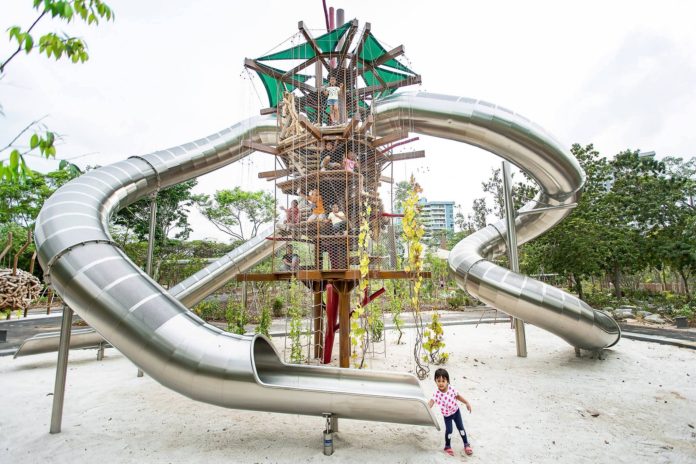
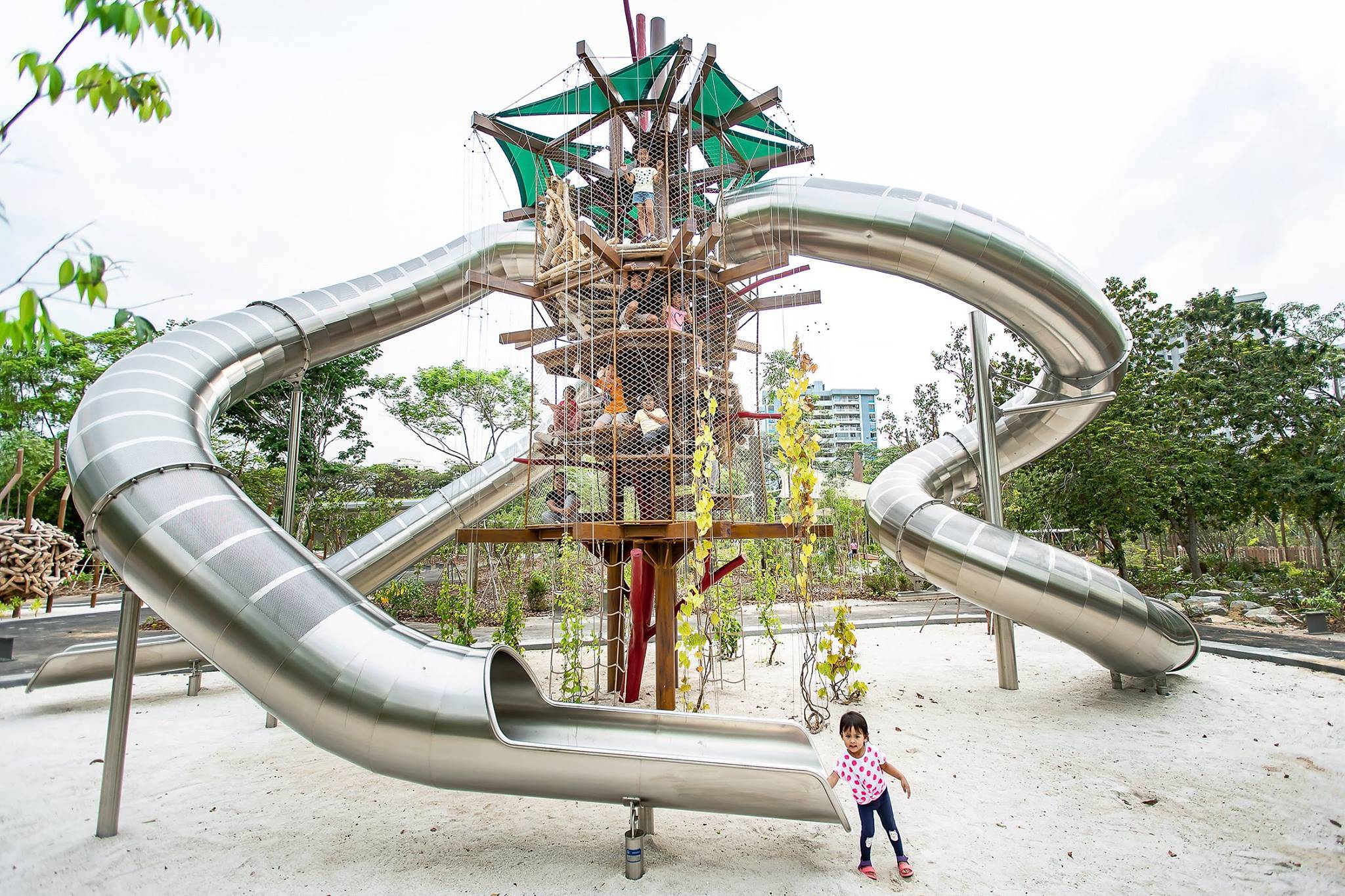
For instance, there are streams across the play area, log structures for climbing and hammocks for children to lie back and enjoy the surroundings.

Lakeside Garden 2

Forest Ramble’s Snake Play area. (Photo: NParks)

Lakeside Garden - playground 3

The Otter Play area. (Photo: NParks) 

Lakeside Garden - playground 2

Children can climb up structures made of logs resembling heron nests. (Photo: NParks) 

Lakeside Garden - playground 4

The Squirrel Play area consists of log seesaws, balancing log and rope obstacle courses resembling a squirrel’s nest. (Photo: NParks) 

Lakeside Garden - playground 1

The Birdwing Play area consists of nine swings of varied designs. (Photo: NParks) 

Lakeside Garden - hammock

Numerous hammocks of different heights are available where children can sit or lie back. (Photo: NParks) 

WATER PLAY STATIONS

The water play area for children, at Clusia Cove, is made up of the tidal play pool and sand play pool.

“As water from the tidal play flows into the sand play pool, it mimics surface ripples and directional currents similar to those at coastal shores,” said NParks. 

“Here, children can experience the various movements of water by interacting with the levers and gates and learn about the dynamics of water.”

Lakeside Garden - water play area 2

Area between the Tidal play and Sand play Pool. (Photo: NParks) 

Lakeside Garden - water play area 1

The water play area for children is divided into the tidal play pool and the sand play pool. (Photo: NParks) 

TRAINING POOL AND GYM FOR THE FITNESS ENTHUSIAST

This is not your regular garden – there is a whole range of sports facilities located at Lakeside Garden, including an integrated lap and training pool and an outdoor fitness area.

There is also a 1,000 m sq air-conditioned gym that is Sport Singapore’s biggest indoor gym to date. 

Lakeside Garden swimming pool

ActiveSG Park features an integrated lap and training pool. 

Lakeside Garden wading pool

A shallow pool for children. 

Those who like water sports can head to the lake where there are facilities to canoe, kayak or dragon boat.

Lakeside Garden canoe

COMMUNITY GARDENING FOR THOSE WITH GREEN THUMBS 

Lakeside Garden is home to Singapore’s largest allotment garden. 

With 300 gardening plots, members of the community will be able to grow fruit and vegetables in their individual space. 

At Gardenhouse, like-minded gardeners can gather for workshops and nature appreciation talks. 

A horticultural show will also be held once every two years in Jurong Lake Gardens, where varieties of show plants will be on display along with a pop-up marketplace. 

BOARDWALKS AND WETLAND TRAILS FOR NATURE LOVERS 

Nature lovers – this one’s for you. 

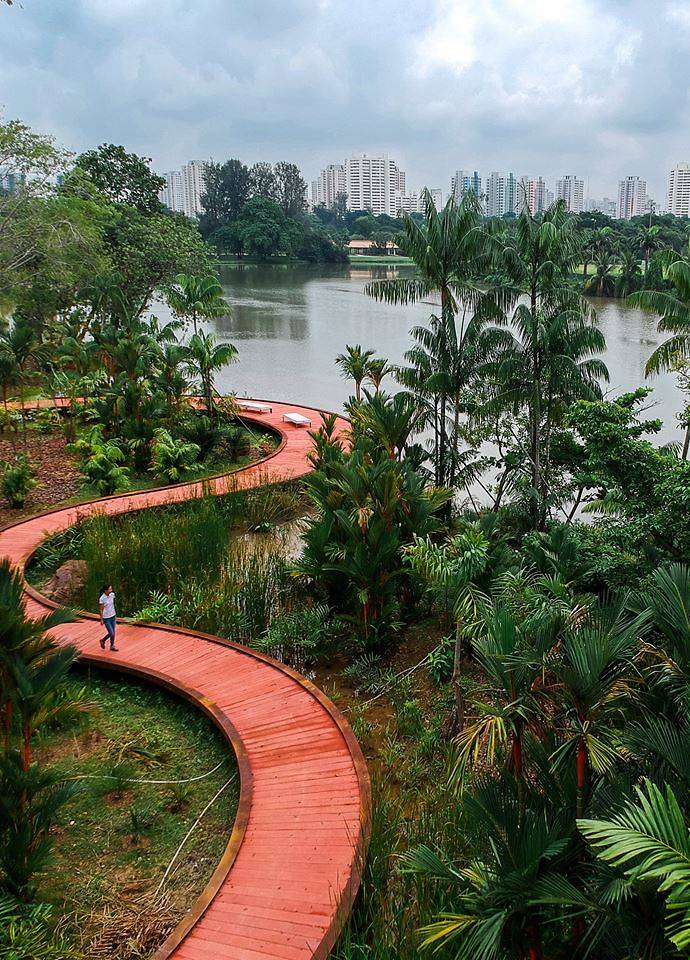
Take a stroll along a 300m meandering boardwalk, which allows you to  get close to Jurong Lake and explore a restored freshwater swamp forest with around 50 species of plants.

lakeside garden

Lakeside Garden is the first phase of the 90-hectare Jurong Lake Gardens. (Photo: NParks)

This area is called Rasau Walk. It is connected to the adjacent Grasslands area and wetland trails, which feature a variety of habitats where grey herons, oriental pied hornbills and smooth-coated otters live.

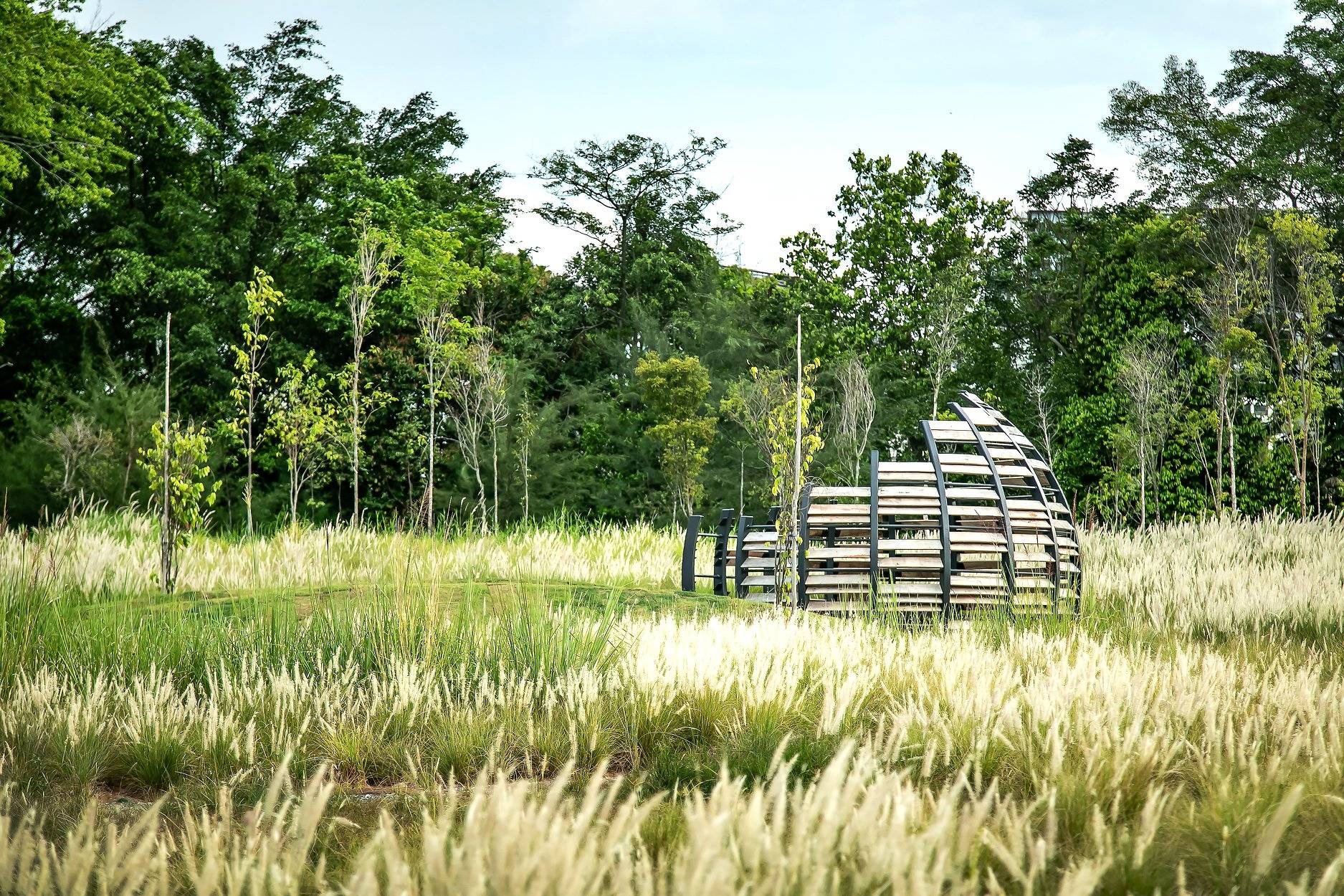
Dominated by tall grass, the 3.5-hectare area is also home to six different species of grass and around 300,000 plants. 

Lakeside Garden 3

The Grasslands is a 3.5-hectare area with six different species of grass and around 300,000 plants. (Photo: NParks)

Admission to Lakeside Garden is free.

This is the first phase to open as part of the 90-hectare Jurong Lake Gardens – Singapore’s third national gardens and its first in the heartlands.

Source link

Lakeside Garden opens to public under first phase of Jurong Lake Gardens

0

SINGAPORE: Lakeside Garden, the 53-hectare western section of Jurong Lake Gardens, opened to the public on Saturday (Apr 27). 

This is the first phase to open as part of the 90-hectare Jurong Lake Gardens – Singapore’s third national gardens and its first in the heartlands.

Lakeside Garden, which comprises Jurong Lake Gardens West and the former Jurong Lake Park, was developed with an emphasis on nature, community and play, said the National Parks Board (NParks).

READ: New attractions, hotel in Jurong Lake District amid tourism boost

READ: Jurong Lake Gardens to be home to Singapore’s largest collection of water lilies

Located along Yuan Ching Road and next to Lakeside MRT station, the garden includes a play area named Forest Ramble for children aged between five and 12 years old. The 2.3-hectare area is the largest nature play garden in the heartlands and has 13 different adventure stations for children, NParks said.

Lakeside Garden 2

Forest Ramble’s Snake Play area. (Photo: NParks)

Lakeside Garden 1

One of the adventure stations at the Forest Ramble play area. (Photo: NParks)

Children also get a water play area with a shallow tidal pool and sand-based ripple pool at Clusia Cove, located at the northern part of Lakeside Garden. An eco-pond and a cafe can also be found here.

Lakeside Garden 4

Forest Ramble has 13 different adventure stations for children between five and 12 years old. (Photo: NParks)

A boardwalk takes visitors through a restored freshwater swamp forest with around 50 species of plants, including Rasau trees, Nibong and Sealing Wax palms. Rasau Walk is connected to the adjacent Grasslands area and wetland trails, which have a variety of habitats where grey herons, oriental pied hornbills and smooth-coated otters live.

Lakeside Garden 3

The Grasslands is a 3.5-hectare area with six different species of grass and around 300,000 plants. (Photo: NParks)

“Lakeside Garden has been developed sensitively to retain the serenity of the area while incorporating spaces for the community and recreational needs,” NParks said in a press release. 

READ: A walk on the wild side: Singapore’s upcoming nature attractions

READ: Walking the NParks 36km Coast-to-Coast trail: Worth the effort?

To celebrate the garden’s opening, the inaugural SGF Horticulture Show, an offshoot of the Singapore Garden Festival, will be held from Apr 27 to May 5.

A carnival was also held on Saturday to mark the opening of PAssion WaVe @ Jurong Lake Gardens, the first waterfront facility in the west by the People’s Association. The facility offers waterfront sports ranging from paddle-boating to kayaking and lifestyle programmes on food and beverage and health and wellness.

lakeside garden

Lakeside Garden is the first phase of the 90-hectare Jurong Lake Gardens. (Photo: NParks)

Sport Singapore has opened an ActiveSG Park within the garden. The park features an integrated lap and training pool, a wading pool, an outdoor fitness area and a gym.

With the opening of Lakeside Garden, NParks said it will proceed with the next phase of development by calling the construction tender for Chinese and Japanese Gardens, and Garden Promenade. The remaining sections of Jurong Lake Gardens will open progressively from 2021 onwards.

Source link

Belt and Road can go beyond physical infrastructure, take transparent approach in next phase: PM Lee

0

BEIJING: China’s Belt and Road Initiative (BRI) can move beyond the development of physical infrastructure and traditional bilateral partnerships, while taking a transparent and market-driven approach in its next phase.

These were suggested by Singapore’s Prime Minister Lee Hsien Loong on Saturday (Apr 27) as he spoke at a leaders’ roundtable on the final day of the second Belt and Road Forum. The session chaired by Chinese President Xi Jinping was held at the Yanqi Lake Convention Centre in northeastern Beijing.

The BRI, first mooted by Mr Xi in 2013, is an ambitious infrastructure plan by China to rebuild the old Silk Road to connect the world’s biggest economy with other parts of Asia, Europe and beyond.

Now that it is exporting both capital and expertise, China’s overseas direct investment has exceeded inbound foreign direct investment since 2015 – a “significant turning point”, according to Mr Lee.

“China is helping to meet the infrastructure deficit of developing countries in the region, estimated by the Asian Development Bank to be about US$26 trillion from now to 2030,” he added.

“New roads, ports and railways built under the BRI have enhanced physical connectivity between cities and countries, and in time should catalyse economic growth.”

For the next phase, Mr Lee said it will be useful to consider how to maximise the long-term benefits of the BRI beyond just improving physical infrastructure.

One way is to help developing countries build up their own capabilities, be it by fostering more local talent, facilitating further technology transfer and involving more local businesses.

Mr Lee said doing so will not only improve the quality and sustainability of the infrastructure projects, but also give local parties a greater stake in the projects’ success.

The BRI should also go beyond traditional bilateral models of cooperation, with projects not having to be limited to “hub-and-spoke arrangements with China”.

“China can partner other countries on projects in third countries,” he said.

“This can bring together a wider range of capabilities and resources, open new doors to projects which may otherwise not be feasible, and enhance trade and economic cooperation not just between other countries and China but among other countries too,” he added.

READ: Singapore, China ties have ‘tremendous potential’ ahead: PM Lee

READ: Belt and Road Initiative can play important role to strengthen regional, multilateral cooperation: PM Lee

Moving forward, the Chinese-led mega infrastructure initiative should “take an inclusive, transparent and market-driven approach”, Mr Lee said.

“Connectivity projects should be economically viable and financially sound. This will improve accountability and risk management, increase the projects’ overall chances of success and inspire greater confidence in future projects.”

As it developed, China’s share of global gross domestic product has grown, alongside its international influence. This has shifted the world’s strategic balance, said Mr Lee.

“How China performs its prominent global role and how the international community adjusts to China’s growing influence, will determine whether all of us, and all our countries, can enjoy continued peace and prosperity,” he added. 

“China naturally wishes to occupy a place in regional and global affairs that is commensurate with its strengths and influence. Other countries expect China to strengthen its commitments and contributions to the global system.” 

And the BRI is a “good platform” for China to work together with other countries on these objectives, said the Prime Minister. 

Now in its sixth year, the BRI has helped deepen China’s linkages with other countries. 

He added: “A prospering region with China fully integrated together by an open regional cooperation infrastructure will reinforce the open, rules-based international order and multilateral trading system, which has benefited all of us.” 

READ: Belt and Road must remain ‘open’ for free flow of trade, investments: Chan Chun Sing

Singapore sees the BRI as benefiting both China and the world, he said. 

This is why the Southeast Asian country has been an “early and strong supporter” of the BRI and is working with China on areas, such as promoting financial and infrastructure connectivity. 

“The BRI can contribute much to a peaceful, orderly shift in the global order, and support China’s constructive international role commensurate with its size and potential,” concluded Mr Lee.

PM Lee Hsien Loong meets Chilean President Sebastián Piñera on Apr 27, 2019

Prime Minister Lee Hsien Loong seen in a meeting with Chile’s President Sebastian Pinera on the sidelines of the second Belt and Road Forum on Apr 27, 2019. (Photo: Ministry of Communications and Information)

Earlier on Saturday, Mr Lee met Chile’s President Sebastian Pinera and both leaders reaffirmed the warm and longstanding relations between Singapore and Chile, said a statement from the Prime Minister’s Office (PMO). 

They also welcomed the commemorative activities lined up to celebrate the 40th anniversary of diplomatic ties this year. 

Both leaders reaffirmed the importance of the Pacific Alliance-Singapore free trade agreement in strengthening trade and investment flows between both countries.

Urban planning and population issues were also on the agenda during the meeting. Mr Lee and Mr Pinera agreed to further enhance cooperation in the areas of digital trade and smart cities, including agreements to promote digital trade and connectivity.

Mr Lee also welcomed Chile’s efforts to promote inter-regional cooperation and its commitment to deepen relations with ASEAN.

Source link

DBS Marina Regatta 2019

0

DBS Marina Regatta 2019
from Friday, May 31, 2019 at 12:00 AM to Sunday, June 2, 2019 at 12:00 AM

Marina Bay

Singapore, 018972 Singapore

Source link

Commentary: Will Jewel Changi Airport sound the death knell for Orchard Road?

0

SINGAPORE: Since Jewel Changi Airport opened last week, my social media and news feed – and no doubt that of just about every person in Singapore – has been flooded with images of its by-now iconic rain vortex.

It seems all the early birds are rushing to be among the first few million to take a selfie with it. For sure, the photogenic 40m tall waterfall cascading down an oculus in the sky, surrounded by lush greenery, is certainly a sight to behold.

It is great that Singapore holds bragging rights to a remarkable attraction that raises the stakes of what a shopping mall is supposed to look like. After all, malls are often the most normcore and ubiquitous of destinations.

It is rare that a shopping mall makes headlines, but having a record breaking, ultra-expensive man-made waterfall within its premises certainly adds to the hype. Built at a cost of S$1.7 billion, this 10-storey mega mall is arguably the world’s most impressive airport attraction, at least until some other destination comes up with something else.

For now, the tactic of using a blockbuster sight to draw spenders seems to be working. Over the long Easter weekend, there were numerous reports of hours-long waits at some F&B outlets, such as American burger joint Shake Shack and fast food outlet A&W.

Pokemon: Go wild in Sentosa's Safari Zone Pikachu

Visitors pose with a Pikachu mascot. (Photo: Nintendo)

Shops like the Pokemon Centre, the first merchandise store outside Japan, are also said to be doing brisk business.

CAN ORCHARD ROAD COMPARE?

But there have also been comments that cut to the bone, particularly those highlighting Orchard Road’s shortcomings in comparison to this new, shiny Jewel. 

The general sentiment is that staid Orchard Road stands little chance in holding its own and attracting shoppers now that Singaporeans are flocking to the new mega-mall in the country.

It is undeniable that Orchard Road has seen better days. As with many brick-and-mortar shopping districts around the world, Singapore’s original shopping destination has been hit hard by the rise of e-commerce. Vacancy rates have been rising for a number of years and footfall decreasing, leading to a perceptible loss of buzz in the area.

A woman passes closed down shops at a section of a mall in Singapore

A woman passes closed shops in a section of a mall in Singapore. (File photo: Reuters/Edgar Su)

High rental rates too have left smaller companies with no choice but to fold or move out of the precinct. 

This has created an unfortunate situation where many of the Orchard Road malls are close replicas of each other, with the same old mass-fashion brands or designer boutiques found in just about every shopping centre along this stretch.

Plus, many shoppers these days prefer to visit conveniently located suburban malls for their H&M, Uniqlo or Charles & Keith fix, so there is really no need to travel all the way to the city centre. 

READ: The millennial, the biggest customer Singapore retail cannot ignore, a commentary

And now, there’s a sparkling Jewel that is expected to draw between 40 and 50 million visitors during its first year.

According to a New York Times article, about 60 per cent of its footfall is expected to come from local residents. As more locals flock to Jewel, is this yet another nail in Orchard Road’s coffin?

TOO LITTLE, TOO LATE, MAYBE 

Still, the shopping district is not about to go down without a fight. There is a masterplan to transform Orchard Road into a “must-visit” lifestyle destination. 

Some of its highlights include creating car-free stretches, improving pedestrian connectivity and rejuvenating the “orchard” aspect of the retail belt by planting a green corridor.

Orchard Road Development (4)

An artist’s impression of a family-friendly play area at Dhoby Ghaut Green (Image: NParks)

These plans are well and good for refreshing the somewhat dated look of this retail stretch. But as a self-processed champion shopaholic – I love browsing shops and almost always schedule at least one full day of shopping in any city that I visit – something is missing here.

When I visit an overseas shopping precinct, like Tokyo’s Omotesando, Los Angeles’ Melrose Avenue or London’s Soho, I am not looking for car-free roads, pedestrian crossings or even relaxing greenery (although these are nice bonuses).

At the end of the day, what I want are cool shops with unique concepts I cannot find anywhere else that will make it worth my while to physically step into a mall or boutique.

I enjoy soaking in the unique character of the place and that makes me want to buy things to preserve my memories of my visit. 

At buzzy streetwear brand Supreme’s store in London which draws a line of shoppers daily, it is always fun to check out the latest fashion trends that hip, young Londoners are adopting. 

Shoppers throng Oxford street

Shoppers throng Oxford street during the final weekend of shopping before Christmas in London on Dec 20, 2014. (REUTERS/Luke MacGregor/Files)

In Omotesando, there is always an element of “discovery” in wandering its tiny side streets where boutiques and cafes are interspersed among residential units.

Unfortunately, it is currently hard to say what makes Orchard Road stand out in Singapore’s current landscape, much less against global competition.

READ: Singapore retail needs to aggressively embrace e-commerce. a commentary

Admittedly, there has been some improvement in the retail mix in recent times, such as the launch of Design Orchard which stocks fashion, beauty and lifestyle products by local designers. 

Some brands with boutiques in Orchard Road, such as South Korean eyewear brand Gentle Monster has unique art installations to offer shoppers an experience beyond the mere transactional nature of exchanging money for goods.

Singapore brands like clothing label In Good Company and stationery store Bynd Artisan, both located in Ion Orchard, offer unique in-store experiences like an excellent cafe in the former and made-to-order notebooks in the latter.

The most hardcore shopaholics will know that there are gems to uncover. SocietyA, a boutique in Takashimaya Shopping Centre, offers an expertly curated range of clothing by Asian designers. At multi-label designer accessory boutique On Pedder on Scotts Square, there are designs in unique colourways that cannot be bought elsewhere.

orchard road aerial shot

The prime district area around Singapore’s Orchard Road, with hotels, shopping mall and residential housing. (Photo: AFP/Roslan Rahman)

But are these small, incremental changes by individual retailers enough to draw the crowds?

Judging by retail trends and shoppers’ preferences for immersive experiences –  big, bold Jewel and Marina Bay Sands are cases in point – what seems to be superficial updates to Orchard Road might just be too little, too late.

Short of building a billion-dollar architectural marvel to attract eyeballs, it looks like other stakeholders, like the malls and a critical mass of retailers should be doing some heavy lifting by innovating and implementing newer and better shopping concepts that will get people excited about shopping in Orchard once again.

Karen Tee is a freelance travel and lifestyle writer. Six years ago, people thought she was crazy to leave the security of her full-time job. Today, most want to know how she does it. ​​​​​​​

Source link

Explainer: What are the implications of dry dams and polluted rivers in Johor?

0

SINGAPORE: Over the last two months, the state of Johor has been hit by a series of environmental problems, impacting its rivers and water treatment facilities. This has shone the spotlight on the issue of water sustainability.

The problems have affected thousands of local residents, causing some to fall ill while disrupting water supply to homes.

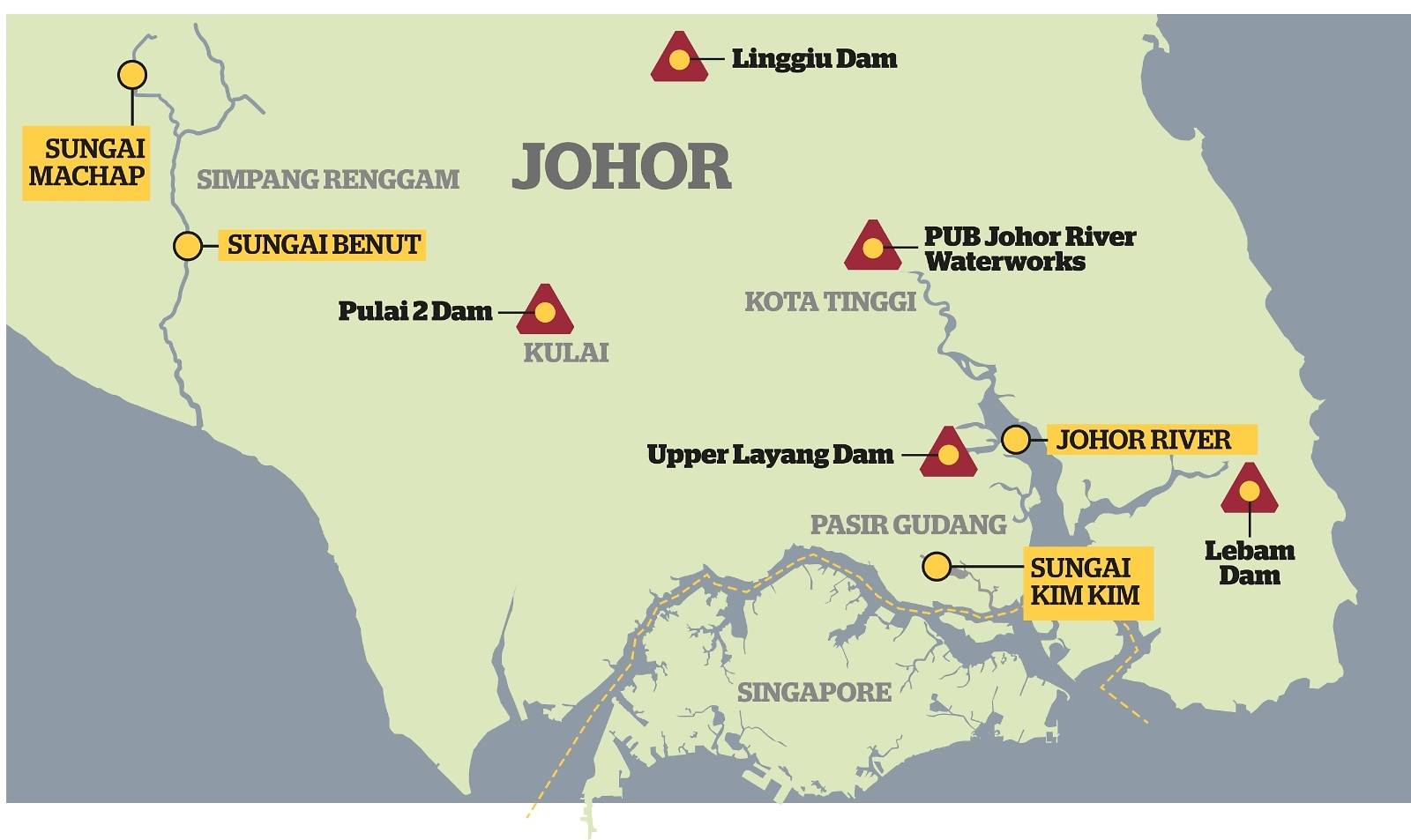
The water levels at major dams have fallen below the critical mark due to dry weather while some rivers, including the Johor River, have been polluted by chemicals.

Illustration Johor map

The four rivers highlighted here were impacted by pollution while the water levels at the Lebam, Upper Layang and Pulai 2 dams reached critical levels. Singapore’s water supply, which is transferred to PUB’s Johor River Waterworks from the Linggiu Dam, were also affected by pollution in the Johor River. (Illustration: Kenneth Choy) 

The federal government and Johor Sultan Ibrahim Iskandar have called for action from the state government to resolve the issues.

The various episodes have also resulted in Singapore raising concerns over water sustainability.

On Apr 9, Prime Minister Lee Hsien Loong said during a joint press conference with his counterpart, Dr Mahathir Mohamad, that Singapore has raised with the Malaysian government its concerns about pollution in the Johor River as well as its long-term yield.

Under the 1962 Water Agreement, Singapore is entitled to draw up to 250 million gallons a day (mgd) of water from the Johor River.

Here’s a breakdown of the environmental issues that have surfaced since March:

THREE DAMS BELOW CRITICAL LEVELS

Last week, the Johor state government announced that three dams, which supply raw water to treatment plants, have fallen below the critical mark due to hot weather.

As of Apr 18, the water levels at the Lebam dam, Upper Layang dam and the Pulai 2 dam were at 15.9 per cent, 21.8 per cent and 36.1 per cent respectively.

The treatment plants serve about one million people, including residents in Kota Tinggi, Tanjung Balau, Teluk Ramunia, Pengarang, Bandar Penawar and Pasir Gudang.

Lebam dam composite

The water level at the Sungai Lebam Dam in Johor as seen on Feb 28, 2019 (left) and Apr 23, 2019. (Photos: Norbakti Alias) 

The Johor state government had earlier stated that it will consider cloud seeding in April if the dry spell persists.

Cloud seeding is the induction of rain by introducing chemicals into clouds. Silver iodide or dry ice is dispersed into the clouds to provide nuclei for moisture to condense around.

Johor dam

Water levels at major dams in Johor state are hovering around the critical point, as parts of Malaysia experience a heatwave. (Photo: Bernama)

On Wednesday, Johor International Trade, Investments and Utilities Committee Chairman Jimmy Puah told CNA that the low water level situation at major dams is improving and that things are expected to be back to normal in six weeks when more rain is expected.

PASIR GUDANG CHEMICAL POISONING INCIDENT  

Beside hot weather, environmental pollution has also been a problem.

What started out as an isolated incident of illegally dumping chemicals into a Johor river escalated into a wave of chemical poisoning cases, with more than 2,700 people taken ill.

In early March, a tanker lorry believed to be from an illegal tyre recycling factory dumped oil waste and sludge into Sungai Kim Kim in Pasir Gudang.

Thousands later fell ill after breathing in fumes from the toxic chemicals and more than 100 schools were ordered shut as a result. Four people have pleaded not guilty in relation to the case.

READ: Second Singaporean man charged in Pasir Gudang chemical dumping

Initial cleaning works inadvertently worsened the chemical reaction, as the contractor engaged was not experienced in dealing with chemical waste.

pasir gudang

Students were hospitalised after breathing in toxic fumes from chemicals illegally dumped in Sungai Kim Kim. (Photo: Bernama)

Subsequently, the federal government allocated RM6.4 million (US$1.56 million) to clean up a 1.5-km stretch of the river.

The crown prince of Johor, Tunku Ismail Sultan Ibrahim, later hit out at the authorities over their handling of the incident.

In a series of tweets, he said: “Since the first day (Mar 7), an emergency should have been declared and residents temporarily evacuated elsewhere, until it was guaranteed safe.” 

The federal parliament had debated a motion on whether to declare a state of emergency over the incident, only to later decide against it.

Dr Mahathir told reporters that there was no need to declare an emergency.

AMMONIA POLLUTION

In early April, ammonia pollution in Sungai Sayong disrupted water supply to about 17,000 households in Kulai, a town in southern Johor.

The pollution occurred when a reservoir at a bio-composite centre next to an oil palm mill in Sedenak burst, causing water containing ammonia to flow into Sungai Sayong, which supplies raw water to the Johor River.

Several water treatment plants in the area suspended operations on Apr 3.

On Apr 4, Singapore’s national water agency PUB said its Johor River Waterworks plant halted treatment operations due to the high levels of ammonia in the river. It resumed operations on Apr 6.

On Tuesday, a water treatment plant at Simpang Renggam, near Ayer Hitem, was shut down due to high ammonia content readings, exceeding the level permitted by the Health Ministry.

Johor river dead fish

The Johor Sultan has ordered a probe into river pollution that has killed fish in the waters. (Photo: Johor Royal Press Office)

The ammonia pollution was believed to have occurred as leachate seeped when the embankments of a discharge pond broke due to heavy rain.

On Apr 9, PM Lee said if the Johor River suffers an incident like the recent one at Sungai Kim Kim, the effects “will be disastrous for both countries”.

HOW THIS AFFECTS SINGAPORE

Beside drawing up to 250 mgd of water daily, Singapore is also required to supply Johor with 5 mgd of treated water. However, in practice, Singapore has been supplying 16 mgd of treated water to Johor at its request.

In 1990, PUB and Johor had signed an agreement to construct the Linggiu Dam to increase the yield of the Johor River.

johor linggiu river

File photo of the Johor River.

Johor owns the Linggiu Dam, but Singapore has paid more than S$300 million for its construction and operational costs, as well as compensation for the land used for the Linggiu Reservoir, the potential loss of revenue from logging activities, and as a one-time payment of the lease of that land for the remaining tenure of the 1962 agreement.

As Mr Lee noted on Apr 9, Johor has built water plants on the Johor River, upstream of PUB’s waterworks at Kota Tinggi. These plants, together with PUB’s Kota Tinggi water works, could possibly draw more water than the river can sustain.

Mr Lee noted that it is in both countries’ interests to work together to ensure sustainable water supply.

There is also a potential environment dimension for Singapore.

At the height of the Sungai Kim Kim incident, there were concerns over how transnational pollution might affect the water quality of fish farms in Singapore.

However, the authorities said no anomalies or fish mortality had been observed at Singapore’s fish farms.

Source link

Floating homes, parks, facilities – a reality in Singapore that’s closer than you think?

0

SINGAPORE: Urban life on floating structures at sea is no longer something more likely to be found in science fiction, with experts estimating that large scale platforms could be a reality in less than a decade.

This comes as floating homes, storage facilities and even parks have been mooted as the answer to Singapore’s continued quest for land.

“We have been building higher and higher for the last 20 (to) 30 years. For going deeper, there is a limit to how far can you can go,” said Mr Lim Soon Heng, President of the Society of Floating Solutions (Singapore).

“With floating structures, you have such an enormous amount of space in the horizontal direction”.

FEEDING A HUNGER FOR LAND

Singapore is no stranger to creating additional land space on water. Since the 1960s, Singapore has reclaimed over 140 sq km of land, which is nearly a quarter of its original size.

It is now 724 sq km and growing, with an aim to pad itself up to 766 sq km by 2030.

However, land reclamation is becoming less viable as the country looks at the potential of deeper waters.

“It’s not like before when the waters were less than 10 metres deep. Now we’re talking about 25 or 30 metres, so the costs for reclaiming the land with sand is going to be enormous,” said Mr Lim.

WHY FLOATING STRUCTURES COULD BE A BETTER OPTION

On the other hand, floating solutions could offer a cost-efficient alternative.

“You can build a floating structure in a very short time, which means that you can monetise investment rapidly. Land reclamation takes several years before you can build anything on it,” said Professor Wang Chien Ming from The University of Queensland’s School of Civil Engineering.

According to Mr Lim’s estimates, building a float to support a bungalow would also cost as little as US$100 per sq m, while one for a skyscraper would cost US$1000 – 1500 per sq m.

He also noted that floating modules can be towed to wherever they are needed: “You put a structure on land like a building in Orchard Road, you’re stuck with it in Orchard Road.”

WHAT FLOATING SOLUTIONS COULD LOOK LIKE

With its calm, sheltered waters and 193 km of coastline, Singapore is seen as an ideal place for these solutions, which are already being used elsewhere.

The world’s longest floating bridge in Washington State in the US stretches over 2.3 km.

floating structures at sea

Evergreen Point Floating Bridge, also known as the 520 Bridge, in the state of Washington. (Photo: Washington State Department of Transport)

floating structures at sea (1)

Evergreen Point Floating Bridge, also known as the 520 Bridge, in the state of Washington. (Photo: Washington State Department of Transport)

Japan already has several floating airports, while South Korea’s Han River is home to Sebitseom, a cultural complex comprising three floating islands.

floating structures at sea

Sebitseom, a floating cultural complex comprising three artificial islands in South Korea. (Photo: Hyosung)

floating structures at sea (1)

Sebitseom, a floating cultural complex comprising three artificial islands in South Korea. (Photo: Kim Jeong-min)

A floating dairy farm is also being built in the Netherlands.

For residential use, visionaries have conceptualised floating low-rise hexagonal floating settlements or one-kilometre tall green floats.

READ: In land-scarce Singapore, new spaces for homes on the sea and in the air, possibly

But with an eye on sustainability, a group from the National University of Singapore’s (NUS) architecture department has pictured megacities on decommissioned oil rigs.

The engineering marvels could be “appropriated” to become hospitals, theme parks, schools and even prisons, they say.

floating structures at sea (2)

An architectural mock-up of a floating prison. (Image: NUS Department of Architecture/Chris Wijatno, Davis Wong, Sakinah Halim, Roy Tay, Chen Qishen, Wang Yigeng, Bek Tai Keng)

With almost 6.5 billion people living in cities by 2050, they suggest that greener cities are the way forward: The towering, self-sufficient settlements would come with wastewater treatment, energy-generating and food-growing systems.

“Once we are happily conceiving of floating settlements, the biggest fear is that these settlements could pollute the water as much as the land-based ones would,” said Assoc Prof Joseph Lim, who worked on the project with his masters’ students.

START WITH INDUSTRIAL USES FIRST: EXPERT

However, a more logical first foray for Singapore would be to target industrial purposes, which are less complex to manage, according to Mr Lim.

In fact, researchers at the National University of Singapore are already studying floating bridges, which can be relocated when needed.

Other ideas include storing oil on floating facilities, which would free up land and provide better access to ships.

Yet, it is easier said than done.

CHALLENGES AHEAD FOR FLOATING SOLUTIONS

The most immediate hurdle for implementation is regulation: Would floating solutions be considered a vessel or a building? Who would be in charge?

“It is neither here nor there. Let’s create a new body that will take care of it and that will work with the Maritime Port Authority (MPA), PUB, Building and Construction Authority (BCA) and so on,” Prof Wang suggested.

floating structures at sea (2)

An architectural mock-up of a floating structure that can contain up to 40,000 inhabitants. (Image: NUS Department of Architecture/Chris Wijatno, Davis Wong, Sakinah Halim, Roy Tay, Chen Qishen, Wang Yigeng, Bek Tai Keng)

There’s also the question of where to place these floating structures.

“After ensuring the safety of navigation for ships, providing for mooring spaces and bunkering, that leaves us with only very small ‘sterile’ sea spaces around little islands and parts of Singapore,” he said.

If MPA zoned certain areas as test beds, then proposals could come forth, Prof Wang added.

However, pointing out that Singapore has around 700 sq km of water space – almost the size of the island itself – Mr Lim said the issue of maritime space can be solved with a more “disciplined” way of mooring ships.

THE IMPORTANCE OF A TESTBED

This lack of “sterile” sea space for testing has been a pain point for advocates of floating structures, but it could change with the unveiling of Southeast Asia’s largest deepwater ocean basin.

The basin by the Technology Centre for Offshore and Marine, Singapore (TCOMS) can be used to test autonomous ships, marine robotics and large floating structures.

At its deepest point, it is 16 storeys or 50 m deep, which simulates depths of some 3,000 m.

Its panels will simulate actual oceanic conditions by generating multi-directional waves, instead of uni-directional ones that most existing basins do.

With its smart sensing and data analytics capabilities, it’s being hailed as a breakthrough for testing.

“The existing ocean basins like this are more than 20 years old and since then, a lot of developments have taken place in simulations,” said Professor Allan Magee, Director (Operations) at TCOMS.

“We’re looking at developing a simulation that will give better understanding, because we want to know the behaviour of the real solution, not just the model.”

A FLOATING FUTURE IS “VERY CLOSE”

The development brings Singapore a step closer to a floating future, Prof Wang suggested.

“We are very close – closer than Singaporeans can imagine. We have all the jigsaw puzzles in place.”

Indeed, some observers agree that the technology is ready and capable, but a powerful barrier exists: Societal acceptance.

“The most important thing is whether or not people have a mental acceptance of living in the sea. I don’t think it’s a 100 per cent solution that will work for everybody,” said Associate Prof Lim.

Prof Wang is more optimistic: “If we can show people what it’s like, they will not be fearful. If you create (a floating attraction), they’ll go there for sure.”

In the meantime, Singapore is keeping its options open, as its urban planning authority says it will continue looking for opportunities above ground, underground, on land and in the sea.

Source link