SINGAPORE: A dedicated facility for travellers on private jets entering and leaving Singapore aims to grow Seletar Airport into a “hub” for the luxury market.
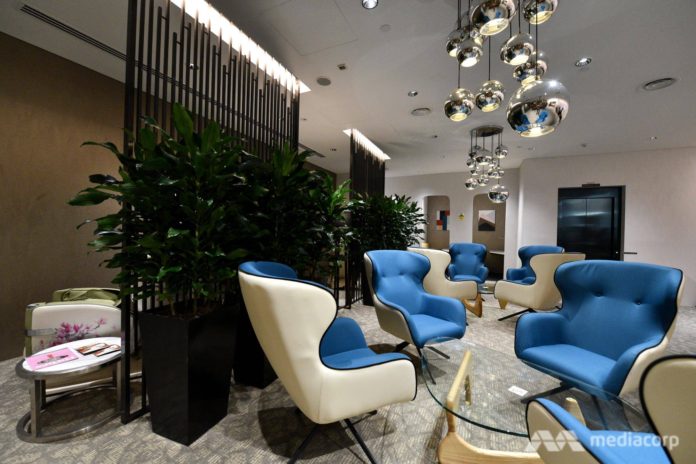
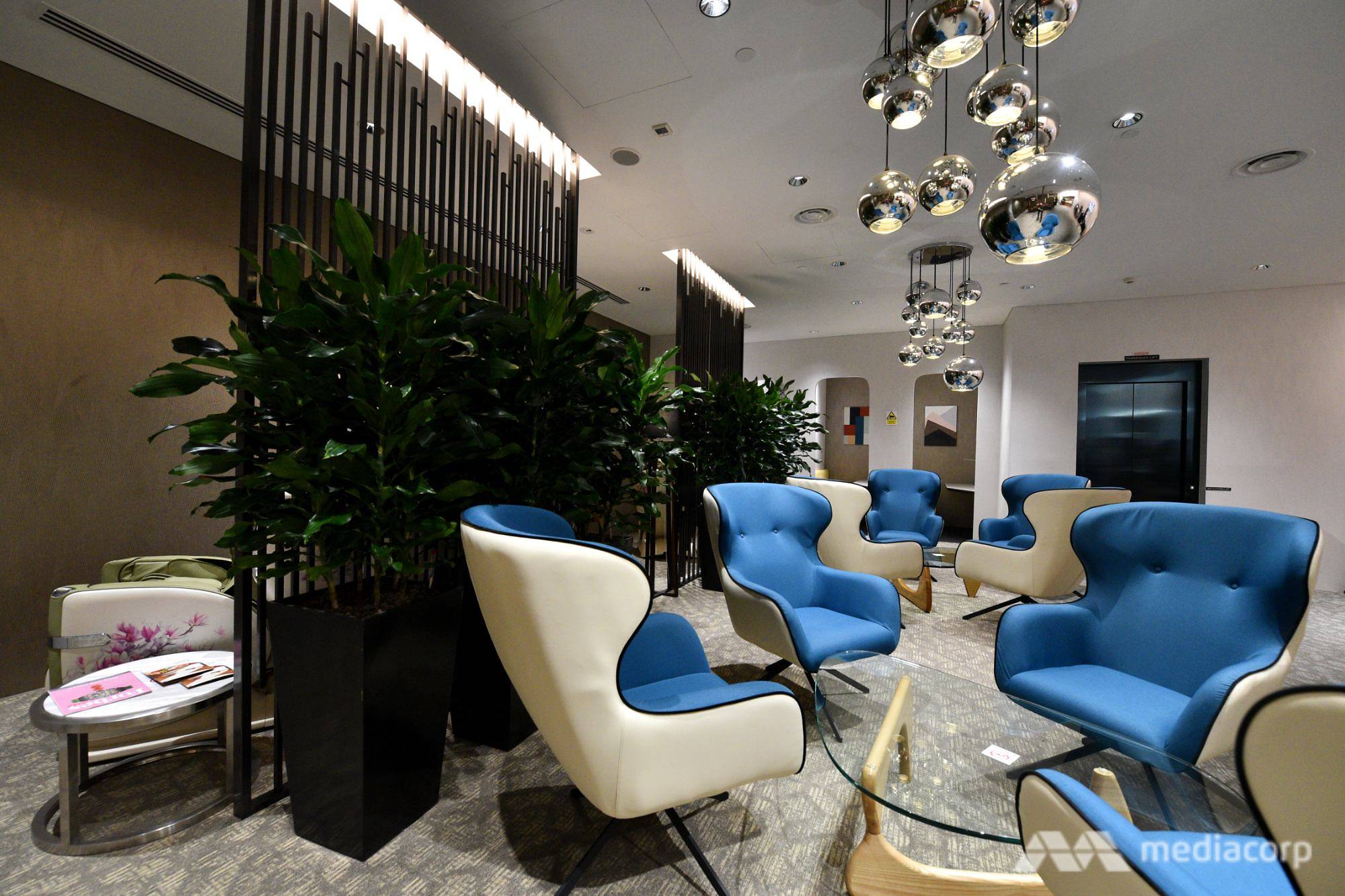
The business aviation centre (BAC), unveiled to the media on Tuesday (Jun 11), has a private drop-off area, a lounge, dedicated immigration security screening as well as other personalised services.
With faster clearance processes, passengers can expect to take no more than 10 minutes to breeze through the BAC from entry to exit, before boarding their jet.
This is the latest facility to open at Seletar Airport after its new S$80 million passenger terminal welcomed its first business passengers in November 2018. Spanning 10,000 sq m, the two-storey terminal is designed to handle up to 700,000 passengers a year.
Business travellers are a key part of the Seletar development, which was built to cater to the growing private and business jet market, as well as to free up space at Changi Airport. Since November 2018, SATS Seletar Aviation Services (SSAS) has handled more than 4,000 flight movements at the airport, of which close to 70 per cent are attributed to business aviation.
“Private jet travellers are usually on a tight schedule and travel frequently,” said chairman of SSAS Bob Chi. “Saving time while travelling is naturally important to this segment of customers.
“They will find the seamless, fuss-free and personalised experience that cuts end-to-end travel time a great attraction. SATS hopes to support Changi Airport in their plan to grow Seletar Airport into a hub for business travellers and tourists travelling on private jets.”
The lounge on the second level of the Seletar Business Aviation Centre (Photo: Jeremy Long)
While Changi Airport has a terminal – JetQuay – which can also serve private jets, Mr Chi said that the competition for landing slots at Changi due to its growth has led to the need for a dedicated facility at Seletar.
“It’s not that we are not handling any private jets in Changi,” he told reporters on the sidelines of a visit to the facility. “We do but the numbers are declining and the reason why they are declining is that they have shifted business here.”
Opened in 2006, JetQuay not only handles private jets, but also provides VIP services to any passengers travelling on full-service carriers.
“The moment customers arrive at the kerbside, they want to be out on the aircraft within minutes. You can’t really do that in Changi because the airport is very big. So from the kerbside up until the point you depart, it’s going to take some time,” added Mr Chi.
“There is a lot more flexibility that we provide because of the scale and size of the airport.”
The business aviation centre is managed by SSAS, a joint venture company SATS formed with Jet Aviation and Universal Aviation. It has been in operation since November last year, and handles an average of 30 private jets daily.
Seletar Airport also handles commercial flights operated by Malaysian budget carrier Firefly.
Said Mr Chi: “We are looking about five per cent growth every year, so there is a potential, hopefully with this brand new facility we will be able to encourage more private jet operators to locate their jets here and therefore do more flights out of Seletar.”
SINGAPORE: The Singapore Civil Defence Force (SCDF) officer who pushed full-time national serviceman Kok Yuen Chin into a pump well at a fire station, causing his death, took the witness stand on Tuesday (Jun 11).
Staff Sergeant Muhammad Nur Fatwa Mahmood, 34, gave testimony for the prosecution in the trial against rota commander and deputy commander Lieutenant Kenneth Chong Chee Boon, 38, and First Senior Warrant Officer Nazhan Mohamed Nazi, 41.
The two men are contesting charges of causing grievous hurt to 22-year-old Corporal Kok by not stopping the servicemen at the fire station from making Cpl Kok enter the pump well.
First Senior Warrant Officer Nazhan Mohamed Nazi and Lieutenant Chong Chee Boon Kenneth, two of the five SCDF officers charged in court over the death of NSF Kok Yuen Chin. (Photos: Jeremy Long)
Staff Sgt Fatwa, who is currently on home detention while serving his sentence of one year and four weeks meted out in October last year, told the court that Cpl Kok was well-liked by the other officers and that he personally considered him a friend.
On the day of the incident, Cpl Kok was smiling when told about “kolam” or the ritual of entering the 12m-deep pump well, he said.
The prosecution showed a series of videos to Staff Sgt Fatwa that showed Cpl Kok smiling with a cake to celebrate his impending Operationally Ready Date (ORD) in a control room at Tuas View Fire Station on May 13 last year, along with videos of Cpl Kok being carried by a group of men to the pump well that night.
Staff Sgt Fatwa, who appeared leaner than when he was first charged in court over the incident, told the court that 1SWO Nazhan and Lt Chong were in the control room when Cpl Kok’s cake-cutting ceremony and plaque presentation took place.
The video showed Cpl Kok grinning as the men laughed in the background, and he later gave a speech, which was not shown in court. Staff Sgt Fatwa said Cpl Kok told the group that he loved them and thanked them, and he received a plaque from Lt Chong.
When Staff Sgt Fatwa told Cpl Kok “come, go kolam”, the younger man smiled and told him “no, Encik”, a term used to address someone older and more senior in rank.
While the “teasing” was going on in the control room, neither Lt Chong nor 1SWO Nazhan said or did anything, he said.
Staff Sgt Fatwa said that while Cpl Kok was being carried to the pump well from the control room at about 9pm, he thought he would enter the well voluntarily “for sure”.
Tuas View fire station, where Corporal Kok Yuen Chin was found unconscious at the bottom of a pump well. (Photo: Nevin Jacob)
LT CHONG TOLD GROUP NOT TO FILM
At one point in the closed-circuit television footage shown to the court, the group of about 10 men gathered near the pump well raised their hands and showed their phones.
This was in response to Lt Chong telling the group not to film the incident, said Staff Sgt Fatwa, who was unable to recall where exactly Lt Chong was at that point.
Clips shown to the court depicted Cpl Kok removing parts of his clothing and belongings, while Corporal Sok Leng also took off his boots.
This was because Cpl Sok Leng was a swimming instructor and a good swimmer, said Staff Sgt Fatwa.
Before 1SWO Nazhan left the scene, he is shown raising his arm near the well. Staff Sgt Fatwa explained that he did this as he was telling Cpl Kok to jump nearer to the edge of the well if he could not swim.
Staff Sgt Fatwa, who is due for early release in July, told the court that he did not know that Cpl Kok could not swim.
He also said that nobody instructed the group to stop the activity, and said that if Lt Chong or 1SWO Nazhan had told him to stop, he would have as they were his supervisors.
After he is shown pushing Cpl Kok into the well, following an alleged suggestion by co-accused First Warrant Officer Mohamed Farid Mohd Saleh, the men are seen scurrying around and removing their boots.
WE PANICKED, I DOVE IN BUT IT WAS DIFFICULT: WITNESS
“We started to panic,” said Staff Sgt Fatwa. “Because Cpl Kok didn’t resurface.”
He said he had not known the actual depth of the well, which was 12m-deep and measured 1.8m across, and had never seen the bottom of the well before.
He had not been inside the well at Tuas View Fire Station before, but said he had been inside the well at Jurong Fire Station as part of horseplay between 2007 and 2009 when he began service there.
The men who jumped into the murky water to look for Cpl Kok included 1WO Farid, Cpl Sok Leng and himself, said Staff Sgt Fatwa.
Sharing about his own attempt, he said he dove in legs-first and tried several times but could not find Cpl Kok.
The men used tools including a ladder, a lifebuoy and ropes in their attempts, and began drawing the water out of the well even as rescue attempts continued.
After some water was taken out, Cpl Sok Leng noticed a smaller hole at the bottom of the well. This was 6m deep, said the prosecutor.
Staff Sgt Fatwa then asked for breathing apparatus that the officers used for firefighting, and used it to dive into the water.
It was difficult without it, he said, as there was water pressure, discomfort in his ears and he could not hold his breath that long.
Another officer who was in the well with him managed to enter the small, square hole and retrieved Cpl Kok. Together they brought him to the surface, but he later died in hospital.
WITNESS SAYS HE HAS NIGHTMARES OVER INCIDENT, FEELS GUILTY
When cross-examined by Lt Chong’s defence lawyer Wee Pan Lee, Staff Sgt Fatwa admitted that he has recurring nightmares about the incident and suffered insomnia.
He also feels guilt over it and saw a psychiatrist, he said.
A photo of Corporal Kok Yuen Chin displayed at his wake in Melaka. (Photo: Aqil Haziq Mahmud)
However, Deputy Public Prosecutor Kumaresan Gohulabalan objected, saying the defence lawyer was trying to diagnose the witness on the stand.
The lawyer also questioned Staff Sgt Fatwa about whether he would be able to recall the incident without the assistance of the videos he was shown, but Staff Sgt Fatwa insisted that he could.
The officer, who has been suspended, told the court that SCDF is “very strict on ragging cases” and does not tolerate ragging.
However, when asked if he considered kolam to be ragging, he said: “I’m not so sure about that.”
Staff Sgt Fatwa, who has served in SCDF for 14 years, said there was one other kolam incident at Tuas View Fire Station that he recalled, on the last day of an officer’s service there.
The trial continues this afternoon and is slated to run until Jun 21.
If found guilty of causing grievous hurt by a rash act, the commanders face a maximum of four years’ jail, a S$10,000 fine, or both.
Other than Staff Sgt Fatwa, Staff Sergeant Adighazali Suhaimi has also been sentenced, receiving one month’s jail.
The remaining officer to be dealt with is 1WO Farid, who is set for a trial.
SINGAPORE: A review committee on sexual misconduct at the National University of Singapore (NUS) said the current sanctions did not act as a “strong deterrent” and that 12 offenders would have been expelled under its tougher new framework.
The school convened a review committee in April this year after undergraduate Monica Baey called for tougher sanctions against a fellow student Nicholas Lim, who filmed her in a hostel shower. Education Minister Ong Ye Kung had previously called the penalties “manifestly inadequate”.
In the committee’s report on Monday (Jun 10) to the NUS Board of Trustees, seen by CNA, they said there was a “significant number of sexual misconduct incidents every year” at NUS and concluded that the current sanctions framework for serious offences “does not act as a strong deterrent against such offences”.
It also listed out the problems with NUS’ current framework and the “gaps in victim support”.
The board said on Monday it accepted the committee’s recommendations “in full” and that they were “informed, balanced and robust”.
These recommendations included immediate expulsion for severe sexual misconduct cases and that offenders will have a notation of the length of their suspension on their academic transcripts.
The committee listed out the issues with NUS’ current framework after reviewing sanctions that were meted out by the Board of Discipline (BOD) over the last three years.
It noted that the discipline board had “emphasised offender rehabilitation, rather than punishment and deterrence”.
“As a consequence, after considering mitigating factors, the sanctions imposed were less stringent than those recommended in the guidelines,” the report read.
The committee noted that the situation around sexual misconduct “has not improved”.
It added that while NUS’ existing processes were “systematic with clear processes”, it lacked empathy and support for victims.
First responders, such as campus security officers, resident fellows and advisers were not trained to assist victims and they were often male. Most victims were female and may feel uncomfortable speaking to male first responders.
File photo of Eusoff Hall in the National University of Singapore. (Photo: Darius Boey)
It also said the current NUS process does not require a victim’s statement before the BOD started its proceedings, adding that victims were not kept up to date with the proceedings and only informed of the outcome over the phone.
“Victims have a minimal voice in the current disciplinary process and are also not well supported during the process,” the committee wrote in their report. The BOD is also not gender balanced, they added.
Offenders should not write a letter of apology to the victim as a penalty measure, the committee said, as it may “inadvertently trigger unwanted memories” for victims.
Nicholas Lim, who filmed Ms Baey in the shower, was given a 12-month conditional warning by the police and suspended for a semester, among other sanctions. He was also told to write a letter of apology to Ms Baey.
In their analysis of 25 cases at NUS over the last three years, all but one would have received tougher punishment under the new framework, the committee said.
Of the 25 cases at NUS, 12 students would have been expelled if this tougher new framework was in place. Another four would have received two-year suspensions, and eight would have received one-year suspensions at least. There was insufficient evidence in the last case.
All five offenders who were sentenced to prison would have been expelled under the new framework.
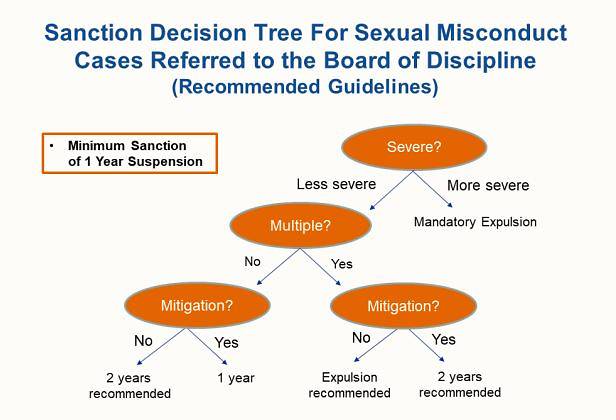
Sanctions recommended by the committee includes a minimum one-year suspension that the BOD or appeals board cannot override, and mandatory expulsion for more severe cases – including multiple cases of sexual misconduct with no mitigating factors.
“The committee agrees with what many stakeholders and the public have said – that it is timely for NUS to implement tougher sanctions for sexual misconduct,” the report read.
The sanction decision tree for sexual misconduct cases referred to the Board of Discipline at NUS. (Photo: Committee report)
PREVIOUS CASES WILL NOT BE LOOKED AT
The committee said previous cases for which sanctions had already been meted out – such as Ms Baey’s case – cannot be reopened.
“The committee has also consulted with external legal advisors and determined that past cases on which the BOD had formally ruled, and for which sanctions have been meted out, cannot be reopened,” the report said.
“Our recommended changes will form the basis of the university’s tougher stance on sexual misconduct and discipline going forward.”
It called for victims to have more say on the disciplinary proceedings going forward, such as being kept up to date and asking for a statement of facts and impact statement.
Under NUS’ current framework, the discipline board can begin proceedings without the victim’s statement of facts.
“To ensure that the victim’s voice is always considered, the committee recommends that the victim’s statement be a requirement for the BOD to proceed, unless the victim specifically decides against providing a statement,” the committee said.
“In addition to the statement of facts, victims should be allowed to submit other documents relating to the case, such as impact statements and/or medical reports.”
Currently, only offenders – not victims – can make an appeal to the Disciplinary Appeals Board (DAB). That same privilege should be accorded to victims, the committee urged.
The committee said all complaints or allegations will be considered a possible serious offence and must be referred to the Provost.
The Provost will then decide which allegation will be looked at by the BOD or the head of an academic or non-academic unit.
Some cases – which must be single incidents only – may be handled by the head of unit instead of the BOD. Some examples include:
Attempting an unwelcome kiss on a date
Planting an unwanted kiss on the cheeks of a person
Stroking another person’s face without consent
Giving an unwanted massage on the arms of a person
Briefly holding the waist or shoulder of a person without consent
Using expletives such as “slut” or “whore”
Staring inappropriately at the breasts of a person
Stealing undergarments
RECOMMENDATIONS ACCEPTED
On Monday, the chairman of the NUS Board of Trustees Hsieh Fu Hua said: “The board accepts the committee’s recommendations in full. We feel that the recommendations are informed, balanced and robust.
“It reflects our community’s common desire for tougher penalties for offenders and greater support for victims, and for fostering an enduring culture of respect and support on campus.”
There were 10 recommendations, including a minimum one-year suspension, which cannot be overridden or removed by the BOD, as well as immediate expulsion for “severe instances or aggravated forms of offences of sexual misconduct”.
It was also recommended that offenders have a notation of the length of their suspension on their academic transcripts, which can be expunged three years from the offender’s date of degree conferment.
To guard against reoffending, offenders must also be certified fit by a counsellor and/or medical professional before they are allowed to return to campus after suspension. A “no-contact protocol” would also be established.
Mr Ong said: “It has been a difficult period for the NUS community, but by taking swift and decisive action, NUS will emerge stronger and better.
“The other institutes of higher learning are also conducting their reviews, and (the) Ministry of Education, Singapore will continue to work with them to help ensure a safe and supportive environment for our students.”
SINGAPORE: When American burger joint Shake Shack opened its doors at Jewel Changi Airport in April, Mr Watt Zhong Qing, 29, was one of the first in line.
The part-time service staff eats fast food about four times a week.
He said that back in 2013, when Filipino fast food chain Jollibee first arrived here, he queued 3.5 hours just for a taste of it.
“(It) was worth it,” said the food enthusiast, whose affinity with fast food started when he was 10 and his aunt bought him McDonald’s Happy Meal, which came with a toy.
These days, long queues could still be spotted whenever new fast food players came to town, as seen recently with the opening of Shake Shack and A&W at Jewel Changi Airport.
New flavours introduced by the fast food chains also tend to generate much buzz, with offerings sometimes sold out in just weeks, such as McDonald’s Nasi Lemak Burger.
And sometimes, it is not just the food: The McDonald’s Hello Kitty craze back in 2000 saw thousands of Singaporeans spending hours in line for the sake of getting special mementos issued by the fast food giant. Around 2.8 million toys were sold within 40 days, said the National Library Board’s (NLB) web encyclopedia.
Based on latest figures from the Department of Statistics (SingStat), fast food outlets in Singapore generated a total of about S$1.1 billion in operating receipts in 2016.
Singaporeans’ seemingly insatiable appetite for burgers, fries and the like has helped the fast food sector buck the overall trend in the food and beverage (F&B) industry, which saw a 10 per cent decline in sales from 2000 to 2018.
Over the same period, sales from fast food outlets grew 29 per cent, based on SingStat data. In contrast, sales at restaurants declined 20 per cent, while those at other eating places — such as cafes — fell by 13 per cent.
Visitors queue at Shake Shack at Jewel Changi Airport on Apr 17, 2019. (Photo: Jeremy Long)
The situation in Singapore stands in contrast with the United States — the country of origin for many global fast food chains that households around the world have come to know.
According to media reports, American millennials are shunning these chains while an oversaturated market and rising labour costs are eating into the profitability of these companies. Other factors include rising health consciousness and competition from neighbourhood eateries serving the same fare, said experts.
However, in Singapore, despite greater national awareness of the need to eat healthily, many just cannot stay away from their fast food fix.
Take Mr Muhammad Hafiz for example. The self-described health conscious individual runs and does other exercises about three times a week.
But that has not stopped the 30-year-old management consultant from indulging in his guilty pleasure of fast food at least once or twice weekly.
His “soft spot” for fast food started while growing up, when he and his friends would frequent fast food chains after a game of football or rugby.
Likewise, football enthusiast Lance Ling, 32, gives in to his “fried-food craving” nearly three times a week.
“It’s a convenience thing, really. Even now, McDonald’s is just downstairs (from his home) and it is easy to (buy takeaways),” said Mr Ling, who works in the shipping industry and recently moved to Buangkok with his spouse.
HUGE APPETITE FOR FAST FOOD
Fast food chains are generally defined as those which sell mass-produced items, such as burgers and fried food, and serve them quick.
Singapore’s love for fast food began in 1968, when the first A&W restaurant opened its doors in the former Malaysia-Singapore Airlines building at Robinson Road. Next came Colonel Sanders in 1976 and then Ronald McDonald in 1979, with its first store at Liat Towers in Orchard. Burger King arrived in 1982.
Customers wait patiently in line to enter the A&W outlet at Jewel Changi Airport. (Photo: Matthew Mohan)
A sign of things to come, the number of customers who attended the McDonald’s opening was so large that a world record was set then for serving the highest volume of hamburgers in a single day, according to the NLB’s web encyclopedia.
The record was only broken in the 1990s when McDonald’s opened in Beijing, China.
A sign of things to come, the number of customers who attended the McDonald’s opening was so large that a world record was set then for serving the highest volume of hamburgers in a single day, according to the NLB’s web encyclopedia.
The record was only broken in the 1990s when McDonald’s opened in Beijing, China,
Over the past decades, the major fast food chains have grown expanded rapidly in Singapore.
For example, there are now 135 McDonald’s outlets and 86 KFC joints scattered across the island. Burger King will be opening its 50th outlet in Singapore in July, its spokesperson said.
Another household name, Long John Silver’s, first opened in Singapore in 1983.
Between 2016 and 2018, it expanded from 19 to 26 outlets here, with sales going up in tandem by about 30 per cent, said its spokesperson.
Many other international brands have also entered the Singapore market, including Pizza Hut, Popeyes, Carl’s Junior and Texas Chicken.
But it is not all smooth sailing: Brands such as Milano’s Pizza, Hardee’s, Wendy’s and Taco Bell had found the going tough and exited the Singapore market.
A&W also suffered the same fate — closing down its five remaining outlets at that time in 2003 — before returning to the Republic to much fanfare.
A&W international business development manager Sally See said that going forward, the chain would be opening new outlets at a “comfortable pace”.
“We want to ensure that we have outlets running well and optimally before expanding further,” she said.
Based on data from market research firm Euromonitor International, McDonald’s had the largest market share (40 per cent) in Singapore last year — way ahead of its closest rival, KFC (13 per cent).
In its report, the firm included convenience store chain 7-eleven, which came in joint-third with Subway, with both having 6 per cent of the market share, Next was Burger King (4 per cent), followed by Pizza Hut (3 per cent). The Soup Spoon, Pasta Mania and Long John Silver’s each has a market share of about 2 per cent.
File photo of a Burger King outlet. (Photo: Facebook/BurgerKingSG)
RECIPE FOR SUCCESS
Experts say that fast-food chains do particularly well in Singapore because of several reasons. These include the fact that the healthy eating movement here is not as prevalent as in the United States and other countries in Europe, and an English-speaking population who is exposed to international cultures.
In Singapore, fast food is not much more expensive compared with local fare such as hawker food, the experts noted.
Mr Karthik Bakthavathsalem, an F&B lecturer at Nanyang Polytechnic, said that in countries such as Malaysia and Indonesia, local food options are much cheaper than fast food.
There are also local fast-food chains in these countries, such as Jollibee in the Philippines, that prevent the global ones from garnering too much market share, said Mr Lucas Tok, marketing lecturer at Singapore Polytechnic.
Given Singaporeans’ “higher level of awareness backed with purchasing power”, Adjunct Associate Professor Lynda Wee of Nanyang Business School said the Republic makes an “excellent” test bed for fast-food outlets to expand or try out new products.
Long John Silver’s, for example, does exactly that.
Catering to Singaporeans’ taste buds and preferences help in its preparations for overseas expansion, its spokesperson said, adding:
Being a multi-racial country with a variety of religions, Singapore is a food capital with a diverse range of cuisines available despite its small land mass.
The culture of dining out among Singaporeans could also be a contributing factor, said Dr Guan Chong, a marketing professor at the Singapore University of Social Sciences.
According to a 2018 Nielsen survey, 55 per cent of Singaporeans ate out on a weekly basis, up from 51 per cent in 2015.
In the US, only about 33 per cent dined out, noted Dr Guan. The Nielsen survey conducted in Singapore also found that 76 per cent preferred to patronise fast-food outlets, up from 66 per cent three years ago.
The experts said the convenience of fast food is a major attraction for Singapore customers as it fits into their busy lifestyle. Apart from relative affordability and speed of service, fast food outlets are strategically located to tap on a large catchment of potential customers.
(Photo: Jovi Ho)
McDonald’s is especially “aggressive” when it comes to location strategy, said Mr Samuel Tan, course manager of Temasek Polytechnic’s diploma in retail management.
The market leader has a comprehensive team to select the best site for new outlets, he noted.
For the Nielsen survey, respondents cited convenience or accessibility (58 per cent), food taste (50 per cent) and low price or value-for-money (48 per cent) as the top reasons for buying from fast food outlets, said Nielsen’s executive director for consumer insights Garick Kea.
“Close-to-home proximity is also important for time-strapped consumers. So far the uptake of these convenience options has been strongest in mature markets, and Singapore being a developed market is seeing this growth,” said Mr Kea.
In contrast, restaurants are located only in certain places. “So the economies of scale are not there,” said Mr Karthik.
A fast-food chain’s assembly line model gives it an advantage over restaurants. This helps to lower operational costs and improve efficiency, without the need to hire skilled chefs for food preparation, said Dr Guan.
Successful and targeted marketing has also helped enhance fast food’s appeal.
F&B consultant and branding specialist Derrick Chew said: “(McDonald’s) Happy Meal is one example. The culture already ingrained is that McDonald’s is a part of your life … It’s nostalgic to a lot of Singaporeans growing up in that period.”
In making a comeback to Singapore, A&W believes that its brand “holds a special place in the hearts of many in Singapore, who now associate visits to A&W with very fond childhood memories,” said Ms See.
The queue at A&W at Jewel Changi Airport on its official opening day, on Apr 17, 2019. (Photo: Jeremy Long)
STAYING NIMBLE IN A CUT-THROAT INDUSTRY
While every fast food business wants a slice of the pie, being able to sustain growth is no piece of cake.
Stiff competition has led to the failure of many global brands trying to establish themselves in Singapore.
It was the main reason that led A&W, despite having a first-mover advantage here, to exit in 2003, the experts noted.
With competitors marketing their offerings much better than A&W, the chain faded into obscurity, said Mr Tok.
“With fast food, the main factor is convenience. If you’re going to be obscure and don’t market yourself, you forget to remind people that you’re there and convenient to get to,” he added.
While several fast food chains have thrived in Singapore, it will not be easy for new entrants — or in A&W’s case, those seeking to make a comeback — to gain a foothold.
“The big players are well grounded and they have already saturated our tiny island-state with many outlets and build their loyal customers. The dominant market share strategy of the fast-food industry is somewhat a barrier and threatening to new entries,” said Mr Tan of Temasek Polytechnic.
The need for fast food chains to be accessible also means that new players need resources to scale up fast and spread the set-up and operation costs, said Adjunct Associate Professor Wee.
But they usually lack the resources and capital to sustain themselves in a highly competitive market, Mr Tan noted.
Some fast-food chains have tried to cut costs using technology. For example, the introduction of self-service kiosks reduces the reliance on manpower, while working with food delivery applications helps a chain maintain its market presence.
Getting on food delivery platforms have helped Texas Chicken reach more customers, said Mr Eugene Lim, marketing director of Select Group that runs Texas Chicken in Singapore.
Customers seen at Texas Chicken’s new restaurant in Resorts World Sentosa. (Photo: Tang See Kit)
However, the use of delivery apps would eventually change customer behaviours, he noted. “In the long run, there will be impact (on fast food chains) if all customers opt to stay at home and order in. In fact, it is already (starting to happen) now,” said Mr Lim.
Ultimately, it is the service and menu offerings that matter, the experts said.
McDonald’s fresh and new menu offerings, as well as its ability to maintain its service level to generate higher customer satisfaction than other players, have helped the fast food giant to become a clear market leader, Mr Tan noted.
Despite facing high operating costs, manpower shortage and customers’ fast-changing tastebuds, fast food chains here have generally been adaptive and responsive to change — especially those that have thrived, the experts said.
It is not just about giving local flavours a twist such as Burger King’s Hainanese Tendergrill Chicken Burgers, or McDonald’s Durian McFlurry or KFC’s Mala Chicken.
Fast food chains here have also introduced new food items in line with the latest trending flavours, such as McDonalds’ Salted Egg Fries or KFC’s Korean-inspired Yang Yeum Chicken.
There have also been tie-ups with other international brands, such as McDonald’s Hello Kitty toys, or global events, such as KFC’s Ronaldo Feast during the 2014 World Cup.
Fast food chains have also periodically refreshed the look and feel of their outlets.
In addition to self-service kiosks and online food delivery service, investments in automatic cooking machinery in the kitchen, have also helped fast food chains to cut down costs.
To cater to an increasingly health conscious population, fast food chains have also rolled out healthier options on their menus.
A display of healthier food options. (Photo: Facebook/Health Promotion Board)
HEALTH CONCERNS
Despite such efforts, fast food is still high in sodium, fats, cholesterol and calories — all known to contribute to health problems such as obesity, diabetes, and cardiovascular diseases.
In 2004, the release of a documentary, Super Size Me, triggered a backlash against the fast food industry in the US.
It featured filmmaker Morgan Spurlock who ate McDonald’s food for 30 consecutive days, and gained 11kg as a result.
Mindful of the adverse health impact of fast food consumption, authorities around the world have taken steps to curtail the marketing and advertising of such food to young children.
In the United Kingdom, Youtube ads by brands such as McDonald’s and KFC were recently banned by an advertising watchdog for targeting children under 16.
This followed bans on junk food advertisements in London’s transport networks earlier this year.
Australian state Queensland has also banned junk food advertisements starting this year, with plans to phase out such advertisements over time.
In Singapore, the authorities introduced in 2015 a set of advertising guidelines where F&B outlets, including fast food chains, are not allowed to advertise unhealthy products — such as sugar-based products and soft drinks — to children under 13.
Like other affluent societies, Singapore is not spared from rising obesity rates among the young.
In 2017, 13 per cent of children in Singapore’s mainstream schools were found to be overweight, up from 11 per cent in 2011, said Senior Minister of State for Health Amy Khor last year.
So far, the fast food industry in Singapore has been spared from any consumer backlash stemming from health concerns — even after the Super Size Me documentary gained international prominence.
Mr Karthik, the lecturer at Nanyang Polytechnic, believes that the film’s impact on the fast food industry in other countries would have been bigger today, in the age of social media.
Other experts noted that unlike in the US, fast food is not a staple in Singapore.
Still, the documentary had persuaded some Singaporeans to be more mindful of the food they ate, and spurred fast food chains here to offer healthier options, the experts said.
Fast food fans in Singapore played down the health concerns, reiterating that it was fine as they eat it in moderation and their diet is balanced.
Mr Hafiz, for example, said he avoids eating fried food at home, opting for grilled or roasted meat instead.
Mr Ling added: “I think it’s okay if you don’t eat it every day … just need to have a mixed diet for your other meals.”
While fast food joints here provide healthier alternatives, nutritionists said it is unclear how effective they are in encouraging consumers to eat more healthily.
To begin with, people who go to fast food outlets are not looking to eat healthily, said consultant dietician and nutritionist Dr Naras Lapsys.
While the nutritional value of these healthier options is not negated just because it is prepared at a fast food outlet, the sauces added into these food items might defeat its purpose.
“Sauces (which fast-food joints) put in might still be high in sugar. (There) might be additional things in the meal that are not that great, (the) chicken still happens to be fried and battered,” said Dr Lapsys.
Another nutritionist, Ms Gladys Wong, warned that seemingly healthier options might not necessarily be so. “Salads may not be necessarily healthy, depending on the salad dressing that the customer chooses to drown the salad with,” she said.
(Photo by Anna Pelzer on Unsplash)
“Steamed corn may be laced with butter or margarine and salt, thus (it can be) high in fats and sodium.”
FOOD FOR THOUGHT
Going forward, experts believe that the fast food industry here will continue to thrive.
However, it may usher in the rise of what has been called “fast casual” outlets.
An intermediate concept between fast food and casual dining, fast casual eatery chains have taken off in the US, including the likes of Shake Shack and Chipotle.
These chains market themselves as offering the same quick and convenient service which consumers can get at fast food chains, but with better ingredients at slightly higher prices.
While fast casual outlets have yet to establish themselves in Singapore, fast food chains here may have to contend with them in the future, said Mr Karthik.
In the meantime, some are concerned that the enduring popularity of fast food among Singaporeans could come at the expense of homegrown hawkers and food culture.
Nevertheless, food blogger Leslie Tay felt that hawkers can learn from the fast food model, such as mass producing food of a consistent quality within a short time.
Hawkers currently “don’t quite have the know-how” yet, said Dr Tay, 50, who runs a popular food blog ieatishootipost.sg.
File photo of a hawker centre
While he believes that people of his generation would stay true to hawker food, he was not so sure about the younger generation.
“(Fast food is) comfort food. It’s easy, cheap and tasty, and customers can dine in air-conditioned facilities,” said Dr Tay, who quipped:
Air-con is very important.
Food critic and consultant K F Seetoh, who founded the Makansutra website, noted that the younger generation grew up inundated by the marketing efforts of fast-food giants.
“Fast-food outlets are winning, but they have not taken over (local food) — not yet,” he said. thus (it can be) high in fats and sodium.”
SINGAPORE: I must admit that things had needed repairing in my toilets since last year. Two metal hoses and a shower hose would leak when in use.
However, this had yet to figure on my list of priorities — which means my wife had not yet threatened to strangle me with the hoses for not fixing them.
But when my colleague Chiew Tong started working on her feature video about handyman Benjamin Arman, I jumped at the opportunity to employ his services. It was convenience I was paying for when he replaced my leaky hoses.
Of course there are others who would not part with S$60, not counting the cost of the new hoses, to get a handyman to do that.
He knows that all too well. Some “cheapskate” customers had bigger problems but wanted to pay less — like a condominium resident who baulked at paying him even S$50 to unclog a toilet.
“You can’t ask me (to charge) S$20 if I have to clear (a choked toilet) with the shit there,” said Ben.
“They like to bargain. If … it takes me five minutes, then I charge you S$100, you’d say, ‘Why expensive?’ If you get somebody on the street … he’d say he can do it, but he’d take more than one hour.
“I’d say you’re paying me for my experience, not my labour.”
Experience entails him knowing his tools, like this set for a toilet flush system.
In modern Singapore — digital city state, the world’s most competitive economy and mostly white-collared — many who do not have the time or experience to fix problems around the house would have to pay those who do.
Ben calls himself a jack of all trades, from electrical to plumbing to miscellaneous repairs. But there is that question whether a handyman like him is appreciated enough for his time and skills and, by extension, earning a fair wage..
ON THE JOB
To viewer Linda Leung, commenting on CNA Insider’s video post, S$50 is a reasonable fee for unclogging a toilet: “For the transport fare and his expertise. Moreover, he has to come with his tools and all. It’s a hard job.”
Watch: The Singaporean handyman and his Malaysian family (7:23)
It can be tiring, Ben himself said, “to travel from one place to another”. “There’s a lot of walking,” the 55-year-old added as he picked up his tattered backpack. And during Ramadan recently, he had to be careful to “conserve energy”.
He takes public transport on the job, except when it is urgent, in which case he would book a taxi. Resting on his shoulders wherever he goes is about 20 kilogrammes worth of tools and spare parts.
And he goes to a range of properties, from public flats to condominiums. When CNA Insider shadowed him for a day, his first customer was condo resident Nicole Capatana, 35.
She had called him to fix a cabinet handle and door hinge as well as hang several paintings on the wall. And he was quick to diagnose the problem that needed the most repairs: The cabinet hinge.
“Looks like a hole is worn out,” he remarked. As he did not have the exact replacement screw, he improvised by drilling a deeper hole so that the new, longer nail will have grip.
Such jobs are not difficult, he said, but people need his service “because they don’t know what the problem is”. Within an hour, he also fixed the cabinet handle and hung five paintings on the wall, for S$70 in total.
The result was a happy customer. “I don’t have time, or I don’t know how to fix them … so a specialist should come,” said the Romanian expatriate, who acquired Ben’s services via an app.
“It’s good value for money, and also the fact that … I can find someone who can fix my problem fast is quite great.”
Ben gives Nicole advice about applying an adhesive strip.
For the self-confessed “talkative” handyman, the favourite part of his job is meeting people like her.
“Sometimes when you do a job, you get bored … When you talk, it makes it interesting. And we try to develop that customer service relationship and trust, so next time, (when they’ve) got something, they’d call us back,” he said.
He does not accept all jobs, however, recognising that his versatility goes only so far. “If the problem is very deep, then I’d call, let’s say, the licensed electrician to (fix) it,” he said.
One of his considerations is the duration of the rectification. “Second is when the cost is going to be more like S$300 … then I recommend they get a contractor.”
Drilling a hole to hang the next painting.
A YOUNG MISTER FIXIT
He first picked up the skills and tools for fixing things when he was young and living in a kampung.
“There were a lot of things at home (to fix). My mother was always calling, ‘Ben, something’s wrong with my cooker, something about the plug. Can you change the light bulb?’” he recounted.
“So I always (fixed) things. And I was always curious about how things worked … I liked mechanical things, technical stuff … When it puzzled me, then I’d go into it, learn about it.”
But he never expected that what he did as a “sideline” would become a full-time job, as it did not use to be a well-paid one.
He became a handyman only in 2016, when he saw an advertisement for a job said to pay about S$40 an hour for doing repairs.
“That was the job I applied for, and then I found out it’s not a job, actually. It’s an app,” he said, referring to start-up Sendhelper’s mobile platform, which offers handyman, cleaning and cooking services.
This is not the only home services app he uses now, and the technology makes it easier not only for customers to get the help they need but also for handymen to get jobs, at least “about three or four” a day.
Using the Sendhelper app.
“It depends on how much you can do,” he said, contrasting it with the way handymen sometimes needed to approach plumbing shops, electrical shops and contractors previously to get enough work.
“You were lucky if they called you … because sometimes those shops also had their own favourite handyman.”
As to whether people look down on the job, he replied that it depends on the individual, though he clearly thinks “they should appreciate” having others do a job for them.
What he appreciates is the freedom to plan his schedule and choose his jobs, depending on the travelling time and job difficulty, among other things.
Travelling time is a factor in the jobs he selects.
For example, he notices that there are more painting jobs before Hari Raya Aidilfitri, but tends to avoid them. “When you paint one room, you have to wait at least about half an hour (for it) to dry,” he noted.
“Then you have to apply the second coat and wait for another half an hour. And then you do the final touch-up, so it’s likely to take you, for one room, at least four hours.”
For each job he takes, his base fee is S$40 for labour, with additional charges largely dependent on the difficulty and materials needed. He now earns between S$3,000 and S$4,000 a month, at least thrice what he used to earn.
THE TOUGH TIMES
Before he became a handyman, Ben was doing odd jobs with various companies for about 15 years. He had difficulty finding full-time employment since the recession in 2001.
Ben buying materials for his jobs for the day.
“The pay was really low … I didn’t mind working long hours, but they’d say you aren’t qualified for the job,” said the O-level holder. “They believed older people gave more problems than the younger ones, especially with medical (costs).
I had my first child in the year that was the recession, so it was a bit tough. But we managed.
One of the openings he found was for a range warden to maintain a shooting range for the army. He went on to work in different ranges and companies until 2005.
Another job he did on a temporary contract was as a packer on a fish farm. It was a four-hour, $S50 working day and unpredictable in terms of frequency. It lasted for only a few months.
He also worked part-time to load and unload cargo for FedEx. “I just took any job that was suitable,” he said. “If I could bring back S$1,000, I was okay with it.”
It was thanks to his experience from his first job after National Service — with the National Parks Board — that he managed to meet his income target to feed his family of five.
He was making a bit of money on the side by doing landscape maintenance at several houses. And if there was one job he especially liked, this was it.
Being outdoors is one of the things he likes about gardening jobs.
In 2013, he did a Workforce Skills Qualifications landscaping course because he figured that paper qualifications would do the trick in Singapore.
“I had that experience in landscaping, but I didn’t have the paper, so that’s why I took the course,” he explained.
He also did a course on food handling and worked as an assistant in a food centre for a year. All these, and his Malaysian wife’s dressmaking activities, helped to pull the family through those years.
“My kids didn’t demand much because they knew their father’s capability … (and) what we could afford,” he said. “We always taught (them) about sharing and … (not to have) high expectations.”
His wife and daughters.
It helped that they were living in a kampung home in Johor Bahru — and still do. So the exchange rate has worked in their favour.
FROM ONE GENERATION TO THE NEXT
Ben now travels back to Johor Bahru every week to spend the weekend with his wife and three daughters, aged 14, 16 and 18.
He thinks of them especially when he is having dinner alone in his one-room flat, “because when I’m in JB, I always have dinner with them”. Said the Singaporean: “It makes me look forward to seeing them over the weekend.”
Iftar for one.
His home in Chai Chee is also his workshop, which he spent almost two years building up as he accumulated the tools of the trade.
And on occasions when his daughters stay over instead, he gets to acquaint them with his work.
“At primary school, they didn’t know what I was doing. They always asked my wife what Daddy’s job was because … I swapped a lot of jobs,” he recalled. “Now (with) my permanent job, at least they know.”
The middle child, Dalila Nur Zhakirah, has even helped him out on some assignments. Just as he did all those years ago, she has been learning from him to fix things around their kampung home out of curiosity.
Dalila with her father.
Her first repairs? Replacing one of their toilet seat covers, which was broken.
She told CNA Insider: “I think everyone has to know how to do a handyman’s job because in a situation where you’re alone and you don’t have the money to pay someone to fix this, you’d have the basic (know-how).”
Her father acknowledges, however, that the younger generation might not see the relevance of the profession, or even the value of fixing things, because “stuff is cheap now”.
“Repairing (something) doesn’t guarantee it’ll be okay,” he said. “Items last time could last you for years, compared to now.”
In his workshop corner.
He also thinks the younger generation may not be keen on the profession because “they don’t see the money” in it. “Some might pick up (the skills), like me when I was young, (but not follow through),” he said.
“They don’t see the bigger picture. In the end, you gain experience … get the recommendations and you get regular customers. And you’d get self-recognition.”
While the job can get “dirty and smelly”, for example when toilets are choked, that is why he charges more, he pointed out. There are also qualifications available, such as the Basic Handyman and Repair course provided through SkillsFuture@PA.
Ben himself has done electrician and plumbing courses, and he encouraged young people to give handyman work a go at home. “(If) you never try, you’d never know,” he said. “Probably you’ll like it.”
SINGAPORE: A 35-year-old woman who helped to arrange a sham marriage has been sentenced to nine months and eight weeks’ jail and a fine of S$10,000 in default of eight weeks’ imprisonment.
Nguyen Thi Hong Lan, a Singaporean of Vietnamese descent, was arrested in August 2017.
She had arranged for a Singaporean man and a Vietnamese woman to solemnise their “marriage” on Feb 9, 2017, said the Immigration and Checkpoints Authority (ICA) said in a news release on Monday (Jun 10).
Nguyen Thi Hong Lan was sentenced to a total of nine months’ and eight weeks’ imprisonment, and a fine of S$10,000 in default eight weeks’ imprisonment. (Photo: ICA)
Investigations showed that Nguyen was approached by the Vietnamese woman, 34-year-old Duong Thi Anh Kieu, who wanted to remain in Singapore to work.
Nguyen then suggested that Duong enter a marriage of convenience and told her to pay S$20,000 for the arrangements.
She also told the Singaporean man, 29-year-old Soh Sheng Chao, to sponsor Duong’s Visit Pass and permanent residency applications – without having to fulfil any marital obligations.
Soh was promised S$6,000, plus S$300 for every successful extension of Duong’s Visit Pass, said ICA.
After the pair went through with the sham marriage, Duong did not live with Soh. She paid Nguyen S$10,000 and worked at a spa operated by the latter to pay off the remaining S$10,000.
For entering into a marriage of convenience and making false statements in Visit Pass applications, Duong and Soh were earlier sentenced to six months and four weeks’ jail each.
“ICA takes a serious view of individuals trying to circumvent our system by engaging in or arranging/assisting to arrange marriages of convenience to obtain immigration facilities in Singapore,” the authority said.
“ICA will continue to take firm enforcement action against errant couples and middlemen.”
Those convicted of engaging in such marriages of convenience or helping to make these arrangements face a maximum jail term of 10 years and a fine of up to S$10,000.
SINGAPORE: A 29-year-old man was arrested early Monday (Jun 10) morning over a case of armed robbery along Lorong 22 Geylang, police said.
The authorities said they received a report at about 10.50pm on Sunday that a man had robbed a 30-year-old woman at knifepoint.
A mobile phone and more than S$2,000 in cash were stolen.
More than S$2,000 in cash was stolen. (Photo: Singapore Police Force)
Officers from the Bedok Police Division identified the man through ground enquiries and CCTV footage, and arrested him along Rangoon Road at 4.30am the next day.
The man will be charged on Tuesday with armed robbery.
If convicted, he could be sentenced to between three and 14 years’ jail, and given a minimum of 12 strokes of the cane.
WORLD Environment Day has been celebrated every year on 5 June since 1974. Its objectives are to encourage environmental awareness and promote action for environmental protection.
This year in Singapore, 180 leading water professionals from all over the world have been invited by Singapore International Water Week to discuss how industrial demands for water can be reduced.
Worldwide, industry accounts for about 20 percent of total water usage, of which agriculture and domestic sectors use the most – 70 and 10 percent respectively. However, in recent years, global water usage for agriculture has been decreasing while that of industry has been increasing.
For a land and water scarce city-state like Singapore, also with limited agricultural production, industry accounts for the lion’s share of water use. Currently, it’s estimated that, by 2060, total water requirements will almost double current rates. Industry will account for 70 percent of total water use.
Water imports from Malaysia, which provides around 50 percent of Singapore’s current needs, will come to an end in 2061. While all countries must manage industrial water demands in the future, for Singapore, rethinking water security policy is a matter of urgency.
This World Environment Day, it is appropriate to review how major multinational companies (MNCs) manage water needs for their production processes and the usage of their products.
MNCs like Unilever and Nestlé have successfully made environmental conservation a Board-level issue and have integrated it into their business plans. This involves steadily reducing energy and water consumption, carbon footprints, packaging, and solid waste, amongst many other things. Both now practice the ‘3R’ philosophy of circular economies: reduce, reuse and recycle.
Unilever, under former CEO Paul Polman, pledged to reduce its environmental footprint by half of its 2008 levels by 2020 while also doubling sales. So far, it’s made spectacular progress. By the end of 2018, the company achieved its 2020 water targets by reducing total water abstraction and intensity involved in production processes. This saves 22 billion litres of water per year compared to 2008.
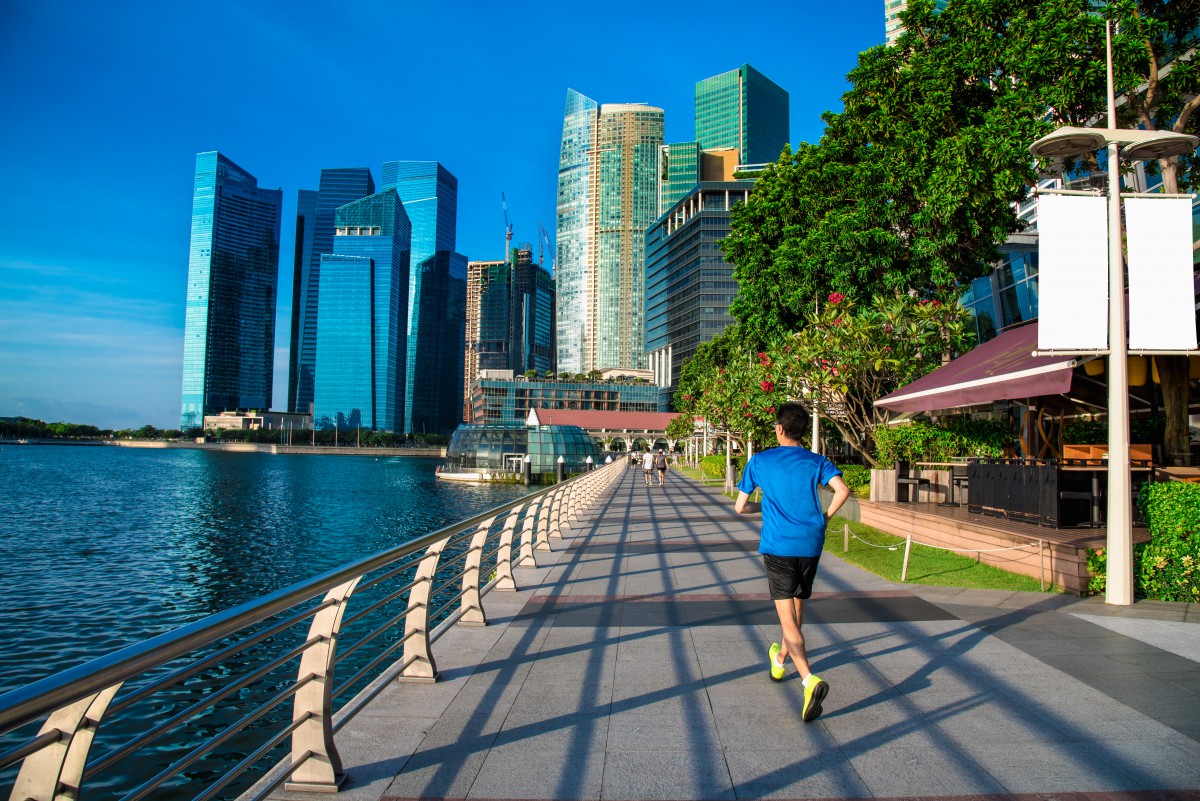
A man jogs along the Marina Bay Sands Park in Singapore. Source: Shutterstock
Using less water also means significant savings in energy and reduced wastewater that needs to be treated. Investments in water efficiency had an average payback time of just over two years.
A visit to Unilever’s factories in Thailand showed us that employees at all levels were committed to environmental conservation. It’s even become part of the company’s annual KPIs.
Nestlé, under the leadership of Peter Brabeck-Letmathe, implemented its new Creating Shared Value (CSV) scheme, aiming to create value not only for its shareholders but also for communities all over the world. Paul Bulcke, former CEO and current Chairman of Nestlé’s Board of Directors, has continued to further decrease the company’s water footprint.
CSV has four specific water goals. Firstly, to continually improve water efficiency and sustainability; secondly, to advocate effective water policies and stewardship; thirdly, to engage with its agricultural suppliers to improve their water management practices; and finally, to raise awareness on water conservation across its entire water chain.
Nestlé made a commitment to reduce direct water withdrawals per tonne of product to achieve a 35 percent reduction between 2010 and 2020. By 2018, it reduced water withdrawals by 29.6 percent. In some product categories like confectionary and powdered liquid beverages, it reduced water requirements by 55 percent during this period.
The company’s most innovative idea is its zero water factories. In 2014, it installed condensate recovery units from milk to replace external water abstraction processes in its new milk plant in Lagos de Moreno. As a result, this plant is saving 1.6 million litres of water per day, about 15 percent of its entire water requirements in Mexico.
The most challenging aspect of such transitions, however, lies in changing public perception and behaviour.
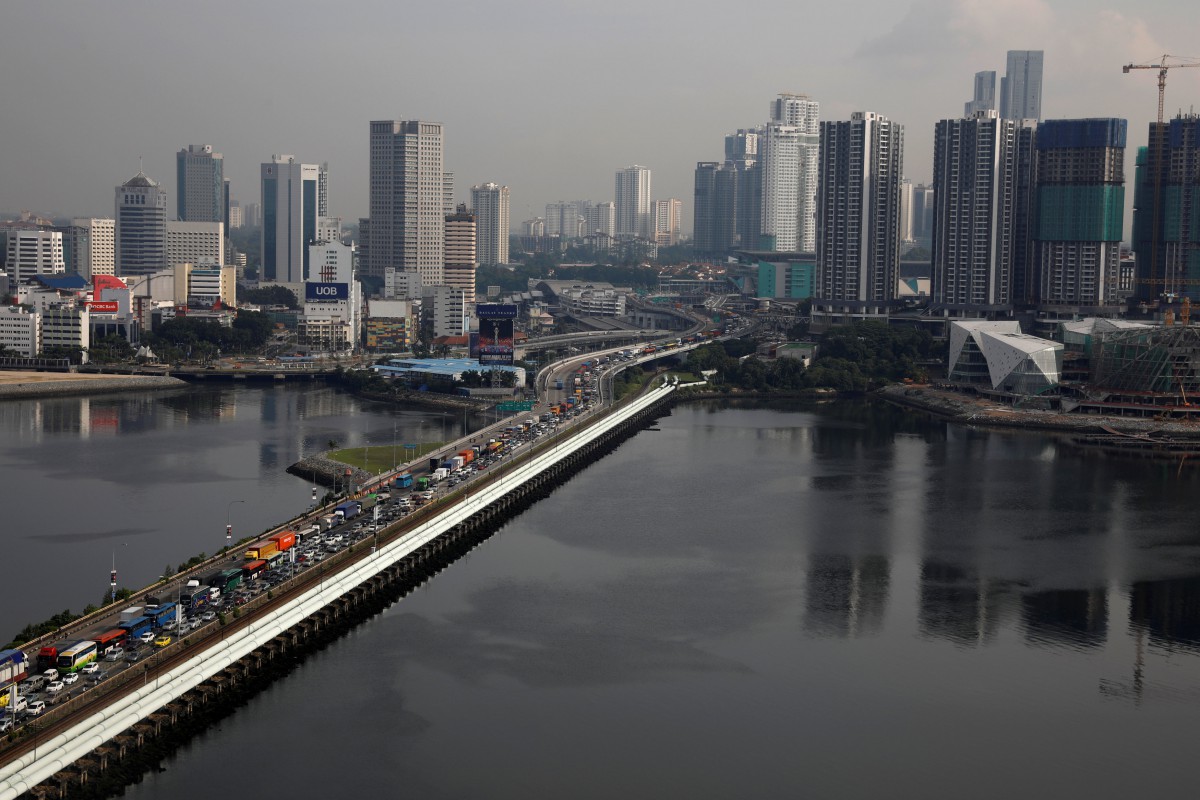
Pipes carrying water from Malaysia to Singapore run alongside the causeway towards the Woodlands Checkpoint in Singapore July 20, 2018. Source: Reuters/Edgar Su
For example, in 2007, Unilever launched its Comfort One Rinse fabric conditioner, promising to reduce water use by two-thirds when doing laundry by hand. If used by all potential users in South Africa and in Asian developing countries, the product could reduce annual water use by over 500 billion litres. Unfortunately, due to public scepticism, users tend to rinse their clothes several times.
Another MNC, Proctor and Gamble, also started a new line of laundry detergents, soaps, and shampoos that require very little water to manufacture this year. These cleaning products come in small fabric-like swatches that dissolve and foam in contact with water.
For them, and many others, the question remains: what must be done to convince consumers that this new generation of cleaners are as effective as existing products? Amidst constant technological advancement, behavioural challenges will require greater attention.
Though major MNCs like Unilever and Nestlé are heading in the right direction, the economy of Singapore consists mostly of small and medium-sized companies, for whom water very rarely accounts for more than 2 percent of production costs. The country must thus find a way to convince these businesses to consistently reduce their water usage.
To keep water demand from doubling by 2060 and to limit it to a 20-25 percent increase from current rates, Singapore must implement aggressive policies to reduce industrial and domestic demands. This will be challenging, but is no doubt doable.
This piece was first published at Policy Forum, Asia and the Pacific’s platform for public policy analysis and opinion.
SINGAPORE: For up to 10 hours daily for six days a week, Wendy Tan works as a private hire driver, whilst also studying part-time for her degree in tourism, events management and marketing at a private university.
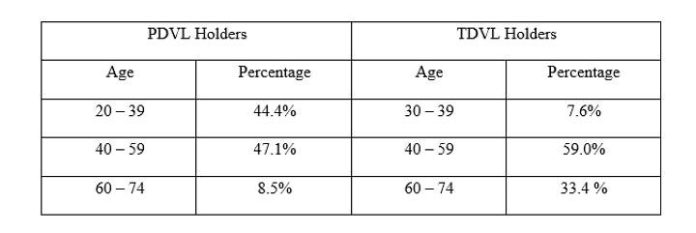
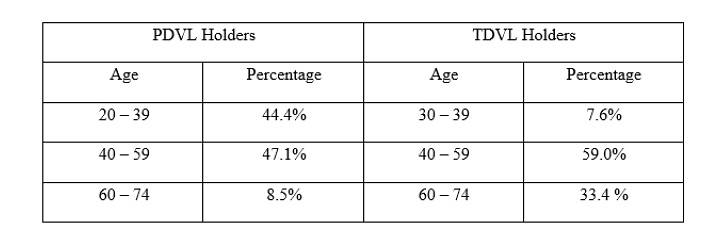
The 24 year old is one of 41,000 Private Hire Car Driver’s Vocational Licence (PDVL) holders in Singapore, of which 44.4 per cent are aged between 20 and 39 years.
This is according to data revealed by the Ministry of Transport (MOT) during the recent Parliamentary sitting held in May.
Data from the Ministry of Transport, May 2019
Ms Tan who has been a private hire driver for the last three years, told CNA that she decided to drive to pay for her study loan. She added that her monthly take-home salary is between S$3,000 and S$5,000.
She begins each work day at 6am and attends half-day classes once every two weeks.
“I like the flexibility (of being a private hire driver), as it fits my schedule and helps me financially to pay the bills,” said Ms Tan. “Unlike other jobs, you answer to yourself only and you don’t get scolded for not turning up.”
“You really don’t learn anything new and there are physical risks to the job. You don’t know when you will get into an accident and five out of 10 drivers out there are reckless,” she added.
24 year old Ms Wendy Tan has been a private hire driver for the last three years to pay for her private university study loans. (Photo: Aaron Chong)
When asked how many drivers it has on its register that are aged between 20 and 39 years old, Grab said it was not able to provide the figure. However, the company said its data showed that “the vast majority of younger drivers are part-time or casual drivers”.
Grab added that the company attracts drivers “because (it) prioritises their welfare and continue to meet their needs in various ways”.
“For instance, we help with their operating costs and expenses through our comprehensive driver-partners welfare programme which offers fuel and car maintenance discounts, Medisave co-contribution, mobile phone plan discounts, bespoke insurance at affordable premiums and more.”
Meanwhile, fellow private car hire firm Go-Jek said it welcomes younger drivers into the ride-hailing sector, and adds that they form a “big part” of what it described as the “gig economy”.
Besides “competitive incentives”, the Indonesia-headquarted company also offers Prolonged Medical Leave insurance coverage, fuel rebates and mobile data savings to its drivers.
Dr Walter Theseira, transport economist at the Singapore University of Social Sciences (SUSS), attributed several factors to the significant proportion of young private hire drivers.
This includes technology platforms and incentive structures used by private car hire companies that “have more appeal” to younger workers.
Moreover, the private hire vehicles allow personal use of the vehicle, whereas taxis do not.
In addition, Dr Theseira noted that the take-home pay is “competitive” with many entry-level jobs for educated younger workers, after factoring in incentives and accounting for no CPF deductions.
“The image of taxi driving, unfortunately, is that it is a last resort job people turn to when they are retrenched and unable to restart their career. The image of private hire driving is that this is a side-income choice chosen for flexibility.
These social perceptions did not come about by accident. We have to remember that private hire companies have spent a lot of time, effort and money in marketing private hiring driving as an attractive side-income opportunity, to overcome the social perception that for-hire drivers are in a last resort job,” added Dr Theseira.
LACK OF OPPORTUNITIES IN THE PRIVATE SECTOR
It is 12 noon on a rainy Thursday and Shaun Ow has just had his lunch. For many professionals, it would be the mid-point of their working day. For Mr Ow, however, he is about to start the day’s work.
He places his mobile phone on the phone holder on top of his car’s dashboard and turns on the app operated by a well-known transportation network company, waiting for a pick-up order from his first passenger of the day.
The 39 year old said he has been a private hire car driver for the last 3.5 years and drives daily, between 12 and 14 hours a day. Prior to this, Mr Ow was working in the private sector for over 11 years in various industries but was retrenched.
He explained that he decided to be a full-time private hire car driver after trying for over a year to secure a job in the private sector, but to no avail.
Mr Ow shared that his monthly take-home pay after accounting for rental, fuel and other miscellaneous charges, is around S$5,000, after doing between 20 and 25 trips daily.
While he said the job scope “is very simple” and a matter of “bringing a person from where they are to where they want to go”, being a driver has its challenges.
“We don’t have one or two bosses that we report to like in the office, but if we do 20, 25 or 30 trips a day, those passengers are our bosses,” added Mr Ow.
“Passengers sometimes think our job is easy – sitting in an air-conditioned environment is easy. But I always tell them: ‘You find one weekend, have two one-hour breaks for lunch and dinner, and sit in a comfortable sofa for 12 hours just watching TV. You will feel sore backs, sore shoulders, sore necks, sore everywhere,” he said.
“We always have to be alert, vigilant (of) traffic. We can be very careful, but traffic is always moving with motorists, pedestrians and now with PMDs (personal mobility devices) – that is a lot of grief.”
POTENTIAL SOCIETAL ISSUE
While working as a driver offers certain advantages for individuals, Dr Theseira said that having a large number of young private hire drivers for the long-term raises some issues.
“The jobs offer no career path and do not provide workers with significant marketable skills. This means that workers in such jobs will inevitably end up disadvantaged compared to their peers who are able to stay in jobs that offer a career path and the opportunity to build marketable skills,” he added.
Dr Theseira said this is something that workers are not expected to recognise early on, similar to expecting 20 year olds not to save for their retirement. He felt that the latter group is “likely to under-appreciate the importance of building experience marketable skills as soon as possible”.
“Thus, if workers are attracted to private-hire driving and other ‘gig’ economy jobs and spend too long in them early on, their lifetime wages and career opportunities could be harmed significantly.”
WHAT CAN BE DONE
Dr Theseira said that it is more pertinent for Singapore to explore the wage and career structure of industries that employ medium-skilled young workers.
“What we should really think about is why many of the jobs that employ our NITEC and Poly Diploma holders pay comparably or worse than the earnings achievable by gig economy workers. This doesn’t make any economic sense because NITEC and Diploma holders actually have extensive training to perform a particular skilled job.
Institute of Technical Education (ITE) at Ang Mo Kio. (Photo: Jeremy Long)
“These are workers who have received two to three years of specialist training. Why does the market pay them the same or less than a gig economy platform does for a job that requires virtually no training whatsoever?” he added.
Dr Theseira also noted that many gig platforms operate at a loss, and are able to do so for extended periods due to venture capital financing. This is in contrast to conventional companies that are “constrained” by needing to record profits.
He further explained that as such, gig economy platforms “sell the service at below cost”, leading to wages “that are higher than they should be”.
“This has not been seen as a problem by Government, because effectively venture capital money is subsidising Singaporean workers, but it could be a problem if it results in workers disrupting their career paths.”
Meanwhile, Ms Tan and Mr Ow they said they will most likely continue being private hire drivers.
Although Ms Tan intends to find a job in the private sector, she acknowledged it will be difficult, as her vehicle lease contract which began in October 2018 has more than four years remaining.
In Mr Ow’s case, he said he has become comfortable with the job.
“To be frank, it is also (being) in a comfort zone. I am comfortable. I know how much effort I need to put in (to) get roughly how much (money). If I need more, I just drive more,” he said.
SINGAPORE: “I would like to eat healthily, but work has just been too busy for me.”
That’s a common lament dietitians like me hear. Indeed, long working hours, a hectic work schedule, and even working from home after office hours are common in Singapore, with its reputation as one of the most competitive countries globally.
In schools, Singaporean students are similarly feeling the pressure, spending twice the amount of time on homework weekly as compared to the global average, according to 2012 findings by the Organisation for Economic Cooperation and Development.
With competing priorities including family responsibilities and a packed social life, healthy eating inevitably takes a backseat.
About one-third of Singaporean working professionals reported having lunch breaks at their desks at least four times a week, according to a 2016 Herbalife survey.
After slaving away over a busy morning, many gravitate towards unhealthy quick fixes for lunch based on impulsive decisions. Oftentimes, these are foods which are rich in fast-acting carbohydrates that cause blood sugars to rise and drop more rapidly, potentially affecting energy levels at work.
When our lunch doesn’t satisfy us, we rely on office pantry snacks and sugary drinks, which are low in nutrients yet packed with energy, racking up our calorie intake. And revenue data suggests potato chips form the bulk of snack foods we consume.
Where colleagues take turns to buy lunch back to save time, they often order in bulk based on the dish the majority decides on, meaning we may end up consuming foods that are not as nutritious as we would like them to be.
Many skip breakfast, but this inadvertently leads to overeating at lunch, and has been associated with a higher body mass index. Others load up on nasi lemak, prata or fried beehoon with sausage for brunch so that they can skip lunch.
GAINING WEIGHT, SLEEPING LATER, EATING SUPPER
Guess how much weight the average Singaporean gains in one decade after starting work? 4kg.
Healthy eating is a massive challenge for working Singaporeans, in part because it’s a small reflection of the larger unhealthy habits we subject ourselves to.
Half of Singapore workers work after office hours more than thrice a week, according to Regus surveys.
Many go to bed late, at an average of 11.45pm, which is among the latest of 100 countries surveyed by the University of Michigan.
Those who eat late-night suppers tend to choose high-calorie meals like fried rice or fried noodles.
NO TIME TO COOK FOOD
Much as many desire to put together a healthy home-cooked meal for the family, picking up a pan may be the last thing on our minds after a long work shift.
The notion of fuss-free dining outside of homes, with zero need for food preparation and washing up, is such an appealing option.
(File photo)
Hawker centres and fast food restaurants top our lists, given their affordability, accessibility and addictively tasty offerings. Takeaways are also a popular option, with the rise of online food delivery platforms that readily offer your favourite dining options.
TAKE A STEP BACK
Perhaps we ought to take a step back in the midst of busyness to ponder over what really matters. Are we happy with our current eating habits and lifestyle?
If we continue, what would likely happen in the future? Envisioning where we want to be in the future can help us begin taking steps towards it.
Translating this into practice means not just altering our diets but our habits. It may begin with making breakfast a regular habit. A bowl of muesli soaked in milk overnight in the fridge or wholegrain bread with peanut butter make a quick nutritious breakfast.
Paying attention to our environment, by replacing energy-dense, low-nutrient snacks in our office pantry and home kitchen with a small stash of wholegrain crackers, fresh fruit and low-fat yoghurt, can be helpful. This way, we are more likely to reach for a healthier snack when hunger pangs strike.
If home-cooked meals are not an option, there are plenty of healthier choices available with Singapore’s diverse food scene. Yong tau foo, beehoon soto, and chapati are some healthier affordable local options available in hawker centres and food courts flanking workplaces.
Healthy eating at the workplace is now made more convenient with takeaway sushi and salad counters in supermarkets in working districts. Singapore’s multi-ethnic cuisine also offers healthier international fare like Thai tom yum seafood soup, Vietnamese pho, and Korean Bibimbap.
During peak work periods, avoiding the lunch crowd by putting together a quick lunch at the office can also be a real time-saver. A can of tuna flakes, some wholegrain bread slices, and a handful of cherry tomatoes are a recipe for a nutritious meal ready in seconds.
With a number of vitamins and minerals being linked to mood and energy, consuming a balanced diet with adequate vegetables and fruits enable us to feel our best and perform better at work.
Healthy eating and doing well at work need not be mutually exclusive. Food is fuel for the day and making intelligent decisions about food is key to achieving top workplace performance.
By setting goals, planning ahead, and making healthier choices an easier option to reach for each time a food decision presents itself, we may develop healthy eating habits over time.
Months later, we could be pleasantly surprised with how far this takes us.
Ng Zi Ling Jolyn Johal is Senior Dietitian at the National University Hospital.