SINGAPORE: Around 200 people were evacuated from Tangs Plaza in Orchard Road on Saturday (Jun 15) evening after a fire broke out in the department store.
Singapore Civil Defence Force (SCDF) said it was alerted to the incident at 320 Orchard Road at about 8.40pm.
The fire, which involved electrical wiring, was extinguished by sprinklers before firefighters arrived, SCDF added.
A crowd is seen outside the department store after the incident. (Photo: Johannes Tjendro)
A fire truck at the scene. (Photo: Johannes Tjendro)
“Approximately 200 people were evacuated by the security guards,” said a spokesperson for SCDF, adding that nobody was injured in the incident.
Videos of the incident show water coming from the mall’s sprinklers and crowds gathering outside the building.
SINGAPORE: Soaring over the Padang at this year’s National Day Parade (NDP) will be the Republic of Singapore Air Force’s (RSAF) A330 Tanker Transport aircraft, which is set to make its debut, accompanied by two F-15SG fighter jets.
The much-anticipated flypast will begin with traditional state flag flypast, with a Chinook helicopter carrying the Singapore flag, supported by two escorting Apache helicopters.
Five F-15SG fighter aircraft will shoot through the sky in a bomb-burst formation, before the Tanker Transport makes its debut.
The F-15SG jets will complete the show by performing “dynamic manoeuvres”, including a steep vertical climb.
This year’s parade and ceremony segment, titled Our People, will include the inaugural participation of the Singapore Armed Forces (SAF) and Home Team Volunteer contingent.
The segment will involve more than 2,600 participants and 38 marching contingents, that “exemplify the commitment of ordinary Singaporeans to contribute to our nation’s peace and stability”, said the Ministry of Defence.
The parade and ceremony segment will involve more than 2,500 participants and 38 marching contingents.
“The parade will demonstrate our people’s collective will and commitment in defending and securing our home, which gives strength to the continuing success and progress of our nation,” it added.
The segment will also feature a synchronised performance by the first-ever combined drum band, comprising of 34 drummers from the SAF military band, Singapore National Cadet Corps and Association for Persons with Special Needs Tanglin School.
A combined drum band, comprising of 34 drummers, will perform at the NDP.
The NDP’s traditional celebratory elements such as the 21-gun presidential gun salute, the Feu De Joie, and march past will also be on show.
SINGAPORE: The Government is prepared to work with “anyone” with different views to figure out the best way to take Singapore forward, Deputy Prime Minister Heng Swee Keat said on Saturday (Jun 15).
“As long as your heart is for the good of Singapore and Singaporeans, we will work with anyone,” Mr Heng said during the question and answer segment of a REACH-CNA dialogue.
“But we must not have a diversity of purpose because unity is important. How we have been able to take Singapore forward all this while is that we all share a sense of common purpose.”
During his speech earlier in the day at the dialogue, Mr Heng – widely expected to be Singapore’s next Prime Minister – said the Government intends to work with Singaporeans to design and implement policies in areas such as housing, social mobility and environmental sustainability.
After the speech, audience members asked Mr Heng questions about a wide range of issues, including the inclusiveness and social inequality.
Mr Heng said he hoped that Singaporeans would not only share their concerns about such issues, but also take action to do something about it.
“I hope to get Singaporeans to think about our long-term future,” he said. “What is it that we can do together to leave a better future for our future generation?”
Mr Heng, who is also Finance Minister, said the fourth-generation leaders are all on the same page when it comes to engaging people on these issues, noting that they have been discussing this “for quite a while”.
“The common factor that allowed us to make progress has always been a strong partnership with our people,” he added. “So, when we discuss how can we take it forward to the next level, we all agreed that we must do this.
“And that’s why in the coming months, you will see each of them speaking on a particular topic that they are very passionate about.”
QUESTIONS OF INCLUSIVENESS
One topic that was raised by a number of people during the question and answer session was inclusiveness, with some audience members suggesting the visually impaired should be considered in Smart Nation initiatives like mobile applications, and that the disabled should get more help in employment.
“I’m glad to hear that there’s such interest in this, and whether we become a more inclusive society depends very much not just on what the Government can do but what every one of us can do,” Mr Heng said.
“But certainly the Government needs to take the lead in some of these efforts. So, I will reflect this to my colleagues for them to take a look at what specific things we can do.”
Mr Heng said the Government has studied the issue carefully in areas like education, although he noted that the entire process was a work-in-progress.
“As we make one improvement, there’ll always be the next step to take,” he added, noting that suggestions were welcome.
DPM Heng Swee Keat speaking at a REACH-CNA dialogue session on Jun 15, 2019. (Photo: Jeremy Long)
On the issue of breaking the re-offending cycle, Mr Heng highlighted that the issue should be looked at from a range of perspectives.
“We need to tackle this on various levels,” he stated, noting some individuals receive help from various organisations but still go astray, leading to a “more difficult” cycle.
“It is not a straightforward thing that we do and then you will get results immediately. Very often, we need many helping hands to direct our efforts at this. We got to think of how best to do it for the various groups.”
Away from the domestic scene, questions were asked about tensions between the US and China and whether it would be viable for Singapore to remain neutral.
Calling it an extremely delicate and complicated situation, Mr Heng said the lesson for Singapore and other countries is that the “existing global value chain cannot stay the same”. He added that it is very important for Singapore to work closely with all its partners and understand that as the world changes, so Singapore must change.
“CLOSER PARTNERSHIPS”
After the dialogue was over, CNA spoke to some audience members about the plans for the Government to work more closely with people on designing policies.
Ngo Sin Siong, 17, who’s a leader at the Singapore Scout Association, said that from his viewpoint, this aspect was the key message to take away from the event: “The entire thing was about closer partnerships between the Government and private sector … Now I can trust the Government with all the stuff they can do for us.”
Richard Kuppusamy, 42, president of the Disabled People’s Association, said that a key takeaway for him was that people can and should get involved: “We actually have to be more proactive, and look at how we participate and drive positive social outcomes for the nation, and not just idly shout about what doesn’t work and complain.
“I think it’s very positive to see that the government is willing to work with the Voluntary Welfare Organisations or other social organisations to generate that kind of change.”
SINGAPORE: The Government intends to partner Singaporeans to design and implement policies on areas such as housing, social mobility and environmental sustainability, Deputy Prime Minister Heng Swee Keat said on Saturday (Jun 15), as he detailed how the country’s fourth generation of leaders intends to have a new social compact with its citizens.
Mr Heng, speaking at a REACH-CNA dialogue session, said the Government wants to draw on the diversity of passions and expertise among Singaporeans to improve policies and programmes to better meet needs. This means not just coming up with ideas, but to implement the policies so they can be more effective, he added.
He outlined four issues and policy areas earmarked for this: Environmental sustainability, housing, young Singaporeans and social mobility.
For the environment, Mr Heng said this is an issue that many Singaporeans, especially the young, are passionate about “because they will be inheriting the consequences of our actions today”. As such, Minister for the Environment and Water Resources Masagos Zulkifli and his team are engaging citizens, civil society and businesses to come up with concrete action in this space, he said.
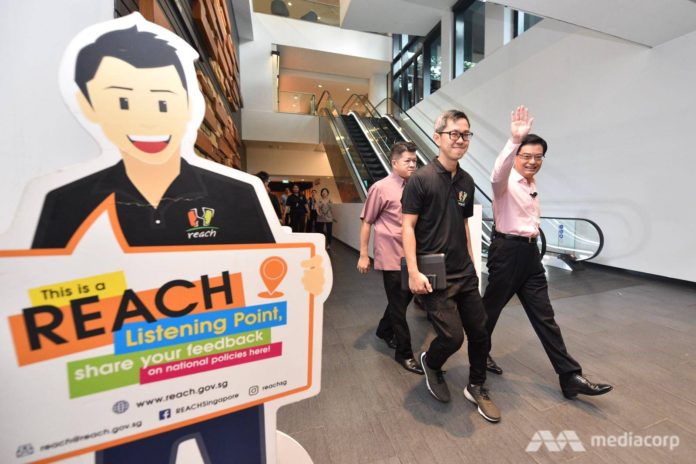
DPM Heng Swee Keat arrives at a REACH-CNA dialogue session on Jun 15, 2019. (Photo: Jeremy Long)
Minister for National Development Lawrence Wong and his team will also work closely with residents to shape their living environment and build a stronger sense of community, Mr Heng said.
The country’s young people, meanwhile, are being engaged by Minister for Culture, Community and Youth Grace Fu and her team to create a vision of Singapore 2025 through the Youth Action Plan.
Additionally, Minister for Social and Family Development Desmond Lee and Education Minister Ong Ye Kung will lead their respective teams to work with community groups to support the disadvantaged and give them a good start in life, Mr Heng elaborated.
The Deputy Prime Minister added he has been working closely with Minister for Trade and Industry Chan Chun Sing, Minister for Communications and Information S Iswaran, Minister in the Prime Minister’s Office Ng Chee Meng and Mr Ong to create good jobs for Singaporeans. This is in partnership with business leaders, trade associations and chambers and unions, he added.
Part of the process of engagement is a soon-to-be-launched Citizens’ Panel, Mr Heng said. The panel, to be led by Manpower Minister Josephine Teo, will work with people to come up with ways to improve work-life harmony – “an issue close to the hearts of many Singaporeans”, he added.
This is not the first time the Government is engaging Singaporeans: Things like the Community Network for Seniors, to build a community of care and support for seniors, and SG Secure, to rally the community and make the country more resilient, are examples of ongoing efforts, Mr Heng pointed out.
“We may have different views but so long as you have the good of Singapore at heart, we can work together,” he said.
DPM Heng Swee Keat and CNA presenter Steve Chia at a REACH-CNA dialogue session at the Singapore Management University on Jun 15, 2019. (Photo: Jeremy Long)
CREATING A SHARED FUTURE
Mr Heng also shared that the fourth-generation leaders will be engaging Singaporeans on how to build a future Singapore together.
He noted that many Singaporeans today want to play a bigger part in nation-building, not just in contributing ideas but also to shape the shared future. But to do so effectively, there is a need to enlarge and safeguard the common space and build trust among communities.
He said: “This can happen only if we keep an open mind. Look at issues not just through our lens, but also through the perspectives of others.
“The Government must also be prepared, if necessary, to step in if particular groups pursue their agenda in ways that divide society or impede the good work of other groups,” he added.
With that in mind, Mr Heng said the 4G leaders will in the coming months be speaking with Singaporeans on four themes.
One of these is how to remain a resilient nation in the face of major developments around the world like climate change, while another is how to remain a city of possibilities – harnessing technology and building a place where “sports, arts, culture and heritage can flourish”.
The leaders will also want to learn how to build a society with more opportunities for all and provide a strong foundation for all Singapore’s children, and how to build on the strong foundation of a multiracial, multi-religious and multicultural society to forge an “even more caring, gracious, kind and cohesive community”, Mr Heng added.
The ministers, himself included, will set out not just what is their vision for the future, but how they think they can get there, he said.
“We will be frank about the challenges we face, the trade-offs we will have to make, the hard truths confronting us,” Mr Heng said.
The REACH-CNA dialogue session was held at the Singapore Management University on Jun 15, 2019. (Photo: Jeremy Long)
“We will listen to your views and explore together what the Government can do, what each of you can do, and how we can create partnerships to take good ideas forward.”
He said that trust between the people and the Government is “absolutely essential”.
“The best way to win (Singaporeans’) trust is to first trust you with the truth – no matter how hard or unpopular,” Mr Heng said.
WORK OF A GENERATION
He said his experience leading Our Singapore Conversation from 2012 to 2013 to hear the views of Singaporeans, which led to significant policy changes, such as changes to the PSLE scoring system and MediShield into MediShield Life, has “strengthened“ his belief that along with working for Singaporeans, the Government “needs to work better with you”.
“We need to shift from a Government that focuses primarily on working for you, to a Government that works with you,” he said. “Working with you, for you.”
Mr Heng said what he had outlined will not be a short-term project but the “work of a generation” as they cannot expect partnerships to happen overnight in every policy domain.
It will also be a learning process for everyone, he added. Government agencies, for example, will have to learn to better engage and rally different groups of Singaporeans and accept good ideas where they may come from, yet still exercise leadership and not abdicate their responsibilities, he pointed out.
Similarly, community groups and individuals will have to learn to better engage with each other and with the public sector, Mr Heng said.
“I am confident that new and exciting ideas, and many constructive actions, will surface,” the Deputy Prime Minister said. “As long as we persist, learn from each other, we can forge a new way forward, step by step.”
SINGAPORE: There are times when disheartening online comments make you almost want to quit social media altogether.
Thursday (Jun 13) was one of those days for me.
After the Ministry of Education (MOE) came out to underscore the severity of a case involving a female secondary school teacher convicted this week of sexually exploiting her 15-year-old male student, a similar set of disturbing comments that prompted MOE’s response in the first place started to mushroom on social media.
“What abuse? It’s enjoyment,” said a reader.
“The boy will be looked upon as a superstar,” said another.
And the verdict on these lewd reactions? It’s men just being men, a third reader said.
PROGRESS ON ONE FRONT
Thursday was also the day the National University of Singapore (NUS) announced a plan to implement recommendations from a review committee, after undergraduate Monica Baey took her grievances against a fellow student who filmed her showering to Instagram.
It was assuring to see NUS accept the need to rectify what Minister for Education Ong Ye Kung had called a “manifestly inadequate” set of penalties and get cracking on rolling out a full suite of new measures that better reflect zero tolerance towards sexual voyeurism.
Tougher sanctions and the establishment of a victim care unit will hopefully go some way to deter potential perpetrators and provide better support for victims.
But while progress in tackling one area of sexual misconduct has been achieved, comments on the teacher-student case show our overall attitudes regarding gender and sex clearly have some way to go.
Education Minister Ong Ye Kung in Parliament on May 8, 2019.
TOXIC VIEWS ABOUT SEX
Some corners of our society seem to hold toxic views of masculinity, including the idea that women are objects of conquest.
Online chatter on the case suggest the teenager had the upperhand and there was no way he had been coerced into doing something he didn’t want to.
Despite their age difference of more than 10 years, many seem to think the boy would have been able to navigate a confusing, not to mention criminal, relationship with an older woman.
If the case had involved a 15-year-old girl and a 26 year-old male teacher, we would have been up in arms. Yet because the student was male, he couldn’t have been a victim, the thinking goes in some quarters.
Some even have in mind an image of the teacher in question as a sweet, young and innocent thing, though she was the adult entrusted with the boy’s care.
TRUST AND VULNERABILITY EXPLOITED
There have been scores of other cases of sexual exploitation where an adult continues to develop a relationship with a minor, offering favours and treats, brushing off the knowledge that such illicit exchanges are wrong, and coaxing the youth to get comfortable with a pat, a shoulder rub and more.
(Photo: Unsplash/Clem Onojeghuo)
It’s even more abhorrent when the adult is in a position of authority. Students naturally look up to teachers as role models.
Sometimes, in that disorienting waft of admiration, the onset of adolescence and raging hormones can blur lines. Reverence for an adult figure whose validation is sought and who much time is spent around can be mistaken for romantic affection.
“Child sexual abuse happens when an adult exploits a child’s vulnerability … The child can’t comprehend what’s happening. They can’t give consent; they aren’t developmentally ready for it,” says AWARE’s Laika Jumabhoy who works with victims at its Sexual Assault Care Centre on the episode on The Pulse.
This recognised vulnerability of minors that cut across gender is one that changes to the Penal Code passed just last month sought to protect. Our laws have shifted – but have our mindsets?
Afterall, studies suggest girls and boys are more alike on all major psychological variables at that age than these online comments would have you believe. Some research even suggest boys mature slower.
POWER IN SEXUAL RELATIONS
To those who uphold the teenager as some sort of hero to be worshipped, can you imagine if it were your child?
Any trusting, wide-eyed youngster can fall prey to a confident, sweet-talking adult who doles out gifts and nice gestures that later turn out to be part of a manipulative predator’s toolkit only in hindsight.
It’s so much easier if sexual predators turn out to be monsters or perverts operating in the shadows who we all agree deserve appropriate punishment – like in Monica Baey’s case or that of a 28-year-old man who was sentenced (also on Thursday) for having sex with a girl half his age.
But in the figure of a 26-year-old woman, we cannot fathom her exercise of power over a boy. We still cling onto an assumed male dominance in sexual relations.
‘MEN WILL BE MEN’
Back to how readers reacted on social media, and one reader excusing others for congratulating the boy. That too is problematic.
“Men will be men” suggests men behave a certain way, are expected to be brash and unapologetic, and do not need to take responsibility for what they say or do, which is deeply troubling.
Sorting out our problematic gender relations that belie these comments is admittedly a tall order.
Instead of shock and outrage, what we need is an honest conversation about our relationship with sex and how men and women view each other.
And we can start breaking this cycle by refraining from excusing bad behaviour on the basis of gender.
“Men will be men” and “what a lucky boy” are not harmless phrases to be repeated.
Lin Suling is executive editor at CNA Digital News where she oversees the Commentary section and hosts The Pulse podcast.
SINGAPORE: When he was 18, Ng Say Tiong started taking heroin, egged on by bad company in the Tanjong Rhu area where he lived with his parents and two younger brothers.
The son of a coolie and a hawker was arrested and sentenced to three years in a Reformative Training Centre for taking drugs.
He continued to commit crimes after his release from the reformative training centre. For this, Say Tiong was jailed on more than 10 occasions, mostly for drug offences but also for hurting others. He would take drugs, drink alcohol and attack others with weapons when he felt enraged by what they said.
“I would feel frustrated,” Say Tiong, now 61, told CNA in a mix of Mandarin and Hokkien. “When I’m frustrated, I cannot think (straight).”
The repeated heroin use, revolving door experience with prison and a brother with developmental problems weighed heavily on him. He said he felt sad and depressed.
In 2002, at the age of 44, he was diagnosed with depression by psychiatrists at the Institute of Mental Health (IMH) while serving a 10-year prison sentence.
There are others like Say Tiong, whose troubles and mental conditions form a backdrop against which they commit crime.
1 IN 10 PRISONERS HAVE MENTAL DISORDERS, DEPRESSION ‘MOST COMMON’
The Singapore Prison Service (SPS) told CNA that about 10 per cent of prisoners here are diagnosed with mental disorders, the most common being insomnia, adjustment disorder and depressive episodes.
Criminal defence lawyers told CNA that depression is perhaps the most common mental illness they have seen among accused persons.
Lawyer Sunil Sudheesan, who has handled about a thousand cases in his 14 years of practice, said about 300 to 400 of his clients had some sort of psychiatric issue, with depression being the most common.
“The core of depression is that it results in a person behaving in a way which they would not normally behave because you can’t deal with your problems and therefore your ability to control your reactions sometimes is affected significantly,” he said.
While mild depression may not excuse a person from criminal liability, lawyer Eugene Thuraisingam said severe or moderate depression can impair a person’s judgment and become a mitigating factor in sentencing.
Mr Shashi Nathan, a partner in criminal litigation at Withers KhattarWong, said: “Ultimately, there is also the issue of whether the mental illness has any causal link to the offence. For many persons, the mental illness is merely a condition which may not have a determining effect on the criminal act.”
HOW ARE THEY TREATED IN PRISON?
Inmates with mental illnesses receive treatment for their conditions by a team of psychiatrists and medical officers while they are incarcerated. A team of correctional rehabilitation specialists and psychologists also give them counselling and therapy.
According to Dr Christopher Cheok, senior consultant at IMH’s department of forensic psychiatry, the process in prison is no different from hospital clinics.
“Patients are assessed, given medication as needed and provided with psychotherapy and occupational therapy. The only difference is that they are seen in a secure setting,” he said.
He added that the goals of treatment are the same – to reduce psychological suffering and manage the mental illness.
Despite their condition, most will be assessed to be well enough to mingle with the general prison population and can be put through work and rehabilitation programmes.
Only those with severe mental conditions are separated from the general population. They are treated for their condition by a team of IMH psychiatrists, psychologists, and occupational therapists who work closely with SPS’ psychologists. The aim is to help these inmates understand and manage their mental disorders and prepare to reintegrate them into the general inmate population.
While the law accords the same rights to people with mental illnesses as any other person, there are special provisions for those whom the court finds unfit to plead because they are of unsound mind, said a Ministry of Law (MinLaw) spokesman.
Their plea will not be taken and the court will order the person to be examined by a medical practitioner or remanded for observation in a psychiatric institution for up to a month.
If the medical practitioner certifies that the person is incapable of making his defence, the court may release him if it is certain that he will receive proper care and would not harm himself or others.
The alternative is for the matter to be referred to the Minister for Law, who may order the person to be confined in a psychiatric institution or any place of safe custody for treatment, said the spokesman.
Their mental state will be reviewed by independent experts at least once every six months and they may be discharged on the minister’s order following a review, said MinLaw.
Ex-convicts may continue their treatment with IMH after their release from jail. The institute began the Forensic Psychiatry Community Service in 2012 to provide continued treatment and service to ex-convicts with a psychotic, affective or anxiety disorder diagnosis, supported by case managers and medical social workers. More than 460 patients who are ex-convicts have completed this voluntary one-year programme.
After this one year period. they could either be transferred to IMH care teams handling the general patient population for treatment and support or receive care from community partners if their conditions are less complex and have stabilised.
HOW ARE ACCUSED PERSONS WITH MENTAL ILLNESS DEALT WITH IN COURT?
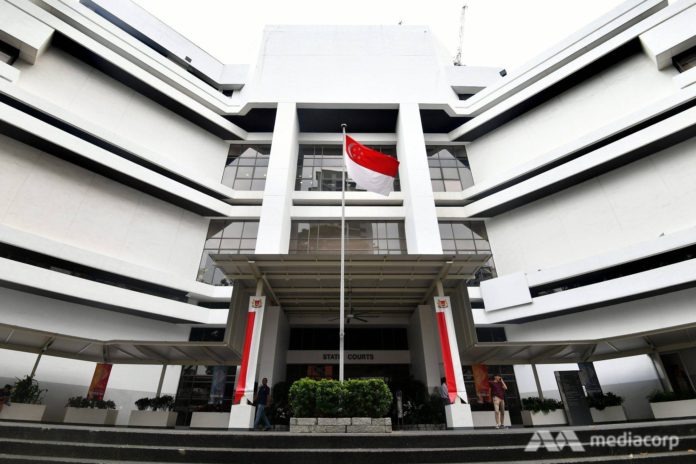
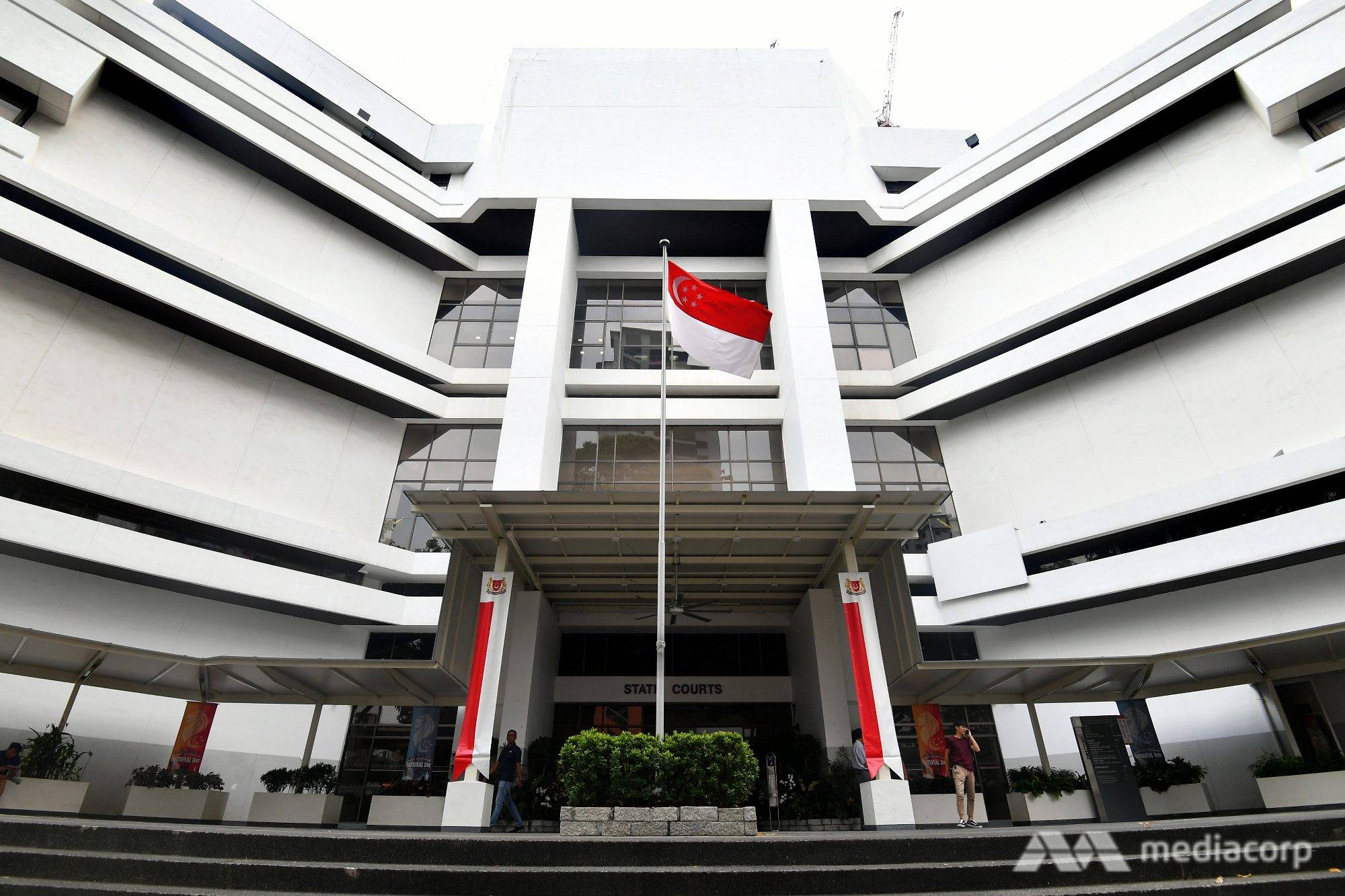
File photo of the State Courts in Singapore. (Photo: Jeremy Long)
Accused people could be given non-jail sentences that focus on rehabilitation.
Singapore’s community court, which has a problem-solving approach and an emphasis on rehabilitation, was set up in 2006 for special cases including offenders with mental conditions.
It can now impose mandatory treatment orders (MTOs) for up to three years, where offenders must undergo psychiatric treatment as an alternative to imprisonment.
Other than MTOs, the community court could impose community service orders; day reporting orders where offenders must present themselves to a reporting centre for monitoring, counselling and rehabilitation programmes; or short detention orders.
Following recent changes to the Criminal Justice Reform Act, MTOs can be imposed on offenders convicted of a prescribed list of more serious offences, which are punishable with up to seven years’ imprisonment, up from offences punishable with up to three years’ jail.
WHEN DOES MENTAL ILLNESS PLAY A PART?
Each case is unique and is dealt with on its own set of circumstances, lawyers and psychiatrists told CNA.
Criminal defence lawyer Eugene Thuraisingam said mental illness can come into play at two other stages in the court process, with the first in considering some defences in certain types of crime. For example, having a mental condition could allow a person accused of murder to argue for the defence of diminished responsibility, he said.
The second is in sentencing, where the courts could give a reduced punishment if an accused person’s mental illness is shown to have played a part in his commission of the offence.
But just because an accused person has a mental illness does not mean he gets a reduced sentence or a community-based sentence, and not all types of mental illnesses are given weight as a mitigating factor, they said.
For example, an accused person suffering from paedophilic disorder may not succeed in using that in mitigation, said Mr Thuraisingam as “it’s not the type of offence which affects your judgment”.
“A paedophile is predisposed in a particular way but there’s nothing affecting his judgment as to whether to do something right or wrong. It must in a way affect your ability to resist (committing the crime),” he explained.
“It is different for someone with impulse control (disorders) which affects his judgment on whether to do something or not,” he said.
“In the event that the suspect is diagnosed with a mental disorder, the psychiatrists will further assess if this has impaired the suspect’s judgement at the point of committing the act,” said IMH’s Dr Cheok.
Dr Christopher Cheok, senior consultant at the Institute of Mental Health’s department of forensic psychiatry, in a posed photo. (Photo: IMH)
Private psychiatrist Dr Munidasa Winslow, who was previously with IMH, said beyond making the assessment, he would also make recommendations to prevent the person from reoffending.
The judge will look at the psychiatric reports tendered by the prosecution and defence in coming to a decision on how much mitigating weight to give, if at all, to the offender’s mental condition.
THE JAIL QUESTION, AND HOW LIKELY RECOVERY IS
Jail time may not necessarily be the best option for accused persons with mental conditions, said lawyers.
Lawyer Mr Thuraisingam said: “(For) a normal person, you jail him once, he will think – I don’t want to do this again, because I don’t want to go to prison. But a person who has mental illness may not think that way.”
Criminal lawyer Sunil Sudheesan said jail is too “short-term”. “Because you come out and there’s nothing,” he said. “You’re left in the wilderness.”
Jail will not work “all the more” for recalcitrant offenders with mental conditions, as “there needs to be a more interventionist sort of MTO” which could involve a stay in a psychiatric institution, said Mr Sudheesan.
He cited the case of Goh Lee Yin, a woman diagnosed with kleptomania who committed suicide in 2017 after repeatedly being convicted of shoplifting.
“You know the entire stigmatisation of the criminal justice process and the trauma involved there, sometimes it’s clearly too much for people to bear,” he said.
Psychiatrist Dr Winslow who was involved in the case, said he knew she needed “a lot more help for her mental condition”, adding that the legal criteria for how a condition contributes to a crime and mental health criteria “are not exactly aligned all the time”.
PROGRESS AND WHAT MORE CAN BE DONE
But Dr Winslow said he sees progress.
“If they have committed a crime, they want to be able to punish them for the crime, but there’s a greater emphasis overall than when I first started in the 1980s towards restorative justice, they want to see that people who have mental health conditions get the help for those mental health conditions and that is something that I see a lot more strongly than before,” he said.
Mr Nathan said family members can also help by being more open about those with mental illnesses.
“Pretending that a condition doesn’t exist or sweeping it under the carpet could ultimately cause more harm to the offender. Ultimately, we all have to remove the stigma attached to mental illnesses,” he said.
Dr Winslow added that there seems to be a greater awareness of mental health conditions that makes people more willing to talk about them to their lawyers or doctors.
He said the solution is for people to recognise if they have got issues, to persistently seek help and be aware that, sometimes, it takes time.
“After you restore hope, and tell people you actually have a condition that can be treated, life can change,” he said. “Maybe I’m a little bit more of an optimist, but I think that even judges like to see lives saved rather than just putting people into prison.”
SALVATION A LONG JOURNEY
For Say Tiong, salvation came after a long journey and near-death experiences.
Say Tiong is doing much better these days, spending his time volunteering. (Photo: Lydia Lam)
While he was in IMH after a referral there by the court, one of his ward mates asked him to join him in killing himself. His ward mate died, but Say Tiong was saved by a nurse and was later told that his mother had died the night before.
He had tried committing suicide seven or eight times in various ways over his lifetime – but was not fully cognisant that he suffered from depression until he was admitted to IMH on a court order.
“I would think – I should die. Living has no meaning. I felt very sad,” he said. “I asked myself why did I become like this – I kept taking heroin, why did no one save me? Why was my mother in a wheelchair, and my brother had brain problems. I would drink and drink and drink, before smoking heroin.”
Looking back on his life, Say Tiong said he took drugs as a form of escape each time.
Say Tiong, who still visits IMH from time to time, has managed in recent years to cut down the dosage of the medication he takes for his depression.
He no longer leads a life of crime since his release from prison in 2012, after meeting a fellow inmate who introduced him to Christianity.
“I took drugs because I felt frustrated – why would I take drugs, why did I take this road? I knew it was wrong, but I kept doing it. I couldn’t help myself,” he said. “Now I don’t need to escape anymore. Now I am happy.”
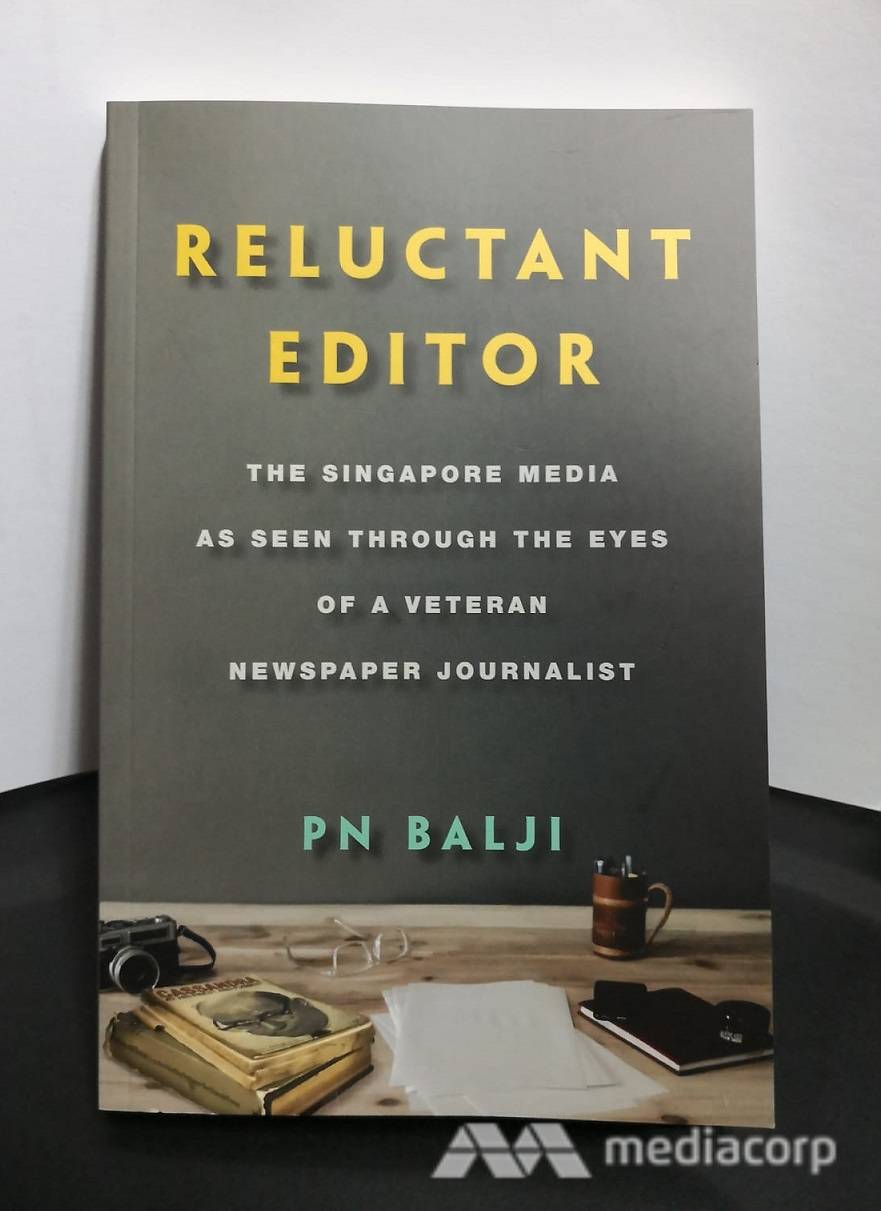
SINGAPORE: Veteran journalist and former editor PN Balji on Friday (Jun 14) launched a tell-all book about his time in the media industry, detailing the highs and lows of his 40 years in the newsroom and his brushes with the Government.
The 70-year-old, who entered journalism in 1970, has worked at five newspapers – TODAY, The Straits Times, TNP and the now-defunct Malaysia Mail and New Nation. During his career, Mr Balji also helmed New Nation, TNP and TODAY.
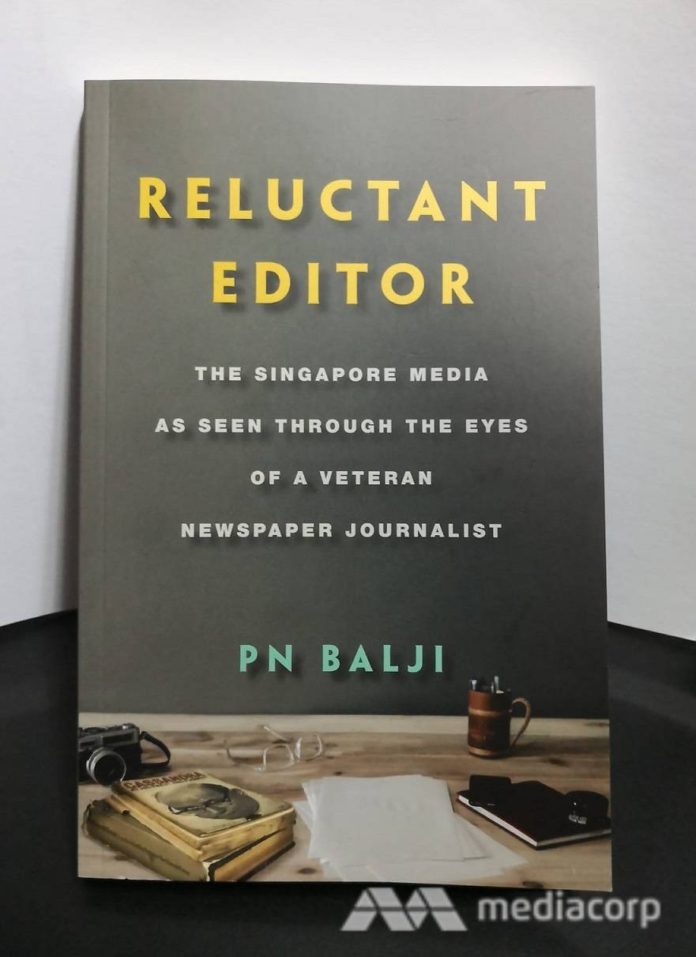
PN Balji’s Reluctant Editor details the highs and lows of his years in the newsroom. (Photo: Jalelah Abu Baker)
RELUCTANT EDITOR
The seed for Mr Balji’s book, titled Reluctant Editor, was planted about four years ago when he was interviewed about the media industry for oral history records, he told CNA.
“A lot of things came back fresh, and I thought: ‘Before I suffer from dementia, I’d better put all these things on record’,” he said.
But it was a book by former Straits Times editor-in-chief Cheong Yip Seng, OB Markers, that inspired Mr Balji to finally work on his own book.
Mr Cheong’s book details the relationship between the media and the government, which Mr Balji’s book also does.
“Singapore journalists hardly write stories about journalism. Many of them take these stories to the grave,” he said, adding that he did not want to be one of them.
The book, which includes a foreword by Ambassador-at-large Professor Tommy Koh, was however, not without its challenges.
The anecdotes in Reluctant Editor could potentially upset the people involved in those past incidents, Mr Balji said. To smooth things out as much as possible, he checked in with those people for their opinions and edited the book based on their feedback, Mr Balji said.
The launch event held at Huggs-Epigram Coffee Bookshop in Tanjong Pagar notably lacked a guest-of-honour.
He wanted to keep it simple and informal, Mr Balji said.
That, however, did not mean a lack of guests. Even before the launch event started at 7pm, the small cafe was overflowing with guests and a queue of people eager to buy his book.
All 200 copies of his book were sold out before the two-hour event ended.
Of his book, Mr Balji said: “It’s not a book about me, it’s about journalism. It’s also about a band of editors who did a lot of things that would surprise today’s generation.”
Among those present were former Straits Times editor-in-chief Peter Lim, Mr Balji’s brother, Sivaji, who is a former national football coach, CNA’s founding editor Woon Tai Ho and author and activist Constance Singam.
Published by Marshall Cavendish, the 195-page book retails at S$23 and is sold at all major bookstores. An online edition is expected in the future.
SINGAPORE: Operationally-ready national servicemen (NSmen) and their families will not have to pay a fee if they are late picking their child up from selected preschools, SAFRA announced on Friday (Jun 14).
The initiative – which will run from next month until Jun 30, 2020 – applies to the families of NSmen who are away for their annual In-camp Training (ICT) or serving other NS duties.
The aim is to thank NSmen for their service to the nation, and recognise the additional responsibilities that family members have to take on when NSmen are called up, said SAFRA.
The four preschool brands participating in the initiative are NurtureStars, Kinderland, ELFA and Skool4Kidz. More preschools are also encouraged to offer the same benefits, said SAFRA.
To enjoy the waiver, families will have to submit NSmen’s NS call-up notifications, such as the SAF100, to the participating preschools.
The initiative is one of a slew of We Thank NSmen initiatives introduced by SAFRA in the lead-up to SAF Day on Jul 1.
From Jun 24, SAF servicemen and SAFRA members can also enjoy more than 120 special SAF Day deals in appreciation of their contributions to Singapore’s defence.
These include one-for-one weekend movie deals at Shaw Theatres cinemas, discounts at retailers, as well as promotions at brands such as Lazada, Shopee, Collin’s, Cold Stone Creamery and Yum Cha Restaurant.
SAF servicemen can present their SAFRA membership card or SAF11B to enjoy these benefits, the full list of which can be viewed at www.safra.sg/safday.
Another popular initiative is the Appreciating NSmen Art Jam session, which returns for a second year.
Senior Minister of State for Defence Maliki Osman joins NurtureStars Preschool children as they enjoy an NS-themed game as part of the Appreciating NSmen Art Jam. (Photo: SAFRA)
It is a bonding session where preschool children can make specially designed figurines depicting NSmen, and write personal thank-you messages on them as gifts to their fathers.
More than 500 preschool centres and more than 70,000 children will participate in the sessions, aimed at helping children better appreciate the role of NSmen and the reason they serve.
“Last year we started with about 100 preschools joining us, but this year we have gone to 500,” said Senior Minister of State for Defence and SAFRA president Maliki Osman on Friday at SAFRA Toa Payoh NurtureStars Preschool.
“It shows a lot of support from the preschool sector. This means that we are able to reach about 70,000 potential preschoolers, and about 60 per cent of the whole preschool sector.”
SINGAPORE: A construction safety school is set to open in July to train workers and boost safety standards in the industry.
This comes amid a rise in overall workplace injuries in 2018 when there were 12,810 cases, an increase of about 2.5 per cent from the 12,498 cases in 2017.
Of the cases last year, 41 resulted in fatalities. So far this year, there have already been 11 workplace fatalities across industries, with six from construction, said the Singapore Contractors Association Limited (SCAL).
The 1,200 sq ft construction safety school at JTC Space@Gul, launched on Friday (Jun 14), uses technology to train workers. Virtual reality, augmented reality, as well as gaming and other simulation tools are used to facilitate learning, said SCAL.
“We’re trying to simulate the actual conditions so that when workers actually feel it, then they will realise and remember why safety is important to them as well,” said SCAL president Kenneth Loo.
One example is the suspension trauma simulator, which allows workers to experience what it is like should they fall with a harness strapped on.
Workers are taught how to kick their legs continuously as they are slowly lifted by the simulator. It is a technique to keep blood circulating, as it has been found that if a person is suspended for longer than seven to nine minutes, blood will start to accumulate at the lower limbs, risking serious injuries.
There are also VR headsets to immerse workers in the environment of a construction site to experience what working at height feels like.
The school also adopts training methods from other countries such as South Korea.
The opening simulator allows workers to experience the impact of a sudden 1.8m fall. (Photo: Corine Tiah)
Built at a cost of S$2.2 million, the new school is an initiative by JTC. SCAL was awarded the tender to design, build and operate it.
Speaking at the launch on Friday, Minister of State for Manpower Zaqy Mohamad said technology will be key in improving workplace safety.
“The construction industry in Singapore comprises workers from different culture, nationalities and languages. This year, the construction demand is expected to remain strong, and more new and inexperienced workers will be arriving at our shores,” he said.
“By taking safety training out of the traditional classroom environment, workers can have a better grasp of safety concerns. More importantly, in the context of our construction industry, technology can bridge the language and cultural gaps of our workers.”
Minister of State for Manpower Zaqy Mohamad looks at the consequences of an overcurrent accident. (Photo: Corine Tiah)
Two training courses have been tailored for JTC – a half-day project team onboarding programme and a one-day safety induction for workers and trade supervisors.
The classes will be rolled out progressively from July, starting with newly awarded JTC projects.
“All their workers that go through their construction sites will have to come through this training to actually experience this training before they are allowed on-site,” added SCAL’s Mr Loo.
The one-day safety induction course costs S$100, which will be borne by the employers. At least five other contractors have expressed interest in using the school, which can train up to 15,000 employees every year.
Trainings will be conducted in English for now, but the school is looking to include multiple languages like Mandarin, Malay, Tamil and Bangladeshi.