SINGAPORE: National Day Parade (NDP) 2019 themed-trains will run until Aug 18 to celebrate Singapore’s 54th birthday, the Land Transport Authority (LTA) announced on Wednesday (Jul 10).
Four trains on the North-South East-West, North East, Circle and Downtown lines will be redecorated with red and white stars.
There will also be posters and banners featuring well-known Singaporeans, such as swimmers Ang Peng Siong and Joseph Schooling.
LTA said in a Facebook post that it partnered with the National Day Parade Committee and Singapore’s public transport operators – SBS Transit and SMRT – to launch the NDP themed trains.
(Photo: Facebook/Land Transport Authority)
(Photo: Facebook/Land Transport Authority)
The new designs reflect this year’s NDP theme “Our Singapore”, and will commemorate Singapore’s bicentennial, LTA added.
Paya Lebar MRT Station’s platform and its transfer linkway have also been decorated in a similar theme, LTA said.
NDP 2019 themed decorations are Paya Lebar MRT station (Photo: Facebook/Land Transport Authority)
SINGAPORE: British billionaire James Dyson, inventor of the bagless vacuum cleaner, has bought Singapore’s most expensive penthouse, official records show.
The three-story penthouse – once valued at S$100 million – sits on the 62nd to 64th floor, is equipped with a private pool and located in the heart of Singapore’s financial district.
Dyson announced in January he is moving his head office from Britain to Singapore to be closer to its fastest-growing markets. His eponymous firm – which also makes bladeless fans, air purifiers and hair dryers – plans to build its first electric car in the city-state.
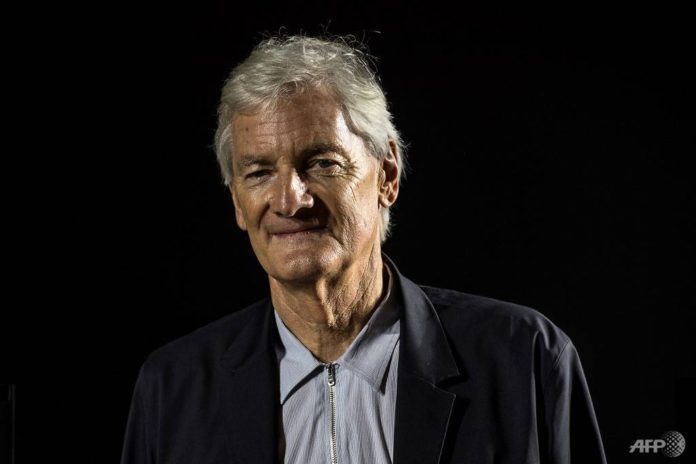
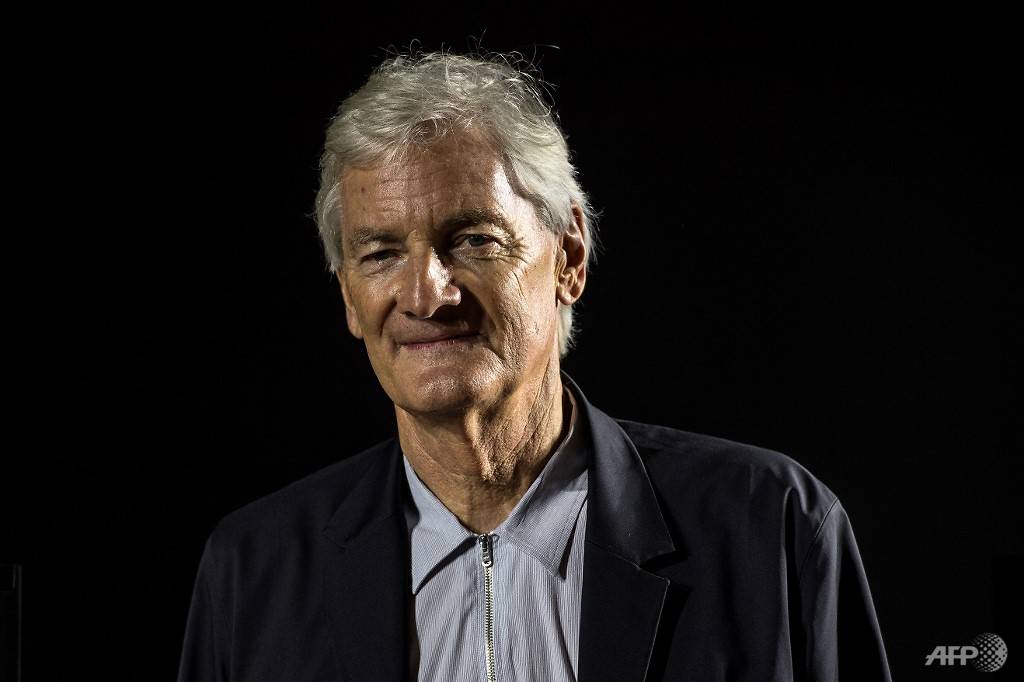
Founder of the Dyson company, designer James Dyson, poses during a photo session at a hotel in Paris on Oct 11, 2018. (Photo: AFP/Christophe Archambault)
Wallich Residence’s penthouse sits in the tallest building in Singapore, Guoco Tower, built by developer GuocoLand.
Before its unveiling in 2017, the highest asking price for the “bungalow in the sky” reached a dizzying S$100 million, making it Singapore’s most expensive.
Official title records seen by Reuters show Dyson and his wife became tenants of the 99-year leasehold property on Jun 20. The records did not state the price paid but Business Times reported that Dyson bought the property for S$73.8 million.
Wallich Residence is located at the top of Guoco Tower, the tallest building in Singapore. (Photo: Wallich Residence website)
“Given the decision to locate the headquarters in Singapore and the growing focus of the company’s business in the region, of course James Dyson has bought a property there,” a Dyson spokesman said, without giving further details of the purchase.
The 72-year-old has become one of Britain’s best-known entrepreneurs, creating a multibillion-dollar company from an insight that a cyclone could collect household dust better than a clogged-up bag.
In July last year, Singapore intensified property curbs in a bid to cool the market after a 9.1 per cent annual increase in home prices and as developers paid record amounts to buy land.
Foreigners now have to pay levies of more than 20 per cent to buy property in Singapore under the new rules.
SINGAPORE: Four women and two men were arrested over the sale of counterfeit luxury goods and apparel during raids at Far East Plaza, police said on Tuesday (Jul 9).
The suspects, aged between 26 and 54, were arrested on Sunday when officers from the Criminal Investigation Department raided seven retail outlets, police said in a news release.
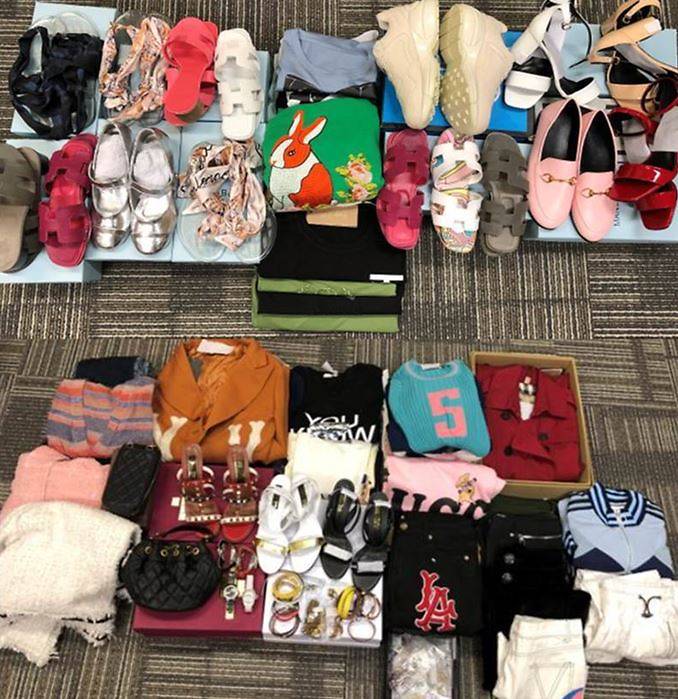
More than 500 items with an estimated value of about S$80,000 were seized, police said. The trademark-infringing goods include footwear, watches, bags and caps.
Police investigations are ongoing.
Counterfeit items seized from Far East Plaza shops. (Photo: Singapore Police Force)
Those found guilty of selling or distributing items with falsely applied trademarks may be fined up to S$100,000 or jailed for up to five years, or both.
“The police take a serious view of intellectual property right infringements,” police said.
“Distribution and sale of counterfeit goods are serious offences and the police will not hesitate to take tough action against perpetrators who profit at the expense of legitimate businesses and consumers.”
SINGAPORE: One person was taken to hospital after an SBS bus mounted a road divider in Simei on Tuesday (Jul 9), causing two lanes to be closed to traffic.
In a dashcam video sent by a CNA reader, the bus can be seen atop the divider in the centre of the four-lane road.
“The whole front windshield is smashed,” said the reader.
The Singapore Civil Defence Force (SCDF) said it responded to an accident at the junction of Simei Road and Simei Street 4 at about 6.40pm.
One person was taken to Changi General Hospital.
A Simei resident who lives nearby said she was having dinner when the accident happened. It sounded like “the collapse of a building”, she said.
The resident, who wanted to be known only as Lyn, said members of the SCDF and the police arrived shortly after, with a tow truck arriving about 15 minutes later.
A double-decker bus mounted on a central divider on Simei Road on Jul 9, 2019. (Photo: Lyn)
Two lanes, one on each side of the road where the bus mounted the divider, were closed, with police redirecting traffic.
This story came from a reader tip-off. If you would like to send in photos or videos of something newsworthy, WhatsApp our Mediacorp news hotline at +65 8218 8281 or message us on Facebook.
SINGAPORE: British technology firm Dyson is looking to hire “substantially” more workers in Singapore, its CEO Jim Rowan said as the company continues to ramp up production and capabilities in facilities across the country.
Dyson currently employs about 1,100 people at a manufacturing facility in Jurong, a technology centre at Science Park and a commercial office in one-north.
“That (number) will grow quite substantially over the course of the next few years,” Mr Rowan told reporters on Tuesday (Jul 9).
“We’ll continue to add capability and production at the digital motor facility in Jurong. And we continue to expand the Singapore Technology Centre in the Science Park … to facilitate growth and engineering.”
Dyson makes its patented digital motor – which powers its cord-free vacuum cleaners and personal care machines – at the Jurong facility and develops future technologies like artificial intelligence at the Science Park centre.
While Mr Rowan declined to reveal how many more workers Dyson would hire in Singapore, he said the figure would be “significant”, especially as the company shifts from mechanical engineering to software and electronics.
“We’ve been having so much software and electronics in our products, and so much intelligence that that’s the skillset that we need,” he said.
Dyson is also looking for skills like digital marketing, Mr Rowan said, pointing out that digital retailing has become more important with a decline in traditional brick-and-mortar stores.
This means building more websites and sales channels through platforms like WeChat to “reach the social media shopper”.
“All of that has been some of the skills that we’ve had to go after,” he added. “But of course, those are the skills that many companies are looking for.”
Dyson CEO Jim Rowan (right) addressing reporters on Jul 9. 2019. (Photo: Aqil Haziq Mahmud)
Nevertheless, Mr Rowan said he is confident of getting the right people with the right skills “if we put (in) enough effort”, stating that competing for labour in Singapore is not tougher than, say, in the United Kingdom.
“We can actually get the skills we need partly because the education levels in Singapore are so high,” he said. “We can get very high quality graduates that we can then probably train up.
“So they come to Dyson with all the ingredients that we need: Cognitive intelligence, a degree in engineering disciplines that we need.”
Mr Rowan said Dyson could also tap on the fact that Singapore is a hub for the disk drive and semiconductor industries.
“That’s driven a capability of precision engineering and mechatronics,” he explained. “In the digital motor facility, we have a lot of ex-disk drive people. They’ve joined us and we’ve managed to use those skills that they’ve honed in different industries.”
NEW BEAUTY LAB IN SINGAPORE
One industry that Dyson is currently strongly invested in is personal care, which it called its fastest-growing sector with products like air purifiers and a lamp that simulates natural daylight.
On Tuesday, Dyson launched its first beauty lab demo store at the revamped Funan mall in Singapore, featuring its Supersonic hair dryer and Airwrap hair styler.
Mr Rowan responded to claims that the dryer is expensive (it costs S$599) by saying it dries hair faster and is quieter and safer to use. That’s because it contains a glass thermostat and processor that measures heat 20 times per second, ensuring hair is not damaged.
The Funan store is the first in Southeast Asia to offer free customisation of the Supersonic hair dryer. (Photo: Aqil Haziq Mahmud)
To showcase the qualities of the Dyson products, customers can try a wet-to-dry hair styling session, where experts will wash their hair before styling it with the Air Wrap or Supersonic.
“We will take you through the best way to use it and the attachments and styles you can create with the different aspects and settings of the machine,” said Graeme McPherson, head of Dyson’s personal care category.
“Any questions about style, hair health, how to protect your hair, or technology in the products, you can also ask on site.”
Head of Dyson’s personal care category Graeme McPherson holding up the company’s patented digital motor. (Photo: Aqil Haziq Mahmud)
There are four styling stations on site, and interested customers can reserve a slot by dropping by the store or visiting Dyson’s Singapore website. Each session lasts about one hour depending on hair length and type.
“We’re not just getting people in and out,” Mr McPherson added. “It’s really a place that we can have time with people. The real benefit is to ask questions and see (the technology) in action.”
There are four hair styling sessions like these in the Funan store. (Photo: Aqil Haziq Mahmud)
A Dyson spokesman said this kind of demo lab is the “first of many to come” in Singapore, adding that it would next open a customer service centre at the nearby Capitol Piazza.
As for the addition of new products at the Funan store, Mr McPherson said “as always at Dyson, we’ve always got a lot of things coming in the future”.
“Personal care is a category of products which we’ve invested really heavily in,” he continued.
“Now we’ve got this base knowledge and foundation, experts in science and technology to work with here, obviously we are looking for future products and machines. But obviously, I can’t divulge anything right now.”
TIGHT-LIPPED ON ELECTRIC CAR
Details of another product that Dyson is determined to keep secret are for its electric car, which Mr Rowan said remains on track for launch in 2021.
“2021 would be a reasonable time scale for that product,” he said, noting that the product and technology involved is “pretty complex”.
“It’s a very competitive market and becoming more competitive, so we’re keeping things close to our chest for the moment.”
Dyson confirms that its electric vehicle is on track for 2021 launch. (Photo: Dyson)
By the time Dyson’s first car is ready in 2021, Tesla might already be selling locally produced cars in China after it signed a deal with the Shanghai government to build its first overseas Gigafactory.
When asked if he was confident Dyson’s electric car could stand out amid fierce competition, Mr Rowan said it was about making the product different and meaningful to the customer.
“I think you need to be clear on what segment of the market you’re going to go into, where the differentiation is going to take place,” he added.
“When you’re comfortable that you’ve got enough differentiation, and it’s in line with Dyson’s philosophy, then that’s when we can get pretty excited.”
Dyson’s store in Funan is the “first of many to come”. (Photo: Aqil Haziq Mahmud)
In the broader picture, Mr Rowan said Dyson prides itself on inventing and disrupting markets through technology differentiation that solves problems.
“The time where you can make one machine and hope to sell that globally is gone,” he stated.
“You need to make sure that you make a machine that is specific for each demographic or region in the world, that solves a problem that particular part of the world has – smaller homes, faster hair drying, lighter machines.
SINGAPORE: Many new jobs are available in industries that have been disrupted by technology, and the challenge is training workers so they can transit from their current jobs into these new jobs, Minister for Trade and Industry Chan Chun Sing said on Tuesday (Jul 9).
Speaking to CNA938, Mr Chan said that the way to get these workers ready is to “retrain them as fast possible”.
He gave the example of how staff who worked as bank tellers previously have now been retrained to be customer relations officers, involved in selling insurance and wealth management products.
“Their previous jobs have been displaced by technology, but they have been retrained by the banks, together with the Government, to take on new jobs, and it is very exciting to hear how people in their 40s, 50s are able to take on new roles,” he said.
The minister’s comments come amid an increase in retrenchments and a drop in job vacancies in the first quarter of 2019, owing mainly to restructuring and reorganisation.
Mr Chan said that Singapore must be confident that “for every job displaced by technology, there will be one, if not more jobs created by the same technology”.
He pointed to the retail sector, which has been hit by the growth of online shopping.
“What goes down in the brick and mortar stores in sales, goes up on the Internet in sales. And when the Internet sales go up, we need new people to run the logistics, the accounting behind the scenes, the computer software,” he said.
PROTECTING WORKERS, NOT JOBS
The jobs will change and Singapore must keep training and retraining workers so they have the best opportunities in the new economy, Mr Chan assured.
He was responding to a question from a CNA938 listener on what leaders are doing to protect jobs here without going down the protectionism route favoured by other countries.
While politicians in other countries say that they will protect jobs, Singapore’s mantra is “quite different”, he said.
“We are not here to protect jobs, we are here to protect the workers,” he said adding that this will make sure that they do not try to stay in their old jobs in industries that are not thriving.
However, he cautioned that the landscape will be “uneven”, that as people are displaced and need to be retrained, there will be many sectors like Information Technology and Artificial Intelligence that will be short of experienced people. This is a “worldwide issue,” the minister said.
Despite the red dots in the first quarter labour statistics, employment increased, and unemployment remained low. When asked if he was confident that these would stay the same despite the economic headwinds, Mr Chan said numbers have so far “held steady”, and that he is more concerned about the quality of jobs Singaporeans have in the short to medium term.
There are always more jobs than the number of working adult Singaporeans – more than 3.5 million jobs for about 2.3 million people – but it is not just about the number of jobs, Mr Chan said.
“It is about whether the Singaporeans can get the jobs they desire,” he added.
MAKING SURE SINGAPORE IS ATTRACTIVE FOR INVESTMENT
Singapore will have to make sure that rules are progressive, that there is political stability and that there is a rule of law, in order to attract investments here for the long haul, Mr Chan told CNA938.
Alongside the Government, businesses have to constantly explore new products and markets, while workers have to keep working with their companies on how they can upgrade their skills, the minister said.
He pointed to pharmaceutical giant GlaxoSmithKline as an example of a company which has brought these three aspects together in Singapore.
Trade and Industry Minister Chan Chun Sing (right) at the launch of GSK’s new pharmaceutical manufacturing facility in Pioneer on Jul 5, 2019.
The multinational company recently invested more than S$100 million in Singapore and brought its efforts to develop a new cancer treatment drug here because it needed a place it could trust to put its Intellectual Property, Mr Chan said.
He added that the machines behind the new drug were designed by a local team.
ASEAN countries have to work together to bring down tariff and non-tariff barriers to make the regional bloc more attractive to investors.
He was responding to another question from a CNA938 listener, on whether there will be more collaborative economic activities to safeguard Singapore’s position within ASEAN. Mr Chan replied “definitely”, and that ASEAN economic ministers are working hard together.
“We all understand one simple fact. Each ASEAN country on its own is a very small market. But if all the 10 ASEAN countries come together, we are a 6 million-people market, and it becomes an attractive proposition for people to want put their money here to create jobs for people in ASEAN,” he said.
SINGAPORE: Prime Minister Lee Hsien Loong on Monday (Jul 8) reaffirmed warm and friendly relations between Singapore and Armenia, during an official visit to the Istana by Armenia’s Prime Minister Nikol Pashinyan.
In a Facebook post on Monday, Mr Lee said Singapore’s national flower, the Vanda Miss Joaquim was a testament to the close historical ties between Singapore and Armenia.
The Vanda Miss Joaquim was the world’s first hybrid orchid and was successfully bred by Miss Agnes Joaquim, an avid horticulturalist and second-generation Singaporean of Armenian descent. Her tombstone is within the grounds of the Armenian Church along Hill Street, built in 1835.
“Vanda Miss Joaquim and the Armenian Church attest to the long ties between Singapore and Armenia,” said Mr Lee.
“Though small, our Armenian community have left their mark on Singapore history.”
Mr Lee also mentioned the Sarkies brothers who opened the iconic Raffles Hotel Singapore in 1887, and Catchick Moses, who co-founded The Straits Times newspaper.
Mr Pashinyan received an official welcome ceremony on Monday morning, and called on President Halimah Yacob and PM Lee. He was also hosted to lunch by Mr Lee.
Armenia’s Prime Minister Nikol Pashinyan receives an Official Welcome Ceremony at the Istana on Jul 8, 2019. (Photo: MFA)
“During the meetings, the leaders reaffirmed the warm and friendly relations between Singapore and Armenia, building on close historical ties and common interests as small states,” said Singapore’s Ministry of Foreign Affairs (MFA).
“President Halimah and Prime Minister Pashinyan welcomed efforts to strengthen economic, people-to-people and cultural ties.”
Mr Lee and Mr Pashinyan also reaffirmed their strong support for the “speedy conclusion” of negotiations for the Eurasian Economic Union-Singapore (EAEU) free trade agreement.
MFA added: “Prime Minister Lee thanked Prime Minister Pashinyan for the progress made in the negotiations during Armenia’s current Chairmanship of the EAEU.”
Both leaders also concluded a double taxation agreement and signed MOUs in tourism, culture and education.
Mr Lee added that they were cooperating to establish Armenia’s own Botanic Gardens, and look forward to strengthening economic relations through the free trade agreement.
Mr Pashinyan attended the Singapore-Armenia Business Roundtable on Monday afternoon. He will call on Speaker of Parliament Tan Chuan-Jin and visit the Economic Development Board on Tuesday, before departing Singapore the same afternoon.
SINGAPORE: Reusable water bottles were considered for this year’s National Day Parade (NDP) funpack, but this was not implemented due to the lack of suppliers who could do so at an affordable cost.
Minister for Defence Ng Eng Hen revealed this in a written answer to a parliamentary question by Member of Parliament Louis Ng on Monday (Jul 8).
Mr Ng had asked whether a reusable water bottle could be provided for the NDP funpack instead of a single-use plastic bottle.
“Drinking water in reusable bottles was considered but not implemented as there were a lack of suppliers which can do so at an affordable cost,” said Dr Ng.
“Instead, to reduce the use of single-use plastics, the funpack will have a larger 750ml water bottle instead of the two bottles provided in previous NDPs.”
Four bamboo straws of different sizes are included in this year’s funpack. (Photo: Corine Tiah)
The minister said that in planning for each NDP, the executive committee (Exco) “strikes a balance” between sustainability goals and the comfort and well-being of Singaporeans who participate and watch the event.
“The Exco works with the National Environment Agency (NEA) to promote more sustainable practices for each National Day Parade,” he added.
Mr Ng also asked whether an alternative to the plastic bag in the funpack was considered, and whether collection points for unused ponchos could be used to collect other unused items.
It was earlier announced in June that unused ponchos and LED wristbands will be collected at the end of each NDP rehearsal and preview, and would be given out at the next one as part of the parade’s sustainability efforts.
Dr Ng replied that a plastic bag was included in each funpack “to facilitate the bagging and hygienic disposal of waste”, in support of the Keep Singapore Clean Movement.
He added that spectators will be able to leave at the collection points items such as unused ponchos, LED wristbands, the funpack itself, as well recyclables such as the water bottle.
The suspect allegedly used the fake S$50 notes on at least two occasions to buy items of “low value”, said police.
Property seized by the police, including S$50 notes believed to be counterfeits and a printer, as well as printing paper and apparel. (Photo: Singapore Police Force)
(Updated: )
Bookmark
SINGAPORE: A 57-year-old man was arrested on Monday (Jul 8) for allegedly using counterfeit S$50 notes to pay for his purchases.
The police said they received a report on Jul 5 that several pieces of fake notes had been found in the vicinity of Upper Bukit Timah Road.
Preliminary investigations found that the suspect is believed to have printed several S$50 notes with his own printer. He allegedly used them on at least two occasions to buy items of “low value”, said the police in a news release.
Authorities seized six pieces of what’s believed to be counterfeit S$50 notes, a printer, printing paper and clothing.
The man will be charged on Tuesday.
If found guilty of using counterfeit notes as genuine currency notes, he could be jailed for up to 20 years and fined.
This is the latest in a series of recent cases involving the use of fake notes.
Last month, the police advised people to be alert for counterfeit Singapore currency notes after fake S$100 and S$50 notes were used at convenience stores, restaurants and retail outlets.
Police urged members of the public to make a police report if they receive any suspected counterfeit notes.
“Limit the handling of the suspected counterfeit note and place it in a protective covering, such as an envelope, to prevent further tampering,” they added.
SINGAPORE: Harsher penalties for drink drivers, public transport fares and mandatory registration for drones were some of the issues debated by MPs in Parliament on Monday (Jul 8).
The main topic of discussion was the amendments to the Road Traffic Act, which will see harsher penalties for reckless motorists who cause death by dangerous driving.
Here are seven things you might have missed from Monday’s proceedings:
1. HARSHER PUNISHMENTS FOR RECKLESS DRIVERS
There will now be harsher punishments for reckless motorists who cause death or drink drive.
A police officer arresting a suspect in Singapore. (Photo: Hanidah Amin)
For causing death by dangerous driving, first-time offenders will be jailed for at least two years, while repeat offenders will be given a minimum sentence of four years.
Drink drivers will now face double the current penalties. For first-time offenders, they could be jailed for up to a year, fined, and be disqualified for at least two years.
For the second offence, they face up to two years in jail and a fine of between S$5,000 and S$20,000, as well as a ban from driving for at least five years.
During the debate about amendments to the Road Traffic Act, Nominated Member of Parliament Lim Sun Sun recalled how she was knocked down by a double-decker bus on Jun 13 at the junction of Upper Changi Road East and Somapah Road.
Just as she was to get to the other side of the road crossing, she said she “felt something very large looming” over her.
“I was stunned and I even made eye contact with the driver and caught his horrified expression as he saw me,” she explained.
“The next thing I knew, I had been thrown onto my back and I felt my head hitting the road very, very hard. At that point, I literally saw stars – those in my head and those in our beautiful night sky – although I couldn’t tell which was which.”
MP for Ang Mo Kio GRC Ang Hin Kee also told Parliament how a private-hire car had knocked into his car because the driver was distracted by his passenger.
3. SPARED THE GALLOWS
MPs also heard why a Nigerian man who was originally sentenced to death for importing about 2kg of Ice was allowed to walk free.
File photo of a gavel (Photo: Jeremy Long)
Senior Parliamentary Secretary for Home Affairs Amrin Amin explained that Adili Chibuike Ejike, who was arrested at Changi Airport in November 2011 after the drugs were found the inner lining of his suitcase, was spared the gallows because he did not know about the presence of the drugs.
“The one key issue was whether Adili could rebut the presumption that he knew the nature of the drugs in his suitcase,” Mr Amin said.
“Members will appreciate that once the prosecution accepts that the accused did not know of the presence of the drugs, then the presumption cannot apply.
“This legal reasoning is neither novel nor new, and is not in any way different from the Government’s understanding of the law,” he added.
He was also asked if there was a need to review the provisions of the Misuse of Drugs Act.
Transport Minister Khaw Boon Wan said rail companies are operating at a loss and that the fares paid by commuters do not cover the operating costs.
Jurong East MRT station. (File photo: Ngau Kai Yan)
He said there will be a need in future to review the formula by which transport fares are determined.
Parts of Singapore’s MRT system is now on par with other world-class systems like the Taipei Metro and Hong Kong MTR, but Mr Khaw said the Public Transport Council’s fare adjustments had not been “fully implemented” until recently.
He spoke about how Singapore might meet this shortfall.
All drones in Singapore will have to be registered by the end of this year, while pilots of “large or capable drones” will need to have them licensed.
A file photo of a drone in Singapore. (Photo: AFP/Roslan Rahman)
It comes after sightings of unauthorised drones near Changi Airport caused a runway to close intermittently between 11pm on Jun 18 and 9am on Jun 19. A total of 38 flights were affected.
When asked about the perpetrators, Senior Minister of State for Transport Lam Pin Min said investigations are still ongoing and that it is too early to tell if they were Singaporeans or foreigners.
“There will be a few selfish and irresponsible persons who operate in flagrant disregard of the law, as well as the needs and concerns of others,” Dr Lam said, noting that by and large, enthusiasts fly their drones responsibly.
He also told MPs that Singapore’s aviation authorities have stepped up countermeasures at Changi Airport.
Environment Minister Masagos Zulkifli assured people that the air and water quality in Singapore have remained unaffected by the pollution in nearby Pasir Gudang.
Fumes from toxic chemicals dumped in Sungai Kim Kim in Pasir Gudang in March 2019 caused students and teachers from nearby schools to experience shortness of breath and vomiting. (Photo: Bernama)
More than 1,000 children in Johor have fallen ill since the first incident in March this year.
Mr Masagos said Singapore’s agencies have put in place precautionary measures to guard against potential pollution impacts arising from the chemical incidents.
The Government is closely monitoring economic developments and will be ready to step up support for companies and workers here, said Trade and Industry Minister Chan Chun Sing.
FILE PHOTO: U.S. President Donald Trump meets with China’s President Xi Jinping at the start of their bilateral meeting at the G20 leaders summit in Osaka, Japan, June 29, 2019. REUTERS/Kevin Lamarque
The minister pointed to the US-China trade war as a key uncertainty, as well as the risk of a disorderly Brexit.
And while growth for 2019 is “likely to be weaker than earlier envisaged”, according to central bank chief Ravi Menon last month, Mr Chan stressed that there remains “pockets of strength”.