Home Blog Page 738

For 33 years, Singaporean couple helped a ‘forgotten’ people – at a personal cost

0

PHILIPPINES: What was supposed to be a two-year trip to the Philippines to do good, turned into more than three decades of serving others.

But in doing so, Lily Ang and her husband, Toh Nee Lim, sacrificed precious time with family, missed their daughter’s graduation and – most distressingly for her – wasn’t there when her father died.

“I felt like I was a hypocrite loving strangers, and I couldn’t be at the death-bed of my dad,” she said with emotion. 

“By the time I arrived home, he’d passed on, and I felt so guilty… I thought that I’d failed him because my dad didn’t want me to come here as a missionary, but he loved me so much.”

There were also “derogatory” remarks from relatives to deal with, including about the couple’s children growing up in a foreign land.

“Many of them were not supportive, they were very insulting. They looked down on my children and said, ‘Your kids are so stupid… they don’t even know how to speak Mandarin’,” Ang told the programme On The Red Dot.

And yet, the Singaporean couple have few regrets about the life they’ve given up in order to help impoverished communities like the indigenous Ati gain access to medical care and education. (Watch the episode here.)

OTRD SIngapore Couple Ati  girl with lupus

18-year-old Mahal has lupus, but like most Ati, has no access to the affordable heathcare she needs to manage her symptoms. 

A DIFFICULT START

When Ang and Lim first arrived in the Philippines in 1986 on a mission trip, life was “very, very tough”, she said. They drank and cooked with rainwater, which culminated in her getting hospitalised for amoebiasis, a parasitic infection.

“For almost two decades after, I was very scrawny, very gaunt, and it took quite a while for me to get back to normalcy,” she said.

Both had left their careers behind: Ang had been in marine insurance, and Lim with the Singapore Civil Defence Force. Both, according to Lim, had been “good friends” back in Singapore, “but when we came here, we were enemies”.

OTRD SIngapore Couple Ati old pic

Ang remembered Lim as her “taskmaster” and she, his “servant” who was always assigned the toughest jobs – such as being sent to communities with many drug addicts and drunkards. In her words: “I was the only lady on the team, so he wanted to break my strong spirit.”

But over time, they came to realise that they shared the same values and purpose in life. They eventually got married.

THE FORGOTTEN PEOPLE

One of the communities that the couple has been helping, with food and medical supplies, is the indigenous Ati, a marginalised tribe living in poverty on the island of Panay.

The Ati are the original owners of the lands of Panay, but because of commercialisation, they were pushed further up the mountain,” said Lim. “And when there’s no source of food, they come down to the city and they become beggars.”

OTRD SIngapore Couple Ati remote

Some of the homes of the Ati are so remote, with no road access, that the sick need to be carried to receive care.

With their homes in remote and isolated villages, most have no access to basic education. Three in 10 are illiterate, and many are unable to find a decent job to provide their families with adequate housing, clothing and food, say the couple. Malnutrition is common among the children

“We see them begging. We feel for them, because the land belongs to them and now they are homeless and being looked down upon, and sometimes being bullied too,” said Ang.

“They are the forgotten people of the land of the Philippines.”

WATCH: Loving the forgotten (4:54)

Even though the government provides free medical treatment to the Ati – one of the earliest inhabitants of the Philippines – Ang says priority is given to Filipinos who are able to pay. Feeling discriminated against, many of the Ati refuse to visit the hospital, resulting in high mortality rates for the community.

“Each time they go to the pharmacy in the town hospital to get free medicine, they are told, ‘sorry it’s not available’,” said Ang. “That’s why we felt the need to bring the medical mission straight to their doorstep. We bring doctors and dentists to them.”

The couple puts together at least three medical missions every year. Costing about S$12,000 to organise, these are funded mainly by donations from their church congregation and friends in Singapore. The couple’s daughters donate most of the medicines.

OTRD SIngapore Couple Ati clinic

A medical clinic that brings healthcare to the Ati.

A WAY OUT OF POVERTY

Besides distributing canned goods and rice to the Ati, the couple also raises funds to support the children of the community and provide them with scholarships.

They organise trips for Singaporeans to stay in the community for a month to help teach those kids who are unable to speak and write English. They believe that investing in education is the key to lifting them out of poverty; “with a skill, they don’t have to always look to us for money”, said Ang.

She cited how their youth department is headed by a Filipino who was once so poor that he couldn’t complete his studies in the state university. The couple engaged him to tutor their daughter, and with the tuition fees, he completed his studies and is now a professor.

“He is doing the same thing (we did) – he wants to raise funds to send all the young people under him to school,” said Lim.

OTRD SIngapore Couple Ati  kids2

Initially, though, some of the couple’s efforts were met with suspicion by the locals, said Ang.

“They weren’t friendly and even though they spoke cordially to us, they were looking at us with suspicion. ‘Are you here for publicity purposes? Are you trying to make use of us to do something?’”

It took time, but their actions won the community’s trust. The Singaporeans have also learnt how to speak Inati, the language of the Ati.

AWAY FROM THEIR DAUGHTERS

In the midst of all this, setting up a family and maintaining relationships over the years hasn’t been easy.

When Ang got pregnant three months after their marriage, she was deeply miserable as she wasn’t mentally prepared for it. Suffering from morning sickness in her first trimester, she wanted to quit the mission.

“Every day, I’d be craving for Singapore food. I was so frustrated, I felt like killing myself,” she said. She did go back to Singapore briefly to satisfy those cravings, before returning to the Philippines where she gave birth to a girl.

OTRD SIngapore Couple Ati washing hair 2

Lily Ang, washing the hair of an Ati child.

The couple’s second daughter was born two years later. Their older girl left for Singapore to study when she was 15, and the younger at 13. And there were times the children could not understand why their parents had to be away from them.

“The one feeling the brunt of everything was my younger daughter because she felt alone in Singapore,” said Ang, who is now 56.

“She said, ‘why can’t I have a normal family where I come home and my parents are there, and the food is on the table and the lights are on? Why must I always return to a place where I have no parents?’”

Lim, 58, said the separation was very difficult for them as parents too, and their children felt like they came second to their mission.

OTRD SIngapore Couple Ati family photo

The couple and their children the latter were young.

“But, as they saw the way we do the work, they began to understand our motivation and we became closer. In fact, recently my daughters said, ‘Daddy and mummy, the two of you are just awesome people’,” said Lim.

One daughter, now 28, is working in Singapore while the other, aged 30, is studying for her PhD.

Even though the couple has spent most of their lives in the Philippines helping others, they don’t feel tired and plan to continue their efforts.

“Many times, we get discouraged. But we move on and insist on helping the people,” Lim said. “They have come to understand us.”

Watch the On The Red Dot episode here.
 

OTRD SIngapore Couple Ati Lily Toh Nee

Source link

NDP 2019: Singaporeans turn out in droves to catch the mobile column

0

SINGAPORE: At 6.35pm, just 10 minutes before the mobile column was due to arrive at Bishan, there was an explosion of excited murmuring.

“It’s here, it’s here!” cheered the crowd waiting by the road, as the entire mobile column rolled in, from the intimidating Leopard tanks to the familiar red-and-white Singapore Civil Defence Force (SCDF) emergency vehicles.

Uniformed soldiers greeted Singaporeans in the crowd with waves and smiles, which the red-clad crowd enthusiastically returned.

NDP heartlands 2019 (3)

Singaporeans interacting and taking pictures with a tank in Bishan. (Photo: Cindy Co)

Among them was engineer Marvin Quek, who had been waiting for one and a half hours with his wife and son at the carnival opposite Bishan MRT.

“I’m here because my son wants to take a look at the Leopard tank,” he said. “I’m quite excited; it’s just like a recap of the mobile column in 2001 … during my NS days.”

NDP heartlands 2019

Soldiers in the mobile column waving to spectators. (Photo: Cindy Co)

Mr Peter Tay, 53, came with his twin sons, Shane and Sherwin.

“It’s a happy occasion,” he said. “(We are here to) see how strong the Singapore army is. I feel proud to have such a strong army protecting us and it’s a good experience for the children.

“The songs make me feel very proud to be a Singaporean.”

NDP heartlands 2019 (2)

A mother and son looking at the mobile column. (Photo: Cindy Co)

Bishan was just one of the neighbourhoods the mobile column passed through on Saturday (Aug 10), in extended National Day Parade (NDP) celebrations in the heartlands.

As part of its 50th anniversary, the mobile column visited five neighbourhoods – Bishan, Jurong East, Woodlands, Punggol and Geylang Serai – and has been noted by the NDP committee to be a “traditional crowd favourite”.

READ: NDP 2019: Past and present contributions honoured in bicentennial spectacle at the Padang

READ: In pictures: National Day Parade 2019

FROM CITY CENTRE TO HEARTLANDS

The mobile column began its journey at the F1 Pit Building at about 2pm, according to spectators waiting by the road.

Mr Patrick Wee, 22, had been waiting at the pit since noon, as he expected a large crowd.

When asked for his thoughts on the mobile column, he said: “Just acknowledging that Singapore has a strong defence. With increased threats, Singapore has to be ever-ready.”

NDP heartlands 2019 (1)

A soldier in a tank waving to spectators. (Photo: Cindy Co)

For Mr Wafi, 35, he brought his family to the F1 pit to “catch most of the action” at the start, while indulging his son’s interest in vehicles.

A CARNIVAL ATMOSPHERE

At each of the five heartland destinations, carnivals set up by grassroots organisations lent a party atmosphere to the occasion, as residents waited for the mobile column to arrive.

The excitement was intense at Woodlands as Singaporeans living in the area came in droves to participate in the carnival’s activities.

In addition to regular food and beverages, there were also stage performances by students.

Ms Wong Wei Sum, who was with her husband and two children, said her son and daughter wanted “to see the army tanks”.

“I try to go somewhere fun in our country (with my children), and to let my daughter and son get to know Singapore better.”

NDP heartlands 2019 (4)

Ms Wong Wei Sum and her son hanging their wishes for Singapore on the wall. (Photo: Cindy Co)

Others, such as Ms Lee Sai Luang, 76, went to watch the fireworks. This is the first time in more than a decade that fireworks have been set off in the heartlands.

“We’re happy spending time (together),” said Ms Noriza Mohd Salji, 31, who was there with her family of seven. “We want to celebrate and bond with each other.”

Mr Aldwin Teo, 37 – who has failed to ballot successfully for NDP tickers in 15 years – said: “(There is) much more NDP atmosphere here. It’s good for family bonding – young and old come together, of all races.”

READ: NDP 2019: What it takes to operate a 6m tall, 1,000kg lion puppet

READ: What it’s like to ride in the Mobile Column at NDP

“THANK YOU … FOR WALKING THE JOURNEY”

Prime Minister Lee Hsien Loong was present at the celebrations in Bishan, where he arrived with several MPs including Ms Denise Phua, Mr Chong Kee Hiong, and Mr Ng Eng Hen.

Speaking in Mandarin and English, PM Lee acknowledged that while the mood at the NDP celebration on Friday was “very very good, not everybody could go to Padang”.

“So today, the parade has visited all of you in Bishan, and I think it has also gone to Woodlands and gone to Tampines and Jurong – all over Singapore,” he said.

“One of the most heart-warming moments in the parade yesterday was when the mobile column stopped, and we invited all the Merdeka Generation people who are at the parade to stand up so that we could salute them.

“Thank you, you all, for walking the journey from third world to first and bringing Singapore here,” he said.

NDP heartlands 2019 (6)

Prime Minister Lee Hsien Loong recites the national pledge. (Photo: Cindy Co)

He concluded his speech by expressing his hope for younger generation to take Singapore forward.

Twins Shane and Sherwin, 9, could potentially answer that call.

“My heart was beating so fast (when I saw the column), and I was smiling very weirdly,” said Shane.

His brother Sherwin declared: “I’m going to grow up to be a soldier.”

Source link

Indonesia ready for greater cooperation with Singapore: President Joko Widodo

0

JAKARTA: Indonesia’s President Joko Widodo said he wants to deepen ties and increase cooperation across sectors with Singapore – his country’s biggest investor – in an exclusive interview with CNA on Tuesday (Aug 6).

“I think moving forward, we will continue to work with Singapore and especially in Batam, Bintan, and Karimun areas. I think we have a lot of cooperation there, whether in the digital sector, the economy, in the tourism sector, industrial sector. I think we will have a lot of cooperation in those areas,” said the former mayor of Solo, more commonly known by the moniker “Jokowi”.

Indonesia currently has plans to build its longest sea bridge, connecting the islands of Batam and Bintan which are located near Singapore. The bridge will span seven kilometres with construction expecting to begin in 2020.

Once completed, having the sea bridge could ease travel and boost business between the two countries.

Mr Widodo is also looking to work together with Singapore on human capital development, another one of his key visions for next five years.

In 2016, Singapore Prime Minister Lee Hsien Loong and Mr Widodo officially opened Kendal Industrial Park in Semarang, Central Java. The 2,700-hectare park, which is also known as Park by the Bay, is a joint development between Singapore’s Sembcorp Development and Indonesia’s industrial estate developer PT Jababeka.

kendal industrial park

Kendal Industrial Park – a joint development between PT Jababeka and Sembcorp Development. (Photo: Jababeka)

The estate currently houses the Polytechnic of Furniture and Wood Processing Industry to meet the needs of industrial workers and make the furniture industry more competitive.

Mr Widodo believes Indonesia can benefit from working together with Singapore in other industries as well.

“I think we should not only focus on wood but there are many other industries as well. Digital economy, perhaps the creative industry, I think there are so many industries that we can work on together in an effort to develop human capital,” he said, while adding that he is ready to work together across all sectors, whether it means sending Indonesian workers and students to Singapore or whether Singapore builds training centres in Indonesia.

6% GROWTH TARGET FOR INDONESIA

Mr Widodo’s plans to deepen ties with Singapore come amid hopes for Indonesia’s economic growth to surpass six per cent at the end of his second term in 2024.

He said that Indonesia was in a good position compared to other countries, taking into consideration a sluggish global economy that is unsupportive.

“What is most important is the trust of the market, investor confidence towards Indonesia is getting better therefore we expect that in this second term, our economy will grow better, higher, and impact the welfare of the people of Indonesia,” he said.

Indonesia’s economy grew about five per cent in recent years, short of the seven per cent targeted by Mr Widodo ahead of his first term.

READ: Indonesia’s planning ministry targets up to 6% GDP growth in next 5 yrs

Mr Widodo said that he would like economic growth to be as high as possible and that Indonesia is still in the process of improving ease of business. Along with simplifying the procedure for business licenses, he also wants to open foreign investment to Indonesia as wide as possible.

“If this is successful, I am sure economic growth in Indonesia will be better and we hope it will be able to surpass six per cent,” he said.

BOOSTING INVESTMENT

Luring investment is one of Mr Widodo’s visions for his second term.

Addressing a packed auditorium in Sentul, West Java, in July, he told the crowd that Indonesia must not be “allergic to investment” because investment was the key to opening jobs.

Indonesia President Joko Widodo during an interview with CNA on Aug 6, 2019

Indonesia President Joko Widodo during an interview with CNA on Aug 6, 2019. (Photo: Timothy De Souza)

Mr Widodo was outlining his vision for a second term in office after officially being named president-elect. He beat rival and former general Prabowo Subianto in a bitter and divisive election this year, securing 55.5 per cent of the total votes.

In a strongly worded speech, he said barriers to investment must be removed and that he was keeping a stern eye on the process, threatening to “clobber” anyone who stood in the way of progress.

And Mr Widodo appears to be executing his tough stance. Indonesia on Sunday experienced a massive power outage which left Jakarta and several cities in mainland Java in the dark for at least nine hours due to technical issues. State power company PLN suffered over US$6 million in losses.

READ: Jakartans reel from services disruption, traffic gridlock amid massive Java island blackout

Most of the capital’s 10 million people were affected, prompting the use of generators in offices, malls and apartments, while Indonesians took to social media to vent their frustrations.

On Monday, Mr Widodo visited the state electricity firm on Monday to better understand what caused the outage. He criticised the company and said to management: “Things that can cause this big an event should not happen again in the future.”

Speaking to CNA on Tuesday, he admitted that while management at the state-run firm needed to be improved, investors need not worry about the blackout. “Most importantly we have enough electricity and if there are problems we can solve them,” he said.

ANNUAL HAZE

With the dry season set to peak this month, it is not just the economy that the President has to worry about. Six provinces in Indonesia, including three close to Singapore, have declared a state of emergency to battle the annual smog from land and forest fires.

Jambi, Riau, South Sumatra, West Kalimantan, South and Central Kalimantan have been hit by the fires.

On Wednesday, Mr Widodo told military and police officials to sack firefighting personnel if they were unable to resolve the issue.

Speaking at a national coordinating meeting to tackle forest fires, he asked all relevant stakeholders to collaborate in helping to overcome the still occurring forest and land fires, and promised government funds for high-tech equipment like drones to help extinguish the flames.

Satellites on Tuesday morning detected 433 hot spots across the country, with Riau province recording the largest number at 132, according to the National Disaster Management Authority (BNPB).

Fires on Indonesia's Sumatra island and the Indonesian part of Borneo island have caused

Fires on Indonesia’s Sumatra island and the Indonesian part of Borneo island have caused wide-reaching smog. (Photo: AFP/Abdul Qodir)

Indonesian authorities have sent nearly 5,700 firefighting teams to extinguish the flames in the various provinces; 33 helicopters have also been deployed, along with two aircraft to seed clouds to induce rainfall.

Neighbours like Singapore and Malaysia are affected by the annual haze and Indonesia has recorded the highest number of hot spots this year at 975 so far, since the disastrous fires in 2015.

Mr Widodo told CNA that the situation is under control and that while the number of hotspots have increased compared to 2018, Indonesia wants it to decrease as much as possible. Law enforcement would be uncompromising in the matter.

“Compare the number of hotspots this year to 2015, it has dropped down by 81 per cent. But the hotspots this year have indeed increased compared to 2018 so this morning, I invited the police, the military ranks, the governor, the regents and mayors to work together so that the fires must be reduced in all areas as much as possible,” he said.

MAN OF THE PEOPLE

Having won the majority of votes in two elections to secure two terms, “Jokowi” has always presented himself as a man of the people. He has held a wide support base since his days as mayor of Solo, prior to becoming President for the first time in 2014.

On Tuesday afternoon prior to the interview, CNA accompanied Mr Widodo on one of his signature spontaneous walkabouts, or “blusukan”, which allows him to witness situations at a grassroots level and interact with people.

Dressed in a white shirt, black pants and black sports shoes, Mr Widodo received a rockstar’s welcome and was mobbed by the crowd as soon as he exited his vehicle.

The “blusukan” destination was a downtown mall in the heart of the capital, where crowds thronged Mr Widodo for pictures or “selfies,” requests he patiently obliged. Many of them held his hands and wished him well and he also purchased Indonesian batik from Solo.

Indonesia President Joko Widodo takes a selfie with a supporter during a spontaneous walkabout

Indonesia President Joko Widodo takes a selfie with a supporter during a spontaneous walkabout, or “blusukan”, in Jakarta on Aug 6, 2019. (Photo: Chandni Vatvani)

His online engagement with people is even more impressive – 23 million followers on Instagram and close to 12 million on Twitter. He also has 347 videos on YouTube. While most of the videos on President Widodo’s YouTube channel depict his day-to-day activities in office, he also puts up clips which give Indonesians a glimpse into his personal life.

Data from Statista shows YouTube was the most used social network in Indonesia as of the third quarter in 2018, with a penetration rate of 88 per cent. Facebook, Instagram and Twitter are not far off, ranking in the six highest leading social networks.

Mr Widodo admitted to embracing social media, but he encouraged people to use social media responsibly.

Don’t (use it to) spread hoax, fake news, slander, I don’t think those things are good for social interaction between neighbours, friends, anyone. I invite all of us to use social media with good ethics,” he said.

Watch the full interview on “In Conversation,” Monday (Aug 12) at 10.30pm (SIN/HK)

Source link

Commentary: Your spouse or your parents? Who should decide when to take you off life support?

0

SINGAPORE: Last month, 42-year-old Vincent Lambert made headline news around the world when his relatives split into two camps and fought bitterly in court over whether his life should be sustained artificially or withdrawn so he could pass away.

Mr Lambert, who has since died, had been in a vegetative state for more than a decade since a 2008 motorcycle accident left him with quadriplegia and irreversible severe brain injury.

Lambert’s wife, Rachel, wanted to pull his life support – agreeing to doctors recommendation to do so as efforts to improve his conditions were in vain, and that her husband had previously expressed his wish not to be kept alive if he was in a vegetative state. But Lambert’s parents and some other relatives disagreed despite some of Lambert’s siblings taking Rachel’s side.

Lambert’s case has gotten many to ponder over who should decide when to take you off life support.

Vincent Lambert had been on artificial life support since a near-fatal car crash in 2008

Vincent Lambert had been on artificial life support since a near-fatal car crash in 2008 (Photo: AFP/HO)

WHO DECIDES?

If you are ever in Lambert’s position, the best person to decide is yourself.

But the reality of being in a coma or a vegetative state is you are incapacitated and unable to communicate your wishes. It would then be left to the healthcare team and your loved ones to work out the best way forward.

To avoid misunderstanding, guilt and conflict, one should have discussed and communicated their values, goals and wishes ahead of time.

READ: Dealing with the difficult issue of organ donation when a loved one passes on, a commentary

Understandably, talking about death and dying is still a taboo topic in Singapore, as it is in many societies. But holding back wouldn’t do us any good.

Lambert was in his thirties when he lost the mental capacity to make his own medical decisions due to the accident, which was probably the last thing he was expecting to happen. But it did.

How many of us have planned for something like that? Have we made a will, or bought ourselves accident or life insurance?

All of us will die one day, it is only a matter of when, where and how, yet for a phenomenon that is universal, we spend very little time planning for it.

Vincent Lambert's family are divided over whether to end life support

Vincent Lambert’s family are divided over whether to end life support (Photo: AFP/FRANCOIS NASCIMBENI)

ADVANCE PLANNING

There are ways you can plan for circumstances like Lambert’s. 

For example, by agreeing to let the doctor decide whether or not to prolong your life through the signing of an advance medical directive (AMD), or planning the management of your affairs in advance through a lasting power of attorney (LPA).

But these plans have their limitations. An AMD only applies if you are terminally ill, experiencing imminent death, and the provision of extraordinary life-sustaining treatment will only postpone the moment of death. 

It wouldn’t apply if you were in Mr Lambert’s position as he was still breathing unaided even at his vegetative state.

READ: Singaporeans plan our whole lives, so why not our deaths? A commentary

Meanwhile you can appoint a proxy decision-maker, called a donee, to make your medical decisions through an LPA, but the donee is not completely empowered to decide what treatment you should get.

Rather, those decisions are left to the doctor who must make the decision based on the person’s best interests. 

This means that if you were Lambert and had made an LPA, your donee cannot decide to take you off life support – only the doctor can decide.

LIVING WELL AND LEAVING WELL

Last year, when the Ministry of Health announced the republic’s national severe disability insurance scheme, CareShield Life, it notes that one in two healthy Singaporeans aged 65 could become severely disabled in their lifetime, and about three in 10 Singaporeans are expected to live a decade or more with their disability.

These facts tells us that it is not just a good idea, but an imperative, that we begin these discussions sooner rather than later.

READ: Help with disability costs welcomed but allowing withdrawal of Medisave may not benefit all, a commentary

palliative care

CareShield Life will provide higher payouts for life compared to ElderShield, where payouts are fixed at S$300 or S$400 a month, and capped at up to six years, depending on the scheme. (Photo: Reuters)

When you are fit and healthy, being disabled or dependent on others for your basic needs may seem like an unthinkable scenario or an unacceptable way to live; but human beings are adaptable, and people may find a way to cope with unwanted changes in their health status.

These discussions should raise questions of what it means to be living well before leaving well. The answer may vary, not just between individuals, but with same person across his or her life stages.

START TALKING ABOUT DEATH

Many people probably worry about burdening their family, emotionally and financially, but do not realise that this burden may be lessened by having conversations with their loved ones about their values and what a good life means to them.

READ: We treat the business of death like it’s dirty work, a commentary

Start the conversation with your loved ones at home, perhaps using guidance from the “Living Matters” website which was set up by the Agency for Integrated Care (AIC).

Take part in a discussion about your healthcare preferences with your healthcare provider. 

Many healthcare institutions offer advance care planning (ACP) – the process of planning for future health and personal care – for patients to explore their beliefs, values and healthcare preferences.

doctor clinic consultation

(Photo: Unsplash/Arvin Chingcuangco)

Through ACP, reflect on and express your personal beliefs and wishes, and let your love ones know what constitutes a good and meaningful life to you.

Atul Gawande in his best-selling book Being Mortal said:

Well-being is about the reasons one wishes to be alive. Those reasons matter not just at the end of life, or when debility comes, but all along the way.

By having these ACP conversations, and by understanding what well-being means to you, your family and healthcare providers will be able to appreciate your values and preferences. 

In this way too, you won’t be “burdening” your family if when you no longer have mental capacity, and the care you receive will also likely be aligned with your wishes and your best interests.

The time for these conversations, whether as individuals or as a society, is now. Otherwise, it is always too early, until it is too late.

Sumytra Menon is senior assistant director at the Centre for Biomedical Ethics, at the NUS Yong Loo Lin School of Medicine. Dr Noreen Chan is senior consultant and head in the division of palliative care at NUHS’ National University Cancer Institute in Singapore.

Source link

In pictures: National Day parade 2019

0

Singapore turned 54 in style, with a colourful birthday bash at the historic Padang attended by 27,000 people, including Brunei’s Sultan Hassanal Bolkiah, Indonesian President Joko Widodo and Malaysian Prime Minister Mahathir Mohamad.

The National Day parade which comes amid Singapore’s year-long bicentennial commemorations, was a nod to old and new, featuring a massive glittering lion prop and the return of the popular mobile column segment after four years.

Here’s a look at the best bits in photos:

NDP 2019 National Day Parade Red Lion landing

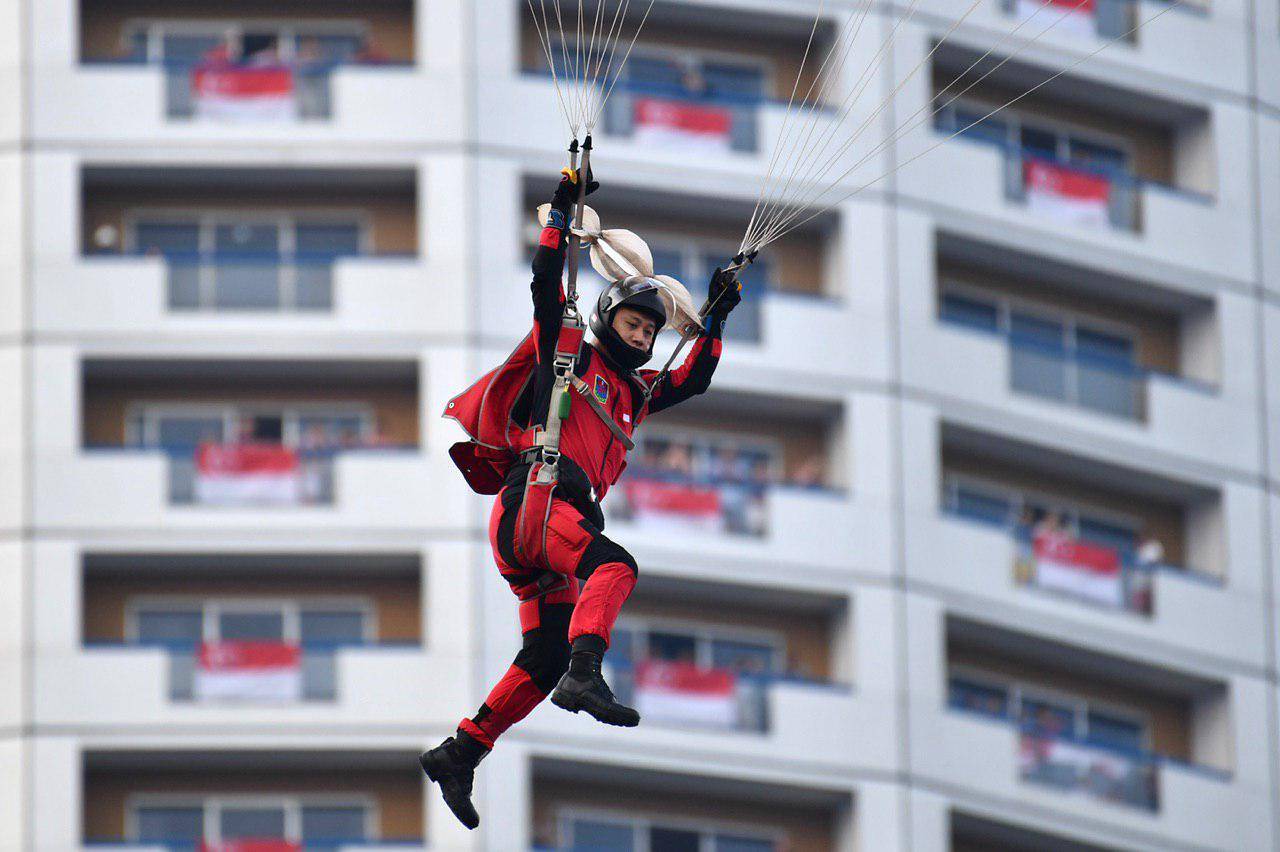
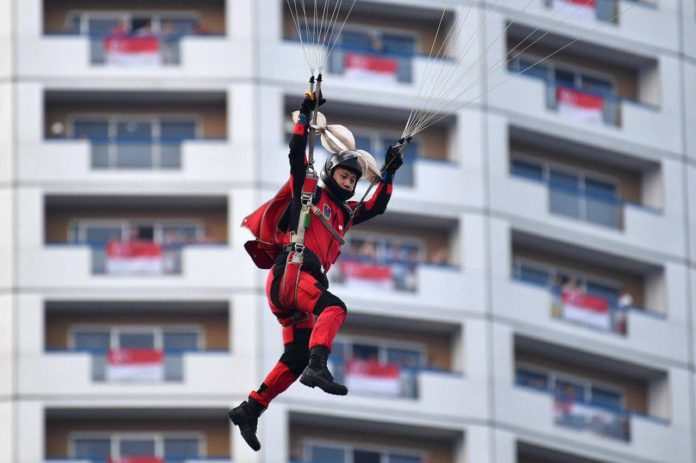
A member of the Singapore Army’s parachute team, the Red Lions, coming in for a landing in the National Day parade at the Padang on Aug 9, 2019, after jumping out of a helicopter from 3,000m in the air. (Photo: Jeremy Long)

NDP 2019 National Day Parade Red Lion jump 2

A trail of smoke from a Red Lion coming in for a landing at the Padang for the National Day Parade on Aug 9, 2019. (Photo: Jeremy Long)

NDP 2019 National Day Parade neon dancers

More than 800 youths wearing neon ponchos provide more than a splash of colour at the National Day Parade on Aug 9, 2019, performing the theme song “We are Singapore”. (Photo: Jeremy Long)

NDP 2019 RSAF F15-SG and the moon National Day Parade

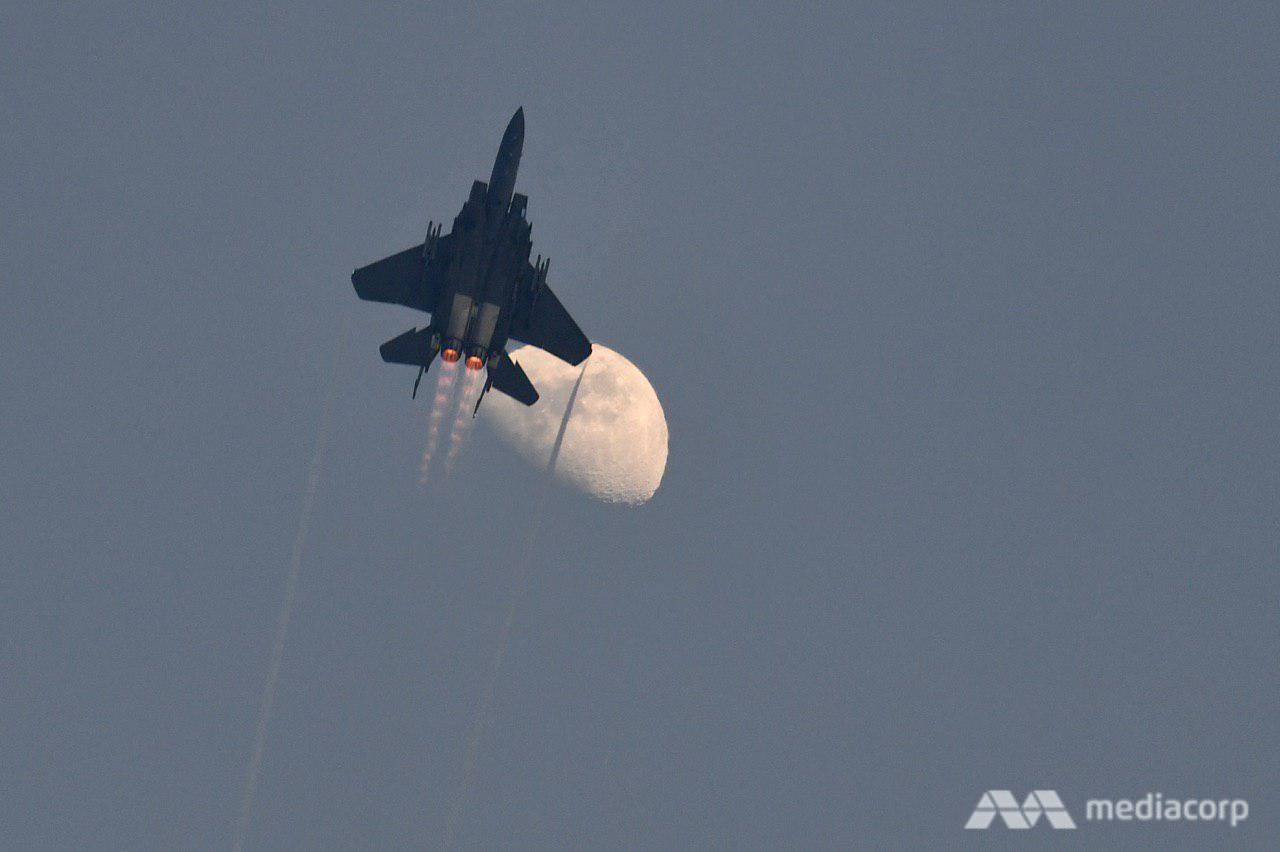
A Republic of Singapore Air Force F15-SG soars into the sky with a vertical climb at the National Day Parade on Aug 9, 2019. (Photo: Jeremy Long)

NDP 2019 RSAF F15-SG Shackle National Day Parade

Two Republic of Singapore Air Force F15-SG fighter jets cross each other’s paths in close proximity with the “Shackle” manoeuvre. (Photo: Jeremy Long)

NDP 2019 RSAF A330 Multi-Role Tanker Transport

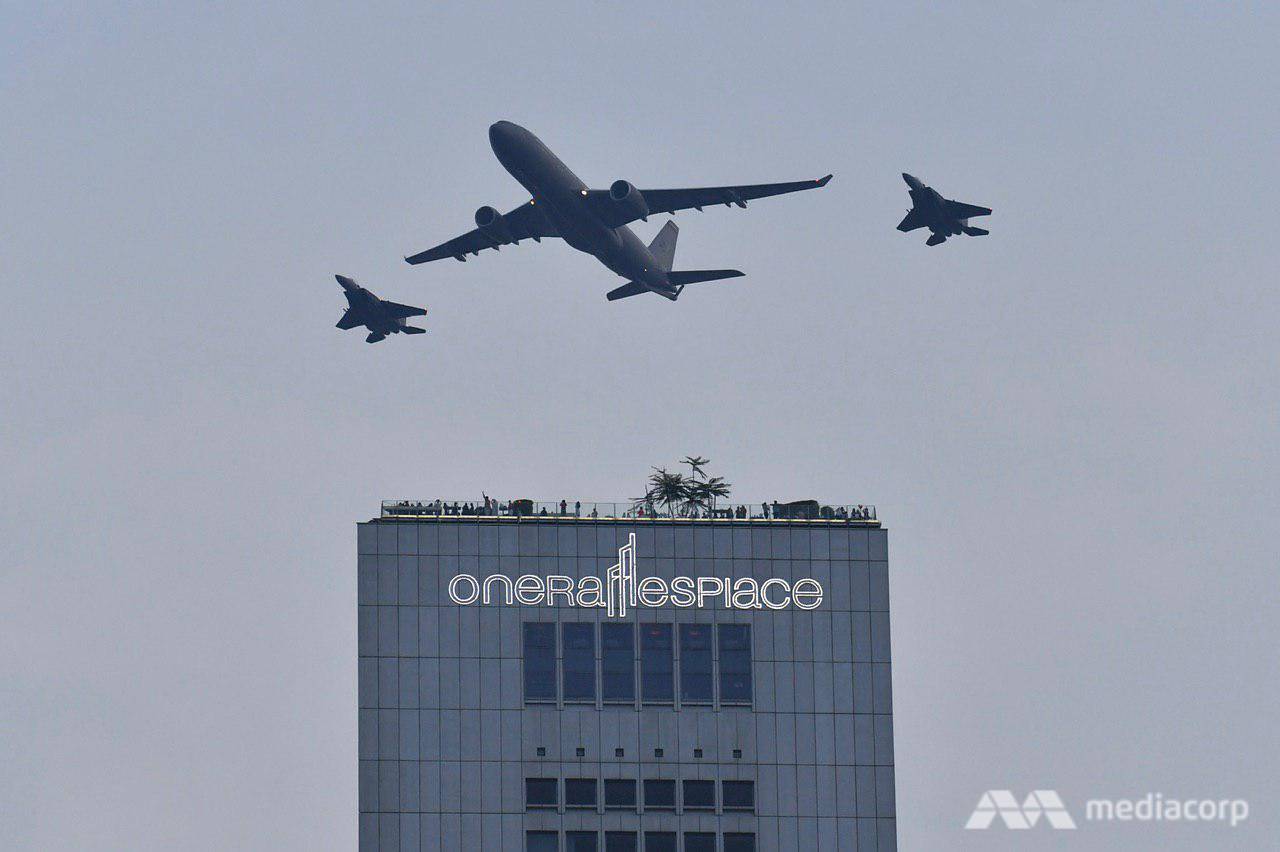
The Republic of Singapore Air Force A330 Multi-Role Tanker Transport makes its debut at the National Day Parade, escorted by two F15-SG fighter jets. (Photo: Jeremy Long)

ndp 2019 merlion state flag fly-past

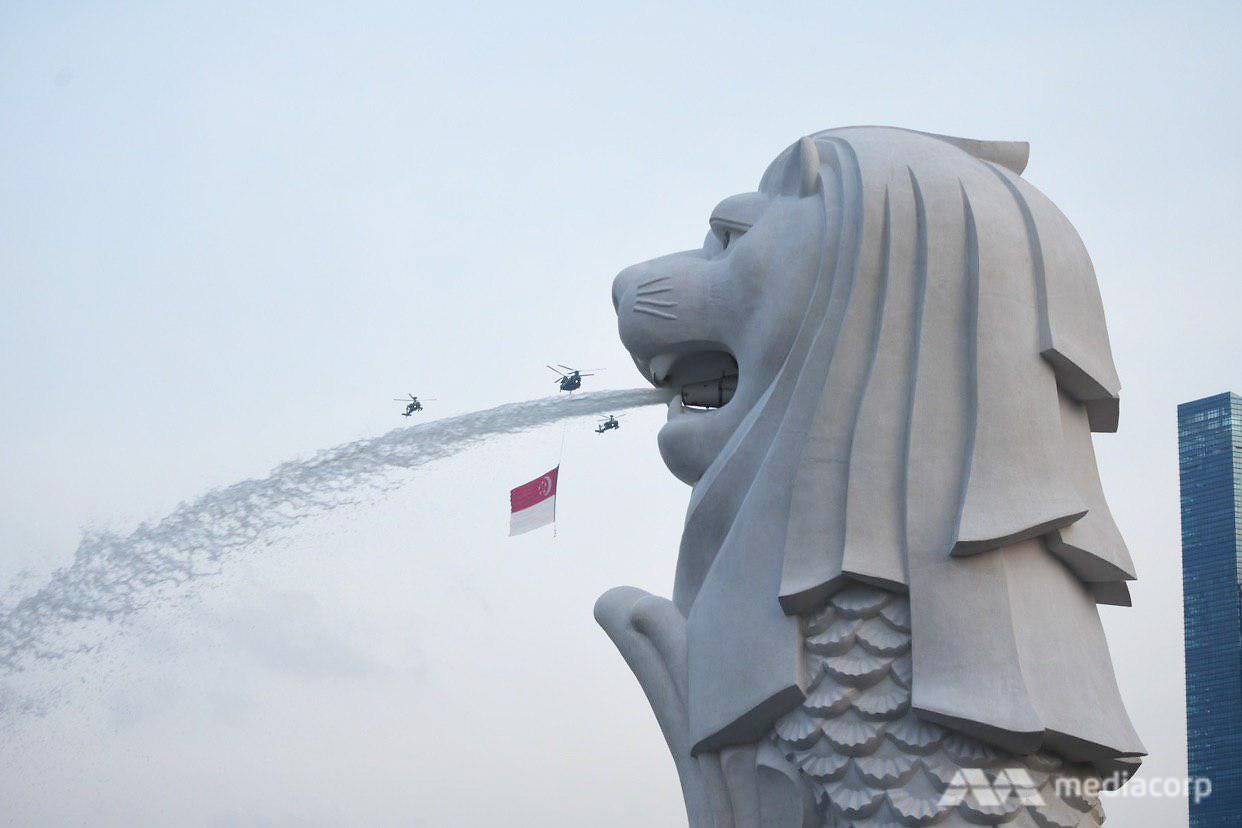
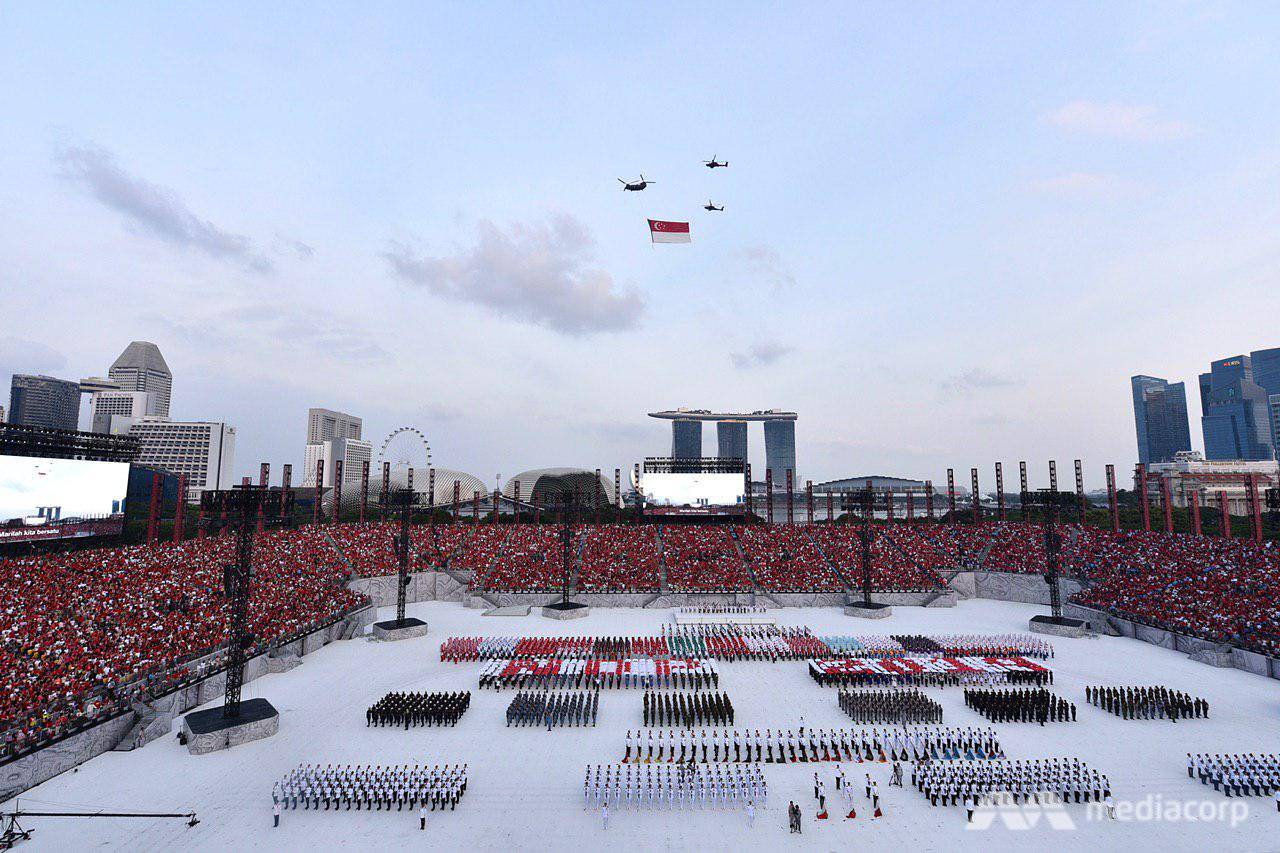
The state flag flypast as seen from Merlion Park. (Photo: Darius Boey)

NDP 2019 Mahathir Mohamad Brunei Sultan Joko Widodo

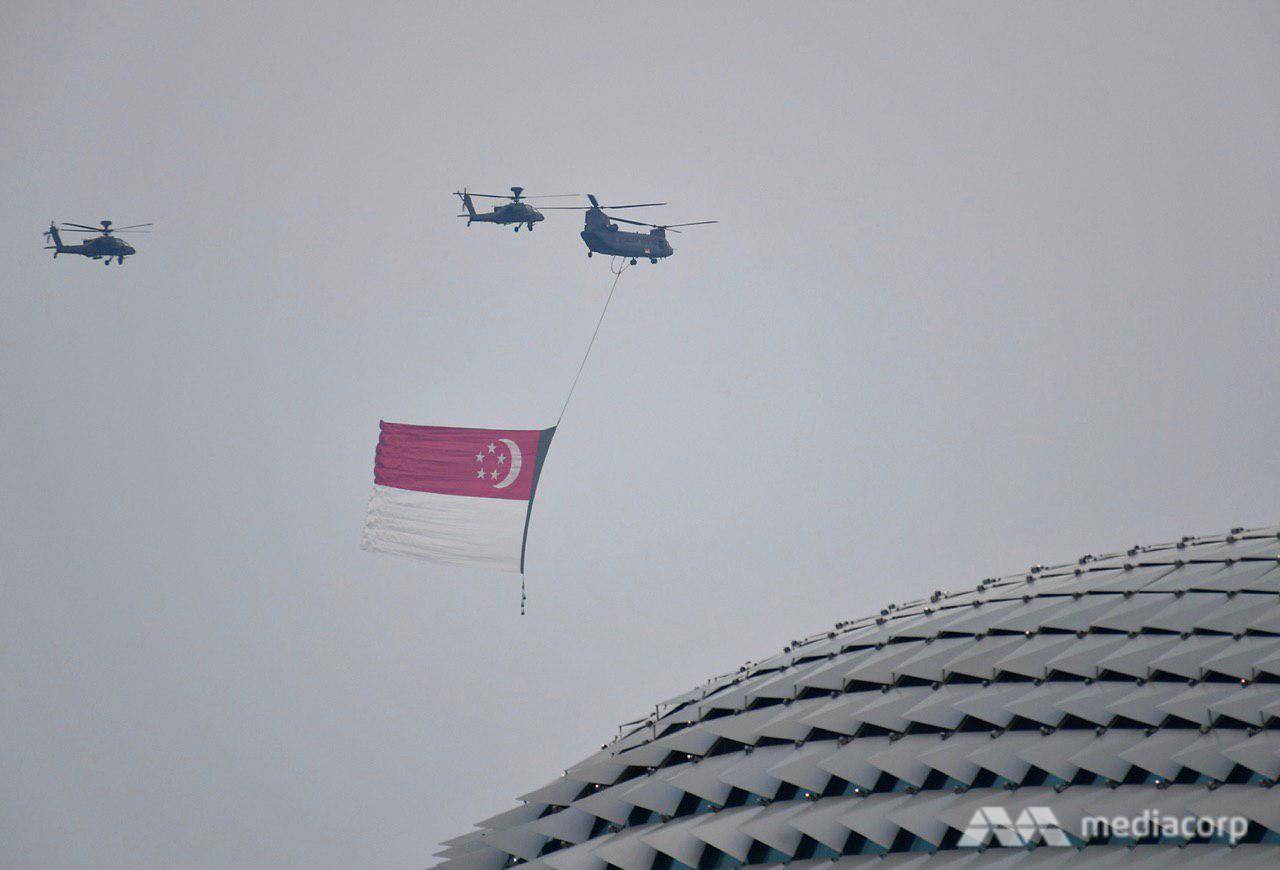
A Republic of Singapore Air Force Chinook flies the state flag past the Esplanade, flanked by two Apache helicopters on Aug 9, 2019 for the National Day Parade. (Photo: Jeremy Long)

NDP 2019 sea of red National Day Parade spectators

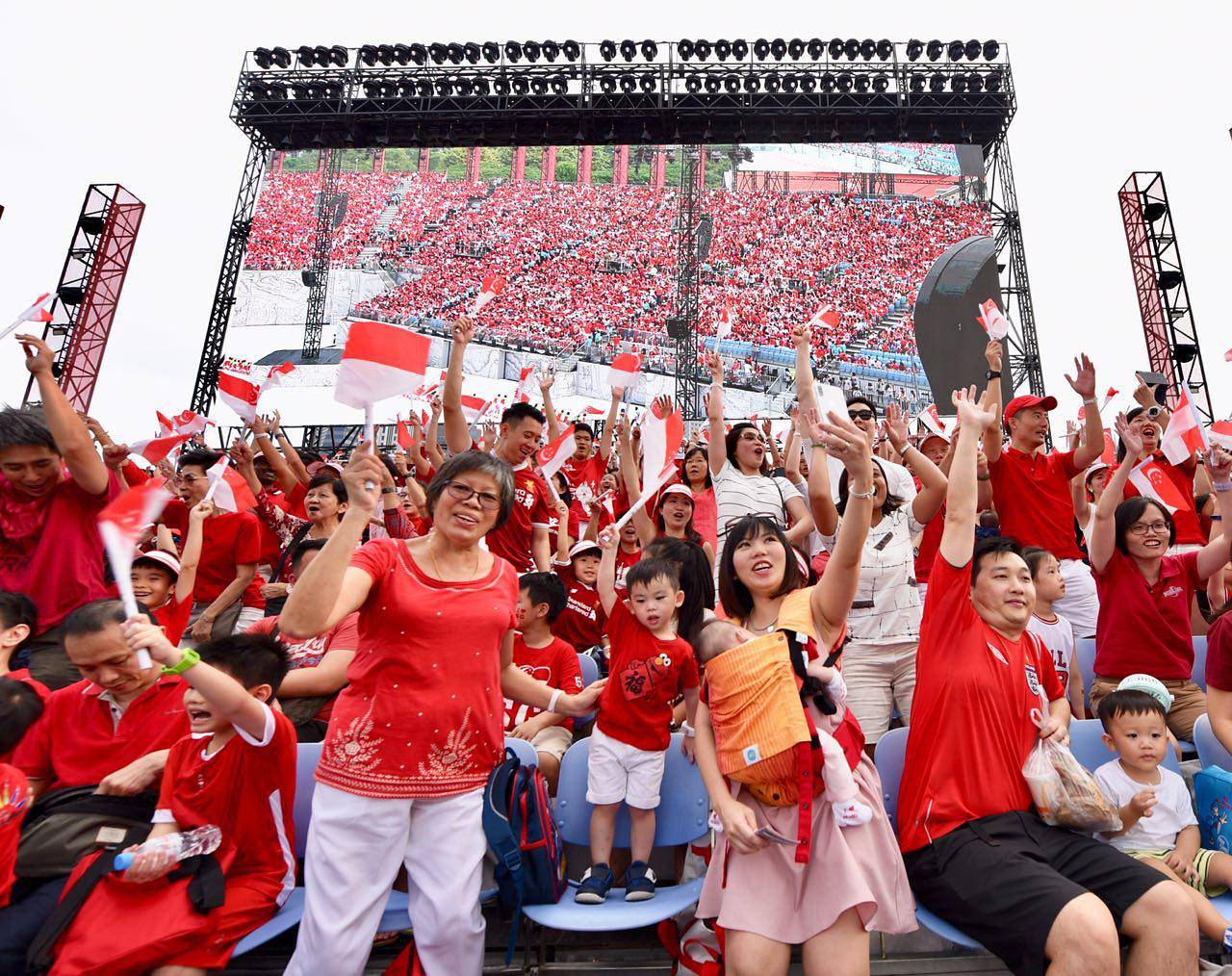
National Day Parade 2019 spectators doing the Kallang Wave. (Photo: Jeremy Long)

NDP 2019 sea of red National Day Parade Padang

Spectators for the National Day Parade came decked out in Singapore colours, forming a sea of red. (Photo: Hanidah Amin)

NDP 2019 National Day Parade marching contingents

The state flag is flown past the National Day Parade 2019 parade grown as troops stand ready for inspection. (Photo: Jeremy Long)

Singapore Prime Minister Lee Hsien Loong at NDP 2019 National Day Parade

Singapore Prime Minister Lee Hsien Loong smiles as he totes a camera at the National Day Parade on Aug 9, 2019. (Photo: Jeremy Long)

President Halimah Yacob arrives at NDP 2019 National Day Parade

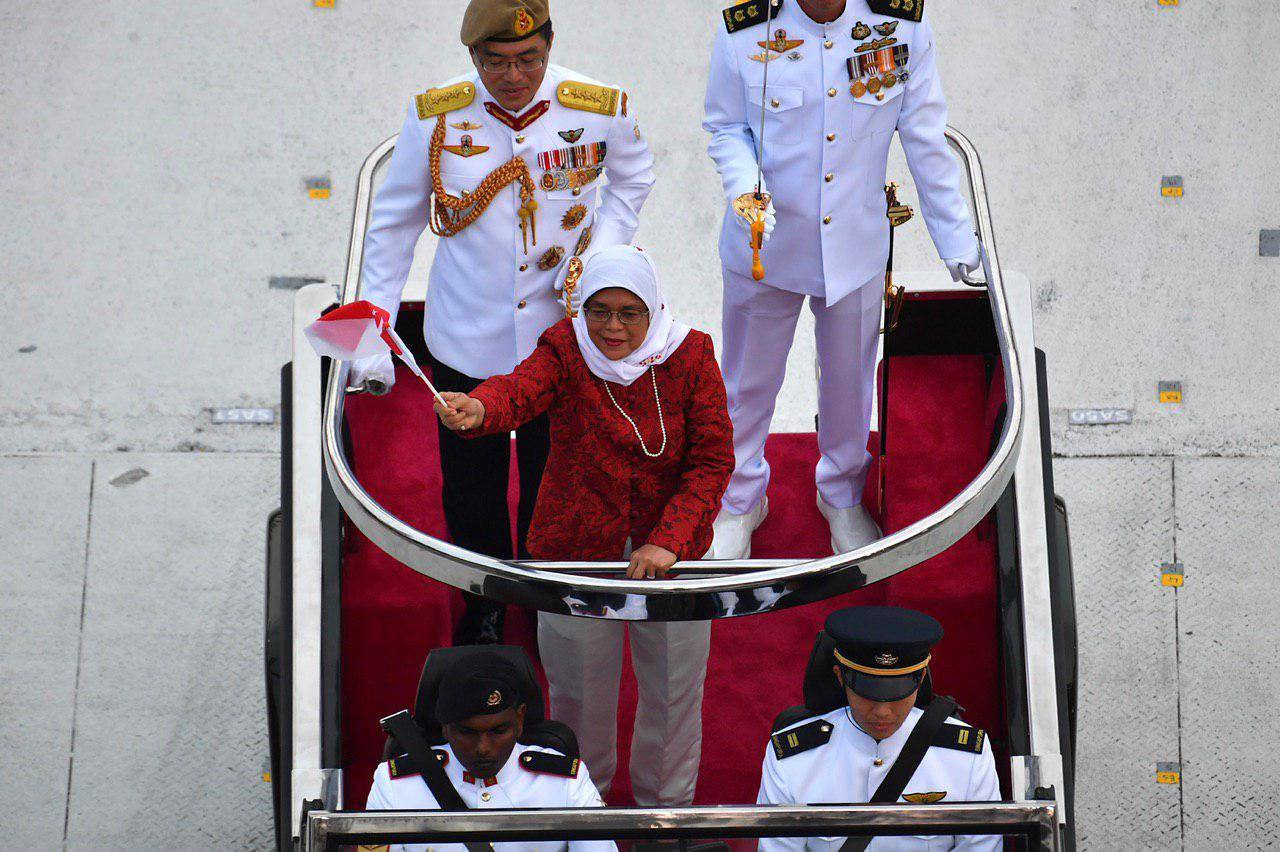
President Halimah Yacob arrives at the National Day Parade at the Padang, with Chief of Defence Force Melvyn Ong. (Photo: Jeremy Long)

NDP 2019 Mobile Column National Day Parade Aug 9

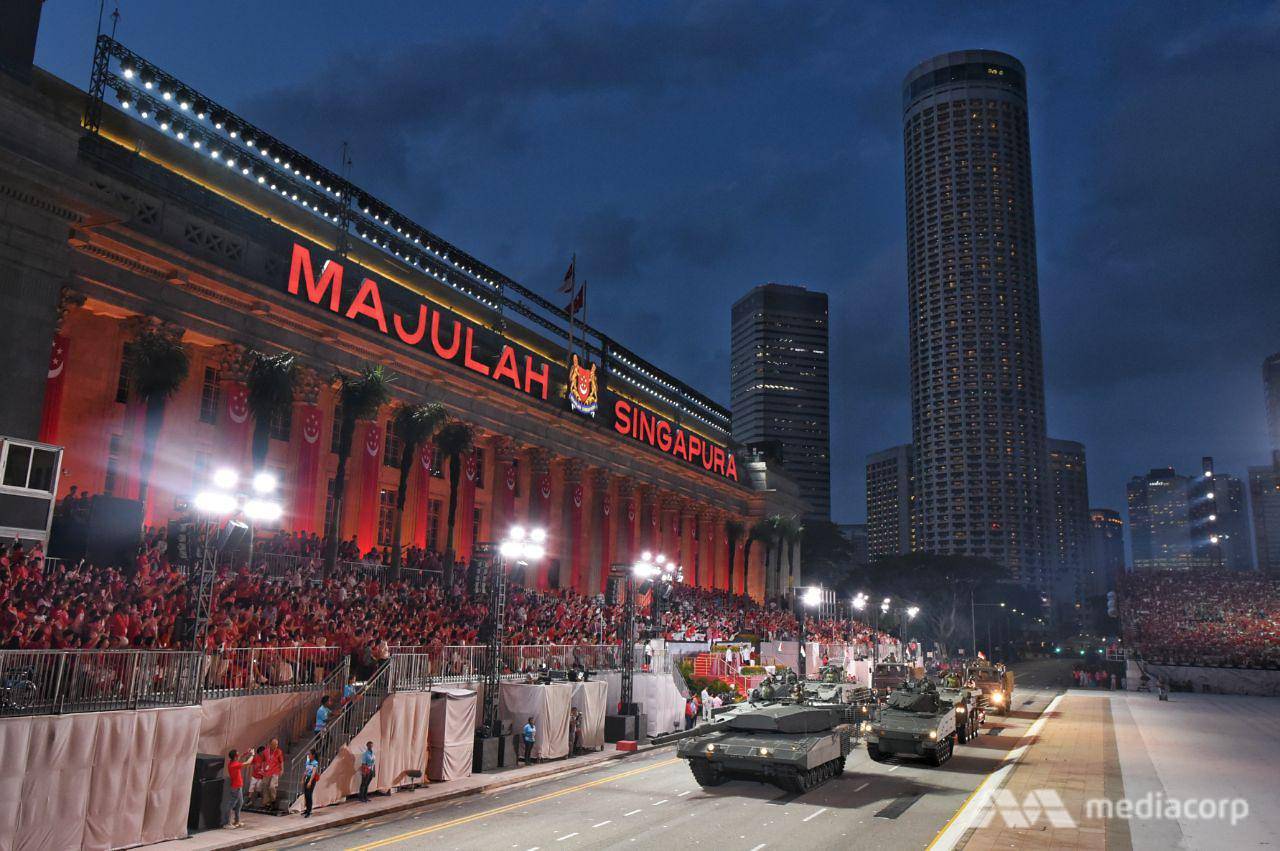
The mobile column – showcasing Singapore’s military might and Home Team assets – returned to the National Day Parade after four years. (Photo: Marcus Mark Ramos)

NDP 2019 Merdeka Generation mobile column

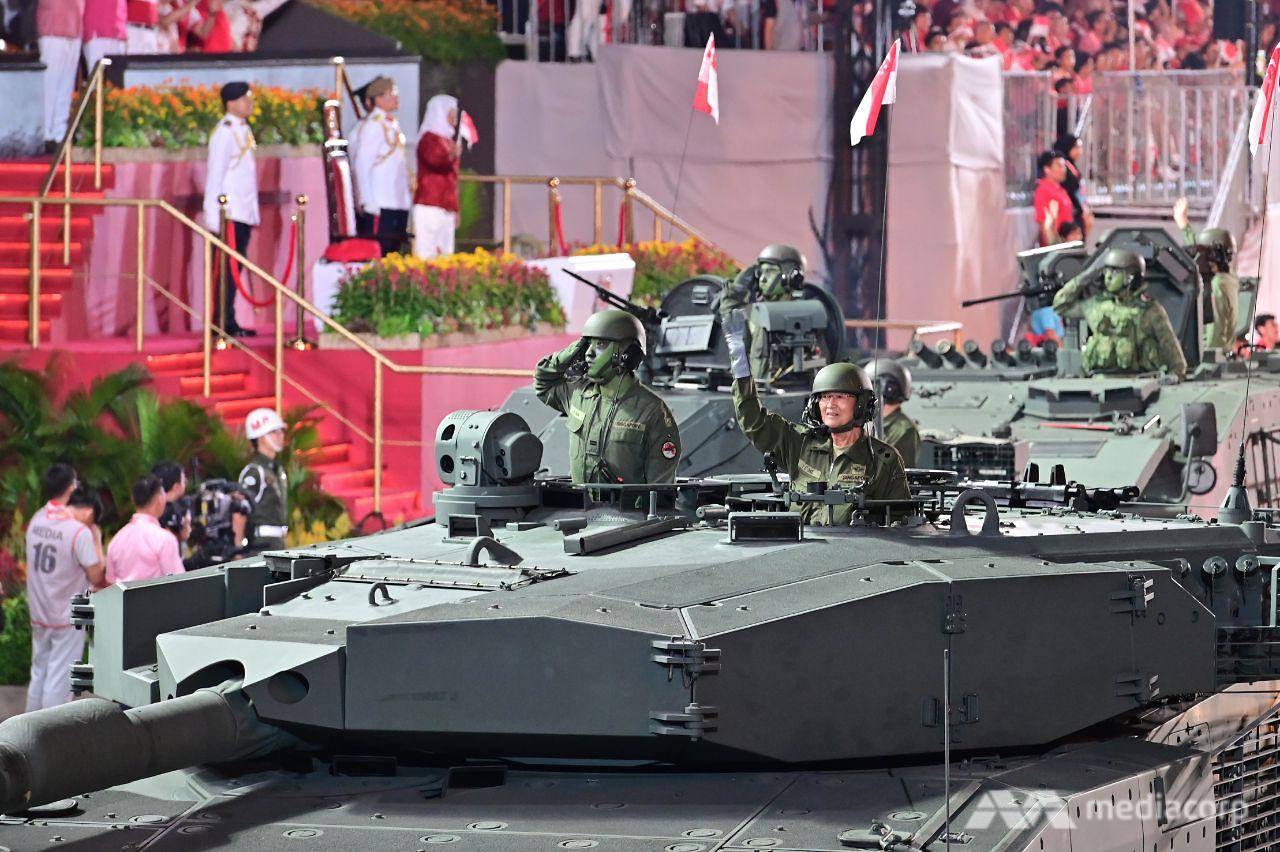
A Merdeka Generation serviceman takes part in the mobile column which marked 50 years since the segment debuted at the National Day Parade at the Padang. (Photo: Marcus Mark Ramos)

NDP 2019 National Day Parade show segment ethnic dancers

The Our River segment of the National Day Parade 2019 which celebrates Singapore’s rich multicultural heritage. (Photo: Jeremy Long)

NDP 2019 ethnic dancers National Day Parade

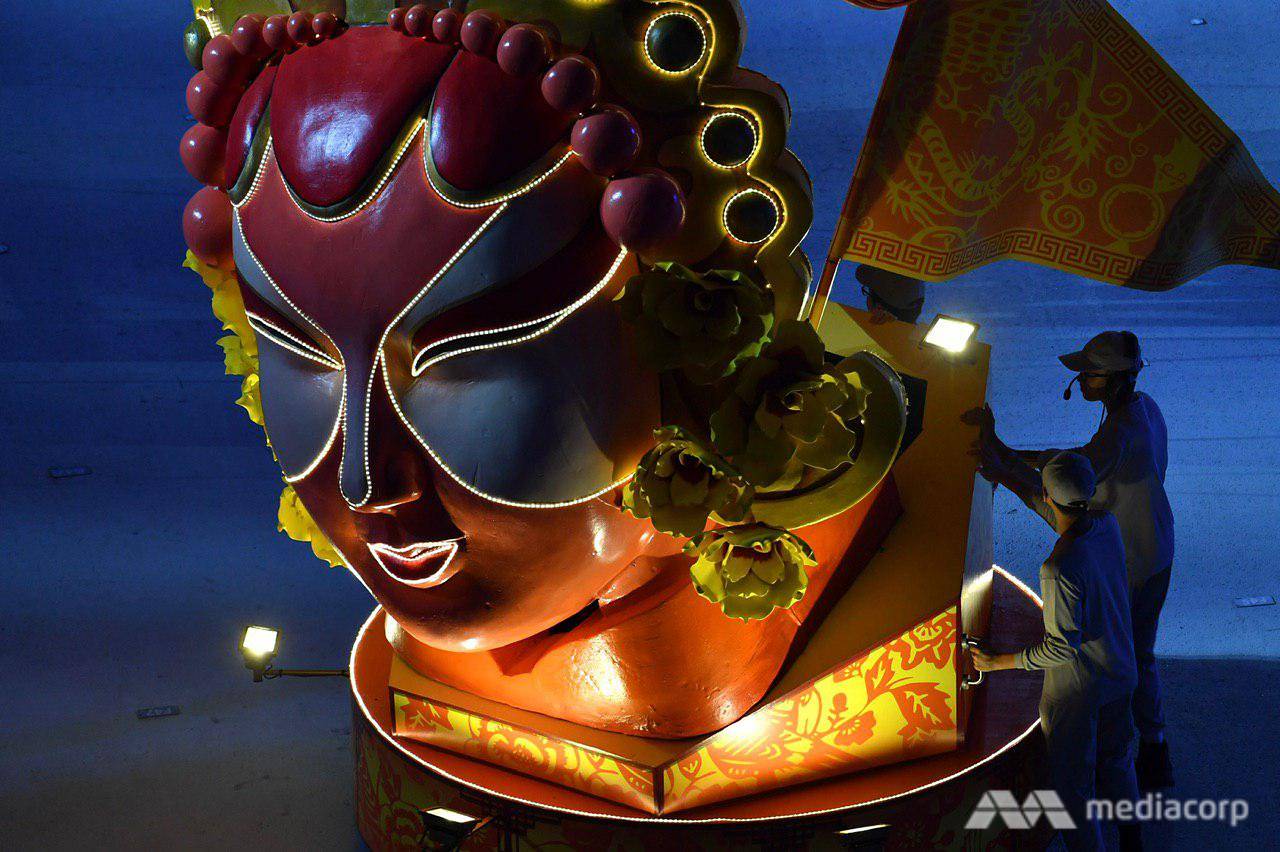
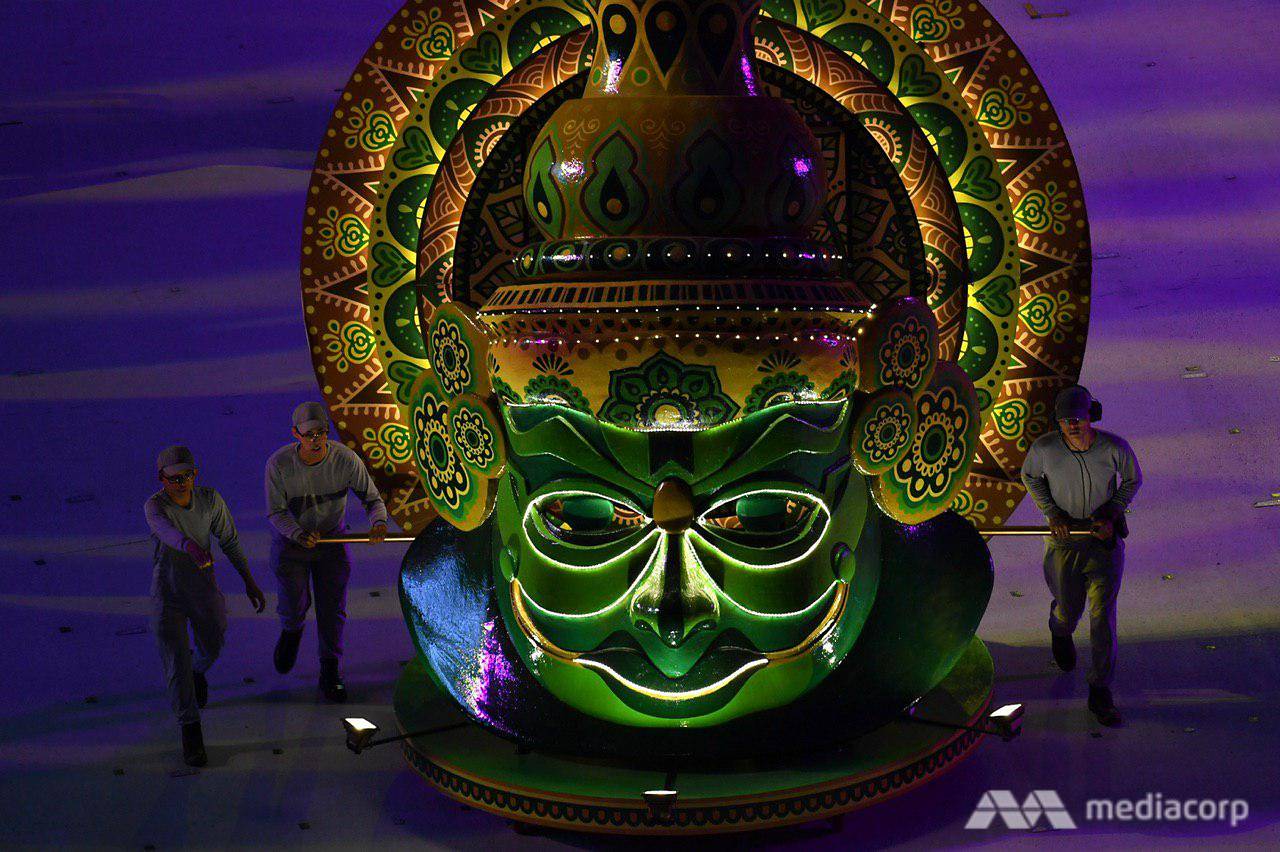
A giant puppet in a dance segment of the National Day Parade celebrating Singapore’s ethnic diversity. (Photo: Jeremy Long)

NDP 2019 ethnic dancers 3 giant puppet National Day Parade

A giant puppet in a dance segment of the National Day Parade celebrating Singapore’s ethnic diversity. (Photo: Jeremy Long)

NDP 2019 Giant Lion Puppet

A 6-metre-tall and 8-metre-wide prismatic lion puppet is the largest prop for the National Day Parade. (Photo: Jeremy Long)

NDP 2019 Lion Puppet frontal view National Day Parade

The front view of the giant lion puppet at the 2019 National Day Parade. (Photo: Marcus Mark Ramos)

NDP 2019 participants take a selfie National Day Parade Padang

National Day Parade 2019 participants take a wefie after the show wrapped. (Photo: Try Sutrisno Foo)

NDP 2019 President Halimah Yacob thanks participants

President Halimah Yacob is swarmed by National Day Parade participants as she takes to the field to thank them for months of hard work and rehearsals. (Photo: Jeremy Long)

WATCH the National Day parade on CNA’s YouTube channel

BONUS – Watch our ode to everyday Singapore:

Source link

NDP 2019: Past and present contributions honoured in bicentennial spectacle at the Padang

0

SINGAPORE: Boasting the latest military might, an impressive 1.3km long mobile column rolled past the Padang on Friday (Aug 9). 

While new assets were on display, it was Singapore’s older assets, the 39 Merdeka Generation servicemen waving to the crowd from atop their vehicles, that elicited the greatest cheers.

This was the 2019 National Day Parade (NDP) in a nutshell – a celebration of old and new.

READ: Government will continue to “invest heavily” in Singaporeans – PM Lee in National Day message

READ: NDP 2019 – 5 things to look out for at this year’s parade 

“Our Singapore” was the theme of Singapore’s 54th birthday celebration and it aimed to tell the country’s story from past to present. 

It also emphasised the collective ownership of Singapore – how today’s citizens are living the dreams of yesterday’s pioneers and will in turn become pioneers of the future. 

The parade was held at the Padang to mark a milestone in Singapore’s history – 200 years since Sir Stamford Raffles landed on the island.

There were elements of the past and present coming together even before the six-act showcase officially began.

Take local musician Clement Chow crooning Count On Me, Singapore – 33 years after he first sang it at the NDP – and rappers Yung Raja and Fariz Jabba delivering a remix of Stand up for Singapore.

Egged on by hosts Sonia Chew, Joakim Gomez, Ebi Shankara and Siti Khalijah, the crowd of 27,000 at the Padang stirred to life, participating in games like a singing contest in which selected audience members had to guess the lyrics.

Kick-starting the NDP’s prologue was the parade’s theme song, also titled Our Singapore, featuring the lyrics of NDP 2002’s We Will Get There and the 2015 edition of Our Singapore.

READ: NDP 2019 theme song combines familiar tunes We Will Get There, Our Singapore

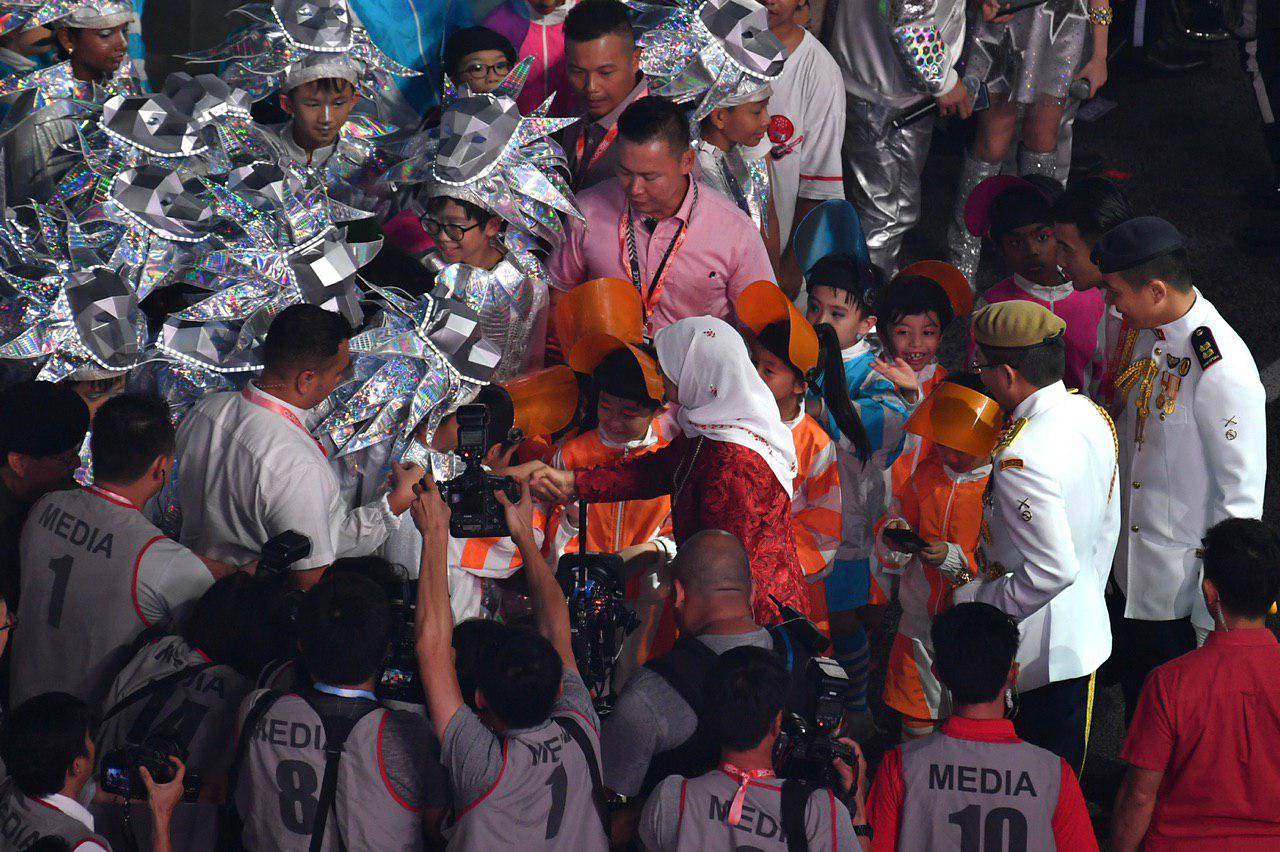
Led by the hosts, more than 800 youth and children clad in fluorescent shades of green, pink, blue and orange performed a lively rendition, busting out choreographed moves.

The appearance of the Singapore Armed Forces’ (SAF) Red Lions is always appreciated, but not always guaranteed – their jump at the 2015 NDP at the Padang had to be called off because of poor weather.

Red Lions at NDP 2019 (1)

The Red Lions performing during NDP 2019. (Photo: Jeremy Long) 

Red Lions at NDP 2019 (2)

The Red Lions performing during NDP 2019. (Photo: Jeremy Long) 

But four years later, it was blue skies, green light and red plumes of smoke as the parachutists circled the venue set to be gazetted as a national monument

Eyes were trained to the skies and smartphones were at the ready as the tiny speck of a Chinook helicopter appeared.

The rumble of anticipation turned into thunderous applause as the Red Lions maneuvered their way to solid ground from 3,048m, before waving and saluting an admiring crowd.

NDP 2019 SGH float

(Photo: Try Sutrisno Foo)

A procession of eight floats brought the prologue to a close in a segment titled Our Bicentennial.

The vintage-looking structures represented the likes of Singapore General Hospital (established in 1821), General Post Office (1819) and Tanjong Pagar Dock company (1864) – an ode to these institutions’ contributions to Singapore.

Foreign dignitaries NDP 2019

Indonesian President Joko Widodo, Brunei’s Sultan Hassanal Bolkiah and Malaysian Prime Minister Mahathir Mohamad at the Padang on Aug 9, 2019. (Photo: Marcus Mark Ramos) 

There was also a warm reception for Prime Minister Lee Hsien Loong as well as visiting dignitaries such as Brunei’s Sultan Hassanal Bolkiah, Indonesian President Joko Widodo and Malaysian Prime Minister Mahathir Mohamad, who were attending on PM Lee’s invitation.

After a spectacular “bomb burst” by five F15-SG fighter jets where they soared towards the Padang in formation before splitting up into different directions, it was time for President Halimah Yacob to inspect the parade.

DISPLAY OF STRENGTH

Act One comprised a number of firsts and the hulking A330 Multi-Role Tanker Transport (A330-MRTT) was the main draw.

The roar of two F15-SGs signalled the arrival of the refuelling aircraft, and all three carved a path overhead before disappearing in the city skyline.

NDP 2019 F-15 flypast moon

An F-15 SG jet photographed against the moon on Aug 9, 2019. (Photo: Jeremy Long)

F-15SG flypast

F-15SGs cross paths in mid-air. (Photo: Jeremy Long)

Next, from the north roared two F15-SGs, swerving to cross paths in mid-air to the delight of the crowd.

In a fitting finale to the aerial display, an additional F15-SG executed a sharp turn before soaring high into the evening sky in a daring move.

Also new was an appearance by the SAF and HomeTeam volunteer group in their first showing at the NDP as a marching contingent. They joined five other supporting contingents to represent Military Defence and Civil Defence in the parade and ceremony segment.

The second act, fittingly titled Our Strength, saw the impressive display of 171 platforms from the SAF as well as the Singapore Police Force (SPF) and the Singapore Civil Defence Force (SCDF).

The drive-past, which lasted close to 15 minutes, featured new assets such as the SAF’s Hunter Armoured Fighting Vehicle and the RSAF’s ASTER-30 Missile System.

As tanks growled by, there were wide smiles and warm applause for the veteran servicemen, who had been part of the first few batches to enlist in National Service.

As evening blended into night, the crowd’s LED wristbands flickered to life, lighting up in synchronisation with the third act.

Celebrating Singapore’s multicultural heritage, more than 400 dancers dressed in intricate ethnic costumes performed four different traditional dances.

Accompanied by giant puppets designed in the style of wayang kulit, the act proved a feast for the eyes with the crowd morphing into part of the colourful backdrop.

LION IS KING

A moving montage that told the stories of four different Singaporeans and how they had overcome various adversities kick-started Act Four. 

These tales of courage took centre stage and were interspersed with an exuberant performance from 600 performers on the drums, as well as rappers Yung Raja and Fariz Jabba.

READ: NDP 2019 – What it takes to operate a 6m tall, 1,000kg lion puppet

READ: NDP show to feature six-metre tall lion puppet in laser spectacle

Rushing out onto the stage next were around 850 students from Hau Yi Secondary School, Juying Primary School, Pasir Ris Crest Secondary School and Temasek Secondary School.

Radiating an exuberant energy and clad in shiny silver, they formed landmarks such as the Changi Airport and the Supertrees at Gardens by the Bay, remarkably in sync with the video on the giant screen above.

As a spectacular 30-second laser show ran its course, the lion appeared – a six-metre-tall, eight-metre-wide, 1,000kg glittering behemoth.  

The metallic beast let out a resounding roar before striding to the centre of the Padang, and a volley of fireworks then marked the end of the act after a second rendition of Count On Me, Singapore.

A fitting finale to the show was the musical final act, which saw another rendition of the theme song, before the reciting of the pledge.

Capping it all off was the raspy voice of veteran rocker Ramli Sarip with a movingly earnest rendition of the national anthem – backed by the gentle strains of the guitar, with his eyes closed and head tilted back. 

NDP 2019 fireworks

(Photo: Darius Boey)

It was as Defence Minister Ng Eng Hen had said in a recount of rehearsals he posted on his Facebook page: “Raw, gritty and visceral.” 

And as a crescendo of fireworks popped in the distance, marking the end of the show, Majulah Singapura reverberated around the Padang and resonated in the heart. 

Source link

Commentary: Recycling bins are for recyclables, not junk

0

SINGAPORE: In a move to help Singapore residents recycle regularly, the National Environment Agency (NEA) announced last week that 18,000 households in Singapore will get free IKEA-sponsored recycling bins over the next few months.

While this move has been welcomed by many, the reality is that it is unlikely to do much to move the needle on our recycling rate unless we get to grips with what can or cannot go into recycling bins.

Unfortunately, many people in Singapore are terrible at recycling. While there are some who are better at sorting out trash and recyclables, most of us need a lesson in the basic skills.

About 18,000 residents in new HDB precincts will get a free recycling bin from IKEA

About 18,000 residents in new HDB precincts will get a free recycling bin from IKEA. 

​​​​​​​

In April, a survey by the Ministry of the Environment and Water Resources (MEWR) and NEA found that many Singaporeans still do not know what cannot be recycled.

Out of 2,003 households surveyed, 67 per cent thought that soiled paper food packaging can be recycled and almost half thought that tissue paper can be placed in blue recycling bins or chutes.

Soiled food paper packaging and tissue papers aren’t the only things that we have placed in recycling bins. We have also dumped old clothes, toys, glass cookware and even ceramics.

Much of our recycling efforts are heavily focused on plastic, which certainly needs some attention given that the Singapore Environmental Council found last year that seven in 10 of us do not know what plastic to recycle. That has resulted in most plastics we dispose of becoming general waste. 

However, we also need a larger conversation about properly sorting out our other recyclables.

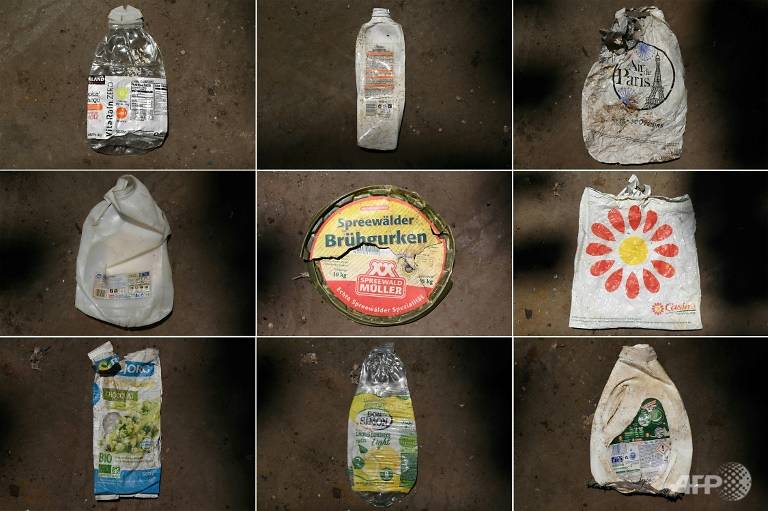
Recent reports of recycling exported by developed countries to the Philippines, Indonesia and Malaysia that later turned out to be trash should prompt us to think about recycling seriously.

READ: When did Southeast Asia become a dumping ground for waste? A commentary

In Malaysia huge mounds of plastic waste, dumped in the open, piled up as recyclers struggled to

In Malaysia huge mounds of plastic waste, dumped in the open, piled up as recyclers struggled to cope with the influx of packaging from everyday goods from as far afield as Germany, America, and Brazil. (Photo: AFP/Mohd Rasfan)

RECYCLING BINS ARE NOT TRASH BINS

Many of us may think that just because an item is made out of recyclable material, it belongs in the recycling bin – but not everything can be recycled. Some plastics such as disposable cutlery and biodegradable bags should be trashed after use.

Recyclables, if contaminated, cannot be recycled. Paper packaging for example, if smeared with gravy of your leftover cai png, is trash. Plastic containers that pack delicious oily rendang is trash too unless it is cleaned before you place them into the recycling bin.

READ: As time runs out on the climate crisis, Singapore prepares to address the cost of adapting, a commentary

Other recyclable food and drinks packaging, like margarine containers, hazelnut spread jars, beer cans and bottles, need to be emptied and rinsed before they go into the recycling bin.

The rule of thumb seems to be this: If that piece of recyclable looks gross, don’t put it in. Recycling bins are not for trash.

Singapore last year generated 7.7 million tonnes of solid waste – enough to fill 15,000 Olympic-sized swimming pool. At the current rate we are generating waste, our only landfill, Pulau Semakau, will run out of space by 2035, according to MEWR.

So it’s possible that one day our land could be filled with trash unless we start improving our recycling habits.

Pulau Semakau TODAY file

File photo of Pulau Semakau.

READ: Why doesn’t recycling rope in the karang guni? A commentary

We must take responsibility over what we recycle. If improperly recycled junk contaminates other items in the bin, the entire bin can get corrupted. Not only does this negate your (and everyone else’s) recycling efforts, it also produces more trash. 

Even if your recycling is clean but not an actual recyclable, it unnecessarily fills the bin. And when these bins are full, with lids wide open, the contents may get wet during a downpour. 

So entire neighbourhoods’ recycling efforts can literally go to waste because of one thoughtless action. It’s heartbreaking.

GOOD RECYCLING HABITS START AT HOME

Singapore’s recycling system may not be the world’s best, but let’s admit that it’s fuss-free. All we really have to do is put our recyclables in those blue bins (or recycling chute if you stay at one of the newer flats) and the items would be sorted out at the country’s Materials Recovery Facility.

In the world’s leading nation for recycling, Germany, you would have to sort recyclables yourself at home before leaving them at separate recycling bins or containers. Cities in Japan and Korea use a similar waste-sorting system.

Also in Germany, you would be charged an additional deposit of around 8 to 25 cents for every reusable or recyclable drink container that you buy. To get the deposit back, you need to return the items to a vendor – usually a supermarket – with “reverse vending machines” that’ll take in items as long as they’re on the retailer’s list.

This system, which was first implemented in 2003 to encourage people to recycle as many plastic bottles as possible, has been proven effective in reducing contamination and getting people to recycle more.

Workers sorting out recyclables at the SembWaste Materials Recovery Facility

Workers sorting out recyclables at the SembWaste Materials Recovery Facility on Tuesday (Jan 22). (Photo: Junn Loh)

READ: Dear Singapore, a plastic future is not fantastic, a commentary

While this proves that enforcement can change people’s recycling habit, do we really want Singapore to go the way of making it mandatory to manage waste and recyclables or risk fines?

And do we really need another complicated system when so many of us are used to blue bins in our estates?

It’s not impossible for Singaporeans to adopt good recycling habits. 

We can start at home by separating recyclables from waste – with or without an IKEA-sponsored bin.

LETS ALL TRY TO REDUCE WASTE TOO

This year, NEA launched a #RecycleRight movement to educate the public and improve awareness on what can or cannot be recycled. But encouraging proper recycling needs to go beyond public education and lip service.

Understandably, recycling can be confusing. Efficient ways to help people identify recyclables are worth considering.

Clear and consistent labelling of recyclable packaging, for example, could be made mandatory, and instructions on how the product should be recycled could be printed on its label.

On top of quality recycling, we should be reducing waste. 

Old clothes, toys and ceramics that some of us threw into the blue recycling bin (which again, we shouldn’t) should be donated if they can be reused.

READ: Bursting at the seams – Singapore’s cast-off clothing

Our use of disposable products, such as single-use plastics, should be minimised. We should also start bringing our own water bottles and food containers if we haven’t started doing so.

We may even want to think about getting on board with the sustainable fashion movement, of renting clothes instead of buying them.

As Singapore aims towards a zero-waste future, we can all do our part.

Source link

‘I’m not scared’: Intellectual disability no impediment as ‘accomplished’ blood donor nears 70th donation

0

SINGAPORE: The sight of a needle breaking skin often elicits myriad reactions.

Some blood donors wince and squeeze their eyes shut, others grit their teeth and avert their gaze.

But Conrad Puah Neo is no average donor – he has been giving blood for two decades and counting. To be precise – 69 times since 1997.

“He has no issues with needles and all that,” Conrad’s father and caregiver Clement Puah Neo told CNA. “Even when I was a blood donor, when they were doing the donation I would just turn away – I didn’t want to look, I didn’t want to anticipate it. 

“Not him, he will look at the needle!”

But Conrad isn’t just stoic or tolerant of the donation process – he actively looks forward to it. 

Said Mr Puah Neo: “About a month after the last donation, he will start asking: ‘When are we going to donate blood?’”

As his blood ebbs down a tube into a collection bag, Conrad is at ease.

“I like to donate blood and I’m not scared,” he said. “This blood will save patients.”

‘PLEASE TELL CONRAD NOT TO BE SO HELPFUL’

43-year-old Conrad has moderate intellectual disability which has affected his speech, ability to read and certain aspects of behaviour such as social skills.

Following a high fever which Conrad suffered as an infant, Mr Puah Neo and his late wife Mona began to realise that their son was missing “significant” milestones.

Conrad Puah Neo waits during his blood donation

Conrad Puah Neo waits during his blood donation. (Photo: Matthew Mohan)

“His milestones got delayed, we became suspicious so we brought him to the pediatrician when he was about 2+,” said Mr Puah Neo. 

“Other children were able to do certain things at eight months, nine months but it was only at 1.5 to 2 years old that Conrad was able to do those things.

“Of course you are disappointed … you will also ask this question – why me? But that did not last too long a time, because we told ourselves that we would do the best we can.”

So Mr Puah Neo and his wife decided to be “inclusive” in how they would raise Conrad.

“It’s only a four letter word – love. That will determine how you manage your children. In the case of my late wife and myself, we decided that we would raise him like any other child,” he explained. 

“That means he will not miss out on anything. As a result, he is much more socially adjusted. That’s why I have no qualms leaving him in a group situation. He enjoys it – it is not foreign to him.”

A former student of APSN Katong School and APSN Chao Yang School, Conrad graduated from Movement for the Intellectually Disabled of Singapore (MINDS) Towner Gardens School at the age of 18.

He currently works at the Minds Idea Employment Development Centre (MINDS IEDC), where he packs earphones.

Conrad Puah Neo is often recognised by doctors and nurses at the blood bank

Conrad Puah Neo is often recognised by doctors and nurses at the blood bank. (Photo: Matthew Mohan)

Usually cheery and smiling in the company of others, Conrad is always looking for how he can help those around him, said his father.

“That helpfulness is in him,” explained Mr Puah Neo.  “For a long time, I had difficulty with him at supermarkets because he would rearrange the shelves. He would say: ‘Oh – it’s not in line or it doesn’t look right.’

“We spent three years in Israel where he went to a Hebrew school. At the first parent-teacher conference, the teacher said: ‘Please tell Conrad not to be so helpful!’

“He would see the teacher drop the duster and from the back of the class, he would walk there. And when he walks, he doesn’t care what comes in between .. even the table could be knocked over. That’s him.”

THE ROLL OF HONOUR

With Mr Puah Neo being a regular blood donor, it was only normal that Conrad would follow suit.

“He followed me wherever I went for my blood donations, if you speak to him, he’s very chatty, he always wants to know why: ‘Why was I doing it?” explained Mr Puah Neo. “I explained to him that blood saves lives, so from very young, he wanted to donate blood himself. So as soon as he was able to, when he was 21 years old, I brought him.

“I would point out to him the roll of honour in the blood bank. He sees my name there and says he wants to see his name up there.”

Being a “visual person”, Conrad understands what it is like to be sick, added Mr Puah Neo, and he is aware of the necessity for donors to come forward.

“When he sees something, he remembers,” said Mr Puah Neo.  “If an auntie, uncle, old folks are in the hospital, we would bring him. So he does know suffering.”

Conrad Puah Neo interacts with a doctor

Conrad Puah Neo interacts with a doctor. (Photo: Matthew Mohan)

With blood usage in Singapore increasing at a rate of 3 to 5 per cent annually, and about 600 donors stopping their donation of blood due to age or illnesses, more donors are needed, said the Singapore Red Cross in response to queries from CNA.

And regular donors like Conrad will be key. His eventual goal is to reach his 100th blood donation in 2023.

“If you understand people with disabilities, there are lots of things they cannot do,” said Mr Puah Neo. “The danger is that self-esteem can be quite low. Every time people have to do things for them and they are always told: ‘You cannot this, you cannot do that.’

“He’s very proud of donating blood, that gives him self-esteem and that spurs him on. He feels accomplished.”

Source link

NDP 2019: What you shouldn’t miss at the parade

0

SINGAPORE: Whether you are attending the National Day Parade all decked out in red and white or watching from the comfort of your home, here are the highlights to look forward to as we celebrate Singapore’s 54th birthday.

NDP 2019 spectators at padang

National Day Parade spectators doing the ‘wave’ at the Padang. (Photo: Gaya Chandramohan)

AERIAL DISPLAYS

If you’ve always looked forward to NDP fly-pasts, this year’s “enhanced” aerial display shouldn’t disappoint.

It begins with the traditional state flag fly-past, with a Chinook helicopter bearing the Singapore flag, escorted by two Apaches.

NDP 2019 helicopter fly past

The traditional state flag fly-past at National Day Parade 2019. (Photo: Gaya Chandramohan)

The Republic of Singapore Air Force’s (RSAF) A330 Multi-Role Tanker Transport (MRTT) then makes its inaugural fly-past over the Padang, flanked by two F-15SG fighter jets.

NDP 2019 f-15sg fighter jets multi role tanker transport

The RSAF’s Multi-Role Tanker Transport, flanked by two F-15SG fighter jets. (Photo: Gaya Chandramohan)

The F-15SG fighter jets complete the show, thundering over the arena with aerial aerobatics including a sharp vertical climb.

NDP 2019 girl with i heart sg face tattoo

(Photo: Jeremy Long)

THE MOBILE COLUMN

This year’s NDP will pay tribute to the mobile column that rolled onto the Padang for the very first time 50 years ago in 1969. 

NDP 2019 mobile column

Part of the mobile column at the Padang. (Photo: Gaya Chandramohan)

A total of 171 assets from the Singapore Armed Forces (SAF) and Home Team will be showcased in the drive-past, which will last nearly 15 minutes and involve participants across generations.

READ: What it’s like to ride in the mobile column at NDP

READ: From Sungei Gedong to Nicoll Highway, prepping armoured vehicles for the NDP stage

NDP 2019 boy with singapore flag

(Photo: Gaya Chandramohan)

In addition to crowd favourites like the Terrex Infantry Carrier Vehicle and the Light Strike Vehicle, also look out for assets that will be making their mobile column debut, including the Army’s Hunter Armoured Fighting Vehicle, the RSAF’s ASTER-30 Missile System, and naval assets like the Combatant Craft Medium.

HOMAGE TO SINGAPORE’S MULTI-CULTURALISM

Spectators are in for a visual treat in Act 3 of the parade, which is dedicated to Singapore’s rich diversity. 

Themed “Our River”, the act leads with a short film featuring Singaporeans speaking their respective mother tongues, and segues into a vibrant performance involving 380 dancers from the People’s Association and 40 dancers from the Music and Drama Company. 

NDP 2019 ethnic puppets

Giant puppets in ethnic costumes. (Photo: Gaya Chandramohan)

You won’t miss the eight giant puppets, each over 4 metres tall, dressed in the ethnic costumes of Singapore’s four official races.

LIGHTS, MUSIC, ACTION

As rappers Danial “Wheelsmith” Bawthan, Yung Raja and Fariz Jabba hit the stage, 859 student dancers from four secondary schools join them, decked in war paint and headdress, and armed with drums.

NDP 2019 mass display

(Photo: Gaya Chandramohan)

As the music pulsates through the arena, every spectator will see their LED wristband light up in unison with the music and the lights in the dancers’ drums as well, sending the Padang awash with synchronised lights.

NDP 2019 spectators with flags

Parade-goers’ LED wristbands will be synchronised with many performances during the parade. (Photo: Gaya Chandramohan)

Pyrotechnics add to the massive visual display, with columns of fire shooting up in front of spectators to the beat of the music.

NDP 2019 columns of fire

Getting NDP spectators all fired up. (Photo: Gaya Chandramohan)

In the midst of a dazzling laser show, a 6-metre-tall lion will take centrestage in its gleaming metallic glory – the biggest prop in recent NDP history. 

The shimmering beast may look deceptively light but actually weighs 1,000kg and takes intensive training, teamwork and coordination to operate, so look out for the crew of 10 who will bring it to life. 

READ: What it takes to operate a 6m tall, 1,000kg lion puppet at NDP 2019

NDP 2019 lion puppet

The metallic lion puppet weighs 1,000kg. (Photo: Gaya Chandramohan)

YES, IT SPARKS JOY

This year’s fireworks segment will be launched from three locations: the Padang itself, Marina Bay and – for the first time in more than 30 years – the Singapore River as well, with the highest fireworks shooting as far as 180m in the air. 

The display involves the deployment of the NDP’s longest fireworks barge yet, in front of the Asian Civilisations Museum. At 450m in length, the barge allows for a more panoramic fireworks display that “maximises the bay area”, organisers say. 

READ: How to catch some National Day action other than at the Padang

NDP 2010 fireworks aerial shot over padang

The National Day Parade is back at the Padang for the first time since 2015. (Photo: Jeremy Long)

At the Padang itself, colourful pyrotechnics will be launched from the front and back of the seating gallery, choreographed to the rhythm of the music.

NDP 2019 fireworks from padang

National Day Parade fireworks seen from the Padang. (Photo: Gaya Chandramohan)

Didn’t manage to get tickets, or simply out of town? Catch the parade ‘live’ on our website or on our YouTube channel on Aug 9 from 5.45pm SG/HK.

NDP 2019 finale wide shot

(Photo: Gaya Chandramohan)

Source link

Singtel resolves landlines issues after disruptions affected NETS, credit card machines

0

SINGAPORE: Singtel on Thursday (Aug 8) said it has resolved disruptions to its landlines, after several business owners reported having problems with their NETS or credit card payment machines.

The telco said on its Facebook page at 8.14pm: “We are glad to inform that all fixed voice issues have been resolved as of 7.43pm. Thank you for your patience.”

During the disruption, people commenting on downdetector.sg said they were facing issues with their landlines in Tuas, Pandan, Pasir Panjang, Novena, Joo Koon, Jalan Bukit, Bugis, Woodlands, Choa Chu Kang, Jurong, Balestier and Tanglin.

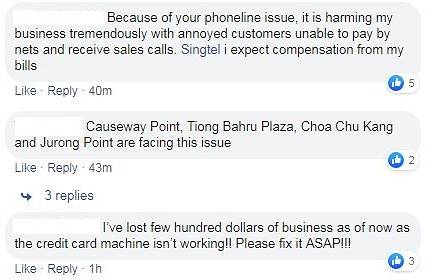
Business owners took to Singtel’s Facebook page to complain. One person wrote: “Because of your phone line issue, it is harming my business tremendously with annoyed customers unable to pay by Nets and receive sales calls.”

Singtel line down comments Facebook

Singtel first said it was aware of the disruption at around 6pm.

“Our engineers are investigating and we will provide updates as they become available,” it said on Facebook. “Thank you for your patience.”

In an update at 7.39pm, Singtel said that “progressive restoration” was underway.

“Please bear with us as our engineers continue to work on resolving the issues. We will provide updates as they become available and thank you for your patience,” it said.

Singtel downdetector heatmap

Down Detector’s outage map showing affected areas in Singapore.

Source link