Singaporean filmmaker Ng Yiqin recently directed a short film for Viddsee, a Singapore-based platform that specialises in short premium content. The short film, ‘Something I Wanted To Ask’ deals with family violence in Singapore, the issue of toxic masculinity, and its impact on children.
In the film, a teenager struggles to understand the relationship between his abusive father and his mother, while coming to grips with what it really means to be a man.
SINGAPORE: There will be a real-time tracking system for all staff members, visitors and patients at the National Centre for Infectious Diseases (NCID) by the end of this year, to make contact tracing easier in a disease outbreak, announced the NCID on Thursday (Sep 5).
The Real-Time Location System (RTLS) monitors the movements of an individual in the NCID with a tag, logging in the people that they have come into contact with while on the premises.
Individuals are considered to have come into contact when their tags detect that they are within two metres of each other for five minutes or more.
This system tracks the precise movements of people, while in the past, the centre was only able to track the entry and exit points of visitors and staff members to the hospital and patient rooms.
“Currently for us (to do) contact tracing, we have to utilise multiple methods, including patients interviewing … trawling through some of the medical records to pull the information together
“(RTLS) will allow us to be able to accurately identify the movement of the individuals,” said NCID’s executive director Professor Leo Yee Sin.
Visitors can use self-service counters to register for Real-Time Location Tracking tags that they will have to wear in the National Centre for Infectious Disease. (Photo: Cindy Co)
Other than tracking the contact among people, the RTLS can also monitor the hand hygiene of staff members and locate equipment like beds and wheelchairs in the NCID.
In cases of outbreak, staff members will be able to easily recall equipment for use, the centre said.
Pressure sensors are placed under hand sanitisers and soap dispensers to ensure that staff members complete the hand hygiene procedure.
If staff members do not complete the procedure before interacting with a patient, their tag will beep until the procedure is finished.
It replaces the Communicable Disease Centre, which was established in 1907.
The 14-storey building is equipped to handle 330 patients, although this number could rise to 500 “when there is a surge required”, said Prof Leo.
It is meant to manage outbreaks “similar to the scale of SARS”, NCID said in a press release.
NCID has specific containment facilities such as the High Level Isolation Unit to contain suspected or confirmed patients with highly infectious diseases, negative pressure wards which prevent airborne spread of disease, and a self-contained lock-down system that can be applied to individual wards, floors, wings or even the whole building when needed.
Nurses attending to a patient in an isolation ward at the National Centre for Infectious Diseases. (Photo: Cindy Co)
It has also brought together clinical, public health, training, research and community outreach functions under one roof.
“This integrated approach has already shown its value in protecting Singapore from infectious diseases, as seen in the recent case of monkeypox in Singapore, “ said Health Minister Gan Kim Yong, who opened the centre.
This made possible the diagnosis of the patient’s monkeypox within 24 hours of his arrival at the NCID, he said.
Additionally, the NCID will house the new National HIV Programme and the National Tuberculosis Programme, which was previously under Tan Tock Seng Hospital.
Part of a cluster of hospitals and healthcare facilities in Novena, NCID is adjacent to the Ng Teng Fong Centre for Healthcare Innovation. Together, both buildings cost about S$940 million to build.
Everyone knows that Singapore is a pretty rich country. We have a lot of rich people on our tiny island. And even the not-so-rich bulk of the population? We mostly somehow manage to afford the soaring costs of living in Singapore.
But there are rich people, and then there are the crazy, stinking rich ones. Perhaps you run your own business, have several landed properties and many, many zeros to your name… but if you think you’ve made it in life, these billionaires (below) will change your mind.
In the past year, Singapore’s richest have gotten even richer — according to Forbes’ latest report (Aug 2019), the 50 richest people in Singapore have a combined wealth of S$180 billion, up 12% from last year.
For the past 10 years before 2019, the Ng brothers of Far East Organisation held the top spot in terms of net worth. This year, Haidilao founder and naturalised Singapore citizen Zhang Yong made headlines for taking over.
So what exactly did these people do to amass such ridiculous wealth?!?!
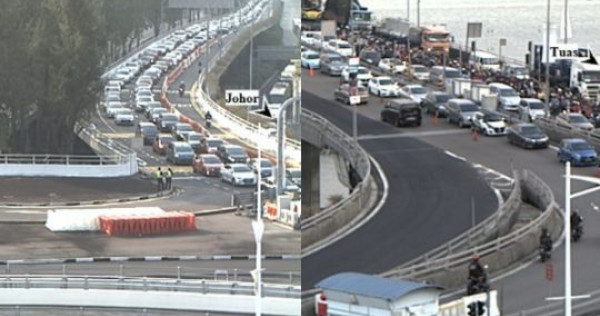
SINGAPORE – Immigration clearance systems at Tuas Checkpoint experienced a three-hour disruption on Saturday morning (Sept 7).
The Immigration and Checkpoints Authority issued an advisory on Facebook at about 5am that its immigration clearance system at Tuas Checkpoint was experiencing “intermittent slowness”.
It said the immigration clearance at the affected lanes progressively resumed from 7.20am.
“More resources were immediately deployed to manage the situation. Officers from the morning shift reported to work earlier, while our officers on night shift remained behind to assist in the clearance of travellers.
“ICA regrets the inconvenience caused to travellers and seeks their understanding and patience,” it said.
The systems disruption caused heavy traffic in the departure and arrival zones at the checkpoint, delaying travellers.
SINGAPORE: One of my favourite Instagram accounts is that of Tabao Girl’s. This environmentally-minded young woman meticulously photographs the efforts she makes daily to reduce her use of disposables.
On most days, she succeeds remarkably with her inspiring arsenal of reusable cups, containers, and cutlery, and enjoys her take-away food like the rest of us.
But one day in July this year, she recounted in a post her distressing experience at a bakery, while waiting behind another customer: “…when he was done paying, I was almost going to cry. First the 13 buns, each in 1 plastic bag of its own. Then he wanted 6 buns in 1 bag, and 7 buns in another – and he wanted them double-bagged. Then he asked the cashier to give him 1 large bag to put everything into. In 1 bakery trip for 13 buns, there was a total of 18, EIGHTEEN PLASTIC BAGS used in 1 single transaction.”
I share her distress when I witness such scenes in bakeries, hawker centres and supermarkets.
It seems that as consumers, we have become so precious that food items must be individually packed for fear that they come into contact with each other. Heaven forbid that we allow our floss buns to defile our chocolate croissants!
Indeed, I often find it difficult to advise service staff that I do not wish to have my breads individually packed, and that I have no need for disposable cutlery.
Many look at me with annoyance, as if I have disrupted their well-established work processes. I do not fault them.
The broader structural factors we all labour under are norms set in place by industries, and consumer expectations which have been shaped as a result.
File photo of single-use plastic products. (Photo: Patrick Pleul / dpa / AFP)
HAVE THE 3RS BECOME TRITE?
Earlier this week, the Singapore Government passed the new Resource Sustainability Bill. In the face of scorching temperatures, environmental degradation and climate change, an entirely new bill to address these critical issues is a concerted step towards ridding our society of some damaging practices.
We in Singapore have become so well-acquainted with the 3Rs – reduce, reuse and recycle — to the point that they have become somewhat trite and lost valuable traction.
In truth, although many of us try hard to practise these 3Rs, it seems like broader structural factors and norms work against our best efforts.
Companies are keen to win over customers and see offering individual packaging and free bags as good service. Consumers are in turn trained to expect and demand such provisions and this vicious cycle perpetuates itself countless times, every single day.
Over time, such norms and expectations result in mountains of trash and ingrain in our people wasteful habits that generate more rubbish than we can handle. These harmful norms and expectations exist not only in F&B, but in virtually every industry.
NEW 3RS: REINVENT, RECALIBRATE AND REWARD
I therefore propose an alternative set of 3Rs that can take environmental sustainability at institutional and individual levels to a higher plane. In addition to reduce, reuse and recycle therefore, we must strive to reinvent, recalibrate and reward.
The Resource Sustainability Act will be an excellent initiative with regard to reinvention. By requiring that those who profit from the supply of products be responsible for collecting and treating these products when they become waste, companies will be more cognisant of downstream effects of their commercial activity.
This will motivate them to invest more heavily in reinventing their products so that waste generation is minimised.
On the specific issue of e-waste that the bill seeks to address, technology companies have for too long practised planned obsolescence to boost consumer demand.
They design lifespans of products such as smartphones and laptop computers other electrical appliances to be artificially short, so that consumers are forced to ditch functional products and acquire new ones.
Some devices are also designed to be difficult to repair, or with replacement parts that are tightly controlled by the company, thereby making it challenging to extend their lifespan through replacing faulty parts.
Device repair services have also become few and far between such that consumers find it easier to buy a whole new device.
In contrast, consider the Dutch social enterprise Fairphone which produces smartphones that have significantly less environmental impact. Fairphones are designed to be easy to open, repair and upgrade.
For example, Fairphone owners can unscrew their phones and replace the cameras, thereby enjoying the latest technology without having to buy an entirely new phone.
Dutch firm Fairphone started off in 2010 raising awareness about the links between electronics and minerals mined in conflict zones, before deciding in 2013 to make and sell its own smartphones over the internet. (Photo: AFP/JUSTIN TALLIS)
Their phones are designed to last for at least five years, more than twice the standard 24 month-smartphone replacement cycle.
Examples such as Fairphone show us that resource sustainability is achievable through reinvention, especially if we introduce the right levers.
Governments and consumer advocacy groups worldwide can do more to combat the exploitative practice of planned obsolescence, as well as introduce regulations to strengthen consumers’ rights to repair their electrical and electronic products.
RECALIBRATING
The next R we must act upon is to recalibrate. It is time we recalibrate people’s expectations for what constitutes excellent service and warm hospitality.
Singapore seems to have transformed into a society where events must involve goody bags, bottled water and an oversupply of catered food. Consequently, our homes have been filled with SWAG – stuff we all get – that we later dump into landfills after engaging in Marie Kondo inspired spring cleaning.
Thankfully, these norms need not be cast in stone. Collectively, we can forge fresh norms that help to advance resource sustainability.
The reusable funpack for NDP 2019. (Photo: Corine Tiah)
Conference organisers should dispense with goody bags, hotels can do away with small toiletries bottles and bakeries must discontinue this practice of wrapping buns in individual bags.
Every industry can identify positive disruptions that can enhance environmental sustainability by maximising resources and minimising waste. Once we create new norms, we recalibrate consumer expectations, and change behaviour for the better.
REWARDING
Finally, the third R is to reward. Beyond punitive measures that clearly have their place in our ecosystem, we must also consider introducing more schemes to reward companies and consumers for their efforts to go green.
As the recent study by the Singapore Environment Council on building a circular food economy revealed, an estimated S$2.54 billion of food loss occurs in Singapore from farm to market annually. This astounding loss must be addressed.
We need to introduce more incentive schemes for companies to invest in technology to extend the shelf-life of food items.
Plastic waste has been piling up in Japan since China’s new policy came into force. (Photo: AFP/Toshifumi KITAMURA)
We also have to encourage different players within the food supply chain to collaborate on practical solutions to stemming food waste.
We should also develop Singapore as a centre where we specialise in innovations to transform food waste streams into valuable by-products such as new food items, animal feed or compost.
By rewarding such investments, collaborations and innovations, we can steer companies towards greater resource sustainability.
Similarly, on the consumer level, we can introduce schemes to change consumer behaviour. Those who choose options with smaller carbon footprints can be rewarded with loyalty points that translate into discounts.
Similarly, consumers can be encouraged to reward companies that offer more green alternatives through rating and voting systems.
We are all drowning in the effluents of affluence. The time to act is now.
Lim Sun Sun is Professor of Communication and Technology and Head of Humanities, Arts and Social Sciences at the Singapore University of Technology and Design. She is also a Nominated Member of Parliament and Board Director of the Singapore Environment Council.
SINGAPORE: When Richard Chew woke up one Thursday morning feeling “a weakness” on the right side of his body, he didn’t think it was anything out of the ordinary.
“I tried to grab onto my bed but I slipped to the floor,” the 57-year-old retiree recalled.
The stroke caused weakness on the right side of the body and till now, his right hand remains swollen. (Photo: Corine Tiah)
“So I told my wife, I think I’m still quite okay,” Mr Chew said matter-of-factly. “Then she said, okay you take care, and went on to work.
“I was thinking, for whatever reason, I have this weakness and it may go away at night.”
But when his wife came home from work that evening, she noticed that the features on the right side of his face “were twisted”, and his speech had become slurred.
These were the typical signs of a stroke.
Richard Chew had suffered a wake-up stroke, known as the situation where a patient awakens with stroke symptoms that were not present prior to falling asleep. (Photo: Corine Tiah)
“We didn’t know how to react to this,” said Mr Chew. “Of course, the first thing is to go to the hospital. But should we go straight?”
Eventually, they decided to go to Singapore General Hospital’s accident and emergency department (A&E), but in their own car, driven by Mrs Chew.
When they reached the hospital, they had to register and go through triage, before the A&E nurse found out that Mr Chew has had a stroke and immediately activated the acute stroke team.
By the time the team attended to Mr Chew, more than 12 hours had passed since the time he woke up with that tell-tale “weakness”.
Due to the delay, the team couldn’t administer treatments which would have helped him if they were administered within six hours after onset of the symptoms. He was sent to the stroke unit for monitoring to prevent further complications.
Fast forward three months, Mr Chew is now wheelchair-bound and unable to use cutlery with his right hand.
It was only after his experience that he realised that he had made two mistakes – not going to the hospital immediately, and going to the A&E by car.
CALL 995, EVEN WHEN YOU ARE OUTSIDE A HOSPITAL
While more patients are arriving at the hospital “early enough” for timely treatment since the first Spot Stroke campaign in 2016, only around 50 to 60 per cent came in by ambulance, according to Associate Professor Deidre Anne De Silva.
The senior consultant at the National Neuroscience Institute said that Singapore still has “a ways to go”, adding that getting stroke patients to call the ambulance will be the focus of the next campaign.
“In comparison to other developed countries where 80 to 85 per cent of stroke patients come in by ambulance, that’s a bad figure because if you look at the other way around, it means 50 per cent are not coming in by ambulance,” said Dr De Silva.
We still do see people who will go the next day to a GP (General Practitioner) first. We still see people who will wait for their daughter or son to come home from work. We still see people say I will take some Panadol and sleep and hope it goes away.
“I think partly it’s a lack of awareness of stroke symptoms. It’s a lack of awareness that stroke is treatable, and that time is of the essence,” added Dr De Silva.
Even if you are next to the hospital, just call 995, she stressed.
It might seem counterintuitive to call for an ambulance if you are right outside the hospital, but calling 995 triggers a chain of events.
The Singapore Civil Defence Force (SCDF) paramedics are trained to identify stroke symptoms and will notify the emergency department en-route so that patients receive immediate medical attention upon their arrival at the hospital.
The SCDF paramedics will assess the patient onsite to determine symptoms and alert the acute stroke team on the way to the hospital so the transfer is seamless. (Photo: Corine Tiah)
72-year-old Tan Mong Huat was luckier than Mr Chew.
Last year, the former Grab driver was ferrying a passenger from Jurong to Labrador Park when his vehicle crashed into a lamp post.
“At first I thought my car tyre was punctured,” said Mr Tan. “But luckily my customer was alert and saw that I might have (had) a stroke. He asked me not to move and immediately called the ambulance.”
SCDF paramedics arrived within 10 minutes and he was sent to National University Hospital where he was given the clot-busting medication.
As a result of that timely intervention, he suffers no side-effects or disability from the stroke.
Tan Mong Huat (Photo: Himself)
When asked what he would have done if he were alone, Mr Tan replied: “I would not know, that was the first time I suffered a stroke and I don’t know the symptoms.”
“I want to express my heartfelt gratitude towards the passenger who called 995, the SCDF paramedics and the hospital’s acute stroke team. Their actions had contributed to a better outcome for me and my condition would have been more serious without their prompt response.”
“TIME IS BRAIN”
A stroke occurs when a part of the brain gets damaged due to an interruption in its blood supply. When brain cells die because they do not receive oxygen from blood, it is irreversible.
Stroke remains the fourth leading cause of death in Singapore and one of the top contributors of adult disability.
In the treatment of acute stroke, the team’s priority is to save the brain tissue that hasn’t died, which in turn saves body function and the patient’s quality of life in the long run.
“If you ask me, the better term is time is brain,” said Dr De Silva.
The more time we lose, the more brain we’re losing.
For the team, the clock starts ticking not when the patients passed through the doors of the hospital, but when they first experienced the symptoms.
The most common signs of a stroke are sudden drooping of one side of the face, weakness of one side of the body and difficulty speaking or understanding speech.
There’s a bit of “detective work” involved in pinpointing when the symptoms first appeared, said NNI Advance Practice Nurse Il Fan.
“The patient’s history is the most important thing that we want to find out when they arrive,” said Il Fan. “Sometimes if patients come in unable to talk, we go to the extent of checking their phone to trace their last conversations and find out (the last time) they were well.”
“If the SCDF (paramedics) can actually give us a lot of information then it will be helpful, because sometimes even though passers-by witness it, they don’t come together with the patient to the emergency department.”
When CNA observed the Tan Tock Seng Hospital’s acute stroke team in action on a Tuesday, an alert came in at 7.48am, just 18 minutes after II Fan started her shift.
“When we receive a notification that there is a stroke case (inbound), we will go down to the emergency department,” said Il Fan as she quickened her pace to the basement where the resuscitation area is located.
Il Fan and another nurse rushes to the resuscitation area when an alert came in. (Photo: Corine Tiah)
The notification comes in the form of a text, with the patient’s name, gender, NRIC number and the estimated time of arrival at the hospital. For Il Fan and her team, this information is key to minimising the debilitating effects of stroke.
“We want to try to utilise the time as much as we can, so usually we will screen through the patient’s medical history while we will wait for patients to arrive. Very specifically if the patient is on any blood-thinning medicine, and if there is any history of stroke before.”
The acute stroke team assessing the patient’s eligibility for time-sensitive treatments. (Photo: Corine Tiah)
Before the ambulance arrives, the stroke team would already be on stand-by fully prepared to assess the patient once he or she is transferred from the ambulance.
The patient wasn’t accompanied by a family member and had difficulty speaking due to facial droop, which made it trickier to pinpoint the time of onset of stroke.
In such cases, a brain scan will be done.
Patient undergoing a CT scan. (Photo: Corine Tiah)
In this case, the patient was not given any acute treatment due to risk of complications following an assessment and sent to the stroke unit for further monitoring.
In another case a few hours later, the patient who came in by ambulance, was given clot-busting medication within 45 minutes.
A DISEASE THAT CAN BE TREATED
The treatment window is now wider as research on stroke advances. For example, since the introduction of the clot-busting medication in 1996, the window has widened from three hours to six hours.
While this means more people are eligible for acute stroke treatments, Dr De Silva is concerned that this would lull patients into thinking they have ample time to get treated.
“I don’t use timeframes. We don’t want the concept to go that, let’s say it’s x number of hours and there I have that amount of time to come in,” she explained.
We just want people to recognise stroke and come in as soon as possible. It should just be as soon as you detect the symptoms, you need to act fast and call 995.
Mr Chew receiving physical therapy as part of his stroke rehabilitation journey. (Photo: Corine Tiah)
Mr Chew goes to Ren Ci @ Bukit Batok St. 52 for rehabilitation twice a week to regain some function in his limbs. At the rehabilitation centre, he shared the reason why he agreed to this interview. He hoped to help more people understand the urgency of treatment for stroke, and not end up in his shoes.
“Maybe one day, I can look for my remaining golf clubs, and then go and hit some balls in the driving range,” he said wistfully. “That’s my goal.”
SINGAPORE: Former Zimbabwe leader Robert Mugabe died aged 95 at Gleneagles Hospital in Singapore, the Ministry of Foreign Affairs (MFA) said on Friday (Sep 6).
“The Ministry of Foreign Affairs expresses its condolences on the passing of the former President of the Republic of Zimbabwe this morning at Gleneagles Hospital in Singapore,” MFA said in a statement.
“The Ministry is working with the Embassy of Zimbabwe in Singapore on the arrangements for the late Mr Mugabe’s body to be flown back to Zimbabwe.”
Mr Mugabe died at about 10.40am, said a senior Zimbabwean diplomat.
Mr Claudius Nhema, Zimbabwe’s Chargé d’Affaires to Singapore, was seen at the Singapore Casket building in Lavender on Friday afternoon.
Also spotted in the area were a car with diplomatic plates and a hearse.
Zimbabwe’s Charge d’Affairs Claudius Nhema arrives at Singapore Casket in Singapore on Sep 6, 2019, after news that former Zimbabwe president Robert Mugabe, who had been hospitalised in Singapore for an undisclosed ailment, had died. (Photo: AFP/Roslan RAHMAN)
Claudius Nhema, Zimbabwe Charge d’ Affaires to Singapore in a car with a diplomatic licence plate parked outside Singapore Casket on Sep 6, 2019. (Photo: Try Sutrisno Foo)
Mr Mugabe’s death was announced on the official Twitter account of Zimbabwe’s President Emmerson Mnangagwa.
“It is with the utmost sadness that I announce the passing on of Zimbabwe’s founding father and former President, Cde (Comrade) Robert Mugabe,” the post said.
Cde Mugabe was an icon of liberation, a pan-Africanist who dedicated his life to the emancipation and empowerment of his people. His contribution to the history of our nation and continent will never be forgotten. May his soul rest in eternal peace (2/2)
The former political prisoner turned guerrilla leader swept to power in 1980 elections after a growing insurgency and economic sanctions forced the Rhodesian government to the negotiating table.
In office, he initially won international plaudits for his declared policy of racial reconciliation and for extending improved education and health services to the black majority.
But that faded rapidly as Mugabe cracked down on his opponents.
Adam Molai, son-in-law of former Zimbabwean president Robert Mugabe, arrives at the Singapore Casket Building, on Sep 6, 2019. (Photo: AFP/Roslan Rahman)
During the 1980s, he led an infamous campaign known as Gukurahundi during which an estimated 20,000 dissidents were killed.
The violent seizure of white-owned farms turned him into an international pariah – though his status as a liberation hero still resonates strongly across Africa.
As Mugabe’s health weakened, the military finally intervened to quash his second wife Grace’s presidential ambitions in favour of their preferred candidate, Mnangagwa, Mugabe’s vice president at the time.
Mnangagwa took over in November 2017 and was elected in July last year.
Same s**t, different week? If you’ve been dreading your Mondays to Fridays lately, it’s time to bone up on some facts about Singapore’s workforce and strategise to make the changes work for you.
While some long standing issues remain – longer hours, unequal pay, employee rights – it’s not all doom and gloom.
Read on and get savvy about your working rights.
1. WOMEN STILL EARN LESS THAN ME – BUT HERE’S SOME CONTEXT
SINGAPORE: Nee Soon Town Council is ramping up its battle against high-rise litterbugs at a housing block in Yishun, putting up notices in lifts and urging residents to report offenders to the National Environment Agency (NEA).
“The town council has received feedback on high-rise littering at this block,” read a notice dated Wednesday (Sep 4) at Block 841 Yishun Street 81, adding that the most “prevalent article” being disposed of indiscriminately were sanitary pads.
“These inconsiderate acts dirty and damage the property of residents living at the lower floors and could endanger the lives of passers-by below,” the notice stated.
The town council notice in the lift. (Photo: Aqil Haziq Mahmud)
The town council appealed to residents to look out for instances of high-rise littering and report offenders to NEA via its email or hotline.
“Such irresponsible and anti-social acts will not be tolerated and stern enforcement actions will be taken against the offender(s),” it added.
The move follows Wednesday’s Parliament session in which Member of Parliament for Nee Soon GRC Lee Bee Wah highlighted the issue of sanitary pad littering in her ward, questioning the effectiveness of surveillance cameras and suggesting the use of DNA testing for enforcement.
In response, Senior Minister of State for the Environment and Water Resources Amy Khor said that the number of successful enforcement actions taken from observing surveillance camera footage jumped 120 times from 2011 to 2018.
NEA has set up surveillance cameras near Block 841. (Photo: Aqil Haziq Mahmud)
Dr Khor said NEA’s enforcement efforts also depend on the quality of public reporting, noting that for the sanitary pad case, only a picture had been given with no information on where the pad might have come from.
Between 2016 and 2018, NEA received more than 7,700 reports of high-rise littering, although Dr Khor said these figures have remained relatively stable.
RESIDENTS “NEARLY HIT BY SANITARY PADS”: DR LEE
Asked if she was satisfied with the response given in Parliament, Dr Lee told CNA on Friday: “Not really.”
“I will explore with NEA the suggestions I brought up,” she said.
Dr Lee said the high-rise littering problem at Block 841, involving mainly sanitary pads, has gone on for “many years”, noting that she first raised it in Parliament in 2013.
“I don’t have the exact numbers (on the number of complaints received),” she added. “But there have been quite a few as that block is in Khatib Central and many residents walk by it.
“Passers-by have complained that they were nearly hit by sanitary pads.”
The poster warning against high-rise littering. (Photo: Aqil Haziq Mahmud)
When CNA visited Block 841 – located near shops and eateries along a bustling walkway leading to Khatib MRT station – on Friday, NEA had set up two surveillance cameras at sheltered basketball courts nearby.
At the lift lobby was a poster warning against high-rise littering.
Homemaker Anna Ho, 53, said her husband had “quite often” seen the ground being littered with used tissue paper and sanitary pads, and would advise her to use the sheltered walkway.
“(The problem is) quite bad,” said the Block 841 resident of 15 years. “It’s very frustrating because it’s not hygienic.”
Ms Evonne Choo, who has worked at a bubble tea shop in front of the block for more than a decade, said the problem was worse a few years ago. “They used to throw paper and clothing,” the 53-year-old said, adding that mental health issues could be a factor.
THE PROBLEM OF HIGH-RISE LITTERING
National University of Singapore sociologist Tan Ern Ser told CNA a “large proportion” of people occasionally litter because of convenience and the perception that they would likely not be detected.
“There is, however, a small minority who are habitual litterbugs. I believe they are self-centered, lacking in empathy or sensitivity towards others, and generally lacking in mindfulness of their surroundings,” he said.
“Some habitual litterbugs may have mental problems and are unable to understand the consequences of their action for others.”
The picture in the notice showing a sanitary pad discarded near the block.
Used sanitary pads are “very unhygienic”, Public Hygiene Council chairman Edward D’Silva told CNA, stating that they can contaminate surfaces and spread diseases to people.
To combat the problem, the experts suggested a combination of education and enforcement.
Public education could include short and catchy segments on television, as well as door-to-door engagement by grassroots leaders. “The message can also be regularly communicated at block parties and other community events,” Mr D’Silva said.
As for enforcement, Dr Tan said “soft” approaches could include bringing offenders to dirty estates and asking them to share their thoughts.
The number of CWOs issued to offenders rose by 30 per cent in 2018. (Photo: National Environment Agency)
However, “clearly irresponsible and reckless” offenders should be “punished to the maximum extent of the law”, Mr D’Silva said.
“This would include fines, conscription to do the work of cleaners through Corrective Work Orders or even imprisonment, in the case that the object thrown causes death,” he added.
In August, a 47-year-old man was charged with causing death by a rash act after he threw a wine bottle from the seventh floor of a condo in Outram. The bottle struck a 73-year-old man, who later died of his injuries.
SITUATION IMPROVING?
After Nee Soon Town Council began sending advisories to Block 841 and cleaning up the litter, the situation seems to be approving.
Regular litter-picking activities in Nee Soon South have “improved the mindset” of residents, said Dr Lee.
Five residents CNA spoke to also said they have not seen sanitary pads being thrown indiscriminately and do not have an issue with high-rise littering.
A banner near the block showing the next litter pick-up. (Photo: Aqil Haziq Mahmud)
“I hope more constituencies start litter-picking activities,” Dr Lee added. “And asking students to clean up will have a long-term effect.”
SINGAPORE: A recall has been issued for Funky Fields Organic Vegan Spreadable, an alternative to butter, due to the presence of whey protein, an undeclared allergen.
The recall involves all “implicated products” sold in Singapore, the Singapore Food Agency (SFA) said on Friday (Sep 6).
The products are sold in 225g rectangular containers and originate from Denmark.
The affected batches have the following expiry dates: Feb 21, 2020 and Mar 6, 2020.