SINGAPORE: People often think of inequality along economic lines.
The poor are disadvantaged because of their lower income, hindering them from accessing the same opportunities as others.
If inequality was the sole result of income disparities, the solutions to mitigate inequality should naturally focus on the financial – Government handouts in the forms of subsidies, grants and scholarships, and the like.
INEQUALITY MANIFESTS IN VARIOUS WAYS
But when you see someone like Teresa Tan, who has been wheelchair-bound for 15 years, walking towards you with the support of a bionic exoskeleton, beaming and excited, you remember that there are many more reasons why a person might feel unequal in society.
I met her for the first time in May at the launch of the Temasek Foundation – Improving Mobility via Exoskeletons (iMOVE) programme, which studies how robotic exoskeleton technology can improve mobility and rehabilitation care outcomes. Teresa was among 36 patients participating in the study.
Going by initial results, Teresa, who lost her ability to walk after a spinal cord injury, could potentially improve in at least one category of functional mobility by the end of the study. Teresa is now able to stand using elbow crutches after using the exoskeleton for rehabilitation.
This would allow her to move around more autonomously and can help her gain more independence, with the help of an exoskeleton.
Her hopefulness and jubilation at being able to walk across the stage as she demonstrated the use of this new technology is a reminder that the needs of Singaporeans cut across economic lines.
People experience inequality in other ways. For instance, in their ability to access healthcare and education for non-financial reasons. Some are unable to attain the same opportunities as others due to health issues.
People waiting for their prescriptions. (File photo: TODAY)
I have met many seniors who bear the pain and burden of chronic diseases, made worse by late detection. Through my conversations with them, I realised that this was often due to a lack of awareness of health screenings available, many of which are subsidised, and not just due to the lack of finances to see a doctor.
ORGANISATIONS, COMMUNITY GROUPS AND SOCIETY MUST STEP UP
As Second Minister for Education Indranee Rajah shared at an NUS Social Service Research Centre Conference in July: “The crux of the matter is that while we have worked very hard to provide equal opportunities, those from the lower income and disadvantaged backgrounds might find it harder to access these opportunities.”
To think we can resolve inequality would be too utopian a view. What we need to do is improve access to these opportunities among the disadvantaged. The focus should be on reducing the level and type of inequality.
The public sector supports people with less by levelling their ability to access opportunities through assistance schemes and targeted programmes. But not all who need help are aware of these initiatives.
The Government too cannot do it alone. It needs social organisations, educational and healthcare institutions, and other professional and community groups to step up.
Organisations have huge networks, and their trove of knowledge and expertise in specific fields can help improve existing programmes and create new ones.
A man in a wheelchair. (File photo: Gaya Chandramohan)
Foundations can act as the catalyst – to pull people together, provide resources and make things happen.
CONNECTING THE DOTS
Sometimes, it can be as simple as getting different organisations to talk.
I have seen how ideas can germinate from roundtables and meetings where various organisations within a sector are brought together.
Once, my team and I arranged a roundtable with organisations that work with autistic children. They had an open discussion, where new perspectives were shared and issues looked at with different lenses.
At the end of it, we had four new initiatives – helping these children transition from one stage of education to another, including one to help children with mild special needs in pre-school and another that equips parents of children with autism with skills and knowledge of those special needs. Such sessions open opportunities for us all to do more to help the sector.
However, these new models of care, which aim to tackle complex and emergent needs, have also meant that these organisations need more resources to operationalise these initiatives.
(Photo: Unsplash/Fernando Pelaez)
PILOTS TO TEST-BED
That’s where other non-profit groups such as foundations, volunteer groups and even corporates can offer their support.
Foundations have the autonomy and resources to pilot programmes in partnership with the community, that offer proof-of-concepts for new models of care, and to ensure that they can then be scaled up.
There have been successful case studies of such a model.
The Kids Integrated Development Service 0-3 programme, piloted in 2014 with KK Women’s and Children’s Hospital and Ang Mo Kio Family Services Centre Community Services, helps mothers from vulnerable families, providing them with a community health and social care support system from pregnancy until their child is three. It has since reached out to 150 mothers.
The initiative was eventually adopted by the Early Childhood Development Agency and renamed KidSTART in 2016. It has since been rolled out to Kreta Ayer, Bukit Merah, Taman Jurong, Boon Lay and Geylang Serai to benefit about 1,000 children.
Prime Minister Lee had also announced in his National Day Rally speech that the government will be expanding this programme to a further 5,000 children over the next three years.
My First Skool @ Henderson principal Helen Goh with Siti.
THE SOFTWARE IN TACKLING INEQUALITY
There is a strong history of giving in Singapore. Community leaders like Tan Tock Seng (who built a hospital), Naraina Pillai (who built the Sri Mariamman Temple), Syed Omar bin Ali Aljunied (who built the Masjid Omar Kampong Melaka) Tan Kah Kee (who donated to education), P Govindasamy Pillai (a philanthropist and founder of Ramakrishna Mission Singapore), Hajjah Fatimah (who bought land for the poor to build houses) are just some examples of people who have stepped up to create programmes to help the vulnerable.
Philanthropy is part of our DNA as demonstrated by our pioneers, and we should continue this tradition of giving back to the community.
Sometimes you just need someone to connect the dots and pull together resources.
The Government can come up with the structures and hardware. But we need to know where the people in need are and bring them together. That’s the software.
This way, we can narrow inequality across economic lines.
Richard Magnus, the former senior district judge, is the chairman of Temasek Foundation Cares, a non-profit philanthropic organisation that funds and supports innovative community-based programmes in Singapore. Temasek Foundation also piloted the Kids Integrated Development Series 0-3 programme mentioned within.
SINGAPORE – A woman is assisting with police investigations after clips of her driving against traffic went viral online.
Police said on Sunday (Sept 8) that they were alerted on Friday at 10.24pm to a case of dangerous driving on Upper Cross Street in the direction of South Bridge Road.
No injuries were reported.
A 32-year-old woman is assisting the police with investigations. The Straits Times understands that she is the driver.
In videos posted on Facebook, a black Mercedes Benz car can be seen moving in a direction opposite to the flow of traffic, on the leftmost lane.
A separate clip subsequently shows that the car has mounted the pavement. The driver steps out of the vehicle and utters Hokkien expletives at onlookers before returning to the vehicle.
One of the posts has been shared over 2,000 times.
A clip of the incident posted to Facebook group Road.sg has been viewed 35,000 times within five hours.
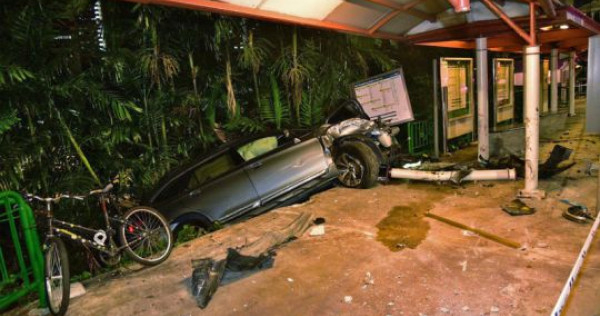
SINGAPORE – A car ploughed into a bus stop near the junction of Blair Road and Kampong Bahru Road on Saturday night (Sept 7), taking down a sign and coming to a halt in the vegetation behind the structure.
The front of the car was crushed.
According to eyewitnesses, the driver was in the car with a woman and a baby. The woman and baby were taken to hospital, one bystander said.
It is not known whether the driver was injured.
Another person, who was believed to be at the bus stop when the accident happened, was seen lying on the ground and was later taken to the hospital by the ambulance, said eyewitnesses.
Student Athirah Fasihah Mohamed Yusof, 18, who was at a nearby eatery, said the accident occurred at about 11.45pm. “The car skidded and crashed into the bus shelter and took down one of the pillars.”
The car was seen travelling along Kampong Bahru Road when it skidded, she added.
SINGAPORE: The floor of Mr Hoh Ah Kaw’s one-room flat was sticky, and there was a lingering dampness in the air.
His bed sat awkwardly two feet from the door, clothes hanging from a pole above it, but amid the cramped clutter of old furniture, what caught Ms Chua Yu Ru’s eye were boxes and boxes of eye-drops sitting atop a dresser. They were all unopened.
It took a while before the frail 79-year-old finally admitted to her that he had no one to help him apply the eyedrops to his cataract-ridden eyes.
“He told me his hand had no strength to press the bottle,” said Yu Ru, a 27-year-old senior staff nurse. So for months, he had simply resigned himself to skipping the four daily applications that the doctor had prescribed.
It is residents like him who spur Yu Ru to spend her days pounding the ground on her daily rounds as a community nurse in Chinatown, looking out for the ailing elderly residents – many of whom live in rental flats – and doing her best to help keep them out of hospital.
Senior staff nurse Chua Yu Ru with Mr Hoh Ah Kaw, 79. (Visuals: Say Xiang Yu and Christy Yip)
Suffering from assorted chronic conditions, from diabetes and hypertension to congestive heart failure, many are fatalistic about the situation, and tend to neglect doctors’ orders, their medication, or even seeking help.
“Many times, due to not being sure who to approach or where to seek help, the residents do not get the treatment that they need – or they are not even aware they have certain conditions,” she said.
Some of the elderly think that just because they are old and sick, life is just like that.
“But we can be the voice telling them that life is still worth living, and help them change the way they approach their health,” she added.
In Mr Hoh’s case, Yu Ru helped him obtain an eyedrops applicator that lets him apply the medication with an easy push of a button. Once a week, she visits to check that he has been doing it right.
Yu Ru follows up to ensure Mr Hoh is using the eyedrop applicator she obtained for him.
As the population ages, more nurses like her are being stationed within neighbourhoods across Singapore. Yu Ru works out of two community nursing posts in Chinatown – one at Banda Street and another at Jalan Kukoh – set up by the Singapore General Hospital (SGH).
Though these posts, located at Senior Activity Centres, are set up for standard checks like blood-pressure readings, it quickly becomes clear that the heart of these nurses’ work goes beyond the clinical.
As CNA Insider trailed Yu Ru on her rounds, she stopped many times to greet eager residents. Like the elderly uncle who, from two floors above, spotted her familiar white uniform and trolley bag of medical supplies, and waved excitedly.
“Come visit me soon!” she called back to him.
“Have you eaten?” she asked another resident in Hokkien. “Kopi ga dai” – coffee with more condensed milk, he told her.
“Ga dai?!” Yu Ru exclaimed in mock disbelief, making a mental note to watch for signs of diabetes at his next check-up at the nursing post.
Yu Ru and fellow nurse Murni Nadhirah frequently stop to chat with residents.
It’s these relationships they spend time building that makes the elderly residents more likely to listen to the nurses’ advice, and to trust them with deeply personal matters.
Said Yu Ru: “They don’t just see me as a nurse. They see me as family. And I think it comes from seeing that we are genuinely here to help them for the long term.”
WHY COMMUNITY NURSING?
Prior to becoming a community nurse last year, Yu Ru worked in SGH’s general surgery ward for four years.
The work was by nature fast-paced – wound dressing, serving medication, discharging patients. In most cases, she saw the patient just once. So it was those who kept coming back that made Yu Ru stop to think.
They were diabetic patients, vulnerable to infections in the lower limbs, and requiring amputation when wounds went unchecked. One would come in for a toe amputation, and Yu Ru would do her due diligence to teach the patient how to take care of their wound at home.
But a few months later, the same patient would be back for a forefoot amputation. And later on, below-knee amputation.
Seeing such patients broke her heart, she said. “I felt that what I was doing as a surgical nurse seemed limited at that point in time.”
Making the rounds as a community nurse, with medical supplies in tow.
In 2016, inspiration came when Yu Ru joined a medical mission trip to rural Papua New Guinea, where access to healthcare was limited and her team brought medical services to the remote villages instead.
It made her wonder. “Rather than being at this end of the spectrum where I’m just fighting fires and preventing further complications, could I go to the other end where I teach (patients) about diabetes or how to value their health?”
She took up an Advanced Diploma in Nursing, specialising in chronic disease management. And when she completed her studies in 2018, SGH was fortuitously setting up community nursing posts as part of the Ministry of Health’s nationwide plan to bring healthcare closer to home.
Yu Ru grabbed at the opportunity for a transfer. “It was what I really wanted, and I never expected it to happen in such a timely manner,” she said.
Yu Ru checks Mr Khoo Chey Boh, 74, who has chronic heart failure, at the Jalan Kukoh nursing post. She spends more time following up with patients and monitoring their health now than she did as a surgical nurse.
Across Singapore, there are now 70 nursing posts set up by various hospitals, 23 of which are run by SGH. Yu Ru was posted, along with five other nurses, to kickstart Chinatown’s two nursing posts.
A year on, the two posts are among SGH’s busiest. The one at Jalan Kukoh, for instance, sees about 110 residents a month.
INTERVENING EARLY
When Yu Ru is not at the post, she’s making as many as six home visits in a day in the Outram catchment area, which comprises China Square, Chinatown, Pearl’s Hill and People’s Park.
These visits often help Yu Ru spot environmental factors that affect a resident’s health, or detect symptoms of illnesses early, which she says is the “biggest benefit of community nursing”.
WATCH: What a community nurse does (8:17)
One of her regular visits is to 69-year-old Abas Mawas, who has diabetes and end-stage kidney failure.
When Yu Ru first met Abas – whom she affectionately calls “Datuk” (grandfather in Malay) – he had an open wound on his big toe that needed regular dressing.
But what was a minor injury became a major infection, and the toe turned gangrenous.
Mr Abas Mawas, 69, is diabetic and sometimes has trouble controlling his diet, which Yu Ru helps monitor.
These warning signs were all too familiar to Yu Ru, and she pleaded with Datuk to check himself into the hospital immediately. If he amputated his toe on time, it could stop there; otherwise, the infection could spread in his bloodstream and his entire foot might have to go.
Datuk, however, badly wanted to attend a family member’s wake, and would not be convinced.
“At that point in time, I had to respect his decision,” Yu Ru said. “I’d rather he knew that I was there for him whenever he was ready to go to the hospital.”
Indeed, within a few hours, Datuk changed his mind and called her, and she rushed over from another home visit to arrange for an ambulance.
For that, Datuk is forever thankful. “If she didn’t save me, maybe this foot also would be no more,” he said.
His left foot is now missing a toe, but it could have been the entire foot, if not for Yu Ru’s timely intervention.
THE COMPLEX TAO OF RELATIONSHIPS
Chatting with residents in Hokkien, Cantonese and a bit of Malay, Yu Ru is “kaypoh” in asking about their social lives, how many children they have, so on – as these factors can contribute to their state of health.
Many look forward to her visits; living alone, hardly visited by family if at all, their spirits get a lift from the companionship and smiles that she brings.
“It is helpful for me that I have somebody to talk to once in a while,” said Mdm Indrah, 69.
When they come, it boosts us… makes you want to eat your food, eat your medicine, and live for one more day.
Mdm Indra, 69, lives alone and was depressed after her sister died earlier this year. She gets a “boost”, she says, whenever the nurses visit.
But forging relationships has been a more complex undertaking than Yu Ru had imagined – especially in her early days as a community nurse.
“At first, I thought most people would be excited that there was fully-subsidised healthcare brought right to their doorstep,” she said.
But when her team went knocking on doors to introduce the slew of new healthcare services available, some were not interested. They would say they did not need doctors, or that they only used traditional Chinese medicine.
This was a jarring experience for the nurses. “In the hospital, they come to you to seek treatment. Over here, we have to coax them to come for check-ups.”
Getting residents to trust them and to accept their care was more complicated than she’d thought it would be.
And even when the nurses won the residents over, the relationship might still hang by a thread – something Yu Ru “learned the hard way”.
One of her first few cases was a man with poorly controlled diabetes. He agreed to let Yu Ru check his blood sugar levels every day, as requested by his doctor.
During these check-ups, Yu Ru would often ask what he had eaten, and his responses were always about noodles and kueh, precisely the food he should avoid. Yu Ru suspects it was her negativity that eventually drove him away.
“He would always hear me say not good, not good, not good,” she said. So after two months, he stopped coming altogether. “He decided for himself that eating well is much more important.”
While it was demoralising at first, Yu Ru did not let herself become jaded. Since then, she has learnt the need to “pace (herself) with the residents” before she can help them.
“Coming from the ward, I’m so used to being the one who instructs,” she said.
As much as we are eager to provide the best care for them, they may not be open to accepting advice just yet.
A year since she last saw that resident, Yu Ru managed to touch base with him recently. This time, she simply asked about his well-being.
“I’m waiting for that moment where he’s open to us again,” she said.
Yu Ru helping Mdm Goh Kung Hong, 66, with the paperwork to apply for financial assistance with her medical bills. Their work as community nurses goes beyond just the clinical.
SIMPLE THINGS COUNT
Dr Lee Wai Sian, a family physician at the Outram Polyclinic, lauds the holistic care that community nurses provide “beyond the clinical setting”.
Some of the most helpful ways to ensure that residents stay healthy, for example, is to repack their medication in a way that’s easy for them to access; and to help them organise their paperwork (to avoid misplaced appointment letters that lead to missed check-ups).
“Due to a variety of reasons such as physical decline, memory difficulties, lack of medical awareness, and inadequate social support or finances, it can be challenging for some elderly to manage their health on their own,” Dr Lee said.
When faced with multiple pills to take, various instructions to follow, and in some cases, six months’ worth of supply to handle, the elderly can find it daunting to even begin unpacking the medication they’ve brought home.
The different pills and the complicated dosages can be daunting – some end up not taking their medication at all.
In Datuk’s case, he was given nine types of pills to take at different times of the day – some on different days of the week.
So the first thing Yu Ru did to help was to sort out his medication in labelled pill boxes, and make the instructions easy to follow: A sun symbol for pills to be taken in the day, a moon for night, the numbers 1 to 7 representing Monday to Sunday, which Datuk found easy to follow.
Yu Ru also followed up on subsequent visits to ensure he had taken his medication and re-packed them correctly.
Datuk’s medication is sorted out in pillboxes with easy-to-understand labels.
TAPPING OTHER HELPING HANDS
Though Yu Ru and her colleagues may not have the same resources as they did in the hospital – such as being able to tap immediate medical advice from doctors – they can call on community partners to supplement their care for the residents.
One such partner is the Kreta Ayer Seniors Activity Centre.
When a resident doesn’t show up for an appointment, Yu Ru can count on the centre’s volunteers to point her to their usual hangouts – like the time she went looking for one and found him eating his favourite oyster omelette.
In turn, she alerts the centre when a resident needs their services.
On a home visit to Mdm Goh Kung Hong, Yu Ru found out that the 66-year-old had difficulty sleeping due to a bed bug infestation. The thought of bed bugs scared Yu Ru, but she braced herself, took pictures of the traces, and sought help from the centre manager to arrange for fumigation immediately.
Yu Ru taking pictures of the bed bug infestation.
Such things may seem a stretch of a nurse’s duty, but she says it’s part of the job. “We not only nurse them, we look at the environment and other factors that might affect their health.”
The community nurses also work closely with Montfort Care, which offers social or emotional support services for the elderly. Both parties refer residents to each other when the need arises.
Take, for instance, Mdm Kek Eh Nau, 79, who looks after her husband who has dementia. Yu Ru noticed this was taking a toll on her.
“It can be quite suffocating to face the husband alone all the time in the house, if she’s not out in the community and engaging with other people,” she said.
So now, every Monday, Wednesday and Friday, Mdm Kek – with her husband and helper in tow – will walk two blocks to Montfort Care’s Fit For Life programme, have a good stretch, and play games with other seniors.
Mdm Kek Eh Nau, 79 (in pink shirt) and her husband (in wheelchair) doing the Montfort Care programme.
Gary Mok, 37, a case worker who helps to lead the programme, said that having the community nurses means extra pairs of eyes to look out for the elderly residents.
“Since the nurses came, medical care has become more accessible to seniors who are more vulnerable and isolated. We do a lot of joint visits, and a lot of case discussion about the care plan for residents here,” he said.
What Yu Ru appreciates most about her job is the bond she shares with her residents. They evidently adore the sprightly Missy (colloquial term for nurse) – and more than one resident told CNA Insider they saw her as a granddaughter.
Having earned their trust, Yu Ru hopes to change the way the elderly see their health, and empower them to take better care of themselves.
“And I will be there as a friend, a community nurse, to journey alongside them.”
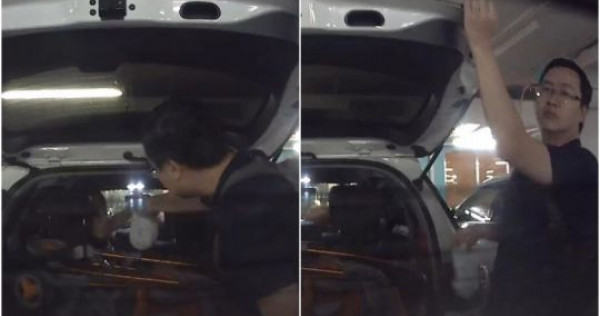
SINGAPORE – A man who was caught on video tossing a soiled baby diaper onto a car at the Tampines Mall carpark will soon have to deal with the authorities.
In a Facebook post on Saturday (Sept 7), the National Environment Agency (NEA) said it would be taking action against the man for littering.
The man was caught in the act by an in-car camera that happened to be rolling inside the car. The car owner Jonathan Lee, who subsequently reported the matter to the NEA, posted the video on Facebook on Aug 24.
SINGAPORE – A 61-year-old man and a young girl were crossing a road junction in Bukit Batok when they were hit by a car.
A dashcam video showed that they were crossing the road junction as the green man signal was blinking and were hit by the white car which was making a discretionary right turn.
The man bore most of the impact, hitting his body on the windscreen before falling onto the road, as seen in the video taken by a nearby car. The girl got up from the ground and rushed towards the man, who could not be seen in the recording.
The accident took place at the junction of Bukit Batok East Avenue 6 and Bukit Batok Street 23 at 5.34pm on Thursday (Sept 5), the police said.
The man was conscious when taken to the National University Hospital.
In the video, the girl was heard crying loudly as several passers-by gathered at the scene.
The video of the accident was uploaded on the SG Road Vigilante Facebook page on Friday.
SINGAPORE – An article published by The Online Citizen (TOC) on Aug 15 has “gravely injured” the character and reputation of Prime Minister Lee Hsien Loong, his lawyers said in court documents.
PM Lee is suing TOC chief editor Terry Xu for defamation over the article and a Facebook post, which his lawyers said contained “false and baseless” allegations, including that the PM had misled his father, the late Mr Lee Kuan Yew, into thinking their Oxley Road home had been gazetted by the Government.
Lawyers from Davinder Singh Chambers had served Mr Xu, 37, the writ of summons and statement of claim at his home in Choa Chu Kang on Thursday (Sept 5).
In court documents seen by The Straits Times, the lawyers charged that PM Lee has suffered loss and damage, and has been “brought into public scandal, odium and contempt”.
The secret to the clutter-free, small-space life? Plenty of sleek storage solutions.
Renovating a home calls for a plan – and for homeowner Wei Hao, his was all about “getting enough storage space” out of his cosy 85 sqm Yishun executive condo (EC) apartment, which he shares with his wife and their pet cat.
“As our apartment was one without a bomb shelter, we didn’t have storage space for our ironing boards, ladder and spare stools; we really needed to find ways to hide all of that bulky stuff,” he explains.
Eventually, after a five week long renovation involving interior design firm Fuse Concept’s help, Wei Hao and his wife succeeded in achieving their goal. Here’s what was done to make it happen.
ON THE OVERALL AESTHETIC
Wei Hao (WH): When we started the renovation, we already had a vision of what we wanted. The most important thing was to have sufficient storage fixtures. We also wanted them to look sleek.
I wouldn’t say a particular style inspired us. We went for a simple, timeless look.
WASHINGTON – Local authorities confirmed on Friday (Sept 6) that Singaporean Tan Wei was among the 34 victims who died in a pre-dawn fire on a dive boat off the California coast earlier this week.
Her name was one of nine publicly released by the Santa Barbara County Sheriff’s Office at a sombre press conference. The authorities said they have positively identified 18 victims so far.
The 26-year-old had recently graduated with a master’s degree in engineering from the University of California, Berkeley and started work as a data scientist in Santa Barbara in June.
She was listed by the Sheriff’s Office as residing in Goleta, a coastal town of 31,000 next to Santa Barbara.
Ms Tan Wei’s older sister, Cheerin Tan, 29, had previously told The New Paper and CNA that DNA samples confirmed that her sister had died on the boat.