SINGAPORE – Three men, aged between 37 and 50, have been arrested for allegedly robbing two women of their mobile phones and hurting them with a penknife.
Police received a report at about 3pm on Monday (Sept 23) that two women had been slashed with a penknife at Block 532 Ang Mo Kio Avenue 10.
The women were robbed of five mobile phones, which belonged to them and their colleague, police said in a statement on Tuesday.
About 20 to 30 police officers were at the scene, reported citizen journalism website Stomp.
Officers from the Ang Mo Kio Police Division arrested the men after establishing their identities through closed-circuit television footage and inquiries on the ground.
The men will be charged in court on Wednesday with robbery with hurt, which carries a jail term of five to 20 years and at least 12 strokes of the cane.
SINGAPORE: A woman was rescued on Tuesday (Sep 24) from the lake at Bukit Batok Town Park, also known as Little Guilin or Xiao Guilin, after two British tourists saw her in the water.
Simon and Lesley Brewin, who are in Singapore to visit their children, suspected something was amiss when they saw a small stool propped against a side barrier by the lake.
Mrs Brewin, a 65-year-old photographer, looked over the barrier and saw a woman in the water.
The woman was clinging onto a branch and was almost fully submerged, with only her nose and mouth above the surface, Mrs Brewin told CNA.
She went to help from passers-by while her husband, a 66-year-old retiree, tried to reach in to get the woman out.
“I didn’t dare enter the water as I didn’t know how deep it was,” said Mr Brewin.
SCDF personnel at the scene by a lake at Bukit Batok Town Park. (Photo: Wong Woon Shin)
His wife later returned and jumped into the lake. She said she gave the woman mouth-to-mouth resuscitation while waiting for help to arrive.
The Singapore Civil Defence Force (SCDF) said it responded to a call for assistance at Bukit Batok Town Park at about 11.50am.
“An elderly woman was rescued by SCDF using a life buoy and a ladder,” it added.
She was taken to Ng Teng Fong General Hospital by an SCDF ambulance.
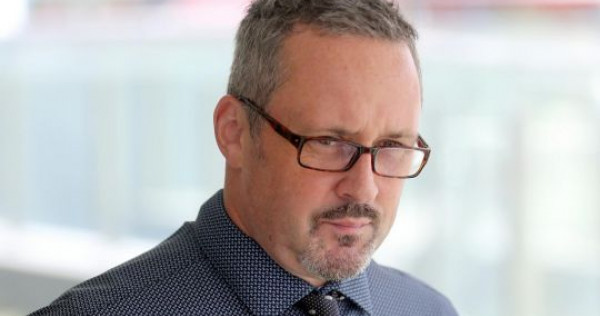
SINGAPORE – The drunken owner of an advertising firm, who could not find an unlocked exit at Roxy Square shopping centre, assaulted a security supervisor even though the latter offered to show him the way out.
Briton Stuart Boyd Mills was sentenced on Monday (Sept 23) to a week’s jail for assaulting Mr Andrew Lim Cheng Hock, 59. A harassment charge was considered during sentencing.
The 47-year-old Singapore permanent resident, who owns The Creative Mills, was captured on video punching the older man and the clip went viral earlier this year.
The single blow caused Mr Lim to fall backwards onto the floor and break his spectacles.
On Monday, District Judge Christopher Tan noted that Mills had punched Mr Lim’s face, which is a “sensitive” part of the body.
The judge also said that the attack was “entirely unprovoked”, stressing that “general deterrence (was) relevant” in this case, as security officers are often in a vulnerable position.
The court heard that Mills and a friend had gone to a pub at the shopping mall in East Coast Road and ended their drinking session at around midnight on April 4.
SINGAPORE: A 62-year-old ComfortDelGro taxi driver and his passengers were taken to hospital after an accident in Chinatown early on Tuesday (Sep 24) morning.
The taxi was involved in an accident with a car at the junction of Upper Cross Street and Eu Tong Sen Street at about 3.45am, the police told CNA.
The driver and the two passengers, aged 27 and 29, were taken to Singapore General Hospital by ambulance. All three were conscious, the police said.
Police investigations are ongoing.
A 62-year-old ComfortDelGro taxi driver and two passengers were taken to hospital after an accident between the taxi and a car in Chinatown on Sep 24, 2019. (Photo: Facebook/Singapore Road Accident)
Photos of the accident on social media show the taxi crashed head first into a lamp-post. Its bonnet was badly damaged and debris was seen on the ground.
The white convertible involved in the accident also had a badly damaged bonnet.
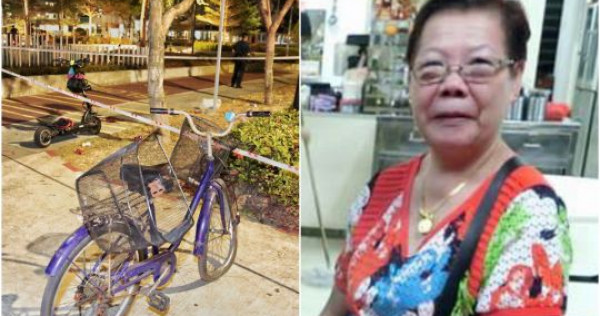
SINGAPORE – The family of a 65-year-old woman, who is in a coma after the bicycle she was riding collided with an e-scooter, has been told by the hospital to be prepared for the worst.
This is after her blood pressure dropped on Monday morning (Sept 23).
Madam Ong Bee Eng, a logistics assistant packer, was cycling home last Saturday night when she was involved in the accident which left her unconscious.
She has been warded at Changi General Hospital’s (CGH) Surgical Intensive Care Unit. More than 100 people streamed in and out to see her on Monday as relatives and friends learnt about her worsening condition.
At least 30 visitors were at the hospital at around 7pm on Monday.
“Doctors told us to ask whoever wanted to see her for the last time to come,” Mr Andy Ong, 53, who is Madam Ong’s brother, told The Straits Times in Mandarin at the hospital on Monday evening.
Her blood pressure has remained low throughout the day and she is currently on life support, which the family does not plan to remove, said Mr Ong, who declined to give his occupation.
SINGAPORE – Three Indonesian domestic workers have been issued detention orders under the Internal Security Act and are being investigated for financing terrorism.
They are Anindia Afiyantari, 33, Retno Hernayani, 36, and Turmini, 31.
All three had been working in Singapore for between six and 13 years at the point of their arrest, said the Ministry of Home Affairs (MHA) in a statement on Monday afternoon (Sept 23).
They are the first foreign domestic workers to be issued such detention orders.
A fourth maid was also arrested as part of the investigation.
Although she did not subscribe to these radical beliefs, she was aware that the others had been radicalised and did not report them.
She has since been repatriated to Indonesia, the MHA said.
The three maids became radicalised last year after viewing online material on terror group Islamic State in Iraq and Syria (ISIS).
Their convictions deepened after they joined multiple pro-ISIS social media chat groups and channels.
Subsequently, they set up multiple social media accounts to post pro-ISIS material.
NEW YORK: Singapore’s policies and practices have served the country well in uniting its people and strengthening its identity over the decades, Prime Minister Lee Hsien Loong said on Monday (Sep 23).
But challenges remain, he added, and these could impact the country’s efforts to foster racial and religious harmony.
Mr Lee was speaking at the Appeal of Conscience Foundation’s annual awards dinner in New York, during which he was presented with its prestigious World Statesman Award.
The award by the New York-based interfaith Appeal of Conscience Foundation recognises individuals who support peace, prosperity and liberty, and promote tolerance, human dignity and human rights, both in their own countries and internationally through cooperation with other leaders.
President of the foundation Rabbi Arthur Schneier said that Mr Lee was being recognised for fostering a society that embraces multiculturalism, in which ethnic communities maintain their unique way of life while living harmoniously.
Mr Lee was also recognised for supporting a knowledge-based economy, an education system that provides Singaporeans with the necessary skills to survive in a globally competitive environment, as well as for implementing a world-class health infrastructure.
Prime Minister Lee Hsien Loong receives the World Statesman Award in New York on Monday Sep 23, 2019.
Among the policies and practices Mr Lee spoke of were Singapore’s Presidential Council for Minority Rights, which scrutinises all legislation to ensure none of it discriminates against any racial or religious community, and the Maintenance of Religious Harmony Act, which empowers the Government to act against religious leaders or groups who cause feelings of enmity, hatred or hostility between religious groups, or use religion to promote a political cause.
Singapore has also designed electoral rules to encourage multi-racial politics, instead of the politics of race and religion.
“In Parliamentary elections, political parties are required to present multi-racial slates to contest multi-member seats. This discourages political parties from championing particular racial or religious groups, and dividing our society along primordial fault lines,” said Mr Lee.
“It also guarantees that Parliament will always have a minimum number of legislators from the minority communities, so that minorities never feel shut out.”
Mr Lee also cited the Ethnic Integration Policy, which ensures that every township, precinct and residential block is ethnically mixed so that there are no racial enclaves.
“Had we not intervened in the housing market, our population would have become racially segregated, as has happened in many other countries, with serious social consequences,” Mr Lee said.
However, Singapore’s susceptibility to external influences, given that it is a small open society, and social media altering the way people communicate are among the challenges that could impact the country’s efforts to foster racial and religious harmony, understanding and tolerance among the population.
“We must not allow those who spread toxic views and poison on the Internet to get away with what may literally be murder. Policing the Internet is a Sisyphean task, but we must keep our laws updated, and devise fresh and effective countermeasures,” he said.
Mr Lee explained that social media has enabled provocative views to circulate and gain currency, adding that it has become dangerously easy for people both to cause offence and take umbrage.
Hence, Singapore has passed the Protection from Online Falsehoods and Manipulation Act (POFMA) law, which gives the Government and the courts powers to require the correction of misinformation and falsehoods online, take action against those who deliberately spread untruths, as well as to deal with websites that give them a platform to do so.
In his speech, Mr Lee said that although globalisation has allowed Singaporeans to learn from others, it can also import disputes and troubles from other lands that could undermine the country’s social cohesion.
This is as every racial and religious group has extensive links with larger communities abroad belonging to the same race or faith, and those groups have their roots in and take guidance from superior authorities elsewhere.
“We do our best to insulate ourselves from other people’s problems, knowing full well that complete disengagement is impossible. Thus we ban or expel foreign preachers who bring their foreign quarrels to Singapore or seek to persuade Singaporeans to practise their religions in ways that are not appropriate for our society,” Mr Lee said.
“At the same time, we explain to Singaporeans that different societies often practise the same religion in different ways, and inculcate in ourselves confidence and pride in our own practices and norms.”
Another challenge Mr Lee spoke of was growing religiosity among faiths, something he described as a “worldwide phenomenon”.
“People everywhere take their faiths more seriously and practise them more fervently,” he said, adding that in itself, “this is not a bad thing” as religion may guide one’s conscience and give one a profound sense of meaning and purpose of life.
“But as convinced as one might be of one’s own faith, we cannot get carried away, and show disrespect to other people’s faiths or gods.”
He added: “In Singapore we strongly oppose exclusionary practices that discourage people of different faiths from interacting with one another as fellow citizens.
“This year our religious leaders made a formal collective declaration that it is entirely proper, and indeed praiseworthy, for people of different faiths to befriend each other, exchange felicitations on each other’s religious festivals and eat together despite different dietary rules.”
The Prime Minister also warned of violence in the name of race or religion, calling it a “real and present danger”.
He urged Singaporeans to hold together as a nation if such an attack ever happened, adding that Singapore has kept up its efforts in protecting the nation against incidents of such nature.
“There will always be some people who pervert and misuse religion to justify their violent ends,” he said.
“The danger of a terrorist attack continues, whether from ISIS or Al-Qaeda, or some misguided soul self-radicalised by extremist propaganda that he or she found online.”
Mr Lee also said Singapore must never allow religion to be weaponised or used as a front for other conflicts, adding that he hopes future generations of Singaporeans will cherish the harmony, realise how precious it is and strengthen it further.
He also noted that the Government alone cannot bring about religious harmony.
“Responsible voices need to speak up, set the example and spread the message of tolerance and respect,” he said, citing organisations like the Appeal of Conscience Foundation as doing precisely that.
SINGAPORE – Public transport operators have formally submitted applications for a fare increase which could see bus and train rides costing up to 7 per cent more by year-end.
The Public Transport Council (PTC), a fare watchdog appointed by the Transport Ministry, said on Monday (Sept 23) that it had received applications from both SBS Transit and SMRT Trains.
The applications are for increases to train fares.
Since buses are now contracted by the Government, the Land Transport Authority (LTA) collects fare revenue.
The operators bid for routes and the winner is paid the sum it had bid for.
The PTC said the LTA will “submit information on the bus industry financials… to help in the fare review process”.
Asked when the PTC would come to a decision on the latest annual fare revision, a spokesman would only say it will make an announcement in the last quarter.
SINGAPORE – Lorry driver Teo Seng Tiong was attempting to overtake two cyclists last year when he heard a crashing sound, which made him think that he had hit a taxi on his right.
This had caused Teo, 58, to react by swerving to his left, in the direction of British national Eric Cheung Hoyu, 35, who then fell off his bicycle, said Teo’s lawyer Chia Boon Teck.
However, there was no contact between the lorry and the bicycle during the incident in Pasir Ris, said Mr Chia on Monday (Sept 23), on the first day of trial for Teo.
The incident, which was captured on video and went viral online, took place at the junction of Pasir Ris Drive 3 and Pasir Ris Rise just before noon on Dec 22 last year.
SINGAPORE: Amy*, suffers from a chronic back and neck pain that intermittently flares up for a few days or weeks before it returns to normal.
Initially, doctors recommended reducing the time she spent looking down at her phone, adjusting her sitting and standing postures, and her position when doing housework, as well as getting ample rest to help lessen the pain. But despite these lifestyle changes, her condition worsened.
Over time, Amy started to experience pain running down from her back to her bottom and the outer side of her legs.
After seeing someone at a specialist clinic, Amy finally found what’s causing the pain. An initial X-ray showed a degenerated curved spine and further MRI scans showed nerve compression in her lower back.
(Photo: Unsplash/Creedi Zhong)
BACK AND NECK PAINS ARE COMMON
But the neck and back pain that Amy experienced are not uncommon.
In fact, a Global Burden of Disease (GBD) study has identified lower back pain as a health problem worldwide and categorised it as one of the top ten common conditions and challenges in this century.
GBD found in 2015, that over half a billion people worldwide had lower back pain and more than a third of a billion had neck pain which persists for more than three months.
Based on a 2017 NUH study that surveyed more than 7,000 Singaporeans who were more than 40 years old, we estimated that one in 10 will have scoliosis (a curved spine) in the lower back of the lumbar spine region.
Furthermore, from the year 2009 to 2018, the University Spine Centre at the National University Hospital (NUH) saw a 33 per cent increase in the number of referrals for spine conditions.
While there is no definitive study in Singapore to identify the cause for this, the reasons for such an increase may be due to poor sitting and standing postures, and lifestyle-related factors.
Basic science studies have demonstrated that excessive forward bending of the spine – such as when you’re looking at your phone – can lead to spinal disc degeneration.
In the last decade, lifestyle changes due to prolonged sitting from computer usage and the use of mobile handheld devices involving prolonged forward bending of the neck and back may be possible reasons that can lead to early spine degeneration and pain.
But despite the high prevalence of spinal pain, not all neck and back pain will require extensive treatment or surgical intervention, as most of these adult spinal curve deformities are mild.
A benign spine degeneration condition will only require posture corrections and physiotherapy.
HOW TO KNOW IF YOUR BACK PAIN IS NORMAL
Some back pain, however, can be more serious. Persistent neck or back pain that run down to the limbs may indicate a more serious spinal injury that require medical attention.
To know whether your back pain needs serious attention, you should look for the presence of red flags which include: Pain after trauma (like a fall or road traffic accident), the presence of neurological deficit (such as leg or hand numbness), difficulties in urinating or bowel movements, and unsteady gait.
Back pain experienced by those with a history of cancer, osteoporosis or rheumatological conditions can point to an even more serious condition.
Spinal pain that causes fever and unexplained weight loss of more than 10kg within six months, spinal pain at rest or pain that wakes one up at night (different from experiencing difficulties falling asleep), progressive spinal deformities (curved spine or progressive hunch back), and pain that persists for more than four to six weeks after treatments, are some other red flags.
(Photo: Unsplash/Jesper Aggergaard)
Should any of these symptoms occur, one should seek medical attention so that the doctor can do an assessment of the spine, which may include X-ray or MRI examinations.
In Amy’s case, she subsequently underwent spinal decompression, which helps to relieve the spinal nerve, and a correction of her spinal deformities through minimally invasive spine surgery, which has helped her returned to her daily lifestyle.
SPINAL PAINS CAN BE MANAGED
More often, these spinal pains can be managed. Pain killers, muscle relaxants and physiotherapy or acupuncture can help you manage spinal pain.
Back braces can help to temporarily reduce back pain, but one should limit its use to one to two weeks at the onset of the pain, as prolonged usage of the brace in acute back strain will weaken the back muscle and affect spine muscle recovery.
By maintaining good posture and exercising regularly, you can reduce pain development and occurrence.
*The name used in this commentary are pseudonyms
Associate professor Gabriel Liu is head and senior consultant in University Spine Centre at the National University Hospital.