Home Blog Page 668

20 athletes break new ground to represent Singapore in e-sports at SEA Games 2019

0

SINGAPORE: Twenty e-sports athletes will represent Singapore in six events at the upcoming Southeast Asian (SEA) Games in the Philippines.  

It will be the first time e-sports is part of a medal event at a multi-sport competition sanctioned by the International Olympic Committee. It featured as a demonstration sport at the 2018 Asian Games in Indonesia.

Six golds will be handed out for the following game titles: Arena of Valor, DOTA 2, StarCraft II, Tekken 7, Heartstone and Mobile Legends: Bang Bang.

Held biennially, the 2019 SEA Games will take place across various cities in the Philippines from Nov 30 to Dec 11.

READ: Swapping textbooks for joysticks to represent Singapore in e-sports

READ: Singapore companies looking to capitalise on region’s fast-growing gaming culture and interest in e-sports

The Singapore Esports Association (SGEA) said on Wednesday (Oct 9) that a national selection for e-sports athletes began in February.

The final line-up was then decided by the Singapore National Olympic Council (SNOC) after SGEA submitted its nomination list in May.

SEA Games Bootcamp - Singapore

E-sports athletes at the Razer SEA Games Esports Bootcamp. (Photo: SGEA)

The Singapore delegation includes veteran athletes such as DOTA 2 player, Wong “NutZ” Jeng Yih and StarCraft II player, Thomas “Blysk” Kopankiewicz.

SGEA also announced that it has partnered with Singapore’s Cybersports & Online Gaming Association (SCOGA) to provide sports science support, to prepare athletes for the Games.

The programme involves conditioning, preparation, and other support activities in the areas of psychology, nutrition, physical conditioning, well-being and lifestyle management.

SCOGA chairman, Nicholas Khoo said the association has been investing in player training and development in the past two years with the support of the National Youth Council and industry partners.

“We are excited to support our players for the SEA Games and hope that many players will take advantage of the comprehensive programme we have put together with our partners to help them prepare for the games,” he said.

Singaporean companies that have lent their support to SGEA include gaming hardware manufacturing company Razer, who organised the Razer SEA Games Esports Bootcamp and provided training peripherals for DOTA 2 teams. The training venue and facilities were provided by Singtel.

SEA Games Bootcamp - 4 Nations

E-sports athletes at the Razer SEA Games Esports Bootcamp. (Photo: SGEA)

Last month, Razer CEO Tan Min-Liang announced his company would be ploughing S$10 million to grow e-sports in Singapore; part of this funding will also go toward supporting the SEA Games e-sports contingent.

“SGEA is thankful for the warm support from the Singapore e-sports community, Sports Singapore and the SNOC,” said SGEA president Ng Chong Geng.

“We look forward to seeing our athletes represent our country and are eager to support them in the road to the competition.”

SGEA National Qualifiers

E-sports athletes at the SGEA National Qualifiers. (Photo: SGEA)

The 20 selected representatives with their respective titles are as follows:

MOBILE LEGENDS: BANG BANG

Evos Esports:

Akihiro “Potato” Furusawa

Andrew “ACE” Lim

Boon “OhDeerBambi” Wei Xing Robert

Chong “SOUL” Ru Chyi

Tan “JPL” Zheng Wei

ARENA OF VALOR

Resurgence:

Bjorn “Zeys” Ong

Dabbie “813” Lim Chin Hong

Ng “Elespresso” Ye Lun Renfred

Ong “Yueyah” Jing Song

Lee “Marclaren” Cheng Hiang Marcus

DOTA 2

Wong “NutZ” Jeng Yih

Lukman “Luk” Yusoff Bin Nooraznan

Teo “Tudi” Yao Wen

Wilson “Poloson” Koh Chin Wei

STARCRAFT II

Toh “Lobo” Wei Liang Alvin

Thomas “Blysk” Kopankiewicz

TEKKEN 7

Ruslan “LAN94” Bin Abd Rahman

HEARTHSTONE

Chew “Khaius” Khai Kiat

Benjamin “SGAhIce” Isa Roberts
Source link

Fulham player Ben Davis, who defaulted on NS, says Thai citizenship is the 'best choice' for him

0

[ad_1]

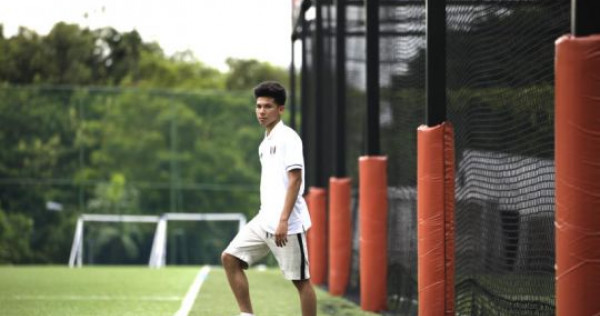
SINGAPORE – Fulham footballer Ben Davis, who has defaulted on his national service obligations, has opted to represent Thailand instead of Singapore.

In his first comments on the issue, he told Thailand television channel True4U in an interview that was posted on its Facebook page on Monday (Oct 7): “I have decided now. I spoke to my family about my citizenship – I have the options of Singapore, Thailand, Wales and England. Now, I have decided to choose Thailand.

“I think this is the best choice for me. Thai football has a bright future and a chance to succeed. My parents also support my decision to the fullest.

“At first, my dad wanted me to play for Singapore, but for some reason, it did not happen. My mother is also very pleased that I have been given this opportunity.”

The 18-year-old was born in Phuket to a Thai mother and an English father and moved to Singapore with his family at age five before becoming a citizen four years later.

[ad_2]

Source link

Train, bus fares to increase from Dec 28: Public Transport Council

0

SINGAPORE: Bus and train fares will go up by 7 per cent from Dec 28, the Public Transport Council (PTC) announced on Tuesday (Oct 8), the maximum allowable increase under this year’s fare review exercise. 

This will translate into an increase of 9 cents per journey for adult commuters who use travel cards. They make up about 65 per cent of all public transport trips here. 

Those using cash on buses, or who purchase single-trip tickets for train rides, will see a steeper increase of 20 cents per trip.

The cost of monthly concession passes will go up by between S$1 and S$5.50, while the price of adult monthly travel passes will go up by S$8. 

Concession groups – such as students, senior citizens and those with disabilities – will pay 4 cents more per journey. About two million commuters – or more than one in two Singaporeans – enjoy concessionary fares, said the PTC.  

ptc fare review 2019 changes public transport

Full-time polytechnic and diploma students, however, will see a drop in their cost of commute. 

They currently pay adult fares but will have student concessions extended to them, allowing them to save up to S$1.54 per trip.

READ: Train and bus fares set to go up: What you need to know

In a Facebook post, Transport Minister Khaw Boon Wan said that in any fare adjustment, the Government tries to keep the increase “as low as possible” so it affects as few people as it can. 

“Fortunately, more than half of Singaporeans receive substantial discounts from the normal fare of up to 70 per cent. This includes students, senior commuters and Workfare recipients,” he said. 

Mr Khaw also noted that the PTC’s move to cap the fare increase to no more than 4 cents for concession groups protects the interest of “two million or so” commuters. 

“With this, their fares on average are not higher than 2015 levels,” he added. 

The increases are based on the current fare adjustment formula, which came into effect last year and takes into account factors such as energy prices and inflation.

VOUCHERS FOR LOW-INCOME HOUSEHOLDS 

To further help lower-income households, the PTC will have both SMRT Trains and SBS Transit contribute about S$3.89 million to the Public Transport Fund – more than double last year’s amount.

Of this, S$1.88 million will come from SBS Transit, while S$2.01 million will come from SMRT. This represents 5 per cent and 10 per cent of their expected increase in fare revenues respectively, said PTC.

It will allow 450,000 public transport vouchers to be made available to help lower-income households cope with the fare increase. 

ptc fare review 2019 new vs current public transport

All households with a per capita income of no more than S$1,200 per month – about one in every five households – will qualify for the vouchers. 

Households can apply for the vouchers – which can be used to purchase or top up fare cards, as well as buy monthly concession passes – at community centres and clubs (CCs) from Nov 11 this year to Oct 31 next year. 

Those who require more help can apply for additional vouchers through the CCs, which will assess these applications on a case-by-case basis.

BALANCE BETWEEN FINANCIAL SUSTAINABILITY AND AFFORDABILITY 

Speaking to reporters, PTC chairman Richard Magnus said that the council sought an “equitable and delicate balance” between financial sustainability for operators and the affordability of fares for commuters.

He noted that the costs of running public transport have increased, largely due to a worldwide rise in energy prices as well as manpower wages. 

READ: Review of transport fare formula needed to reflect rising cost of operating MRT system: Khaw Boon Wan

Both SMRT and SBS Transit had incurred losses on their rail operations. 

SMRT Trains reported a net loss of S$155 million for the financial year ending in March, while SBS Transit had reported losses of S$125 million for the Downtown Line over the past three years, adding that its train division has lost “tens of millions of dollars” in the last financial year.

Both companies had applied for the 7 per cent increase, citing rising costs due to expenses such as maintenance and the introduction of new rail lines. 

The Government subsidises about S$1 billion per year for the upgrading of rail assets, and another S$1 billion to subsidise bus operations. 

“Running a reliable public transport system is costly, and we have to strive towards a more sustainable financing model,” said Mr Magnus, adding the adjustments would allow fare revenue to increase by about S$132.5 million.

Of this, SBS Transit Rail will see increased revenue of about S$18.8 million, while SMRT Trains’ revenue will go up by about S$40.2 million.

READ: SMRT Trains’ loss widens in FY2019 as maintenance-related costs keep it in the red

Bus fare revenues will increase by about S$73.5 million, which will be used by the Government to offset bus operation subsidies. 

Mr Khaw said in his Facebook post that it requires “sound judgment” to distribute the costs of public transport between commuters and tax payers. 

This is relatively easy when fares are adjusted downwards, he noted, as was the case between 2015 and 2017. 

“But when fares need to go up, as for example when oil price increased drastically last year, PTC’s job becomes more challenging,” he added.

The Ministry of Transport will step in to help lower-income families, Mr Khaw said. 

This year, the Government we will extend 50 per cent more Public Transport Vouchers and increase the value of each voucher to S$50, up from S$30.

“This extra assistance will cover one in five resident households, up from the previous one in 10 households,” he said.

Source link

5 scary places to test your bravery this Spooktober that's not USS Halloween Horror Nights

0

[ad_1]

Who says Halloween is an event meant only for trick-o-treating?

While the day of the dead may not be until the end of October, there’s already a slew of horror-themed activities lined up for you to scare yourselves with this year.

Needless to say, most of us would have chanced upon promos for USS’s HHN9 — Singapore’s largest and most iconic Halloween event that transforms the theme park into a giant scare-fest each year.

And if you’re a thrill-seeker on the lookout for more scary places in Singapore, here are some spooktacular options to check out.

1. SCREAM ASIA 2019

Calling all horror-movie buffs! Scream Asia is back for a second edition for you to test your lung capacity from Oct 5 to 27.

[ad_2]

Source link

Excellent, multi-faceted relations between Singapore and Indonesia in ‘good shape’: PM Lee

0

SINGAPORE: Bilateral ties between Singapore and Indonesia are in “good shape”, said Prime Minister Lee Hsien Loong at a Leaders’ Retreat between the two countries on Tuesday (Oct 8), adding that the relationship is “deep, multi-faceted and forward-looking”.

Speaking during a joint press conference at the Istana, PM Lee said an “excellent relationship of trust and cooperation” built with President Joko Widodo has meant that ties between both sides have prospered during the latter’s first term in office.

pm lee leaders retreat

Prime Minister Lee Hsien Loong speaking at a Leaders’ Retreat on Oct 8, 2019. (Photo: TODAY/Najeer Yusof Muallim)

“Bilateral relations are in good shape – they are deep, multi-faceted and forward-looking,” said PM Lee. “We’ve achieved much together during President Jokowi’s first term and I look forward to sustaining this positive trajectory and carrying it forward into his second term.”

On his part, the Indonesian leader said: “Let’s continue working together for the prosperity of our two countries and people.”

Mr Widodo is in Singapore for a two-day visit as part of the Singapore-Indonesia Leaders’ Retreat.

Joko Widodo and PM Lee inspecting the guard of honour (1)

Indonesia President Joko Widodo and PM Lee inspecting the guard of honour during the welcome ceremony at the Istana on Oct 8, 2019. (Photo: Najeer Yusof/TODAY)

This is PM Lee’s fourth Leaders’ Retreat with Mr Widodo, and the first since the Indonesian president’s re-election in May. He will be inaugurated later this month.

He is accompanied by first lady Iriana Joko Widodo and an Indonesian delegation, which includes ministers and officials.

The Singapore delegation includes Deputy Prime Minister and Minister for Finance Heng Swee Keat, Senior Minister and Coordinating Minister for National Security Teo Chee Hean, as well as other Cabinet ministers.

Earlier in the day, Mr Widodo attended a welcome ceremony at the Istana.

AGREEMENTS ON ELECTRONIC DATA EXCHANGE, ARCHIVAL COOPERATION SIGNED

The press conference followed the signing of an agreement on electronic data exchange to facilitate and secure trade through the link-up of the National Single Windows of both countries, as well as a Memorandum of Understanding (MOU) between the national archives of both sides.

The agreement reaffirms both countries’ commitment to promote a seamless, paperless and secure business environment for companies engaged in bilateral trade.

It was signed by Singapore’s Deputy Minister and Minister for Finance Heng Swee Keat and Indonesian Minister for Finance, Sri Mulyani. The signing was witnessed by PM Lee and Mr Widodo.

In addition to the agreement, both countries also inked a three-year MOU which will provide for collaboration between the National Archives of the Republic of Indonesia and the National Archives of Singapore.

Among other things, the MOU will allow for collaboration between both institutions to share knowledge in archival holdings on history, culture or heritage.

STRONG ECONOMIC TIES

In his speech, PM said that “economic ties are strong, and continue to grow.”

He noted that Singapore has been Indonesia’s largest investor since 2014. Citing the example of Kendal Industrial Park in Central Java, he said it has attracted US$800 million in investments from almost 60 companies to date.

Meanwhile, the Nongsa Digital Park in Batam has also done well in attracting 90 tenant companies since its inception last year, and has about 800 tech talent employed from Indonesia.

PM Lee said that cruise tourism is also going well, with the launching of new cruise routes to Bintan, Surabaya and Bali.

And there remains the potential to do much more especially in new areas, he said.

“We discussed how we can catalyse more investments in each other,” he added. “One key piece is the Bilateral Investment Treaty, which we signed at last year’s Retreat, and which we hope Indonesia will ratify soon.”

READ: Singapore, Indonesia sign bilateral investment treaty, 4 MOUs

Another important step is to update the bilateral Avoidance of Double Taxation Agreement, PM Lee also said. Such steps will “further strengthen” the flow of trade and investments, he added.

Turning to financial cooperation, he noted that both sides have agreed to renew a US$10 billion (S$13.8 billion) bilateral financial arrangement.

“The renewal, on existing terms, will help support monetary and financial stability in our countries and in the region.”

Indonesia President Joko Widodo and PM Lee observing the welcome ceremony (1)

Indonesia President Joko Widodo and PM Lee observing the welcome ceremony at the Istana on Oct 8, 2019. (Photo: Najeer Yusof/TODAY)

DISCUSSIONS ON AIRSPACE AND MILITARY TRAINING

PM Lee said he would like both sides to start working on some longstanding issues, in an “open and constructive manner”.

Two such issues are airspace management, specifically the status of the Flight Information Region (FIR) and military training in accordance with the United Nations Convention on the Law of the Sea, he said.

He said that both sides have held preliminary discussions over the past few months.

“They (the ministers and officials) have agreed on a framework for discussion, laying out the core principles and considerations concerning these issues. This framework acknowledges that the core interests and rights of both countries must be recognised and respected.” 

PM Lee added that both sides should negotiate agreements on these two issues that are durable and for the long haul.

“The framework offers a sound and comprehensive basis to work out solutions to these two issues, separately but concurrently,” he said.

“We have instructed our Ministers and officials to follow up with detailed negotiations on the basis of this framework, and to conclude and implement the agreements in a timely manner.”

READ: Airspace talks must be based on ‘technical and operational’ considerations: Vivian Balakrishnan

Indonesia has repeatedly expressed its wish to take over control of the FIR above Riau islands, which has been managed by Singapore since 1946 as mandated by the International Civil Aviation Organization (ICAO).

Singapore has repeatedly said that the FIR is not an issue of sovereignty, but of the safety and efficiency of commercial air traffic.

indo president jokowi

Indonesian President Joko Widodo speaking at a Leaders’ Retreat on Oct 8, 2019. (Photo: TODAY/Najeer Yusof Muallim)

Mr Widodo said during the press conference: “Indonesia welcomes the framework for negotiation of the FIR as agreed by the two countries.”

“Indonesia respects the position of Singapore which understands Indonesia’s wish to oversee its own airspace. Our technical teams have started negotiations; we encourage the negotiations to speedily achieve concrete result.”

He will depart Singapore on Wednesday.

Source link

Train and bus fares set to go up: What you need to know

0

SINGAPORE: Heads up, if you’re a frequent commuter – train and bus fares are set to go up for most commuter groups towards the end of the year, with the Public Transport Council (PTC) on Tuesday (Oct 8) announcing new fare hikes.

For adults who use travel cards, fares will go up by 7 per cent, the maximum allowable increase under this year’s fare review exercise. There will also be increases and changes for those who qualify for concessions. The new changes will kick in on Dec 28.

READ: Bus, train fares to go up by 9 cents from Dec 28 for adult card users: Public Transport Council

Here’s what you need to know, if you…

ARE AN ADULT COMMUTER

Bus and train fares for adult card users will rise by 9 cents per journey – an increase of 7 per cent. Cash fares and single-trip tickets will see a steeper 20-cent increase.

If you use an adult monthly travel pass, this will go up by S$8, from S$120 to S$128.

ARE A POLY STUDENT

But it’s good news if you’re a polytechnic or diploma student, because you’ll now qualify for the student concessionary fare (at the moment, these students pay adult fares unless they use a monthly concession pass). 

Student concessionary card fares will be capped at 63 cents for each journey, instead of up to S$2.17.

More than 80,000 polytechnic and other diploma students are expected to benefit, with savings in card fares of up to S$1.54 per journey.

ptc fare review 2019 new vs current public transport

QUALIFY FOR OTHER CONCESSIONS

For students, senior citizens, lower-wage workers and people with disabilities, card fares will go up by 4 cents per journey.

For example, senior citizen card fares for trains will be capped at 92 cents, up from the current 88 cents. 

USE A MONTHLY TRAVEL OR CONCESSION PASS

The prices for monthly passes will go up. An adult monthly travel pass will go up by S$8, while monthly concession passes will go up by between S$1 and S$5.50, depending on the commuter group.

For example, a hybrid monthly concession pass for senior citizens will now cost S$64, up from S$60; while a university student or Full-Time National Serviceman will have to fork out S$90.50 for a pass, which is S$5.50 more a month.

ptc fare review 2019 changes public transport

​​​​​​​

QUALIFY FOR PUBLIC TRANSPORT VOUCHERS

A total of 450,000 public transport vouchers will be distributed to lower-income groups to help “cushion the impact” of higher fares on them, authorities said. 

The value of the vouchers will increase from S$30 to S$50.

SBS Transit and SMRT will contribute about S$3.89 million in total to the Public Transport Fund, more than double last year’s contribution. The Government will also make a top-up of around S$6 million to the fund.

SMRT MRT trains

File photo of SMRT trains. (Photo: Ngau Kai Yan)

EARLY BIRDS STILL GET THE PRE-PEAK DISCOUNT

It’ll still pay to get out the door early on weekdays – those who tap in at any rail station before 7.45am (excluding public holidays) will still enjoy a pre-peak discount of up to 50 cents on their cards.

SO WHAT’S DRIVING ALL THIS?

Basically, it’s costing more to run public transport. Energy prices rose worldwide last year, plus higher wages and “other macroeconomic factors” have put higher cost pressures on operators, authorities said.

Also, public transport operators performed badly in the last financial year, incurring losses on their rail operations.

SBS Transit said its rail operations have been facing “significant cost pressures” since 2013, as a result of the Downtown Line operation. Manpower costs have been rising due to an increase in headcount and salary adjustment to attract and retain staff members. Overall, SBS Transit’s train division has lost “tens of millions of dollars” in its latest reported financial year.

Similarly, SMRT Trains cited growing operating costs for their rail operations in their application for the 7 per cent fare adjustment. For the financial year ending in March, SMRT Trains recorded a net loss of S$155 million.

Source link

Get your hands on (currently sold-out) McDonald’s pyjamas for up to $120 on Carousell

0

[ad_1]

Ah, Carousell — always the bastion for Singaporeans looking to make a quick buck. 

Aside from slinging calories, empty carbs and sugar, McDonald’s Singapore recently dived into the world of fashion.

Chic sleepwear to be exact — the fast-food chain’s McDelivery Night In service launched yesterday (Oct 7) and delivered exclusive loungewear sets to go along with purchases of Chicken McNuggets and McWings. 

The limited-edition home wear merchandise is supposedly the brand’s way to give customers joyful moments together with their McDonald’s favourites in the comfort of their own home.

It’s a fun gimmick I guess, and wearing pyjamas adorned with fries and big macs seem to be one cosy way of professing your love for late-night junk food. Even the sleeping mask that comes in the McDelivery Night In Bundle says “dreaming of fries”. 

[ad_2]

Source link

Exercise Forging Sabre: Apache, fighter pilots get enemy data faster with help of AI

0

BOISE, Idaho: Soaring silently in the sky, the Heron 1 unmanned aerial vehicle (UAV) spots three moving vehicles below suspected to be enemy targets. 

The UAV feeds real-time video back to a big screen in the command post. Commanders there immediately see red rectangles appear around the vehicles. This is the Automatic Target Detection (ATD) system confirming they are threats.

Three F-16 fighter jets are scrambled. They screech towards the enemies, on a mission to take them out. The pilots wait for instructions.

Back at the command post, a different image appears on the big screen. This time it’s the Target Look-Ahead (TLA) system showing three symbols moving on a road, their direction clearly indicated.

The system automatically picks an ideal spot for an airstrike, close enough to the jet fighters to be strategic, yet far enough from structures to reduce collateral damage. The spot is denoted with a green box.

The system starts a countdown next to the green box on the screen, indicating how much time the enemy vehicles need to get there. Commanders use this information to precisely tell the F-16s when to move in. Right on cue, the fighter jets intercept and destroy the vehicles, exactly where they’re meant to be.

Exercise Forging Sabre F-16 taking off

An F-16 taking off. (Photo: Aqil Haziq Mahmud)

The Singapore Armed Forces (SAF) are using the ATD and TLA systems, integrated within the command post, at this year’s Exercise Forging Sabre in Idaho. The ATD is being trialled for the first time at the exercise; the TLA used this year is an improved version building on previous editions of the exercise.

On Monday (Oct 7), senior exercise commanders described how the artificial intelligence (AI)-aided systems might be used in a real-life mission, stating that the systems have made the decision-making process faster, easier and more precise. 

Exercise Forging Sabre air director

Exercise air director Colonel Aldrin Tan at the command post. (Photo: Aqil Haziq Mahmud)

“These processes actually help all the battle staff come to a faster appreciation of the situation and recommend those decisions up to me,” said Colonel (COL) Aldrin Tan, 41, the exercise air director who also heads the command post. “So, it enables the entire command post to think and decide faster.”

Exercise Forging Sabre Defence Science Technology Agency engineer

Defence Science and Technology Agency engineer (information) Joshua Lim at the command post. (Photo: Aqil Haziq Mahmud)

With speed the key in winning such battles, the Defence Science and Technology Agency (DSTA) – which helped develop the ATD and TLA – ensured the systems could complete the complex, multi-step process in a matter of seconds.

“We are able to run it at a real-time rate,” DSTA engineer (information) Joshua Lim, 24, said. “We cannot have any delay in the video because the commanders have to make a very timely decision.”

FACIAL RECOGNITION FOR WARFIGHTERS

But it wasn’t always this quick and easy.

Before ATD, command post personnel had to manually analyse congested UAV video feeds to confirm if suspected targets were indeed enemies. For instance, they would have to know what a typical enemy truck looks like, then pick these out in images that might also contain civilian trucks.

READ: Exercise Forging Sabre: Fighter jets to fly longer missions as new tanker aircraft makes debut

The ATD overcomes this by using machine learning. Developers feed the system with intelligence on how an enemy looks like, and the system learns how to recognise it quickly, much like facial recognition. 

Exercise Forging Sabre Heron 1 UAV on ground

The Heron 1 unmanned aerial vehicle parked at Mountain Home Air Force Base. (Photo: Aqil Haziq Mahmud)

Still, the ATD is limited by the size and appearance of a target object on the UAV video feed. So if an enemy truck is too far away or well-camouflaged, the ATD might not be able to pick it up.

“But that also means that the enemy is now forced to do so many things on every single vehicle that he has, which increases demand on him to avoid detection,” COL Tan said.

ONLINE MAPS FOR THE BATTLEFIELD

As for the TLA, command post personnel who didn’t have it had to guess the time enemies would need to reach a strike location, based on the distance the enemies had to cover and the speed they were travelling at.

“It’s so prone to errors that it was something that they struggled with,” COL Tan said.

Exercise Forging Sabre Heron 1 UAV taking off

The Heron 1 unmanned aerial vehicle taking off. (Photo: Aqil Haziq Mahmud)

In contrast, the TLA uses AI to calculate the time needed, and even recommends a strike location based on factors like road networks and the blast radius of a chosen weapon, not unlike how an online map suggests a recommended route.

“The computer does it for them,” COL Tan added, giving an example of how an ensuing conservation between the command post and fighter pilot becomes more precise.

“Okay, it’s 45 seconds (until the enemy gets there). You are clear to run in now, and clear to point your weapon in 20 seconds. Because you know that weapon will take 30 seconds to impact.”

PILOTS GIVE THUMBS UP

Pilots of the F-16 and Apache attack helicopter, two strike assets participating in this year’s exercise, recognise the importance of getting quicker and more precise information from the command post, especially as they use this data to fight together with sensors like the Heron 1.

Exercise Forging Sabre F-16 pilot

F-16 pilot Captain Nigel Wong (left) speaking with an Air Force engineer. (Photo: Aqil Haziq Mahmud)

“Obviously, integrating with the other forces has tactical benefits,” F-16 pilot Captain (CPT) Nigel Wong, 27, said, adding that operators of different platforms must first recognise each other’s capabilities and limitations.

Exercise Forging Sabre loading F-16 bomb

Air Force personnel loading weapons on the F-16. (Photo: Aqil Haziq Mahmud)

For instance, the Apache’s less explosive weapons make it a more ideal strike asset than the F-16 in confined urban spaces, where collateral damage should be kept to a minimum. The Heron 1’s targeting laser might also work better than the F-16’s, which can be hindered by weather and terrain.

Exercise Forging Sabre Apache helicopter on ground

There are five Apaches participating in this year’s exercise. (Photo: Aqil Haziq Mahmud)

“Once you’ve done that, we hash everything out in the planning process, and then finally we (ensure) we are well-deconflicted in that area so that we can effectively and safely get our bombs on target in the whole sense-to-strike process,” CPT Wong added.

Exercise Forging Sabre Apache helicopter pilot

Apache pilot Lieutenant Ong Yan Zhuan (right) shares a lighthearted moment with Air Force engineer A Surya, who maintains the helicopters. (Photo: Aqil Haziq Mahmud)

Apache pilot Lieutenant Ong Yan Zhuan, 26, said: “From an operator’s standpoint, getting more precise information is definitely going to aid me in terms of mission panning and such. So with that, we’re able to carry out our mission more effectively and efficiently.”

Exercise Forging Sabre command post activity

Personnel at the command post work through a live mission. (Photo: Aqil Haziq Mahmud)

Nevertheless, the exercise air director COL Tan pointed out that the AI systems are meant to help, not replace, command post personnel. Commanders still make the final decision on whether a target is an enemy, and following that, the ideal location for an airstrike.

“I think the business of warfare still requires that humans make that final determination,” he said.

Source link

Bus, train fares to rise by 7% from Dec 28; hike capped at 4 cents per trip for 1 in 2 Singaporeans

0

[ad_1]

SINGAPORE – Bus and train fares will rise by 7 per cent from Dec 28, although the hike will be cushioned for more than one in two Singaporeans, who enjoy concessionary fares.

For the first time, this group will include polytechnic students, who will enjoy student concessions.

The hike is the maximum allowed in this year’s formula, and the biggest percentage jump since 1998 – driven largely by a spike in fuel and energy costs.

Adult card fares will rise by nine cents per trip.

In its annual revision announcement on Tuesday (Oct 8), the Public Transport Council (PTC) said senior citizens, low-wage workers, persons with disabilities and school students will see the smallest increase of four cents.

On the other hand, those who pay by cash or buy single-trip tickets – mostly visitors or infrequent users – will pay 20 cents more per trip, believed to be the single biggest increase so far.

[ad_2]

Source link

Pedestrian, 53, dies 5 days after getting hit by cyclist along Sims Avenue

0

[ad_1]

Following the fatal collision between a 65-year-old cyclist and a personal mobility device (PMD) rider, yet another pedestrian has died after a cyclist knocked him over.

Chew Fook Yew, 53, had been crossing the junction between Sims Avenue and Geylang Lorong 33 on Tuesday (Oct 1) evening, when a cyclist crashed into him.

The man was taken to Tan Tock Seng Hospital where he was found to be suffering from cerebral haemorrhage due to a crack in his skull. He underwent emergency surgery which lasted over three hours, but doctors were unable to save him.

Chew was placed on life support for five days before he succumbed to his injuries on Sunday (Oct 6) night.

[ad_2]

Source link