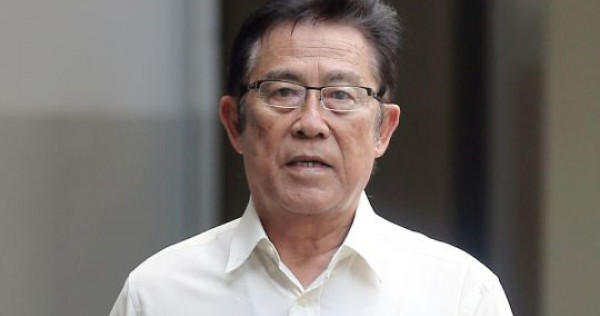
SINGAPORE – More than three years after veteran track and field coach Loh Siang Piow was first accused of molesting a teenage athlete under his charge in 2013, the trial saw its 27th day in the State Courts on Tuesday (Oct 22).
But it was not without some courtroom drama, as defence lawyer Lew Chen Chen turned the heat on investigation officer Goh Teck Heng, who had contacted Loh on July 31, 2016, after a report was filed by the two alleged victims.
While Loh is standing trial for his alleged deeds against one of the two accusers, three more charges involving the other accuser, who was 16 then, were stood down. The two accusers cannot be named due to a court order.
Loh, 75, who is better known in the sports fraternity as Loh Chan Pew, has been charged with using criminal force on the female athlete when she was 18 by rubbing her genitals on two occasions while massaging the back of her thighs.
Both incidents were said to have happened at the old Tampines Stadium on two Sundays between January and March 17 in 2013.
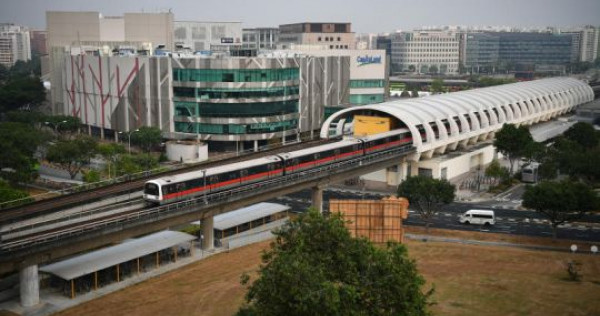
Cybersecurity threats to rail operations are a pressing issue that will get more serious, a panel of experts said on Tuesday (Oct 22).
These threats, which are exacerbated by issues such as legacy components in the transport system, will need to be addressed to safeguard the safety of commuters on trains, said the panel, which includes the Land Transport Authority’s (LTA) chief information security officer Huang Shao Fei.
Mr Huang, along with SBS Transit’s head of rail development Jeffrey Sim and Thales’ cyber-security expert for transport Benoit Bruyere, were speaking at a panel discussion on cybersecurity for rail at the 26th Intelligent Transport Systems World Congress on Tuesday.
Thales, a French company that offers services such as software manufacturing, supplies the signalling system for the North-South Line and East-West Line in Singapore.
Google’s embargo on reviews for the Pixel 4 smartphone line-up lifted on Monday night (Oct 21), and with it arrived a deluge of written and filmed evaluations about the tech giant’s latest and greatest.
The general sentiment seems to be that the device is still one of the best ways to enjoy a true, clean Android experience — but Google still has some ways to go when it comes to hardware. In other words, the standard verdict every single time a Pixel phone comes out.
Me, I’m still in the midst of using it. My judgement will only go out after a little more than a week using a Pixel 4 XL as a daily driver, so the full review will be published a bit later on.
But that’s just me. In an office evenly split between iOS and Android users, what do my AsiaOne colleagues think of the Pixel 4? Here’re their first impressions, ahead of the phone’s launch on Oct 24.
SINGAPORE: Veteran wildlife consultant Subaraj Rajathurai died at the age of 56 on Tuesday (Oct 22).
Mr Subaraj’s wife, Ms Shamla Jeyarajah Subaraj, broke the news of his death in a post on Facebook at about 4pm on Tuesday.
One of his sons, Mr Saker Subaraj, told TODAY that he had suffered a heart attack at home and died.
On Tuesday night, friends and relatives lined up outside Mr Subaraj’s home in Tampines to pay their respects, penning their condolences in a book placed in the common corridor.
Well-wishers paying their respects at the home of the late Subaraj Rajathurai. (Photo: TODAY/Raj Nadarajan)
In one of the many tributes that poured in, Social and Family Development Minister Desmond Lee said he was deeply saddened by the news, lauding Mr Subaraj as a “true giant and pioneer in our local conservation scene”.
“Before googling became an easy source of finding information, Subaraj was the guru who could identify birds by their calls, and knew where they could be found,” said Mr Lee.
“That was his magic, his intimate understanding and his beautiful connection with nature. With his passing, we will greatly miss that magic.”
CONSERVATION EFFORTS
Mr Subaraj’s efforts towards nature conservation in Singapore spanned more than 35 years.
Among Mr Subaraj’s achievements were his role in drafting the Master Plan for the Conservation of Nature in Singapore, which contributed significantly to identifying areas of high conservation value, and the proposal for a nature conservation area at Sungei Buloh.
“His passion in protecting our natural heritage was evident when engaging in consultations on projects such as the Cross Island Line and in environmental impact assessments,” said Mr Lee.
“He helped effect improvements at different levels, from design changes to better management of works.”
Mr Subaraj participated in many surveys – the Nature Reserve comprehensive survey in 1993, Pulau Ubin, and the Comprehensive Biodiversity Survey of Bukit Timah Nature Reserve from 2014 to 2018.
He was also a founding member of the Vertebrate Study Group of the Nature Society (Singapore), and a key member of the Friends of Ubin Network.
SINGAPORE: The professional standards of property agents have improved over the years, industry players said following online criticism that some agents fall short when it comes to helping their clients and acting in their best interests.
This comes after a property agent was fined S$30,000 and suspended 12 months for being unprofessional and unethical in a property transaction, the Council for Estate Agencies (CEA) said on Monday (Oct 21).
PropNex Realty agent James Ngu failed to tell his client that the seller of a condominium unit would accept a price of about S$1.02 million as he tried to negotiate a higher commission for himself, did not declare his conflict of interest in getting a co-broke commission, and failed to tell his client a counter-offer from the seller that involved getting commission from his own client.
Ngu’s client eventually contacted the seller’s agent directly and bought the unit at S$1.04 million. Ngu’s “wrongful conduct” caused his client to suffer a loss of about S$20,000 to S$30,000, CEA said.
Some Facebook commentators responding to CNA’s article said agents like Ngu were nothing new, with some stating they have experienced agents who have played up certain property, concocted offers and started bidding wars just to get higher commission.
“As (per) my experience, there’re too many unethical and unprofessional property agents,” user Derrick Woon wrote. “They only want money.”
Added user Tann Chee: “I have never once had a good experience with property agents. Never trust the testimonials they state on their websites, leaflets and online property portals. They don’t have your interests at heart. They care for your commission only.”
Consumers Association of Singapore (CASE) executive director Loy York Jiun told CNA on Tuesday it has received 153 complaints against the real estate industry over the past five years, with the number of complaints increasing from 29 in 2017 to 37 last year.
These include service lapses like not helping a client with the process of applying for a housing grant, and making misleading claims like requesting commission from both the buyer and seller, something that is not allowed.
“STEADY PROGRESS” MADE IN RAISING STANDARDS
But a CEA spokesperson told CNA on Tuesday it has observed an “overall decrease” from 2017 to 2018 in the number of complaints related to agents acting unethically or against their clients’ interests.
“These form a small proportion of the complaints that CEA receives,” the spokesperson said, noting that the bulk of complaints in 2018 involved service lapses like being late for viewings and poor communication, which are not regulatory infringements.
According to CEA, the number of complaints it received regarding agents “not acting in client’s interests” – including failing to convey offers or counter-offers – dropped from 42 in 2017 to 39 last year.
Complaints regarding agents “not acting ethically and fairly to other persons other than clients” – including misrepresenting facts and conveying false information – also dropped from 43 in 2017 to 26 last year.
(Photo: 99.co)
The CEA spokesperson also pointed out that findings from its 2018 public perception survey on the real estate agency industry showed that consumer satisfaction with property agents has increased over the years.
For instance, 85 per cent of consumers in 2018 were satisfied with the service provided by their property agent, up from 79 per cent in 2015, while 72 per cent of consumers indicated that they would engage the services of a property agent in future transactions, up from 60 per cent in 2015.
“The uptrend in consumer satisfaction with their property agents’ services is an indication that the industry has made steady progress in raising its professionalism and ethical standards, and improving the service to its clients,” the spokesperson said.
“However, as with any other industry, there will always be errant individuals and companies. CEA will not hesitate to take the necessary and appropriate disciplinary action against such individuals and companies.”
PROPERTY AGENCIES REACT
Singapore Estate Agents Association (SEAA) president Thomas Tan told CNA it was unfair to paint the industry with the same brush because of a few bad eggs.
“Improvement is definitely something that we can work on,” he said. “But if you talk about whether it’s a market norm – I think it’s not a fair statement to say that because of one or two persons’ actions.”
Mr Lee Sze Teck, research director at real estate firm Huttons Asia, said professional standards of agents have improved since the formation of CEA in 2010, adding that agents are now more consultative with clients compared to in the past when they might have focused on pushing clients to buy or sell certain property.
However, he acknowledged that “you can’t really say (the industry) is 100 per cent” free of black sheep. “There will be some cases here and there,” he added.
ERA Realty Network’s key executive officer Eugene Lim said the industry has “come a long way” since CEA started operations, adding that “most of the bad hats have been weeded out and taken to task”.
“The vast majority of agents are law-abiding and professional, but this is also largely dependent on the culture of the agency,” he stated.
“Some agencies are deemed more aggressive, pushing buyers to projects with higher commissions even at the expense of the clients’ limited financial abilities, resulting in cases where gains are non-ethical.”
HOW ARE AGENTS TRAINED TO BE PROFESSIONAL?
Nevertheless, SEAA’s Mr Tan said prospective agents learn about professional standards even before they become one, noting that the Real Estate Salesperson course and exam cover conduct and ethics.
“Once they enter an agency, the agency will further reinforce this through their regular training” like the Core Professional Development (CPD) courses, he added.
At Huttons Asia, Mr Lee said agents have to fulfill a minimum of six hours of training each year, of which three hours must be CPD courses. “These classes will cover core conduct, professional standards and all these,” he added.
Mr Lee said the training sessions help remind agents “of the professional standards that they must uphold as well as to have the best interests of the client in mind”.
“So, other factors like the commission should not be a deciding factor,” he stated, proceeding to give an example of potential conflicts of interest.
“Maybe a bigger property pays me high commission, I’ll go ask them to buy this; another property pays me a lower commission, I’ll tell them not to buy. This is something we remind our associates not to do.”
ERA’s Mr Lim said the firm rolls out regular programmes to ensure its agents “exhibit the highest level of professionalism and integrity” when serving clients, including sharing best practices on professional advisory services by partnering banks and financial institutions.
He added that ERA last year launched the FindPropertyAgent.sg website to give consumers greater transparency on property transactions involving its agents. Their profile pages include past transactions, customer reviews, awards achieved and training completed.
HOW CAN YOU PROTECT YOURSELF?
Before engaging a property agent, consumers should also check CEA’s public register of property agents on its website, CASE’s Mr Loy said.
“Consumers should check that their property agent is registered with the CEA. They can view various details of the agent, such as his or her disciplinary record and sales transactions, on the public register,” he said.
Agent commissions should be agreed and documented in writing, he said, adding that consumers should check previously transacted prices for similar properties to verify that the selling or asking price is reasonable.
(Photo: Unsplash/Tierra Mallorca)
The CEA spokesperson said consumers can specifically ask their agents if they are in conflict of interest situations, like if they are from the same property agency as the other party’s agent, or collecting a co-broke commission from the other party’s agent.
“Agents should provide their clients a written disclosure of any conflict or potential conflict of interest,” the spokesperson said, adding that this could be in the form of a letter, e-mail or text message.
“If the client accepts and agrees for the agent to continue representing him, the client should similarly provide this approval to the agent in writing.”
A recent avian burglary in Telok Blangah fowled fouled up when a bird-brained thief remembered to cover his head — but not his face.
According to a Facebook post by the victim, Raizee Saad, the incident took place between 4am and 5am on Oct 19.
In CCTV footage uploaded by Raizee, a man in a white shirt could be seen walking down a corridor and peering into several birdcages. With his shirt pulled over his head, about half of the man’s face was exposed.
After looking around furtively, he grabbed a birdcage and left the scene.
Shooting photos with film is cool and all (if you actually know what you’re doing), but the march of modern technology sometimes tramples over vintage methods underneath digital boots.
Freestyle Photo Supplies, an analogue photography store in Los Angeles, posted on Instagram about how he avoided wiping out his entire film stock by refusing to undergo checks via the new baggage scanners installed at LAX Airport.
These newfangled hi-tech scanners can also be found at Changi Airport, mind you.
According to the merchant, the new scanners are able to destroy unprocessed film after just one scan — “equivalent to putting your film through the old scanners about a thousand times”, the post read.
SINGAPORE: About S$223,000 worth of drugs were seized and four suspects arrested after raids by Central Narcotics Bureau (CNB) officers, the authority said in a news release on Tuesday (Oct 22).
A 34-year-old Malaysian man was stopped by Immigration and Checkpoints Authority (ICA) officers at Woodlands Checkpoint after information was provided by CNB.
During the search, ICA officers found more than 1kg of Ice and 198 Ecstasy tablets concealed in the air filter box in the bonnet.
Drugs found concealed in air filter box of a car at Woodlands Checkpoint on Oct 21, 2019. (Photo: CNB)
After the 34-year-old man was arrested, CNB officers nabbed another suspected drug trafficker, a 47-year-old Singaporean male, at his workplace in the Jalan Sultan area.
Officers found about 25g of Ice on the suspect and a straw of heroin within his car, the news release said.
Bundle containing Ice found within hideout of a suspected drug trafficker. (Photo: CNB)
CNB officers then brought the suspect to his hideout in Lorong 4 Geylang where a 46-year-old Singaporean male suspected drug abuser was also arrested.
About 8g of ketamine, 622g of Ice, 1.57kg of cannabis, 296 Ecstasy tablets and 1,703 Erimin-5 tablets were seized in the raid.
That raid was followed up with another at a hideout in Tampines Avenue 9.
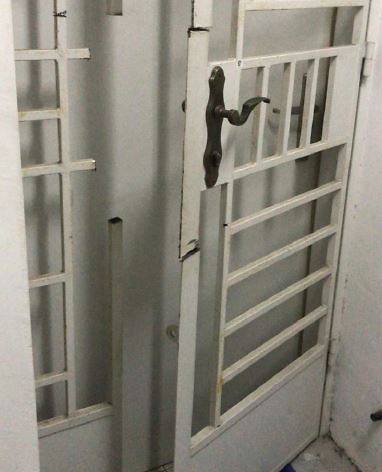
“CNB officers effected forced entry into the unit as the suspect, a 46- year-old Singaporean male, refused to comply with lawful orders given by the officers,” the news release read.
Metal gate which was cut during forced entry by CNB during an operation between Oct 21, 2019 and Oct 22, 2019. (Photo: CNB)
A small amount of heroin and ketamine, 11g of Ice, 57g of new psychoactive substances, 61g of cannabis, 10 Ecstasy tablets and 11 Erimin-5 tablets were found in the premises.
A search of the suspect’s car led to the discovery of about 14g of ketamine, 51g of Ice, nine Ecstasy tablets and 23 Erimin-5 tablets. CNB confirmed the suspect was arrested.
Investigations into the drug activities of all the suspects are ongoing.
“CNB will continue to mount regular sustained operations against drug traffickers and abusers alike, to keep the streets of Singapore drug-free,” the authority said.
A wild boar was seen charging across Upper Bukit Timah Road and ramming into an SUV before dashing into a forested area at about 1.45pm on Oct 13.
Stomp contributor Michelle alerted Stomp to the incident and said the boar severely dented the car her father was driving.
Michelle’s family was travelling towards the city when the wild boar dashed across four lanes and smashed into their SUV.
Michelle said: “The boar collapsed upon impact but two seconds later, returned to its feet and dashed back towards the forested area from where it came, likely Bukit Batok Nature Reserve.”
She told Stomp they sent the car for repair following the incident which cost them $1,241.
“We hope Stomp can help to raise awareness of such dangers to road users and what to do in such an encounter,” she said.
“If the charging boar had instead collided with a pedestrian or cyclist with such impact, the consequences would have been dire.
SINGAPORE: Obsolete and legacy infrastructure are two of the challenges faced by rail operators and regulators when implementing solutions against cyber threats, said a panel on Tuesday (Oct 22).
For example, while rail contracts may require vendors to provide the most up-to-date technology, these may already be obsolete by the time a rail line is up and running in three to four years’ time.
“So you have to face that, you have to be prepared to manage obsolescence, and to replace part of your solutions,” said Mr Benoit Bruyère, head of cybersecurity for French firm Thales, who was part of the panel taking part in the discussions at the 26th Intelligent Transport System (ITS) World Congress.
Thales is behind the communications-based train control (CBTC) system installed on the North-South and East-West lines.
The implementation of such cybersecurity requirements must be done with an eye on ensuring that the daily operations of the rail network are not affected, said Mr Jeffrey Sim, head of SBS Transit’s rail development.
“While we can take the necessary strategies and steps to make the system more robust, we should know that operations must resume, and we must minimise the risks as far as possible,” said Mr Sim.
Land Transport Authority (LTA) chief information security officer Huang Shao Fei, SBS Transit rail development head Jeffrey Sim and Thales cybersecurity authority Benoit Bruyère, together with moderator Associate Professor Park Byung Joon at the Cybersecurity for Rail panel discussion on Oct 22, 2019. (Photo: Zhaki Abdullah)
Noting that the various systems that make up the rail network come from different suppliers, he pointed out that this also means that there are various weak points that need to be identified and protected.
While some cyber attacks are motivated by thrill seeking and profit, others are more malicious in intent, such as those who seek to do “really bad things to the country”, said Mr Huang Shao Fei, chief information officer at the Land Transport Authority (LTA).
On its part, train operator SMRT is working with LTA and the Cyber Security Agency to install a “robust framework of measures to counter cyber risks”, said Mr Lee Fook Sun, deputy chairman of SMRT Trains.
“It is critical for SMRT to be protected against cyber threats and vulnerabilities,” he added.
Speaking to reporters following the discussion, Mr Bruyère noted that there were already examples of rail systems that had faced cyber attacks.
He pointed to the example of the San Francisco Municipal Transportation Agency, which in 2016 saw its fare terminals hit by a ransomware attack.
Signalling systems, as well as other important rail infrastructure, could also be vulnerable “in principle”, he noted.
“So this is why you need to monitor, to be proactive and prevent (such attacks),” he added.
The need to defend rail networks against cyberattacks was highlighted by Minister for Transport Khaw Boon Wan on Monday.
At the opening of the ITS World Congress, Mr Khaw noted that while the increasing use of sensors and cloud computing allowed for more efficient rail operations, it also opened this previously “walled garden” to cyber attackers.
In the most recent SMRT Trains Operations Review, released earlier this month, the rail operator noted various systems on its rail lines – the North-South, East-West and Circle Lines, as well as the Bukit Panjang LRT – had been identified as part of the Critical Information Infrastructure (CII) sectors.
CII refers to sectors that are responsible for the continuous delivery of essential services in Singapore, and that includes the Government, infocomm, energy, aviation and transport, among others.


.jpg "birdthief-1.jpg")