SINGAPORE – A Singapore Armed Forces (SAF) officer was charged on Friday (Oct 25) in relation to the death last year of full-time national serviceman (NSF) Liu Kai, who was driving a Land Rover commanded by him.
Regular serviceman Ong Lin Jie, 28, a captain, was charged with doing a rash act causing death.
Court documents say he had allegedly failed to keep a safety distance of 30m between the Land Rover and a Bionix Infantry Fighting Vehicle, which had reversed and mounted the driver’s side of the Land Rover during a training exercise at Murai Urban Training Facility on Nov 3.
Corporal First Class (CFC) Liu, 22, a transport operator from SAF’s Transport Hub West, died after the Land Rover he was driving was mounted by the Bionix despite repeated commands by the rear guide to stop the Bionix.
If convicted, Ong could be jailed for up to five years or fined, or both.
Five others were charged over the wrongful communication of official information under section 5(1) of the Official Secrets Act.
SINGAPORE: A total of 138 suspected drug offenders were arrested in a recent islandwide operation by the Central Narcotics Bureau (CNB), which also saw the seizure of various drugs and drug-related items including cannabis-infused candy.
In a news release on Friday (Oct 25), CNB said the operation started on Oct 21 and went on for four days, covering areas including Ang Mo Kio, Bedok, Choa Chu Kang, Hougang, Punggol, Sengkang and Serangoon.
Supported by the Singapore Police Force, the operation uncovered drugs comprising 236g of new psychoactive substances, 99g of Ice, 34g of heroin, 30g of cannabis, 31 Erimin-5 tablets, 10 Ecstasy tablets and a small amount of ketamine.
In one raid on Oct 23, CNB officers seized about 7g of vegetable matter, believed to contain cannabis, as well as a packet of chocolate and another of strawberry taffy also believed to have been infused with cannabis.
Numerous drug-taking instruments were also seized.
The 25-year-old Singaporean woman who surrendered the items to officers was arrested during this raid at her home in Choa Chu Kang Loop.
Strawberry taffies, believed to be infused with cannabis, found by CNB during a raid at Choa Chu Kang Loop Oct 23, 2019. (Photo: CNB)
Officers then arrested a suspected drug trafficker at his home in Hong San Walk. The 22-year-old man, a Singapore permanent resident, surrendered a packet of about 12g of vegetable matter believed to contain cannabis and a packet of about 20g of vegetable matter mixed with tobacco.
A search conducted by the officers also turned up a digital weighing scale and an e-cigarette suspected of containing cannabis.
“CNB is aware that in various jurisdictions around the world, some have decriminalised or legalised cannabis, and they allow the sale of cannabis and/or products containing cannabis,” the authority said.
“CNB would like to remind the public that it is an offence under the Misuse of Drug Act to bring into Singapore any product containing cannabis regardless of the amount of cannabis in the product.”
Google Assistant is legit one of the best virtual assistants out there (sorry Siri!) on the market, but even clever AIs have their bad days.
Redditor u/v1war presumably knows who the president of Singapore is (it’s Halimah Yacob), but proceeded to ask Google’s digital helper anyway. It’s an easy enough query that the Assistant had no issues with… until it pulled up her supposed image.
In a Reddit post on Wednesday (Oct 23), the redditor posted the amusing result of the search. According to Google Assistant, it turns out that our head of state is uh… noticeably blonder these days.
I tried it on my end, and it checks out. Google Assistant thinks Halimah Yacob is a chic Caucasian.
The private residential property index increased 1.3 per cent to 152.8 points in the third quarter, the latest data from the Urban Redevelopment Authority showed on Friday (Oct 25).
In Q2, the index had risen 1.5 per cent to 150.8 points, reversing two consecutive quarters of decline.
In Q3, prices of landed properties went up by 1 per cent after a decrease of 0.1 per cent in the previous quarter.
Meanwhile, prices in the non-landed segment rose 1.3 per cent, compared with the 2 per cent increase in the previous quarter. Those in the Core Central Region (CCR) increased the most at 2 per cent, followed by the Rest of Central Region (RCR) at 1.3 per cent and the Outside Central Region (OCR) at 0.8 per cent.
Property price index of private residential properties. (Graph: URA)
In the third quarter, rentals of private residential properties inched up slightly, by 0.1 per cent, compared to the 1.3 per cent increase it saw in the previous quarter.
Rentals of landed properties decreased by 2.3 per cent, compared with the 0.3 per cent increase in the previous quarter. Rentals of non-landed properties saw a small increase of 0.4 per cent compared to the 1.4 per cent jump in Q2.
Among non-landed properties, there was a 0.7 per cent drop in rentals in the CCR, though rentals in RCR and OCR went up by 1.6 per cent and 0.8 per cent respectively.
LAUNCHES AND SALES
Between July and September, developers launched 3,628 uncompleted private residential units – excluding executive condominiums (ECs) – for sale, compared with 2,502 units in the previous quarter.
They sold 3,281 units, an increase from the 2,350 in the previous quarter.
Number of private housing units launched and sold by developers, excluding executive condominiums. (Graph: URA)
Developers also launched 820 EC units and sold 426 in the third quarter, a steep increase from the previous quarter, where they did not launch any units and sold only 10.
In the resale market, there were 2,378 transactions in the third quarter, compared to the 2,371 units transacted in the previous quarter.
Resale transactions accounted for 41.3 per cent of all sale transactions between July and September, lower than the 49.7 per cent in the previous quarter.
As of the end of the third quarter, there were 50,964 uncompleted private residential homes and 3,722 ECs in the pipeline with planning approvals. Of these, 34,089 remained unsold.
Based on the expected completed dates reported by developers, 3,235 units (including ECs) will be completed by the end of the year and another 5,750 units scheduled to complete in 2020.
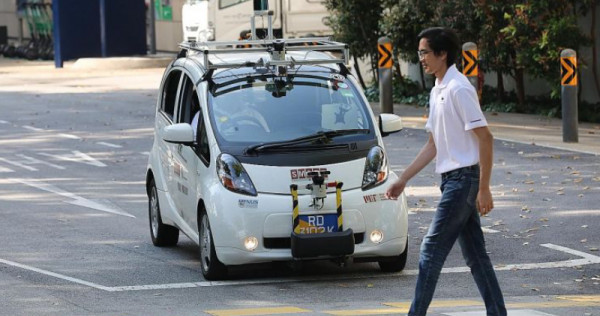
Self-driving vehicles will be tested on public roads in neighbourhoods such as Bukit Timah, Clementi and Jurong as the trial of autonomous vehicles (AVs) expands to cover all of western Singapore.
The expanded testbed will open up more than 1,000km of public roads for companies to conduct tests.
The expansion is expected to take place gradually over the next several years in a small-scale, incremental manner, and public safety will continue to be the top priority, said Senior Minister of State for Transport Janil Puthucheary on Thursday (Oct 24).
During his speech at the Autonomous Mobility Summit at the Intelligent Transport Systems World Congress, Dr Janil said public acceptance is a key success factor for widespread adoption of autonomous mobility. It could be eroded if accidents were to occur, he said.
SINGAPORE – What do Grandma Version 2.0, the hit 2015 Indian movie Baahubali and a community centre have in common? Deepavali, of course.
They feature in three videos by government agencies celebrating the Festival of Lights that have been making the rounds online after they were posted last week.
One of the clips was shared by Prime Minister Lee Hsien Loong on Facebook on Monday (Oct 21) and by Minister for Communications and Information S. Iswaran on Thursday.
Two of the videos pay homage to popular Indian films while highlighting government schemes in a light-hearted way.
One of them, titled A Royal Conundrum, was posted on the Gov.sg Facebook page last Wednesday, and depicts a king in a palace becoming agitated as he is informed that another king has “poked” him on Facebook.
“So he wants our friendship eh? Let’s poke him back,” the king says, before his wife advises him to give the other king cake instead.
“But our royal kitchen only has the Grandma who makes vadai,” the king replies, referring to the Indian fried snack.
SINGAPORE: The number of resale transactions in Singapore’s public housing market fell slightly in the third quarter as prices inched up, the Housing and Development Board (HDB) announced on Friday (Oct 25).
The resale price index – which provides information on the general price movements in the resale public housing market – rose from 130.8 to 130.9, following four consecutive quarters of decline.
Between June and September, the number of resale flats exchanging hands fell slightly by 0.2 per cent from 6,276 units sold in the second quarter to 6,264.
When compared with the same period last year, resale transactions were down 11.3 per cent in the third quarter.
For its next sales exercise in November, HDB will offer about 4,500 Build-to-Order (BTO) flats in Ang Mo Kio, Tengah and Tampines. Another 3,000 BTO flats in Sembawang and Toa Payoh will be launched in February.
HDB RENTAL MARKET
The number of rental transactions for HDB flats fell by 2.7 per cent from 12,335 in the second quarter to 12,006 in the third quarter.
On a year-on-year basis, rental transactions were up 7.0 per cent.
As of Sep 30, there were 56,474 HDB flats rented out, an increase of 1.3 per cent from the previous quarter.
SINGAPORE: An officer from the Singapore Armed Forces (SAF) will be charged in court on Friday (Oct 25) over the death of full-time national serviceman (NSF) Liu Kai.
Captain Ong Lin Jie, 28, will be charged with a rash act causing death, the police said in a news release.
Five other people will also be charged under the Official Secrets Act for leaking photographs of the incident.
The wake of the late NSF Liu Kai, who died in a training incident on Nov 3. (Photo: Jeremy Long)
CFC Liu was operating a Land Rover as part of a field training exercise when a Bionix vehicle reversed into his vehicle, partially mounting it. The 22-year-old died from his injuries and an army-wide safety timeout was called, including overseas training exercises.
“Two of them, Muhammad Arif Bin Azman and Mohamad Haikal Bin Mohamad Zainal Abiddin, were serving their National Service with the Singapore Civil Defence Force and were at the scene where they took photographs of the incident and disseminated them via WhatsApp,” said the police.
“The other three persons, Brandon Tan Jien Jet, Thng Yu Xuan and Muhammad Zaki Bin Haji Mokhtar, received the photographs, and despite knowing that the photographs were sensitive official information, shared the photographs further without authorisation.”
SINGAPORE – A 23-year-old man has been arrested after he was involved in a fight in Tanjong Pagar and caused grievous hurt by using a dangerous weapon, according to police on Thursday (Oct 24).
The police were alerted last Saturday to the fight that happened the previous day at Tanjong Pagar Road at about 3.30am.
Ten people were involved in the fight at Tanjong Pagar Road, with one of them said to have used a knife while another was seen with a bleeding ear, Shin Min Daily News reported on Sunday.
Officers from the Criminal Investigation Department and Central Police Division arrested one of the suspects, the 23-year-old man, on Thursday.
He is expected to be charged in court on Friday with voluntarily causing grievous hurt by using a dangerous weapon with common intention.
If found guilty, the man can be jailed for life or up to 15 years and fined. He can also be caned.
A 46-second video of the fight was shared on Facebook.
SINGAPORE: “What’s at stake here?” Dr Janil Puthucheary asked private educator Tong Yee, seeking his views on the generation divide in values.
The recent CNA documentary Regardless of Generation had explored Singaporeans’ attitudes across different age groups, in line with a survey which revealed that “impatient”, “overconfident” and “materialistic” were the top perceptions of my generation – millennials.
These perceptions had persisted despite some areas of policy agreement between generations. And even then, disagreements in other areas like LGBTQ acceptance and foreign talent risked overshadowing them.
Regardless of Generation brought to the fore an “overlooked, yet particularly urgent divide” but how do we now make sense of it all?
Should we be relieved at the areas of agreement, or worried about the revealed differences and negative stereotypes? What if we disagree with the results of the survey? As Dr Puthucheary asked, how much of it is perception and how much is truth ? Where do we go from here?
To make sense of it all – and begin to see how we can narrow the generation divide – let’s look past the noise to the heart of the issue.
For all its resulting complexities, the heart of the issue begins very simply with this: A new generation is coming of age.
COMING OF AGE
“Every generation that comes of age,” Education Minister Ong Ye Kung once said, “will transform and remake the society it lives in.”
As my generation comes of age, like most others that have come before us, we are beginning to push boundaries, challenge norms and question assumptions.
(Photo: Unsplash/Helena Lopes)
Quite naturally, this will cause some discomfort with older Singaporeans who may be less enthusiastic about ground-up action, especially against status quos they have long accepted.
Such discomfort may lead to somewhat negative perceptions of my generation.
Even when they were younger, the older generations would have come of age in different times, shaped by different formative experiences.
Using the classifications of Regardless of Generation, the pre-independence generation came of age when Singapore was a third-world nation – that was the age of survival.
But life soon improved, and Generation X came of age at a time of stability across the globe. As McKinsey consultants wrote in No Ordinary Disruption, the 25 years leading to the Global Financial Crisis was a tale of “continuity and persistent trends”.
Today’s world however, the authors assert, is one of “near-constant discontinuity ”. Separately, against the backdrop of the Fourth Industrial Revolution, Klaus Schwab from the World Economic Forum had written that “the transformation will be unlike anything humankind has experienced before”.
This is the backdrop against which my generation comes of age – in an era of disruption.
Granted, one’s formative experiences need not shape one’s values and priorities – but these have a high tendency to. Dr Puthucheary himself had tentatively suggested that perhaps my generation’s sense of entitlement is a result of our circumstances, such as resource strain due to an ageing population, an uncertain economic outlook and rising costs of living.
The sheer differences in formative experiences between generations would very likely have resulted in the differences in values, attitudes and priorities we see today, affecting how different generations perceive each other.
A grandmother and her grandchild speaking to local vendors selling sustainable goods, 7 July 2018. (Photo: CNA Insider)
How do we begin to bridge these differences in values and attitudes, and change how different generations perceive each other?
Well here’s the twist: We don’t – at least, not directly.
COMMON INTERESTS, COMMON DISRUPTION
It would be futile to directly try and change the way entire generations see each other, or make us “more similar”.
Rather, we should adopt a subtler approach, by first accepting the reality of differences and then trying to find new common ground. This can in turn be done by embracing a new narrative based on a key identified common interest.
This key common interest should be one which strikes at the heart of what we are all most concerned about, despite starting from different values, attitudes and priorities.
Finding this key common interest may seem like a daunting task, but the answer may already be embedded in the key driver of this generational divide discussed above: Coming of age in an era of disruption.
This key common interest could be disruption – something which all generations have to face, albeit in different ways.
Millennials must enter a future of work which their formal education may not have readied them for. They are also likely concerned about the sufficiency of good jobs in Singapore.
Millennials in maroon, Generation Xers in green, and the pre-independence generation in blue.
The pre-independence generation has seen technology displace them from once-stable jobs and face the daunting task of staying relevant amid the need to work past retirement age.
Generation X, typically the breadwinners of their families, are caught in a race to constantly upgrade themselves and embrace career mobility or risk the prospect of wage stagnation.
This shared challenge of disruption strikes at the heart of what each generation would likely be most concerned about: Economic security. And in this shared challenge of “common disruption” lies the opportunity to find fresh common ground.
This new common ground can be brought to life through a new narrative of disruption, to be promoted by the Government and community groups. Taking inspiration from the subject-based banding reforms, rather than dealing with the challenges of disruption in “three generational streams”, we can approach it through “one common disruption, a challenge across generations”.
From policy speeches to community dialogues, from house visits to parliamentary debates, ministers and Members of Parliament can mount a new concerted effort to reframe the narrative.
Community groups can employ this narrative as a framework for intergenerational conversations. What does disruption mean to you? How can we tackle disruption effectively as a society? How can each generation best contribute to doing so?
Such questions are also useful for anchoring the next phase of the Government’s engagement with Singaporeans on building a future Singapore together.
Indeed, having intergenerational conversations was a strategy suggested in Regardless of Generation, but their effectiveness will be limited if not embedded in a proper narrative frame.
An intergenerational IT bootcamp, March 2015. (Photo: CNA)
Given how narratives can shape the way we see ourselves and others, and influence our attitudes and decisions, promoting and embracing a new narrative of “common disruption” across the generations could be key to narrowing generational divides.
WHAT’S AT STAKE HERE
Regardless of Generation, and the conversations that will likely follow, give us an opportunity to address a looming age divide early – across the globe, many societies have become polarised along generational lines, paralysing political and social progress.
As a small city-state, Singapore can ill afford such polarisation.
Whatever the eventual strategies might be, finding common purpose based on shared interests will be key to narrowing generational divides as a new generation comes of age in an age of disruption.
What’s at stake here? Nothing less than the unity and cohesiveness of our society. Regardless of generation, surely that must be something worth working towards.
Ng Chia Wee is a second-year student at the National University of Singapore’s Faculty of Arts and Social Sciences and Tembusu College. He is also Director (Strategy) at Access Singapore, a ground-up organisation which seeks to provide mentorship and externship opportunities to students from less-privileged backgrounds.