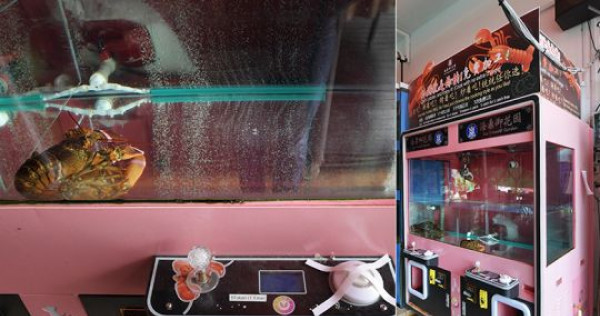
SINGAPORE – Another restaurant has come under fire for having used an arcade claw machine on live animals previously.
The seafood restaurant in Jurong initially used the machine on live lobsters when it first opened in January. However, it was soon told by the then Agri-Food and Veterinary Authority (AVA) to stop the practice as it was cruel to the animals.
Sea Tripod Seafood Group, whose sole restaurant is its Jurong outlet, says that it now uses the machine as a tank for displaying lobsters and does not let customers play with the mechanical claw function.
SINGAPORE: The National Parks Board (NParks) on Saturday (Oct 26) launched a public consultation to gather input on a review of the pet sector.
The consultation, which will be held over two months, follows an announcement by NParks in August where it said it will be working with the community to strengthen animal health and welfare standards.
Members of the public can register their feedback online through a survey and via roving public exhibitions from Oct 26 to Dec 26.
Table showing the schedule of roving exhibitions. (Image: National Parks Board)
NParks said in a media release that it is looking into raising the standards of breeders and boarders to safeguard the health and welfare of animals involved.
The traceability of pets, which will be critical in protecting public and animal health, is also being looked into.
Focus group discussion sessions have been conducted by NParks since August with various stakeholders in the pet sector on these initial focus areas.
These participants include representatives from pet businesses such as breeders, boarders and pet shops, animal welfare groups, the veterinary profession, and academia.
More focus group sessions will be conducted until January 2020.
PET-RELATED POLICIES UNDERPINNED BY SCIENCE
Senior Parliamentary Secretary for Home Affairs and National Development, Sun Xueling said NParks will continue to engage stakeholders in the coming months.
“We are heartened by the interest and support from various stakeholders in NParks’ pet sector review,” she added.
NParks said that it will collate input from the public consultation as well as focus group sessions and share them in early 2020.
“The inputs will be used to shape pet-related policies, and will be underpinned by science,” NParks said.
At the focus group sessions with stakeholders so far, NParks said there was consensus that pet breeding and boarding standards should be raised.
Other suggestions included enhancing guidelines to ensure animal health and welfare, certification and training for the staff, and greater measures to deter errant breeders and boarders.
Participants also recommended that measures could be introduced to encourage more pet owners to license their dogs, as well as a common registry to encourage owners to microchip cats and dogs.
Another key area discussed was the gap in public knowledge about pets, from things to look out for when purchasing a pet, boarding a pet and how to behave around animals.
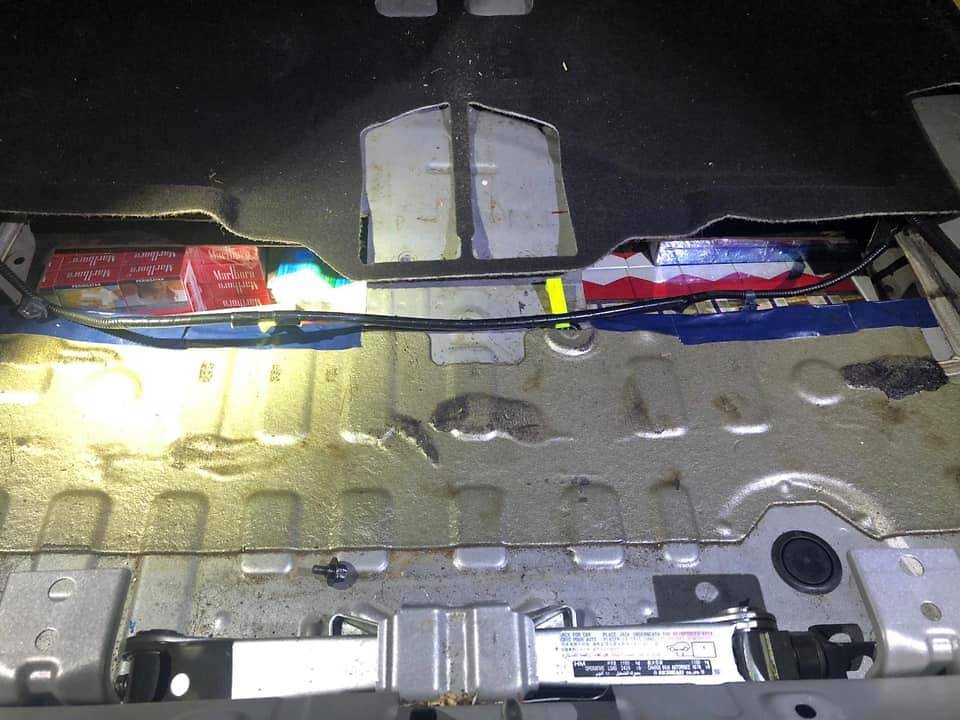
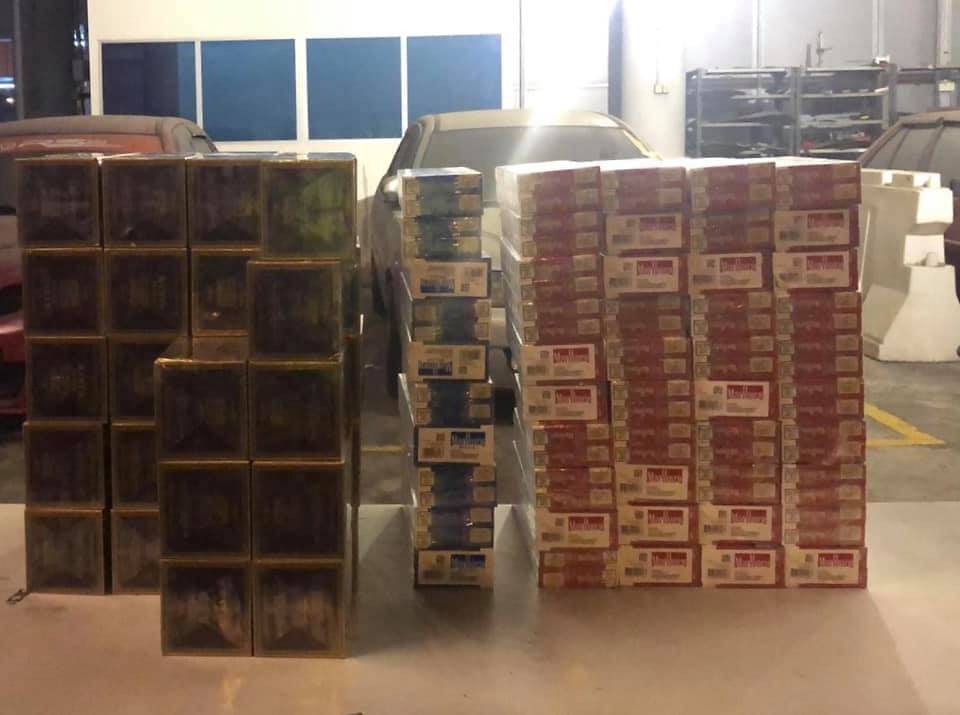
SINGAPORE: More than 300 cartons of cigarettes were found hidden in several modified cars at the Woodlands Checkpoint this week, the Immigration and Checkpoints Authority said on Saturday (Oct 26).
ICA officers found a total of 98 cartons of duty-unpaid cigarettes hidden within a Singapore-registered car in the early hours of Oct 24.
The contraband cigarettes were found concealed within the vehicle’s modified fuel tank and a modified compartment at rear of the car.
“The case, involving a 50-year-old male Singaporean, was referred to Singapore Customs for further investigation,” ICA said.
Duty-unpaid cigarettes uncovered from the modified compartment at the rear of a Singapore-registered car. (Photo: Immigration and Checkpoints Authority)
A total of 98 cartons of duty-unpaid cigarettes were found in a Singapore-registered car. (Photo: Immigration and Checkpoints Authority)
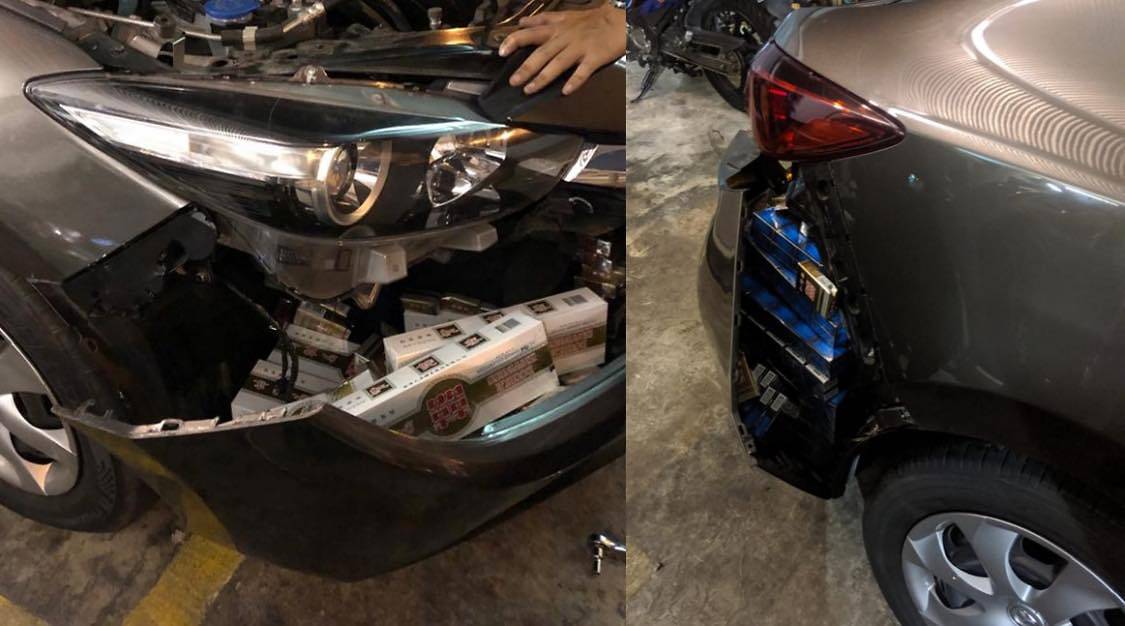
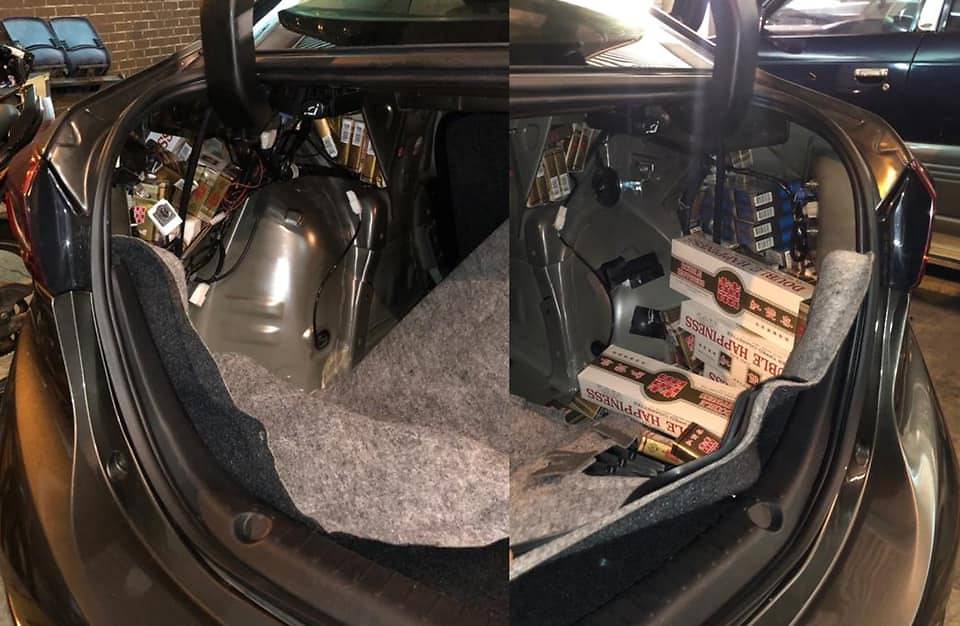
Earlier in the week, ICA officers at Woodlands Checkpoint stopped two separate attempts to smuggle in a total of 221 cartons and 1,630 packets of contraband cigarettes.
Duty-unpaid cigarettes were found hidden within the front and rear bumpers of a Singapore-registered car on Oct 22.
More cigarettes were found concealed in the left and right panels of the vehicle’s boot.
Duty-unpaid cigarettes concealed within the front and rear bumpers of a Singapore-registered car, Oct 22, 2019. (Photo: Immigration and Checkpoints Authority)
Duty-unpaid cigarettes hidden in the left and right panels of a Singapore-registered car, Oct 22, 2019. (Photo: Immigration and Checkpoints Authority)
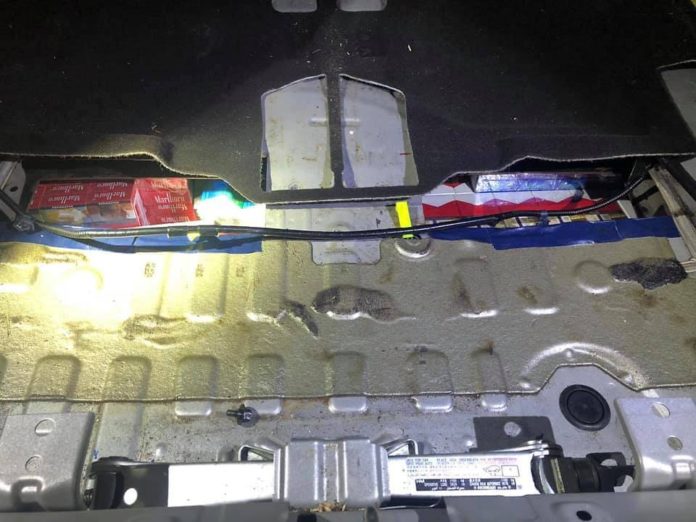
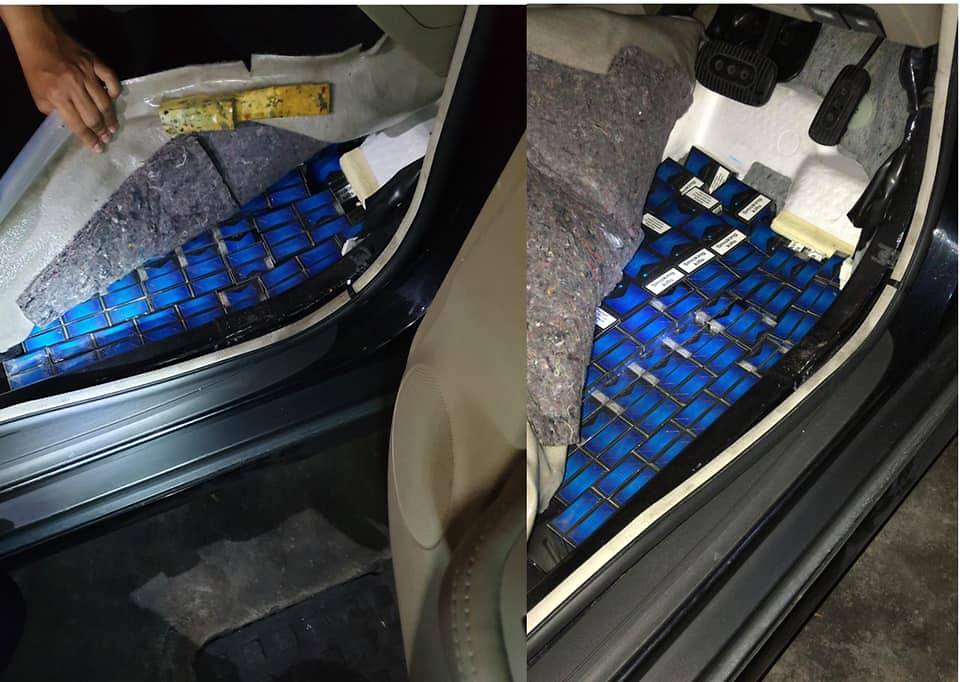
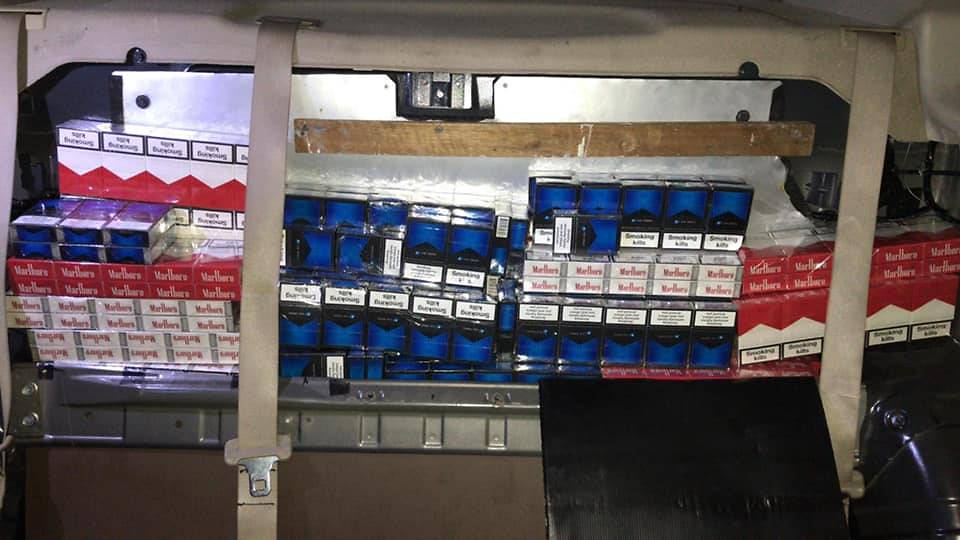
On Oct 23, ICA officers uncovered contraband cigarettes underneath the floorboard and in a modified rear passenger seat of a Malaysia-registered car.
The two drivers, a 40-year-old Singaporean man and a 22-year-old Malaysian man, along with the vehicles and exhibits were referred to Singapore Customs for further investigation.
ICA officers uncovered duty-unpaid cigarettes underneath the floorboard of a Malaysia-registered car on Oct 23, 2019. (Photo: Immigration and Checkpoints Authority)
Assorted duty-unpaid cigarettes found in the modified rear passenger seat of a Malaysia-registered car Oct 23, 2019. (Photo: Immigration and Checkpoints Authority)
“Vehicles used in the commission of such offences are liable to be forfeited,” said ICA.
“This method of concealment is a cause for concern as similar methods may be used by people with ill intent to smuggle security items into Singapore.”
SINGAPORE: The one thing I wished I had known earlier in life is that there is simply no good time to become a mother.
There is certainly a biologically ideal time for a woman to become a mother but that doesn’t always coincide with her career trajectory or even with her psychological readiness for mothering.
I became a mother at 38 when I acquired four stepchildren and then a biological child soon after. This is definitely not the traditional route to becoming a mother, especially for a Singaporean woman.
But once motherhood comes knocking, life is never the same again regardless of what route you took to get there. Adoption, marriage, surrogacy, IVF. None of it matters after the child arrives.
The benefit of stepchildren is that I didn’t really have to grapple with maternity leave and childcare.
That came later with an ill-timed pregnancy which came as we were about to move countries. I had a great job in Singapore that I loved but my husband was looking to be posted back to his home country.
A DIFFICULT PREGNANCY, A PREMATURE BIRTH AND A MISCARRIAGE
I was carrying our child at the time so I resigned from a perfectly good job with great benefits at four months pregnant and moved across the world. Women make decisions like these all the time.
The pregnancy was complicated for many reasons including my “advanced maternal age” to quote my doctor. Within months of arriving in a new country, I was hospitalised and put on bed rest. Soon after, our first son was born very prematurely.
About 10 per cent of births in the developed world are premature. Singapore is no exception but, at the time, had almost no provisions for this.
(File photo: AFP/Philippe Huguen)
Our premature son was covered by my husband’s German insurance from birth. In Singapore then, you could not insure a child until 14 days after birth.
So his excellent but expensive care in the Neonatal Infant Care Unit (NICU) did not cripple us financially. Thankfully, the situation has changed now in Singapore.
Caring for a child in a NICU is a full-time job. I arrived in the morning and stayed till after dinner, through at least two shifts of nurses.
Had I been in full-time employment in Singapore, my maternity leave would have been used up in the NICU with no time left to care for the baby when he came home.
As it turns out, this didn’t matter as our son tragically died three days after we took him home from the hospital.
My husband’s employer stepped in to mitigate the tragedy. My husband received compassionate leave and we were both given psychological counselling covered entirely by his insurance.
The understanding and compassion from both his employer and insurers meant that we were as well cared for as we could have been at the time.
It also allowed us to try again and we had a second healthy son a year later. This time a textbook baby with a textbook birth. Even with my “advanced maternal age”.
THE MOTHERHOOD BREAK
The German system allowed my husband time off immediately upon the birth of our son and then again at any point in the first two years. But even their system is flawed in that its partial coverage of foregone salary is meant for younger parents not as advanced in their careers as my husband was and with fewer dependents.
We couldn’t avail ourselves of the standard paternity leave as it would have been financially unviable. We were supporting five children at the time.
Busy family schedules, childhood obesity and overly ample screen time can get in the way of physical activity for children after they’re born. (Photo: Unsplash)
Returning to work for me worked out when we were posted back to Singapore and my son was four years old. He was ready for full-day pre-school and we were fortunate to find an excellent older Indonesian helper with experience.
My mother, who was living in Sydney at the time, also came back to live with us. With both my mother and a competent housekeeper at home, I was able to resume my career after an unintended seven-year break.
The benefit of my later pregnancy was that I had the financial resources to do it. I had had a successful career and was able to save and invest enough for my motherhood break.
I highly encourage all women to do this from the moment they start work. Having a motherhood nest egg will allow you to embrace pregnancy when it happened without too much financial stress.
A PARENTING PARTNER MATTERS
I had the good fortune to return to work with the National University of Singapore which had flexible work arrangements to allow me to attend to my son whenever needed.
While I am Singaporean, my son who was born in Germany is not. This meant I was either not entitled to or had reduced childcare leave options. My child not being Singaporean didn’t make him less likely to fall ill or to need his mother.
On these occasions, my husband’s far more generous German childcare allowance meant that he would often be the one to take time off to care for our son when he was sick.
(Photo: Unsplash/picsea)
This is the most crucial part of being a mother with a career. No government policy or company flexible work arrangement will trump a real parenting partner.
My husband is and always has been a dedicated father. Even when I was a stay-at-home mother, he embraced his crucial role as father and participated fully in our son’s life. He took care of bath time and a myriad other tiny jobs that are part of life with an infant.
The most important thing that I did was to not supervise my husband’s parenting. I fully trust his ability to be a loving father to his son. I did not believe that as the mother, I know better or that I am the “better” parent.
Children need their fathers as much as they need their mothers. The boob preference is short. Once your child is on solids, there is absolutely no reason why the father shouldn’t be as deeply involved as the mother.
RECRUIT WELL
I left my job last year, voluntarily this time to pursue an entrepreneurial path. My stepchildren are all adults now, my son is nine and I am writing this on a flight to Chile.
My son is safely in Singapore with his father, grandmother and aunty. I will use technology to keep in touch and I feel no guilt being away. He is with his father, grandmother and aunt who will all be there for him.
A mother feeding her baby at home. (Photo: Unsplash/Tanaphong Toochinda)
There is no good time to become a mother or to go back to work when you are a mother. Your journey is unique to you.
My best advice is to recruit well. Children with involved fathers thrive intellectually, psychologically and socially. They are the first male role models for daughters and sons and can shape the next generation as much as mothers can.
Parenting is a team sport. Mothers are often the manager and coach bearing a disproportionate share of the invisible burdens of families.
We need to help ourselves and social norms need to evolve to families to spread the weight more evenly.
My top motherhood tips?
Be prepared for motherhood anytime. Save for a motherhood nest egg.
Recruit the right parenting partner. Fatherhood is not a part-time job.
Don’t supervise your partner’s parenting. You recruited him, let him do his job.
Leverage Singapore’s cultural and financial availability of grandparents, helpers and childcare if you can.
When you work, work. When you parent, parent. Crossover guilt is a waste of energy.
Work for employers who care about their employees’ holistic well-being.
Company and country policies will change over time. Don’t rely on them but maximise them where it benefits your family.
Lavinia Thanapathy is Chair of Inspiring Girls and Vice-President of Singapore Council of Women’s Organisations. She is also Editor and Co-author of Unleash Your Voice, Powerful Public Speaking for Every Woman.
SINGAPORE: He was studying with a close friend in a secluded room in the school library when it happened.
While sitting next to him, his friend reached over and massaged his groin area. James (not his real name) thought his friend was trying to be funny. He laughed, nudged his friend’s hand away and asked him to stop.
But his friend continued to touch him.
Recounting the incident to CNA, James said he started to feel uncomfortable, and thought about shouting at his friend or walking away. But he did not want to cause a scene in the quiet library, so he pushed his friend’s hand away again and told him to stop.
This went on five or six more times, until his friend eventually stopped touching him about 10 to 15 minutes later.
James, then 17, never expected to be molested, least of all by a close friend whom he had known for years. After the incident, they remained friends but eventually drifted apart after graduating from junior college.
He did not report the incident to teachers or the police, and never confronted his friend.
Now 26, James told CNA it did not even occur to him that he had been molested at the time, adding that he only realised months later, after his friend confessed to having feelings for him.
He said he did not report the incident because he “didn’t feel very wronged by what happened”, and didn’t see the point of going to the authorities.
“I could have stopped him at any time. I could have shouted or I could have walked away. It was my choice to stay there,” said James. “I didn’t feel like I was violated, but I also didn’t know what to do.”
Although many men might find it difficult to come forward about being molested, the number of outrage of modesty cases involving male victims has increased steadily, from 73 cases in 2009 to 125 last year, according to police data.
The Sexual Assault Care Centre (SACC) at the Association of Women for Action and Research (AWARE) has seen a similar spike. The Centre saw 14 male clients seeking counselling for physical sexual harassment, including outrage of modesty, in 2018, up from seven in 2017 and five in 2016.
The overall number of males approaching SACC also increased. The centre saw 37 male clients in 2018, up from 17 in 2017 and 15 in 2016.
Ms Anisha Joseph, head of the SACC, said it’s “not surprising” that more male victims are open to coming forward about their experiences after hearing others speak openly about their trauma.
For example, sexual assault survivors could be feeling more empowered because of the advent of the #MeToo movement in 2017, she said.
“Public discourse and a more supportive stance from individuals and organisations have begun to normalise the act of seeking help,” she added.
More official reports of sexual crimes may encourage victims to speak out, said senior clinical psychologist at the department of developmental psychiatry in the Institute of Mental Health (IMH) Fiona Tan.
“With every report made, it means there is more accurate information being shared and discussed about sexual abuse and how it can occur across genders, races, socio-economic status and educational backgrounds,” she added.
“In turn, people who have experienced sexual abuse or molestation and the people who support them are also more confident to report on their experiences, regardless of their gender.”
She noted that IMH works mostly with youths between the ages of 6 to 19, with the IMH Child Guidance Clinic under the Forensic Rehabilitation, Intervention, Evaluation & Network Development Services (FRIENDS) programme. There is no similar programme for adults.
This steady increase in the number of male victims in outrage of modesty cases comes amid a spike in the overall number of such cases reported. According to police data, there were 1,741 outrage of modesty cases in 2018, an increase of 11.9 per cent from 1,561 cases in 2017, and an increase of 21.8 per cent from 2016 to 2017.
The Singapore Police Force (SPF) said recently that outrage of modesty cases have been on an increasing trend and remain a key concern for the police.
“The police will continue to work closely with stakeholders and the community to prevent and deter outrage of modesty cases,” said SPF.
Despite the increase in the number of reported cases, experts stressed that many cases still go unreported, and that male victims may find it more difficult to come forward about their experiences than female victims.
Experts noted that gender stereotypes and myths about the sexual abuse of males can make them scared of the consequences of reporting the case or seeking help.
Photo illustration of a woman touching a man without his consent and making him feel uncomfortable. (Photo: Try Sutrisno Foo)
For example, people might respond, “How can this happen to a man?”, “You should have been able to prevent or stop it,” or even “You’re lucky to have been touched by a girl.”
Male victims often feel ashamed, guilty, helpless or believe that they were the cause of the abuse, said Ms Tan.
“They may feel that it is “their fault” for being “unmanly” and had “attracted the abuse” or failed to stop the abuse from happening,” she added.
She also stressed that many males do not understand that the body can respond to sexual stimulation even in situations that were unwanted, traumatic or painful.
“Many boys and men may still believe the gender myths that if he experienced sexual arousal during the abuse, he wanted and or enjoyed it, and since he may have wanted it, then the abuse was his fault,
“These conflicting feelings of care, pleasure, fear, guilt, betrayal, and confusion, can be intense and make disclosure a difficult process for the males who had been molested.”
Although it may be difficult to seek help after being molested, Ms Joseph stressed that healthy and emotional processing is an important part of recovery from the trauma of sexual assault.
“We live in a society where men and boys are not allowed to express their emotions or are ridiculed for doing so. This makes it hard for them to seek help,” said Ms Joseph, head of the SACC.
File photo. (Photo: Try Sutrisno Foo)
Adding that many male victims of sexual crimes who reach out to SACC usually had not shared their experiences with anyone else, she said that negative sentiments from other people may make victims question their own experience of sexual assault.
“Men and boys face unique challenges as a result of toxic attitudes about masculinity,” she added.
According to Ms Joseph, about seven in 10 SACC clients, both male and female, do not report their experiences to the authorities.
Leow Yangfa, registered social worker and executive director of LGBT non-profit organisation Oogachaga say many male victims hesitate to come forward because they fear that people would not believe them.
Adding that perpetrators are more likely to be male, he said some straight male victims would also worry about being seen as gay or less of a man, and a male victim who is gay may fear being outed, blamed, or accused of “asking for it”.
Experts also called for more public education on the matter. For example, Mr Leow said that men may not know how to report such crimes, or that it is criminal for a man to molest another man since public education messages usually depict female victims.
“Public education to dispel myths about sexual violence, challenge gender stereotypes and encourage all survivors, including men, to get support, is crucial,” said Ms Joseph.
Adding that increasing numbers of victims coming forward is a “positive sign” that they feel safer to speak out and seek help, Ms Joseph noted that the SACC saw a 79 per cent increase in cases after the #MeToo movement begun in October 2017.
“The case numbers have not abated since. This indicates that, even if it wasn’t very visible to the wider public, #MeToo did have an impact on Singaporean culture. It encouraged survivors to come forward and seek the help they needed.”
SINGAPORE: The CEO of a Punggol seafood restaurant that allowed people to catch live crabs using a claw machine has apologised, admitting it caused public concern and vowing to replace the crabs with boxes of ready-to-eat crab instead.
“(The machine) unexpectedly caused some concern from the public,” House of Seafood CEO Francis Ng told reporters at the restaurant in Punggol Point on Friday (Oct 25).
“We fully support the direction of SPCA (Society for the Prevention of Cruelty to Animals) and are definitely against animal cruelty. Despite the measures to minimise discomfort to the crab, we note the feedback from the public and will cease the catching of the live animals in the machine completely in all House of Seafood outlets worldwide.”
Mr Francis Ng (middle) addressing media on Oct 25, 2019. (Photo: Aqil Haziq Mahmud)
Mr Ng said his two restaurants in China used to operate live crab claw machines, noting that the intention was to educate people about crabs and that the machine used sponges and rubber-tipped claws to reduce discomfort to the animals.
“As the CEO, I take full responsibility for causing such unhappiness and I’m sincerely sorry for such an oversight,” he added.
His apology comes after the SPCA wrote on Facebook on Wednesday that it had reported the restaurant to the Animal and Veterinary Service, a unit under the National Parks Board (NParks).
SPCA had criticised the machine for causing unnecessary harm to the crabs and encouraging people to see animals as “nothing more than objects to play with”.
The Facebook post was shared thousands of times and drew the ire of commentators, some of whom said live animals should be treated with respect.
The new claw machine will instead use boxes of ready-to-eat crab. (Photo: Aqil Haziq Mahmud)
But House of Seafood marketing consultant William Soh said the decision to launch the machine was “just a misunderstanding” and that Mr Tan had not given the green light.
“They (restaurant staff) thought that boss had given the final approval … that’s why they launched it without the final approval by our management team and Mr Francis Ng,” he said.
Mr Ng said he would have first gotten approval from the relevant authorities before launching the machine, but added that he did not know who to approach.
“This is the first time we’re doing it in Singapore,” said Mr Ng. “If it’s in China, I think don’t need approval. But in Singapore, I think need approval. So I needed to consult and I think they were too early in launching it.”
The crab claw machine with ready-to-eat crabs. (Photo: Aqil Haziq Mahmud)
CEO, STAFF BOW IN APOLOGY
During the press conference, Mr Ng and three of his staff bowed for about 30 seconds in apology, with Mr Soh assuring the staff – including the restaurant’s manager and marketing manager – that they would not be fired or have their pay deducted.
“They are very worried after this incident broke out in public and they have been crying since this morning,” Mr Soh said.
“Our CEO will take full responsibility if there is any bigger case, fine or interview by any Government agency.”
House of Seafood CEO Francis Ng (third from left) and three staff members at a press conference on Oct 25, 2019 after the restaurant faced public backlash for using a live crab claw machine. (Image: Aqil Haziq Mahmud))
Mr Ng said he met NParks officials on Friday morning, cutting short a business trip in China after the saga erupted.
“The details (of the meeting) are confidential,” he said. “They will meet me for a few times. They took a statement from me, I gave them all the facts.”
When CNA asked if he will accept or appeal against any potential penalties, Mr Ng said: “Let’s see. This is still an early stage.”
“I’m not sure on that because whatever relevant things I needed to do I’ve already told them. They’ve seen the machine, tried the machine and noted everything,” he added.
“So it’s up to NParks to make the final decision.”
Meanwhile, Mr Soh said some members of the public had urged the restaurant to continue with the live crab claw machine concept, as he pointed to online comments stating that prawning was even more cruel to animals.
Mr Ng added that business at his Punggol restaurant had spiked 20 per cent since the public outcry, with many taking an interest in the machine.
The live crabs will now be replaced by boxes of ready-to-eat crab worth S$59.90 each. People can still have a go at “catching” these boxes for S$5 a try.
File photo of House of Seafood. (Photo: Aqil Haziq Mahmud)
When asked if customers would see a return of the live crab claw machine if authorities give their approval, he said: “If didn’t know it would cause such a big issue, I think it’s a good idea.
“But after this incident, I think no more, because it’s caused such a big hoo-hah. A lot of people say it’s wrong, it’s right. I’m an animal lover also, so I understand how they feel.
“So this impact to me is very great. I will take care of their feelings.”
A 31-year-old woman has been arrested for public nuisance after removing her clothes in an argument with a taxi driver at Middle Road in the early hours of Thursday morning (Oct 24).
Several Stompers alerted Stomp to a video of the incident that has been circulating online. It has been masked by ROADS.sg’s Facebook page administrators.
In the video, the woman is seen shouting and chasing after a man in a red T-shirt who is believed to be the cabby.
She points at him before inexplicably removing her dress and underwear in the middle of the road.
Another man approaches her and pulls up her panties while blocking her from chasing after the cabby again.
A witness shared his account of what happened with ROADS.sg.
According to him, he heard shouting across the street and saw the woman kicking the taxi.
LONDON – Britain is awash with dirty money as the world’s most corrupt funnel cash into luxury yachts, jewellery, property, jets and even private school fees, campaigners said on Thursday (Oct 24) in a study.
More than £300 billion (S$525 billion) of suspect money has flowed in via UK-based accountancy firms, banks and law firms, Transparency International said, drawing on conclusions from a study into more than 400 corruption and money-laundering cases.
A spokesman told AFP that the cases span back three decades, but the majority are during the last 10-15 years.
“The UK is a hub for corrupt wealth from around the world,” the organisation concluded.
“This money is acquired with the aid of companies incorporated in the UK and in its offshore financial centres, invested into luxury property here, and used to buy access to prestigious institutions and privileged lifestyles,” the report said.
It continued: “A substantial amount of (this money) is obtained by those who have abused power entrusted in them for private gain.”
SINGAPORE: More than 10,000 cartons of duty-unpaid cigarettes were found hidden in the cargo of two Malaysia-registered trucks at Tuas Checkpoint on Thursday (Oct 24).
The first truck, which was at the checkpoint at around 5.15am, was carrying a consignment declared as printer parts.
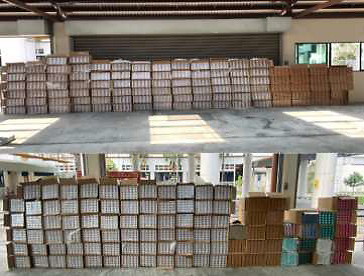
“A total of 5,044 cartons of duty-unpaid cigarettes were found hidden among boxes of printer parts,” said the Immigration and Checkpoints Authority (ICA) in a news release.
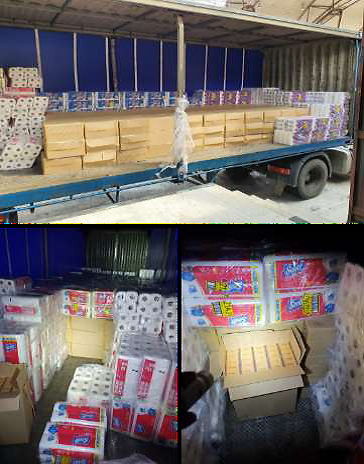
Authorities uncovered duty-unpaid cigarettes hidden among kitchen towel and toilet rolls. (Photo: Immigration and Checkpoints Authority)
About four hours later, another cargo truck was stopped and directed for further checks.
It was carrying a consignment declared as tissue paper, but officers found 5,000 cartons of duty-unpaid cigarettes hidden among kitchen towel and toilet rolls.
Both Malaysian drivers, aged 27 and 37, were handed over to Singapore Customs for further investigations.
More than 10,000 cartons of duty-unpaid cigarettes were seized. (Photo: Immigration and Checkpoints Authority)
The total duty and Goods and Services Tax for the two cases amounted to about S$857,750 and S$63,240 respectively.
Investigations are ongoing, said ICA.
“The same methods of concealment used by contraband smugglers may be used by terrorists to smuggle arms and explosives to carry out attacks in Singapore,” said ICA.
“ICA will continue to conduct security checks on passengers, cargos and vehicles at the checkpoints to prevent attempts to smuggle undesirable persons, drugs, weapons, explosives and other contrabands across our borders.”
SINGAPORE: The number of measles cases in Singapore has hit the highest level since an outbreak in 1997, figures from the Ministry of Health on Thursday (Oct 24) showed.
According to the latest weekly infectious diseases bulletin published on Thursday, there were 149 measles cases in Singapore as of Oct 19.
That is more than four times the number of cases for the whole of 2018, when there were 34.
The number of measles cases in Singapore hit 1,413 in 1997, before the Government introduced the two-dose MMR vaccination schedule in 1998. The number of cases fell to just 114 that year.
“As a travel hub, Singapore is likely to see increased cases from importation,” it said.
The ministry has also alerted general practitioners to be on the look-out for measles cases, particularly in patients who have recently travelled overseas or who have not been vaccinated.
The disease, which is highly contagious among unvaccinated individuals, can been prevented through taking two doses of the MMR (Mumps, Measles, Rubella) vaccine.
A vial of the measles, mumps, and rubella virus (MMR) vaccine. (File photo: Reuters/Lindsey Wasson)
According to the latest Communicable Diseases Surveillance report released by MOH in 2018, the number of reported measles cases has “rapidly declined” since the introduction of compulsory measles vaccination in August 1985.
In 1992 and 1997, there was a spike in the number of reported cases across all age groups. The “catch-up” immunisation initiative was implemented between July 1997 and November 1997, and the two-dose MMR vaccination started in January 1998.
The number of measles cases ranged between 13 and 96 between 2001 and 2010, before an increase in 2011 to 148 cases. Since then the number of cases has fluctuated, with 38 cases in 2012 and 46 cases in 2013, jumping to 142 cases in 2014.
There were 42 measles cases in 2015 and 136 cases in 2016. That dipped to 70 cases for the whole of 2017 and dropped further to 34 cases in 2018.
GLOBAL OUTBREAK
There have been outbreaks around the world as the virus exploits gaps in vaccination coverage, the World Health Organization (WHO) said this month.
FILE PHOTO: A measles poster is seen at Venice Family Clinic in Los Angeles, California February 5, 2015. REUTERS/Lucy Nicholson/File Photo
The disease, which is one of the world’s most contagious according to the WHO, rose by 300 per cent globally in the first three months of 2019, compared to the same period in 2018. There have been consecutive increases over the last two years.
There is no specific antiviral treatment for measles, but it can be prevented with two doses of vaccine. The vast majority of cases of infection are in unvaccinated or under-vaccinated people.
The disease affects a person’s respiratory system and is spread through direct contact with the saliva or mucus of an infected person.
It can be contracted at any age if a person had not taken an MMR vaccination.
The early symptoms include coughing, a runny nose, red eyes, tearing and a fever. In days, bluish-white spots may appear on the inside of cheeks while there might be a skin rash on joints or the face.
Diarrhoea, vomiting and inflammation of the eyes are also possible symptoms.
Most patients recover completely from measles, but it can also lead to ear infection and pneumonia for older patients.
In rare cases, measles may cause encephalitis – an acute inflammation of the brain – and increase the risk of seizures, epilepsy, mental disability, coma or death.
Children are at high risk of developing complications.





.jpg "20191025_britain_afp-1.jpg")