11.11 is better known as Singles’ Day, however, we believe that good things come in pairs, so grab a friend and enjoy these 1-for-1 deals and more, available all around Singapore!
There are no excuses to spend this day alone anymore.
Breakfast without orange juice is like a day without sunshine. On 11.11, i.Jooz will be giving out 1111 free cups to all GoodLobang subscribers. To claim this sweet deal, all you need to do is to scan the exclusive QR code at any of the i.Jooz vending machines! QR codes will be released on 11/11 at 11.11am on GoodLobang’s Telegram Channel.
SINGAPORE – A $7 million grant has been introduced to help food delivery riders replace their electric scooters, after the Government banned the devices from footpaths earlier this week.
Under this scheme, food delivery riders who trade in their existing e-scooters will each receive up to $1,000 to buy a power-assisted bicycle, or $600 for a bicycle.
The Ministry of Transport (MOT) on Friday (Nov 8) said the Government and three major food delivery companies set up this e-scooter Trade-in Grant for affected delivery riders to switch to bicycles, power-assisted bicycles or personal mobility aids. Riders can begin to trade in their e-scooters from next Friday.
The move comes in response to many food delivery riders raising their concerns over the footpath ban affecting their livelihoods. There are about 7,000 food delivery riders who use e-scooters, and groups of them have been meeting MPs since the ban took effect on Tuesday.
Grab, Deliveroo and Foodpanda will administer the new grant scheme, said the authorities, adding that the companies are also working with retailers to purchase in bulk “and bring down costs of these devices”.
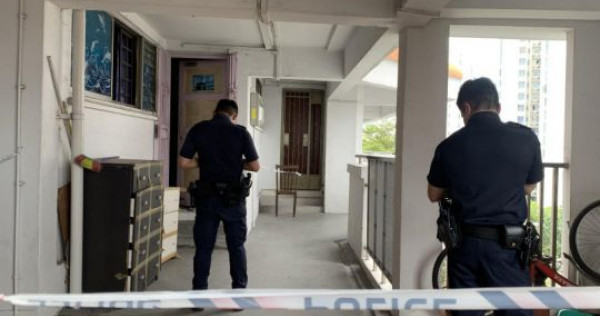
SINGAPORE – A 51-year-old man died after a fire broke out in a Jurong West flat on Friday (Nov 8).
The fire happened in a sixth-floor unit at Block 516 Jurong West Street 52 at 7.34am, and both the police and the Singapore Civil Defence Force (SCDF) responded to the incident.
The SCDF said police officers, who were first on the scene, put out the blaze with a fire extinguisher. They did so through the living room window.
Firefighters later made a forced entry into the flat through a bedroom window.
The police said that a 51-year-old man was found lying motionless inside the flat and was pronounced dead at the scene by paramedics.
The case has been classified as an unnatural death.
Police are investigating the case and the cause of the fire.
This article was first published in The Straits Times. Permission required for reproduction.
SINGAPORE – Jurong-Clementi Town Council was issued a warning by the Singapore Civil Defence Force (SCDF) after its officers were unable to use the fire hose reels when a fire broke at a Bukit Batok block last week.
The fire broke out on Nov 1 at around 4.30am on the 13th floor unit of Block 210A, Bukit Batok Street 21.
Three people were taken to the Singapore General Hospital for burn injuries and smoke inhalation.
In a statement issued on Friday (Nov 8), the SCDF said the fire had to be extinguished using water from SCDF’s emergency vehicles after its officers found a few hose reel cabinets in the block locked with padlocks.
After breaking one of the padlocks, there was no water supply for the hose reel inside the cabinet.
SCDF said that town councils are responsible for the maintenance and proper functioning of their estates’ fire safety measures.
Later on the day of the fire, SCDF inspected the fire hose reels with representatives from the town council, which was then issued with Fire Hazard Abatement Notices (FHAN) under SCDF’s framework for dealing with non-compliance with fire safety requirements.
SINGAPORE: A new survey conducted by global market research firm YouGov shows Singaporeans are divided over whether maids in the country should be paid more than S$600 a month, with opinions also split among those in the industry.
A non-governmental organisation (NGO) said maids should be paid more with the extended number of hours they work in a day, while an employment agency association said the figure is fair because the employer covers costs like food, lodging and medical expenses.
Of the 1,060 Singaporeans polled online, 52 per cent think domestic helpers should be paid more than S$600 a month, while the remaining 48 per cent think they should be paid less than S$600 a month.
The sample size was weighted to be nationally representative of Singapore’s adult population by age, gender and income.
Singapore has one of the largest populations of foreign domestic workers (FDW) in Asia, with 255,800 workers as of June 2019. Hong Kong has about 400,000.
In September 2016, HelperChoice – a platform that connects employers with helpers – analysed data from hundreds of FDW job ads in Singapore and found that the average salary was S$597 a month.
This salary is lower than the average in Hong Kong, but “slightly better” than what domestic helpers in Middle Eastern countries like the United Arab Emirates, Qatar and Saudi Arabia earn, HelperChoice said.
MAIDS BEING OVERWORKED
Still, some of the survey findings highlight that FDWs remain undervalued despite a reliance on them for household and caregiving responsibilities, said Ms Jaya Anil Kumar, case manager at the Singapore-based NGO Humanitarian Organisation for Migration Economics (HOME).
“Firstly, domestic workers (in Singapore) may earn a lot more than in their countries of origin. Therefore, it is perceived as acceptable to pay them a low wage,” she told CNA. “Secondly, domestic work is usually considered ‘informal’ work and may be undervalued.”
Results from a survey on the salary of foreign domestic workers in Singapore. (Source: YouGov)
Ms Jaya feels that FDWs in Singapore should be paid more than S$600 a month as they can work up to 16 hours a day.
“Many, especially those with caregiving responsibilities, engage in almost round-the-clock work,” she told CNA, pointing out that the Employment of Foreign Manpower Act does not regulate their working hours, although it mandates that they get one off day a week.
“Many domestic workers therefore complain about overwork, and HOME has encountered workers who work between 12 to 16 hours with minimal breaks in between,” she said.
“Those who take on specialised caregiving responsibilities may have to continue their duties when the care recipient needs attention, which may be at any time during the day or night.”
RISING LIVING COSTS AT HOME
Filipino Racquel Pascual, an FDW who has been working in Singapore for about a decade, said the S$600 a month figure is too “low” as the cost of living in the Philippines has gone up, coupled with a weaker exchange rate.
“I don’t have a husband, my family needs more money all the time,”the 39-year-old, who is currently earning S$750 a month with her fourth employer, told CNA.
Ms Pascual said she earned S$450 a month in the first few years of working in Singapore, but has been given multiple raises with her increasing local experience.
Ms Jaya acknowledged there is no “one-size-fits-all solution” when it comes to determining salaries of FDWs, adding that those who have more local experience and specialised skillsets like nursing certificates or eldercare know-how could be paid more.
“However, increasing their salaries overall would go some way in recognising the value of the work they do, as well as the heavy workload that many of them carry, and the assistance they provide to many households in Singapore,” she stated.
HOW IS SALARY DECIDED?
Another factor that determines how much an FDW earns is the minimum monthly salary stipulated by the source country, said Association of Employment Agencies president K Jayaprema.
The minimum rate for FDWs from Myanmar, Sri Lanka, Indonesia and the Philippines is S$450, S$497, S$550 and S$570, respectively.
When deciding how much first-time FDWs should be paid, “agents will take reference from the minimum salary”, Ms Jayaprema told CNA, although those with skills and experience can request for more.
HOME’s Ms Jaya said it would be “helpful” if Singapore introduces a minimum salary for FDWs that’s higher than S$600 a month, pointing out that employees doing similar domestic work – like cleaners – are covered under the Employment Act and entitled to overtime pay and extra pay for working on rest days.
“Stipulating a minimum salary would alleviate the imbalance caused by their exclusion from primary labour legislation,” she added.
ALL EXPENSES INCLUDED
But Ms Jayaprema said employers see the S$600 a month salary as a “decent” figure once they factor in provisions like food, accommodation, water, electricity and household items.
“Everybody will say for live-in domestic workers, that’s their comfort, but then again there is a cost,” she said, noting that having another person living in the house can cost an extra S$200 a month. “You can’t run away from it”.
File photo of foreign domestic workers. (Photo: Wee Teck Hian/TODAY)
Ms Jayaprema said FDWs are paid the same rate during the first few months of settling in and on-the-job training, and can rest at different times of the day if they are efficient in completing their tasks.
“Everybody harps about the thing that domestic workers start work at 6am, but then when she wakes up in the morning, she’s already at her place at work,” she said. “Everybody has to look at it in a holistic manner.”
COMPARABLE TO CLEANERS’ PAY?
As for comparing FDW salaries to the remuneration for cleaners in the local workforce, Ms Jayaprema said the latter might end up taking home the same amount after daily expenses and Central Provident Fund deductions.
“Those people are taking the bus to work, they have to bring their own food, also working long hours, and they’re only paid about S$1,000 a month,” she said.
“I’m getting a domestic worker into my house, she has a very comfortable environment to stay in, she doesn’t have to travel, she has got no additional cost at all.”
A maid agency in Singapore (File photo: Ngau Kai Yan)
Furthermore, Ms Jayaprema said FDWs can get a raise if employers are satisfied with their service, stating that this usually happens when their contracts are renewed after the initial two years.
“Once domestic workers really skill themselves up and value add to the family in a bigger way, then I think employers don’t mind giving some more,” she added.
A “FAIR” ARRANGEMENT
Employer Anna Leong, 60, told CNA she has raised the salary of her Myanmar FDW from S$530 to S$600 a month after the first two years, stating that the helper has been reliable and responsible and has cared well for her father-in-law who has dementia.
However, Ms Leong – who works as a leadership coach – said she would not go above S$700 a month as the total cost would then become “pretty expensive”, and that other care arrangements like day care might then present a more cost-effective option.
“For the salary, I think S$600 is a reasonable amount,” she said. “You have to think of different ways to incentivise them.”
Ms Leong said she would pay for them to attend English, sewing or eldercare courses so they can gain new skills, and give them hongbaos for Chinese New Year and Christmas.
“We cover their full board and lodging and then when they need to go back, we also cover their airfare,” she added.
“So if the employer is fair to them, then I think they really take home that amount. The challenge is making it a fair arrangement. They do their part, we do our part, we treat them well – that’s very important.”
SALARIES ARE “COMPETITIVE”
The Centre for Domestic Employees (CDE), which advocates for fair treatment of FDWs in Singapore, told CNA it believes they are paid “competitive salaries” commensurate with their experience and skills, noting that while monetary reward is important, having a good employment relationship with the family is “equally important”.
Domestic workers take part in a May Day celebration event organised in June this year by the Centre for Domestic Employees, a unit under the National Trades Union Congress. (Photo: Facebook/Centre for Domestic Employees)
“Some of our FDW friends shared with CDE that even though their salary has not increased a lot over the years, they are happy working for their employer for many years because the trust and strong bond has been built up,” its executive director Shamsul Kamar said.
“Some told us they don’t wish to change employers even if they get offered a higher pay elsewhere, because it means they will have to start from ground zero and spend time adapting to the new employer and the family’s way of living. They fear they may not be able to adapt well.”
Nevertheless, Mr Shamsul said it is important for FDWs to learn new skills in areas like caring for those with special needs to increase their employability and command a better salary.
“CDE also urges employers of FDWs to recognise the specialised skills of their FDWs, if any, and pay them in line with market conditions,” he added.
SINGAPORE: Long before he was in the business of feeding people, Adrian Ang was a hungry teenager, in more ways than one.
It was 1997, he was 16, and the Asian financial crisis was ravaging his parents’ business. “There was money and there was food,” Adrian Ang said. “And then suddenly, there wasn’t any.”
He was always hungry, he remembers.
At school, “your friends would go for recess, but you don’t have money to participate. So I’d just pretend to be asleep”.
As his classmates were filling their stomachs in the canteen, Adrian would cry alone in any corner he could find. While they guzzled canned drinks, he was chugging water to keep himself full.
“But water is not filling. You get very tired and weak,” he said.
His only meal for the day: Two slices of bread which he got at breakfast, but always saved until midday for fear of running out of fuel too soon. On a lucky day, there’d be kaya to go with it.
This bout of privation lasted for a year – but it had a lifelong impact on him.
“I read this phrase somewhere, and I think it holds true to me: ‘You can come out of poverty but sometimes the poverty never really leaves’,” said Adrian.
You’re always a bit scared, and you don’t want to go through that again. It helped me work harder.
Now 37, and the founder of a successful restaurant franchise, he is committing his company to helping children who experience hunger just like he did.
In April 2019, he and a team of four staff members at Stuff’d – which serves Mexican-Turkish food – launched the Free Food For Kids campaign at their Northpoint City Yishun outlet. The initiative provides one free meal a day to children in need.
Some of the beneficiaries of the programme
It has since expanded to Jurong Point, Bugis and White Sands, feeding more than 140 children under the age of 14.
THE STIGMA IN SEEKING HELP
The team took care to make sure it would be easy for youngsters to apply for the free meals.
“They just have to reach out to us through our social media or email, and our team will contact them by phone to ask some questions,” said Chin Zheng, who is part of the programme team. Teachers and social workers also refer children under their care.
Some key indicators of whether the child is in genuine need: If they live in a rental flat, or are already under some form of government or school assistance, such as the Ministry of Education’s Financial Assistance Scheme (FAS) and School Pocket Money Fund.
But there are also in short-term financial difficulty, whom they try to help as well.
“Some might say that people will take advantage,” Adrian added. “But if you are kinder, you can help more people. We decided to do it the kinder way.”
Keeping the programme accessible is important to Adrian. as he believes there is a stigma surrounding help-seeking.
Recalling how his classmates got to know of his plight only later, he said: “They asked me why I didn’t tell them, they could have given me something (to eat). But It didn’t even cross my mind to tell people.
I felt like I had to keep it a secret, like it’s my own burden to bear – especially at that age.
This is why the beneficiaries can claim their free meal any time they want. They just have to present a physical card mailed to them, and choose any menu item they want – from kebabs to burritos and salad bowls.
The cards contain the children’s information on the front.
This will help to “empower” the children, instead of limiting them to only certain items, said Adrian.
“It’s a very big meal and it’ll last them the entire day.”
KIDS EATING BETTER, EATING HEALTHIER
Take 12-year-old Muhammad Sufi. Like most kids he loves the school holidays – except for the fact that this is when he’s most hungry.
On schooldays, he gets two free meals a day under FAS. But during the holidays, his mother – who works as a cleaner earning S$600 a month – can only afford to give Sufi and his three siblings S$10 a day in total to spend on food.
So, cup noodles (sometimes with a dash of chilli sauce) have become a staple. “Or if I’m still hungry, I’ll share my friends’ food,” Sufi added.
He was introduced to the initiative by his social worker, and for him, a meal from Stuff’d isn’t just something to fill his stomach. He enjoys the variety he can choose from, which includes fresh vegetables and meat.
Seeing children like Sufi eat bigger and healthier meals is “humbling and heartwarming”, Chin, 28, said.
The project has opened his eyes to their plight. He spoke of heart-tugging phone conversations with the beneficiaries, their teachers and social workers, when they were assessing applications.
“He cried, I saw,” Adrian teased Chin. “Many of our team did, hearing their stories.”
Their hope is to expand Free Food For Kids to more locations so that it is accessible to more children. But can the initiative be sustainable for business in the long run?
Adrian is unfazed. “We learn as we go,” he said. “We’ll just continue until we can’t.”
[Win tickets to JCube’s Skating with the Stars event on Nov 30 and Dec 7, where you can get to meet celeb couple Kate Pang, Andie Chen and their adorable brood! Read on to find out how or click here.]
Christmas is a warm and fuzzy time of the year for many, but it’s also a season that leaves our hearts full but wallets near-empty. But hey, we’re not complaining. After all, it’s not called the season of giving for nothing.
As with any festive period, it’s also a busy time of the year for families, what with gatherings to attend, mad feasts to cook up, and presents to buy.
If you’re terrible at buying gifts, take comfort in knowing that like us, celebrities have an equally hard time when it comes to yuletide gifting.
Stomp contributor Anon purchased a cup of green milk tea from KOI at Serangoon’s NEX at about 1.45pm on Nov 5 when she had this nasty experience.
She told Stomp: “I was already back at my office in Lorong Chuan, drinking and chewing on some pearls then I bit on something hard.
“My first instinct was to take it out and when I did, I saw that it looked like a yellow fingernail.
“I believe it’s a pinky nail since it looked rather small and narrow.
“The nail was also very yellow so I wondered if it had dropped into the pearl mixture or maybe it fell into my drink when the staff was scooping out pearls.
“I called the KOI outlet at NEX at about 2.10pm and told them about how I found a nail in my drink.
“The lady over the phone said: ‘We’re very sorry, can you come down to NEX and we’ll give you a new drink.’
Why I Do What I Do is an original AsiaOne series where we showcase people with uncommon professions and what it takes to get there.
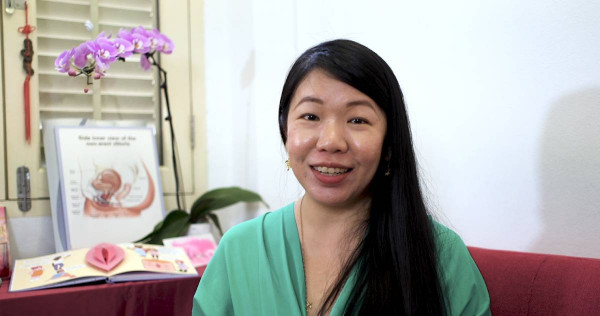
“You’re a sex coach, I guess you have sex with your clients.”
This is just one of the many reactions that Martha Tara Lee has faced in her 10-year career as a clinical sexologist and relationship counsellor.
Besides being mistaken for a sex worker, she’s been slut-shamed, harassed and has even been masturbated to over the phone by a prospective “client”.
But she has learnt to take the harassment in her stride in conservative Singapore, where such a profession would still be considered left of centre.
“It is different, outside of Asia. People actually respect what I do more, they make fewer jokes and they are more respectful, than at home,” says the former PR practitioner, who shrugged off a corporate job to embark on an entirely different career trajectory.