Football fans have been known to get heated over the game, but this gathering of local football legends and over 400 football players was nothing short of wholesome.
The athletes, representing 39 companies, battled it out for a good cause on Saturday (Nov 11) in the sixth edition of Football With a Heart (FWAH) and raised a record-breaking $950,000 for charity, the highest amount raised in a single tournament since its launch in 2012.
FWAH, organised by Singapore Pools, Football Association of Singapore (FAS) and Sport Singapore, kicked off the festivities at Our Tampines Hub with a corporate tournament where Team Keppel emerged as champions.
The event also featured a celebrity match which pitted local football legends such as Aleksandar Đurić, Indra Sahdan Daud and Lim Tong Hai against each other.
Looking at his glistening eight-pack abs, firm pectorals, defined deltoids and thick biceps, you’d never imagine that Kellvin Lim, 46, once suffered from a stroke.
Five years ago, Lim was about to leave the house for work when he suddenly collapsed. His wife initially thought he was playing a prank on her, but it turned out he had suffered cerebral haemorrhage after two blood vessels burst in his right brain.
At the hospital, doctors had warned Lim’s family that the chance of surviving the surgery was only between five and 10 per cent, and he would risk dying or becoming a vegetable should the surgery fail. With no other option left, Lim’s family gave their consent.
He’s since crawled back from the brink of death to become the second runner up of the 2018 Fitness Ironman bodybuilding competition in the above 176cm category, and the runner up of this year’s competition in the above 40 years old category.
SINGAPORE: Rolling out a per-transaction plastic bag charge to 25 outlets islandwide “really is not a small step for Singapore”, said NTUC CEO Seah Kian Peng on Monday (Nov 11).
Plastic bags will be available at participating outlets at S$0.20 per transaction at FairPrice supermarkets and S$0.10 per transaction at FairPrice Xpress and Cheers convenience stores. The seven stores involved in the earlier trial are also part of the year-long trial.
“This is a very significant move. I think it is,” he added, speaking to reporters at the FairPrice Finest in Paya Lebar Quarter, about the decision to increase the number of participating outlets from seven to 25.
When asked about whether NTUC FairPrice would consider extending the plastic bag charge to more, or all stores islandwide, he said: “Changing behaviour takes time, we recognise that too. We are pushing the agenda, pushing the envelope, we are stepping up the pace.
“That’s why there are more stores now, and these are not small stores, these are stores which are located in the heartlands, big stores.”
Signs at check out counters at the 25 participating outlets remind shoppers about the plastic bag charge. (Photo: Ang Hwee Min)
The one month trial in September concluded with most customers supportive of the plastic bag charge, said Mr Seah.
According to NTUC FairPrice, 71.1 per cent of the 1,745 customers surveyed expressed support for a plastic bag charge at supermarkets in the consumer sentiment study conducted at the seven outlets during the month-long trial.
Mr Seah also acknowledged that while there are customers who believe the charge should be much higher and per bag instead of per transaction, there is also “a much smaller group who needs more convincing”.
Describing the two groups as “two extreme ends” he added: “I don’t think we should go either extreme. I think what we have done is a calibrated approach, and I think so far from the pilot results, it seems to have struck a chord. There is a fair balance between the two extreme ends.”
While charging on a per bag basis would cost the individual more, charging consumers on a per transaction basis would be “administratively easy for all”, said Mr Seah.
With the year-long extension, there are also reusable bag donation stations in 12 participating FairPrice outlets, where shoppers can donate clean reusable bags they do not use, or take them free-of-charge if they forget to bring one along.
FairPrice will also be rolling out new initiatives to engage the public to donate their clean reusable bags in participating stores for redistribution to customers who may need it.
Shoppers can also donate clean reusable bags, or take them home if they forget to bring their own bag, at 12 of the participating FairPrice outlets. (Photo: Ang Hwee Min)
“One year from now I hope we don’t have to talk about why we have to encourage more people (to reduce their use of plastic bags),” said Mr Seah, adding that he hopes to see more than half of corporates and retailers in Singapore implementing similar measures by next year.
Stressing that companies are in a position to effect change, Mr Seah said that reducing plastic waste is a “multi-stakeholder journey” that “needs to take place over a sustained period of time”, with individuals and corporates sharing the responsibility.
He also acknowledged that plastic bag use is “just one part” of sustainable behaviour, and noted that NTUC FairPrice also works internally to reduce plastic packaging waste and food waste.
“We cannot ask consumers to be the only ones (reducing plastic waste), I think corporates also need to play a part. We are all in it together.”
He asked of companies: “What are they waiting for?”
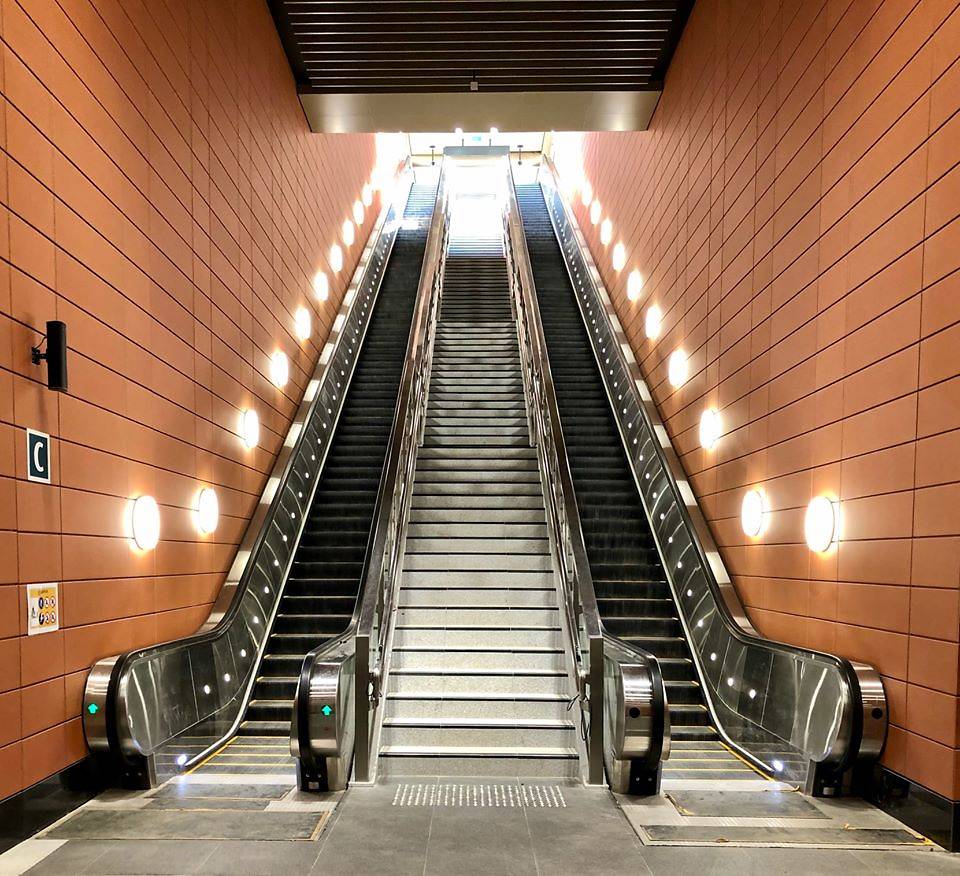
SINGAPORE: Commuters will have access to an air-conditioned underpass at Stevens MRT station on the Downtown Line when it opens on Nov 23.
The underpass will connect commuters from the MRT station directly to Dunearn Road and Whitley Road, the Land Transport Authority (LTA) said in a Facebook post on Monday (Nov 11).
Pedestrians around the area “will be able to enjoy better and safer connectivity” crossing Dunearn Road and Bukit Timah Road said LTA.
The new underpass that will connect the Downtown Line’s Stevens MRT station directly to Dunearn and Whitley Road. (Photo: Facebook/LTA)
LTA added: “Rain or shine, students from nearby schools like Singapore Chinese Girls’ School (SCGS) and St Joseph’s Institution (SJI) will have easier first and last mile connections to their train rides!”
The 65m-long underpass was constructed using a rectangular tunnel boring machine, maximising the use of the tunnel space and enabling works to be completed smoothly and ahead of time, LTA added.
Escalator to Exit C in the new underpass at Stevens MRT on the Downtown Line, which leads out to Dunearn Road and the Singapore Chinese Girls’ School. (Photo: Facebook/LTA)
Construction of the underpass was announced back in November 2017 by Transport Minister Khaw Boon Wan.
It is the second tunnel to be built using the technology, after the one at Havelock station which is expected to open in 2021.
SINGAPORE – An e-scooter rider appeared in court on Monday (Nov 11) over his alleged involvement in a Bedok North accident that killed a cyclist in September.
Hung Kee Boon, 20, was charged with causing the death of logistics assistant packer Ong Bee Eng, 65, by performing a rash act.
He was also handed two charges under the Active Mobility Act.
Madam Ong is believed to be the first fatality from a collision with a personal mobility device (PMD) on a public path here.
She was cycling to her home in Chai Chee Street at around 10pm on Sept 21 after attending a wake when the accident occurred.
She was unconscious when she was taken to Changi General Hospital.
Madam Ong suffered a serious brain injury, as well as fractures to her ribs and collar bone, and fell into a coma.
The 28-year-old Singaporean faced theft charges earlier in September this year, and also made headlines over his divorce from singer Bella Astillah and purported romantic scandals.
Now, Aliff seems to have run afoul of the law again.
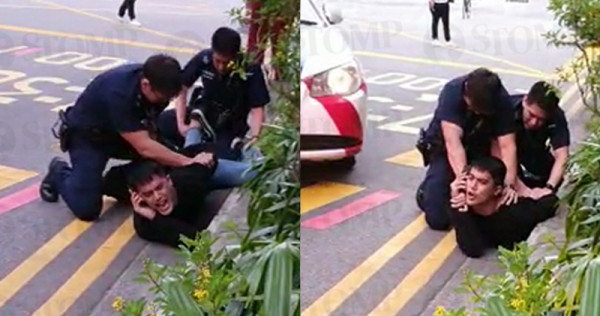
Several Stompers alerted Stomp to videos circulating online, in which he is seen resisting arrest along Orchard Road on Sunday morning (Nov 10).
In one of the videos, Aliff, whose face is clearly seen, can be heard shouting on the phone as police officers attempt to subdue him.
He appears to be calling his father for help and struggling as the officers pin him down and try to handcuff him.
More police officers are then seen arriving at the scene in patrol cars.
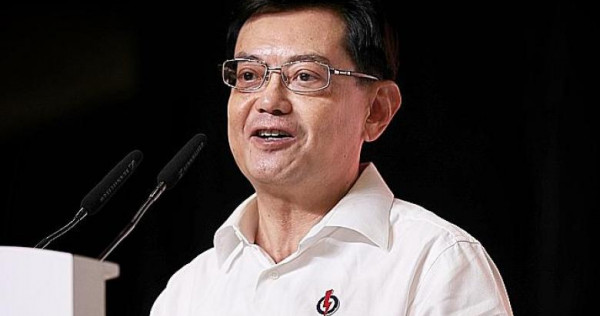
Raising the goods and services tax (GST) rate is an unpopular move, and the Government could have waited for the general election to be over before announcing it. But that would not be the honest thing to do, said Deputy Prime Minister Heng Swee Keat.
Speaking at the People’s Action Party (PAP) convention at the Singapore Expo yesterday, Mr Heng said many party activists had asked him not to talk about the move any more, as the elections are coming.
“But if I don’t bring it up, the opposition parties definitely will – so it’s better that you hear it directly from me,” he added.
“The responsible thing to do is to be upfront, and tell the people that it will happen. This is what integrity means. We don’t hide from difficult truths,” he said.
Mr Heng, who is the PAP’s first assistant secretary-general, said being upfront also helps people and businesses plan ahead for the hike in GST from 7 per cent to 9 per cent, which will take place some time between 2021 and 2025.
“You have my commitment that we will help Singaporeans cope with the change,” he said.
SINGAPORE: Eric (not his real name), 44, works as a security officer at a condominium in Marine Parade.
He needs to have his mobile phone with him at all times and make sure that he responds, within five minutes, to messages from the condo management in a WhatsApp group chat.
He also has to make sure that cars in the condo are parked within the designated line markings, and “not on or over the lines”.
Otherwise, his security firm might end up paying “liquidated damages”, or fines, as those in the industry calls them.
In August, Eric’s firm was fined twice. Once, when technicians came to the condo to service its lifts and he did not respond in time to a WhatsApp group chat message about the servicing.
“With only four of us working that shift, we were also busy with our own duties,” he said.
On the other occasion, the condo management saw a car that was not parked properly.
“We did not clamp the car and the management spotted it before us,” said Eric.
He added: “Once management spots any cars on the lines, or blocking the cars beside them, they will take pictures and send to the group chat. We will try to find out (who is) the car owner, which would take some time because there are over 500 cars registered. If we can’t find their phone numbers, we would have to (locate) the unit (where the owners are living) to inform them.”
He told us that on average, his security firm has to pay liquidated damages at least once a month. Each fine is either S$50 or S$100.
Last month, his firm was penalised six times and made to pay S$300 to the condo management.
At the condo where he works at, the fines are also meted out if the security officers are late for their shifts or if the lifts are not barricaded properly when they are being serviced, for example.
The practice of liquidated damages is meant to protect a property from damages but union and industry leaders said it has been misused as fines to police the behaviour of security guards, or make them carry out tasks which they are not supposed to do.
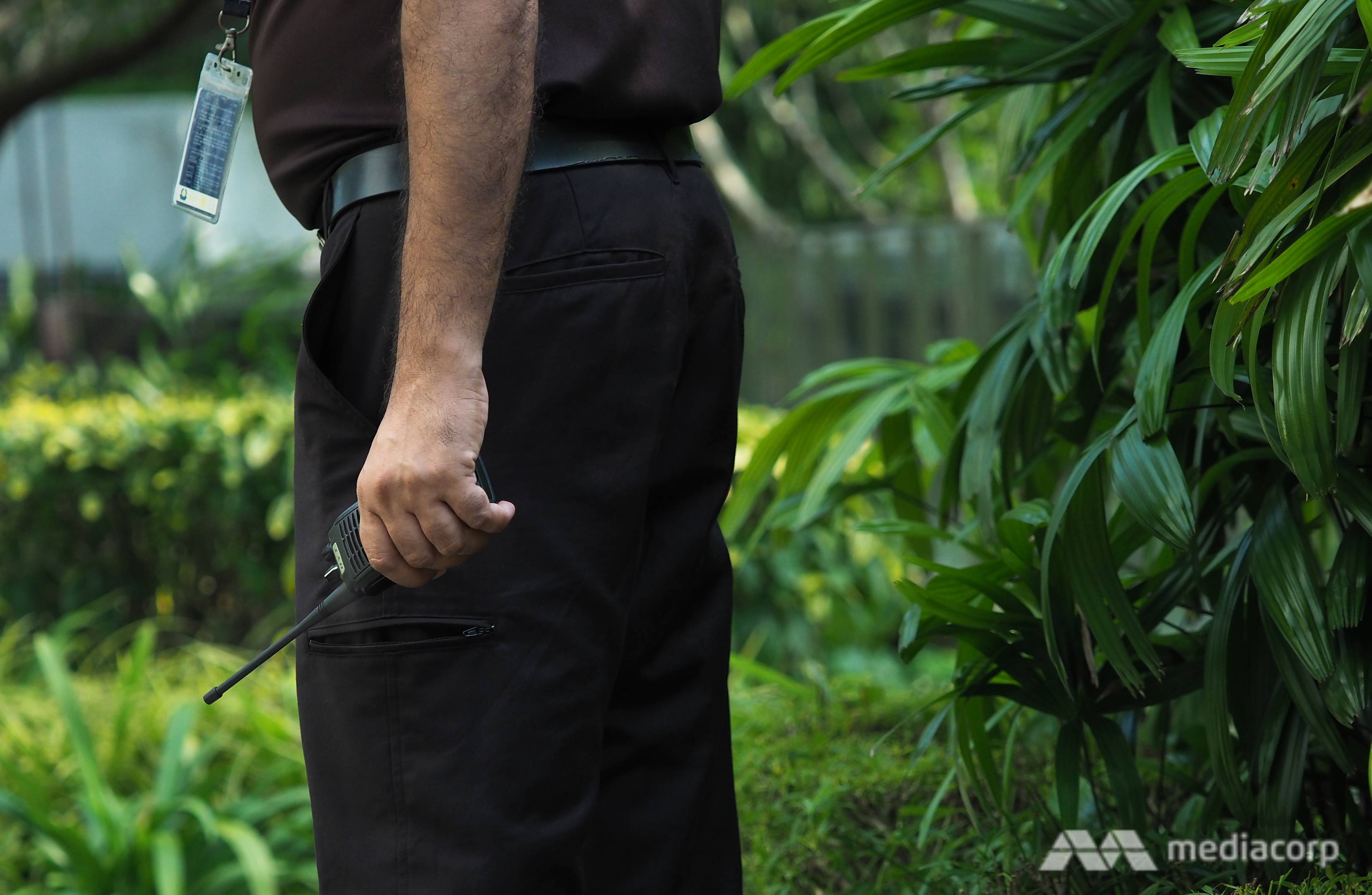
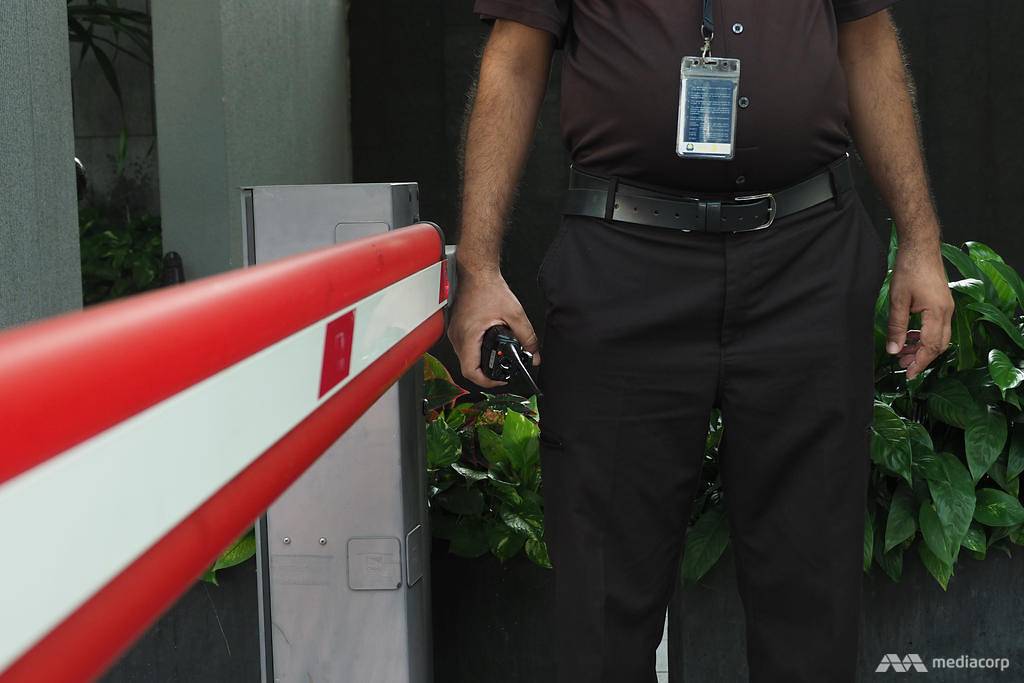
Beyond the day-to-day challenges which condo security guards face, there are underlying issues that often leave them getting the short end of the stick. (Photo: TODAY/Raj Nadarajan)
On Oct 31, the Union of Security Employees (USE) spoke out against the “peculiar practice”.
“Very often, the liquidated damages in the security industry are more like fines than actual reimbursements for damages suffered,” the union said in a Facebook post.
It added: “In many instances, security agencies often have to contend with liquidated damages should their officers not carry out actions against illegal parking or other rules like screening of visitors or even where visitors dropped off. Putting out a contract at a certain fee, and then imposing liquidated damages to claw back some of the contract sums do not seem fair.”
Such fines range from tens of dollars to a few hundred dollars for each incident, the union noted.
USE general secretary Raymond Chin reiterated that such a practice is a “misuse” of liquidated damages to “govern behaviours of the agencies”.
“Liquidated damages should be imposed if there are actual losses suffered. It should not be used as a form of financial punishment or worse, to get ‘discounts’ off the security agency in a roundabout way,” he said.
USE executive secretary Steve Tan said he has seen cases where security firms lose money since the liquidated damages imposed on them are higher than the sum of the contract. For example, there was a case where a firm had to pay more than S$27,500 in liquidated damages in a month, he said.
Adding that the practice has even seen some security agencies penalised for “poor handwriting”, Security Association Singapore executive director Ikhsan Suri described the use of liquidated damages as a means of control over security officers, and making them work beyond their job scope.
“A typical unfair clause is one which gives managing agents absolute discretion to dictate officer’s actions or tasks, and which has been used to get security officers to do all sorts of non security-related tasks like electrical work, putting up signage and notices – which is typically in fact the managing agent’s job – or checking water meter readings,” he said.
The plight of security officers – who often work long hours for relatively low pay and receive little recognition from the very people they serve – is back in the spotlight after a video, showing a resident of Eight Riversuites condominium in Whampoa verbally abusing a security guard, went viral late last month.
The incident has prompted Members of Parliaments to renew their calls for harassment laws to be extended to cover private security officers.
Our interviews with condo security guards found that they are often treated with little respect all round – not just in their day-to-day interaction with residents but also in terms of how they are expected to carry out their work, with the condo management policing their behaviours with fines.
And sometimes, the rules that they have to follow are as questionable as the by-laws which they are made to enforce on residents, said industry players.
In Singapore, security firms are typically hired by managing agents of condos to take care of security arrangements. The managing agent, in turn, answers to the management council – a body elected among residents to administer the day-to-day running of the estate.
Under the Building Maintenance and Strata Management Act, management corporations – which comprise all unit owners within the development – are given the powers to manage their own estates. A management corporation is also known as Management Corporation Strata Title (MCST).
On his job scope, Eric said that his tasks range from registering visitors to the condo, ensuring that residents wear proper swimming attire in the pool to keeping the premises safe.
This is usually the situation in most condominiums, where security officers have to multi-task, on top of protecting the premises and residents, as well as upholding the estate’s by-laws.
And wearing many hats while carrying out their duties often put the security officers in the direct line of fire on a daily basis, as they have a tough time enforcing the estate’s by-laws in the face of resistance by difficult residents.
Another security officer, Leonard (not his real name), 54, who is stationed at a condominium in Tanglin area, said he has had visitors pick fights with him when he tries to enforce the condo’s by-laws.
Both Leonard and Eric agreed to speak to us on condition of anonymity, as they were not authorised to speak to the press and could get in trouble for doing so.
Recounting the incident, Leonard said: “We stopped a visitor from entering the condo because she did not register her details. But on her next three visits, she did not register as well so we had to inform the tenant whom she visited … She came with her husband the next day and he scolded us.
“He shouted at us: ‘Don’t disturb my wife and ask her so many questions.’ We tried to explain to him that this was our duty but he got out of his car and said to me: ‘This is your last warning.’ So I just apologised.”
Security guards, along with other low-wage workers such as cleaners, gardeners and petrol station attendants, were once described by veteran diplomat Tommy Koh as “invisible people” who are not shown respect by the elite.
A small-scale survey of 52 security guards conducted by the USE in April found that about two-thirds had experienced verbal abuse, while less than a handful were physically abused.
Several of the security officers we spoke to also said they have been verbally abused while on duty, but they felt that it was part and parcel of the job.
SMS Investigation and Security director John Sng noted that security officers are “sandwiched” and are made messengers of bad news.
His agency currently works with 24 condos. On average each month, he sees about four cases of abuse.
“Most of the cases revolve around disagreement about the rules. For example, MCST clamps their cars so the residents go after officers,” he said.
He cited an incident where a resident who was upset with the going-ons at a condo parked his car in front of the car park gantry and refused to move.
“When security officers tried to ask him to move, the resident said: ‘I don’t have to talk to you, you are just a security guard.’ When the police came in, the police said it was a private matter. So there was no support from the police and MCST side,” Mr Sng said.
Mr Ikhsan said that without the force of law, security officers get “bullied” while trying to enforce a condo’s rules.
He said: “These members of the public believe they can get away with it because security officers do not have the special protections despite being in a vulnerable front-facing position. Often incidents of abuse or harassment of security officers do not go punished as they do not get support from the building owners or MCSTs or managing agents.”
Mr Robert Wiener, president of the Association of Certified Security Agencies (ACSA) and director of Prosegur Security, said he sees an average of almost 30 cases of abuse per day. He noted that some of the security officers involved may even get sacked for trying to enforce the rules.
“The MCST doesn’t want to pick a fight with the owners of the condo. So these security officers are not supported even though the condo owners or MCST said that they have to … make sure that these rules are abided by,” he said.
“But when they clamp a car and the owner asks, who did this, the security either gets praised or pulled off.”
Mr Ikhsan stressed the need to “empower security officers by ensuring they have sufficient support to do their jobs and (seek) recourse in incidents of abuse”.
“Since the managing agents and MCSTs are generally not supportive of security officers, the union and security associations are now stepping up our support of security officers and security agencies,” he said.
STEMMING ABUSE
To reduce the likelihood of a confrontation between angry residents and security guards, USE’s Mr Chin suggested better-designed security procedures, clearer rules and the use of technology.
In a bid to reduce the number of abuse cases, the security officers in Mr Sng’s firm now wear body cameras.
“I did it about three years ago and got the idea from an Australian security association. They said that this was used as a deterrence. I tell my officers, if they are (facing) a conflict situation, to tell the parties involved that they are being recorded,” he said.
Still, despite the effort, he estimated that fewer than half of the residents would heed the instructions given by security officers.
Following the Eight Riversuites incident, the Security Industry Council (SIC) earlier this week launched an email helpline (stopabuse@hormatsecurity.com) for private security officers to report cases of verbal and physical abuse which they encounter while performing their duties. Assistance provided could range from legal advice to medical claims or requests to change deployment site.
Mr Wiener believes that on top of public education, legislation is also needed to protect security guards.
Many in the industry have been calling for private security guards to be accorded the same legal protection as public service workers such as nurses.
In response to queries, the Ministry of Home Affairs said that the harassment of anyone, including security officers, is “unacceptable” and an offence under the Protection of Harassment Act. Where there is violence or disorderly behaviour involved, victims are also protected under other legislation such as the Penal Code or the Miscellaneous Offences (Public Order and Nuisance) Act, the ministry said.
AN UNDERLYING PROBLEM
Beyond the day-to-day challenges which condo security guards face, there are underlying problems that often leave them getting the short end of the stick.
These include the issue of liquidated damages, which refer to a fixed or determined sum of money agreed by the parties to a contract to be payable should there be a breach by any party.
USE’s Mr Tan said the imposition of liquidated damages became a standard industry practice likely as a result of the manpower crunch. As the security services are often bought on the basis of headcount, buyers use liquidated damages to ensure that that there is no shortfall of manpower for example, he said.
Mr Francis Chng, the director of security firm Horus I, said that these days, some contracts stipulate that if a security guard misses a checkpoint during their patrol, the security agency would be made to pay liquidated damages.
But he noted that a security guard could miss a checkpoint due to carelessness, and it does not necessarily mean that the guard did not do his rounds.
“Missing a (checkpoint) does not actually cause damage to the estate,” he pointed out.
The number of security officers with valid licences has increased slightly since 2015. (Photo: TODAY/Raj Nadarajan)
SAS’ Mr Ikhsan cited a case of a condo in Bukit Panjang, which required its security guards to conduct patrol of its premises with more than 20 checkpoints – over half of which were outdoors. Liquidated damages of S$50 were imposed for each checkpoint missed, even on the occasions when it was raining, he said.
Reachfield Security and Safety Management general manager Grace Lim said that security firms also are penalised under the liquidated damages when guards are caught resting on the job.
“Some clients want a S$200 levy per (instance of a security officer caught resting on the job) instead of having a warning system, where there is a verbal warning first, followed by a written warning, before finally resorting to liquidated damages,” said Ms Lim.
Mr Ikhsan reiterated that managing agents are not well versed in contracting practices and do not have a strong grasp of how liquidated damages work.
“Managing agents and MCSTs often include liquidated damages clauses that are unfair and almost definitely unenforceable if challenged in court,” he said. “They are almost always based on how ‘serious’ the managing agent or MCST thinks each alleged breach is, without any regard for the actual damage suffered by the client, which is the basis of liquidated damages.”
THE PERENNIAL MANPOWER CRUNCH
Faced with an array of issues, it is no surprise that the industry is facing a manpower crunch. Nevertheless, following various initiatives to increase the appeal of the job, the situation has improved slightly in recent years.
In 2017, the Government accepted recommendations by the Security Tripartite Cluster which called for the basic pay of security guards to increase by around S$300 between 2019 and 2021. After that, they will receive an annual basic pay increment of at least 3 per cent.
All security guards will also be allowed to put in a maximum of only 72 overtime hours a month. The current practice – where security companies apply for overtime exemptions so that their employees can work past this limit – will be discontinued from 2021.
The higher basic pay and subsequent annual increments were aimed at offsetting the cap on overtime hours. Security agencies had to adopt the recommendations from the start of this year.
At some condominiums, security guards and their agencies are punished for things as trivial as failing to ensure that cars are parked within the designated line markings, and not responding quickly enough to WhatsApp messages from the condo management, for example. (Photo: TODAY/Raj Nadarajan)
Between 2015 and last year, the number of security officers with valid licences has increased from 73,700 to 79,800. As of September this year, the figure was 79,200.
Despite the overall uptick, the industry still needs more bodies. Mr Wiener estimates that the industry may be facing a shortfall of about 12,000 workers. The use of technology will help to reduce the reliance on manpower and alleviate the manpower crunch over the next five years, he said.
During the Security Industry Conference last month, Ms Sun Xueling, Senior Parliamentary Secretary of Home Affairs and National Development, noted that security agencies “find it difficult to fill vacancies amidst slowing workforce growth and competition for workers from other industries”.
She said: “We have a rapidly ageing workforce. More than half of our current pool of security officers are above the age of 55.”
Referring to the removal of the overtime exemption, she said that this would create “even greater pressures on the supply of manpower”.
Mr Chin, the union leader, stressed the need to transform the industry from its present manpower-intensive, low productivity state to attract younger people.
“We need to transform the job into one which is based on strong security outcomes and using the right ‘tech-man’ mix to make this an attractive career choice,” said Mr Chin, referring to the use of technology to supplement manpower.
At the same time, security we spoke to highlighted the value of older and more experienced security guards.
USE will be rolling out a digital adaptation course for officers who are not tech savvy. It hopes to “transform the security occupation into a career of choice, and anyone who is able to do the job and is willing to, cannot and shouldn’t be prevented from taking up the job”, said Mr Chin.
Under the Industry Transformation Map for the sector, which was launched in February last year, the Government is also looking to enable the security industry to leverage technology and raise the skills of its workers. The blueprint aims to enhance regulatory standards, promote greater use of technology and improve career progression.
OUTCOME-BASED CONTRACTS – THE WAY FORWARD?
To tackle the root cause of the perennial issues plaguing the industry, many have called for the use of outcome-based contracts.
Ms Sun, for example, stressed the importance of such contracts in her speech at the Security Industry Conference.
“When contracts start by stipulating the outcome and not merely specifying a certain number of security officers, security agencies are free to think of how technology can be used to augment manpower, and start providing integrated security solutions,” she said.
Currently, buyers put up a tender for services based on a fixed number of headcount under manpower-based contracts. Outcome-based contracts would not be as manpower-reliant, as security firms are assessed on expected performance levels and technological solutions can be used to offset a lower headcount.
The Government has announced that from May next year, all of its agencies will be adopting outcome-based contracts for all new security contracts.
Mr Chin said that security service buyers will need time to get onboard but the Government’s move will send a strong signal.
“(Manpower-based contracts) have been the default manner of calling contracts and are also simple to understand and execute,” he noted.
He added: “It’s a very big change in the industry – cutting the manpower and using performance as an indication.”
Outcome-based contracts may also see buyers incurring “more costs in the short term for security consultation and also upfront capital expenditure on buying the tech equipment and solutions”, he added.
Tripartite partners – consisting of the union, employers and the government – have agreed to train more consultants at the Security Industry Institute to help buyers draft outcome-based contracts.
Mr Chin noted that currently, buyers are apprehensive about substituting technology for manpower.
“If they want five security guards, they mean five. Even though we may propose that we are giving you three but some tech (solutions) to cover other grounds, they are a bit hesitant – they would rather have five guards than three,” he said.
The MCSTs and managing agents we spoke to cited several reasons for the resistance to outcome-based contracts, such as longer contractual commitments.
Mr Chan Kok Hong, managing director of Savills Property Management which manages over 100 condos in Singapore, said that he knows of five which have taken up outcome-based contracts over the past year.
Mr Chan is also president of the Association of Strata Managers, which seeks to represent managing agents for condos in Singapore. He said that outcome-based contracts have not caught on because of the long period of commitment required from the buyers, due to the installation of equipment and technology.
“When you are trying something new and you can’t just terminate (the security services) unless you are ready to bear the costs, there is a risk. If you are on the (condo management) council and you sign a three-year contract, and in six months time you realise the hardware is not working properly or the guards are not good, then you are stuck,” he said.
A spokesperson from the Association of Property and Facility Managers said that there may also be different interpretations of the optimum outcomes by the parties involved.
“It is not uncommon for the outcomes in an outcome-based contract, however well articulated, to be interpreted differently by different persons. As such, problems can arise from the measurement of outcomes and/or ‘fair’ administration of the contract,” said the spokesperson.
Mr Andrew Lioe, director of property, strata and facility management company A4 International, which oversees about 60 estates and commercial buildings, said that some of his clients still prefer the physical presence of security officers.
This is so because they “act as a better deterrence” compared to having closed circuit television cameras or supervision from a remote security centre. A security officer can physically check visitors and interact with them, Mr Lioe said.
He added that security agencies have to adequately prepare and train their officers, in order to push buyers to make the switch.
“If a buyer is considering outcome-based contracts, the question is (whether) the security firm and officers … can provide reasonable service so that the reduced headcount will not be felt as much,” Mr Lioe said.
SINGAPORE: Transport operator Go-Ahead said it was carrying out an “urgent investigation” after one of its buses crashed into a road divider at Pasir Ris on Sunday morning (Nov 10).
Replying to CNA’s queries, Go-Ahead said everyone on board alighted safely from the vehicle after the incident, which happened along Pasir Ris Drive 1.
“We are currently working to establish the cause,” said the spokesperson.
Police said it was alerted to the incident at around 7.30am. No injuries were reported and police investigations are ongoing.
The accident happened along Pasir Ris Drive 1 on Nov 10, 2019. (Photo: Facebook/Singapore Road Accident)
The Singapore Civil Defence Force said it responded to a call for assistance at about 8.10am near Pasir Ris West Plaza.
Photos of the incident on social media show the green bus perpendicular to the road divider, with part of the fence broken.
In one photo, an elderly woman is seen being helped onto a wheelchair near the bus.
The bus being pulled away by a pick-up truck. (Photo: Fahmy Jumat)