SINGAPORE – A Malaysian, Abd Helmi Ab Halim, was hanged at Changi Prison after having been convicted of drug trafficking in 2017.
The execution that took place yesterday and was confirmed by Lawyers for Liberty (LFL) advisor, N. Surendran.
Abd Helmi, who was 36, was arrested on April 9, 2015, and was sentenced to death for trafficking in 16.56g of diamorphine (pure heroin) on March 24, 2017.
Abd Helmi’s plea for clemency was rejected in July.
His counsel, Mohamed Muzammil Mohamed, said Abd Helmi had asked him to help bring his remains home.
“There is a plan to bring his remains to his kampung in Johor. But nobody from the family has contacted me, ” he said.
Three days ago, Minister in the Prime Minister’s Department, Datuk Liew Vui Keong, urged Singapore to show mercy to Abd Helmi, saying it is unjust and disproportionate for drug mules to be sent to the gallows.
“Justice must be tempered with mercy and I implore Singapore to do so, ” he said adding that to eradicate drug trafficking, it is the kingpins who must face the full brunt of the law.
SINGAPORE – A 37-year-old Bangladeshi worker died in an accident at a construction site in Sengkang on Friday morning (Nov 22), the second reported fatal accident at the site this year.
He was caught between metal barricades and the counterweight of a crawler crane when the crane rotated, said a spokesman for the Ministry of Manpower (MOM).
The site developer is the Housing Board, while the contractor is Ken-Pal. The worker was employed by construction firm He Zhan.
He was taken unconscious to Sengkang General Hospital, where he later died, said the police. They were alerted to the industrial accident at 339 Anchorvale Road at about 9am.
MOM said that it has instructed Ken-Pal to stop all lifting operations in the worksite. The ministry and the police are investigating the incident.
When contacted, Ken-Pal declined to comment as the matter is still under investigation.
This is the second reported industrial accident at the Sengkang construction site this year. In March, a 36-year-old man, an Indian national, was killed after he was struck by a sheet pile at the worksite.
SINGAPORE: Knowing that someone wants to take their own life can be difficult to understand – and sometimes people are at a loss as to what can be done to help.
The stigma, myths and a lack of understanding of suicide contribute to that helplessness, and it can sometimes mean concerned family members and friends wash their hands of it or sweep it under the carpet.
Last year, about 400 people in Singapore died by suicide. Nearly every age group saw an increase in the number of people killing themselves. Suicide is a difficult subject to discuss – taboo to some of us.
CNA has worked with the Samaritans of Singapore (SOS) to look at the myths and misconceptions around suicide – and what you can do if you know someone is thinking about ending their own life.
Suicide is not a mental health disorder, but people diagnosed with a mental health condition are shown to be at higher risk of attempting suicide.
To say that depression is the cause of all suicides is a generalisation that is repeated far too often. Suicide is often due to a combination, sequence or repitition of distressing life events.
Depression is also one of the many stressors a person can struggle with. It is important to keep in mind that a majority of people who have depression do not die by suicide.
NO, SUICIDE DOES NOT HAVE A LOOK
It can happen to anyone, not just someone looking moody or sad. Once someone has made plans to end their life, they may appear uncharacteristically happy or outgoing even.
It is useful to take note of unusual emotional and behavioural changes in those around us. If your instinct tells you something is amiss, you may be right. Reach out to them.
File photo of two people hugging. (Photo: Unsplash/Priscilla Du Preez)
MYTH: SUICIDE IS A RARE OCCURRENCE AND NOT A CONCERN IN SINGAPORE
In 2018, 397 lives were lost to suicide.
Due to the difficulties in classifying a death as suicide, published statistics are almost always an underestimate of the actual number of people who took their own lives.
There are also others who attempt suicide and this figure is even harder to accurately capture.
Impulse plays some role in suicide – especially in young people, who may not yet be adept at processing and controlling their emotions.
At the same time, many who experience suicidal thoughts say they go through the stages such as ideation, gestures, plans and attempts.
While the act may seem sudden to by-standers, the decision to take one’s life is often developed over time and through deliberation. For a decision that puts that much on the line, suicide is not an outcome the average person rushes in to.
LISTEN TO CRIES FOR HELP
All talks of suicide and suicide attempts should be treated as though the person has the intent to die.
Though phrases like “my life is meaningless” or “living is so painful” may seem trivial and are often dismissed, these may actually be a sign of distress or be a cry for help.
A prior suicide attempt should serve as a risk factor.
It is also a cry for help from someone in profound distress that should not be ignored or treated as a form of attention-seeking. Someone who is at risk of suicide may also display warnings signs which we often overlook.
File photo. (Photo: Unsplash/Dustin Belt)
MYTH: SUICIDAL PEOPLE WANT TO DIE
Individuals thinking about suicide are often ambivalent and fluctuate between wanting to live and wanting to die.
For a person to contemplate suicide means they are in a situation of helplessness and despair.
They want to get out of their situation but no longer know how to. Death seems like the only way out of their pain and suffering. Reach out.
There are warning signs to suicide.
Those contemplating suicide would often have communicated their intention.
These signs may not always be direct or explicit as individuals fear being judged by those around them.
The fact that we may not spot these warning signs does not mean they do not exist. It is crucial to know some of the common warning signs and risk factors.
Asking someone if they are thinking about suicide does not put the idea in their head; neither does it push them further towards suicide.
Given the widespread stigma about suicide, having a loved one initiate a conversation about suicide may signal to those in crisis that this is a safe space for them to talk openly about their suicidal ideations.
For those contemplating suicide, it may be a relief that someone is allowing them to verbalise a struggle they are facing.
Asking about suicide shows that you care and it gives them the opportunity to reach out to a trusted individual for help and support.
Picture illustration of a volunteer with the Samaritans of Singapore. (Photo: Rauf Khan)
SUICIDE AFFECTS EVERYONE
A common assumption is that those with greater material wealth will have fewer reasons to take their own lives.
However, with the media coverage of celebrity suicides over the last few years, we know that the factors leading a person to contemplate suicide goes beyond an individual’s socioeconomic status.
Globally, suicide is a public health concern which cuts across social economic statuses.
While multiple suicides can be observed in some families, it is not hereditary. Instead, those in the same family experience similar emotional and social environments.
Negative coping methods, such as self-harm, may also be imitated and adopted by some family members as a way to cope with the emotional pain.
Social learning is sometimes cited for multiple instances of suicide in the same family.
This story was done with the Samaritans of Singapore.
Where to get help:
Samaritans of Singapore Hotline: 1800 221 4444
Institute of Mental Health’s Helpline: 6389 2222
Singapore Association of Mental Health Helpline: 1800 283 7019
You can also find a list of international helplines here. If someone you know is at immediate risk, call 24-hour emergency medical services.
SINGAPORE: A tumble, a quick dusting off as he picks himself off the ground and Rocky Chan grabs his skateboard to cruise back to a starting point at the ECP skatepark bowl to take another stab at landing a trick. It all happens in a split-second reflex action for the 18-year-old ITE student: Fall, recover, rinse, repeat.
“For skateboarders, falling becomes normal. It becomes habitual,” he explained, the clatter of other skaters going on behind him. “Failing and falling are two very different things. Failing is part of the process, but we have made falling a part of our process.”
This time though, he’s going at it with a little extra verve.
He is one of six skaters representing Singapore in skateboarding when it makes its SEA Games debut in Manila in December. The others are Feroze Rahman, Johan Badiuzzaman, Juvi Kiedis, Nur Farah Atika Abdullah and Nur Azyan Azman.
The team will be going up against the likes of Sanggoe Dharma from Indonesia and Margielyn Didal from Philippines, both of whom have taken part in the world renowned Street League Skateboarding Competition, and are considered some of the best in Southeast Asia.
Juvi Kiedis films Feroze Rahman doing a nollie bigspin on a quarter pipe at ECP Skatepark during practice (Photo: Marcus Mark Ramos)
Johan, who is representing Singapore in the men’s park section, works full-time as a mechanic and says it is sometimes tough to juggle work and training. While others unwind after work, he makes his way down to Somerset skatepark to squeeze in a training session before the lights go off.
“My work is at Tuas, so I have to sit on my bike and keep riding for 30 minutes. So when I need to skate, my legs are sore,” he said. “But I’m always having fun when I’m skateboarding,” he added.
Johan Badiuzzaman waiting his turn at Somerset Skatepark (Photo: Marcus Mark Ramos)
Juvi, who finished top among the locals in the 2019 Singaporean Skateboarding Championship, started skateboarding by doing tricks under his block and at a nearby badminton court.
“I didn’t expect to win because in Singapore, there’s a lot of good skateboarders,” said the 23-year-old national serviceman. “To be able to do something serious for my hobby is a dream come true.
“Honestly, I feel really proud and honoured, to be representing Singapore for the sport I love.”
Juvi will be competing in the street section, which involves pumping out 45 seconds of his best line of tricks on a course with stairs, rails and ledges. He will also compete in Game of Skate, a skateboarding version of Horse played in basketball. It sees one skater starting off by doing a flat ground trick of his choice. If the other skater fails to follow suit, that person gets a letter and the first one to get to ‘E’ is eliminated.
To prep for the SEA Games, Juvi has dedicated almost all his time outside of his NS duties to skating. “I’ve been like, practicing the same tricks over and over again to make it like 100 per cent solid,” he said. “I think there’s like no time for me to be learning other tricks. I’m planning to take the competition head on and give my 110 per cent.”
Juvi Kiedis on a backside smith grind down a ledge at ECP Skatepark (Photo: Marcus Mark Ramos)
]
Rocky, meanwhile is on guard for injury, having suffered one of his worst injuries last year, tearing a ligament in his right knee. “I was just skating a mini ramp. I was trying a ‘blunt fakie’ (trick). So my foot got caught on the board and then it just folded and I sat my entire weight on top of my heel. So I heard a snap.”
Their coach, Ali Halil, says competing in the SEA Games will be good exposure for the skaters, though he worries about a case of nerves setting in for some of them.
“Except for the experienced ones, most of them are are not competition-ready. They are nervous, have shaky legs. Like when all eyes are on you, they are ‘dead’. So that’s what we’ve been working on,” he said.
Ali accompanied Juvi to the Indonesian Open X-Sports Championship held in Java, Indonesia last month to help him gain competitive experience and work on his composure.
Ali guiding Juvi through his run during Saturday morning practice (Photo: Marcus Mark Ramos)
And with skateboarding making its debut as an Olympic sport in next year’s Tokyo Games as well, the skaters are hopeful that it will ramp up interest in the sport and possibly lead to more facilities.
“Being a small country, the only good thing that we have is Somerset and ECP skatepark, but we are lacking a lot,” said Ali. “If we had that facility and that support from the Government, I think it would be amazing. That is the only thing we are lacking – a good sheltered venue,” he said, pointing to Malaysia’s sheltered skatepark at Mount Kiara.
“In the past, skateboarding wasn’t really recognised as a competitive sport. It’s more of a lifestyle and a hobby,” said Juvi. “Now, it’s in the SEA Games, and very soon the Olympics, I think it will bring more people into skateboarding.”
Johan also expressed hope that the inclusion of skateboarding in mainstream sports events could help change perceptions of skaters. “Mostly, the public looks down on us. Because skateboarders are not like normal people. We don’t really look at benches like normal people do. Like they sit on the benches, we skate on it, grind on it,” he said. “Since skateboarding will be more recognised – since it’s in the SEA Games – maybe they could understand it more.”
For Rocky though, it is the perceived discrimination that drives him. “Growing up skating, I have definitely been hearing from people like: ‘Trying to make it from skateboarding in Singapore is impossible, you can just dream’. And like, I just turn those comments into my motivation. People say: ‘You can’t do it, you can’t do it’. It’s become my motivation.”
SINGAPORE: “People are better off without me,” a caller uttered to Wendy (not her real name) over the phone.
For 30-year-old Wendy, a volunteer with the Samaritans of Singapore (SOS), people expressing suicidal thoughts are common. For three to four hours a week, and at least one overnight session a month, Wendy is picking up distress calls on the SOS hotline – sometimes from people who are thinking about killing themselves.
“I can only imagine the pain that they are facing and how overwhelmed they are to be contemplating suicide,” Wendy explained.
“When I first started volunteering, it worried me to hear that.”
In fact, all age groups – except those 60 and above – recorded an increase in the number of suicides. It is a worrying statistic. For every suicide, at least six suicide survivors are left behind, said SOS.
“It is disconcerting to know that many of our young feel unsupported through their darkest periods and see suicide as the only choice to end their pain and struggles,” said SOS senior assistant director Wong Lai Chun.
At the SOS’s Cantonment Close office, volunteers like Wendy are armed with a listening ear – but it is not an easy role. Every call requires their focused, undivided attention for however long the person wants to talk.
“Over the phone, we listen carefully to what the callers have to share,” Wendy said.
“When callers say things that hint at being a burden to others, or express having no reasons to live, or experience unbearable emotional pain in life – like ‘people are better off without me’ or ‘I am a burden to my family’ – these are possible indicators that the caller may be thinking of suicide.”
File photo. (Photo: Try Sutrisno Foo)
Knowing what to say and how to say it are essential skills.
“We empathise with the caller and acknowledge the struggles that they may be going through,” Wendy explained.
“Callers cite feeling alone and not being able to talk with their friends and family for fear of being judged or seen as weak.
“We give them the time and space – and invite them to share more about what might be troubling them to make them feel this way.
“At the same time, we also check in on the safety of the caller. Together, we explore some alternatives that might improve their current situation.”
It is with repeated conviction that Wendy mentions the next point – it is clearly something she is passionate about.
“Most importantly, it is our role as an SOS volunteer to listen to the caller with an open mind and just being present with them.”
The number of calls varies with the time of the day, Wendy said. According to SOS, people are most likely to reach out to the Samaritans between 10pm and 2am.
Sometimes, festivals that are most associated with warmth – such as Christmas or New Year – can be the most difficult times.
“Typically, we see an increase in the number of incoming calls at night or on special occasions like public holidays or periods leading up to exams,” Wendy said.
“The callers come from all walks of life – ranging from young to old – working in all types of industry. Sometimes, we even have callers of different nationalities.”
Picture illustration of a volunteer with the Samaritans of Singapore. (Photo: Rauf Khan)
It is a safe space that is most difficult to create. For some of the callers, they struggle to voice their innermost thoughts or struggles – sometimes even to their loved ones.
Creating that non-judgemental, quiet, and empathetic space within a few minutes of being on the line could save a life.
“When I am able to connect with them about their circumstances and pain, it allows me to better empathise with them and through their despair, I hope that they realise that there is somebody out there that is willing to listen and care about them.”
If callers are deemed to be at a high risk of suicide, SOS professional staff will follow up and invite them to the office for face-to-face counselling, but only if the caller consents.
Empathy, emotional maturity and being able to provide a listening ear without judgement are just some of the common factors among Samaritans staff.
For Wendy, it was a cause close to her heart after the death of a friend.
“For a period of time, I was struggling to find meaning in my life. I was overwhelmed at work and burnt out.
“In the midst of everything, I lost a friend who passed away from liver failure. I was too occupied with my work – I could not be there for my friend during her final days, and her passing left me with guilt and regrets.”
File photo. (Photo: TODAY/Nuria Ling)
WHAT IF I KNOW SOMEONE SUICIDAL?
In 2018, 94 young people chose to end their own lives. Among boys aged between 10 and 19 years old, there were 19 suicides last year – the highest since records began in 1991 and almost triple the seven cases recorded in 2017.
Young people today have a greater awareness of the moments when they feel alone and helpless, Ms Wong explained.
They are more likely to reach out and explore the support services available – and sometimes it’s not all about professional help. A lot of them show warning signs or talk to someone about their suicidal thoughts before taking their own lives.
When someone tells you they want to die, it is shocking and disturbing. People react in different ways, said Wendy.
“It is common for people to comfort a friend by tapping on past personal experiences and giving advice. While there may be good intentions in doing so, it may downplay the severity of the problem and unintentionally disregard their experience and feelings, creating a form of disconnect between your friend and you,” Wendy explained.
File photo of someone studying. (Photo: Unsplash/Green Chameleon)
Listen and invite them to talk – and do so without judgement. Sometimes, what they need is to know that someone will be there to journey with them through a tough period, she said.
“We have to be mindful and wary of imposing our own values on them. Rather than advising on what they should or should not do, let them know that we can together explore what other options there may be.”
SOS volunteers sometimes get calls from people who are unsure how they can help their friends or loved ones who have suicidal thoughts.
It is important to continuously check in on people who are in crisis and to talk to them in a caring and non-judgemental manner, Wendy said.
Items which might be used to harm themselves should be removed or moved out of reach, and people should ring 995 if their loved one is in immediate danger due to a suicide crisis situation.
“We will also check on the wellbeing of the (third-party) callers themselves as such situations may be overwhelming and stressful. They may face struggles as they may see themselves being responsible for the loved ones’ well-being.”
Creating a safe space to talk and listen is important to SOS volunteers – that way, the people who need help can be sure everything they tell them remains confidential. That’s why Wendy, who works in an office job in the day, chose to remain anonymous.
“Whenever I feel burnt out or uncomfortable after a call, I cope by speaking to other SOS volunteers. The SOS professional staff are also readily available should I wish to talk to them as well.”
Picture illustration of a volunteer with the Samaritans of Singapore. (Photo: Rauf Khan)
Practising mindfulness, getting enough rest are key parts of Wendy’s arsenal.
“Too often we forget that we all have one very important skill – and that is to listen, which many of us take for granted. In a fast-paced society like Singapore, we often forget to slow down our steps, to stop and smell the flowers, or even listen to people around us.”
For most of the volunteers, they will never know what comes next after the calls, but they will have given someone the strength to carry on.
“If by some chance of fate, I get to speak to the same caller again – assuming they continue to call in and if I happen to remember their voices or their stories – I can at least know how they are doing currently,” Wendy said.
“It comforts me whenever callers thank me for listening to them. For most of them, they find comfort knowing that a stranger is willing to spend a part of their lives, supporting someone they may never know.”
Where to get help:
Samaritans of Singapore Hotline: 1800 221 4444
Institute of Mental Health’s Helpline: 6389 2222
Singapore Association of Mental Health Helpline: 1800 283 7019
You can also find a list of international helplines here. If someone you know is at immediate risk, call 24-hour emergency medical services.
SINGAPORE: US Secretary of State Mike Pompeo announced on Monday (Nov 18) that the United States no longer considers Israeli settlements in the West Bank a violation of international law.
This unilateral decision reversed four decades of American policy and removed what has otherwise been an important barrier to Israeli designs of annexing occupied territory.
It also breaks away from a common consensus forged internationally and shared by most countries. International condemnation to the announcement has thus been swift, with Palestinians, the Arab League, the United Nations (UN), the European Union and a number of countries decrying the move as undercutting any chances of a broader peace deal.
Without specifically naming the United States, Britain, France, Germany, Belgium and Poland issued a joint statement stating: “Our position on Israeli settlement policy in the occupied Palestinian territory, including East Jerusalem, is clear and remains unchanged.”
FILE PHOTO: A general view shows Palestinian houses in the village of Wadi Fukin as the Israeli settlement of Beitar Illit is seen in the background, in the occupied West Bank
These countries — all American allies — went on to say: “All settlement activity is illegal under international law, and erodes the viability of the two-state solution and the prospects for a lasting peace.”
Saudi Arabia has also said it completely rejects Washington’s statement, and the Arab League held an emergency meeting of foreign ministers earlier in the week over the issue.
Palestinian chief negotiator, Saeb Erekat, said the Palestinians would take a series of measures to oppose the US decision, including calling for a UN Security Council debate.
“We are going to the [UN] General Assembly and we will ask … the International Criminal Court to open an official judicial investigation”, he added.
DANGEROUS PRECEDENT
What the US repudiation of its own 1978 US State Department legal opinion, which held that civilian settlements in the occupied territories are “inconsistent with international law”, means that, in effect, a big power is unilaterally setting aside international norms that have been established for decades.
In doing so, the United States is abdicating its so-called moral leadership, rendering toothless its proclamations should another country choose to disregard international law.
One example is Russia’s annexation of Crimea in 2014. Following a Moscow-backed referendum, Russia sought military intervention in Crimea as a means to effectively integrate the Republic and its people, officially part of Ukraine, under its jurisdiction.
Since then, Washington has continued to denounce Russia’s actions, while maintaining sanctions against it. US denunciation of the Russian move continues, with the latest coming as recently as February this year.
In March 2014, Russia annexed Crimea. (Photo: AFP/DOMINIQUE FAGET)
Many international law experts and scholars have scrutinised the legal arguments against the latest US move and have picked it apart.
The Middle East Institute at the National University of Singapore’s Senior Fellow Victor Kattan wrote that “nothing has changed in the last 40 years to make the settlements legal; on the contrary, the prohibition has become even stronger, with the International Law Commission going as far as to list the right of self-determination as a peremptory norm of international law”.
In a commentary for The Washington Post, Fareed Zakaria opined that: “The Trump administration has also given up on support for broad-based norms and values”.
What this means, in effect, is that the United States is guilty of hypocrisy. US condemnation of other states that do the same, in other words, could be characterised as a case of the pot calling the kettle black, and will no longer have the same deterrent effect to acts of aggression that violate international law.
This move is worrisome for small states like Singapore, where the rule of law has been a cornerstone of not only domestic and economic policies, but also foreign policy.
It is internationally recognised norms of good state behaviour that have helped to create a conducive, peaceful environment for Singapore.
Upholding the rule of law is also what helped Singapore distinguish itself from other developing countries in its early days of independence and is key to Singapore’s survival, Singapore Prime Minister Lee Hsien Loong has reiterated on several occasions.
It was barely in October this year when Chief Justice Sundaresh Menon spoke at length in a lecture about why the rule of law is an “existential necessity” for the Republic.
“The rule of law is, and has been, the lynchpin of our economic success and this has earned us the world’s respect. It is the ethical code that governs our conduct on the international stage … no state can afford to violate the rights of others without risking exclusion from the international community, or having its rights violated in the same way by some other state”, he said.
Ambassador-at-Large Tommy Koh.
Indeed, Ambassador-at-Large, Tommy Koh, has referred to international law as a “shield and sword” for a small country like Singapore, helping to protect it from actions by other states, and to take proactive actions to protect its interests against other countries.
Even larger states in Asia, such as Malaysia, have found the latest US pronouncement problematic.
Calling the US reversal an “absurdity amounting to legalising land grabs by a neighbour of the country”, Prime Minister of Malaysia, Dr Mahathir Mohamad, said it was a blatant disregard of international laws and multiple United Nations’ resolutions.
“We are no longer safe. If a country wants to enter our country and build their settlements, that is legal. We cannot do anything”, he added.
The latest US position thus has the effect of re-igniting the debate on Thucydides’ oft-(mis)quoted axiom: “The strong do what they can, and the weak suffer what they must”.
Tunc Kaplan is currently pursuing a Master of International Relations at the University of Sydney. His areas of research include international law. He contributed this column to the Middle East Institute at the National University of Singapore.
SINGAPORE: Globally, around 700,000 people die each year from infections resistant to the standard drugs used to treat them.
This number is projected to rise to 10 million deaths per year unless urgent, concerted action is taken to address antimicrobial resistance (AMR).
Statistics on this scale are hard for us to fathom. But behind each of these numbers lies a tragic story.
RESISTANCE TO ANTIBIOTICS FROM OVERUSE, MISUSE
The loss of effective antibiotics and other antimicrobial drugs to treat infections means more patients like Matthew Ames, an Australian father of four whose sore throat turned into a life-threatening, drug-resistant infection that led to his arms and legs being amputated.
Or the anonymous 65-year-old HIV patient in Singapore, who after extensive treatment for severe pneumonia was re-hospitalised with a multidrug-resistant Salmonella infection that required several weeks of treatment with multiple drugs, before finally responding to a third-line antibiotic.
Or Addie Rerecich, an 11-year-old American girl who contracted a drug-resistant infection that caused blood poisoning, pneumonia and blood clots in her lungs, and who required life support for three months, a double lung transplant and treatment costing US$6 million.
And these are the fortunate ones who survived to tell their story.
As these patient stories show, the rapid spread of bacterial infections resistant to multiple antibiotics is a global concern.
A major factor in this rapid spread of resistance is the overuse and misuse of antibiotics in humans and animals. Strategies to encourage responsible use of antibiotics in both sectors are key to turning back the tide on antibiotic resistance.
TURNING BACK THE TIDE
Singapore’s National Strategic Action Plan on Antimicrobial Resistance highlights the importance of increasing public awareness about appropriate antibiotic use as one of five core strategies to address antibiotic resistance.
Creative platforms for education and raising awareness are important strategies in tackling any public health issue, and AMR is no exception.
In 2017, the Japanese Ministry of Health, Labour and Welfare enlisted Gundam, a wide-reaching Japanese anime franchise, to increase awareness on AMR.
Amuro, a popular fictional universe Gundam character, was tasked with the challenge of protecting the public from AMR through education.
Accordingly, one of his well-known catchphrases “Amuro ikimasu!” (“Amuro is heading out!”) was repurposed to say “AMR taisaku ikimasu!” (“AMR countermeasures are heading out!”).
Closer to home, The Antibiotic Tales, a comic book by local graphic novelist, Sonny Liew, and infectious disease physician, Hsu Li Yang, was recently released to inform readers about antibiotic resistance.
Singapore’s Health Promotion Board has also created a campaign using an antibiotic pill to promote awareness among the general public about the futility of using antibiotics to recover from the common cold and flu, and steps that people can take to prevent the spread of antibiotic resistance.
There are growing fears that the unchecked use of antibiotics in both medicine and agriculture will have adverse effects on the environment and on human health. (File photo: AFP/LOIC VENANCE)
But how exactly has Singapore been faring?
HOW SINGAPORE FARES ON NATIONAL AWARENESS OF ANTIBIOTICS
We conducted a survey among 735 Singaporean residents aged 21 and above to explore community knowledge and awareness about antibiotics and antibiotic resistance.
We found that most participants had heard of antibiotics (98 per cent) and antibiotic resistance (60 per cent). Eight out of 10 recognised antibiotics as medicine that could help them recover from bacterial infections.
Half of all participants went to a doctor when they experienced symptoms of the cold or flu, expecting information about the illness, advice for self-care, or medical certificates.
Encouragingly, only 10 per cent of participants explicitly asked their doctor for antibiotics. The vast majority of respondents were aware they should not keep leftover antibiotics or share them with others; antibiotics should only be used as prescribed by a qualified healthcare professional.
MANY COMMON MISCONCEPTIONS REMAIN
There were, however, some common misconceptions. More than a third of respondents thought antibiotics could help them recover from the common cold and flu. These, however, are caused by viruses, against which antibiotics are not effective.
(Photo: Unsplash/Alexandru Acea)
Many respondents also believed that antibiotic resistance occurs because antibiotics become less powerful so they do not work as well, or that our bodies become resistant to the antibiotics.
In fact, bacteria resistant to antibiotics exist naturally in the environment, in animals, and in our bodies. When we take antibiotics, we may kill useful bacteria that help keep the resistant ones in check, allowing these to thrive and multiply.
If we use too many antibiotics, over time, most bacteria will become resistant. When they cause infections, our existing antibiotics will not work to treat them.
Additionally, about a third of survey respondents believed as long as they used antibiotics appropriately themselves, they did not have to worry about antibiotic resistant infections.
Unfortunately, antibiotic resistant bacteria can be spread between people, acquired through contaminated food products, and contracted from animals, so preventing antibiotic resistant infections requires that we all use antibiotics responsibly.
TACKLING AMR
Losing these life-saving medications to antimicrobial resistance is something that as a society we cannot afford.
A superbug resistant to all known antibiotics that can cause severe infections or even death is spreading undetected through hospitals across the world, scientists have warned. (File photo: AFP/JORGE DIRKX)
Without effective antibiotics, we lose the ability to perform advanced medical procedures that rely on antibiotics to prevent and treat infections.
We also face the prospect of losing ever more people to infections that are increasingly becoming untreatable.
It helps to improve health messaging to address common misconceptions among the public; it is crucial that we all understand how we can act responsibly to ensure that antibiotics remain effective for everyone.
It is now time to deploy our most important AMR countermeasure – the public
Dr Clarence Tam is Assistant at the NUS Saw Swee Hock School of Public Health. Jane Lim is a PhD student at the same school.
SINGAPORE: When one thinks about clutter, the first thing that comes to mind is physical mess. But we often do not think about the thousands of emails, photos and documents we hoard on our electronic devices and online.
This mountain of digital clutter can affect us in other ways, and even creates anxiety.
Dr Jessie Chua, a senior clinical psychologist with the Resilienz Clinic, compares digital clutter to physical clutter: Both can cause a similar amount of stress on one’s mind.
“It takes up that same amount of space that you can use for, say, creativity or for focus on work,” she explained. “It doesn’t matter whether it’s visible or not visible; it’s still in the brain.”
Why It Matters host Joshua Lim with Dr Jessie Chua.
The brain’s frontal lobe sometimes needs space to help one think and plan. But when it becomes overwhelmed, it triggers another part of the brain called the amygdala.
“This is the part of the brain that generates emotions — the most dominant one is anxiety,” she said.
When there’s so much clutter, for example emails, this would continue to fire to a point where the body gets overwhelmed with anxiety.
Digital clutter not only affects an individual’s well-being, but also constitutes a cybersecurity risk, as the programme Why It Matters discovers. (Watch the episode here.)
RUNNING OUT OF SPACE
A research paper presented last year said the emergence of digital devices like smartphones, engagement in social media networks and access to affordable digital storage has increased “the propensity of an individual to acquire and store digital content without carefully considering its repercussions”.
How much digital data is generated every day? A lot.
Globally, the digital data generated each day amounts to at least two to three exabytes (two to three billion gigabytes), according to Associate Professor Anupam Chattopadhyay from Nanyang Technological University’s School of Computer Science and Engineering.
“We’re sending more than a few thousands of tweets every minute (and) uploading hundreds and thousands of photos on Instagram,” he said.
At this rate, the world will run of storage space in future, he warned. “I calculated … this number to be 200 years at most.”
CARBON FOOTPRINT
Data storage also places a burden on the environment. A significant amount of energy is used in running a data centre, including the cooling equipment to maintain the facility’s temperature.
Data storage has a planetary effect.
It is estimated that by 2030, data centres in Singapore will account for up to 12 per cent of the country’s total energy demand, ST Telemedia Global Data Centres states on its website.
According to the Infocomm Media Development Authority, the 10 largest data centre operators in Singapore consume as much energy as 130,000 typical Housing and Development Board households.
Worldwide, data centres account for two per cent of greenhouse gas emissions today. That is the same carbon footprint as the aviation sector’s 895 million tonnes of carbon dioxide. But the information technology sector’s emissions are projected to exceed that.
PRIVACY RISKS
Having too many digital files also creates cybersecurity problems, given that many people store private documents and photos on their devices. The danger is that information can be compromised in a data breach.
Horangi Cyber Security chief executive officer Paul Hadjy said one must be cognisant when granting apps access to things like the camera roll on one’s phone.
Paul Hadjy.
The best strategy is to update one’s apps every so often and remove apps that one is not using.
“Sometimes app companies go out of business, and if you keep those older apps … over time, vulnerabilities get discovered,” he explained. “Those apps become more susceptible and allow access to things like your photos.”
So here are five tips on organising and minimising digital clutter:
1. CATEGORISE AND DELETE
Decluttering queen Marie Kondo tidies up physical spaces like no other, and one of her KonMari consultants in training, Amanda Ling, suggested the Konmari method for digital clutter too: Put everything in a similar category into a single folder.
Protégé and mentor: Amanda Ling (left) and Marie Kondo.
This could help one to realise how much data one has accumulated. From there, one can sort out the items to delete from the ones to keep — the ones that “spark joy”.
For example, she suggested to Why It Matters host Joshua Lim that he delete the apps he does not use regularly, as his smartphone contained many apps, of which some were similar.
“If you find that you really need (an app), then just re-download it. It’s just a click away,” she said.
“Sometimes when you limit the choices a little bit, it can give you some clarity in deciding which is best for you.”
One should review one’s digital files and delete those that are no longer needed also to avoid being compromised by hackers, the Cyber Security Agency of Singapore (CSA) says on its website.
This includes files stored on devices as well as online and portable storage.
2. KEEP YOUR EMAIL INBOX CLEAN
Email accounts, too, can contain sensitive information such as reset passwords. So the CSA advises: “Deleting emails that you no longer require would reduce the amount of information that would be compromised, even if your email accounts were hacked.”
Beyond deleting emails, Ling suggested taking the time to also unsubscribe from emails that are of no value, since being bombarded with many emails, notifications and content each day can affect one’s focus and productivity.
“It really is about keeping track and being more intentional,” she said.
People might think digital minimalism is too extreme. It’s actually more extreme with the way … we’re exposing ourselves, day to day, (to the consumption of digital content).
3. ARCHIVE OFTEN
Haw-San Au-Yong, a professional organiser with Edits Inc who helps to people declutter their physical and digital spaces, suggested taking the time to create folders and archive items.
Haw-San Au-Yong.
“Alerts can be set up with filters to go directly into a folder, instead of them cluttering up your inbox, so you can see the more important things that you need to take action on,” she said.
Folders and archiving also make a difference to the number of things seen on one’s desktop, as well as the number of electronic bookmarks.
4. SEND THEM TO THE CLOUD
To reduce the amount of digital baggage on one’s devices, one can turn to cloud storage, such as Dropbox, OneDrive and Google Drive, advises the Government Technology Agency. But remember to categorise things properly in cloud storage too.
5. CLOSE UNNECESSARY ONLINE ACCOUNTS
Finally, delete online accounts that one no longer accesses, as well as the data stored in the account. And revoke any prior permissions granted to the company that provided the service, says the CSA.
This reduces the risk of information exposure if the company suffers a data breach. For the remaining accounts, it is advisable to review the privacy settings and permissions, especially if the service is accessing information it should not require.
Watch the episode here. Why It Matters is telecast every Monday at 9pm.
Email, videos, social media content — anything you do online — are stored in suites like this. There are more than 50 data centres in Singapore.
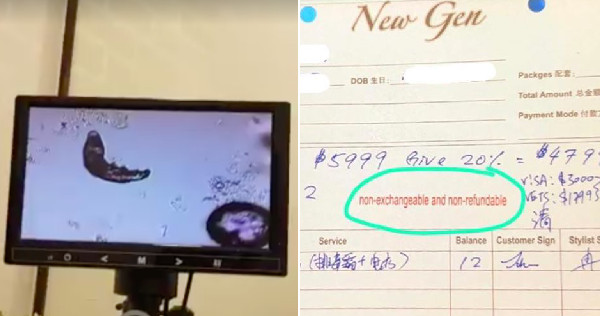
One man thought he was getting a $2 discount on a $5 haircut. He ended up spending $4,799 on a hair treatment package.
Fiona Han, 32, took to Facebook on Wednesday (Nov 20) to accuse New Gen Studio, a hair salon located at Block 101 on Yishun Avenue 5, of coercing her father into purchasing a hair treatment package by showing him “worms” on his scalp.
**EVERYONE PLEASE BEWARE of this particular hair saloon – NEW GEN studio*** They have 4 outlets in Singapore.
The first week of the Total Defence Logo Design Competition ended with happy winners and a general idea of what Singaporeans look for in a new logo for Total Defence.
With a new pillar Digital Defence added to the previous five of Military, Civil, Economic, Social and Psychological Defence, Mindef’s Total Defence and National Education department Nexus launched a logo redesign competition in July, with 10 entries making the final cut.
Singaporeans can choose for their favourite entry until Dec 29 and stand the chance to win attractive prizes, such as Cathay Cineplexes Everyday movie vouchers, $100 cash vouchers or the grand prize of $1,000 cash vouchers.
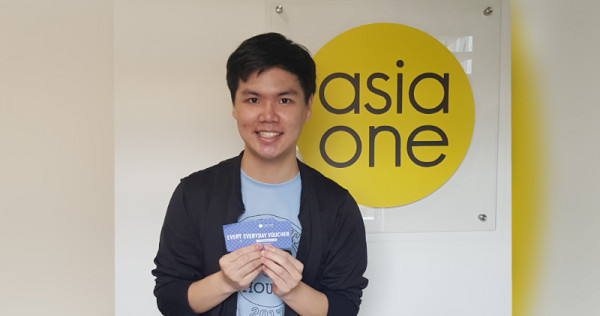
Five contest participants have taken home movie vouchers for the first week ending Nov 17.
David Ong, who collected the prize on behalf of his wife, praised “the ease of joining the competition”.
“It’s not too complicated,” he said of the online contest.
His fondness of simplicity extended to his logo choice. “It’s very simple and nice.”
This sentiment was shared by another winner Elson Tan.