The teenager had wanted to celebrate her birthday at a hotel with friends, but a misunderstanding turned it into a nightmare, involving police arrests and over 14 hours in custody for the girl and her friends.
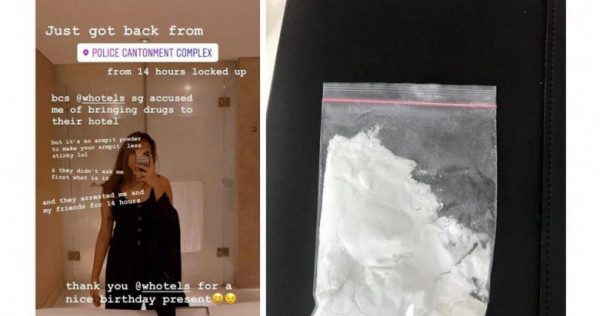
Taking to Instagram yesterday to share her ordeal, user Sharonia Paruntu said she had spent 14 hours under police arrest after a deodorant powder – tawas powder or alum powder – she had taken to W Singapore in Sentosa Cove in a small resealable plastic bag was mistaken for drugs by the hotel staff.
The police told The New Paper that on Nov 10, at 9.29am, they were alerted to a packet of white powdery substance, suspected to be drugs, found in a room in W Singapore.
A man and three women aged between 18 and 19, who had occupied the room, were subsequently arrested for suspected possession and consumption of controlled drugs.
The police said: “They were released unconditionally at 1.43am on Nov 11 after preliminary testing on the white powder and their urine samples turned up negative for controlled drugs.”
On her Instagram, Miss Paruntu described the exchange with the police in the hotel room.
SINGAPORE: In recent weeks, Singaporeans have been gripped by a spate of alleged child abuse cases that have led to the loss of innocent young lives.
On Nov 15, a 27-year-old man was charged with murder after he allegedly slammed a nine-month-old baby’s head on the floorboard of a van. The baby had died from his injuries.
In another case, a couple, both 27, are on trial and facing multiple charges of ill-treating and assaulting the child in their one-room rental flat. They are also charged with committing murder with common intention.
In September, another couple was charged with the murder of their two-and-a-half-year-old child. They are accused of killing their daughter at Block 52 Chin Swee Road in March 2014 but the girl’s remains were discovered only recently.
While these cases remain before the courts, statistics from the Ministry of Social and Family Development (MSF) show that the number of child abuse cases has jumped threefold over the past five years.
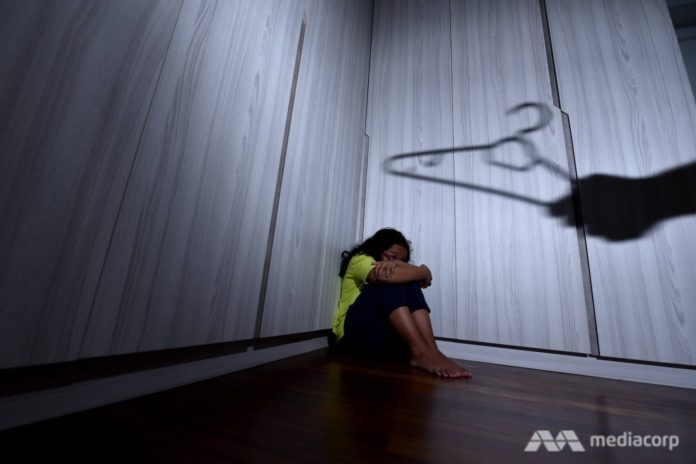
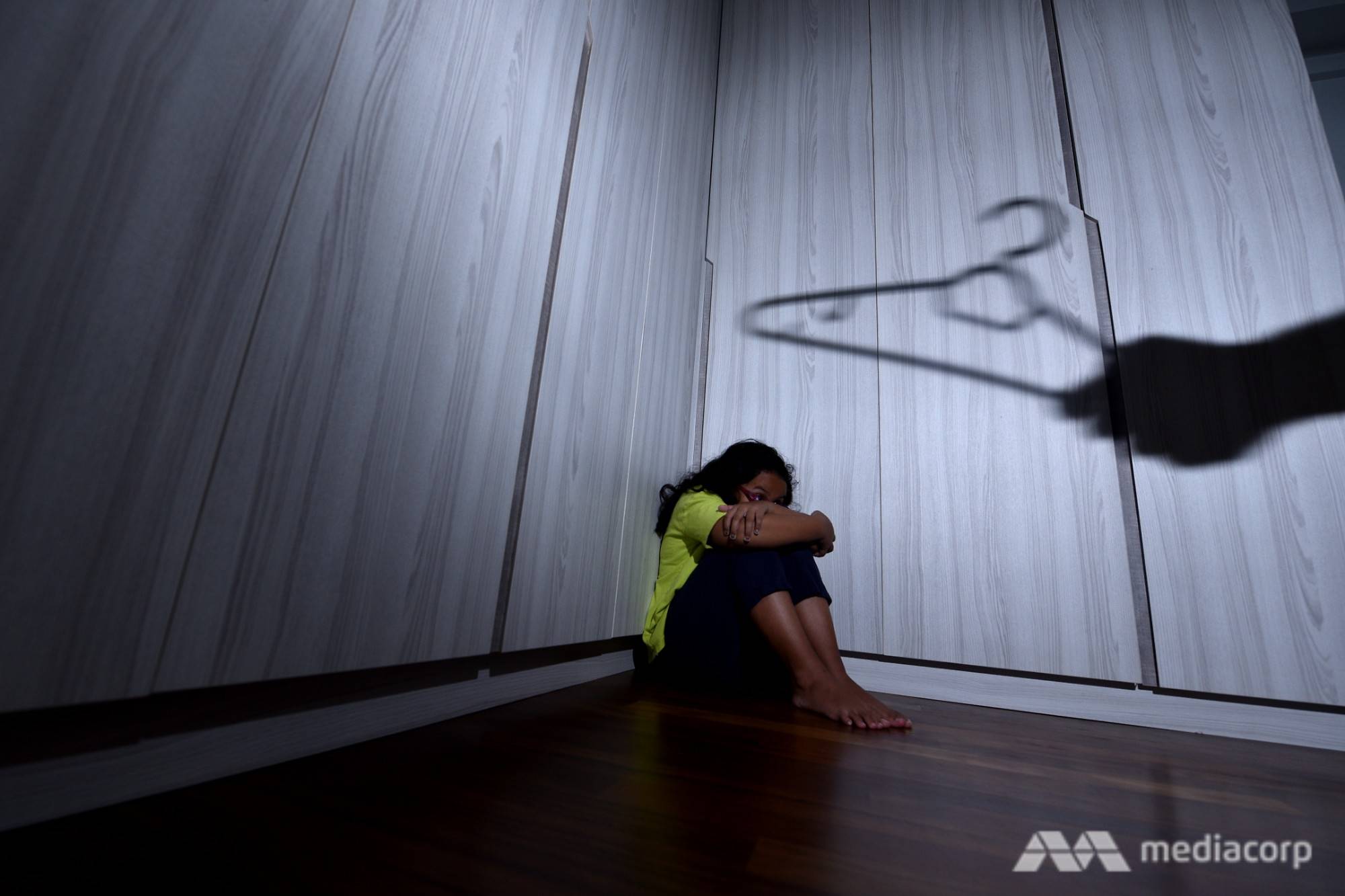
Photo illustration of a child being abused (Photo: Jeremy Long)
In 2014, there was a total of 381 cases investigated by MSF’s Child Protective Service. The figure went up to 551 in 2015, and 873 in 2016. The number edged up to 894 in 2017, before jumping to 1,163 last year. For this year, it is estimated that the number of cases would reach over 1,000, similar to 2018.
MSF said that the number of cases has increased since 2015, when it “introduced more rigorous screening tools and training for professionals including social workers, educators, counsellors and health professionals over the years”.
“This has helped to sharpen the ability of sector professionals to pick up safety concerns for a child and seek appropriate intervention,” said an MSF spokesperson.
The rising number of cases could also be partly due to greater awareness generated by community outreach and public education efforts on child protection and family violence, said Ms Ng Sook Wai, principal counsellor at child protection specialist centre Heart@Fei Yue.
Still, the number of cases reported may be the tip of the iceberg.
Social service workers and former victims interviewed said that child abuse could be under-reported. Among other reasons, the victims often do not know who they can turn to for help and even when they confide in older family members, there is a tendency to keep it within the family due to the stigma and shame.
Ms Laika Jumabhoy, assistant manager at the sexual assault care centre run by the Association of Women for Action and Research, noted that it is mandatory for social welfare agencies to report cases of child abuse to ensure the child’s safety.
However, this may deter a family from coming forward to seek help, she said.
“This may be because the family is not ready yet to make an official report, for whatever reasons, perhaps they feel shame or are themselves still processing what has happened. In these situations, a child and their family might not receive the full amount of professional support that would be available to them,” she added.
Ms Jumahboy also pointed out that if the report has been made and the child is removed from his parents’ custody, this removal can be “extremely hard” on a child and often makes the child feel like he or she is the one being punished.
She said that parents or guardians may struggle to believe their children when they speak up about their experiences. However, it is crucial for adults to believe them, she stressed.
“Some may blame themselves for not being able to protect their child. They may also be at a loss as to what to do next, both practically and emotionally, for the child,” she said.
“In some cases seen at our centre, adults responded to a child’s disclosure with disbelief, judgment or resentment. They might dismiss children’s disclosures as the child being confused, attention-seeking or misbehaving, especially as the children themselves might not clearly communicate exactly what has happened to them.”
FORMER VICTIMS RECOUNT EXPERIENCES
Under MSF’s guidelines, any act that causes deliberate injury to a child which includes actions such as beating, shaking and “excessive discipline”, constitutes physical abuse.
Separately, the Children and Young Persons Act (CYPA) states that physical abuse — and the causing of “unnecessary” physical pain, suffering or injury — amount to ill-treatment.
Retail manager Nur (not her real name) had been physically abused by her stepfather for 11 years, until she moved out of her family’s home at 18.
Now 26, she recounted that her mother, who worked as a hawker stall assistant, was rarely at home.
Referring to her stepfather, Nur said: “I never really had a relationship with him. He was a very angry man. You just never know what will set him off.”
She recalled one occasion when her stepfather hurled a cup of coffee which she made for him in her face because he did not like the taste of it.
Pointing to a burn scar on her right collarbone, Nur said: “I was lucky it didn’t scar my face.”
Photos from court documents showing the hot water dispenser used in the alleged offences.
Adding that her stepfather was constantly beaten up by his own father while growing up, she said that there was another occasion when her stepfather flew into a rage and threw her across the living room of their one-room flat.
This was after she accidentally sat on the television remote control and changed the channel which he was watching. She was seven years old then.
Nur recalled that when she told her mother about the incidents, she did not believe her. Even when she showed her the bruises on her body, her mother defended the stepfather’s actions as acts of discipline.
Two other former victims, June and Ben (not their real names), said they were also hurt by the very family members they had placed their trust in.
When June’s parents allowed her aunt’s family of 10 into their home amid financial distress, she welcomed them with open arms.
But the project coordinator, now 28, never thought her own cousin would sexually abuse her at the tender age of 7.
In fact, when the actions of her cousin, who was 17 then, reached his mother’s ears, she made June swear on a holy book that she was telling the truth.
His mother also grilled June about the incidents as if to cast doubt on whether they actually happened. In the end, the matter was swept under the carpet by the family — including her parents — and never raised again.
“As a child I wished I had someone there to protect me. But I didn’t. Even when someone found out that it happened, they questioned me like I made the whole thing up,” said June, who recently mended her strained relationship with her parents.
Ben, a 22-year-old undergraduate, also recalled having no one to turn to when he was physically abused by his father, who saw his own actions as corporal punishment to discipline Ben.
His mother would stay silent when he was being punished, which included the time when he was slapped so hard that his spectacles flew off because he drank soya bean milk without permission, or when he was made to stay in a push-up position until he vomited on the floor because of his poor academic results. Ben was in primary school at that time.
As he grew older, he got into altercations with his father who even threatened him with a knife on a few occasions.
“I tried to understand where he was coming from. His parents were absent so my take is that it made him more possessive in trying to (prove that he is not an absentee parent),” said Ben.
He added: “We are not very rich, so a lot of pressure was put on me to get a scholarship … The fact that my mum worked and he didn’t could have added to some sort of inferiority complex too.”
Indeed, a convicted child abuser — who was released from prison about three years ago — said that about a decade ago, financial distress had led him to abuse his former girlfriend’s two-year-old daughter, who later died of brain injuries.
For his crime, Mohd (not his real name) was sentenced to 12 years’ jail and given 12 strokes of the cane.
Now 39, Mohd is currently working as a head chef at a restaurant. He said that at the time of his offences, he was financially supporting his family as the eldest son out of four siblings, as well as his girlfriend and her two children.
While child abuse may seem to be more prevalent in families struggling to make ends meet, this is not always the case.
A former victim, 26, who wanted to be known only as Chong, came from a middle-income family.
He recounted how his father would punish him for misbehaving by punching him in the stomach, making him walk on broken eggshells or locking him up for hours in the dark storeroom of the family’s condominium.
Block 52 Chin Swee Road.
According to experts, child abusers often face stressors such as a history of abuse or neglect as a child, financial difficulties, unemployment, marital woes, mental health issues and substance abuse.
Ms Serene Tan, director of Big Love Child Protection Specialist Centre, said: “These multiple stressors may make it difficult for the caregivers or parents to focus or prioritise the needs and safety of the children, thus resulting in caregivers and parents engaging in unhelpful or unhealthy ways of parenting and managing the children.”
Agreeing, Ms Ng from Heart@Fei Yue added that these issues also “lower the capacity of the parent to tolerate his child”.
Those who have suffered violence or neglect during their own childhood are also more susceptible to becoming abusive adults themselves, the experts reiterated.
HOW CASES ARE HANDLED
MSF receives referrals of suspected child abuse from various sources, such as social service agencies, law enforcement agencies, schools, hospitals and even members of the public.
The ministry’s existing network of welfare centres includes HEART@Fei Yue and Big Love, which see moderate to low-risk child protection cases.
Heart@Fei Yue introduced its Triage system in 2014, which allows family service centres (FSCs) to refer cases straight to the agency after checking the case against the child abuse reporting guide and the specific screening guide — standard tools to decide the severity of cases.
Both centres also receive referrals from members of the public through their hotlines.
When they receive a referral, they ascertain and assess the safety of the child concerned to determine if he or she can remain in the care of the caregivers or parents, as well as the support and services required for the child, said Ms Tan of Big Love.
Big Love handled 365 cases from April last year to March this year — similar to the number of cases it saw between April 2017 and March last year.
The latest figures are a big jump from earlier years when it handled 252 cases between April 2016 to March 2017, and 177 cases between April 2015 and March 2016.
The welfare centres also reach out to schools, student care or childcare services as well as healthcare institutions for example, to ensure that at-risk families receive other forms of support and intervention to keep their children safe at home.
Preschool teachers Wajiha Begum, 23, and Fatin Natasha, 21, said that signs of child abuse include marks on the body and a drastic change in behaviour.
Ms Fatin said that when changing a child’s diapers, she would also look out for red marks or bruises in between the thighs, as well as blood. This could help determine if the child has been sexually abused.
Both teachers said they will usually question the child first before informing the parents. However, if the parents are suspected to be the perpetrators, the teachers will raise the issue with their centre’s principal, who will subsequently alert the authorities.
Sometimes the mere intervention of teachers might have a deterring effect and that is why teachers can play a big role in detecting something is amiss, said Ms Fatin.
She added: “There must be an increase in awareness of child abuse not just among educators, but in our community as well because this can lead to earlier interventions.”
In response to queries, the National Institute of Early Childhood Development said it raises awareness among preschool education trainees based on existing guidelines by MSF. The trainees are also equipped with foundational information on how to identify signs of child abuse and neglect, and what the reporting procedures are.
In cases where the child is deemed to be at risk of abuse, alternative placement may also be recommended if the caregivers or parents are unable to keep the child safe, said Ms Tan. These include situations where the parent or caregiver has serious mental health concerns or there is spousal violence within the family.
When there is no parent to care for the child, such as when both are arrested and imprisoned, the Child Protective Service will place the child with extended family members who are able to provide adequate care, said the MSF spokesperson.
If this is not possible, the Child Protective Service will consider placing the child with an MSF-registered foster parent or in residential care, which it checks on regularly.
Residential care provides a more targeted, intensive and specialised intervention for children and young persons with higher emotional and behavioural needs, the MSF spokesperson said.
MSF’s fostering scheme — an alternative care arrangement for children in need of a conducive home environment — is usually a short-term arrangement to meet the child’s needs.
Foster parents are provided with an allowance, which helps to defray the child’s daily expenses.
Recent amendments to the CYPA allow foster parents to make day-to-day decisions for the child. Under the new Enhanced Care and Protection Order, they can also make more substantial decisions. For example, foster parents will be able to make medical decisions with the MSF’s authorisation and in consultation with medical practitioners.
As of June, there were 542 children in foster care and 607 children in residential care.
For parents who are incarcerated, the Child Protective Service will assess whether it is safe for their child to be returned to them after their release.
“In situations where progress has been made and reunification is assessed to be timely and appropriate, increased contacts between the child and parents will be arranged through supervised meetings, outings and trial periods of home stay,” said the MSF spokesperson.
Ms Cheryl Ang, a senior child protection officer, said some parents would defend their actions as acts of discipline, and question the involvement of the Child Protective Service.
“At times, parents perceive that (the Child Protective Service) is undermining their parental authority and wants to break up families,” she said. “The denial of harm impedes our ability to work with the family on case plans that ensure the child’s safety at home.”
There has been an increasing number of cases with different types of abuse taking place within a family. These include physical abuse, family violence and intergenerational abuse where abuse victims inflict violence on their own children.
These families may require more intensive intervention as there are many issues to address, Ms Ang added.
In September, an amendment to the CYPA was also passed in Parliament which allows the authorities to intervene in cases of abuse involving young children.
The age limit of what is considered a young person was also raised from 16 to 18.
ROLE OF COMMUNITY
While laws have been tightened and more official resources set aside to deal with the problem, these alone will not be sufficient to stop child abuse.
The community at large, especially neighbours and relatives, have an important role to play in responding to victims’ cries of help — sometimes, literally.
MSF cited a case last year where a family heard a loud commotion from an adjacent block and successfully intervened in a domestic violence incident.
The family managed to protect the victim from physical harm and calmed down the perpetrator while waiting for the police to arrive.
However, some Singaporeans spoken to admitted that it is not in their nature to be “busybodies” and intervene in their neighbours’ domestic affairs.
Insurance agent Aaron Tay, 31, said he often hears his neighbours quarrelling in their flat in Yew Tee, but would not interfere because he didn’t want to be called “kaypoh”.
Retail assistant Nurashima Jaafar, 29, who lives in Bukit Batok, added: “Since we live in flats that are so close to each other, it is normal that you get to listen in on your neighbours’ conversation.
“But I think I will only check in on my neighbours if I clearly hear a call for help or the sound of people getting beaten up.”
Pointing out that the reasons for child abuse are often complex, the MSF spokesperson reiterated that child protection is a collective responsibility.
“With the support of the community to stand up for vulnerable individuals and report suspected cases of abuse, networks can be strengthened to prevent child abuse and keep our children safe,” said the spokesperson.
SCARS REMAIN LONG AFTER ABUSE ENDS
Children who suffer abuse are highly likely to develop emotional or mental scars, and most of the abuse victims interviewed said they continue to suffer from anxiety and depression even after the abuse had long ended. Some also had to deal with anger-management issues.
To help victims get back on their feet, MSF said it provides counselling or casework management services by FSCs, as well as targeted counselling or psychotherapy sessions by psychologists or counsellors from the ministry, the Institute of Mental Health and other community agencies.
“As child abuse can impact children and young persons in different ways, programmes are tailored to their needs, to equip them with self-protection strategies, address their trauma or specific needs arising from the abuse and support them back on their road to recovery,” said the MSF spokesman.
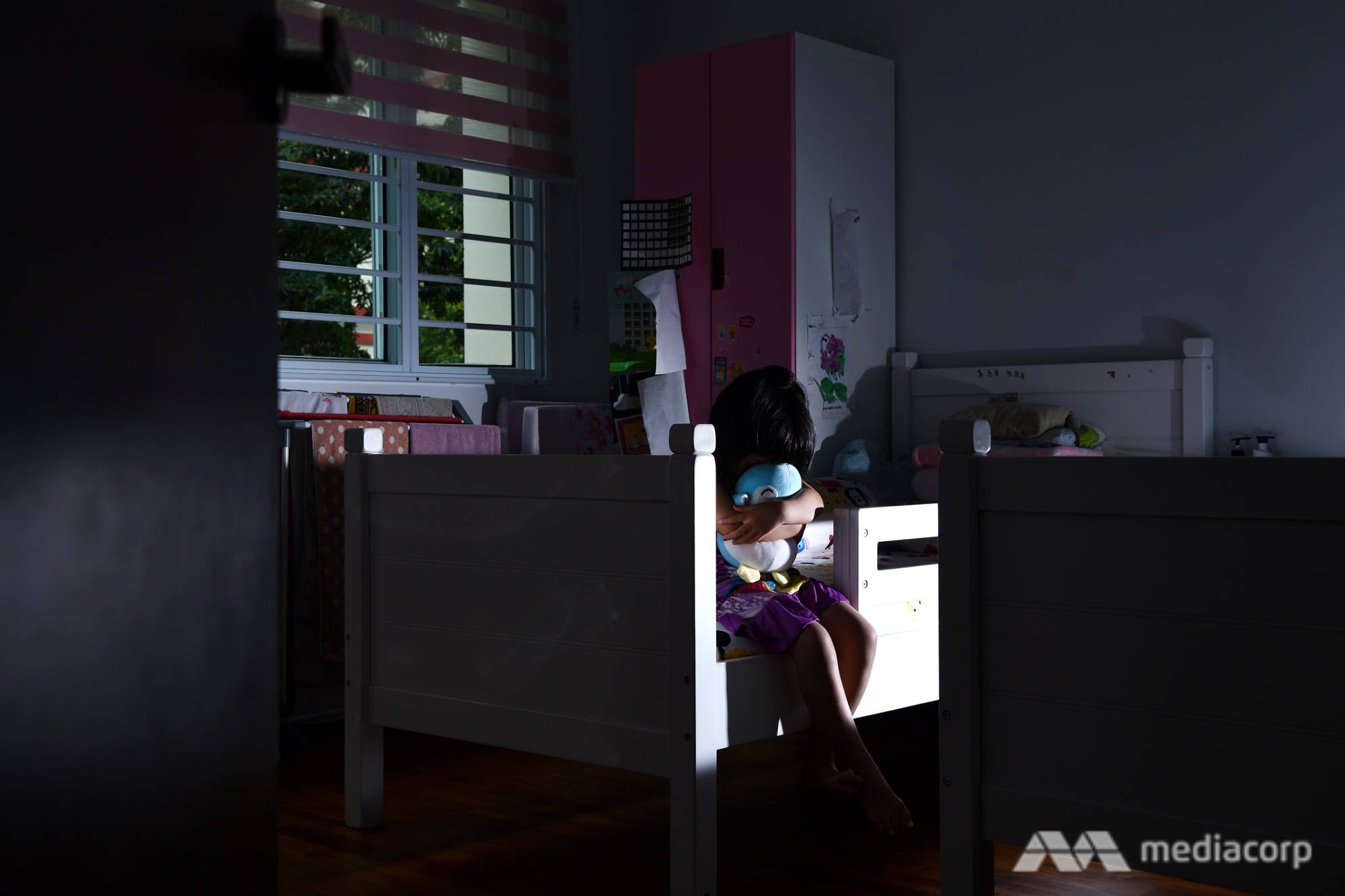
Photo illustration of a child in distress. (Photo: Jeremy Long)
June, for example, said she still gets triggered by a man’s touch, or a picture or mention of male genitalia.
Three years ago, she found herself in a downward spiral, having suicidal thoughts. Her brother intervened when she attempted to take her own life and called the authorities. The episode prompted her to open up to her brother and she subsequently sought help in the form of therapy.
Likewise, Nur said that certain things — such as being near a source of hot liquid — would make her anxious and cause her heart to race.
She was diagnosed with depression when she was 17, and would hardly talk to anyone for weeks at a time.
But she would force herself to go to work, as she was trying to earn enough money to be able to rent a place to live in.
She also considered herself lucky to have met her husband, who was then her colleague at the workplace.
“He helped me with my anger issues. I was a very angry teenager and I would act out whenever I could,” said Nur.
After getting married last December, she vowed to herself that she would not allow her future children to suffer from any form of violence in the family.
Meanwhile, Ben and Chong, who are still staying with their abusive fathers, said they have grown distant from their parents.
Talking about his father, Ben said: “As the years go by, I learn about the things that will trigger him least. I try to do well in school and follow his instructions.”
He added: “When you grow up, you’ll realise that even your parents are not perfect.”
The scars remain for a long time not only for ex-victims of child abuse — but sometimes, for former abusers themselves.
Mohd said the guilt of killing a child would stick with him forever.
“I wished I had someone I could turn to at that time. Maybe my emotions wouldn’t pile up and I wouldn’t have exploded,” he said. “I still can’t forgive myself, up till now. I never thought I was able to hurt a child with my bare hands.”
Cusping his face in his hands, he added: “I loved that child. If I could do it all over again, I would have sought help or go nowhere near her.”
SINGAPORE – Facebook has taken down a page spoofing a local university group after accounts linked to it failed to meet community guidelines.
The social media giant said on Saturday (Nov 23) that the page – Nussu-NUS Students United – was removed for “violating authenticity policies”.
A spokesman added that fake accounts linked to it had failed to meet community and authenticity guidelines.
The Nussu-NUS Students United page is one of many pages parodying the NUS Students Union or Nussu.
The page was taken down a day after it emerged that it had misused a quote from Home Affairs and Law Minister K. Shanmugam.
In its post on Nov 17, the page quoted Mr Shanmugam as having said in Parliament on Oct 7: “If we do not separate religion from politics, then whose religion comes into politics?”
Mr Goh Chour Thong, the Minister’s press secretary, said the post mis-used this quote to falsely assert that if People’s Action Party member Rachel Ong wants to run for elections, she should “resign ALL executive positions with ROHEI, an organisation with religious leanings”.
SINGAPORE: At almost every birthday celebration and graduation ceremony of his when he was younger, Joe Leong did not get to spend it with his father.
That was life growing up with a father on top of his game as a well-known chef.
They did not even celebrate Chinese New Year as families usually do, because they were operating a Chinese restaurant and that was the busiest time of the year.
“(My father) would bring home a dish of yusheng, run to everybody’s door (and start knocking) … ‘Wake up! Come out and eat something,’” recounts Joe.
“All of us would (go) to the kitchen or the dining area. We’d lo hei — just a very quick supper — then go back to sleep.”
Young Joe and his dad.
For dad Sam Leong, the working day was 8am to midnight. And that was his life.
“The kitchen or home — there are no other places I go to,” says the celebrity chef, whose Forest restaurant in Resorts World Sentosa is Michelin-starred. “I can’t do much (else) because my responsibilities at work (are) too much.
“That’s why I never wanted my children to come into the culinary (arts).”
So when his younger son wanted to be a chef too, he not only disagreed but also was “so angry”, Joe remembers.
After nine years now working in the kitchen, however, the 26-year-old no longer has to worry about gaining his father’s approval. Instead, what he is trying to do is step out from under his father’s shadow.
WATCH: My celebrity chef dad didn’t want me to be a cook (4:23)
The programme On The Red Dot finds out what happens when a child follows in a famous parent’s footsteps. (Watch the episode here.)
RUNS IN THE FAMILY
Being a chef was actually not what Joe expected when he was in school. His interests were in tennis and music. But one day, his father sat him down and talked about “shelf life”.
“Because in music and tennis, it isn’t easy to make a name for yourself. Let’s say I make (a career) in tennis, what can I do? Tennis coach? I didn’t see myself doing that,” he says.
“(Or) you might play music for 50 years till you die. No one would notice you at all. So he said, why don’t you try something more stable?”
While his father “didn’t know why” he ended up in the same trade, it was what he was exposed to, he points out, “ever since I was born”.
Young Joe starting out at home.
“I grew up in a family of chefs. My grandfather was a chef,” he says. “My aunty, my uncles (were) all somewhat … in the food and beverage industry.
“My mum and my grandmother were always in the kitchen cooking. I’d usually sit inside the kitchen … waiting for food.”
So that was also how he grew up — watching his parents cook. And it rubbed off.
After his O levels, he started out in pastries at 2am:dessertbar by Janice Wong. It was his father, having eventually accepted his choice, who guided him towards that first job in 2010.
“I went in with zero knowledge, but I went in with connections,” he admits. “People said, ‘Oh, just because you’re Sam Leong’s son, you got into this place very easily. Oh, you rise up (through the ranks) so quickly.’”
Working in 2am:dessertbar.
What people did not see, he says, is how he tried to live up to expectations. “(If) people worked eight hours, maybe I worked 12 hours … Definitely, it was hard because of the pressure,” he adds.
“My social life (was) gone … My friends — almost all of them — I’ve lost touch (with) already.”
But he has not looked back. He went on to Swissotel the Stamford and Fairmont Singapore, InterContinental Singapore and the Tippling Club, specialising in pastries and desserts.
“I do every single thing, from production to regular cakes to fine dining desserts,” he says.
‘CAN’T ESCAPE’ HIS BACKGROUND
When chef Lee Jing Peng first met Joe in 2016 at the Tippling Club, “he was very quiet and shy”. But his skill spoke for itself.
“He really grew a lot … and he came up with all his desserts that wowed customers. He (transformed) the chocolate tart into a modern interpretation that no one expected. How could a chocolate tart be so nice?” Lee effuses.
Joe joined V-Zug’s V Dining restaurant in July and now manages its pastry. He is also in charge of its high tea, which means he comes up with the theme and the desserts, explains head chef Lee.
It is not only what he makes, but also how he works that has earned him his boss’s respect.
“Chef Joe has a kind of charisma. When something’s very boring, he can make it very interesting. No matter how bad his day is, he still smiles,” says Lee.
“I can’t even do that, honestly. If I get angry about some mistakes that my staff do, I’d flare (up) at them. But he doesn’t … He’d still patiently teach you to do all the things he wants you to do.”
Even as Joe is beginning to make a name for himself, he admits he “can’t escape” his family background. “Many people (go), ‘Oh, you’re Chef Sam’s son. Oh, you must be very good,’” he cites.
Lee has seen this too. “Some guests come in and say, ‘Chef Joe Leong? Leong? Is (he) Chef Sam Leong’s son?” Then they’d (be) like, ‘Wah, I finally get to see you in real life,’” he describes.
“He feels a little bit reluctant to answer because people tend to ask a lot of questions.”
Wherever his father goes, says Joe, people notice him. It is a reputation he has built over 30 years — one he has also been acclaimed for in past Channel 8 shows, like Star Chef and King Of The Kitchen.
In fact, he was still the reason his son got into V Dining.
“Chef Joe was introduced by Chef Lee … I rejected him because I didn’t know about Chef Joe. But later on, I came to know that he’s Sam Leong’s son,” discloses Angeline Yap, V-Zug’s managing director for Singapore and Southeast Asia.
“(Sam) is a very humble guy and very down-to-earth, even (though) he’s won Michelin stars. I can see the similarities (between Joe) and his father. That’s also one of the main reasons I hired him.
“Whenever we introduce (Joe), we’d say that he’s Sam Leong’s son because … everybody remembers (Sam).”
OVERCOMING ADVERSITY
By his own admission, Sam is “not a dessert fan”. But when he got the chance recently to visit his son at work, and make pastry together for the first time, he was “impressed” with Joe.
This, coming from a man who is the “boss” and “king”, so “everything he says must go”, his son says with a laugh.
“Usually, when I ask him for advice on cooking, he’d be very strict about it. So for pastries, he has to do it my way already. So it’s something different, something good,” Joe adds.
What his father discovered is that making pastry “needs a lot of patience” and is “a bit (of a) different culture”. Sam tells him: “It’s my blessing to have desserts from you.”
Spending time with his two sons — the elder one is a teacher — is something the 53-year-old tries to do more nowadays.
It was three years ago, at a check-up, when he was found to have nose cancer. And the details are still fresh in Joe’s memory.
“My mum gave us a call. My mum said, ‘Oh, your dad has cancer.’ A week later … he told us the news: Stage 4,” he recalls.
The diagnosis “shook the whole family”, says Sam, who quickly went for chemotherapy treatment. “This was the first time in my career that I did nothing,” he adds. Every day after treatment, (I just) came back (to) rest.”
Only then did he also notice the view from the balcony of his home of 18 years. “My God, I could see Chinese Garden, I could see Jurong Point — which I didn’t have time to do (before),” he recounts.
They thought he might be gone in a year, but he pulled through, and they “grew closer as a family”, says Joe, who is now married. “We’re still busy with our jobs, but we try to spend more time together.”
Uninterrupted sit-down dinners, for example, are not as rare as they used to be. “It (didn’t) happen more than five times,” Sam reckons.
“(When) Joe and his brother were in school, halfway through dinner, (there’d be) one phone call and … I’d need to go back (to work).
“Cancer may have been a signal … that I should slow down a little bit to appreciate (life) more.”
Joe calls him a “role model” who is “very passionate” about his work, and hopes to achieve “something similar”. But mum Forest points out that her younger son “has his own talents” and a “different mindset” from his father.
“Joe has found his own way and … we’re very proud of him,” she says. Sam agrees, adding: “I didn’t teach him what to do. I just gave Joe some (guidance).”
It may have been tough when younger to understand his father’s absence, but their bond is strong. “He taught us (not to) give up halfway, (to) try to focus on one thing, work hard (and) be humble,” cites Joe.
“He gave us shelter; he gave us food; he gave us a nice life.”
SINGAPORE: In a world that celebrates young YouTube celebrities, start-up billionaires under 30, and reading at the age of four, it is easy for those of us with kids who seem to be lagging behind to worry.
Maybe your child is a little dreamy, learns at a slower pace, or simply uninterested in doing anything by the book.
He or she may be labelled “late” or “slow”, unable to keep up in the race for grades. He or she might be “normal”, usually taken to be unspectacular.
This child may be written off, looked down upon by peers, and have to face the frustration and disappointment of parents and teachers.
This might particularly be the case this week, when the Primary School Leaving Examinations (PSLE) results were released.
But is it really the end of the road for him? Or is this just the beginning of the game called life?
OFF THE BEATEN TRACK
A friend of mine was this child. She under-performed compared to her peers, and eventually discontinued her studies after taking her N-levels.
Even at home, she was made to do chores while her siblings focused on their studies. But she overcame the challenges of life and is today managing her own vinyl flooring business.
What made the difference? Her people skills, her ability to learn new things and adapt to change, as well as pure hard work.
She had to learn to stand on her own feet at a young age. She could connect with people from all walks of life and found herself constantly learning from them.
(Photo: Unsplash/Phuong Tran)
She may not have developed the leadership skills she needed to run her own firm had she not tried so many different jobs early on in life.
As psychologist and author Scott Barry Kaufman puts it:
In wrestling with adversity, individuals learn skills important to success.
As a society, we hold onto rather fixed notions about success and talent. We imagine that progress can be attained in a linear fashion, when in reality success rarely travels a straight line.
Our assumptions have led to us to develop a well-oiled machinery that we funnel our children through, a high-stakes education system that reduces them to a number and suggests they are less or more able than another with a different number.
Sorting can be useful in that our sprawling scholarship system has given many identified promising youths from disadvantaged families a leg up.
But the pathway to achievement and contribution is often crooked and uneven. The experiences learnt along the way can prove invaluable to one’s life.
Life doesn’t stop when you exit the education system. We all know how you did at 12 or 16 is no prediction for how you might do at 25 or 35. Much depends on how you handle challenges and opportunities along the way.
Most people associate Michael Jordan’s success with his talent, but what is lesser known is how Jordan took the advice of his coach to operate as a team-player, not as a singular star. By trusting his team-mates to make the final shot on occasions, Jordan went from good to great.
CELEBRATING DIFFERENCES AND GOING BEYOND GRADES
We have to move away from traditional notions of what success looks like. In a world of artificial intelligence and automation, why are we still urging our kids to follow old success formulas like robots?
My ex-colleague shared with me that he struggled through secondary school and junior college after being placed in a triple-science course. He read engineering in university but made a switch to the arts after two years.
He may have realised quite late in life that he had neither aptitude for nor an interest in the sciences but after he made the switch, he experienced a lot more satisfaction, success and affirmation.
Such experiences may help to support the recent move by the Ministry of Education to abolish streaming and move towards full subject-based banding in secondary schools by 2024. Subject-based banding allows students to take on subjects they are stronger in at a higher level.
The new approach recognises that every individual has different talents, and sometimes such strengths may show up later in life.
The introduction of Applied Learning also creates room for students to grow and discover their strengths, instead of pigeon-holing them by a single exam taken at the age of 12 and gearing up an entire primary school education to prepare for that test.
IT is a core curriculum in Pathlight School, and students are trained since Primary 1 in basic digital tools like keyboarding. Older students learn how to code. (Photo: Deborah Wong)
Don’t grades still matter? Yes but not quite in the way that we think.
Sher-Li Torrey, founder of Mums@Work, which supports women looking to relaunch their careers, revealed that employers are increasingly lowering their GPA expectations and considering other personal achievements apart from grades. She elaborates:
A hirer in an MNC in the finance industry once said that top scorers who have never experienced failure often cannot cope with the demands of the working world … When a graduate cannot talk about their life experiences and only has good grades to show, it is a sure sign that they will not adapt well to working in teams.”
LEARNING HAS NO EXPIRY DATE
Modern society is obsessed with speed. But when we emphasise speed, we risk being fixated about getting the right answers in the shortest possible time. We become impatient and shallow learners.
Maybe it’s time to question this concept of learning as a race against time.
What if the “late bloomer” is really the “just-in-time bloomer” – with certain traits and cognitive skills being ‘turned on’ at the right time? And the path of learning more like a flower that blooms when conditions are ripe.
It could be an inspiring teacher or an accidental life experience that eventually flips the switch. Or a parent who patiently tends to her child, allowing him space and time to explore his interests.
Slowness and the process of taking one’s time need not be synonymous with failure.
A composite screengrab of the Life Beyond Grades movement. (Source: Facebook/Life Beyond Grades)
If we continue to believe that straight As are the only way to success, our kids who fall short of such fixed standards are likely to carry the baggage of “failure” for life.
What if in biding their time and not conforming to societal standards of achievement, these learners cultivate character, curiosity, and self-knowledge? And when the time comes and the right opportunity presents itself, they seize the day.
Insodoing we are not romanticising lateness, but merely recognising that learning and growth has no expiration date.
A person may have done poorly in PSLE at the age of 12. Yet, in life, there are opportunities to learn, to network, to reinvent yourself, and to discover and deep-dive into the disciplines that excite you.
For many children and even adults, like the bird learning how to fly, falling may well be a way to gain enough wind in your wings to take flight.
June Yong is a mother of three, an educational therapist and owner of Mama Wear Papa Shirt, a blog that discusses parenting and education in Singapore.
SINGAPORE – The Jurong-Clementi Town Council responded on Saturday (Nov 23) to reports of residents storing household items such as ladders and electric fans in hose reel cabinets at three Housing Board blocks.
The council said it has removed all the items in the cabinets and told residents that these spaces cannot be used for storage given the danger it poses to crews in the event of an emergency.
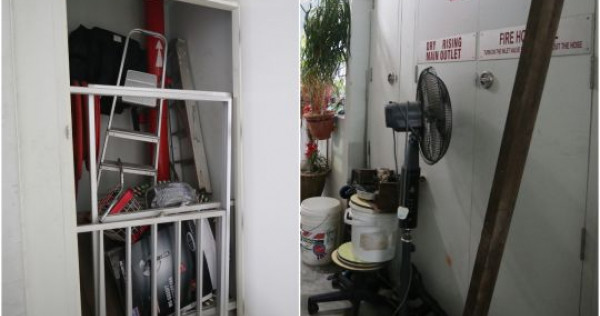
Chinese language newspaper Lianhe Wanbao reported on Friday that hose reel cabinets on 10 storeys across Block 422 and 423 and the carpark of Block 419 in Clementi Avenue 1 were being used to store items like mattresses, full-length mirrors, ladders and suitcases.
There were also pots, fans, chairs and paint buckets placed outside the cabinet on the 19th floor of Block 422, blocking the entrance.
In the age of cryptocurrency, automation, and artificial intelligence (Hello, Funan), tech is king.
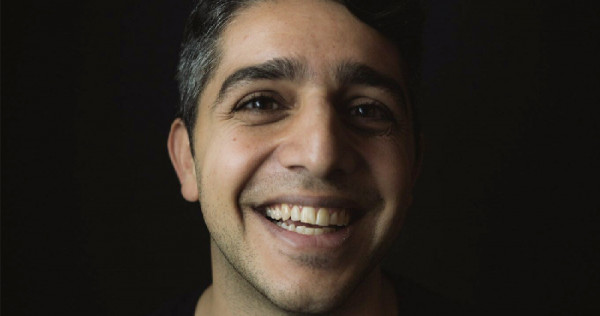
But entrepreneur Kiyan Foroughi isn’t interested jumping on a trend bandwagon: he’s spent over 15 years acquiring and retaining talent in various growth roles, and now co-founds Singapore-based Electric8, a digital consultancy comprised of product, growth and data specialists.
Business ventures aside, we check in with the tech maniac to poke his brain on guilty pleasures, world travels, and what makes him tick.
Q: HI KIYAN! HOW DO YOU FEEL ABOUT BEING CALLED AN EYE CANDY?
A: If it means what I think it means, it’s very flattering, I guess! What more I could say? There are worse things you can be called.
Q: WHAT’S ONE THING NOT MANY PEOPLE KNOW ABOUT YOU?
A: I have this little guilty pleasure from time to time, which is watching street dance battle clips online. I’m a big hip hop fan and I really enjoy watching these dancers and artists express themselves to the rhythms with their bodies.
SEOUL: It is good that Singapore and South Korea are looking beyond traditional areas of cooperation in trade and investment, and broadening bilateral cooperation to new areas, Prime Minister Lee Hsien Loong said on Saturday (Nov 23).
These areas include cybersecurity, fintech and advanced manufacturing, he said at a lunch hosted by South Korean president Moon Jae-in at the Blue House.
He cited South Korea topping the 2019 Bloomberg Innovation Index for the sixth consecutive year. The country is also a pioneer in 5G technology and the Internet of Things, and also forging ahead in smart city development, he added.
Mr Moon in turn said: “I take my hats off to the Prime Minister who is steering Singapore towards the path of development through his harmonious, inclusive and innovative leadership.”
Both leaders welcomed the growing collaboration between both countries in areas such as smart cities, medical and biotechnology, smart grids, intellectual property, and cybersecurity, Singapore’s Ministry of Foreign Affairs (MFA) said in a statement on Saturday.
They also welcomed the further enhancement of security cooperation between both countries through the upcoming conclusion of an information exchange agreement in chemical biological defence, the MFA said.
Prime Minister Lee Hsien Loong delivering a toast speech at the Blue House on Nov 23, 2019. (Photo: MCI)
MFA said that Mr Lee also reaffirmed Singapore’s commitment to working closely with South Korea and the rest of the international community to achieve a peaceful, stable and denuclearised Korean Peninsula.
He also expressed his appreciation of the initiatives by the South Korean government, including President Moon’s personal efforts to promote dialogue with North Korea.
OPPORTUNITY TO DISCUSS ECONOMIC COOPERATION
In opening remarks earlier at the start of his visit, Mr Lee said that the countries enjoy warm bilateral relations.
The visit was an opportunity to discuss how the two countries can expand their cooperation in several areas and how to improve the overall policy infrastructure for their cooperation, he said. He gave the example of upgrading the Korea-Singapore Free Trade Agreement signed in 2005.
In 2018, total trade with South Korea amounted to S$40.3 billion. It accounted for 3 per cent of Singapore’s total trade with the world in 2018, making it Singapore’s 9th largest trading partner.
According to South Korea’s Ministry of Trade, Industry and Energy (MOTIE), Singapore was the 6th largest investor in South Korea in 2018 with Foreign Direct Investment of US$1.48 billion.
Mr Lee also thanked Mr Moon for hosting the ASEAN-ROK Commemorative Summit which will be held next week and “steadfastly” implementing his “New Southern Policy”, which aims to cultivate relations with ASEAN and India as key partners. It “fits in very closely” with ASEAN’s desire to deepen and enhance its Strategic Partnership with the South Korea, he said.
TOURISM AND FOOD
Beyond business, people-to-people relations between the two sides are also growing, Mr Lee said.
Over the last 10 years, bilateral tourism figures have more than doubled, to 860,000 last year, he said.
Many Korean tourists visit the Merlion Park at Marina Bay, and many Singapore tourists are attracted by Korean culture – they want to see the places where Korean dramas are filmed, and want to watch their K-Pop idols perform at concerts here, he said.
“Ho Ching and I were also part of the statistics, because we came here on holiday in 2015,” he said, drawing laughter from guests at the lunch.
Mr Lee said he visited Seoul, and other scenic places such as the fishing town of Jukbian and the historic city of Gyeongju with his wife.
Korean food is another major draw that has become “very much” a part of Singapore’s multicultural food scene, he said, adding that he is glad that some well-known Singaporean restaurants have brought Singapore cuisine, such as chilli crab and kaya toast, to Seoul.
Mr Lee added that he hopes to visit the Gyeongui Line Forest Park, and Seoullo 7017, to see how South Korea has creatively reclaimed and beautified city spaces. Singapore is similarly reclaiming, redesigning and re-purposing urban space to improve it and keep it up to date while preserving cultural heritage and shared memories, he said.
Mr Lee looked forward to the 45th anniversary of diplomatic relations between Singapore and the Republic of Korea 2020.
“With the support of President Moon and our friends in the Republic of Korea, I am confident that our bilateral ties will rise to new heights,” he said.
In celebration of Computer Science Education Week, Apple is increasing the number of Today at Apple coding sessions to help get more people to start coding.
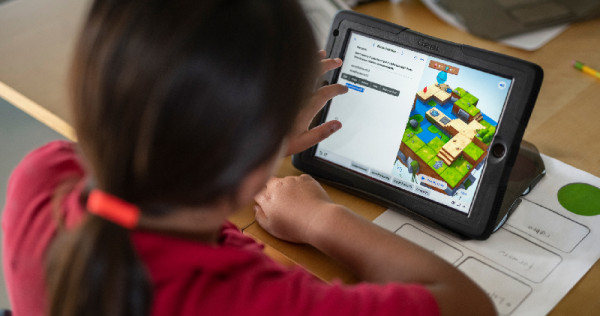
They have also announced that they have introduced a new Everyone Can Code curriculum to help introduce coding to more school children.
The new curriculum includes more resources for teachers, a new guide for students, and updated Swift Coding Club materials.
And in here in Singapore, Apple is holding special coding sessions for children at Apple Orchard Road from Dec 1 to 15.
The sessions, called Coding Lab for Kids: Pre-Coding with Helpsters, will feature the Helpsters and were designed for children aged 3 to 5.
PHOTO: Apple
The Helpsters is a new puppet series on Apple TV+ and if they look familiar that’s because they were created by the same people behind Sesame Street.
SINGAPORE – A 15-year-old boy has been arrested after selling the drug Ice to a 14-year-old girl.
The boy, who is suspected of drug trafficking, was among 70 suspects arrested for alleged drug offences during a four-day islandwide operation by the Central Narcotics Bureau.
The operation began on Monday (Nov 18), the agency said on Friday.
The girl who bought drugs from the boy was arrested earlier for suspected drug abuse.
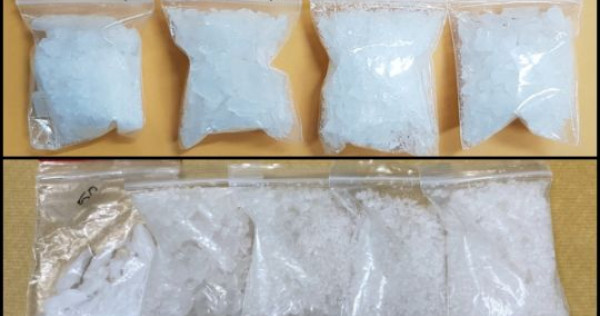
Drugs worth $71,000 were seized in this week’s operation, including 9g of new psychoactive substances, 20g of heroin, 704g of Ice and an Ecstasy tablet.
Some of the areas covered in the operation included Bedok, Choa Chu Kang, Tampines, Telok Blangah and Yishun.
In one of the cases on Wednesday, officers arrested two drug trafficking suspects – a 22-year-old Singaporean woman and a 32-year-old man – at a residential unit in Yishun Avenue 11. A total of 100g of Ice, an Ecstasy tablet and a small amount of green powdery substances suspected to contain controlled drugs were found in the unit.