Singapore Rockfest II – Slipknot Singapore
Tuesday, March 24, 2020 at 8:00 PM
Tuesday, March 24, 2020 at 8:00 PM
Fort Canning Park
River Valley Rd, Singapore, Singapore

[ad_1]
Fairly or unfairly, the Miss Universe Singapore (MUS) national costume almost invariably draws criticism.
And it is no different this year.
Some netizens have said that while the gown worn by Miss Mohanaprabha is pretty, it does not represent Singapore.
They also took issue with the fact that the costume was designed by Filipino fashion designer Michael Cinco, and also that it was not custom-made for the pageant.
It was a piece from Mr Cinco’s latest haute couture collection, The Impalpable Dream of Swan Lake. The costume was unveiled in Taguig, the Philippines, on Monday.
Instagram user islandssgd said: “Why did you deceive the Singaporeans by claiming that this costume is inspired by Vanda Miss Joaquim? (The) public deserve to know the truth.”
But others were supportive.
One user, simplybry12, said: “The gorgeous detailing around Mohana’s neck does resemble our national flower.”
MUS national director Valerie Lim, 34, defended the costume.
[ad_2]
Source link
MANILA: He prowled the touchline constantly, gesticulating, shouting, urging.
At times, Laos coach V Sundramoorthy’s voice seemed to echo into the grandstands and at the final whistle, he had the best reason to shout, as Laos held Singapore to a 0-0 draw at the 30th SEA Games on Monday (Nov 26).
Sundram’s Laos hassled, harried and harassed Fandi Ahmad’s Singapore throughout the 90 minutes at the Rizal Memorial Stadium, and their reward was a hard-earned point.
After a scrappy start to the game, the Young Lions’ first opportunity came courtesy of Faris Ramli, who cut in from the left but directed his shot just over the bar.
But urged on by Sundram, Singapore’s former national team head coach, Laos grew into the game, biting into tackles against the much taller Singapore players.
Fandi’s side had an even bigger scare in the 30th minute as the Laotians won a freekick just outside the Singapore box. But Young Lions custodian Zharfan Rohaizad held well.
As the game opened up, a minute later, Ikhsan was played cleverly through by Shah Shahiran, only for Laos goalkeeper Xaysavath to block with his legs.

A Singapore freekick is saved by the Laos goalkeeper during a SEA Games 2019 football match on Nov 26, 2019. (Photo: Matthew Mohan)
Another chance fell the way of Singapore a couple of minutes later as Faris carved his way into the box and found Irfan, but the center-back could only fire his shot wide.
Singapore started the second half in lively fashion, with Zulqarnaen Suzliman picking out Ikhsan Fandi, but the Raufoss striker could only direct his shot straight at the goalkeeper.
Zulqarnaen was the next player to attempt an effort of his own, but his low shot was palmed away.
Singapore began to pile on the pressure, with a shot from Shah narrowly wide of the post with the Laos goalkeeper beaten. Then it was Ikhsan with a header just over.
As the Young Lions pressed, Laos soaked up the pressure and almost delivered a sucker punch – only for defender Syahrul Sazali to deliver an excellent block.
Arguably, the best chance of the game came in the 78th minute, as a floating cross from Tajeli Salamat found Ikhsan, but his header hit the crossbar and went over.
As the clock ticked down, tackles began to fly in but Laotian side held on for the draw.
Singapore’s Irfan Fandi is tackled during a SEA Games 2019 match against Laos on Nov 26, 2019. (Photo: Matthew Mohan)
The Young Lions have never won SEA Games gold.
Singapore last won a medal at the SEA Games in 2013, when it won bronze in Myanmar. It failed to progress from the group stages at the last two SEA Games.
The football competition is an age-group tournament comprising Under-22 teams, which can field two overage players.
Singapore are in Group B, which consists of defending champions Thailand, regional heavyweights Indonesia and Vietnam as well as Brunei and Laos.
In Group A, hosts Philippines were drawn with Malaysia, Myanmar, Cambodia and Timor Leste.
The top two teams from each group qualify for the semi-finals.
The Young Lions will next face Indonesia, who upset Thailand 2-0 in the day’s earlier game, on Thursday.
Follow Mediacorp’s coverage of the 30th SEA Games and get the widest Team Singapore coverage with four LIVE channels on Toggle. Go to toggle.sg/seagames2019 for details.

[ad_1]
SINGAPORE – OCBC Bank “called” to stop Temasek chief executive Ho Ching from giving out money-making secrets during an interview, claims a fake article for a “cryptocurrency trading programme” linked in a Facebook advertisement.
If that does not raise enough red flags, the bogus report, masquerading as one by The Straits Times, also says that “Ho Ching urged everyone in Singapore to jump on this amazing opportunity before the big banks shut it down for good”.
Plastered across the report are the logos and mast heads of media outlets such as The New Paper, The Business Times, Today, The Independent Singapore and Singapore Business Review.
Such fake articles promoted by fake ads on Facebook have been circulating for months now, despite attempts by the social media platform to remove them. Having cited Prime Minister Lee Hsien Loong as its “endorser” in August, the investment scam has now moved on to Mr Lee’s wife, Ms Ho Ching.
Early on Tuesday morning (Nov 26), Ms Ho warned Facebook users of the fake reports using her name and that of others.
[ad_2]
Source link

[ad_1]
It is 2019, the year that playing video games is considered sport enough to be an official medal event at the Southeast Asian Games.
Set to kick off in Manila this Saturday (Nov 30), the 30th SEA Games will have six gold medals up for grabs across multiple video games, including popular titles DOTA 2, Hearthstone, Starcraft II and (ugh) Mobile Legends: Bang Bang. Singapore will send 20 athletes to compete in all esports events, proving once and for all to all local parents that yes, there is a point to our gaming all-nighters.
To solidify the eminence and stature of esports in the mainstream, there’ll be an entire channel dedicated to it on every Singaporean uncle and auntie’s favourite video app: Toggle.
[ad_2]
Source link
SINGAPORE: On MRT trains and at the stations, it is hard to miss police officers from the Public Transport Security Command (TransCom).
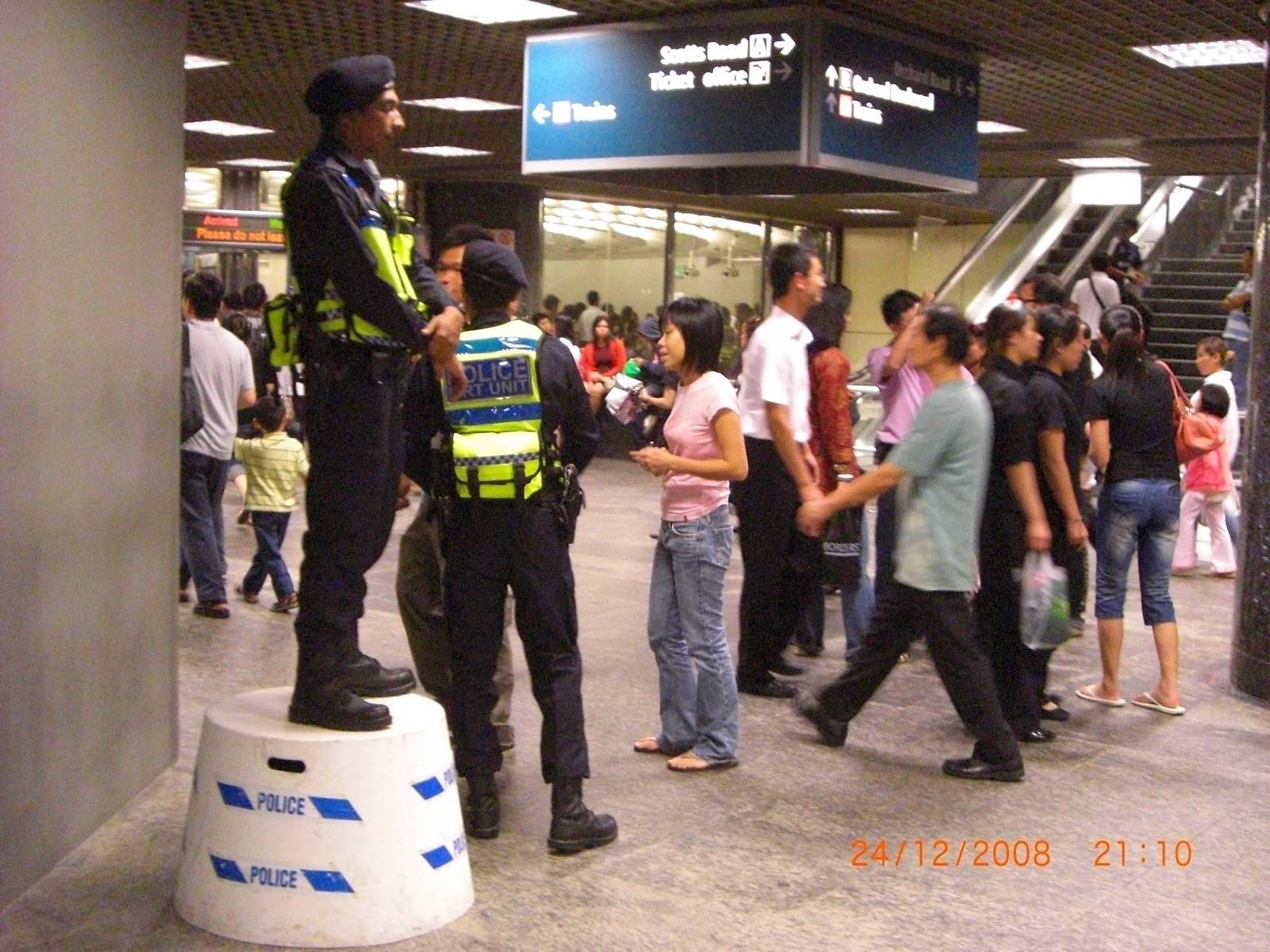
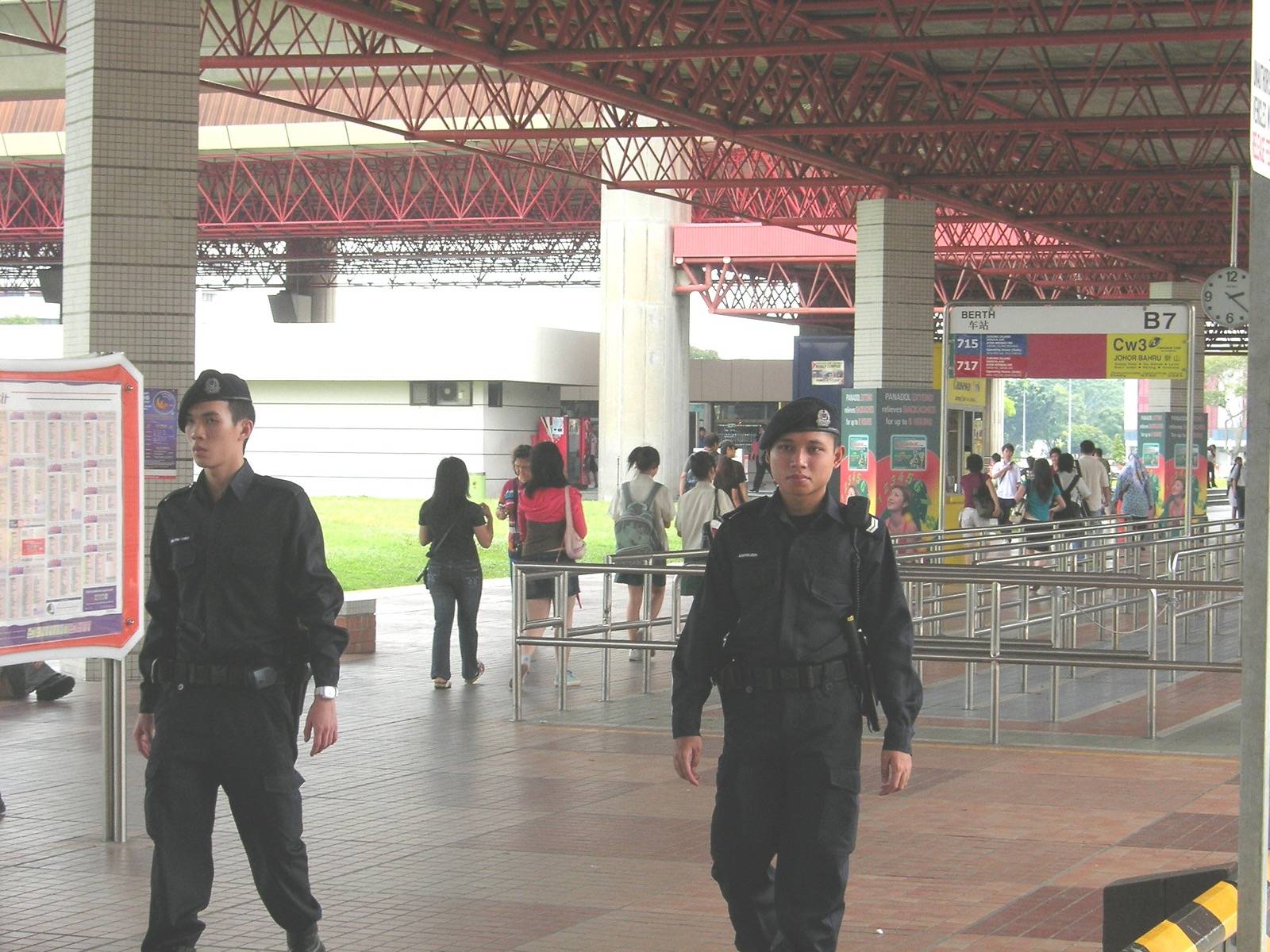
They wear neatly-pressed long-sleeved uniforms and grey berets, and patrol in groups of three or four while scanning the crowds. They are trained to spot and screen suspicious characters to nip crime in the bud.
But TransCom commander Assistant Commissioner of Police (AC) Koh Wei Keong, 48, told reporters on Tuesday (Nov 26) that his officers are not out to get you for nothing.
“We must have reasonable suspicion that you have committed an offence. We do not just go out and check,” he said. “Some of them may not be very smiley, but if you have not committed anything, there’s no reason to fear any of the TransCom officers.”
Indeed, AC Koh said his officers were trying to be friendlier as they ask commuters to do more to help fight crime on public transport, amid a dwindling pool of full-time national servicemen officers and an increasing number of MRT lines and stations.
“We wanted the community to be with us,” AC Koh added. “So, we also taught our guys that you need to be more discerning. You know when you need to be stern.
“But on the other hand, you also need to know when you need to be more engaging and friendly with the community. Because overall, you need the community to be with us in order for us to do our job well.”
FROM COUNTERTERRORISM TO COMMUNITY
To understand how this shift came about, you have to go back to 2005, when TransCom’s predecessor the Police MRT Unit (PMU) was set up as a counterterrorism force in Singapore. Its officers patrolled the MRT network, acting as a visible and deterrent presence.
This was in response to the London bombings on Jul 7 that year, when terrorists blew up homemade bombs aboard three underground trains and a double-decker bus, killing 52 people and injuring more than 700.
The threat of public transport networks becoming terrorist targets had suddenly become very real, and so being in the PMU was a serious business.
“When we first set up, it was in response to the terrorist attacks, so the stance was very different,” AC Koh said. “At the time, the demeanour could be a bit sterner.”
Assistant Commissioner of Police Koh Wei Keong (front) leading his charges. (Photo: Aqil Haziq Mahmud)
In 2009, PMU was enlarged to become TransCom, a specialist independent unit. And as the years went by, its officers – more than three-quarters made up of full-time national servicemen (NSF) – started to tackle more usual types of crime, like drug abuse, theft and molestation. Officers were even helping commuters find their way or their lost friends.
The latest phase of TransCom’s evolution from a primarily counterterrorism unit to a hybrid, community-based force came this year during its 10th anniversary, when it launched an initiative in July to get commuters to be an extra set of eyes and ears.
After all, TransCom’s 600 officers patrol more than 100 MRT stations that see almost 7 million passenger trips a day. Those statistics mean that there are manpower challenges.
Under the Riders on Watch (ROW) initiative, TransCom officers would approach commuters about signing up as a volunteer. They would then get police text messages on suspects, and help keep a lookout for suspicious characters or objects.
“NO QUOTA FOR CHECKS”
Still, there have been challenges along the way.
When a photo of TransCom officers speaking to two madrasah students was circulated online, netizens questioned if the officers were screening the students because they had a quota to meet.
In July, police rejected the allegations as “untrue and irresponsible”, pointing out that the officers were talking to the students about joining the ROW initiative, adding that comments that seek to stir up racial sentiments were unhelpful and uncalled for.
AC Koh (middle) having a discussion with his officers. (Photo: Aqil Haziq Mahmud)
“Let me state this: We have no quota for checks,” AC Koh said on Tuesday.
“We taught officers that if you check on people, it’s based on suspicious behavior. If you exhibit certain tell-tale signs, we will check. Other than that, if you see a family and all, it’s okay for you to speak to them and encourage them to sign on (for the ROW initiative).”
AC Koh said TransCom officers are trained to engage people and make small talk, but also to read body language and be quick-witted.
“If you need to be stern and check people, what are the legal powers, the unarmed tactics and all these that come in,” he added. “We do teach our officers a wide range of skills so that they can be effective on the ground.”
STOPPING MOLEST
On the ground, TransCom has been effective in tackling a common scourge on public transport: Molestation. While such incidents on public transport rose in 2017, police statistics showed a dip in 2018.
AC Koh attributes this to a change in deployment tactics. The unit knew that “hotspots” for MRT molests include crowded interchange stations. So during the morning rush hour, it deployed more officers at stations that came before these interchanges.
“What we did was to shore up the presence upstream,” AC Koh said, highlighting the need to create both reassurance and deterrence for commuters and criminals, respectively. “So whether you’re a potential perpetrator or victim, you note the police presence.”
Riders on Watch volunteer Liew Jiagui (foreground), 30, once helped police detain a molest suspect after seeing him touch three women in less than five minutes. (Photo: Aqil Haziq Mahmud)
TransCom has also deployed more operationally-ready national servicemen to stop molest, which AC Koh said “is certainly one of the things that we are concerned about”.
“We hope that for next year, our role will serve as an even more effective deterrence in trying to keep all these various crimes in the public transport network down,” he added.
STARTING FROM SCRATCH
But TransCom did not immediately start off as an effective crime fighting unit.
In its early years, the PMU operated out of the Special Operations Command base in Queensway, which was not even near an MRT station, recalled Mr Andy Tan, 49, TransCom’s first commander. He is now director of the police’s Centre for Protective Security.
TransCom’s first commander Andy Tan (right) with AC Koh. (Photo: Aqil Haziq Mahmud)
Manpower was an issue too. Mr Tan only had about 100 officers, whom he quickly asked to map each station’s closed-circuit television (CCTV) cameras and exits.
“The underground environment is actually pretty complex,” he said. “Especially when a lot of subways are going to link to shopping malls and things like that. So you needed a more dedicated unit to better understand that terrain and know how to work within that context.”
TransCom officers used to wear luminous vests and stand on raised platforms for more visibility. (Photo: Singapore Police Force)
Once they found a new base near MacPherson MRT station, it was about getting CCTV feeds from the Land Transport Authority, working with the public transport operators and sharing their rest areas. The latter would sometimes bring challenges.
For instance, Mr Tan said there would be issues like something being used but not cleaned properly.
“The only time (TransCom officers) actually get to rest is when they have a meal or water break. Usually have to do it in the restricted area of the station. But that’s where the operator’s staff also rest,” he said.
“The guys patrol eight hours a day. And if you think about it, they can’t sit on a bench. They can’t even rest on one leg because somebody will complain that they’re not alert.”
TransCom officers also used to wear blue berets, but switched to grey ones in December 2009 so they could be easily spotted among the masses of dark-haired heads. (Photo: Singapore Police Force)
This intense public scrutiny in crowded places is something TransCom officers have to deal with every day.
“They don’t have it easy,” Mr Tan said, pointing out they cannot return to a patrol car while on duty, unlike conventional ground officers.
“You’re squeezing into a train or a station … if you stare at people too hard you’ll get a complaint. You want to check, kena complaint. Don’t check, also kena complaint. The officers really need to be on their best behaviour all the time.”
Then there is the challenge of constantly working on public holidays, when public transport is usually the most crowded, and remaining vigilant as hundreds of thousands of people stream through the stations.
“On the ground or even on the CCTV, all you see is just heads,” Mr Tan said, referring to a typical New Year’s Eve countdown crowd at a station like City Hall. “So, the joke we have is that a station is not crowded when you can see the floor of the station.”
BRAVING PUBLIC SCRUTINY
TransCom officer Special Constable (SC) Sergeant Edmund Tan, 23, knows what it’s like spending hours walking around while trying to be attentive.
“It’s actually very taxing; it drains you quite a lot,” the NSF, who has been with TransCom for about nine months, said.
“But if we slack off for two seconds and something happens, it’s not only on us. It might cost a life. So we have to be alert for every single second of our patrol.”
Special Constable Sergeant Edmund Tan (left) during a patrol on board an MRT train. (Photo: Aqil Haziq Mahmud)
SC Sergeant Tan also described the stress of always working in the public eye, although he admitted it’s something he’s gotten used to.
“Every member of the public is considered a camera themselves,” he added. “Anyone can just take out a smartphone, take a photo and put it on Facebook. And then our faces and TransCom’s image are all there.”
VOLUNTEERS DOING MORE?
AC Koh acknowledged the pressure his officers face, but stressed that the unit would defend them if they carry out their duties professionally. Their body-worn cameras with sound recording can also be used to investigate allegations.
These improvements in technology, like the use of data analytics and smart glasses to automatically pick out wanted persons from crowded spaces, also help alleviate the manpower crunch.
AC Koh said it’s impossible for TransCom officers to be everywhere all at once. (Photo: Aqil Haziq Mahmud)
But AC Koh still wants to do more with the community. TransCom is looking at holding townhall sessions with the ROW volunteers next year to find out how else they could contribute. This includes potential joint-patrols or contingency responses, where volunteers could for instance help evacuate an MRT station.
The commander also revealed that 26,000 people have signed up for the ROW initiative – the target was 3,000 by the end of the year – barely four months since its launch.
“We do have people out there who are keen to help us,” he said. “And just within these few months to get 26,000, which is actually bigger than the size of the Singapore Police Force, I thought it’s very encouraging.”

[ad_1]
SINGAPORE – A Nanyang Polytechnic (NYP) student was looking for pornographic material on his mobile phone in a male toilet of his school when he decided to use the device to record a video of a schoolmate in an adjacent cubicle.
Brandon Mandolang Yong Fu, 18, who had earlier been listed as a student leader on the NYP website and was also a scholarship recipient, was caught after his victim spotted the mobile phone and alerted the police.
The Singaporean pleaded guilty in court on Tuesday (Nov 26) to engaging in insulting behaviour with the intent to cause alarm.
Mandolang went to the toilet at around 11am on May 2 and entered one of the cubicles.
Deputy Public Prosecutor Kenneth Chin said: “When the victim entered the cubicle next to the accused, the accused decided to record a video of the victim and held his mobile phone over the cubicle partition using the front-facing camera.
“The accused recorded the victim for one to two minutes.”
The court heard that he retracted the mobile phone when the 18-year-old victim spotted it.
[ad_2]
Source link

SINGAPORE: Victims have lost at least S$32 million to scammers impersonating business partners or employees, the Singapore Police Force said in a news release on Tuesday (Nov 26).
From January to September 2019, police received 276 reports of such scams, where scammers used hacked or fake email accounts to pose as business partners, requesting fund transfers from the victims.
People who followed the instructions in the emails would transfer payments to a bank account controlled by the scammers.
Previous cases of such scams saw scammers impersonating CEOs, business partners or suppliers, the police noted.
“A new variant of the scam has been observed whereby scammers are impersonating as the company’s employees,” police said.
“Spoofed email addresses used by the scammers often include slight misspellings or replacement of letters, which may not be obvious at first glance,” the news release added.
Examples of spoofed email addresses.
Scammers may also closely mimic legitimate emails sent by the business they are posing as by using their logos, adding links to the company’s website and adopting the businesses’ messaging format.
“Scammers would also enclose copies of the bank book bearing the name of employees in such emails to make the requests seem authentic,” police said.
“The victims would believe that they had received a genuine email and transfer money to the new bank account.
“The victims would only find out that they had fallen prey to the scam when their supplier or employee informed them subsequently that they did not receive the money.”
MEASURES TO TAKE
Affected businesses should call their bank immediately to recall lost funds, police said.
Businesses should also put in place preventative measures like keeping track of new or sudden changes in payment instructions and bank accounts. Information should be verified by calling the email sender using previously known phone numbers, instead of ringing the numbers provided in the email.
“Educate your employees on this scam, especially those that are responsible for making fund transfers, such as purchasing or HR payroll,” police advised.
Employees should use strong passwords that are regularly changed to prevent being hacked. Two-Factor Authentication (2FA) should be enabled wherever possible.
“Install anti-virus, anti-spyware/malware, and firewall on your computer, and keep them updated,” police suggested, adding that users should update their operating system whenever new security patches are made available.

[ad_1]
In Ip Man 4: The Finale, the martial arts hero portrayed by Donnie Yen travels to America.
On Dec 9, when the actor is in Singapore to promote the film which concludes the successful Ip Man franchise, Yen will head to Our Tampines Hub to meet fans.
The star once played second fiddle to the likes of Jet Li and Jackie Chan.
“As an actor, it is important to have opportunities. You get a good role (and you are the first to play it).
“Of course, luck works to quite a large extent but whether you can seize the opportunity depends on whether you work hard enough,” Yen, 56, posted recently.
The first Ip Man movie in 2008 and sequels in 2010 and 2015 cemented Yen’s standing in Hong Kong cinema, with the franchise also opening doors for him in Hollywood movies like Rogue One: A Star Wars Story (2016) and the upcoming Mulan reboot.
[ad_2]
Source link