SINGAPORE – A new music video for Majulah Singapura has been produced to mark the anthem’s 60th anniversary.
Based on the 2019 National Day Parade (NDP) rendition sung by veteran singer-songwriter Ramli Sarip, the video features him performing alongside a diverse group of 24 Singaporeans. These include the country’s first female Olympian Tang Pui Wah, comic writer-artist Sonny Liew and wheelchair-bound rapper and music producer Danial Bawthan, better known as Wheelsmith.
It also includes paralympian Theresa Goh and former Nominated Member of Parliament Kuik Shiao-Yin.
Composed in 1958 by Mr Zubir Said, Majulah Singapura officially became Singapore’s National Anthem on Dec 3, 1959.
The new music video is a ground-up initiative separate from the new recording of the anthem by the Singapore Symphony Orchestra that will be broadcast on all radio stations at 11.20am on Dec 3 as part of a commemoration ceremony for the 60th anniversary of the anthem, the national flag and the state crest.
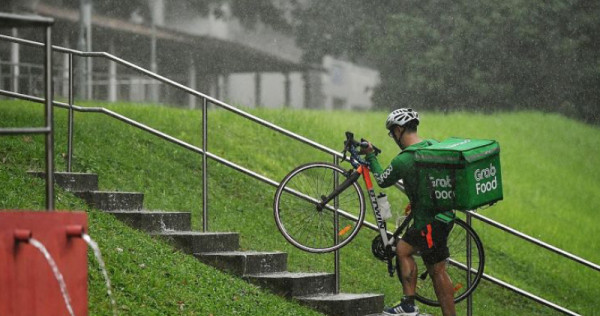
The ban, a result of the increasing numbers of errant riders and incidents involving e-scooters, caught many off guard, especially those who depended on their personal mobility devices (PMD) for their livelihood.
While many food delivery riders took to voicing their discontent during several meet-the-people sessions, one particular deliveryman found a silver lining after switching from his PMD to a regular bicycle — his deliveries doubled up as a fitness routine, helping him to shed 30kg.
SINGAPORE: Cosmetics retailer Sasa will no longer be a familiar sight in neighbourhood malls as it announced on Monday (Dec 2) the closure of all 22 stores in Singapore.
The company, which is headquartered in Hong Kong, said that about 170 employees will be affected.
From fashion to furniture, here are five other popular retailers which we have said goodbye to over the years.
1. BORDERS
The Borders outlet at Wheelock Place. (Photo: Facebook/Borders Singapore)
It was the end of an iconic chapter when Borders closed down in 2011.
With an abundance of free-to-browse books, sofas and armchairs, Borders was the classic landmark for a good time with a good read.
Those who frequented the store would remember how you would lose track of time moving from shelf to shelf and opening book after book – even if you had no plans to buy any!
The bookstore opened its first store in Singapore in 1997 at Wheelock Place along Orchard Road, and another at Parkway Parade in 2007.
In Aug 16, 2011, Borders’ flagship store at Wheelock Place abruptly shut due to a rental dispute with its landlord.
Three days later, it was announced that it would be shut permanently.
The Borders Singapore franchise was acquired by Popular Holdings, which eventually opened a new outlet at Westgate mall in 2013. The outlet was however quickly turned into a standard Popular bookstore.
2. CARREFOUR
The Carrefour outlet at Suntec City. (Photo: Wikimedia Commons)
If Plaza Singapura and Suntec City malls were your shopping haunts, you would remember the signature spacious aisles of the huge Carrefour supermarkets.
It was one of the places where you could zoom around with your trolleys with ease and not have to make way for oncoming traffic every minute.
The French retail giant said “au revoir” to both Singapore hypermarkets in 2012 as it struggled to revive its outlets in Europe.
“Expansion and growth perspectives do not allow reaching a leadership position in the medium and long term,” the retailer had said in a statement.
Carrefour had around 400 employees in its two Singapore hypermarkets.
3. GAP
The sign for a Gap store is seen on 5th Avenue in midtown Manhattan in New York on Jun 16, 2015. (Photos: Reuters/Brendan McDermid)
Fans of Gap met the news with shock.
It was only in 2010 that the American clothing brand arrived in Singapore. But the brand closed its last three stores last year after the management decided not to renew the franchise.
Banana Republic, which is owned by Gap, also closed down its two outlets at Paragon Shopping Centre and Marina Bay Sands.
According to CNN, Gap had announced in late 2017 that it had plans to close “underperforming” Gap and Banana Republic stores.
Out of the 2,000 Gap and Banana Republic stores worldwide, it was reported that around 10 per cent of them would be affected.
Despite its closure, denim-lovers and flannel fans in Singapore would have been delighted that new brands and players filled the gap quickly.
4. FRANCFRANC
The Francfranc outlet at VivoCity . (Photo: Facebook/Ingjin Thant)
If you were one to shop for things unique or different, Francfranc was among the options – when it was around for a brief spell.
While the prices might not have been the easiest on the pocket, the choices would make you think twice before moving on.
The Japanese lifestyle shop was in the Singapore market for only two years when its management decided to cease all operations.
With outlets at VivoCity and JCube, the shop sold products like furniture, home decor and appliances, and also bath products.
“We would … like to take this opportunity to thank all of you for your generous support the past two years and sincerely apologise for the inconvenience caused,” said its management Bals Singapore in a statement to media.
5. HMV
A shelf of CDs at a HMV outlet in Singapore. (Photo: Facebook/HMV Singapore)
Remember the shiny days of CDs, VCDs and DVDs?
The days when music stores thrived as crowds thronged to their outlets across the country are gone.
And none was perhaps more popular than HMV, where audiophiles and the lay listener would spend hours browsing, listening and shopping for the latest albums.
In 2013, HMV Retail’s head office in the United Kingdom filed for bankruptcy. Two years later, the company shut down its last Singapore outlet in Marina Square in September.
Stores in Canada and Hong Kong were also shuttered over the next few years.
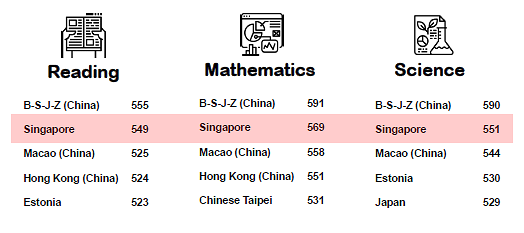
SINGAPORE: Fifteen-year-old students in Singapore ranked second globally in reading, mathematics and science, after China, according to a 2018 international benchmarking study co-ordinated by the Organisation for Economic Cooperation and Development (OECD).
They were also “well equipped with critical skills” and resilient – qualities that would “serve them well” in a rapidly changing world, findings from the Programme for International Student Assessment (PISA) showed.
These students were were able to integrate content, reason and make inferences, as well as identify evidence to support their claims, thus communicating them effectively, according to PISA.
Commenting on the findings, the Ministry of Education (MOE) said in a media release that Singapore’s 15-year-olds “have demonstrated competencies that would enable them to navigate the challenges of the future”.
The study, whose findings were released on Tuesday (Dec 3), is conducted once every three years and measures how well 15-year-olds around the world make use of their knowledge to solve problems.
In Singapore, 6,300 students from all 153 public secondary schools and 376 students from 13 randomly selected private schools took part in the assessment.
They placed second in reading, mathematics and science, among 79 education systems. China, represented by four provinces – Beijing, Shanghai, Jiangsu and Zhejiang – topped the table.
Singapore’s 15-year-olds placed second across the three subjects. (Graphic: MOE)
Singapore’s performance in PISA 2015 and 2018. (Graphic: MOE)
Singapore took first place in all three categories in 2015. China was represented by Beijing, Shanghai, Jiangsu and Guangdong that year.
Singapore’s mean performance for reading saw a “marked improvement” in 2018. The students also maintained a strong performance in mathematics and science.
Singapore also has one of the highest proportions of top performers achieving the top two proficiency levels in the three subjects. These top performers are able to “apply well-developed thinking and reasoning skills to complex problems”, said MOE.
The strong performance can be attributed to well-resourced schools, supportive teachers and students being well-supported at home, the ministry added.
STUDENTS FROM LOWER-INCOME HOMES PERFORMED BETTER THAN OECD AVERAGE
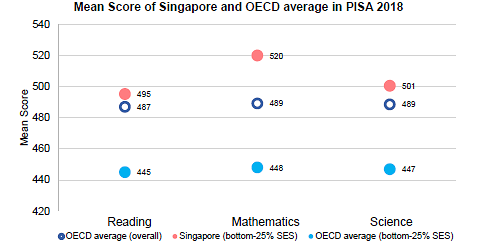
Students from homes in the bottom quarter socio-economic status not only outperformed students in the equivalent band across the OECD, but also performed better than the average for all three subjects.
Students from homes in the bottom quarter socio-economic status performed better than the OECD average for all three subjects. (Graphic: MOE)
The study revealed that socioeconomically advantaged students in Singapore outperformed disadvantaged students in reading by 104 points in PISA 2018. This is larger than the average difference of 89 points between the two groups across OECD countries.
In addition, about 10 per cent of disadvantaged students here scored in the top quarter of reading performance in Singapore, “indicating that disadvantage is not destiny”, said the report.
“MOE will continue to direct more resources to schools with greater needs, including schools with more low-progress learners or financially needy students, to ensure that access to education is not a barrier to students’ learning,” said the ministry.
SCORES UP BUT INTEREST IN READING DOWN
Compared to 2015, Singapore students showed improved reading scores, according to PISA.
Fewer students enjoyed reading, despite a “marked improvement” in reading scores. (Graphic: MOE)
An increase in the proportion of 15-year-old students from English-speaking homes from 49 per cent in 2015 to 57 per cent in 2018 contributed to the improved reading scores, said MOE.
“Our education system provides a strong literacy foundation in primary schools. The secondary English Language curriculum builds on that foundation and emphasises the development of critical reading skills and ability to respond to a diverse range of multimodal and dynamic texts,” the ministry explained.
Despite the improved reading scores, Singapore students enjoyed reading less compared to 2009. The students were asked questions on their attitudes towards reading, which includes both online reading and books.
MOE said the decline in enjoyment of reading could be due to students spending more time on other activities such as surfing the Internet or using social media platforms.
FEAR OF FAILURE
In the 2018 assessment, Singapore students also expressed a greater fear of failure.
About 72 per cent of 15-year-olds here said they worry about what others think of them when they are failing, above the OECD average of 56 per cent.
Singapore students expressed a greater fear of failure, and were worried about what others might think of them if they failed. (Graphic: MOE)
In almost every education system including Singapore, girls expressed greater fear of failure than boys and this gender gap was “considerably wider” among top-performing students, said the report.
The education ministry noted that most of the 15-year-olds who participated in PISA 2018 were in Secondary 4 and would have sat for their O- and N-Levels last year.
Their fears “could stem from the desire to do well in national examinations”, said MOE.
With the new PSLE scoring system from 2021, MOE hopes to “encourage students to move away from an overemphasis on academic results”. The roll-out of full subject-based banding and the removal of academic streams in secondary schools by 2024 will also encourage students to “adopt a growth mindset and take greater ownership of their learning”.
“I think we can help more students to view such setbacks as a natural part of learning and growing, and to view them constructively and use them as opportunities for learning and growth,” said Mr Sng Chern Wei, deputy director-general of education (curriculum) at MOE.
“I think this will allow more of them to try new things and be confident of learning from experiences.”
SINGAPORE: A 38-year-old suspected drug trafficker was arrested early on Tuesday (Dec 3) with about S$43,000 worth of drugs on him.
Officers from the Central Narcotics Bureau arrested the man after he got out of a private-hire car near Bukit Batok West Avenue 5.
About 385g of Ice, 32g of heroin, 100 ecstasy tablets, 50 erimin-5 tablets and a small amount of cannabis were found on him, said the authorities in a news release.
This amount of Ice is enough to feed the addiction of about 220 drug abusers for a week, said the authorities.
They also seized a “bladed weapon” from him, added the news release.
A bladed weapon seized during a Central Narcotics Bureau operation on Dec 3, 2019. (Photo: Central Narcotics Bureau)
Separately, another group of officers arrested a 31-year-old Malaysian man near Woodlands Circle.
The man had been spotted meeting up with the 38-year-old suspected drug trafficker in a car park at Teck Whye Avenue.
About S$5,300 in cash was found on the Malaysian man.
PERTH – A second person missing in the punishing Australian Outback for almost two weeks was rescued Tuesday (Dec 3), while the search continued for their missing friend.
Northern Territory Police said Mr Phu Tran was found by a livestock farmer south of Alice Springs. He was taken to a hospital to be treated for exposure.
Superintendent Pauline Vicary said Mr Phu told the farmer he had survived after finding some water.
The trio set out from Alice Springs for an afternoon drive on Nov 19 when their car got stuck in a riverbed in the arid region.
Ms Tamra McBeath-Riley was found late Sunday near a waterhole where the trio had been staying.
She received treatment in an Alice Springs hospital for dehydration.
The search continued for Ms Claire Hockridge.
Ms McBeath-Riley told officials that Mr Phu and Ms Hockridge began trekking toward a highway on Thursday, carrying water and walking at night to avoid the desert heat, which came close to 40 deg C in recent days.
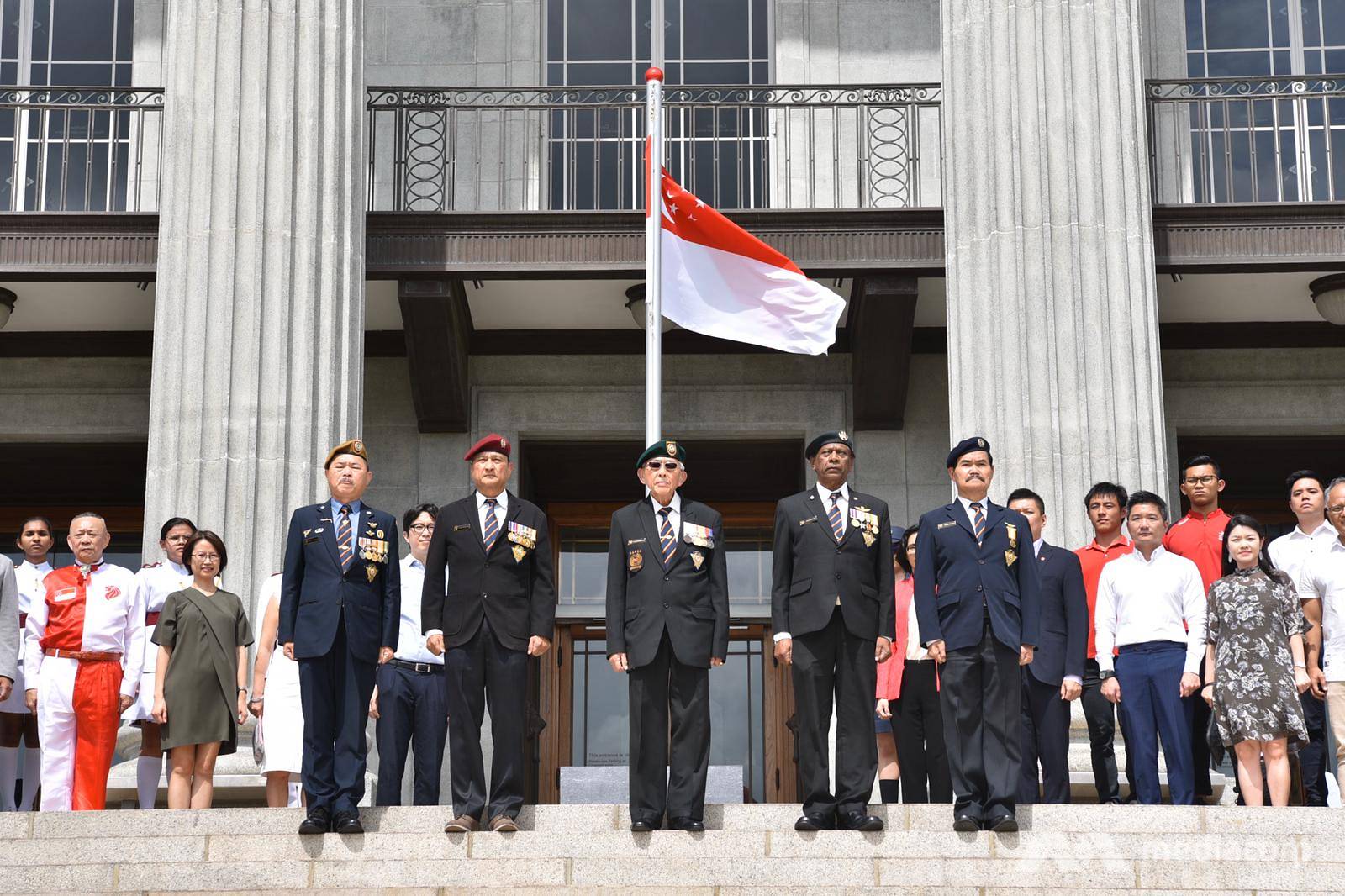
SINGAPORE: A new recording of the national anthem was played for the first time in public on the steps of the National Gallery, 60 years from the date of its unveiling.
The re-recording of Majulah Singapura is an update of the previous official recording, with better sound quality to reflect the improvements in audio technology since 2000.
The higher quality will allow Singaporeans to hear the nuances of the music arrangement, especially in larger venues with modern sound systems, said the National Heritage Board (NHB).
The new recording includes more young voices and slight adjustments to the tempo. (Photo: Jeremy Long)
NHB chief executive Chang Hwee Nee said Singapore’s national symbols were unveiled on the City Hall steps on Dec 3, 1959, the same day its first head of state, Mr Yusof Ishak, was sworn in at the building.
The anthem was played for the first time then after the unfurling of the state flag. marking Singapore’s transition to a self-governing state.
“When the symbols were introduced 60 years ago, they marked a new beginning for the people of Singapore, a coming together of different races, different religions, under one flag and one destiny,” she said.
The Singapore Symphony Orchestra re-recorded the Singapore anthem to commemorate the National Symbol’s 60th anniversary. (Photo: Jeremy Long)
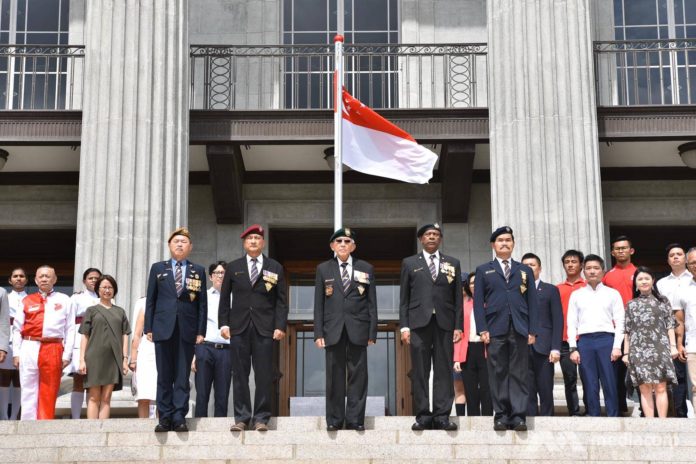
The new recording was played to a crowd of 40 people, which included members of the SAF Veterans’ League. (Photo: Jeremy Long)
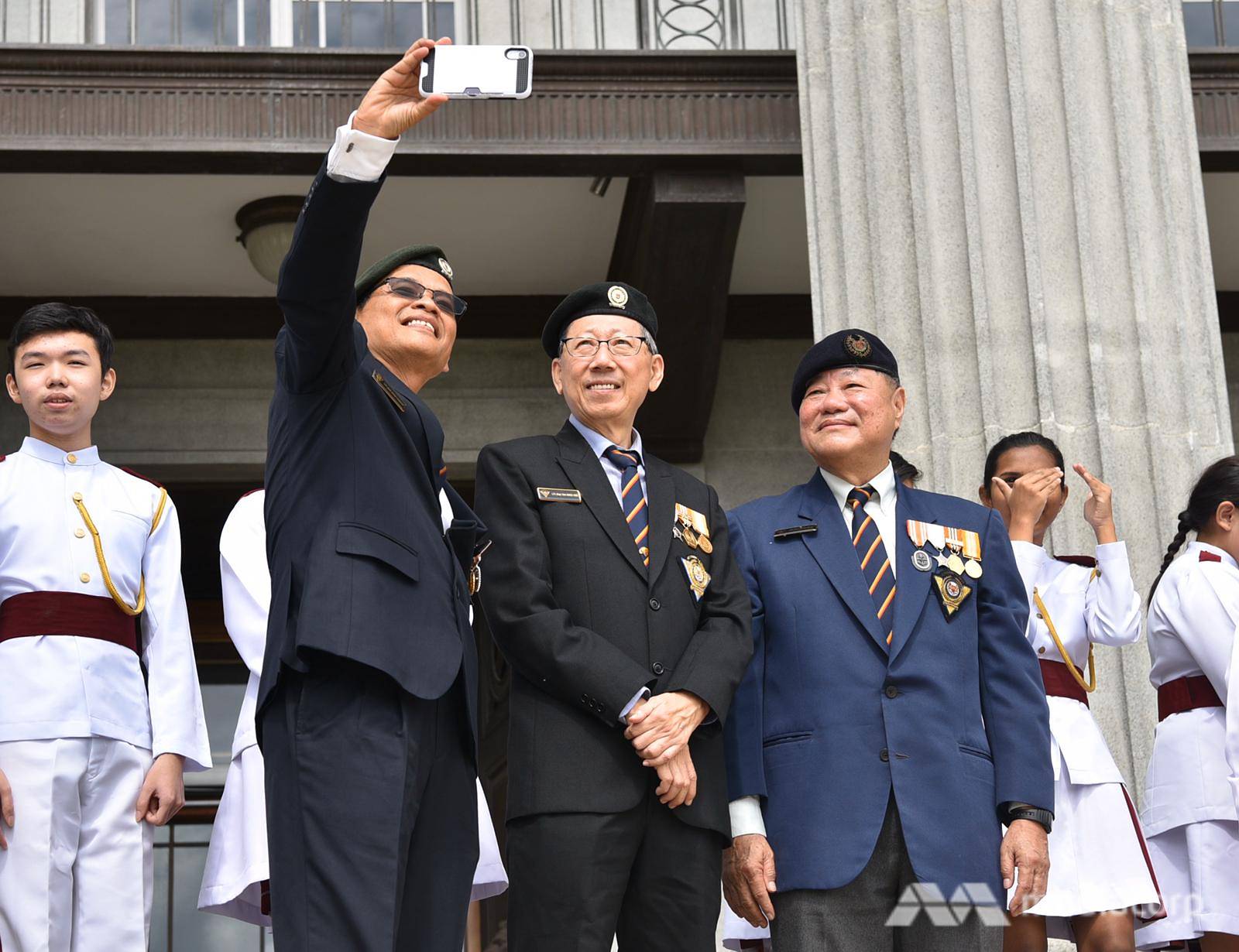
The new recording was played to a crowd of about 40 people, including members of the SAF Veterans’ League, Team Singapore athletes, National Police Cadet Corps (NPCC) youth inspectors, youth leaders of the Youth Corps and Yuhua Secondary School students.
Recorded by the Singapore Symphony Orchestra on Aug 7 at the Esplanade Concert Hall, it retains the arrangement by composer Phoon Yew Tien from 2001 but has included more young voices.
The 2019 version is also slightly faster – about five seconds shorter than the earlier recording.
CPT (RET) Hong Seng Mak, 85, who is part of the SAF Veterans’ League, said that he felt “very proud” to hear the national anthem, especially after having to sing the British anthem before.
CPT (RET) Hong Seng Mak, who is part of the SAK Veterans’ League, said that he feels very “proud” to hear the national anthem, especially after having to sing the British anthem before. (Photo: Jeremy Long)
NPCC cadet Winnie Chung found the anthem rousing and said that it made people “want to do their part for Singapore”.
Both Prime Minister Lee Hsien Loong and Deputy Prime Minister Heng Swee Keat posted on Facebook about the re-recording.
Said Mr Lee: “I look forward to hearing it played at many more NDPs and international sport competitions in the future!”
Majulah Singapura, which means “onward Singapore”, was composed in 1958 by the late local composer Zubir Said as an official song for the city council of Singapore.
When Singapore attained self-governance in 1959, then deputy prime minister Toh Chin Chye expressed interest in the song as it was written in the region’s indigenous language and would appeal to all races.
It was later adapted and formally introduced as Singapore’s national anthem on Dec 3 that year, along with the national flag and the state crest.
A Singaporean mum took to social media to warn other parents to be careful when taking their children to the swimming pool after her daughter suffered from chlorine rash.
DO Share this out for all parents out there for awareness
My Daughter happen to encounter swollen and super hot 🥵 max…
MANILA: It was a stormy day in Manila on Tuesday (Dec 3), but as Typhoon Kammuri lashed the Philippines with heavy rain and fierce winds, inside the Coronado Lanes, New Hui Fen was a picture of calm as she took a win in the women’s bowling singles.
She clinched gold with a total of score of 1,372, while Indonesia’s Tanya Roumimper took silver and New’s compatriot Shayna Ng bagged a bronze.
The event’s defending champion Cherie Tan finished in 13th place.
New Hui Fen competes in the Women’s Singles competition. (Photo: Matthew Mohan)
New’s win brings Singapore’s total gold tally up to five. It is also her first individual medal at any edition of the Games.
Team Singapore sent its biggest away contingent to the SEA Games this year, with 666 athletes from 48 sports.
New Hui Fen reacts after winning gold. (Photo: Matthew Mohan)
In 2017, Team Singapore’s contingent of 560 athletes in Kuala Lumpur won 58 gold, 59 silver and 71 bronze medals.
Follow Mediacorp’s coverage of the 30th SEA Games and get the widest Team Singapore coverage with four LIVE channels on Toggle. Go to toggle.sg/seagames2019 for details.
The newly formed Home Team Science and Technology Agency (HTX) unveiled on Monday (Dec 2) its latest projects to solve crimes, save lives and protect public spaces.
Prime Minister Lee Hsien Loong launched the HTX, a Ministry of Home Affairs statutory board, at Mediapolis in one-north.
The agency is made up of science and technology units from the various Home Team departments such as the police, the Immigration and Checkpoints Authority, and the Singapore Civil Defence Force.
Here are some of the prototypes that the HTX is working on.
Drone box concept
A ground pilot might no longer be needed to operate drones as these could be deployed autonomously from special weatherproof boxes within a 5km radius.
This allows the Home Team to deploy drones for long-range operations out of sight from the drone operator.
The project is a collaboration with drone company Airobotics. Such unmanned aerial vehicles could help to provide a live feed of areas that are difficult to access.