She was crossing the road aiming to catch the last bus home when she was hit and run over by a taxi.
Madam Tay Kiat Eng, 65, a part-time KFC worker, died en route to Tan Tock Seng Hospital.
Police told The New Paper yesterday that the accident occurred along Bukit Timah Road towards Woodlands Road at around 12.28am on Nov 27 and a 69-year-old cab driver had been arrested.
Police said investigations are ongoing, and Mr Richard Poh, 29, the youngest of Madam Tay’s four children, is appealing for witnesses to come forward and help.
Mr Poh, who is studying in Melbourne, last saw his mother at lunch two years ago when he came back to Singapore for a short visit.
Upon receiving news of her passing, he scrambled to book the next available ticket to Singapore and arrived on the same day of the incident.
He said: “I was shell-shocked when I found out. I didn’t get to spend enough time with her, my biggest regret is not being able to come back to take care of her after I graduate.”
SINGAPORE: Clearing immigration on arrival at Changi Terminal 4 could be a “contactless” and potentially quicker process for some Singaporeans.
Instead of having their passport and thumb print scanned, these travellers would verify their identities through scans of their iris and face at an automated lane, the Immigration and Checkpoints Authority (ICA) announced on Wednesday (Dec 4).
This helps avoid verification issues with faded fingerprints due to ageing, dryness or scarring said the authority.
Singapore citizens aged six and above holding passports beginning with the letter K and issued after Jan 1, 2018 are eligible for this contactless clearance. These citizens with newer passports have their biometric information stored in a national database. No prior sign-up is required.
The initiative is part of a six-month trial that started on Nov 25. It is the second such trial after the one at Tuas Checkpoint which ran from April to October. ICA aims to implement contactless clearance for all eligible travellers from 2022.
“What we envision in the future for Singaporeans is there’s no need for them to present their passports or fingerprints at our automated lanes,” said Superintendent Tan Kah Wee, 44, head of the New Clearance Concept Office at ICA’s operations division.
HOW MUCH QUICKER IS IT?
When asked if the system being tested would clear travellers through immigration faster than current automated lanes, Supt Tan would only say he expects it to be “more efficient”, pointing out that ICA is still collecting data from the trial.
Superintendent Tan Kah Wee, head of the New Clearance Concept Office at ICA’s operations division. (Photo: Rauf Khan)
“Because the process does not involve the traveller presenting his passport or fingerprint, we expect it to be more seamless,” he added.
When ICA officers went through both systems at the same time as part of a demonstration, CNA observed that the officer in the contactless lane was cleared a few seconds quicker.
HOW IT WORKS
At the contactless lane, a traveller has to clear two gantries.
He first stands on a footprint mat in front of the first gantry. A scanning machine displaying animated instructions then captures images of his iris and face.
If successful, the gantry opens and allows the traveller through. A second machine then confirms his identity to ensure the same person is passing through, before a second gantry opens.
This staggered system allows a second person to start iris and facial scanning immediately after the person in front clears the first gantry. “There’s concurrency, so we believe that this clearance flow could increase throughput,” Supt Tan said.
The system’s two scanning machines and gantries are aimed at introducing “concurrency” and increasing throughput. (Photo: Rauf Khan)
This system is different from the one trialled at Tuas Checkpoint, which only has one machine and two gantries.
A second contactless clearance lane using the latter system will be added in the same Terminal 4 arrival hall from early next year.
“We are trying two clearance flows to assess the feasibility as well as efficiency, (and see) which one actually has the most benefits for Singaporeans and our operations,” Supt Tan said.
FINDINGS FROM FIRST TRIAL
Supt Tan said ICA will study the results from the trial before deciding whether to expand the initiative to other checkpoints. The agency will evaluate several things such as ease of use, physical and environmental factors, as well as throughput and time taken.
ICA said more than 22,500 Singaporean travellers participated in the Tuas Checkpoint trial, with about 90 per cent of them clearing immigration “smoothly without any difficulties”.
The remaining 10 per cent had issues like unfamiliarity with iris and facial imaging, leading to unsuccessful verification. Some refused to remove their caps, which along with other headgear and eyewear could obstruct the scanning process.
ICA officers demonstrating how the current and contactless systems work. (Photo: Rauf Khan)
For this, ICA worked with the Home Team Science and Technology Agency to develop a more dynamic graphical user interface than the one used at Tuas Checkpoint.
ICA said the dynamic instructions are more intuitive and allow people to understand them better. For instance, the machine can sense if someone is wearing a cap and display instructions for him to remove it.
“I think travellers still come to the lane and have the habit of just presenting their thumbprint,” Supt Tan said. “So that’s something we need to educate users. Maybe more signage can help in this process.”
ICA will use the trial to evaluate factors like ease of use and time taken before expanding the system to other checkpoints. (Photo: Rauf Khan)
Other issues faced include environmental factors like ambient lighting, which could affect the quality of facial images captured. The lighting at the Terminal 4 arrival hall has been adjusted for the trial.
And if the initiative was expanded to the departure halls, Supt Tan cautioned that it should not lead to Singaporeans forgetting to bring their passports when they travel.
Supt Tan said it is a constant learn-and-tweak process with the trials, but stressed that ICA is committed to fully implementing the contactless system for the benefit of Singaporeans.
“Of course, we don’t do trial after trial,” he added. “Depending on the trial results, if there’s an opportunity to operationalise it, we will.”
SOME HICCUPS
But it has not been all smooth sailing at the Changi Airport trial.
CNA observed that three travellers, including a Caucasian man and a young boy holding Singapore passports, were not able to clear the contactless lane for reasons that were unclear.
Ms Margaret Lau passing through the contactless lane. (Photo: Rauf Khan)
Other travellers had an easier time, with one woman mouthing “so fast” as she breezed through the lane. “It was way faster (than the current system),” said another traveller, 16-year-old student Muhammad Raif. “There were no problems. All I had to do was just look at the camera.”
Ms Margaret Lau, 63, said she was not used to taking off her glasses when clearing arrival immigration in Singapore, but was glad that she did not need to scan her thumbprint.
“My fingers are always very dry, so (the thumbprint scanning machine) always doesn’t accept it,” the admin worker added. “This system is good.”
Still, the contactless clearance system has its limitations, Supt Tan said, noting that it will not be able to process people who use coloured or patterned contact lenses.
The machine uses multi-modal biometrics – scanning both facial and iris images – to provide more accurate verification than a single biometric like fingerprints. (Photo: Rauf Khan)
Nevertheless, he said officers will be on hand to direct travellers to alternative lanes, even as he envisions a future without physical passport stamping booths.
Supt Tan said it was too early to say how the contactless system could work for foreign travellers, given their facial and iris images have not been stored. But he noted that contactless clearance for foreigners might not necessarily be the same as the one being tested now.
“We are looking to see how in the future, we can actually have all travellers including foreigners have automated clearance,” he added.
This Sunday, Singapore gaming and cosplay fans will get to listen to “Cosplay Queen” Alodia Gosiengfiao in a panel discussion held during Singtel’s PVP Esports championship at Singapore Comic Con 2019.
Ms Gosiengfiao was only 15 when she started to get involved in cosplaying. At 18, she was asked to judge at cosplaying competitions.
Today, the 31-year-old Filipino is not only a renowned cosplayer, but she is also a game streamer and one of the first Facebook Gaming partners from Asia.
Her Facebook page has 6.5 million followers, while her YouTube and Instagram accounts each has around 1.2 million followers.
She has sponsorship deals from Sony PlayStation Asia, Acer Predator and many others. She also acted in a Japanese movie starring opposite Tao Okamoto of The Wolverine fame.
In 2017, she co-founded Tier One Entertainment, a gaming and esports talent agency, to discover and help gaming talents in South-east Asia.
It will not be the first time that Ms Gosiengfiao is in the Lion City. As early as 2010, she was here to judge cosplay competitions.
After being told to stop shaking his leg in the cinema, the man attacked fellow moviegoers, raining blows on them.
Yesterday, Clifton Wong Jun Han, 23, a fireman with Changi Airport Group, was jailed for one day and fined $3,000 for one charge of voluntarily causing hurt. A similar charge was taken into consideration.
The court heard that around 5pm on Aug 1, Wong went to watch a movie with his pregnant wife at Shaw Cinema in The Seletar Mall.
During the movie, he began to shake his leg, causing disturbance to another couple who felt their seats moving. The fellow moviegoer then told Wong to refrain from shaking his leg.
The movie ended at about 5.50pm, and Wong got up from his seat to leave.
But he claimed that as he was doing so, he tripped and stepped on the victim’s foot.
The victim did not respond, but while walking away, Wong turned around and uttered a profanity at him.
The victim, who was still seated, chose to ignore him.
But Wong confronted the man and started raining blows on his face.
The victim’s wife then tried to stop Wong, but he then turned on her and punched her arm several times.
This poses a big challenge for her mum, who struggles at meal times to ensure she gets the nutrients she needs to grow and develop.
Sarah is 11, but she looks much younger because she is underweight.
ABOUT ARFID
Avoidant/Restrictive Food Intake Disorder (ARFID) is a relatively new disorder first published in 2013 and classified as an eating disorder.
For years, doctors did not have the necessary tools to diagnose children like Sarah. They thought it might have been “traditional” eating disorders like anorexia but eventually ruled those out because patients did not have a distorted body image or a desire to lose weight.
On the surface, it can appear to be many things and is often oversimplified as “fussy eating”. However, individuals who suffer from this condition struggle with an inability to consume adequate caloric intake to sustain nourishment needed for proper growth or maintenance.
(Photo: rawpixel/Unsplash)
ARFID made headlines recently when it was reported that a Bristol teenager who couldn’t tolerate the texture of fruit and vegetables lost his sight permanently after suffering damage to his optic nerves caused by malnutrition from eating only chips, sausages, processed ham and white bread.
Clinical research shows that individuals with ARFID have a short list of safe foods and tend to consume highly processed foods, which they see as comfort food.
Examples include potato chips, French fries, sweets and sweetened beverages. These less healthy foods tend to be high in refined carbohydrates, saturated fat, added sugar and sodium.
People who suffer from this condition tend to pick foods that displaces healthier options that are high in fibre, vitamins, minerals, protein and good fats. Such healthy foods include wholegrains, fruits, vegetables, fish, lean meat, dairy, legumes, nuts and seeds.
Nutrients such as vitamins, iron, and calcium are essential to keep bodies functioning normally.
As a result of a deficiency in those nutrients, individuals with ARFID can present any of the following symptoms: Poor eyesight, dry skin, lowered immunity, poor bone development, lethargy, feeling cold, menstrual irregularities, and brittle hair and nails.
JUST A FUSSY EATER?
It can be hard for parents and health professionals to distinguish “normal fussiness” in a child from a diagnosis of ARFID.
(Photo: Pixabay/Radium)
In Singapore, one in two parents consider their children to be fussy eaters, a 2012 study by the National University Department of Paediatrics and Abbot Nutrition shows.
Unlike individuals with ARFID, young fussy eaters aren’t at risk of nutrient deficiencies, and their pickiness goes away with time. In contrast, ARFID remains unless there is psychological intervention.
Fussy eating is normal for children – it is a part of a healthy child’s development as they explore new foods and learn how to be independent.
Children may also go through phases where they dislike the shape, colour and texture of certain foods. Most children are still able to meet their nutritional needs despite some pickiness.
WHAT CAUSES ARFID AND FUSSY EATING?
There’s no single cause for ARFID. Instead, a variety of biological, environmental and psychosocial factors contribute to the condition. The condition might also be triggered by a traumatic event which involve choking or vomiting.
Individuals with attention deficit hyperactivity disorder, autism spectrum disorder and other developmental disabilities may be at a higher risk of developing ARFID.
Various mental conditions may be underlying causes as well, such as anxiety, depression and obsessive-compulsive disorder.
HELPING FUSSY EATERS
Fussy eaters are more sensitive to the smell, taste and texture of foods. Here’s where parents play a role – children may model their parents’ fussy eating habits because that’s how daddy eats.
(Photo: Unsplash/Kyle Nieber)
Additionally, when food is used as a reward, punishment or bribe, the incidence of fussy eating is higher.
Parents can manage fussy eating by offering different varieties of foods and mixing new foods with familiar ones. However, parents or caregivers often tend to stop offering the same food after first refusal.
Sometimes children reject food on the basis of texture, not taste. For instance, a child may be more willing to eat grated carrots instead of carrot sticks or pureed carrots.
Our advice would be for parents not to be too hasty in dismissing foods. It is important for children to develop a healthy relationship with food at a young age. If this does not happen, children are more prone to disordered eating and weight problems later on in life.
To help kids get over fussy eating, parents can continue to maintain control of what food is available, when and where meals are eaten. Meanwhile, the child can decide how much he or she wants to eat or whether to eat.
This Division of Responsibility in Feeding developed by the Ellyn Satter Institute has been a useful tool for kids to move away from fussy eating.
(Photo: Unsplash/Jerry Shen)
It is important not to force your child to eat or use pressure or punishment if they do not finish their meals.
Make mealtimes pleasant and not in front of the television or iPad. Let them be fully present at a meal.
Use a meal schedule. If the child refuses to eat, make him sit at the table until everyone is done.
The next meal will be served at the next scheduled time, and don’t let there be two ways about that. Your child will learn quickly that you mean business so you as a parent need to stay on track.
The goal for feeding a fussy eater should be to try new foods and prevent food from becoming the start of a lifelong battle.
Jaclyn Reutens is a dietitian at Aptima Nutrition and Sports Consultants. Sue Anne Nummela is Principal Consultant Psychologist at the Adelphi Psych Medicine Clinic.
MANILA: Singapore crashed to their third straight defeat at the 30th SEA Games as they went down 1-0 to Vietnam on Tuesday (Dec 3).
The Young Lions were already eliminated from the tournament before they kicked a ball, following Thailand’s 2-0 win over Laos earlier in the day.
An 84th minute header by striker Ha Duc Chinh at the Rizal Memorial Stadium in the Philippine capital sealed Vietnam’s win to maintain their perfect record in Group B.
The score meant that Singapore have now gone four games without scoring at this tournament.
Vietnam’s Ha Duc Chinh celebrates after netting a goal against Singapore at SEA Games 2019.
Vietnam, who won their previous matches against Brunei, Laos and Indonesia, showed signs of fatigue in the first hour of the game.
But while they frustrated the Vietnamese, Singapore themselves struggled to make any headway in the match, managing only one shot on target – from an Irfan Fandi free kick in the first half.
Vietnam’s Nguyen Van Toan fumbled to catch a ball launched by Irfan Fandi from a free kick.
Singapore will have their last chance to end their goalless, losing streak when they face Brunei on Thursday.
Indonesia, Thailand and Vietnam will battle for the top two spots in the group to progress to the semi-finals.
Follow Mediacorp’s coverage of the 30th SEA Games and get the widest Team Singapore coverage with four LIVE channels on Toggle. Go to toggle.sg/seagames2019 for details.
National Service (NS) for young Singaporean males can be a journey — for fear of sounding like a certain ice enchantress — into the unknown.
Sure, seniors and family might have plenty of stories to share about their own experience, but they would have to capture the attention of youths first.
Now, thanks to Pioneer and award-winning animation studio Robot Playground Media, we get a glimpse into what goes on during the nine weeks of Basic Military Training (BMT) through a series of animation shorts titled Every Singaporean Son.
This lighthearted fictional series, now available on Pioneer’s Facebook page, aims to give recruits-to-be and their parents some insights into what to expect on Pulau Tekong upon enlistment.
SINGAPORE – A 38-year-old Singaporean man was arrested on Tuesday (Dec 3) after drugs worth about $43,000 were found on him, including 385g of Ice which could see the death penalty imposed.
The Central Narcotics Bureau (CNB) said on Tuesday that its officers arrested the suspected drug trafficker near Bukit Batok West Avenue 5 when he was getting off a private-hire car, after they spotted him meeting another man in a Teck Whye Avenue carpark.
The other man, which CNB later established to be a 31-year-old Malaysian, was also arrested near Woodlands Circle.
CNB said its officers found about 385g of Ice, 32g of heroin, 100 Ecstasy tablets, 50 Erimin-5 tablets and a small amount of cannabis on the Singaporean man.
“385g of Ice is sufficient to feed the addiction of about 220 abusers for a week,” CNB said. He was also found to be in possession of a knife.
The Malaysian man had on him $5,300 in cash when he was arrested.
SUBIC, Philippines: Gong Qianyun won gold in the women’s rapid chess category on Tuesday (Dec 3), taking Singapore’s all-time SEA Games gold medal tally to 900, according to the Singapore National Olympic Council.
Gong emerged victorious with 7.5 points in a field of 10 players at the Subic Convention Centre.
Chess is making a comeback at this year’s SEA Games after its last appearance in 2013 in Myanmar.
Gong’s gold was the sixth for Singapore at the Games.
Gong Qianyun in action at the SEA Games 2019 women’s rapid chess category. (Photo: SNOC)
Earlier in the day, bowler New Hui Fen won the women’s singles event to add to Singapore’s gold medal tally. Her teammate Shayna Ng finished third.
Singapore won its seventh gold at the Games when fencer Amita Berthier defended her individual foil crown.
Follow Mediacorp’s coverage of the 30th SEA Games and get the widest Team Singapore coverage with four LIVE channels on Toggle. Go to toggle.sg/seagames2019 for details.
SINGAPORE: Increased maintenance efforts on the Bukit Panjang LRT (BPLRT) are bearing fruit, with reliability on the line doubling over the last four years.
Between October last year and September this year, figures from the Land Transport Authority showed the 20-year-old light rail line clocked 64,000km between delays of more than five minutes.
This was due to enhanced maintenance works by rail operator SMRT, Minister for Transport Khaw Boon Wan said on Tuesday (Dec 3) during a visit to the Bukit Panjang LRT Depot.
This was up from 33,000km between such delays in 2015, when he first took over the helm of the Transport Ministry.
“Not bad, but can be much better,” said Mr Khaw, who is also the Coordinating Minister for Infrastructure.
In contrast, Singapore’s other light rail line, the Sengkang-Punggol LRT – which is operated by SBS Transit – hit 340,000km between delays across the same period.
Bukit Panjang LRT Depot. (Photo: Zhaki Abdullah)
The beleaguered BPLRT has been hit by a number of disruptions since it first opened in 1999.
In January 2018, service was disrupted for five hours after a piece of trackside equipment was damaged by a train.
In his speech, Mr Khaw said he had to defend the reliability of the BPLRT early on in his political career, when he was the Senior Minister of State for Transport.
“The MPs were not too convinced,” he recalled.
In 2017, Mr Khaw had himself compared riding on the LRT to a “roller-coaster”.
He added he was determined to address the problems facing the BPLRT “decisively” when he became Transport Minister four years ago.
The approach taken was to completely renew the LRT line, he said.
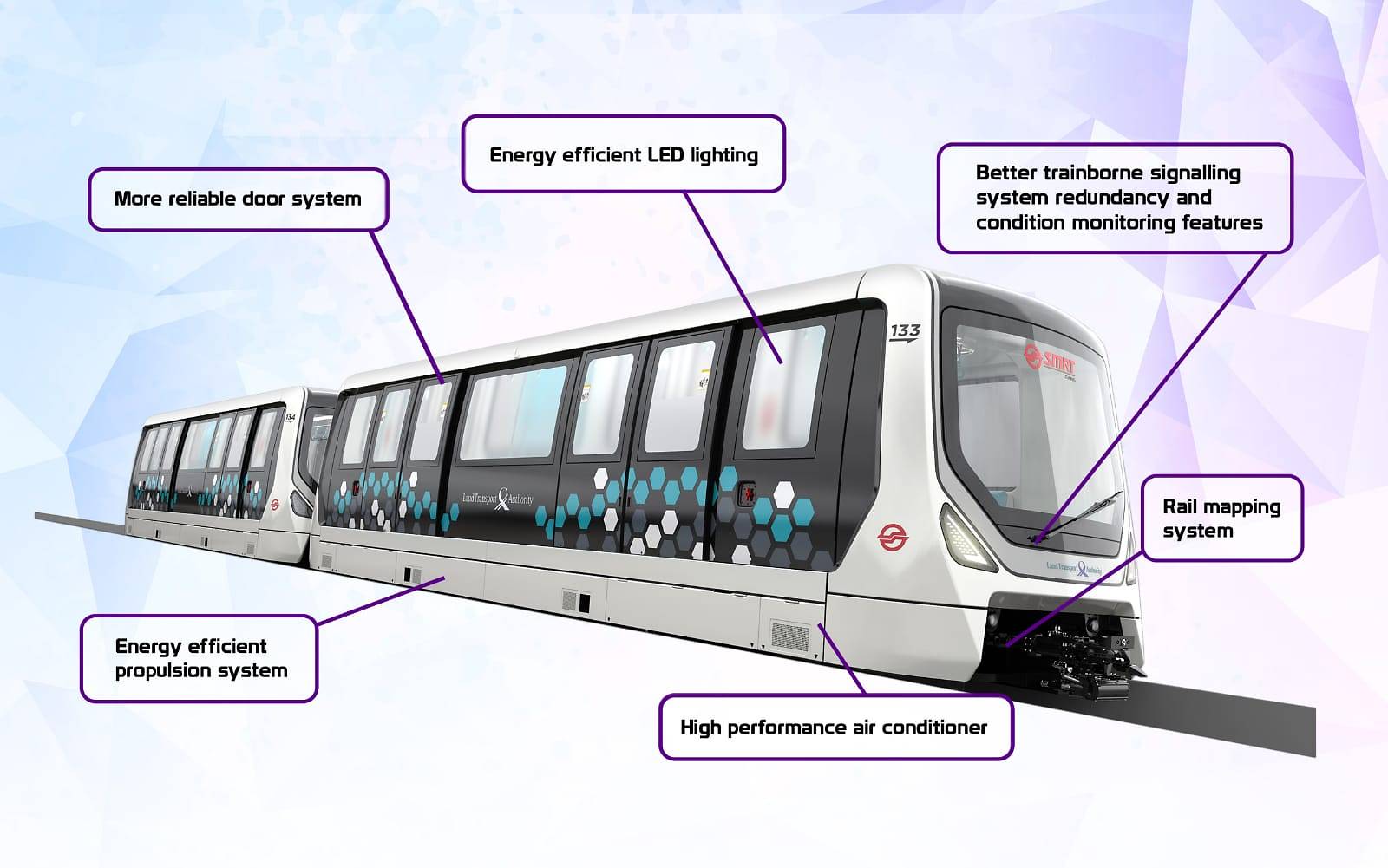
Last year, Canadian firm Bombardier – the original supplier for the BPLRT – was awarded a S$344 million contract to renew the ageing line, including the replacement of existing signalling system with a new communications-based train control signalling system and the replacement of 19 light rapid vehicles.
These vehicles will be delivered by the third quarter of next year, and will be tested before being progressively introduced beginning in 2021.
The new signalling system is expected to be ready by 2022, with the new power rail system in place the following year.
These renewal works are on track to be fully completed by 2024, and allow the BPLRT to close the reliability gap with the Sengkang-Punggol LRT line, said Mr Khaw.
Separately from Bombardier’s efforts, SMRT has introduced its own initiatives to improve reliability on the BPLRT.
These include the replacement of 34 sets of switch rails – which guide the direction of the light rail vehicles – reducing the likelihood of power trips.
The SMRT maintenance team also designed a workaround that prevented collector shoes – which connect the light rail vehicles to the power rails – from dislodging, which caused a number of power trips and disruptions to LRT services in the past.
Extended engineering hours resting from the closure of the lines as well as late openings on certain weekends allowed for a more intensive maintenance regimen, SMRT said.