Home Blog Page 581

Commentary: The things I no longer do for my significant other

0

SINGAPORE: I was ghosted before ghosting was a thing. It has actually been years since I’ve even thought about this once-seismic event in my life.

But last month, when an Instagram user from Singapore decided to update a few old photos she had taken with past boyfriends to more accurately reflect the context behind their smiling mugs, I could not help but recall the misadventures of my younger days.

Rosie, the young woman whose tongue-in-cheek edits to her captions went viral for their refreshing honesty, explained in a subsequent Instagram post why she unarchived the posts of her old flames:  

Looking at the pictures no longer makes me think about painful things, but rather the growth I’ve had since.

ONE BAD RELATIONSHIP

Her candid reflection got me thinking about the traumatic aftermath when a boyfriend of a couple years abruptly cut off all contact overnight. I worried he had died (I eventually found out he didn’t) and spent weeks moping and composing sad messages.

Finally, probably at the haranguing of his family, he sent me a terse email to “officially” break up.

Since this happened more than a decade ago, well before the Internet was populated with self-help articles about dealing with being ghosted, I had to figure it out on my own.

It took a while to get through the classic five stages of grief – denial, anger, bargaining, depression and acceptance – but of course, I did, with the love and support of the people closest to me.

READ: Commentary: What’s wrong with being a single woman?

Like Rosie, recalling this experience is no longer painful or heartbreaking in the least bit. Instead, the older, stronger and hopefully wiser me looks back on my confused, insecure self and marvels at how I have evolved in the ensuing years.

I do not have old photos to update and repost because I’ve long deleted them all. Instead, dear reader, I offer a list things I will not do for my current significant other, who I have been with for about ten years – we’ve lost count because yes, we are that sort of couple.

1. PUT MY CAREER ON HOLD FOR HIM

I’ll say it – I am a freelance journalist because of him. Not because of a common misconception that he supports me financially so that I can pursue my craft at my leisure.

Rather, over the years, he has been the one who has cajoled, reasoned and sometimes outrightly pushed me to go well beyond my comfort zone to build a wide ranging portfolio that today ensures I have a steady stream of work that keeps me fulfilled and happy.

A few years ago, we took a gamble when he went abroad to further his studies. I could have moved over with him, but that would have meant giving up most of my freelance work here. 

Instead, we agreed that I would shuttle between Singapore and the United States so that I could capitalise on interesting work opportunities in both countries. 

Plane window

(Photo: Unsplash/Steve Halama)

Long distance relationships are difficult, to say the least, and I am thankful I never felt pressured to pick one over the other.

2. FEEL INDEBTED WHEN HE BUYS ME DINNER

If you think all of that was a ploy to work me to the bone so that I am the one that keeps us both afloat, here’s a plot twist. He covers more than his fair share of expenses and does sweet, thoughtful things like take me out for nice dinners or whisk me off on holidays.

It has been a while since I’ve been let loose on the dating scene, but I still remember fretting about stuff like what is expected of me when a guy insists on footing the bill.

Or the exhaustion of dating someone who is consistently counting every penny.

Now, when he pays, I happily accept my free meal. And when I pay, he takes it like a man – and by that I mean he enjoys the treat without turning into a big deal by fighting with me over the bill.

READ: Commentary: ‘Super mums’ have one simple request. Don’t hinder them from returning to work

Dining in a restaurant

Keep in mind that there’s going to be some dining and entertaining to do, so balance your dinner with a healthy breakfast or lunch. (Photo: Pixabay)

3. FREAK OUT ABOUT GETTING FAT

Let’s be realistic. Appearances (and Instagram photographs) matter, even in a long-term relationship.

But I no longer obsess over whether someone will love me just because of a number on the weighing scale.

In fact, the two of us laugh at each other’s growing bellies and my chubby cheeks when we go abroad on foodie holidays and wind up eating and drinking too much.

Still, health is important and keeping to a reasonable weight is necessary to ensure one’s well being. So, we work out together to balance things out. 

READ: Commentary: Running may help you live longer but more isn’t necessarily better

Climbing stairs

(Photo: Unsplash/Bruno Nascimento)

I run and do high-intensity interval training with him and he joins me at yoga classes to get a good stretch and some headspace.

A bonus: We get to eat even more after a good sweat.

4. WORRY ABOUT PARENTAL APPROVAL

Asian parents are tough nuts to crack. They have high expectations of their children’s careers, marriages and offspring. 

Suffice it to say I defy all of these conventions because I do not have a full-time career and have no interest in bearing children. It is no fun listening to parents and relatives drone on about these things like they are a checklist to be completed.

Luckily, the two of us see eye-to-eye on these key issues. 

READ: Commentary: Succeed in your career, settle down, buy a BTO. Is this Singaporean dream outdated?

A couple holding hands.

A couple holding hands. (Photo: Pixabay)

It makes it so much easier to get through these sometimes difficult encounters when we both are in tune with the other’s life goals and will back each other up in the face of uncomfortable, but well-meaning, familial queries.

5. PUT UP WITH TEMPER TANTRUMS

Most of all, we have the most epic arguments. We have loud shouting matches and sometimes say hurtful things that we do not necessarily mean.

But what neither one of us does is to fall into that scary, angry silence or walk out just to spite the other. This means is that we get to vent our grievances at each other before they implode into something unsalvageable.

It also means I do not have to spend hours wondering why my other half is angry at me while stewing in my own wrath. Of all the things I value in this imperfect relationship, I think this might just be it. 

To my other half, I am forever grateful that you put up with my opinionated, headstrong and independent ways and even encourage these traits in me. It goes without saying, I love you.

Karen Tee is a freelance travel and lifestyle writer. Six years ago, people thought she was crazy to leave the security of her full-time job. Today, most want to know how she does it.

Source link

If you don’t try to fix it you’ll never know: A 79-year-old retiree who’s the neighbourhood handyman

0

SINGAPORE: Her hands were shaking slightly as Ms Tang Sai Tham used a screwdriver to open the safety grill of a table fan. She pulls out the fan blades to show us the motor inside. 

“Many people think fans are broken because the blades are moving slowly so there’s no wind. But usually the moving parts inside are just rusty or dirty, so the blades move slowly.

“I think this might be rusty. You just have to take the fan apart and clean the insides, and it should work,” she added as she fitted the blades back on, and checked if they were running smoothly. 

Hand tremors and old age (she’s 79) has not stopped Ms Tang from pursuing her interest in repair work. When she is not spending time at the nearby community centre or bowling with her friends, she often finds appliances to take home and repair, either from people who no longer want them, or at the void deck of HDB blocks. 

Many Singaporeans throw away appliances, especially fans and radios, that are still in working condition, Ms Tang observed. 

“When I see things being thrown away, I think about why it is broken. Just like when you’re sick, you have to go to the doctor and figure out why you’re sick, and ask the doctor if he can help you get well,” she told CNA in Mandarin. 

Despite not having any formal technical education or training, Ms Tang has done this for about 40 years, learning how to fix furniture like cupboards and tables, and appliances like rice cookers, radios and more. 

AN ANALOGUE LOVER

Entering Ms Tang’s home in Ang Mo Kio is like traveling back in time to the analogue age, with appliances and furniture from yesteryears lining the corridors and walls. Visitors are greeted with well-maintained, vintage furniture and drawers and cupboards full of vinyl records, video tapes and cassettes. 

One of the oldest objects in her home is a Philips vinyl record player that she bought when she was in her 20s, about 50 years ago. She saved up almost a year for it. Unfortunately, it no longer works because the needle is broken and Ms Tang has yet to find the right spare part. 

“If I had the needle, this thing would still work.” she said, adding that she is still searching for the right needle, and will not hesitate to pay for it if she finds it. “Money is not an issue.” 

Another one of her prized possessions is a karaoke set that she built herself by combining a boxy cathode ray television, several DVD players, two amplifiers and two microphones. 

Showing off her extensive collection of karaoke DVDs, Ms Tang explained that many of thecomponents of the karaoke set were given to her by neighbours or friends who had replaced their speakers and DVD players. 

“The TV was so heavy, I had to ask a few people to help me carry it home before I could fix it. It works now, but only for playing from the CD players, it has no signal and you can’t watch TV on it,” she explained. 

BUY AND THROW AWAY

Ms Tang strongly believes that more people should try to repair their appliances or furniture before throwing them away, as this is less wasteful and better for the environment. 

“If you try to fix it, then you will know whether you can save the item. If you don’t try to fix it you’ll never know,” she added.

repair aunty

Ms Tang Sai Tham’s home is filled with old appliances and other relics of the analog age. (Photo: Hanidah Amin) 

To learn how to repair the items she finds, she usually goes to second-hand shops or other neighbourhood repair shops to ask for advice. 

“I will go to the shop after finding out where the item is from. I won’t bring the item there. If I bring it there they won’t teach me. 

“I’ll tell them the situation, and they would tell me: ‘Maybe you can try changing this wire to that side and see what happens.’” 

Ms Tang said that after some trial and error, she usually figures out what the problem is  and how to fix it. 

Ms Tang’s ability to repair items is known to her neighbours in Ang Mo Kio, where she has lived for more than 30 years. They often ask her for help to fix household appliances and furniture. They also give her their old appliances when they buy new ones, because they know she enjoys tinkering with them. 

“There was once a lady who asked me to help her fix her washing machine. I said I don’t know how to fix it and I can’t fix it. It’s so big, it’s not like a small radio you can carry around,” Ms Tang shared. 

After fixing the appliances, Ms Tang either uses them at home, or gives them away to neighbours who need them. Most of the time, people ask her if she has fans or radios to spare. 

NEIGHBOURLY BONDS

She has also become close friends with her neighbours who look out for her. Ms Tang shared that last year, her gall bladder ruptured when she was at home. She was in a lot of pain, and could not move, said Ms Tang. 

Her immediate neighbour noticed that he had not seen her the whole day, and went to check on her. When he looked into her unit, he saw her sitting on a chair, in obvious pain.

He insisted on calling an ambulance to take her to the hospital. She ended up being hospitalised for a few days. 

“At first I didn’t want to go to the hospital because I thought the pain would pass. When I got there, the doctor told me it was lucky that my neighbour found me. It could’ve been serious,” added Ms Tang. 

“She doesn’t take payment for helping us with repairs and that kind of stuff, so when I have extra food I will share it with her,” said her neighbour Mdm Toh Eng Hng, whose son called the ambulance.

Acknowledging that her friends and neighbours often worry because she is independent and prefers to solve problems by herself, Ms Tang explained that she does not want to call a repairman for help unless she needs it. 

For example, when the door of one of her cupboards fell off, she climbed on two chairs to screw it back in because she is not tall enough to reach the top shelf. 

Ms Tang explained: “I didn’t think I had to call a repairman over a small thing. You should only ask for help if you can’t do it yourself.”

Knowing that she loves to repair things, a friend introduced Mr Tang to Repair Kopitiam earlier this year, an initiative that aims to reduce the impact of Singapore’s throw away culture.

As the oldest certified “coach” of Repair Kopitiam, Ms Tang enjoys attending the monthly community repair sessions. 

“There are more things to see there, it’s not just fixing things. There are so many types of appliances that I usually can’t get.” 

Even though Ms Tang has tried taking apart computers, she does not know how to fix them and is still learning about the different components in a computer. She has a laptop and a desktop computer at home that she uses to play games and archive photos from her phone, as well as a CPU waiting to be taken apart and explored. 

When asked about her collection at home, and why she has multiples of the same item, Ms Tang explained that she does not like throwing away things that are not broken. “I have so many things at home, I keep them because no one wants them.”

“I like collecting old things, so I never throw things away,” she said. 

“You can’t find these anywhere now.”

Source link

No abnormal behaviour observed in RWS dolphins, NParks says after viral clip raises concerns

0

[ad_1]

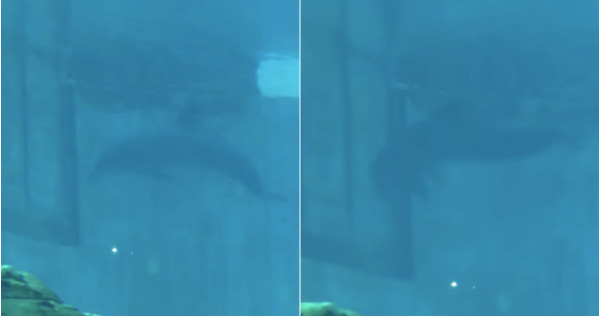
Netizens were whipped into a frenzy after a Facebook video showing a dolphin repeatedly hitting its head against the side of its enclosure was alleged to be one of those found in Resorts World Sentosa’s S.E.A. Aquarium.

That led netizens from Singapore and beyond to voice their concerns over the animals’ well-being. 

However, no abnormal behaviour was observed in the attractions’ dolphins, NParks veterinarians said after checking in on them, reported TodayOnline. 

The 27-second-long clip was uploaded onto Facebook by Empty the Tanks, an organisation dedicated to ending whale and dolphin captivity, by a supporter on Dec 1. 

The post has since been shared almost 2,000 times, garnering over 200 comments from concerned netizens.

[ad_2]

Source link

Five things you didn’t know about these symbols of Singaporean nationhood

0

SINGAPORE: He remembers arriving bleary-eyed at school for the morning ceremonies, where the “only consolation” during the national anthem was that he was not late for class.

So when Joshua Tan was tasked with conducting the re-recording of Majulah Singapura (Onward Singapore), he knew what he wanted.

LISTEN: The 2019 recording of Majulah Singapura

READ; Fresh recording of Singapore national anthem makes debut

“Something that’s much more upbeat, a little bit more inspiring, not only so that people can sing along to it, but also when they hear it, they’d say, ‘Wow, what a fantastic orchestra,’” says the Singapore Symphony Orchestra associate conductor.

Singapore Symphony Orchestra's Joshua Tan conducted the re-recording of Majulah Singapura.

Joshua Tan.

Following his schooldays, he has spent more than half his working life abroad, which the 43-year-old admits has “ironically” made him “more Singaporean”. That was also something he remembered in his approach to the re-recording, which debuted on Dec 3.

“It came from my heart, my feelings as a locally born and bred Singaporean, my experiences overseas and what this country means to me and what the words mean,” he says.

“When I’m overseas, it makes me homesick. When I’m at a national event (and) hear the anthem, it makes me very proud. It makes me very thankful to be born in this country.”

There is a line he particularly likes: In a new spirit (Dengan semangat yang baru). He explains: “It doesn’t matter how young or how old this country’s going to be, because every generation’s got to have the new spirit.”

That this is not the first time the anthem has been refreshed may have been news to many Singaporeans during this week’s 60th anniversary of the unveiling of the national symbols. The first version, for example, was eight bars longer.

There are also other lesser-known facts about these symbols — which include the flag and state crest — of Singapore’s highest ideals.

They were created in a hurry to rally people to a vision of a unified nation on the cusp of independence. And the documentary Majulah: Symbols For Singapore uncovers five stories about an emerging nation. (Watch it here.)

1. LAST-MINUTE APPEAL SAVED THE ANTHEM

National anthem composer Zubir Said was actually commissioned by the City Council in 1958 to write a song for the reopening of the renovated Victoria Theatre.

National anthem composer Zubir Said was commissioned to pen a song for Victoria Theatre's reopening.

Zubir Said.

In 1959, when the agreement on self-government was reached, the then Deputy Prime Minister, Toh Chin Chye, thought the song would be a good anthem.

But when it had to be shortened to serve that purpose, Zubir almost had his masterpiece taken from him.

“He hadn’t submitted his version yet. He found out … that someone else had done the shortening without his authority. And it wasn’t a good job,” relates emeritus professor of physics and former SSO board director Bernard Tan.

“He wrote … a very angry letter to (Minister for Culture) S Rajaratnam. And the day that he wrote the letter was the day that the bill for the national anthem was going to the Legislative Assembly. The bill was withdrawn.”

Emeritus professor of physics Bernard Tan is a former Singapore Symphony Orchestra board director.

Professor Bernard Tan.

The reason “must have been” the letter of protest, surmises Tan, the author of the essay The Hunt For Majulah Singapura.

READ: Ramli Sarip’s rendition of Majulah Singapura is modern patriotism at its best — a commentary.

2. THE ORIGINAL WAS IN A HIGHER KEY

Since 1959, the anthem has been updated a few times, perhaps most radically in 2000, when Tan was chairman of the committee revising the orchestration. The anthem was then in G major.

“And if you have it in the key of G major, the highest note is an E … Technically, it’s a strain,” says the 76-year-old, who had witnessed the second public performance of Majulah Singapura before it became the national anthem.

“I thought we could do something to help Singaporeans: Why don’t we lower (it by) one tone … (to make it) easier to sing? So today, the key of the national anthem is F major; the highest note is D.”

Majulah Singapura was played as the national anthem for the first time at City Hall.

Majulah Singapura was played as the national anthem for the first time at City Hall, now the National Gallery.

3. IT COULD’VE BEEN A THREE-STAR FLAG

When it came to designing the flag, Singapore’s first Deputy PM had a blank slate and only two months to complete the task. And he was actually in favour of one colour: Red.

But Toh knew he “had to be very politically sensitive” at that time because the colour was associated with the Communist Party. Eventually, the Cabinet decided on red — for universal brotherhood and equality — and the purity and virtue of white.

An early concept for the flag, however, had only three stars: For democracy, justice and equality.

“I was a bit anxious that (it) … would lead to uneasiness among some people, because the Malayan Communist Party also had three stars. Because of this, we added two more stars to represent prosperity and peace,” Toh once said.

An early concept for the Singaporean flag had only three stars: For democracy, justice and equality.

The Singapore flag could have been this.

The crescent moon represented a newly independent country, but was also designed to assure the Malays and Muslims that “we’re not a Chinese state”, he explained.

4. HOW HOUSEHOLDS GOT TO DISPLAY THE FLAG

The flag is now a fixture in Singapore every August. But this was not always the case; strict laws in the past had governed how, where and when the flag could be displayed.

It was in 1986 when civil servant Richard Tan came up with the idea of eyelets for the flag for every public flat. He was the then deputy director of psychological defence in the Ministry of Communications and Information.

“Fortunately for me, the HDB readily agreed,” he recalls. “They quoted a budget of S$320,000, and they post-fitted (the eyelets). And that has become a standard feature of all newly built HDB flats.”

In 1986, civil servant Richard Tan came up with the idea of eyelets for the flag for every HDB flat.

Richard Tan.

5. YUSUF ISHAK WASN’T A UNANIMOUS CHOICE

Singapore presented its new flag, anthem and coat of arms on Dec 3, 1959 along with a new head of state, Yusof Ishak. The position is not strictly a national emblem, but he too became a state symbol overnight.

He was looked upon to unite the people, whatever their colour or creed. He was not, however, the unanimous choice for the job, as Norshahril Saat discovered.

“Look at some of the declassified documents. There were debates … because he may have been known locally, but to the colonial government, he might’ve been someone who required further testing,” explains the author of Yusof Ishak: Singapore’s First President.

Dr Norshahril Saat is the author of the biography Yusof Ishak: Singapore's First President.

Dr Norshahril Saat.

There were questions about what he stood for — but his speech that day set out his beliefs clearly.

“The main task that lies before us now is the building of a united nation devoid of communal sentiments and suspicions. The complete interracial unity and national consciousness must be established if Singapore is to march forward,” he said.

“In the past, no special efforts were made to develop the national consciousness and a sense of loyalty towards this country. But … people who come to stay here have now realised the fact that there’s but one country for them: Singapore.”

Watch the documentary here.

After his swearing-in on Dec 3, 1959, Mr Yusof Ishak gave his speech to a huge crowd on the Padang.

After his swearing-in, Mr Yusof Ishak gave his speech to a huge crowd on the Padang.

Source link

Razer CEO Tan Min-Liang accused of being an abusive, dictatorial boss by 'ex-employees'

0

[ad_1]

We’re currently in the midst of SEA Games 2019, where esports is an actual event that Southeast Asian gamers can win medals for via the digital battlegrounds of Dota 2 or Starcraft II. 

Watching closely is Tan Min-Liang, the Singaporean CEO of Razer, makers of chic gaming peripherals and also the official esports partner for the SEA Games. CEO of a multi-million-dollar company he may be, but Tan is a gamer through and through — he still spends his nights binge-gaming and recently pledged to drop $10 million into Singapore’s gaming industry

[ad_2]

Source link

$7,000 fine for man who fell asleep at the wheel, causing accident that injured baby son

0

[ad_1]

SINGAPORE – A man nodded off as he was driving a car along Kampong Bahru Road in September, causing an accident that injured three people, including his 10-month-old son.

The boy fractured his skull and has since recovered, the court heard.

The 27-year-old father was fined $7,000 on Friday (Dec 6), after pleading guilty to causing grievous hurt to his son by negligent driving.

He also admitted to one count of causing hurt to a pedestrian while driving in a negligent manner.

The man, who has been disqualified from driving all classes of vehicles for two years, cannot be named as his son is a minor. Revealing his name could lead to identifying the child.

The man was driving along Kampong Bahru Road, with his wife and son in the vehicle, at around 11.45pm on Sept 7 when he fell asleep at the wheel.

The vehicle veered to the left, mounted a kerb and struck Mr Tennakoon Mudiyanselage Hasitha Presad, 37, who was standing at a bus stop. The car came to a stop and the driver woke up.

[ad_2]

Source link

Police investigates report foreigner participated in anti-CECA rally by Gilbert Goh

0

SINGAPORE: Police are investigating after a report that a foreigner participated in a rally organised by activist Gilbert Goh.

Mr Goh had organised a demonstration against the Singapore-India Comprehensive Economic Cooperation Agreement (CECA) at the Speaker’s Corner in Hong Lim Park on Nov 3.

In response to CNA queries, the Singapore Police Force said on Friday (Dec 6) that it had received a report on Nov 8 that a foreigner had participated in the assembly.

“The Speakers’ Corner was set up primarily for Singaporeans,” police said. 

“Singaporeans can organise assemblies at the Speakers’ Corner without the need for a permit, but must ensure that only Singapore citizens or permanent residents of Singapore participate in the assembly. Police investigations are ongoing.”

speakers' corner

File photo of Speakers’ Corner.

A police permit is needed if foreigners are involved in the organisation, or participate in, an event at the Speaker’s Corner.

According to the Public Order (Unrestricted Area) Order 2016, organisers must be a Singaporean and must ensure that only Singapore citizens or PRs take part in the rally.

Mr Goh wrote on Friday that he will be assisting the police with the investigations.

WHAT WAS THE RALLY ABOUT?

The rally on Nov 3 was conducted after the furore surrounding a man named Ramesh Erramalli, who was shot on video in October arguing with a security guard at the Eight Riversuites condominium in Whampoa. The video attracted much criticism from Singaporeans.

Police later said that Mr Erramalli is married to a local-born Singapore citizen and obtained his citizenship on the sponsorship of his wife.

Writing on the event’s Facebook page, Mr Goh said CECA would “sideline many Singaporeans”.

READ: Man in viral video apologises ‘many times’ to condo security supervisor in private meeting

In the aftermath of the incident, falsehoods relating to free trade agreements (FTAs) also surfaced. 

Among these was the claim that CECA has allowed Indian nationals to take PMET (professional, managerial, executive and technician) jobs away from Singaporeans.

Trade and Industry Minister Chan Chun Sing said on Nov 9 that the trade agreement does not grant Indian nationals unconditional access into Singapore or immigration privileges.

Claims that the agreement has cost job opportunities for Singaporeans were aimed to stoke fears in times of economic uncertainties, the minister added.

Source link

Woman, 53, found dead in Geylang hotel room

0

[ad_1]

A 53-year-old woman was found dead in a hotel room in Geylang Lorong 18 on Thursday (Dec 5).

Hotel staff noticed something was amiss when the woman didn’t check out on the day she was meant to do so, Lianhe Zaobao reported.

They went to look for her in her room and found that she had hung herself. Upon the discovery of the body, hotel staff immediately called the police.

According to Lianhe Wanbao, the deceased was a permanent resident who had checked into the hotel on Nov 27 and was due to check out on Dec 5.

Three police vehicles and a CSI van were spotted near the hotel’s vicinity. The woman was pronounced dead at the scene by paramedics.

After spending three hours at the scene, officers with a bag of items. The body was taken away by a police hearse shortly after.

The police have classified the case as unnatural death and said that investigations are ongoing.

lamminlee@asiaone.com

[ad_2]

Source link

Singtel’s heartwarming Christmas ad elicits angry, unrelated comments on Facebook

0

[ad_1]

Ah, Christmas — the most wonderful time of year for voracious shopping, rushing to clear leftover leave days, and of course, a slew of corporate commercials dedicated to the season. 

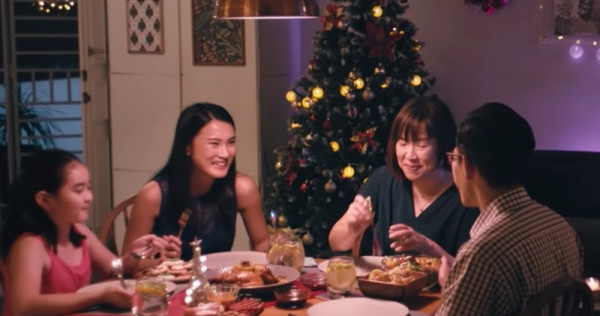
To be fair, Christmas ads tend to be pretty great! Forgetting the fact that these are snippets of promotional videos for brands, the short films can be actually heartfelt (John Lewis, every year), advocating (Iceland Foods, 2018) or even arthouse (H&M, 2016). Singaporean brands do it too, by the way, and Singtel recently pushed out theirs. 

Since the telco dropped their 2019 Christmas ad last week, the video has clocked in more than two million views and hundreds of comments on YouTube.

It’s not surprising to see why — the ad’s pretty emotive, not to mention highly relatable to the masses of parents who have or are currently dealing with teen children. 

[ad_2]

Source link

This Singapore therapy dog fulfilled a patient's last wish and is a 'miracle worker' to some

0

[ad_1]

Fluffy & Famous is a weekly video series where we interview “infurrencers”, a term we coined for famous fur kids who aren’t like your regular influencers on Instagram.

This week, we follow Onyx the therapy dog to work where he brings smiles and comfort to the patients in Assisi Hospice. Some dogs are more than just good bois, they’re angels disguised in fur. 


Infurrencer’s Profile

  • Name: Onyx the Therapy Dog
  • Instagram handle: @hachimonster.onyxbaby
  • Number of followers: Instagram 2.7k, Facebook 3.9k
  • Date of Birth: Dec 6, 2013

We’ve heard of the saying, “dogs are a man’s best friend” and they truly are, especially for Onyx, a six-year-old Schnauzer.

Onyx may look like just another carefree, happy dog if you see him on the street, but unlike any ordinary pupper, Onyx has been volunteering as a therapy dog for the past five years. 

[ad_2]

Source link