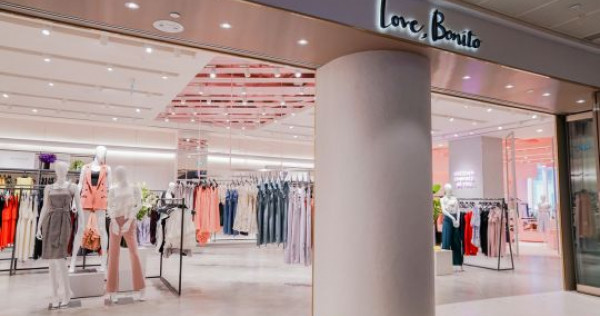
SINGAPORE – Singapore’s privacy watchdog is investigating a data breach involving home-grown fashion label Love, Bonito, after it reported that its online users’ data had been compromised.
On Friday (Dec 13), the retailer, which has three stores in Singapore, sent an e-mail to its online customers telling them that the data breach had been confirmed on Tuesday and a malicious code had been added to its e-commerce website.
The malicious code has since been removed.
In the e-mail, Love, Bonito’s co-founder Rachel Lim said that based on the company’s investigations, some of its customers’ personal information may have been exposed, including credit card numbers, expiry dates and CVVs, full names, shipping addresses, order details and phone numbers.
The e-mail did not say how many people were affected by the breach.
Responding to queries from The Straits Times about how it was alerted to the breach, a company spokesman apologised and said that a “small number” of its customers, were affected.
SINGAPORE: In just a year, 16-year-old Swedish schoolgirl Greta Thunberg has quickly become the poster child for her generation, a powerful community unwilling to compromise on ethics and fuelling a sense of urgency on climate change.
At Singapore’s recent Climate Rally, 11-year-old activist Oliver Chua was the youngest speaker to take the stage to call for responsible leadership to mitigate climate change.
“Parents really do care about what their children think. Let’s teach our parents a lesson for once.” Her closing statement was met with cheers from all who attended – including parents and grandparents alike.
THE GEN Z REVOLUTION
Thunberg, and many others like her, have inspired school children around the world to fight for their future. The ripples of youth activism are being felt globally.
As world leaders gathered in New York City for the UN Climate Action Summit this September, millions of young people in more than 200 countries marched to demand the adults in charge treat climate change as an emergency.
Young people are refusing to take silence as an answer – demanding that government and business leaders step up to their responsibility to take action on the challenges facing our planet.
In today’s world of real-time communication and radical transparency, CEOs ignore this new generation of consumers at their peril.
The generation born late 1990s to early 2000s (Gen Zs – which account for more than 16 per cent of the population) are more likely to say that the purpose of business is to “serve communities and society” rather than to simply “make good products and services,” according to a survey by BBMG and GlobeScan.
Swedish environment activist Greta Thunberg speaks during a “FridaysForFuture” climate protest at Civic Center Park in Denver, Colorado, on Oct 11, 2019 (Photo: AFP/Frederic J. BROWN)
They are more likely than others to call on brands to “advocate or speak out” on social and environmental issues.
“The corporate veil is being pierced by this generation,” said Emmanuel Faber, the CEO of US$55 billion food-and-beverage giant Danone, announcing an industry alliance to protect biodiversity.
Gen Z is forcing corporate leaders to take stand on climate change, he said. These digital natives are increasingly demanding full transparency.
Younger shoppers take a box on the shelf and they turn it around because they want to look at the small print, understanding what the ingredients are and from where they’re sourced.
CAPITALISM WITH PURPOSE
Expectations of business leaders are growing, and they are now under pressure to show their brands have purpose beyond profit and help, rather than hurt, society.
The 2019 Edelman Trust Barometer shows publics around the world are looking to business leaders for leadership on big social issues, including the environment; 76 per cent of survey respondents said CEOs should take the lead on change, rather than wait on governments to impose it.
And in response, a small, but growing group of business leaders are embracing an approach which systematically considers the impact corporate decisions have on society.
They realise that you can look after your pocket, people and the planet at the same time.
The US Business Roundtable, which represents the chief executives of 181 of the world’s largest companies, announced recently its commitment to all stakeholders, upending their longstanding view of the primacy of shareholders.
BIG BUSINESS’ NEW GOALS
Many are incorporating into their strategies the 17 United Nations Sustainable Development Goals (SDGs), adopted by UN member states in 2015 to address key goals including poverty, inequality, climate change, environmental degradation, and peace and justice by 2030.
Minister for the Environment and Water Resources Masagos Zulkifli delivering Singapore’s national statement at the United Nations High-Level Political Forum on Sustainable Development in New York City on Jul 18, 2018. (Photo: MEWR)
At IMD Business School, our work with senior executives across industries also shows leaders are being influenced to do better for the environment by their children, grandchildren and rising young activists.
Our MBA students increasingly tell us how purpose, in addition to earnings, is driving their career choices.
In response to dialogues with senior executives, and aligned with its vision, IMD has published a storybook for both adults and children focused on biodiversity loss, aligned with the UN SDGs, encouraging leaders to act before it is too late.
Corporations that have mapped their practices to the SDGs – such as Volvo, Unilever, Panasonic and Siemens – say the Global Goals provide a framework for embracing systemic change and disruption to address the world’s urgent challenges.
This creates huge opportunities for innovation, investment, greater relevance and market share.
According to a report by the Business & Sustainable Development Commission, the SDGs could generate US$12 trillion in business savings and revenue across four sectors by 2030: Energy, cities, food and agriculture, and health and well-being.
It points to the 60 biggest market opportunities related to delivering the SDGs, such as sustainable aquaculture and mine rehabilitation. The report also estimates the creation of 380 million new jobs linked to these four sectors in the next 10 to 15 years due to alignment of business strategy to the SDGs.
Minister for Foreign Affairs Dr Vivian Balakrishnan delivering Singapore’s national statement at the High-Level United Nations Conference to Support the Implementation of Sustainable Development Goal 14. (Photo: MFA)
STILL FALLING SHORT
Companies that focus on high-impact sustainability issues directly related to their core business are more innovative and perform better, research shows.
However, more progress is needed and quickly. In the UN Sustainable Development Report 2019, high-level political commitment to the SDGs is falling short of historic promises
Out of 43 countries, including all G20 countries and countries with a population greater than 100 million, surveyed on SDG implementation efforts, 33 countries have endorsed the SDGs in official statements since January 2018.
Yet in only 18 of them do central budget documents mention the SDGs. The report makes a plea for the gap between rhetoric and action to be closed and quickly.
Only 21 per cent of Chief Executives believe business is playing a critical role in contributing to the Global Goals, and less than half are integrating sustainability into their business operations.
NEW INSPIRATION
Socioeconomic, geopolitical and technological uncertainties over the past four years have distracted CEOs’ sustainability efforts, the report said.
With this new outspoken generation, we see that business leaders are now inspired to build partnerships across industries and sectors to achieve the SDGs and address the climate crisis.
An aerial view of Palau. (Photo: Marcus Ramos)
That means showing true leadership and focusing on what binds us together – the urgent problems we face.
While the needs of various stakeholders may differ, only by embracing a collective purpose can we act and achieve these global goals, creating real impact for a better society.
It’s time to follow the calls from our young to demonstrate the kind of leadership that unites heads, hearts and hands.
Susan Goldsworthy Oly is Affiliate Professor of Leadership and Organizational Change at IMD Business School in Switzerland and Singapore, co-director of IMD’s senior executive programme CLEAR (Cultivating Leadership Energy through Awareness and Reflection) and co-author of award-winning books Choosing Change & Care to Dare.
Natalia Olynec is Sustainability Partner at IMD Business School in Switzerland and Singapore , responsible for IMD’s policies and research and former Global Head of Sustainability for Damco, part of Maersk.
LIVERPOOL: Bet you didn’t think there would be another commentary on weddings so soon after the last one on funky bridal shoot locations right?
Well tough, it’s wedding season in Singapore, and not just because June and December are the only months when teachers seem to get married.
Throw in “auspicious dates” and that end-of-year feeling, and you have a potent combination for individuals looking to make lifelong commitments to each other.
Despite the joy and conviviality that many wedding photographs portray, weddings are stressful events. For most individuals, it will be the biggest party and gathering they ever undertake, in terms of guests, budget and scale.
It is also the only event where the bridal couple can be almost guaranteed that they (well, at least the bride) will be the centre of attention. So, expectations are high, both for them and the respective families they represent.
A couple after their wedding. (File photo: AFP/William West)
Because as we’ve seen, weddings are more than just about love. They are about status, connections, family, identity, wealth and aspirations.
RUINED WEDDINGS
Recent news report covered news of a wedding dinner “ruined” because of traffic conditions caused by the Standard Chartered marathon, crazed shoppers (Black Friday does make people do weird things like stay up past 10pm) and a group of middle-aged Irishmen (okay, maybe U2 is more than that).
Ever the Singaporeans, we find that kind of inefficiency appalling – why didn’t event organisers think ahead? Why run all three events at the same time? Don’t they know people need to shop, run, and relive their youth all over again?
Despite how much we think that weddings are commercialised and overblown, we recognise their importance as a rite of passage for individuals.
It is indeed a big day, where one’s social status changes in the eyes of society, the law and the government. You are now respectable and eligible to purchase an HDB flat with someone not related by blood.
We commiserate with the bridal couple. It’s never a nice feeling seeing (at least) a year of planning turn out the way it did. And highest marks to the groom who took it on the chin.
But these stories of “ruined weddings” often carry a double-meaning. They occur around the world, and are written to evoke a kind of schadenfreude from readers who recognise how they have encountered bridal couples who take things too far.
File photo of a bride and a groom by a pond. (Photo: Unsplash/freestocks.org)
Tabloids are the greatest culprits, they leverage on the stereotype of the bride/groom-zilla who get themselves into debt to pull off a perfect day.
Readers who see this tell themselves that this will never happen to them, while at the same time kicking the expensive wedding photo album under the coffee table.
Stress, spending and emotional outbursts at weddings are common, and that is because of the significant number of factors and actors involved in a constant tug-of-war of wills and desires.
As the focus of the day is the bridal couple, much of the responsibility, credit and blame also lie with them.
But who are the other players on the stage of weddings? Here are few I have encountered in my research.
First, family, and not just immediate family.
While it is quite predictable that one’s grandmother might object to changes in tradition like choice of colours or flowers, it is not uncommon to see sudden rituals foisted upon bridal couples on the day of the wedding by a distant relative.
Flows of information also circulate outside of bridal couples’ knowledge, especially among senior family members, who hear that doing something is good, and therefore pass that ritual or requirement on, further complicating an already complicated schedule.
WEDDINGS RUINED BY THE WEDDING INDUSTRY AND SOCIAL MEDIA
Scholars and authors have also pointed to the wedding industry for being responsible in creating and crafting unreasonable expectations among aspiring brides.
Commercialisation of wedding rituals (introducing rituals as a way to “package” weddings) and making certain objects or outcomes “mandatory” are just two ways the modern wedding is constructed as an act of consumption.
This is accentuated, of course, by social media – early on in my research, wedding blogs by photographers were a rare occurrence. Today, they are an integral aspect of a photographer’s portfolio, offering real-time results to potential clients.
Such photographs, posts, tweets and instastories are all part of the visualisation of “a perfect wedding day”.
A sprawling complex in Beijing offers wedding photos for couples who can’t afford to travel. (Photo: AFP/Fred Dufour)
So, when things go wrong, as they will, the performance of the perfect day is disrupted and undermined.
Whether it is because the wrong video was played, the pyrotechnics display caused the carpet to catch fire (a true story for another time) or uncle A does not want to sit next to aunty B, these factors all act as stressors on the bridal couple.
WEDDINGS RUINED BY HIGH PRICES
And of course, all of us as society are complicit in the creation of the wedding day as particularly special.
That’s not to say that it isn’t, but we are social animals after all, and history, culture and circumstances all play a part in the way we embed meaning into things and occasions.
I am about to celebrate my tenth wedding anniversary this December – but like every couple that got married in the week between Christmas and New Year, trying to book anything for a reasonable price is like asking Singaporeans to understand simultaneous National Anthem recording releases.
Do-able, but very, very difficult.
Veteran singer Ramli Sarip, fondly known as “Papa Rock”, fronts a music video for his cover of Singapore national anthem Majulah Singapura.
One might say that it is not necessary to do something special – “marry so long no need lah” is a typical refrain.
But romance aside, we all do need to make our lives just a little bit different once in a while.
Terence Heng is a lecturer in Sociology at the University of Liverpool, UK, where he is also an associate at the Centre for Architecture and the Visual Arts. He studies the changing identities of Chinese Singaporeans through ritual, religion and place-making.
SINGAPORE – The Republic climbed five spots to become the 13th most expensive city in the world for expatriates. It also rose two places in Asian rankings to become the seventh most costly location in the continent.
Taking the No. 1 spot globally was Ashgabat in Turkmenistan, which also topped the Asian charts.
Other Asian countries in the top 10 of the global rankings were Tokyo (No. 2), Hong Kong (No. 6), Yokohama (No. 8) and Nagoya (No. 10). Seoul was placed 16th, Macau 18th and Shanghai 22nd.
The latest survey results were published by ECA International on Tuesday (Dec 10), which assessed cost of living in cities for non-local employees based on a basket of consumer goods and services such as groceries, clothing and leisure activities.
However, house rents, cars and school fees are not included in calculations as they are usually paid for by employers. This means they are unrelated to expats’ spending power.
Hong Kong, which has been rocked by large-scale protests since June, remained at No. 6 on the global rankings, and slipped a spot to be the third-most expensive city in Asia.
Manchester United, Avengers Endgame and Game Of Thrones made for the most tweeted hashtags this year in Singapore, but let’s explore things that are way more important — the downright moving and/or hilarious things that got us all talking.
Twitter recently dropped #ThisHappened2019, a list of what made it to the top of the platform in Singapore, including the most shared and engaged tweets in the country.
With over 85,000 retweets and more than 191,000 likes, @SP1DERBOI scored the year’s Golden Tweet here with a thread that recounted a chance encounter with a very interesting person on the MRT train.
This dude walked up to me and complimented me on my shirt. seemed kinda off so I was set to say thanks for the compliment and move off, he was acting kinda funny and looked at me weird. Something told me to stay and listen tho and thank god I did. pic.twitter.com/s647Klxucp
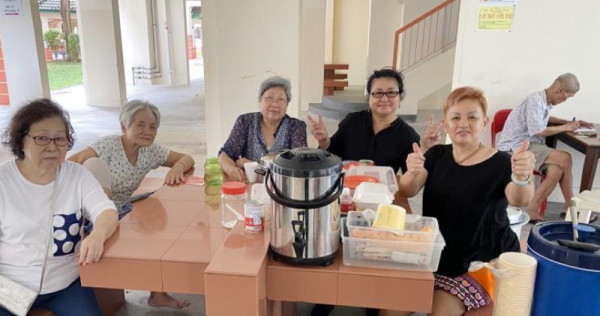
The meals not only warmed the bellies of their elderly neighbours, it also warmed their hearts.
According to Lianhe Wanbao, the couple’s act of kindness has helped an 82-year-old widow go through a difficult time in her life.
After her husband died years ago, the woman spent her days alone at home and slipped into depression.
She later heard that a couple from a neighbouring block was giving out free lunches to seniors every Monday to Friday, and decided to join them one day.
The widow soon befriended fellow seniors, and looked forward to meeting her lunch buddies every day. “I’ve known them for over five years. It’s great to have someone to talk to and care about,” she said.
THE COUPLE BEHIND THE FREE MEALS
The organisers of the free lunches is a man and his wife who live at Blk 23 Chai Chee Road.
HEIDELBERG, Baden-Wurttemberg: Singapore is aiming for 12 per cent of every student cohort to undergo the “work-study pathway” by 2030.
Education Minister Ong Ye Kung announced this on Thursday (Dec 12), during a site visit to automation company ABB-Stotz in Heidelberg, Germany.
He said the “work-study pathway” is Singapore’s version of “dual education”, a system commonly practised in Germany that combines vocational training in school with apprenticeships in a company, lasting about three years.
The work-study pathway is expected to provide students in Singapore with on-the-job training and classes aimed at helping them ease into workplaces from school.
Mr Ong said: “People sometimes have the wrong idea that such a system is rigid and inflexible.
“I think, to the contrary, that the mastery of skills, and especially the basic core competencies, is what makes somebody adaptable in the face of changes.”
He called it the “back to basics” approach and added that qualities such as artistry will be hard for computers and artificial intelligence to replicate.
About 3 per cent of each cohort currently undergoes some form of work-study programmes, including degrees.
Institute of Technical Education (ITE) students are offered 24 courses in work-study diploma programmes, and four Singapore universities offer SkillsFuture work-study degree programmes.
At ABB Stotz, he signed a joint declaration between the education ministries of the two countries.
It is an extension of a 1991 agreement to collaborate in new fields such as digitalisation, geriatrics and teacher training.
President Halimah Yacob witnessed the signing of two agreements related to education at ABB-Stotz based in Heidelberg, Germany on Dec 12, 2019. (Photo: MCI)
Another agreement was signed by the Singapore Institute of Technology (SIT) and Germany’s Baden-Württemberg Cooperative State University in Mannheim, to develop staff and student exchange programmes.
At the signing, Mr Ong said: “Partnerships like this are invaluable to Singapore in the reform of our education system in preparation of a new future.”
Mdm Halimah also visited tech company Continental AG, where she saw a demonstration of different tech products such as robots and driverless vehicles.
In the evening, she attended a banquet hosted by Volker Bouffier, the Minister-President of the Federal State of Hesse.
Trade between Singapore and Hesse reached S$1.2 billion (€868 million) last year.
Oil prices extended gains on Friday, scaling three-month highs as the United States and China moved closer to a resolution to the 18-month trade war between the world’s two biggest economies that has raised big questions about global demand for crude.
FILE PHOTO: Oil pump jacks work at sunset near Midland, Texas, U.S., August 21, 2019. Picture taken August 21, 2019. REUTERS/Jessica Lutz
Bookmark
LONDON: Oil rose on Friday to its highest in nearly three months as progress in resolving the U.S.-China trade dispute and Britain’s general election result appeared to lift two clouds that have been dampening investor appetite for risk.
U.S. sources said on Thursday that Washington has set its terms for a trade deal with Beijing, offering to suspend some tariffs on goods and cut others in exchange for Chinese purchases of more American farm goods.
Brent crude, the global benchmark , climbed to US$64.95 a barrel, the highest since Sept. 23, and as of 1000 GMT was up 71 cents at US$64.91. U.S. West Texas Intermediate crude gained 52 cents to US$59.70.
The 18-month trade war has been a dampener for oil prices, while uncertainty around Brexit has also weighed. Britain’s ruling Conservative Party won a large majority in Thursday’s general election, giving it the power to take the country out of the European Union.
“An eventful past 24 hours has removed a layer of uncertainty for the global economy,” said Stephen Brennock of oil broker PVM.
“Yet it remains to be seen whether the return of the feel-good factor is enough to set oil prices on a definitive northerly trajectory.”
A drop in the U.S. dollar against the backdrop of a strong pound helped boost commodities. The pound surged more than 2per cent on Thursday supported by the election result.
“Risk appetite among financial investors is now likely to remain high thanks to the deal between the U.S. and China and the forthcoming end to the Brexit cliffhanger,” said Eugen Weinberg, an analyst at Commerzbank. “This will also benefit the oil price.”
Brent has rallied by almost 21 percent in 2019, supported by efforts by the Organization of the Petroleum Exporting Countries and allies including Russia to cut production.
The alliance, known as OPEC+, agreed last week to lower supply by a further 500,000 barrels per day as of Jan. 1. They have been limiting supply since 2017, helping to clear a glut that built up in 2014-2016.
OPEC’s own research indicates that the oil market in 2020 may see a small supply deficit, although the International Energy Agency sees global inventories rising despite the further step by OPEC+.
(Additional reporting by Roslan Khasawneh; editing by Mike Harrison)
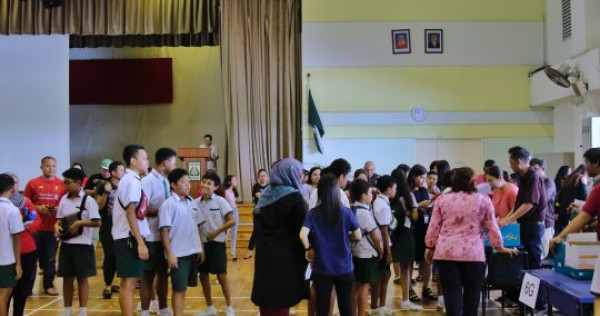
The class of 2019 received their Primary School Leaving Examination results on Nov 21, with 98.4 per cent of them doing well enough to progress to a secondary school.
The success rate matched those of the 2017 and 2018 batches.