Any concerns about the esports industry being a bubble ready to burst were allayed over the weekend when the Singapore Indoor Stadium saw nearly all of its seats filled up by a very keen and energised audience for a Dota 2 tournament.
Yeap, they totally pulled it off. The inaugural One Esports Dota 2 World Pro Invitational was a raging success despite some doubts by punters that Singapore wouldn’t be able to fill up the 8,000-seater venue. But fill up it did, albeit on Saturday and Sunday but not so much on Friday (people do have jobs you know).
His foul language and poor attitude also angered the woman’s daughter who gave him a slap.
Already agitated, the slap only served to further incense the boy, causing him to surge towards the pair and try to hit them.
In an attempt at mediation, a middle-aged man who happened to pass by tried to step between both parties. Instead, the boy turned his attack towards him.
Despite being shoved at over 10 times, the man continued to shield the women by repeatedly holding the teen back whenever he pushed forward, all whilst persuading him to stop.
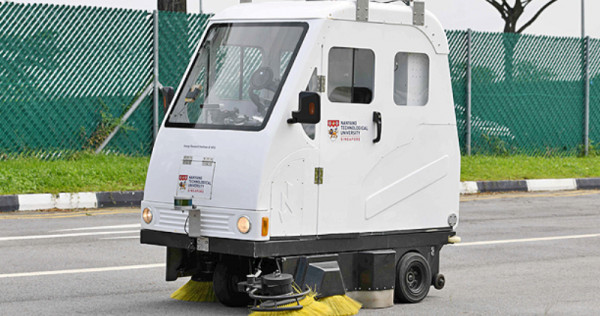
The road sweeper and a golf buggy move around the track with ease, jamming their brakes on when a pedestrian steps out and negotiating sharp turns.
Welcome to Singapore’s self-drive test centre, complete with traffic lights and mock skyscrapers, which is at the heart of the city’s push to become a hub for autonomous technology.
However, while authorities are keen to tap a global drive by auto giants and startups to develop vehicles, the industry must still prove it is safe and persuade people to use the technology.
The two-hectare site has a track with sharp turns, traffic lights, a slope, and a bus stop to simulate real driving conditions.
Shipping containers are also stacked up to emulate how high rises could potentially block satellite signals to self-driving machines.
The CETRAN centre, run by Nanyang Technological University (NTU), even has a rain-making machine that can simulate the frequent tropical downpours in the Southeast Asian city-state of 5.7 million people.
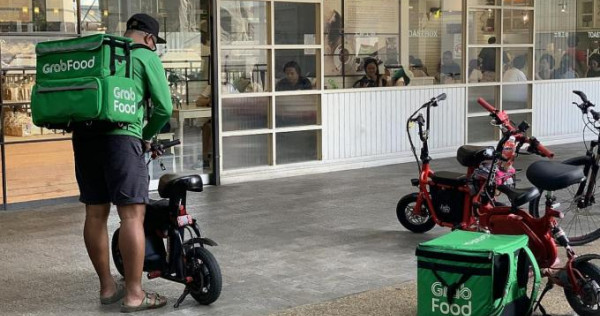
SINGAPORE – The GrabFood delivery rider who died in an accident in Gambas Avenue last Friday (Dec 20) had been working two jobs to support his family, which comprised his wife and 11-year-old daughter.
The Singapore permanent resident from Ipoh had a full-time job with an electronic engineering company, but had also begun delivering food about a month ago to supplement his family’s income after his wife fell ill and was unable to work.
Mr Phang Wei Sum, 42, had been working in Singapore for more than a decade, reported Chinese-language evening newspaper Lianhe Wanbao on Saturday.
“He was a good husband and father who never smoked or drank alcohol. He cared a lot for his family,” said his wife, who declined to be named.
His family collected his body from the morgue on Saturday morning and will send it to Ipoh for the funeral.
After issuing thousands of warnings in two months, the Land Transport Authority (LTA) will take a zero-tolerance approach against e-scooter riders caught on footpaths from Jan 1.
But one rider will continue to defy the ban despite being aware of the penalties if he gets caught.
Wanting to be known only as Mr Ariffin, the full-time food delivery rider of three years feels he has little choice because he has three young mouths to feed.
He said the ban, which kicked in on Nov 5, was too sudden and did not give users time to adapt.
With the ban, e-scooters can be used only on the 440km of cycling paths islandwide.
“Come Jan 1, I’ll just have to take my chances on footpaths. I spent $1,500 on this device. I’m not going to waste more money to replace it,” Mr Ariffin, 31, told The New Paper last week.
Nine other users told TNP said they will comply with the ban and are learning to adapt.
LTA has warned that offenders will face a fine of up to $2,000 and/or jail of up to three months from next year.
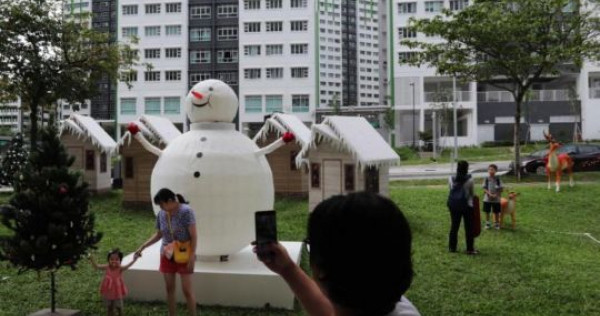
SINGAPORE – Seven colourful dwarfs alongside seven cabins with snow-capped roofs in a Woodlands neighbourhood are seeking their princess this Christmas.
And their creator, Mr Tan Koon Tat, hopes that children can come dressed as princesses to complete the fairy tale.
A giant snowman, which lights up in the evening, along with six life-sized reindeer round off the elaborate festive scene in front of Block 178 Woodlands Street 13.
It is the latest creation by the long-time Woodlands resident who has been putting up festive decorations in the neighbourhood for over 10 years during festive periods such as Deepavali, Hari Raya Aidilfitri and Chinese New Year. He pays for them out of his own pocket.
Mr Tan, a carpenter by trade, was putting the finishing touches to the dwarfs in his workshop in Sembawang when The Straits Times visited on Sunday (Dec 22). He hopes to unveil the set-up on Monday evening.
Mr Tan’s initial plan was to recreate the popular fairy tale Snow White And The Seven Dwarfs, along with a life-sized princess statue.
SINGAPORE: When a pet owner realised that her toy poodle was very active and had a tendency to dash across the road, she decided to get it insured.
“I saw the temperament of the dog and how it could get into an accident,” the 49-year-old, who only wanted to be known as Ms Lim, told CNA.
In 2015, she took out an insurance plan for her then-three-month-old puppy that covers up to S$6,000 in medical and surgical treatment arising from accidental injuries.
While there were no traffic mishaps, the toy poodle was a few years later bitten in an encounter with another dog. It underwent blood tests and a routine surgery to stitch up its wounds, and Ms Lim, who runs her own cybersecurity company, received a bill of S$600.
After factoring in a co-payment, she only paid about S$300.
Ms Lim is part of a growing number of owners who are getting their dogs and cats insured as veterinary fees rise. These can range from more than a hundred dollars for a routine annual check-up to S$20,000 for major surgery.
General Insurance Association of Singapore chief executive Ho Kai Weng told CNA that pet insurance has been getting “increasing interest” as pet owners become aware of its benefits.
“In Singapore, pet ownership is on the rise, but so are the medical expenses, especially when treating conditions that require long-term care,” he said.
“Pet owners, who are increasingly from the younger generation, are also becoming more comfortable with investing in pet welfare.”
Since AIA became the first in Singapore to offer insurance for dogs more than a decade ago in 2006, three others with plans catering to dogs and cats have joined in: Liberty, MSIG and CIMB.
The plans have annual premiums ranging from S$75 to S$750. Depending on the plans, coverage could include third-party liability, surgical or non-surgical medical treatment, accidental injury or death, and even cremation or burial.
MSIG, which launched its Happy Tails plans in 2015, said it has seen an average increase of 18 per cent in take-up each year for the past three years, with 80 per cent of its policies purchased online.
“Due to the growing pet-loving culture in Singapore, more people are keeping pets and they are also more willing to spend on their pets,” its spokesperson told CNA.
“This includes getting the right pet insurance plans to ensure that their pets get the required medical treatment in times of accidents and illnesses.”
CIMB head of consumer banking Josandi Thor said she has seen an average increase of 15 per cent in take-up each month since it launched its My Paw Pal plan in April.
“There is an increasing trend in pet owners who appreciate the importance of insuring their pets, as they would their loved ones,” she told CNA.
AIA did not say if sign-ups had increased, while Liberty did not respond to requests for comment.
EXPENSIVE MEDICATION
Dr Jaipal Singh Gill, executive director of the Society for the Prevention of Cruelty to Animals (SPCA) Singapore, said owners get their pets insured to protect against “sudden and unexpected high costs”.
“The insurance can give pet owners a peace of mind knowing that their beloved pet’s medical needs will be taken care of,” he told CNA.
Dr Gill said fees charged by veterinarians have been rising mainly due to inflation and the increasing cost of running a business over time.
“For example, employment cost rises over the years and the cost of drugs and medical supplies tends to increase too,” he explained.
A cat being examined by a veterinarian (Photo: Xabryna Kek)
Ms Lim said she has observed medical fees going up by about 20 per cent over the past five years.
“It’s very subtle; you don’t see it,” she said, pointing out that while consultation fees have held steady, the cost of medication has gone up. “Dogs use the same eye drop as humans, but it costs S$10 or S$20 more.”
DOWNSIDES
Despite that, Ms Lim said pet owners might still hesitate to get their pets insured because of the relatively high premiums and co-insurance, as well as low limits.
For instance, she is paying S$525 – up from about S$230 when she first signed up – a year to insure her now five-year-old toy poodle. While the plan covers up to S$6,000 in clinical or surgical fees, some lung surgeries can go up to S$18,000. After factoring in a 30 per cent co-insurance and S$250 deductible, she said the returns “don’t really make sense”.
CIMB’s Ms Thor acknowledged the “limited choices” of affordable and comprehensive pet insurance plans for dogs and cats in Singapore.
“Some plans provide either only accident-related or only illness-related coverage, and some plans only cover pets only up till the age of eight,” she said.
(Photo: Unsplash/Matt Nelson)
Ms Lim said the ages of nine and beyond is “when all the problems come”, highlighting that some plans might also contain hidden clauses about not covering illnesses caused by “intentional neglect”.
“For dogs, it’s hard to say,” she added. “You could be walking them and they ate something on the floor (before falling ill). This could be considered neglect, so in this case the exclusion might be quite a deterrence also.”
LIFE OR DEATH
Still, Ms Lim said having an insurance policy would help them defray some of the medical fees, if not a lot, and cover increasingly popular treatment options like acupuncture.
She pointed out that some plans cover chemotherapy, which she said is good as dogs can get cancer as they age.
The MSIG spokesperson said its plan helped cover more than S$8,500 in surgical and chemotherapy fees over a three-month treatment period after an owner’s nine-year-old golden retriever was diagnosed with bone cancer last year.
Ms Lim said owners might also be attracted by the comprehensive third-party liability coverage – which can go up to S$1 million – offered by some plans. This is particularly useful for aggressive pets that might hurt other people or their pets.
(Photo: Unsplash/Matthew Henry)
Ultimately, Ms Lim stressed that having insurance for your pets could make the difference between letting it live or having to put it down.
“The saddest thing was when I was at the vet and I looked to my left and right,” she recalled. “Those with pets in critical conditions, a lot of them just said if anything happens, just let them die. Because it’s too expensive to keep.
“I really love my dogs, so I’m willing to spend on them.”
SOON TO BE MAINSTREAM?
While the numbers are going up, Ms Lim said not many pet owners are aware that they can take up insurance policies on their pets. “When I go to a lot of vets and talk about it, they ask if there’s such a thing,” she said.
She urged pet insurers to come up with promotions and make their premiums more attractive, to attract more owners and create economies of scale.
“The challenge is that premiums are unlikely to come down significantly without more people signing up for the insurance,” SPCA’s Dr Gill said.
“We do advise anyone keeping a pet to consider signing up for insurance and hopefully the number of people taking up these policies increase over the years.”
(Photo: Pexels)
Both MSIG and CIMB said they expect the demand for pet insurance to increase with the rising cost of veterinary healthcare.
Ms Lim said she is already considering getting her other two dogs – a pair of four-year-old chow chows – insured for third-party liability as well, especially as she sometimes has friends over who play with them.
“They are trained, but I don’t want to take chances,” she added. “If they happen to snap at someone, the fella can claim against me.”
SINGAPORE: Four years ago, whenever Ms Natalie Ng took bus service 174 from her home in Jalan Jurong Kechil to the area where Beauty World MRT Station now stands, she would have to wait around 15 to 20 minutes for her bus to come along at around 9 am.
However, these days, Ms Ng, 24, who works in a creative agency, has noticed a “slight improvement” in the frequency of the service, and says she has to wait for only about 10 minutes.
She has also detected other changes in the bus services in her area. For instance, “popular” bus service 985 used to be served only by single-deck buses. However, just before the Downtown MRT Line became operational in 2017, double-decker buses plied the route as well.
The changes that Ms Ng observed coincided with a push by the authorities to improve service levels in the public transport industry, which saw the introduction of the bus contracting model in 2016.
The model represents a major overhaul of the public bus industry and is meant to address persistent grouses from commuters over route coverage and waiting times. It also served to enhance connectivity for commuters with new services added to areas such as Bedok, Bishan and Ang Mo Kio.
While commuters have seen an improvement in bus services since the model was introduced, it is in fact heavily subsidised by the Government to the tune of hundreds of millions of dollars each year.
This has raised the question on how long this is sustainable without bigger increase in fares, said experts interviewed by us, adding that commuters who want better must be prepared to pay more.
Commuters boarding a public bus in Singapore. (File photo: Land Transport Authority)
HOW BUS CONTRACTING MODEL WORKS
Under the model, operators bid for a package of routes through competitive tendering. The Government owns all fixed and operating assets and retains fare revenue while bus operators earn a fee for running services.
Bus operators also have to meet service standards set by the Land Transport Authority (LTA).
This is a departure from the previous privatised model where operating assets, such as depots and buses, were owned by both the Government and the two incumbent operators, SBS Transit (SBST) and SMRT.
The bus operators kept all the fare revenue which they used to pay for operations and operating assets.
This model, said the Government, did not incentivise operators to expand their capacity ahead of demand or improve service levels.
Since LTA launched the bus contracting model, it has tendered out four bus packages, with the last contract for the Bukit Merah package secured by SBST last year.
New tenders were called by the LTA last month for operators to run a total of 56 bus routes — 29 routes as part of the Bulim package and 27 routes as part of the Sembawang-Yishun package.
The Bulim bus package is currently under London-based Tower Transit, which began its operations from Bulim Bus Depot in May 2016. The package is up for renewal in 2021.
A Singapore bus driver. (Photo: Gaya Chandramohan)
The Sembawang-Yishun package is currently under SMRT, which has been the contractor since September 2016. The tenders will close on March 30.
BUMPY RIDE AT THE START
It has not been a completely smooth ride for the new bus operators here.
Mr David Cutts, the regional managing director of British company Go-Ahead, said that one of the challenges it had faced in the initial stages was introducing the interlining model of running buses in Singapore.
Interlining is a concept which requires bus drivers to drive multiple routes during a shift, instead of just one.
For instance, after completing Route A, a driver may not be required to do another trip for 20 minutes. Within that time span, the same driver may drive another route (Route B), before returning to the interchange to ply Route A again.
While this is a concept that is practised widely in cities like London, it led to a spate of resignations among Go-Ahead’s drivers who could not cope with juggling multiple routes two weeks into commencing operations in September 2016, forcing the company to sub-contract drivers from SBST and SMRT.
Since that episode, Mr Cutts said, bus captains are no longer force to take up interlining. While the concept remains in place, only 40 per cent of its bus captains work interlining routes and at a rate where they are comfortable with.
The company has also increased the number of its bus captains, from 800 when it first started operations to 850 now. It offers a total of 30 bus services, four more than what it started with.
EASING THE PEAK PERIOD CRUNCH
In response to our queries, the LTA said that since the implementation of the new model, commuters have enjoyed higher service levels, particularly during peak hours.
File photo of buses at a bus interchange in Singapore. (Photo: Ngau Kai Yan)
“All trunk bus services are now scheduled at headways of 15 minutes or less during the morning and evening peak periods, compared to the pre-bus contracting model standard of 30 minutes or less,” said the LTA.
Headway refers to the amount of time taken for the next bus service to arrive at a stop after the previous one has left.
Other benefits include:
Over 2,000 new buses added to roads since 2014
15 new bus services introduced
75 per cent of bus services less crowded during peak hours
25 per cent reduction in waiting time for 292 high-frequency buses
The LTA added that the improvement in bus service levels is enabled by the competitive tendering process, where bus operators strive for efficiency and service enhancement.
Bus operators are also leveraging new technologies to ensure safer and smoother rides for commuters, such as systems which help bus drivers to improve their driving habits.
SMRT, for instance, has devices on its buses to provide real-time tracking and analysis of driving parameters such as the speed of the bus, how the bus negotiates a corner, abrupt switching of lanes and sudden acceleration and deceleration. The data is used to improve a bus captain’s driving practices.
Commuters told us that they have also observed an improvement in bus services, especially in terms of frequency and regularity during peak periods.
Clementi resident and university student Tan Hui Lin, 23, said bus services 106 and 173, which she takes from Clementi MRT Station to Nan Hua Primary School near her home became more frequent after starting operations under Tower Transit.
File photo of a bus stop in Clementi. (Photo: Xabryna Kek)
While she could not recall how long she used to wait for her buses, Ms Tan said that she currently waits between five and 10 minutes to get on either bus during peak hours in the morning and evening.
MORE CHOICES FOR BUS DRIVERS
The entrance of overseas operators to the market has also opened up new opportunities for bus drivers, who have a bigger pool of bus operators to choose from.
Transport expert Loh Chow Kuang, a former secretary of the Public Transport Council (PTC), said that the key benefit for bus captains under the model has been higher salary and joining bonus, attracting more locals to join the workforce.
Indeed, the entry of London firm Go-Ahead and Tower Transit into the local market in 2016 saw a bidding war among the bus operators here to attract drivers to their fold.
In May 2016, Tower Transit announced a 3.5 per cent pay hike for its drivers and staff, which meant that a junior driver would receive a basic monthly pay of S$1,930.
A month later, SBST raised the gross monthly salary for new bus captains who are Singaporeans and permanent residents to about S$3,460. The amount included a higher basic monthly salary of S$1,950 — up from S$1,775 — as well as overtime and incentives.
In July the same year, Go-Ahead raised the minimum basic starting salary for Singaporeans and permanent residents to S$1,950 a month, up from S$1,865.
More locals have also joined the profession with the move to the new model.
It has not been a completely smooth ride for the new bus operators here. (Photo: TODAY)
In 2017, the LTA said that more than 1,000 bus drivers had joined the industry since the implementation of the bus contracting model, of whom 80 per cent were locals.
For Mr Sethuraman Krishnan, 53, the switch from SBST to Tower Transit in 2016 saw his basic pay increase by S$400 to S$1,900.
The benefits of his pay package were also better, said Mr Sethuraman, who left his job as a bus captain at Tower Transit last month due to personal reasons.
While SBST had provided dental benefits of S$150 annually while he was working there, Tower Transit offered S$300 at that time instead.
Beyond pay, companies have also started to offer more opportunities in training and skills upgrading. Go-Ahead, for instance, offers training for drivers to improve their driving skills while Tower Transit offers sponsorship for Workforce Skills Qualifications courses.
When Mr Rickee Ng, 66, worked as a bus captain for SMRT Buses back in 2014, he only knew how to drive a single-deck bus.
He was also familiar with only a limited number of routes and was trained in the bus service routes of 178 and 858.
However, when he joined Tower Transit in July 2017, Mr Ng said that a slew of opportunities opened up for him.
For one, he was immediately allowed to drive a double-decker bus. He was also given the opportunity to learn the various routes available, and he decided to learn all the service routes operating out of Jurong East Interchange, although he primarily services bus 143 which runs between Jurong East and Toa Payoh.
Training for bus captains being conducted on a training bus. (Photo: Kenneth Lim)
“At Tower Transit, they allow you to expand your skills to drive different kinds of bus models and different services. They want bus captains to explore and be more versatile,” said Mr Ng.
While he estimated that his working hours were longer at Tower Transit – bus captains have to complete 44 hours a week – Mr Ng said that the hours translated into better take-home pay.
Mr Ang Hin Kee, who is deputy chairperson of the Government Parliamentary Committee (GPC) for Transport, said that the presence of more operators in the market has opened more options for bus captains.
“Different bus captains have different preferences. Some say they are more familiar with a particular route. Others know if they can be trained to drive different bus services or different bus timings, they can draw a higher income,” said Mr Ang, who is also a Member of Parliament for Ang Mo Kio Group Representation Constituency.
A RELIANCE ON GOVERNMENT SUBSIDIES
While the industry appears to have achieved some stability with four operators in the market, some experts have raised questions about the sustainability of the model.
Shortly after the bus contracting model kicked in September 2016, the Government announced that it will continue subsidising bus services by S$3.5 to S$4 billion in total in the next five years.
Even before the bus contracting model kicked in, the Government said that it will subsidise about S$3.5 to S$4 billion over five years from 2016 onwards to improve service levels under the model.
In 2015, before the model kicked in, LTA’s overall operating expenditure was S$1.536 billion. The LTA did not provide a breakdown of expenditure of trains and buses. The overall operating income was S$786 million. Government grants of S$773 million supported the transport system here.
File photo of traffic on a expressway in Singapore. (Photo: Gaya Chandramohan)
One year into the model’s implementation, operating expenditure for buses alone, which consists of the contract with the winning bus company as well as the upkeep of assets among others, was S$979 million.
The expenditure was supported by S$423 million in grants, as well as S$513 million in operating income.
Since then though, the operating expenditure for buses has shot up to S$1.925 billion. Of this, government grants made up S$1.024 billion while fare revenue rose to S$834 million.
This essentially means that less than half of the operations for buses here are supported by revenues from fares, with the majority coming from Government subsidies instead.
With public transport ridership increasing at a pace of about one to two per cent each year over the last four years, fare revenue collected has not increased in tandem with operating expenditure of buses.
QUALITY VERSUS PRICE
Experts said that a key reason why the bus contracting model runs at a significant operating loss is because the level of service that the LTA expects bus operators to offer is more than what a for-profit bus company would provide.
Furthermore, the LTA has indicated a preference for quality over price when awarding contracts, they noted.
For instance, when SBST won the bid for the Bukit Merah package last February, it did so with a price of S$472 million. This was about S$53 million higher than the lowest bid offered by a consortium of the Jiaoyun Group and Travel GSH.
File photo of SBS Transit buses. (Photo: Jeremy Long)
Travel GSH is a local tour bus operator, while the Jiaoyun Group offers transportation services in China.
At the time, LTA explained that it gave greater consideration to quality over price during the evaluation process. In the case of SBST, it had demonstrated extensive experience in bus operations while offering good value for money.
Singapore University of Social Sciences (SUSS) transport economist Walter Theseira noted that bus operators can only make money if their buses are full or heavily utilised.
Once there are enough passengers on board to cover the costs, the additional passengers provide profit.
However, increasing profits involves cutting back on the service quality. This means that either each bus has to be packed with even more passengers, or fewer buses should ply the roads. Either case will be viewed as a reduction in service quality, said Dr Theseira.
On whether the LTA should continue to prioritise quality in the submitted bids, he said that it is not advisable to tender bus contracts on cost alone because the ability of the tenderer to successfully execute the contract is critical.
“The expense of a higher bidder, while not desirable, is much preferred to the problem of dealing with a bus operator who is unable to meet the performance criteria,” added Dr Theseira, who is also a Nominated Member of Parliament.
“It is very expensive to deal with an operator who cannot deliver, because even if you have penalty clauses, any money you do recover is unlikely to make up for having to replace a failed operator at short notice, or the service shortcomings in the meantime.”
BUT IS THIS SUSTAINABLE?
Some analysts say that having the Government to continue subsidising the industry is not a sustainable option and commuters need to cough up their share to maintain service standards.
Urban transport expert Park Byung Joon, who is also from SUSS, said that commuters could not expect the same level of service standards while maintaining the same level of bus fares.
The “simple fact” is that it takes that much money to run buses frequently, he added. That, coupled with better pay for drivers, will drive the total expenses up.
Both Associate Professor Park and Dr Theseira questioned if the public is willing to pay for the level of service that it expects.
“If the answer is no – that is, the public enjoys high-quality services but does not want to pay the full price – then the Government must either continue to subsidise or find ways to cut service quality or optimise services that the public is not too sensitive to,” said Dr Theseira.
File photo of an SBS Transit bus. (Photo: Francine Lim)
Ultimately, he said that the Government is running high-quality services that cannot recover costs, much like providing business-class service on a flight at economy prices.
“Commuters like this for obvious reasons, but the long run, sustainability is an open question.”
The Government seems to have recognised that it will be difficult to support the operating costs for public transport here, including bus operations, without increasing fares.
In July, Transport Minister Khaw Boon Wan had signalled the need for higher public transport fares, saying that it would be unsustainable to continue relying on government subsidies to fund public transport infrastructure. Mr Khaw said then that subsidies given out “have exceeded their intended scope”.
In October, when a fare hike was announced by the PTC, its chairman Richard Magnus also sounded the alarm on the long-term sustainability of the public transport system here.
He told the media that there was a widening gap between revenue and cost for providing public transport services in Singapore, much like other cities around the world.
The PTC, which regulates public transport fares, took pains to remind the public that despite the hike of 7 per cent in fares – the biggest percentage jump since 1998 – Singapore continues to boast some of the lowest transport fares in the world.
According to the PTC, Singapore will still have the world’s second cheapest transport fares for adults among 11 developed countries.
In a comparison of public transport fares in 11 other cities with similar public transport systems after the fare adjustment this year, the PTC found that Singaporeans paid S$1.48 for 10km journeys – the average distance travelled by a Singaporean commuter.
Meanwhile, commuters in other cities such as Sydney (S$3.16) and Toronto (S$2.68) forked out higher fares. Only Beijing paid a lower fare of 83 Singapore cents.
Mr Lim Biow Chuan, MP for Mountbatten single-member constituency and a member of the Transport GPC, said that if it eventually comes down to raising fares to reduce the operating costs of public buses, there will be no pleasing everyone.
File picture of people queuing to board a bus in Singapore. (Photo: Joey Liew)
“If you go out to the public and you share your figure, and you tell people that this is something that we can think about, a reasonable person would conclude whether the increase is fair or not … So if you ask a reasonable person, they will accept the increase,” said Mr Lim.
“But there are also those in the extreme. They want good, fast services but they don’t want to pay for it. And I don’t think that’s reasonable.”
Nevertheless, he believes that if the Government explains the circumstances of the hikes, any reasonable member of the public will be able to accept that these hikes are fair.
IS THERE A WAY AROUND A FARE HIKE?
While the Government has generally turned to fare hikes as a way to defray costs of bus operations, analysts offered a few suggestions on other ways to avoid passing on the costs to commuters.
Dr Theseira said that one way is to optimise the services of buses.
This could be done by using existing data to assess the benefits of continuing to run worst-performing bus services at their current operating levels.
For instance, operators could assess if there are alternative bus services available and the impact on commuters from reducing the frequency of a bus service.
Mr Loh, the former PTC member who is also the president of transport consultancy firm Singapore Urban Transport International, said that services could be optimised by introducing more priority lanes for buses to minimise bus stop delays and speed up buses, as well as introducing more express bus routes with limited bus stops.
However, Dr Theseira cautioned that optimising bus services is easier said than done.
While airlines typically cut under-performing routes, they are generally viewed as profit-making companies, and are thus entitled to do so. However, the public does not feel the same way about bus services, said Dr Theseira.
Mr Ang, the deputy chairman of the Transport GPC, said that the Government could enhance their efforts to bring in revenue from other sources like advertising on the body of buses or bus interchanges.
Beyond optimising bus services or raising revenue, Mr Loh said that operating costs could also be lowered through tweaks to the tender process.
By attracting more qualified bus operators to bid, especially those from Asia who tend to put in competitive bid prices, lower service fees could be paid to contracted bus operators.
Punggol Bus Interchange. (Photo: Gaya Chandramohan)
Currently, interest from overseas operators seem to be waning and experts suggested that it was due to their inability to compete against homegrown companies on cost.
Assoc Prof Park said that while British operator Go-Ahead was able to win the Loyang tender in 2015 with the lowest bid, it was only due to its aggressive interlining practice, which it has since cut back on.
When SBST won the Seletar contract with a price of S$480.3 million in 2017, beating out eight other companies, it was able to do so at such a low price due to its existing presence in the Singapore market.
Following this tender, interest from foreign companies in bus contracts here “dried up”, noted Assoc Prof Park.
For instance, Australia’s Busways Group and Keolis from France did not participate in the bidding for the Bukit Merah package last year.
In that round, only the existing bus operators here and Chinese operator Shenzhen Bus Group and a consortium between Jiaoyun Group and Travel GSH participated in the bidding.
Assoc Prof Park said that he did not expect to see much competition in the latest round of tender that had been called for Sembawang-Yishun and Bulim bus routes.
“If it keeps going like this, foreign operators will have to bid for a very low price, and that does not make the contracts an attractive business proposition,” he said.
At the same time, Dr Theseira said it would be inefficient to have too many operators, with each operator only having one or two packages, as there will be little opportunity for economies of scale or business continuity.
Mr Loh said that the latest tender which is the first to offer two packages at the same time, is the way forward for bus contracting as it will provide companies with the economics of scale and make it more attractive to bid for.
As for the four operators currently in the market, Mr Ang suggested that they consider optimising their resources by branching out into other forms of transport services such as private hire services and offer commuters benefits for using their slew of services.
When asked if they intended to remain in Singapore, both Tower Transit and Go-Ahead stressed that they had positive experiences here and were looking to stay for the long term.
Mr Winston Toh, managing director of Tower Transit, said that the LTA’s forward-looking plans and investments in the public transport system have positioned Singapore as a leader in public transport planning.
“For Tower Transit Singapore to operate on such a well-regarded stage has been a privilege, and we welcome any opportunity to run more services here,” he said.
Mr Cutts of Go-Ahead said that the company is committed to the Singapore market and will look to continue operating in more packages.
“We will look at each package on its own merits but we will seek to grow Go-Ahead Singapore, and be in Singapore for the long term.”
SINGAPORE: Countries met in Madrid this month to finalise the details of the Paris Agreement before it officially goes into effect next year.
But we’re already several strides behind the start line.
The latest scientific research that evaluates the “emissions gap” – the distance between current emissions levels and where we need to be to contain global temperature rise within 1.5 to 2 degrees Celsius – has produced an ominous warning: We need to increase our efforts five-fold to tackle climate change.
At first glance, Singapore seems to be a David compared to other climate Goliaths. The tiny island city-state contributes less than 0.1 per cent of total global greenhouse gas emissions, so it may seem inconsequential to be discussing the country’s climate mitigation efforts.
Yet, the world can no longer afford the blame game and finger-pointing. Singapore’s per capita greenhouse gas emissions, at close to 10 tonnes per person, is still above the world average of around 7 tonnes.
Moreover, based on GDP per capita, Singapore is the third richest country in the world, positioning it as a leader in Southeast Asia with the capacity – and perhaps, responsibility – to dig deeper on climate action.
So, what should Singapore do to meaningfully contribute to global climate change mitigation?
THE MAIN CONTRIBUTOR TO SINGAPORE’S EMISSIONS
As individuals, we can examine our own actions such as taking public transport, avoiding airplane travel, and eating less meat. Plastic straws are increasingly scarce in Singapore, as more than 270 businesses have stopped providing them to customers.
But, when considering the scale of the climate challenge, which requires halving global emissions by 2030 and achieving net-zero emissions by 2050, these actions are a drop in the bucket.
A banner of the 2019 UN Climate Change conference (COP25) is seen hanging at Gran Via street during Black Friday in Madrid, Spain, Nov 29, 2019. (Photo: REUTERS/Susana Vera)
A closer look at Singapore’s emissions profile shows that households account for less than 20 per cent of carbon emissions. In fact, the share of households in the country’s carbon footprint has decreased since 2000.
The primary culprit for Singapore’s carbon emissions is not difficult to identify.
Looking out of my window in western Singapore, I can see Jurong Island’s petroleum and oil refining industry. It makes this country the world’s fifth largest refinery export hub, responsible for nearly half of national greenhouse emissions.
We can continue to reject plastic straws, but to significantly reduce its greenhouse gas emissions and future-proof its economy, Singapore must adopt a strategy to shift its reliance on the petroleum and refinery industry.
Global clean energy investment is at an all-time high. It topped US$300 billion in 2017 and is expected to increase over ten-fold by 2030. Singapore is missing out on a key investment opportunity, if it continues to hinge its economy on the oil and petroleum industry.
In fact, new energy innovations, including battery storage, electric vehicles, and energy efficient appliances, will create a business opportunity of nearly US$2 trillion by 2030 in Asia alone.
Singapore’s Minister for the Environment and Water Resources Masagos Zulkifli has stated that the clean energy sector can create over 2 million jobs in Southeast Asia by 2030.
Instead of banking on the petroleum industry in a carbon constrained future, Singapore should refine its comparative advantage in developing, financing, and diffusing solutions for a clean energy future.
WHAT’S NEEDED? A MORE AGGRESSIVE SOLAR ENERGY ROADMAP
Singapore can embark on this long-term pathway through various short- to medium-term strategies.
A view of public housing blocks, with solar panels affixed to the roof of some blocks, in Singapore on Jun 27, 2019. (File photo: Reuters/Kevin Lam)
First, the country can create a more aggressive solar energy roadmap. Currently, 95 per cent of the country’s electricity is from imported natural gas, a major reason global carbon emissions are a record high in 2019.
Despite the rapid decline in the price of solar photovoltaic (PV) globally, solar PV accounts for less than 1 per cent of total electricity generation capacity in Singapore.
A significantly higher solar energy target is also likely to be in Singapore’s economic interest as the world’s most influential companies are increasingly committing to switching to 100 per cent renewable energy over the next decade or so.
A PUSH FOR GREEN BUILDINGS
Second, Singapore can complement its ambition of having 80 per cent of its buildings certified green by 2030 with a target for net-zero energy buildings.
A recent study found that a solar panel integrated façade can meet the entire electricity requirement of a landed house and over three-quarters of an HDB building’s demand. By using daylight and natural cooling, such a design can simultaneously achieve economic and environmental objectives.
Singapore has already benefited from its timely push towards green buildings and leadership in this area by greening over one-third of its building stock. Investment in net-zero emissions buildings will not only pave the way for robust mitigation but also complement the Smart Nation initiative by making Singapore a living laboratory for clean energy innovation.
Globally, we need all new buildings to be net-zero or near net-zero to reign in emissions.
A HIGHER CARBON TAX
Third, Singapore can adopt a carbon price trajectory that is better aligned with the latest research on climate change.
(Photo: Unsplash/veeterzy)
The 2018 UNEP Emissions Gap Report indicated that a price of US$40 and US$100 per tonne of carbon dioxide is necessary for realising the 2 degree and the 1.5 degree Celsius pathway, respectively.
Singapore’s current carbon price of S$5 – and even the intended price of S$10 to S$15 by 2030 – falls short not only of the global average of US$21.50 (S$29.50), but also that of several other high-income economies, such as California and Tokyo.
SINGAPORE NEEDS TO TAKE ACTION TODAY
As long as the country maintains its oil and petrochemical exports as the centre of its economy, climate action focused on other sectors will be akin to using a spoon to drain an overflowing bathtub.
So far, Singapore’s climate mitigation plan has focused on increasing energy efficiency, transitioning from oil to natural gas for electricity, making public transport more convenient, and greening its buildings.
In the past, emissions reductions achieved through these strategies, while substantial, have been offset by an increase in manufacturing and oil exports. Singapore’s low carbon price, reliance on natural gas, and further growth in manufacturing will only ensure the status quo.
In his National Day Rally speech this year, Prime Minister Lee Hsien Loong committed to long-term solutions to climate change. While this vision is laudable, framing climate change as “a 50- to 100-year problem” with “a 50- to 100-year solution” is too far-sighted.
We need Singapore to take action today and not delay plans for a 50- to a 100-year timeframe. Clutching at straws – whether bamboo or plastic – while dodging much harder climate choices is short-sighted.
If any country has the financial resources, technological capacity, and long-term vision to demonstrate leadership in climate action, it is Singapore. Now, it is critical for Singapore to stand up to the challenge.
Angel Hsu is Assistant Professor of Social Sciences (Environmental Studies) at Yale-NUS College.