A motorcycle in the opposite lane lost control and flew over the road divider towards his car along Eng Neo Avenue.
Retired lorry driver Tan Cheng Whatt, 72, hit the brakes but the bike, which had already caught fire, managed to skid underneath his car.
Within seconds, the fire started to spread but Mr Tan had no time to panic – he had to rescue his wheelchair-bound wife Khoo Geok Hwa, 68, who was in the passenger seat.
In less than a minute, he rushed out of the Toyota Rush, ran across to pull his wife out, and dragged her up the footpath with the help of a few passers-by, as the fire raged on, according to video footage online.
The couple, who escaped unhurt, experienced this harrowing encounter last Saturday evening (Dec 28) while they were on their way to pick their daughter up from work at the nearby Turf City.
Madam Khoo told The Straits Times on Sunday that she was in a state of shock when the accident took place.
“I was very scared and my hands and feet had gone soft. This kind of thing has never happened before. But I am so thankful to everyone who helped me,” she said.
All 200 seats for an event to pay tribute to Singapore actor Aloysius Pang have apparently been snapped up.
An online registration — set up by NoonTalk Media which is run by his manager Dasmond Koh — is no longer accepting reservations.
Pang, 28, died in January after sustaining serious injuries during an SAF training exercise in New Zealand.
Pang, who was on reservist duty, was crushed between the gun barrel and cabin while carrying out maintenance work in a Singapore Self-Propelled Howitzer.
Two soldiers were given fines recently by a military court for their roles in Pang’s death.
On Thursday (Dec 26), Mr Koh announced on NoonTalk Media’s Instagram page that a small memorial will be held in its office on Jan 5.
Noting that it has almost been a year since the tragic incident, the statement said: “As January approaches, we are preparing a simple memorial so that friends who miss Pang can come together.”
A six-year-old boy was taken to hospital after an accident with a personal mobility device (PMD) on Sunday (Dec 29).
The police said they were alerted to an accident involving a PMD and a pedestrian at 10 Bayfront Avenue, near the ArtScience Museum and The Shoppes at Marina Bay Sands, at about 12.45 am.
Photos of the accident, taken by an ST reader, show a crowd gathered on a footpath outside The Shoppes at Marina Bay Sands, near the waterfront.
The six-year-old boy was conscious when he was taken to KK Women’s and Children’s Hospital, the police said.
A 17-year-old boy, who was riding the PMD, was subsequently arrested for causing hurt by a rash act.
Investigations are ongoing.
This article was first published in The Straits Times. Permission required for reproduction.
A flight attendant’s job seems like a glamorous one — you wear a uniform that usually comes with a certain level of prestige, get paid to travel the world, plus enjoy a decent allowance that comes with it.
But as with any job, being a flight attendant has its downsides too, hidden beneath their well-groomed appearance and perfect smile.
We asked six current and ex-flight attendants to share with us the pros and cons of flying.
*Not their real names
PROS
CHANGES YOUR PERSPECTIVE ABOUT THE WORLD
Travelling exposes you to different cultures, and Jacqueline, 28, who has been flying for six years now, said: “I feel the biggest takeaway from the job is that you definitely get to expand your mindset and change your perspective on how you view the world and people in general.”
Queenie, 28, an ex-air stewardess who had flown for two and a half years, added that you get to do that in a short span of time as compared to when you’re travelling leisurely.
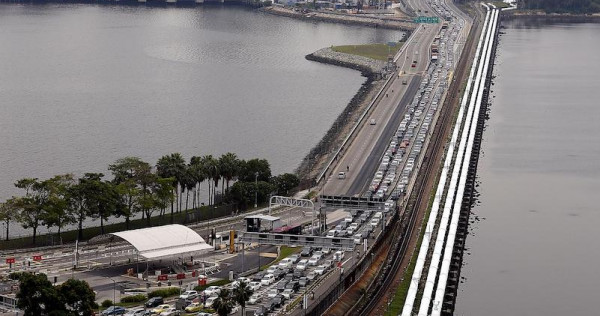
Foreign-registered vehicles are not allowed to provide cross-border passenger transport services for hire or reward in Singapore without a valid public service vehicle licence (PSVL), the Land Transport Authority (LTA) said on Saturday (Dec 28).
LTA clarified the regulation in response to queries from The Straits Times on Sameride, a carpool service due to launch a Singapore-Johor Baru carpooling service from Monday (Dec 30).
According to a press release on the Sameride website, more than 300 commuters have pre-registered for the service in the app over the last two weeks.
Sameride estimates that users will be able to significantly reduce the cost of their commute between Johor and Singapore by up to 50 per cent compared to taxi services.
The app also aims to expedite travel time by reducing traffic on the cross-border route.
LTA said it takes a “serious view towards” foreign-registered vehicles illegally providing hire-and-reward services and said it will carry out strong enforcement action against such illegal activities.
Imagine walking into the changing room to find two girls having a mini photoshoot of sorts. PHOTO: AsiaOne/Rainer Cheung
Still, it’s a bit hard trying to explain yourself to the other shoppers just what exactly you’re doing when they want nothing more than to try their clothes, but that’s beside the point.
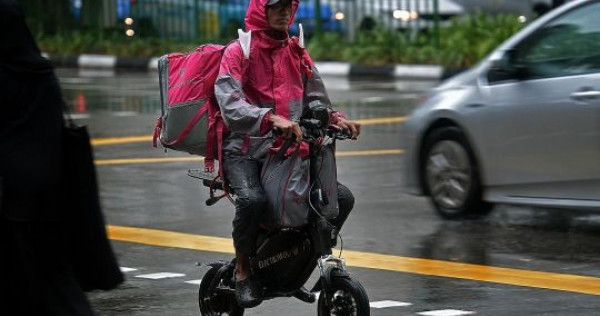
With Singaporeans’ growing appetite for the convenience of food delivered to their doorsteps, the deliveryman who brings them their grub has been getting into more accidents.
The number of accidents involving food delivery riders appears to have risen since 2016, based on an unofficial tally of online media reports.
On Dec 20, a 42-year-old GrabFood delivery rider died after his motorcycle collided with an 800 Super truck. It was the first reported fatal accident involving a food delivery rider this year.
The same night, a Foodpanda delivery rider fractured his left arm in an accident involving a drunk driver in Petir Road, in Bukit Panjang.
The police told The Sunday Times that they do not have data on accident victims categorised according to their occupation, such as food delivery riders. Checks with food delivery companies also drew a blank.
But statistics of cases reported in online English media reports compiled by The Sunday Times showed that there were at least 25 reports of food delivery riders meeting with accidents between last year and this year.
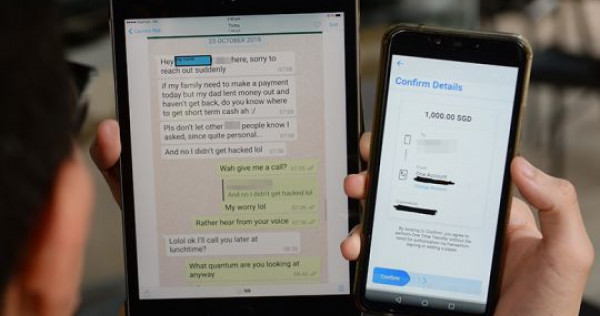
A woman who allegedly cheated around 70 friends and acquaintances of more than $800,000 is under police investigation.
Ms Alexandra Low, a former financial analyst, is believed to have borrowed money under various pretexts, such as having to make a down payment for a house, according to a copy of a police report obtained by The Straits Times.
The police confirmed that investigations are ongoing.
The Straits Times understands that more than 10 separate police reports have been filed by Ms Low’s alleged victims.
The report seen by the ST stated that 73 friends had loaned Ms Low money after she approached them with various reasons.
Some were told that she needed the money to pay off debts incurred by her uncle due to a work accident, while others were told that her mother was in a hospital and she desperately needed to pay bills.
But Ms Low, 25, told the police that she had borrowed around $800,000 to $900,000 from friends for breast enhancement treatments.
SINGAPORE: It was supposed to be an optimistic year of a 1.5 to 3.5 per cent boom for the Singapore economy.
Instead, the country veered close to a potential recession. It now looks to get by with 0.7 per cent growth instead.
The uncertain environment has also prompted employers, particularly in trade-related sectors witnessing job losses, to be more cautious in hiring, according to the Monetary Authority of Singapore.
As the year draws to a reflective end, hope springs eternal that the Singapore economy will bottom out and turn around in 2020. But is the worst really over?
“Whether we tip into a recession or not depends a lot on external factors,” said Prime Minister Lee Hsien Long in November after ASEAN summits ended.
Singapore Prime Minister Lee Hsien Loong attends the plenary session of the 35th Association of Southeast Asian Nations (ASEAN) Summit in Bangkok on Nov 2, 2019. (Photo: AFP / Lillian SUWANRUMPHA)
The World Trade Organization (WTO) sounded the warning bells in October, when it more than halved growth projections for world merchandise trade, in what will be its weakest year since 2009, the height of the global financial crisis.
The WTO also highlighted the wider implications of weaker trade sentiments for global growth for 2019 and 2020.
The global economy has seen synchronised slowdowns and weaker business sentiments this year, including in China and the Eurozone, according to the Brookings Institution and Financial Times’ Tracking Index for Global Economic Recovery.
Worryingly, there is a growing economist consensus that this sluggishness is here to stay, and may not be resuscitated even after a US-China phase 1 trade deal is reached.
Export growth simply has not returned to pre-2008 levels, WTO historic data shows. It also declined relative to GDP growth over the 2010s.
These figures reversed a decades-long trend where world trade has been one of the strongest engines of global prosperity and outstripped global growth by at least two times.
They also suggest that the origins of the current trade slowdowns predate US President Donald Trump’s election win and Brexit.
Why has trade taken such a beating? Has the world lost its love for globalisation?
Global trade growth has slowed in 2019 according to the WTO. (File photo: AFP/Roslan Rahman)
LACK OF POLITICAL APPETITE FOR TRADE LIBERALISATION
The reality is that after decades of furious lowering of trade barriers and multinational conglomerates spreading supply chains across the world to take advantage of comparative national advantages, the pace of globalisation was bound to slow at some point.
But that swing has been accelerated by rising inequality, and a sense in many countries coping with regressive redistributive effects that control must now be wrestled back by the nation-state.
America First is a symptom, not a cause of our global economic woes. Societies are grappling with powerful underlying economic forces and reacting with a political pushback against trade.
But this surge in inequality caught most by surprise. Many countries haven’t had time to react in a more comprehensive manner to this new disruption.
Successful global institutions, like the WTO and the continuation of multilateral trade, are fundamentally built on the backs of strong states that enjoy huge levels of trust with their populace.
A logo is pictured outside the World Trade Organization (WTO) headquarters next to a red traffic light in Geneva, Switzerland, October 2, 2018. (File photo: REUTERS/Denis Balibouse)
Retreat and defensiveness can become the default response when trust is eroded and the benefits of trade seem to be shared less equitably.
Admittedly, the writing was on the wall when the world could not summon the political will to conclude the 2001 WTO Doha round of negotiations that dragged on for more than a decade.
There are bright sparks where trade continues to flourish during these tricky times.
The Association of Southeast Asian Nations (ASEAN) has managed to maintain movement in deepening economic cooperation and connectivity with big countries, especially Chinaand India.
The signing of the Trans Pacific Partnership (TPP) without the United States, as the new Comprehensive and Progressive Agreement for TPP (CPTPP), and signals that the Regional Comprehensive Economic Partnership (RCEP) is close to the finishing line bode well.
Representatives of the countries members of the CPTPP trade deal, take part in a news conference at the Ministry of Foreign Affairs in Santiago. (File photo: Reuters)
Some would argue that the US’s completion of the US-Mexico-Canada Agreement (USMCA) that replaces the 26-year-old North American Free Trade Agreement (NAFTA) is another positive step showing trade is still the beating heart of many economies.
But its terms and conditions instead suggest a more targeted tightening of the faucet. For example, the new USMCA agreement imposes higher standards to pull manufacturing back to North America and shift the balance of benefits of trade.
Among many changes, it now requires 75 per cent of a vehicle’s parts to be made in one of the three countries – up from 62.5 per cent in NAFTA – and a minimum portion of the average vehicle to be made by workers earning at least US$16 an hour (which will mostly benefit Canada and the US, and not so much Mexico).
If this example is anything to go by, countries are jostling with each other to get the best deal, but is that where we should be looking to fix the world’s discontent over trade?
A GROWING IMBALANCE IN TRADE
The 2010s was not just the story of slowing global trade expansion but also a tale of the explosive growth of Big Tech titans, which has fueled a surge in services and data flows that do not require the crossing over of goods over national borders, and can produce much more with way fewer people.
But what do platform giants do with that value captured? Facebook generated S$55 billion in 2018 revenue, but only paid 13 per cent in effective tax rate and employed 40,000 people.
The Facebook logo is displayed on a mobile phone in this picture illustration taken December 2, 2019. (File photo: REUTERS/Johanna Geron)
Silicon Valley has been accused of avoiding almost a hundred billion in taxes over the last decade by British organisation Fair Tax Mark.
America’s 400 biggest firms also paid an average of 11.3 per cent taxes on profits last year, according to the US Institute on Taxation and Economic Policy.
US President Trump’s 2017 tax cuts had some role to play. But this three-decades-long decline in corporate tax rates is not unique to the US, then IMF Managing Director Christine Lagarde pointed out in a March 2019 commentary for the Financial Times.
It’s a race-to-the-bottom problem where countries compete to have the most favourable tax laws to attract mobile capital, lured by promises of new business opportunities and jobs.
But it comes with a hefty price tag governments around the world, coping with burgeoning social programmes to arrest inequality, can ill afford.
Indonesian Finance Minister Sri Mulyani announced plans last month to cut corporate taxes to 20 per cent. Malaysia had to fight to resist such calls in their annual Budget in October.
The global trade pie isn’t shrinking, but a bigger slice is going to Big Business. Meanwhile, government debt around the world has almost doubled since the start of this decade.
Is it a surprise if workers in more economies feel like trade hasn’t been a fair deal and their governments push back?
A PUSH FOR AN INTERNATIONAL TAX SYSTEM
That said, there is growing momentum among G20 countries for a global consensus on implementing the OECD Base Erosion and Profit Sharing (BEPS) initiative to tackle corporate tax avoidance, ensuring profits are taxed where economic activities generating these are performed.
The OECD presented its “unified approach” to taxing global tech giants at a G20 gathering this year. (File photo: AFP/Lionel BONAVENTURE)
This would mean corporate giants paying taxes where value is created, likely in places where they hire people that contribute to their top line and do business, instead of scurrying profits to offshore tax havens.
Discussions have also touched on a minimum corporate income tax rate, and criteria on sectors and company size these rules would apply to.
A successful agreement would not be painless. It may require countries, like Ireland, with comparatively lower corporate income tax rates to rethink their industrial strategies to continue to attract MNCs and create jobs for workers.
Singapore too shares some of these concerns about the erosion of autonomy over tax policy.
While Second Minister for Finance Indranee Rajah highlighted general support for BEPS and other efforts to establish a rules-based international tax system in October, she also emphasised the importance of allowing governments leeway to pursue a policy mix appropriate to their developmental needs, including lower income tax rates but higher consumption or wealth-based taxes.
Implementing BEPS would also require greater cooperation among countries to reach agreement on important but onerously technical details, including limiting the risks of double taxation and unilateral distortions to the global tax system.
“A lot of the devil will be in the detail …. It’s a huge amount of work to try to get all this done next year. But there is a huge political will to do that,” PWC’s International Tax Policy Director David Murray said to Fortune just last month.
Second Minister for Finance and Education Indranee Rajah at the REACH Budget 2019 dialogue on Feb 21, 2019.
WHAT THE GLOBAL ECONOMY NEEDS
Changes to the global tax system to adapt to new tech and trade realities isn’t a panacea for fragile states fixing fractured social compacts, but it could play a role in rebalancing the global distribution of the fruits of trade and provide more fiscal firepower for public services and welfare programmes for those left behind.
How much government revenue is at stake? Potentially a lot.
The Australian Taxation Office just this month settled a tax dispute with Google and got back AU$481.5 million (S$451 million) on top of previous tax payments by the tech titan.
It has seen AU$1.25 billion collected from tech giants including Microsoft, Apple and Facebook after the enactment of laws designed to mandate companies book sales and file tax returns in the country.
While online plaforms such as Google and Facebook capture the vast majority of advertising revenue, they do not create any original news, Australia’s competition watchdog says. (Photo: AFP/Leon Neal, Loic Venance)
But going it alone risks accusations of protectionism – like when the US lambasted France’s new digital services tax as discriminatory towards US corporates this month.
International and multilateral action is therefore needed to get corporates to pay their fair share across the world, close tax loopholes and ensure that free and fair trade flourishes.
This may just be the nudge to the fragile global economy needed to restore faith in trade and globalisation again.
SINGAPORE: By 3pm, the photographers would have planted their tripods on the ground, reserving the best spots for capturing the colourful fireworks that would later crackle through the night sky.
From then till 8pm, the Marina Bay area – for many years the focal point of the annual countdown on New Year’s Eve – would be relatively calm. People would be having their dinner, checking out the carnivals and shows slowly springing to life. Some would head home to avoid the crowds that will throng the area.
Deep in the bowels of Marina Bay Sands, in a command post surrounded by 30 police officers and dozens of screens showing live camera feeds and displaying important information, Assistant Commissioner of Police (AC) Gregory Tan, 36, would be preparing for a long night ahead.
Security preparations for this night have been six months in the making. The police would have engaged stakeholders – hotels, malls and event organisers – on their planning considerations and how to best manage them. It is a fine balancing act ensuring their security plans are robust but not too onerous.
As commander of the Central Division which covers the Marina Bay area, AC Tan is in charge of security for this year’s bonanza.
Central Police Division Commander AC Gregory Tan briefing team leaders on crowd management plans during a tabletop exercise conducted in December 2019. (Photo: Try Sutrisno Foo)
“It’s a celebratory event,” AC Tan told CNA, detailing how he expects the security operation to unfold on New Year’s Eve. “We want the members of public to be able to enjoy themselves and have a good time, that’s quite important. But beyond that, our role is to make sure that they can do so as safely as possible.”
Earlier in the day, his officers would have conducted a final briefing on the ground, running through various duties, considerations and contingency plans. Now, the officers would be having some downtime, in anticipation of a relentless, 12-hour shift that would only end past 2am.
In the command post, AC Tan would have bought bubble tea – something he says is different from the usual beverages – for his colleagues so they can all stay alert.
While it might look like a mundane task, monitoring the camera feeds is critical. Along with officers on the ground, they are the “eyes” of the command post which assesses and acts on each incident – from a drunk person falling into the river, to someone with a knife wreaking havoc in a crowded area. “We try to marry the different sense-making systems so that we can make a good decision (on our next move),” AC Tan said.
These decisions are not to be taken lightly. AC Tan knows he is responsible for the safety of 500,000 people who are expected to flock to the area through the night.
“The commander, unfortunately, is responsible for everything, down to whether officers eat, whether they fall sick, to the actual operational plan,” he said with a smile. “We take that responsibility very seriously.”
This is evident in the size of the deployment. More than 700 police officers will be mobilised, more than 100 of whom are operationally-ready national servicemen.
Recognisable by their beige berets, police officers from the Protective Security Command’s In-Situ Reaction Teams will also be patrolling the Marina Bay area on New Year’s Eve. (Photo: Try Sutrisno Foo)
The MRT stations in the area will be monitored by Public Transport Security Command officers as they are potential stampede and suffocation points when revellers rush home past the stroke of midnight. Protective Security Command officers will be on foot patrols among the crowds, looking out for suspicious characters. Police Coast Guard officers will trawl the Singapore River, making sure that no one pulls off a sneak attack. They will also be on hand to help anyone who falls into the water.
“The amount of contingencies that we go through, sometimes people think it’s a bit ridiculous,” AC Tan said.
Due to the sheer scale of the operation, officers from the Jurong Division would be roped in to help. And together with the Traffic Police and Special Operations Command, AC Tan said the countdown is one of the police’s largest routine deployments next to the National Day Parade and Formula One race.
The number of officers deployed in an area generally depends on the number of people there. A high-profile event attracting more crowds would naturally require more officers to maintain a presence. But deployments are fluid, and there are quick response officers on standby to attend to major incidents.
“You never know what to expect,” AC Tan said. “It does get a little bit nerve-wracking, especially as the clock ticks towards midnight, because you don’t know which direction people will turn. So as much as we hope for the best, we plan as thoroughly as we can to make sure that we can achieve the best outcome.”
THE LOCK DOWN
At around 9pm, the crowds would start coming in thick and fast, reserving the best spots near the Float, Esplanade and Promontory. AC Tan said it is a crucial period for officers as they decide which sectors to lock down. This means barring people from entering an area that’s already getting too crowded for comfort and safety.
“We don’t do this frivolously,” he said, stating that it is a “stressful” situation for officers who could be “challenged” by people who just want to get to the best spots. “We only want to make that call when we need to.”
Before this, the police would have worked with event organisers to decide how many people a sector can hold, based on factors like land area, expected attendance and infrastructure like roads and exits.
“We also don’t want people to start running on the roads, where of course they pose a risk to themselves as well as the vehicle traffic,” AC Tan added.
This Unmanned Aerial Vehicle will also form part of the Police’s crowd control operations. It is equipped with blinkers and a loudspeaker from which its operator can issue police commands. (Photo: Try Sutrisno Foo)
“Aside from that is the risk that medical emergencies can happen. When it does happen, we need to ensure that they’re able to get treatment as quickly as possible. And it can be very difficult if an area is chock-full of people. You can’t move in, you can move out. If someone collapses, they can’t get access to help.”
Having learnt some lessons from last year’s event, the first time he commanded this operation, AC Tan said this time he wants to better manage the crowd situation in areas near the Marina Bay Sands and Bayfront MRT station, where some of the most popular events are held.
“We are increasingly mindful that more and more people are coming down,” he said, pointing out that organisers are becoming more ambitious with their events and are trying to “outdo themselves”. “We are literally running out of space to put people.”
To manage crowd capacity better, the police are working with private hire companies like Grab and Gojek to see how their apps can be used to better inform drivers and passengers about which areas to avoid. This is on top of the usual signs and barricades on the ground and Facebook updates.
“The last thing we want is for the public to come at 11.30pm thinking that they can find a space at the Marina Bay boardwalk, only to come out of the MRT station to be disappointed because it’s just too crowded and you can’t get out,” AC Tan added.
THE TERRORISM THREAT
Ensuring crowds are managed well is also important because these places can attract “malicious actors who are interested in the congregation” of people, AC Tan explained.
“We know festive events have been targets overseas,” he said “And that’s why we are also very mindful to make sure that we do have sufficient measures in place. And we’re not complacent that Singapore is a safe place.”
The Emergency Response Team consists of police officers who have been trained to deal with public security incidents and make up part of the force’s counter-terrorism capabilities. (Photo: Try Sutrisno Foo)
The commander said a terrorism attack is one of the things he fears the most because Singapore is “untested”.
“Our officers are well-trained,” he said. “We’ve put them through contingency exercises to build up their preparedness, we do hope that they’re able to respond quickly and well but that is possibly our biggest fear and something that that you can’t predict.”
If there is a terrorism attack, AC Tan warned that officers on the ground will not even have time to turn to the command post for guidance.
“If someone’s wielding a knife, (or) drives a car through, they have to make the decision – shoot or not shoot. They are trained to do that,” he said. “They have been tested through exercises and we have confidence that they’ll respond well and rise up to the challenge.”
When AC Tan was asked how ready he would be to jump in and manage the situation as commander, he said it was akin to “being a father”. “You can never be fully prepared,” he added. “But when that moment comes, you just have to step up. I think that’s the philosophy you also have when it comes to public security.”
THE POLICING
While they are prepared to deal with the most serious of situations, AC Tan said officers can expect something as petty as scuffles over stealing someone else’s reserved spot. And according to him, the most common incidents are people losing things or getting lost.
“I think nothing brings joy to officers as well as the public as when we reunite persons who are missing with their family, especially when they’re young or old,” he said.
AC Tan said other potential incidents include “a very drunk person who is a bit too happy, may get upset at people around him and may pick fights and cause public disorder”.
He stressed that officers are trained to be “measured” when intervening, stating that they generally try to manage disputes amicably.
Police Tactical Unit officers from the Special Operations Command will be on foot patrols among the crowds. (Photo: Try Sutrisno Foo)
“I think we do not want to impede their ability to celebrate, and to commemorate the turning of the year,” he said. “So we generally let people do whatever they want, as long as it is not illegal and doesn’t cause risk to themselves or the people around them.”
But AC Tan said it doesn’t mean officers will be more lenient on such a festive day.
“Of course, if there really is a need to arrest someone for an offence, if they have crossed a certain line and put themselves or others in danger’s way, then I think we have no qualms arresting the person,” he added.
But he doesn’t recall officers making any arrests at last year’s event, stating that things went smoothly on the policing front.
THE TRANSITION
At 11.30pm and primed in their spots, the crowds would get more boisterous as the clock ticks closer to midnight. Behind the scenes, police officers would be preparing for a quick transition from entry to exit.
Barricades would be moved and signs put up to advise the public which route to take. Officers would be quickly deployed to potential bottleneck areas, like underground passageways where things can get stuffy and uncomfortable. Escalators would be stopped and fare gates toggled to facilitate more traffic into the train platforms.
“What makes this event unique is at the snap of a finger, the situation changes,” AC Tan said. “From trying to squeeze in, the moment the last firework stops, everybody turns around and runs. So I think that’s where we need to be able to transit quite quickly and smoothly.”
Soon after midnight, the mass exodus – or the “Cinderella effect”, as AC Tan puts it – would start.
Again learning from last year’s event, AC Tan is planning to divert crowds rushing into Bayfront MRT station to other exit points, like the one near Gardens by the Bay. At the platforms, signs would point commuters to alternative stations with smaller crowds.
“So there’s a lot of activity that’s going on then, and that’s when the blood pressure rises the fastest,” he said. “Officers need to be on their feet to address any changes and be flexible with the plan depending on what happens on the ground.”
THE AFTER PARTY
The operation would only officially end when crowd levels return to normal, regardless of how long the dispersal takes. Officers have stood down as late as 5am.
But the night would just be starting for another group of officers, who would be tasked to patrol nightspots in areas like Circular Road, Beach Road and Chinatown. These officers, also from the Central Division, were not involved in the countdown operation but are being deployed on the graveyard shift.
“I think for after parties, the drunken crowd is a problem,” AC Tan said. “And generally when people are drunk, disputes take place a little bit more often. So that is a very busy period for us as a division and that’s something that we do police very carefully.”
Despite that, he reiterated that the police’s interest is for the public to “have fun and have it safely”. “Our interest is not to arrest people or to find fault with members of public. I think we want to be as invisible as possible while making our presence felt,” he said.
Central Police Division Commander AC Gregory Tan speaking to senior ranks from his division as well as Jurong Police Division during a tabletop exercise conducted in December 2019. (Photo: Try Sutrisno Foo)
Also making their presence felt on the ground would be senior ranks from Central Division like AC Tan, who were part of the countdown operation but must immediately resume normal duties because they also oversee day-to-day operations.
“For commanders, being responsible leaders, you would then come back, change into the attire for anti-crime duties, and then go out with the rest of your officers to police these nightspots till 6 or 7 in the morning until things quieten down,” he said. “It’s a tough job.”
Beyond the fatigue, AC Tan conceded that many officers in his division miss out on spending festive occasions with family simply because many festive events are held in locations under their jurisdiction.
“That’s when family understanding is very important, because often officers are taken away during those joyous events from their families,” he said.
For officers who are deployed on their birthdays, they make it a point to celebrate with cake after the shift ends. He said some even volunteer to work on such occasions because they’d like to “handle the major operations with their friends”.
For AC Tan, whose three-year-old son is born on Dec 31, it would be the second time dad is missing his son’s birthday.
“My son is not old enough to kick up a big fuss,” he said, laughing. “At this point, he’s way asleep before the countdown anyway. The larger family understands that we have to celebrate his birthday on another day. It’s something all officers face.”