Expect a space odyssey that is unlike the ones you know from Stanley Kubrick and Arthur C. Clarke this New Year’s Eve.
Revellers at The Star Island Singapore Countdown Edition at The Float @ Marina Bay will be treated to a Japanese musical complete with pyrotechnics, lights, 3D surround sound, circus acts and ballet performances.
Entitled 2019: A Space Odyssey, the 90-minute long spectacle boasts six chapters that will take audiences on a journey they have never experienced before, show producer Shigeyoshi Sakamoto told The New Paper.
Each chapter – Ceremony, Another Earth, Galaxy Party, Gravity, Microcosmos and the Grand Finale – will be choreographed to a unique soundtrack, complete with 3D surround sound.
SUPERNOVA
The 44-year-old said: “In the first half, audiences experience what it feels like to be in a supernova and witness the creation of humanity and evolution.
“The show then takes audiences into the star, with stunning sand-red and deep crimson visuals. The journey ends with a focus on how we are all tied to the greater universe as one.”
SINGAPORE: The Housing and Development Board (HDB) has released two new executive condominium leasehold sites which can accommodate up to 1,100 residential units.
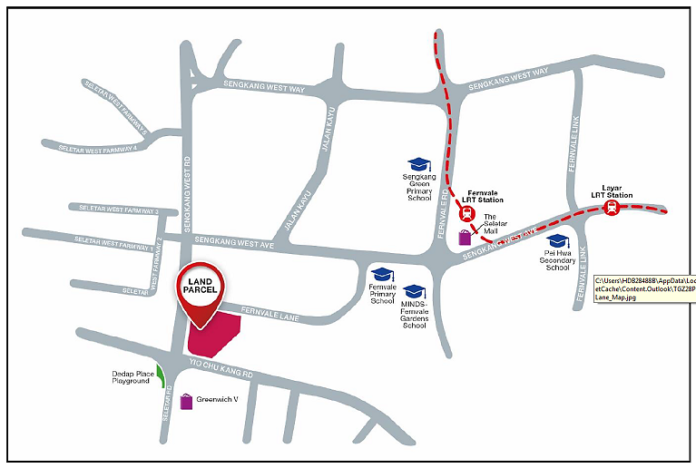
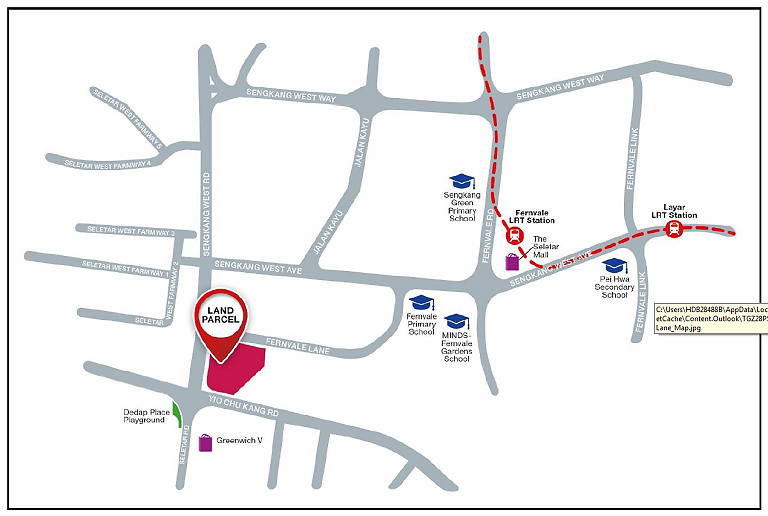
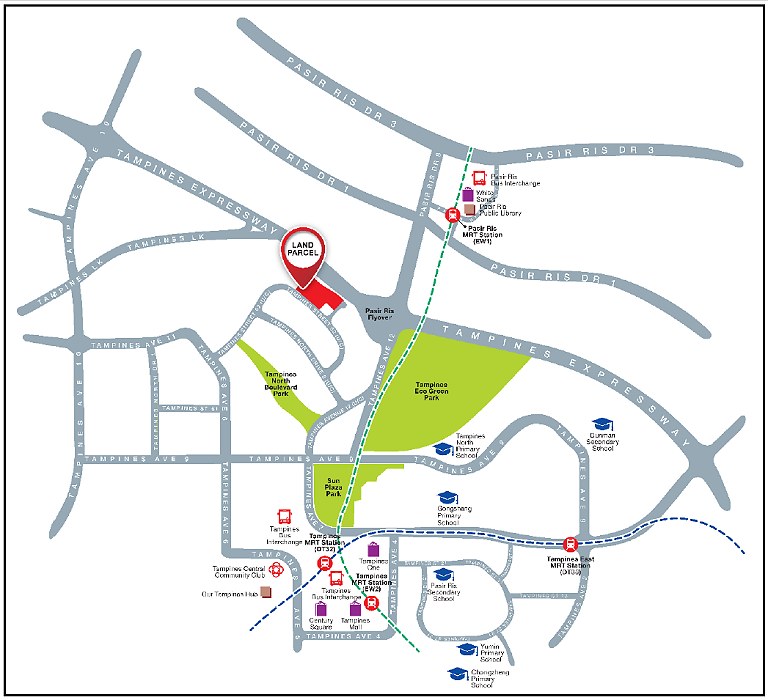
The sites are at Fernvale Lane in Sengkang and Tampines Street 62, HDB said in its press release on Monday (Dec 30).
The Fernvale site has been launched for sale by public tender under the Confirmed List of Second Half 2019 Government Land Sales (GLS) Programme.
The location plan for the site at Fernvale Lane. (Photo: HDB)
It has a site area of 17,129.9 sq m.
The tender for this site will close at 12pm on Mar 3, 2020, HDB said.
The Tampines site, which has an area of 23,799.2 sq m, has been released for application under the Reserve List.
The location plan for the site at Tampines Street 62. (Photo: HDB)
A Primary 6 pupil has become the youngest tattoo artist in Singapore, having inked more than 12 customers in the past year, Sin Chew Daily reported.
Quoting Shin Min Daily, Lilith Siow learnt the art from her father Joseph, who has run a tattoo business in Haji Lane for the past 20 years.
The 12-year-old would spend her weekends and school holidays taking lessons from her father and has acquired the skill in just six months.
She said her first customer was one of her father’s friends who wanted a tattoo of a cartoon character. Lilith admitted that she was nervous at the beginning and took 90 minutes to complete the tattoo.
“I was afraid at the beginning. You can erase a drawing when you make a mistake.
“But once a tattoo sets, it is forever, ” she said.
However, practice has made Lilith better and she has tattooed more than a dozen clients since.
She said tattoos were like drawings with a “permanent marker pen” and disagreed that people with tattoos were “bad people”.
Her father said he would continue to train and teach Lilith to create new tattoo designs and planned to buy her a lighter tattoo machine.
SINGAPORE: The two people killed and four injured in a car crash at Lucky Plaza on Sunday (Dec 29) are Filipinos working in Singapore, the Philippine Embassy confirmed in a statement on Monday.
It added that the victims’ families in the Philippines have been informed.
One of the victims who died and another, who is critically injured, are sisters, Philippine Embassy charge d’affaires Adrian Bernie Candolada told CNA.
“So far, one family of the deceased is seeking help to be able to travel to Singapore to see their loved one at the hospital. We have already conveyed their request to our home office in Manila,” he said.
Emergency services were called to Lucky Plaza at about 5pm on Sunday after reports of an incident involving a car and six female pedestrians aged between 37 and 56.
Two of the pedestrians, aged 41 and 50, were unconscious when taken to Tan Tock Seng Hospital, and they later died from their injuries.
The four other pedestrians were conscious when they were taken to hospital.
The embassy is coordinating with the employers of the victims on plans to have their bodies repatriated to the Philippines, the embassy official added.
“The Philippine Embassy in Singapore and the Filipino Community in Singapore are deeply saddened by the death of two Filipinos and injury to the four other Filipinos during the tragic accident at Lucky Plaza Mall yesterday (Dec 29),” the embassy’s statement read.
“The Embassy, Singapore Police Force and hospital authorities have cooperated to identify the six Filipino victims, who are all working in Singapore.
“The Philippine Embassy in Singapore and the Department of Foreign Affairs in Manila are fully committed to extend support and assistance to the victims’ families,” the statement added.
A photo circulating on social media of paramedics attending to victims after an accident at Lucky Plaza on Dec 29, 2019.
A 64-year-old male driver was arrested on Sunday for dangerous driving causing death, police said. He is a driver-partner with ride-hailing firm Grab and he has been suspended while investigations are underway.
“We are deeply saddened to hear about the accident and are assisting the authorities in the investigation,” a Grab spokesperson said.
The aftermath of an accident at Lucky Plaza shopping centre that left two people dead. (Photo: Jalelah Abu Baker)
Lucky Plaza is known to be a popular gathering place for Filipino foreign domestic workers on their days off on Sundays.
Videos circulating online also show that many were in the immediate vicinity of the accident.
SINGAPORE: Two people died and four other pedestrians were injured after an accident involving a car at Lucky Plaza shopping centre on Sunday afternoon (Dec 29).
A 64-year-old male driver was arrested for dangerous driving causing death, police said.
According to eyewitnesses, the car ran into women along a walkway near the shopping centre.
Police said they were alerted to the incident along Orchard Road at about 5pm involving a car and six female pedestrians aged between 37 and 56.
Two of the pedestrians, aged 41 and 50, were unconscious when taken to Tan Tock Seng Hospital. They later died from their injuries.
The four other pedestrians, aged 37 to 56, were conscious when they were taken to the hospital, authorities said, adding that investigations are ongoing.
The man involved in the accident is a driver-partner with ride-hailing firm Grab. He has been suspended while investigations are underway.
“We are deeply saddened to hear about the accident and are assisting the authorities in the investigation,” a Grab spokesperson said.
The Singapore Civil Defence Force (SCDF) said it received a call for assistance at 304 Orchard Road at about 5pm and dispatched five ambulances.
Eyewitnesses told CNA that the car went off-road and hurtled through the bushes in the direction of women who were sitting against a railing outside Lucky Plaza’s apartment block.
The women were flung over the railing, said an eyewitness who wanted to be known as Zain.
The 50-year-old condominium security guard who works near the accident scene was relaxing on the steps opposite the apartment block when he saw the car head towards the women.
“One of the girls who was sitting there was flung over, then other girls also went over. Then the car fell. There were so many people screaming and some of them fainted,” he told CNA.
The car and women landed on a road below which leads out of a carpark.
Mr Swamy, a 30-year-old technician, said one of the women was pinned under the car.
“Six of us, with my friends, tried to carry the car to pull out the girl,” he said.
At least eight police vehicles were at Lucky Plaza when CNA visited the scene at 6pm and the driveway of the shopping centre was cordoned off by police.
Video has emerged online apparently showing the moments before the impact. Women are seen on a walkway before a car screech and crash is heard off-screen, prompting screams. The camera pans in time to catch the car landing and people are seen lying on the road below.
Other photos and videos circulating on social media show twisted railings overlooking a service road on a lower level where the car landed.
In one video, a victim is seen pinned under the car while another victim lay nearby. Members of the public are also seen lifting the car so that one of the victims could be pulled out from underneath.
At about 9pm, the mangled railing was being cut away and replaced with temporary barricades. Debris such as plastic bags and glass shards could be seen on the road where the car fell.
Authorities removing the railings that were damaged after a car allegedly hurtled through them earlier today. The accident killed two women and injured four others. RIP to the victims.. pic.twitter.com/a7HvrPq0Kd
SINGAPORE: Ms Doleries Kwok remembered having to rely on an old mobile phone for months after her brand new smartphone accidentally took a spin in the washing machine with her laundry.
“I had a hard time because a re-contract wasn’t due yet,” she said.
When she could finally get a new phone with a re-contract plan, she was recommended an insurance policy that covers accidental damage or loss of the mobile device. Monthly premiums cost about S$8. With her previous experience in mind, she took it up without hesitation.
This proved to be useful when she had another case of bad luck with her mobile phone. By topping up S$200, Ms Kwok received a replacement device of the same iPhone model the next day.
“The refurbished phone is like brand new,” she told CNA. “Luckily, I have my insurance.”
Demand from consumers like Ms Kwok has not gone unnoticed, with more companies developing insurance policies to address what they see as pain points in an increasingly technology-dependent lifestyle.
At least two new entrants have joined the mobile phone insurance market this year. Both chose to offer coverage for accidental screen damage – an area they described as a “protection gap”.
“What’s available in the market now tends to be run-of-the-mill sort of product – a flat premium that covers the entire phone,” said Mr Raunak Mehta, chief commercial officer of insurtech start-up Axinan.
“But if you dig deeper, you will find that the majority of the claims is for damage to the screens. So we thought, why not just focus on that?”
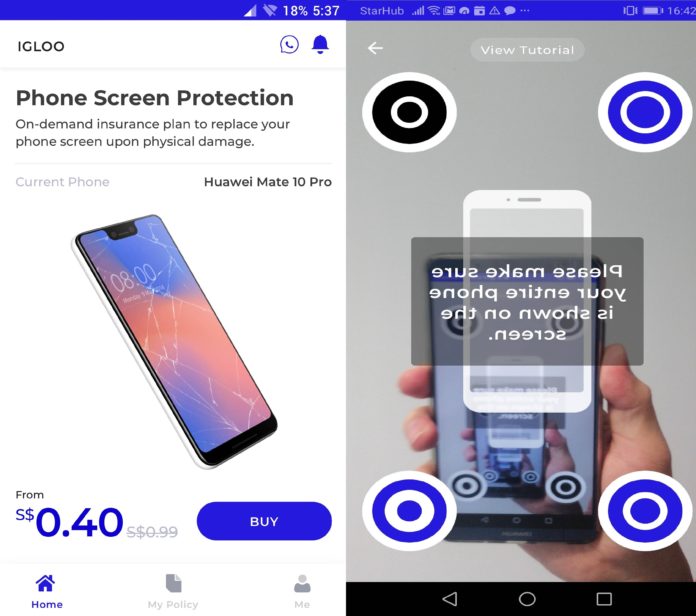
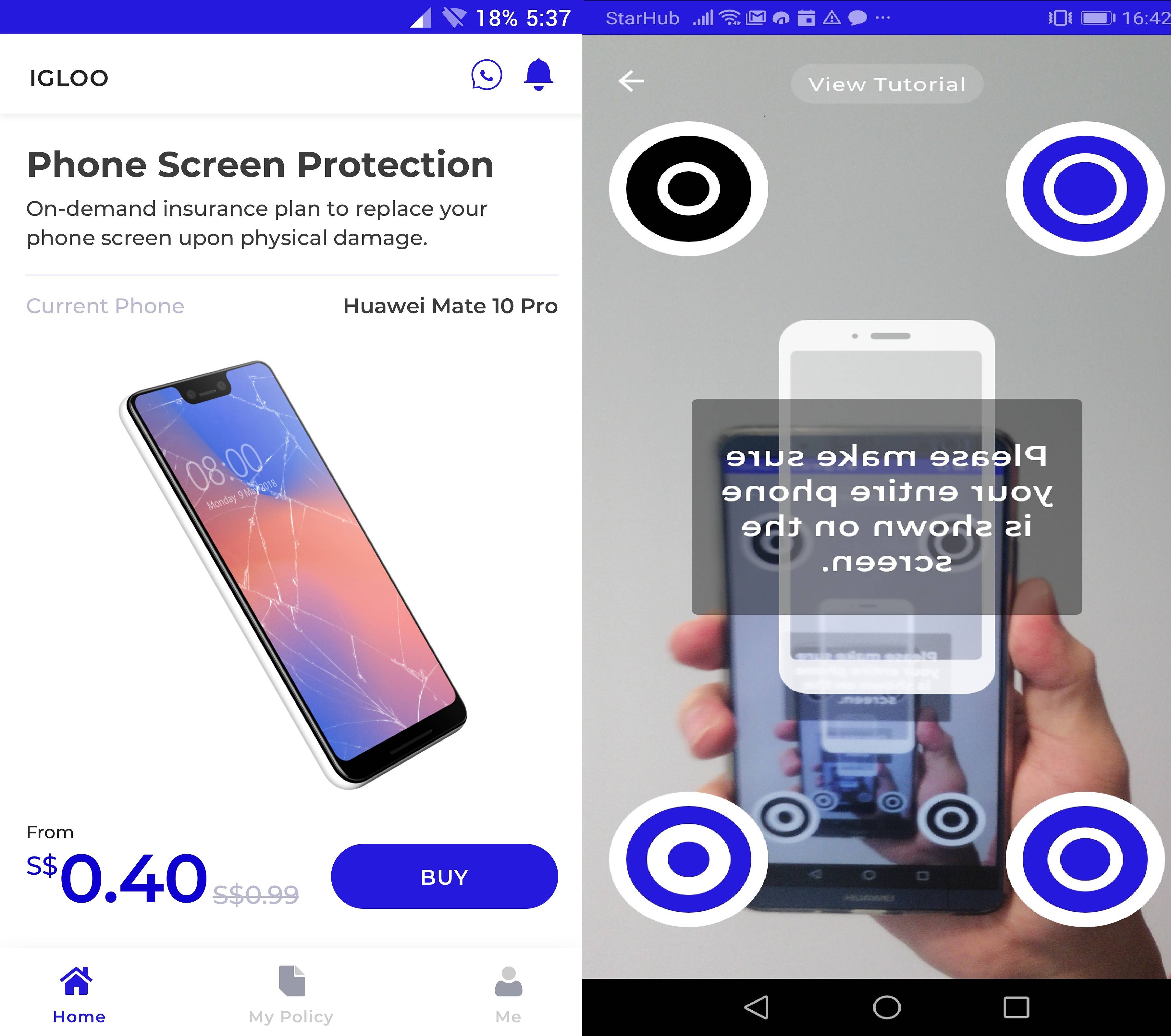
Insurtech start-up Axinan allows consumers to choose from daily, monthly and yearly plans that cover both old and new mobile phones for a one-time screen repair.
Axinan, through its consumer brand igloo, offers daily, monthly and yearly plans that cover both old and new mobile phones for a one-time screen repair. Premiums differ according to coverage duration and phone type. For example, the rates for a 12-month policy can range from S$13 to S$45.
At e-commerce solutions firm Synagie, its insurance product cost S$39.90 a year and covers brand new phones for one screen repair at authorised service centres.
The plan, launched in March and underwritten by Etiqa Insurance, also comes with a free concierge service that picks up the damaged phone from a customer and sends it back after repair. It is available on Synagie’s lifestyle insurance app, which targets “threats and hazards in the digital lifestyle”.
“Many people live with cracked screens simply because screen repairs can be costly. But if you were to repair it at a non-authorised shop, you might get your warranty void,” said chief executive Clement Lee.
“We think this is a pain point.”
A screenshot from Synagie’s lifestyle insurance website.
OTHER LIFESTYLE PAIN POINTS
Bigger industry players have also jumped on the lifestyle insurance bandwagon.
Etiqa Insurance, for instance, rolled out cyber insurance for individuals last year. With annual premiums of S$107, the policy offers coverage of up to S$25,000 for four main cyber threats, namely cyber fraud, cyber extortion, restoration costs and identity theft.
Head of direct business Jazzreal Wong said this is a timely product, given trends like increased Internet usage and Singapore’s Smart Nation push. Existing cybersecurity insurance are also mainly targeted at businesses.
“There is growing awareness about protection against cyber risks, and companies have by and large started focusing on this,” said Ms Wong.
“But there is definitely a big gap when it comes to emulating a similar protection for individuals who are very much on their own.”
At NTUC Income, emerging lifestyle pain points that have been identified include surges in ride-hailing fares on rainy days.
It rolled out Droplet in October 2018, offering a payout of up to 60 per cent of a passenger’s trip fare or cancellation fee if it is raining at the point of pick-up. Coverage under the insurance policy has since been extended from rides on Grab to include those booked on Gojek and Ryde.
NTUC Income then followed up with Pinfare in March, which allows customers to insure against price fluctuations on flight booking sites.
“Droplet and Pinfare are examples of how we offer customers innovative insurance solutions that are embedded into routine lifestyle activities,” said chief digital officer Peter Tay.
The insurer also embarked on a partnership with China insurtech pioneer ZhongAn in April, to enhance its operational agility and technological capabilities. This has thus far resulted in a micro-insurance plan that allows Grab drivers to slowly build up insurance coverage by paying premiums of between 10 and 50 cents with each trip they complete, as well as a usage-based motor insurance with car marketplace start-up Carro.
“Innovation is agile and iterative and to serve our customers well, we must be ready to tap on the right opportunities at the right time,” Mr Tay added.
Commenting on the trend, National University of Singapore’s (NUS) associate professor Lawrence Loh said insurance has traditionally been “very lumpy and involving big purchases”.
However, the rise of new technology, such as data analytics, has paved the way for changes.
“Now, its about micro-insurance where risks are broken down into smaller parts so that customers can buy what they need,” he explained.
A competitive landscape also means that insurers are now more willing to dabble with new products. “If you don’t do it, someone else will,” added Assoc Prof Loh.
IS THERE DEMAND?
Replying CNA’s queries, NTUC Income said it has seen “encouraging” response to Droplet and Pinfare, with surges in take-up rates during different times of the year.
For instance, there tends to be more takers for Droplet during rainy seasons like the past couple of months. The take-up rate for Pinfare is also typically higher in weeks preceding long weekends or school holidays, said Mr Tay.
“To date, we have sold close to a thousand policies for Droplet and Pinfare combined, and note that 20 per cent of Droplet policy purchases come from returning customers.”
NTUC Income announced a new insurance plan to provide coverage for surge prices charged on rides booked on rainy days. (Photo: Income)
Its micro-insurance plan for Grab drivers – which it said is Southeast Asia’s first micro-insurance plan to offer protection against critical illnesses – has also been “well-received”. At the moment, there are more than 1,200 drivers holding these policies, said Mr Tay.
Etiqa Insurance would only say that its personal cyber insurance has seen a 50 per cent quarter-on-quarter increase in take-up rates since its launch.
Axinan and Synagie declined to reveal how many policies they have sold, although they noted that responses have been promising despite initial challenges.
Mr Lee, for instance, noted the need to change how people feel about insurance.
“People don’t look at buying insurance unless (it’s) at the point of inflection. For example, you won’t think about buying travel insurance unless you are planning a trip.”
Echoing that, Mr Mehta said: “Insurance, by design, is a very difficult product to sell so it has to be sold in a very seamless fashion.
“Like selling it to you in a telco store and as part of an overall package for your new phone. If somebody tried to sell a mobile phone insurance to you separately, you probably wouldn’t buy it.”
This is why both firms have thus far adopted similar strategies – leveraging digital technology to make insurance simple and directly accessible to its customers, but at the same time work with different partners such as brick-and-mortar mobile shops and telcos.
“It was not a smooth start in the sense that we had to do a lot of market education and training of the sales team … but I think we are finally headed to a more receptive market now,” said Mr Lee.
Awareness for new products will inevitably take time, said Ms Wong. And to do so, Etiqa Insurance had a soft launch which introduced the personal cyber insurance as an add-on to its home insurance policy.
“We knew it would be difficult to talk to individuals purely on cyber insurance so we decided to bring in the element of home and protecting one’s family,” she told CNA, adding that the soft launch saw a “positive reception”.
Moving forward, NTUC Income is looking to launch a micro-insurance scheme that will allow customers to pay for their premiums through daily activities, such as purchasing a cup of coffee. This is slated for early 2020.
But as negotiations with potential partners are still being finalised, it declined to share more details.
Mr Tay said: “Micro-insurance, in essence, breaks down traditional insurance into parts, allowing the customer to pay for what he or she can afford and build up his or her insurance coverage gradually over time.
“We see the growing popularity of micro-insurance schemes globally as an opportunity for us to make insurance more accessible and affordable for customers by making it a part of their daily lives.”
Others are also looking to expand their lifestyle insurance products.
Offering more consumers protection against loss, damage and delivery delays for their online shopping could be on the cards for Axinan.
The start-up already offers this in Indonesia through a partnership with local e-commerce platform Bukalapak. Merchants can protect their goods against the risk of total loss or damage during transit, while customers can get protection against accidental damage for gadgets and electronics they buy from the Indonesian e-commerce site.
Mr Mehta said Axinan plans to make this available in Singapore after seeing encouraging traction in Indonesia.
SINGAPORE: This December, as Christmas jingles fill the air, a bittersweet note has crept into these giddy tunes for me. My only child will be starting pre-school in January.
Since the beginning of the month, somewhere in me, an internal countdown clock has started ticking away. I have visited her classroom, got her vaccinations in order, synced her naptime to that of her new school, tagged her water bottle and towels, and read and re-read two off-to-school books with her.
Yesterday, I finally picked up her school uniform.
And now, as the twinkling fairy lights bounce off their plastic wrapper, I am struck by the dull ache of anxiety and loss… In a few days, my 20-month-old baby girl will put on this oversized uniform and her tiny body will disappear into a sea of her peers.
SEPARATION ANXIETY AFFECTS PARENTS TOO
Yet, as her first day of school draws near, I feel pangs of separation anxiety.
Yes, while this heart-wrenching emotion is typically used to describe toddlers and young children, it can affect parents as deeply. There is just something so momentous about watching your child head off to school and step into the wide world alone.
Whether they are leaving the safety of the nest for pre-school, entering the formal education system at primary school, or progressing to secondary school where peers will have an increasingly larger influence on them, as a parent, one cannot help but feel like one is losing them a little at each point.
As American journalist and teacher Elizabeth Stone put it: Having a child “is to decide forever to have your heart go walking around outside your body.” Letting go will always be a struggle.
File photo of children in pre-school.
Will my daughter be happy? Will she make good friends? Surely there will be moments when she will feel scared, stressed or alone?
My husband, being the official worrywart of the family, took it even further, running through plausible and implausible scenarios with my toddler as we gear up for the first day. His survival 101 tips include how not to be ostracised, how to deal with a bully, and how to avoid being kidnapped.
FIRST-DAY-OF-SCHOOL WOES
I blame Netflix’s teen flicks for many of my husband’s deep-seated fears. But the fears that parents have for the child’s first day of school are not all that far-fetched.
For one, many introverted children and youth do experience crippling social anxiety. Those transitioning from pre-school to a large primary school may also feel overwhelmed or isolated, and those entering secondary school may struggle to cope with being separated from old friends and having to make new ones.
Bullying is also not just a plotline from teen dramas. A survey commissioned by Mediacorp programme Talking Point found that three in four children and teenagers are victims of cyber-bullying, and almost all kept it from their parents.
When my daughter was a baby, my first instinct had always been to remove these dangers from her path. But as she grows older, I wonder if it would be better to simply create a daily bonding ritual.
Perhaps a warm welcome home hug, and a cup of hot Milo together can be the balm she needs to soothe visible or invisible bruises.
It will also give me the opportunity to spot any red flags and celebrate the littlest milestones – such as her first excursion or personal painting.
An early childhood educator with her students. (File Photo: TODAY)
In fact, my more experienced friend warned me that everyday tasks can prove challenging for our younglings.
As a primary school teacher, she noticed that toileting issues, sleepiness, money management and getting lost in school or on the way home are common for Primary One kids.
Many parents also worry that their children will not be able to keep up in school. Lining up enrichment classes, and joining parental support chat groups is becoming the norm in most schools.
While I don’t have experience with such chat groups yet, a friend with primary-school-going-kids tells me that messages come fast and furious, with topics ranging from homework to spelling lists and even feedback on teachers.
Expecting an “easy” Primary One with no examinations, she suddenly felt the pressure to “buck up”.
RESHAPING THE EXPERIENCE
Seeing a working mother like my friend, I cannot help but wonder when school became a tango-for-two?
Yes, it is important to adequately prepare our children for new challenges, routines and social environments.
But should we, as parents, be neck-deep in to-do lists to smoothen our children’s experience? Or is part of letting go accepting that our children will inevitably fail and fall down at times, and that growing up comes with bruises and tears, heartaches and disappointments.
Are we consciously or unconsciously passing on our anxieties and fear of failure to our children, underestimating our children’s capabilities, adaptability and resilience?
While it is understandable to feel anxious – I do too – perhaps it would be good to remind ourselves that our children’s vision of the world is greatly coloured by our lenses.
Whether they see school as scary or fun; challenges as stressful or exhilarating; and the world as a friendly or hostile place are largely shaped by us.
On my part, I am trying to see school as the first step to many great adventures.
I already know that mornings will be chaotic. Even getting everyone fed, dressed, packed and out of the house in time will require some hustling.
We won’t always get it right. Some days, we might be late or forget something. And some days, my daughter may come back with bruises or tears.
Students participating in a mathematics class. (File photo: TODAY)
But that is all part of the process of growing up, which can be a messy, complicated, imperfect, painful, but ultimately a beautiful experience.
REDEFINING ROLES AND RELATIONSHIPS
Beyond that, the first day of school is a major milestone in my daughter’s life worth celebrating.
And with all major milestones, perhaps it is time to redefine my role and relationship with her.
Having put work, my social life, downtime and self-care on the backburner since she was born, I have decided to join the company of seasoned parents who count down to school reopening, when our children will have an alternative place to expend their boundless energy.
Hopefully, this will conserve some of my time and energy to grow as a person as well, so that over time, I too can evolve to be less of a protector and problem-fixer for her, and more of a worthy mentor and friend.
For now, I am celebrating this pivotal moment by giving her a ridiculous haircut with super short bangs to go with her comically oversized T-shirt. I have also fully charged my camera to sear this moment into family history.
Her school uniform may be too large for her now, but I have no doubt she will fill them out in both size and stature one day.
Annie Tan is a freelance writer, and the mother of a spirited one-year-old who fires up her imagination and inspires her to find her inner child.
SINGAPORE: At a time when most brick-and-mortar retailers were trying to digitise their stores and start selling online, multi-label design retailer Naiise did the complete opposite.
Despite starting out as an online-only seller in 2013, the firm soon launched a physical retail store in Westgate mall in Jurong two years later, the first of several outlets to come, and became one of the few retailers in recent times to move from clicks to bricks.
The risky move paid off for the homegrown business, which recorded an average of 20 per cent year-on-year increase in traffic across its five Singapore stores, its founder Dennis Tay said. This includes its two newly-opened shop spaces in Jewel Changi Airport and Paya Lebar Quarter this year.
Regarded as a retail darling in Singapore’s crowded scene, the firm also operates the first level of Design Orchard, a showcase mall at the heart of the Orchard Road shopping belt jointly developed by three agencies — Singapore Tourism Board, JTC Corporation and Enterprise Singapore.
“We believe there is still room for growth for individual (retail) players if we can innovate and keep up with consumer preferences and tastes,” said Mr Tay.
Yet, Naiise’s continued expansion and Mr Tay’s optimism are the exceptions rather than the rule in the retail sector which has been pummeled in recent years.
Excluding the sales of motor vehicles, the retail industry is mired in a decline over nine consecutive months as of October, with most categories of retailers seeing a fall in sales takings, based on the latest data from the Department of Statistics.
While some retailers interviewed enjoyed brisk sales this month amid the festive season, experts said that from a macro view, the retail sector has in fact been going through a slump for at least three years now.
Multi-label design retailer Naiise is regarded as a retail darling in Singapore. The firm operates the first level of Design Orchard, a showcase mall at the heart of the Orchard Road shopping belt. Photo: TODAY/Najeer Yusof
Left in its wake are shuttered physical retail outlets and “omni-channel” businesses that had primarily operated out of storefronts.
These business casualties had mostly targeted the mall-crawling masses, and sold a wide variety of brands, not just their own. They were also neither market leaders in their respective segments, nor were they mom-and-pop stores that operated out of residential neighbourhoods.
Retail household names who downsized their operations include food outlets such as Sakae Sushi; bookstores including MPH and Kinokuniya; furniture retailer Crate & Barrel; travel retailer DFS Group; and a host of departmental stores such as Isetan, Metro, Marks & Spencer and Mustafa.
Several left the scene completely. American beauty products retailer Crabtree & Evelyn closed all its physical stores in Singapore, British preppy fashion label Jack Wills announced its pullout, and longtime homegrown IT retailer Newstead went into liquidation.
So, what is causing these retailers — which had enjoyed success over the years to become familiar names to Singapore shoppers — to now feel the squeeze? And what is the secret ingredient that allows some, like Naiise, to weather the retail storm?
Unlike what many would think, the answer to both questions is not “e-commerce” alone, several analysts and business leaders said that retail accounted for less than 5 per cent of total sales last year.
But while digital has not yet killed the retail star, there is more that needs to be done for retailers to avoid the chopping block and give customers a reason to come back and spend their money at the shop, they added.
THE RETAIL SLUMP: A PERFECT STORM?
After the last financial crisis in 2009, Singapore’s economy and household incomes had recovered steadily at a compounded annual growth rate (CAGR) of 4.6 and 4.5 per cent respectively over the decade.
But in these 10 years, the growth of retail sales and the food and beverage services did not keep in step, growing by a CAGR of 1.6 and 1.8 per cent respectively, according to a report by real estate consultancy Edmund Tie & Company.
This period coincided with the rise of e-commerce and mobile devices, which gave consumers the ability to shop around the clock, greater convenience, increased access to product information and reviews, lower prices and more choices.
More recently, experts point to the ongoing weaker economy here as well as globally, which means Singaporeans are more likely to tighten their purse strings when it comes to shopping for non-essentials, while tourist receipts also tumble.
Mr Alan Cheong, executive director of research and consultancy at Savills Singapore, said the current woes afflicting the retail industry are structural, both from the demand and supply sides.
The worst performers are those in mainstream retail segments, such as apparel, department stores, furniture, household appliances, books and gifts.
In these segments, offline retailers face the full force from online competitors, which do not need to manage retail display space and possess an advantage in having a more efficient supply chain management, said Mr Cheong.
The rise of budget air travel has also affected the shops here.
Said Mr Cheong: “One often ignored factor affecting retail and F&B is budget air travel. This is making cheaper regional cities accessible not only for tourists who visit Singapore in their itinerary, but also Singaporeans who take a portion of their discretionary spending overseas.
“Visitors are deferring their purchases during their vacations till they arrive at countries that are cheaper. The profile of tourists these days is one where they treat Singapore as a must-visit destination, but knowing from friends or online blogs that Singapore is not a cheap place to stay or shop, they shorten their stay and spend the bare minimum here.”
Customers wait at an AirAsia ticket counter at Kuala Lumpur International Airport in Sepang, Malaysia, Mar 7, 2016. (Photo: Reuters/Olivia Harris)
The retail sector today has to contend with narrower margins when consumers are able to buy goods that offer the same or better value online or overseas, said Dr Lee Nai Jia, head of research at Knight Frank Singapore.
Said Dr Lee: “Retail sales will likely remain subdued looking ahead, although improvements in the economy may help push up sales. The retail sector is undergoing structural changes in its business models, marketing efforts and customer engagement initiatives, and it may take some time before the market picks up.”
There are also other supply-side reasons for the slump, including higher operating costs for retailers today. This includes the perennial issue of labour and rent costs.
Unlike the smaller heartland retailers which are typically family-run, larger retailers are highly reliant on being able to employ competent sales staff, said experts. Good retail service is a strong differentiating factor from e-commerce competitors.
The Customer Satisfaction Index of Singapore, a national study conducted by the Institute of Service Excellence within the Singapore Management University, has continued to climb in recent years, growing from 71.7 for the retail industry in 2016 to 72.6 in 2018. This figure includes both physical and e-commerce.
However, a breakdown of the index shows that between 2016 and 2018, the average service level scores by e-commerce retailers had exceeded department stores here. Duty free chain DFS Group was consistently the best performer among the department stores, and its downsizing could shift the overall scores in favour of e-commerce in the future.
One recent policy change that will likely pressure retailers further is the impending restrictions on foreign workers for the services sector, which includes workers in retail trade and F&B, to ensure that Singaporeans continue to have good jobs and opportunities.
In Budget 2019, the Government announced that it is tightening the dependency ratio ceiling, or the proportion of foreign workers a firm can employ, from 40 per cent to 38 per cent on Jan 1 next year, and to 35 per cent on Jan 1, 2021.
THE PROBLEM OF RENT
When it comes to rent, Colliers International Singapore’s head of research Tricia Song said it has always been a significant cost consideration for retailers.
Since the first quarter of 2015, rent had been on a general decline, even though it picked up slightly in recent months, based on data from the Urban Redevelopment Authority (URA). URA’s rental index for retail climbed 2.3 per cent in the third quarter of 2019, compared with a decrease of 1.5 per cent in the previous quarter.
The worst performers are those in mainstream retail segments, such as apparel, department stores, furniture, household appliances, books and gifts. (Photo: TODAY/Raj Nadarajan)
Rents make up a relatively large component of retailers’ expenses which eat away at their profits.
One key indicator is the occupancy cost ratio for each retailer, which is defined as the ratio of gross rental including service charge, marketing and promotions, to retail sales.
“Despite lower retail rents compared to, say 2014, sales have also declined, which means occupancy cost ratios may not have declined,” said Ms Song.
Mr Cheong said while the downbeat retail trend has been going on for some time. Despite this, landlords have continued to increase their rental revenue “by optimising various variables” since 2013.
“For instance, they could still improve on the rentals collected by chopping up the larger units to smaller sizes and in turn gain from the higher per square foot rent, or converting the spaces to F&B uses,” he said. “This masked the downtrend and created the false belief that the tenants’ plight is not the landlord’s problem.”
He added: “It was only around 2018 that after all the add-ons and trinkets had been exhausted that everyone began to see that the emperor had no clothes.“
Mr Cheong said today, malls still charge a high base rent with a minimal gross turnover component. Having such a component allows for some flexibility in rents depending on the tenants’ gross sales. But the structural rigidity of mall rents today mean rents are unable to adjust when retailers are undergoing through difficult periods, such as when the economy is bad.
He noted that malls that are not owned by private equity, such as Reits (real estate investment trusts), are more nimble than those which are, in adapting to the retail slump in terms of rent collection.
“If there are structural impediments, then the ability of (private equity-owned) malls to change tack in their rental collection model is akin to that of steering a supertanker. It will take a great deal of effort to change direction,” he said. “Landlords now must have skin in the game with the tenant. In other words, landlords will have to bear part of the retailers’ business risk.”
Still, Ms Song said centrally managed malls — including those owned by Reits — have an edge over strata-titled malls as they are more capable of organising mall-wide promotional and branding activities. They are also able to better attract an “optimal tenant mix” and configure the space of leased areas in order to fit the overall concept for the mall.
For instance, new malls such as Funan Mall, Jewel Changi Airport, and the Paya Lebar Quarter are centrally-managed malls that have incorporated “experiential and first-to-market” elements in them, she said.
Said Ms Song: “Large and experienced mall operators also have better financial strength, scale and expertise to carry out asset enhancement initiatives. Strata-titled malls have different owners and may not act in common interest.”
Malls need to proactively reach out to various retailers and search for new retail concepts, said Mr Ong Choon Fah, chief executive officer of Edmund Tie & Company (South-east Asia), highlighting the efforts of Funan Mall’s owner CapitaLand Mall Trust, which has been proactively engaging customers to understand what retail concepts they desire.
He added that the retail industry is expected to remain weak in 2020, but it is not all doom and gloom for the retail industry.
“We are all social creatures — gathering, meeting and socialising with others, such as family, friends, acquaintances or just to people watch. (Offline shopping) is very much a part of our well-being,” said Mr Ong.
He added: “Just as the telephone and mobile phones did not stop us from socialising physically, malls will continue to have a role – as a place for us to gather and connect. It is not so much the act of buying but the collective experience we share with others in a mall. The curation of the experience, be it at the retailer or mall level, becomes just as, if not more, important than the physical space and the merchandise alone.”
ALL ABOUT THE LIFESTYLE EXPERIENCE
While some malls have proactively sought to attract footfall and help their tenants tide over the slump, retailers also have to do more to innovate against their competition.
To get out of the current rut, some retailers have improved the shopping experience by providing personalised goods and services, or by providing complementary lifestyle services within the shop, said Dr Lee.
Adjunct Associate Professor of marketing Lynda Wee from the Nanyang Business School said some lessons can be learnt from the closure of Sasa and Home-fix.
In Sasa’s case, it was because it did not curate its merchandise and experiences to its target customer segment, and the brands it carried were generally lesser known. Sasa also competed on the basis of discounts, even though online stores offered equally competitive prices.
On Home-Fix’s predicament, apart from the online competition, she wondered if it could have offered offline consultation and advice for do-it-yourself activities, which would have “promoted a sense of exploration and achievement”.
Said Dr Wee: “Offline retail needs to rethink their roles since most of the activities can be done by online retail. Functional, repetitive, transactional (functions) like taking orders can be done online. How about increasing the emotive, through engagement and growing the community using high touch (methods)?”
The retail sector has been going through a slump for at least three years now. (Photo: TODAY/Raj Nadarajan)
HOW SOME DO IT
To find out how retail businesses here do it, we spoke to five retailers that have similar market positioning as Sasa and Home-fix in their respective segments.
A clear trend today is the rise of an experiential and activity-based offline retail model, which is what attracts customers to the physical outlet, said the retailers. To this end, technology may also play a part, they added.
The pharmacy Guardian, for instance, regularly partners popular beauty brands and holds regular events, such as a recent series of interactive beauty workshops and activities to celebrate its collaboration with Korean retailer Olive Young at Ion Orchard.
Mr Soren Lauridsen, CEO of Guardian Health and Beauty, said: “In addition, as part of our ongoing efforts in providing our customers with a positive in-store shopping experience, we have been investing in new store refits across our network of stores across Singapore, which we will continue to unveil in the next year.”
One brand which has broadened its appeal and reach is Australian menswear fashion label Benjamin Barker.
In 2014, it launched multi-label store The Assembly which carries menswear brands and lifestyle products other than its own, and also serves coffee and food in a cafe next to the store. It also launched its online store in 2015.
This year, Benjamin Barker managed to increase footfall in its outlets by more than 10 per cent compared with last year. In particular, the holiday season in December netted around 10 to 15 per cent higher receipts than the average in previous months.
Chief operating officer Damien Tan said: “Customer experience is not only the new frontier of competitive differentiation, but also, the future of how brick-and-mortar retailers like ourselves will generate revenue.”
This year, Benjamin Barker managed to increase footfall in its outlets by more than 10 per cent compared with last year. In particular, the holiday season in December netted around 10 to 15 per cent higher receipts than the average in previous months. (Photo: TODAY/Raj Nadarajan)
To ensure a sustainable retail environment in the age of digital disruption, he said it is imperative for retailers to create long-term value which lasts, and to design the appropriate “experience-focused value proposition” for the customer.
But he said that unlike the larger retailers, mid-tier players like Benjamin Barker are still constrained by their financial resources.
“The challenges faced by small and medium-sized enterprises like us is that we do not have the financial ammunition nor infinite resources like the bigger players, so we have to work doubly hard to ensure we continually create great products at a value price point coupled with an unparalleled store experience,” said Mr Tan.
When Naiise opened in 2013, it only carried five brands. Today, it carries 1,068 brands, including around 700 to 800 local ones. (Photo: Naiise)
Naiise’s Mr Tay added that the modern-day offline retail experience is one based on customer engagement, rather than transactional one.
The retailer does not produce its own branded goods, but instead curates and sells designer items produced by local and regional creatives, such as fashion apparel, stationery, home accessories, and beauty products.
At its Jewel Changi Airport store, Naiise achieves a retail experience based on engagement through “rotating thematic pop-ups in store, creative sessions, workshop programmes and value-added services like gift wrapping and F&B”.
This year, it also worked with the Singapore International Film Festival to hold movie screenings for the public.
“All of these offerings provide us with the opportunity to continuously engage, introduce and cross-sell our merchandise to our consumers,” said Mr Tay.
Naiise also introduced heat mapping and tracking video analytics systems into some stores to identify customer flow, hot spots, and dead zones.
“This helps us better visualise a customer’s journey, preferences and highlight areas we can better utilise or improve. Akin to onsite optimisation, these data points help us optimise our offline offerings to be able to drive more value to our customers and help us make better retail design and merchandising decisions,” he added.
OTHER FACTORS FOR SUCCESS
Retailers could also chance their fortunes in riper markets overseas, such as emerging markets where manpower and rent costs are lower.
Several have already done so. Aided by trade promotion agency Enterprise Singapore, homegrown beauty brand Skin Inc had developed an online strategy targeting the Chinese market, such as by setting up online stores on WeChat and Weibo, while also launching new products through Sephora retail stores.
Benjamin Barker had also partnered like-minded franchisees in Cambodia and Malaysia “who believed in the brand and share a similar vision for the growth of the brands in these emerging markets”, said Mr Tan.
But the strategy cannot be online for online’s sake, said the retailers. Rather, new innovations should serve to streamline business operations, improve the customer experience, or to open up a new channel for products to be sold.
Such moves do not always work. When pet services and products retailer Pet Lovers Centre introduced vending machines in various parts of Singapore sometime last year to give its customers added convenience, the move did not pan out well, said its group managing director Ng Whye Hoe.
It was difficult to find an optimum location for the machines at the right price and vendors faced difficulties in replenishing the stocks. Ultimately, Pet Lovers Centre customers still preferred shopping at its brick-and-mortar stores.
The firm remains keen on its strategy to sell across all channels — apart from vending machines, it also has an online store and operates a click-and-collect service.
Said Mr Ng: “Singaporeans, including pet owners, adopt a pretty much mall-centric lifestyle, coupled with arm-chair shopping online. They look to trusted and ethical brands for their needs if possible, and almost demand convenience.
“That is why we instituted our omni-channel strategy, whereby besides shopping online and calling our customer hotline, pet owners can practically find our store in a shopping mall near them.”
When asked how it competes against other players that also sell pet products, he said Pet Lovers Centre enjoys economies of scale over the smaller neighbourhood shops, which affords it advantages in product pricing and offerings, as well as the freshness of its products.
As for competing against chain supermarkets, Mr Ng said the firm launched Pet Lovers Express this year, which is a pop-up concept store within NTUC FairPrice.
When pet services and products retailer Pet Lovers Centre introduced vending machines in various parts of Singapore sometime last year to give its customers added convenience, the move did not pan out well. (Photo: TODAY/Raj Nadarajan)
Pet Lovers Centre increased its customer receipts by 2.32 per cent between January and November 2019, compared with the same period the previous year.
“Singapore’s retail sales may be heading south at the moment, but experience has shown that sales tend to be resilient, or even push back (against the trend) when it comes to daily necessities like food, and pet food is no exception,” he said.
Another retailer that has found success in its omni-channel approach is home products retailer Iuiga, which started as an online store but later branched out into physical retail.
Its retail sales in the fourth quarter this year was 7 per cent higher than the previous quarter. Sales in the festive season have also been brisk, with its December revenue coming in 34 per cent higher than the same holiday period last year, and 50 per cent more than the average sales per month in 2019.
Its chief growth officer Jaslyn Chan said: “More than just a store where consumers can simply buy products, our stores double up as a showroom where customers can touch and feel products in store and buy (them) online.
“Showrooming has become increasingly prevalent on higher commitment products that are above a certain price threshold and works especially well with furniture and accompanying furnishings in Iuiga’s retail concept.”
Iuiga now has eight retail shops around Singapore. Like Pet Lovers Centre, it too had to find ways to adopt innovations that suited its strategy.
It initially experimented with in-store digital screens to showcase online exclusive products, but soon realised that shoppers responded to push notifications about the latter on its app.
Since their original purpose was no longer effective, Ms Chan said the screens were then repurposed to show product demonstration videos instead.
“As a young retailer, we have a lot of room (for improvement) in terms of visual merchandising and the retail shopping experience as a whole,” she said.
Two female pedestrians were killed and several left injured after a car crashed onto a side road at Lucky Plaza in Orchard Road on Sunday (Dec 29) afternoon.
Several eyewitnesses told The Straits Times that the car had crashed through a metal railing and landed on the side road next to the mall, hitting several people in the process.
When contacted, the police said it was alerted at 4.58pm to an accident involving a car and six female pedestrians, aged between 29 to 43, along Orchard Road.
“Two pedestrians, aged 29 and 35, were unconscious when conveyed to Tan Tock Seng Hospital where they later died from their injuries. Four pedestrians, aged 30 to 43, were conveyed conscious to Tan Tock Seng Hospital.
“The 64-year-old male driver was arrested for dangerous driving causing death. Police investigations are ongoing.”
SINGAPORE: Two people died and four other pedestrians were injured after an accident involving a car at Lucky Plaza shopping centre on Sunday afternoon (Dec 29).
The Singapore Police Force (SPF) said they were alerted to the incident along Orchard Road at about 5pm involving a car and six female pedestrians aged between 29 to 43.
Two of the pedestrians, aged 29 and 35, were unconscious when taken to Tan Tock Seng Hospital. They later died from their injuries.
A police cordon at Lucky Plaza after an accident on Dec 29, 2019. (Photo: Gabrielle Andres)
Four pedestrians, aged 30 to 43, were conscious when they were sent to the hospital.
“A 64-year-old male driver was arrested for dangerous driving causing death,” said police, adding that investigations were ongoing.
The Singapore Civil Defence Force (SCDF) said they received a call for assistance at 304 Orchard Road at about 5pm and dispatched five ambulances.
Photos and videos circulating on social media show twisted railings next to the main road, overlooking a service road on a lower level where the car and several victims can be seen. In a video, paramedics can be seen attending to at least two victims.
A police cordon at Lucky Plaza after an accident on Dec 29, 2019. (Photo: Gabrielle Andres)
When CNA visited the scene at about 6.05pm, the driveway of Lucky Plaza was cordoned off by the police, with a large crowd gathered around the area.