Home Blog Page 547

Filipino community remembers victims of Lucky Plaza accident

0

SINGAPORE: Bouquets, candles and food items.  

That was the scene at the site of a horrific car crash that killed two Filipino domestic workers and injured four others outside Lucky Plaza shopping centre on Sunday (Dec 29). 

People, mostly women from the Filipino community in Singapore, have been stopping by the area since they heard of the tragedy. 

“Those helpers just wanted to pass their time here, sit down and have a picnic. They didn’t expect this to happen,” said Mary jean llona, 45, who has worked as a domestic helper in Singapore for 19 years. “We are very sad about it. May they rest in peace”.  

READ: Lucky Plaza accident – I could have been killed, if I didn’t go to buy chocolate
READ:  CCTV footage emerges of moments before fatal crash

She and her friend, Mercedes Aurelio, stopped by to remember Abigail Leste, 41, and Arlyn Nucos, 50, who both died from the car crash. They do not know the victims but wanted to pay their respects.  

“If the women are mothers who are sole breadwinner I feel so sorry. Who is going to support them? That is the thing that makes me sad thinking about it,” said Ms Aurelio, 42, who has worked in Singapore as a domestic helper for nine years. “They sacrificed so much for their kids and then this happens”.  

Another domestic worker from the Philippines Hazel Bernardo, 47, was in tears as she lighted a candle to remember the victims and said a quiet prayer.  

“I have two kids. I’m a single mum. I know the feeling,” said Ms Bernardo, who has worked in Singapore for six years. “What if I’m the one who met the accident. What will happen to my kids?”  

Mercedes Aurelio and Mary Jean Llona paying their respects to the victims of Sunday’s tragedy

Mercedes Aurelio (left, in white) and Mary Jean Llona (right, in blue) paying their respects to the victims of the tragedy on Sunday Dec 29, 2019. (Photo: Rachel Phua)

She said they were praying for the comfort of the family, relatives and friends and protection for the Filipino community in Singapore, who are “miles away” from family. 

“May this never happen again.”   

Ms Bernardo also does not know the victims, but said it is part of a Filipino culture to care for others, “light a candle for them and pray for them” even if they don’t know them personally.  

READ: Two women injured in Lucky Plaza accident discharged from hospital

READ: Two sisters among six Filipino victims in Lucky Plaza car crash: Philippine Embassy official

Image from iOS (16)

Foreign domestic workers pay their respects near Lucky Plaza on Dec 31, 2019, where an accident involving six Filipino workers has occurred. (Photo: Rachel Phua)

FUNDRAISING FOR THE VICTIMS 

After the accident, organisations supporting foreign domestic workers launched fundraising campaigns for the victims. 

The Centre for Domestic Employees has surpassed its S$100,000 goal with more than 900 donors contributing, according to their campaign page on giving.sg opened on Monday. 

All the proceeds will go directly towards the injured foreign domestic workers and beneficiaries of the deceased workers, CDE said on their Facebook page.  

CDE’s chairman Yeo Guat Kwang said that the fund will be given to support the needs of the injured FDWs and bereaved families of the deceased in the coming months. 

Lucky Plaza accident 4

A photo circulating on social media of paramedics attending to victims after an accident at Lucky Plaza on Dec 29, 2019.

This is given that insurance processes take time and the amount of payout is dependent on the outcomes of the investigation, he said. 

The CDE is prepared to supplement the financial assistance through their Domestic Employees Welfare Fund (DEWF) as well, the organisation said on Facebook. 

The Humanitarian Organisation for Migration Economics is also helping to collect donations for the victim’s families. It has raised about S$1,000 so far, said case manager Jaya Anil Kumar.  
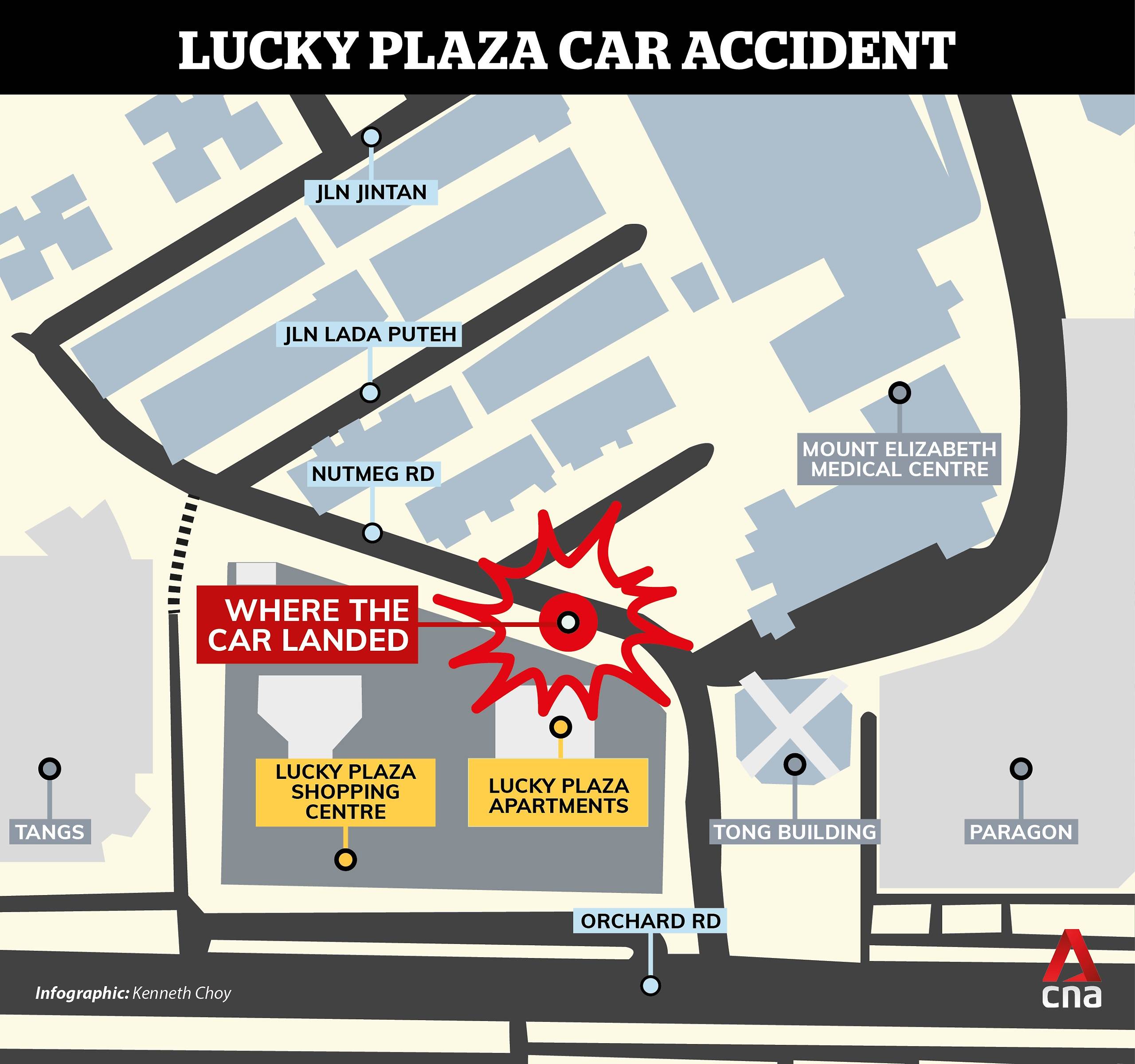
Lucky Plaza car crash graphic

​​​​​​​

The donations will help supplement the insurance payouts, she said, especially as many domestic workers are the main or sole breadwinners for the families. 

In Singapore, employers are required to purchase personal accident insurance and medical insurance with coverage of at least S$60,000 and S$15,000 per year respectively for their domestic workers.  

The personal accident insurance provides a compensation sum to the helper and her family if she is suddenly permanently disabled or died due to an accident.  

The medical insurance is to help employers, who are responsible for paying for the domestic worker’s medical bills during their stay in Singapore. 
Source link

Man, 48, fined for slapping boys who badmouthed his son

0

[ad_1]

A 48-year-old man was fined $4,000 yesterday for slapping two boys after they had badmouthed his son.

The odd job labourer pleaded guilty to one count of voluntarily causing hurt. Two other related charges were taken into consideration. He cannot be named to protect the identities of the boys, all of whom are below 16 years old.

The court heard the two boys, aged 15 and 14, were friends with the man’s son, who is now 15 years old.

Towards the end of last year, the man found out his son was being bullied in school.

Then on May 13 this year, he received a phone call from his wife who said a group of youths were looking for their son. The man went to meet the group and learnt that the two boys, who were his son’s schoolmates, had badmouthed him.

The next day at 1pm, the man used his son’s phone to contact one of the boys, telling him to meet at a coffee shop at Block 526 Jurong West Street 52 by 3.30pm that day.

The boy went to meet the man with the second boy and they both initially denied badmouthing the man’s son when he questioned them about it.

[ad_2]

Source link

Man jailed for stealing money by threatening schoolchildren at knifepoint

0

[ad_1]

Claiming to be a gangster, he warned a group of schoolchildren that he and his “brothers” would slash them if they did not hand him $2 each.

Aidealhira Firman, 23, even whipped out a knife to show the group of four he meant business.

But he was later persuaded by people in the neighbourhood to apologise and repay the $6 he had stolen, and was nabbed after one of the victims shared the incident on his class’ WhatsApp chat group.

Aidealhira was yesterday jailed for 14 weeks after pleading guilty last Friday to one count each of theft and criminal intimidation.

Five other related charges were taken into consideration.

Aidealhira, who was unemployed and living with his girlfriend, devised a plan to steal money from schoolchildren.

On March 26, he armed himself with a knife he found in the kitchen of his girlfriend’s house.

At 3.35pm, he approached a 13-year-old boy and three of his classmates at a playground in Teck Whye.

He told the four students he could protect them from other gangsters if they gave him $2 each, before threatening to slash them if they refused.

[ad_2]

Source link

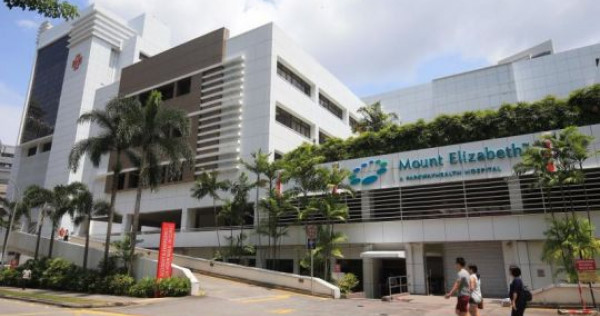
Lucky Plaza accident: Mount Elizabeth Hospital not activated as it is not on SCDF's list of medical providers, says CEO

0

[ad_1]

SINGAPORE – The Mount Elizabeth Hospital’s 24-hour accident and emergency (A&E) department is open to all patients, regardless of who they are, and the hospital will dispatch staff to attend to emergencies via its ambulance service, said its chief executive Noel Yeo, in response to criticisms over the Lucky Plaza accident.

In a Facebook post on Monday (Dec 30), Dr Yeo said the hospital’s A&E team would have responded immediately had it been activated or informed of the incident on Sunday.

He said it learnt later from news reports that the Singapore Civil Defence Force (SCDF) was activated and had arrived to attend to the casualties.

Six Filipino domestic workers were gathered on a pavement along Nutmeg Road behind Lucky Plaza for early celebrations ahead of the New Year when a black Honda turned towards them, mounted a kerb, hit the group and crashed through a pavement railing and plunged several metres.

The SCDF on Sunday had said it received a call at about 5pm requesting assistance at 304 Orchard Road, and dispatched five ambulances to take the six casualties to Tan Tock Seng Hospital where two later died from injuries.

[ad_2]

Source link

What’s new in 2020? 5 laws that kick in on Jan 1

0

SINGAPORE: When the clock strikes 12 on Tuesday night (Dec 31), Singapore will usher in 2020 with a flurry of fireworks and raucous celebrations. 

The turn of the decade will also see multiple new laws go into effect – read on to keep up with the changes.

LEGAL AGE FOR SMOKING RAISED TO 20

The minimum legal age for the purchase, use, possession, sale and supply of tobacco products will be raised from 19 to 20 years old from Wednesday (Jan 1).

This is the second step of the Government’s three-year plan to progressively raise the minimum legal age to 21 years old. It was debated and passed in Parliament in 2017, as part of the Tobacco (Control of Advertisements and Sale) (Amendment) Bill.

READ: Legal age for smoking to be gradually raised from 18 to 21

READ: Minimum legal age for smoking to be raised to 19 on Jan 1

Retailers who sell any tobacco products to a person below the minimum legal age could be fined up to S$5,000 for a first offence and S$10,000 for subsequent offences. 

In addition, their tobacco retail licence will be suspended for the first offence and revoked for subsequent offences.

Underage smokers who are caught using, buying or possessing tobacco products could be fined up to S$300.

The minimum legal age will be raised to 21 on Jan 1, 2021.

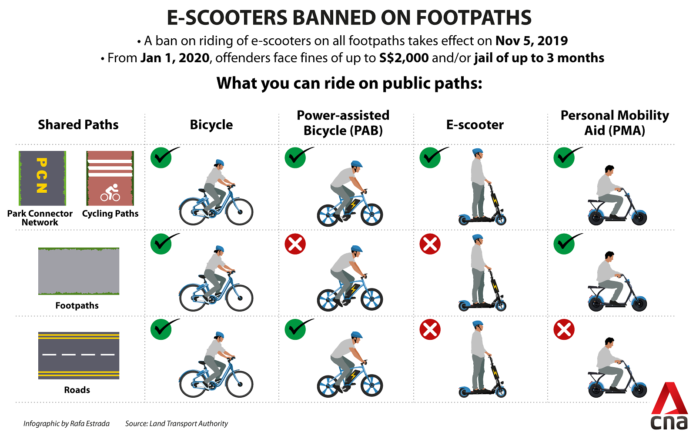
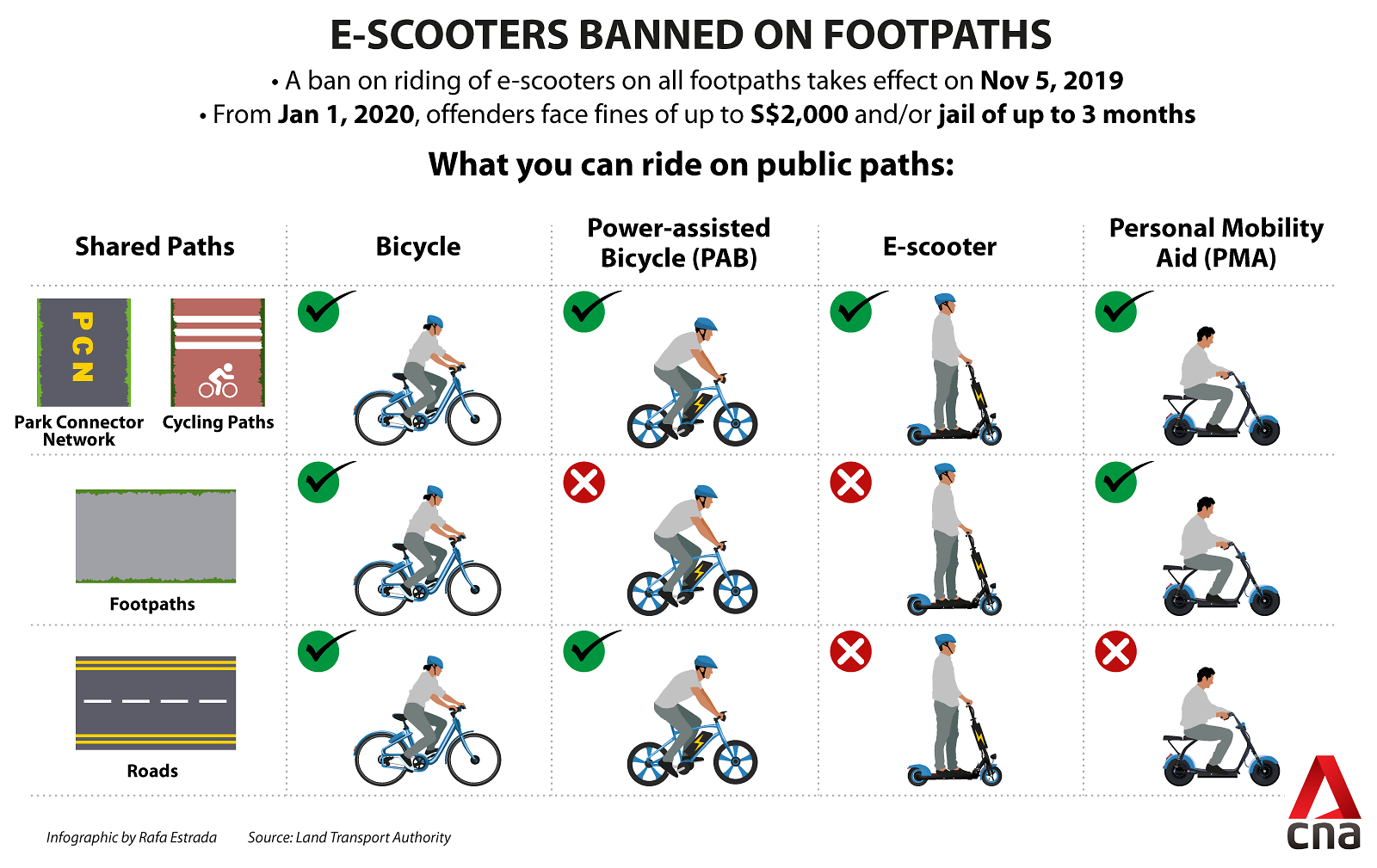
HARSHER PUNISHMENTS FOR FLOUTING E-SCOOTER FOOTPATH BAN

Electric scooters have been banned from footpaths since Nov 5.

Until the end of today, errant users will be given warnings as part of an advisory period to allow riders to adjust to the new regulations.

However, the Land Transport Authority’s (LTA) “zero-tolerance” approach kicks in when the new year begins.

From Jan 1, 2020, those caught riding an e-scooter on footpaths will be liable for a fine of up to S$2,000 and/or jail of up to three months.

E-scooter banned on footpaths Singapore

Food delivery riders who relied on the machines had an option to trade in their e-scooters for cash that ended on Dec 31.

With the move, e-scooter sightings when out and about will likely become rarer.

READ: E-scooter ban on footpaths: 5 things you need to know

READ: Commentary: Can we co-exist with PMDs? Yes, but we need to take a different path

LONG-AWAITED PENAL CODE REFRESH

A refresh of the Penal Code kicks in on Jan 1.

Part of the reforms target crimes brought about by advances in technology, such as voyeurism, “cyber flashing”, – or the sending of unsolicited images of genitals – and doxxing.

READ: Voyeurism, ‘cyber flashing’ to be criminalised from January as legal reforms kick in

The Big Read: Singapore’s voyeurism problem – what’s wrong with men, or the world?

The law will also be harsher on criminals who prey on vulnerable victims and young people.

This covers crimes against those below 14 years old, domestic workers and those with mental or physical disabilities. 

There are also new offences for sex crimes against victims under 18 years old but above 16 – the age of consent for sexual activity.

While the age of consent will be kept at 16, exploitative sexual penetration or sexual grooming of a minor who is between 16 and 18 are now crimes.

Other new offences include sexual communication with a minor below 16, engaging in sexual activity in front of a minor or causing them to look at a sexual image.

Marital immunity for rape will be fully repealed, while attempted suicide will be decriminalised.

Commentary: What took us so long to move against marital immunity for rape?

CIGARETTE BUTTS CAUSING VEGETATION FIRES

Watch where you flick that butt after lighting up.

Authorities will be able to take firmer action against those who do not properly dispose of lighted materials such as cigarette butts.

Starting Jan 1, 2020, a person will be presumed to have substantially contributed to the risk of causing a dangerous fire if that fire occurs within 60 minutes at or near the place where the person “threw, placed, dropped or deposited any thing likely to cause fire, unless the contrary is proven”, said the Ministry of Home Affairs (MHA).

READ: No ifs or butts: Cigarette rubbish is littering Singapore’s coastline

READ: 350 roadside vegetation fires per year, mostly caused by cigarette butts: MHA

Cigarette butts

Cigarette butts are seen on a patch of soil. (File photo: Hidayah Salamat)

The offence was introduced as part of the Criminal Law Reform Act (CLRA) passed in Parliament on May 6.

Those convicted can be punished with up to seven years’ jail and/or fined.

The first half of 2019 saw a marked spike in the number of vegetation fires with 555 cases, a 56 per cent increase from the 356 cases in the same period last year.

MALAYSIA EATERY SMOKING BAN

For those who have a habit of lighting up, it’s not just the new laws in Singapore that you need to be aware of. There’s something you need to take note of when you cross the causeway.

Malaysia has instituted a ban on smoking at all food establishments to protect the public from exposure to cigarette smoke.

“The ban also covers food stalls and vehicles which provide tables and chairs for people to eat, as well as restaurants on ships and trains,” said the Malaysian Ministry of Health’s director-general of health Noor Hisham Abdullah.

Anyone found guilty of smoking in banned areas can be fined up to RM10,000 (US$2,450) or jailed up to two years.

Something to keep in mind when travelling across the Causeway for a hearty meal.

Source link

Life on Pulau Bukom: Pretty sunsets, a 3,000 sq ft home, and lots of fun

0

SINGAPORE: For some years, Singaporean Leng Ng Tai had this as his home address – A, 4A, Pulau Bukom.

Located 5.5km southwest of mainland Singapore, Pulau Bukom which spans 243ha is more well-known as the location of Singapore’s first oil refinery, not the homes of people.

But Mr Leng, who was this year recognised for his 50 years of service with Dutch oil and gas firm Shell which owns the refinery, painted an almost idyllic picture of the island, instead of belching smoke and the whirring of machinery.

He described the location as one which provided him and his family unobstructed sea front views of the sunrise and sunset, a huge home, and a community where everyone knew and helped one another.

Accompanied by his son Benny, also a Shell employee, Mr Leng recounted to CNA how he was asked to move to the island with his family – his wife, 13-year-old son and 17-year-old daughter – so he could ensure that the site operates efficiently and optimally, as a part of his job as a Production Supervisor. They lived on the island from 1989 to 1997.

There were practical discussions to be had, Mr Leng, now a senior production advisor said. At the time, there were only a handful of shops on the island, which was then a 30-minute ferry ride away from the Pasir Panjang Terminal.  And Mr Leng counted them off on his fingers – a beauty parlour, an electrical goods shop, barber shop, and a tailor.

GETTING FOOD ON THE ISLAND

“Food was the number one priority. How do we get food? Our vegetables, our meat, and other provisions? Besides that, any cooked food available? We did have a hawker centre here,” he said.

He was quick to declare that an Indian stall at the hawker centre on the island sold “the best prata in Singapore”.

As it turned out, Mr Leng had little need to eat at the hawker centre, as word of his wife Doris’ famed cooking spread on the island. People were turning up at his home to eat and gather instead.

The Lengs made sure their kitchen was well-stocked with fresh food in two large refrigerators and a commercial-sized freezer. Every Saturday was marketing day, and they would head for the wet market in Clementi or West Coast. Fish however was not on their “to buy” list.

They would buy fresh fish from the provision shop on the island. The fish was supplied by Indonesian fishermen who went around the Southern islands, Mr Leng said.

“They did barter trade with the provision shop. So in exchange for the fresh fish, they got rice, sugar and all those stuff. The fish was really fresh. The provision shop owner would call us to tell us that there is fresh fish,” Mr Leng said.

Mr Leng's living room

Mr Leng’s living room in his 3,000 sq ft home on Pulau Bukom: (Photo: Leng Ng Tai)

Mr Leng’s wife, Doris, would whip up large portions of food, so there was always enough for visitors. There was also no lack of space if they wanted to stay the night.

LIVING IN A 3,000SQ FT HOUSE

Mr Leng’s home is huge. It measured about 3,000sq ft (279 sq m), the size of three four-room HDB flats. His dining room alone could accommodate about 30 seated guests. There were two four-seater sofas and eight single seaters in the living room. The balcony provided standing space for more people.

The home had four bedrooms with en suite toilets.

“Our unit was also like a boarding house. Young technologists or chemical engineers, when they work late, they will call and say Aunty Doris, can I come and stay for the night and have dinner?” he said.

Mr Leng’s favourite part of staying with the Bukomites as they are called is the camaraderie, the “kampung spirit” as he described it. Including Mr Leng’s family, 28 families lived in two blocks on one part of the island, while on another part of the island, about 30 families made up of firemen and policemen lived.

Benny and his sister ended up babysitting the younger children from the two blocks. Their neighbours would ask if they could leave their children at their home, and they would agree, Benny said. His sister would teach the children art as she’s good at it.

Their doors were never locked, a la kampung life. Sometimes, Benny said he would suddenly find one of the neighbours’ children beside him.

NO LACK OF ACTIVITIES

The residents kept themselves busy.

“Every alternate Friday, we had potluck, we got together. Almost all the families got together. Each one brought a dish, and we enjoyed our Friday evening on the island. So it’s very sociable environment, where everybody knows one another, from the adults, right down to the children going to school,” Mr Leng said.

Children's party on Bukom

A children’s party on Pulau Bukom when Mr Leng Ng Tai used to live there with his family. (Photo: Leng Ng Tai)

Every Wednesday for six years, a dancing instructor would be ferried in from mainland Singapore and give lessons. They learned different dance styles like the cha cha.

“Mind you, it is not that (at) the end we graduated to be good dancers,” Mr Leng said, laughing.

Thursdays, Saturdays and Sundays were free movie nights at the theatre which could hold 200 people, It was also where Shell’s company town halls were held. The theatre was part of the clubhouse which both father and son spoke about fondly.

It housed a four-lane bowling alley, two tennis courts, a fully air-conditioned badminton hall, a table tennis table, sauna, squash court, a library and swimming pool.

“We settled down here pretty fast, probably within two months. Taking a ferry was no longer an inconvenience, it was just another mode of transport,” Benny said.

MET WITH DISBELIEF

When Benny told his school friends about life on the island and the activities like fishing and barbecues that could be enjoyed there, his friends did not believe him.

“They always thought I was telling a lie, until I brought them on the ferry, I signed them in at the jetty, at the police station, and they saw the house, and the clubhouse, they were like ‘ok, yes, we believe you now’,” he said, still amused by the memory.

There was no turning back. They loved it.

The swimming pool at the clubhouse

The swimming pool at the clubhouse. (Photo: Shell)

“I couldn’t get them off my back. They were always asking when they could come,” he told CNA.

“Normally, they would come over in the late afternoon. We would have a bit of swimming, then we will have our barbecue. That will go up to 2, 3am. After that, if we wanted to go fishing, we would do that. Or else we will proceed to the club for late badminton or swimming,” he said.

MOVING OUT WITH SOME SADNESS

When it was time for the family to move out of Pulau Bukom in 1997, and back to their terrace house in West Coast, there was some sadness.

“It really was a bit of a regret. We know we couldn’t stay here forever. That’s the fact. It’s a matter of when we have to move out,” Mr Leng said.

There were some adjustments to be made as well.

“We spent S$150,000 to renovate the house because it was too small,” Mr Leng said.

For Benny, it was more the lack of air-conditioning that needed getting used to, as their apartment on Bukom had central air-conditioning that was turned on all the time.

The apartments are currently occupied by the Indonesian crew that work on the ferries.

It has been more than 20 years, but both father and son missed the life on the island, and especially the views.

“You look east, you see the sunrise across the Indonesian island. You look west, you see the sunset, so it’s something that not many Singaporeans will have the chance to see,” Mr Leng said.

Benny agreed.

“Once in a while, if I work late, I still know of a good spot in the plant to remember the view I saw when I was younger,” he said.

Source link

Commentary: The year e-scooters were kicked off footpaths

0

SINGAPORE: Jackson Diehl of The Washington Post called 2019 as “the year of the street protester”.

While Singapore’s streets have been free of protesters, 2019 might be remembered as “the year of the disappearance of e-scooters”. 

After a spate of accidents involving e-scooters and pedestrians, Singapore joined a growing list of cities globally in banning e-scooters on footpaths. Following nearly two months, has the situation really improved?

TRUCE ON THE PATH

With the use of e-scooters now confined to the 440km of cycling paths and Path Connector Networks, pedestrians no longer share paths with e-scooters. For comparison, there are roughly 5,500km of footpaths.

There have been almost no reported incidents involving e-scooters and pedestrians since the footpath ban imposed on Nov 5.

READ: PMD numbers set to plunge, but devices can still play a role in urban transport, say experts

Despite the advisory period to allow riders to adjust, where errant users will be given warnings up until Dec 31, we no longer tussle or jostle for space with an e-scooter – at least not as often.

Likewise, we no longer have awkward or startling moments when hearing an e-scooter’s horn, freezing on the spot, not knowing where we should place ourselves on the path, so as to get out of the way of the e-scooter. The remaining e-scooter users on footpaths have become more pliant about giving way to pedestrians, generally speaking.

Tech-savvy Singapore has embraced the e-scooter craze but accidents triggered calls for a ban

E-scooter riders in Singapore. (File photo: AFP/Roslan Rahman)

The Land Transport Authority will adopt a zero-tolerance approach towards riders who flout the rules and continue to ride on footpaths come Jan 1.

This has made moot the need for PMD users and pedestrians to reach an understanding on how they can share paths safely. 

The e-scooter ban is but a truce on the use of paths. It is merely a measure targeting a symptom.

READ: Commentary: What’s next for e-scooters after the footpath ban?

The ban does not adequately address the previous challenges we faced with e-scooters on our pathways. Norms and etiquettes governing interactions between pedestrians and e-scooter users were not established or followed.

So it is likely that we will hear about incidents involving pedestrians and e-scooters again if e-scooters are allowed to share paths without tackling these challenges.

How should we coexist with e-scooters and other personal mobility devices (PMDs), seeing that such options must be available for last-mile connectivity if we want to seriously move towards a car-lite society? 

INFRASTRUCTURE BOTH THE CHALLENGE AND THE SOLUTION

Senior Minister of State for Transport Lam Pin Min announced two weeks ago that the authorities are looking to expedite the expansion of Singapore’s cycling path network.

This comes on the back of calls for the expansion of cycling infrastructure and the creation of separate paths for “car-lite modes” (vehicles too fast for a footpath but too slow for a road).

car-free Sunday

A man pushes his e-scooter during car-free Sunday in Singapore.

Infrastructure upgrade would take time, money and political will. In Singapore, there is also the challenge of finding the space to do so – a common challenge when cities attempt to integrate e-scooters into existing transport systems.

We could repurpose roads into paths for car-lite modes. This could encourage more people to cycle or use PMDs to get around, in line with Singapore’s vision of becoming car-lite.

Commentary: Can we co-exist with PMDs? Yes, but we need to take a different path

But as we can glean from the experiences of Amsterdam and Copenhagen, widely acknowledged as being two of the best cycling-friendly cities, there must be limits to how e-scooters and bicycles coexist.

In early 2019, Amsterdam banned mopeds on cycling paths to ease congestion for cyclists. E-scooters are also illegal on both cycling paths and sidewalks. 

In Copenhagen, e-scooters are legal but they are limited to cycling lanes and are subjected to the same traffic rules as bicycles. There is also tight control over the e-scooter population to address congestion.  

E-scooters might crowd cycling paths, and the speed differences between bicycles and e-scooters might lead to accidents, not unlike interactions between e-scooters and pedestrians.

READ: Commentary: E-scooter ban on footpaths – here’s a list of those who got off scot-free

Perhaps our streets might be safest when we have separate paths for each user – one for pedestrians, one for personal mobility devices, and one for bicycles.

This might be feasible for now but sustainability would be an issue. We certainly cannot construct new paths or upgrade our infrastructure each time a new mobility device that changes how people move within the city appears on the market. 

There is also no certainty that building or repurposing infrastructure will change social behaviours positively. Shortly after the footpath ban, some riders took their e-scooters onto adjacent patches of grass.

Screengrabs of videos posted on social media of PMD users riding on the grass turf next to footpaths

Screengrabs of videos posted on social media of PMD users riding on the grass turf next to footpaths. (Videos: Facebook/Leonardo Clyde Alfonso/Ryan Wong)

Social behaviours do not exist in a vacuum. People interact with infrastructure and form complex sociotechnical relationships and systems over time which cannot be simply reshaped without consequences. 

For instance, with the ban, people who have come to rely on e-scooters and PMDs due to health reasons or disabilities suddenly found a once viable mode of travel or earning a living become unavailable overnight. It is not easy for such individuals to find a replacement with similar enablement. 

FOSTERING A NEW NORM

Retrospectively, e-scooters and other PMDs that shared the paths with pedestrians came across as a challenge to the unwritten norms and etiquettes that we, as pedestrians, have grown accustomed to. 

But many of us have admittedly benefited from the introduction of e-scooters.

They offered some a reliable and affordable mode of transport in their short-distance or first- or last-mile trips that complemented public transport. For others, they offered a new weekend activity.

LISTEN: What happened with rules, e-scooter riders and pedestrians and what’s next, a Heart of the Matter podcast episode

Beyond transport, e-scooters also opened up new opportunities of livelihood for delivery riders and has given us the convenience of having food and other goods delivered right to our doorsteps.

Now that e-scooters have been banned from footpaths, it offers us time to reflect on what we want of e-scooters and PMDs in Singapore.

A GrabFood rider on an e-scooter

A GrabFood rider on an e-scooter. (File photo: TODAY/Najeer Yusof)

On Sep 27, the Active Mobility Advisory Panel (AMAP) recommended that a code of conduct be introduced to guide pedestrians on sharing paths safely with other pedestrians and active mobility device users.

Pedestrians are to keep to the left of the path when walking unless overtaking and avoid walking on the cycling side of shared paths. In addition, they are to be alert to their surroundings when walking (i.e. not using phones or plugging in to audio devices).

READ: Commentary: Don’t complain about rules for bikes and PMDs until we’ve proven we can be responsible

READ: Commentary: What happened to caution and graciousness on the roads?

The Government has announced that they have accepted and will implement this recommendation. We shouldn’t have issues abiding by this code of conduct, since it formalises unwritten norms and etiquettes we have already been practising as pedestrians.

In fact, we should be more ambitious to extend this code of conduct beyond pedestrians. All individuals, pedestrians or otherwise, should practise sensibility, safety and self-awareness when sharing paths or any infrastructure for the matter.

THE NEW NORMAL

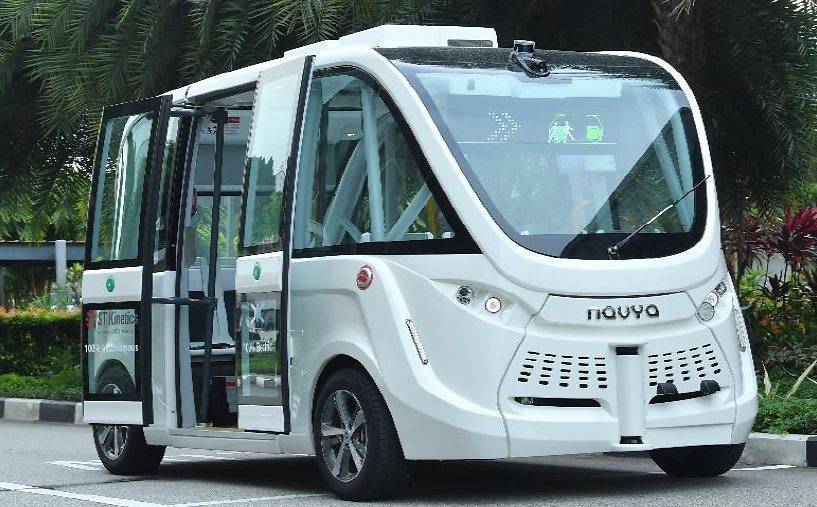
E-scooters will not be the last innovation that will hit our streets. Autonomous vehicles, in the form of smart autonomous wheelchairs to driverless shuttles and buses, dawn on Singapore’s horizon and in time to come, will once again challenge the norms of how paths and roads are used.

Pedestrians, cyclists, e-scooter and PMD users will have to adapt to share paths with autonomous wheelchairs. Drivers and other no-road users will have to adapt to interacting with autonomous shuttles and buses.

Singapore’s first on-demand driverless shuttle, Sentosa 3

File photo of a driverless shuttle bus in Sentosa, Aug 26, 2019. (Photo: MOT, SDC, ST Engineering) 

How we respond and move on following the e-scooter ban sends a strong signal of how we, as a society, are accepting of new innovations and are able to integrate them into our mores, with due consideration to the needs of different segments of society.

In our drive towards being a Smart Nation, we will see more innovations being introduced in the coming years. We need to adapt to this new normal.

This time we were not successful in integrating e-scooters into our transport system. Hopefully, the next time a new innovation comes around, we will be able to adopt it and adapt our norms for it quicker, at least before a ban is implemented. 

Samuel Chng is an applied social psychologist and Research Fellow at the Lee Kuan Yew Centre for Innovative Cities at the Singapore University of Technology and Design. Irna Nurlina is a political scientist and Research Associate at the same centre.

Source link

Lucky Plaza accident: I could have been killed, if I didn’t go to buy chocolate

0

SINGAPORE: On her Sunday off, Ms Luz Balanon Rivera would head to her usual spots to meet her friends: The open space near Somerset MRT, or the walkway near the Lucky Plaza taxi stand. 

On Sunday (Dec 29), Ms Rivera, 52, had been invited by her best friend, Ms Laila Laudencia, to an informal party at the Lucky Plaza walkway. It was a popular gathering place and was crowded that day, with people singing and dancing. 

The group of about 10 people – including Ms Laudencia’s niece, Jean, and her friends Abigail Leste and Arlyn Nucos, were sitting on the walkway, chatting and enjoying Filipino food such as adobo and pinakbet, a stir-fried dish with pumpkin. 

READ: CCTV footage emerges of moments before fatal Lucky Plaza crash

Lucky Plaza accident 4

A photo circulating on social media of paramedics attending to victims after an accident at Lucky Plaza on Dec 29, 2019.

At around 4pm, she left the party to accompany another friend, Sahle, who wanted to buy some chocolate in the mall.

“When I left, they called me back to eat the food, but … I wasn’t hungry,” Ms Rivera told CNA. “I walked past Abigail and Arlyn. I wasn’t as close to them, but we smiled at each other.”

She told them she would be right back, but that was the last time she saw Abigail and Arlyn alive. 

Arlyn and Arceli Nucos Lucky Plaza accident

Sisters Arceli (left) and Arlyn Nucos were both in a horrific car crash outside Lucky Plaza on Dec 29, 2019. Arlyn died from her injuries while Arceli was warded in hospital. (Photos: Facebook)

“I LEFT HER MORE THAN 20 MISSED CALLS”

Ms Leste, 41, and Ms Nucos, 50, were killed on Sunday in a car crash at Lucky Plaza that also left four other people injured: Arlyn’s sister Arceli, 56; cousins Egnal Limbauan, 43, and Demet Limbauan, 37; and Ms Laudencia, 44.

All of them were Filipinos working in Singapore. 

READ: Two sisters among six Filipino victims in Lucky Plaza car crash: Philippine Embassy official

A 64-year-old male driver was arrested on Sunday for dangerous driving causing death, police said. He is a driver-partner with ride-hailing firm Grab and he has been suspended while investigations are underway.

Ms Luz Rivera and Ms Laila Laudencia

Ms Luz Rivera (left) and her best friend, Laila Laudencia. (Photo: Courtesy of Luz Rivera)

Ms Rivera told CNA that she would have stayed with Ms Laudencia at the walkway, if not for her friend Sahle, who was intending to return to the Philippines and wanted to buy some chocolate for her family.

“On that day, she was not feeling well and wanted to leave early, and she wanted me to accompany her to buy the chocolate,” she said. “She kept nagging at me to go with her.”

After buying the chocolate, they visited a remittance shop on the third level of the mall. It was there that she heard about the accident. 

“We were all shocked,” she said. 

She called Ms Laudencia, who didn’t pick up her phone, and she started to panic. 

“I left her more than 20 missed calls,” she said. 

“WE WERE ALL CRYING”

Ms Rivera heard “a lot of shouting and screaming” from inside the mall, but did not know what had happened. Together with her friends, she tried to go to the accident site, but was blocked by the police cordon.

“I heard someone call Laila’s name, and said she was among the injured,” she said. “We were all panicking and crying.”

She cried with her friends and they comforted each other in the mall. By then, it was late and she had to return to her employer’s place. 

Lucky Plaza car crash graphic

She only managed to get in touch with Ms Laudencia’s niece, Jean, hours later, at around 8.30pm.

That was when she found out that Ms Laudencia had been sent to the hospital with a fractured leg, and that Ms Leste and Ms Arlyn Nucos had died. 

“Jean told me she was holding Laila’s phone, but was shaking so badly she couldn’t pick up my calls,” she said. 

A VERY GOOD FRIEND 

Ms Rivera was in shock the whole evening and took time off work on Monday to calm down. 

Ms Laudencia and her niece were her neighbours in the Philippines and she knew them well, she said.

“I thanked God Laila was okay and that nothing happened to Jean,” she said. “But I was worried for her – once you are injured, you cannot work, and then what would happen to her family?”

READ: Two women injured in Lucky Plaza accident discharged from hospital

Lucky Plaza accident cordon on Dec 30

A cordon erected near the entrance of the Lucky Plaza apartment block after a car ran onto a walkway and knocked down pedestrians on Dec 29, 2019.

“She’s a very good friend to me, always sharing her food because she’s a very good cook,” she added. “She was also working very hard because she is … supporting two children in the Philippines.”

Ms Laudencia, she said, had introduced her to Ms Leste and Ms Arlyn. Though she didn’t know them well, she said they were always happy to share their food with her whenever she met them. 

She was sad to hear about their deaths but also grateful for her own narrow escape. 

“I’m so thankful I went with Sahle,” she said. “I don’t know what would have happened to me otherwise.”   

Source link

Two women injured in Lucky Plaza accident discharged from hospital

0

SINGAPORE: Two of the women who were injured in the Lucky Plaza accident on Sunday have been discharged from hospital, said Senior Parliamentary Secretary (Manpower) Low Yen Ling on Monday (Dec 30). 

In a Facebook post, Ms Low extended her sympathies to the families of the victims of the car crash, which killed two and injured four. 

All the victims were Filipino domestic workers. 

Ms Arlyn Nocus, 50, and Ms Abigail Leste, 41, died in the accident. Arlyn’s sister, 56-year-old Arceli was seriously injured and is still warded in hospital along with Ms Egnal Limbauan, 43.

Two of the victims, Ms Laila Laudencia, 44, and Ms Demet Limbauan, 37, have been discharged.

READ: 2 dead, 4 injured after car accident at Lucky Plaza shopping centre; driver arrested

READ: Two sisters among six Filipino victims in Lucky Plaza car crash – Philippine Embassy official

Earlier on Monday, Ms Low and Foreign Affairs Minister Vivian Balakrishnan paid a visit to the accident victims who were receiving treatment at Tan Tock Seng Hospital.

In a Facebook post, Dr Balakrishnan expressed condolences to the families of the two Filipinos who died.

“Singaporeans are shocked and deeply saddened to learn about the tragic loss of life and injuries to six Filipinos at Lucky Plaza yesterday,” wrote Dr Balakrishnan.

“What was supposed to be a day of rest, fellowship and celebration turned into a tragedy,” said Dr Balakrishnan, adding that the Ministry of Foreign Affairs was working closely with the Philippine Embassy to help the families involved. 

“Our deepest condolences to the families who lost their loved ones. We pray for a quick recovery for the injured.” 

Dr Balakrishnan also said that he and Ms Low thanked the victims for their “hard work and contributions to Singapore over many years”. 

The Nucos, who hail from La Union in Northern Philippines, have been working as domestic helpers in Singapore since 1990, said a report in Philippine news site Rappler.

Arlyn and Arceli Nucos Lucky Plaza accident

Sisters Arceli (left) and Arlyn Nucos were both in a horrific car crash outside Lucky Plaza on Dec 29, 2019. Arlyn died from her injuries while Arceli was warded in hospital. (Photos: Facebook)

“As we prepare to welcome the New Year with our families, it is timely to also remember the invaluable contributions of those who help in our households, provide care for our family members and sacrifice so much in order to provide for their own families far away,” said the minister. 

Ms Low also extended her sympathies to the families of the six victims in a separate Facebook post on Monday night. 

“Our deepest sympathies go out to all the families of the six affected helpers and to Ms Abigail D Leste and Ms Arlyn P Nucos who died from the impact of the accident. Our thoughts and prayers are with them all,” said Ms Low. 

READ: Lucky Plaza accident: CCTV footage emerges of moments before fatal crash


Lucky Plaza accident CCTV screenshot

Leaked CCTV footage of the Lucky Plaza accident shows a black car (circled) mounting the kerb before ramming a group of women on the footpath (top right). Two were killed and four others injured, all Filipino women working in Singapore.

“We wish and pray for the speedy recovery of Ms Arceli P Nucos and Ms Egnal L Limbauan, who remain warded under the treatment and close eyes of doctors and nurses. We’re thankful that Ms Laila F Laudencia has since been discharged and Ms Demet L Limbauan has just been discharged from the hospital early this evening after a period of treatment,” Ms Low added. 

Ms Low acknowledged that “many Singaporeans are concerned for the accident victims” and said that the Centre for Domestic Employees has started a fundraising exercise to help them.

Lucky Plaza accident 4

A photo circulating on social media of paramedics attending to victims after an accident at Lucky Plaza on Dec 29, 2019.

Lucky Plaza accident 6

A screengrab of a video circulating on social media of paramedics attending to victims after an accident at Lucky Plaza on Dec 29, 2019.

She also spoke of the “bravery of those who stepped forward yesterday to help the victims” and thanked medical teams for looking after the injured women as best as they could.  

“As we continue to keep the victims in our prayers, we also remember the many foreign domestic workers who keep our families going with their dedication and invaluable service. 

“Many of our foreign domestic helpers have become like family to us. May we also take this time to express our thanks and appreciation to the foreign domestic helpers who serve us,” said Ms Low. 

LUCKY PLAZA ACCIDENT

Eyewitnesses said the car ran into several women as they gathered on a walkway along Nutmeg Road just outside Lucky Plaza. 

CCTV footage also emerged on Monday showing a car crashing into a railingwhere a few people had been seated, before landing on a service road leading out of Lucky Plaza’s car park. 

Lucky Plaza car crash graphic

The Philippine Embassy confirmed on Monday that one of the victims who died and another, who is critically injured, are sisters. The embassy also said it was coordinating with the employers of the victims on plans to have their bodies repatriated to the Philippines. 

A 64-year-old male driver was arrested on Sunday for dangerous driving causing death.

The man, who is a driver-partner with ride-hailing firm Grab, has been suspended amid investigations. 

Source link

1-for-1 movie tickets, McDonald's curry sauce bottle returns & other deals this week

0

[ad_1]

We scour the island for the best deals to help you stretch your dollar, and keep you in the loop on the hottest shopping trends.

‘Cos good things must share.


1-FOR-1 MOVIE TICKETS

From now till Jan 1, 2020, Singtel customers can enjoy one-for-one movies every day at any Cathay Cineplex outlet in Singapore!

But what’s the catch?

The promotion is limited to the first 500 Singtel Postpaid customers every day, while stocks last.

Simply follow these steps below to redeem your tickets:

1. Log in to My Singtel app with Singtel Onepass.
2. Click on ‘Rewards’ > ‘Arts & Entertainment’ > ‘Cathay Cineplexes’.
3. Flash the barcode on the promotion page at the box office ticketing counter to enjoy a free movie ticket when you purchase one movie ticket.

[ad_2]

Source link