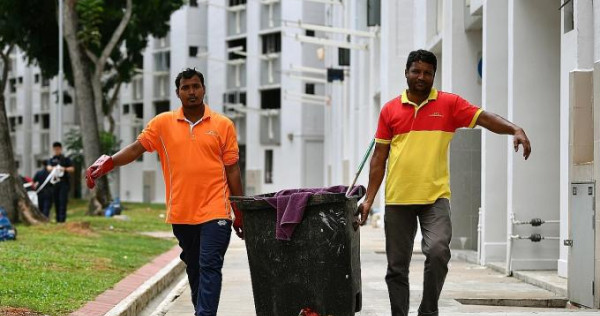
In a gruesome introduction to life, a newborn boy who was discarded like a piece of garbage could have suffocated while trapped inside a tied-up plastic bag in a rubbish bin.
But he showed an instinct for survival by crying loudly to alert two cleaners, who then rescued him from the bin.
Now two women have come forward to offer the infant a home after reading about his traumatic experience in The New Paper yesterday.
Indicating her interest in an e-mail to TNP, Ms Susan Tan, 40, said she works in human resources and lives in a four-room flat with her husband, their two daughters, aged 11 and nine, and a maid.
“It’s very sad that someone would throw the baby in the rubbish like this. As much as it is tragic, he is a very lucky baby to have survived,” she said in a phone interview.
“I’m willing to take care of him for as long as it takes. But if his parents are found and want him back, I’m also willing to give him back.”
Ms Tan added that she is open to adopting the baby but has yet to discuss this with her husband, who is in his 40s and works in maintenance.
SINGAPORE: Myths and stereotypes about manhood, masculinity and male sexuality abound in online comments to the news of an Indonesian man Reynhard Sinaga convicted in Britain for assaulting over 100 men over a couple of years.
Sentenced to life imprisonment, he’s been called the most prolific rapist in British legal history.
Some online comments have expressed horror at the details of the case, but many comments (whether joking or not) seem to celebrate the perpetrator, calling him “impressive”, and describing his “achievements” in tones of pride.
Disturbing as these comments are, it is another set of comments that stand out for embodying even more reprehensible views – those that express disbelief that men can be raped, and ridicule the fact that many of this perpetrator’s victims only found out that they had been raped after the police reached out to them.
It is tempting to dismiss online comments as cruel, bigoted and besides the point, but reading them often reveals the level of civil discourse on important societal problems like sexual assault.
BARRIERS MEN FACE IN REPORTING SEXUAL ASSAULT
As a gender-equality organisation that works closely with survivors of sexual violence, AWARE knows both men and women can experience sexual assault.
We have seen firsthand how myths about sexual violence can silence male victims just as much as female victims.
Although in both cases, these myths tend to be located in toxic masculinity (such as “real men get what they want” and “real men should be prepared to be violent to defend themselves”), and rigid gender roles, they create a slightly different set of barriers for men.
While women are frequently asked what they were wearing when they were assaulted, male victims of sexual assault get questioned about their masculinity and sexual orientation.
Female victims are considered to be “asking for it” when they drink or go out at night; men are considered to be “weak” for not using their physical strength to defend themselves.
In Singapore, changes to the Penal Code, which passed last year and became effective from Jan 1 made the offence of rape gender-neutral. This was done through the expansion of the legal definition of rape to include non-consensual penetration of the anus or the mouth using one’s penis.
However, for male victims, the challenges to disclosing their experiences of abuse and seeking appropriate help are still overwhelming.
Here are two societal myths and stereotypes that this case has brought to the fore, which form serious barriers for male survivors coming forward.
MYTH 1: MEN DO NOT EXPERIENCE SEXUAL ASSAULT
The first barrier is the pervasive belief that men cannot be raped and “real men” are able to defend themselves from assaulters. Rape and sexual assault has largely been (rightly) conceptualised as involving male perpetrators and female victims, which is borne out by crime statistics.
A large majority of sexual assault victims are indeed female, and perpetrators male. But this does not mean that men cannot be raped.
Indonesian student Reynhard Sinaga has been sentenced to life imprisonment. (Photo: AFP/Ho)
Sam* (name changed) came to AWARE’s Sexual Assault Care Centre (SACC) many years after he was molested by his older brother multiple times over a period of two years.
He wasn’t confident reaching out earlier because he felt “emasculated” speaking about his assault, and it was only after his wife coaxed him to seek help that he contacted SACC.
Sam blamed himself for his experience because of his inability to protect himself, as a “man should be able to”. In sessions with SACC, he shared the ridicule he faced from friends when he told them he was contemplating receiving counselling.
Sam’s case illustrates how societal stereotypes about how men behave – such as “real men solve problems on their own” and “real men don’t talk about feelings” – stigmatise help-seeking and reporting.
Many erroneously believe too that men enjoy all manner of sexual interactions, whether consensual or not. Another client, John*, had trouble making sense of comments from a female colleague at work, who asked him what he thought of her body.
When he told his friends about his discomfort, they suggested that regardless of his own feelings, “as a guy, he couldn’t lose out” in this situation.
By focusing on the sexual aspects at the expense of the abusive nature of an interaction, we do a huge disservice to sexual harassment survivors.
MYTH TWO: PHYSIOLOGICAL REACTIONS DURING SEXUAL INTERCOURSE MEAN ONLY ONE THING
Many online comments have reacted with incredulity that many of Sinaga’s victims did not know they had been sexually assaulted, but a victim’s inability to recognise they had been raped does not make it less of a crime.
Similarly, people often attribute meaning to physical reactions to rape. For instance, erections and ejaculations can signify pleasure in consensual sex. However, in situations of sexual assault, they can occur as a purely physiological response to stimulation. They can also be caused by intense fear or pain.
However, many people believe maintaining an erection or having an ejaculation during assault is a clear sign a man has consented to the sexual interaction and even derived pleasure from the exchange.
Hence, their own physiological reactions during sexual assault may make it more difficult for male survivors to come to terms with the fact they were sexually assaulted.
A study in the UK finds that some sexual violence perpetrators are, in fact, aware of how erection and ejaculation may confuse a victim of sexual assault – and that this may motivate them to manipulate their victims into ejaculation to enhance their own sense of control and discourage reporting.
TAKING MALE VICTIMS OF ASSAULT SERIOUSLY
Widely held beliefs about men and the personality traits they embody inhibit many male victims of sexual assault from coming forward. What can we do to combat these damaging beliefs – some of which have been held for generations?
We need a fundamental rethink about how men and boys are raised.
We need to introduce comprehensive sex education in schools to teach boys they do not have to conform to aggressive stereotypes of masculinity, and to explain healthy and unhealthy sexual and romantic relationships.
We need more extensive public education on the barriers that prevent reporting and help-seeking behaviour, and more support for recovery and mental health services to help male victims of sexual assault.
Above all, we must remember that male victims of sexual assault deserve our support too.
* Pseudonyms used to protect the identity of victims.
Shailey Hingorani is Head of Research and Advocacy at AWARE.
Survivors of sexual violence, regardless of gender, can contact AWARE’s Sexual Assault Care Centre via its Helpline (6779 0282, Mon–Fri, 10am–10pm) or on WhatsApp (9781 4101).
SINGAPORE: Banks in Singapore announced on Wednesday (Jan 8) that they will be offering new notes to their customers for their Chinese New Year celebrations.
DBS/POSB customers can obtain new or good-as-new notes from Thursday to Chinese New Year’s Eve (Jan 24) at 40 POSB pop-up ATMs across 20 community clubs islandwide.
UOB customers can also start collecting their new notes from Thursday.
FOR DBS/POSB CUSTOMERS
At the pop-up ATMs, DBS/POSB customers can withdraw the new or good-as-new notes in sums of S$100 (S$2 x 50), S$300 (S$10 x 30), $500 (S$50 x 10) and S$600 (S$10 x 20 or S$50 x 8).
The pop-up ATMs are accessible 24 hours a day, except for those at Chong Pang and Teck Ghee Community Club, the bank said.
DBS/POSB customers can also reserve the notes online and collect them from any full-service branch at their preferred dates and times through the bank’s online reservation system. The denominations available are S$2, S$10 and S$50.
Alternatively, they may walk in to any DBS/POSB full-service branch – except for DBS Marina Bay Sands branch and DBS Woodlands Service Centre branch – to collect or exchange the notes, subject to availability.
Customers collecting or withdrawing the new or good-as-new notes at DBS/POSB pop-up ATMs or branches will receive two sets of red packets, “made from environmentally friendly paper derived from sustainable sources”, the bank said.
DBS and POSB red packets designs for Chinese New Year 2020. (Photo: DBS/POSB)
FOR UOB CUSTOMERS
UOB customers can reserve their new notes online through UOB Personal Internet Banking from Jan 9 to Jan 19, the bank said. The new notes come in denominations of S$2, S$10 and S$50, and are capped at S$1,400 in total.
Customers can choose their preferred date and branch to collect their new notes, with the last day for collection on Jan 21.
Walk-in customers can exchange for new notes at any UOB branch – except the Hangout@SP, Sengkang Express and Tampines One branches – from Thursday to Chinese New Year’s Eve (Jan 24), subject to availability.
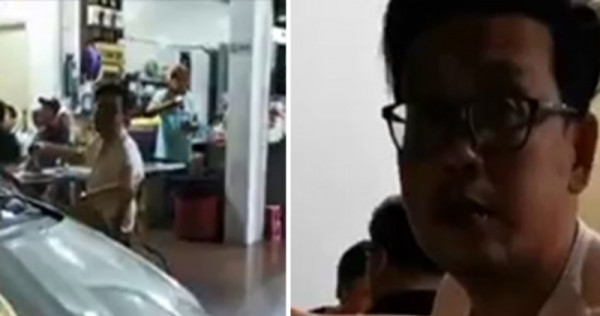
A video of the incident was published on Facebook page SG Road Vigilante.
According to the post, the cabby had parked right beside a nasi lemak stall along Sembawang Road. His parking had blocked the road and when approached, he refused to move his vehicle for others to pass.
The man recording the video approaches the MaxiCab driver to ask if he could move his car.
The cabby says: “Let me finish eating, then you can drive out.”
When the man recording asks: “Do I have to wait for you to finish eating?”
The MaxiCab driver answers: “Yes.”
Upon hearing this, the man asks: “Why do I have to wait for you to finish? I’m rushing for time.”
The cabby then says: “You can put on Facebook.”
The man replies: “No, I want to let the Land Transport Authority see this. It’s illegal to park your car here.”
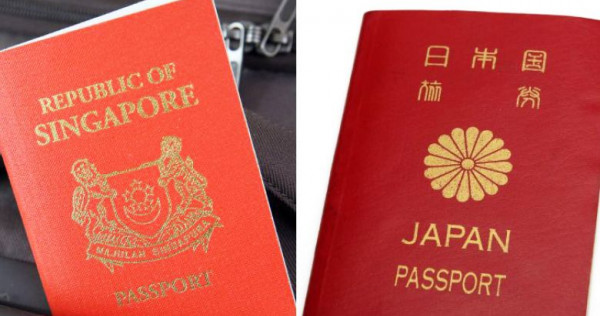
Singapore has come in second in a ranking of the most “powerful” passports in the world, with Japan pulling ahead to rank top in the 2020 Henley Passport Index and Global Mobility Report.
The top three positions in the global index were dominated by Asian countries, with South Korea coming in a joint third with Germany.
Japan has consistently secured the top position for three consecutive years. This year, its passport holders have access to 191 nations without having to apply prior visa, Singapore with 190 and South Korea on joint third with Germany with 189.
“Japan’s passport managed to pull ahead of Singapore as it received visa on arrival access to Saudi Arabia, which Singapore did not,” read the statement.
The Malaysia passport is ranked as the 13th most “powerful” in the world, as holders enjoy visa-free access to 178 countries.
Although Malaysia’s ranking on the 2020 Henley Passport Index and Global Mobility Report dropped by one compared with last year, it is still among the top four Asian countries holding “passport power”.
The United States of America and the United Kingdom were both ranked at eighth place.
It seems like such a hassle to go through customs, brave long queues and waits, and cross the border just to pinch a few pennies.
But once you calculate the price differences between the goods in Singapore and Johor Bahru, you’d likely turn into a frequent traveller.
Of course, not everything is cheaper in Malaysia. Certain spa chains, for instance, might be pricier than those in Singapore.
There’s also the issue of convenience. You could get more affordable furniture in Johor, but do you really want to drag all those unassembled planks through immigration?
Here’s a guide on what to shop for instead – and the best places for each category – that will make the journey worth your while.
1. GROCERIES
PHOTO: Pexels
You’ve seen people lugging trolleys of produce at the bus terminals to and from Johor Bahru.
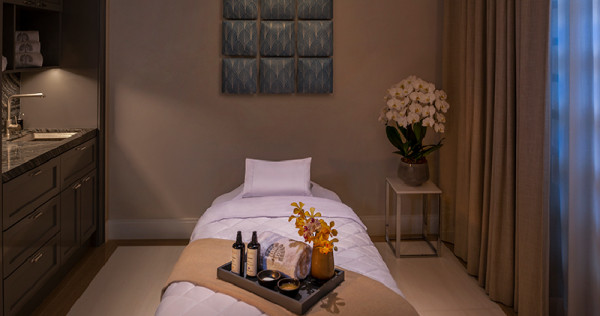
When Singapore’s most famous hotel, Raffles, closed for renovations, word on the street was that something pretty special was going to be unveiled when the doors finally reopened and now, bit by bit, we are realising just how special this historic renovation has turned out to be.
Singapore might be known as the Garden City but a quick scan around and you can quickly see why we might also be known as the spa city.
With luxurious offerings on every corner, it takes a mighty force to nudge your way into this crowded space, but that’s exactly what Raffles have just done with their uber-glam new Raffles Spa.
Sitting pretty in the newly re-done Raffles Arcade, the brand-new spa has been carefully designed by famed New York interior firm, Champalimaud, and boasts seven treatment suites including a private couples suite.
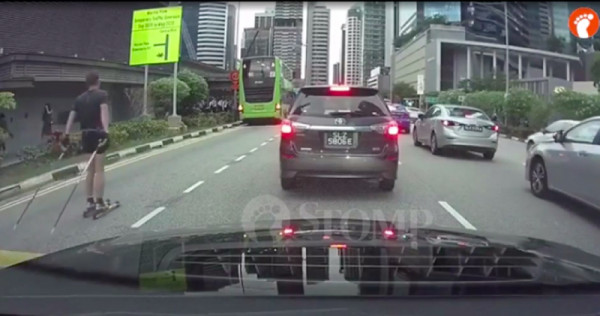
“Maybe Singapore is the Switzerland of Asia indeed. Who said we need snow to ski?”
Roller skiing, or skiing on wheels, is a full-body workout and has roots in Scandinavia since the 1930s as a summer training exercise for cross-country skiers.
The sport also engages up to 90 per cent of the body’s muscle, according to The Guardian.
A 63-year-old Singaporean died last Friday after falling from an aircraft while carrying out maintenance works on it.
The accident occurred on Dec 22 last year.
The Manpower Ministry (MOM) told The New Paper yesterday that the SIA Engineering Company (SIAEC) worker had fallen from height while working on the aircraft at 31 Airline Road.
He was taken to Raffles Hospital, where he died from his injuries about two weeks later.
MOM said it is investigating the accident and has instructed SIAEC to immediately review and address the gaps identified in its work procedures and risk controls.
There were nine workplace fatalities in November last year, and the latest death means there have been at least 12 fatal workplace accidents in the last two months of 2019.
TNP had earlier reported that a worker died in a warehouse after being struck by falling goods on Dec 23, and yesterday, the MOM said there was another fatality on Dec 20. A worker died after he was injured trying to reattach the track shoe of an excavator.
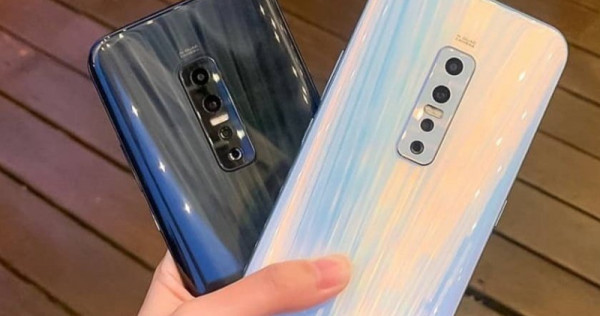
Vivo just announced the local availability of its V17 smartphone.
Available from 11 January, you can get the Vivo V17 smartphone at just S$399 from authorised retailers (Best Denki, Challenger, Courts), Lazada, Vivo’s concept store at Causeway Point and the three main telcos (M1, Singtel and StarHub).
The Vivo V17 is powered by Qualcomm Snapdragon 665, 8GB RAM and a 4,500mAh battery which supports Dual-Engine Fast Charging technology. It comes with a 6.38-inch Full HD+ (1,080 x 2,340 pixels) Super AMOLED display, 128GB internal storage space, an in-display fingerprint sensor, FunTouch OS 9.2 based on Android 9.0, USB Type-C and Bluetooth 5.0.
The 8.68mm thin chassis sports a diamond design inspired by images of jewellery and royal palaces to add a unique and dynamic feel to the Vivo V17.
In terms of imaging hardware, the Vivo 17 boasts a 32MP f/2.0 front-facing camera and a rear quad-camera setup consisting of 48MP f/1.8 AI Quad Camera lens, 8MP f/2.2 super wide-angle lens, 2MP f/2.4 super macro lens, and a 2MP f/2.4 lens.