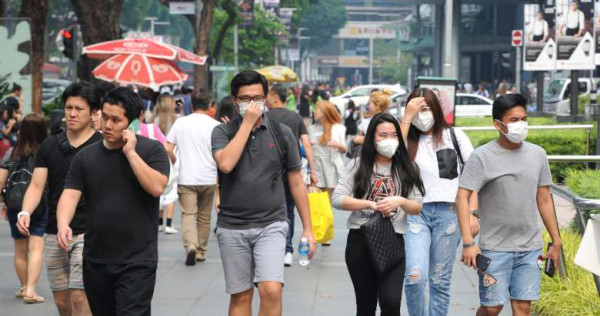
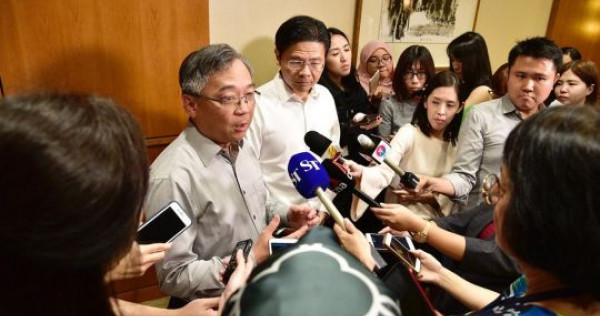
SINGAPORE – A top infectious disease expert and the Ministry of Health (MOH) have said that the public should not rely on N95 masks to guard against the Wuhan virus, even as they fly off the shelves at pharmacies.
Instead, surgical masks are more appropriate in this case, the expert and MOH said on Wednesday (Jan 22).
Surgical masks can help reduce the spread of the virus and are more practical for the general public to use. They are meant to help block large-particle droplets and splatter from reaching the wearer’s mouth and nose, and reduce exposure of the wearer’s saliva and respiratory secretions to others.
N95 masks, which are tighter fitting, are designed to effectively filter airborne particles. They have been used in Singapore during haze situations.
National Centre for Infectious Diseases executive director Leo Yee Sin told The Straits Times that N95 masks are not recommended for the general public. They are mainly used by medical staff.
They are designed in a way that would make it difficult for people to breathe in if they are worn properly.
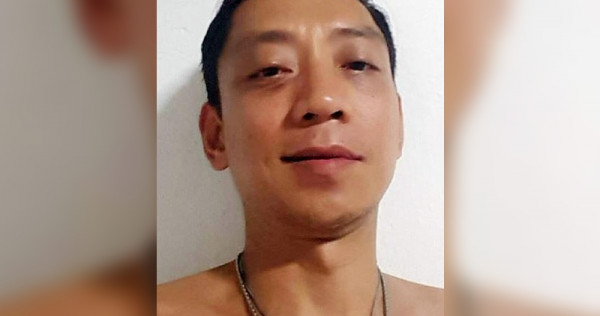
He was offered sex for cash while chatting with a woman on Facebook.
But once the 42-year-old man got undressed in her flat, the woman’s husband stormed into the bedroom with a kris, threatening to stab him and report him for rape.
All this was a ruse hatched by Shahberin Soet, 45, and his wife Siti Khairianti Mohd Taib, 41, to extort money from the man, who was made to hand over $70 and write an IOU for $400.
Pleading guilty to robbery by night and two unrelated theft charges, Shahberin was yesterday jailed for three years and 10 months and given 12 strokes of the cane. Two other charges were taken into consideration.
District Judge Christopher Tan also gave Shahberin an enhanced sentence of 115 days’ jail as he committed the robbery while out on a remission order.
Siti first befriended the victim, who cannot be named to protect his identity, on Facebook on May 4, 2017.
She asked Shahberin to use a kris in their home to scare the victim, who went to their flat at about 1.30am the next day.
Shahberin hid in the kitchen toilet while Siti led the man to the bedroom and told him to undress.
DAVOS: Singapore needs to support an open, rules-based multilateral trading system, even as it is faces forces such as populism and protectionism, said Prime Minister Lee Hsien Loong.
Speaking on a panel discussion on multilateralism at the World Economic Forum in Davos, Switzerland, Mr Lee said that Singapore’s population needs to understand the need for an open policy, noting that such a system provides “great help to a small country like Singapore”.
“Without that, if I am arm wrestling one on one, Singapore versus whoever the other side is, chances are the other party is bigger than us,” he said.
He pointed to Singapore’s support of the World Trade Organization as well as the country’s participation in groupings such as the Association of Southeast Asian Nations (ASEAN) and the Comprehensive and Progressive Agreement for Trans-Pacific Partnership (CPTPP).
Singapore is protecting itself on two fronts, said Mr Lee.
First, the country is establishing itself in growing sectors such as tech, he said.
He cited how FAANG companies – a term referring to tech giants Facebook, Amazon, Apple, Netflix and Google – had set up engineering teams and data centres in Singapore.
“In an uncertain world, if you have a capability, despite the uncertainties, people will find that they want to do business with you and put their business in Singapore,” he said.
Second, Mr Lee also pointed out how the Government is working to protect businesses and workers affected by changes in the global economy.
He cited efforts such as SkillsFuture, which is aimed at helping people upgrade themselves, enhance their employability and transition to new jobs if necessary.
The Leading a New Multilateralism panel was moderated by Financial Times editor Roula Khalaf. The other speakers on the panel were South Africa’s Minister of International Relations and Cooperation Naledi Pandor, Western Union CEO Hikmet Ersek and Bharti Enterprises founder Sunil Mittal.
On the topic of the trade war between the United States and China, Mr Lee said that the friction between the two countries has had an impact on Singapore.
“Our exports are down, confidence in the region is down,” he said, noting the country’s growth last year stood at less than 1 per cent.
There is still a lot of uncertainty and doubt surrounding the direction of the world economy, he said.
“I think that is holding back business confidence and investments, it’s bound to. If I was a businessman, I would be very watchful too.”
A member of the audience asked if it might be possible that the world be led by a country other than the US.
Mr Lee replied that such leadership would require the consensus of major players such as the US, the European Union and China as well other countries such as South Africa and Brazil, which he said were not yet major participants in the multilateral system.
“It is very hard to do, every one of these countries has their own domestic political concerns,” he said.
“If you think that the US is not doing the right thing because the US administration has the wrong policy … it may be the next government may be elected with similar values and reflecting similar pressures.”
The difficulties in the multinational system have been there for “some time”, he said.
Although new participants now make up a bigger part of the global economy, they do not yet have a “commensurate influence” because they are largely focused on safeguarding their own interests, said Mr Lee.
The right mechanism has not yet been worked out to reflect the new balance in the world economy, he noted.
Financial Times editor Roula Khalaf, Singapore Prime Minister Lee Hsien Loong, South Africa’s Minister of International Relations and Cooperation Naledi Pandor, Bharti Enterprises founder Sunil Mittal and Western Union CEO Hikmet Ersek at the Leading A New Multilateralism panel in Davos on Jan 22, 2020. (Photo: Ministry of Communications and Information)
OTHER CONCERNS
Other panellists meanwhile expressed their own concerns with the state of the global economy.
Mr Mittal said that India, despite giving “significant concessions” in opening its markets, was finding a lot of doors shut on it by countries such as the US.
He pointed to the US withdrawing India from the Generalised System of Preferences, a trade concession programme that allows duty-free entry for up to US$5.6 billion worth of annual exports to the US.
Though India had withdrawn from the Regional Comprehensive Economic Partnership (RCEP), it had signed other treaties, said Mr Mittal, noting that the door to RCEP was not yet closed.
Pointing to the Africa Continental Free Trade Area introduced last year, Ms Pandor meanwhile said that there needs to be more trade within the African continent.
“We have to do much more to place the continent in a far improved trade space,” she said.
On the topic of climate change, Mr Lee said the concept has to be explained to people in terms they understand so that they can make the necessary changes to stave off a potential “disaster”.
“In Singapore, what we have tried to do, is to bring it down to what is most immediate to us, which is that we are a small island, low-lying,” he said, adding that any rise in sea levels would impact the country.
To protect the island would require significant sums over a long period of time, he noted.
In his National Day Rally message last year, Mr Lee said that more than S$100 billion may need to be set aside over the next century to protect Singapore from rising sea levels, through engineering solutions such as the building of polders.
Ms Pandor said there needs to be more cooperation on the issue, adding that rich nations can do more to support poorer countries in tackling climate change through funding and the transfer of technology.
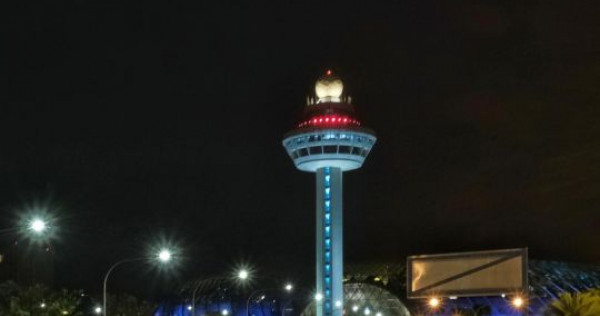
SINGAPORE – The travel plans of some passengers at Changi Airport were disrupted early Thursday (Jan 23) morning after the fire alarm at the control tower went off, causing the tower to be evacuated.
“Flight operations at Changi Airport were disrupted at 12.10am today due to the evacuation of Changi Control Tower. The Tower had to be evacuated as the fire suppression system was activated,” the Civil Aviation Authority of Singapore said in a statement on Thursday.
“Normal flight operations were restored at 1.40am when Changi Control Tower resumed operations,” it said, adding: “During this period, 50 departure flights were delayed by 30 minutes or more and nine arriving flights were diverted.”
“In the interim, air traffic control services were provided from back up positions,” it added, without elaborating what these back-up positions were.
“There was no fire. Investigations into the cause of the activation are on-going.”
The Straits Times understands that some flights were diverted to Hang Nadim International Airport in Batam and others to Kuala Lumpur International airport.
SINGAPORE: In November 2014, the Singapore government launched Smart Nation, an initiative that aims to transform and better Singapore’s government, businesses, and society with digital technology.
Five years on, how should we assess the initiative’s progress and impact on citizen lives?
The digital economy’s short history gives us a guide. The digital economy is not new – the widespread interest now among governments and companies is in fact a revival.
It first became popular in the 1990s, where with the advent of the Web, visions of something new and unprecedented abounded.
But reality eventually fell short of those visions of a “new economy”, as it was popularly called then.
Doubt, disappointment, and even cynicism set in, symbolised most conspicuously by the dotcom crash. It would be 15 years before the digital economy became the next big thing again.
Today’s enthusiasm for the digital economy makes it easy to forget that it took almost half a generation to restore interest and confidence in it. But we would be wise to remember it.
In creating the world’s first smart nation, Singapore is also creating something new and unprecedented, and thus must avoid falling into a similar situation. It must tackle the risks posed by the current gap between vision and reality. It must also sustain citizen confidence and support until the gap is closed.
HOW FAR SMART NATION HAS COME
Two panel discussions on digital transformation across nations and cities were held as part of the Smart Nation Innovations Week opening symposium on Jun 5, 2018. (Photo: Tang See Kit)
This is especially so if Smart Nation is to maintain its momentum. It has been firing on all cylinders in pursuit of its vision to transform the whole of Singapore – economy, society, and government – so as to improve lives for all citizens.
Smart Nation has been investing heavily in many initiatives, including six national strategic projects to set up the enabling infrastructure and technology such as e-payments and smart sensors that make up the backbone of this ambitious plan.
An example of such a project is the National Digital Identity system which allows citizens and businesses to transact online more seamlessly. With National Digital Identity, users can do a range of things online more conveniently and securely, from using e-government services to signing digital agreements.
Another example is the Moments of Life initiative. This bundles services and information online into one app according to what citizens may need at different life stages and milestones, such as starting a family, or raising a child.
These moves towards digital transformation — including the recently announced National Artificial Intelligence Strategy to drive AI innovation, and the Punggol Digital District which integrates advanced technologies into sustainable urban management – over the past five years is why Singapore ranks highly on many smart city indices.
Set aside for a moment the growing fatigue around the mushrooming of such indices. The clear, consistent consensus across them is that Singapore is taking steady steps towards its vision.
HOW FAR IT HAS TO GO
But as Smart Nation scales up, Singapore will encounter a difficulty that has plagued smart city efforts worldwide, but will feel more acutely because of the scale of its ambitions.
Through our research at the Singapore University of Technology and Design (SUTD), experts we have spoken with worldwide concur that there are currently no smart cities, only smart city projects. Many of these have not scaled beyond pilots and test beds.
3D model of Punggol Digital District at the Smart City Expo World Congress.
For example, many cities are still testing smart lamp posts and autonomous vehicles, and have not deployed them city-wide.
Those that have scaled are efforts to digitise existing paper-based or manual processes, which feel like a catch-up with what is already experienced elsewhere, such as in e-commerce.
Citizens thus feel that the benefits are either limited or incremental. There is hardly the transformative impact that smart city visions promise. The risk is that like the digital economy’s first era, citizens lose confidence in smart cities due to this gap between vision and reality.
There are warning signs. In 2016, an Economist Intelligence Unit survey found that 52 per cent of citizens across 20 Asia-Pacific cities (including Singapore) had difficulty identifying the value of smart city initiatives.
In 2018, in a World Economic Forum survey with internet platform Sea, 40 per cent of Southeast Asian youths felt technology would reduce the number of jobs available (in Singapore, it was 53 per cent).
Last year, through our research, we heard growing worries worldwide that smart city projects risk suffering “pilot paralysis”. If pilots do not scale to benefit more people, the gap between reality and vision cannot be closed.
HOW TO SUSTAIN CONFIDENCE IN SMART NATION
The best way to tackle this vision-reality gap is to close it with implementation. Singapore knows this – Prime Minister Lee Hsien Loong himself publicly said in 2017 that he would like progress on Smart Nation to be faster.
Prime Minister Lee Hsien Loong delivering his speech at the Smart Nation Summit’s closing dialogue on Jun 26, 2019. (Photo: @SingaporeMCI/Twitter)
Implementation, however fast, will still take some time due to the scale of the initiatives. In the interim, sustaining support and citizen confidence will be crucial.
There is some urgency – the Institute of Policy Studies found that 53.4 per cent of Singaporeans polled in 2018 were optimistic about Smart Nation initiatives for the next 12 months, compared to 55.9 per cent in 2017.
There are three quick ways to increase citizen confidence in Smart Nation projects. They build on what has already been done.
The first is for the Government to draw a direct and integrated link between its various initiatives, their implementation progress, and their impact.
Currently, these exist in different documents. For example, showing how the National Artificial Intelligence Strategy’s five projects (such as in transport, healthcare, education, and smart estates) line up with the six Smart Nation Strategic Projects, and how citizens can and have benefited is an easy but powerful way to help people understand and feel the impact of Smart Nation.
The second is to borrow another page from the digital economy’s first era.
A strategy then was to think about the ideal creation of value as a 10x innovation instead of a 10 per cent improvement. For example, filling in tax forms digitally is 10 per cent; Singapore’s no-filing service for some is 10x.
10x innovations that help citizens tackle everyday challenges could thus be articulated and designed. When citizens see and feel this 10x difference in their lives, they will feel more confident and lend support to further efforts, boosting the transformative impact of these innovations.
Singapore struggles with a slowing wider economy, with 2019 gross domestic product growth estimated at a sluggish 0.7 per cent and electronics exports down. (File photo: AFP/Simin Wang)
The third is to help citizens who tell us they need step-by-step help with their professional transformation.
At the Lee Kuan Yew Centre for Innovative Cities in SUTD, we show how they can do so with confidence with our task-by-task, step-by-step transformation roadmaps of eight professional, manager, executive and technician (PMET) occupations across four industries.
Designed collaboratively with France-Singapore think tank Live with AI, AI consultancy DataRobot, and several companies, these one-page roadmaps predict the impact AI will have on jobs, and map out how PMETs can transform step-by-step.
These have been recognised by policymakers and regulators in the National AI Strategy as building trust in AI because they balance fostering business innovation and safeguarding citizens’ interests.
UPLIFTING LIVES IN SMART NATION
Like the digital economy in the 1990s, Smart Nation faces a vision-reality gap. Unlike it, Smart Nation need not wait half a generation to close the gap.
Doing so will sustain Smart Nation’s strong start. It will also show Singapore’s continued capacity to crack problems that others find hard to crack.
Most importantly, it will uplift lives and citizen confidence for generations to come.
Poon King Wang is Director of the Lee Kuan Yew Centre of Innovative Cities at Singapore University of Technology and Design.
In March 2020, the inaugural CNA Digital Economy Leadership Summit 2020 will bring together some 200 key decision makers from Government, diplomatic circles and the private sector from around Asia, to explore key issues that include: How to grow and innovate in a digital economy, as well as how to manage talent and ensure sustainability in the digital economy.
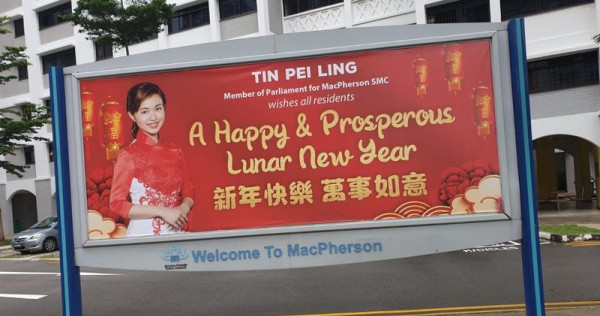
A photoshopped image of Tin Pei Ling making its rounds online has got the MacPherson Member of Parliament (MP) real aggravated, and rightly so.
The youngest MP in Parliament became a target for internet trolls when someone edited a photograph of her Lunar New Year greeting banner into something more, uh, uncouth. She’s trying to get it taken down, but sadly, anything posted online lives forever.
“It is so crass that I would not even put it up here. I do not know who committed such mischief,” she wrote on Facebook. “But it is clear that the person or party behind this has no respect for women.”
Doctored images of politicians are a dime a dozen on the internet, but this one seems particularly puerile.
The picture features her head transplanted on the body of a woman in a rather salacious, skin-revealing cheongsam. In lieu of the original Lunar New Year greeting, the banner’s copy was edited in a parodic call for constituents to vote for the People’s Action Party “for Prosperity and Power”. The doctored image also featured a sarcastic “Enjoy Happy Savings with Government U-SAVE rebates” — something that’s very much a Singaporean boomer thing.
One Singapore mum thought her maid had simply been careless when her baby daughter ended up with second-degree burns. But the truth was far more sinister.
In a now-viral Facebook post, Amy Low, 40, recounted how her maid had burnt her baby’s hand on purpose in a bid to get sent home and warned other parents to keep a close eye on their domestic helpers.
On Jan 14, Low and her husband had left their two daughters, aged eight and 16 months, in the care of their maid while they were at work.
At 5.20pm, Low’s husband received a call from their eight-year-old saying that her baby sister had suffered a burn.
Low and her husband rushed the girl to the hospital, where the doctor told Low that her daughter had suffered second-degree burns and seemed to “have some doubts” about the cause of the wounds.
“Since the maid started working, we told her that her priority is always to look after our girl and never to bring her into the kitchen,” Low wrote. “We can always take away dinner and there is no need for her to cook.”
SINGAPORE: Rather than “fighting yesterday’s battles”, Singapore needs to look to the future to see how it can cooperate with immediate neighbours, said Minister for Foreign Affairs Vivian Balakrishnan on Wednesday (Jan 22).
Speaking at the Singapore Management University, Dr Balakrishnan noted that Singapore is “intertwined” with Malaysia and Indonesia and shares a “common destiny” with these countries.
“We share deep historical links with Malaysia and Indonesia, and our countries are economically, financially, socially and even related by blood,” he said. “We are intertwined, our futures, we do have a common destiny within ASEAN (Association of Southeast Asian Nations).”
Dr Balakrishnan’s speech was part of a series by Singapore’s 4G leaders under the ambit of the SG Together initiative. The event was organised by the Ministry of Education’s Humanities Branch, in partnership with the Ministry of Foreign Affairs.
He added: “We do aim to be a friend with as many countries as possible, and hopefully not to make any enemies.
“This need to establish constructive relations is all the more crucial when it comes to our immediate neighbourhood – where peace and stability and progress are absolutely essential.”
From time to time, problems and issues will arise, he noted.
“We’ve seen this in the past year or two, transboundary haze, maritime disputes, boundary disputes, airspace issues and so on,” he said.
“My own view … is that we should try not to waste time fighting yesterday’s battles, yesterday’s political and emotional baggage. But we should actually look ahead to the future to see how we can cooperate for mutual benefit.”
GOOD RAPPORT BETWEEN SINGAPORE, INDONESIA LEADERS
On ties with Indonesia, Dr Balakrishnan said President Joko Widodo and Prime Minister Lee Hsien Loong share “very good rapport”.
“I can tell you from close observation that President Jokowi and Prime Minister Lee have very good rapport with each other,” he said. “And good rapport between leaders is essential and helpful, because it avoids misunderstanding.”
Prime Minister Lee Hsien Loong and Indonesian President Joko Widodo at a Leaders’ Retreat on Oct 8, 2019. (Photo: TODAY/Najeer Yusof Muallim)
Dr Balakrishnan added that the prosperity of Indonesia would benefit Singapore.
“I often remind my Indonesian counterparts that Singapore believes in Indonesia’s success – that a growing stable, confident Indonesia is good for the region, good for Singapore,” he said.
“With its youthful population and rapid growth potential, Indonesia, in fact, has got great potential for the future.”
Singapore has been the biggest investor in Indonesia since 2014, Dr Balakrishnan pointed out.
“There’s actually much more that we can do, many opportunities for us to embark on new projects for win-win cooperation, and we can and should branch out beyond Jakarta into the regions and find more opportunities for our companies and our students.”
PROGRESS MADE ON RESOLVING BILATERAL ISSUES WITH MALAYSIA
Turning to ties with Malaysia, Dr Balakrishnan noted that there has been progress in the ongoing bilateral discussions.
Singapore Prime Minister Lee Hsien Loong and Malaysian Prime Minister Mahathir Mohamad address the media at Putrajaya, Apr 9, 2019. (Photo: Bernama)
“We have a list of issues. discussions are ongoing, but at least there’s progress on some fronts,” he said.
For instance, Singapore welcomes Malaysia’s decision in October last year to proceed with the Johor Bahru Singapore rail transit system, he said.
“We believe this will facilitate cross border flows between Johor and us. It will benefit them and it will benefit us. We are presently discussing with them their proposed changes to the project.
“We also continue to negotiate with Malaysia in good faith to settle our outstanding maritime boundary disputes.”
Singapore also needs to further identify opportunities to strengthen ASEAN centrality and unity as well as expand cooperation between ASEAN and dialogue partners, said Dr Balakrishnan.
ASEAN will become the fourth-largest economy in the world by 2030 after the United States, China and the European Union, said Dr Balakrishnan, and the digital economy alone in ASEAN will grow three-fold to reach S$415 billion by 2025.
As such, this is where schools and teachers could enhance students’ awareness of and identification with ASEAN as well the opportunities that the region offers them in the near future, he added.
SINGAPORE – A multi-ministry task force is being set up to tackle the mystery Wuhan virus, should it hit Singapore shores.
The Ministry of Health (MOH) made this announcement on Wednesday (Jan 22) and also advised people to avoid non-essential travel to Wuhan, as the situation worsens in China and new cases surface in further afield.
This comes ahead of the Chinese New Year weekend, when a large number of travellers are expected to fly to and from China, increasing the chances of the infection spreading.
Three new suspected cases have also been detected in Singapore and are under investigation, the ministry said. Seven others have been cleared.
In China, nine people have died so far from the disease, and the number of cases rose to 450 on Wednesday.
MOH said that all travellers should monitor their health closely for two weeks upon return to Singapore and seek medical attention promptly if they feel unwell.
They should also inform their doctor of their travel history.
Those who have fever or symptoms such as cough and runny nose should wear a mask and call the clinic ahead of their visit.
Chinese New Year (CNY) is just days away and in the spirit of giving, you may be unknowingly spending thousands of dollars within this festive season alone.
In a Lunar New Year survey conducted by United Overseas Bank (UOB) in 2017, a Singaporean spends an average of $2,503 on food and family during the festivities.
I’ve been giving ang baos for three years now without a baby in tow to recuperate my losses, so I’ve devised a sneaky plan to save up on the moolah.
I’ll have to admit, some of these tips are handy while others may be downright crafty.
That said, take these money-saving advice with a pinch of salt, and don’t go overboard and do things which may jeopardise relationships. The last thing you want is to be barred from relatives’ or friends’ homes in future.
DON’T USE FANCY ANG BAOS
When I was younger, the fancier ang baos will always capture my attention, and because of that I’ll somehow remember who gave them to me.