Home Blog Page 513

Malaysian rights group Lawyers for Liberty files motion in KL High Court against Shanmugam over correction direction

0

KUALA LUMPUR: A Malaysian human rights group accusing Changi Prison of brutal execution methods has filed a motion in the Kuala Lumpur High Court against Singapore’s Home Affairs Minister K Shanmugam, following the issuance of a correction direction by the POFMA (Protection From Online Falsehoods And Manipulation Act) Office.

The civil suit, which was filed on Friday (Jan 24), seeks a declaration from the High Court indicating that Mr Shanmugam cannot take action against Lawyers of Liberty (LFL) in Malaysia under POFMA.

Speaking to media after the motion was filed, LFL adviser N Surendran said: “The reason for the lawsuit is because this is an attempt by Singapore to encroach upon or crackdown on freedom of speech in Malaysia.

“(Singapore wants) to reach out its tentacles and impose its own oppressive fake news act on Malaysians and they’re trying to impose it on us.”

The lawsuit is filed by LFL, the group’s director Melissa Sasidaran as well as Mr Surendran.

READ: Singapore defends online falsehoods law in response to articles by SCMP, Bloomberg

Mr Gurdial Singh Nijar, who is among the counsels representing the group, reiterated that Singapore cannot simply extend its laws to Malaysian citizens.

He noted that if LFL does not issue a correction notice, it could face imprisonment under POFMA.

“Our clients are at risk … You’re preventing Malaysians from exercising their rights which is granted by the constitution here. Singapore is looking to enforce what our government has repealed,” he added, referring to how Putrajaya has scraped a law penalising fake news.

On Jan 16, LFL released a press statement alleging brutal execution methods at Singapore’s Changi Prison.

changi prison entrance gate

The entrance gate of Changi Prison. (File photo: Singapore Prison Service)

In its statement, it alleged that prison officers were instructed to “pull the rope around the neck of the prisoner towards him” and “kick the back of the neck of the prisoner with great force in order to break it”, whenever the rope broke during a hanging.

The group was subsequently issued a correction direction by the POFMA office, along with three other parties for spreading the allegations.

Calling the allegations “entirely unfounded”, Singapore’s Ministry of Home Affairs (MHA) said on Wednesday that the executions are done in strict compliance with the law.

“For the record, the rope used for judicial executions has never broken before, and prison officers certainly do not receive any ‘special training to carry out the brutal execution method’ as alleged,” said MHA.

“Any acts such as those described in the LFL statement would have been thoroughly investigated and dealt with.”

READ: Yahoo Singapore adds correction notice to Facebook post about Malaysian group’s claims of ‘brutal’ executions

LFL said it would not comply with the correction direction, while standing by its claims that prisoners on death row at Changi Prison are executed brutally.

“We decline to challenge the order in Singapore courts because Singapore has no jurisdiction over us,” Mr Surendran then told CNA.

BLOCKING OF WEBSITE A DISAPPOINTING DECISION, SAYS LFL

On Thursday, the Infocomm Media Development Authority was directed to issue access blocking orders for LFL’s website.

The orders mean Internet access service providers will have to disable access for users in Singapore to LFL’s website.

A Malaysian human rights group said on Wednesday (Jan 22) it would “absolutely stand by” its claims that prisoners on death row in Changi prison are executed brutally, adding that it will not comply with a correction direction issued by Singapore’s POFMA (Protection From Online Falsehoods And Manipulation Act) Office. 

Mr Surendran said on Friday that it was a “disappointing” decision.

“It seems to me that the Singapore Government is more interested in silencing us and keeping the lid on the truth about the method of execution in Changi Prison rather than getting to the truth about what is happening and take action,” he said.

He also claimed that another prison officer, who is currently in service, has since come forward to corroborate the allegations. However, he said LFL will continue to keep the identities of the officers a secret so that they would not face legal action.

“Our sources are impeccable. We have every reason to believe there is truth to these allegations and it is incumbent on Singapore to conduct an inquiry and put a stop to this practice,” he said.

Source link

StarHub and M1 to submit joint bid for 5G license

0

[ad_1]

Two of Singapore’s incumbent telcos, StarHub and M1 released a statement late Thursday afternoon saying that they plan to submit a joint bid for a 5G license by the closing date of 17 February 2020. This deadline had been extended by the Government from the original date of 21 January 2020.

Neither telco would reveal the makeup or terms of the bid or either parties contribution to it. Neither would they give any comments as to how they felt it would be received by the market and competitors.

Local financial institution DBS Research had said in 2019 that a joint bid for a 5G license would be of the best value for the telcos. It went on to say that, “StarHub’s share price may rise if it submits a joint bid with M1 for nationwide 5G”.

Singtel was unable to comment at the time of print regarding the StarHub and M1 announcement. Singtel is however already involved in 5G gaming trials together with Razer and the Infocomm Media Development Authority of Singapore.

SINGAPORE’S 5G LANDSCAPE

[ad_2]

Source link

StarHub mobile customers get 3 months of free Amazon Prime membership

0

[ad_1]

In line with their #HelloChange commitment to deliver “the best experience and transparent offers without contract”, StarHub has struck a deal with Amazon Singapore to offer a three-months free Amazon Prime membership to all their mobile customers.

“We are reaffirming our #HelloChange commitment in 2020 to deliver to customers the best experience and transparent offers without contract,” said Johan Buse, Chief of Consumer Business Group, StarHub. “Offering innovative digital lifestyle services with best-in-class businesses enhances our customers’ experience, and we are delighted to announce this collaboration with Amazon Singapore.”

“First to offer Amazon Prime membership for all StarHub Mobile customers, we enable them to enjoy the best of Amazon’s shopping and entertainment options on Singapore’s fastest mobile network,” adds Buse.

[ad_2]

Source link

Wuhan virus: ICA to implement temperature screening at Woodlands and Tuas checkpoints

0

[ad_1]

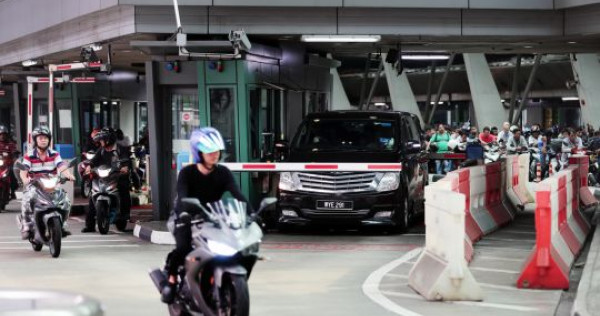
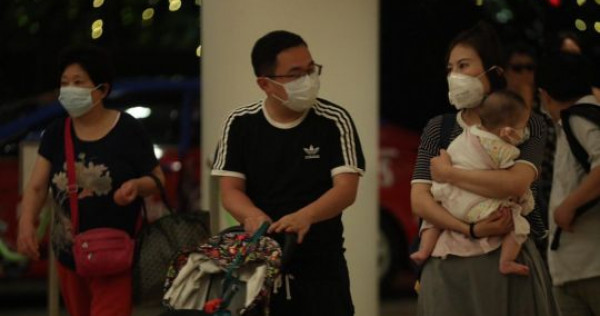
SINGAPORE – All travellers at Woodlands and Tuas checkpoints will have to undergo temperature screening from Friday (Jan 24) at noon, in light of the Wuhan virus outbreak and the large number of travellers expected to cross the border into Malaysia over the festive weekend.

The Immigration & Checkpoints Authority (ICA) said that all travellers arriving at the two checkpoints will have their temperature taken by healthcare assistants, and suspected cases will be sent to hospitals for further tests.

“This is in response to the novel coronavirus pneumonia development in Wuhan and exported cases to other cities and countries, coupled with the anticipated increase in travel volume in the lead up to the Lunar New Year holiday period,” said the ICA in a news release on Friday morning.

Latest reports said 25 people have died as a result of the virus outbreak in China, where more than 800 people have been infected.

On Thursday, Singapore confirmed its first case of the Wuhan virus. A 66-year-old man from Wuhan who had arrived on the island on Monday had tested positive for it. He is now kept in isolation in hospital.

[ad_2]

Source link

63-year-old man arrested for suspected involvement in attempted murder

0

[ad_1]

SINGAPORE – A 63-year-old man was arrested on Wednesday (Jan 22) for his suspected involvement in a case of attempted murder, the police said on Thursday.

The police were alerted to the incident at around 5.10am last Friday, and found a 41-year-old woman injured at Marsiling Lane. The woman was taken to Khoo Teck Puat Hospital.

Preliminary investigations revealed that the woman was attacked by a man.

Officers from the Criminal Investigation Department and the Woodlands Police Division conducted investigations into the case and arrested the suspect on Wednesday.

The man is related to the victim.

He is expected to be charged on Friday with attempted murder.

People working and living near where the incident happened had told Chinese evening daily Lianhe Wanbao that they heard people shouting in the early morning last Friday.

Later on the same day, police and investigation officers were seen at the scene collecting evidence and taking photos, Wanbao reported on Tuesday.

[ad_2]

Source link

Teacher jailed for performing indecent acts on student, 15

0

[ad_1]

The secondary school teacher believed his student “had a crush on him” and secretly flirted with the 15-year-old girl.

Asking her out on multiple occasions, he hugged and kissed her, touched her chest and buttocks, and tried to pressure her into having sex with him.

He became verbally abusive, telling her she deserved to be raped when she did not want to go out with him. The teacher, now 34, was yesterday sentenced to 17 months’ jail for committing indecent acts on the girl.

He pleaded guilty to three counts of the offence, with another four counts taken into consideration. He cannot be named to protect the victim’s identity.

The court heard that the man started teaching the victim’s class in Jan 2017. She followed him on Instagram that month and from May 2017, the pair began messaging each other.

On Aug 31, when the victim wished him a Happy Teacher’s Day, the man flirted with her and suggested she give him a whistle so he could “blow” it and make her sit in front of him.

[ad_2]

Source link

Singapore's first Wuhan virus case: Sentosa hotel sanitises rooms where patient, companions stayed

0

[ad_1]

SINGAPORE – All the rooms at the Shangri-La Rasa Sentosa Hotel where Singapore’s first Wuhan virus confirmed case and his travelling companions stayed in have been sanitised and sealed off.

Four staff members that came into contact with the infected patient have also been told to stay at home since Wednesday (Jan 22), the hotel said on Thursday night.

Shangri-La Group’s executive vice-president of operations in South-east Asia and Australasia Josef Dolp said that all four are currently well and have so far not displayed any symptoms of the virus.

He said: “The rooms which the guests had stayed in were thoroughly disinfected and sanitised after the guests had checked out.

“We will continue to remain vigilant and will assist the health authorities with their investigations and contact tracing efforts.”

The infected guest, a 66-year-old Wuhan native, had checked into the hotel with his family on Monday, Mr Dolp said.

He had reported sick on Wednesday, before getting warded.

The hotel then got in touch with its staff to trace who had come into contact with the man, said Mr Dolp.

[ad_2]

Source link

More red packets recycled due to specialised efforts, increased digital transfers over Chinese New Year

0

SINGAPORE: Each Chinese New Year season, banks, retailers, telcos and other organisations will print millions of pretty and fancy hong baos to be given away to their customers.

This has a “significant” and “tremendous impact” on the environment, said Mr Liow Chean Siang, head of environmental certifications at Singapore Environment Council (SEC).

While it could not provide Singapore-specific numbers, the council noted that according to a 2017 study, 320 million new red packets are produced in Hong Kong every year. This translates to an estimated 16,300 trees cut down to make them.

In Singapore, tonnes of red packets are discarded following the Chinese New Year holidays as most people would not reuse them. 

But in recent years, more are being recycled. Tay Paper Recycling said it received 4,000 kg of red packets for recycling in 2019, quadruple that of 2018. This year, it expects to receive about 8,000 kg of red packets.

The company chalks this up to more specialised red packet recycling initiatives, such as collection boxes outside banks, which “really have taken off” in 2019, said a spokesman. These initiatives ensure that the red packets are not only fit for recycling but also delivered to responsible recyclers, he said.

dbs recycling bins

Red packet recycling bins will be available at all DBS and POSB full-service branches throughout the year. (Photo: DBS)

In 2019, DBS set up red packet recycling bins at all DBS and POSB outlets for about a month. This year, the bank plans to have red packet collection boxes at its full-service branches throughout the year. 

OCBC will also be collecting used and excess red packets at all branches, and they will then be sent to Tay Paper to be pulped and made into cardboard boxes, said Ms Koh Ching Ching, head of group brand and communications. 

UOB will work with an international upcycling firm to convert the red packets collected from 20 branches islandwide to turn them into functional furniture, which will be donated to charity, said a spokesperson. 

There will still be some red packets – about 20 per cent to 30 per cent – which will not be suitable for recycling, said the spokesman for Tay Paper Recycling. “Typically, recyclability needs to be incorporated into product design for it to work,” he added. 

Paper mills prefer red packets that are not printed with huge amounts of red ink, gold ink or glitter, said the spokesman. Red packets not made from paper are not recyclable. 

“As a whole, any item made up of mixed materials cannot be recycled in a Materials Recovery Facilities and needs to be incinerated. The usage of these extra materials used in the manufacture also requires more resources, thus contributing even further to one’s carbon footprint,” said SEC’s Mr Liow. 

SHIFT TO DIGITAL TRANSFERS

Even as more red packets are recycled, banks are also scaling down on the number of red packets they print.

According to Ms Koh, OCBC printed 15 per cent fewer red packets this year compared to 2019.

DBS printed 20 per cent fewer red packets this year, said Mr Jeremy Soo, managing director and head of consumer banking group (Singapore). Some 15 million red packets were produced this year, compared to the average of 20 million in previous years.

“Each year we assess the demand for our hong baos and adjust the amount to be printed. While we try to ensure there is little excess every year, we’re also mindful that DBS (and) POSB hong baos are much sought after each year by our customers,” said Mr Soo, adding that the bank has removed the plastic packaging for the red packets to reduce waste. 

The banks have also been encouraging Singaporeans to opt for digital transfers or deposits especially over the Chinese New Year season, and according to them, their efforts over the past few years are paying off.

Over S$1.5 million was loaded onto its QR gift cards when this was piloted over the Chinese New Year season in 2019, according to DBS. 

Noting that the QR Gift is a “more environmentally friendly option”, Mr Soo said that based on the bank’s calculations, an equivalent of 600 trees in total carbon emissions would be saved if all of its customers reduced their cash withdrawal by 1 per cent. 

“By doing away with the need for cash, DBS QR Gift aims to lessen wastage caused by the printing of new notes and presents a more sustainable option to gifting,” he added. 

According to Mr Sunny Quek, who heads consumer financial services (Singapore) at OCBC bank, its Pay Anyone mobile app has become more popular especially around Chinese New Year and ‘Li Chun’, which refers to auspicious times for people to deposit money into their bank accounts. 

In the two weeks before and after Chinese New Year in 2019, customers performed twice the number of transactions on the app compared to 2018, he said, adding that the bank has encouraged customers to perform digital deposits over the past two years. The amounts transacted also tripled compared to 2018. 

SEC’s Mr Liow noted that the demand for physical red packets is unlikely to completely go away, as there will be people “who expect red packets for various reasons”. 

For example, this could include children under 12 and Singaporeans above age 70 who do not have mobile phones or are not “sufficiently tech savvy”. 

“For greater adoption of e-red packets, shifting the mindsets of businesses and consumers alike to migrate to e-red packets will require gradual yet concerted efforts from both parties. Education on the environmental impact physical red packets create is equally important in mindset and behaviour change,” said Mr Liow. 

However, he also noted that e-red packets or e-transfers are gaining popularity among millennials and others on “the cashless bandwagon”. 

Adding that this trend has taken root in China, with a 2018 survey indicating that 80 per cent of respondents opted to send digital red packets, he said: “This segment of the community will grow and so will demand for e-red packets in the future.” 

Source link

Commentary: Why is Chinese New Year so stress inducing?

0

SINGAPORE: Sometimes, Chinese New Year can feel oddly like an Annual General Meeting.

You gather together to give a full accounting of your performance during the year to a small group of people, many of whom you rarely meet.

Then, everyone publicly discusses and implicitly takes a vote on some very personal issues – your career, body type, love life, fertility and family-planning.

SMALL TALK ON BIG ISSUES

Somehow, a roundtable of well-meaning relatives and open-faced pineapple tarts has never struck me as quite the place to discuss these difficult and sometimes painful topics. 

For instance, why you have emerged from a toxic relationship, how you survived a crushing breakup, and why your baby-making schedule is “off”.

When I say topics are “discussed”, I don’t actually mean an open discussion where people exchange opinions on issues and debate the merits of each side.

Indeed, many of our elders seem to have already made up their minds that no single person can ever be happy, no happily dating couple should wait longer to get married and no married couple should delay procreation.

And why on earth aren’t you climbing the corporate ladder while managing your two toddlers?

READ: Commentary: The Dragon Mother-in-law and the First Son Syndrome

If, like me, you are inclined to disagree, just keep calm and remember that Chinese New Year is a special ceasefire period when disagreements are frowned upon. 

What you are looking at could also be a long, few days of tactical manoeuvres and passive-aggressiveness requiring patience and fortitude.

Mother feeding her baby at home

A mother feeding her baby at home. (Photo: Unsplash/Tanaphong Toochinda)

These days, many of my friends tell me relatives are more progressive, and pressure tactics are easing. Nonetheless, some suggest all this means is that old ways are simply cloaked in more subtlety.

A single friend of mine still gets the most random matchmaking offers. An attached friend is asked yearly when she intends to stop receiving hongbaos, an indirect way of suggesting that she should get married. 

And a high-flying girlfriend in her 40s has a relative who insists on giving her the same S$10 hongbao the four-year-olds of the family get – because she is single.

READ: Commentary: What’s wrong with being a single woman?

READ: Commentary: The things I no longer do for my significant other

SHOULD EXCESS BE A SYMBOL OF SUCCESS?

Part of the reason this occasion is so stressful is the narrow, traditional definition of what a “good life” should look like, which many of our families still cling onto. Beyond marriage and reproduction, this also applies to the definition of success.

For all single readers, in case you are wondering, a marriage certificate and toddler are no special amulets against well-meaning nagging when it comes to what you do for a living. As a freelance writer, I have had my share of unsolicited career advice, often administered with concern and sympathy.

I have not only made unconventional career choices, but am also notoriously known to have repeated “auspicious” outfits for Chinese New Year – a sure sign of lack to some.

The problem is much of Chinese culture equates material excess with success, and this is never more evident than during Chinese New Year. 

It explains why in the weeks leading up, Orchard Road is clogged with vehicles and human bodies, makeshift bazaars sprout on every empty grass patch, and Singaporeans shop with a vengeance.

One news report even suggests Singaporeans spent an estimated S$2.3 billion over Chinese New Year last year. Besides new outfits, we splurge on hairdos, manicures and festive feasts. This has caused restaurants prices to spike to the auspicious tune of S$388, S$588 or S$888 per table. 

Hongbao 1

A row of hongbaos. (Photo: Wendy Wong)

I remember a time when I really looked forward to such festive indulgence. 

When I was a child, it was the only time in the year we could throw away faded, old clothes and pick a couple of new pieces. We took this decision very seriously because these items were meant to last the entire year.

READ: Commentary: Don’t stash your child’s hongbao money in the bank. Give them a chance to spend it

READ: This festive season, parents should exercise self-control in giving, a commentary

I also loved that the streets were decked in red, and recall fondly the riotous clang of cymbals, drums and lion dancers breaking the silence in the mornings.

Legend has it that this tradition stemmed from the belief that loud noises and bright colours scared away the mythical beast Nian that terrorised remote villages at the dawn of Chinese civilisation.

Surely no one then could have imagined the sheer excess and tireless bustle that the 21st century brought with it.

Today, our skies are roaring with planes, our highways packed with petrol-guzzling vehicles, and brightly lit shopping malls beckon to our wallets from every corner. I dare say if this mythical beast were still hovering around our sleepless city, it would flee for the mountains.

In fact, we are so inundated by excess that “Marie-Kondo” has become a verb, and managing excess is an entire self-help category, spinning a Netflix series, books, as well as the philosophy and design aesthetics of minimalism.

RETHINKING THE SEASON OF RENEWAL

Chinese New Year is the high season of Marie-Kondo-ing because the Spring Festival is associated with renewal. Year after year, we spring-clean our houses and diets, only to relapse into our old ways come March.

READ: Commentary: If you don’t learn to love tidying up, Marie Kondo can’t save you

family meal

(Photo: Unsplash/Jerry Shen)

Has this become a pointless cycle of detox and re-tox? And more pertinently, in an era of over-consumption and widespread climate disasters, should we really feel compelled to shop for its own sake?

Perhaps we can broaden our definition of renewal by extending the life-cycle of old products, and give the Earth a chance to renew itself.

READ: Commentary: Our holiday extravaganza has a huge carbon footprint

Sticking to my own personal tradition, I won’t be jostling with the crowd to buy a new dress or book a multi-course hotel dinner with that “lucky 8” price tag this year.

Having said all that, I must admit that I do love Chinese New Year. The festive season always conjures up memories of how my single father would take time off work and transform his taxi into our private family car for two days.

I remember the overcooked steaks he would lovingly put on the table for us on this special occasion each year, after my mother passed away. They were pricey for him but he wanted to make the season memorable for us.

Today, the table has gotten bigger and the dishes fancier, but nothing essential has changed.

And perhaps that’s what Chinese New Year represents. In fact, everywhere around Singapore, whether you’re Chinese or not, throughout the year, we are still putting out the best we can afford for our family.

LISTEN: Will you give an e-hongbao this Chinese New Year? A Heart of the Matter podcast episode 

Kitchen hot pots stove

Slaving over hot pots in the kitchen? There are smarter ways to get dinner ready. (Photo: Pixabay/256417)

Perhaps, most of the excess and even the unsolicited and awkwardly dished-out advice during this annual Chinese New Year affair are driven by love and hope for a brighter future.

That said, instead of trying to outdo ourselves, perhaps this year we might look past the spiffy new clothes, banquet-style menus and performance appraisals to really make time for loved ones and renew bonds with relatives.

Find out what their greatest passion or favourite pastime is. Keep in mind that this doesn’t always involve a person, position or pay cheque. 

Be present in the moment and open to new perspectives. And believe in the magic of pineapple tarts in bringing diverse groups of people together.

While Chinese New Year may always come with some festive stress, as you visit your families during this season, let’s all promise not to lose ourselves in the stress, excess and frenzy, and forget the true spirit of the season – love and family togetherness.

Annie Tan is a freelance writer.

Source link

Wuhan virus patient’s hotel room ‘thoroughly disinfected’, workers who cleaned room quarantined: Shangri-La Group

0

SINGAPORE: The hotel room at Shangri-La’s Rasa Sentosa Resort and Spa occupied by the first patient to test positive for the Wuhan virus has been “thoroughly disinfected and sanitised”, said the Shangri-La Group on Thursday (Jan 23). 

Speaking to the media several hours after the Health Ministry announced Singapore’s first confirmed case of Wuhan virus, executive vice-president for operations in Southeast Asia and Australasia Josef Dolp said the guest had checked in with his family on Jan 20. 

Shangri-La's Rasa Sentosa Resort and Spa (1)

Shangri-La’s Rasa Sentosa Resort and Spa. (Photo: Gaya Chandramohan) 

Hotel employee with mask at Shangri-La's Rasa Sentosa Resort and Spa Wuhan virus

A hotel employee from Shangri-La’s Rasa Sentosa Resort and Spa wears a mask on Jan 23, 2020. (Photo: Gaya Chandramohan) 

Shangri-La's Rasa Sentosa Resort and Spa (4)

A hotel employee at Shangri-La’s Rasa Sentosa Resort and Spa. (Photo: Matthew Mohan) 

Two days later on Wednesday, the guest told hotel staff he was unwell. 

“The rooms the guests stayed in were thoroughly disinfected and sanitised after the guests checked out,” said Mr Dolp, adding that they are now sealed off. 

Four of the hotel’s employees have also been quarantined. 

“The people who were going into the room and cleaning the room, and also those attending to this person, we isolated … We asked them to stay home and wait for the result,” he said. 

The workers will now be monitored and taken care of by the Government, Mr Dolp added. 

Shangri-La Rasa Sentosa guest speaks to manager

A guest at Shangri-La’s Rasa Sentosa Resort speaks to the hotel’s general manager. (Photo: Gaya Chandramohan) 

Prior to Monday, the Shangri-La Group had put in place several measures in case of a possible “pandemic” in its hotels, said Mr Dolp.

This included increased cleaning and sanitising frequency of the hotel premises, he said. 

“This customer was not a Wuhan virus case until an hour ago, he was a suspicious case. We had to wait until the Government did all the tests. Our hotel did not avoid telling anyone anything because it was not clear if this person had tested positive,” said Mr Dolp. 

Boy at Shangri-La's Rasa Sentosa Resort and Spa Wuhan virus

A boy wears a mask walks at the lobby of Shangri-La’s Rasa Sentosa Resort and Spa. (Photo: Gaya Chandramohan) 

Hotel guest at Shangri-La's Rasa Sentosa Resort and Spa Wuhan virus

A hotel guest at Shangri-La’s Rasa Sentosa Resort and Spa’s lobby. (Photo: Gaya Chandramohan) 

“For us, the most important thing is that the safety and security of our guests are taken care of. We care deeply about our customers and we want to make sure we follow procedures.”

The hotel will be setting up an information desk for guests. It will also assist guests if they wish to move, said Mr Dolp.  

When CNA visited the hotel on Thursday night, hotel employees were positioned at the main entrance donning masks. Members of staff were also seen talking to guests at the hotel lobby.

Child wears mask at Shangri-La's Rasa Sentosa Resort and Spa Wuhan virus

A child waits at the lobby of Shangri-La’s Rasa Sentosa Resort and Spa on Jan 23, 2020. (Photo: Gaya Chandramohan) 

Woman wears mask at Shangri-La's Rasa Sentosa Resort and Spa Wuhan virus

A woman wearing a mask looks on at the lobby of Shangri-La’s Rasa Sentosa Resort and Spa on Jan 23, 2020. (Photo: Gaya Chandramohan) 

Guests at lobby of Shangri-La's Rasa Sentosa Resort and Spa Wuhan virus

A woman and child wear masks at the lobby of Shangri-La’s Rasa Sentosa Resort on Jan 23, 2020. (Photo: Gaya Chandramohan) 

“Tonight we were just having dinner and we saw it on CNA. We got a shock – we were the last to know. We discovered it through the media,” Mr Kelvin Yu, a hotel guest told CNA.

“We are thinking of checking out early. We want to find out where the person’s room was and how close it is to our room,” he said. 

Earlier on Thursday, Singapore announced its first confirmed case of Wuhan virus, which has now sickened hundreds and killed at least 17.  

Guests at Shangri-La's Rasa Sentosa Resort and Spa Wuhan virus

Children wearing masks at the Shangri-La’s Rasa Sentosa Resort and Spa lobby on Jan 23, 2020. (Photo: Gaya Chandramohan) 

Guests at Shangri-La's Rasa Sentosa Resort and Spa (4)

A hotel employee speaking to a guest. (Photo: Matthew Mohan) 

In a media briefing, the Ministry of Health (MOH) stated that the patient is a 66-year-old Chinese man. The Wuhan resident, who arrived in Singapore with his family on Jan 20, flew from Guangzhou via China Southern flight CZ351. 

The man is currently in isolation at the Singapore General Hospital and is in stable condition. MOH said he has indicated that he kept within the vicinity of the hotel during his brief stay there.  

His son, 37, has been warded as a suspected case. Their other eight travel companions have left Singapore, said MOH, adding that authorities of their destination country have been informed. 

READ: Singapore confirms first case of Wuhan virus

READ: PM Lee says Singapore “better prepared” for another virus after SARS outbreak

MORE: Our coverage of the Wuhan virus and its developments

The virus, which causes respiratory symptoms similar to a cold or flu, has been linked to a seafood market in Wuhan, the largest city in central China with a population of about 11 million. That market has since been shut down.

The virus has spread to Beijing, Shanghai and Chongqing, as well as provinces in northeastern, central and southern China. 

Across the world, confirmed cases have also been reported in Hong Kong, Japan, Macau, South Korea, Taiwan, Thailand, Vietnam and the United States. 

For full coverage and latest developments on the Wuhan virus outbreak: https://cna.asia/wuhan-virus

Source link