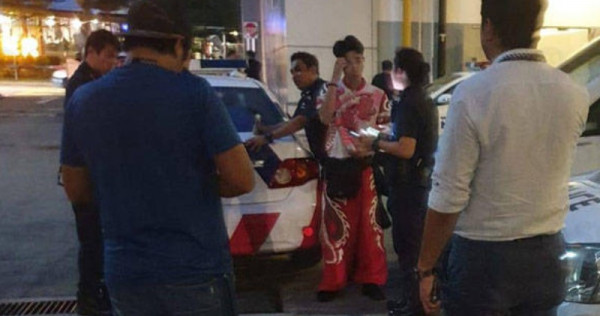
Stomp understands that the suspects are believed to be members of a lion dance troupe.
A Stomp contributor alerted Stomp to the incident and shared a photo he took of police officers questioning a man wearing a lion dance costume at about 6.45pm.
The Stomp contributor said he was aware of a lion dance troupe that had performed at the mall earlier that day.
“After the performance ended, some of the dancers were arrested by the police,” he said.
According to the mall’s website, a lion dance performance was scheduled at 12.30pm on Thursday to celebrate the Chinese New Year.
In response to a Stomp query, the police said they were alerted to a case of theft in dwelling with common intention at 460 Alexandra Road at about 4.05pm.
“Two men, aged 28 and 31, were arrested in relation to the case,” a police spokesman said.
SINGAPORE – About 30,000 work pass holders who are of Chinese nationality left Singapore over the Chinese New Year break and have not returned, said Manpower Minister Josephine Teo on Sunday (Feb 2).
These workers, who would be required to go on a 14-day leave of absence when they return to Singapore, make up less than 1 per cent of the work force here, said Mrs Teo.
The figure does not include Singaporeans who have recently travelled to China who will also need to go on a leave of absence when they return. They can go back to school or work only after 14 days, provided they are well.
Mrs Teo, who was speaking to reporters on her visit to Oasia Hotel Downtown with Trade and Industry Minister Chan Chun Sing, where they inspected precautionary measures after a hotel guest was found to have the Wuhan virus, urged Singaporeans not to ostracise those on the mandated leave of absence.
She said that there was no need for landlords, dormitory operators, or even co-tenants to evict these people as “by and large they are not unwell”.
The government had previously said it has heard reports of this happening.
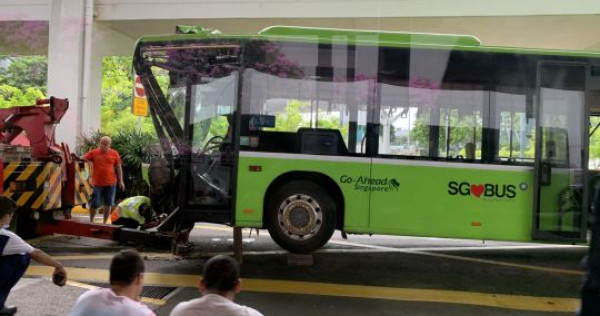
SINGAPORE – Seven people were taken to hospital after a bus accident near Changi Airport Terminal 2 on Sunday afternoon (Feb 2), with the 62-year-old bus driver having to be extricated from the bus by rescuers in a complex operation lasting 45 minutes.
The Singapore Civil Defence Force (SCDF) said in a Facebook post it was alerted to the accident at T2’s bus interchange at 12.36pm.
It said that the bus, which is operated by Go-Ahead Singapore, was found crushed against a concrete pillar.
“The front of the bus was badly crushed inwards, pinning the driver to his seat,” SCDF said.
SCDF said firefighters from Changi Fire Station and the Airport Emergency Service (AES) had to use hydraulic cutting tools to cut open the driver’s window to let paramedics provide him with an intravenous drip.
“Due to the complexity of the rescue operation, rescuers from the SCDF’s elite Disaster Assistance and Rescue Team (Dart) had to be deployed to the scene,” it added.
“The Dart Rescue Vehicle was utilised to pull the bus slightly from the pillar but without aggravating the driver’s injury so as to provide the rescuers a bit of operating space.”
HONG KONG: The novel coronavirus outbreak has killed hundreds and infected more than 14,000 in China within the last two months.
At least 15 cities in China are locked down, accounting for a population of over 50 million people.
Given the virus continues to spread worldwide, the World Health Organization (WHO) has declared the novel coronavirus outbreak a public health emergency of international concern on Friday (Jan 31).
More countries, including the US, UK, and Canada, have warned against nonessential travel to China as well as established travel restrictions to tourists
Among many, Singapore has also blocked the entry of tourists who had visited Hubei province in the past 14 days, or who hold passports issued in the province, and just these past few days, widened these restrictions to all visitors with recent travel history to China. Malaysia has also stopped issuing visas to Chinese travellers from Hubei.
KEY TOURISM MARKETS AFFECTED
The tourism industry – which include hotels, airlines, casinos and restaurants – is expected to suffer massively during the outbreak.
For example, officials in Thailand estimate potential lost revenue at 50 billion baht (US$1.6 billion) around Lunar New Year this year.
Thailand’s Itthipat Buranatanyarat was one of several players who donned a face mask to play in the Panasonic Open India golf tournament. (Photo: AFP/Paul LAKATOS)
The timing could not be worse. The coronavirus outbreak occurring during the Chinese Lunar New Year, one of the biggest travel seasons in Asia, when hundreds of millions of Chinese return to homes or take holidays, both domestically and internationally.
The tourism industries in China and key countries that rely on Chinese tourists will suffer the most immediate repercussions.
According to the China Outbound Tourism Research Institute, 6.3 million Chinese tourists travel abroad during the 2019 Lunar New Year holiday, generating travel revenue of around 513.9 billion yuan (US$73 billion).
Before the outbreak, the Institute predicted 7 million Chinese tourists would travel abroad during the Lunar New Year this year. Hong Kong, Thailand and Japan are top favourite travel destinations.
Chinese visitors make up the largest source market of Hong Kong, accounting for around 78 per cent (around 44 million) of the total number of visitor arrivals in Hong Kong for the entire 2019 (of 56 million).
On the one hand, Hong Kong’s appeal to Chinese tourists has already been weakened by months of political protests, with inbound tourism already down 56 per cent from a year earlier.
But with the coronavirus outbreak, Hong Kong has now suspended flights and train services to Wuhan and cancelled all Lunar New Year celebrations.
The Hong Kong Marathon, originally scheduled for early February, had also been called off. Hong Kong airlines are cutting the number of their flights to the mainland by about half through the end of March in response to government virus-control efforts.
All these additional virus-control policies will hit the Hong Kong tourism industry harder.
The number of Chinese visitors to Japan has also exploded from around 450,000 in 2003 to 8.4 million in 2018, accounting for 27 per cent of all inbound tourists.
Chinese tourists are also big spenders in many other cities, like London, Paris and New York. For example, China remains the fifth-largest source of foreign tourism to the US, behind Canada, Mexico, the UK and Japan.
Around 3 million Chinese tourists also travelled to the US in 2018, spending more than US$36 billion.
Chinese tourists pose on a beach at an island in Phang-Nga province, Thailand January 30, 2020. (Photo: REUTERS/Juarawee Kittisilpa)
The novel coronavirus has now infected more people in China than the SARS outbreak in 2003. The number of confirmed cases has jumped to more than 14,000, surpassing the 5,329 in China from SARS.
According to the International Monetary Fund, China accounted for 4.3 per cent of world economic output in 2003, and this number jumped to 16.3 per cent last year.
In other words, the novel coronavirus will affect the world economy more significantly when compared to the SARS outbreak.
PRUDENT STRATEGY TO SCREEN ALL TRAVELLERS MORE THOROUGHLY
That the novel coronavirus happened during the midst of the Chinese Lunar New Year period shows why tourism is one way in which the virus spread rather quickly.
Aside from the imposition of travel restrictions on travellers from Hubei or China more largely, countries must screen all travellers from other countries just as thoroughly.
The new coronavirus is able to transfer from one person to another, so crowded tourist attractions and closed spaces in planes definitely will speed up its spread.
All but one reported death from the outbreak have so far occurred in China, but travellers have spread the virus to numerous other places.
Cases have been confirmed in numerous countries including Australia, Cambodia, Canada, Finland, France, Germany, India, Italy, Japan, Malaysia, Nepal, the Philippines, Russia, Singapore, South Korea, Sri Lanka, Thailand, the United Arab Emirates, the UK, the US and Vietnam.
Chinese visitors make up 37 percent of all Japan’s inbound tourists and the virus outbreak is likely to affect a range of local businesses. (Photo: AFP/CHARLY TRIBALLEAU)
One typical example is the first case of virus in Japan. The infected Japanese driver drove tour buses for Chinese groups from Wuhan in January, ferrying them from Osaka to Tokyo and back.
He is believed to be the first case of the virus in Japan not linked to recent travel to China but was likely to have contracted the infection through while in confined spaces in the tour bus.
A scientific paper published on Jan 14 in the Journal of Travel Medicine examined the potential for the international spread of the Wuhan coronavirus via commercial air travel.
It identified the top 20 destination cities with regard to passengers arriving from Wuhan, using International Air Transport Association data from January to March 2018.
Bangkok, Hong Kong, Tokyo and Taipei welcomed the most arrivals at 41,080, 23,707, 20,001, and 17,645 respectively.
All have identified cases of the coronavirus, although several of Hong Kong’s cases are known to have entered the city via the high-speed railway rather than on a plane.
SINGAPORE: As digital banks look set to make their debut here later this year, observers say it may be an uphill task for them to build a customer base against more established conventional banks.
While digital banks may find success in appealing to a digitally savvy customer base, traditional banks – which already have advantages such as a strong brand and an established customer base – have already started their own process of digital transformation, they noted.
Last year, the Monetary Authority of Singapore (MAS) announced it would issue up to five digital banking licences to non-bank players.
Of these, up to two of the licences will be for digital retail banking, which will allow firms to provide a range of financial services as well as take deposits from customers.
Another three will be issued for digital wholesale banking, which allows licensees to serve small-and-medium enterprises, as well as other non-retail sectors.
MAS announced earlier this year that it had attracted “strong interest from a diverse group of applicants” – including e-commerce firms and technology companies – receiving 21 applications as of Dec 31, the last day for firms to apply for a licence.
“The majority of applicants are consortiums, with entities seeking to combine their individual strengths to enhance the digital bank’s value proposition,” said MAS.
Successful applicants will be announced in June this year, and they are expected to start business by the middle of next year.
Digital banks – also known as virtual, challenger or neo banks – are not a new concept, Singapore Fintech Association president Chia Hock Lai points out.
He notes that China issued licences to five virtual banks in 2014, while Japan Net Bank – Japan’s only online-only bank – has been operating for two decades.
Just like conventional banks, digital banks are able to perform transactions such as accepting deposits, facilitating payments and selling investment products, said Mr Chia.
“The key difference is that digital banks only allow such financial services to be conducted over smartphones, websites and other digital means,” he added.
Freed from the costs of having physical branches – such as hiring staff and paying for rental of space – digital banks are able to offer their financial products to consumers at lower costs, he said.
They should also be able to offer other advantages, such as better deposit savings rate as well as the ability to maintain accounts without minimum balance fees, Mr Chia suggested.
Big data and the use of artificial intelligence (AI) could also help digital banks tap on a wider range of data sources – including social media activity – to evaluate credit worthiness, he said, adding this would allow more to tap on their financial services.
“Digital banks will challenge the status quo and potentially make the conventional banks move faster in many areas – a win for consumers and businesses,” said Mr Li Jianggan, the chief executive officer of tech investment firm Momentum Works.
Mr Chia agreed, noting: “For example, HSBC waived minimum balance fees for their Hong Kong clients in August this year in response to the pending launch of digital banks in Hong Kong.”
In a report by research firm Forrester released in December, its e-business and channel strategy senior analyst Zhi-Ying Barry said one segment that could be better served by digital banks are small and medium enterprises (SMEs).
Conventional banks have failed to keep up with the evolving needs of these businesses, she said.
“They do a poor job of helping business owners get loans, manage cashflow and payroll, and receive financial insights and advice.
On the other hand, digital banks can use “advanced data and technologies” to focus on markets such as SMEs which traditional institutions might consider unprofitable or risky.
“For example, (China-based digital bank) WeBank’s microlending product uses emerging technologies such as big data and AI in risk analytics and modeling to broaden (SME) access to loans in China.”
FILE PHOTO: A picture illustration shows U.S. 100 dollar bank notes taken in Tokyo August 2, 2011. REUTERS/Yuriko Nakao
NOT ALL SMOOTH SAILING
Still, digital banks are not without their limitations, said Mr Chia.
The lack of physical branches mean digital banks do not have the human touch necessary when a customer wants to work out a complex loan arrangement, he said.
They may also suffer from a lack of access to ATMs, as well as less comprehensive services, such as a lack of insurance and brokerage accounts, compared to conventional banks, he added.
Digital banks may also find it an uphill battle competing with the incumbent traditional banks.
“Traditional players like DBS and UOB are already very entrenched in the local market with strong and highly trusted brands, a huge customer base and strong capital,” said Mr Chia, adding these banks have also started their own digital transformations.
Digital banks need to be build trust, said Ms Barry.
She noted a Forrester survey found only 51 per cent of respondents saying that felt safe using their financial information online.
Even in a mature market like Britain, digital banks have only garnered a market share of about 7 per cent since 2010, he noted.
He noted that Metro Bank – a British digital bank founded in 2010 – only reported its first annual profit after seven years in business.
“Most digital banks elsewhere are not profitable yet,” said Mr Chia.
Noting in certain parts of the region, as many as half of all working adults are reported to be unbanked, he added: “The new companies are likely to achieve more success with the digitally savvy young consumers, especially those in the rest of Southeast Asia.”
Open banking – a term referring to the use of technology to allow consumers to port their information across financial institutions – will allow consumers to transfer their banking needs to digital banks more easily, said Mr Li.
However, this trend is likely to be slow-growing as completely changing banking relationships is not an easy process for most consumers, he noted.
Several big names have already thrown their hats into the ring for Singapore’s digital bank arena.
The largest player so far might be China’s Ant Financial, owned by billionaire Jack Ma, the founder of internet giant Alibaba.
Valued at US$150 billion, an Ant Financial spokesperson told CNA that it had applied to MAS for a digital wholesale banking license, aspart of its commitment to “promoting financial inclusion globally”.
Razer Fintech, the financial technology arm of gaming hardware firm Razer, has formed a consortium – which includes companies such as supermarket chain Sheng Siong, insurer FWD and vehicle marketplace Carro – to apply for a digital full bank licence.
Meanwhile, ride-hailing giant Grab formed a joint venture with telco Singtel to bid for a full digital bank licence.
Both Grab and Singtel have dipped into financial services in the past, with both companies offering e-wallet platforms – which Razer has also introduced.
Momentum Works’ Mr Li notes the advantage these companies have is that they already have platforms with customers performing financial transactions, and thus do not have to spend time and money acquiring a customer base.
“If you look at the Grab-SingTel consortium, chances are most of the digital savvy consumers and many of the small businesses are already customers of one or both of them,” he said.
“If you do not already have a lot of customers through other existing use cases, you can’t be competitive and profitable.”
Digital banks are here to stay, said Mr Chia.
The influx of non-bank companies into digital banking is likely to continue to influence the direction of banking and finance, which is also being shaped by factors such as changing demographics, the emergence of new technology as well as regulatory reform, he added.
“Digital banks are part of the evolution as the digital natives and digitally savvy Gen Xs increasingly prefer digital channels to consume financial services, for their convenience, very often lower costs and better user experience.”
In March 2020, the inaugural CNA Digital Economy Leadership Summit 2020 will bring together some 200 key decision makers from Government, diplomatic circles and the private sector from around Asia, to explore key issues that include: How to grow and innovate in a digital economy, as well as how to manage talent and ensure sustainability in the digital economy.
SINGAPORE: Like many others on the frontline during the SARS (severe acute respiratory syndrome) pandemic in 2003, the resources of a family clinic in Choa Chu Kang had been stretched thin.
Personal protective equipment – N95 respirators, sterile gloves and full-body gowns – was scarce at a time when the world had never seen a virus like it, and people everywhere were desperately scrambling to stockpile emergency supplies for themselves.
Dr Tan Tze Lee, a general practitioner at the Edinburgh Clinic, recalled the difficulties that frontline healthcare workers faced when procuring equipment to protect themselves from the killer virus.
By the time SARS was contained in May 2003, it had infected 238 people and killed 33 in Singapore. Two in five of those infected had been healthcare workers.
While Dr Tan’s clinic thankfully encountered no cases, it remained on high alert for SARS patients in the four months of the epidemic in Singapore, throughout which the medical staff had to don full protective gear. But everyone was not ready for the crisis, said Dr Tan, who is also president of the College of Family Physicians Singapore.
Many continued to work but were extremely concerned that they might bring the virus home and put their loved ones at risk, he added.
“The healthcare practitioners in Singapore were ill-prepared, which resulted in sombre outcomes. Since then, we have learnt our lesson and measures were instituted to prepare us for any future pandemic event.”
“Here we are today, ready to fight the 2019-nCoV,” he said.
The current outbreak of the Wuhan coronavirus – or 2019-nCoV, the World Health Organization’s (WHO) temporary name for the virus – was first confirmed in Singapore on Jan 23. To date, all cases were imported, including a Singaporean who was in Wuhan, and there has been no evidence of community spread in the Republic.
The WHO has yet to declare the virus – which has spread to several countries – as a pandemic. Nevertheless, it was declared a global health emergency on Friday (Jan 31).
The first cases were reported in Wuhan in China’s Hubei province and believed to be linked to the Huanan Seafood Wholesale Market, which sells live animals.
At the heart of Singapore’s response plan is the Disease Outbreak Response System (DORS), a crisis management plan which did not exist in 2003, but was drafted after SARS and refined again in the wake of the swine flu (or H1N1) pandemic in 2009.
Medical workers conduct routine checks to guests before the start of an NKF show at a Mediacorp studio as a safety precaution against SARS in 2003. (File photo: Today)
“After SARS, we made a thorough review of the facilities we had – the infrastructure, hospitals, isolation wards, and the scientific testing and capabilities,” said Prime Minister Lee Hsien Loong at the sidelines of the World Economic Forum in Davos, Switzerland, last week.
“I think we are much better prepared now.”
Currently, Singapore is at DORS condition (DORSCON) Yellow, signifying that the virus is severe and can infect from person to person, but is chiefly occurring outside Singapore. The next step up is DORSCON Orange, which would have applied in the case of SARS, whereby the virus is spreading in Singapore but not widely, and is being contained.
While the plans are in place and some measures have kicked in, Singapore’s national strategy is still largely untested – since the Wuhan coronavirus is believed to be in its early stages in the Republic, medical experts and SARS veterans said.
However, there are ample signs that the lessons from SARS are being applied as Singapore shores up its defences, they said. They believe that unlike during SARS, Singapore is far more ready now.
Singapore has had two brushes with pandemics in recent memory – SARS and H1N1.
While Singapore was able to contain and recover from both, the varying nature of the viruses, as well as the changes in medical science, meant that dealing with each required different approaches.
Doctors had limited options when treating SARS patients and could only administer supportive care, and there was nothing that could be done to prevent infection. In comparison, vaccines and treatment options were available when H1N1 claimed 18 lives in Singapore and infected more than 400,000 people, out of which about 1,300 had to be hospitalised.
COMMAND AND CONTROL
SARS first arrived in Singapore in late February 2003, and was detected in a woman with an atypical pneumonia on March 1, 2003 at Tan Tock Seng Hospital (TTSH). At the time, no one knew how deadly and virulent it was and the first patient led to a cluster of 42 cases at the hospital.
A Ministry of Health (MOH) taskforce was set up on Mar 15, two weeks after the mysterious strain appeared in Singapore and three days after the WHO issued a global alert on the outbreak that began in Hong Kong.
But the command and control structure then was “wholly inadequate” in a crisis situation that was both fluid and unprecedented, a study in the Austrian Journal of South-east Asian Studies concluded in 2012.
Church goers being screened for their body temperature by the thermal imaging system at New Creation Church before attending prayers in 2003. (File photo: Today)
Authorities conducting temperature screening at Tuas checkpoint on Jan 24, 2020. (Photo: TODAY/Najeer Yusof)
Authorities conducting temperature screening at Tuas checkpoint on Jan 24, 2020. (Photo: TODAY/Najeer Yusof)
The structure was led by the health authorities, when in hindsight, it required “more than a medical approach since resources had to be drawn from a number of government agencies that did not fall under the rubric of the MOH”, said authors Allen Lai and Tan Teck Boon, who were from the Lee Kuan Yew School of Public Policy.
They noted that it took five weeks after the first case was reported for the bureaucracy to adapt, though by then, the outbreak had already spread quickly out of TTSH.
On April 7, 2003, a national control structure was created in response to SARS, comprising a nine-member inter-ministerial committee led by then Home Affairs Minister Wong Kan Seng to provide strategic and political directions during health crises.
Helping to coordinate across silos were a core executive group of senior civil servants, and an operations committee spanning ministries. Their functions were later consolidated during the H1N1 crisis, which meant that this leaner bureaucracy was quicker to respond to emerging situations on the ground.
With the Wuhan coronavirus, observers said that it was evident that the Government had reacted more quickly than in SARS and H1N1 when it came to establishing a multi-disciplinary decision-making body.
Professor Ooi Eng Eong, an infectious diseases expert and virologist at the Saw Swee Hock School of Public Health, noted that a multi-ministry taskforce on the Wuhan coronavirus was formed on Jan 22, several hours before the first suspected case came to the attention of the authorities at 10pm the same day. The patient – a 66-year-old Chinese national tourist from Wuhan – tested positive the next day, becoming the first confirmed case in Singapore.
“If you look at the response time, it is a fact that the ministerial committee formed before the case appeared, and we can see that a lot of systems are already in place, occurring across ministries and not as siloed as back then when SARS caught us all by surprise,” said Prof Ooi, who is also deputy director of the Emerging Infectious Diseases Programme at Duke-NUS Medical School.
The taskforce was formed to direct the whole-of-government response to the outbreak, coordinate the public’s response and work with the international community.
Jointly chaired by Health Minister Gan Kim Yong and National Development Minister Lawrence Wong, the taskforce comprises a cross-section of Cabinet ministers spanning various portfolios. They are:
Adviser: Deputy Prime Minister Heng Swee Keat
Mr S Iswaran, Minister for Communications and Information
Mr Chan Chun Sing, Minister for Trade and Industry
Mr Masagos Zulkifli, Minister for the Environment and Water Resources
Mr Ng Chee Meng, Secretary-General of the National Trades Union Congress
Mr Ong Ye Kung, Minister for Education
Mrs Josephine Teo, Minister for Manpower and Second Minister for Home Affairs
Mr Desmond Lee, Minister for Social and Family Development
Dr Janil Puthucheary, Senior Minister of State for Transport, Communications and Information
Dr Chia Shi-Lu, a Tanjong Pagar GRC Member of Parliament who chairs the Government Parliamentary Committee for Health, said that this time, the chain of command is clearer.
He noted that even before the taskforce was formed, the MOH had already begun tracking the outbreak in China at the start of the year. Temperature screening measures were put in place at Changi Airport from as early as Jan 3.
But the high political signature of the panel had led some to question whether too many cooks were spoiling the broth, Dr Chia noted. “In fact, some have asked me: Are we overdoing it?” he said.
“I believe it is very important for everybody to come into the picture – you have to, because at this early stage, (the outbreak) affects so many different parts and you need leadership from them, and you cannot rely solely on MOH to coordinate everything,” he added.
INFRASTRUCTURE, CASE MANAGEMENT AND ISOLATION
While information about the Wuhan virus is still emerging, Singapore is not in the same position as in the initial stages of the SARS outbreak in 2003, where it was – in the words of then Health Minister Lim Hng Kiang – “flying blind”.
During the SARS crisis, Singapore only had two means to detect those infected with the virus: Their clinical symptoms and their travel history. Detecting these were not easy at the time as temperature screeners were also a rare resource, unlike today.
“We have to depend on people taking temperature, and we have to depend on people being truthful to us in their contact history,” said Mr Lim then, describing SARS as a tremendous challenge.
Dr Tan Yia Swam, First Vice-President of the Singapore Medical Association (SMA), said that in the SARS crisis, “there were too many unknowns, and precautions came too late, and too slowly”. SARS was zoonotic in nature, with the disease starting in animals before spreading to humans.
As a result, policies and procedures regarding risk stratification, contact mapping, contact tracing, quarantine and others were developed on the fly as the epidemic erupted, she said.
“Today, all of the above have been developed and tested before in exercises and they are now put into action. Of course, these plans, policies and procedures must be modified in line with the epidemiology of the disease, but we are not working from scratch, unlike the past experience with SARS,” she added.
Tan Tock Seng Hospital’s moderate risk area during the 2003 Sars period. (File photo: TODAY)
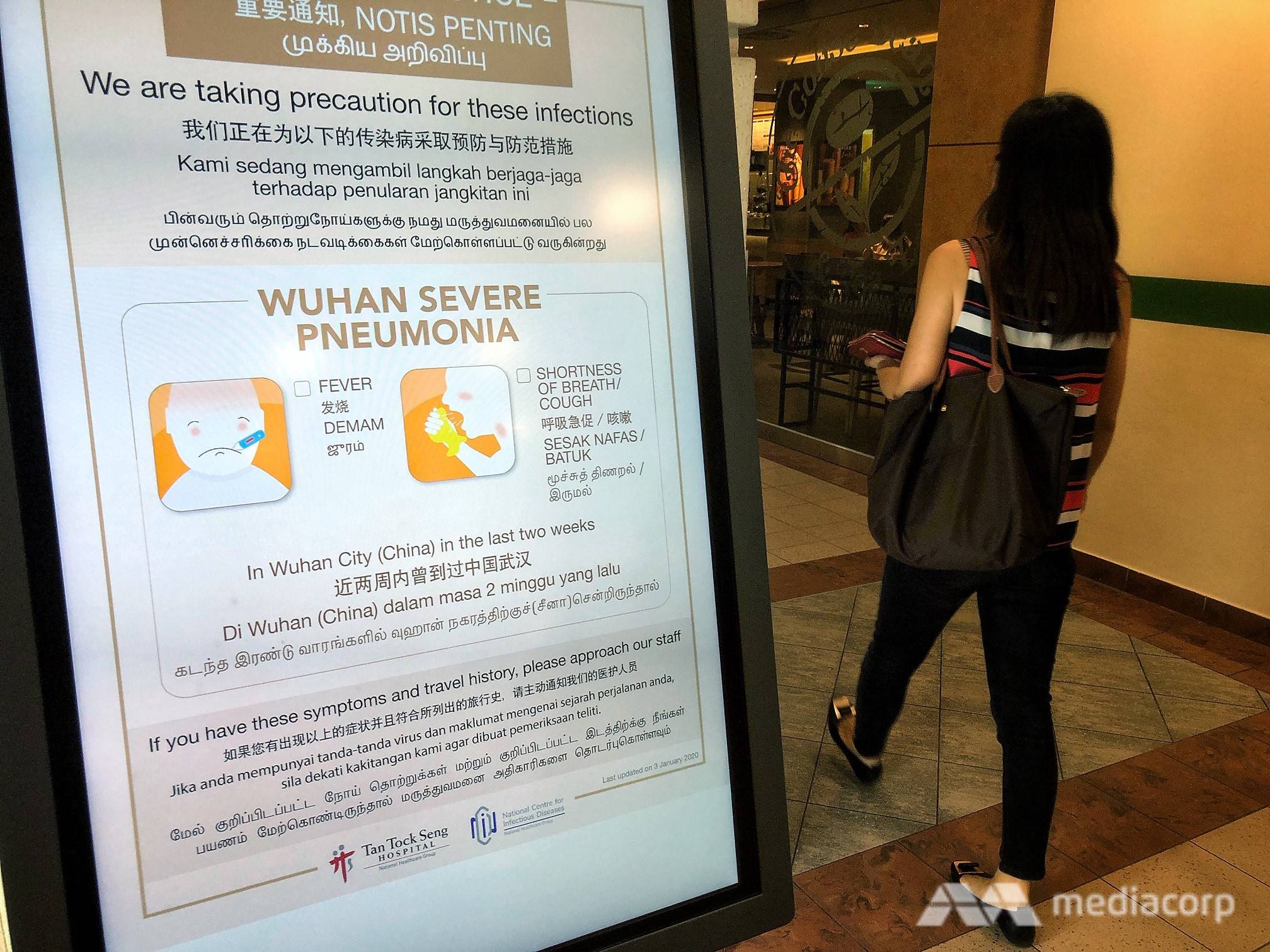
Notices at Tan Tock Seng Hospital informing visitors and patients of the Wuhan coronavirus. (Photo: TODAY/Raj Nadarajan)
Notices at Tan Tock Seng Hospital informing visitors and patients of the Wuhan coronavirus. (Photo: TODAY/Raj Nadarajan)
Addressing the media on Monday, Mr Lawrence Wong said that in the taskforce’s national response to the virus, it is able to “marshal all available resources” to tackle the scourge.
In terms of capacity, Singapore has already beefed up its healthcare and isolation capacity since 2003. This includes the 330-bed National Centre for Infectious Diseases that opened last year, and new hospitals such as Khoo Teck Puat Hospital in 2010, Ng Teng Fong General Hospital in 2015, and Sengkang General Hospital in 2018, he said.
During SARS, TTSH was known as “SARSCentral”, the designated hospital to handle patients. This was borne out of a policy to restrict transmission of the virus to other hospitals, after a patient – who was unaware that he had been infected with the virus during his stay in TTSH – created a new viral cluster at Singapore General Hospital (SGH) when he went there for a surgical problem after his discharge from TTSH.
This policy changed in 2009 during the H1N1 outbreak, with the Health Ministry imposing a standardised infection control measure on all healthcare facilities, empowered by timely tweaks to the Infectious Diseases Act. More than 400 family clinics were made “H1N1-ready” and equipped with the Tamiflu vaccine to handle the outbreak.
Similarly, all public hospitals are capable of handling the Wuhan virus today, and come equipped with isolation rooms, which were in short supply in 2003.
When it came to medical supplies, Dr Chia recalled how there was hardly a stockpile of personal protective equipment for healthcare workers then, such as N95 respirators.
“Because an N95 mask needs to fit well for it to perform its function, having a properly fitted mask was (hard to come by) during SARS, and we had to find time to do the fitting too,” said Dr Chia, who was an orthopaedic surgeon at SGH at the height of the crisis.
“Today, most of us are already fitted with our own personal equipment, even as new staff. Everything is in place today,” he said.
Visitors, staff and patients entering Gleneagles Hospital will have to undergo a screening at the entrance. (Photo: TODAY/Justin Ong)
For the general public, the Government will be disbursing a pack of four surgical masks to each of the 1.37 million Singapore households in a one-off exercise between Feb 1 and Feb 9. This was also done in 2003 when all households received a free emergency kit, containing N95 masks and themometers.
This time round, the mask distribution comes amid long queues at pharmacies around the island as people clamour to buy masks, and retailers say their stocks of surgical masks and N95 masks are running low or sold out. The Government had released 5 million masks from its stockpile over nine days to the retailers but they were all snapped up in hours.
Said Dr Chia: “The message is that there is enough for the whole of the population and in reserve too.”
SMA’s Dr Tan said his association met with the College of Family Physicians Singapore over the Chinese New Year weekend to carry out “complex logistics arrangements” to ensure that there is a steady supply of surgical and N95 masks to replenish stocks for the frontline healthcare workers.
“We are all monitoring the situation closely, and are ready to step up efforts when the need arises,” he said.
Experts noted that contingency plans have been put in place too – student hostels are converted into quarantine facilities in anticipation of future cases, and the Outward Bound Singapore on Pulau Ubin has been marked as a possible quarantine site.
Nanyang Technological University’s Graduate Hall 1, which is designated as a quarantine facility. (Photo: TODAY/Raj Nadarajan)
TRICKY BALANCE IN THE FACE OF IMPONDERABLES
On Monday, Mr Lawrence Wong also called on Singaporeans to be psychologically prepared that the Wuhan virus could be worse than SARS given the many “imponderables” and “uncertainties” regarding the infection, though he stressed that there is still no evidence of community spread of the disease in Singapore.
Over the past week, however, the first reports of human-to-human transmissions outside of China have surfaced in Taiwan, Japan, Vietnam and Germany.
Mr Lawrence Wong said Singapore’s approach “is to anticipate and move as swiftly as we can”. “But every action we take really has to be based on evidence, data and international medical guidelines,” he added.
Unlike SARS, which impacted Singapore when little was known about it, there is now a greater understanding about the coronavirus, a family of viruses that include the Wuhan strain and SARS.
But data gaps still exist, said Professor Tikki Elka Pangestu, a visiting fellow at the Lee Kuan Yew School of Public Policy and a former director of the WHO’s research policy and cooperation department in Geneva.
Prof Pangestu said that not much is known of the proportion of mild and asymptomatic cases versus the severe and fatal ones, which currently makes it difficult to evaluate the Wuhan virus’ true epidemic potential and complicates the outbreak response.
There is also the worry that the virus could mutate into a more virulent and more highly transmissible strain. “This needs close monitoring and another data gap will be in how quickly this development can be evaluated,” he said.
Despite these gaps, Singapore has “reacted much more swiftly and comprehensively” than in 2003, Prof Pangestu added.
With the evolving Wuhan coronavirus situation, people are taking precautions to prevent the spreading of germs by wearing masks. (Photo: TODAY/Najeer Yusof)
A rule of thumb for any country’s approach in health crises, he said, is to base decisions on scientific evidence and rational analysis in the context of its own capacities.
“I think the Singapore approach is the correct one given the current information and evidence available – robust but not over-reactive and flexible enough to accommodate new developments,” said Prof Pangestu.
He noted that overreaction risks imposing an unjustifiable burden on the country, potentially impacting normal daily routines and the livelihoods of certain vulnerable segments of the population. Under-reaction, on the other hand, would lead to a more extensive spread of the virus.
“Calibrating the balance is tricky, but as I said, base your decisions on the existing scientific evidence,” said Prof Pangestu.
Prof Ooi from the Saw Swee Hock School of Public Health added: “There is a risk and cost to overreaction and a cost to an under-reaction. Nobody knows what is the right answer and there is no hard science to it – this is a judgement call and there is no right or wrong.”
Where there is a dearth of knowledge on imported pandemic cases, Singapore’s national strategy is flexible with the changing circumstances, and the plan recommends taking border control measures that would “err on the side of caution with more intense efforts until such time when the disease profile becomes clearer”.
Addressing the media on Friday, Mr Lee said: “I think as a Government, in a way, we are overreacting because we are trying to look ahead to see what can go wrong and take preemptive steps to prevent that from happening.”
Within a week, the taskforce moved from allowing travellers from Wuhan to enter Singapore while subject to enhanced screening on Monday, to imposing a complete entry ban on all nationalities who have been to China in the past 14 days on Friday.
The Immigration and Checkpoints Authority has also stopped issuing all forms of new visas to those with People’s Republic of China passports.
HANDLING A PSYCHOLOGICAL CRISIS
Although the memory of SARS may have faded for some, experts say that the psychological lessons from it have remained until today, such that more Singaporeans are aware of the need to cooperate with the authorities during a health crisis.
For example, social media is rife with examples of Singaporeans calling out bad actors, such as online sellers who hoard surgical masks to resell, or profiteering behaviour by certain businesses. The Government has also acted quickly to combat such behaviour.
But Dr Leong Hoe Nam, an infectious disease specialist at Mount Elizabeth Novena Hospital, believes that the SARS legacy can also be a double-edged sword: The prospect of another SARS-like epidemic might lead to needless panic, or worse, “kiasuism”.
Surgical masks sold out at Guardian Pharmacy at Changi Airport on Jan 29, 2020. (Photo: TODAY/Nuria Ling)
In a viral outbreak, being “kiasu” means that people only think for themselves, preventing mutual cooperation from happening, he said.
Urging Singaporeans to do better, Dr Leong said they should be prepared for the viral outbreak but not overdo it. If fear and panic take hold, they can overwhelm the country’s response “like a tsunami”, he said.
This means Singapore’s national response has to preemptively address concerns that could lead to panic, he said.
“You have no time to get ready. Better to be ready (for the worst) now than not ready at all … There is little room for mistakes (that create more panic),” said Dr Leong.
Dr Chia believes that Singaporeans are generally behaving in a rational way so far, based on his conversations with residents as an MP or his interactions with patients.
“During SARS, there was a lot more fear and a sense of real danger for everyone. We had people trying to evade quarantine, refusing to cooperate or going for medical screening … But so far there are no cases of people who are trying to evade authorities, in other countries, yes, but not among Singaporeans,” he said.
The rise of social media, which was non-existent during SARS , can also give rise to disinformation that fuels further panic.
On the threat of fake news, SMA’s Dr Tan said: “Social media may do more harm than good in this kind of situation where fake news may spread faster than a virus and trigger unwanted behaviours. We urge all readers to exercise judgement when reading stories from various sources, and to keep referencing to official websites for accurate information.”
Compared with the SARS crisis, Singapore has more legislative levers now to deal with fake news and anti-social behaviour – the Protection from Online Falsehoods and Manipulation Act being one of them.
Lesser known are the many enhancements to the Infectious Diseases Act over the years since 2003, which give the authorities greater powers to enforce orders that were issued in the fight against a gazetted outbreak.
The Act allows people who break home quarantine orders to be arrested without a warrant and to be jailed or fined on conviction. It was amended last year to allow officers to use “physical means” to enforce the order by bringing an absconder back to the place of isolation, in lieu of arrest.
It also makes explicit that persons under legal orders that restrict their movement in Singapore, would not be allowed to leave the country, unless otherwise permitted.
The breadth of such powers in Singapore gives the authorities the ability to ensure that evasion tactics, such as those described by Dr Chia, cannot happen again. The issue became such a problem during the SARS crisis that the health authorities had to resort to draconian measures, such as installing video surveillance cameras in the homes of people who were ordered to be quarantined.
The lack of legal powers has created some difficulties for several foreign governments in dealing with the Wuhan coronavirus. Earlier this week, two Japanese citizens who were brought back to Japan from Wuhan on a chartered flight declined to go for medical screening when they landed in Tokyo.
Prime Minister Shinzo Abe told the Japanese Parliament: “While quarantine officers did their best to persuade them to go for further tests, they refused, and unfortunately there is no legal basis to force them to do so.”
MORAL SUASION AND IMPORTANCE OF PUBLIC COMMS
But over the longer term, evidence suggests that government measures such as quarantine and travel restrictions are not as effective as instilling a voluntary sense of social etiquette and responsibility among the people.
Having a buy-in from the public is especially essential when the authorities need the people’s support to carry out certain measures, noted Prof Pangestu.
Preschool children getting their health checked by teachers at My First Skool at Buangkok Crescent on Jan 28, 2020. (Photo: TODAY/Nuria Ling)
Prof Pangestu said: “You need the public’s cooperation for your measures to be successful, such as to follow good hygiene practices, be alert to any symptoms, promptly seeking healthcare, awareness of potential risks, and to counter the spread of misinformation on social media.”
This will be critical during the “surge response” – when situational changes cause a sudden need for the authorities to ramp up its measures, such as activating quarantine sites that are being held in reserve.
A lack of moral suasion would erase the ability for the Government to implement these measures, experts said. They noted how in Hong Kong, protesters bombed a general hospital and a residential building that the authorities had wanted to use as a possible quarantine facility.
Over the past week, South Korean protesters – mostly residents – also used tractors to block access to facilities earmarked as quarantine centres in the cities of Asan and Jincheon, which are about 80km from Seoul.
Experts said cooperation from the masses largely relies on public education as well as proper and accurate communication of risk, which is not always a guarantee considering the complex flow of information in a crisis situation that can lead to miscommunication.
An April 2003 article in The Straits Times, “All the right moves for SARSbut info’s a bit slow, no?”, by its then news editor Bertha Henson, described how the MOH was asked at a press conference to confirm a tipoff that SGH nurses might have SARS. The authorities said no, but it later emerged the next day that 21 SGH staff were on the SARS suspect list.
“The kindest thing I can say about this sudden announcement is that the ministry gets its information later than the media,” wrote Ms Henson then.
Referring to the incident, Professor Chee Yam Cheng, the current president of the Singapore Medical Council, wrote in a series of memos about SARS in 2003 that “quick dissemination of information – and accurate information – is almost as important as transparency in a health emergency”.
Prof Pangestu believes that in general, Singaporeans are united and support what the Government is trying to do to contain the situation.
“But public reaction is hard to control especially with fake news on social media. The idea that ‘perception is reality, anything is the truth’ often operates in this kind of (crisis) environment. That is why public risk communication is so important,” he said.
SINGAPORE: The reaction of Singaporeans, as they pitch in to help with the Wuhan coronavirus threat, has been ‘amazing’, said Law and Home Affairs Minister K Shanmugam on Sunday (Feb 2).
“You can see a collective coming together, a determination to deal with this, and everyone pitching in,” said the minister on a visit to Changi Airport where he interacted with Immigration and Checkpoints Authority officers.
Law and Home Affairs Minister K Shanmugam interacts with immigration officers at Changi Airport on Feb 2, 2020.
He raised various examples of how Singaporeans have risen to the occasion: Singapore Armed Forces (SAF) personnel packing masks for distribution to Singapore households, Home Team officers taking on extra shifts and duties, grassroots leaders putting up posters in lifts overnight to tell residents where they can collect their masks and volunteers manning the counters to give out the masks.
Earlier in the week, it was announced that each Singapore household will receive four surgical face masks, amid worries over the Wuhan coronavirus and long queues for masks at retailers across the island.
Singapore Armed Forces (SAF) personnel packs face mask for distribution to the public at SAFTI Military Institute in Jurong on Jan 31. (Photo: Try Sutrisno Foo)
On Saturday, distribution of surgical masks to all Singaporean households started at 89 Community Centres and 654 Resident Committee centres.
About 1,500 SAF personnel were mobilised to pack and deliver the masks to the distribution points.
Mr Shanmugam also lauded those who came forward to perform “spontaneous acts of generosity”.
“People conducting hygiene classes, distributing toiletries for personal hygiene … Residents who give away the masks that they have collected to others whom they think might need it more,” he said.
“So the Singaporean spirit, the generosity of spirit, has been quite amazing to see.”
Law and Home Affairs Minister K Shanmugam speaks to reporters at Changi Airport on Feb 2, 2020.
There have also been reports of discrimination against Chinese nationals, he said, such as being denied services at a clinic or bullied because he or she is from China.
SINGAPORE: Singapore is confident that China can deal decisively with the Wuhan coronavirus and is supportive of the country in its fight against the disease, said Law and Home Affairs Minister K Shanmugam on Sunday (Feb 2).
“China has a large number of tools and resources and the entire focus of the nation, all its national resources, have been brought to bear on this issue,” said Mr Shanmugam. “We are confident that they will be able to deal with it.”
He also said that Singapore’s widened travel restrictions, imposed from 11.59pm Saturday, are based on medical evidence.
“People who are affected by (the virus) may be asymptomatic for 14 days and we know it has spread in other parts of China … if it comes, the spread in Singapore, with such an intense density of population, can be quite substantial.”
The travel restrictions bar all new visitors who have been in China in the last 14 days from entering Singapore – regardless of nationality. These visitors will also not be allowed to transit in Singapore.
The Immigration and Checkpoints Authority (ICA) has barred 15 people from entering the country since the start of the travel restrictions.
As of 1pm on Sunday, those restricted included five with Chinese passports, five with Indian passports, as well as two from the United States, one from Spain, one from Britain and a Malaysian, the ICA said.
Noting only a third of those turned away were from China, Minister for Law and Home Affairs K Shanmugam said: “The restrictions are not based on passports nor are they based on nationality. It is geographical, in the sense that if you’ve been in China, whoever you are, then the restrictions kick in.”
Mr Shanmugam said this was necessary as Singapore’s small size and dense population makes it vulnerable to the spread of disease.
He noted Singapore’s medical and quarantine facilities could be “easily stretched” if the virus spreads here.
“Our primary duty is to make sure Singaporeans are safe.”
In a Facebook post on Sunday, the Chinese Embassy in Singapore criticised such restrictions put in place by a number of countries, such as the United States and Australia.
It noted World Health Organization head Tedros Adhanom – who had last Thursday declared the coronavirus a global health emergency – had also praised China for its efforts and did not recommend limiting either trade or travel to China.
Minister for Home Affairs K Shanmugam visits Changi Airport on Sunday, Feb 2. (Photo: Ahmad Zhaki Abdullah)
The virus should not be a reason to discriminate against Chinese nationals, said Mr Shanmugam, adding he had noticed a number of “racially tinged posts” online.
“Really we shouldn’t come down to this level of xenophobia,” he said, though he noted such sentiments belonged to a “small minority”.
“Our society has shown itself to be calm, confident, and they’ve shown generosity of spirit in their actions and words, that was very good to see.”
Mr Shanmugam was speaking to the media during a visit to Changi Airport, where he was shown measures such as thermal screenings of passengers, that have been put into place following the outbreak of the Wuhan coronavirus.
The ICA also noted the policy – which disallows entry to new visitors with recent travel history to mainland China within the last 14 days, regardless of nationality – does not apply to Chinese nationals who are already in the country.
Social visit passes for these people will be extended based on prevailing guidelines, and if approved will be extended by 30 days.
Further extensions will be considered based on these guidelines as well as other circumstances, the ICA said.
As of Saturday, more than 50 applications to extend the social visit passes of Chinese passport holders had been approved since the announcement of the suspension of new visas on Jan 31, the ICA said.
SINGAPORE: Ellil Mathiyan and Amal Luqman are 30 years apart in age, but they share two things in common: A love for singing along to songs by Michael Jackson, the Bee Gees and Phil Collins.
And cancer.
Mr Mathiyan and Mr Luqman were the only two cancer survivors on a trekking trip last December to Northern Mongolia to raise funds for the Singapore Cancer Society. Mr Mathiyan, 60, was diagnosed with both rectal and testicular cancer in March 2011. Because of an operation to remove the tumor from his rectum, he has to wear a stoma bag on his abdomen to collect waste from his body.
Mr Luqman was hit hard at a much younger age. The 30-year-old found out that he had stage two lymphoma when he was 17 after a doctor noticed a lump on his neck.
Both of them have long been in remission. But memories of the physical pain and loneliness they felt during their treatment have not disappeared.
Cancer survivors Ellil Mathiyan (left) and Amal Luqman (right). (Photo: Rachel Phua).
“Chemotherapy made me nauseous all the time,” said Mr Luqman, now a social studies and literature secondary school teacher. “I was puking to the extent I thought I couldn’t puke any more, but there were still things coming out of my mouth. Black bile.”
It wasn’t just the frequent feeling of wanting to retch. His sore throat was unimaginably bad, he said, and he lost most of his appetite.
Mr Mathiyan, who had to walk around with the skin between his legs raw from the radiotherapy, said the side effects from the cancer treatments are nothing “you would ever wish on your worst enemies”.
Friends and family tried to show their care and concern, said Mr Luqman, but he chose to withdraw instead. It didn’t help that he felt weak the whole time and he often had to skip school.
Mr Luqman, 30 and now a secondary school teacher, was diagnosed with lymphoma when he was 17. (Photo: Chung Yong Xi).
While his wife and friends were often ready with cups of tea or to accompany him for his chemotherapy session, it was his support groups – an online one from the UK and another at the Singapore General Hospital – that made him feel like his suffering was truly understood, said Mr Mathiyan.
Having gone through the agony of cancer with comfort from friends, family and fellow patients, Mr Luqman and Mr Mathiyan have both felt the need to return in kind by helping other cancer sufferers.
Besides raising funds for the Singapore Cancer Society through the 12-day winter expedition organised by travel agency Beyond Expeditions SG, both men wanted to inspire others like them to not feel battered by the pronouncement of a cancer diagnosis.
“A lot of people when they are diagnosed…they get very depressed. One of the motivations was to tell them there are still lots of things they can do,” said Mr Mathiyan, who is an avid swimmer, dragon-boater and Zumba dancer.
Mr Mathiyan was diagnosed with rectal and testicular cancer in 2011. The experience made him realise he wanted to use the rest of his life to help others like him. (Photo: Chung Yong Xi).
Apart from his overseas adventures – Mr Mathiyan had previously travelled in 2018 to the Gobi Desert for the same cause – the part-time administrative manager at a metal recycling company has his hands full with volunteer work. He is co-chair of the SingHealth Patient Advocacy Network, a founding member of the Ostomy Association of Singapore that looks into the needs of people with stoma bags, and patient ambassador with several hospitals.
Unlike his older counterpart, this was Mr Luqman’s first time getting behind the cancer cause. It was an opportunity for him to share his journey with cancer and raise funds for patients that need financial assistance at the same time.
“I don’t see myself as an inspirational figure,” he said. “I think my takeaway from have the illness is to just survive. It may not take much but that (little bit of) resilience and perseverance can get you quite far.”
“Just staying alive and surviving is extraordinary in its own way.”
ONCE IN YOUR SHOES
Health advocacy groups CNA spoke to said having current and former clients participate in their advocacy work is invaluable as they are able to offer a personal and empathetic touch to the cause.
“They fully understand the pain, struggles and issues faced by cancer patients,” said a spokesperson from the Singapore Cancer Society, which runs five cancer support groups, among other programmes. “Sometimes, people want to know how other cancer survivor cope, especially after a major operation that would change their normalcy of life.”
Out of the 1,495 support group members, 90 cancer patients and survivors volunteer with the non-profit, where they provide psychosocial support for other cancer survivors, raise awareness about cancer and cancer prevention message, and help with the planning and publicity of events.
These volunteers give assurance to newly diagnosed patients that they are not alone in this battle, said the SCS spokesperson. For example, the oncologist might have the technical expertise to explain the process, outcome and impact of chemotherapy, but what matters to a cancer patient might be something as minor as physical appearance and hair loss.
“Having people to share tips and tricks on how to get around these sort of social challenges are tremendously helpful and often overlooked by doctors.”
A Singapore Heart Foundation (SHF) spokesperson said that clients who step forward to share their stories of cardiovascular diseases and recovery process help “paint a more realistic picture behind the statistics of the disease”, which is the leading cause of death in Singapore.
SHF, which serves 2,125 clients as of March 2019’s figures, has around 15 former and current heart disease patients who sought help from the organisation that now either donate to SHF or participate in their heart health campaigns annually, said the spokesperson.
Some give talks so that the public can better understand people afflicted with cardiovascular diseases. Others have stepped forward to learn how to perform cardiopulmonary resuscitation (CPR) and use the automated external defibrillator (AED).
The Singapore Association for Mental Health (SAMH) said that it has observed an increasing trend of beneficiaries in recovery volunteering with the organisation. Volunteers help with peer-led sharing sessions, sports and arts activities.
Some have also opened up about their journey with a mental health condition at SAMH’s outreach events, which help to reduce misconceptions about mental illness as “the public can see that this person is as normal as others”.
MAKING IT LESS LONELY FOR THOSE WITH MENTAL HEALTH
One of SAMH’s volunteers who has made efforts to pay it forward is 37-year-old Dave Tan, who was showing signs of bipolar and mood disorders in his late-teens, after he was arrested for the second time for his public outbursts of anger and sent to hospital.
But following his last relapse about seven or eight years ago, Mr Tan has been in steady recovery and hasn’t been warded since. He currently works as a hotel steward, volunteers with Taoist temple Zhen Fu Tang, and took on an additional temporary job as group homes assistant with SAMH from March to June 2018.
Dave Tan was diagnosed with bipolar mood disorder when he was in his late-teens but is now organising activities for people like him. (Photo: Singapore Association for Mental Health).
For almost two years now, Mr Tan has also been supporting SAMH by donating some of the temple’s funds to the charity, and organising block parties for the homes’ clients at the temple in Bukit Batok. The neighbourhood’s residents, SAMH staff and temple visitors also got to join in the fun.
These activities are his way of helping the homes’ clients feel less lonely during the holidays, he said, and serve as a platform for Singaporeans to interact with people with mental health conditions as his way of fighting the stigma of mental illness.
In his earlier years, having a mental health problem was much more taboo than today, Mr Tan said. And his frequent arrests and subsequent stays in hospital led to him being estranged from his family until his late-20s, he said.
It was the kindness of fellow patients-turned-friends that helped him to endure his time in the ward. They would offer him treats given to them by their visitors. These modest deeds – a cup of coffee, a packet of snacks, sometimes a word of advice – were indubitably cherished.
“These small gestures from other people in recovery gave me the urge to give back to the community,” the normally jovial Mr Tan said, and it helps too, he added, “I like to spread to spread joy to people.”
SINGAPORE: The Immigration and Checkpoints Authority (ICA) has barred 15 people from entering the country since the start of travel restrictions for those with recent travel history to China.
As of 1pm on Sunday, those restricted included five with Chinese passports, five with Indian passports, as well as two from the United States, one from Spain, one from Britain and a Malaysian, the ICA said.
Noting only a third of those turned away were from China, Minister for Law and Home Affairs K Shanmugam said: “The restrictions are not based on passports nor are they based on nationality.”
Minister for Law and Home Affairs K Shanmugam said the travel restrictions are necessary as Singapore’s small size and dense population makes it vulnerable to the spread of disease.
“I’m sure the Chinese government doesn’t want (the coronavirus to spread). We don’t want it,” he said.
Minister for Home Affairs K Shanmugam visits Changi Airport on Sunday, Feb 2. (Photo: Ahmad Zhaki Abdullah)
He noted Singapore’s medical and quarantine facilities could be “easily stretched” if the virus spread here.
“Our primary duty is to make sure Singaporeans are safe.”
Mr Shanmugam was speaking to the media during a visit to Changi Airport, where he was shown measures such as thermal screenings of passengers, that have been put into place following the outbreak of the Wuhan coronavirus.
The ICA also noted the policy – which disallows entry to new visitors with recent travel history to mainland China within the last 14 days, regardless of nationality – does not apply to Chinese nationals who are already in the country.
Social visit passes for these people will be extended based on prevailing guidelines, and if approved will be extended by 30 days.
Further extensions will be considered based on these guidelines as well as other circumstances, the ICA said.
As of Saturday, more than 50 applications to extend the social visit passes of Chinese passport holders had been approved since the announcement of the suspension of new visas on Jan 31, the ICA said.