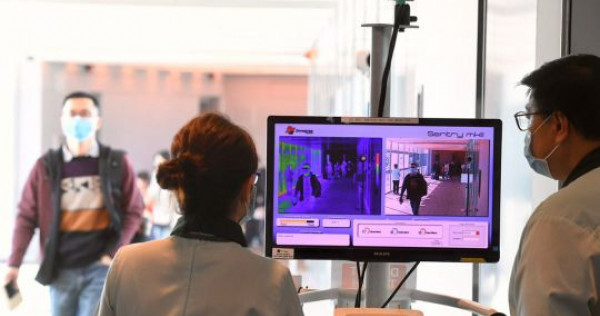
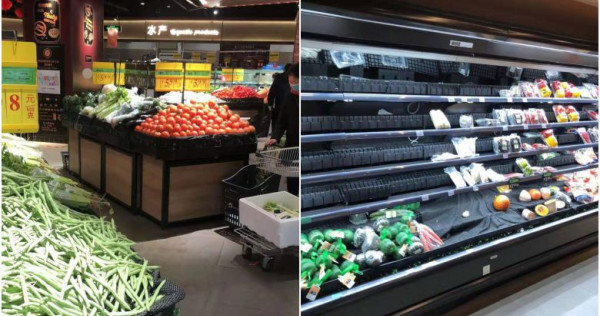
SINGAPORE – All current work pass holders with travel history to mainland China within the last 14 days will now have to be approved by the Manpower Ministry (MOM) before they can return to Singapore.
The new rule applies to all such workers regardless of nationality who plan to enter Singapore after 11.59pm on Saturday (Feb 8). It also applies to in-principle approval (IPA) holders who have not entered Singapore yet, as well as individuals holding dependant’s or long term visit passes issued by MOM.
This comes after Manpower Minister Josephine Teo said on Thursday that most of the 30,000 China nationals holding work passes who left for the Chinese New Year break have not yet returned to Singapore.
In a statement on Friday, MOM said that employers should inform their employees not to make travel plans to Singapore until they have received approval from MOM.
SINGAPORE: It began innocently with comments such as: “You can always tell me anything if it helps ok.”
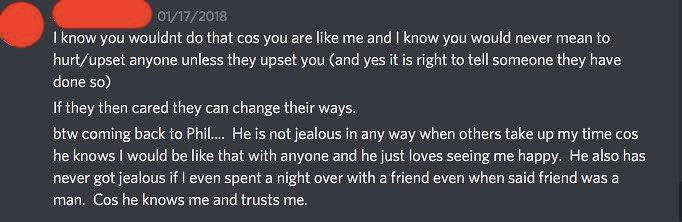
Then, beguilingly: “You are like me and I know you would never mean to hurt upset anyone unless they upset you.”
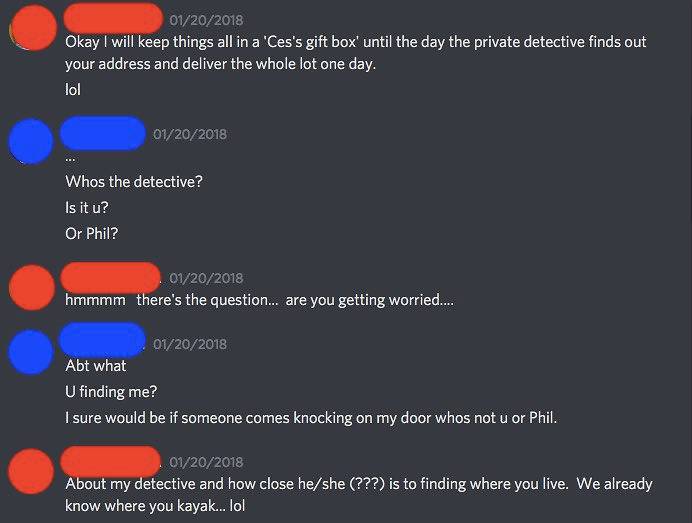
But then things grew more sinister. “(Are you getting worried) about my (private) detective and how close he/she (???) is to finding where you live. We already know where you kayak … lol,” a message said about four weeks into their conversation.
Celestine Tan was on her phone constantly for six weeks between December 2017 and February 2018, she remembered. She had been chatting with people she believed to be a woman and her husband from the UK, although their identities were never confirmed.
Messages between Celestine Tan and the groomer. The groomer is hinting that a private detective had been hired to follow Celestine Tan around. (Photo: Screenshot from Vivian Kwek).
The groomer trying to gain Ms Tan’s trust by saying “you can always tell me anything”. (Photo: Screenshot from Vivian Kwek).
They had found each other through the video game MineCraft. Celestine, now 15, had logged on to one of the game’s many private servers – where smaller groups of players gather – at the suggestion of a friend. When she was online, she would not usually activate her online chat function, but joining the group required her to.
A woman who called herself Carolana started talking to Celestine on the public chat as well as through private messages. Celestine cannot remember what they spoke about at first. But then the woman suggested they move their conversation onto Discord, a chat service app popular among gamers, so that they could message using phones.
The back and forth was constant, said Celestine. The home-schooled teenager thought she had found a new best friend who understood her. It was at a point in her life when her mother was busy with work, and she felt she was not connecting with her friends.
She never saw anything suspicious about the budding online relationship, since they did video calls too. Celestine saw that Carolana was an elderly woman who had difficulty walking. At least, that was how she looked to her.
Her mother, Mdm Vivian Kwek, said the woman looked like “an oversized man with a wig”.
By week two of their exchange on Discord, Celestine shared personal information – her real name, age, a photo of her family and that she kayaked at MacRitchie Reservoir – to Carolana.
At times a man, whom Carolana said was her husband called Phil, would appear in the video calls or message her using Carolana’s account as well. The woman suggested that both she and Phil could fly to Singapore one day to meet up.
Other messages had a sexual tone. For instance, the woman brought up an idea that Phil was fine if Carolana spent the night with a male friend.
Mdm Kwek was aghast when she found out what was happening in her daughter’s life.
“It could happen to anyone,” Mdm Kwek said, which is why she has chosen to share her family’s experience of encountering an online predator. She said that she hopes her story will help other parents protect their children from similarly vulnerable situations.
She had came home that day – Feb 6, 2018 – from an Internet safety workshop held by Google. Wanting to test some of the tips she picked up from the session, she asked her daughter if she could look through her phone.
“I’d rather you didn’t,” her daughter replied. Mdm Kwek, 47, insisted. As she scrolled through Celestine’s WhatsApp messages, an icon that looked like a blue game console popped up. It disappeared before she could tap on it.
Puzzled, Mdm Kwek started searching for it. She found it in one of the phone’s folders named “Unused”.
Over the next 14 hours, Mdm Kwek scrutinised each one of the messages, horrified at what she found.
As a parenting coach who had written about child safety, she knew quickly what had happened – her daughter was talking to an online groomer.
Grooming is the act of building up a trusting and emotional relationship with a minor, usually with the purpose of sexual exploitation, gratification or abuse, said TOUCH Cyber Wellness’s senior coach Joanne Wong.
Such grooming can take place through an online platform, such as social media, messaging or gaming platforms.
The organisation has seen few counselling cases related to online sexual grooming, and there are no official statistics in Singapore on the number of child sexual abuse cases involving digital communication.
But a 2018 report by digital education think tank DQ Institute found that 54 per cent of Singapore children aged between eight and 12 are exposed to at least one cyber-risk, which includes cyberbullying, video game addiction, offline meetings and online sexual behaviour.
Among those who were exposed to these risks, 16 per cent have been involved in online sexual behaviours such as having searched for, and/or visited websites with sexual content, and/or having had sexual conversations online with strangers.
More than 3,600 children in Singapore aged between eight and 12 were polled.
Identifying an online sexual groomer is often hard, said Ms Wong, as they could be anyone: Male, female, teenagers or seniors. They are present on any online platforms – social media platforms, forums, and online games with in-game chat functions.
She said that though youths often know the possible risks of interacting with strangers online, they tend to be lulled by a false sense of security behind the screen.
“Groomers use manipulation tactics, such as using flattery or appealing to the youth’s sense of empathy, to gain their victims’ trust,” she said.
For anyone who thinks they are being sexually groomed online, she said that they should cease all communication with the person, take note of the groomer’s identity or username and take a screenshot before blocking him or her.
Report the user on the platform used for communication, and seek a trusted adult’s help.
Mdm Kwek herself picked out the tactics Carolana had used to groom her daughter, from trying to establish trust with her child by pointing out how alike they were, to fishing for personal data by creating false intimacy. At one point, Carolana even tried to ask Celestine for her home address so that she could send her gifts.
“ABSOLUTE SHOCK AND DISBELIEF”
After discovering the danger her daughter had be put in, Mdm Kwek put up a blog post about what had gone down and shared it on her Facebook page, hoping that others would learn from the lesson.
There was no need to report it to the police, she said, as fortunately, the relationship was not yet deep enough to incentivise the groomers to come to Singapore to meet her daughter.
Undoubtedly, she was angry. At the groomer and her daughter, at first, but also at herself. As someone who helps other parents understand their children, she had failed to discover her blind spot.
“I wasn’t there for her,” said Mdm Kwek. She resolved then to spend more quality time with each of her three children.
On her part, Celestine never thought she would be groomed online. Her mum had drummed into her and her siblings about being careful online. They had to get verbal permission to download any apps, and they were banned from entering online chats groups.
After the experience, Mdm Kwek blogged about how she discovered that the person her daughter was talking to was a groomer. (Photo: Rachel Phua).
Lesson learnt, she said. Celestine does not go onto online forums, except for one on an online education website called the Art of Problem Solving to discuss “nerdy” maths problems. Even then, she makes sure not to share any personal information.
Mdm Kwek has since enabled the kids mode function on each of her children’s phone, which lets her and her husband control the apps they download.
It does not bother Celestine. Her mum resolved to spend more quality time with her and her siblings. “Monthly dates” became a thing. She has learnt to listen to the adults in the room.
SINGAPORE – Over a period of six years, when she was between eight and 14 years old, a girl was sexually abused by her stepfather, who sneaked into her room two to three nights a week to violate her.
Even after he stopped, she carried the burden of the abuse for the next four years, until she suffered a mental breakdown and disclosed what her stepfather had done to her.
On Friday (Feb 7), the victim, now 20, cried in court when the man, now 55, apologised to her after he was sentenced to 24 years’ jail.
He pleaded guilty to three charges of sexual assault by penetration of a minor, with another eight charges taken into consideration.
The High Court heard that the victim was seven years old when her mother married the accused in 2006.
The family moved into a flat with one bedroom the following year.
The victim slept in the room with her older brother and younger sister, while the couple slept in the living room.
In 2008, when she was eight, her stepfather started sexually abusing her shortly after her older brother moved out to live with their biological father.
The 53-year-old arrived on Jan 21 with her daughter for sightseeing. She did not have symptoms during the Scoot flight to Singapore, but developed a fever, cough and chills in the afternoon of her arrival.
She sought medical attention at a hospital the next day and was warded in an isolation room at the National Centre for Infectious Diseases.
Her daughter tested negative for the virus.
More than two weeks later on Feb 7, Ms Jiang was discharged and says she is now looking forward to going home.
She spoke about her experience in an interview with the Ministry of Health:
Why did you visit Singapore?
My daughter and her classmates have visited Singapore. They feel that Singapore is clean and the people are friendly. For the past few years, I have also been saying that Singapore is quite a nice place. So, my daughter saved her salary, and bought a ticket for me to visit Singapore.
Could you share with us what it was like when you experienced the onset of symptoms?
After a medical check-up and X-ray, the doctor told me I have pneumonia. I found it unbelievable as I thought I had the common cold. I had such symptoms before which were like the common cold. Even then, I didn’t believe I caught the 2019-nCoV infection, I comforted myself that: “It was just the typical pneumonia”.
The hospital room I stayed in is good. The medical staff is caring and encouraging. As I have diabetes and high blood pressure, the medical staff regularly checked on my blood level and heart and did blood tests for me. I received very good medical care. I am grateful to the staff and thanked them for taking good care of me, even though I am a foreigner. They simply replied, “It is our job.” The medical team really have hearts of gold.
The virus has caused many people around the world to be very fearful, what would you like to share with others having recovered from it?
I was not afraid because of the wonderful medical team you have here. I am but an ordinary mother, but I was brave and overcame it. From the experience, I also became stronger. Through this experience, I strongly feel that every human being should learn to respect nature, and to care and love creatures (big or) small. There is also a need for us to keep a boundary with them.
To be honest, Singapore is a wonderful country, in terms of its climate and in other areas too, but this is not my homeland after all.
I understand that there was a chartered flight on 5 Feb for Wuhanese to return to China. I initially thought that I would be able to board the plane back, but regrettably, I missed it. My doctor apologised to me (for not being able to discharge me in time for the flight back); he explained it was because I still had some virus on me.
I replied: “I should thank you. You are being responsible to me, to others, and your profession by not discharging me. There is no need for you to apologise to me, I should thank you instead.”
Although I cannot be discharged, nor meet my daughter, but if I was discharged, I might spread it to others, and this is definitely unacceptable. I must be cleared of my virus thoroughly, and be given a clean bill of health, before I can go home.
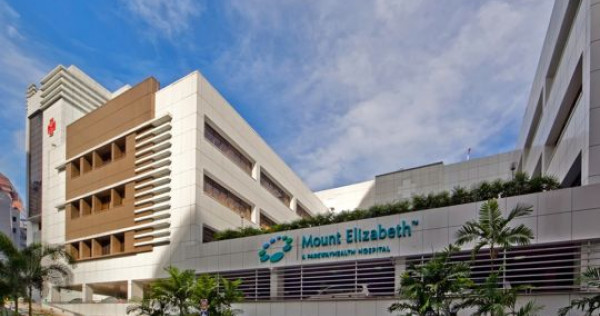
SINGAPORE – A doctor specialising in anaesthesiology, who is the director of a clinic called The Pain Specialist in Mount Elizabeth Hospital, appeared in a district court on Friday (Feb 7) after he allegedly molested a woman multiple times in the building.
A search on the Accounting and Corporate Regulatory Authority ‘s website reveals that the alleged offender, Yeo Sow Nam, is also the director of several organisations, including the College of Anaesthesiologists, Singapore.
Another online search for registered healthcare professionals in Singapore reveals that he is still practising.
On Friday, the 51-year-old Singaporean was charged with four counts of molestation, with all the cases allegedly involving the same 32-year-old woman.
It was not mentioned if she was his patient or colleague. She cannot be named due to a gag order to protect her identity.
He is accused of committing these offences on the 12th storey of Mount Elizabeth Hospital near Orchard Road in the evening of Oct 9, 2017.
SINGAPORE: Since it was first discovered last December in the Chinese city of Wuhan, the 2019 novel coronavirus has spread internationally.
The rapid proliferation of the virus and the accompanying deaths have resulted in the World Health Organization (WHO) declaring the outbreak to be a global health emergency.
Governments all over the world have begun initiating various policies given the source of the virus.
These have ranged from travel bans to quarantines of infected visitors – actions that protect countries from a potential community spread of the virus.
PROBLEMATIC SENTIMENTS
Reactions to the virus has been a mixture of fear and panic. The novel coronavirus has arguably been weaponised by some around the world to justify their racism against Chinese nationals and stoke communal tensions.
More than 9,000 people in Canada had signed a petition last Wednesday (Jan 28) urging a district school board to bar students whose family members had recently travelled to China from entering the classroom.
Canadians have also reportedly started to avoid Toronto’s Chinatown, with businesses in that area recording a slowdown.
A man wearing a mask walks in the Chinatown district of downtown Toronto, Ontario, after 3 patients with novel coronavirus were reported in Canada on Jan 28, 2020. (Photo: REUTERS/Carlos Osorio)
Such measures could have more far-reaching societal consequences.
In Canada and Britain, for instance, the outbreak has led to a rise of anti-Asian sentiments and discrimination, sparking fears among the Asian community that they would be targeted racially, as they had been during the 2003 outbreak of SARS.
THE PUBLIC HEALTH CALCULATIONS
Much has been said about the travel restrictions on Chinese nationals into Singapore and other countries, and whether these moves were potentially discriminatory.
Hence, Home Affairs and Law Minister K Shanmugam’s explanation on Sunday that the restrictions are not based on nationality or passports but is geographic “in the sense that if you’ve been to China, whoever you are, then the restrictions kick in” is a useful clarification.
The further announcement by the Immigration and Checkpoints Authority on the nationalities of individuals who have been refused entry into Singapore since the start of the travel restrictions clarifies that the target of restrictions is anyone who might have been susceptible to the virus.
Besides five Chinese passport-holders, 10 more – Spanish, British, American, Indian and Malaysians – have been refused entry because of their recent stay in China.
The authorities have also made provisions for case-by-case exemptions for Chinese passport-holders who reside outside China and have not been there in the recent past.
While there is a need to safeguard public health and enact exclusionary responses, authorities must also monitor cases of xenophobia.
Law and Home Affairs Minister K Shanmugam interacts with immigration officers at Changi Airport on Feb 2, 2020.
These can exacerbate fault lines in Singapore. Already, there is some level of discomfort with those who originate from China.
In the 2019 IPS-OnePeople.sg Indicators of Racial and Religious Harmony which surveyed over 4,000 Singaporean residents, about 20 per cent of Singaporeans were not comfortable with having a neighbour who was previously a Chinese national.
One can expect that with the flooding of vitriolic remarks about Chinese nationals globally online driven by the novel coronavirus, there could be higher levels of discomfort.
Prime Minister Lee Hsien Loong, noting these anti-PRC sentiments reported elsewhere in the world, has declared on Saturday that this is “not quite the right approach to take”.
Framing this as a medical issue, “an illness” and a virus that “can affect any human being”, he also pointed out that Chinese authorities did not wish it upon themselves and are taking measures to deal with the contagion.
Referring to Singapore’s decision to restrict entry to new visitors of any nationality with recent travel history to mainland China, Mr Lee said it was a pre-emptive measure taken purely to protect Singapore’s public health.
Prime Minister lee Hsien Loong at the National Centre for Infectious Diseases. (Photo: Gaya Chandramohan)
It is important that our Prime Minister and other national leaders have taken a stand against such xenophobic reactions. What more can Singapore do to counter potential racism that stems from the novel coronavirus?
First, we should work towards disassociating the virus from mainland Chinese.
While the term “Wuhan virus” had been used commonly in past few weeks, possibly because we have precedents of associating diseases from where they originated (MERS is the acronym for Middle Eastern Respiratory Syndrome), it could feed prejudices against Chinese nationals.
In this regard, it would be useful for health experts to popularise easy scientific equivalents and stay clear from such terms: A virus after all does not have a nationality but “2019 novel coronavirus” is a mouthful.
Second, schools and community leaders should seek to build empathy for those infected around the world rather than allow people to be absorbed in hate towards Chinese nationals.
We should consider how, if a similar virus had originated in Singapore, we would have felt had there been global disdain for all things Singaporean.
People were seen wearing a mask at Bugis Street, Singapore on Feb 3. (Photo: Gaya Chandramohan)
Third, individual responsibility for our words and deeds must also be taken. Netizens should offer support to those experiencing the crisis online and call out racist and discriminatory comments.
As cases of local emissions emerged this week, members of Singapore society must keep in mind they have a role to play in stemming xenophobic sentiments.
A harmonious and informed society is much needed to weather not only this health threat but also the other aspects of the novel coronavirus challenge that can have significant implications for Singapore.
Mathew Mathews is Head, Social Lab, and Senior Research Fellow at the Institute of Policy Studies, National University of Singapore. Shane Pereira is a Research Associate at the Institute of Policy Studies.
A 26-year-old male Grab driver was arrested on Feb 4 for harassing not one, not two, but three female passengers in a day.
The police told AsiaOne that they had received three police reports lodged separately by different female passengers against a male Grab driver on Feb 3.
All three of them shared similar experiences; The man had displayed behaviour that made them feel unsafe — dangerous driving, requesting for them to sit in the front seat, as well as failing to send them to their intended destinations.
One of the victim’s mother, Ellis Phua, took to Facebook to vent about her daughter’s experience that same night.
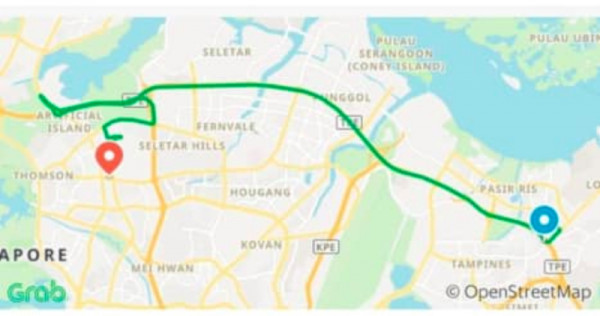
The driver was supposed to ferry her to Yio Chu Kang Swimming Complex that morning when he missed the intended exit and entered the expressway. He continued to take several detours before stopping at a dead end.
There, he threatened his passenger to sit in the front seat or he wouldn’t drive. In her account of the incident via a police report, the driver had nearly gotten out of his car but he sat down, apologised and continued driving after she scolded him.
While many scramble to get out of Wuhan with the recent outbreak of the novel coronavirus, Singaporean K. Ho is comfortable where he is.
Mr Ho, who has a Chinese wife and a three-year-old son, has lived in the city for the past 10 years. He told The Straits Times: “I’m comfortable here. In fact, it’s quite cosy to stay home during winter.”
The senior manager in the manufacturing industry has put himself and his family in self-quarantine at home ever since the city’s lockdown on Jan 23.
Temperature takings are a part of their daily routine now. His wife also washes her hands and disinfects her coat whenever she heads out to the supermarket.
Despite all this, Mr Ho told the newspaper that life is still the same. “Well, except for the fact that you need to stay indoors and can’t leave the city,” he added.
He spends his time working from home or helping to coordinate with clients and colleagues who want to leave Wuhan.
Visitors to Singapore’s Chatuchak Night Market are in for a Thai-tarik treat that their eyes can feast on, and it’s not just about the food.
PHOTO: AsiaOne/Dennis Ng
Mastering the tarik (Malay for ‘pull’) technique perfectly that is often-seen on our shores but not quite in the Land of Smiles, this particular Thai vendor at Khon Wanna Roti & Teh Tarik stall holds a live performance for his customers.
While they wait for their orders, he skilfully pulls the tea while spinning around gracefully on his feet.
The stall was easily the most popular one when we were there and commanded a lengthy queue, though we wondered if people were there for the drink or the spectacle. Here he is in action:
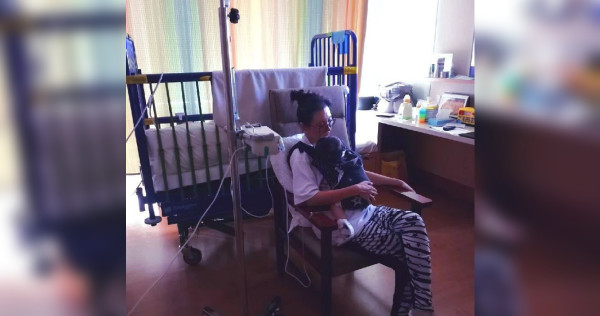
Worried because her baby’s high fever wouldn’t subside, Diane Giam took him to Mount Elizabeth Novena Hospital for treatment on Jan 28.
As a result of an infection in both ears, the 10-month-old boy ran a fever between 39 and 41 degrees and had to be warded. To treat the infection, the baby was given the antibiotic Augmentin through an IV drip.
Days passed, but Giam’s son still wasn’t getting better.
That was when she found out that a nurse’s negligence may have prolonged his illness.
In a Facebook post on Wednesday (Feb 6), Giam recounted details of her ordeal in the hospital, hoping to warn other parents.
She recounted how a nurse had done “a bad job” while changing her baby’s IV on the third day. As his hand looked swollen, she had to remove it. In the process of doing so, the nurse allegedly “caused his blood to spray all over (Giam’s) t-shirt”.
As her child already had three tubes of blood drawn before that, Giam described the incident as “blood that was unnecessarily lost”.