Home Blog Page 467

Incentives likely to encourage electric vehicle adoption in Singapore, but questions remain, say analysts

0

SINGAPORE: Newly announced measures aimed at incentivising the use of electric vehicles (EVs) are likely to encourage their adoption, say observers, though there are still questions about their implementation.  

In his Budget 2020 speech, Deputy Prime Minister Heng Swee Keat announced that Singapore aimed to phase out the use of internal combustion engine (ICE) vehicles here by 2040, and outlined a slew of measures aimed at incentivising the use of more environmentally friendly alternatives, such as EVs. 

Among them is the EV Early Adoption Incentive (EEAI), where those who buy fully electric cars and taxis will receive a rebate of up to 45 per cent on the Addition Registration Fee (ARF), capped at S$20,000.

READ: Budget 2020: Additional incentives to encourage use of more environmentally friendly vehicles

Mr Heng, who is also the Finance Minister, also announced plans to expand Singapore’s charging infrastructure, from 1,600 charging points currently to 28,000 in the future. 

He also said the road tax methodology for cars will be revised, leading to an “across-the-board” reduction in road tax for EVs and some hybrids.

He noted though that the greater adoption of EVs would lead to a significant reduction in fuel excise duties – which amount to about S$1 billion annually – and that a lump-sum tax would be imposed on the road tax schedule for EVs. 

This may lead to a higher total road tax for some EV models, though Mr Heng said annual usage cost for EVs will still be about 9 per cent lower than ICE equivalents and that consumers are still likely to enjoy “substantial cost savings” because of the EEAI. 

The Land Transport Authority said the revised electric car road tax schedule will include an additional flat component of S$700 per year – which will be phased in over three years beginning in 2021 – as well as the  existing variable component tied to power rating, which will be revised to “better account for improvements in vehicular efficiency”. 

Singapore’s electric car population currently stands at 1,125, or just 0.18 per cent of the 631,266 cars on the road here. 

READ: What is keeping electric cars from gaining greater acceptance in Singapore?

The new measures were welcomed by the taxi industry, where operators have been moving away from diesel vehicles to petrol-electric hybrids over the last two years. 

Ms Tammy Tan, ComfortDelGro’s group chief corporate communications officer, said the taxi giant has “always been a strong proponent of efficient and green technology”, pointing to its trial of four fully electric Hyundai taxis as well as the conversion of half its 10,700-strong fleet to hybrid models. 

“With the additional incentives given by Government for fully electric vehicles, we will also evaluate if we should bring in more fully electric taxis,” she added. 

Mr Neo Kian Hong, CEO of SMRT, the third largest taxi operator here, said: “With the EV Early Adoption Incentive, we will gradually introduce EVs into our taxi fleet and reduce our carbon footprint even more.”

FILE PHOTO: Electric cars are charged at Source power points in London

FILE PHOTO: Electric cars are charged at Source power points in London, Britain, October 19, 2018. REUTERS/Simon Dawson

A STEP FORWARD FOR ELECTRIC VEHICLE ADOPTION

Mr Peter Huang, who has driven a Hyundai Ioniq Electric for about two years, said the moves to phase out ICE vehicles and expand the charging network were “amazing commitments” by the authorities. 

The 37-year-old musician however wanted to know if any concessions could be afforded to existing EV owners, who committed to buying cleaner vehicles even before such schemes were announced. 

“Some of us hope to be able to engage with the Government about this,” he said. 

Electric Vehicle Association of Singapore (EVAS) vice-president Paul Welsford welcomed the measures as a step forward for the adoption of EVs here, though he noted it is too early to tell how these will influence car buyers. 

He noted EVAS had been pushing for changes to the road tax regime, he said.

Under the existing scheme, which has been in place since 2008, more road tax is incurred by more powerful cars, resulting in EVs being charged more than their fossil fuel powered equivalents. 

However, Singapore University of Social Sciences (SUSS) transport economist Walter Theseira noted the lump sum road tax means using an EV will be less economical for those who do not drive so often. 

Still, as such vehicles tend to be more efficient than their petrol or diesel equivalents, and with electricity being cheaper than that of either fossil fuel, EV owners will be able to get more mileage for less money, he said. 

“So that’s why overall, running costs (for an EV) will be lower,” noted Assoc Prof Theseira, who heads the master of urban transport management programme at SUSS. 

Mr Welsford noted the “lump sum tax” is an interim measure, which will only be in place until the introduction of the next generation Electronic Road Pricing, when a usage-based tax can be implemented. 

However, even with the incentives, the switch over to EVs in Singapore is likely to be a gradual one for several reasons, said Assoc Prof Theseira. 

Among them is that there is still not a wide enough variety of EVs to meet the demands of motorists, with most buyers looking out for sports utility vehicles or minivans instead of the “niche” models automakers offer now, he said. 

Another consideration is that Singaporeans who regularly drive up to Malaysia may also find it difficult to charge their cars across the Causeway, he said. 

The finer details of where charging points are located and how quickly a car can be charged also needs to be worked out to ensure a network of 28,000 can meet the demand from motorists, said Associate Professor Theseira. 

“I would not personally expect much transition to EVs, except maybe among some landed property owners, for the next few years.” 

READ: Commentary: Where are all the electric vehicle charging points?

Mr Welsford however said more motorists here are likely to choose EVs in the coming years, even without Tuesday’s Budget announcements. 

With the price of batteries coming down, the cost of such vehicles are set to be on par with petrol or diesel-driven ones,  he said. 

“More people would choose EVs as the more economical choice, rather than just (an environmentally) sustainable one.” 

Assoc Prof Theseira noted that encouraging the use of public transport is more environmentally friendly than the use of privately owned vehicles, echoing comments made by Environment and Water Resources Minister Masagos Zulkifli in response to criticism of Singapore’s EV policies by Tesla CEO Elon Musk last year. 

“But that being said, motor cars are not going to go away,” he said. “And so given that you will have a certain number of these vehicles, they might as well be more efficient.”
Source link

This made my day: Chicken rice shop offers free meals to hospital staff despite suffering losses

0

[ad_1]

It’s easy to pay lip service, but the boss of a local chicken rice shop is putting his money where his mouth is.

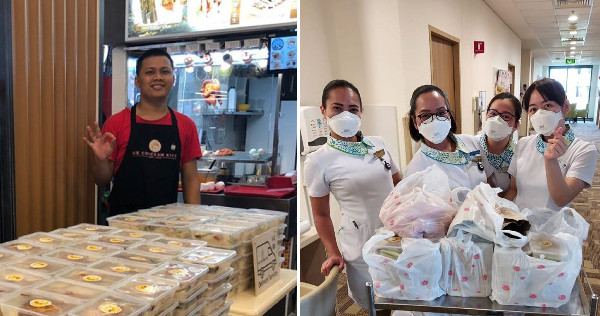
To date, OK Chicken Rice has delivered 1,180 free meals to healthcare workers and volunteers, including those from National Centre for Infectious Diseases (NCID), Khoo Teck Puat Hospital (KTPH) and Singapore General Hospital (SGH). And they’ve got thousands more packets scheduled to be delivered to SGH in the coming weeks.

All this, despite continuing to suffer losses monthly, boss Daniel Tan, 40, told AsiaOne.

The Ang Mo Kio chicken rice joint kicked off the initiative, Campaign Cheer Up, on Feb 10, calling for donations from members of the public to defray the costs of free meals provided to those in the frontline of the coronavirus outbreak.

Their Facebook post read: “We wish to thank our medical team working at the front lines especially in these trying times by organising a ‘cheer-up’ campaign for them! Join us by sponsoring $3 for each package that we deliver to them!”

Each donation of $3 went towards defraying the cost of a packet of chicken rice (usually priced at $5.90).

[ad_2]

Source link

Catfight! Claws out as Xiaxue and Oon Shu An fight over obesity

0

[ad_1]

Is being big something beautiful or something to correct?

That’s the question hanging over an online spat between local influencer Wendy Cheng (better known as Xiaxue) and local actress Oon Shu An.

In her latest controversy, 35-year-old Xiaxue faced major backlash over fat-shaming after she spoke out against glamourising people who are morbidly obese. It started with her calling Adele a hypocrite in an Instagram post on Feb 14 — apparently triggered after the singer reportedly lost 45kg despite previously stating that her aim wasn’t to be skinny.

Xiaxue also didn’t hold back on Instagram, reposting a picture of plus-sized model La’Shaunae Steward. She wrote: “The morbidly obese (like this woman) should never be seen as attractive because death and disease isn’t attractive full stop… F****** stop glorifying this s*** Instagram. Shame on you.”

[ad_2]

Source link

BMTC cookhouse's Western Wednesday special sparks delicious Facebook comments

0

[ad_1]

It is Wednesday, my dudes. And as the Singapore Armed Forces’ Basic Military Training Centre (BMTC) Facebook page pointed out today (Feb 19), ’tis a day to treat yourself to some military-grade Western cuisine. 

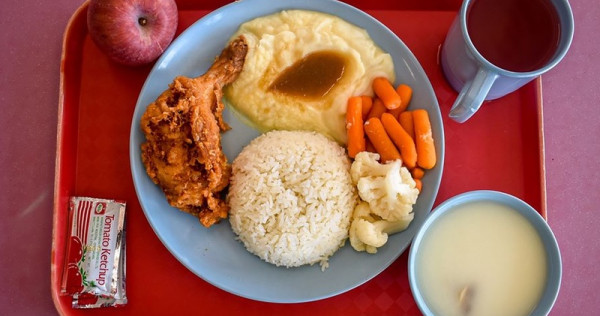
No cuts of dry-aged steak or rack of lambs, boys and girls. Western Wednesday at BMTC is all about fried chicken, a whole lot of carbs with plain rice and mashed potatoes, steamed vegetables, some ketchup, and what appears to be extremely diluted mushroom soup. 

To be fair, the piece of battered chicken thigh looks fairly appetising. But years of eating at military facility canteens might be enough to bring back unsavoury memories. 

[ad_2]

Source link

Coronavirus: Employers who send healthy workers to hospitals for Covid-19 test may get work pass privileges suspended, warns MOM

0

[ad_1]

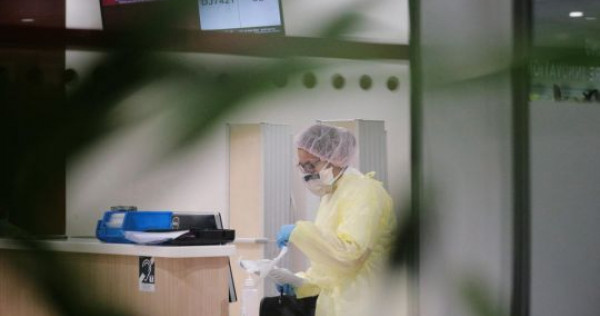
SINGAPORE – Do not send employees to hospitals unless there is a medical emergency, the Ministry of Manpower (MOM) has warned employers, after hospitals reported that employers were dropping off workers to have them tested for the coronavirus.

“Employers who act irresponsibly by misusing medical facilities may have their work pass privileges suspended,” it added.

In a message sent to employers seen by The Straits Times on Wednesday (Feb 19), Mr Kevin Teoh, divisional director of MOM’s foreign manpower management division, said the ministry had been getting feedback from hospitals that employers were sending their workers to be tested for Covid-19, as the disease is now known.

ST has contacted the Health Ministry for more information on the extent of such behaviour.

Mr Teoh reminded employers that hospitals will not test individuals who are well.

“This is to ensure that medical facilities and resources are focused on unwell individuals who need medical treatment,” he said.

A worker who is unwell should be sent to a general practitioner, who will then assess if the worker needs to be taken to hospital.

[ad_2]

Source link

Artiste power couple team up for a charmingly viral COVID-19 rendition of Come On Eileen

0

[ad_1]

Forget about Jack Neo/Liang Ximei’s tune, and disregard Ministry of Education’s kiddy trap jingle — there can only be one song to encapsulate the zeitgeist of the ongoing coronavirus outbreak. 

Right now, that title looks to belong to a whimsical number produced by husband-and-wife duo Edward Choy and Jo Tan, both esteemed actors and performers in their own right. 

According to Jo, both she and her husband were supposed to be working on Valentine’s Day (Feb 14), but things apparently didn’t go as planned. With “too much time” on their hands, the two artistes filmed themselves performing a rather charming COVID-19-themed duet. 

[ad_2]

Source link

Construction at Seletar Aerospace Heights halted since first COVID-19 case reported

0

SINGAPORE: The real estate company behind the Seletar Aerospace Heights work sites linked to five cases of COVID-19 “immediately halted construction” after it was notified of the first confirmed case on Feb 9.  

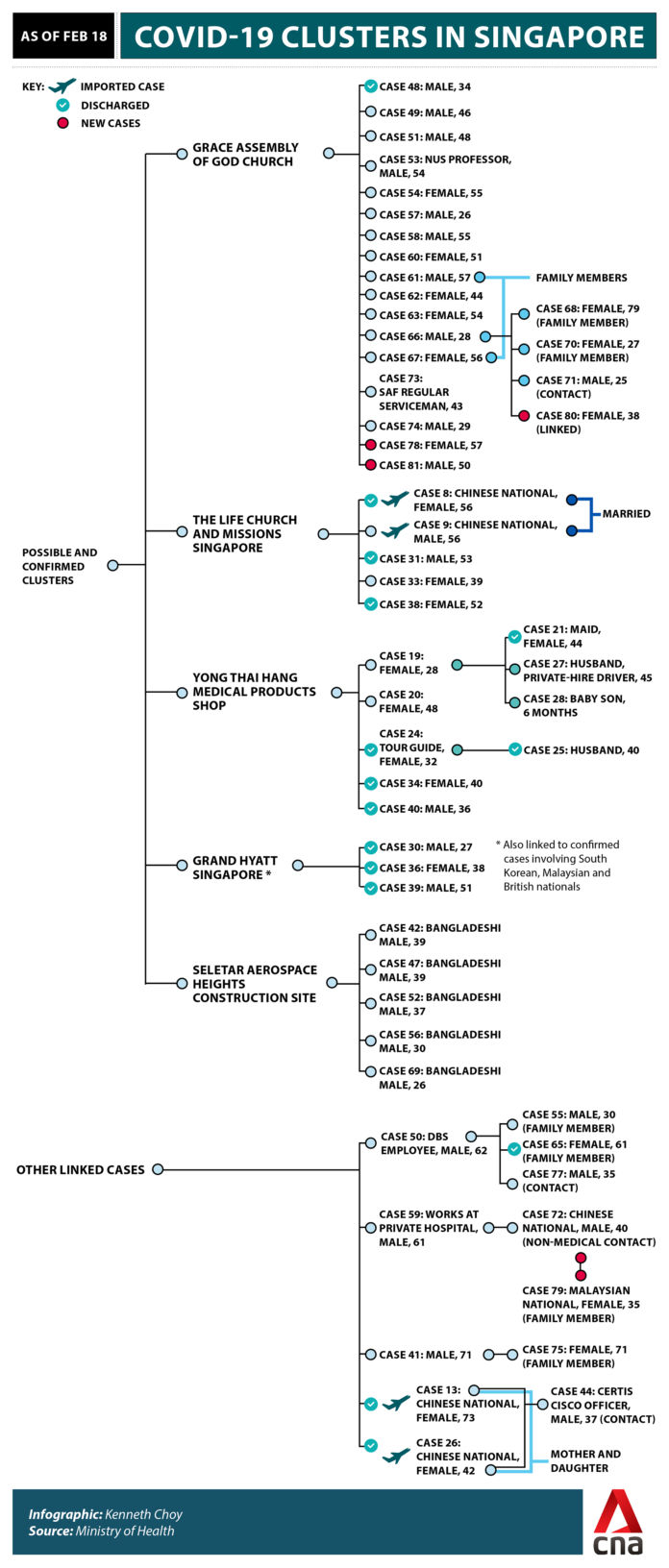
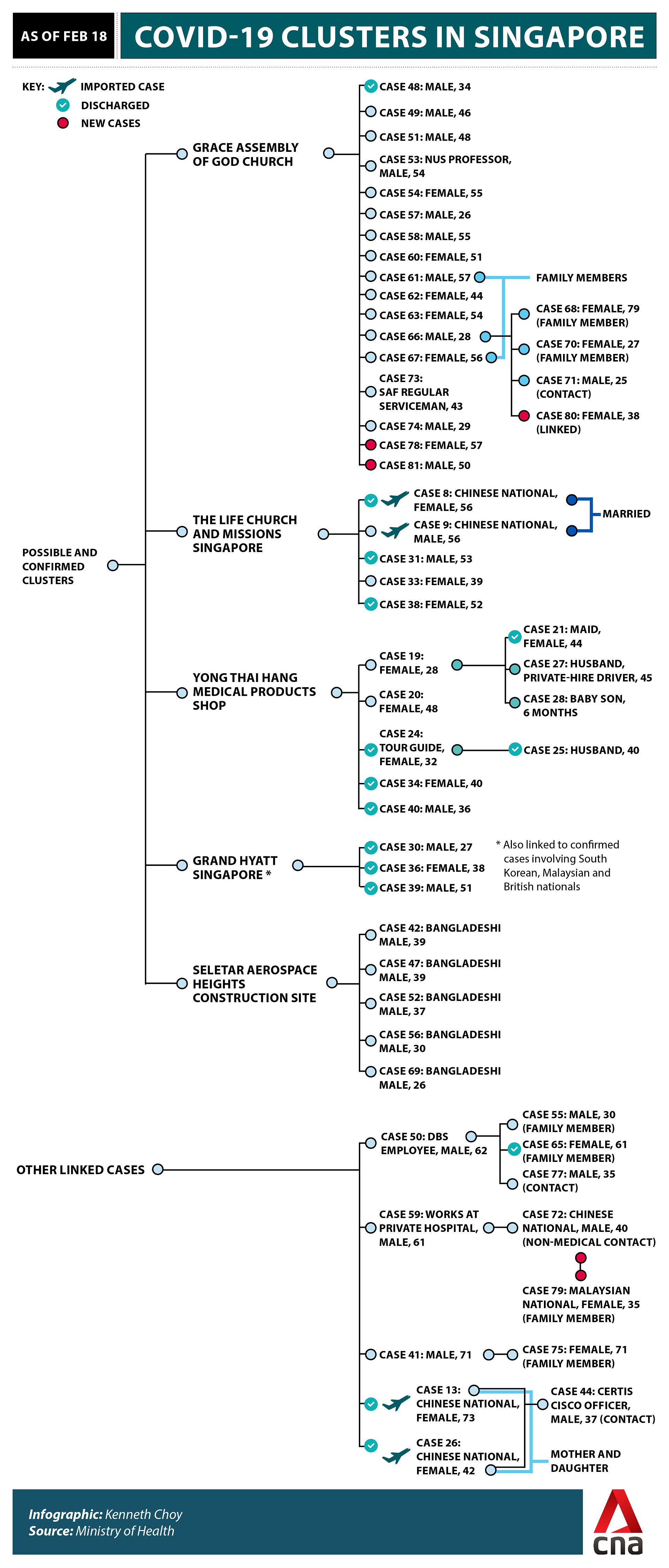
Boustead Projects confirmed in a media release on Tuesday (Feb 18) that the five Bangladeshi Work Pass holders – identified as Cases 42, 47, 52, 56 and 69 by the Ministry of Health (MOH) – are all workers under the company’s subcontractors. 

They had worked at a project site at Seletar Aerospace Heights, where construction was ongoing to expand the Singapore Service Centre of Canadian aviation firm Bombardier.

READ: Coronavirus cases in Singapore: Trends, clusters and key numbers to watch

READ: 1-year-old baby among 5 COVID-19 patients discharged, 4 new cases: MOH

The five workers are not known to have worked or entered the existing facility, the Bombardier Service Centre at 10 Seletar Aerospace Heights, and their activities were limited to the expansion sites at 8 and 12 Seletar Aerospace Heights, said Boustead in the release. 

The company had previously confirmed on Feb 12 that three of its employees were under quarantine.

Some Boustead employees are still under quarantine orders, said a company spokesperson on Wednesday in response to CNA queries, but he declined to comment on the exact number of employees or subcontractors’ workers under quarantine. 

Construction was halted to conduct cleaning and disinfection of the development site and the existing facility as a precautionary measure, the company said. 

READ: WHO ‘very impressed’ with Singapore’s COVID-19 response

READ: China’s COVID-19 death toll surges past 2,000

After it was notified about the second confirmed case on Feb 11, Boustead collaborated with MOH to conduct further contract tracing and inspection of the development site. 

Bombardier had said in an earlier statement to CNA that the patients had worked under a third-party contractor at its Singapore Service Centre expansion sites, and are are not employees of Bombardier. 

Cases 42 and 47 had worked on different buildings on the expansion sites and never had access to the company’s existing facility, a Bombardier spokesperson had said. No cases of the virus have been reported among employees at its service centre at 10 Seletar Aerospace Heights.

“The health and safety of our employees is always a top priority at Bombardier, and out of an abundance of caution, Bombardier continues to take the necessary steps to ensure its operations and employees remain safe,” said the company’s spokesperson.

Singapore COVID-19 clusters infographic Feb 18

Before the first confirmed case linked to the construction site, Boustead had already put in place temperature screening measures and compulsory health and travel declarations at all of its project sites since Jan 28, it said. 

When the Disease Outbreak Response System Condition (DORSCON) level was raised to Orange on Feb 7, Boustead took additional measures to stop mass activities at its office and project sites, it said in the release. It also compartmentalised the different construction trades at project sites to minimise contact. 

“The company remains fully committed to working with the relevant authorities to ensure and prioritise the health, safety and well-being of its employees, subcontractors and their workers, clients and other stakeholders,” said the company.  

BOOKMARK THIS: Our comprehensive coverage of the novel coronavirus and its developments

Download our app or subscribe to our Telegram channel for the latest updates on the coronavirus outbreak: https://cna.asia/telegram 

Source link

More than S$6 million raised for COVID-19 relief: Singapore Red Cross

0

SINGAPORE: The Singapore Red Cross has raised more than S$6 million for its COVID-19 relief operations in China, with the first tranche of aid going out in the next few days, said CEO Benjamin William on Wednesday (Feb 19). 

The announcement came about two weeks after the charity first called for public donations for its relief efforts.

On Wednesday, wealth management firm Signature Consulting also presented the Singapore Red Cross with a US$2 million (S$2.8 million) donation on behalf of its clients, some of whom wanted to remain anonymous. 

READ: China’s COVID-19 death toll surges past 2,000 

READ: WHO ‘very impressed’ with Singapore’s COVID-19 response

“The outpouring of support has been tremendous, both from companies as well as individuals,” said Mr William.

As of 2pm on Wednesday, more than S$421,000 has been raised by individuals, with the Singapore Government providing S$1 million, and the rest coming from corporations such as the Oversea-Chinese Banking Corporation (OCBC Bank) and organisations like Business China.

READ: Singapore Red Cross raises more than S$100,000 in public donations to help communities in China affected by coronavirus

About S$2.3 million of the first tranche will go towards the purchase and distribution of personal protective equipment for hospital staff and other healthcare providers in six Hubei cities, said Mr William. 

This is in partnership with the International Federation of Red Cross and Red Crescent Societies (IFRC) which will also distribute items such as surgical masks, face shields, hand sanitisers and chlorine tablets.

“You will appreciate that most of these items are globally in shortage. It is a challenge to mobilise these items. 

“The advantage of working with the IFRC is that the Federation has links throughout the world. It is using its global network to source for these items,” said Mr William.

“The chances of them acquiring these items are in some way much higher than we as an individual Singapore Red Cross try to acquire them locally.”

Three hospitals in Hubei province will also receive emergency medical equipment such as non-invasive ventilators and respiratory humidifiers. 

Seven social welfare homes in the cities of Tianjin and Nanning will receive items including masks and disinfectants, and information on personal hygiene will be disseminated through infographics, videos, child-friendly booklets and WeChat posts.

This will be done in partnership with World Vision, which has a “robust presence in China”, said Mr William.

Red Cross members deployed

Two staff members from the Singapore Red Cross have been deployed overseas. (Photo: Singapore Red Cross) 

The rest of the money will go towards funding other areas such as risk communication, community engagement, and water, sanitation and hygiene promotion.

READ: ‘We intend to stick it out with them’: Volunteers write notes, send food to healthcare workers fighting COVID-19

More than 100,000 Chinese residents are expected to benefit from the first tranche. A second tranche of more than half a million dollars is expected to go towards supplying 10 negative pressure ambulances to hospitals, said Mr William.

Two staff members have also been deployed overseas – one to the IFRC office in Kuala Lumpur and one to the IFRC office in Beijing.

The worker sent to the IFRC office in Beijing will be there to ensure accountability and proper distribution of supplies, said Mr William.

He added that a key consideration for the Singapore Red Cross is “transparency and accountability”. 

The Singapore Red Cross takes it time to make sure that its partners are credible, have a direct distribution link on the ground and are able to account for all donated items, he added.

Red Cross Singapore blood type stock

A chart on the Singapore Red Cross Singapore website showed that stocks for A-, B+, AB- and O+ blood types were in the critical levels.

On Wednesday, Mr William reiterated a call for Singaporeans to donate blood, saying stocks remained “low” despite people queuing outside blood banks over the weekend. 

The Singapore Red Cross had put out several social media posts last week, saying: “The need for blood never stops, even during this challenging period. We really need you to donate blood to help keep our blood stocks healthy.”

On Wednesday, Prime Minister Lee Hsien Loong also wrote on Facebook, thanking those who “stepped up to give blood, even in this COVID-19 outbreak”. 

However, he said the “blood bank is still short of A- and AB- blood types” and encouraged people to “come forward to donate if you can”. 

A check on the Singapore Red Cross website on Wednesday showed that stocks for A-, B+, AB- and O+ blood types were in the critical levels.   

BOOKMARK THIS: Our comprehensive coverage of the novel coronavirus and its developments

Download our app or subscribe to our Telegram channel for the latest updates on the novel coronavirus outbreak: https://cna.asia/telegram

Source link

It's easy to fit a 75-inch TV in your HDB flat

0

[ad_1]

Condominium owners can get a tad rowdy these days. If they are not belligerently shouting at security guards who were hired to protect the compound, some can be found tossing out 50-inch TVs out of their 10th floor unit, to the pool below.

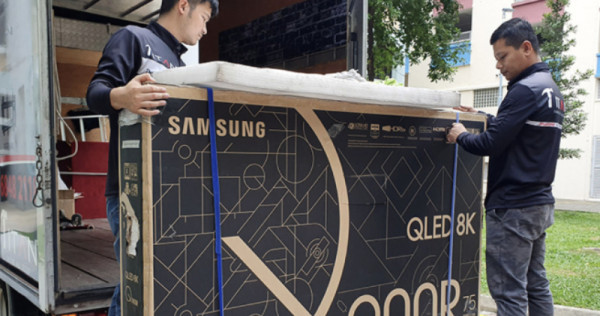
But the challenge is not in chucking a pristine, full high definition or ultra high definition 4K TV out your apartment, but in getting a large enough display out of the store, into a truck, into your estate, on the lift and into your home.

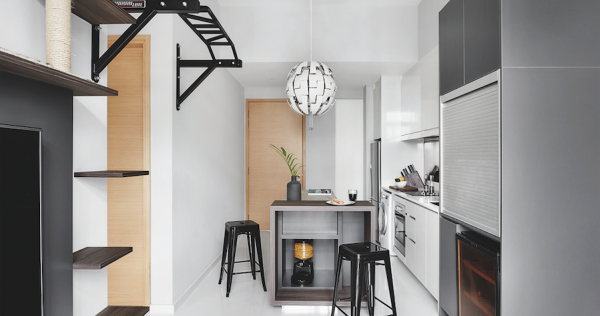
If you live in a house, sliding a TV through the sliding doors is simple, but not so if you live in one of the new ever-shrinking condominiums or HDB flats.

But since TV companies are churning out bigger and better TV screens, the question on our minds was, how big is too big?

A 65-inch TV will fit for sure, but would a display bigger than a 65-inch actually make sense? What about an 80 or 85-inch?

And it’s actually harder said than done.

[ad_2]

Source link