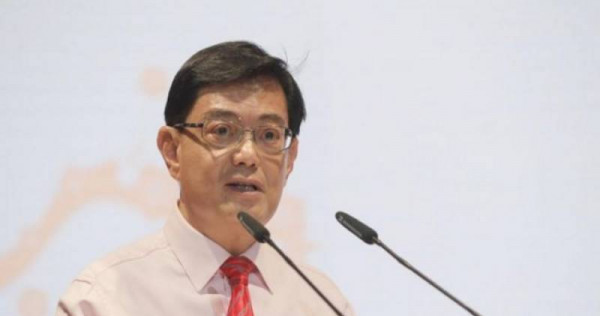
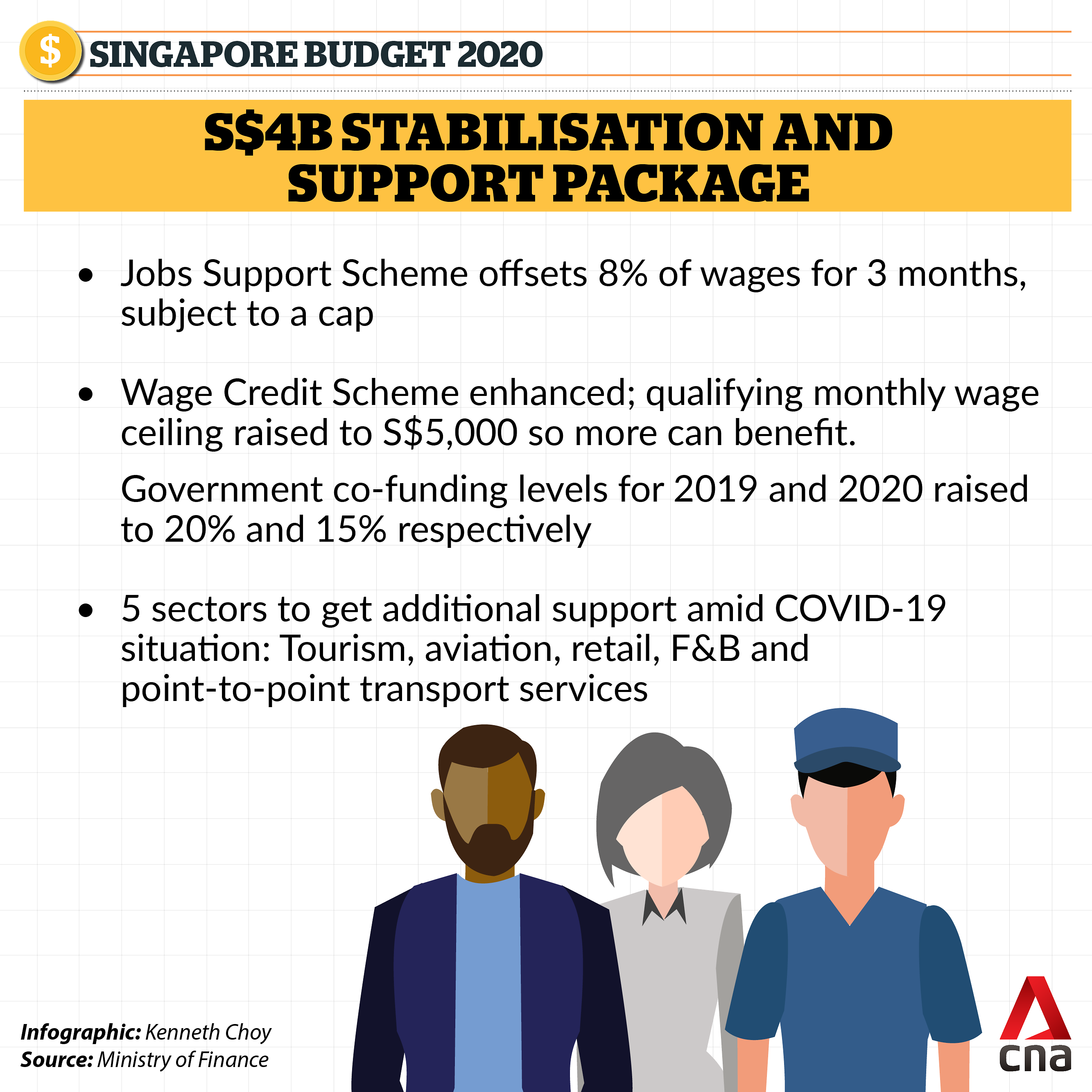
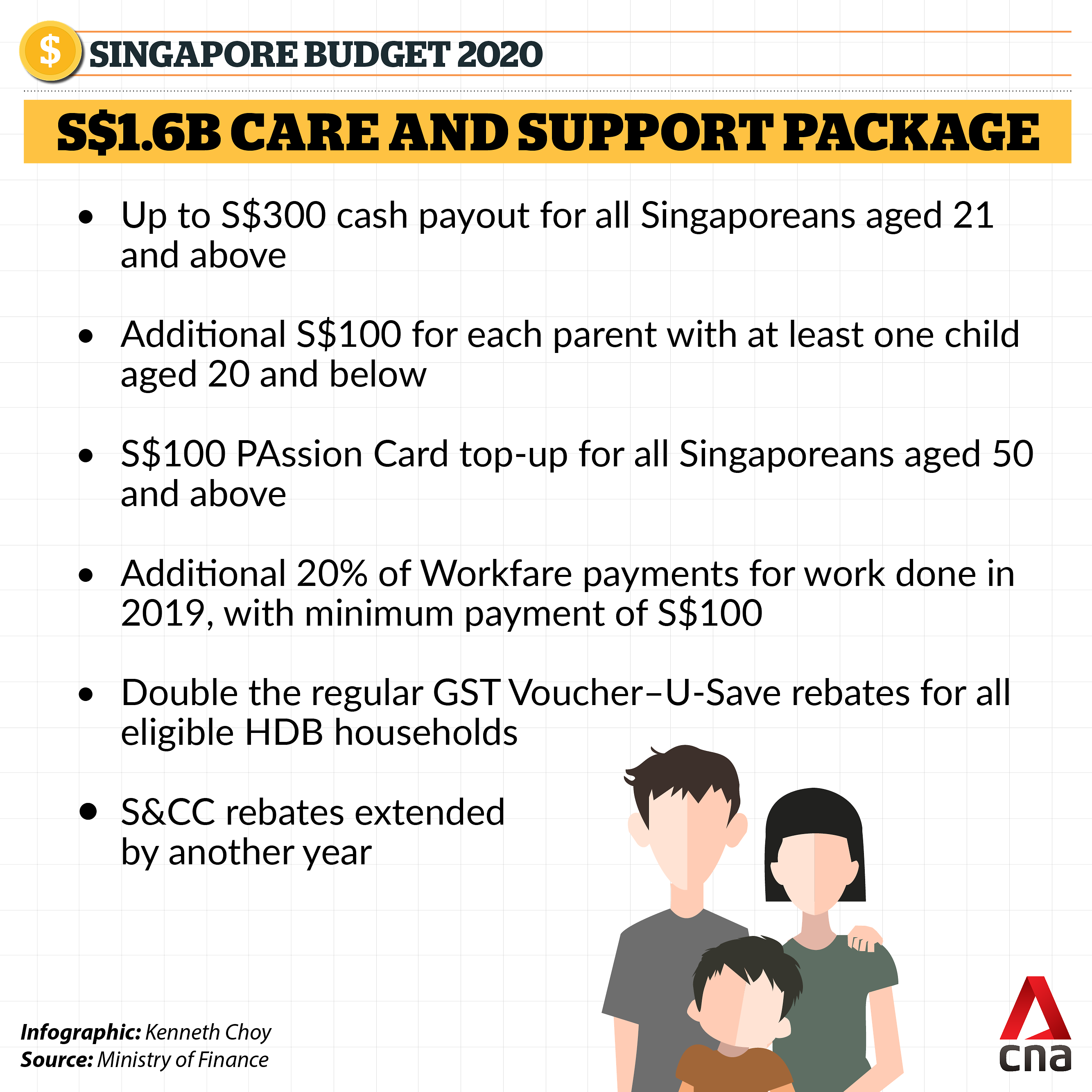
Singapore’s Deputy Prime Minister and Finance Minister Heng Swee Keat has finished giving his annual budget speech to parliament and in his speech, he spoke on the challenges facing the country and how the Government was introducing two special packages worth a total of $5.6 billion to help support businesses and households amid an economic slowdown caused by trade uncertainties and the COVID-19 novel coronavirus.
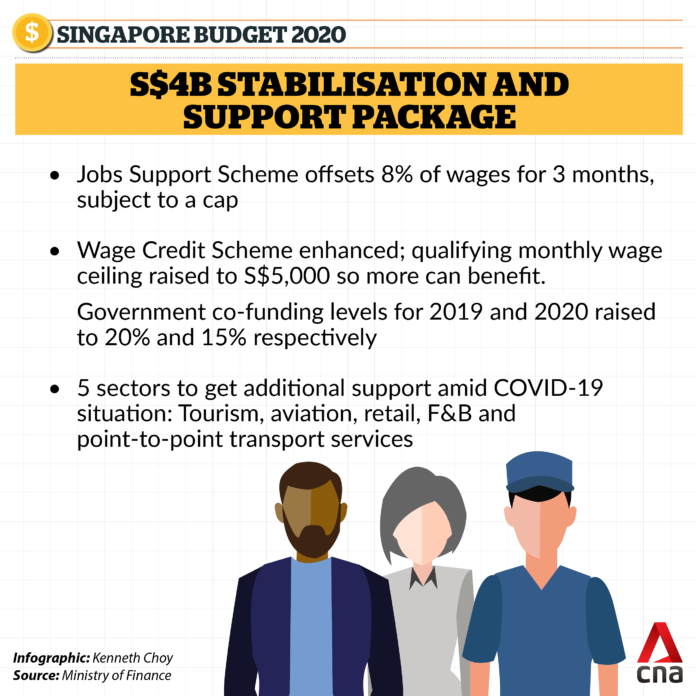
$4 billion of the package will be used to help local workers stay employed and to support enterprises. The remaining $1.6 billion will go to a Care and Support Package to help households, with the less well-off getting more help.
1) KEEPING SINGAPOREANS EMPLOYED
Singapore’s Finance Minister Heng said that the country’s Government would continue to ensure that there were jobs for all Singaporeans.
Businesses, especially SMBs, will be receiving significant support in terms of staff retention and liquidity options to keep their businesses going
The Jobs Support Scheme (JSS) will help enterprises retain their local employees during this period of uncertainty.
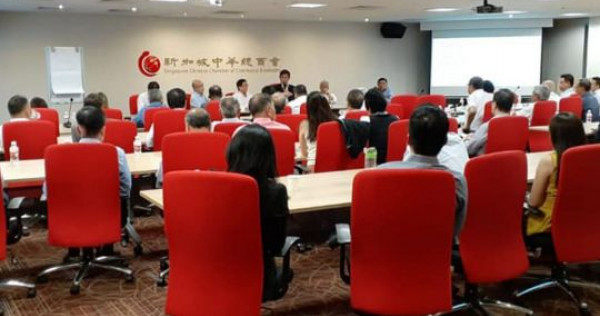
SINGAPORE – The leak of a recording from a closed-door meeting between Singapore Chinese Chamber of Commerce and Industry (SCCCI) members and minister Chan Chun Sing is “deeply disappointing” and a betrayal of trust, the chamber’s president said on Tuesday (Feb 18).
In a letter to members seen by The Straits Times, Mr Roland Ng said the chamber is investigating the matter, which has “serious implications” on its standing, on Singapore and on Mr Chan, who is the Trade and Industry Minister.
This came after a 25-minute recording of Mr Chan’s remarks during the meeting last Monday (Feb 10), which covered the coronavirus outbreak and the current economic situation, among other issues, was circulated widely on social media and messaging apps like WhatsApp.
In his letter, Mr Ng said members had been informed multiple times that the meeting was off-the-record. The recording was thus “a clear breach of trust”.
It was a hurried farewell, but he avoided touching his loved ones because the last thing he wanted was to infect them.
The news that he had tested positive for the coronavirus had left him speechless.
He was given less than an hour to pack before an ambulance took him from his Bukit Batok home to the National Centre for Infectious Diseases (NCID), where he was placed in isolation.
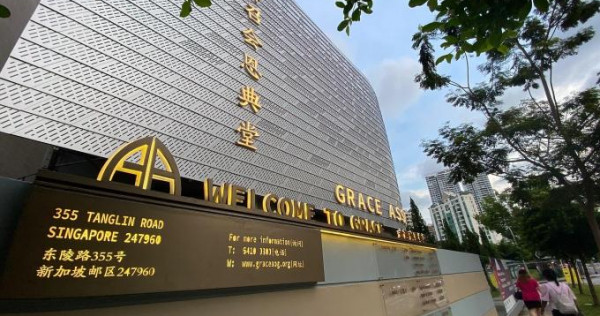
On Wednesday last week, the 34-year-old employee of Grace Assembly of God church, known as Case 48, was one of the first two patients to be linked to what would become the largest Covid-19 cluster here.
Yesterday, a 35-year-old woman became the latest to be linked to the cluster, making it a total of 22 cases.
The other two confirmed cases yesterday are a 54-year-old man linked to The Life Church and Missions Singapore cluster and a 57-year-old woman who was initially treated for dengue in a general ward at Ng Teng Fong General Hospital. All three patients are Singaporean.
SINGAPORE: The newly announced measures to help firms, workers and households amid the novel coronavirus outbreak are appropriate for now but the Government is prepared to do more if necessary, said Deputy Prime Minister Heng Swee Keat on Wednesday (Feb 19) at a post-Budget television programme.
He was responding to a question about the possibility of a supplementary Budget if the COVID-19 situation is prolonged. The programme featured four invited guests and was hosted by CNA Digital chief editor Jaime Ho.
“We do not know how severe and how long this outbreak will be. Therefore, our current assessment is that what we are doing now is appropriate,” said Mr Heng.
“But as I said in the Budget, we can and are prepared to do more if the situation warrants it.
“It is important that we stay calm and that we stay prepared. If there are any further needs, we will do something,” he added.
A day earlier, Mr Heng, who is also Finance Minister, announced that Singapore will set aside S$800 million to support frontline agencies in their efforts to contain the COVID-19 outbreak, with the bulk allocated to the Ministry of Health.
Given how the COVID-19 outbreak will have a significant impact on Singapore and the global economy, Mr Heng said the measures are intended to protect Singaporeans’ jobs, stabilise the economy with a “sufficient fiscal boost” and help sectors that are directly affected, as well as support households.
Responding to a question on whether the Budget will help workers in the gig economy whose livelihoods have also been affected by the virus, he noted how there has been “very good work” between taxi and private-hire care operators, as well as with the labour unions.
A S$77 million Point-to-Point Support Package was announced last week. The Government will contribute S$45 million towards the package, with the remaining provided by taxi and private-hire car operators.
But given the wide range of gig economy workers with different work arrangements, Mr Heng said it is “not possible” to have initiatives that cover everyone, especially within a short time.
The Government will need to look at this more carefully, although he stressed that those in the gig economy still receive support in other ways such as the various household support packages and special one-off payments for individuals.
Finance Minister Heng Swee Keat, second from left, pictured here on Feb 19 at Ask the Finance Minister 2020. (Photo: Try Sutrisno Foo)
YEARLY SKILLSFUTURE TOP-UPS?
During the hour-long programme, Mr Heng also fielded questions about the need to remain focused on the longer-term goal of transforming Singapore’s economy and what that means for workers.
In this Budget, a total of S$8.3 billion has been allocated for transformation and growth strategies over the next three years. This includes building stronger partnerships, deepening capabilities of local enterprises and developing the workforce.
For the last aspect, a one-off SkillsFuture Credit top-up of S$500 for every Singaporean aged 25 years and above, a new enterprise credit for firms and a mid-career support package has been announced as part of the “next bound” of the SkillsFuture movement.
Asked if there could be a yearly top-up of the SkillsFuture credit instead to spur more Singaporeans to learn new skills, Mr Heng said it will depend on the take-up rates this time round.
Since the launch of SkillsFuture five years ago, nearly half of Singaporeans have tapped on their S$500 credits.
“We hope that the take-up this time will be higher,” he said, adding that a five-year deadline has been set for the new top-up “to encourage everyone to take action early”.
Turning to the topic of cost of living, Mr Heng was asked if the Government would consider a minimum wage model at some point to help tackle the issue of basic needs.
He replied that while the objective of having a minimum wage is good, the question is whether it can be done in a better way.
The progressive wage model which sets a wage floor for certain sectors, as well as efforts like the SkillsFuture movement to help Singaporeans build up necessary skills and become more productive, are long-term strategies that will “be much more sustainable”, he said.
He added that one of Singapore’s major challenges is an ageing population and a shrinking workforce.
“What it means is that the ability of those who are working (and paying taxes) to support those who are not working, will come down over time. We really don’t want to impose a big burden on our future generations.
“So the question always is – is this an idea that can be implemented in a sustainable way over the long term, and is this the best way?” he said.
“The simplest way may not usually be the best.”
Finance Minister Heng Swee Keat (R) at Ask the Finance Minister 2020 (Photo: Try Sutrisno Foo)
Mr Heng said technology will likely continue to evolve so Singapore should keep an open mind to other environmentally friendly vehicle options.
But at the moment, electric cars seem to be the “most promising” option and if Singapore can lay out the necessary infrastructure, it should be able to catalyse the use of these cars in Singapore, he added.
SINGAPORE: The current outbreak of the COVID-19 shows that in times of an emergency, it is difficult to have a clear understanding of the risks involved and how to respond appropriately because of the myriad uncertainties.
The rapidly evolving nature of an epidemic means that the information we get can change in widely unexpected ways. The way information is framed and interpreted can also lead to further uncertainty and confusion creating other public health and social challenges.
All these factors shape the tendency to over-estimate certain risks, which, paradoxically, can cause individuals to take actions that under-estimate other risks.
Nevertheless, it is possible for the public to apply a few rules of thumb to make better judgments and decisions in a highly uncertain and evolving situation.
PUTTING NUMBERS IN CONTEXT
At the time of writing, there were more than 70,500 confirmed cases and over 1,700 deaths globally. Yet, these numbers are a far cry from the H1N1 epidemic which saw more than 760 million cases and over 284,000 deaths between 2009 and 2010.
Even the common flu causes as many as 5 million cases of severe illnesses and half a million deaths in a typical year of seasonal outbreaks in the Northern and Southern hemispheres. The case-fatality rate of the COVID-19 appears to be about 2 per cent of all cases, and lower for cases outside of China,which is lower than that of the SARS outbreak from 2002 to 2003 of almost 10 per cent.
Compared to these numbers, the COVID-19 should not be a cause for panic. Yet, the reaction to mainstream media reporting on the virus seems disproportionate.
Media tracking platform, the Risk Pulse Monitor (RPM), funded by the IPUR and piloted by Professor Mohan Kankanhalli and Dr Christian von der Weth at the National University of Singapore (NUS), found that between Jan 26 and Feb 10 only about a quarter of the news reports and commentaries in The Straits Times and CNA were about COVID-19.
In stark contrast, those accounted for approximately 90 per cent of the likes, shares and comments among all news reports and commentaries.
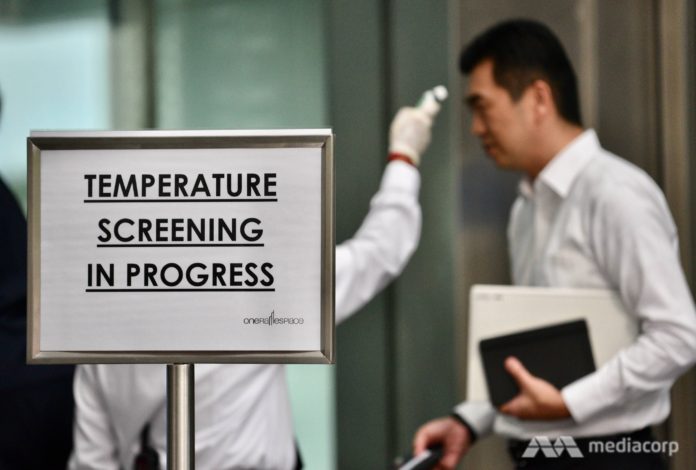
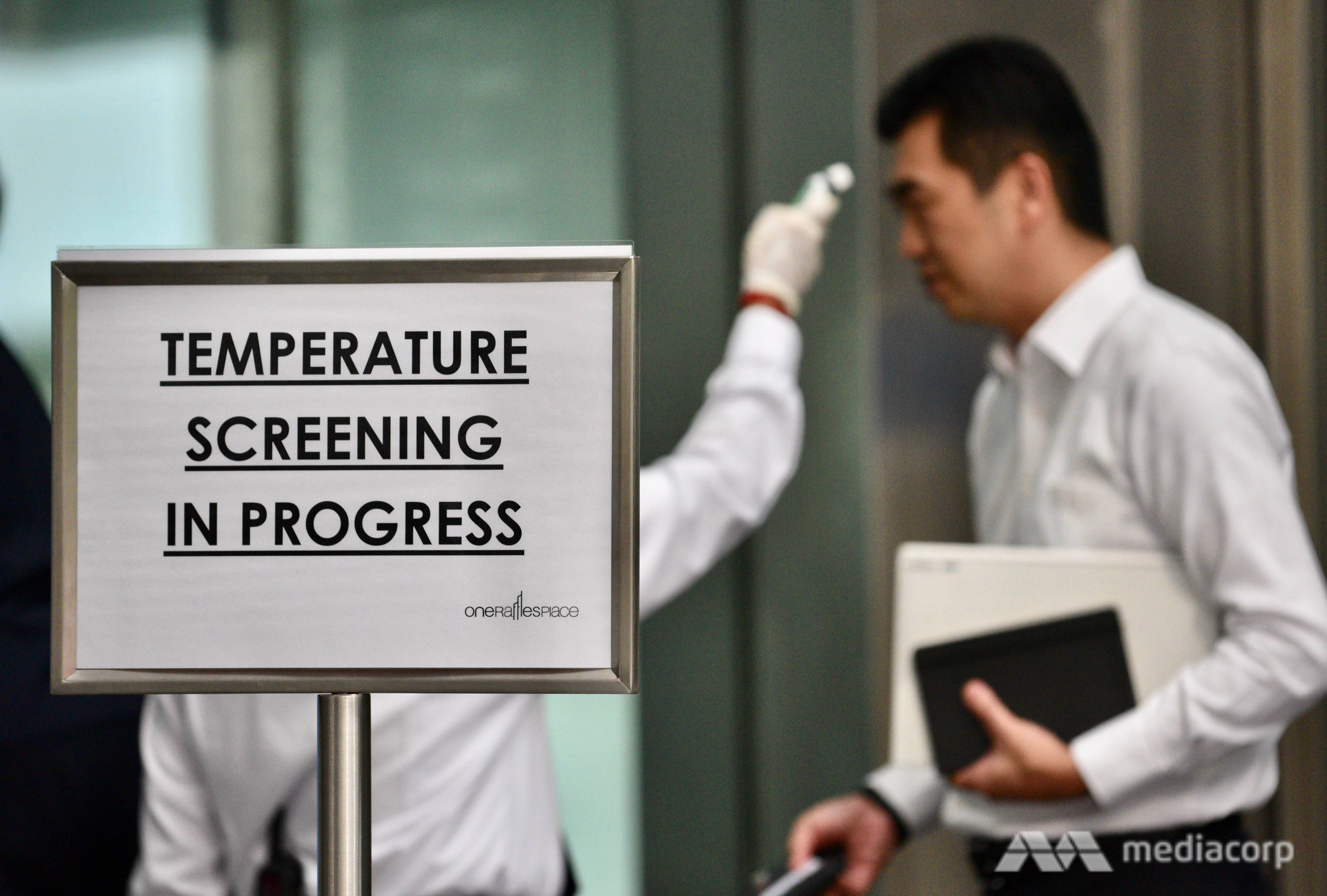
A temperature screening station at One Raffles Place office towers (Photo: Jeremy Long)
This heightened public concern in the case of the COVID-19 may seem baffling given its relatively low number of fatalities compared to other viruses. But risk psychologists argue that this reaction is, in fact, expected because individuals’ risk perception tends to be guided by cognitive short-cuts such as the “memorability heuristic”.
Strong, negative memories from previous epidemics, in particular the 2003 SARS pandemic, may have influenced individuals to perceive the risks of the current outbreak to be high.
This perception in turn fuels anxiety and fear around how deadly and contagious the virus is, how bad things can get, and how long it would take before the outbreak tapers off.
WEIGHING PERSONAL AND SOCIETAL RISKS
Such anxiety and fear influences adverse individual actions, which in turn can have ripple effects on the community and the broader society.
When news of the COVID-19 spread broke in Singapore, many people rushed to stock up on their personal supply of face masks.
Meanwhile, the Government announced that it would distribute 5.2 million face masks to 1.3 million households but advised that it was not necessary to wear a mask unless one was sick. Medical experts also highlighted the limitations of masks in protecting against the virus and recommended other complementary practices of good hygiene.
But these messages about prudent use of masks seemed to have had limited traction in the public. Many, it seems, continue to wear masks regularly, which would require a significant personal stockpile of masks.
This is a perfect example of the “signal” effects of an event.
According to risk theorist William Freudenburg, signal incidents are not cases where the worst fears are realised, but cases where problems indicate, rightly or wrongly, that a technology or system may not be fully under control. This can lead people to over-estimate risk and take actions that amplify risks, perceived or otherwise.
The over-estimation of personal risk of exposure can, in fact, create broader societal risks which will ultimately feedback to impact individuals at the personal level.
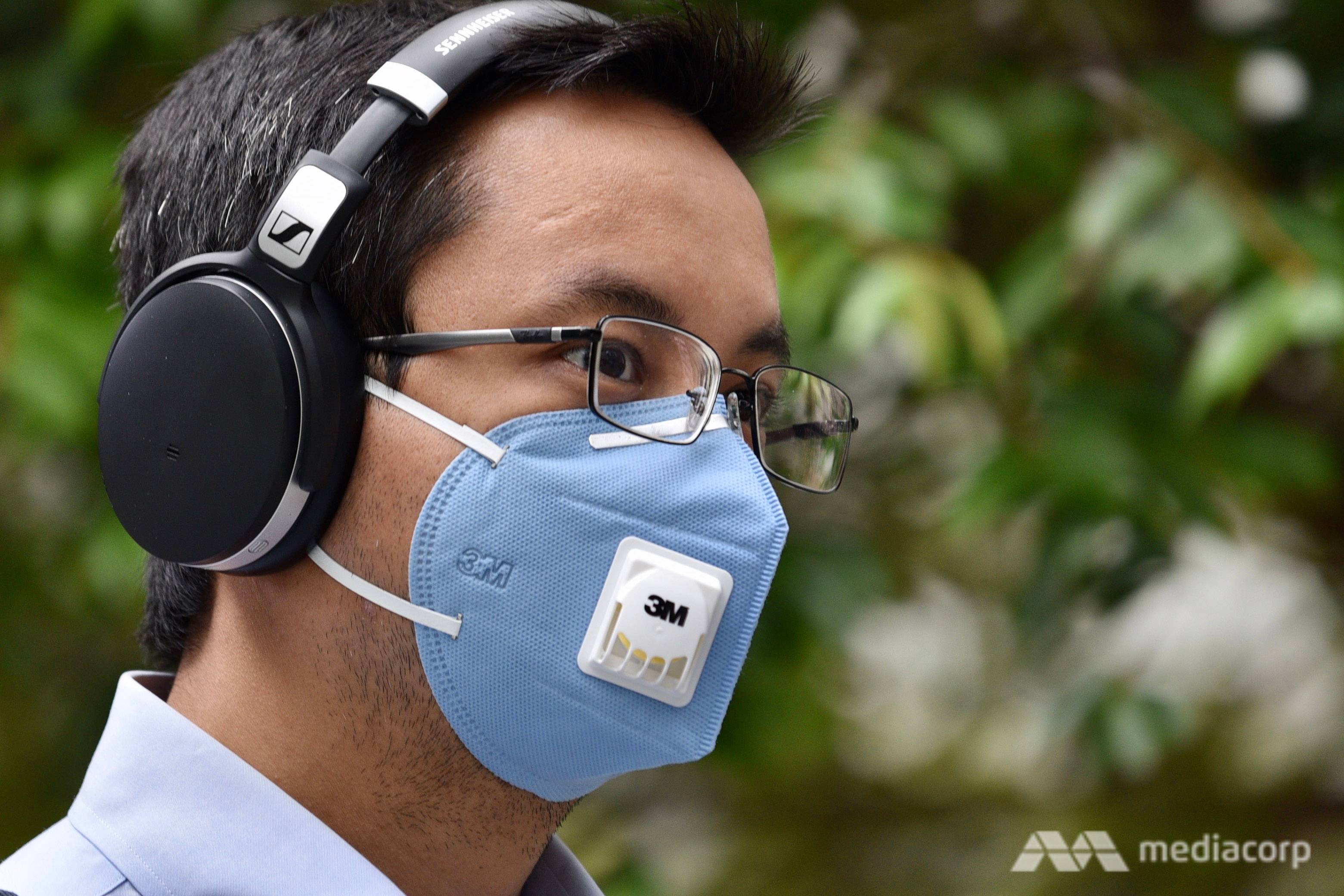
An office worker wears protective face mask at Raffles Place (Photo: Jeremy Long)
When people rush to stockpile masks for themselves and use them even when not needed, this creates supply shortages especially for those who are sick or who need to wear masks regularly such as healthcare workers.
Furthermore, the false sense of security individuals may get from wearing a mask may lead them to under-estimate their risk of exposure, which can also arise from physical contact, including not knowing how to wear and take off masks correctly.
The misperception that one is safe as long as one wears a mask may lead infected individuals to think it is harmless to go to crowded places or avoid quarantine orders, jeopardising overall public health measures. There have been suggestions to use reusable masks as a sustainable alternative, but proper usage and washing is also needed to ensure effective protection against viral contamination.
Indeed, this is one of the greatest paradoxes of public risk perceptions in that both the over-estimation and under-estimation of risk by the public can lead to very real outcomes. The public, therefore, must also consider the implications of their actions on the society as a whole.
MANAGING RISKS: EXPERIENCE MATTERS
Risk psychologist Professor Paul Slovic from the University of Oregon argues that there are two simultaneous systems by which we comprehend risk. The “analytical system” uses algorithms, probability calculus, formal logic, and numbers to evaluate the risks one faces.
The “experiential system”, on the other hand, is intuitive, fast, mostly automatic, and does not always operate consciously.
Under conditions of uncertainty, rational decision-making requires, more than ever, the proper integration of both systems, meaning you rely on your “gut-feel” or intuition as well as calculated logic.
The current epidemic has shown that the authorities in Singapore, while tracking the data very closely, also take the public’s experiential modes of risk understanding very seriously. They have demonstrated a willingness to prioritise trust-building, public concern and resilience means-sharing.
Indeed, we believe this approach, in part, accounts for the fact that public sentiments regarding the virus has been relatively measured.
The RPM sentiment analysis of Twitter feeds between Jan 26 to Feb 6 shows that more than 50 per cent of tweets on the COVID-19 in Singapore were either positive or neutral.
This indicates that despite ubiquitous images of people stockpiling household supplies and masks circulating, the majority of Singaporeans did not share negative sentiments on social media.
Epidemics and outbreaks have the extraordinary ability to skew risk perceptions. But we can check our own tendencies to exaggerate the risks with the awareness that such events send signals that cause us to over-estimate risks.
They also invoke memories that are a poor reflection of the current situation.
The awareness that we use both analytical and experiential modes of thinking should also give us pause to question whether our actions and reactions are rational, responsible or justified.
As much as the relevant authorities have a responsibility to account for the “experiential” logic of the public, public members also have a responsibility to exercise their own “analytical” logic.
They can do so by putting the numbers in context, by considering the effects of individual actions on society at large, and by choosing actions that help reinforce trust in the community.
Even as experts race to find a vaccine for the virus, we, as members of the public, also need to be mindful not to be vectors of misinformation, distrust and anti-social behaviour.
Dr Catherine Wong is Research Fellow at the Lloyd’s Register Foundation Institute for the Public Understanding of Risk (IPUR) at the National University of Singapore. Professor Koh Chan Ghee and Professor Leonard Lee are Director and Deputy Director of IPUR respectively.
SINGAPORE: If you want to amaze someone in a foreign country, tell them about Singapore’s SkillsFuture initiative.
When I speak about it at conferences on the future of work, people from Kazakhstan to the US tell me that it sounds like some kind of miracle to wake up one day to find a new bank account in your name with free money to spend on upgrading yourself.
And when I tell them many Singaporeans don’t take advantage of this money, their expression turns to horror. “Just give it to us!” they say, shaking their heads in incredulity. “We will use it!”
Deputy Prime Minister and Finance Minister Heng Swee Keat, in rolling out Singapore Budget 2020 on Tuesday (Feb 18) announced even more SkillsFuture benefits and support for companies to retrain workers and redesign jobs.
A one-off S$500 SkillsFuture top-up will be made available for every Singaporean aged 25 and above, while Singaporeans aged 40 to 60 will get an extra S$500 top-up.
Deputy Prime Minister and Finance Minister Heng Swee Keat delivers Budget 2020 in Parliament on Feb 18, 2020.
While such policy enhancements to beef up support for retraining are great, it is up to us to make sure we use these bonuses wisely. So, how can we get the most bang for our SkillsFuture buck?
1. THINK OF IT AS OPTIMISING YOUR LIFE AND WELL-BEING
When I ran a careers centre at a university, I discovered it was very hard to get people excited about going for “career development courses”. Somehow when they heard the word “careers”, they thought “I’ll do that if I really need to later”.
It’s a pity more aren’t excited about learning because they see it as another chore or burden, but could benefit if they saw learning as a way to optimise their lives and derive joy.
“When you learn, you feel good. You’re more positive and that helps to build your confidence and that should have an impact on your health too,” 71-year old veteran ex-banker Noor Quek once said to me.
“The individualised approach of Skillsfuture is a good thing because it gives people a choice. But we also need to shift people from thinking lifelong learning is about academics or just retooling. It is actually a culture. There are many intangible benefits of a learning culture to well-being,” Martin Tan, Executive Director of Majurity Trust, a philanthropy focusing on better job matching shared with me.
2. REMEMBER THAT PEOPLE LIKE US DO THINGS LIKE THESE
Marketing legend Seth Godin often says that the secret of getting people do things is these six words: “People like us do things like this.”
People are social, tribal creatures by nature. We want to do what others are doing. As Godwin says:
There is no more powerful tribal marketing connection than this. More than features, more than benefits, we are driven to become a member in good standing of the tribe.
Office workers in Singapore’s Raffles Place financial district. (File photo: AFP)
When I log on to Amazon, it tells me “People like you enjoyed reading this” or “If you liked this, you may also like these other options”. Spotify shows me in real-time what my friends are listening to.
Yet there is limited information telling me about what real people are doing with SkillsFuture.
“I’m not sure you can find information on how people are actually using their SkillsFuture credits, and how they actually monetised the skills they learned. That would be more tangible,” technology recruiter Randy Lim told me.
Another recruiter in the finance sector told me: “We want to know what uptake have we had, at what levels, which sectors, and how the people who have been successful with this scheme have grown their capabilities.
It would be interesting then, for Government not just to collect data, but use that data to humanise the SkillsFuture experience for people.
How can we curate personal recommendations to Singaporeans so that they feel more connected to SkillsFuture and build vibrant learning and interest-based communities so being passionately curious becomes culture?
Hanging out with your community online or in person also leads to opportunities through happenstance.
On our part, we can create tribes, meeting up with like-minded individuals keen on exploring themes we are interested in. Or simply ask our friends if they would like to join us for a particular course. Having friends join you creates accountability and also makes the process more enjoyable.
People sitting around a table working together. (Photo: Unsplash/Marvin Meyer)
3. RETHINK HIRING FOR SKILLS TO HIRING FOR MINDSET
Given the speed of industry disruption and innovation, we are now moving towards a new norm of a permanent skills gap.
Entirely new jobs are being created at such a fast pace that both employers and jobseekers will need to forget the old idea of a perfect match of skills to scope, and hire based on broader metaskills and character traits while accepting of the reality of constant training on the job.
Many employers were happy to hear a SkillsFuture Enterprise Credit of S$10,000 per company to support job redesign and talent development. It is great news for companies to have more resources to help people stay in their jobs longer while still retaining the flexibility to decide what training suits them best.
The World Economic Forum predicts that the average employee will need 101 days of retraining and upskilling in the period up to 2022.
Employers, especially SMEs, must realise that investment in talent is a must, not a “nice to have”. Every person who leaves a firm costs the business six months or more of that person’s salary to find and train their replacement. And the number one reason that people leave their jobs is feeling that they are not growing or developing.
4. SHAKE UP HOW FIRMS HIRE
Building an optimised workforce requires a grenade to be tossed into traditional hiring practices.
There are no shortage of employers and Human Resources trying to find talent, but the problem is finding a good fit.
File photo of an older office employee.
A typical HR recruiter sees 300 CVs on their desk for a position, and they need to make a shortlist of who to call. The first cut is the most brutal, and most hirers just use the old methods: Which university did you go to? What were your grades like? How old are you?
Research has consistently demonstrated that these processes are ineffective, biased and have little correlation to actual success at work or cultural fit.
Yet, many hirers persist with these same old methods, which overlook many potential jobseekers who may have had relevant training or life experiences.
One initiative to rethink hiring is spearheaded by the Tangent Initiative, which is forming an alliance of companies, including Standard Chartered, DBS, Dymon Capital and Egon Zehnder, to establish a community of forward-looking companies committed to progressive hiring practices and piloting new hiring methods, such as psychometric tools for applicants.
(Photo: Unsplash/rawpixel)
5. CLOSE YOUR IDENTITY GAP
In my experience, those who tend to struggle the most in careers and life are the ones with strong, fixed notions of who they are. Their minds have calcified, hardened with old beliefs.
Economist Laurence Katz called this the “Identity Gap”, when he saw a phenomenon of people unwilling to change because they had a fixed, backwards view of what their identity was.
To optimise ourselves and our potential, we don’t just need skills installation, we need a mindset transformation.
We need to pair reskilling from technical domain experts with training from transformation experts – mentors, coaches, and psychologists for example.
While having a coach or therapist was once thought of as a sign of weakness, now that stigma is vanishing quickly. Randomised control tests have also shown 85 per cent of coached executives are better off than those who did not receive coaching, when assessed not just by themselves but also by their line managers.
Now, it is commonplace for CEOs and leaders to talk about their own coaches, and liken themselves to high-performance athletes getting training from experts in human optimisation. A growing number of companies like Cisco now offer employees round-the-clock access to therapy or counselling.
File photo of workers outside an MRT station in Singapore’s Central Business District. (Photo: TODAY)
I often encourage people to view going for coaching or counselling in the same vein as going to your dentist. Career health is just health. Mental health is just health. Take care of your health because it is your ultimate asset.
The Government has done an enormous amount of heavy lifting with a thoughtful Singapore Budget 2020 that has addressed many of the issues of the “Skills Gap”, but employers and individuals must also close this “Mindset Gap” if we are to fully unlock the power and potential of the SkillsFuture Movement.
Trying to make your HDB flat feel more spacious? Well here are 9 creative ways to make your room look larger!
1. SMALL SPACES
Turn small nooks in the corners into functional desk spaces, such as this dresser area. This also allows you to make better use of spaces like the bay window. You can also convert the area underneath the desk into storage spaces for maximum utility!
If you have a room that’s obstructed by walls, William Cheong, Senior Project Designer at Livspace, suggested: “Removing these vertical barriers will widen and free up your hallway, making your space look bigger.”
Once the walls are removed, you’ll have a more spacious open floor plan and “you can then arrange your furniture in a way that defines different functional zones”, said Cheong.
Be it in the form of a small bolster, a pillow, a blanket or a stuffed toy, having a chou chou (smelly pillow) seemed to be a perfectly normal thing to me — or so I thought. Imagine my shock when I found out (at age 24, no less), that not everyone has a chou chou.
Traditionally, the pillows are hand-made by grandmothers and filled with dried bean sprout husks as a gift to their newborn grandchildren so they don’t get startled while sleeping.
Most may call it chou chou, which translates to “smelly” in Mandarin, and others might know it as bantal busuk (Malay for “smelly pillow”). It is something personal which they would have had since they were young — a comfort object if you will.
Those who don’t have a chou chou may gasp in horror at the thought of keeping a smelly pillow and not washing it for days or months — sometimes even years, on end. While those who are camp chou chou just can’t sleep without it.
GENEVA – World Health Organisation (WHO) officials on Tuesday (Feb 18) praised the efforts of Singapore in tackling cases of coronavirus and said other countries should follow its example.
WHO chief Tedros Adhanom Ghebreyesus said he had spoken on Monday with Singapore Health Minister Gan Kim Yong.
“We are very impressed with the efforts they are making to find every case, follow up with contacts, and stop transmission,” said Tedros.
“Singapore is leaving no stone unturned, testing every case of influenza-like illness and pneumonia, and so far they have not found evidence of community transmission.”
He said he also spoke to Malaysia’s health minister to discuss the Westerdam cruise ship case, which saw an 83-year-old American woman test positive for coronavirus upon arrival in Malaysia, after the ship docked in Cambodia and passengers were cleared to travel. He said he had discussed other aspects of Malaysia’s virus preparations with the minister.
Deputy Prime Minister and Finance Minister Heng Swee Keat released Singapore’s Budget statement for the financial year 2020 (FY20) yesterday, which would see an overall deficit of $10.9 billion.
The Budget was aimed at relieving the potential economic and financial pain stemming from the ongoing international health emergency, Covid-19.
We approached Singaporean finance professional Chiam Sheng Shi, 30, to comment on how the Budget could affect a regular citizen or PR. His comments may be well-placed, given how he holds a CFA and is also the personal finance lead at robo-advisory firm, Endowus.
THE CHALLENGES THAT SINGAPORE FACES
To provide some context on the challenges that Singapore faces, Chiam remarked that while the coronavirus outbreak presents a clear and present danger to economic growth, “as a developed country with an ageing population, Singapore has been facing [structural] challenges with labour force growth”.
“Low labour force growth can be attributed to declining birth rates and policies lowering foreign workers quota,” said Chiam.