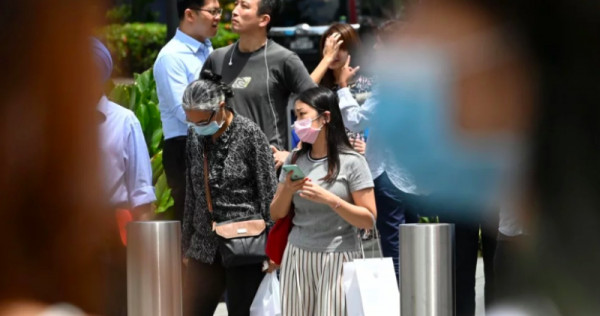
The spread of COVID-19 isn’t showing signs of petering out and we now can’t head out without seeing people in surgical masks.
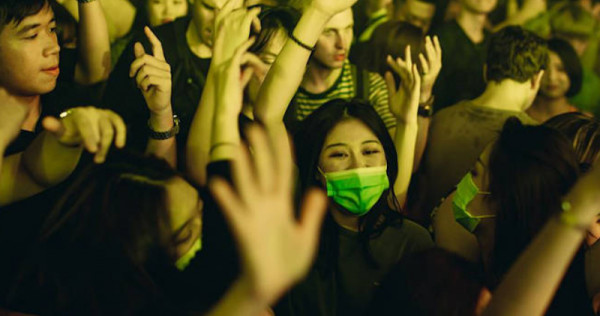
But while it’s hardly an extraordinary sight, we probably don’t expect to see them wearing these masks to a club – it isn’t exactly the most fashionable accessory.
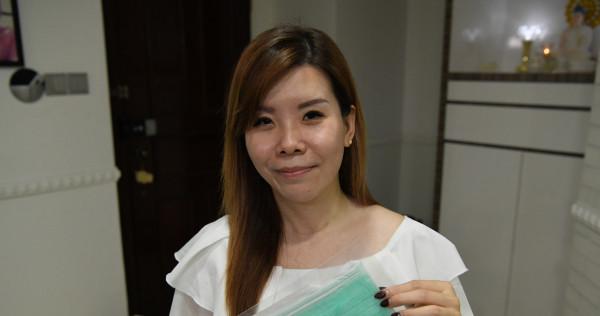
A group of women were however, recently pictured partying at Zouk with surgical masks on. Because in times of coronavirus, you take your precautions but life goes on as per normal.
PHOTO: Facebook/zouksingapore
One of the pictures also got reposted on Facebook page Tiagong, with the image of a woman in a mask attracting a variety of comments.
A Singaporean man, identified only as AA, 61, who was suspected of having contracted the novel coronavirus, which causes Covid-19, died in Batam on Feb 22 in a coronavirus referral hospital.
He had previously gone to an emergency unit of a private hospital with symptoms similar to the coronavirus infection. The Batam Health Agency said he died of “another illness”, not Covid-19, because the patient’s test results for the virus had come back negative.
The man arrived at Awal Bros Hospital in Batam on Feb 20 at noon, hospital spokesperson Cynthia Latuma told The Jakarta Post on Wednesday.
Cynthia said that after an emergency unit doctor examined the patient and found that he had a fever and was short of breath, Awal Bros referred AA to BP Batam Hospital, one of Indonesia’s referral hospitals for the novel coronavirus.
“He had just returned from Singapore, and he had a fever. We thought that he might have the coronavirus infection, although we did not know for sure. To mitigate the risks, we sent him to BP Batam Hospital, which is the referral hospital for coronavirus,” she said.
A Chinese national who contracted coronavirus could face up to six months in jail in Singapore over allegations he gave false information about his whereabouts in the city state.
Singapore has won international praise for its fastidious approach in tackling the virus – which has included using police investigators and security cameras to help track suspect carriers.
The wealthy island state, an important regional financial centre and transport hub, has confirmed 91 cases so far.
The health ministry on Wednesday said it had charged a 38-year-old man from Wuhan, the Chinese city where the virus first surfaced late last year, and his wife who lives in Singapore for providing false information to authorities about their movements for contact tracing.
The husband had been confirmed to be infected with the virus in late January, and has since recovered, while his wife had been quarantined because of her close contact with him.
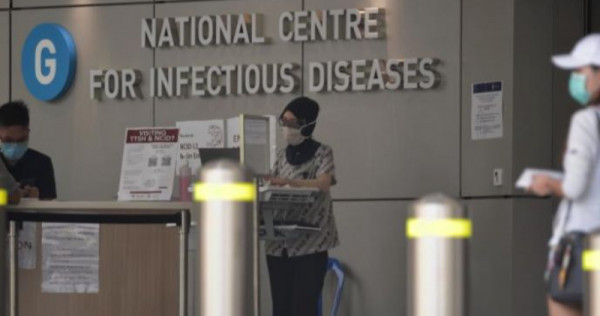
SINGAPORE – The 62 Covid-19 patients who have been discharged here no longer have the virus in them and cannot pass the infection on to others, experts at the National Centre for Infectious Diseases (NCID) assured.
Stories have surfaced in China that one in seven patients who has recovered is still infectious.
But the situation here is very different.
Professor Leo Yee Sin, executive director of NCID, said doctors monitor virus-shedding in patients’ respiratory tract – in other words, they check if the patient is still releasing live virus and thus remains contagious.
This is done by taking nasal or throat swabs.
Virus-shedding stops if the patient no longer has the virus in him.
“Patients are only discharged when they have clinically recovered and molecular testing indicates they have stopped shedding the virus,” she said.
This means that should they sneeze or cough, there is no virus from them that could contaminate surfaces or infect others.
Many of the hospitalised patients here are feeling well, especially during the last few days of their hospital stay.
The Chinese embassy in Singapore has rapped a former senior diplomat in the city state for an op-ed where he argued, among other things, that the coronavirus epidemic had dented the Chinese Communist Party’s credibility with its citizens.
Bilahari Kausikan, who retired as permanent secretary of the Singapore Foreign Affairs Ministry in 2013, described China’s handling of the crisis as a consequence of its Leninist value system, where a vanguard party has absolute control of state and society.
He said this system meant Beijing had the political will to order a lockdown of the epicentre of the Covid-19 contagion – Hubei province – and to build new hospitals rapidly, but had also caused reluctance among lower officials to sound the alarm to their higher-ups as the virus spread.
The virus crisis also reflected the CCP’s fundamental dilemma of how to strike a balance between political control and economic efficiency, and it was unclear how it and President Xi Jinping would face this challenge, he said.
Proving that we aren’t all selfish hoarders, over 900 Carousell users are giving away surplus masks, hand sanitisers, alcohol swabs and other items for free as part of the company’s #ChooseToGive movement, which kicked off on Feb 19.
To join the movement, all users have to do is list their item in the Free category and include #ChooseToGive in their listing.
Proving that we aren’t all selfish hoarders, over 899 Carousell users are giving away surplus masks, hand sanitisers, alcohol swabs and other items for free as part of the company’s #ChooseToGive movement, which kicked off on Feb 19.
To join the movement, all users have to do is list their item in the Free category and include #ChooseToGive in their listing.
Proving that we aren’t all selfish hoarders, over 899 Carousell users are giving away surplus masks, hand sanitisers, alcohol swabs and other items for free as part of the company’s #ChooseToGive movement, which kicked off on Feb 19.
To join the movement, all users have to do is list their item in the Free category and include #ChooseToGive in their listing.
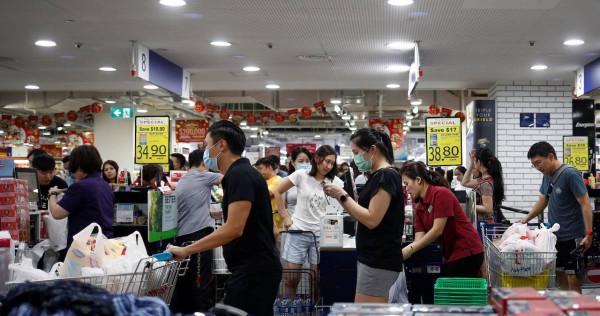
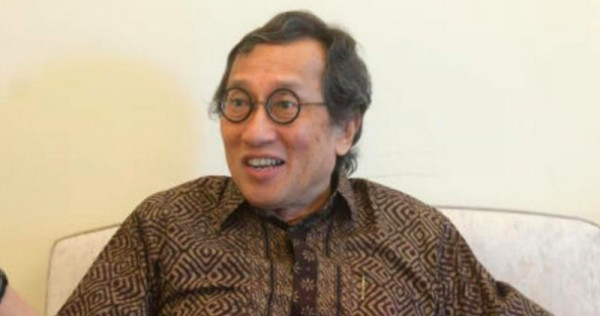
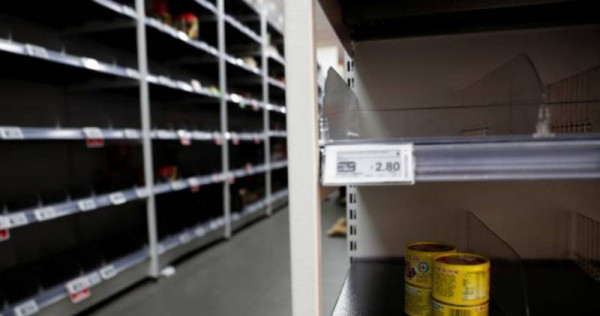
SINGAPORE – The recent rush to buy basic necessities after Singapore raised its Covid-19 alert level reflected anxiety and was an irrational response that showed the worst of Singaporeans, said Professor Yaacob Ibrahim (Jalan Besar GRC).
“Chaos could have broken out, leading to unimaginable losses. This is something we all don’t want to happen in Singapore,” he said during the debate on the Budget statement in Parliament on Wednesday (Feb 26).
Prof Yaacob was one of several MPs who commented on the panic buying behaviour on the Feb 7 to Feb 9 weekend, after Singapore’s Disease Outbreak Response System Condition (Dorscon) was raised from yellow to orange.
He said the rush to stock up food and sundry items shows the importance of getting communications right in a crisis.
Noting that there was no social media during the 2003 severe acute respiratory syndrome outbreak, Prof Yaacob said Singaporeans today are inundated with all manner of news from various sources.
“The fundamental question is whether we trust the Government in telling us what is the right thing to do especially during a crisis,” he said.
SINGAPORE: About S$200,000 worth of chewing tobacco was seized following a raid at a storage facility in Woodlands, the Health Sciences Authority (HSA) said on Thursday (Feb 27).
This is the largest haul to date, HSA said.
On Feb 19, HSA officers laid an ambush at the storage facility which was suspected of being used to store the illegal product.
“A truck was observed entering the storage facility and soon after, a man exited the premises, pushing a trolley with wrapped bundles,” said HSA in the media release.
The man was arrested and the bundles were found to contain chewing tobacco.
Chewing tobacco found in the storage unit. (Photo: HSA)
More than 118,000 sachets of Khaini and Gutkha chewing tobacco were seized from the storage facility and the truck, said the authority.
“This is the largest seizure made by HSA to-date, with an estimated street value of about S$200,000,” it added.
Preliminary investigations show that the chewing tobacco was meant for supply to the Little India and Tuas areas. Investigations are ongoing.
WE-CHAT SELLER ARRESTED
On the same day, HSA officers also arrested a 46-year-old Singaporean man who was using messaging platform WeChat to sell e-vapourisers and related accessories.
Chewing tobacco which was found in the truck. (Photo: HSA)
After raiding his home and vehicle, officers found more than 3,600 of such products intended for sale, worth about S$50,000.
The suspect is believed to have acquired the products from overseas, said HSA, adding that the accused’s illicit activities came to light through online surveillance.
The e-vapourisers seized by HSA officers. (Photo: HSA)
He is currently assisting HSA in investigations.
HSA said that it takes a very serious view of the smuggling and peddling of chewing tobacco and e-vapourisers, which are banned in Singapore.
“We will continue to work with relevant agencies to clamp down on such activities and will not hesitate to take stern actions against offenders,” it added.