Infinity pools may look like infinite, but they’re really not. Though it may seem like the water is flowing endlessly into the horizon, it’s just an illusion — the water spills into a catch basin at the edge of the pool.
Arguably the most photogenic infinity pool in the world, the one located at the top of Marina Bay Sands is a popular spot for tourists and Instagrammers. And foolhardy TikTokkers too, like this dude.
A 27-year-old man died after jumping from a condominium in Balestier on Thursday (March 5) morning.
He leapt from a unit on the eighth floor of The Interweave along Kim Keat Road and landed on a BMW X5 that was driving into the car park, Lianhe Wanbao reported.
An ambulance and up to seven police cars were spotted at the scene, which was cordoned off for nearly two and a half hours for investigations.
The champagne BMW was towed away in the early afternoon.
It was a close shave with death for the driver who was said to be visiting the condominium at the time.
Despite the shock, the man in his 40s appeared to be unhurt, noted the reporter from the Chinese evening daily.
An eyewitness, who wanted to remain unnamed, told the paper: “The driver was stunned but he quickly came to his senses and exited the car to check what had happened.
What do you do when you’re two hours early at the airport before your flight? Squeeze in a trip to the duty-free shop of course. However, are duty-free items really cheaper than elsewhere?
Research conducted by financial comparison platform Finder.com analysed 18 duty-free products across six categories: spirits, wine, skincare, makeup, perfume and chocolates, to see which item gives customers the most savings.
Product prices were taken from two duty-free shops in Changi Airport, namely DFS and iShopChangi. The prices were then averaged from both shops and later compared to retail prices, which was also averaged.
Here’s what the results tell us.
PHOTO: Finder.com
AVOID BUYING CHOCOLATES AT DUTY-FREE
According to the research, duty-free chocolates cost customers 25 per cent more than in retail shops on average.
Available online for pre-order since February 12, the Samsung S20 series of smartphones go on sale island-wide today. And to sweeten the deal, Samsung has just announced freebies for customers who purchase the phones today.
Before we get to the freebies, check out our first impressions and hands-on thoughts here.
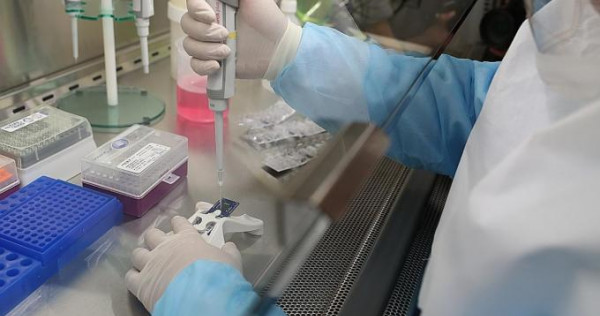
The HTX Covid-19 test kit, newly developed by the Home Team Science and Technology Agency (HTX) and Veredus Laboratories, takes just three hours to determine if the person has the infection.
The new swab tests were introduced at checkpoints on Wednesday night.
Members of the media were shown how the screening worked at Singapore Cruise Centre yesterday.
Visitors had to go through a temperature screening area before clearing immigration.
If they were found to have a fever, they would be referred to the health screening station, where healthcare personnel would assess if they need to be tested. Those who have to be tested go through a nasal swab test, but are allowed to leave after being advised to minimise contact with others and to remain contactable until the results are confirmed.
They are then allowed back to the immigration queues to carry on with their journey.
Similar procedures are carried out at all air, sea and land checkpoints.
The swab samples are sent to the HTX lab at the Pasir Panjang Scanning Station.
An Indonesian maid was jailed for two years in Singapore Thursday for giving money to an Islamic State-linked terror outfit blamed for a string of attacks in her home country.
The affluent city-state is home to over 250,000 maids from neighbouring Indonesia, and has seen a string of cases where foreign domestic helpers have allegedly been radicalised.
Anindia Afiyantari donated $130 last year to charities used as fronts by Indonesia-based Jamaah Ansharut Daulah (JAD), described by prosecutors as among “the most dangerous terrorist organisations” in Southeast Asia.
It has been blamed for attacks, including the stabbing of President Joko Widodo’s chief security minister Wiranto and deadly suicide bombings at several churches.
“The accused’s actions of plotting to finance terrorist acts… strike at the very heart of Singapore’s harmony,” prosecutors said, according to court documents.
The 33-year-old — who earned $600 a month — was introduced to radical religious teachings by other Indonesian domestic helpers in Singapore.
SINGAPORE: The individuals who visited SAFRA Jurong for a private dinner function on Feb 15 and later tested positive for COVID-19 had cleared mandatory temperature checks, SAFRA said on Thursday (Mar 5).
“They did not have fever, nor exhibited any flu-like symptoms,” said SAFRA on its website, after it emerged that the dinner was linked to at least eight confirmed cases.
“They also did not have any recent travel history to mainland China within the past 14 days of their visit to the club as stated within their declaration,” said SAFRA.
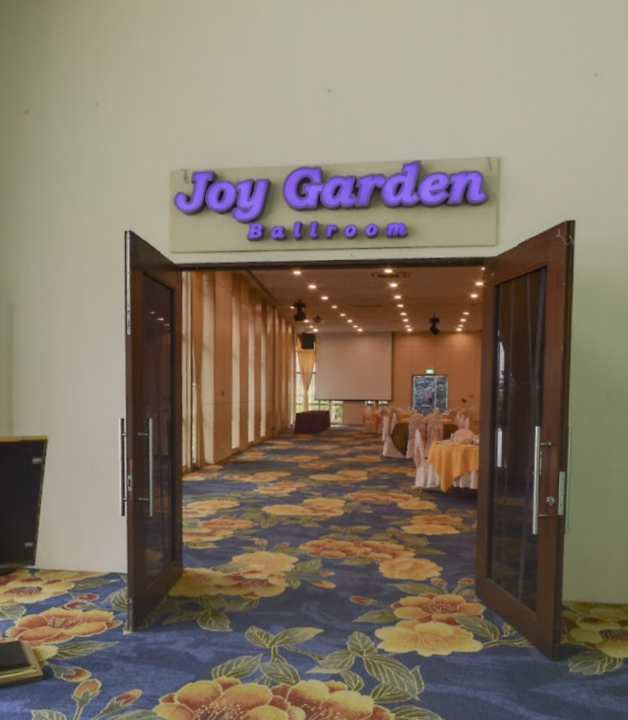
SAFRA said that the dinner function linked to Singapore’s latest cluster of cases was held at Joy Garden Restaurant.
SAFRA was informed by the Ministry of Health (MOH) of the confirmed cases on Feb 15 and closed the restaurant for the next four days between Feb 16 and 19 for cleaning, it said in a separate Facebook post on Friday.
These have been identified as Cases 94, 96, 107, 112, 114, 115, 116 and 117.
SAFRA Jurong first emerged as a cluster on Thursday, with MOH saying that four cases (Cases 114 to 117) were linked to the dinner function.
MOH also said that four previously confirmed cases, including the 12-year-old Singaporean student at Raffles Institution and his family member were linked to the cluster.
To date, there are 117 cases of the coronavirus in Singapore.
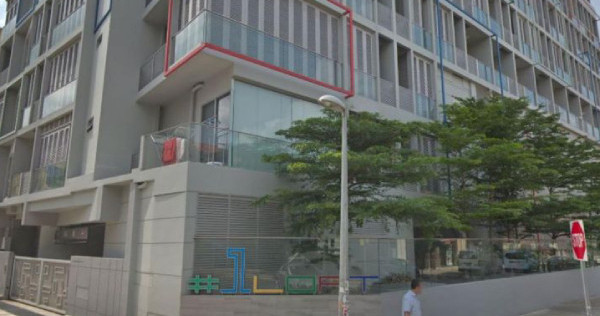
Eight COVID-19 cases have been linked to a dinner function at Joy Garden restaurant at SAFRA Jurong. (Photo: Google Street View)
As a precautionary measure, the restaurant – along with all other areas that the affected individuals might have been visited – will be thoroughly cleaned and disinfected again from Friday night, it added.
Joy Garden will be closed from Mar 9 to 12, SAFRA Jurong said.
SAFRA said it had installed additional precautionary measures after Singapore moved the Disease Outbreak Response System Condition (DORSCON) up a level to Orange on Feb 7.
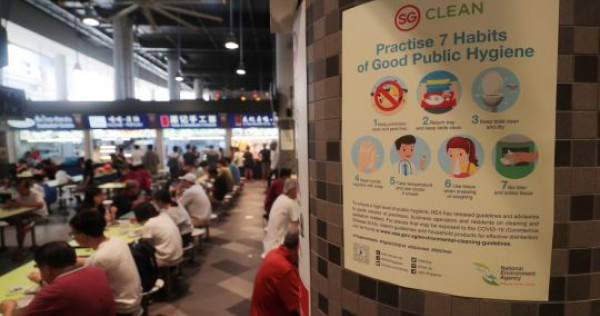
The additional measures included mandatory temperature taking and declaration of travel history and contact details, increased cleaning and disinfection, the provision of hand sanitisers and health advisories.
The confirmed cases linked to the dinner had cleared the mandatory temperature checks conducted at the entrance of the club, SAFRA said.
SAFRA Jurong has provided the details of the attendees at the dinner function to MOH for contact tracing.
The club will continue to monitor the situation closely and take further appropriate actions, where necessary, it said.
“The safety and well-being of our NSmen and the community remain our utmost priority,” SAFRA said.
SINGAPORE – A former property agent was fined $88,000 on Thursday (March 5) for unlawfully subletting multiple private residential properties for short-term accommodation.
This was largest ever fine meted out for such offences.
Joel Su Jiqing, 38, had pleaded guilty to four counts of providing short-term accommodation without planning permission from the authorities.
Two other similar charges were considered during sentencing.
A district court heard that the Singaporean was an agent with PropNex Realty when he committed the offences.
He is no longer registered as one with the Council for Estate Agencies (CEA).
The court heard that Su had leased several private-dwelling properties to provide short-term stays to local and foreign guests through hospitality service provider Airbnb.
Deputy Public Prosecutor Gabriel Lim said: “He chose the Geylang district in order to avoid detection… as he thought the residents in the district were less likely to raise complaints.
“He also chose the Geylang district, as the rents for private-dwelling houses (there) were considerably lower.”
SINGAPORE – Singapore needs to prepare to live with Covid-19 for a long time, and brace itself for significantly more new cases here as the number of those infected outside China continues to grow at “alarming rates”, warned Health Minister Gan Kim Yong on Thursday (March 5).
“This is worrying, as they pose a high risk of importation of cases into Singapore,” he said. “Even among our closest neighbours, the situation is also evolving. Therefore, it is likely that this disease will stay with us for a long time.”
The nation will have to continuously adjust what it is doing to deal with the evolving situation so life can go on while appropriate precautions are put in place, he told Parliament.
As more countries face infections, it will become increasingly difficult to stop the virus at the borders, “as we cannot ban visitors from every country and shut ourselves out from the world”, he said.
Singapore now has travel restrictions and advisories, temperature screening, contact tracing and quarantine.
SINGAPORE: The Government has been swift in its response to the COVID-19 virus, allocating S$4 billion in its 2020 budget to firms to help them weather its impact as well as the general economic slowdown carried over from the US-China trade war.
While the full impact of the virus has yet to run its course, it has shown the vulnerability of key nodes in global production networks to such cataclysmic and unforeseen events.
Businesses already dealing with precariously thin margins, particularly those in the services sector, could be pushed closer to the point of closing down as revenues are expected to shrink by as much as 80 per cent.
With the services sector making up more than two-thirds of the economy, a drop in demand will have ripple effects for the rest of the Singapore economy.
VULNERABILITY TO EXTERNAL SHOCKS
Singapore’s total exports in 2018 as a percentage of GDP was more than 176 per cent, valued at close to US$412 billion, according to the World Bank.
This means that a budget focusing on relieving business costs is likely to be a short-term stop- gap measure rather than a longer-term solution.
The fact is that as the world has become more inter-connected over the last decade, our vulnerabilities to external shocks have also increased, as flagged in a paper published by the UN Economic and Social Commission for Asia and the Pacific (UNESCAP), which has found that Non-Tariff Measures (NTMs) have increased in recent years.
NTMs or Non-Tariff Barriers, such as product-specific quotas or packaging and labelling conditions, are complex policy measures that increase costs for foreign exporters, particularly small and medium-sized enterprises (SMEs), whose thin margins and stretched resources make navigating changes in trade policy incredibly challenging.
It is a double whammy when it’s small enterprises that feel a larger brunt of the impact that COVID-19 has on the world’s economy.
Although Singapore Airlines and Capital Land have turned to wage cuts and freezes, historically, it is these large companies that are most likely to survive an economic downturn.
SUPPORT FOR SMEs DURING DOWNTURN
SMEs are a key part of Singapore’s economic landscape, contributing to nearly half of our GDP and employing about two-thirds of our workforce.
SMEs at an industrial park in Singapore.
Therefore, collectively SMEs are “too-big-to-fail” for a country like Singapore so dependent on small businesses. SMEs and microenterprises in South Korea are similarly feeling the heat.
It is in this context that Singapore’s aggressive use of counter-cyclical economic tools to support this segment of the economy is notable. With an expected economic slowdown due to COVID-19, the Government announced the Stabilisation and Support Package (SSP) to support employment together with the Care and Support Package (CSP) to support households.
The SSP will continue to fund enhanced programmes such as the Jobs Support Scheme and offer improved support such as the Enhanced Wage Credit Scheme. These schemes may benefit employers directly by subsidising the cost of labour at this point in time but ultimately aids workers by helping them keep their jobs.
FEAR OF PROPPING UP ZOMBIE FIRMS
As our job and wage support schemes represent transfers to the firms, some may express concerns we are wasting precious limited resources to prop up unproductive firms, which would have seen some natural level of attrition during a down cycle.
However, in the context of the SSP, these concerns may be unfounded.
Firstly, unproductive firms require disproportionately more support than productive firms in a downturn. Discretionary support that provides unequal levels of financing and grants without considering a firm’s credit worthiness would be required to prop up these firms.
By contrast, key schemes in the SSP do not negate commercial discipline. The enhancement to the Enterprise Financing Scheme will require financial institutions to consider firms’ credit worthiness, even as the Government co-shares the risk of default.
The Corporate Income Tax rebates target firms earning a profit. Enhancements to the Wage Credit Scheme targets firms that have raised the salaries of workers in the last quarter.
The design of such schemes can reduce the mismatch between resource allocation and long-term profitability of a firm.
Second, should unproductive firms exit the market? As the level and volatility of productivity may vary over a firm’s life cycle, young companies often find themselves in the red.
In assessing the potential impact of these measures on unproductive companies, we must distinguish between high-growth but young companies that may be burning through cash and zombie firms.
Zombie firms are non-performing companies, with little business activity and value-add. The term refers to firms that struggle for years, earning low sales, generating low growth and little meaningful employment, with little hope of resurrection, where they copy old ideas instead of pursuing innovation.
Many of such low-growth firms may have high debt ratios, fuelled by cheap borrowing in recent years.
Temporary measures such as the Job Support Scheme and Wage Credit Schemes will not keep them going after the SSP runs its course.
SIMILAR CHALLENGES FACED BY YOUNG, HIGH-GROWTH START-UPS
Young high-potential firms on the other hand may face cash flow issues in their initial years, as they pursue breaking even on their initial start-up costs, establish a brand identity and grow their market share.
File photo of a robot production facility launched by Singapore precision engineering firm PBA Group and a Korean industrial robot company. (Photo: Brandon Tanoto)
These are start-ups in rapidly growing sectors like deep tech and artificial intelligence where sunk costs in research and development may take some time to recuperate.
Younger companies also tend to experience greater volatility in income compared to older firms, as they seek to grow new revenue streams and pivot their product offerings towards stronger enterprise solutions.
But if this higher volatility leads to higher financial costs, young and potentially high-growth firms could be wiped out along with zombie firms during a recession.
Fortunately, the most promising high-growth young start-ups have access to investors and government grants, through a plethora of schemes rolled out by the Government under Start-up SG.
The COVID-19 outbreak will pass. Ideally, we want to identify and support high- potential SMEs during these times, without skewing incentives to prop up zombie firms.
Our best alternative is to support the SMEs as a whole at the potential cost of stringing a few zombie firms along. For now, the Government’s move to shore up aid for SMEs to target cash flow challenges sufficiently differentiates support levels for firms.
Nicholas Sim is a Senior Lecturer in the Business Analytics Programme at the Singapore University of Social Sciences.