Home Blog Page 443

Grow meat at home from stem cells? It’s coming, says Shiok Meats CEO

0

SINGAPORE: What if you are able to “grow” your own meat at home? Would it change the way your family eat?

The idea is not in the realms of science fiction any more, according to stem cell scientist Sandhya Sriram.

She envisions that people could have a small bioreactor — “a fancy name” for something like a pressure cooker — that can maintain the right temperature and conditions for cells to grow into meat.

“It’s much like making beer or wine at home, or even baking a piece of bread,” says the 35-year-old.

It is already happening in Japan, where there are biohackers trying their hand at developing DIY meat at home through the Shojinmeat Project, a citizen science project.

Sandhya knows more than most about this technology and how to make cultured meats. She is the co-founder and chief executive officer of Shiok Meats, the homegrown company growing cell-based shrimps in a laboratory.

Dr Sandhya Sriram is the co-founder and CEO of Shiok Meats, which grows cell-based shrimps in a lab.

Dr Sandhya Sriram.

She gives it 10 years before people can “have this kind of set-up in their house for them to make meats”.

Meantime, consumers here will get a taste of things to come when her company starts selling its shrimp to restaurants next year, she discloses.

“So you can walk into a restaurant that we’re partnering to basically buy a shrimp siew mai dish or shrimp fried rice or a shrimp soup dish.”

It has been 18 months since Shiok Meats began as the first cell-based clean meat company in Singapore. And it is unlikely to be the last.

FOR NOW, IT’S S$150 A SIEW MAI

Growing meat in a lab is cutting-edge technology being attempted by a handful of companies around the globe.

Growing meat in a lab is cutting-edge technology being attempted by a handful of firms in the world.

Photo credit: Shiok Meats

Their labs have successfully made hamburger patties and shrimp dumplings, but these are not yet commercially available because a tiny amount of cell-based meat costs thousands of dollars. Last year, it cost Shiok Meats S$5,000 to produce eight dumplings.

That has since come down to S$5,000 for a kilogramme of shrimp meat. In other words, each siew mai would set you back S$150.

By year end or the start of next year, however, it will be a “two- to three-digit number” per kilogramme.

And that has to do with the biological research her start-up is doing, says Sandhya, who earned her PhD from the Nanyang Technological University.

At heart of the technology, what her company does is to take out stem cells from live shrimps and grow the cells “over and over again” by feeding them a liquid nutrient, or “nutrient soup”.

“It’s a mix of proteins, carbohydrates and fats, very similar to what the animal would eat itself. But because the cells don’t have a digestive system, you have to give them a very simple ingredient mix,” she explains.

“It’s made only by pharmaceutical companies. It’s not made by anyone else in larger quantities for us to purchase, hence the cost. So 90 per cent of our multi-thousand-dollar kilogramme per shrimp is the price of that nutrient solution.”

The pharma companies do not reveal what is in this proprietary substance, “but to an extent, we as scientists definitely know”, she says.

And by swapping some of the pharmaceutical-grade ingredients for plant-based and edible ingredients, Shiok Meats has reduced the cost. “We haven’t found an exact alternative for the rest. So now we have to start working on those,” she adds.

“We’re getting there … It’s been only 18 months since we started, but we’re quite positive that we’ll launch commercially next year in Singapore.”

START OF A REVOLUTION

While cell-based meats come from an animal, what has recently taken the world by storm are plant-based meats. They are, to an extent, direct competitors in the market, acknowledges Sandhya.

“But honestly, (in 2050) the world’s population is going to be 10 billion … We don’t even have enough food to feed the seven billion that we are currently,” she says.

“You need different sources of food … So I believe that a mix of plant-based, cell-based and insect-based protein is going to be the future. It’s already started.”

To consumers who might think that cell-based meats are slightly like Frankenstein food, she points out that “most of your packaged food that you get in a supermarket now” were made in labs “at one point in time”.

“Then it goes out of the lab and goes into … a food manufacturing facility,” she adds. “That’s exactly what we’re doing with cell-based meats.”

Shiok Meats is setting up its manufacturing facility this year, specifically for shrimp. And it plans to grow cell-based crabs and lobsters after that.

But does its shrimp, when cooked, really smell and taste like shrimp meat to begin with?

The first time the start-up did a blind test, Sandhya got her co-founder and a chef in a culinary school to do the tasting and “they couldn’t tell the difference”, she recounts. “The flavour is inherent.”

The only thing is that the company cannot make “a structured shrimp” right now. “It’s minced, hence the dumpling. But we’re working towards a shrimp that will look like the real thing,” she says.

She herself, as a vegetarian, had never eaten shrimp before that, “so you can imagine that it’ll take me a while to get used to the taste”.

“But I know that I can eat it without any guilt … I know where exactly it comes from and I know that we’ve made it,” she adds, citing “clean shrimp farms” as the source of the stem cells.

“We take those shrimps that are not treated with antibiotics (nor) bleach, (and) don’t have heavy metals or mercury.”

Shiok Meat also runs its final product by third-party organisations that do accredited testing for those components.

And even before the company can take its meat to restaurants, let alone people growing their own meat, Sandhya thinks the world is already witnessing a revolution with people talking about cell-based meats.

“(This) is very, very important because for us … consumer education is more important than getting the product to market so fast. Because we have to educate consumers as to why they have to choose this product,” she says.

Watch the full exclusive interview here. CNA’s In Conversation airs on Fridays at 9pm.

Source link

Commentary: What does Ronan Keating know about Singapore ports?

0

SINGAPORE: Irish singer and former Boyzone star Ronan Keating recently posted a scenic sea view picture on Instagram that broke the Internet in Singapore.

The funny thing is: I have a sunset version of a similar shot, taken on a flight back to Singapore after a long trip. It was a sight that warmed the very cockles of my heart – I knew I was home.

What shocked me was how Mr Keating had transformed this familiar and comforting glimpse of home into a doomsday scenario: “Tankers held in Singapore not allowed to dock because of the virus”.

Do you recall alarming news of cruise ships turned away at multiple ports? Multiply that by the number of ships in the picture, and you’ll get the chilling effect of this caption.

READ: Commentary: Japan shows how not to deal with a COVID-19 outbreak

READ: Commentary: Stranded cruise could be helped if Japan had hospital ships

MISINFORMATION HAS CONSEQUENCES

When Singaporeans in the Twittersphere spoke up, Keating promptly removed the picture. And when some demanded an apology, his immediate reaction was an expletive-laced post.

Shortly after, he edited his language with a toned-down apology: “I recently posted this pic after being told by a local in Singapore that the reason they were all parked up was due to the Virus. I have been recently informed that this is not true and that this is how the harbour always looks. I apologise if I offended anyone in my post you all know I would never purposefully do that,” his Instagram said.

Keating could have stopped there but could not resist a special note: “To all you haters out there, get on with your short life.”

READ: Ronan Keating apologises for incorrect post about COVID-19 in Singapore

It is worrying that Keating chose to respond in such a manner. He might have made an honest mistake but his sorry-not-sorry response suggests that his error was a trivial one that should be overlooked, forgiven and forgotten right away. But should it?

And had his post continued to be up with the original caption, would authorities not have moved to issue a correction directive under the Protection From Online Falsehoods And Manipulation Act (POFMA) and asked for Mr Keating to put that correction up on his Instagram and Twitter accounts?

The reality is that Singapore and many cities around the world are in the thick of a global health crisis. Healthcare workers are fighting tirelessly against a faceless enemy, which threatens the lives of many sick and vulnerable patients all over the globe. In Singapore, contact tracing teams are working in shifts seven days a week simply to contain the virus.

Besides health concerns, every day, people and retailers bear the brunt of the economic fallout from the crisis – pay cuts, wage freezes, business losses, with many worried about potential foreclosures and lay-offs.

The general sentiment on the ground is that we should grit our teeth, get back to normalcy, and get through these difficult times together.

READ: Commentary: SMEs welcomed support from Budget 2020. Of course they all would

LISTEN: Singapore Budget 2020: A report card

In this context, Keating’s sensational caption was incredibly hurtful. It painted a false picture of the situation in Southeast Asia, and undermined all the good work going into keeping Singaporeans healthy and Singapore ports open.

FACT CHECKING IS A SOCIAL RESPONSIBILITY

Indeed, in recent years, social media has exponentially increased our news sources. 

This growth in social media has been exciting in many ways, where it has also fuelled the explosion of personal expression. 

Many of us are also psyched that we get to hear or interact with our pop idols directly on their accounts.

However, when a person, celebrity or not, makes a false claim about a country, culture or social matters, misinformation can be detrimental, even dangerous.

In such cases, it is vital for each and every one of us to think before sharing and pause before posting, to fact-check and verify the veracity of extraordinary claims, rather than mindlessly pass on the information.

Surely the buck must stop with us and not with some anonymous source who sent a picture with a caption to us?

FILE PHOTO: Passenger in a protective mask uses her phone on at Rome's Fiumicino airport

FILE PHOTO: A passenger in a protective mask uses her phone at Rome’s Fiumicino airport, after first cases of coronavirus were confirmed in Italy, January 31, 2020. REUTERS/Yara Nardi/File Photo

During this latest COVID-19 crisis, we have seen misinformation manifest on many forms, from mischievous misinformation about school closures in Singapore that may have been spread to seed fear or panic, to ludicrous claims that steaming masks makes them safe to reuse.

Once put out there, such information can have a life of its own and lead to more confusion in such times of uncertainty.

READ: Commentary: Outbreaks of diseases make us exaggerate or under-estimate risks. The COVID-19 shows that

READ: Commentary: Tech is not all bad. Our COVID-19 experience shows this

PERHAPS CELEBRITIES SHOULD BE MORE JUDICIOUS

Keating’s fans were quick to point out that everyone makes mistakes – a truism that no one can refute. To be fair, if this were posted by a regular person, he may be swiftly corrected, but is unlikely to have been publicly roasted the way Keating has been.

The crux of this lies in the fact that when celebrities and public figures make a comment, their opinions have a wider reach and carry more weight, even if it relates to an area outside their expertise.

In Keating’s case, how Singapore’s shipping industry has been impacted by an infectious disease is clearly completely out of the singer’s area of expertise to comment on, but he broadcasted it anyway.

He should know his words have an undeniable impact on the people in Singapore, as well as his fans across the world, when he’s someone many trust.

READ:  Commentary: Wuhan virus – when social media and chat groups complicate crisis communication

Indeed, celebrities who choose to use their platforms to voice their views have a duty to use it responsibly. I would also urge them to think twice about whether they have something substantive and informative to contribute that raises the level of such discussions.

THE RISE OF CELEBRITY ACTIVITISM

There are scores of examples, however, where celebrities put their fame to good use, to build awareness of wicked problems facing the world and raise funds for good causes.

FILE PHOTO: US actor Leonardo DiCaprio looks on prior to speaking on stage during the Paris premier

US actor Leonardo DiCaprio. (Photo: REUTERS/Christophe Archambault/Pool)

Long before Greta Thunberg came of age, Leonardo DiCaprio has been championing environmental initiatives. His foundation raised US$100 million to fight climate change in 2018 and pledged US$5 million to restore the rainforests in Brazil last year.

Reese Witherspoon spearheaded the Time’s Up initiative to fight systemic sexual harassment in the wake of the Harvey Weinstein scandal and raised over US$22 million in defence funds for victims of sexual harassment and enlisted over 800 lawyers.

Still, it’s clear not all celebrity activism or commentary have a positive impact on the society, especially when spoken from a position of privilege. Some stars themselves have been quick to point this out.

“A lot of celebrities, did, do and shouldn’t [give their political opinions]. A lot of Hollywood is living in a bubble. They’re pretty out of touch with the common person, the everyday guy out there providing for their family,” famed actor Mark Walhberg said.

READ: Commentary: Protecting public health is key in novel coronavirus fight but we must also tackle xenophobia

Perhaps the truth lies somewhere in between. When commenting on political, national, health or cultural issues, public figures should first consider the repercussions of their statements, and whether they’ve taken all steps to educate themselves on the topic at hand

If there is any chance that their views may breed division, panic or fear, as in Keating’s case, perhaps it’s better that they refrain from doing so. In a world that has seen the polarisation of societies, stoking such sentiments can be incredibly irresponsible.

So, this is not just a matter of “haters” hating. And if Mr Keating wanted to dish some out, he’s also got to be prepared to receive some. It comes with the territory.

As Maritime and Port Authority of Singapore noted in their gracious clarification on Twitter in response to the post put by Mr Keating, #WeCouldntSayNothingAtAll.

BOOKMARK THIS: Our comprehensive coverage of novel coronavirus and its developments

Download our app or subscribe to our Telegram channel for the latest updates on the coronavirus outbreak: https://cna.asia/telegram

Annie Tan is a freelance writer.

Source link

Commentary: Reaching net-zero emissions will be ‘very challenging’. But watch Singapore try anyway

0

SINGAPORE: The announcement of Singapore’s vision for a “low-carbon and climate resilient Singapore” on Friday (Feb 28) was a timely one.

Singapore’s mitigation vision has two stated goals. First, an absolute peak emission level of 65 million tonnes of carbon dioxide equivalent by 2030 and second, an aspiration to halve the emissions peak emissions to 33 million tonnes by 2050, with a view to achieving net-zero emissions “as soon as viable” after that.

While delivering the announcement, Senior Minister Teo Chee Hean pithily and accurately noted “this (commitment) will be very challenging given our limited alternative energy options”.

Indeed, the current geographical, economic and technological circumstances in Singapore will make it difficult – but not impossible – to first reduce current emissions before reaching the ideal net-zero level.

READ: Commentary: Why Singapore’s new ‘absolute’ climate mitigation targets could be an absolute game changer

LISTEN: How ready is Singapore for electric vehicles?

GEOGRAPHICAL AND TECHNOLOGICAL CHALLENGES

Simply put, getting to net-zero requires carbon dioxide removal from the atmosphere through natural or artificial means and by being more efficient in using carbon in economic activities.

These approaches are not new. In 2018, the Intergovernmental Panel on Climate Change (IPCC) assessed several carbon dioxide removal pathways for governments to keep global temperatures from exceeding 1.5 degrees Celsius, requiring a global net-zero target by “around 2050”.

The challenge of following these pathways, however, is very stark, and exacerbated for several reasons in Singapore’s context.

While our small size and equatorial location have been beneficial for our trade and for reducing exposure to climate hazards like typhoons, the trade-off is that our geography severely handicaps effective carbon dioxide removal approaches in Singapore.

CBD SG

View of the central business district in Singapore. (File photo: AFP/Roslan Rahman)

We lack large forested areas where we can intensively and extensively replant fast-growing native vegetation that provide large green spaces, which store carbon at scale.

This also means that we do not have large renewable energy potential from bio-energy, rivers, wind and tidal options.

Our extensive cloud cover and small land area also prohibit efficient, large-scale deployment of domestic solar energy and its storage with current technology, although this can likely be overcome through a regional solar and renewable energy grid.

Our geographical handicap can be offset by technology. One method involves capturing carbon dioxide directly from pre-treatment of fuels, or during post-combustion at power plants.

READ: Commentary: That low-carbon future for Singapore isn’t so far-fetched

LISTEN: Talking about the Madrid climate talks, what happened and what’s next?

The captured carbon is either stored (“sequestered”) underground where it does not contribute to climate change, or utilised as raw material for products such as plastics, fertilisers, and fuel in combination with hydrogen.

Some of these technologies have demonstrated small-scale engineering viability, but cost considerations are critical in determining operational viability at larger scales.

Generally, financial costs accumulate mainly from the immense capital investment of plants, the large energy costs of carbon capture, operation, and regeneration of carbon, as well as from plant maintenance.

Carbon dioxide storage tanks are seen at a cement plant and carbon capture facility in Wuhu

Carbon dioxide storage tanks are seen at a cement plant and carbon capture facility in Anhui province, China on Sep 11, 2019.  (Photo: REUTERS/David Stanway)

Two additional problems apply in Singapore. Carbon sequestration generally occurs in geological sites such as oils and gas fields, which are not located close to Singapore. The carbon captured locally will thus require additional transport costs to locations in which sequestration can occur.

Our utilisation of “clean” natural gas to generate power paradoxically means extracting carbon is more expensive compared to “dirtier” carbon-rich fossil fuels such as coal.

Lastly, one unmentioned but technologically feasible option in Singapore is nuclear power, which can reduce domestic emissions significantly. There remains, however, substantial socio-political and environmental issues impeding its deployment.

READ: Commentary: Forget bamboo straws. Let’s name the elephants in the room of Singapore’s climate debate

READ: Commentary: Rising temperatures, fires and floods highlight importance of understanding weather extremes

RESTRUCTURING ECONOMIC GROWTH

Carbon dioxide removal can reduce emissions, but transforming Singapore’s current economy is another important step in getting to net-zero. 

There may be concerns that reducing emissions will damage the economy, as economic growth is strongly correlated to increased carbon emissions.

The move from emissions intensity – a metric looking at carbon emissions per unit of Gross Domestic Product (GDP) – to absolute emissions independent of GDP also bolsters the concern.

But such concerns can be allayed as development – with ample evidence from cities worldwide – can be “decoupled” from emissions successfully through increased use of renewable energy, and energy efficiency throughout all economic sectors, such as deploying AI-enabled smart technologies in domestic and commercial buildings.

Asia Square Food Garden

Asia Square is one of the most eco-friendly buildings in Singapore. (Photo: designphase dba)

The low-carbon goals of “greener” buildings in construction and retrofitting, with higher energy labelling and performance standards, as well as the nationwide implementation of electric vehicles by 2040, are concrete steps that enable and enhance decoupling.

These efficiency measures are significant and will augment carbon dioxide removal technologies, especially in cities. Globally, the IPCC assessed that phasing out fossil fuel passenger vehicle sales by 2035 to 2050 is a benchmark that aligns with 1.5 degree Celsius-consistent pathways, as does reducing building emissions by 80 to 90 per cent by 2050.  

The Government cannot do it alone; the private sector must be active partners in ensuring this sustainable transformation occurs through implementing new low-carbon technologies and practices throughout Singapore.

For instance, Singapore Management University’s new Connexion Building completed in January is the first on-site net zero energy building in Singapore’s city centre. It was constructed mostly by using mass engineered timber from farmed mature trees that absorb and sequester carbon dioxide for the duration of the building’s life cycle, and has a low energy signature via using power generated from an on-site photovoltaic system and high efficiency fixtures.

READ: Commentary: How effectively can Singapore adapt to sea level rise?

READ: Commentary: Electric vehicles will take over Singapore. But here’s what must happen first

These sustainable design and construction elements can be emulated by other private sector actors in the building and construction industry, and widely implemented to decouple emissions from development.

Besides the private sector and the Government, decoupling carbon emissions also requires awareness and action from the public. SM Teo noted a nationwide collective effort is needed, especially when transforming the economy with “green” development is not a zero-sum game in which there are only winners and losers.

A decoupled, low-carbon economy requires “green” skills training and re-training for workers as industries prepare for a low-carbon future, such as the operation and maintenance of electric vehicles and charging points, or by installing renewable energy technologies.

Collective and coordinated action by all stakeholders – public, private, and people sectors – is needed to shift the needle in ensuring a sustainable economy, where everyone can win.

HOW SINGAPORE BENEFITS FROM SHIFT TOWARDS SUSTAINABILITY

marina barrage

The Singapore skyline as seen from the Marina Barrage Green Roof. (File photo: Corey Sta Maria)

The costs and challenges towards a net-zero path are considerable and daunting, both in terms of time, resources and capital.

However, Singapore must chart this path sooner rather than later. There will also be immense benefits for climate adaptation in Singapore with the transition towards a greener economy. 

The goal of constructing and retrofitting “greener” buildings with super-low-energy use will also cool Singapore locally by reducing the island’s urban heat effect.

Similarly, the reduction of waste heat emissions from the transport sector through electric vehicles will also significantly aid in cooling Singapore, as well as reducing air pollution to pedestrians originating from vehicular burning of petrol and diesel.

READ: Commentary: Electric vehicles will take over Singapore. But here’s what must happen first

READ: Incentives likely to encourage electric vehicle adoption in Singapore, but questions remain, say analysts

The local implementation and development of new, low-carbon technologies by the private sector could be commercialised and exported to regional cities, who will be looking for successful urban climate mitigation examples or in the building and transport sector. 

A successful transition to a decoupled, low-carbon economy will enable the next generation of Singaporeans with sustainable employment and shift away from sunset industries, such as those focusing on fossil fuel extraction.

Lastly, investments in mitigation and decarbonisation will be less expensive today than in a future where climate impacts and hazards become more pronounced, with higher human and economic costs arising from inaction.

Winston Chow is an Associate Professor of Science, Technology, and Society in Singapore Management University’s School of Social Sciences and Office of Core Curriculum.

Source link

Everyday tech devices you might not know were invented by women

0

[ad_1]

Let’s be honest, the realm of technology is a boy’s club. Silicon Valley is pretty much known as a ‘brotopia‘, what with its aggressively macho culture that has effectively shut women out of the exploding, wealth-making industry. 

But while big names such as Steve Jobs, Elon Musk, Bill Gates and Larry Page continue to be deified as modern trailblazers in tech, folks might forget that the fairer sex has a fair share of innovators too. Which is a downright shame, considering that women are behind some of the world’s most ubiquitous gadgets that we can’t possibly dream of living without. 

Not that we need International Women’s Day to celebrate women (a thing that can be — gasp — done every day), but the idea and intention behind it is righteous. As such, we’re honouring the brilliant ladies who’ve made their mark in history by inventing the things that changed the world. 

[ad_2]

Source link

Two teenagers arrested over assault on Singaporean student in London

0

LONDON: Two teenage boys, one 15 years old and the other 16, have been arrested in relation to a case of “racially aggravated assault” against a Singaporean student in Oxford Street last month, said police on Friday (Mar 6). 

In a news release posted on its website, the Metropolitan Police (Met Police) said its officers were called at around 9.15pm to Oxford Street near Tottenham Court Road station on Feb 24, following reports of a man being assaulted. 

READ: Singaporean student in London says he was assaulted after reacting to COVID-19 comments

READ: Singapore High Commission in contact with UK authorities on student assault sparked by COVID-19 comments

The 16-year-old was arrested on Wednesday and has been released under investigation, said the Met Police. The other suspect was arrested on Thursday and has been released on bail until later this month. 

Police are still looking to identify two others in connection with the incident. 

Jonathan Mok, a 23-year-old student at University College London, told CNA on Tuesday that he was attacked after he reacted to a group’s comments about his race and COVID-19.

Jonathan mok

Mr Jonathan Mok uploaded photos of his bruised face on Facebook. (Photo: Jonathan Mok)

“I felt really angry … It is ridiculous people are being targeted for being Asian,” he said. 

The group left the scene before the police arrived. 

The Met Police said the victim was punched and kicked, and sustained facial injuries. 

Detective Sergeant Emma Kirby, who is the officer in charge of the case, said the attack left the victim “shaken and hurt”. 

“There is no room on our streets for this kind of violent behaviour and we are committed to finding the perpetrators,” she said. 

“I am keen to speak to anyone who has information about this assault. I would like to identify and speak to the males pictured who may be able to help me with our enquiries,” she added. 

Source link

13 new Covid-19 cases in S'pore, including 9 linked to Safra Jurong dinner and an SIA steward

0

[ad_1]

SINGAPORE – Thirteen new coronavirus cases have been confirmed in Singapore, nine of them linked to a dinner at Safra Jurong on Feb 15, the Ministry of Health said on Friday (March 6).

Two others are believed to be imported cases, one linked to a previous case, and the last with no known links yet.

The private dinner function at Joy Garden restaurant is now linked to 17 cases in total. The nine new cases are Singaporeans between the ages of 33 and 70.

Not all were at the dinner.

Of the other confirmed cases, one is a 55-year-old SingTel staff.

Another is a 47-year-old Singaporean, a Singapore Airlines (SIA) steward who had been in South Africa from Feb 14 to 17 and France from Feb 22 to 24.

He is believed to be an imported case, that is he got the virus outside Singapore. He tested positive for Covid-19 on March 5.

The other likely imported case is a 37-year-old Singapore PR who was in Germany from Feb 27 to March 5. She was confirmed to have the infection on March 6.

[ad_2]

Source link

Singapore reports 13 new COVID-19 cases in largest single-day spike

0

SINGAPORE: Singapore announced 13 new cases of COVID-19 on Friday (Mar 6), the highest daily jump since the outbreak started here.

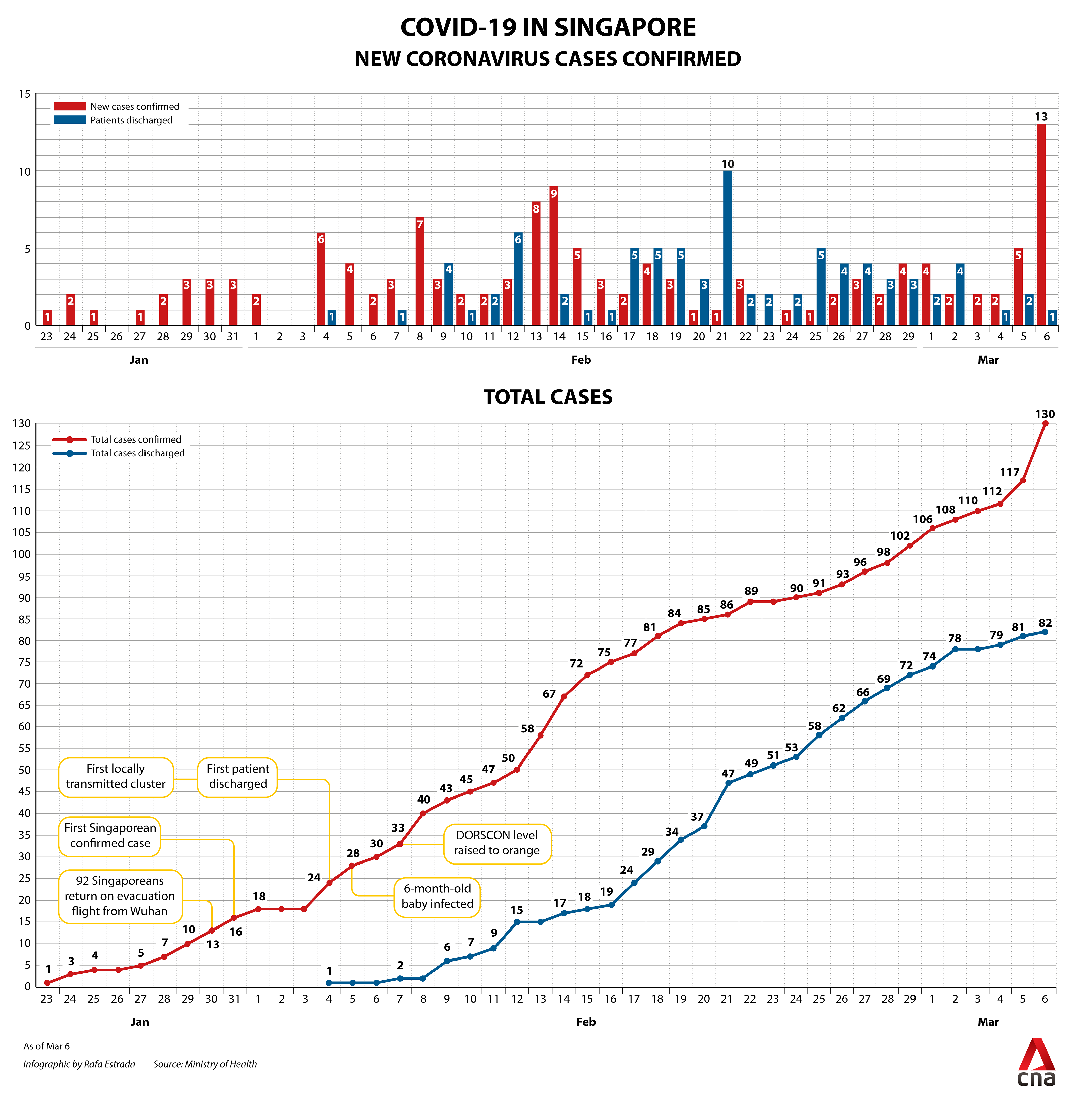
This brings the total number of new coronavirus cases in Singapore to 130 since the first case was confirmed on Jan 23.

One more patient has recovered from COVID-19, bringing the total number of discharged cases to 82.

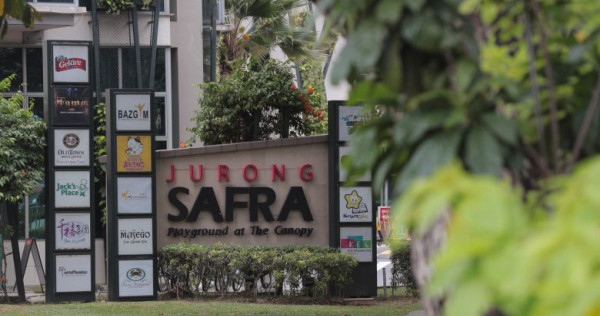
Out of the new cases, nine are linked to the cluster involving a private dinner function at SAFRA Jurong on Feb 15. 

One patient is a SingTel employee and one, a likely imported case, is a Singapore Airlines cabin crew member.

A second imported case is a Singapore permanent resident who had been in Germany recently. Another of the cases was in the same ward as an earlier diagnosed case.

COVID-19 graphic chart Mar 6 2020

NEW CASES 

Case 118

Case 118 is a 33-year-old Singaporean woman with no recent travel history to the affected countries and regions. 

She is a family member of cases 114 and 115, and is linked to the SAFRA Jurong cluster. 

Case 119

The case is a 55-year-old Singaporean man with no recent travel history to the affected countries and regions. 

He is a Singtel employee, but had not gone to work since reporting onset of symptoms on Feb 27. 

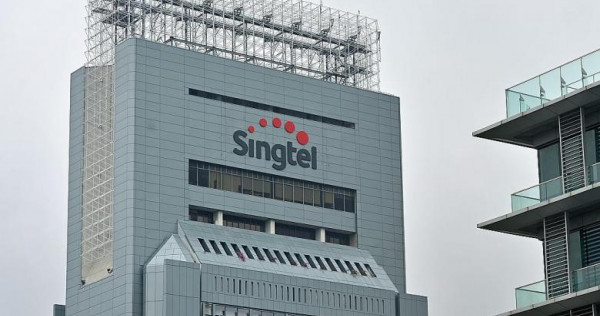
Earlier on Friday, Singtel confirmed in response to CNA’s queries that one of its employees was diagnosed with COVID-19 on Thursday night.

“Our immediate priority has been to manage and minimise the risk of infection at Singtel Comcentre 1 where our colleague worked on level 20,” the company said, adding that the entire floor has been closed off and disinfected.

“Those working on the same floor have been instructed to work from home for 14 days, closely monitor symptoms and practise strict social distancing while contact tracing is conducted in tandem with MOH.

“We are moving as fast as we can to ensure all parties who have been in close contact with our affected colleague can be identified swiftly,” the telco said.

Case 120

The case is a 62-year-old Singaporean woman with no recent travel history to the affected countries and regions. 

She is linked to the SAFRA Jurong cluster and is currently warded at NCID. 

Case 121

The case is a 54-year-old Singaporean woman with no recent travel history to affected countries and regions. 

She is linked to the SAFRA Jurong cluster and is currently warded at NCID. 

Case 122

Case 122 is a 64-year-old Singaporean woman with no recent travel history to the affected countries and regions. 

She is a close contact of case 117 and is linked to the SAFRA Jurong cluster. 

She is currently warded at NCID. 

Case 123

A likely imported case, case 123 is a 47-year-old Singaporean man who had been in South Africa from Feb 14 to Feb 17 and France from Feb 22 to Feb 24. 

He works as a member of the Singapore Airlines cabin crew but did not go to work after suffering symptoms. 

Case 124

Case 124 is another likely imported case, a 37-year-old Singapore permanent resident who had been in Germany from Feb 27 to Mar 5. 

Case 125

The case is a 65-year-old Singaporean woman with no recent travel history to the affected countries and regions. 

She is a family member of case 128 and is linked to the SAFRA Jurong cluster. 

The patient is warded at NCID. 

Case 126

The case is a 77-year-old Singaporean man with no recent travel history to the affected countries and regions. 

He was in the same ward as case 109 at Singapore General Hospital from Feb 29 to Mar 1 before case 109 was confirmed to have COVID-19.

Case 126 has been in quarantine since Mar 4.

Case 127

The case is a 64-year-old Singaporean woman with no recent travel history to the affected countries and regions. 

She is a close contact of case 177 and is linked to the SAFRA Jurong cluster.

Case 128

Case 128 is a 70-year-old Singaporean man with no recent travel history to the affected countries and regions. 

He is a family member of case 125 and is linked to the SAFRA Jurong cluster. 

Case 129

The case is a 68-year-old Singaporean woman no recent travel history to the affected countries and regions. 

She is a family member of case 130 and is linked to the SAFRA Jurong cluster.

She is currently warded at the Ng Teng Fong General Hospital (NTFGH). 

Case 130

The case is a 66-year-old Singaporean man no recent travel history to the affected countries and regions. 

He is a family member of case 129 and is linked to the SAFRA Jurong cluster. 

He is also warded at NTFGH. 

TASK FORCE FORMED TO RAISE PUBLIC HYGIENE STANDARDS 

On Friday, authorities announced the formation of a multi-agency task force to step up public hygiene standards in Singapore beyond the COVID-19 outbreak. 

The new SG Clean Taskforce, chaired by Minister for the Environment and Water Resources Masagos Zulkifli, is under the purview of the multi-ministry task force for COVID-19 announced in January.

The taskforce will aim to “galvanise collective action” in ensuring the cleanliness of public spaces, encouraging good personal hygiene and adjusting social norms to reduce the spread of disease. 

READ: Task force formed to raise public hygiene standards beyond COVID-19 outbreak

Authorities also said that while temperature screening is an important tool in detecting COVID-19 cases, it is not a foolproof measure and should not be regarded as the only way to identify people who are unwell. 

On Thursday, MOH said that four confirmed cases were linked to a new cluster at SAFRA Jurong where they attended a private diner function. 

According to SAFRA, the individuals had cleared mandatory temperature checks and did not have fever; nor had they exhibited any flu-like symptoms. 

BOOKMARK THIS: Our comprehensive coverage of the novel coronavirus and its developments

Download our app or subscribe to our Telegram channel for the latest updates on the coronavirus outbreak: https://cna.asia/telegram 

Source link

Their dogs are so 'guai' parents have asked them to train their kids to behave

0

[ad_1]

Why I Do What I Do is an original AsiaOne series where we showcase people with uncommon professions and what it takes to get there.


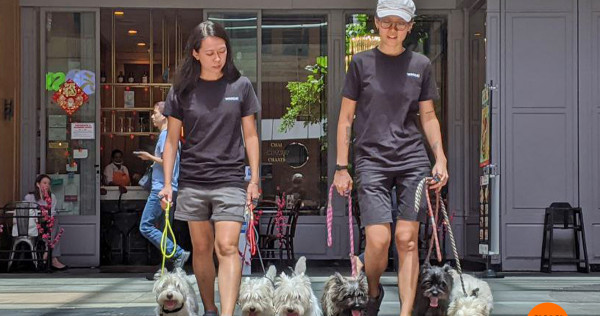
Dog-trainers Ashley Chen and Yan Shi Ting, both 33, have had friends asking if they could train their kids to be as well-behaved as their dogs. 

“Whenever I’m with my friends, especially those with kids, they’ll ask me the same thing, ‘can you please train my kids to be the same as your dogs?’, laughed Ashley.

And she’s not about to turn them away. She said: “If you follow the same training structure and mindset of how they should behave, it is the same.”

Leaving their desk-bound jobs as designers five years ago, Ashley and Shi Ting shared how they turned their side hustle into a full-time job.

Said Ashley: “Initially, we started offering dog services to owners, such as boarding, grooming and also selling retail products.

“Along the way, owners started to ask us questions like, ‘how do I get my dog to be the same as your dogs?’, and they also started to seek advice on dog behaviour issues.”

[ad_2]

Source link

Coronavirus: 'Inevitable' that Singapore will see Covid-19 death, says Health Minister Gan Kim Yong

0

[ad_1]

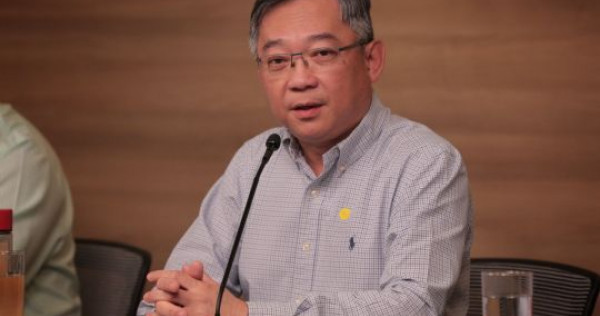
SINGAPORE – It is “inevitable” that Singapore will see a fatality from the coronavirus, said Health Minister Gan Kim Yong on Friday (March 6).

Mr Gan, who co-chairs the multi-ministry task force set up to combat the spread of the virus, told a briefing that patients in the Intensive Care Unit (ICU) – seven as of Thursday – are in quite critical conditions.

“So far our healthcare workers are working very hard and trying their best to support them and hopefully they can recover. But it’s inevitable that at some point in time, we will see fatalities from Covid-19, as we’ve seen all around the world,” he said.

Mr Gan has given a similar warning in the past. He told a briefing on Feb 12: “While most infected patients will recover, some may become seriously ill, and a small number may succumb to the infection ultimately. We have to be prepared for the worst.”

[ad_2]

Source link

Singtel disinfects office floor after staff diagnosed with Covid-19

0

[ad_1]

Telecommunications company Singtel announced that a member of staff was diagnosed with Covid-19 on Thursday night (March 5).

In a press release sent out to media, the local service provider said that the male employee is currently in hospital receiving treatment, and Singtel is supporting him and his family in every way they can. 

The spokesman said: “Our immediate priority has been to manage and minimise the risk of infection at Singtel Comcentrewhere our colleague worked on level 20.

“He was last in the office on Feb 26 before going on medical leave.”

The Singtel Comcentre is located at Exeter Road.

The company has closed off the affected floor and a Ministry of Health (MOH) approved cleaning crew was brought in overnight to conduct a thorough cleaning and disinfection of the entire floor.

Those working on the same floor have been instructed to work from home for 14 days, closely monitor for symptoms and practice strict social distancing, while contact tracing is conducted in tandem with MOH, the spokesman added. 

[ad_2]

Source link