 SINGAPORE – The late Lee Kuan Yew would have wanted Singaporeans to reflect on his values rather than celebrating his death anniversaries yearly in “very big ways”, said Emeritus Senior Minister Goh Chok Tong on Sunday morning (March 27).
Responding to a…
Source link
Mr Lee would want Singaporeans to remember his values, focus on future: ESM Goh
SAF eases rules on electronic devices in army camps
Servicemen are now allowed to use tablets and laptops in Green Zones, and mobile phones and smart watches that have had their cameras permanently disabled will also be allowed in Red Zones.
Source link
Expats go local to get the most out of Singapore
The cost of high-end housing, private schools and cars may be sky high in Singapore, but for many expatriates, going “local” makes living here quite affordable.
And that means eating at hawker centres, buying groceries from wet markets and eschewing private transport for trains and buses.
This is what many of them told The Sunday Times when asked about Singapore’s thrice-awarded title of being the most expensive city in the world for expatriates.
The Economist Intelligence Unit (EIU), the research and analysis division of British media firm The Economist Group, produces the worldwide cost of living survey to help firms come up with compensation packages and allowances for expatriates and business travellers.
It takes into account more than 400 individual prices across 160 products and services in calculating its cost of living index.
Singapore has placed top since 2014, and was ranked first again in the latest report earlier this month, ahead of Zurich and Hong Kong, which shared second place, with Geneva coming in third.
The Singapore Government responded to this with a detailed post on its gov.sg website to explain why the country was top of the chart.
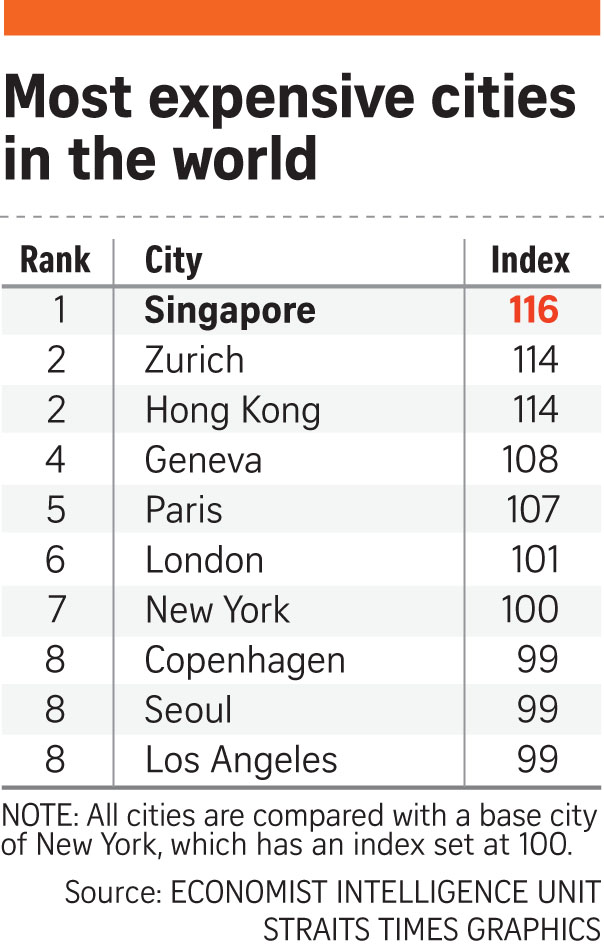
A key reason was the Singapore dollar’s strong appreciation against the United States dollar in the last decade, and the type of upmarket goods that the survey takes into account, such as filet mignon and international newspapers.
It also reported that the prices quoted by the EIU for many products and services were far more than what Singaporeans typically pay.
Expats whom The Sunday Times spoke to said the cost of living depends on the lifestyle they choose.
Italian Joe Galeotti, a 48-year-old hairstylist, added: “You can either have a meal for less than $10 at the foodcourt or $200 at a restaurant… I choose the former as it makes more sense to me to eat Asian food when I’m in an Asian country.”
Many said they have fallen in love with Singapore’s public transport.
Said Mr Paul Burton, a 41-year-old director at IHS, a firm that provides defence analytics: “We now spend less in a month on train tickets in Singapore than in a week back in London.”
For psychology lecturer Aoife McLouglin, 30, getting around by taxis is also relatively affordable. She said: “It is easily a third of the price compared to my country, Ireland.”
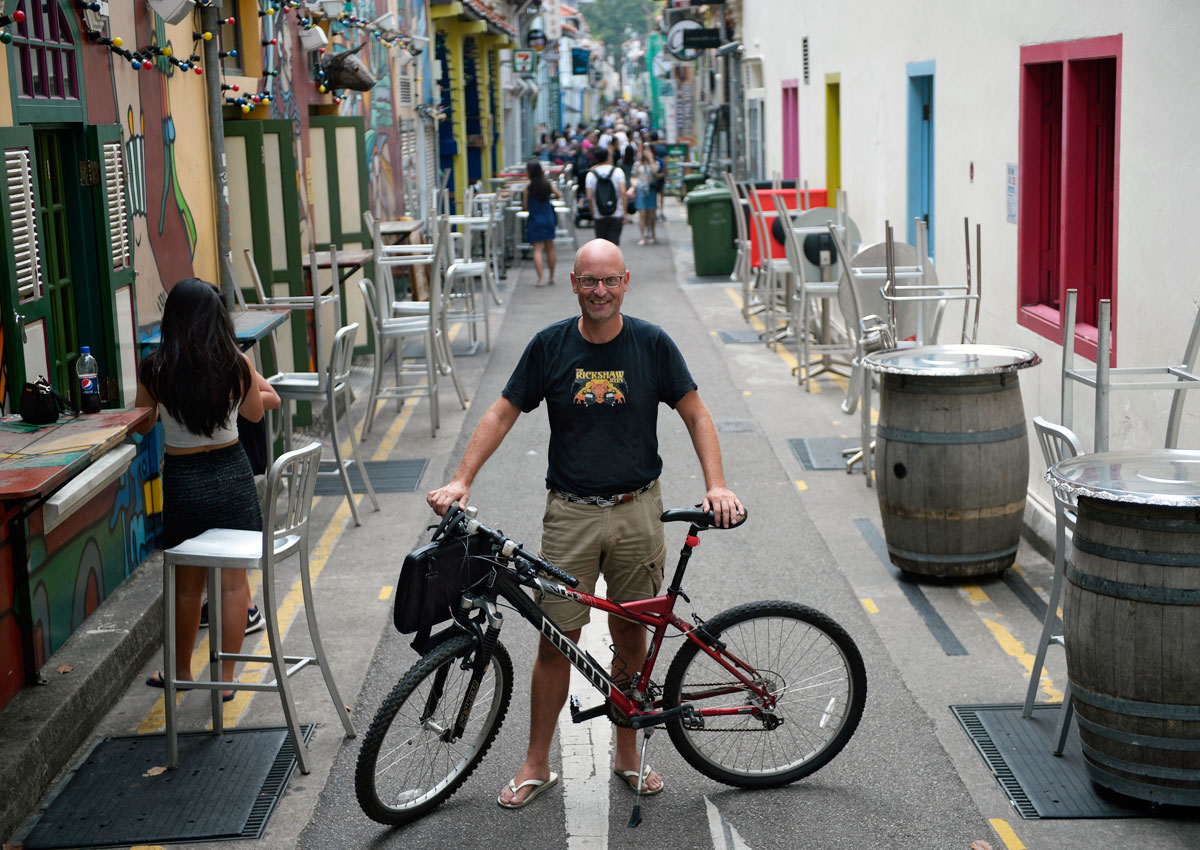
Dutch expatriate Emile Leus, 43, simply takes advantage of the weather here. The owner of TVworkshop Asia, an events company, said: “I cycle everywhere I go and it’s great.”
The EIU has named Singapore the most expensive place in the world to get a car because of its certificate of entitlement system and, for some expats used to driving, this takes some getting used to.
Said Dutchman Charlie van Eeden: “I used to drive a BMW but it’s just too expensive here. Now, I’m paying $1,400 for a rental Hyundai. For the same price, I could probably rent a BMW 5 Series in Amsterdam.”
If not for his two young children, aged three and five, the 39-year-old head of Asia at a creative agency added that he would rely on public transport or cabs to get around instead.
Rental rates here also require adjusting expectations.
Instead of paying $6,000 a month to rent a new condominium unit in Novena, Mr Galeotti chose to live in a nearby 10-year-old condominium instead, paying almost half the price in rent. He said: “I don’t mind that it is an old condominium. It still has great facilities.”
Experts caution against reading too much into the EIU survey.
Dr Yvonne McNulty, who specialises in expatriation and global mobility research, said it is aimed at a niche group of highly paid foreigners on “expatriate” contracts, which tend to offer housing and car allowances, and that these expats hope to replicate how they live back home here.
The associate lecturer at RMIT University Singapore and founder of Expat Research added: “The survey does not consider ‘localised’ expats, who are here on local terms, even though we’re seeing more of them now.”
Private school fees remain a bugbear. Frenchman Eric Balanca, 50, is here on a local contract with his wife, 18-year-old son and toddler.
His son studies at the French School of Singapore, costing him about $25,000 annually. “It’s definitely a high price because in France, education is free.
“There are local schools, but it’s difficult to get in and I would prefer my son to attend the French school,” he said.
Expatriates also find ways to get around the high costs of certain goods in Singapore.
“Baby items are much cheaper in the UK because they are discounted, so we used to ship prams, baby chairs and other baby items from there,” said Mr David Brotherton, a 39-year-old lawyer from Britain.
Despite earning the title of costliest city for the third year running, all the expatriates whom The Sunday Times spoke to said that they would definitely recommend Singapore as a place to live and work.
Said Mr Balanca: “The people are great and I like the vibrant economic environment… My advice is to take care of your income by budgeting.”
nghuiwen@sph.com.sg
domteojy@sph.com.sg

This article was first published on March 27, 2016.
Get a copy of The Straits Times or go to straitstimes.com for more stories.
Image:
Blurb:
Earlier this month, this country was for the third year in a row ranked the most expensive city in the world for expats. While many say that with budgeting, living here is quite affordable, some have found that trying to emulate their life back home can get costly. -ST
Publication Date:
Sunday, March 27, 2016 – 14:37
Keywords:
Send to mobile app:
Source:
Story Type:
Others
Physical and verbal abuse against nurses 'on the rise'
When one of her patients began to throw a tantrum – shouting and banging her head against the walls – 31-year-old nurse Nur stepped in to try and calm her down.
But the hysterical woman kicked her in the chest, leaving her winded and shaken for the rest of the day.
Incidents like these are not uncommon, said Ms Nur, who declined to give her full name.
In her 14 years as a nurse, she has seen colleagues bitten, slapped and punched at work – both by patients and their family members. “This is something we didn’t talk about at school, and it can be quite traumatising for young nurses,” she said. “Even verbal abuse just spoils your day and lowers your morale, but you still have to carry on with the shift.”
Worryingly, nurses who spoke to The Sunday Times said they felt such incidents of verbal and physical abuse are on the rise.
All of them said they had been on the receiving end of such abuse before, and that roughly four in 10 patients are likely to raise their voices against healthcare staff.
Last November, local medical journal Annals Academy of Medicine also published an editorial estimating that seven in 10 healthcare workers have faced physical abuse, and that there is generally “significant under-reporting” in this area.
Those at greater risk tend to be young and female, as well as front- line staff who come into contact with patients more frequently.
Accident and emergency departments (A&E), intensive care units, and other places where emotions run high tend to be where many abuse cases occur. “In the A&E, sometimes patients have to wait for two or three hours,” said Madam Brenda Lee, 58, who has been a nurse for more than 40 years.
Those with fractures, for instance, may be in pain but are still considered Priority 2 – behind those with critical conditions such as heart attacks. And those with relatively minor injuries, such as sprains, headaches and animal bites, are considered Priority 3.
“Naturally there’s a lot of frustration because they all want treatment immediately,” Madam Lee said.
Mr Abdul Hadi Kamarolzaman, a former nurse who now teaches healthcare staff how to protect themselves in such tense situations, said simple techniques can help calm patients down. He himself was once attacked by a psychiatric patient wielding a drip stand.
“For many (patients), what they really want is for someone to listen to them,” he said. “Show them that you are able to empathise, and allow them to ventilate.”
However, he also teaches his students how to handle situations that threaten to become violent – for example, breaking free of grabbing hands or chokeholds without hurting the patient. He, too, has been hearing that the number of abuse cases has been going up, although he is not sure why. However, he stressed the important role that hospital managements play in preparing their staff for this part of their work.
“The management needs to be aware that this is an important part of nurse training,” he said. “If you get it right, you can preserve morale and prevent attrition.”
Ms Sue W, 29, who has been working as a nurse for five years, added: “Verbal abuse cases are rarely escalated to the police because of pressure from the management.” She typically keeps her eyes peeled for tell-tale signs of aggression and calls for backup or tries to de-escalate the situation before anything happens.
Veteran unionist K. Thanaletchimi, who has been president of the Healthcare Services Employees’ Union for 20 years, said hospitals should encourage their staff to report such incidents. At the very least, patients can be made to realise they could have handled the situation better. “It’s about the ‘heartware’ – whether other people feel they should treat other human beings with basic dignity and respect,” she said.
Hospital staff trained to handle difficult patients
Public hospitals say that staff are taught how to deal with difficult situations involving patients, including when to call for backup.
At the National University Hospital (NUH), there were 155 reported cases of abuse last year, down from 162 the year before.
Said an NUH spokesman: “We understand that patients can get abusive because they are unwell and some may display different behaviour because of their illness.
“Family members may be anxious for their loved ones.
“However, we do not tolerate abuses against our staff and will take action to protect them.”
At Tan Tock Seng Hospital (TTSH), there are surveillance cameras and alarm buttons to call for security guards if needed.
Said a TTSH spokesman: “In a potentially difficult situation, our staff are trained to try and understand the cause of any aggression.
“This allows them to respond more appropriately.”
Khoo Teck Puat Hospital has seen an increase in the number of reported abuse cases, from 25 in 2011 to 41 last year. However, a hospital spokesman added that these numbers are “very much under-reported”. He said: “On a daily basis, many of our healthcare workers are subjected to disrespectful and unkind treatment by the public that goes unrecorded.”
He added that front-line staff are trained to manage abusive behaviour, including when to escalate the matter to their supervisors or rope in other colleagues for help.
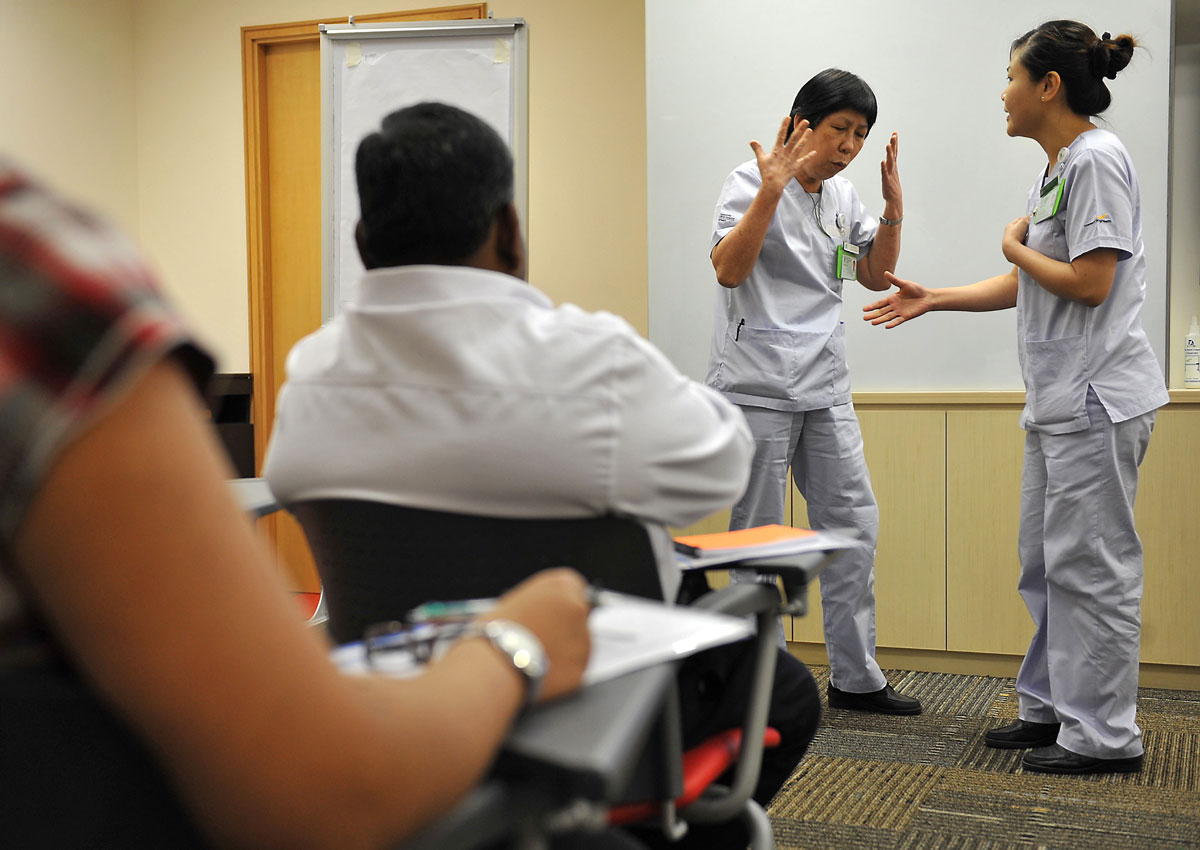
Nanyang and Ngee Ann polytechnics, which offer nursing diplomas, said students are taught to handle such difficult patients through role play in class. Hospital staff also guide them during attachments.
A Nanyang Polytechnic spokesman said: “They are taught how to diffuse the situation by first trying to understand the patients’ concerns.” A Ngee Ann Polytechnic spokesman added: “In recent years, we have heightened students’ awareness on how to deal with stressful situations at the workplace, such as bullying behaviour, sexual harassment and physical and verbal abuse from patients.”
linettel@sph.com.sg
This article was first published on March 27, 2016.
Get a copy of The Straits Times or go to straitstimes.com for more stories.
Image:
Blurb:
Many such cases tend to happen at A&E and intensive care units, where emotions run high. -ST
Publication Date:
Sunday, March 27, 2016 – 17:00
Keywords:
Send to mobile app:
Source:
Story Type:
Others
Need to inspire youth to take new entrepreneurial paths to success
March 27, 2016 2:18 PM
SINGAPORE – He started out as a door-to-door encyclopaedia salesman but became a founder of a global chain of preschools.


Tough balancing act to ensure travellers feel safe in Thailand
Amid the bustle of Suvarnabhumi Airport, Danish tourist Rebaz Kaka feels safe enough to snooze by his backpack while waiting for his flight out of Bangkok.
“I feel secure,” the 21-year-old student tells The Sunday Times. “But sometimes when I see many (security officers) in uniforms, I get a bit worried.”
Visitors like him make tightening security a balancing act as Thailand’s main gateway tries to prevent bombings similar to what occurred in Brussels on Tuesday.
“I don’t want people who come to Suvarnabhumi to feel unsafe,” says Mr Kittipong Kittikachorn, its vice- president of security. “So we try to put more non-uniformed officers on the grounds.”
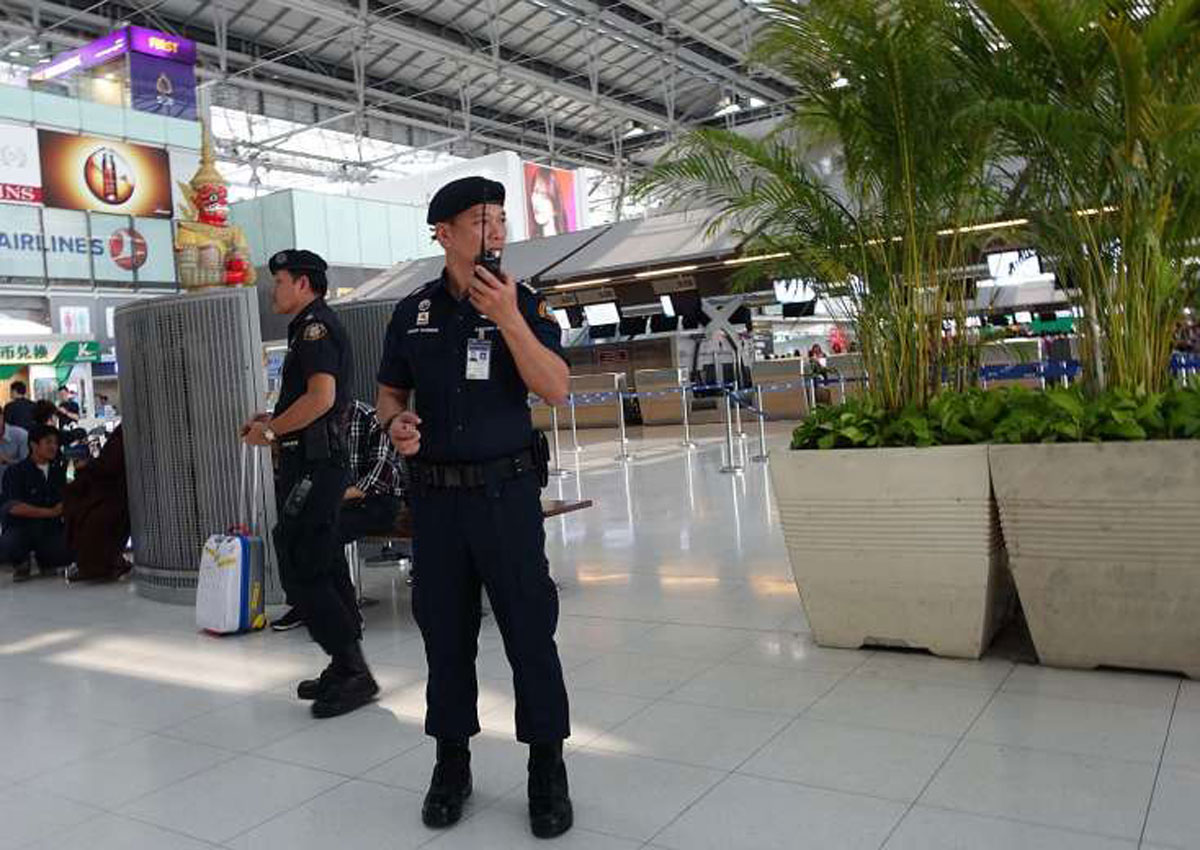
Still, uniformed security staff kept a watchful eye over passengers at the check-in counters when The Sunday Times visited the airport on Friday.
The airport is designed to cater to 45 million passengers a year, but currently handles more than 50 million. The overcrowding makes policing more challenging.
Security at the airport, which was already at Level 3 – the second highest tier – before the Brussels bombings, was tightened further after the attacks.
This meant that random checks were done on check-in baggage as well as passengers, on top of existing arrangements. Sniffer dogs have also been deployed. These measures will be reviewed after one month.
In the longer term, the airport will upgrade its surveillance camera system with facial recognition technology, as well as set up a screening system for passengers entering the airport from its train station underground, says Mr Kittipong.
Meanwhile, police are increasing their frequency of patrols, as well as the number of officers on patrols, around embassies and major tourist destinations such as Phuket and Samui island to deter would-be attackers, according to national police spokesman Dejnarong Suthicharnbancha.
This will continue until the Songkran festival next month, which is a major annual draw for tourists.
Still, security analyst Anthony Davis from IHS Jane’s stresses that counter-terrorism has far more to do with collecting and harnessing intelligence than securing potentially vulnerable facilities.
“Terrorist threats obviously extend far beyond the vulnerability of any given facility,” he says.
tanhy@sph.com.sg
This article was first published on March 27, 2016.
Get a copy of The Straits Times or go to straitstimes.com for more stories.
Image:
Publication Date:
Sunday, March 27, 2016 – 14:16
Keywords:
Send to mobile app:
Source:
Story Type:
Others
Tighter security and checks even before entering airport terminals in Indonesia
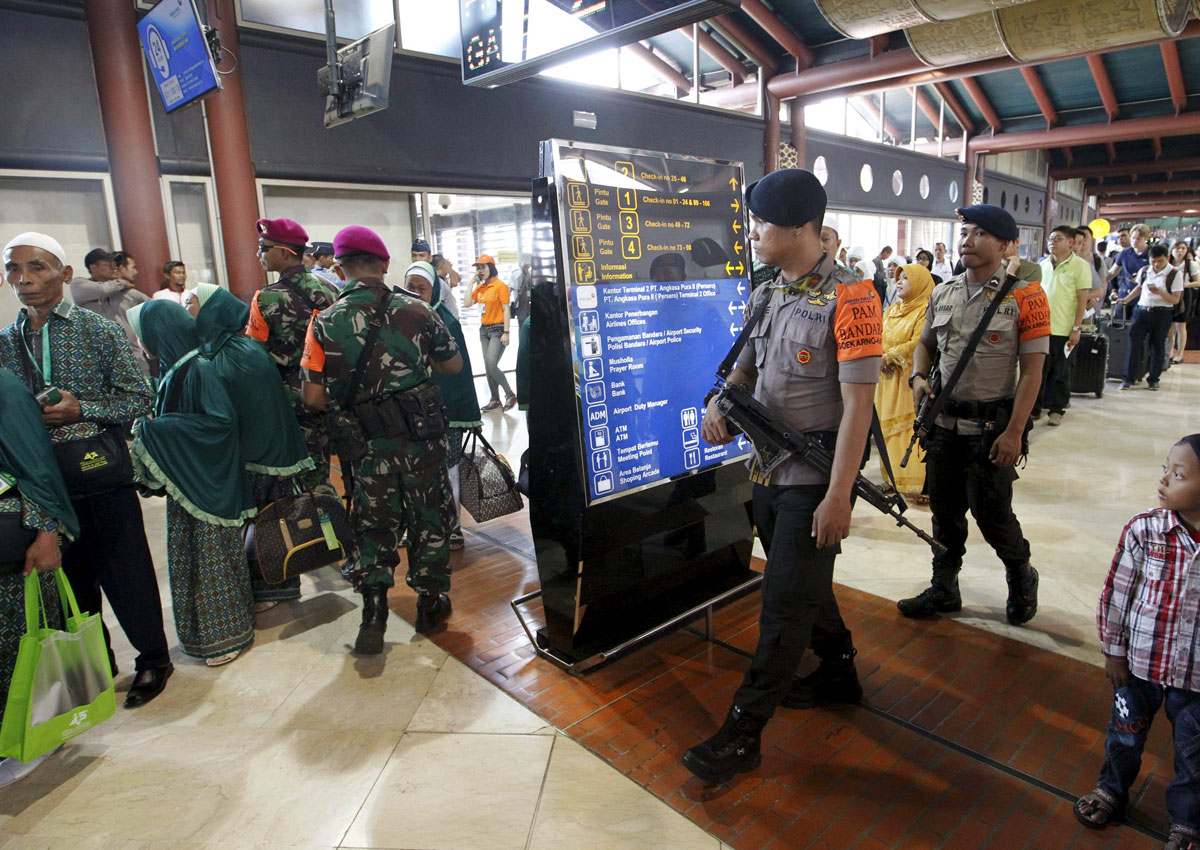
Indonesia has beefed up security at its airports, with more intensive checks on those entering the terminals and increased patrols. The measures extend beyond the terminal buildings to carparks, cargo areas and even nearby access roads.
The Transportation Ministry had raised the alert level at airports across the country from “green”, which is for normal conditions, to “yellow” following the Paris terror attacks last Nov 13, according to airport operators. The “yellow” status, which is still in force, requires additional security measures such as random checks on vehicles entering the airport, officials said.
At Soekarno-Hatta Airport in the capital Jakarta, 60 heavily armed officers from Brimob, or the police mobile brigade, were added to the 700-strong team from the police and army at the terminals.
Police sniffer dogs, intelligence officers in plainclothes and hundreds of closed-circuit television cameras have also been deployed, the airport’s operation and services executive manager Andhika Nurjaman said. “The security now is tighter than tight,” he said. “Cars and passengers and drivers entering the cargo area will be checked. Those arriving at the terminals will be screened.”
At Bali’s Ngurah Rai International Airport, bomb detectors have been installed at carpark entrances and eight new scanners put up at the international and domestic terminals. Airport general manager Trikora Harjo said: “People used to be able to go right up to the check-in counters without getting checked but not anymore. We also screen everyone now, not just randomly.”
Intelligence sources have told The Sunday Times that security levels in Indonesia, particularly in Jakarta and Bali, had been raised in the weeks before the Brussels attacks.
Brigadier-General Agus Rianto, national police spokesman, said surveillance is conducted at ports, embassies and shopping malls.
“Evil people will do anything to realise their intentions. What we can do is not to give them the opportunity to do so and to minimise any possibility,” he said.
Security analyst Yohanes Sulaiman from Universitas Jenderal Achmad Yani, noting that “nowhere is safe proof”, said: “No matter how sophisticated the security system is, it’s impossible to cover every area. These terrorists, if they can’t enter the airport, they will do it just outside. The best prevention is still educating people against radicalism.”
aarlina@sph.com.sg
This article was first published on March 27, 2016.
Get a copy of The Straits Times or go to straitstimes.com for more stories.
Image:
Publication Date:
Sunday, March 27, 2016 – 14:11
Keywords:
Send to mobile app:
Source:
Story Type:
Others
Informal Budget dialogue session held at Marsiling-Yew Tee GRC
Speaker of Parliament Halimah Yacob, who is also a Member of Parliament (MP) for the constituency, hosted the session for about 200 residents.
Source link
Bag checks at MRT stations the new normal?
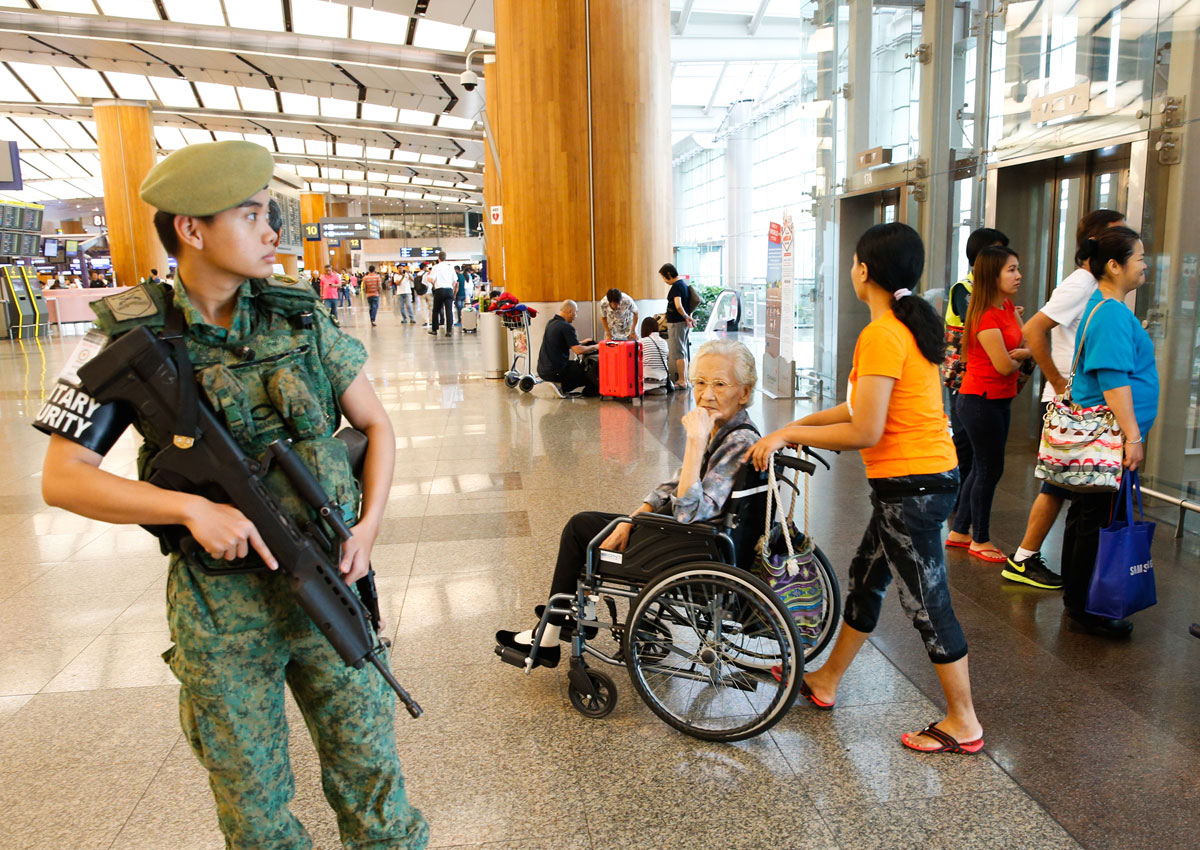
Stricter checks at MRT stations may soon become part of everyday life in the face of increasing terror threats. Security experts say Singaporeans should ready themselves for inconveniences such as bag checks and screenings at key installations, especially transport hubs.
Associate professor Bilveer Singh of the National University of Singapore said terror attacks over recent years at metro or train stations in London, Madrid and Brussels show that these have become a target of choice. “We have to make these installations tougher to crack. Security checks will create inconvenience, but there is no choice, and people will have to understand this,” Dr Singh said.
While there are already security checks at MRT stations, these are random and sporadic. Since the Brussels attacks, The Sunday Times understands patrols have been stepped up at key installations such as transport nodes, and security enhanced at checkpoints.
Experts said attacks on other “soft targets” such as shopping malls, schools and hawker centres are also worrying because these are “impossible to fully protect”.
Mr Toby Koh, managing director of Ademco Security Group, suggested that random checkpoints be set up as a “visual deterrence”.
This could mean circulating security checkpoints around the different MRT stations or transport hubs at random.
“It would remind citizens that security is important and to keep it in mind,” he said, adding that complacency was Singapore’s greatest weakness.
“We are a victim of our good policing, we always think this is not going to happen to us.”
He added that commercial building owners could do more, noting that less than 10 per cent of such buildings were designed with security considerations in mind. Law and Home Affairs Minister K. Shanmugam flagged this concern on March 18, and revealed that the government would be asking developers of large projects to factor in security considerations at the design stage. Building owners could also be asked to install CCTV cameras.
Mr Paul Lim, chief executive of Secura Group, said buildings could be designed such that CCTV cameras could reach larger areas, and have fewer chokepoints to reduce the risk of stampedes in the event of an attack.
“How buildings are designed can also mitigate the after-effects of a terror attack, for example, if you have shatter-proof glass or pillars that withstand certain levels of explosive. In buildings that are badly designed, the damage can be 10 to 100 times greater,” said Mr Lim.
Security studies academic Antonio Rappa from SIM University said more stringent checks should also be carried out on foreigners after they enter the country.
He pointed out that in the 1920s and 1930s, Japanese tourists who travelled to Malaya would take pictures of beaches, installations and utility pipelines. These later became part of an intelligence trove when the Japanese invaded.
In calling for vigilance, Dr Rappa said: “The security situation in Singapore is under control but the fact that arrests have been made recently, and more arrests are likely to occur, in my view, show the number of supporters for overseas terror networks is growing.”
Tampines GRC MP Desmond Choo, who is on the Government Parliamentary Committee for Home Affairs and Law, said much of the “counter-terrorism work is done behind the scenes for obvious operational secrecy reasons”.
“Singaporeans can be assured that the HomeTeam and security agencies are silently protecting our homeland,” he said.
dansonc@sph.com.sg
This article was first published on March 27, 2016.
Get a copy of The Straits Times or go to straitstimes.com for more stories.
Image:
Blurb:
Post-Brussels attacks, security experts highlight likely steps and warn against complacency. -ST
Publication Date:
Sunday, March 27, 2016 – 14:02
Keywords:
Send to mobile app:
Source:
Story Type:
Others
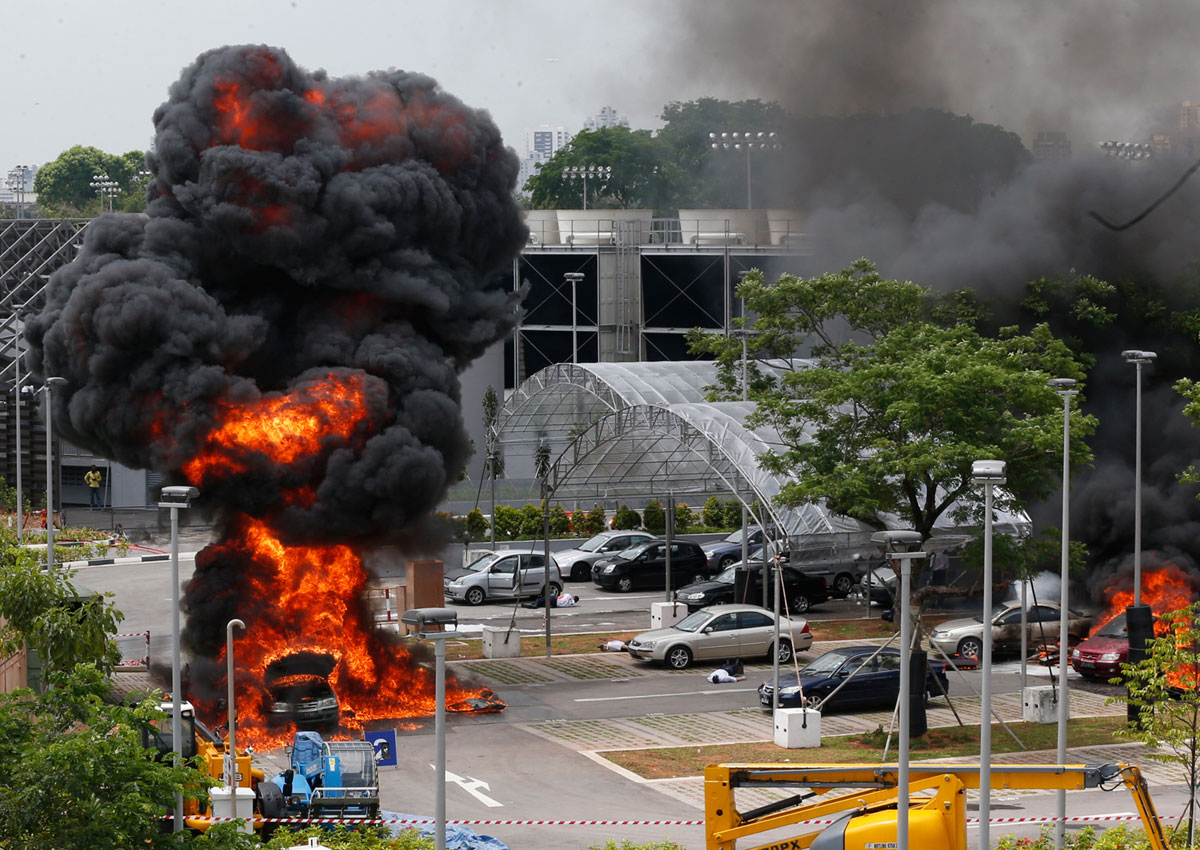
Terror strike in Singapore 'only a matter of time'
Three in four Singaporeans believe that it is only a matter of time before the country comes under a terror attack, with Changi Airport the likeliest target. But a third of people surveyed worry that not enough is being done to prepare its citizens for the eventuality.
These figures came out of a Sunday Times poll last week of 500 people across all ages and demographics who were surveyed at locations across the island, including transport hubs, shopping areas and Changi Airport.
The survey was carried out after a coordinated attack in the Belgian capital of Brussels killed 31 people and injured 300. Two suicide bombers detonated explosives in the departure lounge of Brussels airport, before a third blew himself up on the subway at the end of rush hour.
Nearly nine in 10 of those The Sunday Times spoke to had heard of the attacks in Brussels, and most were worried of something similar happening here, pointing to Singapore’s position as a travel and business hub for Asia, and its support for the fight against the Islamic State in Syria and Iraq (ISIS).
Some also highlighted how ISIS has already hit close to home by attacking Indonesia, and that members of the jihadist group had also been arrested across the Causeway while planning to carry out terrorist attacks in Malaysia.
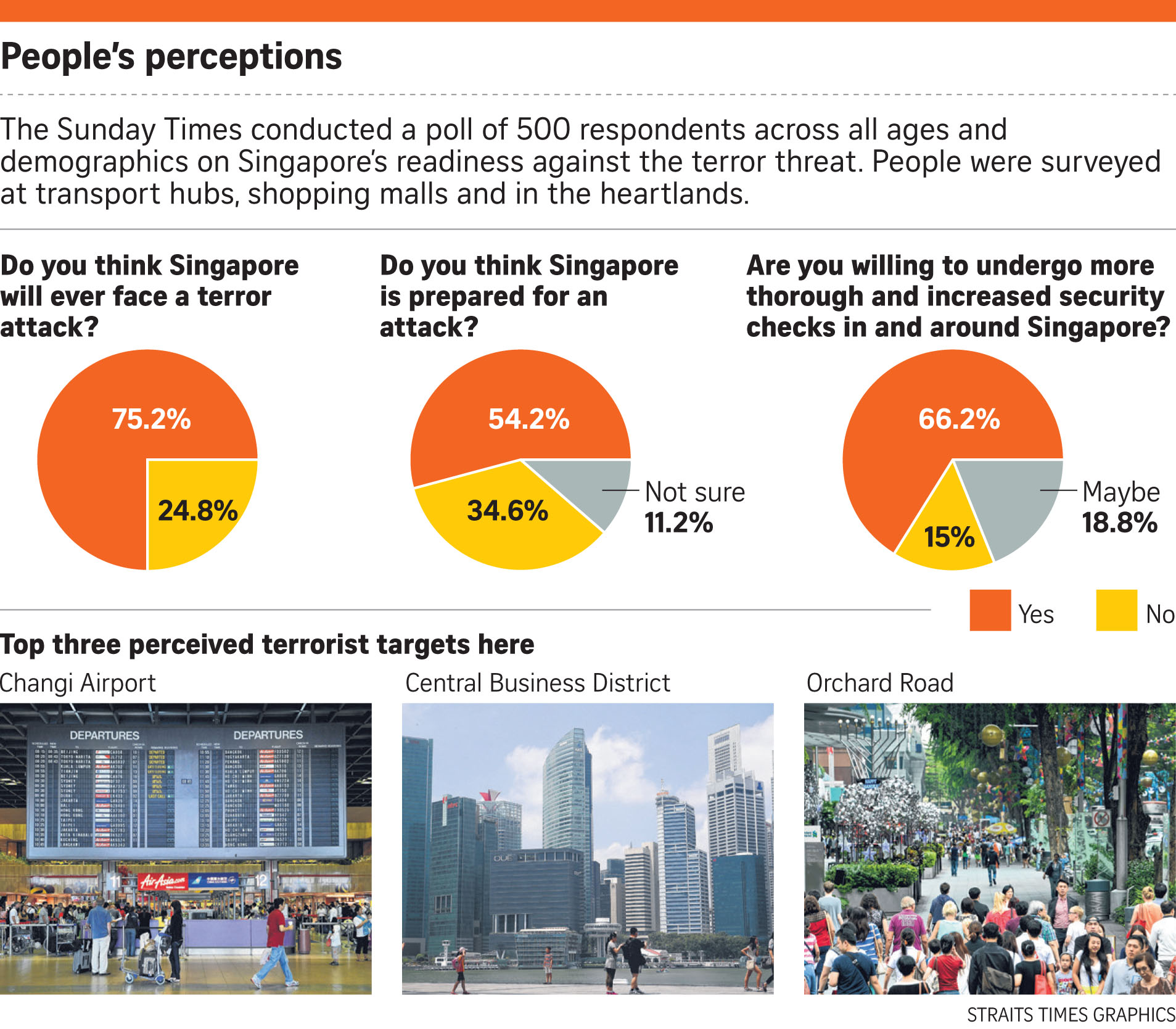
When asked, those surveyed said they were most worried about attacks on “soft targets”. Around 130 highlighted tourist attractions such as Sentosa, while 183 thought MRT stations and bus interchanges could be targeted. Over 200 each pointed at Singapore’s financial district or its malls, especially those along Orchard Road. But nearly half of those surveyed believed Changi Airport would be the likeliest target.
Said private tutor Fred Tan, 57: “We are a centre for air travel, and people can go in and out of the airport easily. You can’t tell who’s a terrorist by how they look.”
About 54 per cent surveyed believe Singapore is prepared for an attack, highlighting the vigilance of the country’s security forces, the number of armed patrols they see at key nodes such as the airport and train stations, and the recent remarks on how the country was stepping up its measures.
On March 18, Law and Home Affairs Minister K. Shanmugam said the terror threat level facing Singapore was at its highest in decades, and announced the formation of a new fast-response police team and the beefing up of CCTV coverage at common places across the island.
There will also be efforts aimed at better securing private buildings and major events. “It is no longer a question of whether an attack will take place, but really, when is an attack going to take place in Singapore, and we have to be prepared for that,” said the minister.
Two-thirds of those surveyed also said they were willing to undergo more thorough and increased security checks at places such as the airport, MRT stations and shopping centres. “I don’t mind bag checks and car checks because these are for security purposes, and it is honestly better to be safe than sorry,” said Mr Karan Deep, 30, a waiter. “At the end of the day, if people have nothing to hide, then they should have nothing to worry about either.”
But a small group said they were worried about privacy. “My right to move about without being questioned is important,” said Ms Anne Lemoine, 35, a Canadian engineer who has been living here for seven months.
American Mormon teen survives 3 terrorist attacks
Click on thumbnail to view photos. Source:
Twitter screengrab













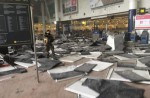

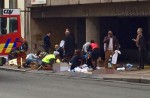
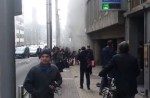
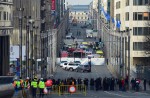
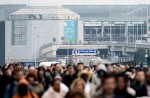

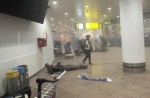
But while the country may have the hardware, around 35 per cent wondered if citizens had the heartware to deal with an attack. Many of them believe Singaporeans still are not taking the terror threat seriously enough. “Physically, we are ready, but psychologically, no,” said Mr Nathan Huang, 27, a consultant. Events manager Jasmine Teo, 26, added: “There’s a lot of complacency. Even when we hear a fire alarm in the mall, few would actually react.”
Others worried about the unrest that could arise after an attack.
Mr Daniel Rajan, 57, who is in between jobs, said: “Once there’s a terrorist attack, there may be a reaction against a particular race or religion, and this will definitely threaten our social stability.”
Added Ms Wong Fang Chin, 50, a financial consultant: “Deterrence is definitely a community effort but I feel that many of us keep to ourselves.”
Nee Soon GRC MP Louis Ng, who is also on the Government Parliamentary Committee (GPC) for Home Affairs and Law, believes government initiatives such as SG Secure, which Mr Shanmugam announced, can play a part.
SG Secure, which would be launched later this year, aims to organise and train residents to guard against attacks, and maintain social harmony in the aftermath. “I think we need more drills on the ground, perhaps in the schools, to see if students are ready; and on the ground at the grassroots level – because in case of emergencies, these people will be the liaison officers,” said Mr Ng.
Tampines GRC MP Desmond Choo said counter-terrorism preparation is not just the domain of the Government.
“The fast-evolving threat and modus operandi mean that we need everyone to help in identifying potential ill elements,” said Mr Choo, who is also on the GPC for Home Affairs and Law. “By standing united, we will show that Singapore cannot be defeated by terrorists.”
dansonc@sph.com.sg
rybentan@sph.com.sg
trebecca@sph.com.sg
Additional reporting by Alexis Ong, Ng Keng Gene, Wong Shiying and Veena Vinod
This article was first published on March 27, 2016.
Get a copy of The Straits Times or go to straitstimes.com for more stories.
Explosives, gunshots, chemical agent attack at anti-terror exercise 2015
Click on thumbnail to view photos. Source:
The Straits Times
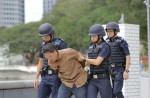
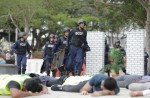
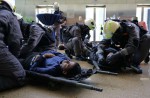

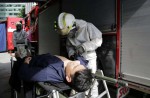
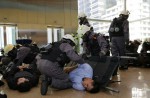

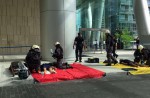
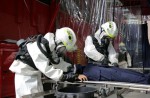
Image:
Blurb:
3 in 4 Singaporeans surveyed believe this to be the case; Changi Airport seen as likeliest target. -ST
Publication Date:
Sunday, March 27, 2016 – 14:00
Keywords:
Send to mobile app:
Source:
Story Type:
Others


