Home Blog Page 4421

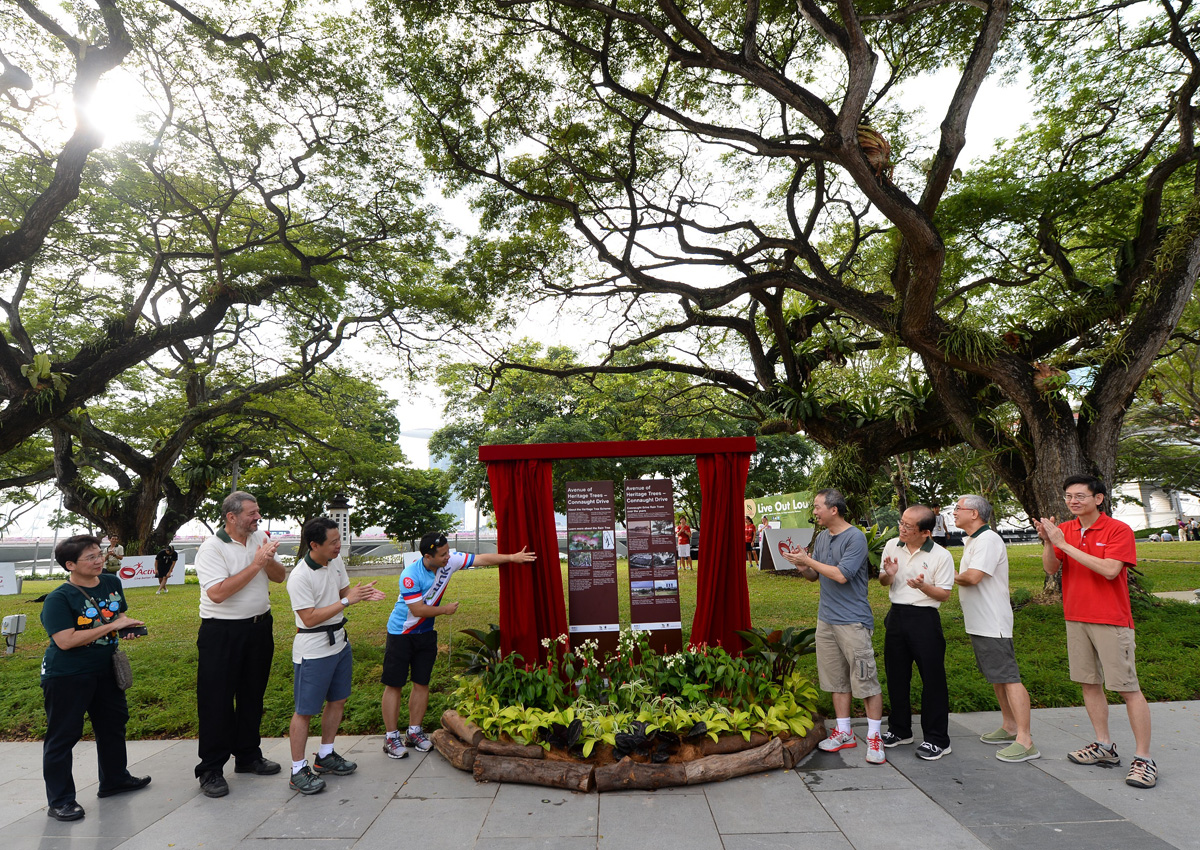
Avenue of Heritage Trees unveiled as part of new Civic District Tree Trail

0

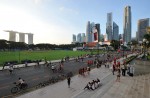
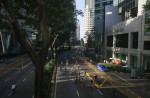
The 22 Rain Trees along Connaught Drive will be part of the upcoming Civic District Tree Trail to open on May 1. 

Source link

Indonesia MPs call for military base after fishing spat with China

0

Indonesian lawmakers are calling for a military base to be built in the Natunas to boost defence in the country’s central region.

This followed a spat with China last week over the actions of a Chinese coast guard vessel in waters near the islands.

Mr Mahfudz Siddiq, chairman of a House committee on defence and foreign affairs, told reporters last Thursday that the new base would help strengthen the existing regional defence system in the eastern and western regions and improve the military’s mobility.

“The development of a military base on Natuna Islands is important for the defence system in the central region of Indonesia, which shares its borders with many countries in the South China Sea,” he was quoted as saying by Antara state news agency.

Tensions flared after Indonesia on Monday accused a Chinese coast guard patrol boat of breaching its sovereign rights by forcibly preventing the local maritime authorities from seizing a Chinese fishing boat.

China had maintained that the boat Kway Fey was “in traditional Chinese fishing grounds”, a claim which Indonesia has strongly rejected and asked China to clarify.

Indonesia is not a claimant state in the South China Sea disputes but it does not recognise the “nine-dash line” that China uses as the basis for its claims in the area.

Mr Mahfudz said the government would require 1.3 trillion rupiah (S$134 million) to develop a base on the island, far more than earlier estimated. It should be ready by 2017, he added.

But the panel’s deputy chairman T.B. Hasanudin told The Sunday Times yesterday that the base is not necessarily a post “where military personnel are placed in a particular location ready to be deployed but rather a redisposition of forces”. He said: “We are pushing for greater military presence so we want additional personnel and defence equipment in the area.”

In response to last week’s incident, the coast guard will conduct more patrols in the area, he said.

“If China’s actions were intentional, there should be international arbitration but if not, the issue should be resolved diplomatically,” he said. “Whatever it is, we will defend every inch of our territory with every means.”

Coordinating Minister for Political, Legal and Security Affairs Luhut Pandjaitan last Wednesday also proposed the idea of a military base in the Natunas.

Mr Luhut said: “Now we will do a follow-up. We will transform Natuna Islands akin to an aircraft carrier. It will become a strong military base with the navy and air force there.” He noted that President Joko Widodo was also firm on the issue. “It is part of our territorial integrity. The President told me two or three days ago: ‘Luhut, I won’t compromise.’ So that is clear.”

Other officials have also spoken against illegal fishing and condemned China’s actions as a violation of Indonesia’s maritime sovereignty.


This article was first published on March 27, 2016.
Get a copy of The Straits Times or go to straitstimes.com for more stories.

Image: 
Category: 
Blurb: 
They want it set up in Natuna Islands to boost defence after run-in with Chinese coast guard and fishing boat. -ST
Publication Date: 
Monday, March 28, 2016 – 03:00
Send to mobile app: 
Source: 


Story Type: 
Others

Source link

Connaught Drive's Avenue of Heritage Trees to be part of civic district tree trail

0

SINGAPORE – The National Parks Board (NParks) unveiled the Avenue of Heritage Trees at Connaught Drive this morning (March 27), featuring 22 heritage rain trees.

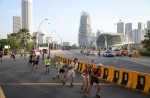
The avenue was launched by Senior Minister of State for Home Affairs and National Development, Mr Desmond Lee, in conjunction with the second Car-Free Sunday event this year.

NParks said that the avenue will be part of the upcoming Civic District Tree Trail, which will allow the public to learn more about Singapore’s Heritage Trees.

In a statement, NParks said that some of the 22 heritage trees along Connaught Drive are estimated to have been planted in the mid-1880s, which would mean that they have witnessed some historic events in the civic district, like Singapore’s declaration of independence from the British in 1963, and Singapore’s first National Day celebrations in 1966.

The Civic District Tree Trail, starting at the front gate of the Istana and ending at the Raffles Landing near Empress Place, will open to the public on May 1. Trees that visitors on the trail will be able to see include rain trees, angsana trees, and frangipani trees.

NParks said that a free guided tour of the trail will be available from May.

sinsh@sph.com.sg

Image: 
Category: 
Publication Date: 
Sunday, March 27, 2016 – 15:42
Keywords: 
Send to mobile app: 
Source: 


Story Type: 
Others

Source link

Hong Kong keeps close eye on Singapore's moves

0

Faced with a cloudy economic outlook, Hong Kong is casting a keen eye on action taken in Singapore, a fellow open economy buffeted by external forces – and an old rival.

Thursday offered a good look. Finance Minister Heng Swee Keat announced a Budget that includes government spending of $73.4 billion.

It comes a month after Hong Kong’s Financial Secretary John Tsang announced its Budget with an expenditure of HK$490 billion (S$87 billion). The reaction here is that, at first glance, the two financial czars – both men coincidentally have a Master’s in Public Administration from Harvard – might have been studying the same playbook.

Given tough times ahead, they announced near-term relief mainly in the form of tax rebates and loan schemes for small and medium- sized enterprises (SMEs), and handouts for people to help boost consumption. Buzzwords such as innovation, robotics, and research and development also liberally litter the duo’s respective long-term visions.

Ernst and Young’s Hong Kong tax managing partner Tracy Ho puts it thus: “They (Singapore) watch us, and we are watching them too.”

Hong Kong is facing headwinds from a mix of political tensions and economic trends. Its retail sales recently suffered the worst decline in 13 years. Tourist numbers are down. The economy will grow between 1 and 2 per cent this year, Mr Tsang has said. But a greater anxiety is over the city’s long-term prospects. One nagging worry is the lack of diversity in its economy, in terms of its dependence on China and in its industry mix. Hong Kong is heavily dominated by the financial, hospitality and other services sectors, with a negligible manufacturing presence.

It is in this broader vision that Singapore’s Budget on Thursday offers takeaways for Hong Kong, say those interviewed. Businessman David Ting, past president of the Chamber of Small and Medium Business, laments that unlike in Singapore, Hong Kong SMEs “do not have a clear direction on where we should go”. In particular, he lauds the Singapore Budget for being “very focused”. The $4.5 billion Industry Transformation Programme offers targeted industries a road map for how they can grow.

On why Hong Kong businesses, known for their entrepreneurial spirit, will need such guidance now, Mr Ting says the landscape has changed. With China closed off in the past, it was easier for businesses to suss out opportunities, he adds.

Lawmaker Charles Mok, an IT entrepreneur, says that while there are superficial similarities between both Budgets, given the emphasis on R&D, there was a distinct difference in how it is to be applied. In Singapore, the focus is on how to reinforce the manufacturing industry by introducing automation, he says.

“In Hong Kong, we talk of developing R&D. But who is it for? Factories in China? What about our domestic industry – how do we help them get restarted?” says Mr Mok.

On the flip side, Singapore’s Silver Support Scheme to help the elderly does not go far enough, notes social work expert Nelson Chow. “(It) helps the bottom 20 per cent. But in Hong Kong, this is something we’re already doing. The next step is to introduce a universal pension.”


This article was first published on March 27, 2016.
Get a copy of The Straits Times or go to straitstimes.com for more stories.

Image: 
Category: 
Blurb: 
Budget offers look at how rival plans to tackle economic challenges, including help for SMEs. -ST
Publication Date: 
Monday, March 28, 2016 – 03:00
Send to mobile app: 
Source: 


Story Type: 
Others

Source link

Philippine crucifixions a big money spinner

0

[SAN PEDRO, Philippines] The men being nailed to crosses in a Philippine village were seeking salvation, but for corporate sponsors and small-time vendors the Good Friday event was all about quick riches.


Source link

Hong Kong faces urgent need to help suicidal youth

0

It is where cries for help are increasingly emitted. In this city throbbing with both smartphones and intensity, more and more young people are posting suicidal thoughts on Facebook.

But suicide prevention bodies are frustrated that they cannot reach out more effectively to these users, citing a lack of resources and the social media giant’s privacy policy.

The urgent need to update and ramp up ways to connect with Hong Kongers at risk of killing themselves has become glaring in the wake of a recent spate of student suicides.

Over six months since the start of the academic year last September, 24 students have killed themselves. One was just 11 years old. Of the rest, 12 were primary or secondary students and 11 were tertiary students. This contrasts with an average of 23 student suicides annually in recent years.

The sudden spike, including four cases over five days this month, shocked the city and prompted the Education Bureau to hold an emergency meeting to discuss the issue.

It announced new measures including organising seminars for teachers and parents, improving counselling services in schools and distributing information packs.

A task force will be formed to look into other preventative solutions. It will issue a report in six months.

Education Secretary Eddie Ng announced last Monday that each government school will get HK$5,000 (S$880) to hold activities to “disseminate positivity”. He was pilloried by lawmakers for the “pitiful amount”.

While better than nothing, the measures fall short, say experts.

In particular, they note the urgent need to change outreach strategies in tandem with technology.

One clear trend is the almost ubiquitous use of Facebook among young Hong Kongers. The South China Morning Post reported that suicidal posts have appeared on the Chinese University of Hong Kong group page, CUHK Secrets.

But there are difficulties in getting to such users, says Samaritan Befrienders director Tsang Chin Kwok.

Non-governmental organisations (NGOs) such as his lack resources to plough through the multitude of public Facebook pages. They also do not have access to private news feeds and messages.

In the past, said Mr Tsang, Facebook would “automatically send our helpline numbers” to those in need. “But a few years ago, it told us it was ending this co-operation due to a policy change, perhaps because of privacy issues or clients complaining.”

When contacted, a spokesman for Facebook said it has safeguards in place. If it receives reports of “troubling content”, these will be reviewed and help and resources, including helpline numbers, will be sent to those in distress, she said.

There is hope that a more proactive approach could be taken.

Professor Paul Yip, who heads the University of Hong Kong’s Centre for Suicide Research and Prevention, said he is in talks with Facebook to improve the process.

Another concern is that the popularity of social media, news sites and communication apps such as WhatsApp creates a greater “copycat effect” than before, he said.

“Whereas in the past, mainstream media could be prevailed upon to be responsible in its coverage of suicides, now it’s harder to control what gets out there.”

That said, Hong Kong’s agencies are trying to fight back, using tools familiar to young Hong Kongers.

Samaritan Befrienders is developing an app with chat-room functions to engage those at risk. This will also host a goal-setting counter and a self-assessment tool for emotions. The NGO also trawls popular forums for suicidal posters.

Ultimately though, these are measures aimed at catching people before they fall. Beyond that, Hong Kong needs to take a harder look at itself in order to address the question of why its young are prone to doing so, said those interviewed.

Hong Kong has a lower suicide rate compared with other East Asian societies such as Japan and South Korea, but it is higher than Singapore’s.

Latest statistics from the Samaritans of Singapore indicate that in 2014 there were 13 cases of suicides involving those aged 10 to 19. This year alone, there appears to have been at least three attempts.

One theme that emerges for both cities is fraying familial relations.

Hong Kong parents, especially those from the middle class, are anxious that their offspring secure good jobs and property, and pile on the stress. Yet, they “do not communicate”, said Mr Tsang. “We really need to rebuild the trust between parents and kids, and urge them not to focus only on academic results.”

Exacerbating Hong Kong’s situation is an increasingly narrow definition of success. Hong Kong has always been a competitive society, but there is now only “one path” – academic – to success, said Mr Tsang.

This is worsened by the lack of diversification in the economy, which is dominated by a few sectors, such as finance. This narrows options for youngsters.

Looking ahead, Hong Kong as a society has to relook its mindset at all levels, said Prof Yip.

FAST FACTS POPULATION

7.2 million

NUMBER OF SUICIDES IN 2014

894 (12.3 per 100,000)

NUMBER OF YOUTH SUICIDES

Ages 0 – 15: 5 Ages 15 – 24: 49

CAUSES OF YOUTH SUICIDES

  • Narrow definition of success
  • Lack of communication in families
  • Copycat effect due to use of social media and communication apps

SOME MEASURES TAKEN

  • Getting at-risk students to sign a “no suicide contract”, promising not to harm themselves and to list people they can call
  • In the wake of recent spate of suicides, government giving HK$5,000 (S$884) to each school to organise activities instilling “positive energy”
  • Educational psychologists to be deployed to at-risk schools
  • Samaritan Befrienders developing chat app to engage those at risk
  • Sources: HKU Centre for Suicide Prevention and Research; Samaritan Befrienders Hong Kong

xueying@sph.com.sg


This article was first published on March 27, 2016.
Get a copy of The Straits Times or go to straitstimes.com for more stories.

HELPLINES
Samaritans of Singapore (SOS):1800-2214444
Singapore Association for Mental Health:1800-2837019
Sage Counselling Centre:1800-5555555
Care Corner Mandarin Counselling:1800-3535800
Image: 
Category: 
Blurb: 
24 student suicides since Sept; more posting suicidal thoughts on Facebook but aid groups have hands tied. -ST
Publication Date: 
Monday, March 28, 2016 – 03:00
Keywords: 
Send to mobile app: 
Source: 


Story Type: 
Others

Source link

Myanmar army reasserts its key political role ahead of transition

0

NAYPYITAW – Myanmar’s armed forces commander-in-chief stressed on Sunday the need for the military to remain a political force just days before a democratically elected government is set to take power for the first time in 56 years.

Senior General Min Aung Hlaing, making an Armed Forces Day speech from a podium dwarfed by a towering statue of Myanmar’s three ancient kings in the capital, Naypyitaw, reasserted the military’s belief that it is the country’s sole unifying force and protector of the constitution.

Though the military had “cooperated with the government and the people”, to hold a historic general election in November, that was won by pro-democracy leader Aung San Suu Kyi, it was not yet time to step away from the political arena, he said. “The Tatmadaw has to be present as the leading role in national politics with regards to the ways we stand along the history and the critical situations of the country,” Min Aung Hlaing said, referring to the armed forces by their Myanmar name.

The military seized power in a 1962 coup and for decades suppressed all opposition. But it stepped back in 2011, paving the way for a semi-civilian government to prepare for November’s election. But it retains important powers.

More than 10,000 military personnel marched in a parade marking the day in 1945 when a young nationalist leader, General Aung San, and his followers in a fledgling army turned against Japanese forces occupying their country.

Hundreds of veterans, foreign defence attaches and politicians gathered before dawn on a big parade field to watch the ceremony.

But conspicuously absent was Aung San’s daughter, National League for Democracy (NLD) leader Suu Kyi.

She attended the ceremony in 2013 but has not since then.

Also absent was president-elect Htin Kyaw, Suu Kyi’s hand-picked leader who will take power on Friday.

Htin Kyaw, a loyal confidant of the hugely popular Suu Kyi, will take the role only because the Noble laureate is barred from holding the position under a military-drafted constitution, which she has openly criticized.

Min Aung Hlaing defended the charter on Sunday, saying it was drafted by “coordinated efforts of intellectuals, experts from various fields and national races representatives and was ratified by a nationwide referendum”, and paved the way for the November election.

The 2008 constitution enshrines deep political powers for the military.

A quarter of the parliament seats are reserved for unelected military officers, giving them an effective veto over constitutional changes, and the commander-in-chief remains in control of three key main ministries.

Image: 
Category: 
Publication Date: 
Sunday, March 27, 2016 – 15:27
Keywords: 
Send to mobile app: 
Source: 


Hermes ID: 
2 170 409
Hermes ID String: 
AS0327-MYANMARARMY
Hermes Author: 
SSANDREA
Story Type: 
Others

Source link

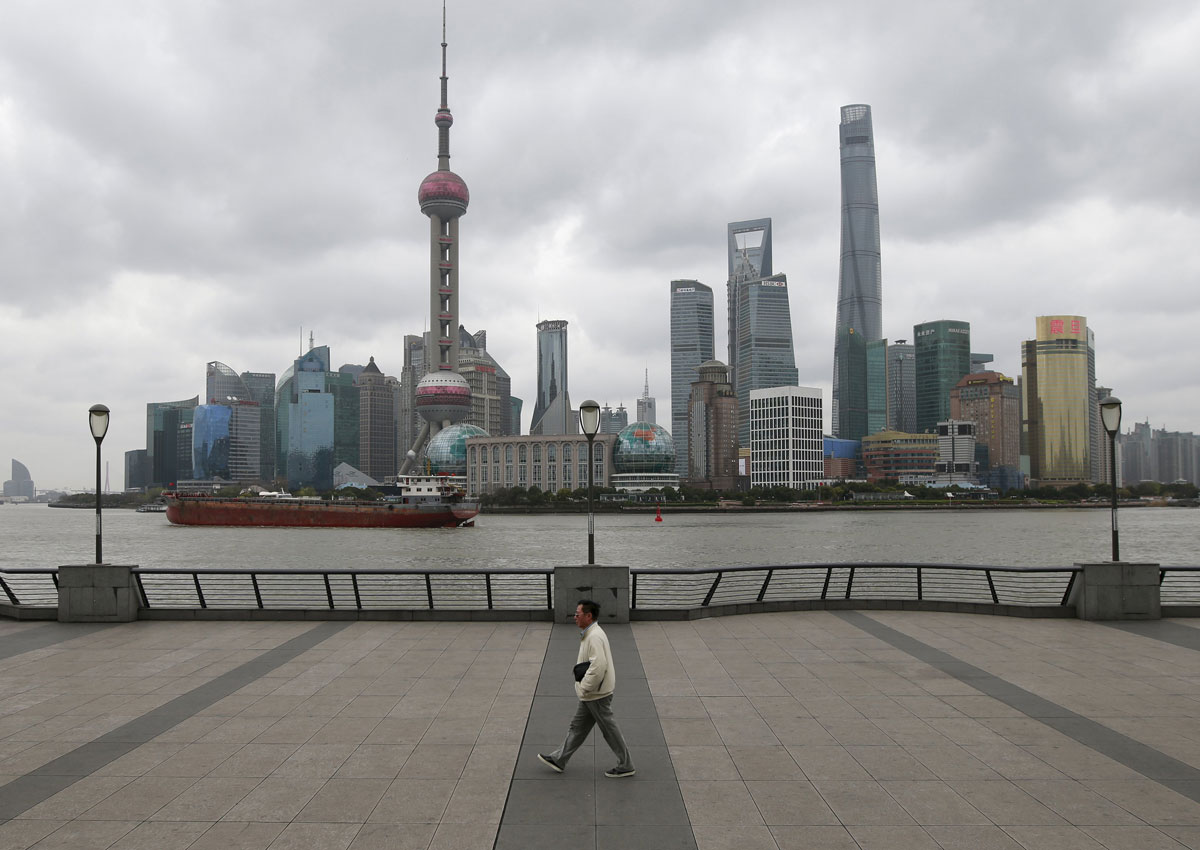
Shanghai's allure fading for migrants

0

After living in Shanghai for nine years, Mr Teng Yiye, 38, and his family moved to a small town in neighbouring Jiangsu province in late 2014. It takes Mr Teng about an hour to drive to Shanghai to attend meetings for his interior design business, but he believes he made the right decision to leave the city.

In Shanghai, home was a 40 sq m apartment, valued at 1.2 million yuan (S$253,000). His daughter could not get into a public kindergarten as she did not have a local household registration, or hukou, which is needed to enjoy public services.

After moving to Huaqiao, a small town in Kunshan city, the family now lives in a spacious 160 sq m apartment that costs 1.1 million yuan. Better still, Mr Teng’s five- year-old daughter now attends a public kindergarten near their home as the local government is welcoming of migrants. He is from central Anhui province. “It’s more troublesome for me but, overall, the pros outweigh the cons. The cost of living is lower and the quality of life is better here as there are more open spaces than in Shanghai for my girl,” he told The Sunday Times.

For decades, the financial hub’s cosmopolitan lifestyle and, more importantly, the job and business opportunities it offers have attracted migrants from all over China.

Last year, for the first time in 15 years, Shanghai saw a 1.5 per cent dip in the number of migrants to 9.81 million from 9.96 million at end-2014, according to figures released this month. This in turn led to a 0.4 per cent decline in its population to 24.15 million last year – the first decrease since China’s opening up and reform in the late 1970s.

The trend is attributed in part to the national phenomenon of migrants leaving coastal cities to return to inland provinces where opportunities are opening up, and also to the shrinking migrant population due to China’s low birth rates.

Shanghai officials have also cited reasons such as the city’s industrial restructuring efforts that phased out low-end firms and their workers, and demolition of illegal buildings that had housed migrants.

These are part of Shanghai’s efforts to support the central government’s urbanisation push, which is premised on making big cities more liveable with more sustainable population sizes. Shanghai has set a population cap of 24.8 million, which means migrant numbers can be expected to slow, if not decline.

But experts say Shanghai’s rising costs of living – especially property prices – and slow-climbing wages are also key factors pushing migrants like Mr Teng to seek a better life elsewhere. For instance, property prices in Shanghai jumped nearly 10 times in the 2000-2015 period while average wages went up almost three times from 2,033 yuan in 2004 to 5,451 yuan in 2014.

Feeling the squeeze is Ms Xie Xiaowei, 26, who is considering returning to Xiamen in Fujian province in the next one to two years. She moved to Shanghai in October 2014 to become a finance manager at an IT multinational corporation.

“I’ve been told that my rent, which already accounts for 30 per cent of my salary, will spike by 20-40 per cent. But my firm has announced a pay freeze this year and there’s no way young people like me can afford a decent-sized apartment in Shanghai,” she told The Sunday Times. Though she will have to take a pay cut of 20 to 30 per cent for a similar job in Xiamen, she believes it will even out as she has a property there and the cost of living is lower.

Even those who have just arrived in Shanghai say they can understand why the city is losing its allure.

Ms Sheng Qingwen, 25, a freelance website developer, moved to Shanghai last October to be closer to her clients in the neighbouring Suzhou and Shaoxing cities. But the Beijing native, who studied and worked in the United States for six years, said the quality of service at her apartment is lower than what she had experienced in Chicago and New York. “I’m giving myself another two to three years because there are more opportunities here. By then, hopefully other cities would have developed well and provide alternatives for me.”

For similar reasons, other big cities such as Beijing are set to see declining migrant numbers. For instance, the number of non-locals in Beijing rose by 39,000, or 0.5 per cent, to 8.22 million in 2015, the smallest increase since 1999.

Mr Song Yaoli, 43, who has worked in the capital for five years, plans to return to his home town Xi’an in northern Shaanxi within two years though it means taking possibly a 20 per cent pay cut. His wife and 13-year-old daughter have remained in Xi’an and he visits them at least once a fortnight. “The trade-off is narrowing as the standard of living and job opportunities in Xi’an are improving while Beijing has become too crowded,” said Mr Song, who is in software sales. .

Fudan University’s Population Studies Centre head Wang Guixin thinks the authorities should be concerned about the declining migrant numbers because they could have a negative impact on the big cities and the national economy.

A big city whose growth is impeded by a declining migrant pool would not be able to support its satellite cities, he said.

Also, Professor Wang noted that most migrants leaving the big cities are low-income workers like cleaners and couriers. A smaller migrant pool might lead to higher labour costs and product prices. “Just look at the inconveniences experienced by locals in big cities when migrants return home during the Chinese New Year,” he said. “Now think of it as a year- long phenomenon.”

kianbeng@sph.com.sg


This article was first published on March 27, 2016.
Get a copy of The Straits Times or go to straitstimes.com for more stories.

Image: 
Category: 
Blurb: 
Rising living costs push them back to inland provinces where opportunities are opening up. -ST
Publication Date: 
Monday, March 28, 2016 – 03:00
Keywords: 
Send to mobile app: 
Source: 


Story Type: 
Others

Source link

Not all dorms in Singapore are spick and span

0

Rats in bedrooms, dirty cooking areas, toilets which do not flush – a small number of purpose-built living facilities for foreign workers here are more dump than dorm.

Large purpose-built dorms – described as the best way to meet the accommodation needs of the 380,000 or so work permit holders living here – have sprung up on Singapore’s outskirts in recent years. Most premises are well-maintained with air-conditioned sick bays, gyms and games rooms.

But workers staying in three purpose-built dormitories in the northern and north-western parts of the island say they have plenty to complain about.

At Ama Keng Hostel in Lim Chu Kang, several residents told The Sunday Times that there were mice in the bedrooms. These mice have attracted snakes as well. And for every 10 toilets, there are around seven that cannot be flushed properly. “I don’t know how many dorms there are in Singapore but I think this is the (worst) one,” said a Bangladeshi marine worker, 35, who gave his name as Mr Roki.

A spokesman for the dorm operator said if the conditions were so bad, tenants would have reported them. “We have our cleaning service that cleans every day. It’s stayable,” he added.

At Kranji Lodge 1 in Kranji Road, workers from China complained that rooms, which host about 10 workers each, are stuffy and they are not allowed to plug in extra fans. They are also often woken up by rats and cockroaches.

A construction worker, who wanted to be known only as Mr Zhou, said a rat once landed on him, causing him to hit his head on the base of the upper bunk bed. “I didn’t realise Singapore could be so dirty,” said the 27-year-old who had been staying there for three years.

The dorm’s operator did not reply to queries by press time.

At Simpang Lodge 2 in Yishun, residents return to dirty toilets and kitchens and rats, plus there are no washing machines, said an Indian painter who gave his name as Rone, 36.

The dorm has a bed capacity of 9,000, but workers said it only has space for a few hundred to sit and eat during mealtimes. They also said there are not enough washing machines but if they wash their clothes in the toilets, they can be fined $30.

Dorm security manager Anthony De Silva said washing of work clothing in the washrooms is not allowed to prevent debris from soiled clothing from clogging the plumbing.

Weekly anti-rodent measures are also taken by the pest control vendor, and additional traps are put out if workers complain, he said. “But if a single resident does not clean up, for instance his cooking utensils, that is enough to trigger rodent nuisance,” he added.

Mr Rone said the rooms were clean and new when he moved in around four years ago, but conditions deteriorated after a year as the dorm became more crowded.

The Ministry of Manpower and other government agencies conduct regular inspections of dorms, said an MOM spokesman. If dorm operators do not provide adequate living conditions for the workers, they may be issued a warning, fined or face prosecution, depending on the severity of the breach.

MOM, one of several authorities regulating foreign worker housing, said there were complaints about living conditions in two purpose-built dorms last year.

“One operator has received a warning letter, while the other is being investigated. Both have taken action to address the complaints,” said the spokesman.

The ministry is now looking into two other purpose-built dorms that may have flouted the rules.

There are around 50 purpose- built dorms in all.

Transient Workers Count Too executive committee member Debbie Fordyce said that even if living conditions are hard, most workers will not speak up about it.

She added: “They would rather endure an awful lot of hardship than make a complaint that could cost them their jobs.”

joseow@sph.com.sg

awcw@sph.com.sg


This article was first published on Mar 27, 2016.
Get a copy of The Straits Times or go to straitstimes.com for more stories.

Category: 
Publication Date: 
Sunday, March 27, 2016 – 18:00
Send to mobile app: 
Source: 


Story Type: 
Others

Source link

Pizza Hut 1-for-1 Signature Series For NTUC Members 28 Mar – 30 Dec 2016 | SINGPromos.com

0

Pizza Hut 1-for-1 Signature Series for NTUC members on weekdays, valid all year long!

Not a NTUC Plus member? Share this & find someone who is!

Pizza Hut 1-for-1 Signature Series For NTUC Members 28 Mar – 30 Dec 2016 | SINGPromos.com

Enjoy 1-FOR-1 Signature Series (Mon-Fri) at Pizza Hut with NTUC membership cards on weekdays till 30 Dec 2016. The signature series pizzas include Quattro…

Source