Home Blog Page 427

Commentary: COVID-19, the biggest crisis ever for Singapore’s aviation industry and Singapore Airlines

0

SINGAPORE: International travel is grinding to a virtual halt as the COVID-19 outbreak prompts a fast-growing list of countries to impose travel restrictions.

Most international flights could be suspended for at least several weeks, creating an unprecedented crisis for the global airline industry.

Asia’s airline industry has already been dealing with the COVID-19 crisis for several weeks, which has seen sharp reductions in passenger traffic not been experienced since SARS in 2003.

HUGE DROPS IN AIR TRAFFIC AT CHANGI TO BE EXPECTED

Even before the World Health Organization’s declaration of a pandemic, this COVID-19 outbreak had already become the worse crisis for Asian airlines in a few decades.

READ: Changi Airport’s passenger traffic fell 32.8% in February amid COVID-19 outbreak

READ: Commentary: Hit hard by COVID-19, Singapore Airlines may need to pursue deeper capacity cuts

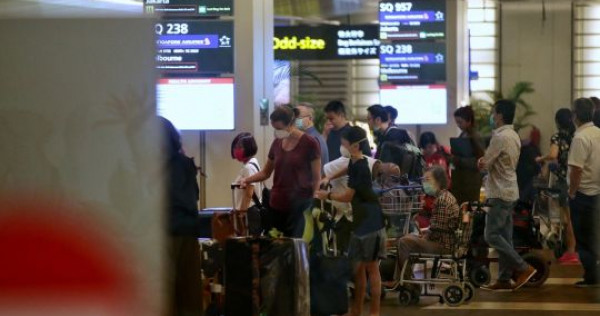
Changi Airport has already announced a 33 per cent nosedive in passenger traffic for February on Friday (Mar 13).

This demand declined further in the first half of March and is expected to drop even more in the second half of March and April due to the wave of new travel restrictions announced by many more countries in recent days.

India, one of Changi’s largest markets, suspended all visitor arrivals on Mar 13. Australia and New Zealand, major markets for Changi, have implemented a new policy requiring all arriving passengers to self-quarantine for 14 days.

Singapore-Europe traffic will also decline sharply after Singapore’s fresh ban on all visitors and transit passengers who have been in Italy, France, Germany and Spain within the last 14 days.

Singapore’s earlier bans on passengers who have travelled to China and South Korea within the last 14 days have led to almost all flights from these two keys markets being suspended.  

Changi passenger traffic will likely drop by over 50 per cent over the next two to three months.

READ: Commentary: Explosion in COVID-19 cases – was South Korea just unlucky?

Passengers wear surgical masks as they board a British Airways flight from Terminal 5 at Heathrow A

Passengers wear surgical masks as they board a British Airways flight from Terminal 5 at Heathrow Airport in London, Britain on Mar 6, 2020. (Photo: REUTERS/Hannah McKay)

A recovery is possible in the second half if the virus is contained, but for the full year, Changi will almost certainly record a decline that surpasses the 15 per cent drop in 2003 due to SARS.

DOMESTIC TRAVEL TENDS TO RECOVER FASTER THAN INTERNATIONAL TRAVEL

Singapore and its aviation sector are hardly alone as the COVID-19 crisis is now impacting all airlines, airports and countries. But Singapore is somewhat disadvantaged as it does not have a domestic market.

While international travel is slowing to a crawl – and could stop entirely – domestic airline travel is generally less impacted.

Malaysia Airports, which operates Kuala Lumpur International and virtually all airports in Malaysia, reported a 30 per cent drop in international passenger traffic for February, similar to Changi’s, but a more modest 17 per cent drop in domestic passenger traffic.

In some Southeast Asia markets such as Indonesia, airlines have been expanding domestic capacity by reallocating aircraft from suspended international routes.

Demand for domestic travel in Myanmar, Thailand and Vietnam also have remained relatively strong while international traffic dropped significantly.

READ: Commentary: Novel coronavirus turns 2020 into a bleak year for Asian airlines

READ: Commentary: The ways in which the COVID-19 pandemic could unfold

There is a risk domestic travel could be impacted significantly and even stop entirely. For example, the Philippines has banned domestic travel to and from Manila in an attempt to contain and prevent the virus from spreading to smaller cities and smaller islands.

However, while domestic air travel may grind to a halt over the next month in Asia and elsewhere, domestic travel generally recovers faster than international travel once the global situation stabilises.

The domestic Chinese market is starting to recover but it will take more time for the international market to bounce back.

BAD NEWS FOR SIA

Countries such as Singapore that rely entirely on the international market therefore are likely to have a slower rate of recovery.

Coronavirus in Singapore: SIA flight attendants at Changi Airport 2

Singapore Airlines flight attendants wearing masks at Changi Airport Terminal 3’s arrivals hall. (Photo: Jeremy Long)

This does not bode well for the Singapore Airlines (SIA) Group, which has so far been slow to cut capacity to match the drop in demand, resulting in sharp load factor declines. 

Based on the several waves of cancellations announced to date (including the last announcement on Thursday), SIA Group has cut 19 per cent of flights for the February to May period.

This included a 16 per cent reduction for Singapore Airlines, a 21 per cent reduction for regional subsidiary SilkAir and a 23 per cent reduction for the group’s budget airline Scoot, based on announcements made.

SIA is expected to announce a new and much bigger wave of flight cuts soon, after accounting for recent developments in India, Europe, Australia and New Zealand. But even before these, demand across its network had declined at a rate that far outstripped SIA’s reductions in flights.

QANTAS LEADS THE WAY

Singapore’s only other local airline, Jetstar Asia, and its parent the Qantas Group have so far been more proactive at cutting capacity in the Singapore market.

READ: Commentary: COVID-19 emphasises the importance of Singapore’s free trade agreements

READ: Commentary: UAE fights COVID-19 while the rest of the Middle East drags its feet

Jetstar Asia initially announced on Feb 20 a 15 per cent cut in flights through the end of May. Jetstar Asia has since announced the cut would be expanded to 40 per cent for April and May, which will result in the grounding of the equivalent of seven of its 18 A320s.

Jetstar Asia has suspended services to all five of its Chinese destinations as well as Hong Kong and Taipei, leaving Jetstar Asia with 18 destinations, in ASEAN, Japan and Australia.  

Jestar Asia and all three SIA Group airlines have been encouraging crew to take voluntary leave, a sensible move which allows airlines to temporarily reduce flying without having to cut salaries or headcount.

Jetstar Asia’s parent, the Qantas Group, also announced last week cuts in Qantas-operated flights to Singapore as part of a 31 per cent reduction in Qantas Airways and Jetstar Airways capacity to Asia.

Prior to the start of the crisis the Qantas Group averaged 96 daily departures from Singapore including 87 from Jetstar Asia, seven from Qantas, one from Jetstar Airways and one from Jetstar Pacific. For now, this has been slashed by 40 per cent to an average of 58 daily departures. A much more significant cut is likely in the coming days.

But the SIA Group is much larger than Jetstar and the Qantas Group’s operations in Singapore, which could partly explain SIA’s slower response

FILE PHOTO: Singapore Airlines planes are pictured on the tarmac at Changi Airport, Singapore

FILE PHOTO: Singapore Airlines planes are pictured on the tarmac at Changi Airport, Singapore March 28, 2018. REUTERS/Edgar Su/File Photo

Jetstar Asia is the smallest of Singapore’s four local airlines, flying 4.5 million passengers in calendar 2019. In contrast, Singapore Airlines carried 22.3 million passengers in 2019, Scoot 11.1 million and SilkAir 4.9 million.

ROUGH OUTLOOK FOR CHANGI AIRPORT AND SIA

The days ahead will be rougher for Singapore’s aviation industry.

Changi Airport handled 68.3 million passengers in 2019, up 4 per cent from 2018. Passenger traffic this year could dip below 50 million, which would mark the lowest figure for Changi since 2011.

The four Singapore based airlines are the most impacted. They account for around 60 per cent of Changi’s total passenger traffic when removing the relatively small number of passengers they carry on transit routes through Singapore.

Qantas and Malaysia-based AirAsia are also the largest foreign airlines in Singapore, each accounting for roughly 3 per cent of Changi’s total traffic, excluding AirAsia affiliates based in other countries and AirAsia X.

READ: Commentary: Why Singapore is better prepared to handle COVID-19 than SARS

READ: Commentary: COVID-19 emphasises the importance of Singapore’s free trade agreements

The recent sharp reduction in fuel prices does not provide much relief to airlines given demand is so low at the moment that airlines will struggle to achieve profitable even if the cost of fuel was zero.

Several major airline groups such as SIA are also significantly hedged, offsetting any cost savings from low fuel prices.

In fact, a steep hedge loss would put SIA’s remarkable record of never incurring a loss for a fiscal year in jeopardy. An annual operating loss is also possible if the COVID-19 crisis continues for several months.

For now, SIA is expected to post operating losses in the March and June quarters but could potentially return to profitability after, assuming the virus is contained. 

WHAT CHANGI AIRPORT AND SIA CAN DO

Qantas provides further food for thought on how Changi Airport and SIA could approach the next few months.

It has focused cuts on the A380, the world’s largest aircraft, by grounding all but two of its A380s. Several other A380 operators globally have similarly grounded a large portion of their A380 fleet.

An AirAsia Airbus A320 plane is pictured at Kuala Lumpur International Airport in Sepang

An AirAsia Airbus A320-200 plane is pictured at Kuala Lumpur International Airport in Sepang, Malaysia, July 22, 2019. (Photo: REUTERS/Lim Huey Teng)

Qantas’ increased reliance on smaller more efficient widebodies such as the 787 is sensible and should be followed by other airlines.

In contract, SIA has cut proportionally about as many flights on other aircraft as those flown by the A380

Relying on smaller aircraft also helps airlines mitigate load factor declines, maintain frequencies on key business routes and retain airport slots.

Airports could waive slot requirements, which require airlines to use their slots at least 80 per cent of the time or risk losing them, but many have so far been slow to grant airlines such relief.

Qantas’ recent move to extend capacity cuts to September is also noteworthy. Airlines including SIA should consider extending flight cuts beyond May and provide consistent yet reduced schedules over the next several months.

Ad hoc cancellations with flights being canned on different days each week have made it hard for passengers still flying to plan their trips.

RELIEF AND NIMBLENESS NEEDED

Overall, it has been extremely challenging for airlines to match capacity with demand during the COVID-19 crisis due to its fast-evolving nature. No one knows how long this crisis will last.

Airlines, already reeling from huge potential losses, need to be nimble and provide unusual ticket flexibility that recognises the challenges their customers are also facing.

Airports and governments need to provide relief to help airlines get through this crisis and return in full force when the market recovers.

BOOKMARK THIS: Our comprehensive coverage of the novel coronavirus and its developments

Download our app or subscribe to our Telegram channel for the latest updates on the coronavirus outbreak: https://cna.asia/telegram

Brendan Sobie is the founder of Singapore-based independent aviation consulting and analysis firm Sobie Aviation. He was previously chief analyst for CAPA – Centre for Aviation.
Source link

Commentary: Why Singapore is better prepared to handle COVID-19 than SARS

0

SINGAPORE: On Mar 1, 2003, SARS hit Singapore. Over the next four months, we witnessed its spread through public hospitals and the community, infecting 238 people with 33 succumbing to the virus.

I lost a close friend, Alex, whom I had known since primary one. A visit by an overseas scientist further led to my being issued a Home Quarantine Order, and with that, the obligatory daily reporting before a CISCO video surveillance camera.

DEALING WITH SARS

Singapore’s biomedical scene was fledgling then – the first buildings in Biopolis were newly constructed.

Notwithstanding, scientists at the Agency for Science, Technology and Research (A*STAR) became one of the first globally to sequence and genetically map the SARS virus as well as develop a commercial test kit (with Roche Diagnostics).

We witnessed the mobilisation of the Singapore Armed Forces (SAF) to support contact tracing, electronic tagging of quarantine breakers and the conversion of military thermal sights to the now pervasive fever scanners. Novel research, clever engineering, good old-fashioned public health measures and the Singapore brand of public policy ensured that we beat the virus.  

Singapore was declared SARS-free by the World Health Organization (WHO) on May 30, 2003 – three months after the virus had arrived on the island.

Seventeen years on, we face a global pandemic. As of Mar 13, 2020, over 169,484 cases and 6,518 deaths from COVID-19 have been reported, with 226 cases in Singapore.

READ: Commentary: The ways in which the COVID-19 pandemic could unfold

While the situation in China and South Korea shows some respite, large outbreaks continue to evolve in Italy and Iran, with growing hotspots across every continent. Mathematical models indicate that the epidemic is only just beginning. Containment efforts have bought us precious time to understand what we have to deal with and to ready our health institutions for an anticipated surge.    

What has changed this time is that Singapore is now ranked as one of the top biotech and innovation locations globally – and that we are pulling above our weight to make a difference. We are also more prepared than before to deal with this outbreak.

DETECTING THE VIRUS

The Bioinformatics Institute at A*STAR supports the GISAID (Global Initiative on Sharing All Influenza Data) database, where genetic sequences of the COVID-19 virus are uploaded and shared. 

This permits analysis of how the virus mutates as it spreads geographically and over time, providing molecular clues as to how best to deal with it, as well as a precision tool to augment contact tracing.

READ: Commentary: Three scenarios if the COVID-19 outbreak gets worse

Working closely with the National Centre for Infectious Diseases (NCID), scientists at Duke-NUS Medical School successfully cultured the COVID-19 virus just one week after it landed in Singapore on Jan 23, 2020.

This group went on to become the first globally to develop a serological test for COVID-19, which detects antibodies produced by the body’s immune response against the virus, setting the stage for rapid testing and population surveillance. 

Astar researchers

Researchers with the Agency for Science, Technology and Research (A*STAR). (File photo: Ngau Kai Yan)

The National Public Health Laboratory, together with the public hospitals, developed and ramped up a diagnostic test for the virus in January 2020 that has allowed the Ministry of Health (MOH) to carry out more than 21,000 tests thus far, boosting our ability to detect infected cases.

Research laboratories across the island also joined the international race to develop diagnostic kits for laboratory use.

An A*STAR kit, jointly developed with Tan Tock Seng Hospital (TTSH), was deployed in public hospitals by early February, while 10,000 tests were shipped to support efforts in China.

READ: Commentary: Can vitamin C really help with your cold or even COVID-19?

Local biotech firms, Veredus and Acumen Research Laboratories announced their prototypes within weeks of the outbreak. The Veredus kit received its provisional licence just one month later, and was deployed by the Home Team in its laboratories to support screening at border checkpoints by early March.

A reliable diagnostic test is critical for outbreak and patient management.

The challenge remains that current tests are laboratory-based, which take time and entail additional logistics. Ideally, we want a point-of-care test with rapid turn-around time – somewhat like a pregnancy test kit. 

This will enable doctors at the frontline to diagnose COVID-19 in their clinics without having to send samples to hospital laboratories. One technical barrier is that such a test demands high sensitivity, so that we do not miss positive cases. 

COMING UP WITH A CURE

The COVID-19 virus is a novel one. About 20 per cent of patients develop serious illness and complications, and case fatality ranges from less than 1 per cent to as high as 4 per cent.

READ: Commentary: Hot and humid weather may end the novel coronavirus – as well as the development of a vaccine

A distant cousin of other coronaviruses like SARS and MERS, there is currently no proven treatment or vaccine for COVID-19. Given the high standards of care in our hospitals, as well as the tight network of public and university labs, Singapore offers advantages for companies to conduct drug development here. 

US biotech firm, Gilead Sciences, announced that it would be widening clinical trials here for its anti-viral drug, called remdesivir, for the treatment of COVID-19. This trial involves the NCID and other public hospitals, providing patients here with early access to the drug.

NCID will also support a leading biotech company’s push to develop an antibody treatment against the virus. Duke-NUS Medical School has announced that it will work with the Coalition for Epidemic Preparedness Innovations, and with US biotech company, Arcturus Therapeutics, to develop vaccines for COVID-19.   

ON THE DIGITAL FRONT

The fight against COVID-19 extends to the digital arena. Over at the integrated TTSH Operations Command Centre, data is continually streamed from different hospital systems, providing real-time situational awareness of its overall operations.

This has enabled local health authorities and TTSH to better plan and coordinate for the surge demand at NCID, deploying over 1,000 staff to support frontline screening and treatment in the outbreak wards, while still providing regular hospital care for patients. 

The new Real Time Location System, a tracking system, further strengthens the process of contact tracing.

Integrated TTSH Operations Command Centre

The Integrated TTSH Operations Command Centre (Photo Credit: Tan Tock Seng Hospital)

Doctors at TTSH are also working with A*STAR to potentially employ computer vision and deep learning to detect lung infection on chest x-rays. This would enhance screening at NCID, and potentially in primary care, in the event of widespread community transmission of COVID-19.

Another innovation is the design and rapid prototyping of face shields to replace goggles used by staff managing COVID-19 cases. Wearing goggles for prolonged periods can lead to discomfort and facial imprints. This led a team from TTSH and NCID to leverage on 3D printing to develop cost-effective face shields for better protection, fit and comfort.

On a wider scale, we now face an information pandemic, comprising health advisories, scientific communications and a social media maelstrom generously peppered with fake news. 

One Chinese website has drawn close to three billion views, providing almost real-time count of infection numbers in every province and city, as well as countries across the globe. 

Official updates from MOH now come through both traditional and social media, while educational content from our universities are available online. All of these help counter the disinformation that digital channels may otherwise help proliferate.       

Chinese netizens have commented that Singapore’s handling of COVID-19 has been “zen”.

Singapore’s approach has garnered praise from the WHO and international experts.

I would put forth the view that SARS taught us the important lesson of needing to be prepared, and that our investments in science, research, and technology have provided game-changers which have made a difference.

​​​​​​​Dr Benjamin Seet is the Group Chief Research Officer at the National Healthcare Group in Singapore. He was formerly Executive Director of the Biomedical Research Council at A*STAR.

Source link

Coronavirus: Singapore has robust strategy to ensure it doesn't run out of essentials, says Chan Chun Sing after Malaysia restricts movement

0

[ad_1]

SINGAPORE – The Republic has a robust multi-pronged strategy that will ensure the country does not run out of the essentials it needs, said Trade and Industry Minister Chan Chun Sing on Monday night (March 16).

This is on top of building up the country’s inventory of food and essential supplies, he said on Facebook.

He gave this assurance following concerns among Singaporeans over the implications of Malaysia’s announcement earlier on Monday that it will restrict all movement throughout the country from Wednesday until March 31 to prevent further spread of the coronavirus within the country.

All Malaysians will be barred from travelling abroad. For those who are returning from overseas, they must undergo a health inspection and undergo self-quarantine for 14 days.

There will also be a ban on all foreign tourists and visitors.

[ad_2]

Source link

Singapore ‘not facing any immediate risks of running out of food’: Chan Chun Sing on Malaysia’s restricted movement order

0

SINGAPORE: Singapore is not facing immediate risks of running out of food or essential supplies, said Trade and Industry Minister Chan Chun Sing on Monday (Mar 16), shortly after Malaysia announced travel restrictions into and out of the country.

“The Government has been actively working with essential firms such as NTUC Fairprice, Sheng Siong and Dairy Farm International to increase our stock of food and essential supplies over the last two months,” said Mr Chan in a Facebook post. 

“This means that we are not facing any immediate risks of running out of food or other supplies brought in by our retailers.”

He also urged people to “purchase in a responsible manner and to purchase only what you need”.

Singapore gets much of its food supply from across the Causeway, and many Malaysians cross over daily to work in Singapore. Singaporeans also cross over frequently to shop, holiday and for business.

READ: Malaysia reports 125 new COVID-19 cases; mosques in two states to suspend gatherings

In addition to building up the inventory of food and essential supplies, Singapore also has a robust multi-pronged strategy that ensures the country does not run out of essentials, Mr Chan said. 

Shoppers lining up at Hillion mall NTUC (2)

People lining up at Hillion mall’s NTUC FairPrice on Mar 16, 2020. (Photo: Johannes Tjendro) 

“For example, we have local production capabilities for products such as noodles, infant milk powder and canned goods among others.

“In the event that we need to increase supply for our domestic consumption, we can ramp up quickly and easily to do so. We have also continued to diversify our sources of essential goods, for example we get a good amount of vegetables from China and even go as far as Ukraine to secure our supply of eggs.

“Although we are not facing any shortages, I urge everyone to continue to purchase in a responsible manner and to purchase only what you need. Otherwise, no amount of stockpiling will be sufficient,” he said.

Shoppers lining up at Hillion mall NTUC (1)

People lining up to buying groceries at Hillion mall’s NTUC FairPrice on Mar 16, 2020. (Photo: Johannes Tjendro) 

Businesses that employ Malaysian workers who commute between Singapore and Malaysia daily may have to activate their business continuity plans, he said.

“If they need assistance, they should contact our economic agencies who stand ready to assist.”

Shoppers lining up at Tanjong Pagar Plaza NTUC

People buying groceries on the night of Mar 16, 2020 at Tanjong Pagar Plaza’s NTUC FairPrice. (Photo: Low Zoey) 

READ: Malaysia bars citizens from going overseas, foreigners from entering country for 2 weeks to curb COVID-19 spread

Prime Minister Muhyiddin Yassin said on Monday night there would be a ban on Malaysians travelling overseas and on visitors entering the country under a restricted movement order imposed from Mar 18 to Mar 31.

Only shops selling essentials, including food stores and pharmacists, would be allowed to stay open, he said in a televised address.

The number of COVID-19 cases in Malaysia surged this week, exceeding 500 cases on Monday.

The rules are part of a “restricted movement order” established by the Malaysian government to prevent further spread of the virus, said Mr Muhyiddin.

While Singapore had on Sunday widened travel restrictions to ASEAN countries, it made an exception for Singaporeans and Malaysians using sea and land crossings with Malaysia.

Public gatherings and movements throughout Malaysia including religious events, sports meets, social and cultural activities will be prohibited, and schools will be closed, said Mr Muhyiddin. 

Mr Chan added: “We will continue to stay in touch with our Malaysian counterparts as the situation evolves. Our priority is to ensure that our people and our businesses are able to continue with their lives and their livelihoods.

“I am aware that many of these new restrictions and announcements may be quite overwhelming for many people. I ask for your continued trust and support as we work hard with all stakeholders to ensure that we get through these short-term challenges together.”

BOOKMARK THIS: Our comprehensive coverage of the novel coronavirus and its developments

Download our app or subscribe to our Telegram channel for the latest updates on the coronavirus outbreak: https://cna.asia/telegram

Source link

3 arrested for attempting to rob Liberian-flagged ship in Singapore Strait

0

SINGAPORE: Three people were arrested after they attempted to rob a Liberian-flagged bulk carrier in the Singapore Strait on Monday (Mar 16), said the Ministry of Defence (MINDEF) in a media release. 

The Maritime and Port Authority of Singapore’s (MPA) Port Operations Control Centre received a report at around 5am that robbers had boarded the ship Sam Jaguar. 

By then, the ship crew had locked the robbers in the engine room, said MINDEF. 

To prepare itself to respond if the vessel entered Singapore territorial waters, the Republic of Singapore Navy’s Maritime Security Taskforce began to closely monitor the vessel and despatched the littoral mission vessel RSS Independence and the Police Coast Guard towards the location of the incident.

Monitoring Sam Jaguar

Personnel onboard RSS Independence monitoring the Sam Jaguar on Mar 16, 2020. (Photo: MINDEF) 

At the same time, the Information Fusion Centre (IFC) shared details about the incident with Indonesian authorities. A report was also shared with the Regional Cooperation Agreement on Combating Piracy and Armed Robbery against ships in Asia (ReCAAP), said MINDEF.  

The Indonesian Navy subsequently deployed two ships and a helicopter to hail and board the vessel in Indonesian territorial waters, which led the Indonesian authorities to arrest the three suspects. 

The crew on board were safe and unharmed, said MINDEF. 

Head of IFC Lieutenant-Colonel Gary Ow said that the result of this incident was due to “good cooperation and quick response” between Singapore and Indonesia’s enforcement agencies. 

“By working closely together with the shipping community and littoral states to monitor our waters and share information, we can quickly cue operational responses and keep up the pressure on sea robbers to bring sea robbery incidents down,” he said. 

Source link

Bukit Batok MP Murali Pillai defends dinner for seniors after criticism by SDP's Chee Soon Juan

0

[ad_1]

SINGAPORE – Bukit Batok MP Murali Pillai on Sunday (March 16) said that extra precautionary measures were in place during a club dinner for seniors held in his ward earlier this month, following criticism by Singapore Democratic Party (SDP) chief Chee Soon Juan.

Dr Chee, who got 38.8 per cent of the vote against Mr Murali in the 2016 Bukit Batok by-election, had earlier said on Facebook that participants of the dinner were not practising social distancing and that it could have put people at risk of contracting the coronavirus.

In a Facebook post, Mr Murali shared a list of precautionary measures the Bukit Batok Active Ageing Club said it had undertaken before the dinner held on March 7 to celebrate its eighth anniversary.

This list, compiled by club chairman Ong Chai and originally shared on the club’s Facebook page, included measures such as mandatory temperature checks, travel and health advisories and having organisers look out for and advise anyone who felt unwell to see a doctor and rest at home.

[ad_2]

Source link

17 new Covid-19 cases in S'pore in biggest single-day spike, including 11 imported; 86-year-old S'porean man is oldest patient

0

[ad_1]

SINGAPORE – Singapore has confirmed 17 new Covid-19 cases, including 11 that are imported, the Ministry of Health (MOH) said on Monday (March 16).

It is the highest number of new cases Singapore has reported in a single day.

Among them is an 86-year-old Singaporean man, the oldest to be infected so far.

Four of the 17 confirmed patients are linked to previous ones while two are unlinked.

This brings the total number of infected patients here to 243.

An earlier case, announced on Sunday (March 15), is a 30-year-old Singapore Civil Defence Force (SCDF) officer working at Sengkang Fire Station, MOH said at a press briefing.

Further investigations have also showed that one of the new cases (Case 235) is linked to three earlier cases – 144, 208 and 214. They are all contacts from the Church of Singapore (Bukit Timah branch).

* Case 144 is a 58-year-old Singaporean woman who is a contact of Case 140, and is linked to the Safra Jurong cluster. She is a hairdresser at her home at Jurong West Street 74, and had attended to customers after the onset of symptoms.

[ad_2]

Source link

PM Lee drops subtle acknowledgement on social media of his penchant for pink shirts

0

[ad_1]

In a time of a global pandemic that has greatly affected Singapore, Prime Minister Lee Hsien Loong is serving the nation with poise, calm and looks

The leader’s sartorial choices became a topic of interest over the weekend after a series of Instagram posts by Izyanti Asa’ari pointed out how pink is the Prime Minister’s prime colour of choice when national announcements need to be made. 

Out of restlessness and perhaps more than a little anxiety over what’s happening in the world, the 32-year-old graphic designer decided to get something out of her system: the pattern of pink-hued shirts that PM Lee regularly dons when he makes televised appearances. 

“I don’t [know] what it is for me, but this… phenomenon has always been a thing my brain strangely and unfortunately keeps track of,” Izyanti stated. 

[ad_2]

Source link

17 new COVID-19 infections in Singapore in largest single-day increase to date

0

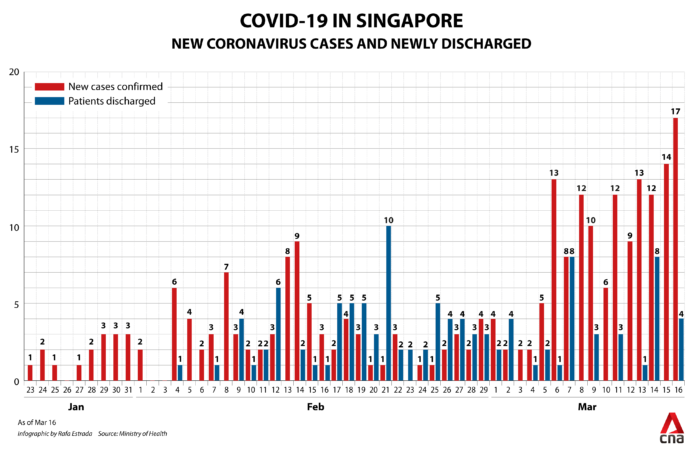
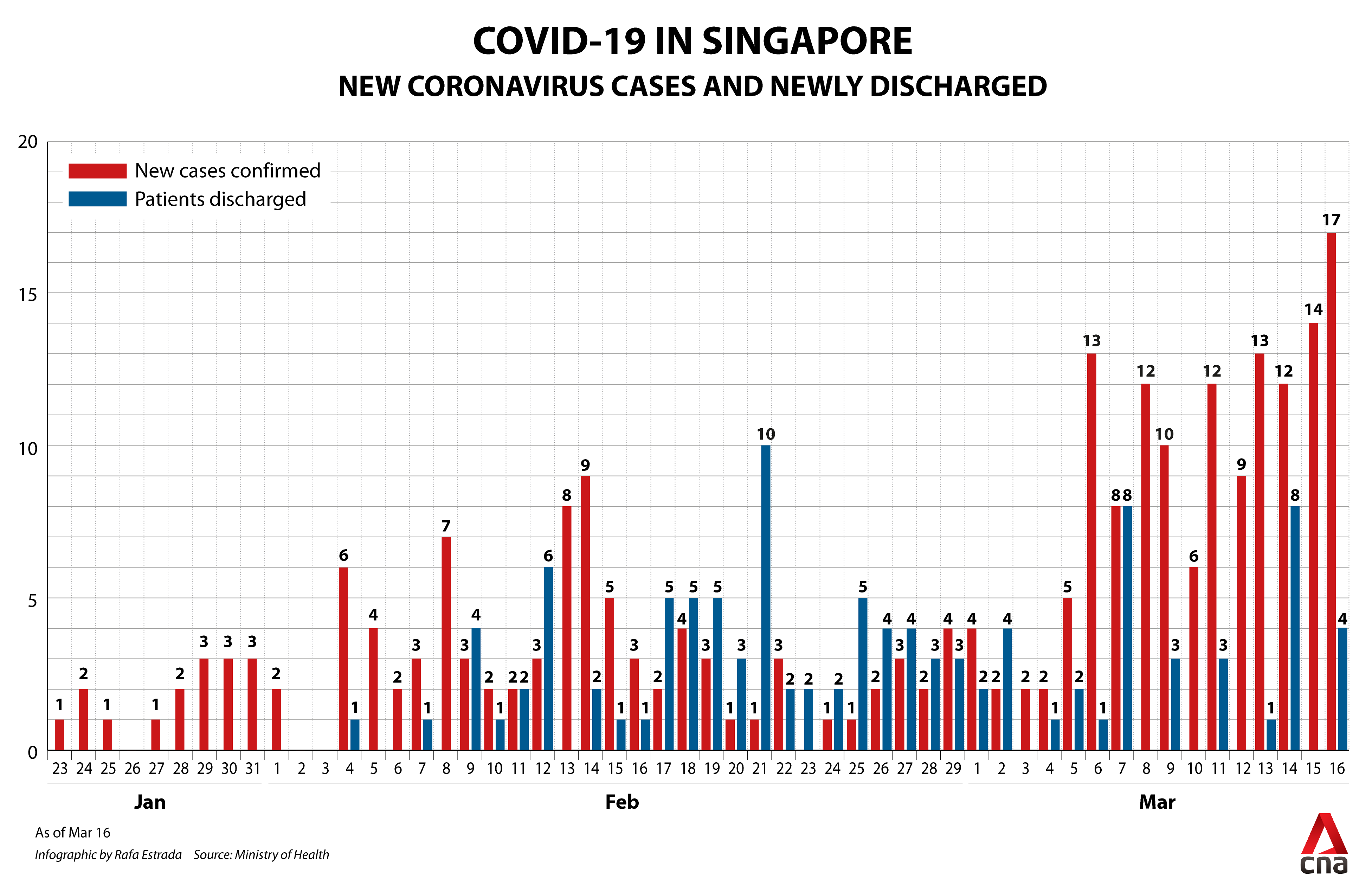
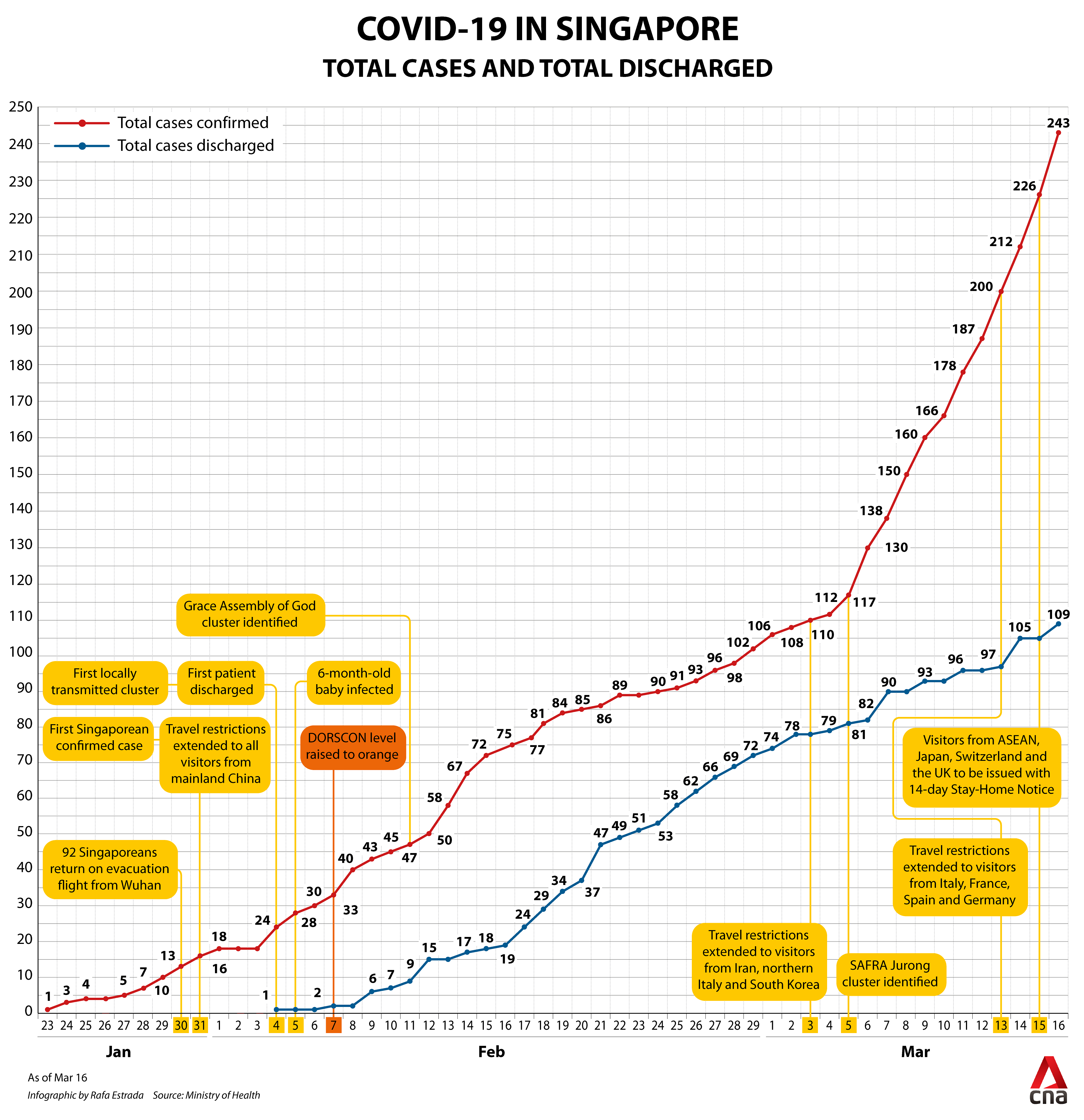
SINGAPORE: The Ministry of Health (MOH) reported 17 new COVID-19 cases on Monday (Mar 16), bringing the country’s total to 243.

This is the largest single-day increase in novel coronavirus cases in Singapore to date and comes just one day after a daily increase of 14 was reported. 

Eleven of these new COVID-19 infections are imported cases (Cases 227, 229, 230, 231, 232, 233, 238, 239, 240, 241 and 243), and had travel histories to several countries including France, Spain, eastern Europe, the Netherlands and the United States. 

Four of the new infections are linked to previous cases (Case 236 is linked to Cases 142, 211 and 219; Case 242 is linked to Case 166; Case 235 is linked to Case 208; and Case 237 is linked to Case 225).

Two of the new cases are currently unlinked (Cases 228 and 234). 

Four more patients have also been discharged from hospital, said MOH. 

To date, a total of 109 patients have fully recovered from the infection and have been discharged from hospital. Of the 134 confirmed cases who are still in hospital, most are stable or improving. Thirteen are in critical condition in the intensive care unit.

The cluster linked to the private dinner function at SAFRA Jurong on Feb 15 remains the largest cluster with 47 confirmed cases. Two of the cases from his cluster – Cases 142 and 144) are also linked to boulder+ Gym and Church of Singapore (Bukit Timah).

NEW CASES

CASE 227

Case 227 is an imported case involving a 53-year-old male Singapore Citizen who had been in France from Mar 7 to Mar 12. He is currently warded in an isolation room at the National University Hospital (NUH).

He reported onset of symptoms on Mar 11 while in France, and had presented at the emergency department of NUH on Mar 14. Subsequent test results confirmed COVID-19 infection on Mar 15 afternoon.

He is a staff of Lighthouse Evangelism Church (Tampines Street 82) but had not gone to work since onset of symptoms. He stays at Pasir Panjang Road.

CASE 228

Case 228 is a 67-year-old male Singapore Citizen with no recent travel history to affected countries and regions. He is currently warded in an isolation room at Changi General Hospital (CGH).

He reported onset of symptoms on Mar 3, and had sought treatment at a general practitioner (GP) clinic and Bedok Polyclinic on Mar 3, Mar 11 and Mar 13. He presented at the emergency department of CGH on Mar 13. Subsequent test results confirmed COVID-19 infection on Mar 15 afternoon.

Prior to hospital admission, he mostly stayed at his home at Sea Breeze Avenue except to seek medical treatment.

CASE 229

Case 229 is an imported case involving a 26-year-old female Singapore Permanent Resident who had been in Spain from Feb 14 to Mar 14. She is currently warded in an isolation room at NUH. She is a family member of Case 240.

She reported onset of symptoms on Mar 15, and had sought treatment at a GP clinic on the same day. She presented at NCID on Mar 15, and subsequent test results confirmed COVID-19 infection on Mar 15 afternoon. She stays at Kim Keat Road.

CASE 230

Case 230 is an imported case involving a 38-year-old female Singapore Citizen who had been in Eastern Europe from Mar 3 to Mar 14. She is currently warded in an isolation room at the National Centre for Infectious Diseases (NCID).

She reported onset of symptoms on Mar 14, and presented at NCID on Mar 15. Subsequent test results confirmed COVID-19 infection on Mar 15 afternoon.

She is employed as an adjunct teaching staff at Republic Polytechnic and Singapore Polytechnic, but had not gone to work since onset of symptoms. She stays at Ewe Boon Road.

COVID-19 gfx mar 16

CASE 231

Case 231 is an imported case involving a 78-year-old male Australian national who is a Singapore Work Pass holder, and had been in the United States from Feb 23 to Mar 14. He is currently warded in an isolation room at the Singapore General Hospital (SGH). He is a family member of Case 232.

He reported onset of symptoms on Mar 4. He presented at the emergency department of SGH on Mar 14, and subsequent test results confirmed COVID-19 infection on Mar 15 afternoon. He stays in the Robertson Quay area.

CASE 232

Case 232 is an imported case involving a 65-year-old female Australian national who is a Singapore Work Pass holder, and had been in the United States from Feb 23 to Mar 14. She is currently warded in an isolation room at SGH. She is a family member of Case 231.

She reported an onset of symptoms on Mar 2 while in the United States. She presented at the emergency department of SGH on Mar 14. Subsequent test results confirmed COVID-19 infection on Mar 15 afternoon. She stays in the Robertson Quay area.

CASE 233

Case 233 is an imported case involving a 61-year-old male British national who is a Singapore Long Term Pass holder, and had been in the United Kingdom from Mar 6 to Mar 14. He was confirmed to have COVID-19 infection on Mar 16 morning, and is currently warded in an isolation room at NCID.

CASE 234

Case 234 is an 86-year-old male Singapore Citizen who has no recent travel history to affected countries and regions. He was confirmed to have COVID-19 infection on Mar 16 morning, and is currently warded in an isolation room at SGH.

CASE 235

Case 235 is a 31-year-old female Singapore Citizen with no recent travel history to affected countries and regions. She was confirmed to have COVID-19 infection on Mar 16 morning and is currently warded in an isolation room at SGH. She is employed as a Medical Social Worker at SGH, and is linked to Case 208.

CASE 236

Case 236 is a 30-year-old female Singapore Citizen with no recent travel history to affected countries and regions. She was confirmed to have COVID-19 infection on Mar 16 morning, and is currently warded in an isolation room at NCID. She is a family member of Case 219, and is linked to Case 142.

COVID-19 gfx mar 16 (1)

CASE 237

Case 237 is a 36-year-old female Indonesian national who is a Singapore Work Pass holder, and has no recent travel history to affected countries and regions. She was confirmed to have COVID-19 infection on Mar 16 March, and is currently warded in an isolation room at NCID. She is linked to Case 225.

CASE 238

Case 238 is an imported case involving a 83-year-old female Belgium national who arrived in Singapore on Mar 6. She was confirmed to have COVID-19 infection on Mar 16 morning, and is currently warded in an isolation room at NCID.

CASE 239

Case 239 is an imported case involving a 28-year-old male British national who is a Singapore Work Pass holder, and had been in France from Mar 7 to Mar 14. He was confirmed to have COVID-19 infection on Mar 16 morning, and is currently warded in an isolation room at NCID.

CASE 240

Case 240 is an imported case involving a 27-year-old male Singapore Permanent Resident, who had been in Spain from Mar 7 to Mar 14. He was confirmed to have COVID-19 infection on Mar 16 morning, and is currently warded in an isolation room at NUH. He is linked to Case 229.

CASE 241

Case 241 is an imported case involving a 28-year-old male British national who is a Singapore Work Pass holder, and had been in France from Mar 7 to Mar 14. He was confirmed to have COVID-19 infection on Mar 16 morning, and is currently warded in an isolation room at NCID.

CASE 242

Case 242 is a 64-year-old female Singapore Citizen who had been in Malaysia on Mar 7 and Mar 8. She was confirmed to have COVID-19 infection on Mar 16 morning, and is currently warded in an isolation room at NCID. She is a contact of Case 166.

CASE 243

Case 243 is an imported case involving a 36-year-old male Singapore Citizen who had been in Germany from Feb 26 to Feb 29, Italy from Feb 29 to Mar 7 and Switzerland from Mar 7 to Mar 14. He was confirmed to have COVID-19 infection on Mar 16 morning, and is currently warded in an isolation room at NCID.

READ: Mosques to remain closed until Mar 26 amid risk of large COVID-19 cluster forming from Malaysia gathering

READ: COVID-19 FAQ: When will a stay-home notice be issued, and what does it mean?

ADDITIONAL BORDER RESTRICTION MEASURES

MOH on Sunday announced additional border control measures to combat the spread of the coronavirus. People who enter Singapore with recent travel history to ASEAN countries, Japan, Switzerland or the United Kingdom will be issued a 14-day stay-home notice.

This will take effect from 11.59pm on Monday and applies to all travellers, including Singapore residents, long-term pass holders and short-term visitors. It will not apply to Singaporeans and Malaysians using sea and land crossings with Malaysia.

READ: COVID-19: Stay-home notices for all travellers entering Singapore from ASEAN countries, Japan, UK, Switzerland

Explore our interactive: All the COVID-19 cases in Singapore and the clusters and links between them

All Singaporeans have also been advised to defer all non-essential travel abroad.

National Development Minister Lawrence Wong said on Sunday that some people have travelled to Singapore with the “specific purpose of seeking medical care”.

“It is very hard for us to cope with this additional demand,” the minister added. 

“During this critical period, our healthcare resources are already stretched, and that’s why for both reasons – firstly, to manage the number of imported cases and also to deal with this demand for healthcare services, we have to be tighter with our border control measures.”

He said the Government’s priority during this time is to ensure that Singapore’s healthcare resources are focused on helping Singaporeans. 

BOOKMARK THIS: Our comprehensive coverage of the novel coronavirus and its developments

Download our app or subscribe to our Telegram channel for the latest updates on the coronavirus outbreak: https://cna.asia/telegram

Source link

Singapore donates medical equipment to Batam in mutual effort to combat Covid-19

0

[ad_1]

Singapore has donated safety equipment and ventilators to Batam hospitals in Riau Islands province to help treat Covid-19 patients.

Singaporean Consul General in Batam Mark Low handed over 50 hazmat suits and two ventilators to Batam Mayor Muhammad Rudi on Friday as the city braces for a surge of infections.

While Singapore has established a protocol and heightened border surveillance to prevent the further spread of the disease, Indonesia has only started testing suspected patience and taking measures to minimise close contact between people.

“We appreciate the help from the Singapore government. Batam and Singapore have enjoyed a long relationship,” Rudi said at the consulate general office in Batam, which is a mere 70-minute ferry ride from the city-state.

Singapore has mandated quick tests for travellers who arrive at the country’s air, land and water ports with symptoms, as reported by The Straits Times. They must undergo the test even if they do not meet the clinical definition of being a suspected case.

[ad_2]

Source link