As we’ve learned over the past couple of weeks, kiasu-ism is universal. Since the coronavirus became a global pandemic, folks outside Asia have raided supermarkets and stores as well — but instead of seizing instant noodles en masse, it is pasta that is being hoarded.
But even as local politicians call for calm and the internet pokes fun at panic-shopping, hoarders are gonna hoard. Especially after the levels of paranoia went up a few notches late last night after Malaysia announced a drastic nationwide lockdown for two weeks that prohibits citizens from travelling overseas.
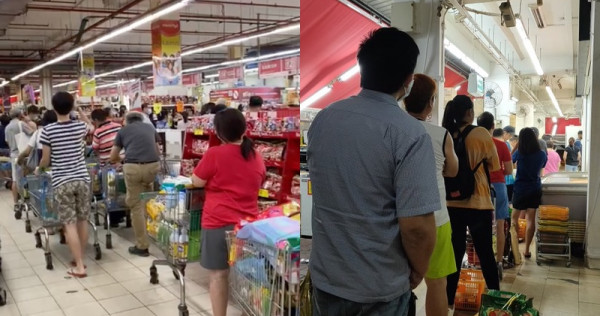
The consternation set in pretty quickly on both sides of the border. Supermarkets and hypermarkets in Malaysia saw long snaking lines of customers who’ve filled up their trolleys with various groceries and household items, prepping themselves for a long stay at home.
An old gadget that’s gaining renewed attention these days thanks to the spread of Covid-19 is ultraviolet lightboxes for sanitising personal and household items such as mobile phones, earbuds and even toys.
Without going too deep into the science, UV light is known to have an effect on bacteria and viruses.
UV-C in particular, which is ultraviolet light with a wavelength between 100 and 280 nanometers, is germicidal (i.e., it disrupts germ DNA to kill them or make them ineffective) and is usually what these household UV light-blasting phone/toy/underwear disinfection boxes use. Of these boxes (and there are a lot on Taobao), US-based PhoneSoap is arguably the most famous.
Within a short span of three months, the world has become a very different place from where we left off in 2019.
In case you haven’t noticed, the Covid-19 virus has affected us on all fronts — socially, at work, and even in our personal lives.
So let’s dive into what constitutes the new normal. What do we miss most about the time pre-coronavirus?
1. Gone are the days you can cough or sneeze freely
Pre-2020, if you were having the sniffles, your co-worker or a stranger might ask “are you okay” out of concern. Now, that same concern would be tinged with worry (for themselves), or you’ll be thrown disapproving looks to tell you “that’s not okay”.
Personally, we know at least two people who have been offered masks on public transport after getting into a coughing fit that’s not Covid related.
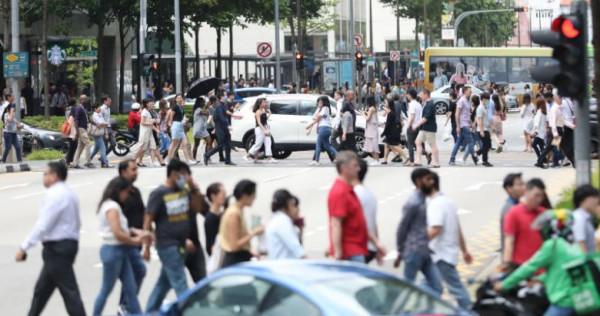
The paranoia is real y’all, but can we really blame them? And unlike before, it’s no longer a strange sight to see people wearing face masks on Singapore streets or indoors.
We say:
“Now I try to finish sneezing before entering a bus, train or office.” – Thiam Peng
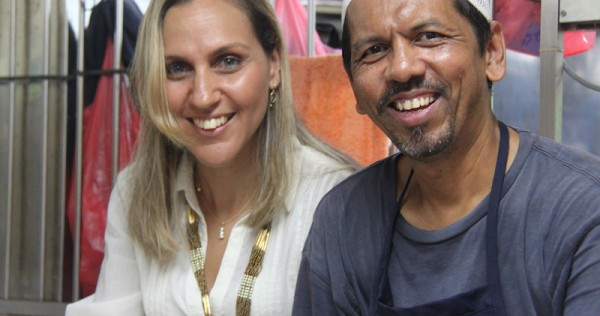
From someone who didn’t even know what roti prata is to a full-blown foodie who runs gastronomic tours across Singapore’s hawker centres, Karni Tomer has genuinely fallen head over heels over her adopted country’s variety of cuisines.
The Israeli arrived here a decade ago and immediately took to Singapore’s food like a fish to water — so much so that she started Wok ’n’ Stroll, a way for newbies to experience some of the nosh around the island like a local.
One of the figures who kickstarted Karni into her Singaporean culinary journey passed away last Wednesday (March 11) at the age of 68.
In a Facebook post, Karni paid tribute to a “good friend” and “very kind and loving person” Haji Zulkifli bin Packeer Bawa, the man behind Tekka Market stronghold Prata Saga Sambal Berlada.
SINGAPORE: Employers in Singapore will receive more than S$600 million in payouts under the Wage Credit Scheme (WCS) by Mar 31, the Ministry of Finance (MOF) and Inland Revenue Authority of Singapore (IRAS) said on Tuesday (Mar 17).
More than 90,000 employers will receive the payouts, with small-to-medium enterprises (SMEs) receiving the bulk of the payouts – about 70 per cent of the total sum disbursed.
Through the WCS payouts in March, the Government will co-fund qualifying wage increases for more than 700,000 Singaporean employees earning a gross monthly wage of up to S$4,000.
The March payouts will offset 15 per cent of qualifying wage increases in 2019, 2018 and 2017 for these employees.
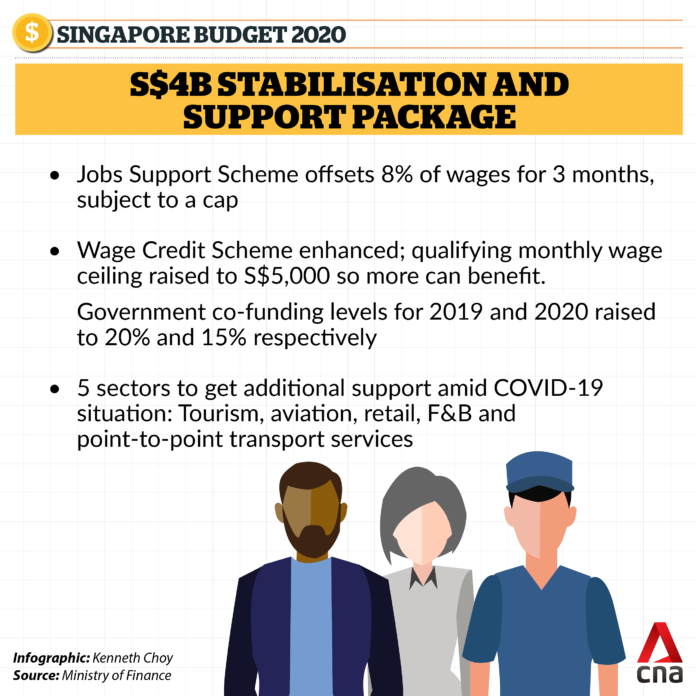
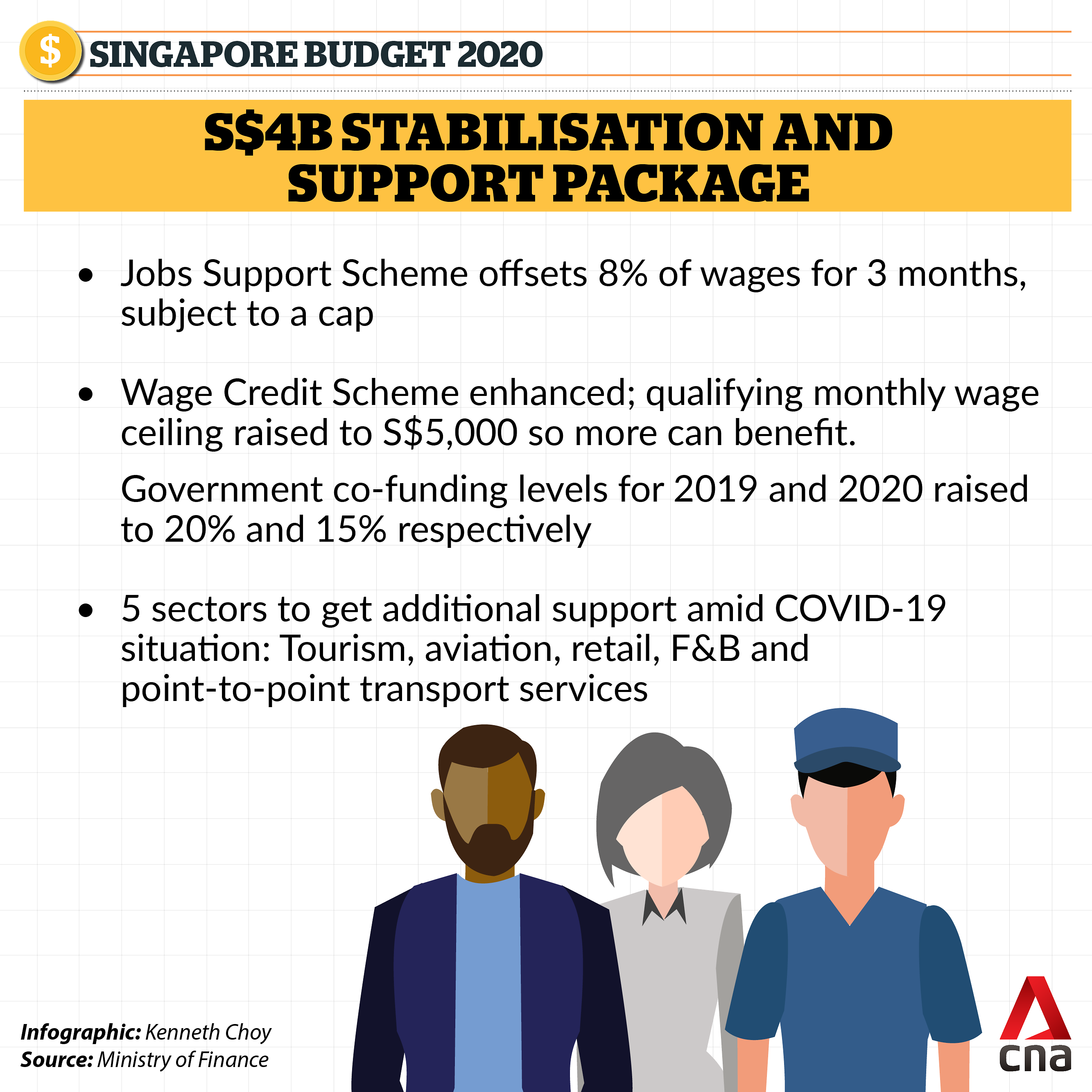
In Budget 2020, it was announced that the gross monthly wage ceiling will be raised from S$4,000 to S$5,000 for qualifying pay increases in 2019 and 2020.
The Government co-funding levels will also be raised from the current 15 per cent for 2019 and 10 per cent for 2020, to 20 per cent and 15 per cent respectively.
Employers eligible for the Budget 2020 enhancements for 2019 wage increases will receive a supplementary payout in the second half of 2020.
Employers do not need to apply to receive the WCS payouts. Eligible employers will receive letters from IRAS by Mar 31 informing them of the amount they will receive this month.
The money will be credited to the employers’ registered bank account through PayNow Corporate or GIRO.
“In line with Singapore’s Smart Nation efforts, IRAS will fully adopt digital payment modes for WCS payouts, and will no longer issue cheques,” said the authorities.
Appeals regarding WCS payouts must be submitted to IRAS by Jun 30, and will be considered on a case-by-case basis.
The WCS enhancements are part of a S$4 billion Stabilisation and Support Package rolled out in the Budget to support workers and businesses affected by the COVID-19 outbreak.
Now declared a global pandemic by the World Health Organization, the spread of COVID-19 and its impact on the global economy have worsened since the package was announced.
Deputy Prime Minister Heng Swee Keat said last week that the Government has started working on a second stimulus package.
Official data released on Tuesday indicated that non-oil domestic exports (NODX) fell 4.8 per cent on a seasonally adjusted month-on-month basis in February as total trade declined by 8.6 per cent over the month.
“Given the economic uncertainty arising from the COVID-19 situation”, the National Wages Council (NWC) will convene earlier than usual this year on Tuesday to discuss annual guidelines on wage and employment-related issues, said the Manpower Ministry.
SINGAPORE – The suspect in the 2016 Standard Chartered Bank robbery has been extradited to Singapore and will be charged with robbery and money laundering on Tuesday (March 17).
Canadian David James Roach allegedly robbed the bank’s Holland Village branch of $30,000 on July 7, 2016, by walking into the bank and slipping the teller a note with his demands, claiming that he had a weapon.
Roach then fled to Thailand, where he was arrested on July 9, and later sentenced to 14 months’ jail for violating money laundering and other Thai Customs laws.
Prime Minister Muhyiddin Yassin said on Monday night there would be a ban on Malaysians travelling overseas and on visitors entering the country under a restricted movement order imposed from Wednesday to Mar 31.
Long queues were spotted at supermarkets in Singapore following Mr Muhyiddin’s announcement, with Malaysia being one of Singapore’s sources of food supply.
In response to CNA queries, FairPrice said shoppers will only be allowed to buy four units of paper products, such as toilet paper, facial tissues and kitchen towels.
They will also be limited to two units of instant noodles or pasta and two bags of rice per customer.
Shoppers will only be allowed to purchase S$30 of vegetables, S$30 of fresh poultry, and three packs of 10 eggs or a tray of 30 eggs each.
Notices explaining the new purchase limits have gone up at FairPrice stores.
Sign at a Fairprice store in Clementi showing the new purchase limits. (Photo: Ang Hwee Min)
A notice showing the new purchase limits at the Fairprice store in Junction 8.
NTUC secretary-general Ng Chee Meng wrote on Facebook on Tuesday that he was at FairPrice supermarkets on Monday night and Tuesday morning to check on the situation.
“I can understand that people are concerned but rest assured that NTUC FairPrice has stocks ready,” he wrote.
“Buy only what you need please, otherwise we may see some empty shelves again and this in turn will cause unnecessary panic buying. Keep calm and shop smartly.”
FairPrice Group CEO Seah Kian Peng wrote on Facebook on Tuesday that while queues and purchases have increased, they have remained orderly and “certainly not chaotic”.
“Since this morning, we have instituted buying restrictions on a few categories (eggs, vegetables and fresh poultry) where Malaysia is an important but not the only source of supply,” he said.
“Previous buying restrictions (rice, paper and instant noodles) remain in place. As before the limits are set at levels which are adequate for every household.”
He added that “we have been diversifying our sources of supply so that we are not overly dependent on any one source”.
“At the same time for certain categories, we have been deliberately and carefully building up the inventory holding in our warehouses. This remains an ongoing process,” he explained.
FairPrice will be doing more supply runs to its stores and it will “take time” to get these items onto shelves, Mr Seah said.
He thanked shoppers for buying “sensibly and encouraging others to do the same”.
Speaking to reporters on Monday morning, Minister of Trade and Industry Chan Chun Sing said that Singapore has months’ worth of stockpiles at the national level, and has planned for disruption of supplies from Malaysia over many years.
Currently, Singapore has more than three months’ worth of carbohydrates like rice and noodles, and more than two months’ worth of stockpiles for proteins and vegetables, he said.
He added that Singapore has plans to manage a disruption of supplies from Malaysia through a combination of stockpiling, local production and diversification of overseas sources.
While there are travel restrictions by various countries, this does not equate to restrictions in the supply chain, he noted, adding that Singapore is in contact with Malaysian authorities to work on operation details.
“Some Singaporeans are concerned with the supplies of food and essential items,” he said.
“Many companies with Malaysian workers are concerned with the continuity of their operations. Let me first say that a disruption of supplies from Malaysia is one of the contingency scenarios that we have planned for over the many years.”
Adding that the combination of stockpiling and production would allow Singapore time to bring in alternative supplies if usual supply lines are disrupted, he said: “So in this particular instance, the Malaysian lines have been disrupted and our stockpile and local production will buy us time to bring in alternative supplies.”
It’s time to channel the inner Darth Vaders in all of us and scream “NOOOO!” as it has officially been announced that all plans and festivities for May the 4th SG will be cancelled in a bid to help curb the spread of the Covid-19 coronavirus outbreak.
Of course, the event is still months away and the organisers have promised that if the situation gets better closer to the date, the event might still happen. Unfortunately, till we get any further news, the event will still remain cancelled.
For now, all we can do is be socially responsible and practice social distancing, especially if you are feeling under the weather. Be sure to wash your hands and as the organisers have advised, do not for the love of Yoda start hoarding toilet paper.
In the meantime, if you find yourself stuck at home with nothing to do, you can always take a look at our list of shows to binge watch. There is also Westworld season 3 and Kingdom season 2 which just got released not too long ago.
A chill day at the beach almost went belly up for a boy and his grandfather when they drifted a little too far into the sea at East Coast Park.
The pair had to be rescued by Singapore Civil Defence Force (SCDF) and the coast guard after they got stranded in the sea during high tide on March 15 at 6.20pm.
Rapper Yung Raja, who witnessed the incident, documented the dramatic rescue in a series of Instagram Stories.
The clips showed the two victims clinging to a green pool tube, floating a distance from the coastline.
A boat belonging to the coast guard approached the pair before SCDF officers rescued them using a rescue line and lifebuoy, to a smattering of applause and cheers from the crowd that had gathered on the beach.
The boy had drifted away in the sea, prompting his grandfather to go after him. However, they both ended up stranded out at sea as the “currents were too strong”, the 24-year-old rapper, whose real name is Rajid Ahamed, recounted in one of his Stories.





.jpg "ecp_ig-1.jpg")


