Home Blog Page 4261

Jean Marshall: At home in Singapore

0

In 1953, bound for Malaya, 27-year-old Jean Mary Gray boarded a plane to Singapore from Heathrow Airport, England. Her father used to say: “If you want to see the world and can’t afford to, get a job and see it at someone else’s expense.”

Jean had got a one-year job as a British Red Cross field officer in rural Malaya.

On April 13, Jean turns 90. She lives in central Singapore in a comfortable apartment that she and her husband David Saul Marshall bought in 1993.

Books in every room attest to Jean’s love of reading. As a young girl, she was indignant that her local library in England allowed children just one book that they could exchange only the following day. Finishing her book before day’s end, Jean waited impatiently for a new book.

Skimpy library loans are now a distant memory. Distinguished Reader status, given by the National Library Board to select Singaporeans for their contribution to national development and their love of reading, gives Jean special access to the library’s collections.

Her personal book collection on Singaporean and Malayan history is full of treasures, and her knowledge of this history, extensive. Rare, out-of-print books sit alongside contemporary publications on her bookshelves.

From 1994 until the store closed in 2014, Jean wrote commentaries on new books for the newsletter of Select Books, Singapore’s specialist South-east Asia bookstore.

Photographs in her home – of her parents, late husband, children and their families – bespeak strong family connections. Jean’s four children were born in Singapore and schooled here until 1978, when David became Singapore’s ambassador to France.

Now, their three daughters live in Europe and their son in Singapore.

Besides photographs, select objects in the apartment evoke family history – a painting that David gave Jean when they got married, by a Singapore artist of whose work David was an early admirer; a Kashmiri papier mache lamp that Jean and David bought on holiday in 1966; a blue ceramic jar from a great-uncle who travelled in Persia; a blue Minton china set that was a wedding present to Jean’s parents in 1923.

Born in 1926 in Orpington, Kent, in England, Jean took Singapore citizenship on Nov 28, 1960. This was before she knew she would marry a Singaporean.

FORAY TO RURAL MALAYA

In 1953, while working at the Brompton Chest Hospital in London, Jean responded to a Red Cross advertisement for field officers in rural Malaya. She had studied economics and sociology at the London School of Economics and then trained as an almoner (medical social worker).

She says of medical social work: “I liked the purposeful activity, the sense that one was contributing to human well-being and doing something worthwhile.”

She got the job in Malaya and was soon on her way, via Singapore, to Kuala Lumpur where she would find out where her posting was to be.

Jean underplays the magnitude of her move at a time when communication was by post and phone calls only for emergencies: “A one-year contract would be manageable, even if I were unhappy.”

She learned to drive and, in her white Land Rover, would traverse miles of mountainous jungle terrain during a turbulent time in Malaya. The Emergency, imposed by the colonial government in 1948 to suppress communist insurrection, was still on.

In Jean’s weekly letters home, rich descriptions of landscape, people, architecture, cuisine, social life, history and Red Cross work are set in a context of curfews, roadblocks and security restrictions.

In Kuala Lumpur, Jean recalls: “I ate my first papaya… slept under my first mosquito net, and sweated my first quart of sweat.”

Momentarily, the newness of her situation registered and she was “very hot and very bleak”.

Sights such as traffic driving on the left of the road and billboards advertising familiar products such as Lux and Bovril, comforted her.

But there wasn’t much time for homesickness. Unexpectedly, in Raub and Kuala Lipis in West Pahang, where Jean was posted, she found that her job entailed fund-raising as much as social work. In a circular letter to friends in England she wrote, half-jokingly: “I sped hither and thither with concerts, flag days, funfairs and whatnot springing up in my wake… counting out thousands of one-cent pieces, addressing school children… producing concerts and making collecting boxes out of cocoa tins… (The) dollars rolled in, which leaves us free (for) more constructive ordinary work.”

Looking back, Jean says: “Besides providing immediate medico-social services, our job was to leave behind a functioning Red Cross.”

Knowing that colonialism was ending, Jean “was surprised that in Raub, colonial attitudes weren’t just fiction – indeed, they were alive and active”. She remembers, for instance, being told off for taking the children of her local schoolteacher friend to the swimming pool at the Raub gold mine, because “Asians” weren’t allowed there. Growing up, Jean had been aware of empire, but Walthamstow Hall, her school in Kent, “fostered an ethos of service rather than imperialism”.

Back in England after completing her one-year contract, Jean knew she wanted to return to Malaya. She applied to the Colonial Office and was posted to Kuala Lumpur in 1955 as a medical social worker.

In the course of Malayanisation – the replacement of expatriate government servants with local recruits – her post was “abolished” in 1957.

But Jean was immediately appointed to teach a new course in medical social work in the Department of Social Work at the University of Malaya in Singapore. Ann Wee, the distinguished Singapore social worker, says in Daughters Of Singapore (Part 2), a 2015 Media- corp documentary about Jean, that with excellent training and hospital experience in Britain, and experience in Malaya, Jean was by far the best qualified for the position.

ENTER DAVID

One afternoon in 1958, at a university convocation, Jean was introduced to David Marshall, a prominent lawyer and former chief minister of Singapore. Jean soon became a regular guest at David’s famous Sunday lunches at Tumasek, his house in Changi.

In early 1961, when Jean was considering moving to Chicago, United States, to pursue a higher degree in social work, David proposed. She accepted and stayed in Singapore. They got married in April.

Marking exam papers left little time to fuss over a wedding dress. She had one tailored by Elsie Mary, a couturier on Battery Road – “plain, light ecru figured silk with a kind of drape, close-fitting hat, ecru shoes”, Jean wrote to her parents.

Jean is Christian; David was a leading figure in the Singapore Jewish community. Bishop Amstutz, David’s long-time friend from when they were Japanese prisoners of war, performed a simple ceremony of blessing for the couple. A registry wedding followed.

After marriage, Jean stopped doing full-time, paid work. But she started volunteer work at a Singapore Children’s Society convalescent home near her new home in Changi. She was soon pregnant, so the flexible hours and location suited her. “The convalescent home work fitted right in,” she says. She worked there for almost 20 years.

Jean and David had four children: Ruth, Sarah, Joanna and Jonathan, born between 1961 and 1969.

In 1972, David was suspended from legal practice for six months for alleged professional misconduct. Jean remembers that year as “murderous… the most difficult time of my life, without a doubt. The whole family’s future and stability were at stake”.

Finances and children’s education apart, Jean worried for David who was “desolate beyond measure”. The family moved temporarily to Jean’s holiday home in Kent. Jean’s children remember how their mother soldiered on, holding things together during that dark time.

Soon after their return to Singapore, the Marshalls had to leave their Changi home in 1976 to make way for the new airport.

Then in 1978, to his surprise, David was appointed Singapore’s first ambassador to France. In France, Jean worked hard as an ambassador’s wife. Her son, Jonathan, comments in Daughters Of Singapore: “I got the sense that being an ambassador’s wife was… a full-time job that was not paid.”

Jean says she took seriously the work of “representing Singapore to France, and France to Singapore”. Before leaving Singapore, besides shopping for accoutrements for the ambassador’s residence, Jean met the permanent secretary at the Ministry of Foreign Affairs for advice about her new role.

Looking back now, she laughs over such incidents as using a hairdryer on lilies, willing them to open in time for one of the many official, “studiously correct” dinners she and David hosted in France.

After 15 years in France, Jean and David came home. David was 85 and ailing. Jean was 67. They moved into her present apartment. Looking out at the flower-filled ledge fronting her living room, Jean remembers David, in his last months, sitting where he could see sunbirds feed from a glass tube of honey water suspended from an orchid plant – appropriate for a man referred to in Paris as “the orchid ambassador” for the distinctive orchid he always wore in his lapel.

Asked why she stayed on in Singapore after David died and her children were grown, Jean is bemused: “I just assumed I’d stay; it never occurred to me to relocate to England. Of course, my ethnicity is permanent. But after 60 years, I identify with Singapore. It is possible, though, to think of more than one place as home.”

If any other physical place is close to her heart, it’s the “wild, windswept countryside” of Romney Marsh on the south-east English coast. In 1972, Jean bought Romney Cottage, near her parents’ home on the Marsh, so her children might visit their ageing grandparents.

Jean recognises her English roots, albeit no longer physical since she sold the cottage. “But my basic roots are here,” she says of Singapore.

In Daughters Of Singapore, she says: “I’m glad I’ve spent the greater part of my life in Singapore… that I’ve been part of the development, in a small way, of the last 50 or 60 years; never thought it would happen that way, but it has.”


This article was first published on April 10, 2016.
Get a copy of The Straits Times or go to straitstimes.com for more stories.
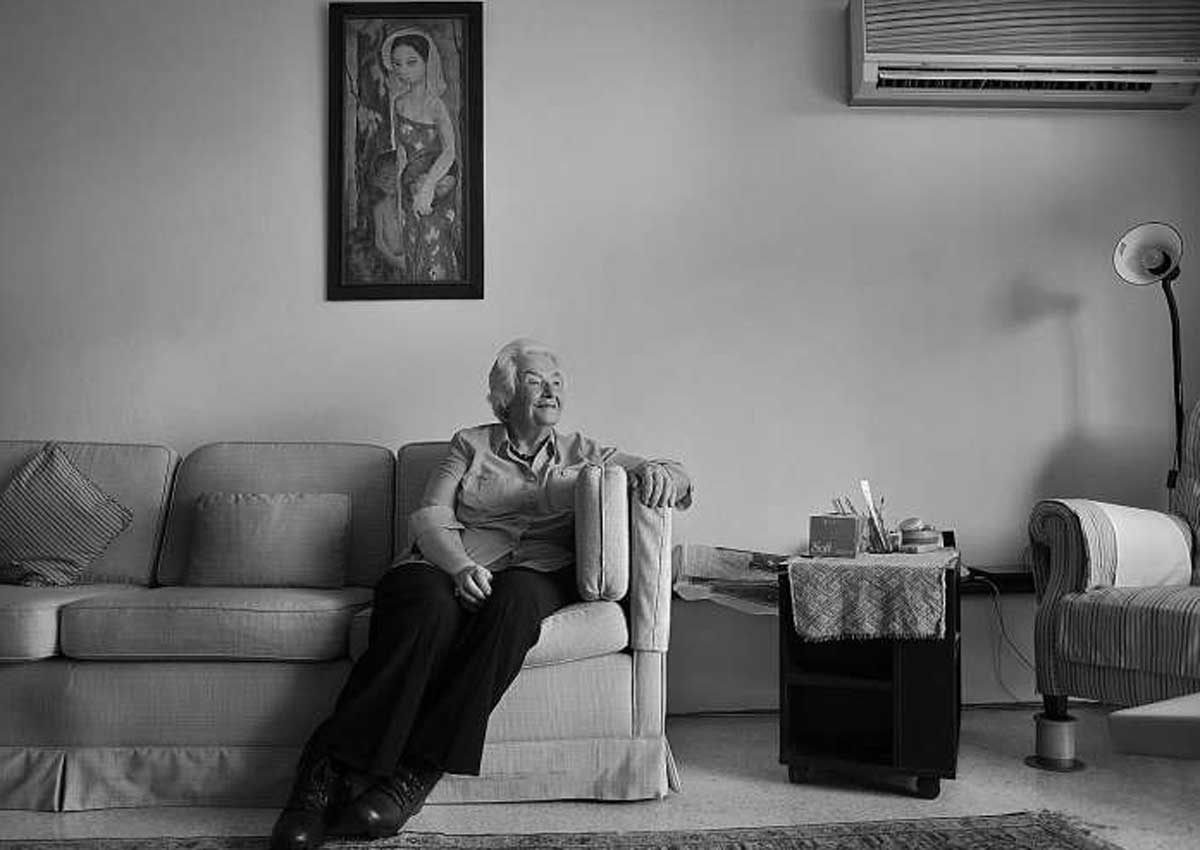
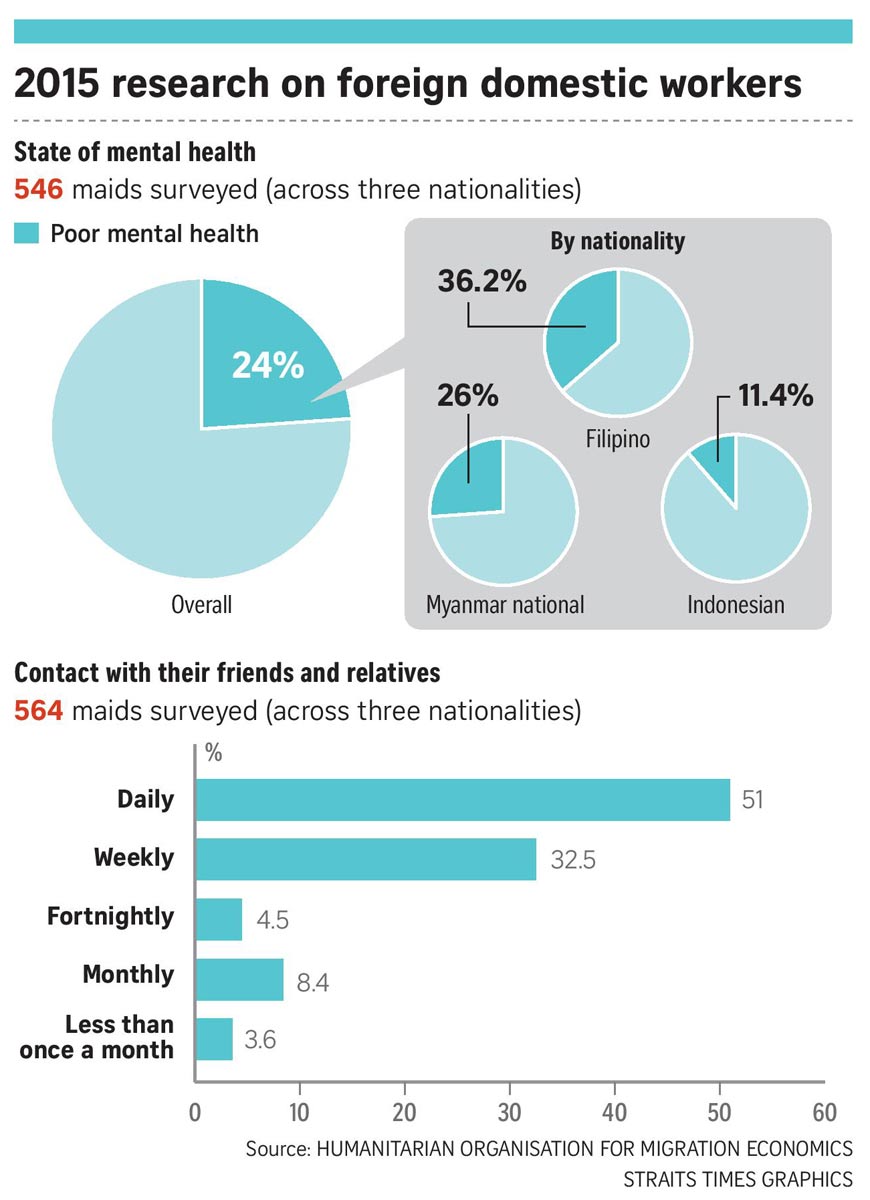
Image: 
Category: 
Publication Date: 
Monday, April 11, 2016 – 16:36
Send to mobile app: 
Source: 


Story Type: 
Others

Source link

Maids trained to be counsellers to peers

0

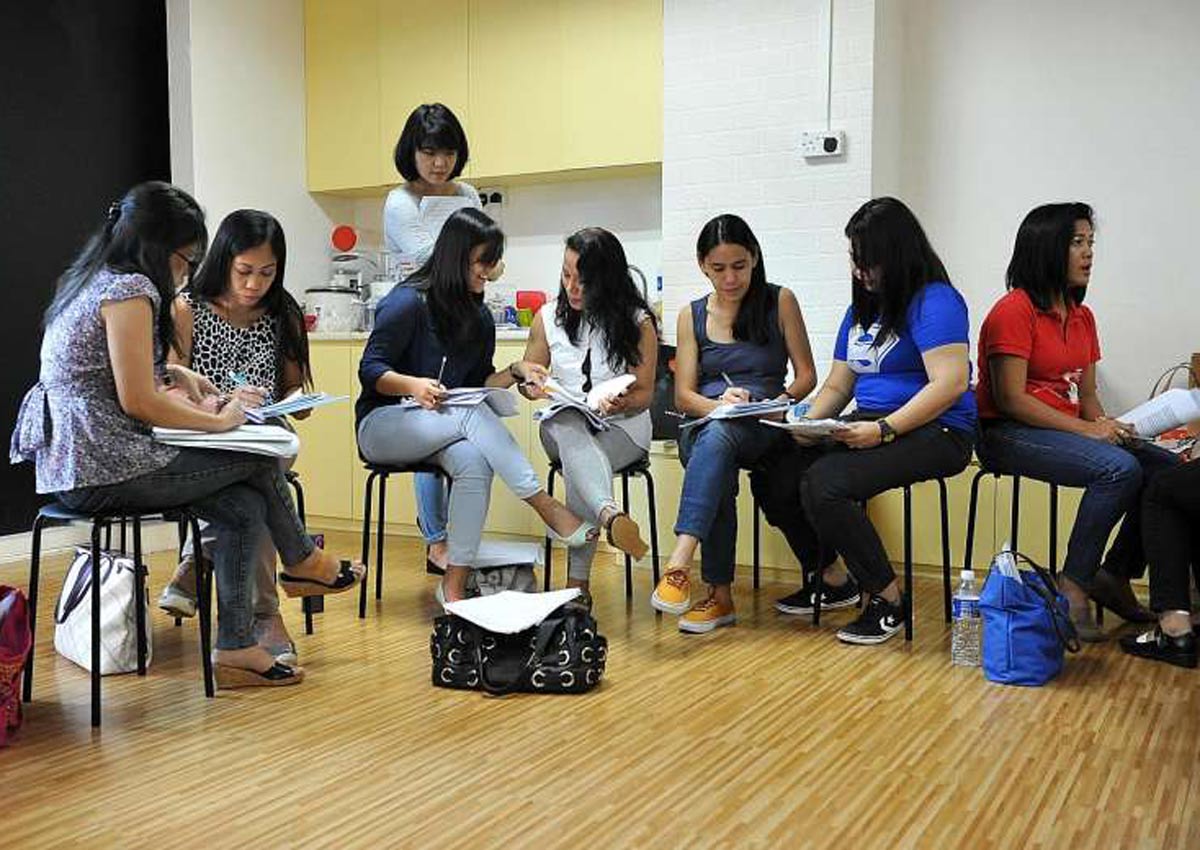
Some maids in Singapore are being trained to recognise signs of mental stress and to offer help, in a move to improve mental health support for foreign domestic workers here.

The aim is to help distressed domestic workers who have mental stress symptoms that go unidentified, or do not know where to go for help.

By next month, 39 Filipino foreign domestic workers would have completed the training, an initiative by the National University of Singapore (NUS) and Humanitarian Organisation for Migration Economics (Home), a migrant worker welfare group.

One participant, Ms Robina Lavato, 43, for instance, now knows what to do if she spots symptoms of depression, such as being withdrawn and losing sleep, in her friends. She will plan activities they enjoy to cheer them up.

If the situation deteriorates and the friend talks about suicide, Ms Lavato knows it is time for professional help and she has the numbers to dial.

“The idea here is for them to serve as a bridge between the professional mental health community and their own community,” said the research initiative’s principal investigator, Dr Keng Shian-Ling, assistant professor at the Department of Psychology at NUS.

A study by Home last year found that more than one in five of the 546 maids from Indonesia, the Philippines and Myanmar polled had psychological distress. This was based on a measurement of nine markers, including depression and anxiety.

Filipino domestic workers fared the worst, with 36 per cent experiencing mental distress, compared with 11 per cent in the Indonesian workers and 26 per cent among those from Myanmar.

Researchers decided to train Filipino maids as “paracounsellors” as they seemed the most vulnerable, said Dr Keng.

More than 200 maids signed up for the training but there are spaces for only 40.

Last month, clinical psychologist trainees Marian Wong and Sudev Suthendran started training the women, who were divided into two groups. The trainees undergo four three-hour sessions conducted on Sundays.

Taught to identify, restructure bad thoughts

The first group completed their training on April 3 and the second group started yesterday.

To gauge the effectiveness of the training, researchers will check if the domestic workers can retain the information, and whether a better understanding of mental health improves their personal mental state.

If the training proves effective, Home aims to develop a peer counselling service and will look for registered counsellors or psychologists who can volunteer to supervise these peer counsellors.

During the training, the women are also taught to identify and restructure negative thoughts.

Trainer Ms Wong cited the case of a foreign domestic worker who felt she was a terrible mother.

“We got her to look at evidence of her not being a good mother, and evidence that does not support that thought.

“We teach them questions to ask their peers so they will have more balanced thoughts,” she said.

Ms Lavato, who volunteers her time to man Home’s helpline, said she signed up to learn more about how to help her peers, especially where to refer them for help.

“I thought the most useful part of the training was learning about depression and abuse, and self-soothing exercises to improve moods,” she said.


This article was first published on April 11, 2016.
Get a copy of The Straits Times or go to straitstimes.com for more stories.

 

Image: 
Category: 
Publication Date: 
Monday, April 11, 2016 – 16:31
Send to mobile app: 
Source: 


Story Type: 
Others

Source link

US Navy officer charged with spying, possibly for China, Taiwan

0

WASHINGTON – A U.S. Navy officer with access to sensitive U.S. intelligence faces espionage charges over accusations he passed state secrets, possibly to China and Taiwan, a U.S. official told Reuters on Sunday.

The official, speaking on condition of anonymity, identified the suspect as Lieutenant Commander Edward Lin, who was born in Taiwan and later became a naturalized U.S. citizen, according a Navy profile article written about him in 2008.

A redacted Navy charge sheet said the suspect was assigned to the headquarters for the Navy’s Patrol and Reconnaissance Group, which oversees intelligence collection activities.

The charge sheet redacted out the name of the suspect and the Navy declined to provide details on his identity.

It accused him twice of communicating secret information and three times of attempting to do so to a representative of a foreign government “with intent or reason to believe it would be used to the advantage of a foreign nation.” The document did not identify what foreign country or countries were involved.

The U.S. official said both China and Taiwan were possible but stressed the investigation was still going on.

The suspect was also accused of engaging in prostitution and adultery. He has been held in pre-trial confinement for the past eight months or so, the official added.

USNI News, which first reported Lin’s identity, said he spoke fluent Mandarin and managed the collection of electronic signals from the EP3-E Aries II signals intelligence aircraft.

The U.S. Navy profiled Lin in a 2008 article that focused on his naturalization to the United States, saying his family left Taiwan when he was 14 and stayed in different countries before coming to America. “I always dreamt about coming to America, the ‘promised land’,” he said. “I grew up believing that all the roads in America lead to Disneyland.” The Navy’s article can be seen here: http://1.usa.gov/1SIEJDe Chinese Foreign Ministry spokesman Lu Kang said he was not aware of the details of the case. He did not elaborate. China’s Defence Ministry did not immediately respond to a request for comment.

Taiwan’s Defense Ministry said it had no information on the case. Taiwan’s Foreign Ministry declined to comment.

Image: 
Category: 
Publication Date: 
Monday, April 11, 2016 – 16:19
Keywords: 
Send to mobile app: 
Source: 


Rotator Headline: 
US Navy officer accused of passing secrets to China faces espionage and prostitution charges
Hermes ID: 
2 208 594
Hermes ID String: 
VLUSN11
Hermes Author: 
GRONGLOH
Story Type: 
Others

Source link

Indonesia shackled by ignorance over mental illness

0

He used to be secured in wooden stocks, but he managed to break free of them. They have since been replaced with the iron chains.

His mother Rukmini, 45, a rice farmer said her heart broke when she first had to lock him up. “I cried, no mother wants to do this to her own son, but I have no choice.”

According to official figures, Sulaiman is among more than 18,000 Indonesians with mental illness who are still subjected to pasung, where they are kept in restraints or in a confined space. This even though the decades-old practice was outlawed in 1977.

It is not uncommon for patients to be locked in chains and wooden stocks, and isolated in cramped and filthy chicken coops or goat sheds for years, activists and officials said.

This is a result of the lack of mental health services, trained caregivers and psychiatrists as well as little awareness of psychosocial and intellectual disabilities, said Mr Nahar, a social rehabilitation director at Indonesia’s Social Affairs Ministry.

“We know that it’s still happening but we are not closing an eye to their plight,” he said. “We are serious about helping them despite our less than ideal situation.”

President Joko Widodo wants to put an end to the practice by December next year. That is why teams of caregivers have been visiting rural villages since January to free patients from their restraints and provide medical treatment.

“Many who do this are poor and uneducated who have no idea how to deal with mental patients,” said Mr Nahar. “So we are now focusing on education.”

Only about half of the 445 general hospitals in the country offer mental healthcare services, but about 400,000 Indonesians have severe mental illnesses. Many go unreported, added Mr Nahar.

Read also: Indonesia pushes to unshackle victims of mental illness 

For some families, the stigma and shame of having family members with mental illness have caused them to shy away from seeking professional help.

For others, superstitious beliefs have steered them towards traditional healers instead.

Sulaiman, for instance, was taken to numerous village shamans for treatment when he “turned crazy” three years ago, after his childhood love got married and he was sent off to a religious boarding school.

A neighbour, Madam Sobariah, 45, said: “The faith healers say he has been possessed by demons. He hits people including his parents with sticks and rocks until they are black and blue. He steals chicken and fruits… he destroys crops.”

Human Rights Watch (HRW) group in its report Living In Hell released last month, called pasung a “widespread and brutal practice” that takes place not only in rural homes, but also in private and public rehabilitation centres.

HRW disability rights researcher Kriti Sharma said the group recognises that the ministries involved are “keen to work together on this issue, but it is time for the government to translate the rhetoric in Jakarta into practice on the ground.

Indonesian Mental Health Association chairman Yeni Rosa Damayanti said pasung is not unique to Indonesia, but rampant in the Philippines, Laos and Cambodia, Nepal, India and Bangladesh.

A visit by The Straits Times to a privately-run Galuh Rehabilitation Centre in Bekasi, an area in the capital’s outskirts, found a few hundred patients with mental illness held in an open hall separated by iron bars.

A few were isolated in smaller rooms, including one who was shackled to a bar because of his penchant for destroying fittings such as water taps and ceiling boards.

Owner Suhanda and many other activists say conditions, however, have improved at the centre thanks to donations and caregiver training.

“We used to chain up a lot of patients in the past because we don’t have enough manpower to look after everyone. Fights among patients can break out anytime and turn ugly,” said Mr Suhanda.

“While we don’t want them to hurt one another, we now understand they are also human so we have to treat them like one, so no more shackling unnecessarily.”

Read also: Indonesia’s mentally ill languish in shackles


This article was first published on April 11, 2016.
Get a copy of The Straits Times or go to straitstimes.com for more stories.

 

Image: 
Category: 
Blurb: 

A patient with mental illness at Galuh Rehabilitation Centre in Bekasi. Over 18,000 Indonesians with mental illness are either shackled (above) or locked up in a confined space, a practice known as "pasung".

Publication Date: 
Monday, April 11, 2016 – 16:11
Keywords: 
Send to mobile app: 
Source: 


Story Type: 
Others

Source link

9 years jail for Chinese national who stabbed wife to death

0

SINGAPORE – Suspecting that his wife was having an affair with her supervisor, Chinese National Zheng Xianghua stabbed her to death at home before attempting to commit suicide by slashing his neck and stabbing himself thrice in the chest.
Zheng even climbed…

Source link

Mok gets sexy

0

Mandopop star Karen Mok is living proof that age is no barrier to exuding sexiness.

The Hong Kong singer-actress might be 45, but at her solo concert in Singapore on Saturday night, she showed that hitting middle age hasn’t taken away her saucy, sultry side one bit.

Performing to a 5,000-strong crowd at The Star Theatre, Mok sent temperatures rising by performing a raunchy dance sequence which screamed sensuality from start to finish.

During her loungey, jazzed-up rendition of Chris Isaak’s classic Wicked Game, Mok, flaunting her long slender legs in a slinky floral dress, allowed her tanned beefcake male dancer to run his fingers all over her arms, shoulders and back.

On stage, Mok reprimanded herself for her long absence from the local concert scene.

Her last solo concert in Singapore was in January 2001 at the Sinagpore Indoor Stadium – 15 years ago.

“I’m too much! I made all of you wait so long,” she exclaimed. “How should I be punished? I shall sing for you.”

The flamboyant pop goddess also showed off her deft electric guzheng (Chinese zither) playing skills on rock track Reason To Be Strong.

Image: 
Category: 
Publication Date: 
Monday, April 11, 2016 – 15:35
Send to mobile app: 
Source: 


Rotator Headline: 
Karen Mok raises temperatures at Singapore concert
Rotator Image: 
Story Type: 
Others

Source link

Indian police detain five after temple fireworks blaze kills 108

0

THIRUVANANTHAPURAM, India – Indian police have detained five people after a fireworks display at a Hindu temple set off explosions and fire killing 108 people, an officer said on Monday, in one of the worst accidents at a religious festival.

Thousands of people were gathered at the temple at Kollam in the southern state of Kerala on Sunday for the pyrotechnic show to mark the start of the Hindu year when sparks ignited a cache of fireworks stored inside the temple grounds.

The district administration said it had not given permission for the fireworks display following complaints of noise and pollution.

Police officer Anantha Krishnan said the five taken into custody were employees of a fireworks manufacturer who was given the contract for running the show at the Puttingal Devi temple.

The head of the manufacturing unit was injured, one of 380 people who were in hospitals across the state with burns as well as injuries caused by flying concrete and debris.

on Twitter

But police had not been able to reach members of the temple management, Krishnan said.

Kerala is studded with temples managed by rich and powerful trusts that often flout local regulations. Each year temples hold fireworks displays, often competing to stage the most spectacular ones, with judges who decide the winners.

On Monday, grieving relatives of the victims were scouring the temple grounds for possessions of their loved ones among the shoes, handbags and other articles strewn in a pile of debris and a puddle, dark red with blood. “There were so many men and women lying on the ground, lifeless,” said Anish Kumar, a resident.

The scale of the tragedy has ignited demands that fireworks shows be banned at crowded places in Kerala. The chief of the state unit of the Indian Medical Association, A. V. Jayakrishna, said he planned to file a petition before the Kerala High Court on Monday curbing the use of fireworks.

Such has been the outrage across the nation that Prime Minister Narendra Modi flew to Kollam within a few hours with a team of doctors.

Opposition politicians led by Rahul Gandhi also visited the temple site, demanding a thorough investigation into the cause of the fire which took place amid a state election to choose a new assembly.

Modi has faced public criticism for failing to respond quickly to disasters such as the floods in Chennai late last year. Large parts of the city were under water for days before government help arrived.

But Modi’s Bharatiya Janata Party said he was focused on the task in hand. “Ever since the Gujarat earthquake, in any disaster, the prime minister wants to be hands on,” said BJP spokesman M.J. Akbar, referring to Modi’s work in his home state when the 2001 quake hit. “Where he keeps aloof – and rightly so – is in all these artificial, emotional, sound-bite controversies. He is consistent in his interventions and in his silences.”

Image: 
Category: 
Publication Date: 
Monday, April 11, 2016 – 15:42
Keywords: 
Send to mobile app: 
Source: 


Rotator Image: 
Hermes ID: 
2 208 336
Hermes ID String: 
VLINDIA11
Hermes Author: 
GRONGLOH
Story Type: 
Others

Source link

Shape Singapore appoints new editor

0

Singapore – SPH Magazines announces the appointment of Zarelda Marie Goh as Editor of Shape Singapore, effective 11 April 2016.

Zarelda, formerly Deputy Editor with Singapore Women’s Weekly, is a nine-year veteran in the publishing industry and started her magazine career as a features writer with Her World. Since then, her wide-ranging portfolio has included editorial stints at various women’s lifestyle magazines.

With a deep personal interest in health, fitness and food, and backed by her rich editorial experience, she is now suitably at the helm of Shape Magazine, Singapore’s only mind and body guide for women. The yoga enthusiast and bootcamp buff embodies both the Shape reader and its mantra – to inspire and help women to lead active, healthy, fun and well-balanced lives.

Her time with Singapore Women’s Weekly also saw her lead the title’s tablet edition efforts, as well as grow its social media presence across Facebook and Instagram. Her personal web savvy and keen interest in digital content also means Zarelda is well placed to charge Shape’s big digital push.

Zarelda said: “I’m very pleased to be leading the Shape team, particularly in these exciting digital days. Shape has big plans for her web, digital and social media content offerings, as well as for her lineup of popular year-round events. I’m looking forward to grow the Shape brand across our multiple platforms.”

Zarelda will report to Raymond Goh, Group Editor at SPH Magazines.

Image: 
Category: 
Publication Date: 
Monday, April 11, 2016 – 15:25
Keywords: 
Send to mobile app: 
Source: 


Story Type: 
Others

Source link

Parliament: First National Reading Day to be held on July 30 to help nurture love of books

0

April 11, 2016 2:55 PM

SINGAPORE – From bringing special books to the offices of working adults to transforming a MRT train into a mobile digital library, the National Library Board (NLB) is going all out to woo readers.


Source link

MCI to invest S$120 million in ICT manpower needs

0

With increasing demand for infocomm jobs, the Ministry of Communications and Information says it will focus on enhancing training efforts for future and current ICT professionals.

Source link