 SINGAPORE – Pasir Ris residents can look forward to a rejuvenated town centre in the form of a mixed-use development integrated with a new bus interchange, as part of the Ministry of National Development’s plans to revitalise three older towns.
Existing…
Source link
Plans for Pasir Ris, Toa Payoh and Woodlands town revamp released
Over 31,000 cases of municipal issues handled through MSO app

SINGAPORE – More than 31,000 cases of municipal issues have been handled through the Municipal Services Office’s (MSO) OneService smartphone application so far, since its launch in January last year.
Giving an update on the MSO’s efforts during the Ministry…
Source link
Parliament: Rental flat families in fresh start scheme will have to live in flats for at least 20 years

April 11, 2016 5:15 PM
SINGAPORE – Second-timer families who are on the Housing Board public rental scheme and get help to own a new two-room flexi flat, will have to live in the new flat for 20 years before they can resell it “to ensure a stable home for the children”, said National Development Minister Lawrence Wong in Parliament yesterday.


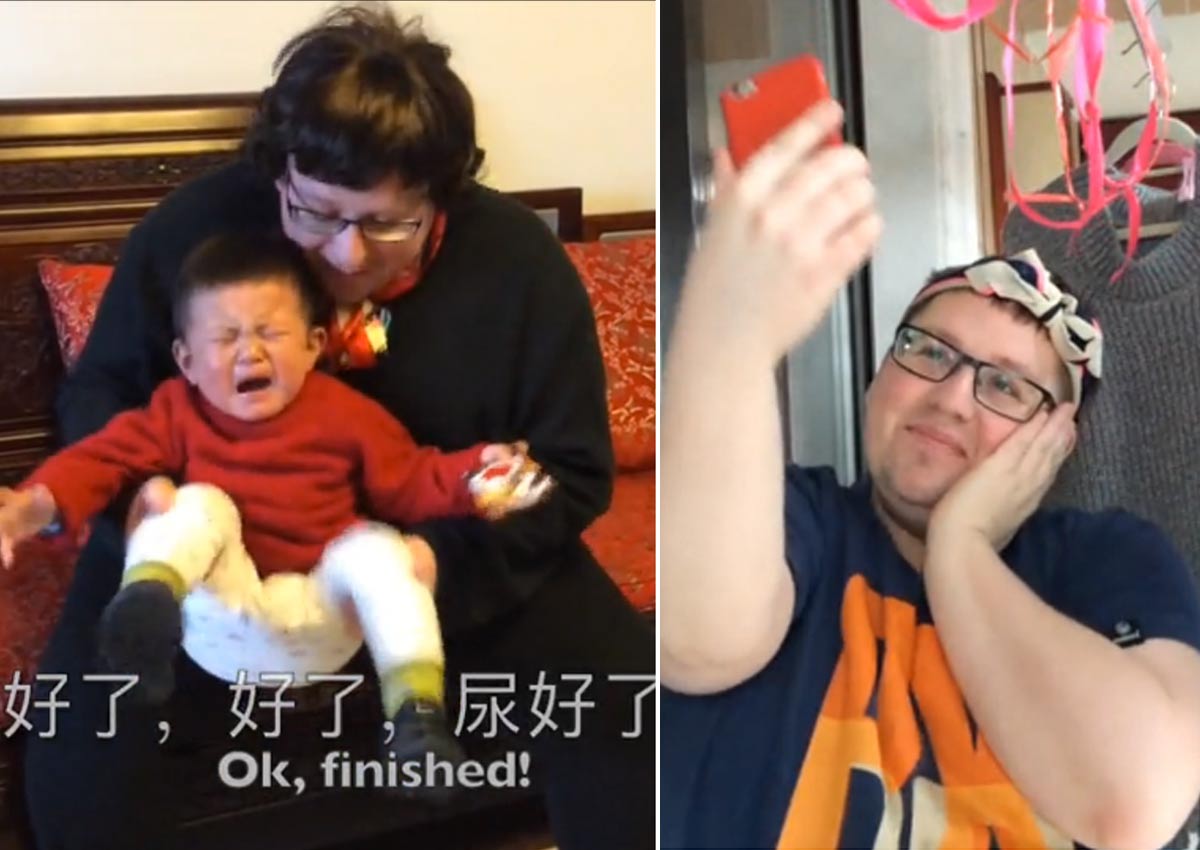
German man is new Internet sensation in China for his impersonations

His hilarious portrayals of a seat-hogging aunty, a nose-picking commuter and other characters typically seen on the busy Shanghai Metro have left many people in stitches.
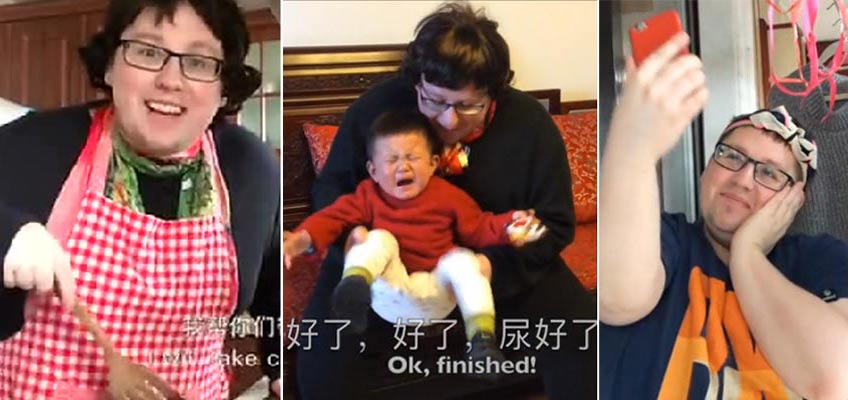
A German expatriate, only known as ‘Thomas’, has poked fun at people and life in China by mimicking them in home-made videos. And now he has become an unlikely Internet sensation among Chinese netizens who were tickled pink by the entertaining video parodies that he uploaded on various social media platforms.
Rattling away in genuine Shanghainese-accented Mandarin, Thomas is appropriately attired as he plays each character to the hilt. This ‘Laowai’ (foreigner in Mandarin) probably has the licence to get away with it if anyone thinks such lampooning is objectionable.
A graduate of the prestigious Fudan University, Thomas is married to a Chinese woman, who apparently supports his videos on all things delicious, funny and beautiful in Germany and China.
His recent caricatures of Shanghai subway characters that commuters are likely to encounter helped boost his popularity after an earlier video on what it is like to marry a Chinese woman became an online hit.
In the earlier video, Thomas, whose Chinese name is “Ah Fu” impersonated his in-laws and wife, bringing out their personality and quirks to comic effect.
Some might accuse him of stereotyping, but he managed to strike a chord with many because of his convincing depictions of family life, expectations and behaviour in the bustling first-tier city.
For example, parents expect their married children to have their own home in the city, and also a car. And many would roar in agreement when he mimics his pampered Shanghainese wife who insists that he carries her handbag at outings and when he lists her must-have designer names and chic holiday destinations.
It leaves us wondering: Which does his wife love more? Her LV or her ‘Laowai’?
chenj@sph.com.sg
German guy pokes fun at typical Chinese train commuters
Click on thumbnail to view photos. Source:
Afu







Image:
Publication Date:
Monday, April 11, 2016 – 17:11
Keywords:
Send to mobile app:
Source:
Rotator Image:
Story Type:
Assignment
New study on Singapore AGMs finds practices lacking

ANNUAL general meetings (AGMs) by listed companies in Singapore are still concentrated around the usual peak periods in April, July and October – making it difficult for investors holding shares in multiple companies to attend more meetings.


Hong Kong pro-democracy protester stands trial

HONG KONG – A Hong Kong pro-democracy protester who was allegedly beaten by police in an attack captured by television cameras and beamed around the world stood trial on Monday over allegations he assaulted officers.
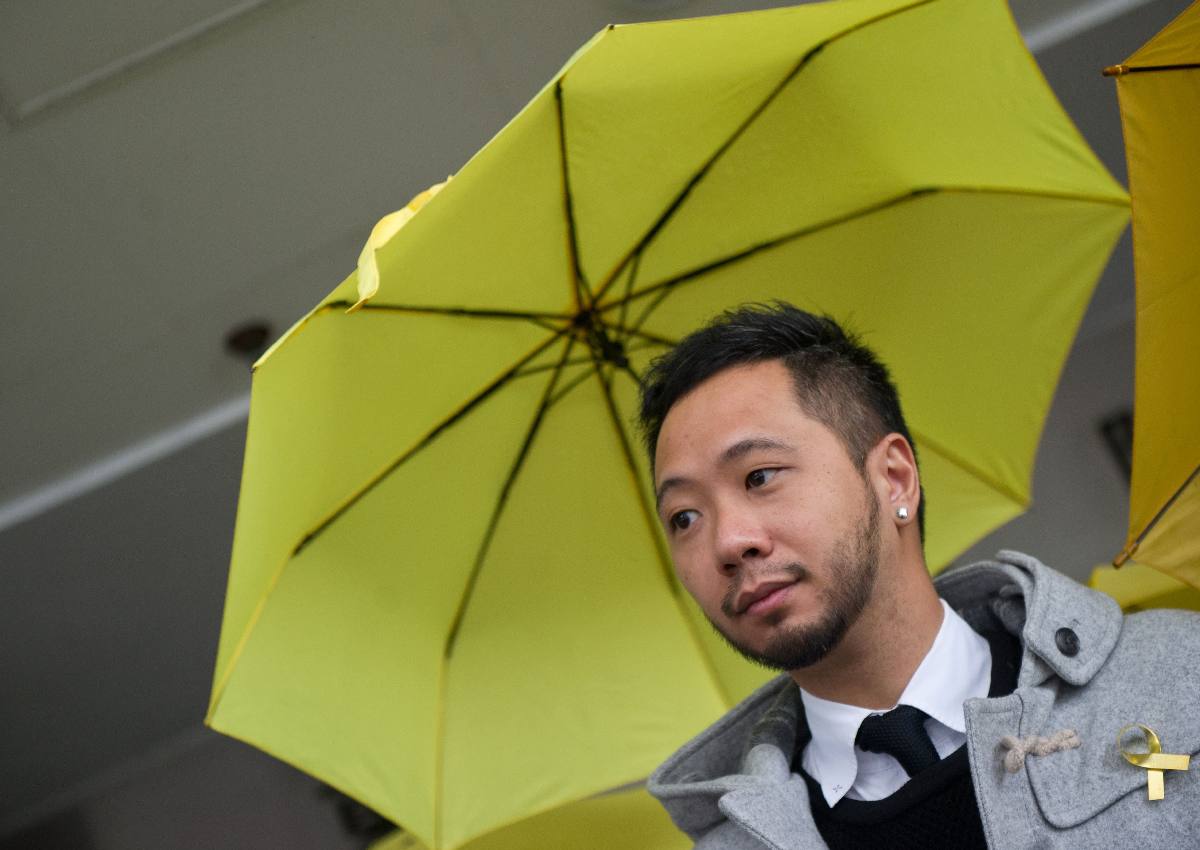
Political activist Ken Tsang stands accused of splashing liquid on police officers during mass street rallies in 2014 – the same night as he was beaten in an attack.
The incidents took place at the height of the protests seeking free leadership elections in Hong Kong, rocking the reputation of the city’s police force.
The police who allegedly beat him, who are not the same officers Tsang is accused of assaulting, are to stand trial separately.
The pro-democracy Civic Party member has pleaded not guilty to five charges – two of assaulting a police officer and three of resisting a police officer.
On the opening day of the five-day trial, a courtroom packed with reporters and members of the public was shown video footage of officers pointing to a masked man who poured liquid onto the city’s Lung Wo Road, close to government buildings.
In another piece of footage, taken from a local broadcaster, Tsang is shown being arrested.
Tsang, dressed in a suit, sat attentively on the defendant’s bench. He donned a yellow ribbon-shaped badge, the symbol of the Umbrella Movement, named after the umbrellas used to ward off sun, rain, tear gas and pepper spray during the protests.
Outside court, the 40-year-old refused to say whether he would testify during the trial.
Student refused diploma after opening yellow umbrella at graduation
Click on thumbnail to view photos. Source:
YouTube screengrabs, Stomp, Internet screengrabs








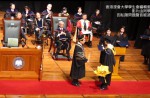
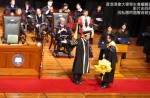
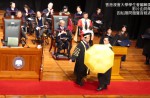
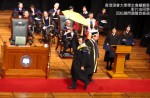




It has taken a year for charges to be brought against both Tsang and the officers accused of assaulting him, further increasing controversy surrounding the case.
Tsang’s lawyer, Robert Pang, criticised police reliance on news footage to identify Tsang.
“The identification took place after a year when someone showed a video with which he was identified… it is inappropriate,” he told the court.
Tsang has said police brought assault charges against him to distract from the case against them.
Video footage aired by local television network TVB at the time showed a group of men hauling a handcuffed Tsang to a dark corner in a public park in the early hours of October 15, 2014. One stands over him and punches him, as three others are seen repeatedly kicking him.
Seven policemen will stand trial for the assault on the activist later this year. They have pleaded not guilty to the charges.
Tsang has presented his case to a UN Committee Against Torture in Geneva.
Thousands of protesters blocked major thoroughfares in Hong Kong in 2014, calling for a free vote on the city’s chief executive, but the protests failed to win any concessions from either Beijing or the city authorities.
Hong Kong riot police clash with protesters
Click on thumbnail to view photos. Source:
Reuters, AFP, AFP PHOTO / SCMP / EDWARD WONG






























Image:
Publication Date:
Monday, April 11, 2016 – 16:59
Keywords:
Send to mobile app:
Source:
Hermes ID:
2 208 777
Hermes ID String:
VLHK11
Story Type:
Others
Taiwan accuses China of kidnapping eight of its nationals from Kenya

TAIPEI – Taiwan on Monday accused China, which regards the self-ruled island as a breakaway province, of kidnapping eight of its nationals who it said had been acquitted in a cybercrime case in Kenya.
Kenya’s attorney-general said in January it was considering a request from Beijing to extradite 76 Chinese charged with cyber crime in Kenya for trial in their homeland.
But Taiwan said some of these people were actually from Taiwan and that a total of 23 of its people had been acquitted last Tuesday by a Kenyan court and given 21 days to leave.
Yet China pressured Kenyan police to put eight of the Taiwanese nationals on to a Chinese jet bound for China on Friday, Taiwan’s Foreign Ministry said. It did not say how they were taken. “This is an uncivilized act of illegal kidnapping and a serious violation of basic human rights,” the ministry said in a statement, adding it was demanding the immediate return of the eight.
Taiwan’s ruling Democratic Progressive Party, which distrusts China, also weighed in on the issue, demanding China”repatriate our people and guarantee their legal rights”.
China views Taiwan as a wayward province, to be brought under Beijing’s control, by force if necessary. Defeated Nationalist forces fled to the island in 1949 after a civil war with the Communists now in control in Beijing.
Only 22 countries recognise Taiwan, with most, including Kenya, having diplomatic relations with Beijing, recognising its”one China” policy.
Taiwan had sent officials from its representative office in South Africa to Kenya to try to deal with the case as it has no office in Kenya, the Foreign Ministry added.
China’s Taiwan Affairs Office, which oversees relations with Taiwan, did not respond to a request for comment, and neither did China’s Ministry of Public Security.
Chinese Foreign Ministry spokesman Lu Kang said he needed to”further understand” the situation, when asked during a regular news briefing on Monday. “But in principle, countries which follow the ‘one China’principle are worthy of approval,” he added, without elaborating.
Kenyan government officials were not immediately available for comment.
Ties between Taiwan and China rapidly improved after the China-friendly Ma Ying-jeou took power in 2008 as Taiwan president and signed a series of landmark trade and business deals.
But China has looked on with suspicion at Taiwan since Tsai Ing-wen and her independence-leaning DPP won presidential and parliamentary elections in January.
Last month, China resumed ties with former Taiwan ally Gambia. China and Taiwan had for years tried to poach each other’s allies, often dangling generous aid packages in front of leaders of developing nations.
Image:

Publication Date:
Monday, April 11, 2016 – 16:55
Send to mobile app:
Source:
Hermes ID:
2 208 740
Hermes ID String:
VLTAI11
Story Type:
Others
Please keep off the artworks
You see a 1.1m-tall sculpture of an adorable bird standing on a public lawn. What do you do?
Admire it? Take a selfie as you pat its beak? Or get someone to snap a shot of you sitting astride it?
It seems the last two options are the most popular when it comes to Local Mynas, a trio of sculptures of the titular bird outside the Victoria Theatre and Concert Hall.
This, despite a nearby A4-sized sign that reads “Please refrain from touching the sculptures” in font size 10, which is just slightly bigger than this story’s text size.
The sculpture is among 14 sets of artworks on display as part of an outdoor exhibition called Envision: Sculptures @ the Garden City stretching from The Arts House to Fullerton Bay Hotel.
Launched on Jan 16, it features works by 11 home-grown and international artists. It ends on April 23.
Like Local Mynas, a few other sculptures have had to suffer the same indignity. The results are ugly scratches, cracks, holes – and a group of concerned artists and curators.
A bronze sculpture showing four people seated round a table even had a sticker stuck on the lower half of the work.
German tourist Reinhold Pause, 44, was seen placing his 1 ½- year-old son on top of one of the mynah sculptures on Wednesday.
Why put the boy on the mynah?
“It makes a good photo. The bird is cute,” he says, adding that he did not see the sign.
His reaction is like that of many people The Sunday Times interviewed when asked why they touched or sat on the art installations.
Organisers of Envision estimate that at least three of the artworks have been damaged.
The biggest casualty is Road To Fifty, a display of 50 giant saga seeds made of fibreglass.
Three of the seeds sport cracks and gaping holes likely as a result of people lifting, moving and sitting on them.
Indeed, Instagram and Facebook abound with photographs of people doing just that.
Although the organisers had allowed visitors to touch this display, they did not expect people to sit on the seeds.
A 49-year-old man, who declines to be named, posted on Instagram photos of his family of five perched on the seeds in January. He says: “So many people sat on the seeds, I thought it was okay.”
Singapore art gallery iPreciation, which is behind the outdoor exhibition, is “disappointed” with the public’s lack of respect for the artworks.
In total, there are 15 signs telling visitors to refrain from touching, and four smaller plates, where the line “Please refrain from crossing the barrier and touching the sculptures” is printed in font size 22.
iPreciation’s managing director, Ms Helina Chan, says: “The signs are fairly prominent and they are a standard size for art exhibitions in an outdoor environment.”
For the artists involved, the public’s careless treatment of their works has left a sour taste.
Singaporean artist Kumari Nahappan, 62, who was behind the saga seed sculptures and whose public artworks have been vandalised, says: “I am surprised that this happens time and again.
“With all the exposure that people have had to public artworks over the years, I would have thought their attitude and sense of appreciation for art would have progressed.”
She adds: “I’m happy people engaged with the work. But I wish they can see the bigger picture that it should be shared with a larger audience over a longer duration.”
Home-grown sculptor Lim Soo Ngee, 54, who created the mynah sculptures, has been touching them up since the exhibition started, applying fresh paint twice to areas where the paint has chipped or peeled off.
He is resigned to people damaging his work, saying: “When people encounter something unfamiliar in a public space, it is only human nature to get excited and want to touch it.”
But in the eyes of some people, it is only natural for members of the public to want to touch public artworks, especially when the works are not cordoned off.
Can the public be educated about respecting public artworks? Singaporean artist Karen Mitchell, 42, whose installation at the 2013 Night Festival was tampered with, says that oil and dirt from fingers can cause artworks to deteriorate faster.
She usually sets aside half the amount of money spent on making an artwork towards fixing and maintaining it.
Ms Cheryl Ho, director of private art consultancy Articulate Consulting, says: “People will always be curious about public art and a small percentage will always cross the line. I think that if people understand the value of artworks as well as the tremendous effort that it takes to create each sculpture, they would think twice about touching it.”
Veteran artist Lim Leong Seng, 66, who has created more than 30 public sculptures here, says: “I don’t think Singaporeans have reached the stage where we are all culturally informed. There are people who still do not cherish artworks.”
Artist-architect Kum Chee Kiong, 53, who is not involved in the Envision event, says: “If there is a sign saying the artwork should not be touched, then viewers should follow it.
“Whatever happened with the sculptures is beyond meaningful interaction. These are artworks. It is not a playground.”
Lim proposes using reason to inculcate civic consciousness.
He recounts how he once ran into a man who let his elderly father sit on a public sculpture near the Merlion. Lim borrowed a chair from a nearby cafe for the older man and took the chance to educate them.
“I told them it was not good to sit on a public sculpture, which an artist probably took a long time to make. If they were tired, they could always order a drink at a cafe and rest there.”
And if all else fails? Mitchell suggests in jest: “Maybe harsher signages such as ‘High Voltage’ or ‘Toxic Paint’ would work.”

This article was first published on April 10, 2016.
Get a copy of The Straits Times or go to straitstimes.com for more stories.
Image:

Publication Date:
Monday, April 11, 2016 – 16:44
Send to mobile app:
Source:
Story Type:
Others
Aussie court rejects man's bid against RWS debt
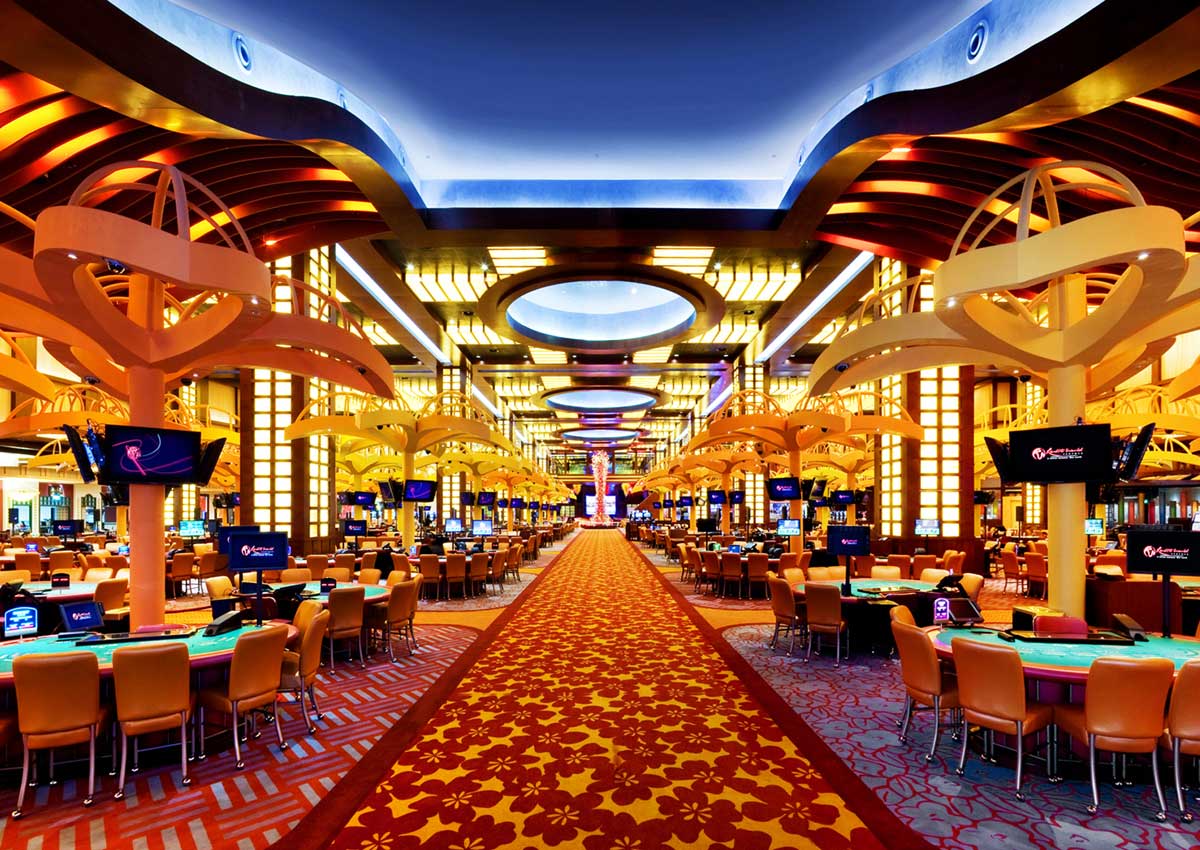
A gambler with assets in Perth failed to shake off a debt of over $620,000, owed to Resorts World Sentosa (RWS), on grounds that Western Australian law does not allow gambling on credit which he used to chalk up the losses here.
The Western Australia (WA) Supreme Court dismissed the move, making clear that while many in Singapore and Western Australia may think it is morally and ethically wrong to allow credit for gambling, that is not the point.
“It cannot possibly be said Singapore is not entitled to make its own decision on that question,” wrote Master Craig Sanderson of the WA Supreme Court in judgment grounds released last week.
Some countries’ judicial systems have a Master. This is a judicial officer who usually deals with preliminary or short matters assigned from a judge’s list of cases.
The case is significant in testing whether the Western Australia law that forbids credit gambling serves as grounds to stop any Singapore judgment on casino gambling from being recognised and enforced there.
RWS had taken the case to Perth to recover the debt owed by Mr Lim Soo Kok, a Malaysian who is understood to have assets in Australia. He had incurred losses when he visited RWS several times over four months prior to March 2013.
He had sought credit facilities, the terms of which included having to repay within seven days of drawing down. By March 2013, he owed $622,363. Talks followed and both parties agreed in August 2014 for him to repay thisin $50,000 monthly instalments.
But he reneged on the deal after the first instalment and RWS sued him in the Singapore High Court where it won a default judgment against him in December 2014.
His appeal failed and RWS then applied to register and enforce the judgment in Western Australia under reciprocal arrangements between the two judicial systems.
Mr Lim applied in the Perth court last month to set aside the move, arguing it was against public policy in the state – which meant the court could intervene and reject enforcement. But the judicial officer ruled that for the court to intervene, it was not enough to show Australian law would have produced a different result for the issue of gambling on credit compared to Singapore law.
While Western Australia law prohibits credit gaming, he said, such a prohibition does not “in any way” undermine the judgment obtained in Singapore. He said the Western Australia legislature exercised its power to enact laws to reflect its approach to gambling and the social problems it can cause, but it does not apply universally.
“A system which does allow the provision of credit for gambling is not so inherently evil as to render it contrary to public policy,” he said. It was for Singapore to decide its stand on the question.
“Having made the decision, and having availed himself of that facility, public policy in Australia does not dictate that registration of the judgment be set aside,” said Mr Sanderson.
This article was first published on April 11, 2016.
Get a copy of The Straits Times or go to straitstimes.com for more stories.
Image:
Blurb:
Publication Date:
Monday, April 11, 2016 – 16:43
Keywords:
Send to mobile app:
Source:
Story Type:
Others
Details revealed of Fresh Start Housing Scheme to help rental flat dwellers
The scheme, which will be introduced by the end of the year, will integrate financial assistance with personal responsibility and social support, said Mr Lawrence Wong.
Source link


